

There is something about a pair of worn jeans that makes them hard to throw away. The fabric softens with every wash, the color fades into something that looks like it has a story, and the stitching holds up long after the knees have given out.
Instead of letting them sit in a donation bag or the back of a closet, you can cut them up and turn them into Christmas decor that fits right at your front door.
A denim entryway display is not about making your home look like a craft store. It is about using sturdy, familiar material to create something warm and a little unexpected.
The projects below range from a ten-minute garland to a tree skirt you can make without touching a sewing machine, and most of them cost nothing beyond what you already have in your junk drawer.

1. Frayed Denim Rag Wreath for the Front Door
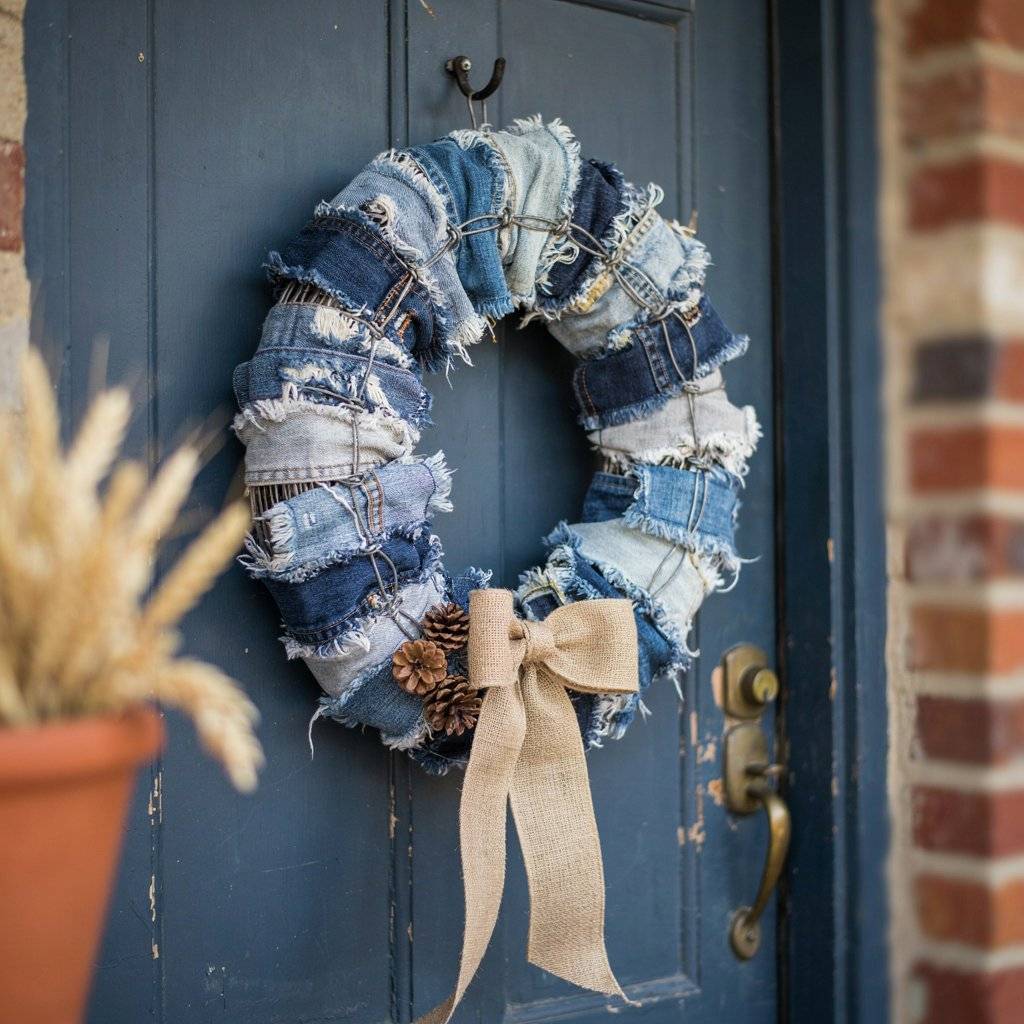
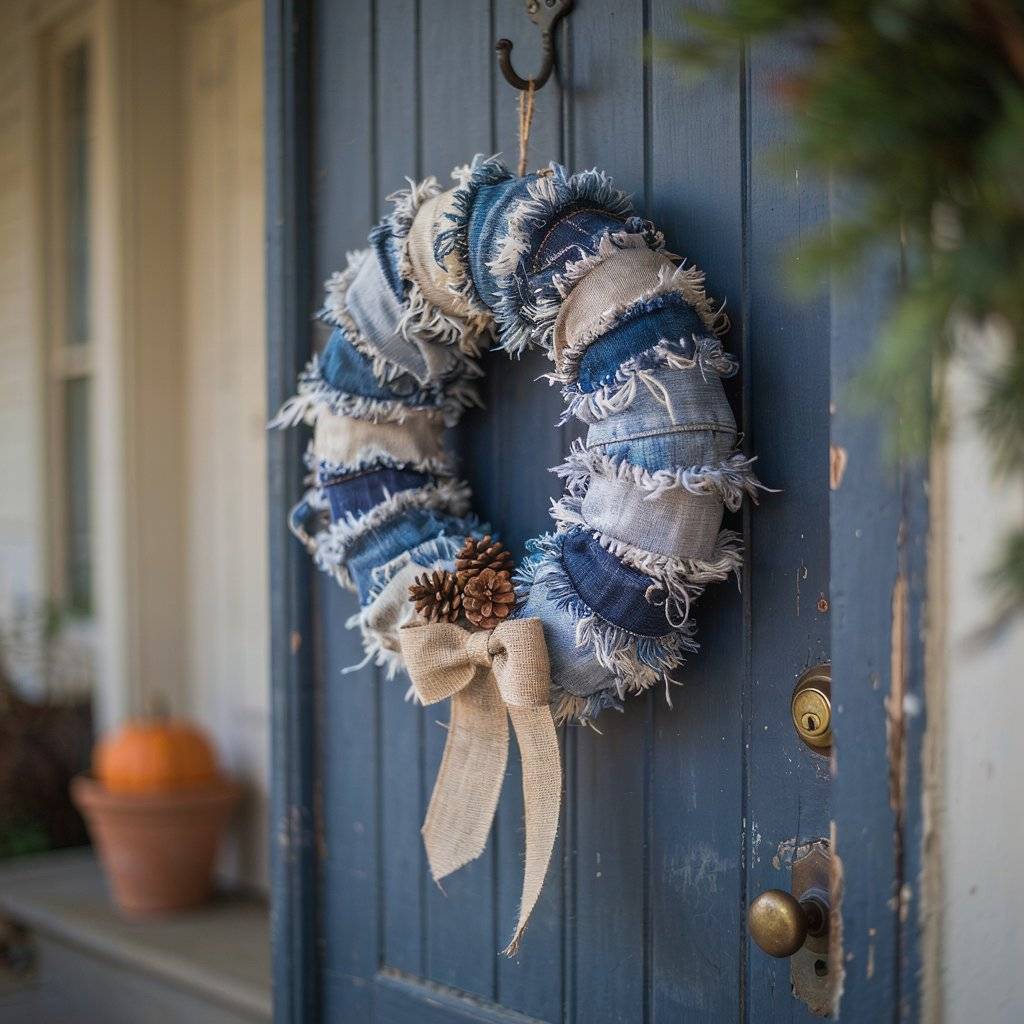
Cut denim into strips about one and a half inches wide by six inches long, then tie each strip onto a wire wreath form with a simple lark’s head knot. The whole build is just cutting and knotting, and a single pair of adult jeans yields enough strips to cover a twelve-inch form.
The trick that makes this wreath look intentional rather than messy is washing and drying the cut strips once before you tie anything. The tumble does the fraying for you, evenly, and saves you from picking threads out by hand.
Mix light, medium, and dark washes so the wreath has depth instead of reading as one flat blue. Add a burlap bow or a few small pinecones to the bottom edge, and hang it on a nail or an over-the-door hook. The whole thing takes an evening and costs nothing but the wire form.
2. Denim Pocket Bunting That Actually Holds Things
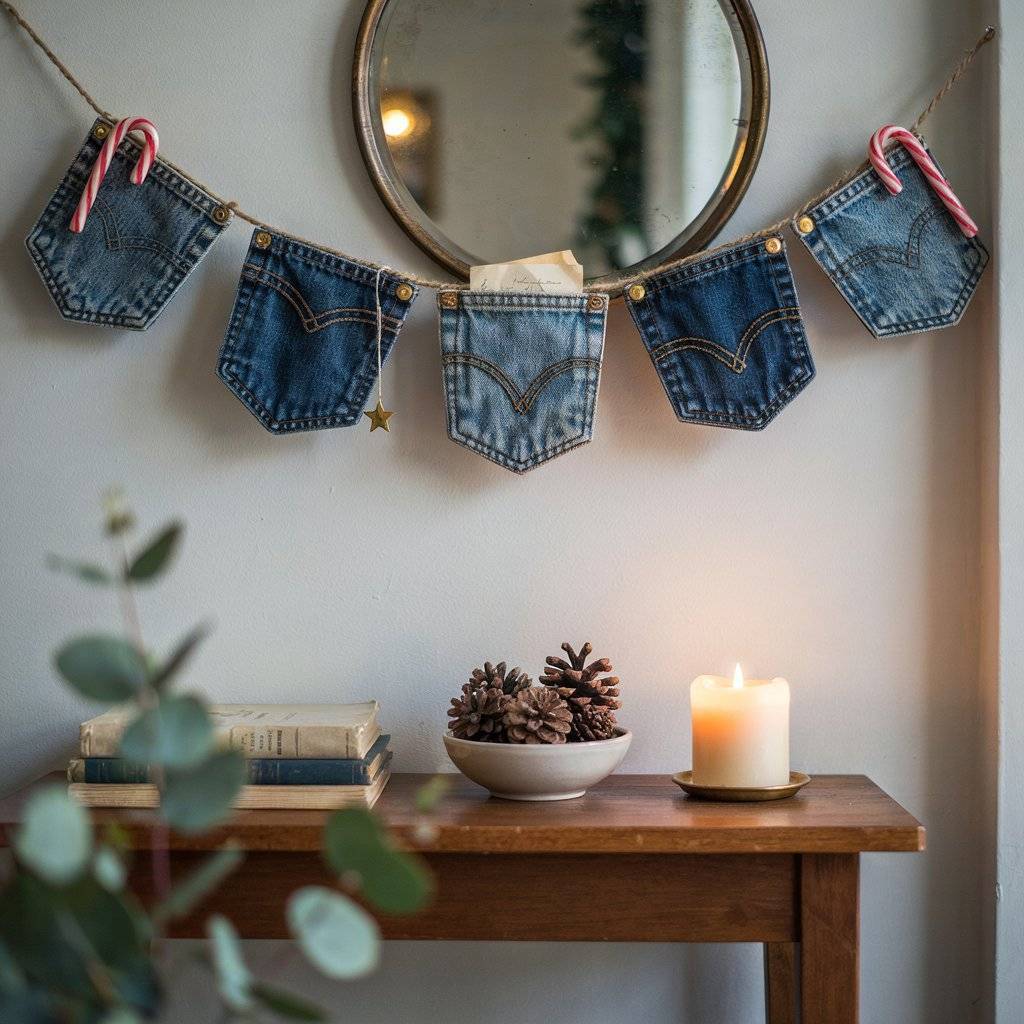
Jean pockets are already lined pouches with finished topstitching, which means you can turn them into a bunting that does more than look pretty.
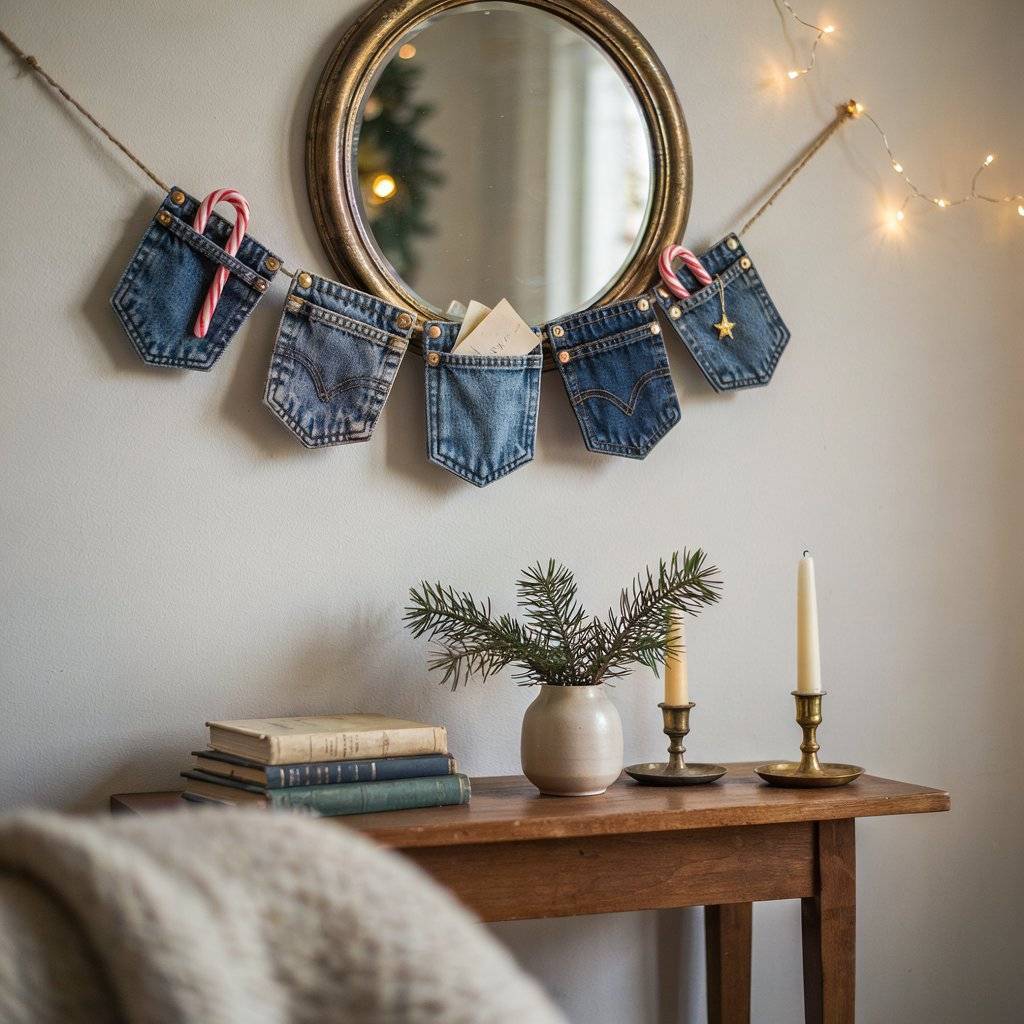
Cut the back pockets off a pair of jeans with about a half inch of surrounding fabric still attached, fold that border back so the pocket’s own stitched outline frames the front, and hot glue or stitch each pocket to a length of twine or jute.
Space them six to eight inches apart, and hang the bunting across a console table, a mirror, or the wall beside your door. The pockets can hold candy canes, small ornaments, or folded notes for family members.
The gold topstitching and rivets on the pockets give you decorative detail for free, so you do not need to add much. This is one of the fastest projects on the list and one of the most useful.
3. No-Sew Denim Star Garland
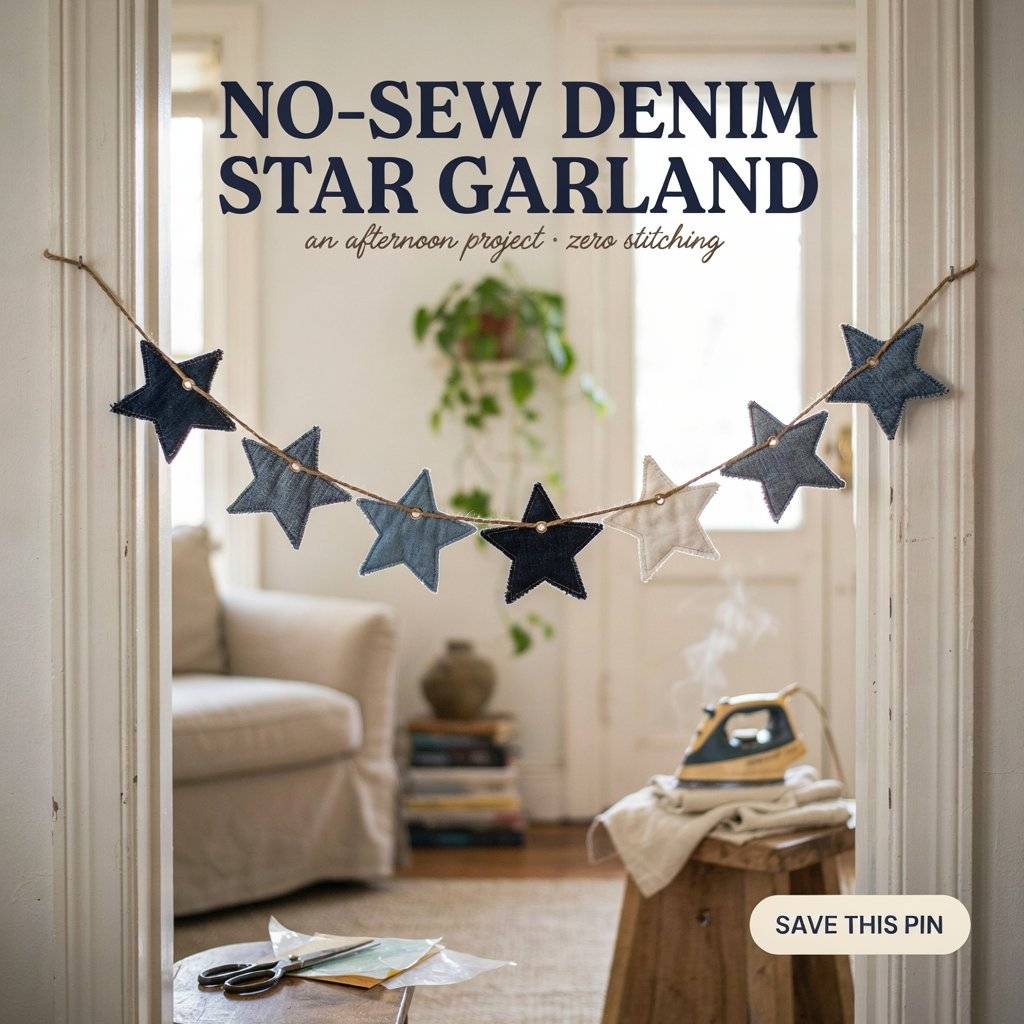
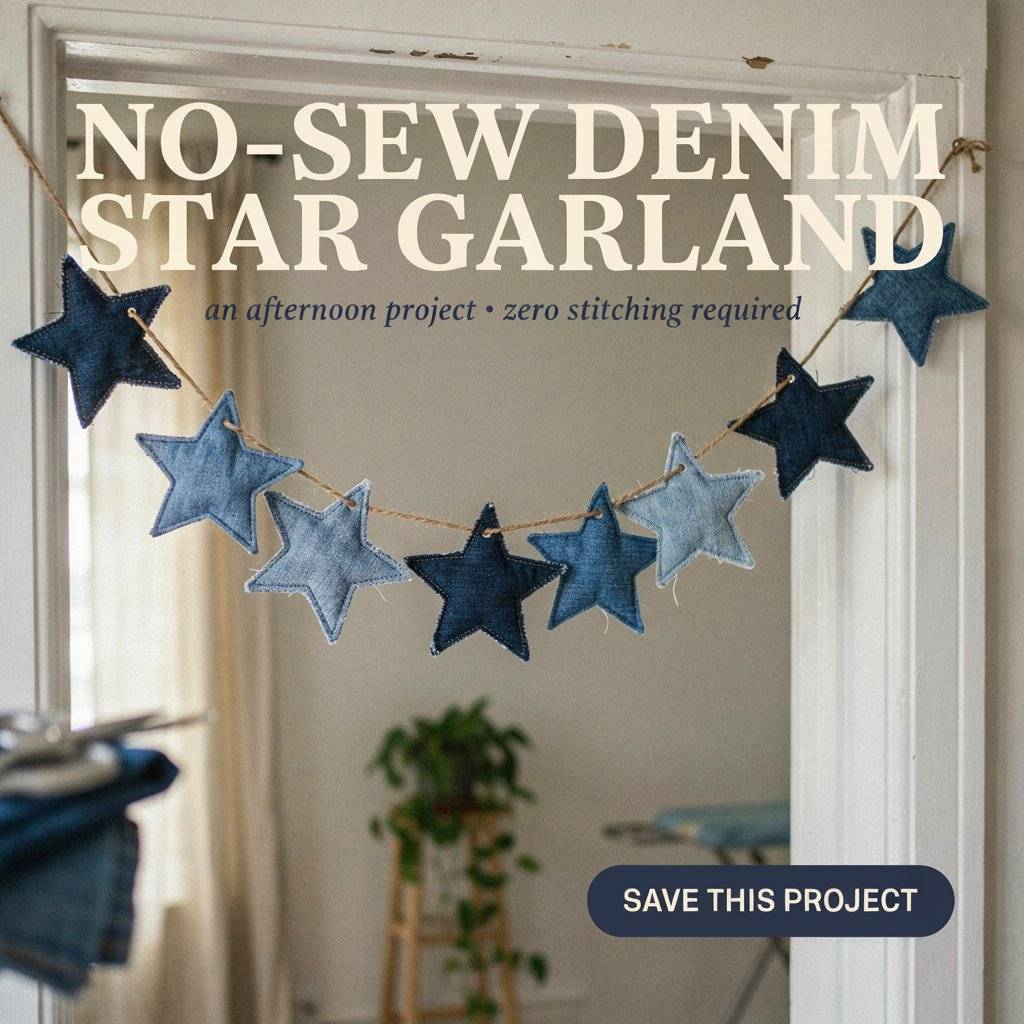
Cut two identical five-point stars from denim in slightly different washes, sandwich a sheet of paper-backed fusible web between them, and press with a hot iron until the layers bond.
Let the star cool flat before you move it, because the paper backing fights you if you rush. Punch a small hole near one point, thread twine through it, and string the stars across a doorway or along the top of a mirror.
The raw edges will fray into a soft outline, and the fusible web grips the surrounding threads so the denim ravels less than a single cut layer would.
Vary the wash pairings across a set of six or eight stars, and they stop looking mass-produced. No stitching required, and the whole garland takes about an afternoon.
4. Denim Seam Ornaments With a Modern Industrial Touch

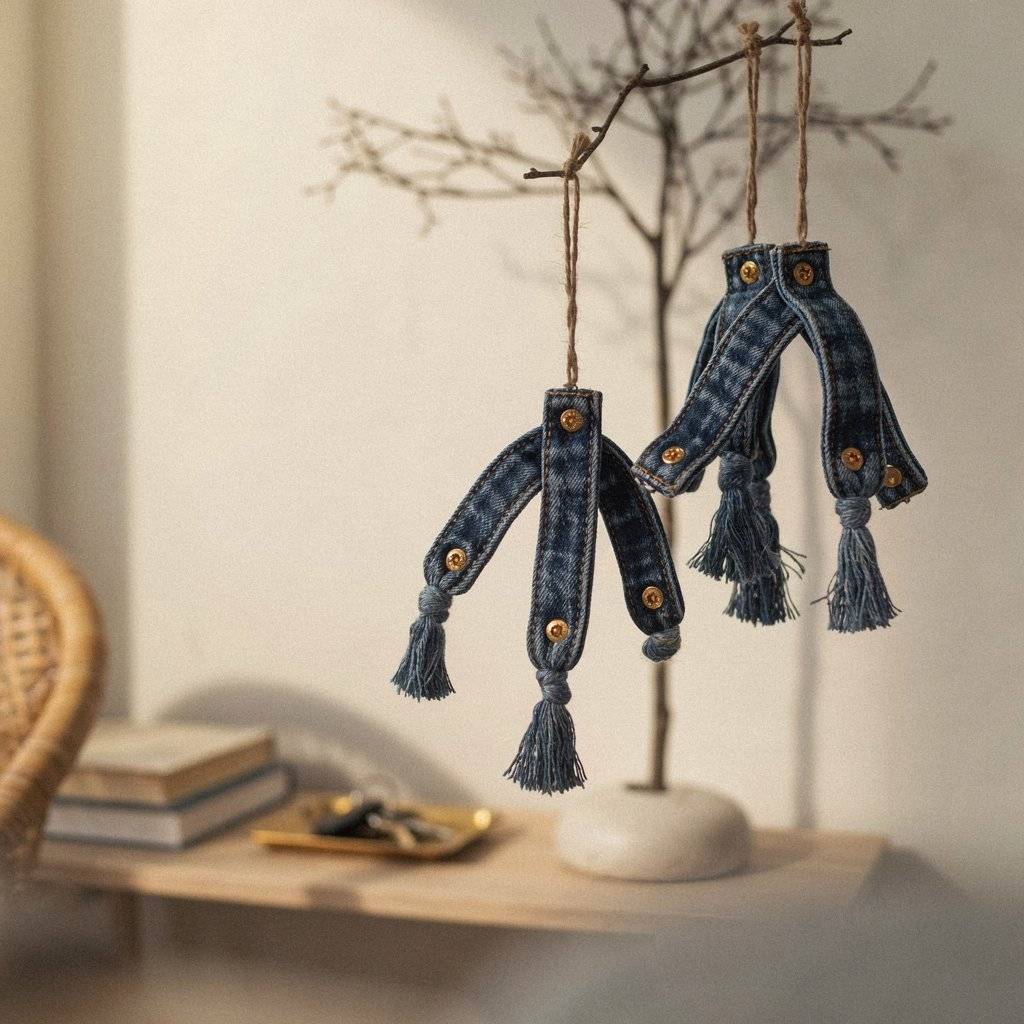
The flat-felled seam that runs up the inside of a jean leg is a ready-made rope with double stitching on both sides, and it makes a surprisingly polished ornament with barely any sewing.
Cut one eight-centimeter length and two ten-centimeter lengths from the seam, punch a small hole about eight millimeters from each end, and assemble the pieces with Chicago screws, which are small metal fasteners that screw together and give the ornament a clean, industrial look.
The two longer seams bulge out slightly when you tighten the screws, creating a curved shape that reads as deliberate.
Add a tassel to the bottom and a loop of twine to the top, and hang them from a small tabletop tree in your entryway. Gold Chicago screws work beautifully against indigo denim, and the whole project takes about twenty minutes per ornament.
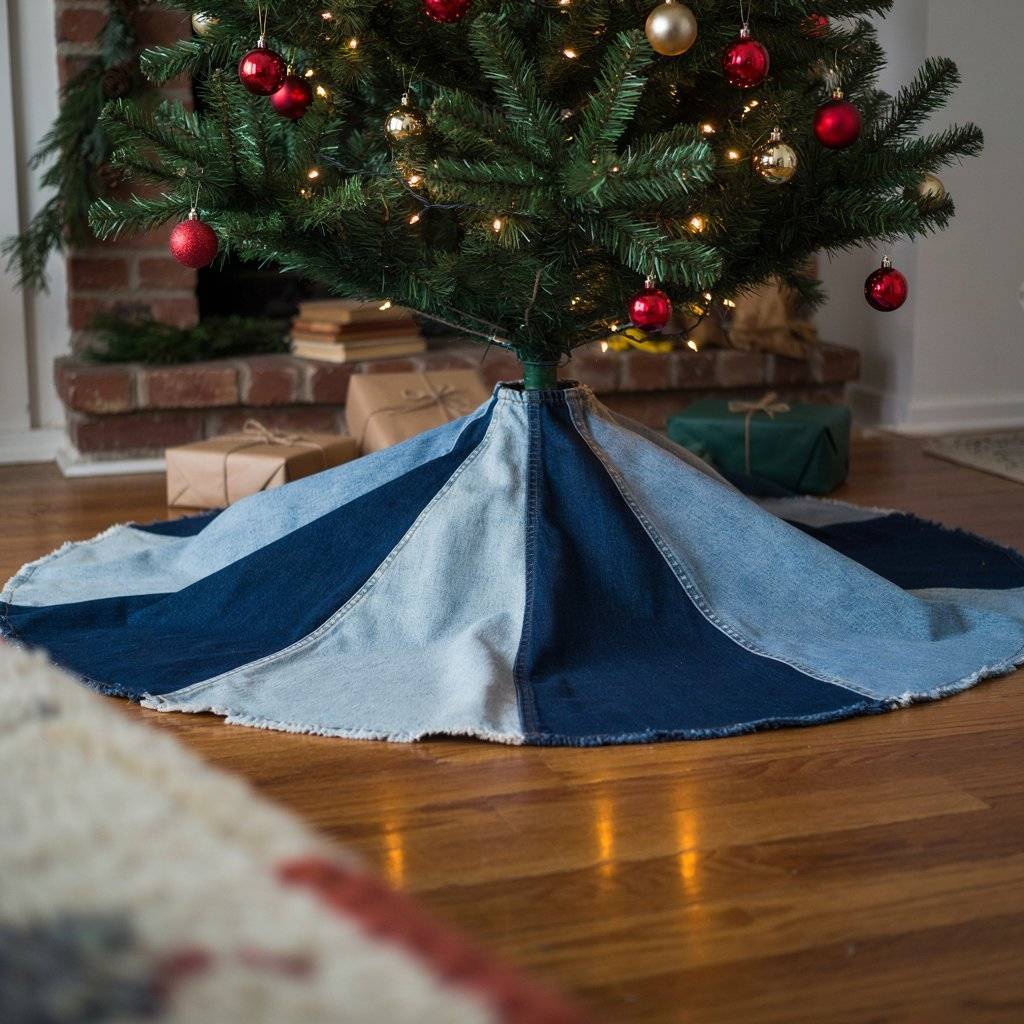
5. A Denim Christmas Tree Skirt From Jean Legs
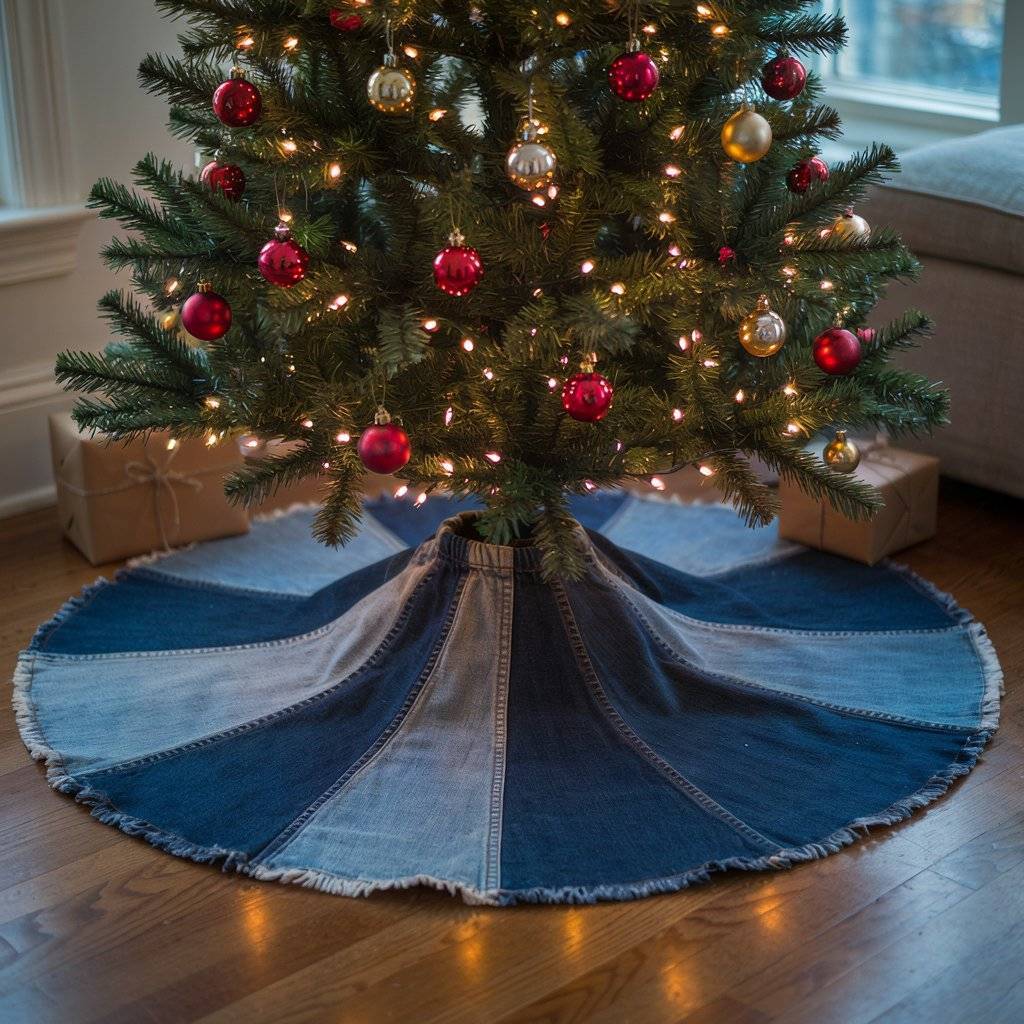
Cut the legs off one pair of adult jeans and you get four flat panels of heavyweight cotton, each wide enough for a wedge of a tree skirt. Cut eight tall trapezoid wedges from the straight run of each leg, sew them into a circle like slices of a pie, and cut the center hole to about five inches using a saucer as a template.
Leave one radial seam open so the skirt wraps around the trunk, and skip the ties entirely because an open seam that overlaps holds itself closed under the weight of the fabric.
Sort your jeans by wash before you cut, and build the circle so it moves from the palest denim at the center out to the darkest at the hem. This is the one project where a little planning pays off, and the result looks like something you bought from a small maker.
6. Patchwork Denim Stockings for the Whole Family
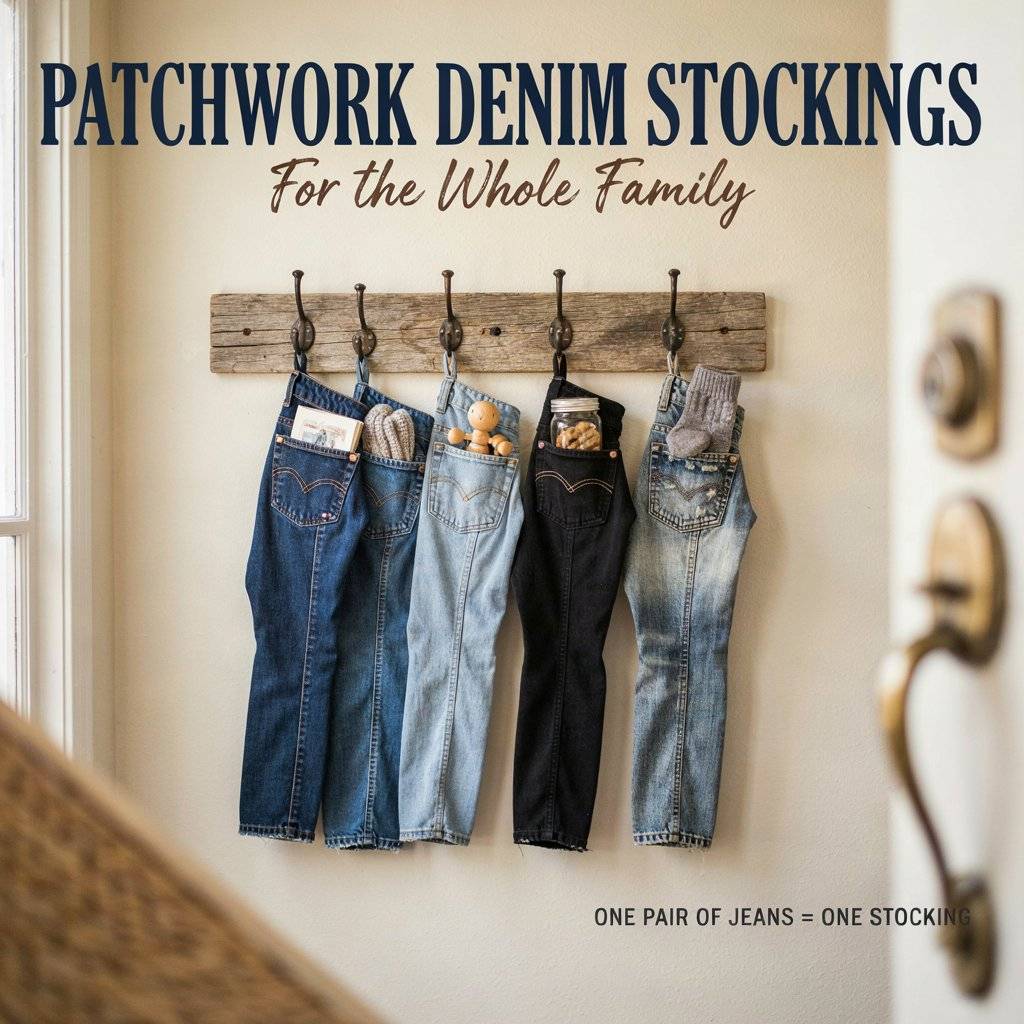
A single pair of adult jeans carries enough usable denim for one large stocking, and almost every part earns a place: the back pocket becomes a working front pocket, the side seams read as ready-made piping, and the hems save you from finishing an edge.
Cut a stocking shape from the leg, position it so the jeans’ back pocket lands on the front, and angle the template across the pocket so it sits high and slightly off to one side rather than dead-center. Keep the original topstitching and rivets in frame, because that gold stitching is the whole reason to start from real jeans rather than a bolt of new denim.
Reinforce the top two corners of the pocket with a short bar tack or a hand-sewn triangle if you want it to hold weight. Make a set in different washes and hang them from a row of hooks beside the door.

7. Denim Pocket Angels for a Tabletop Display

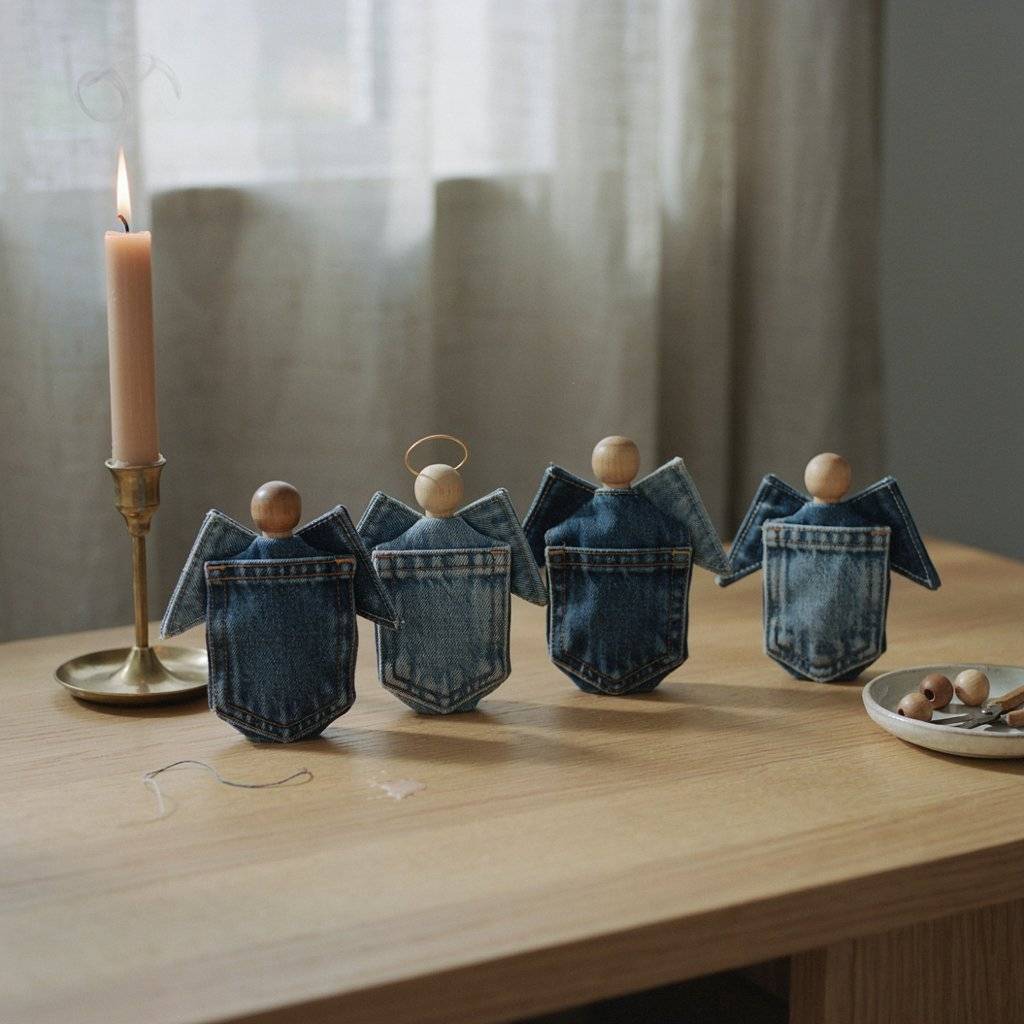
A back pocket is already an angel’s body; you add a head and wings and the hard part is done. Cut the pocket off with a half-inch border of surrounding denim still attached, fold that border back so the pocket’s topstitched outline frames the front, and set a wooden bead above it for the head.
The wings are two small denim triangles or a folded rectangle glued behind the shoulders. Leave the face blank. A plain denim head with a thin gold wire halo reads as deliberate, while two dots of paint turn it into something that looks like a fridge magnet.
Cut the wings a touch smaller than feels right and let the pocket be the biggest shape. Set three or four angels on a console table beside a candle, and they become a quiet focal point without a lot of effort.
8. Ombré Denim Pennant Garland
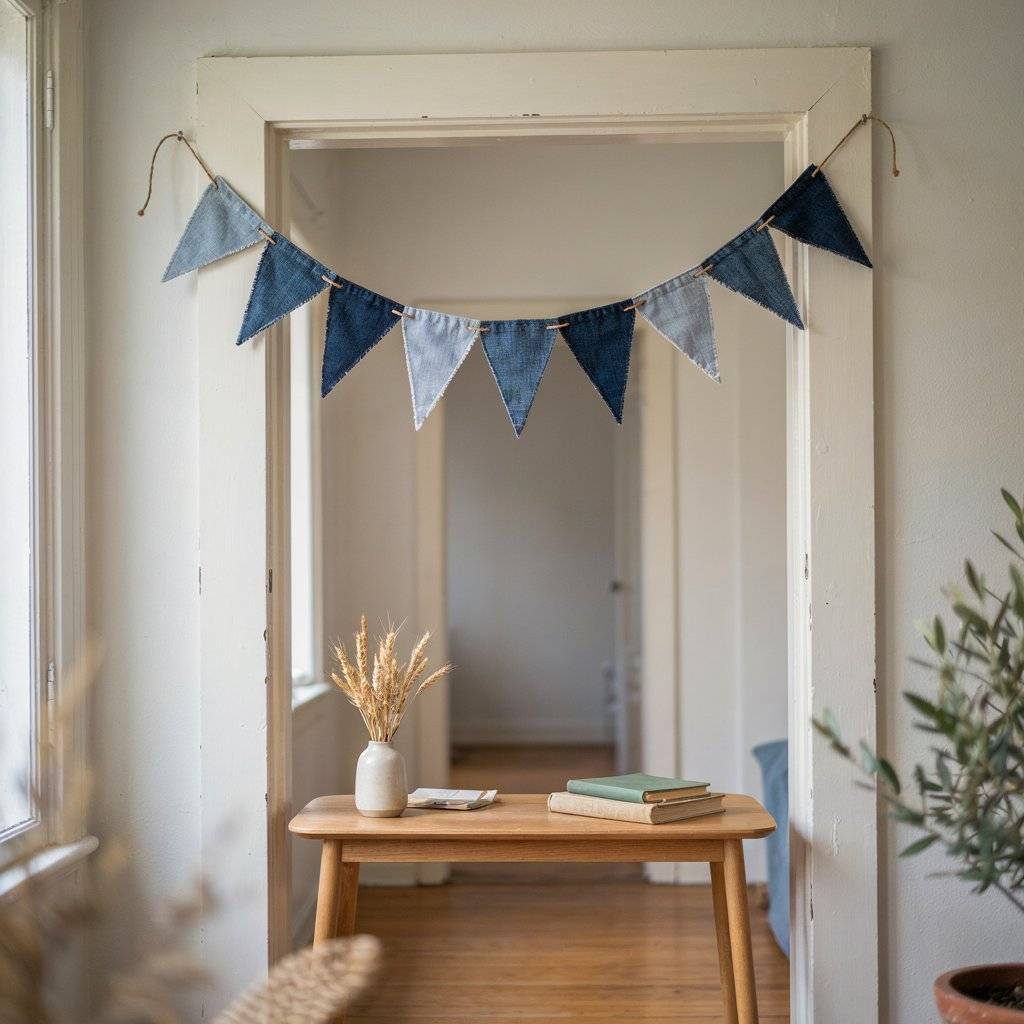
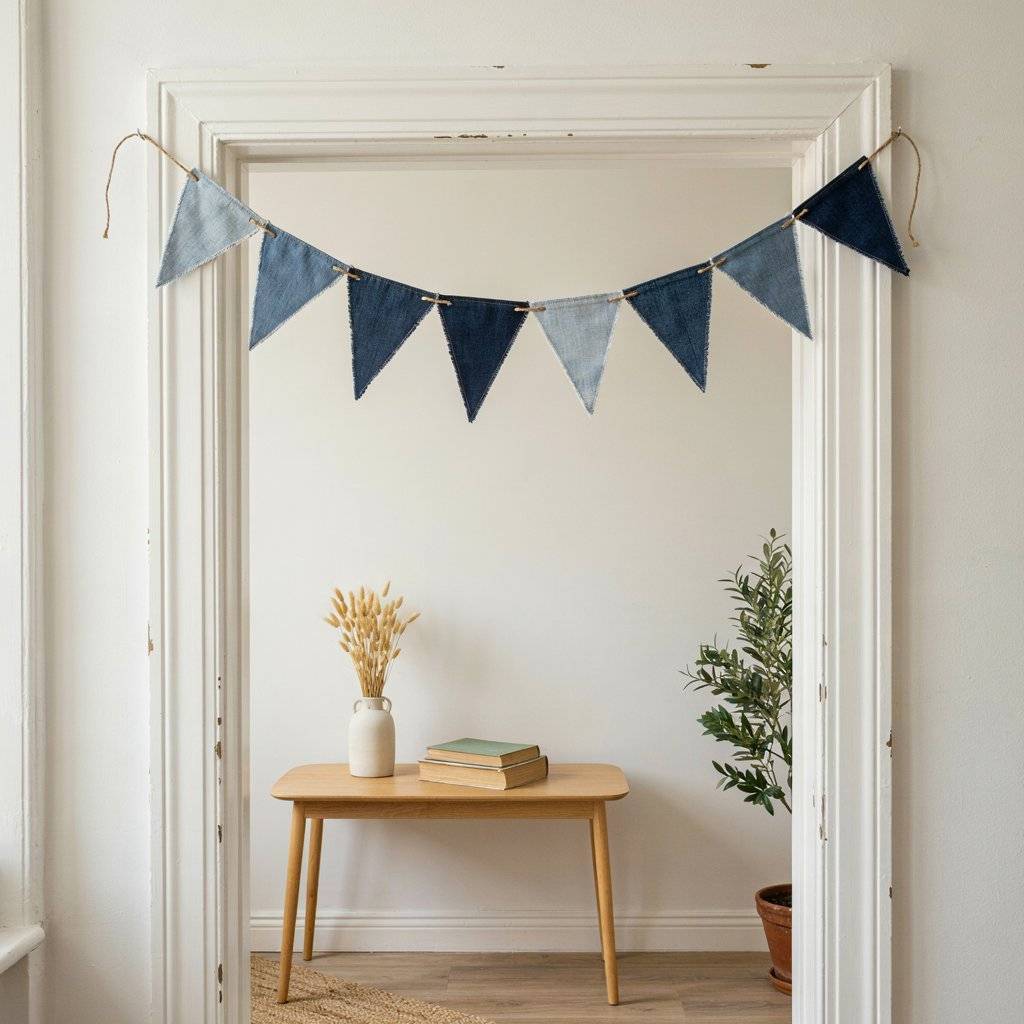
Sort your denim scraps by wash before you cut anything, then cut triangles and hang them in a gradient, palest at one end and darkest at the other. You need at least five distinguishable steps for the gradient to register; four looks like an accident.
If your pile is all mid-blue, a thirty-minute soak in a weak bleach solution gives you the light end, but rinse it properly or the fabric keeps eating itself over the following months.
String the pennants on jute twine with a simple overhand knot between each one, and drape the garland across the top of a doorway or along the edge of a console table.
This is the one denim garland that looks designed rather than salvaged, and it costs nothing but a sorting step and a few evenings of cutting.
9. Denim Star Wall Hanging on a Dowel
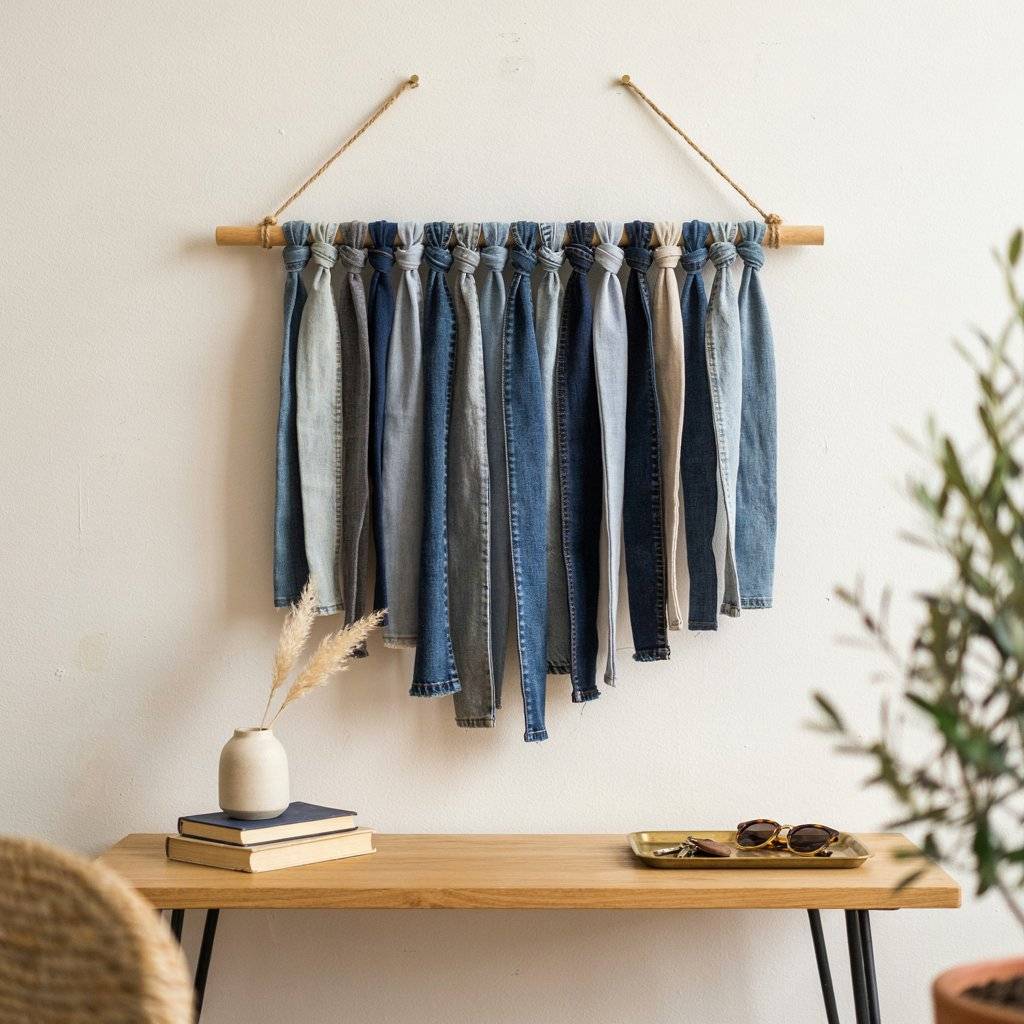
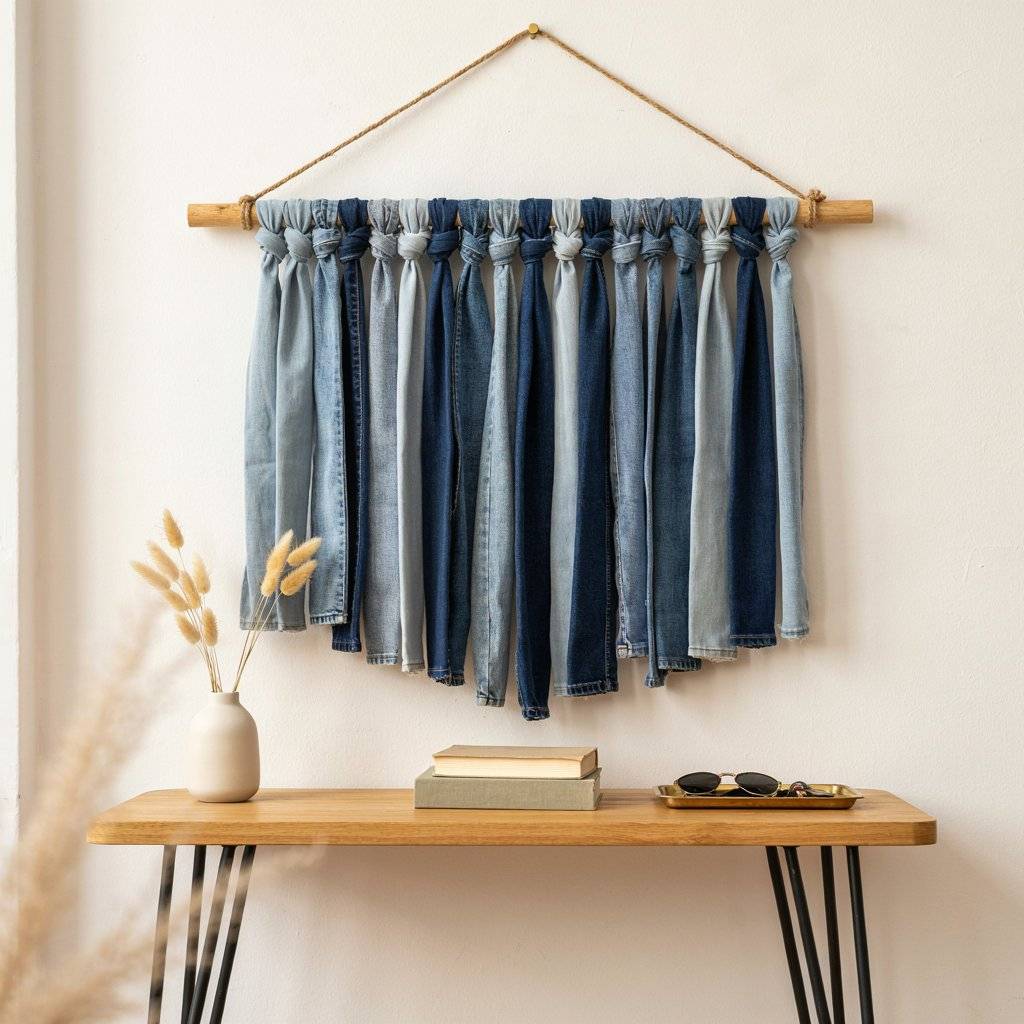
Cut the legs off a pair of jeans and slice the fabric into strips about one to three inches wide. Weave the strips over and under a wooden dowel that is thirty-six inches long, alternating light, medium, and dark washes as you go.
Tie the ends of each strip to the dowel with a simple knot, and trim the loose ends so they hang at slightly different lengths. The result is a textured, woven wall hanging that fills the empty space above a console table or beside the door.
The denim is heavy enough that it hangs straight without a backing, and the variation in wash keeps it from looking like a single blue block. Hang the dowel from two nails or adhesive hooks with a length of twine, and adjust the strips until the bottom edge is roughly even.
10. Belt Loop and Waistband Snowflakes

Belt loops are the most wasted part of a pair of jeans, and five or six of them arranged like spokes make a passable snowflake. Cut them off at the base with their bar-tack stitching intact, fan them out from a small denim center circle, and glue or stitch the inner ends down.
Open a waistband flat and you get longer straight arms for a bigger flake, or a whole second size. These snowflakes work as ornaments on a small tree, but they also look good pinned to a corkboard or hung from a row of hooks in the entryway.
The bar-tack stitching on each belt loop gives you a little detail where the arms meet the center, and the whole project uses parts of the jeans that most people throw away.

Frequently Asked Questions
Do I need a sewing machine for these projects?
No. Several of the ideas here, including the rag wreath, the pocket bunting, the star garland, and the belt loop snowflakes, require no sewing at all.
Fusible web and fabric glue handle the joining on most of the smaller pieces, and the only project that really benefits from a machine is the pie-wedge tree skirt.
What kind of jeans work best for denim Christmas decor?
Heavier, non-stretch denim behaves best because it holds its shape and frays cleanly. Thin stretch denim with elastane curls and puckers, which makes it hard to work with on anything that needs to lie flat.
If you only have stretch jeans, save them for the rag wreath or the pocket bunting, where the curl does not matter as much.
How do I keep the raw edges from fraying too much?
A little fray is the point with denim, but if you want to control it, run a line of fabric glue or Fray Check along the cut edge after you finish the project.
For the no-sew star garland, the fusible web between the layers grips the surrounding threads and keeps the raveling to a minimum on its own.
Can I wash these decorations?
Spot clean them with a damp cloth and mild soap rather than putting them in the washing machine. The knots on the wreath and the bunting can loosen with agitation, and the fusible web on the star garland can lift if it gets soaked. A quick dusting with a lint roller between seasons is usually all they need.
Conclusion
An entryway is the first thing people see when they walk into your home, and it is also the easiest place to experiment with decor because the stakes are low. A denim wreath on the door, a pocket bunting across a mirror, and a few seam ornaments on a small table do not need to match perfectly.
They need to look like someone who lives there made an effort. The jeans in your closet already have the texture, the fading, and the stitching that make them interesting. Cutting them up and turning them into something new for Christmas is a way of keeping the good parts and letting the worn-out parts go.
Start with the rag wreath or the pocket bunting if you want something finished in an evening. Save the tree skirt for a weekend when you have a few hours and a pair of sharp scissors. The entryway will look better for it, and so will the pile of jeans you were not sure what to do with.
Related Post: