
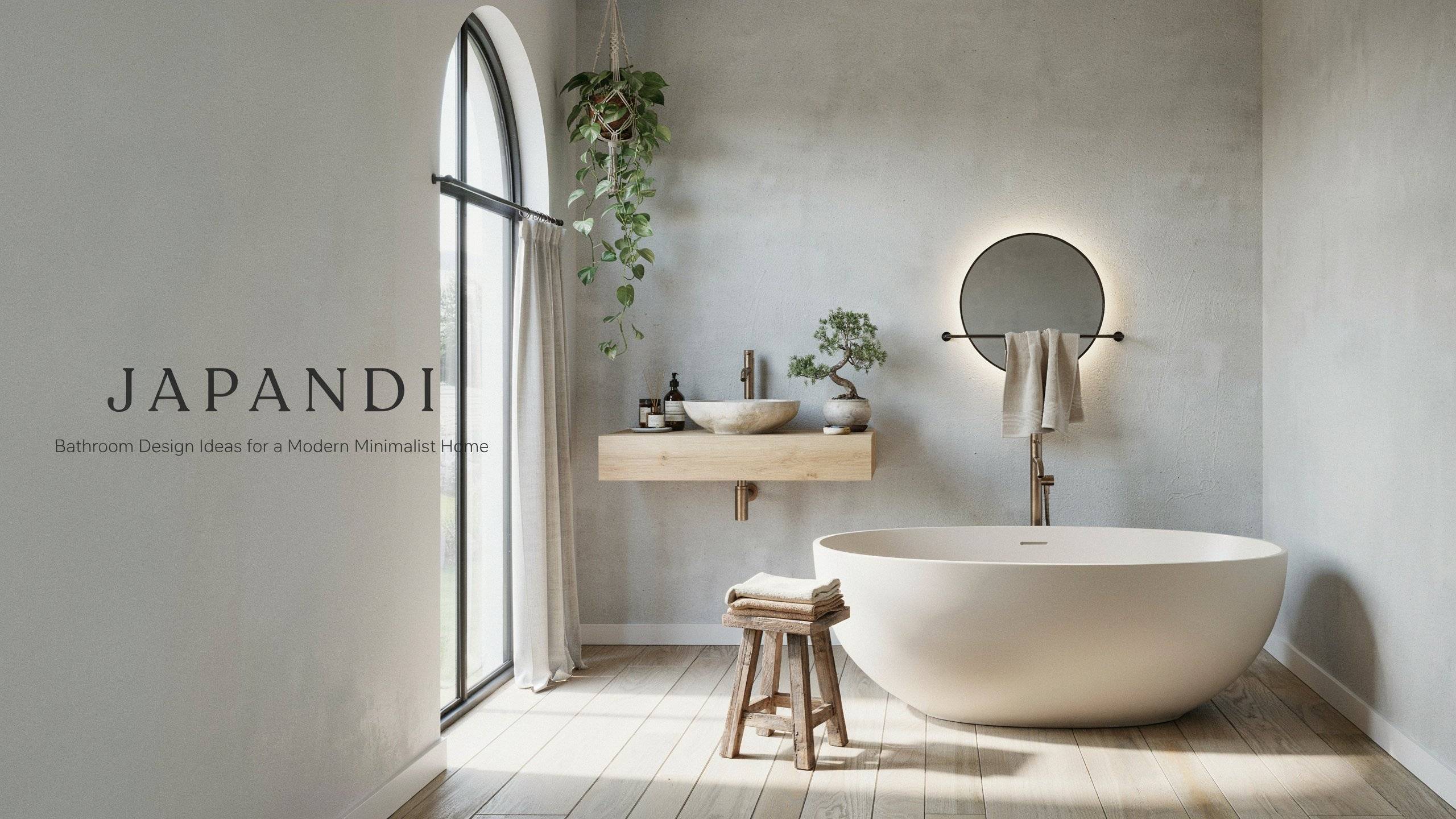
The bathroom is often the smallest room in the house, but it’s also where we start and end each day. Why not make it a place that actually helps you feel calm? That’s exactly what Japandi design does.
Think of it as a mix of simple Japanese style and the cozy, practical feel of Scandinavian design. The result is a space that looks clean and feels warm, not cold or empty.
With a few smart changes like swapping out a plastic soap dish for a wooden one or adding a small plant you can make your bathroom feel more like a retreat. In this post, I’ll walk you through 18 simple ideas to bring Japandi style into your own home.
Why Japandi Bathrooms Are Worth Your Time
In a busy world, our homes should help us slow down. Japandi design cuts out the clutter and focuses on what matters: natural materials, soft light, and things that actually work well. This style is popular right now because it’s not a trend that will look dated next year.
It’s built on timeless ideas that have been around for a long time. Japanese design teaches us about “wabi-sabi,” which is finding beauty in things that are imperfect or natural. Scandinavian design brings in the idea of “hygge,” which is all about feeling cozy and content. Put them together, and you get a bathroom that feels both peaceful and practical.
18 Japandi Bathroom Design Ideas
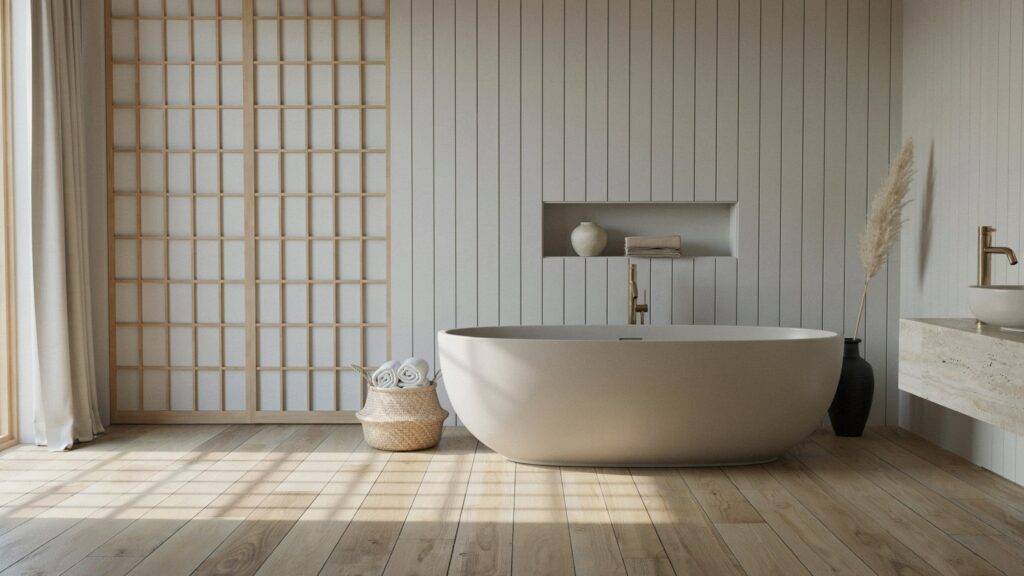
1. Start with a Neutral Color Palette
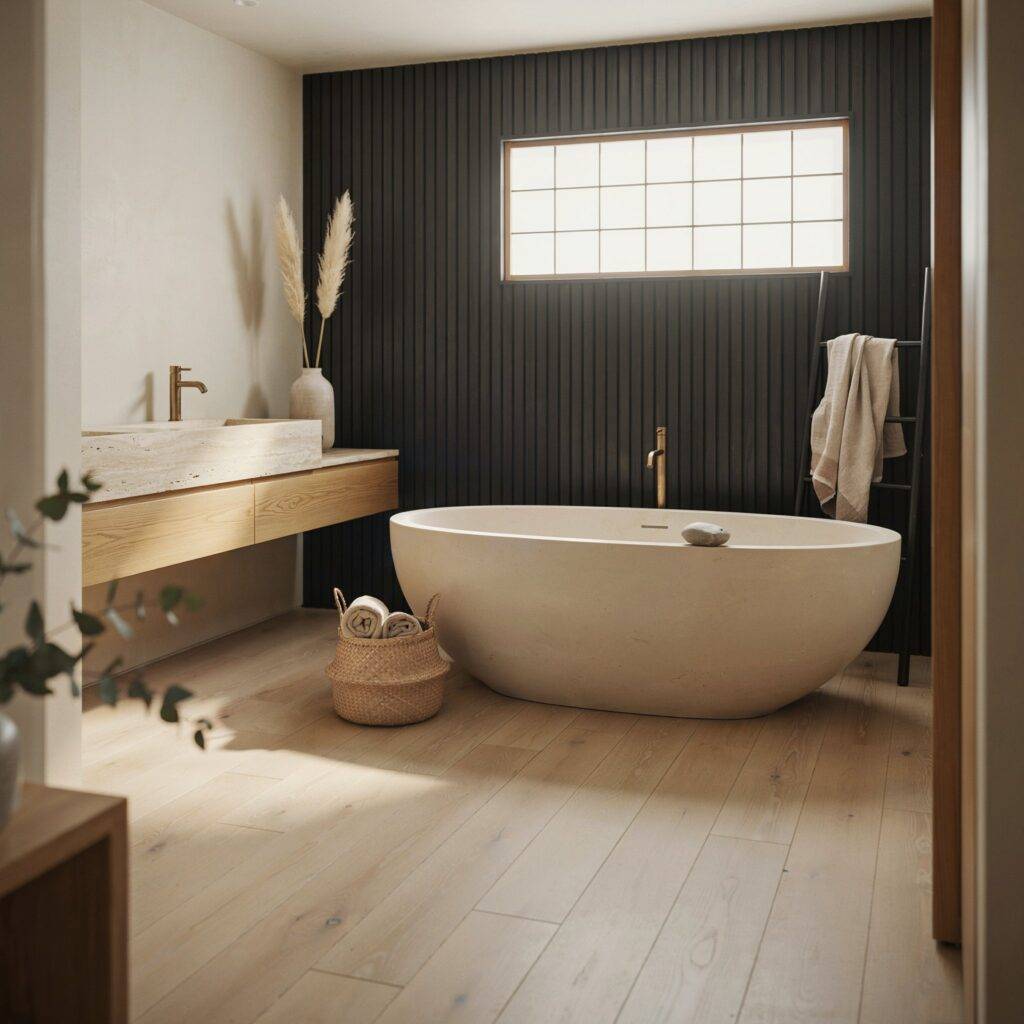
Japandi bathrooms stay away from bright colors. Stick with whites, warm beiges, soft greys, and earthy browns. These shades don’t fight for attention. Instead, they let the shapes and textures of your space stand out. Think of the color of sand, stone, or light wood.
You can add a little depth with a darker accent wall, but keep things mostly light and airy. This simple choice alone will make your bathroom feel more open and calm.
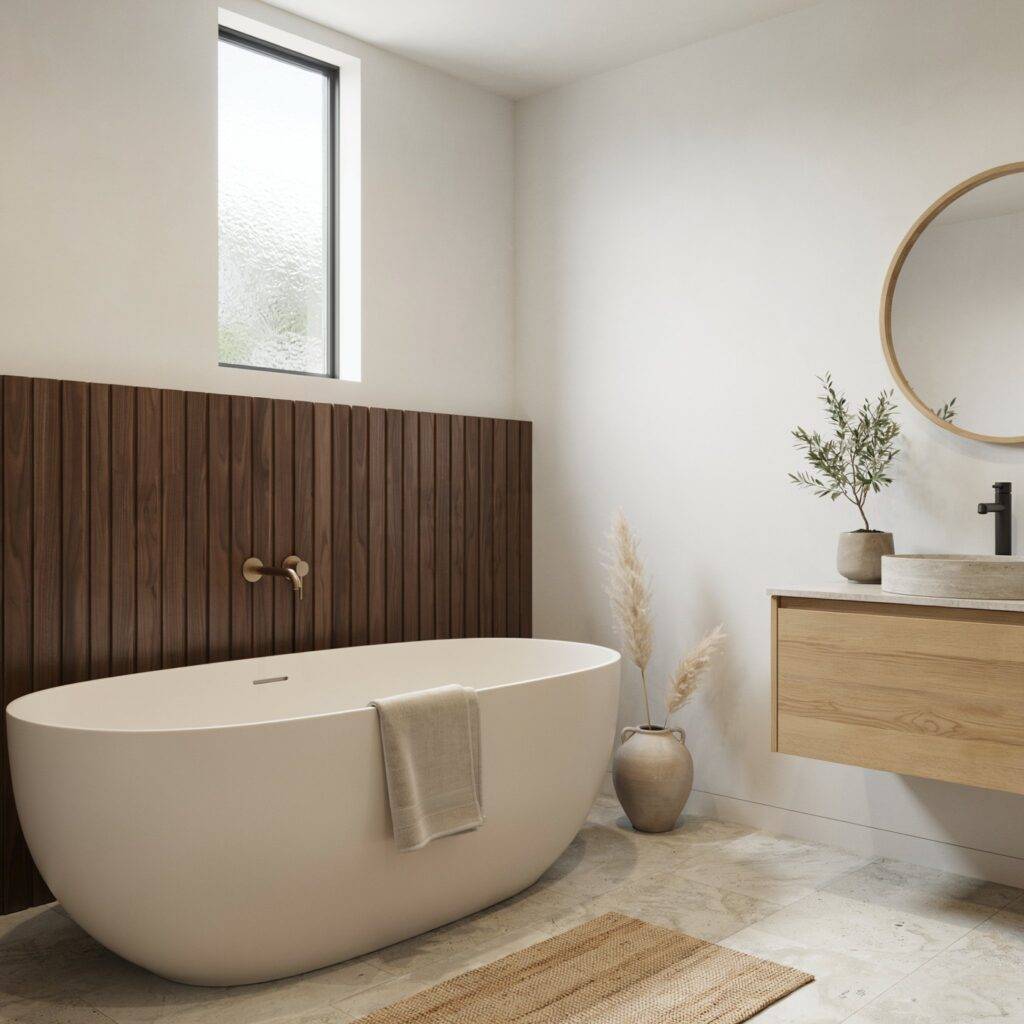
2. Bring in Natural Wood
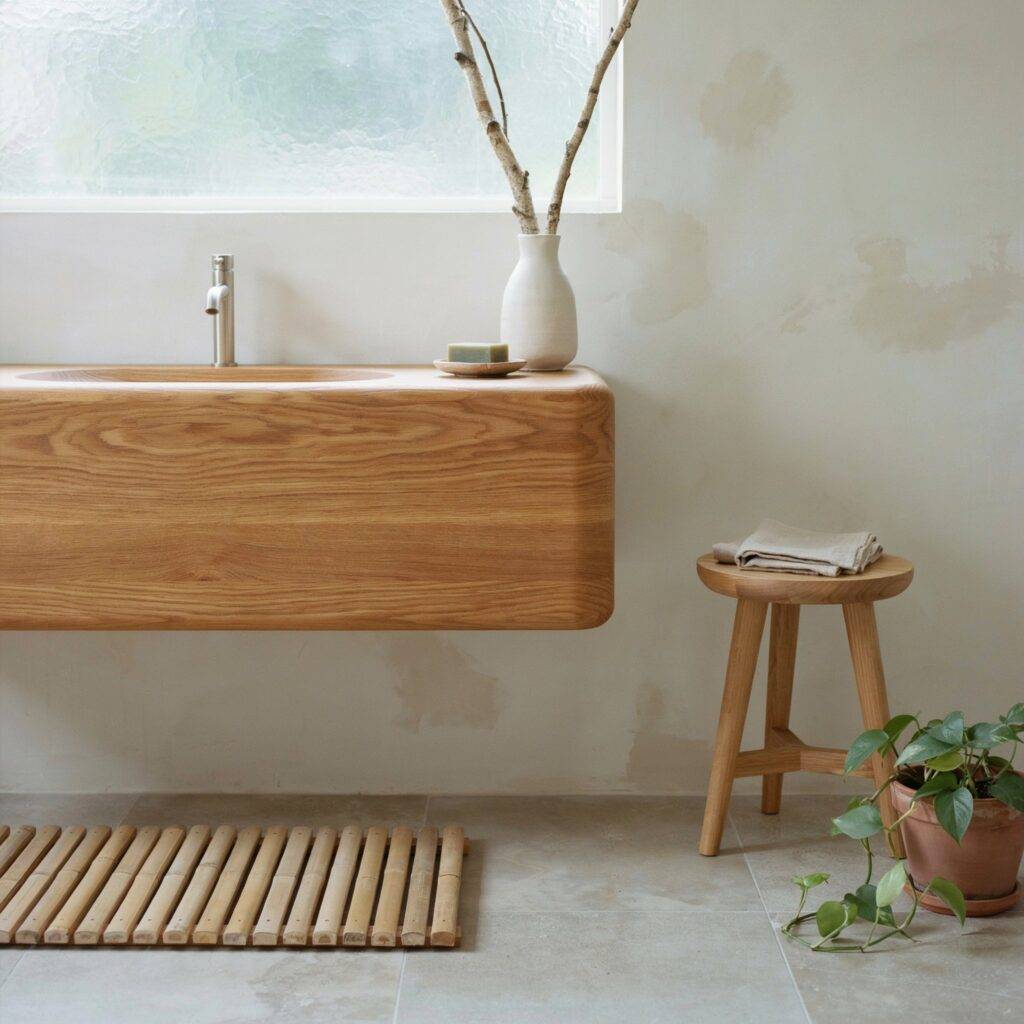
Wood is the heart of any Japandi space. Look for warm woods like oak, teak, or bamboo. A wooden vanity, a small stool, or even just a bamboo bath mat can add a lot of warmth. The key is to leave the wood looking natural.
Go for matte finishes instead of shiny ones. Wood brings in that Scandinavian cozy feeling and balances out the more simple, clean lines from Japanese design.
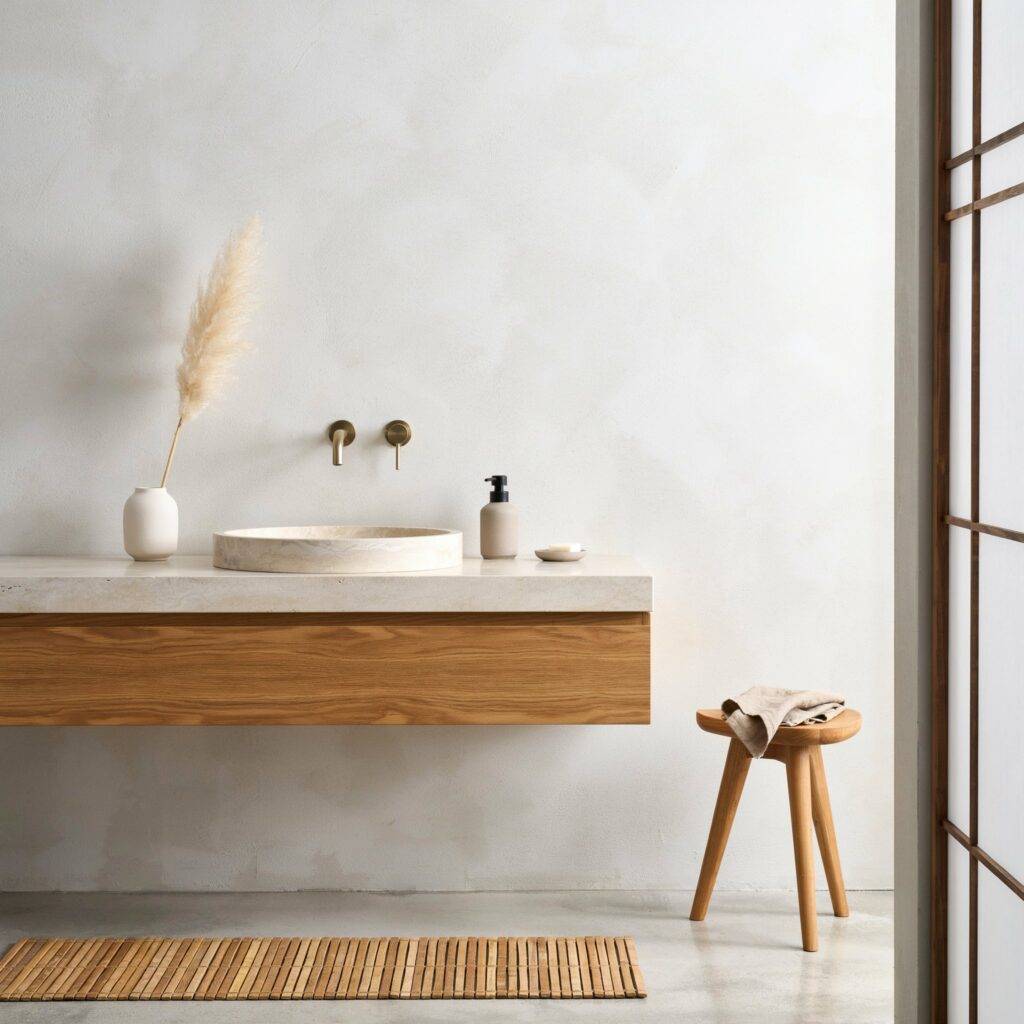
3. Add Stone Elements
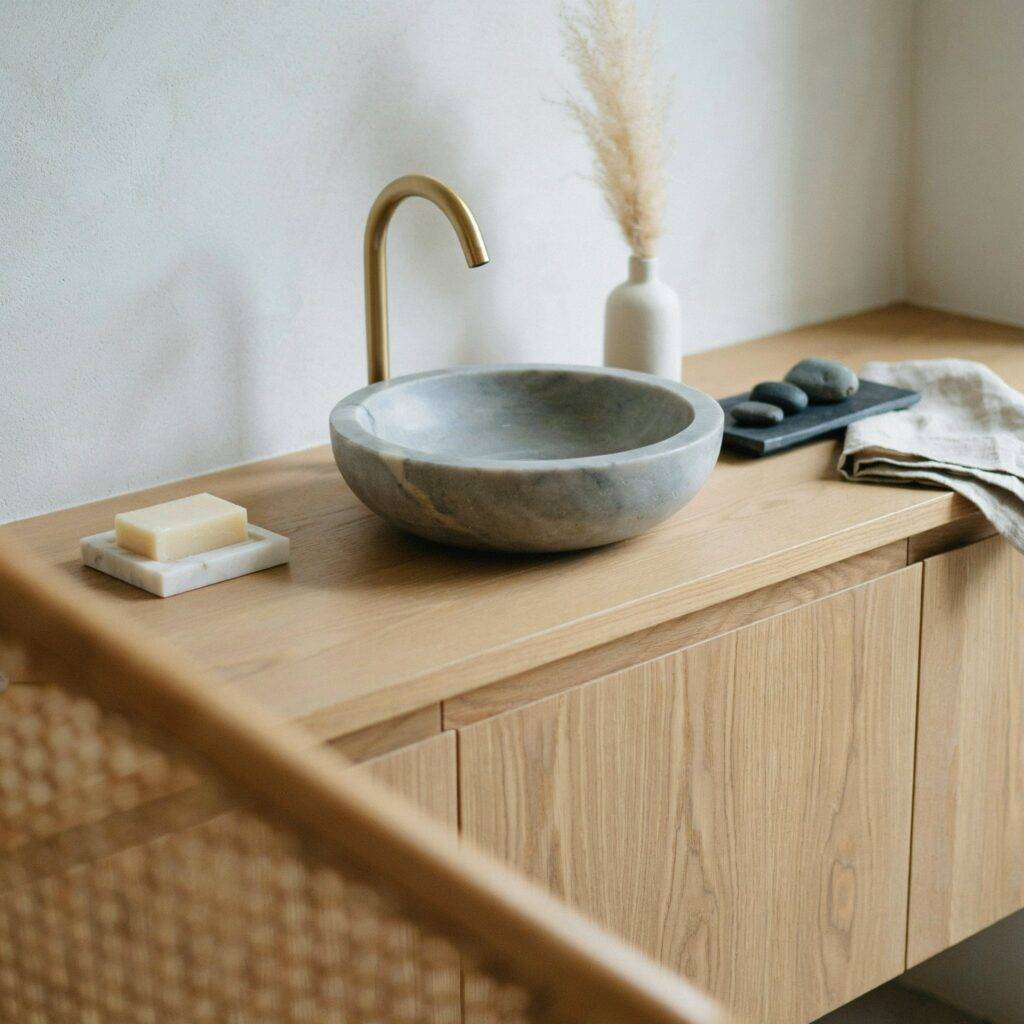
Stone adds a sense of permanence and quiet. You don’t need a whole stone wall. A simple stone sink, a few river rocks in a tray, or a soap dish made of marble or slate works great.
Stone feels cool and smooth, which is a nice contrast to warm wood. It also ties your bathroom back to nature, which is a big part of Japandi style.
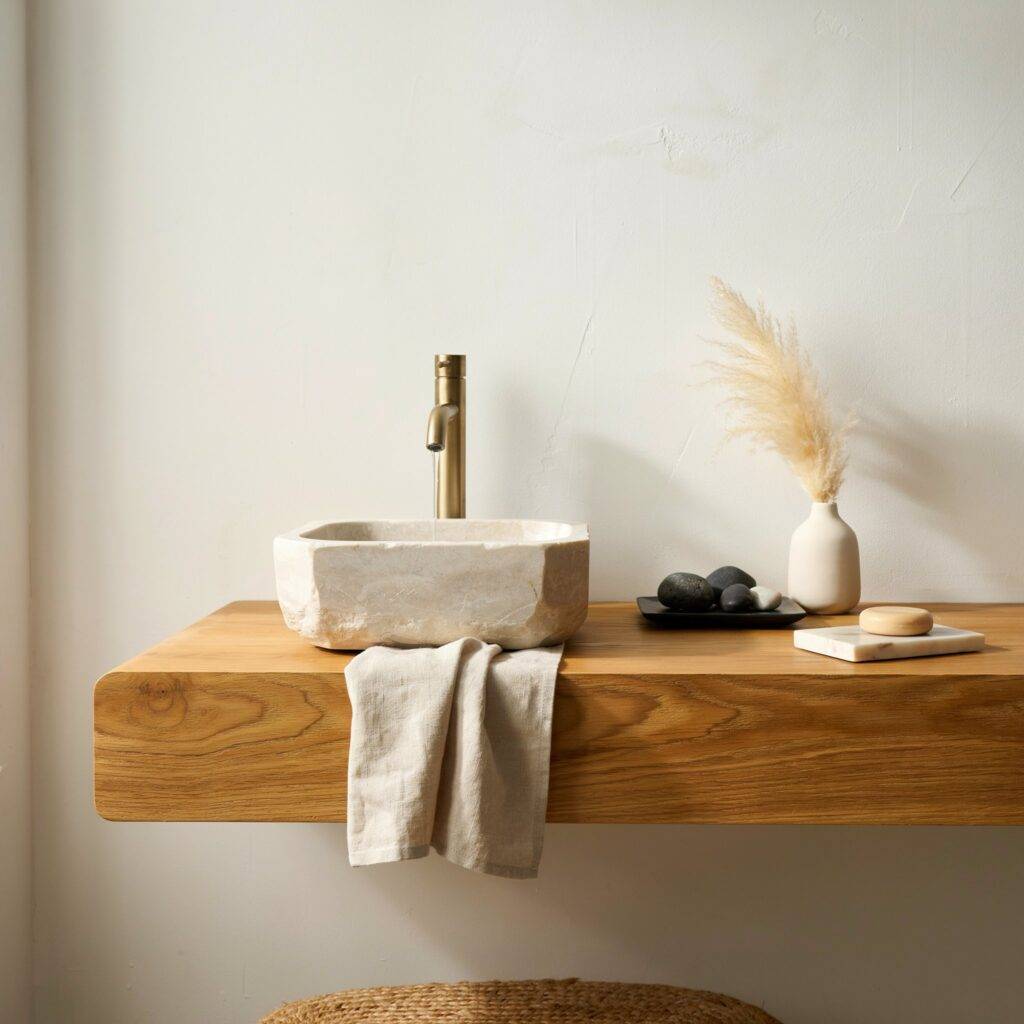
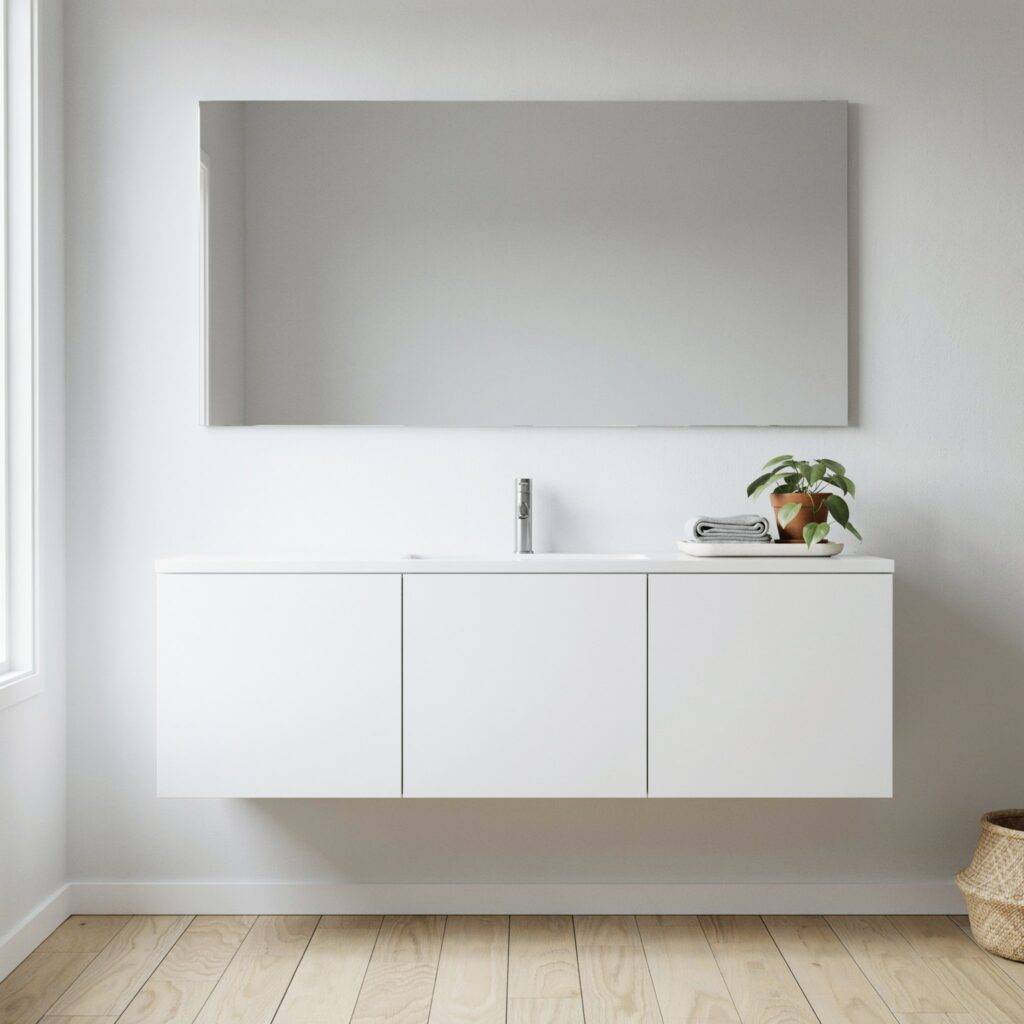
4. Install a Floating Vanity
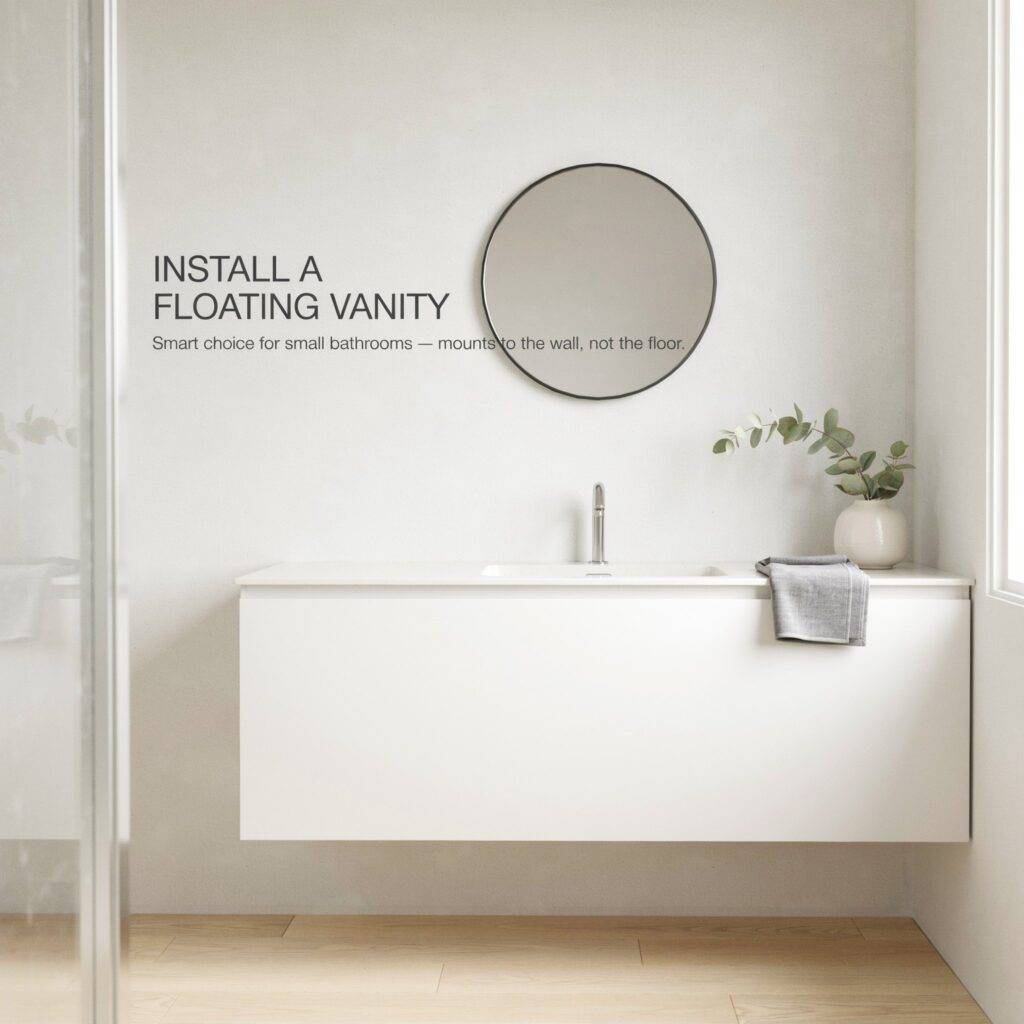
A floating vanity is a smart choice for small bathrooms. Because it’s attached to the wall and not the floor, it makes the room look bigger.
You see more floor space, which tricks the eye into thinking the room is more open. Look for a simple, flat-front design in light wood or matte white. Avoid vanities with lots of handles or detailed carvings. Keep it clean and simple.
5. Use Soft, Warm Lighting
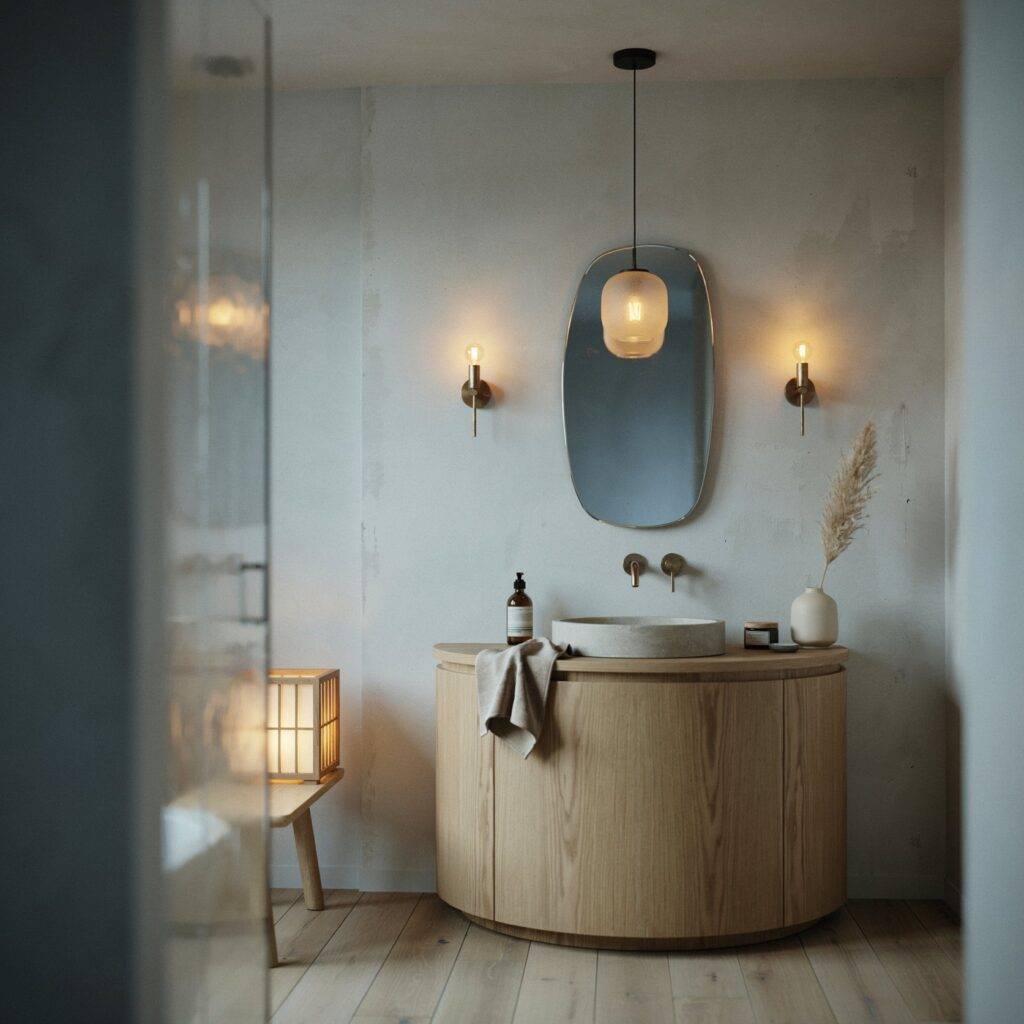
Bright overhead lights can feel harsh. Japandi bathrooms use soft, layered lighting. Think of a warm pendant light over the sink, small sconces on either side of the mirror, or even a paper lantern.
The goal is to create a soft glow, not a spotlight. If you can, install a dimmer switch. That way, you can turn the lights down for a bath at night. Good lighting changes everything.
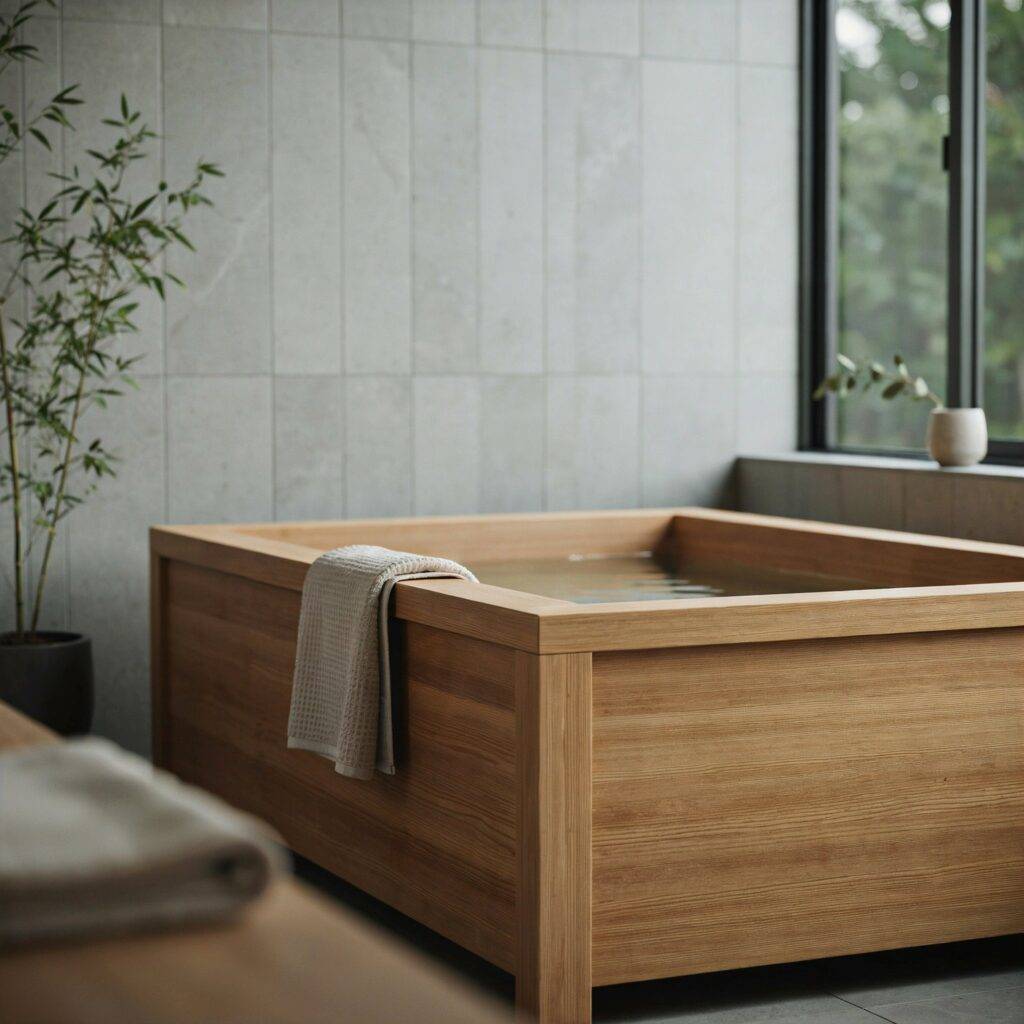
6. Add a Japanese Soaking Tub (Ofuro)
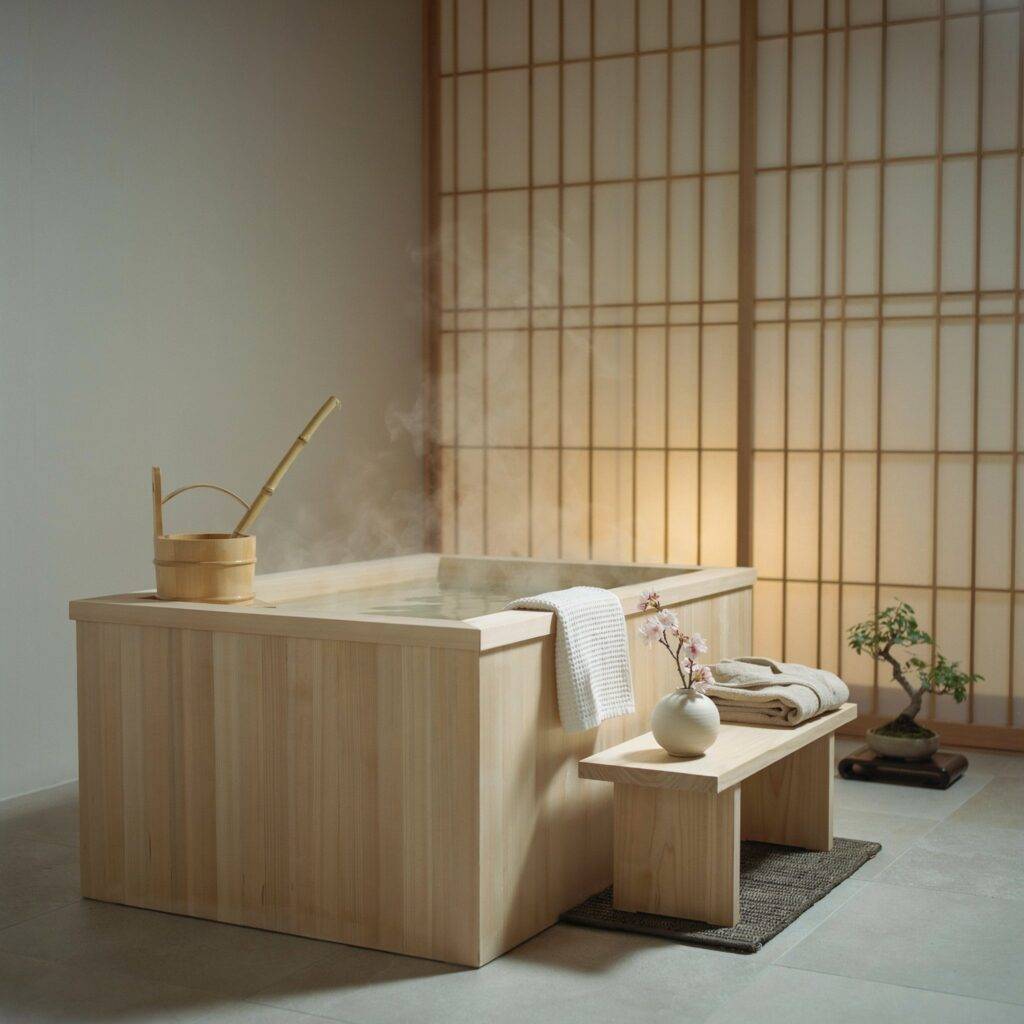
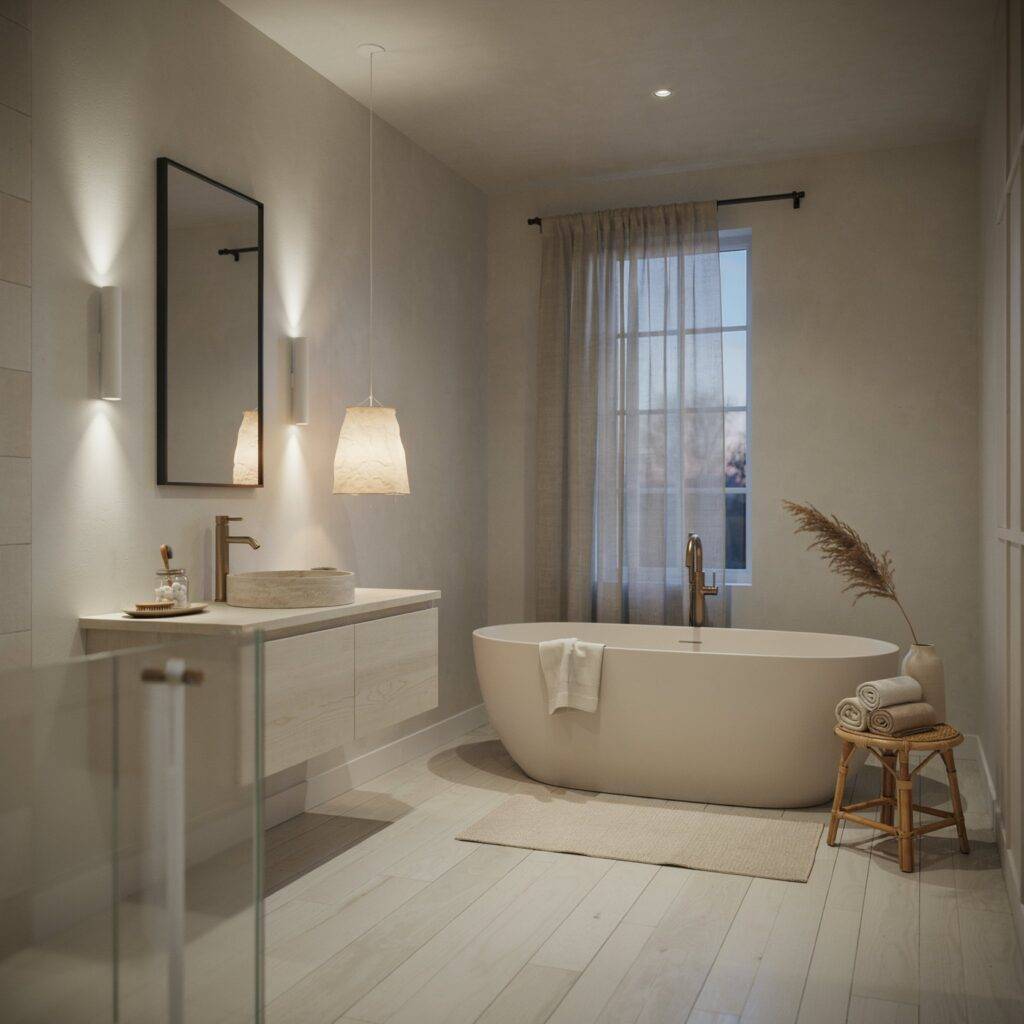
If you have the space and the budget, a Japanese soaking tub is a real treat. These tubs are deeper than standard ones, so you can soak up to your shoulders. They are usually made of wood, stone, or acrylic.
Even a small one fits in a tight space. It turns your bathroom into a mini spa. Check price on Amazon.com for options like the Vintage Tub & Bath Kyoto Round Japanese Soaking Tub or the KunMai Japanese Bathtub.
7. Choose Simple, Clean Fixtures
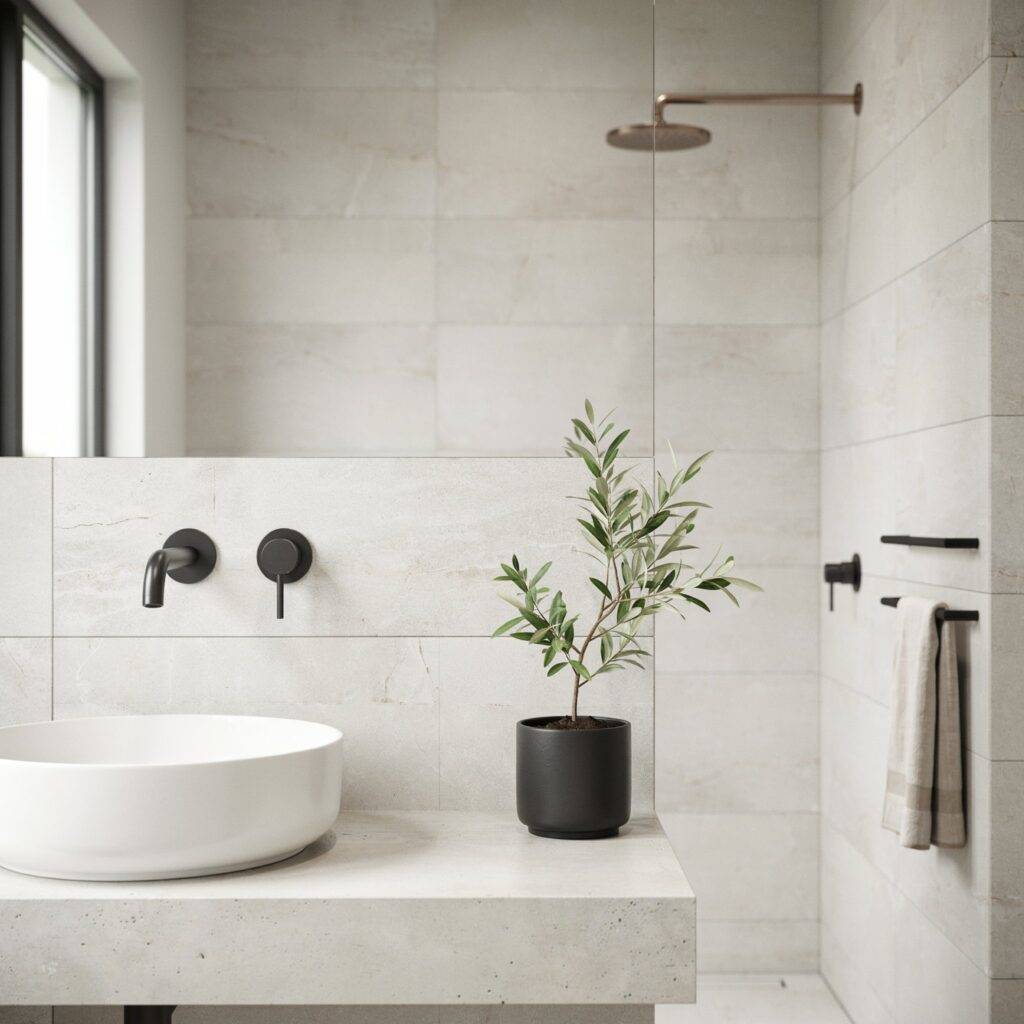
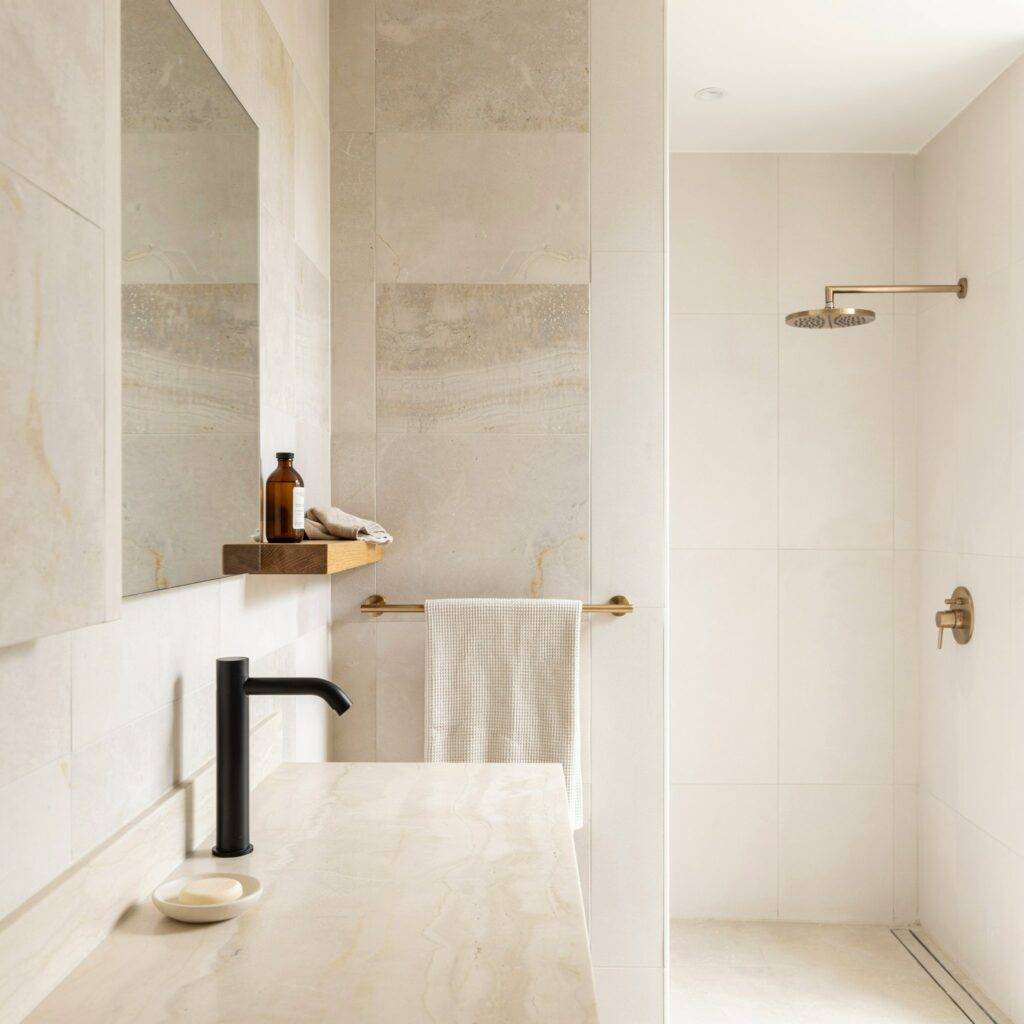
Your faucet, shower head, and towel bars should not be fancy. Look for matte black, brushed brass, or simple chrome. The shape should be straight and simple.
No curly handles or complicated designs. These pieces are like the jewelry of your bathroom. They should add a little shine without screaming for attention.
8. Bring in a Live Plant
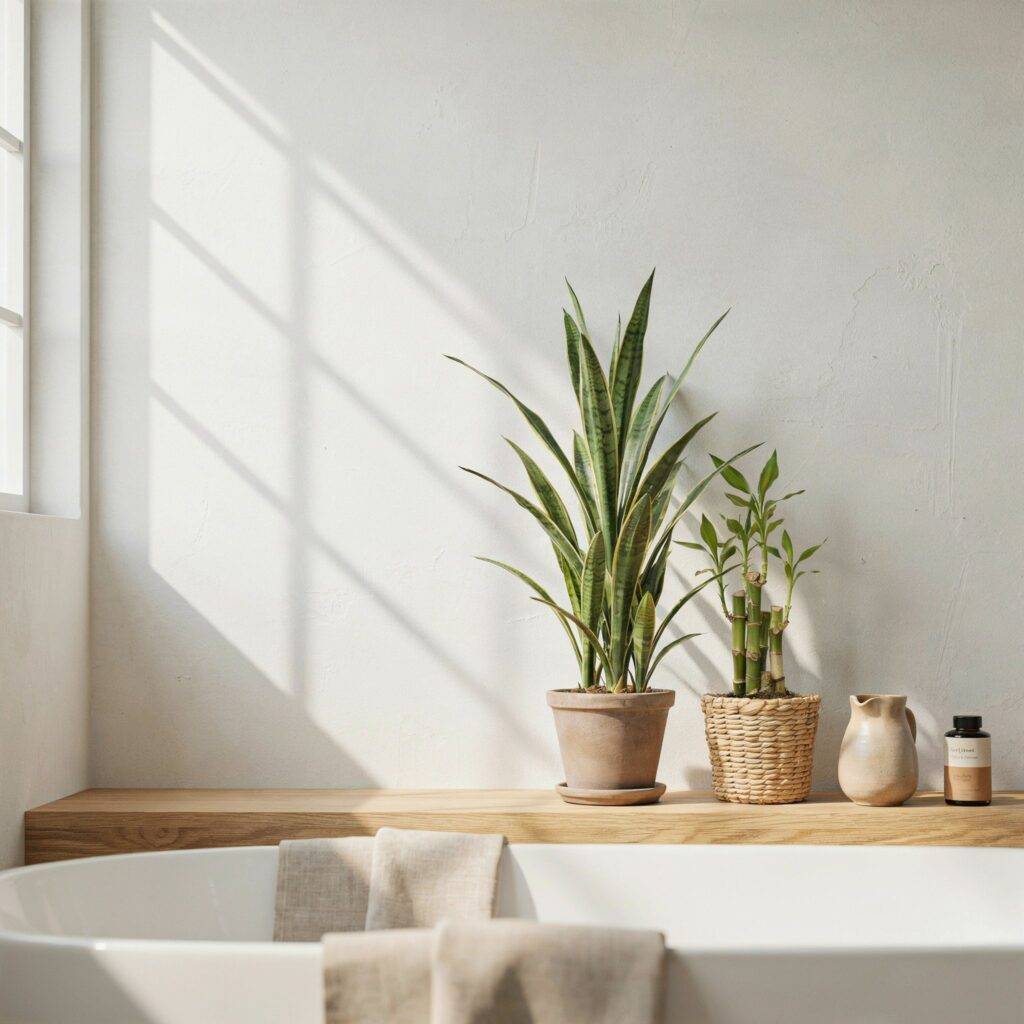
Plants are not just for decoration. They clean the air and add life to a room. For a Japandi bathroom, pick plants that like humidity.
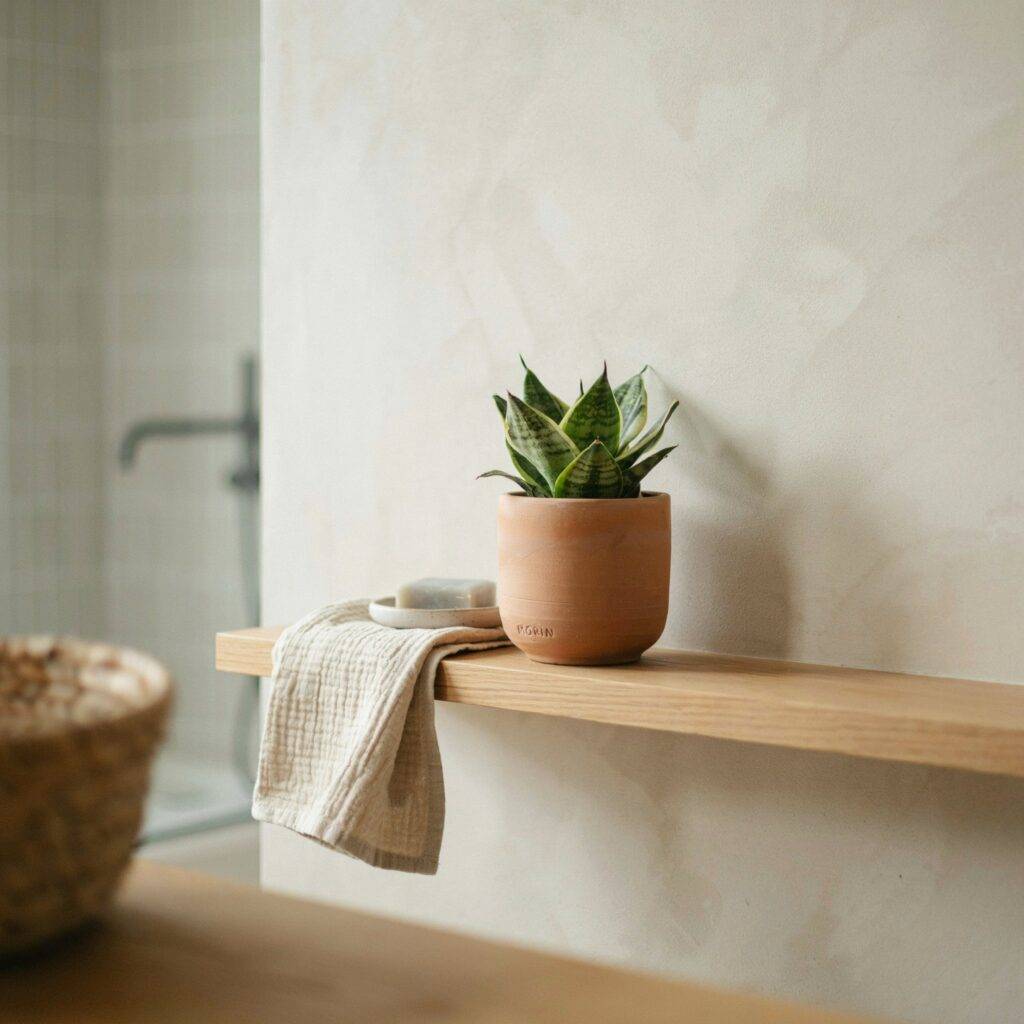
A small bamboo plant, a snake plant, or a peace lily are all great choices. Put it in a simple clay pot or a woven basket. The green color against the neutral walls looks fresh and natural.
9. Use Linen or Cotton Textiles
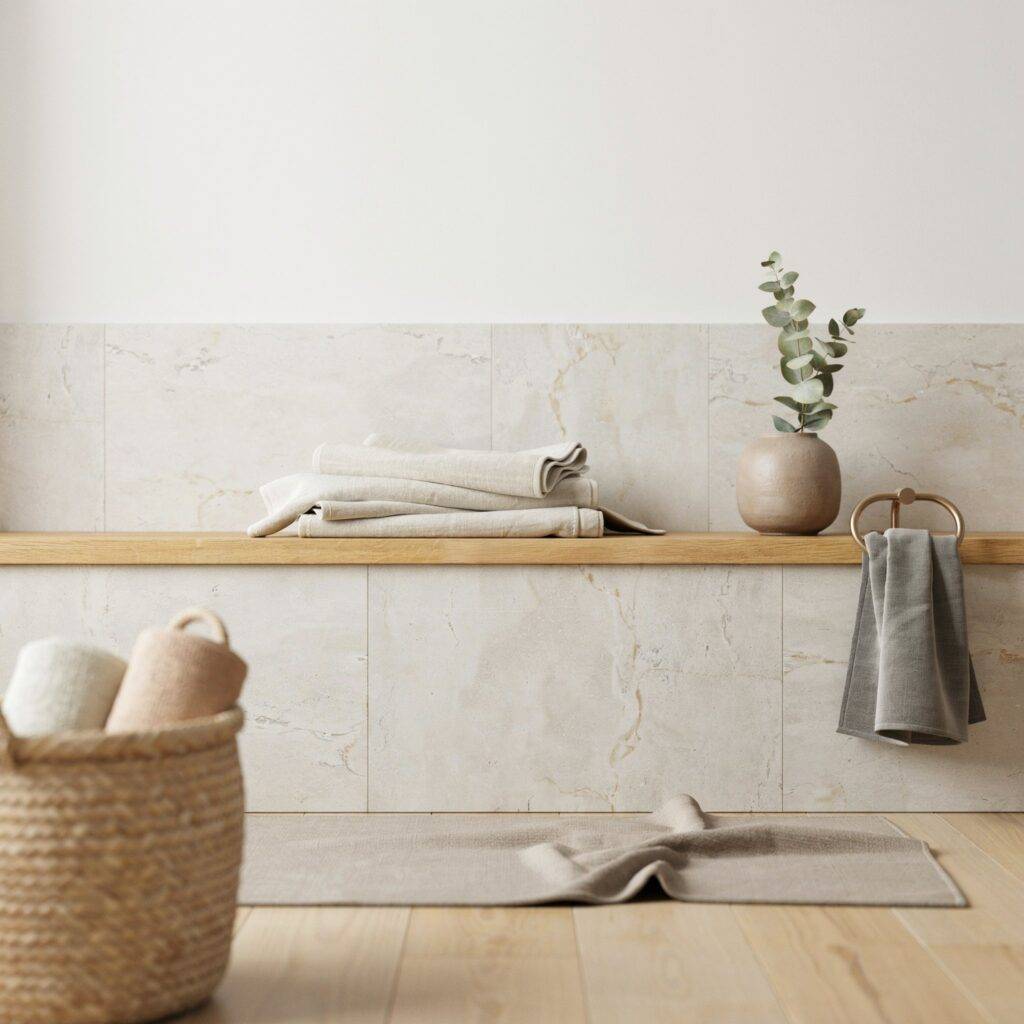
Say goodbye to fuzzy, bright towels. Japandi style uses towels and bath mats made of natural fibers. Look for 100% linen or organic cotton in cream, grey, or soft brown.
These materials feel nice on your skin and look a bit rumpled, which is part of the wabi-sabi charm. They also dry faster than thick towels.
10. Keep Countertops Clear
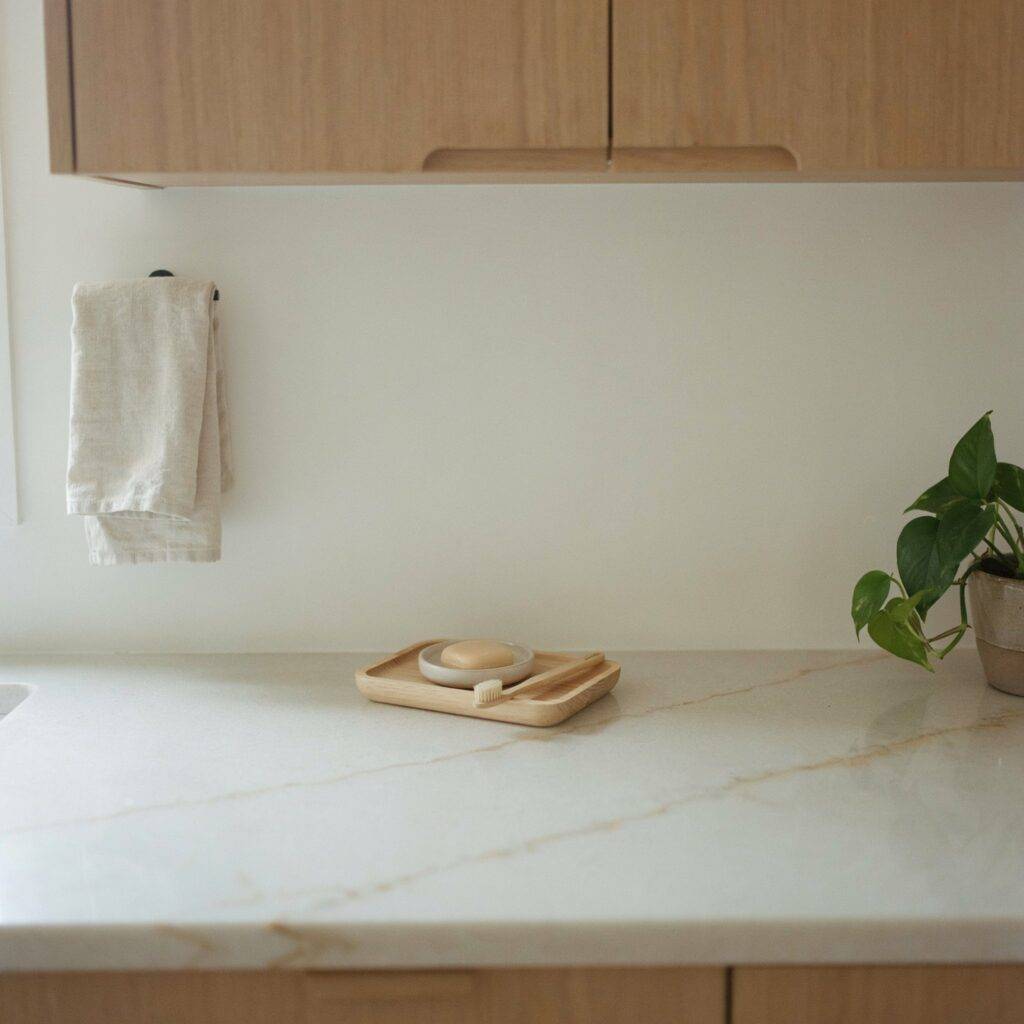
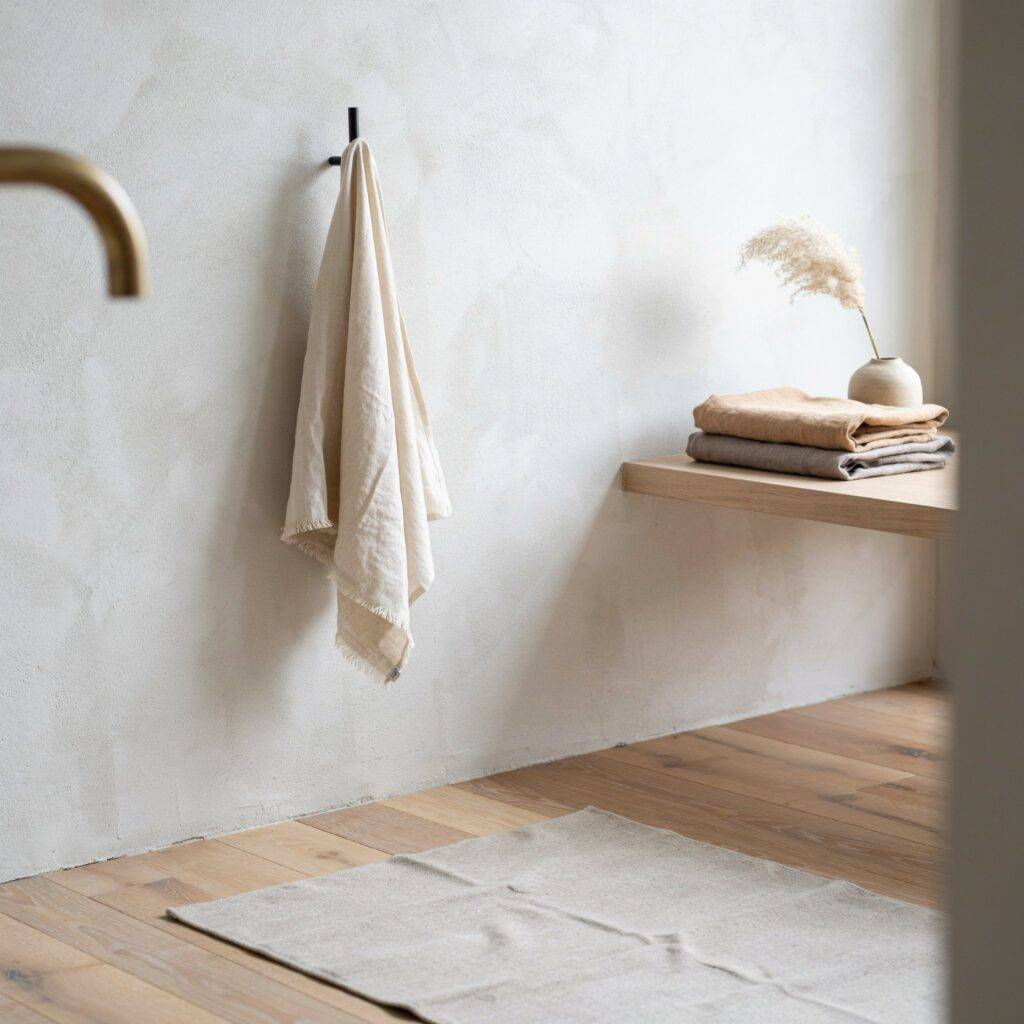
Clutter is the enemy of Japandi design. Your bathroom counter should only have what you use every day. Put everything else in a drawer or cabinet.
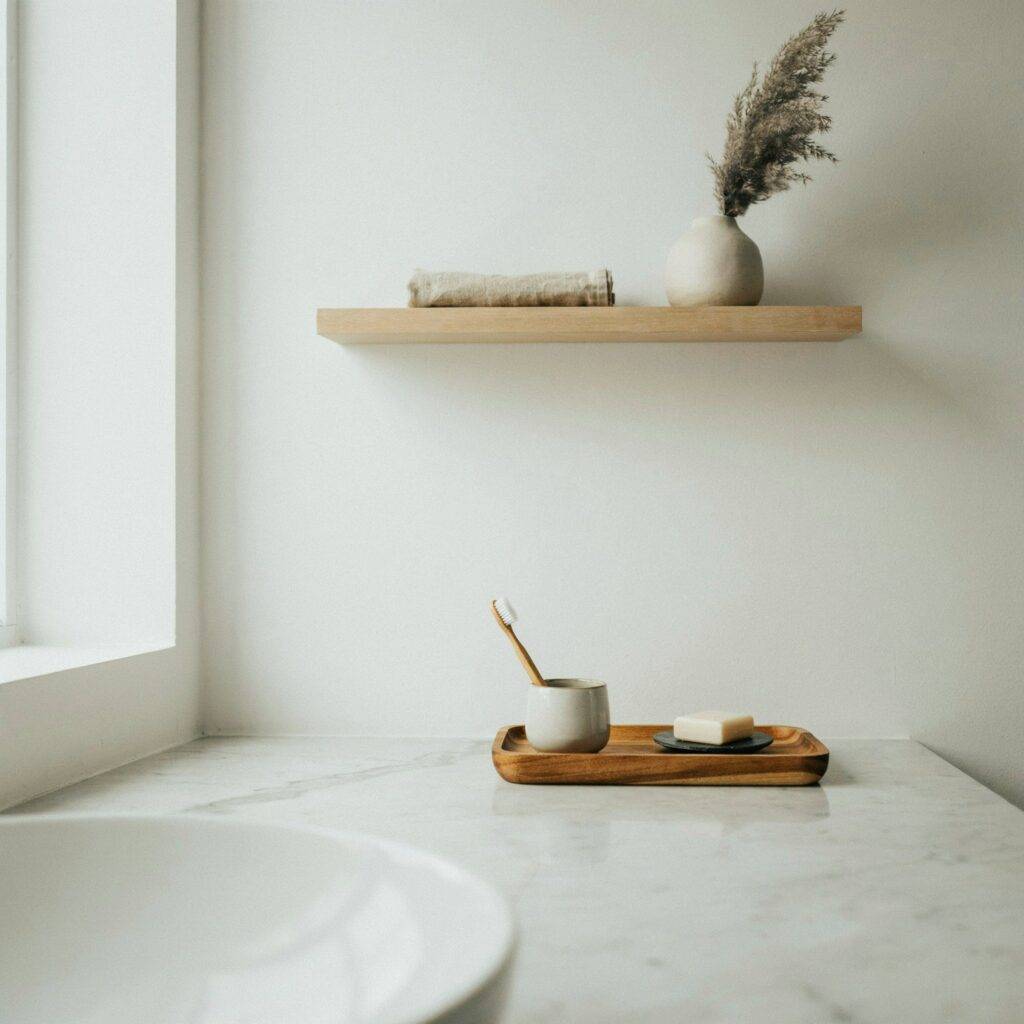
Use a small wooden tray to hold your soap and toothbrush. This one habit putting things away will instantly make your bathroom feel more peaceful.
11. Add a Bamboo Ladder Towel Rack
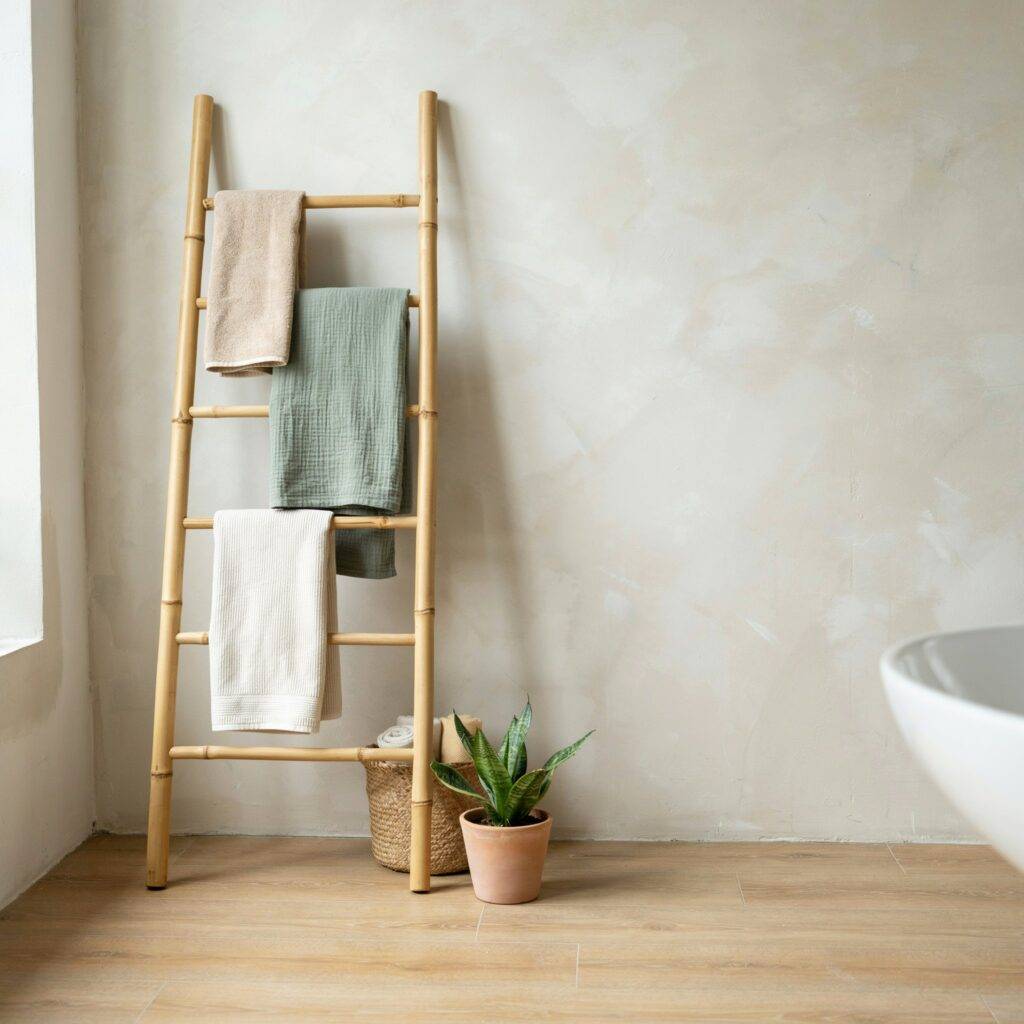
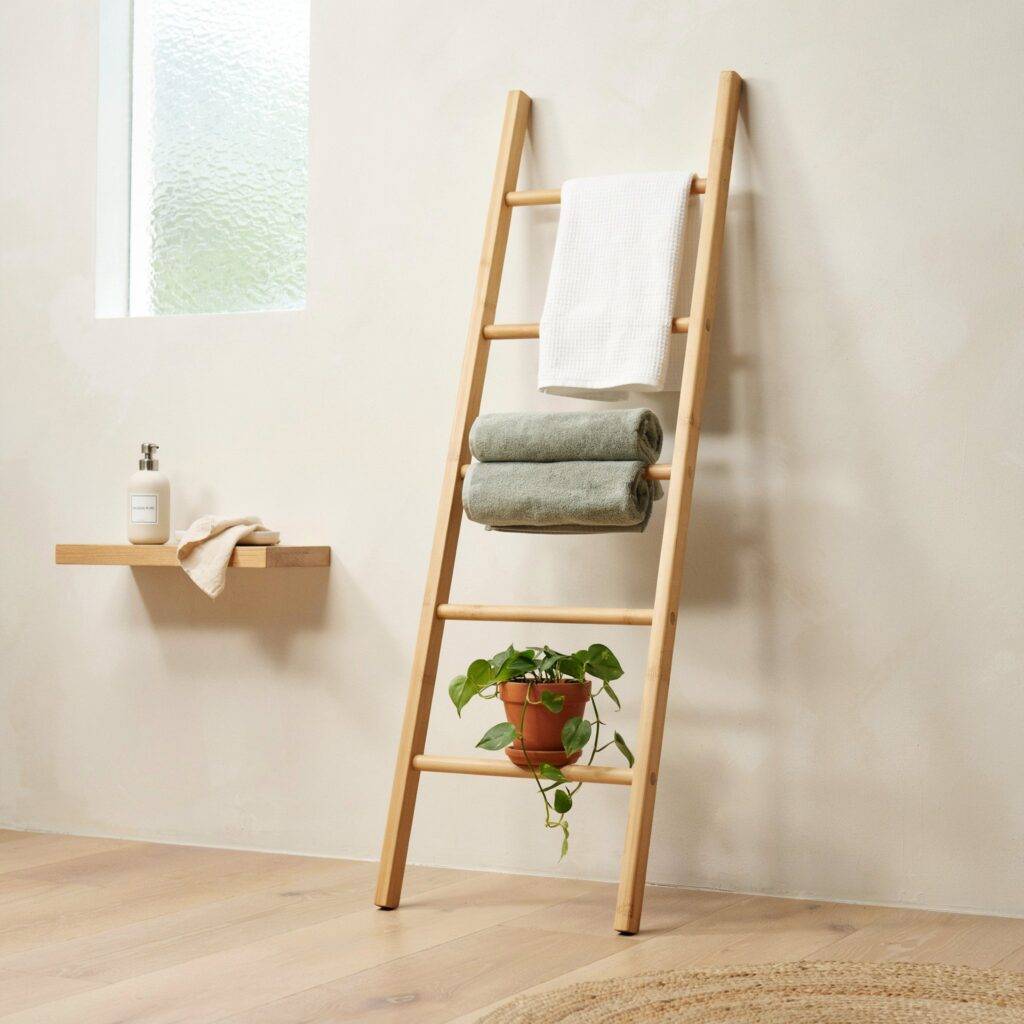
A ladder towel rack is both useful and nice to look at. You can lean it against the wall and hang your towels on the rungs.
Bamboo is a great choice because it’s light, strong, and fits the natural look. It also takes up very little floor space, so it works well in small bathrooms.
12. Try Wabi-Sabi Wall Art
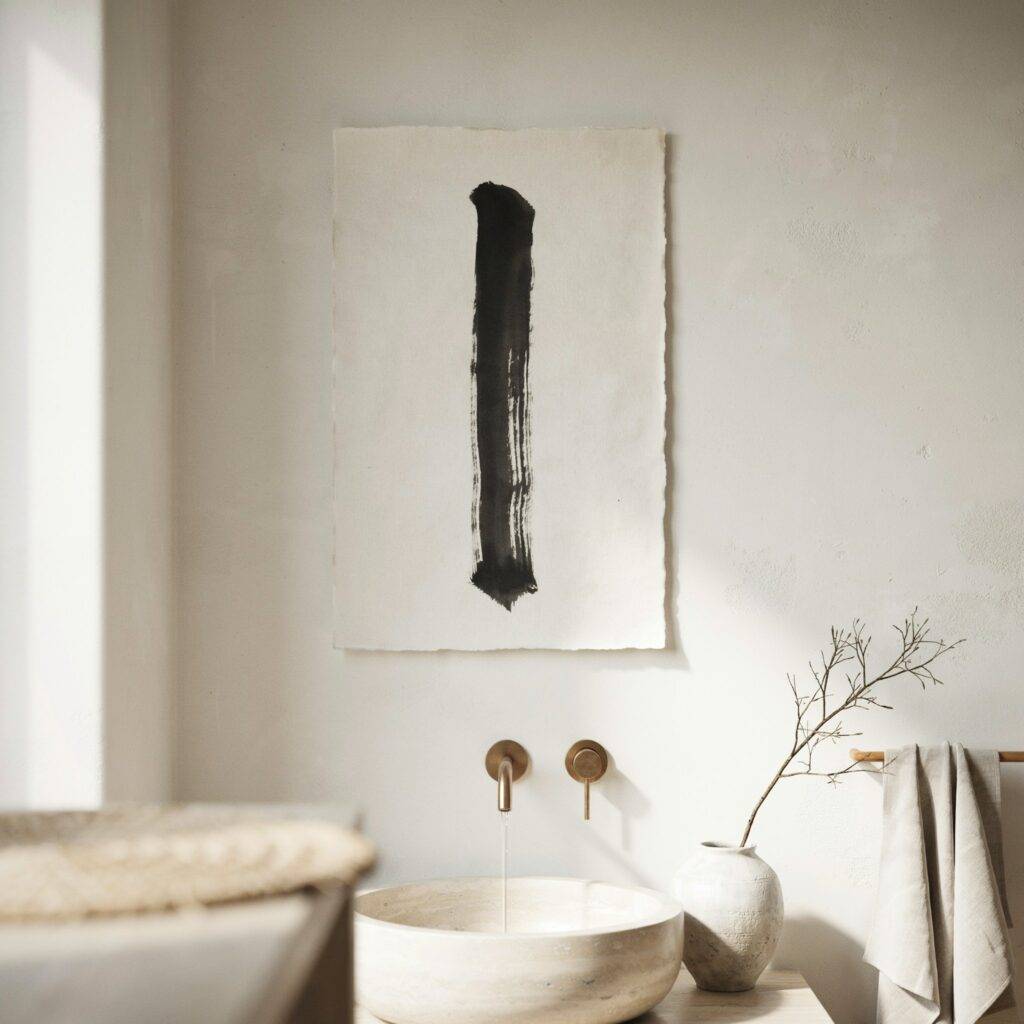
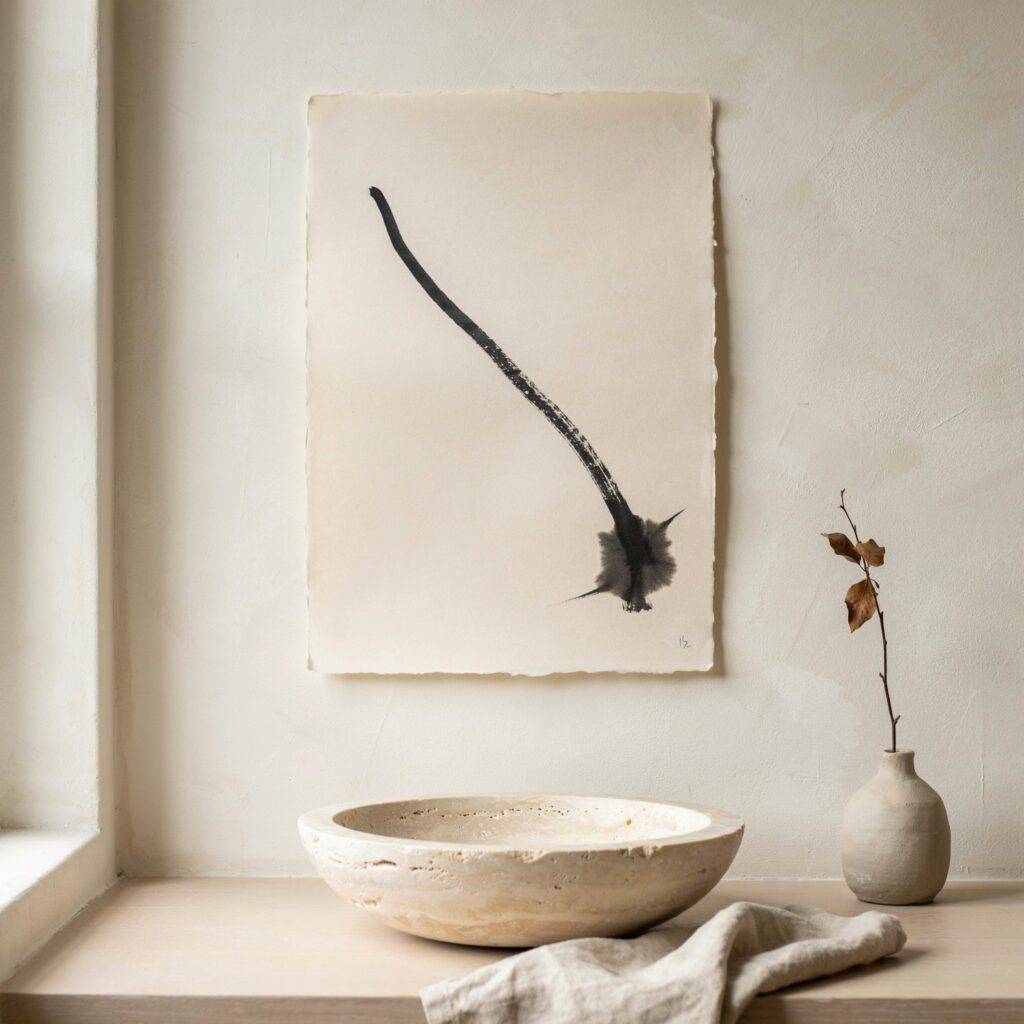
Wall art in a Japandi bathroom should be simple. Think of a single ink brushstroke on paper, a faded botanical print, or a small piece of pottery mounted on the wall.
You can even frame a piece of handmade paper. The idea is to find beauty in things that are simple, imperfect, or worn. This is the heart of wabi-sabi.
13. Choose a Frameless Mirror
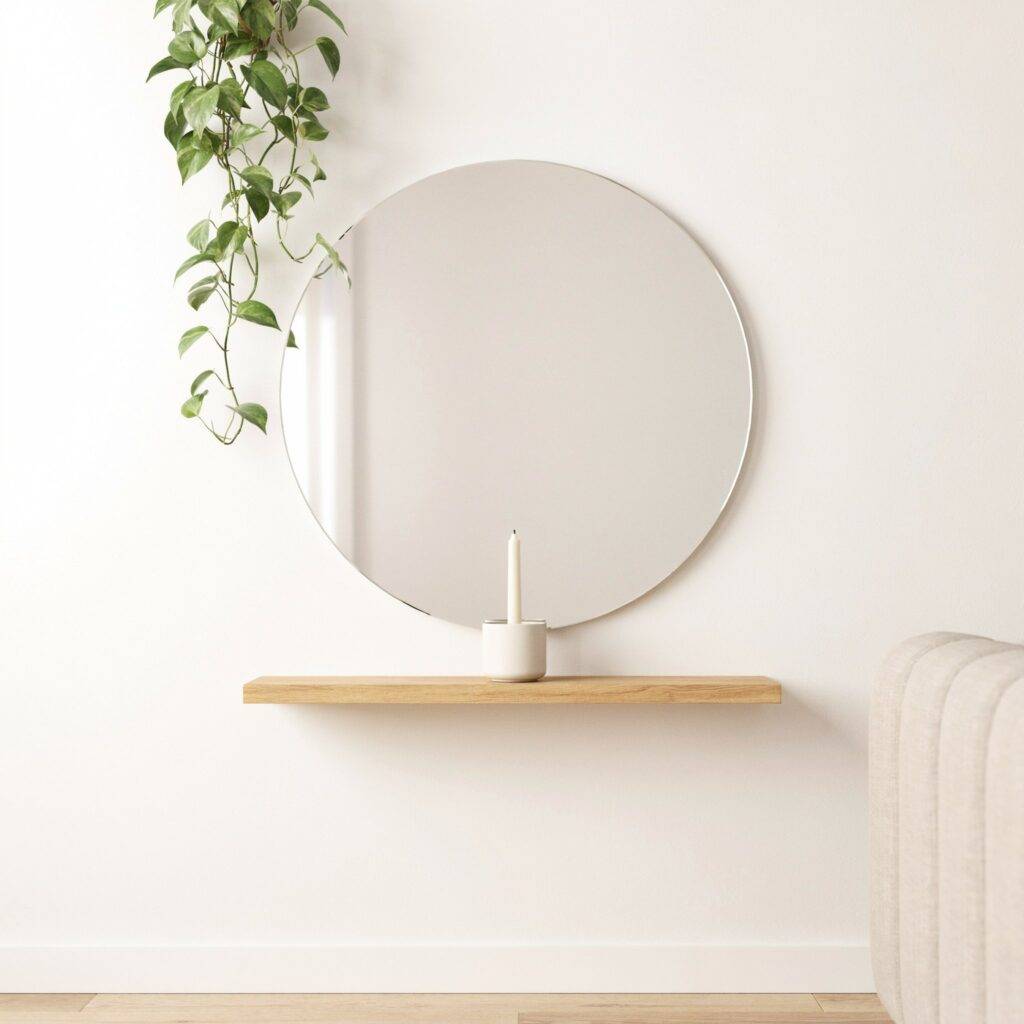
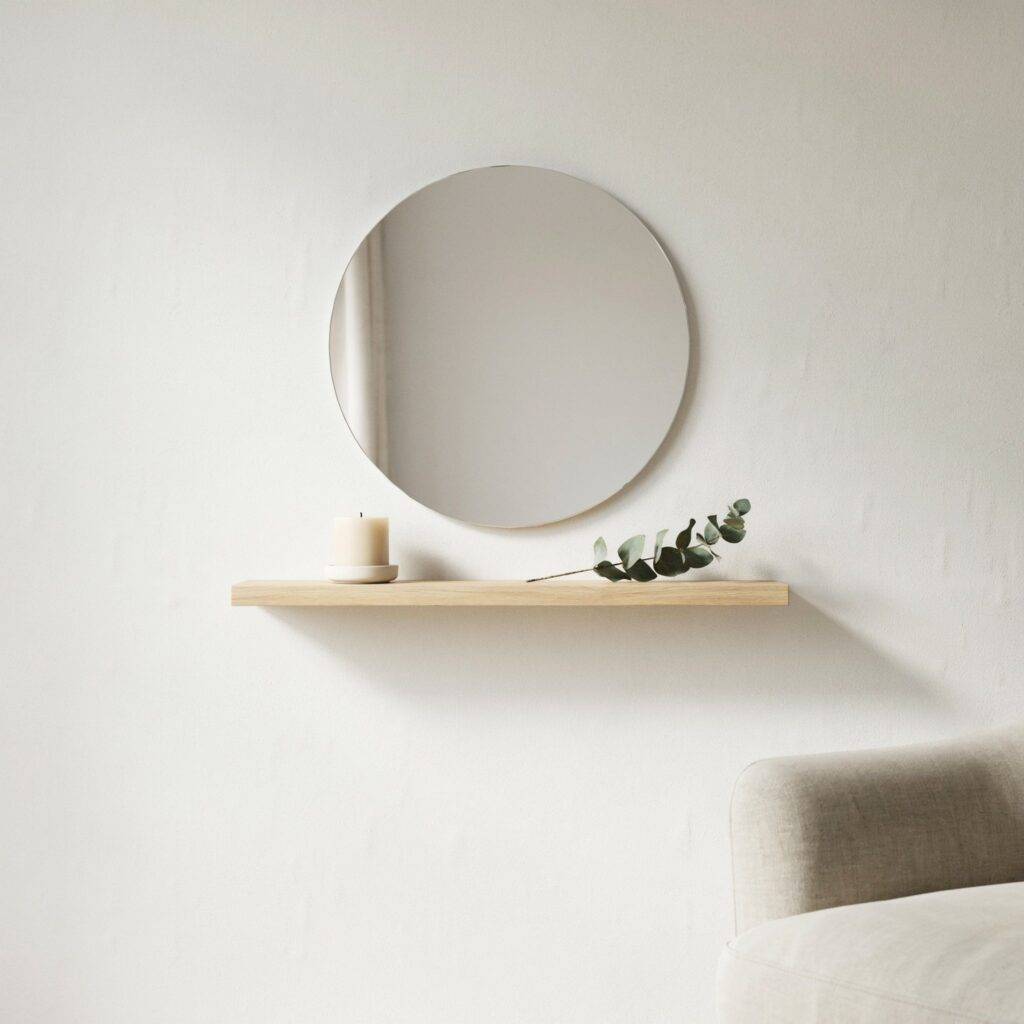
A mirror with a big, thick frame can feel heavy. A frameless mirror is clean and light. It reflects light around the room, which makes the space feel bigger and brighter. Y
ou can find round, oval, or rectangular ones. Hang it at eye level. Keep the area around it very simple. Maybe just a small shelf for a candle.
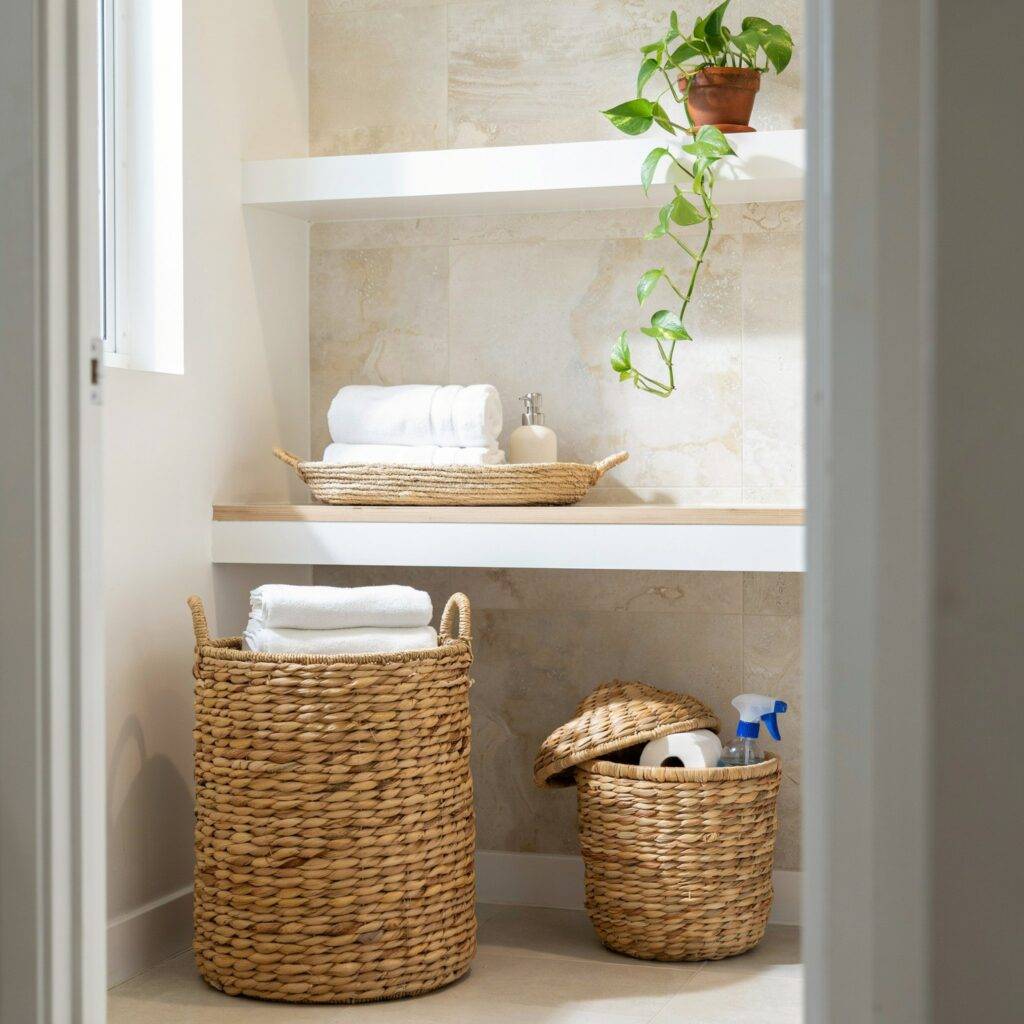
14. Add Woven Baskets for Storage
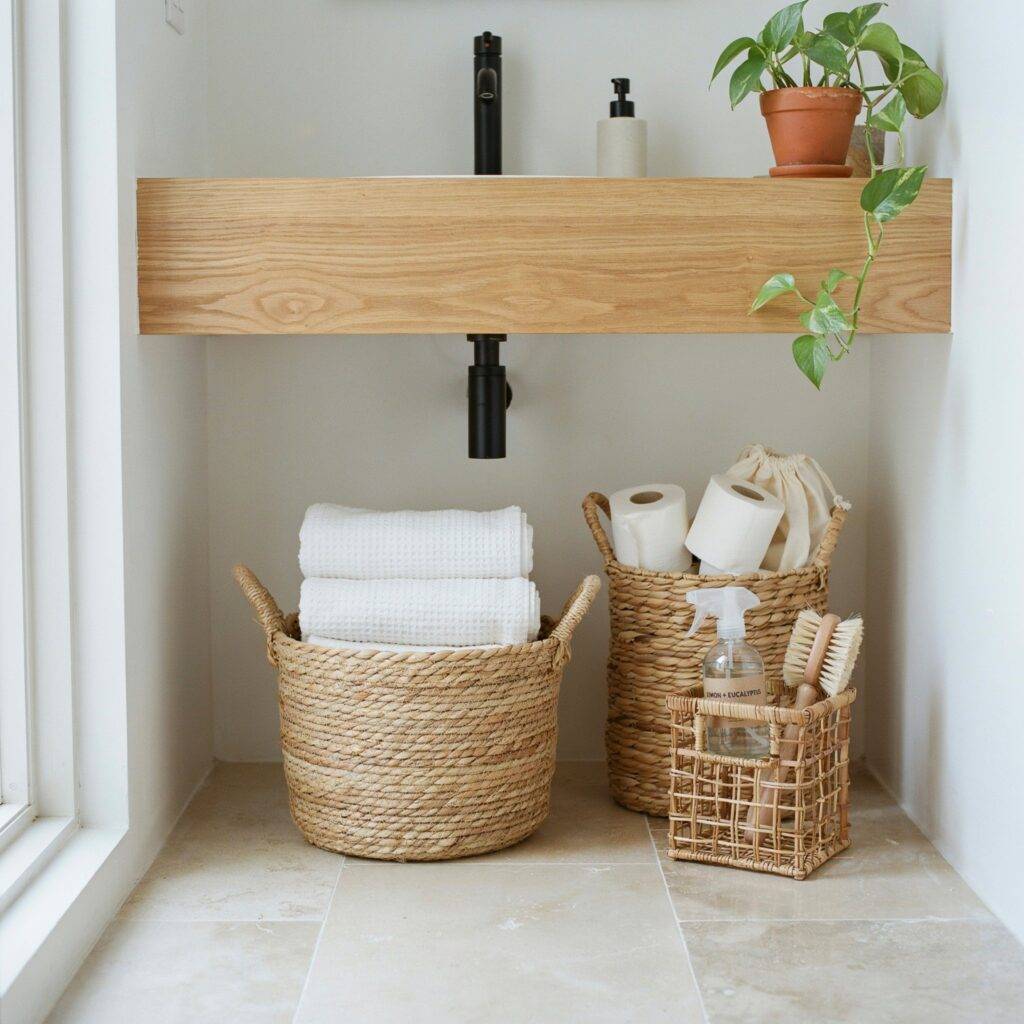
You will always need some storage for extra toilet paper, towels, or cleaning supplies. Instead of plastic bins, use woven baskets.
Look for ones made of seagrass, water hyacinth, or rattan. They add texture and warmth. Put them under the sink or on an open shelf. They hide the clutter but still look like part of the decor.
15. Install a Rain Shower Head
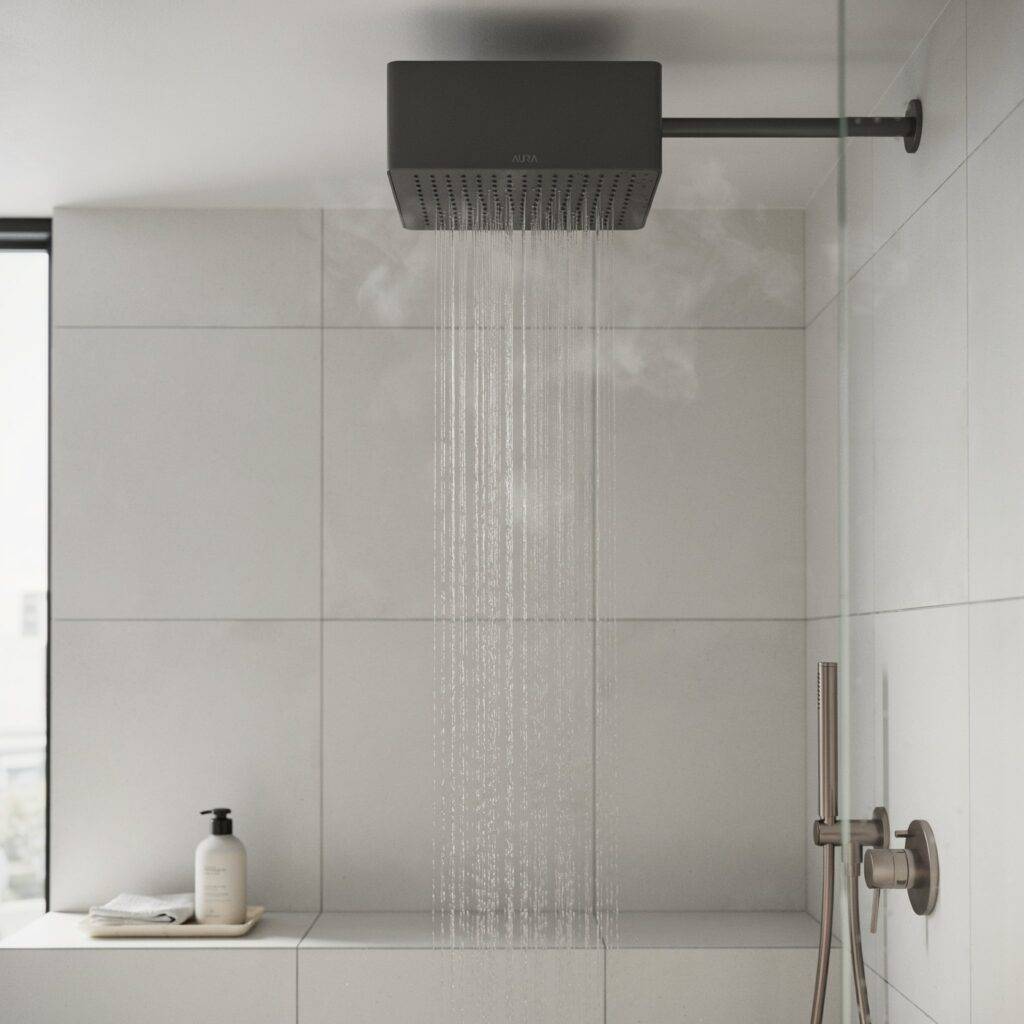
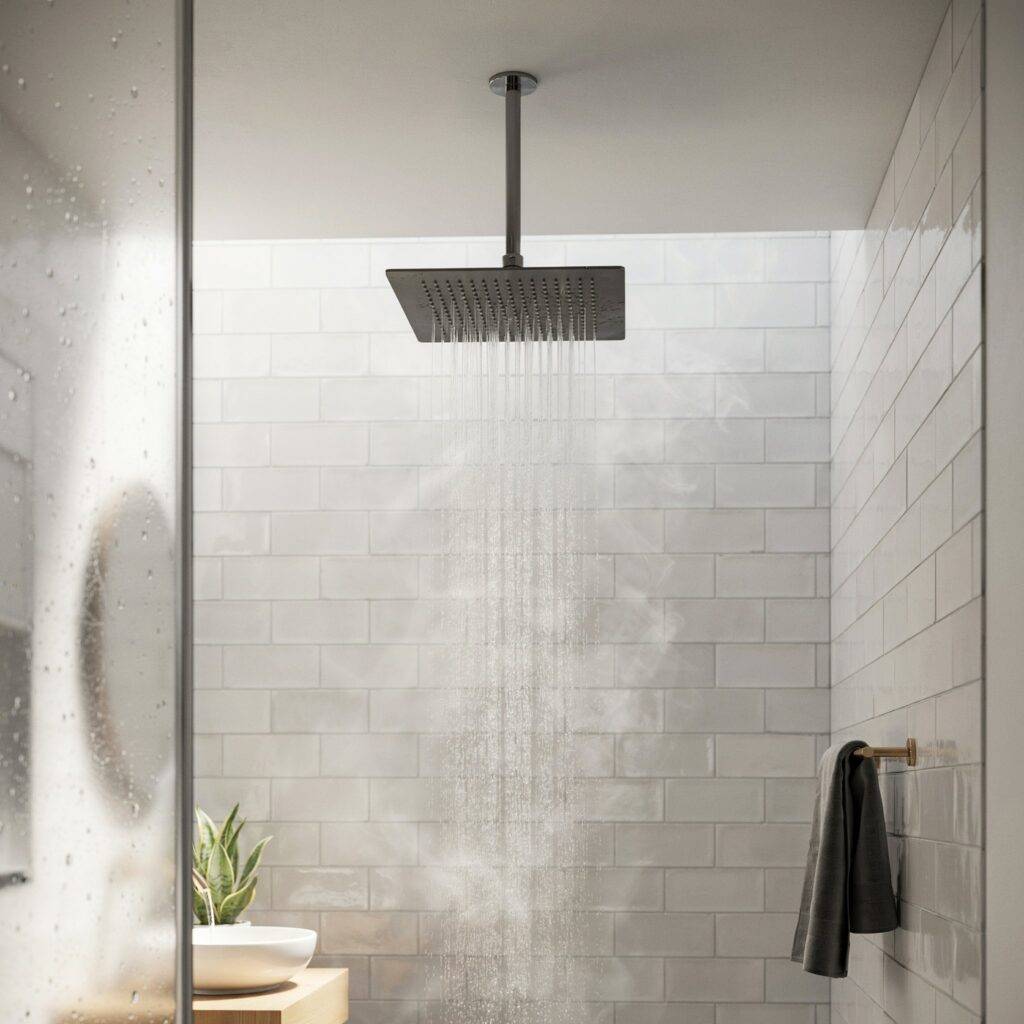
A rain shower head turns a daily shower into a small escape. The water falls softly, like rain. It feels less harsh than a regular shower head.
Look for one in a simple finish like matte black or brushed nickel. It’s a small upgrade that makes a big difference in how your bathroom feels.
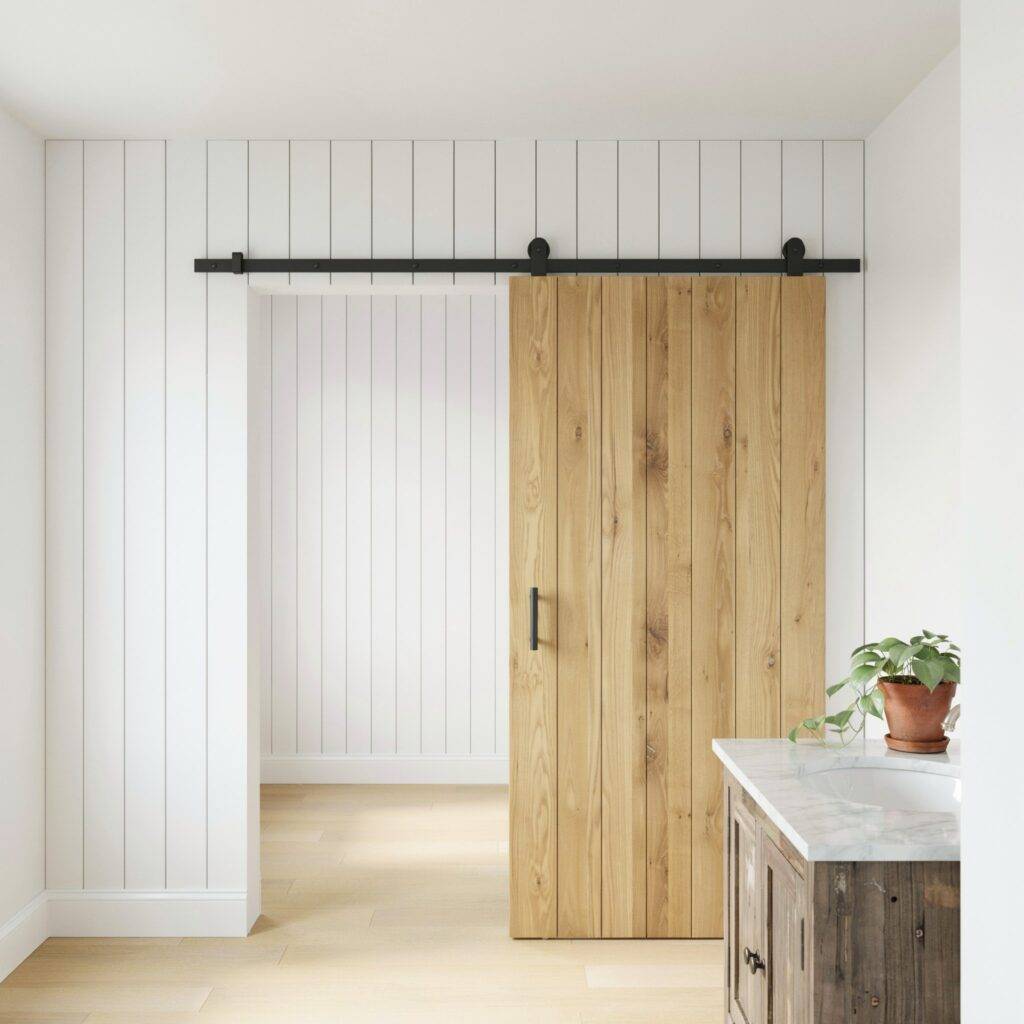
16. Use Sliding Barn Doors
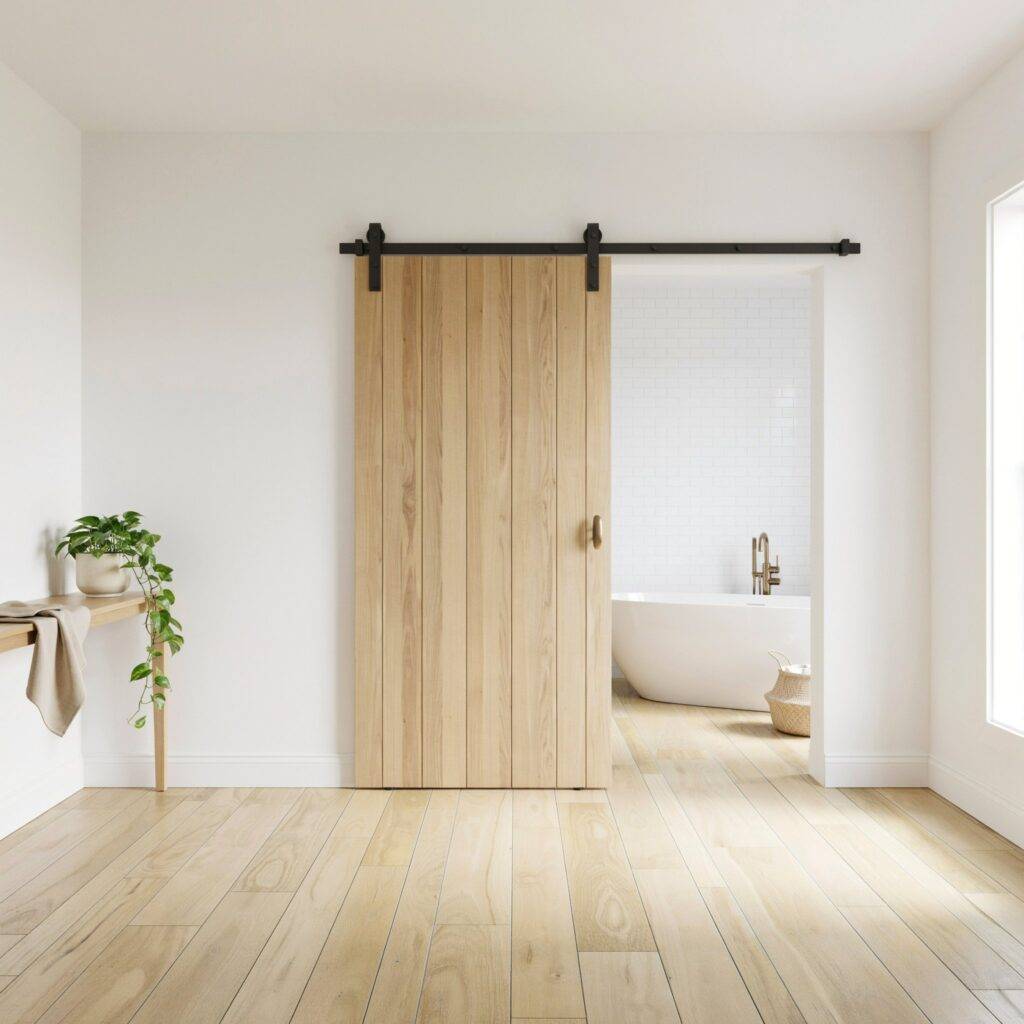
If your bathroom has a door, think about swapping it for a sliding barn door. It saves space and adds a nice natural wood element. Look for a simple door made of light oak or pine.
The hardware should be matte black or simple iron. This one change can give your whole bathroom a fresh look.
17. Add a Teak Wood Bath Mat
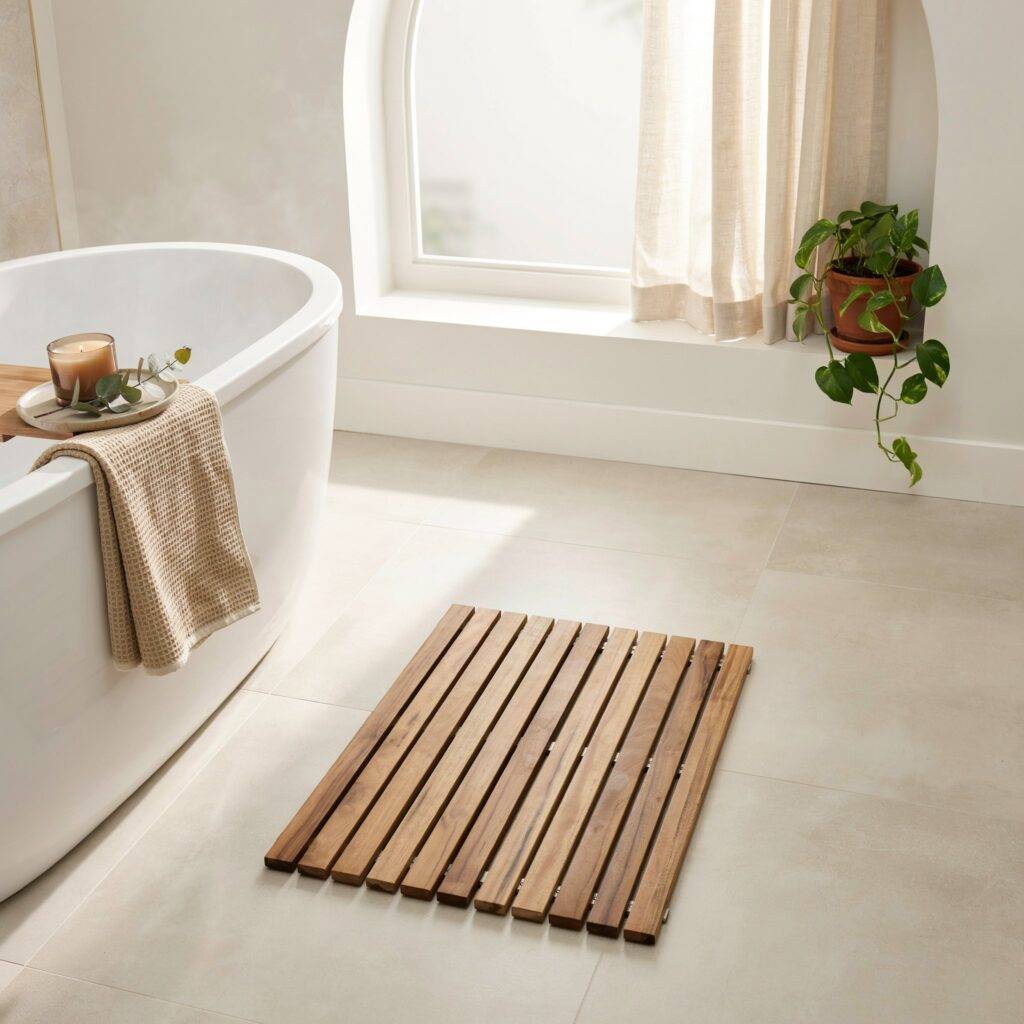
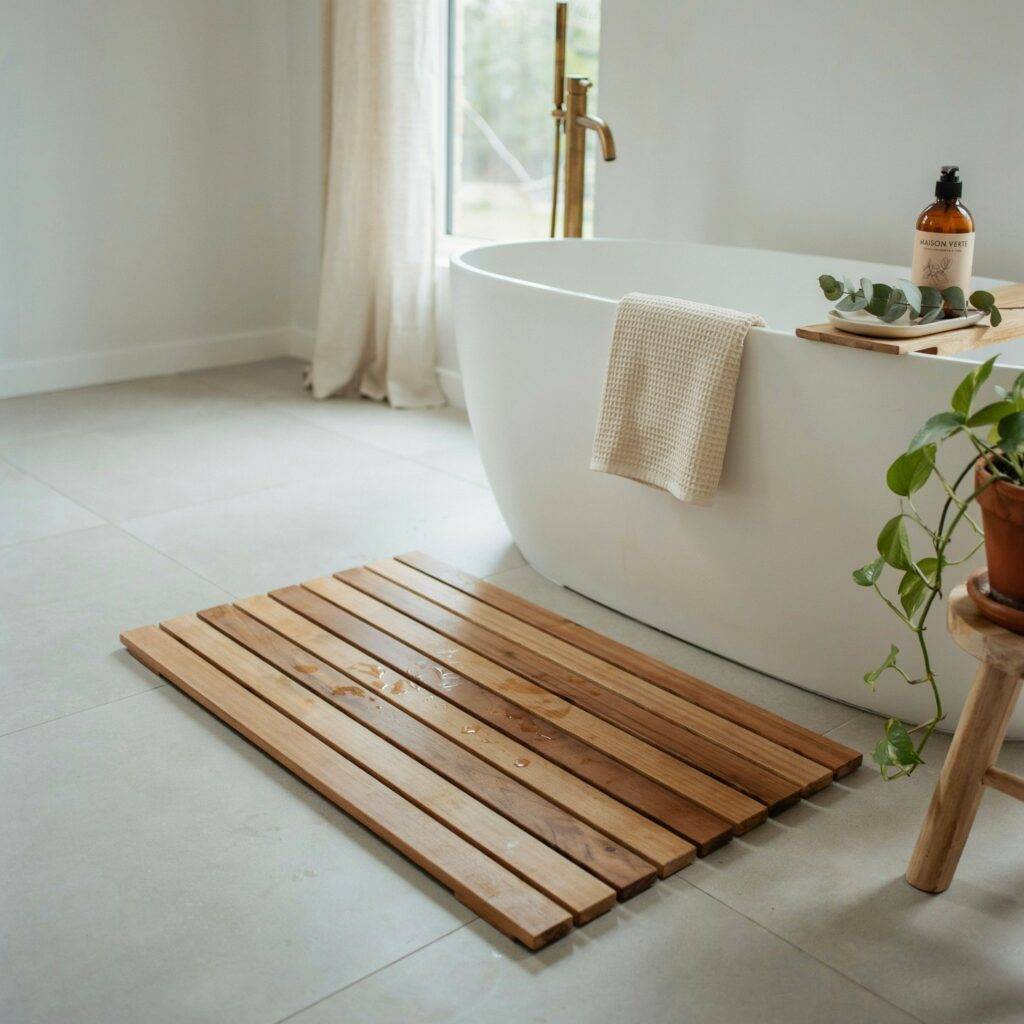
A plastic bath mat can look cheap. A teak wood bath mat is a beautiful upgrade. The wood slats let water drain through, so the mat dries quickly.
Teak is naturally water-resistant, so it won’t rot. It feels warm under your feet. Just rinse it off now and then to keep it clean.
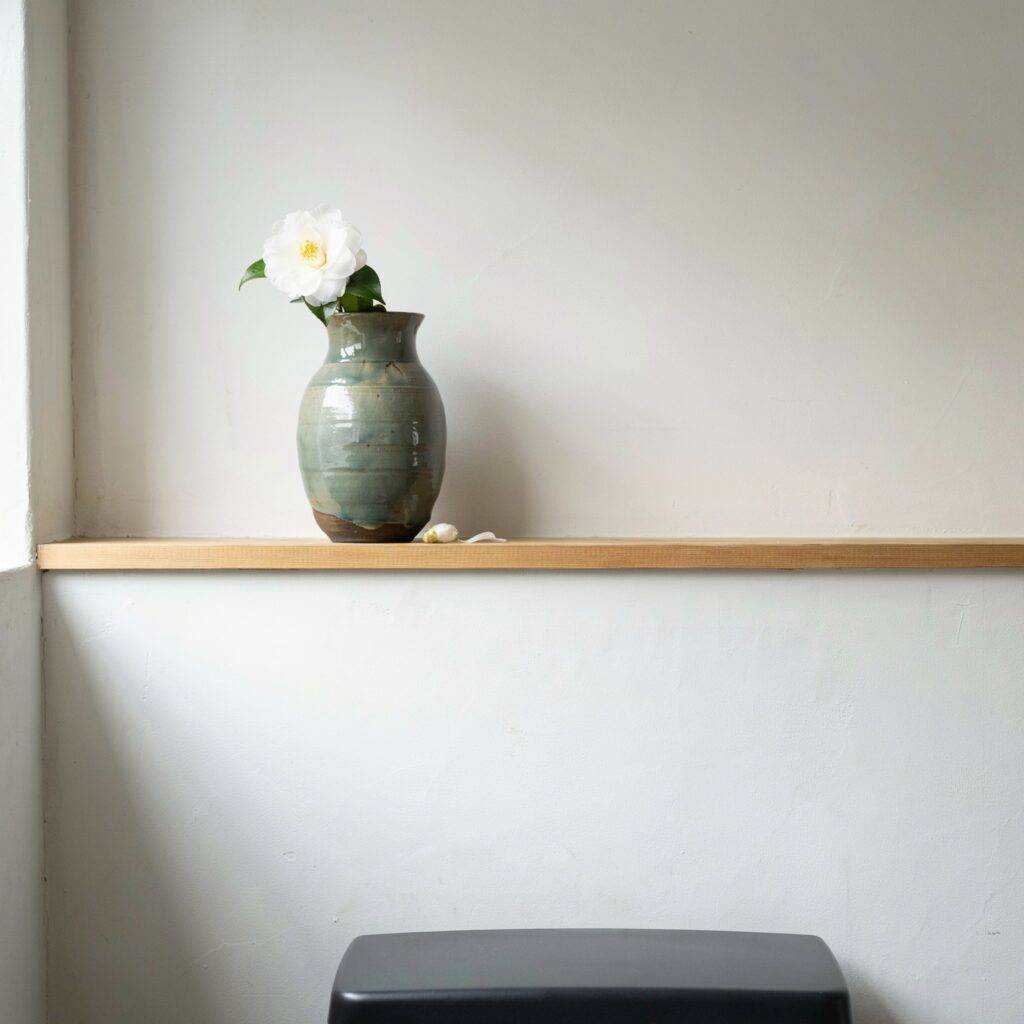
18. Display a Single Ceramic Piece
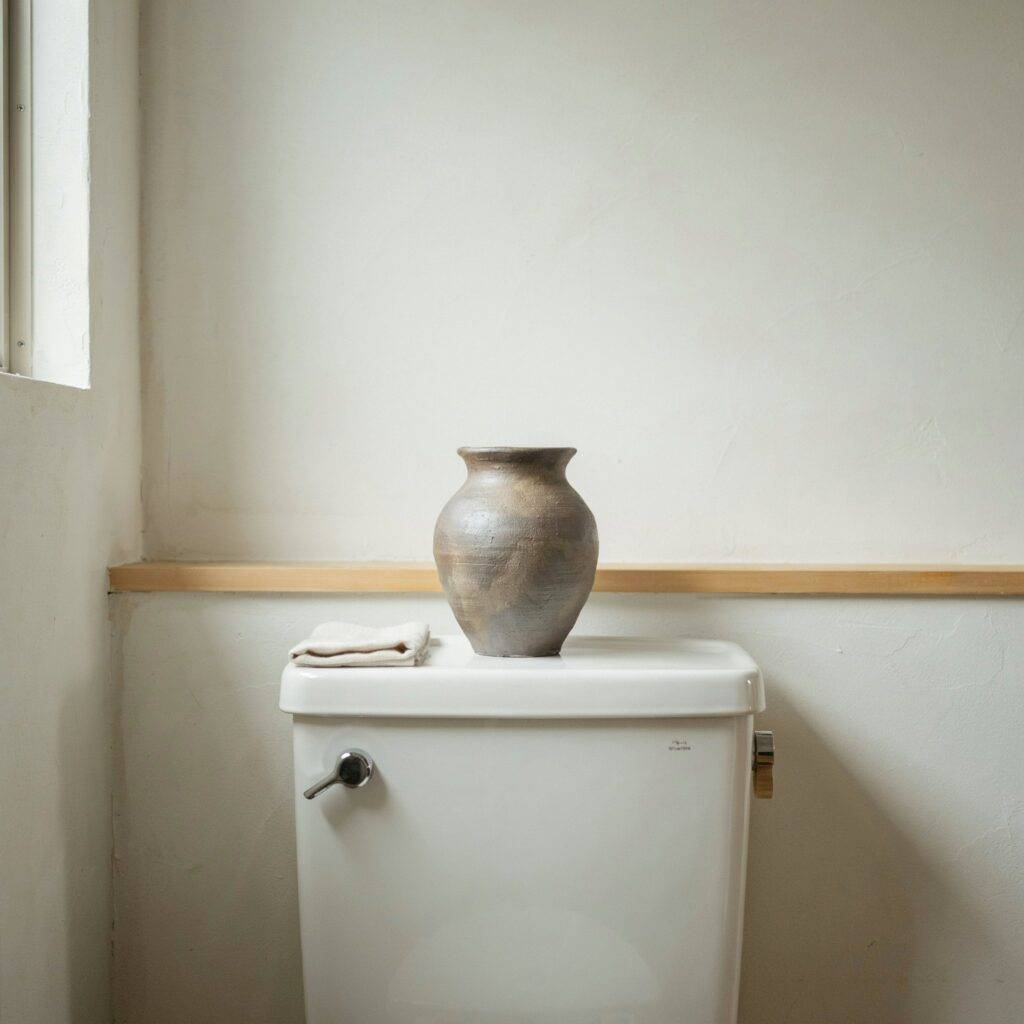
Instead of a bunch of small knick-knacks, pick one thing to put on display. It could be a handmade ceramic vase, a simple bowl, or a small stone sculpture. Put it on a shelf or the back of the toilet.
Let it be the only decoration in that spot. This is the Japanese way: one thing, well-placed, is more powerful than many things scattered around.
Pros and Cons of Japandi Bathroom Design
Pros:
- Creates a truly calm and relaxing space
- Works well in both large and small bathrooms
- Uses timeless materials that won’t look dated
- Encourages less clutter and more organization
- Easy to mix with other styles if you change your mind
Cons:
- Natural wood and stone can be more expensive
- Light colors show dirt and water spots more easily
- Keeping counters clear takes daily effort
- Some pieces (like soaking tubs) may need professional install
Tips for Getting Started
Start small. You don’t have to redo everything at once. Pick one idea from this list and try it. Maybe swap your plastic soap dish for a wooden one. Or buy one linen towel.
Once you see how good it looks, you’ll want to do more. Also, remember that Japandi is about feeling, not rules. If a space feels calm to you, you’re doing it right.
Mistakes to Avoid
Don’t use too many patterns. Japandi is about solid colors and simple textures. A busy pattern will ruin the calm feeling.
Don’t forget about storage. If you don’t have a place to put things, they will end up on the counter. Plan for hidden storage first.
Don’t buy cheap plastic. The whole point is natural materials. Plastic looks out of place. Spend a little more on wood, stone, glass, or ceramic.
Don’t make it too dark. Japandi uses light, airy colors. Too much dark paint or tile can feel heavy and small.
FAQs
What is the difference between Japandi and minimalism? Minimalism can feel cold or empty. Japandi adds warmth with wood, soft textiles, and natural light. It’s minimalism with a cozy heart.
Is Japandi style expensive? It can be, but it doesn’t have to be. You can find affordable bamboo, cotton, and ceramic pieces at many stores. Start with small changes.
Can I do Japandi in a small bathroom? Yes. In fact, Japandi works really well in small spaces because it keeps things clean and uncluttered. A light color palette makes the room feel bigger.
What are the best colors for a Japandi bathroom? Stick with warm whites, soft beiges, pale greys, and earthy browns. Add a little black for contrast if you want.
Do I need a soaking tub? No. A soaking tub is nice but not required. You can get the Japandi look with just a few small changes.
Products We Recommend
| Product | Why It Works for Japandi |
| Vintage Tub & Bath Kyoto 41″ Round Japanese Soaking Tub | Deep, space-saving design in simple acrylic |
| KunMai Japanese Bathtub (47″) | Stone resin with built-in seat, very sturdy |
| Bamboo Bathroom Accessory Set | Includes soap dish, dispenser, tray, all in durable bamboo |
| WASHIKU Japanese Toilet Bidet | No electricity needed, easy to install, very clean |
| Teak Wood Bath Mat | Water-resistant, warm underfoot, natural look |
| Linen Bath Towel Set | Soft, quick-drying, perfect neutral cream color |
Note: Prices and availability change. Click the links to check the latest price on Amazon.com.
Final Thoughts
A Japandi bathroom isn’t about spending a lot of money. It’s about making thoughtful choices. Pick materials that feel good to touch. Keep your counters clear. Let in as much natural light as you can.
And remember, the goal is to create a space where you can breathe a little easier. Start with one small change today. You might be surprised how much better your bathroom can feel.
Related Post: