
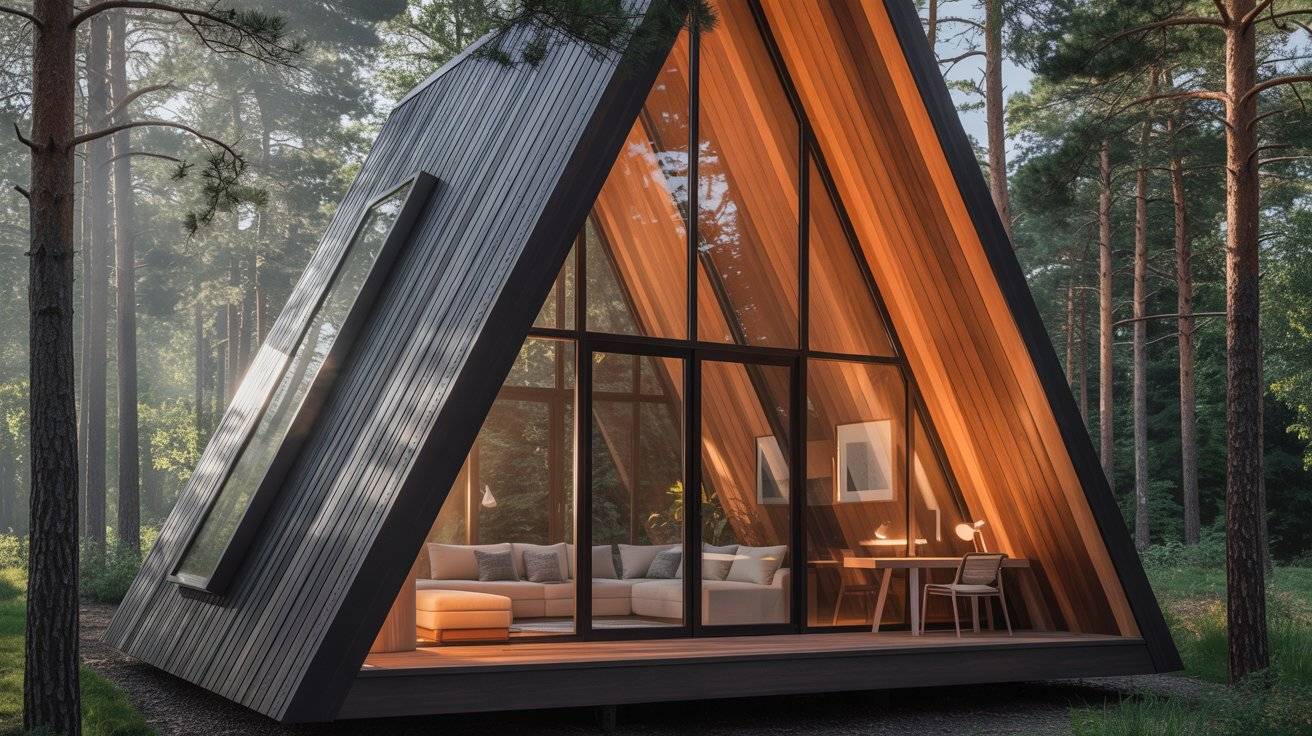
I’ve always been drawn to A-frame houses, not because they’re trendy, but it is honest. They’re simple, grounded, and built for slowing down. When life gets loud, these spaces offer something rare quiet. A minimalist A-frame retreat doesn’t try to impress. It gives you what you actually need: shelter, light, warmth, and space to breathe.
What makes modern A-frame sanctuaries work so well for quiet weekends is their structure. The steep roof, open interior, and connection to nature create a sense of calm without much effort. You don’t need many rooms. You don’t need excess furniture. You just need thoughtful choices.
This article looks at modern A-frame house retreats that are designed for rest, reflection, and simple living. These aren’t fantasy homes. They’re real ideas people can use whether you’re building, renovating, or just dreaming carefully. Each sanctuary focuses on quiet design choices that support rest, not distraction.
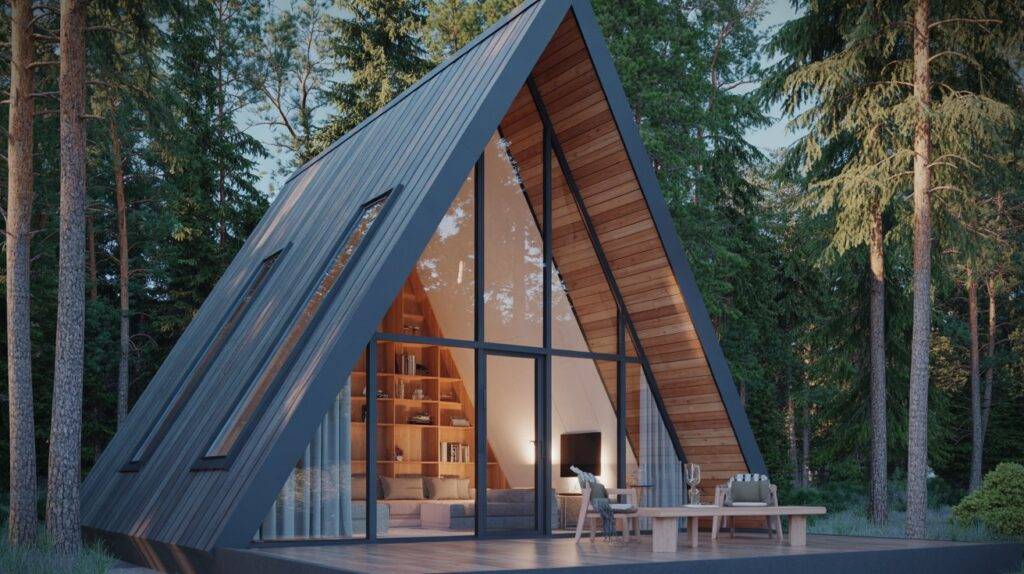
1. Forest-Set Minimalist A-Frame Cabin
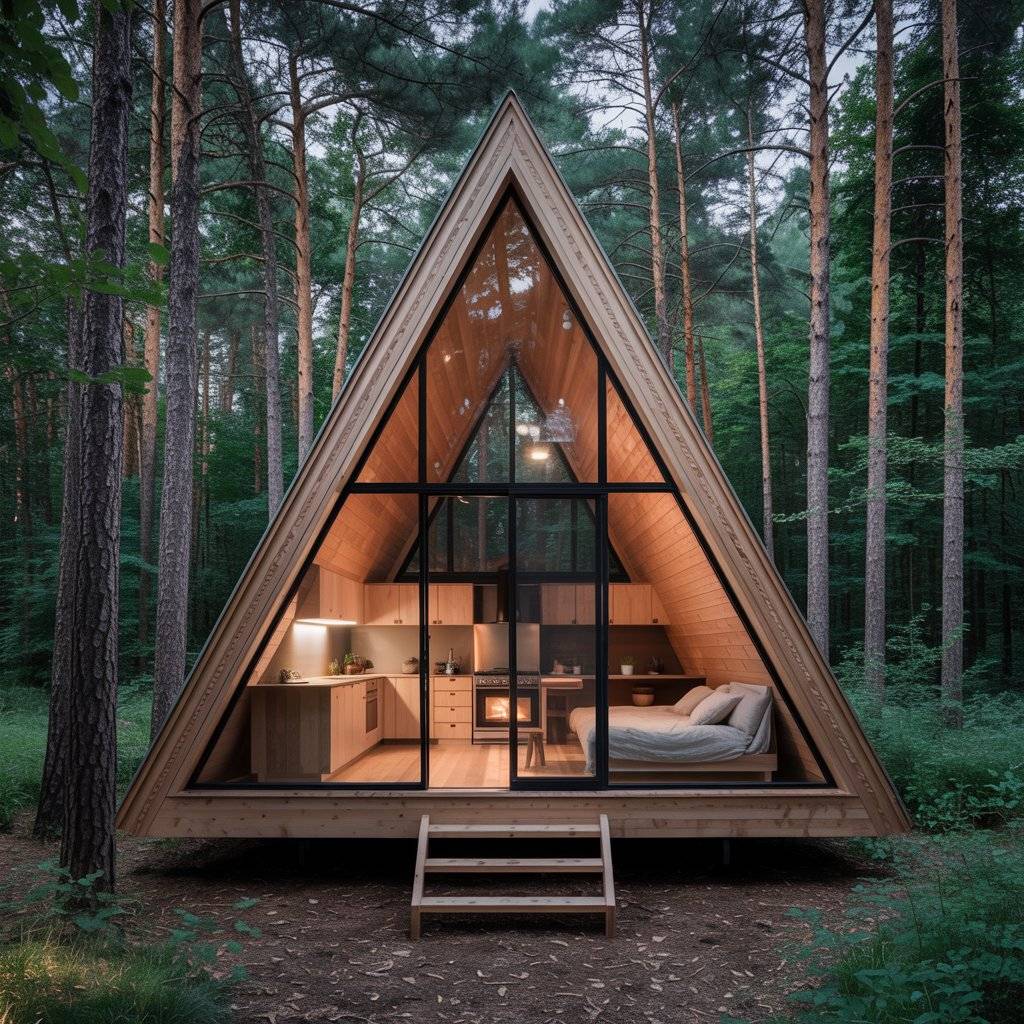
One of the most peaceful A-frame retreats I’ve seen sits deep in a forest, surrounded by tall trees and very little else. The design is simple wood exterior, large front windows, and no unnecessary details. Inside, the space is open but not empty. A small kitchen, a wood stove, and a single sleeping loft are all it needs. The quiet comes from what’s missing: no extra rooms, no clutter, no noise.
Large windows face the trees, not the road. That alone changes how the space feet’s. Natural light moves through the cabin during the day, and at night, it’s just darkness and stars. This kind of retreat works because it respects its surroundings. It doesn’t try to dominate the landscape. It sits quietly within it, offering a place to read, rest, and disconnect for a weekend.
Wood Stove for Small A-Frame Cabins check price on amazon
2. Lakeside A-Frame with Open Living Space
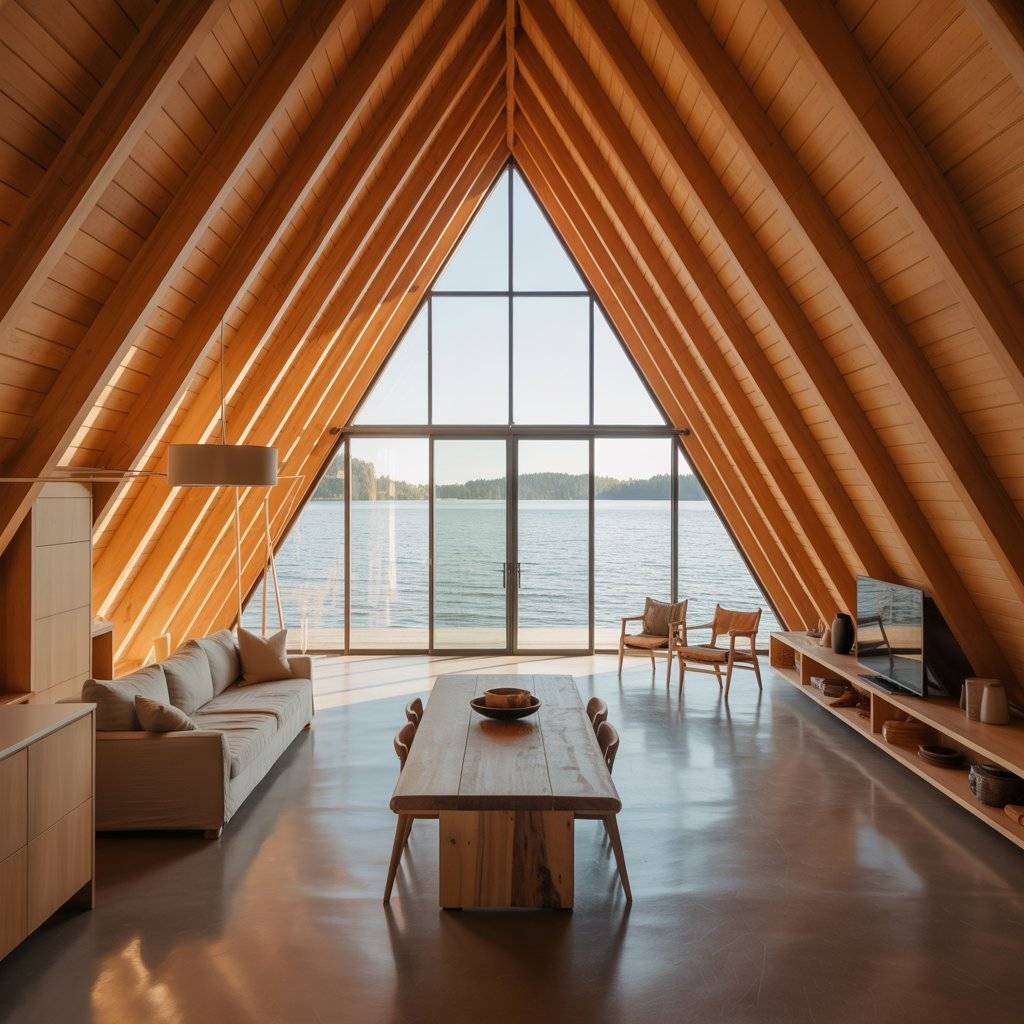
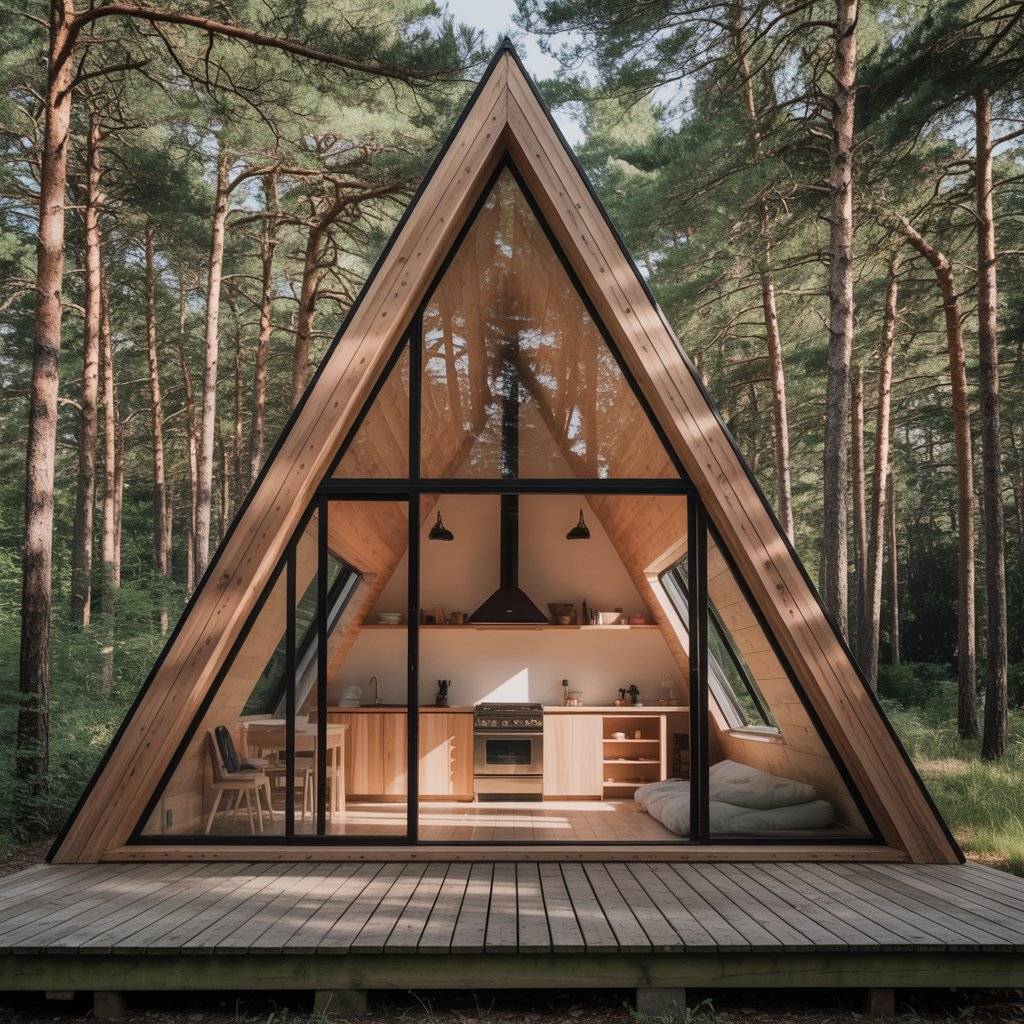
A lakeside A-frame sanctuary works best when the interior stays open and uncomplicated. I’ve noticed that the most calming ones avoid dividing walls and instead focus on one shared living space. The kitchen, dining, and sitting area flow together under the tall roof, creating a feeling of openness without being overwhelming.
The real focus is the view. Floor-to-ceiling windows face the water, allowing light to reflect inside throughout the day. Furniture stays low and minimal often just a sofa, a wooden table, and a few chairs. Storage is built in, so nothing spills into the open space. This type of retreat is perfect for quiet mornings, slow meals, and evenings spent watching the light fade over the lake. It’s not designed for crowds. It’s built for stillness.
Minimalist Solid Wood Dining Table (Cabin Size)
A small solid wood table works well in open A-frame layouts. It’s useful for meals, reading, or quiet work without taking over the space. check price on amazon
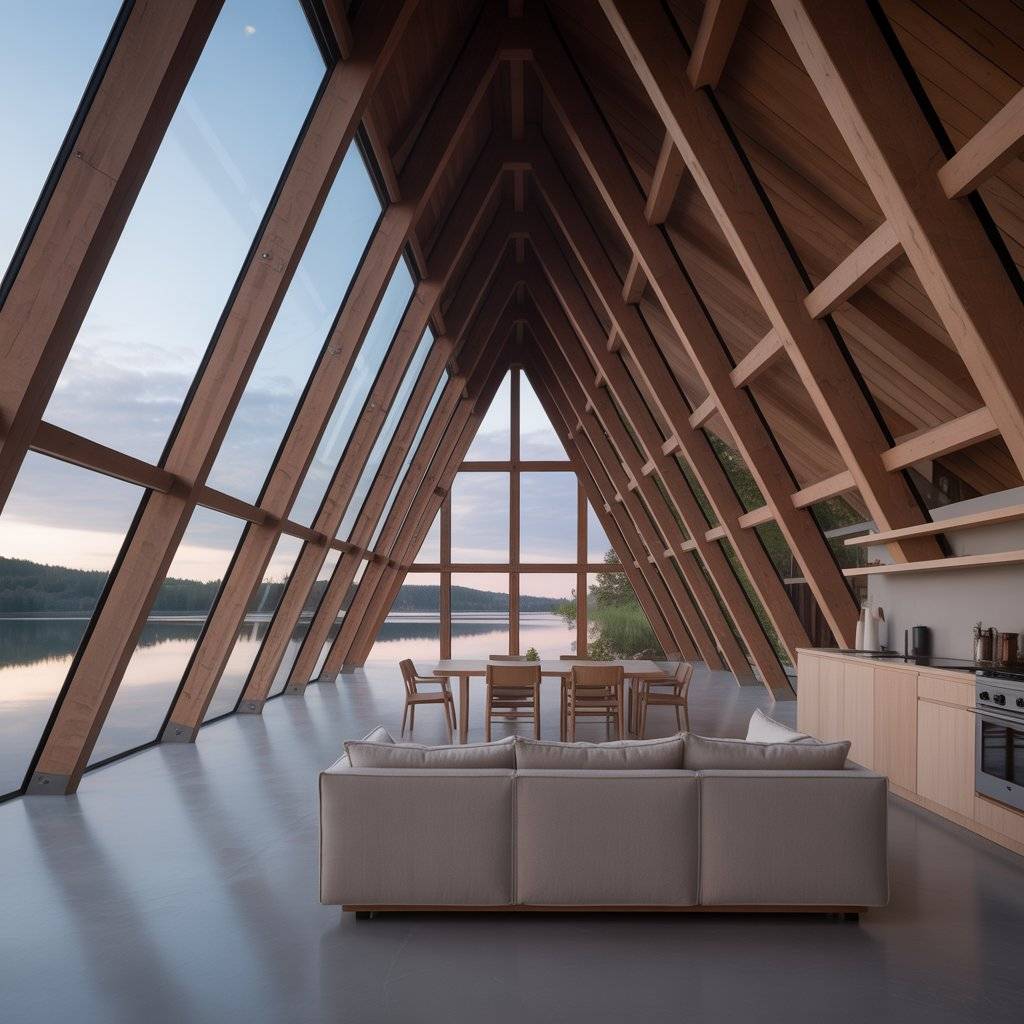
3. Off-Grid A-Frame Retreat for Weekend Reset
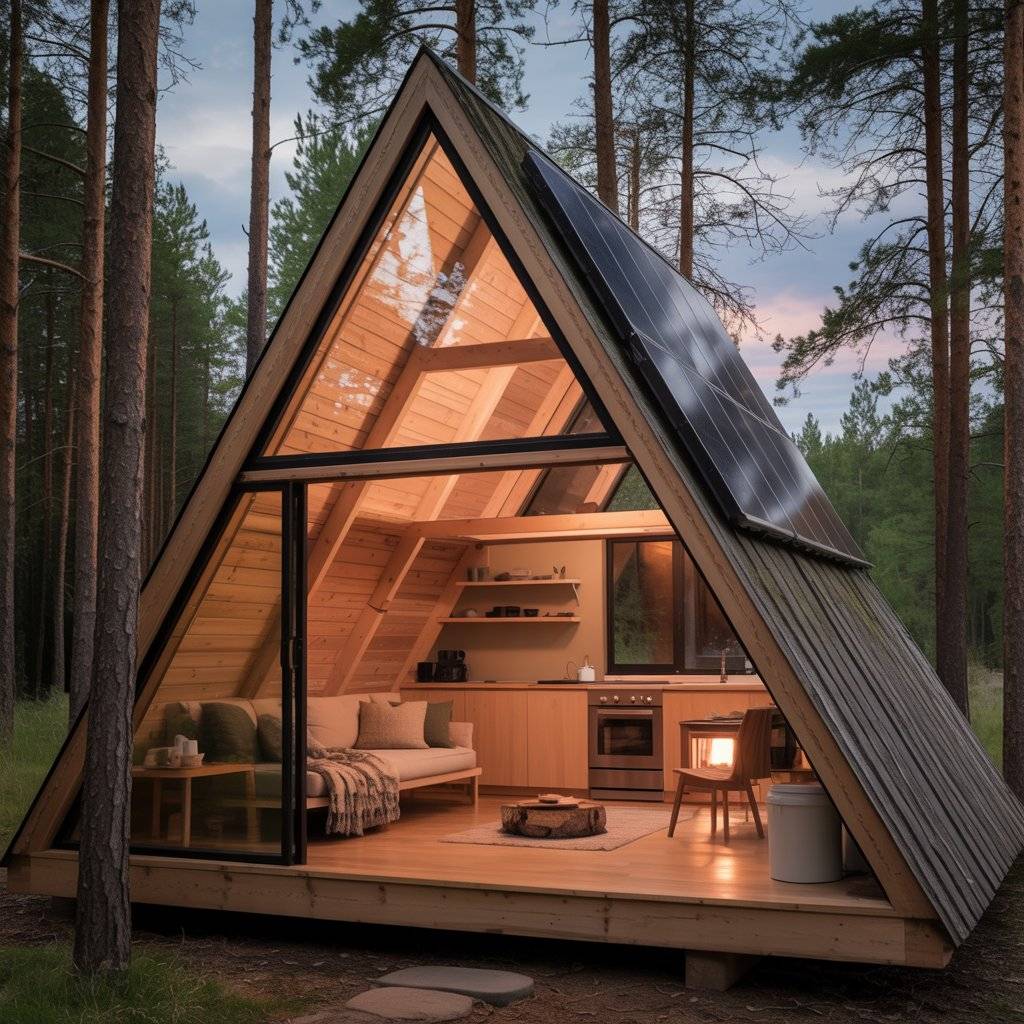
Some of the quietest A-frame sanctuaries are completely off-grid. These homes rely on solar power, wood heating, and simple systems that force you to slow down. There’s no constant hum of appliances, no distractions pulling your attention away.
Inside, the design is practical. A compact kitchen, a small seating area, and a loft bed are enough. Materials are natural wood floors, plain walls, and simple lighting. Water use is thoughtful. Storage is intentional. Everything has a purpose.
What makes this type of retreat special is how it changes your routine. You wake with the sun. You cook slowly. You read more. You sleep better. This kind of A-frame isn’t about comfort in the modern sense. It’s about clarity. And for a quiet weekend, that clarity is often exactly what’s missing at home.
4. Mountain A-Frame with Neutral Interior
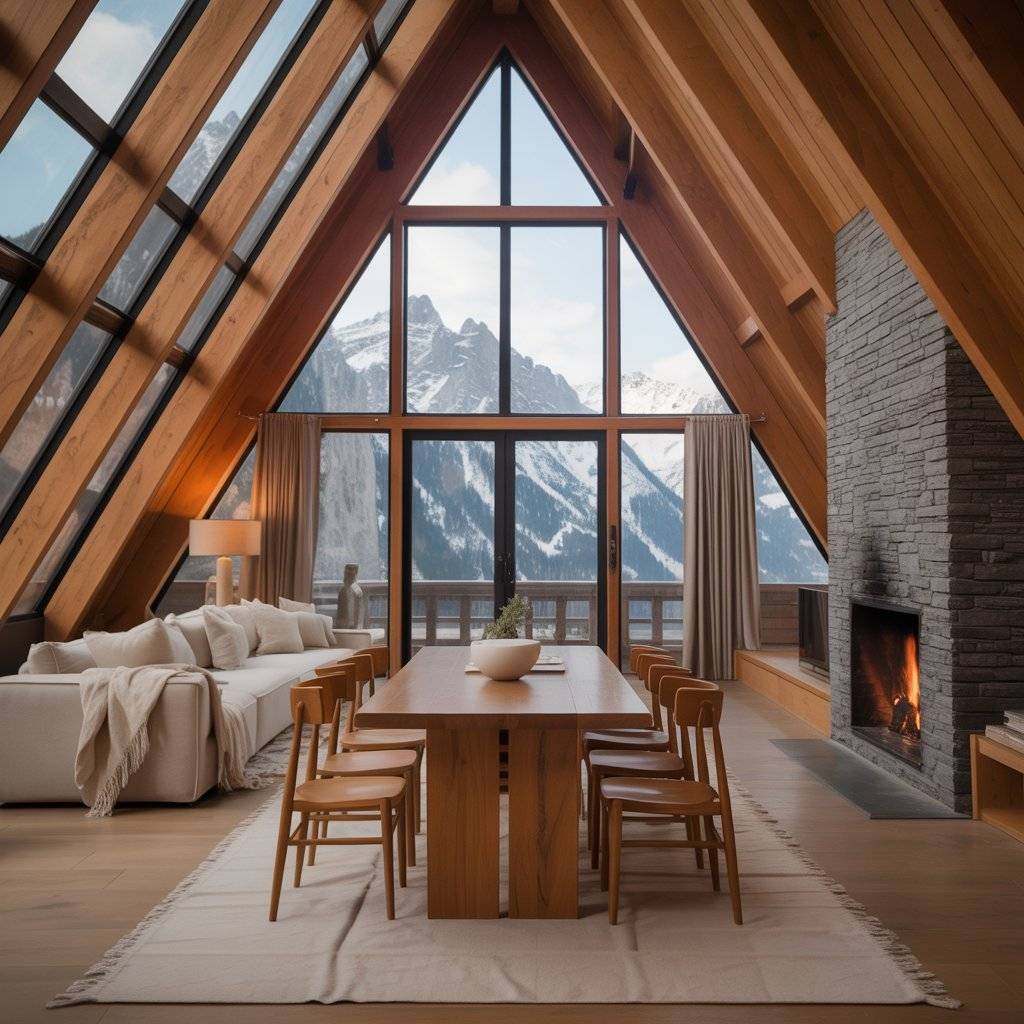
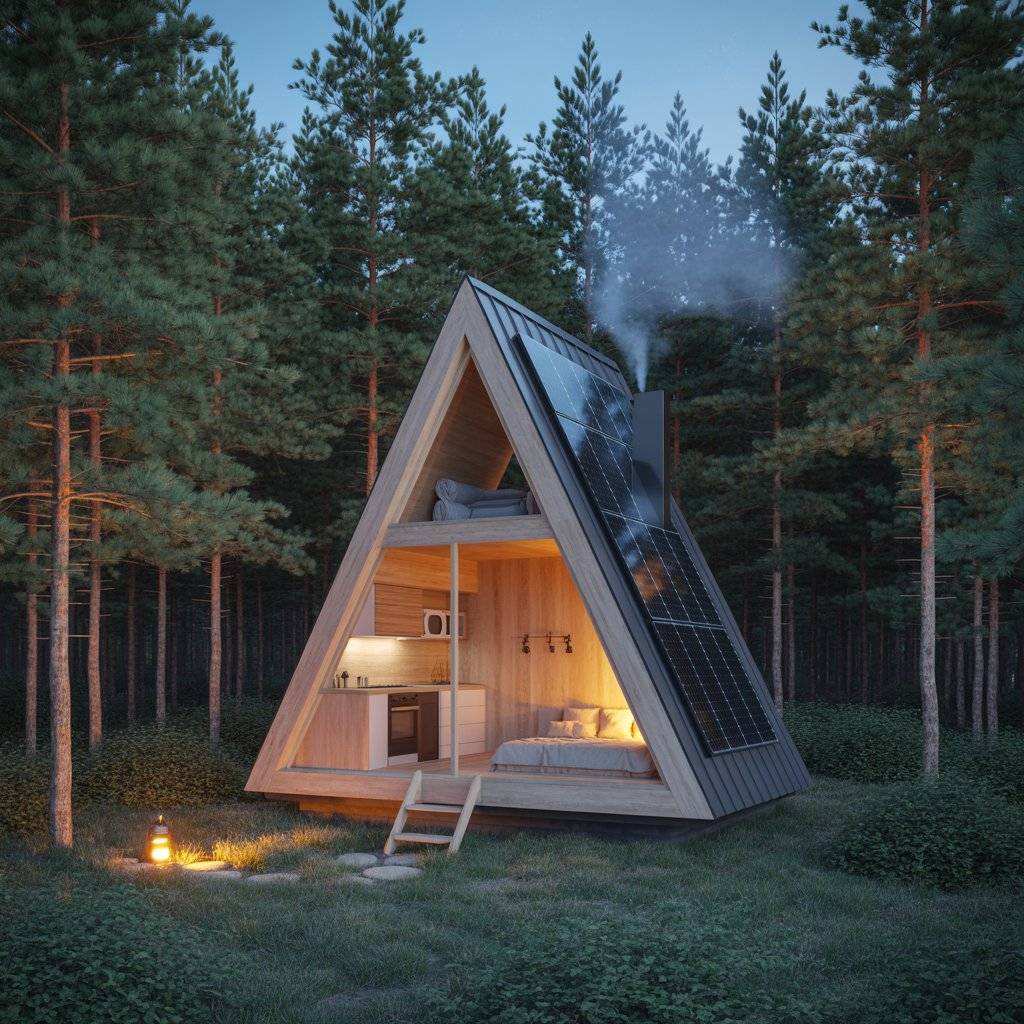
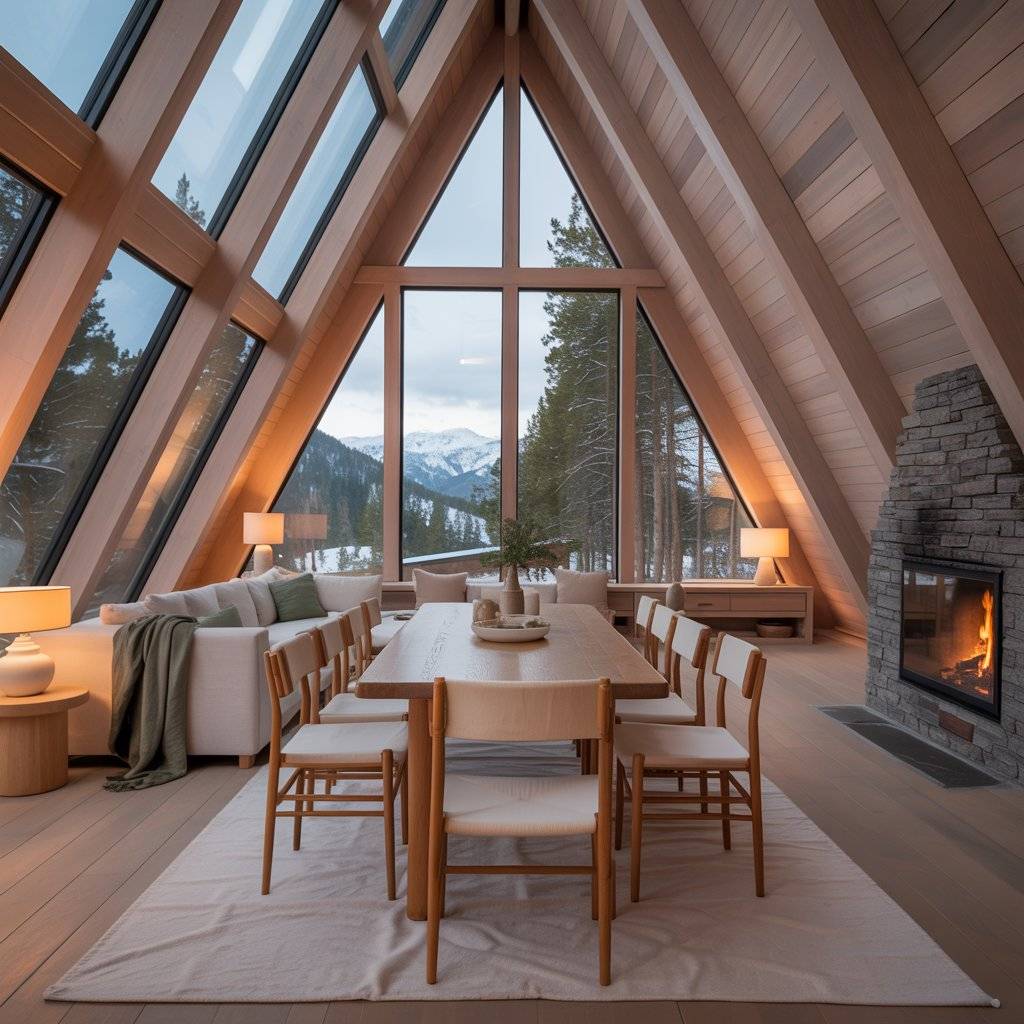
A mountain A-frame retreat benefits from keeping the interior calm and neutral. I’ve seen spaces where soft wood tones, light fabrics, and muted colors make the tall structure feel grounded instead of dramatic. The steep ceiling draws your eyes up, but the neutral palette brings everything back down.
Furniture is sturdy and simple. A solid table, a few chairs, and a fireplace anchor the space. Windows frame the mountains rather than compete with them. At night, the space feels warm and contained, even though it’s open.
This type of sanctuary works well for people who want quiet place without isolation. You’re still connected to the landscape, but the interior feels safe and steady. It’s a place for long conversations, early nights, and slow mornings before heading back down the mountain.
5. Backyard A-Frame Guest Retreat
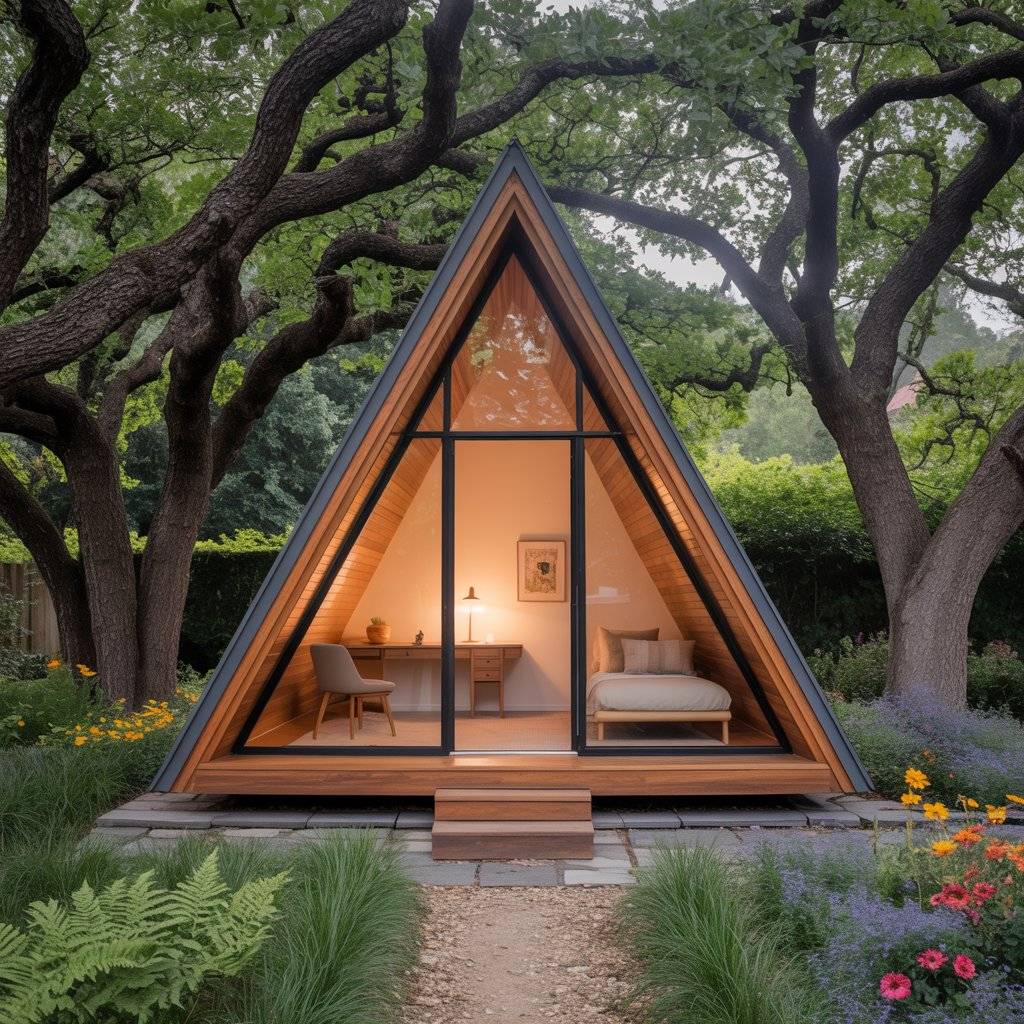
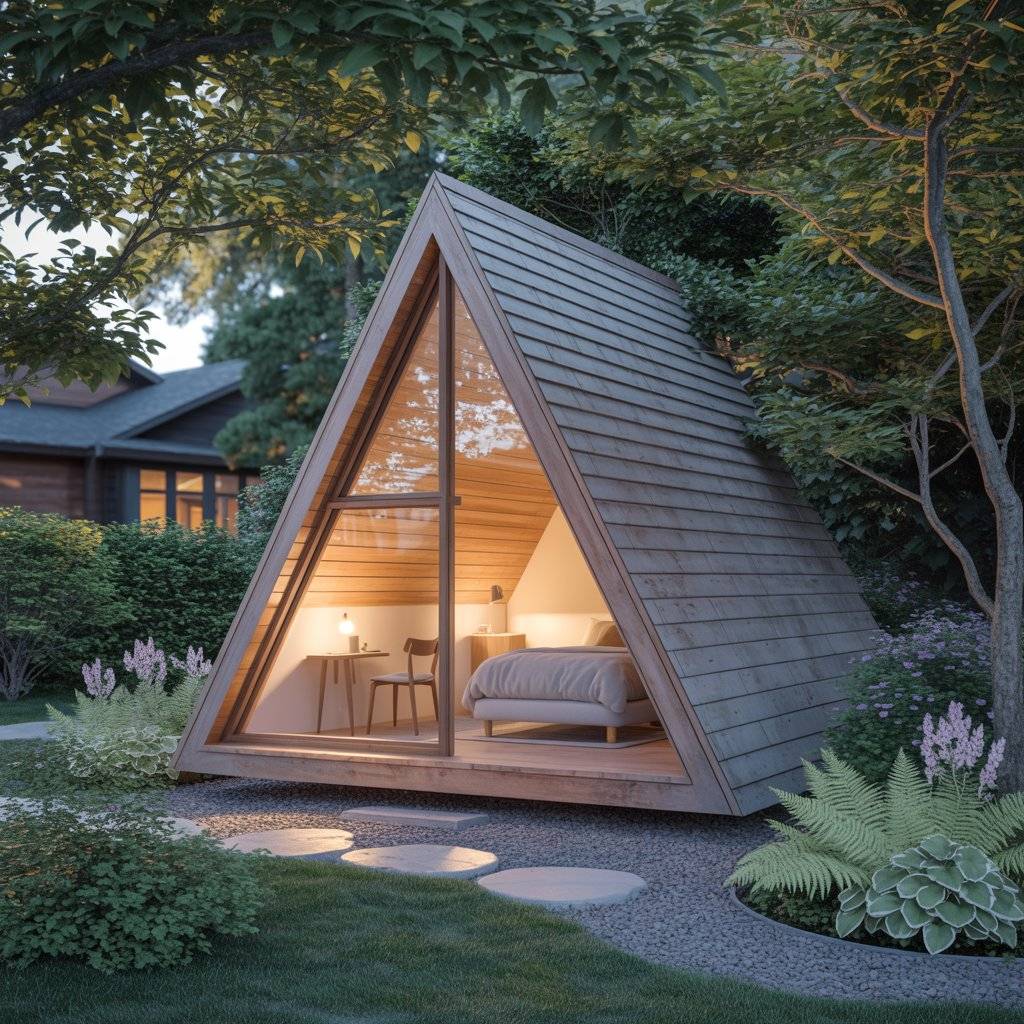
Not all quiet A-frame sanctuaries are far away. Some of the most effective ones are built right in the backyard. A small A-frame guest retreat can be a place to step away without leaving home.
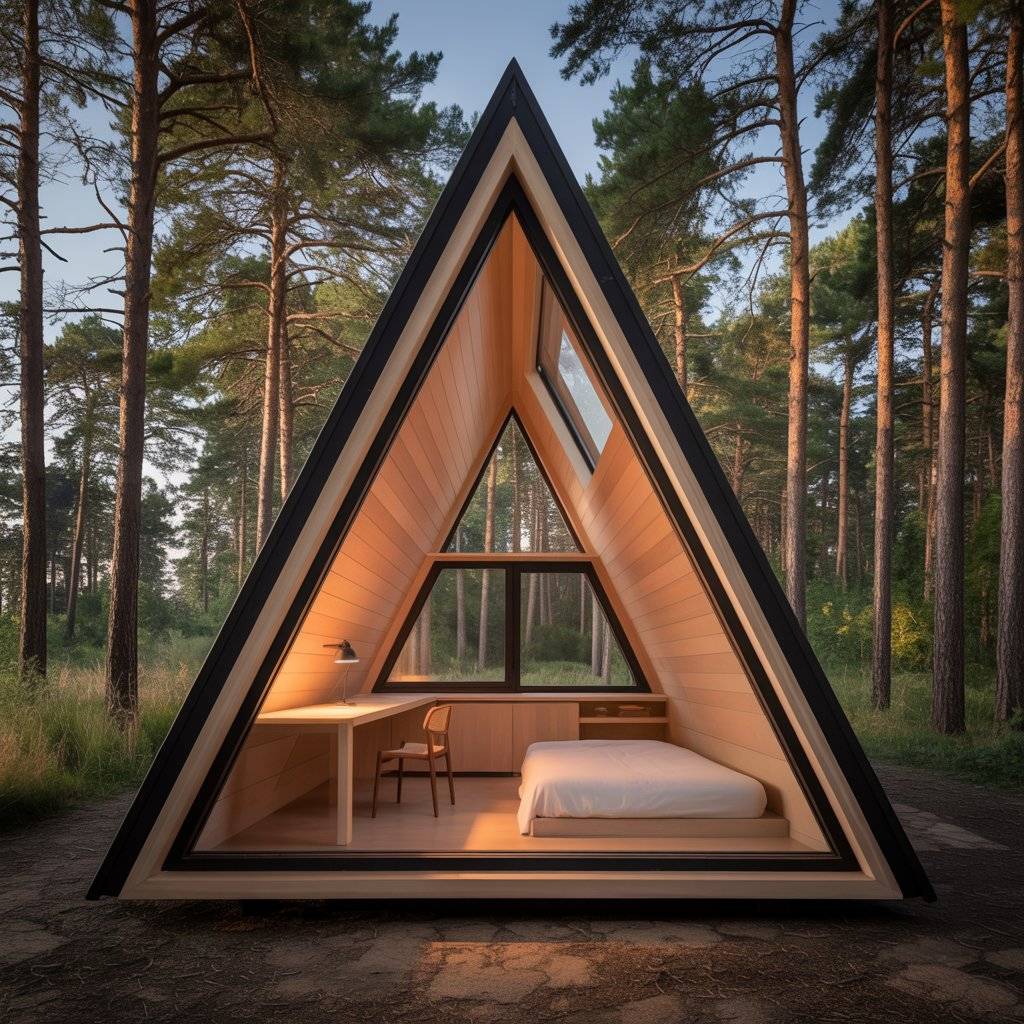
These structures are often compact just enough room for a bed, a chair, and a small desk. Large windows face the garden or trees, creating separation from the main house. Inside, everything is kept minimal. No television. No extra storage. Just what’s needed for rest or focused time.
This kind of retreat works because it creates a boundary. When you step inside, you step out of daily routines. It’s ideal for quiet weekends spent writing, reading, or simply being alone. You don’t need distance to find quiet sometimes you just need a different space..
*
6. Desert A-Frame Built for Stillness
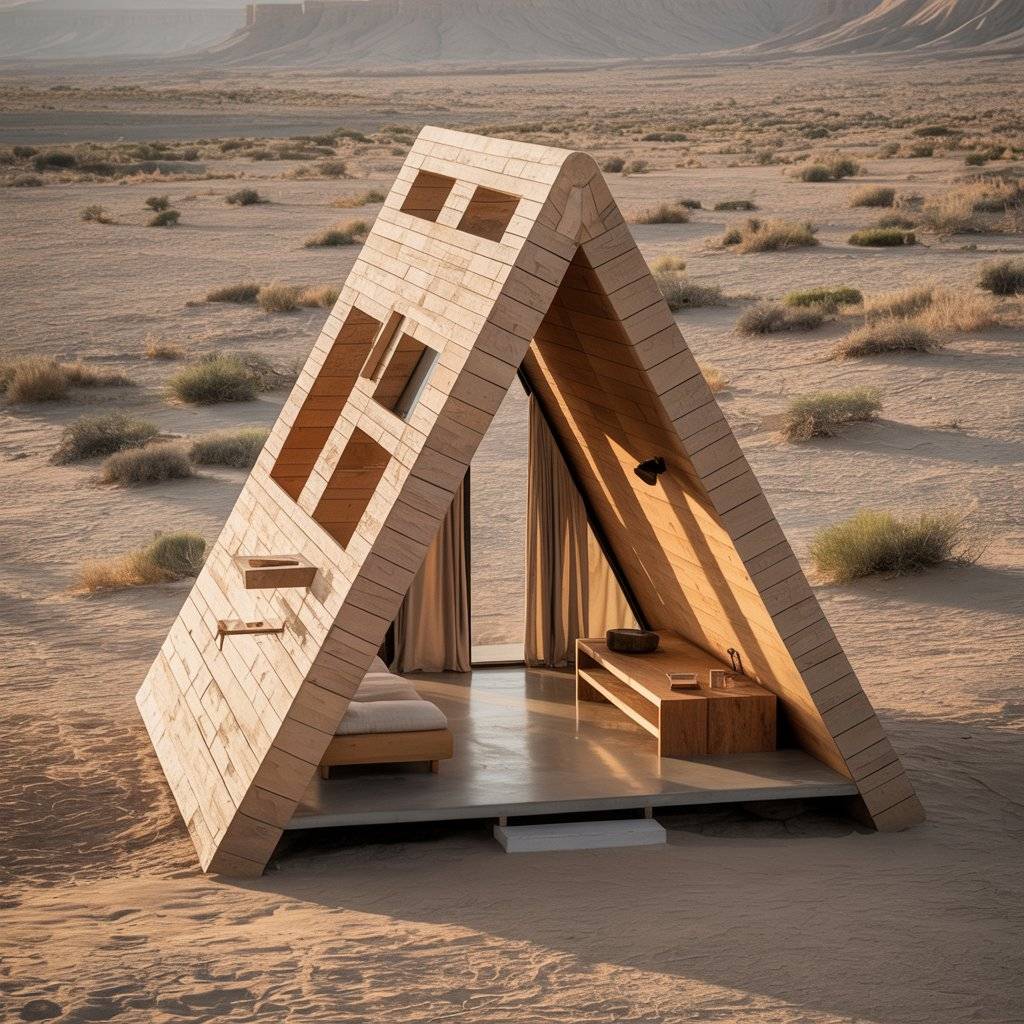
A desert A-frame retreat works best when it leans into the quiet of its surroundings instead of trying to soften it. These homes often use raw materials unfinished wood, concrete floors, and simple metal fixtures. The structure itself provides shade and protection from heat, while narrow windows are placed carefully to let in light without overwhelming the space.
Inside, the layout stays open. There’s usually one main living area, a small kitchen, and a loft for sleeping. Furniture is minimal and chosen for function, not decoration. Thick curtains help control light and temperature. At night, the desert becomes silent in a way few places do. This kind of A-frame gives you space to sit with that silence, uninterrupted. It’s a retreat that encourages reflection, slow movement, and time without pressure.
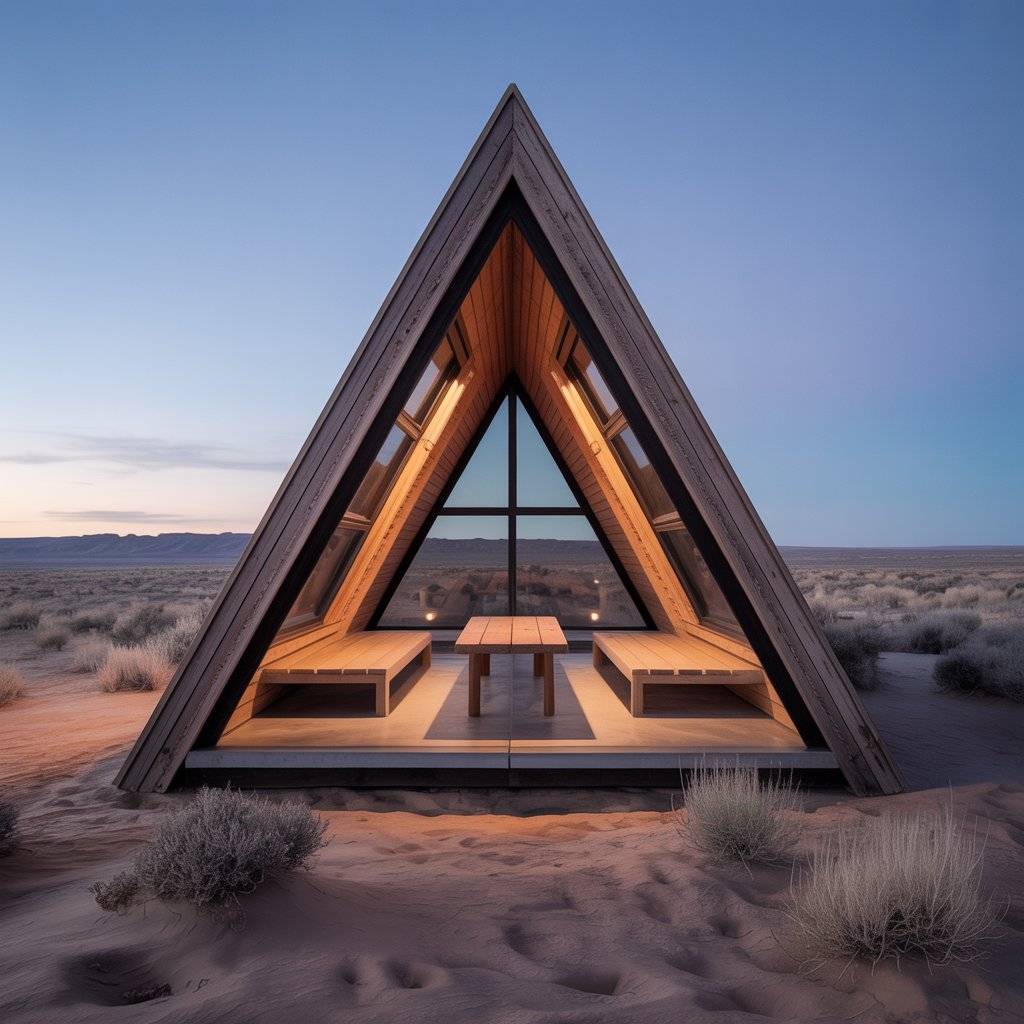
7. Scandinavian-Inspired A-Frame for Soft Weekends
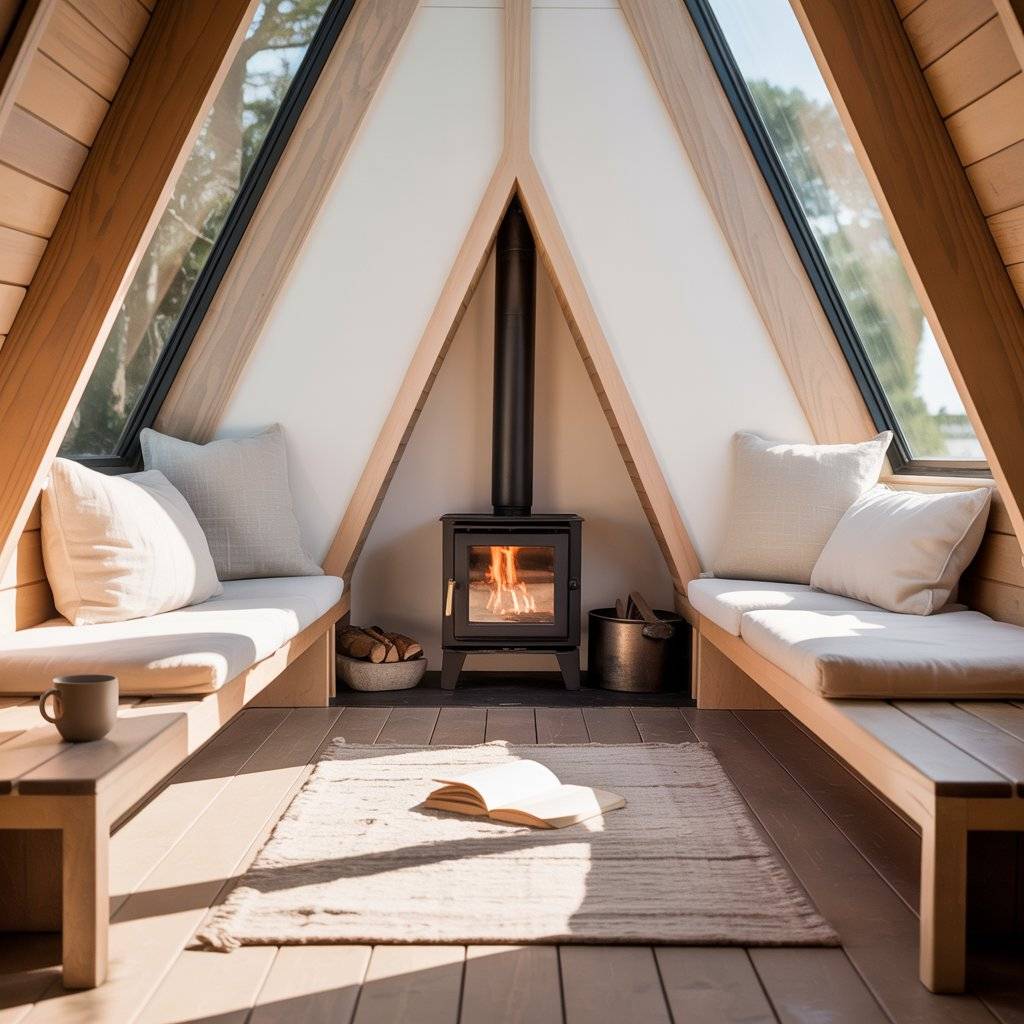
Scandinavian-style A-frame sanctuaries focus on warmth and balance. The structure is sharp and clean, but the interior feels soft. Light wood floors, white walls, and simple textiles keep the space bright without feeling cold. Natural light plays a big role here, especially during long mornings.
These retreats often include a small wood stove and built-in seating along the walls. Storage is hidden, which helps the space stay calm and uncluttered. The goal isn’t to impress it’s to feel comfortable. This kind of A-frame works well for quiet weekends spent indoors, especially in colder seasons. You can cook, read, and rest without needing much else. Everything feels intentional, and nothing feels rushed.
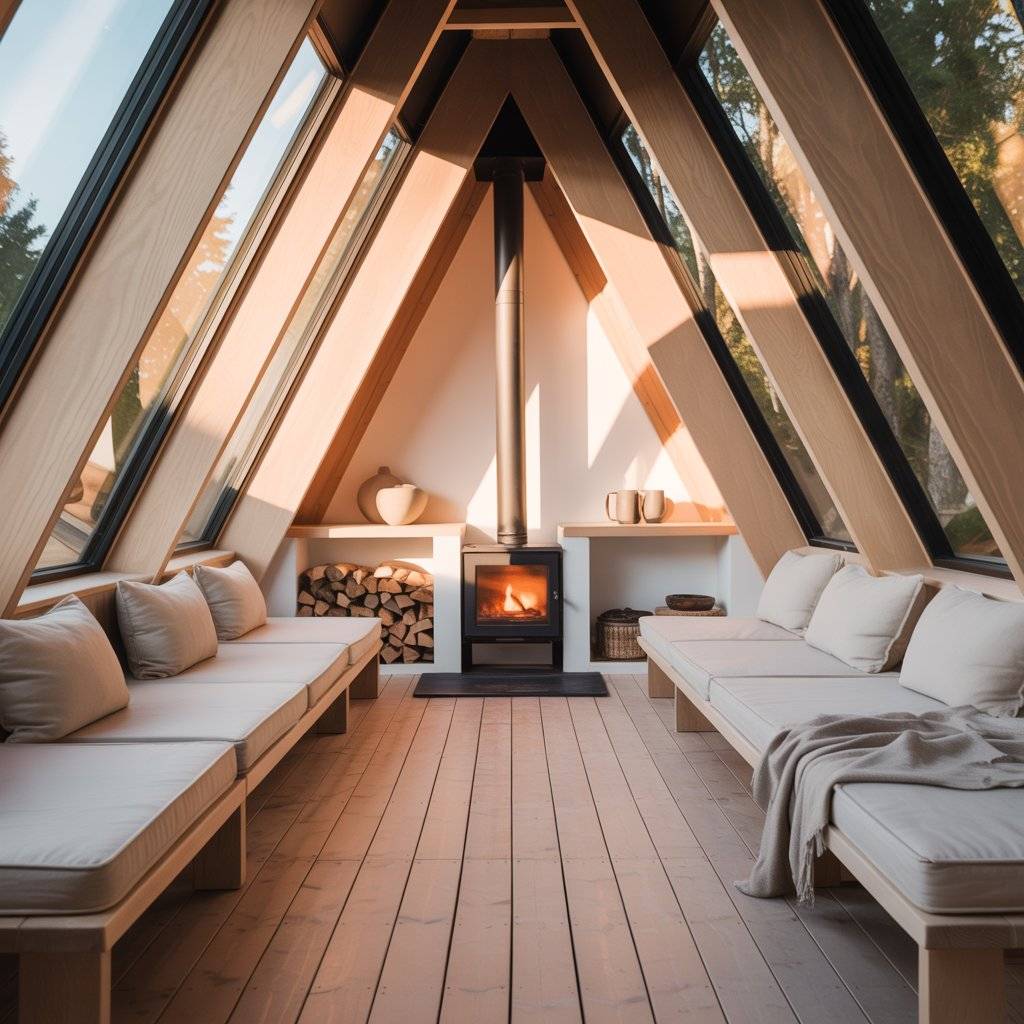
8. Riverfront A-Frame with Indoor-Outdoor Flow
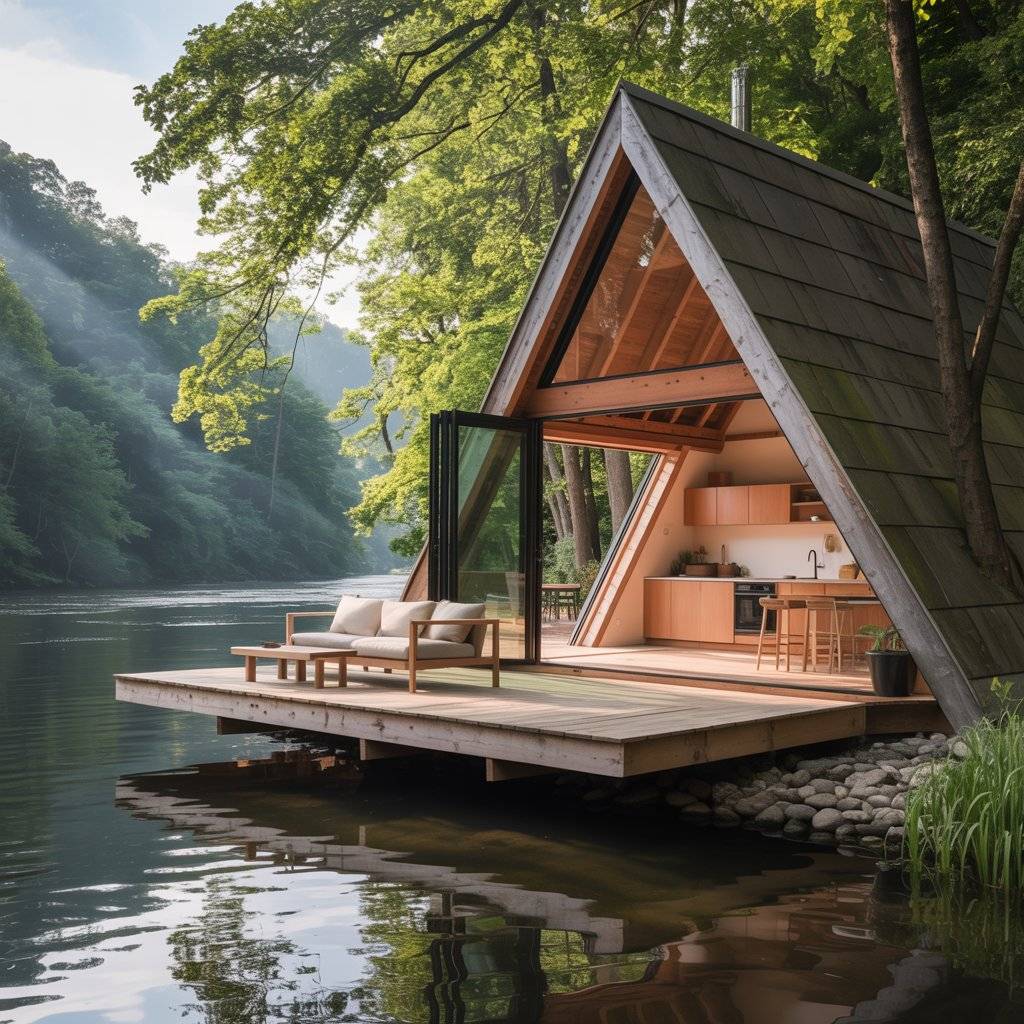
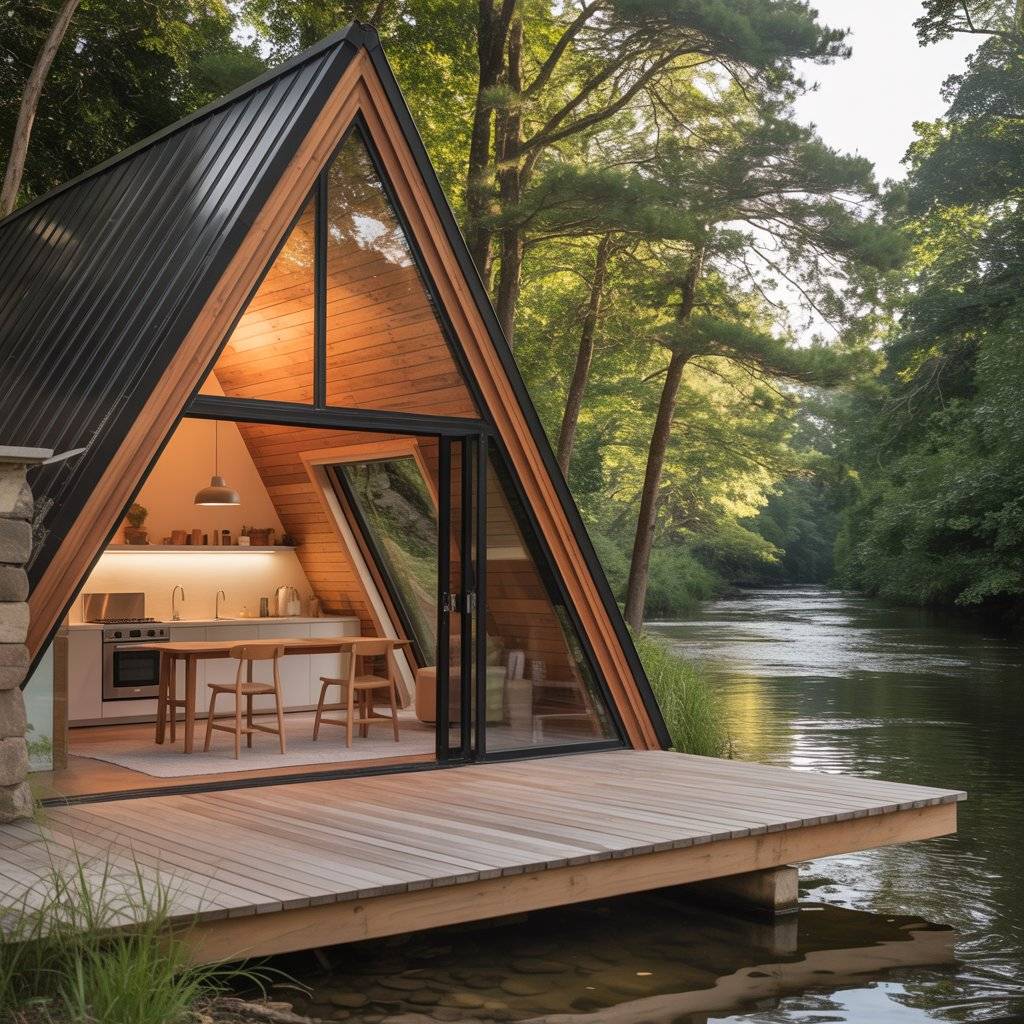
A riverfront A-frame sanctuary benefits from staying connected to the water. Large doors or windows often open directly onto a deck, making it easy to move outside without thinking about it. The interior stays simple so the sound of the river becomes part of the space.
Most of these retreats use natural materials like wood and stone to blend in with their setting. The kitchen is compact but functional, designed for slow meals rather than big gatherings. Seating is arranged to face the water, not a screen.
This kind of A-frame works well for people who want quiet but still enjoy movement walking, sitting outside, or listening to flowing water. It’s a space that supports rest without feeling closed off.
9. Compact A-Frame Designed for Solo Time
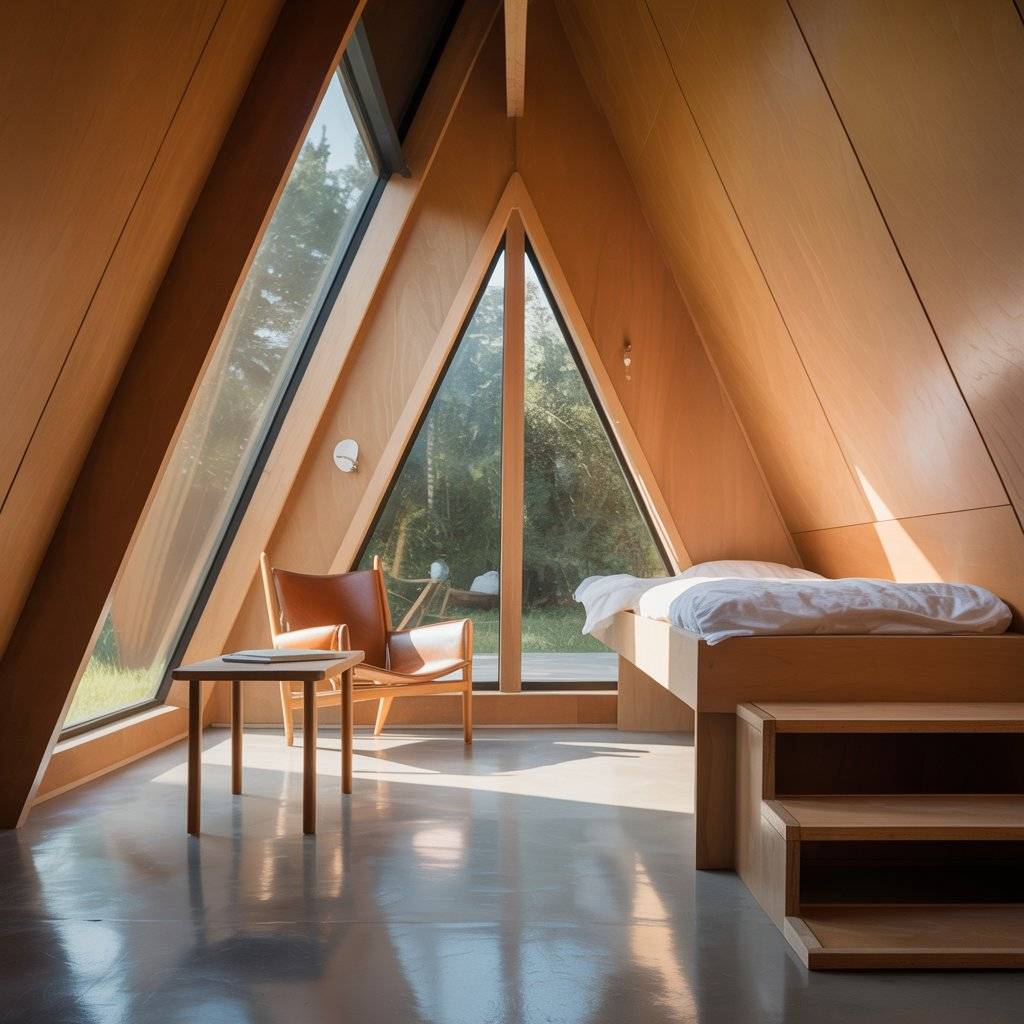
Some A-frame sanctuaries are built for one person, and those are often the quietest. These compact designs remove everything that isn’t necessary. One chair, one table one bed. That’s it.
The structure is usually small but tall, making the space feel open even with limited square footage. Natural light comes in through a single large window or skylight. Storage is built into the walls or under the stairs.
This kind of retreat is ideal for writing, thinking, or simply stepping away from daily noise. There’s no space for clutter, so the mind stays clear. People often underestimate how powerful a small, well-designed space can be. For quiet weekends, this type of A-frame does exactly what it’s meant to do nothing more, nothing less.
10. Coastal A-Frame with Calm Interior Tones
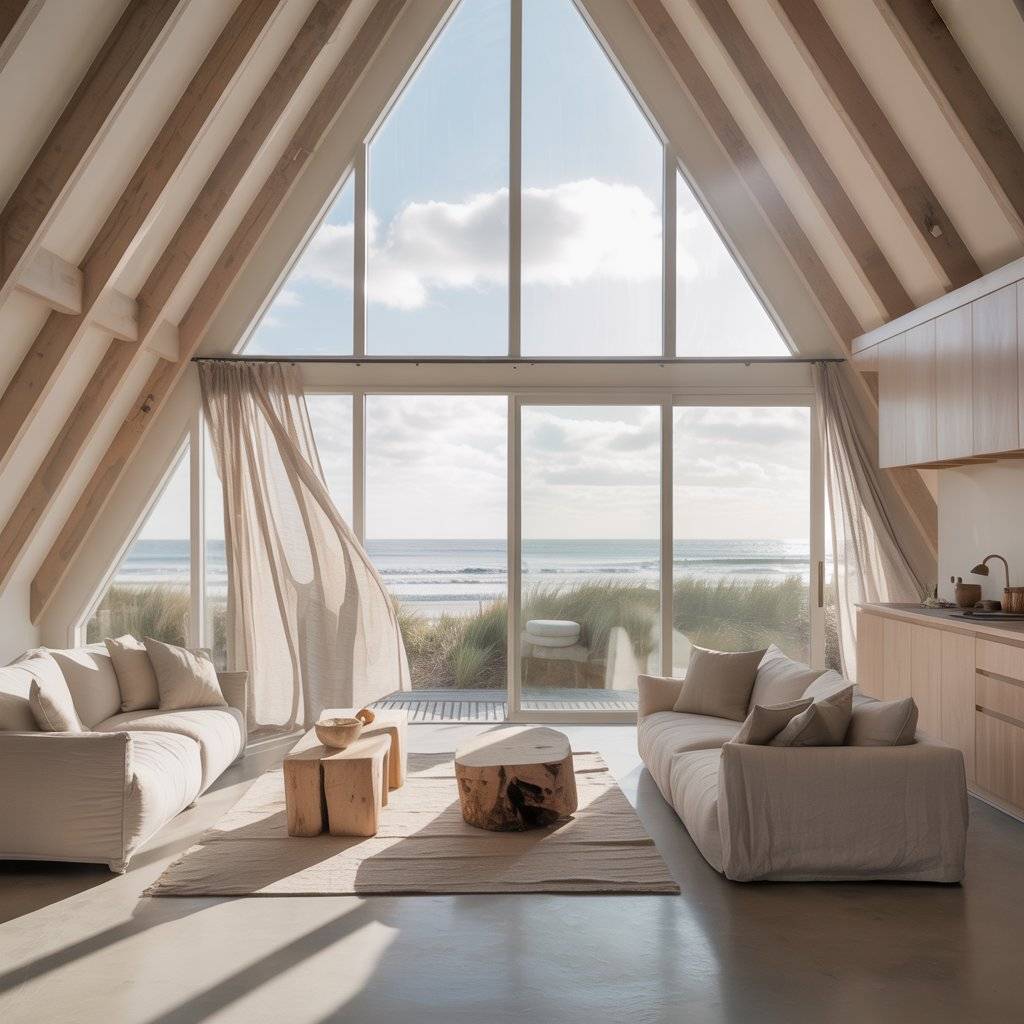
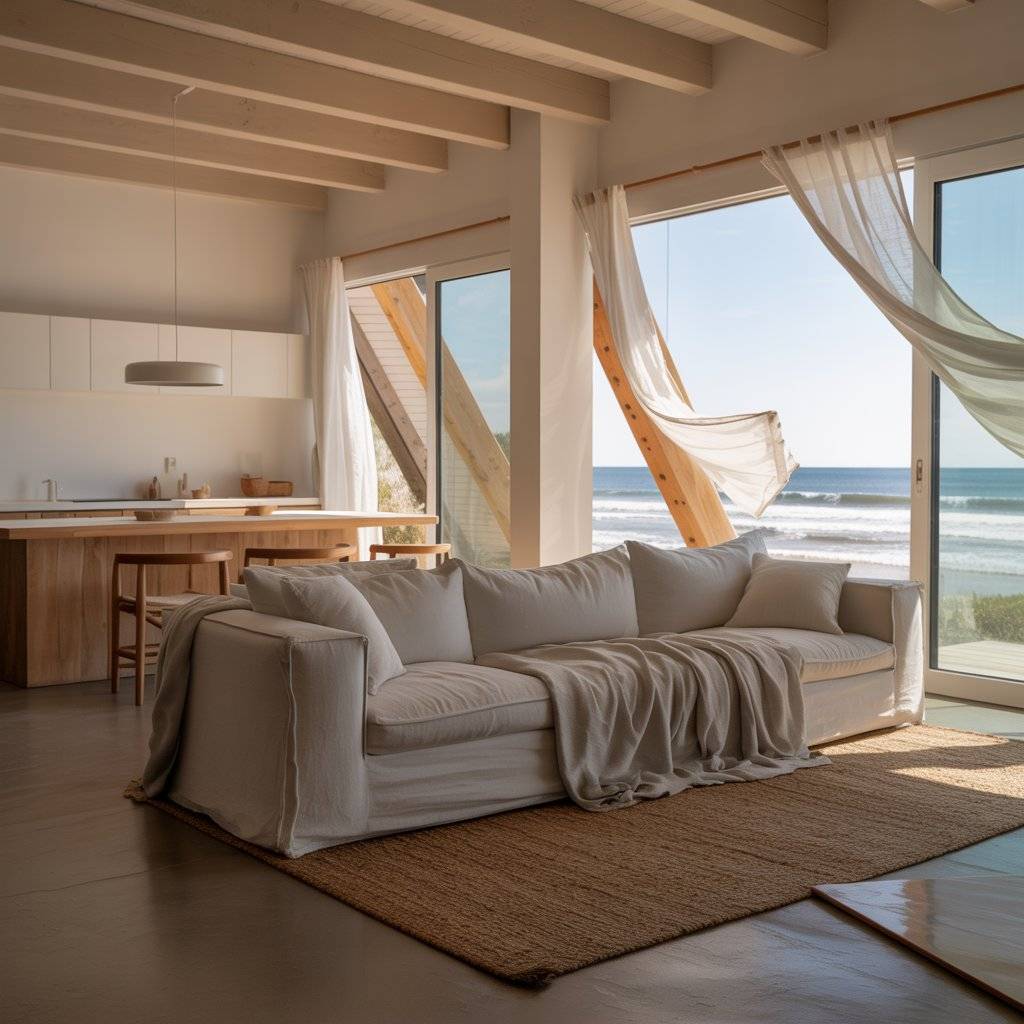
A coastal A-frame retreat doesn’t need beach décor to feel right. The most calming ones stick to neutral tones soft whites, pale wood, and light gray fabrics. The focus stays on air, light, and movement.
Windows are positioned to catch changing light and wind. Curtains move gently throughout the day. Furniture stays simple and sturdy, often made from natural wood. The kitchen is practical, designed for easy meals after long walks outside.
This type of sanctuary works best when the interior stays quiet and the surroundings do the talking. You hear waves, feel the breeze, and slow down without trying. It’s a space made for rest, reflection, and unplanned moments.
11. Snowy Woodland A-Frame for Winter Silence
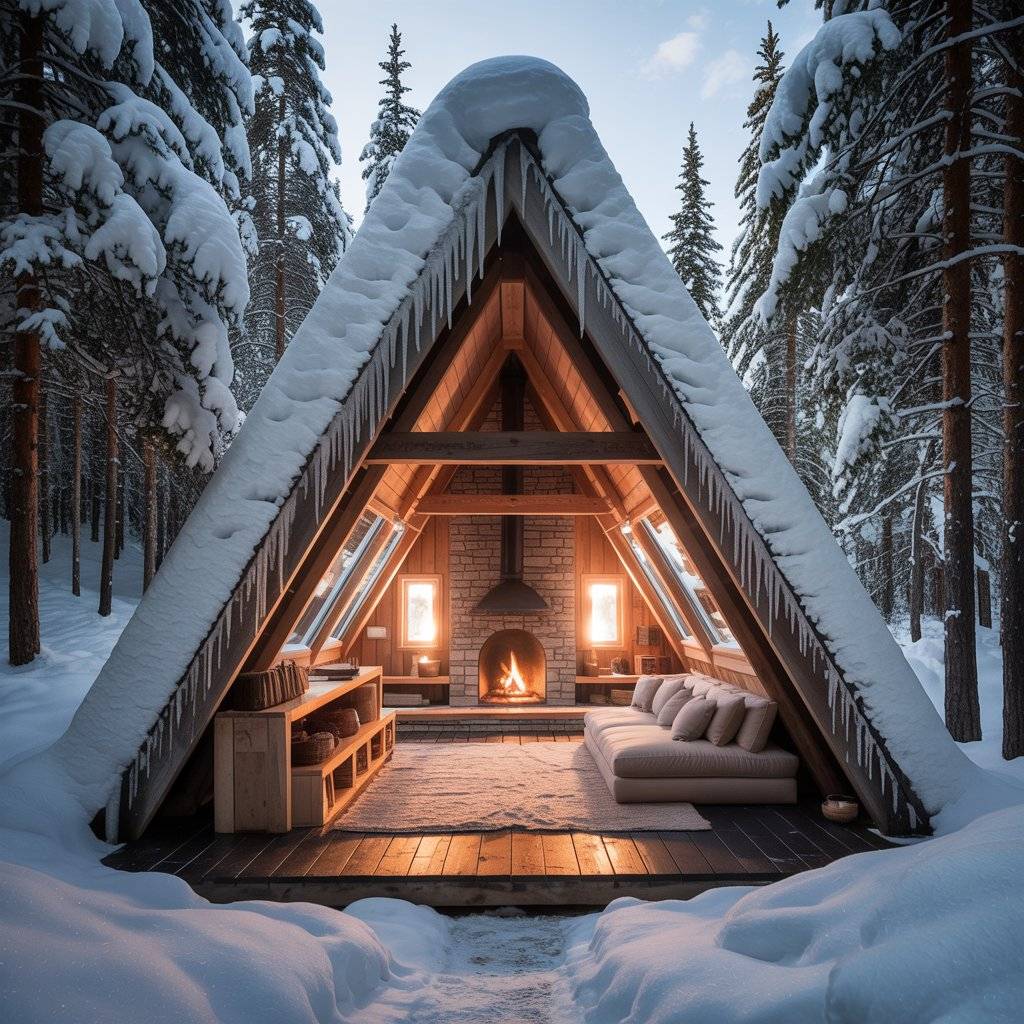
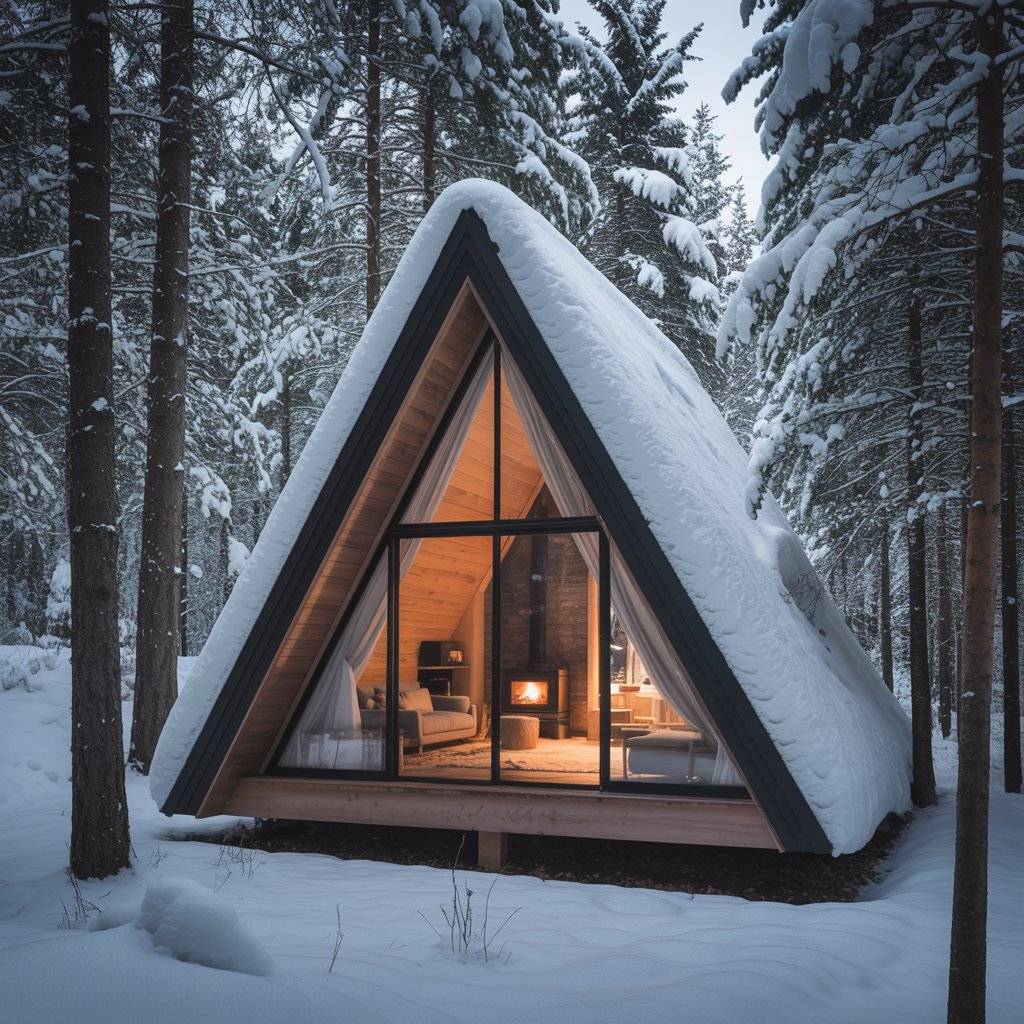
A snowy woodland A-frame retreat feels different from any other. Sound is muted. Light is softer. The design needs to support that calm rather than fight it. These homes usually rely on strong insulation, a wood stove, and simple layouts that keep heat where it’s needed.
Inside, the space stays open but cozy. Thick rugs, wood walls, and a few well-chosen chairs create warmth without clutter. Windows frame snow-covered trees instead of wide views, which makes the interior feel protected. Storage is built into benches and staircases so nothing piles up.
This type of sanctuary is made for slow winter weekends reading, cooking simple meals, and sleeping early. It’s not about escaping the cold. It’s about settling into it comfortably and letting the quiet do its work.
12. Urban Edge A-Frame Hidden from Noise
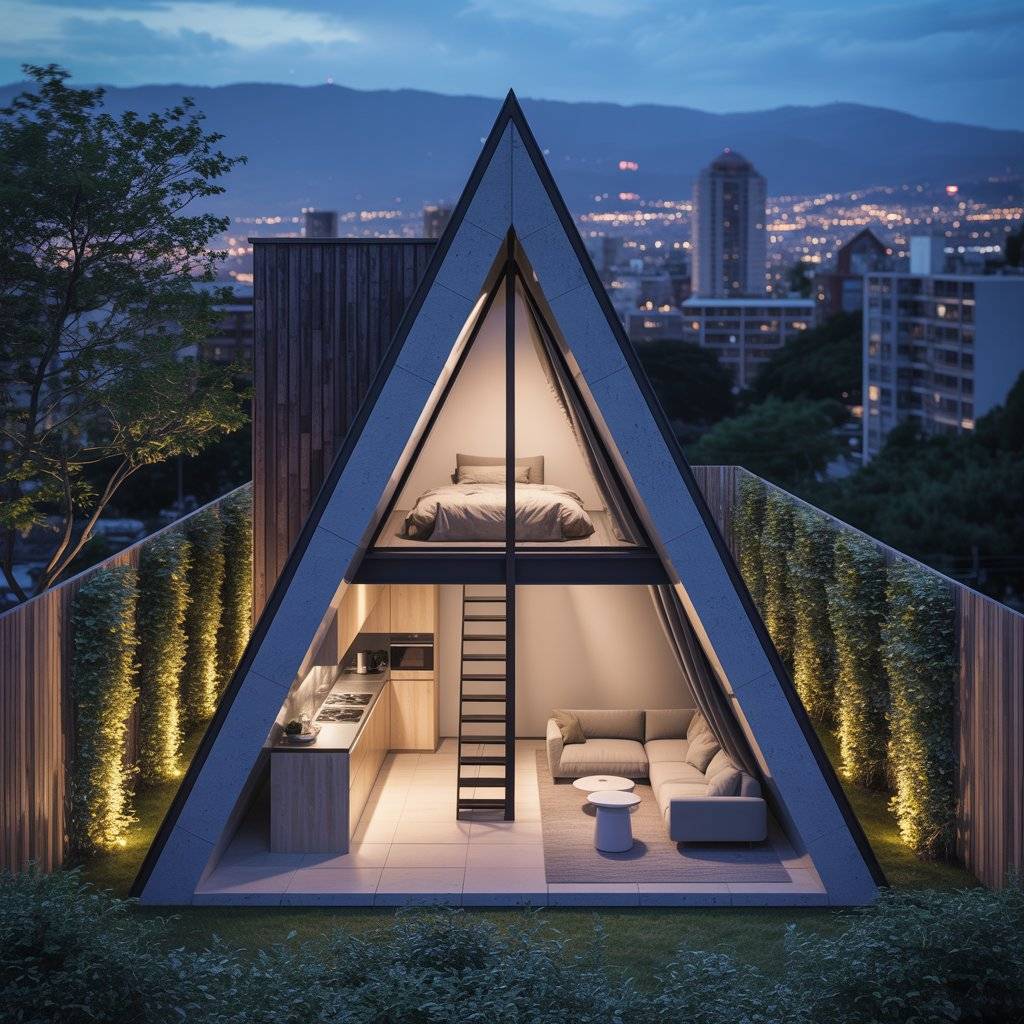
Not all A-frame retreats are remote. Some are built at the edge of cities, designed to block noise and create separation from busy surroundings. These structures use solid materials, sound-insulated walls, and carefully placed windows that avoid street views.
Inside, the layout stays minimal. A small kitchen, a calm seating area, and a loft bed create a clear rhythm to the space. Neutral colors help the mind rest after busy days. Outdoor space, even if small, is protected with fencing or greenery to create privacy.
This kind of retreat proves you don’t need distance to find quiet. You need boundaries. For weekend resets without long travel, an urban A-frame sanctuary can offer real rest.
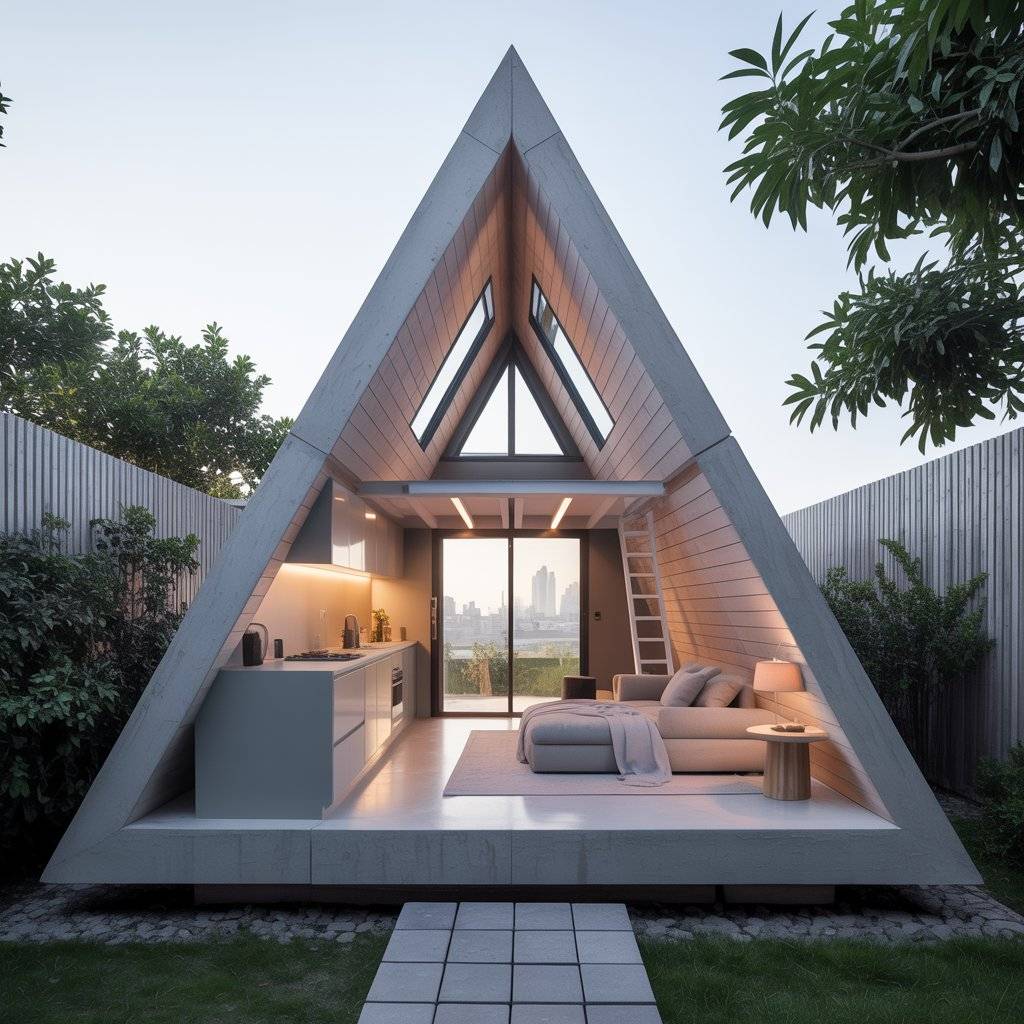
13. Hillside A-Frame with Framed Views
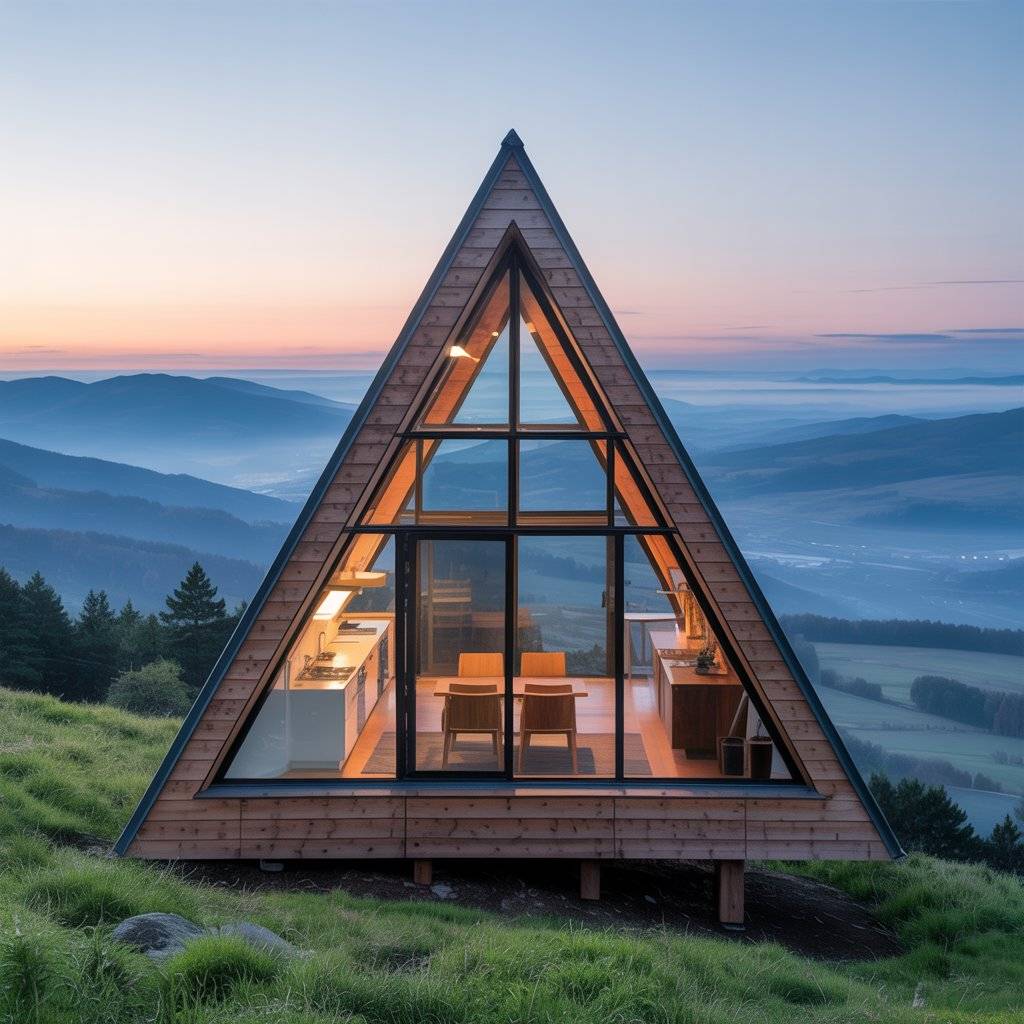
A hillside A-frame retreat works best when it’s positioned carefully. The structure often faces one clear direction, framing a single view rather than trying to capture everything. This focus helps the space feel calm instead of overwhelming.
Inside, furniture is arranged to face outward. Seating is low. Lighting is soft and indirect. The kitchen is simple and placed along one wall to keep the main area open. Materials are natural and left mostly untreated.
This kind of sanctuary supports quiet observation. You sit, look, and notice changes in light and weather. There’s no pressure to do anything else. That’s what makes it ideal for short breaks meant to reset your pace.
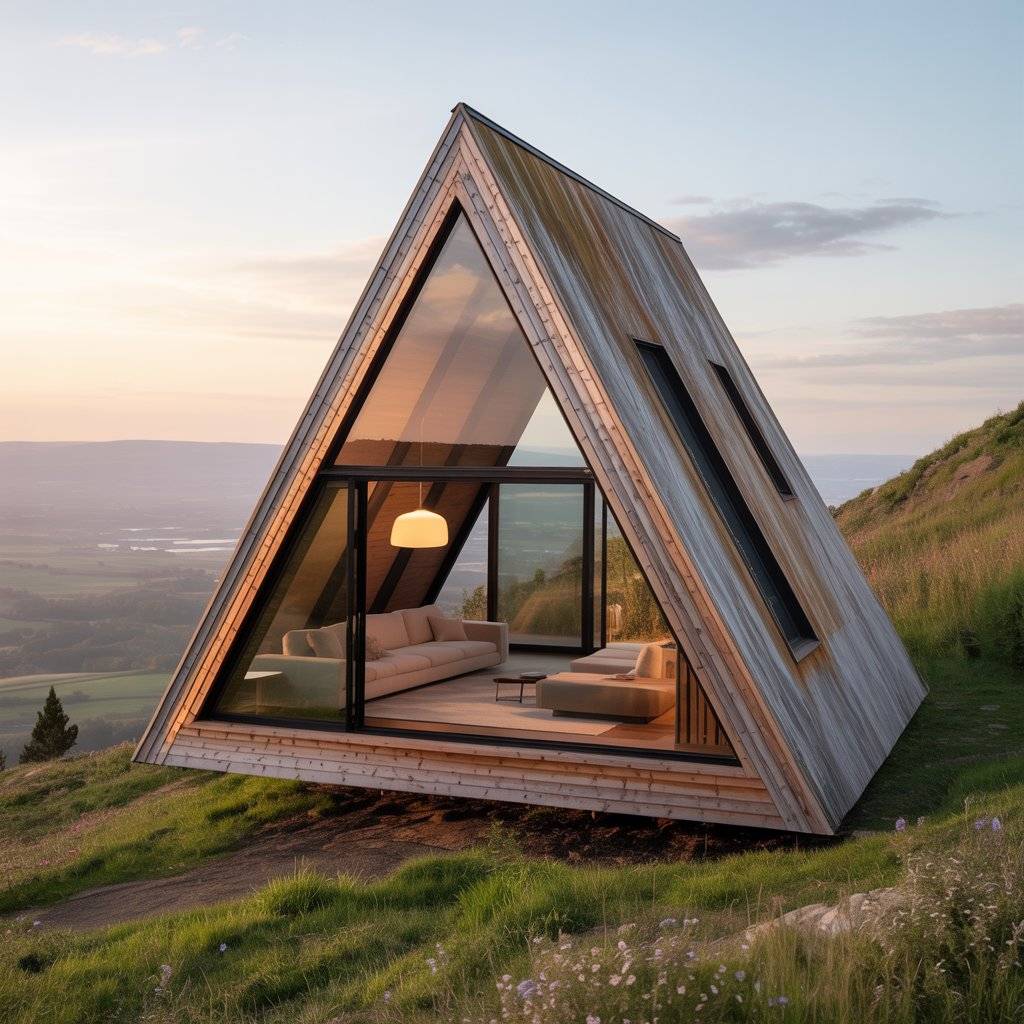
14. Family-Size A-Frame Built for Quiet Togetherness
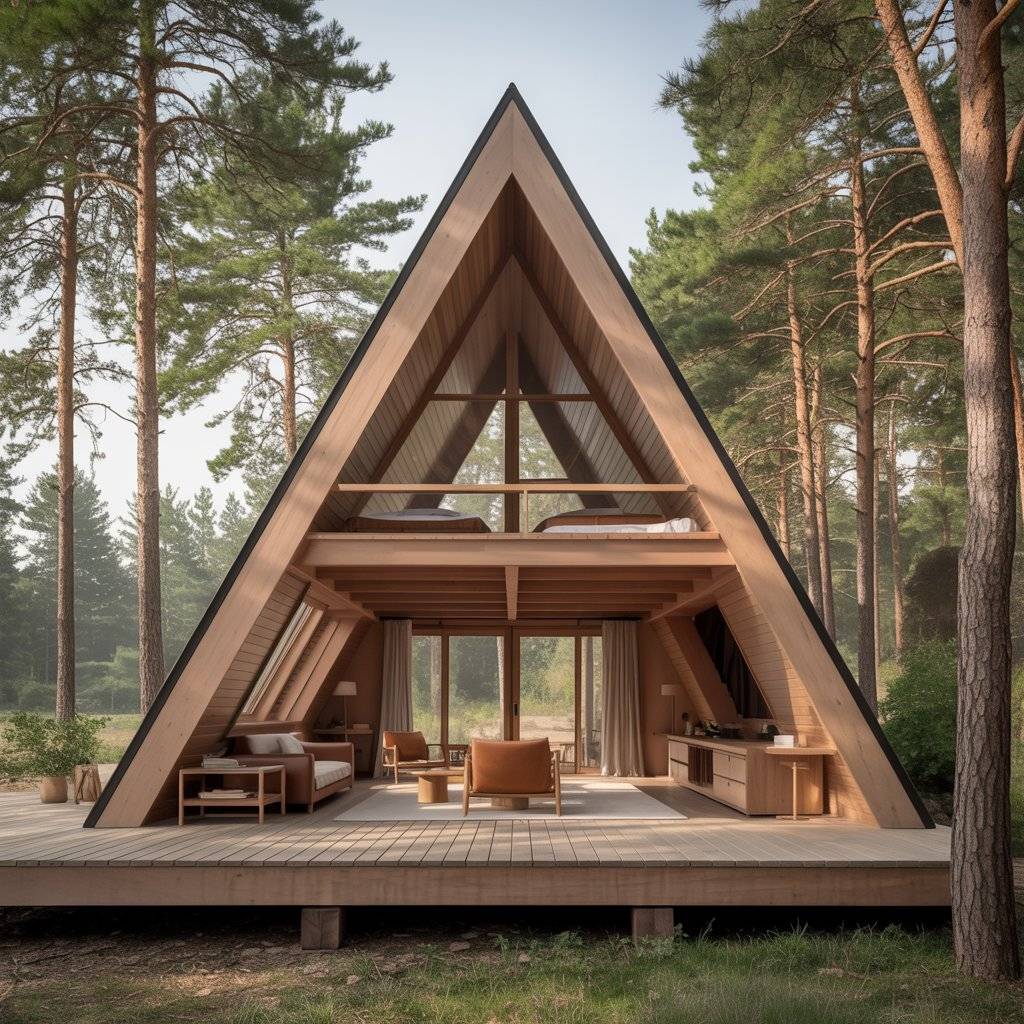
A larger A-frame can still be quiet if it’s designed carefully. Family-sized retreats that work well usually keep shared spaces open and sleeping areas tucked away. This allows people to be together without constant noise.
Furniture is sturdy and simple. Storage is generous so everyday items stay out of sight. Windows bring in light, but the interior avoids bright colors or busy patterns. Outdoor space often includes a covered deck where people can spread out.
This kind of sanctuary works for families or small groups who want calm, not activity. Conversations happen naturally. Everyone moves slower. It’s a reminder that quiet doesn’t mean being alone it means being present without distractions.
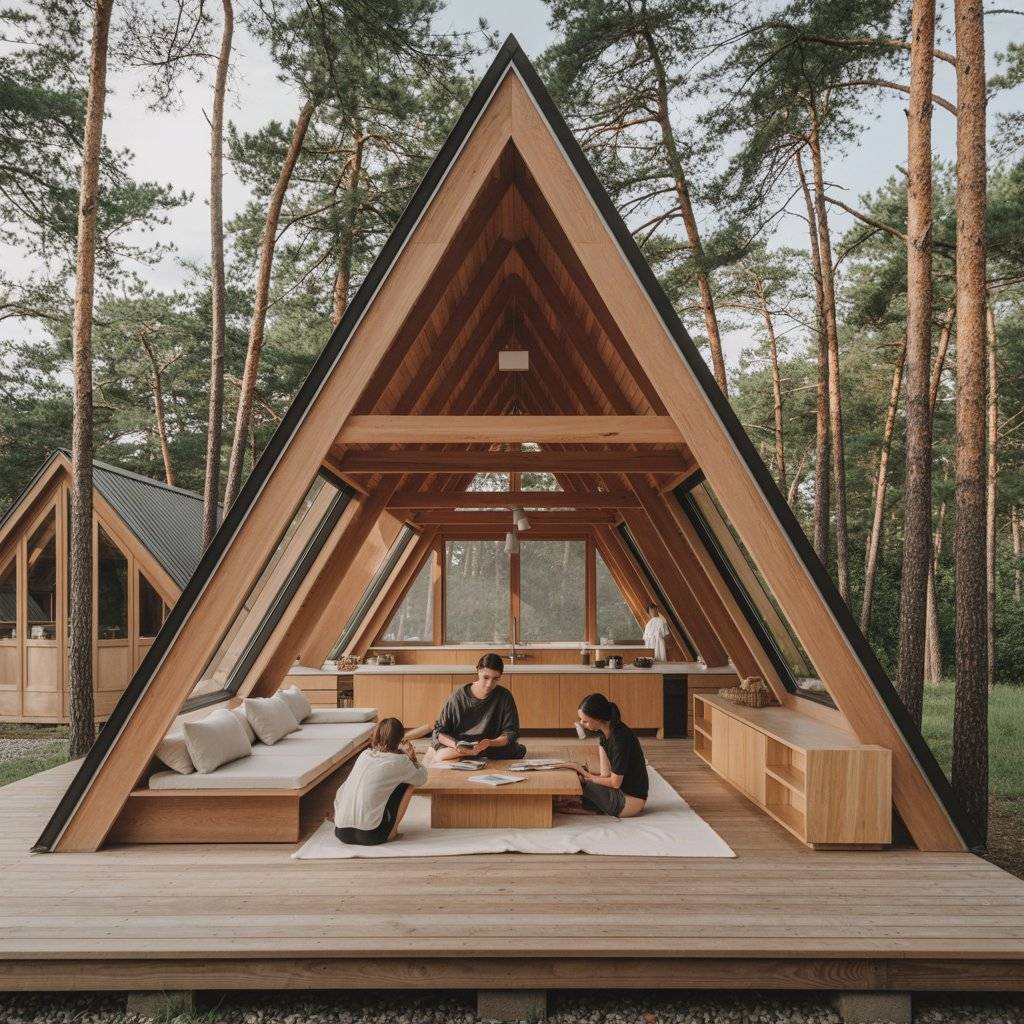
15. Meadow A-Frame with Natural Rhythm
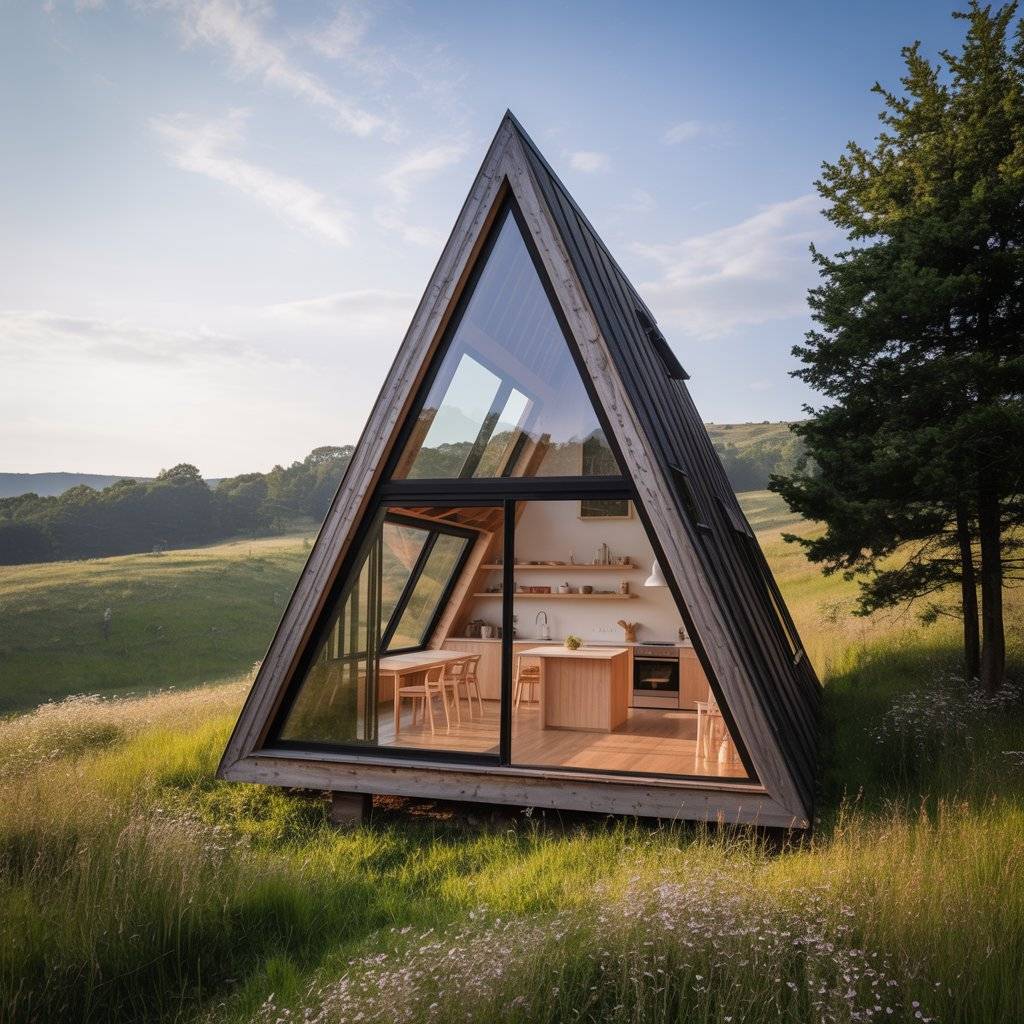
A meadow-set A-frame retreat feels open but grounded. These homes usually sit low on the land and use wide windows to capture sky and grass rather than dramatic views. The result is a steady, peaceful atmosphere.
Inside, the design stays soft. Light wood floors, simple furniture, and open shelving keep the space honest. The kitchen is practical and encourages shared meals. At night, the space darkens naturally, helping your body slow down.
This type of sanctuary supports a gentle rhythm wake, move, rest, repeat. It’s not designed for productivity. It’s designed for balance. And for a quiet weekend, that balance is often exactly what’s needed.
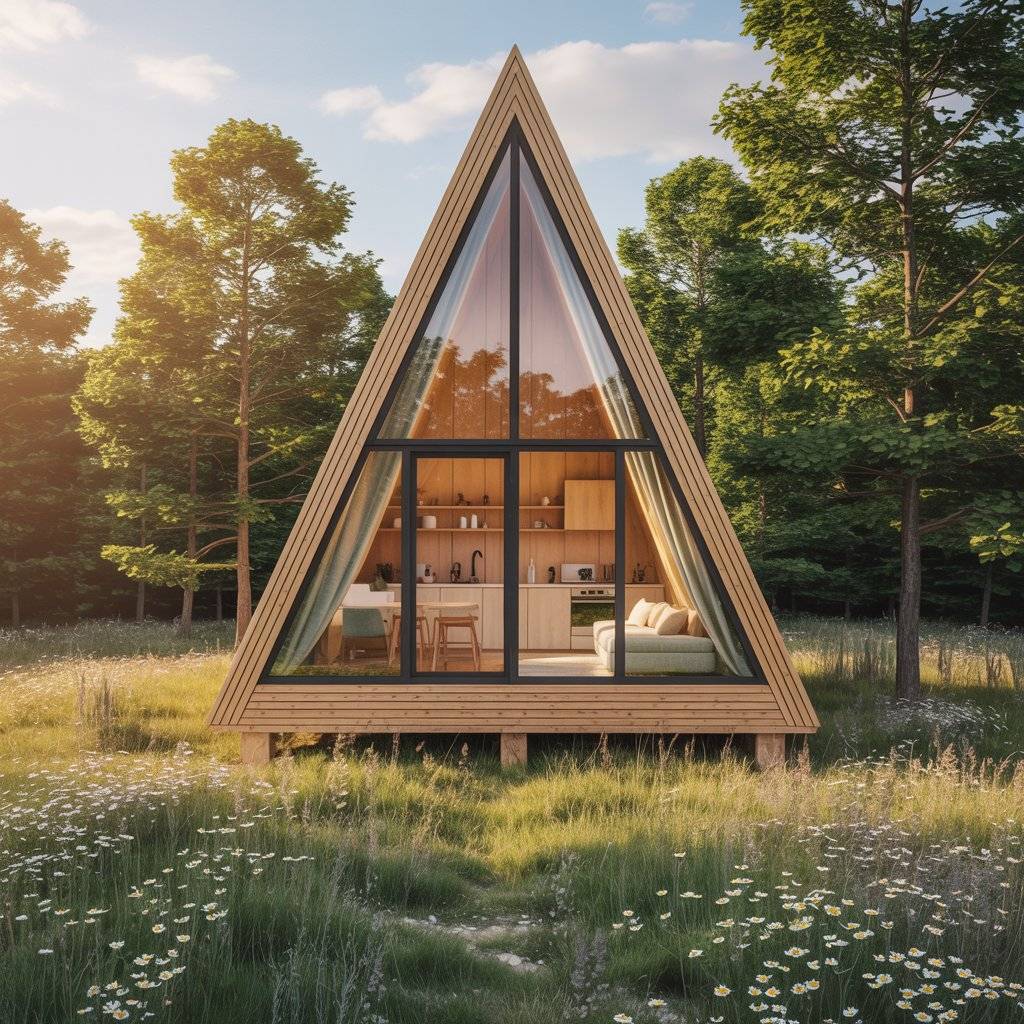
16. Cliffside A-Frame Built for Focus and Calm
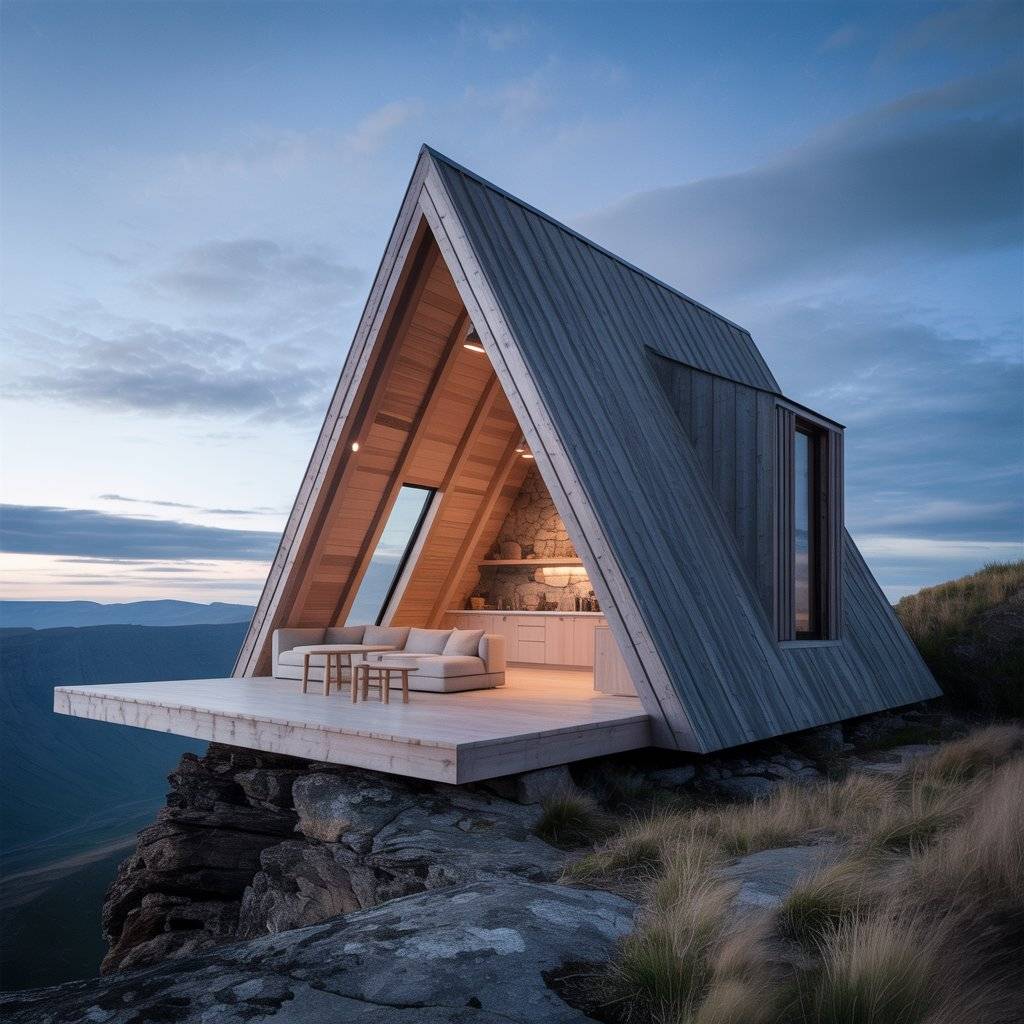
A cliffside A-frame retreat needs careful planning to feel calm instead of exposed. The best designs use solid construction, limited openings, and thoughtful orientation. Windows are placed to frame the horizon, not the drop below, which helps the space feel steady.
Inside, the layout stays grounded. Furniture is minimal and anchored to the floor. Materials like wood and stone add weight and warmth. The kitchen is small and efficient, allowing more room for open living space.
This type of sanctuary works well for quiet weekends focused on thinking or writing. The surroundings feel dramatic, but the interior stays calm. That balance helps keep your mind settled instead of overstimulated.
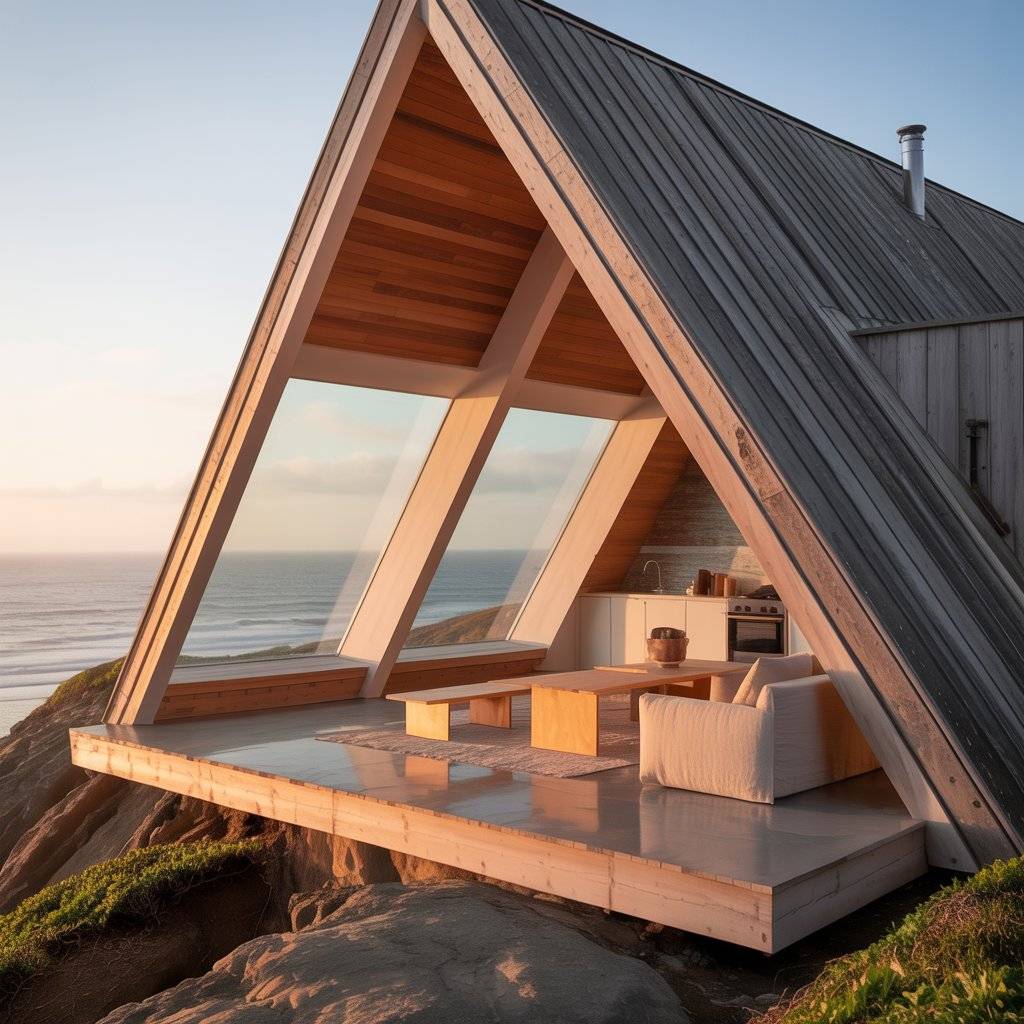
17. Garden A-Frame Retreat for Daily Escape
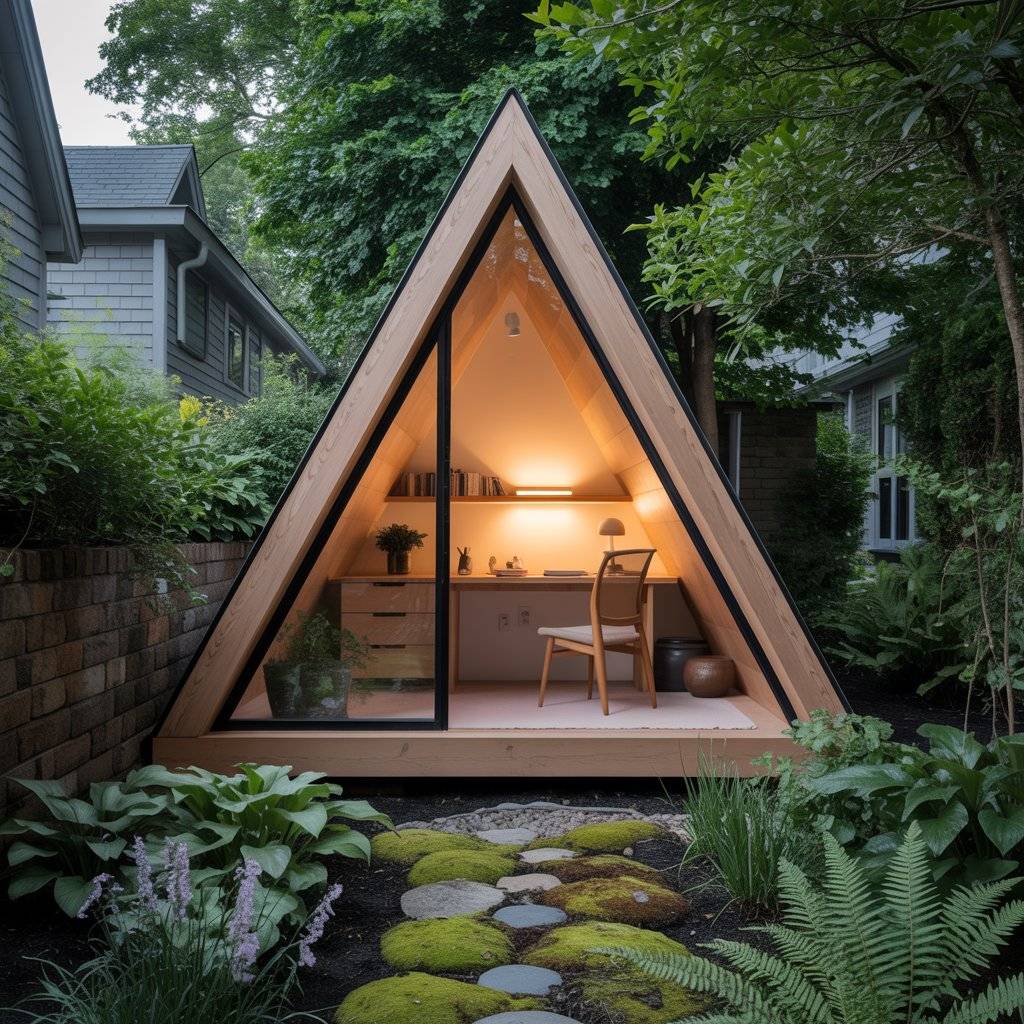
A garden A-frame sanctuary offers quiet without isolation. These small structures are often built behind a main home or within a shared green space. The key is separation. Once inside, the outside world fades quickly.
Design stays simple. One room, a small desk or table, and a comfortable chair. Large windows face plants, not people. Storage is built into the walls so nothing distracts from the space.
This kind of retreat is ideal for weekend resets close to home. You can step away, spend a few quiet hours inside, then return without stress. It’s proof that quiet doesn’t require distance just intention.
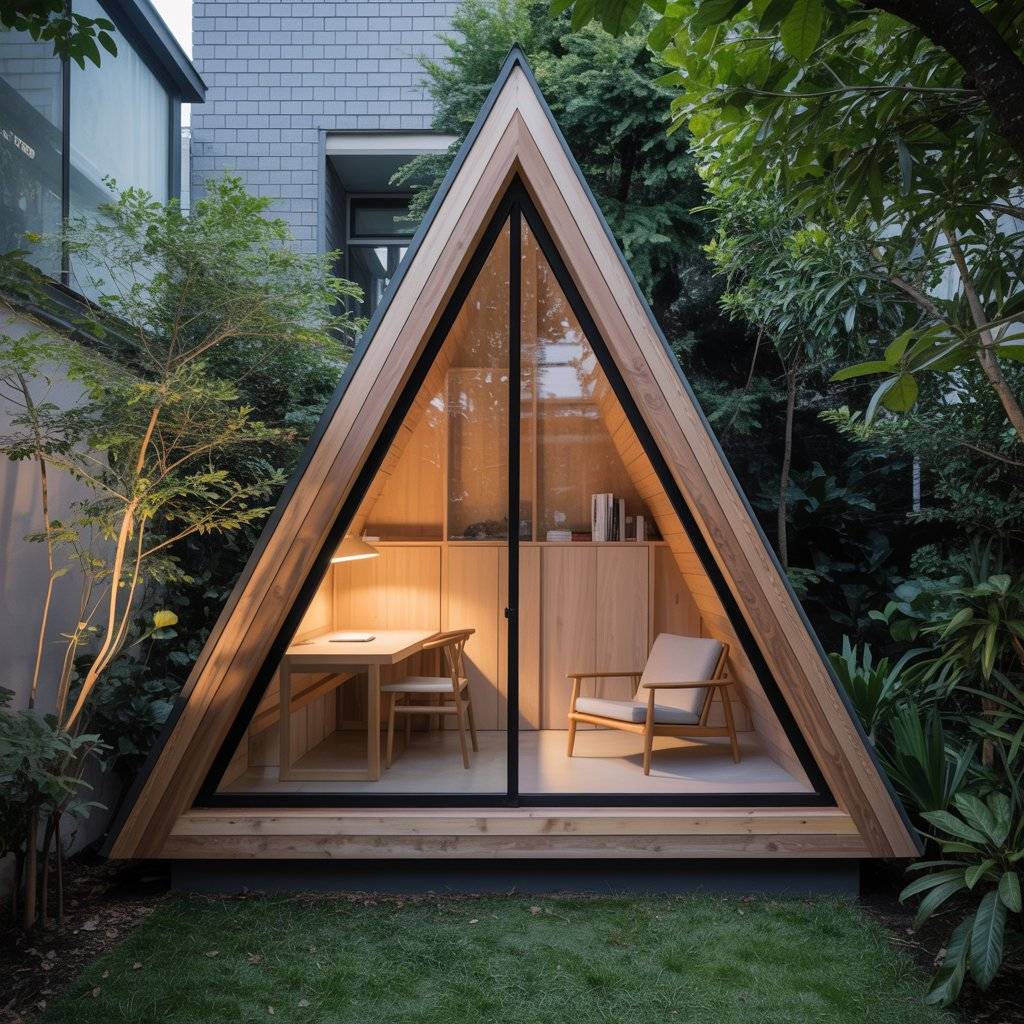
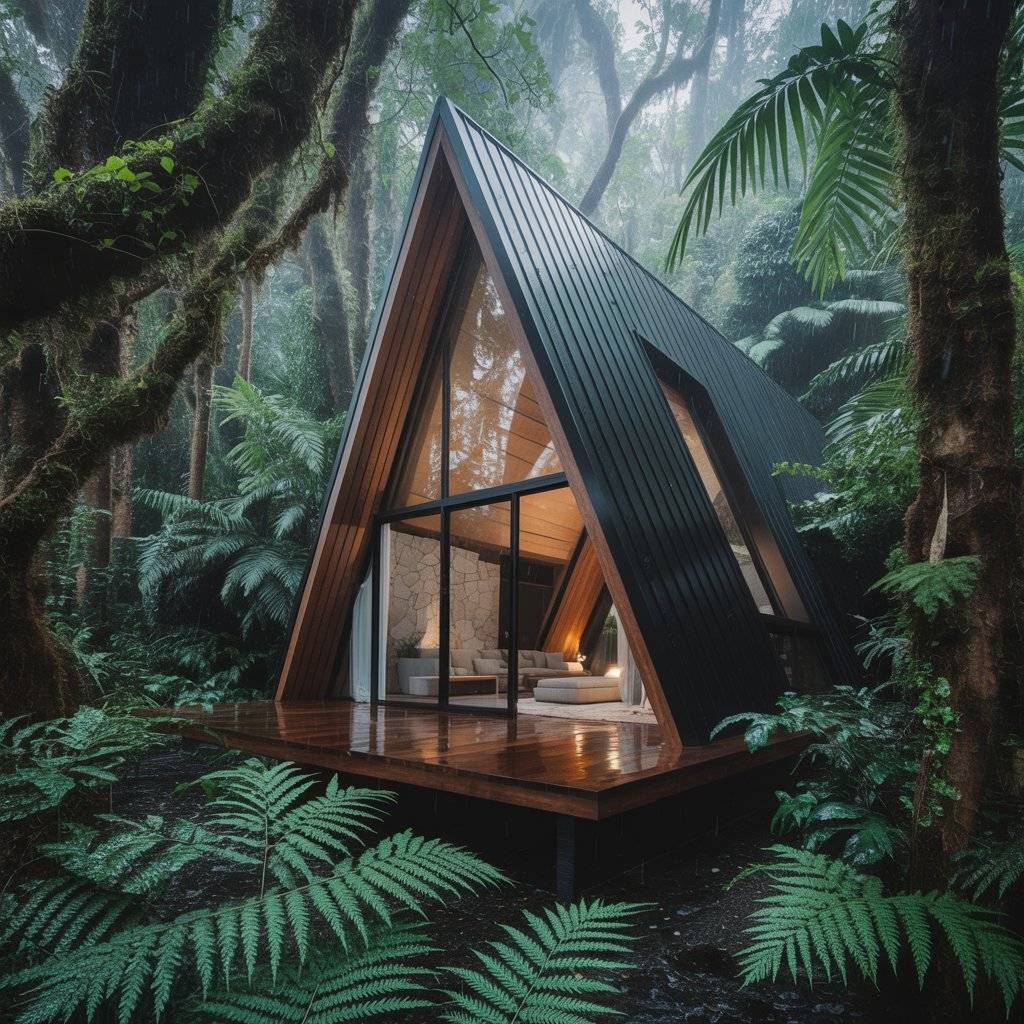
18. Rainforest A-Frame Designed for Deep Quiet
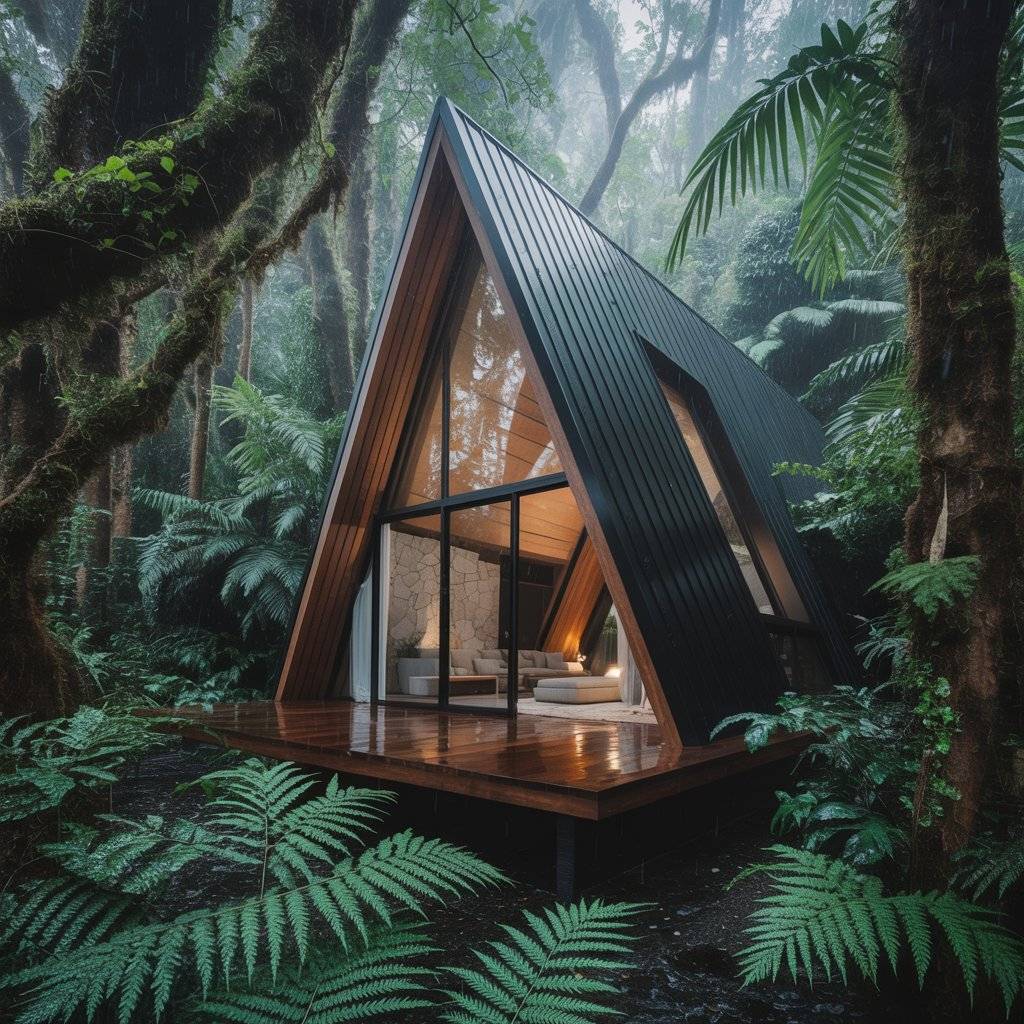
Rainforest A-frame retreats benefit from working with moisture, sound, and shade. Rooflines are steep for rain runoff. Overhangs protect windows. Interiors stay dry and calm.
Inside, materials are chosen carefully. Treated wood, stone floors, and breathable fabrics help manage humidity. Furniture stays minimal to allow air flow. Windows are large but protected, letting in green views and filtered light.
The sound of rain becomes part of the experience. This type of sanctuary supports deep rest, long naps, and quiet observation. It’s a place where you don’t need entertainment. Nature does the work for you.
19. High-Altitude A-Frame for Mental Reset
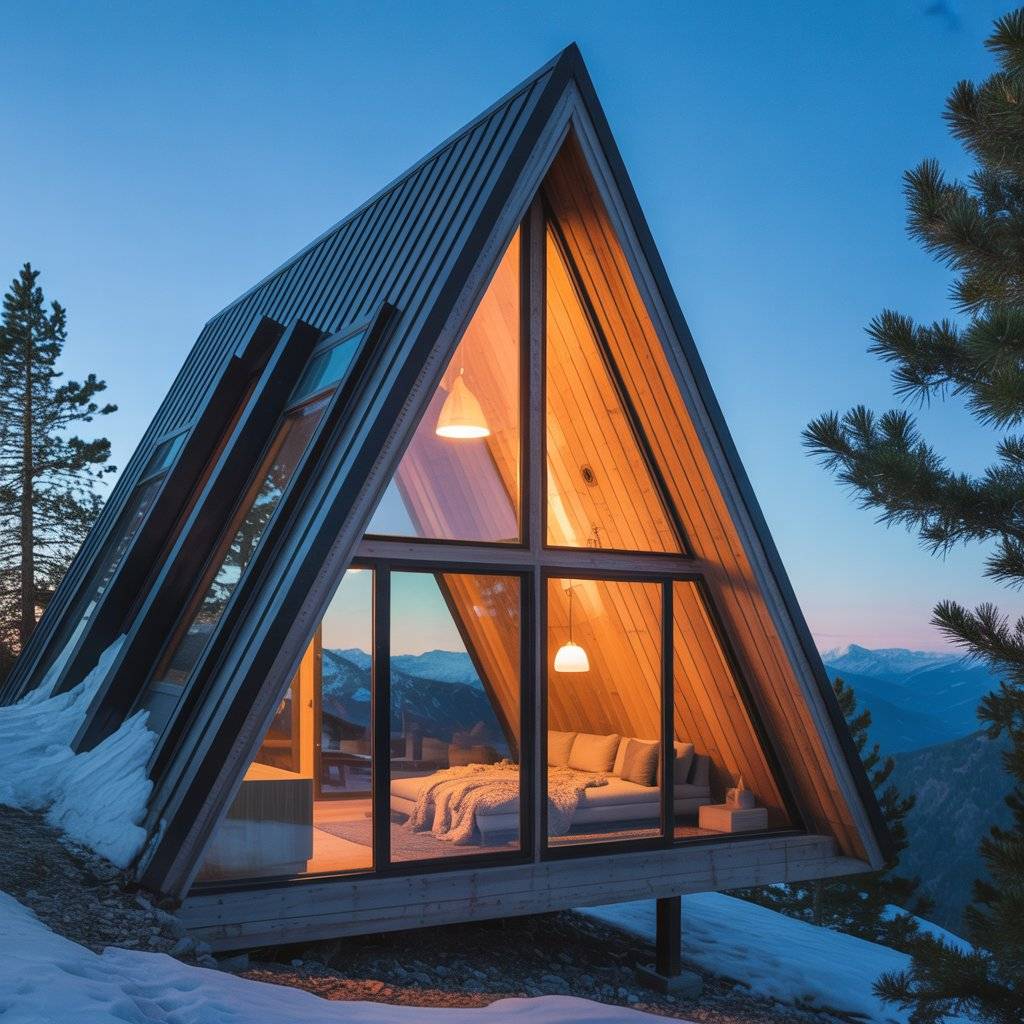
At higher elevations, A-frame retreats often feel sharper and quieter at the same time. Air is thinner. Sound carries less. Design needs to support comfort without excess.
These sanctuaries usually include strong insulation, compact layouts, and warm interior materials. Furniture is simple but solid. Lighting is soft and placed low to balance the tall ceiling.
This kind of retreat helps clear your head quickly. You move slower, breathe deeper, and sleep more fully. It’s ideal for short stays meant to reset habits and focus before returning to everyday life.
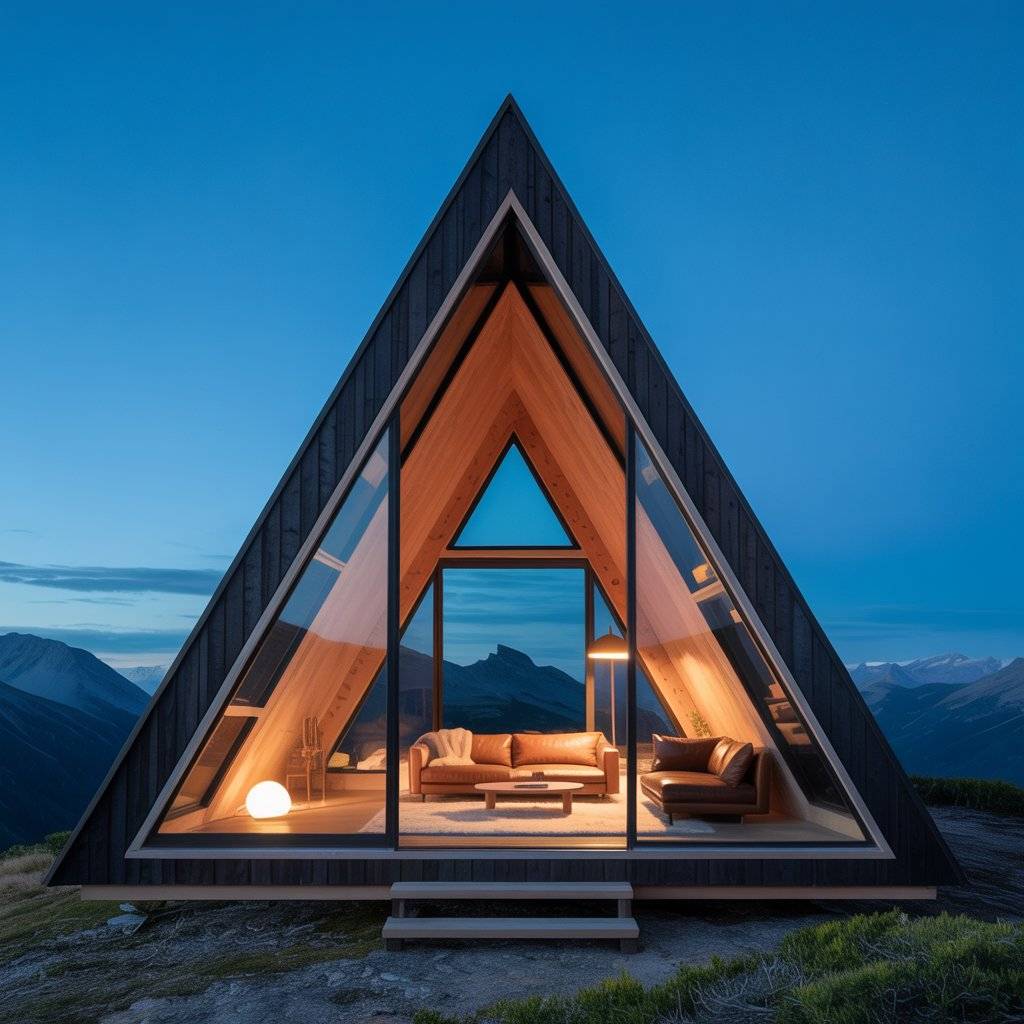
20. Minimalist A-Frame with Built-In Furniture
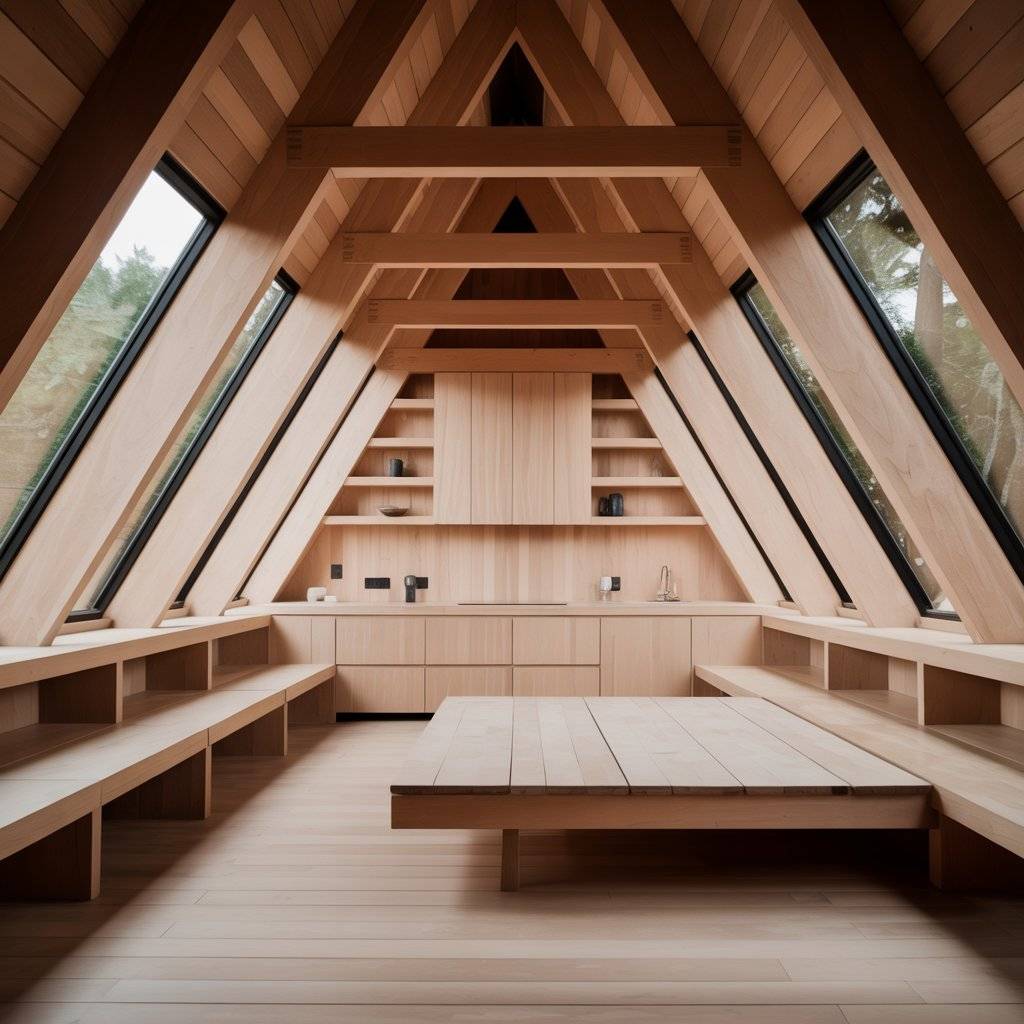
Some of the calmest A-frame sanctuaries rely heavily on built-in furniture. Benches, beds, and shelves are designed as part of the structure. This reduces visual noise and keeps the space clean.
Inside, nothing feels temporary. Everything has a place. The kitchen blends into the walls. Seating is fixed and comfortable. Storage stays hidden.
This type of retreat works well for people who feel overwhelmed by clutter. The space guides how you live in it. For quiet weekends, that guidance helps your mind rest without effort.
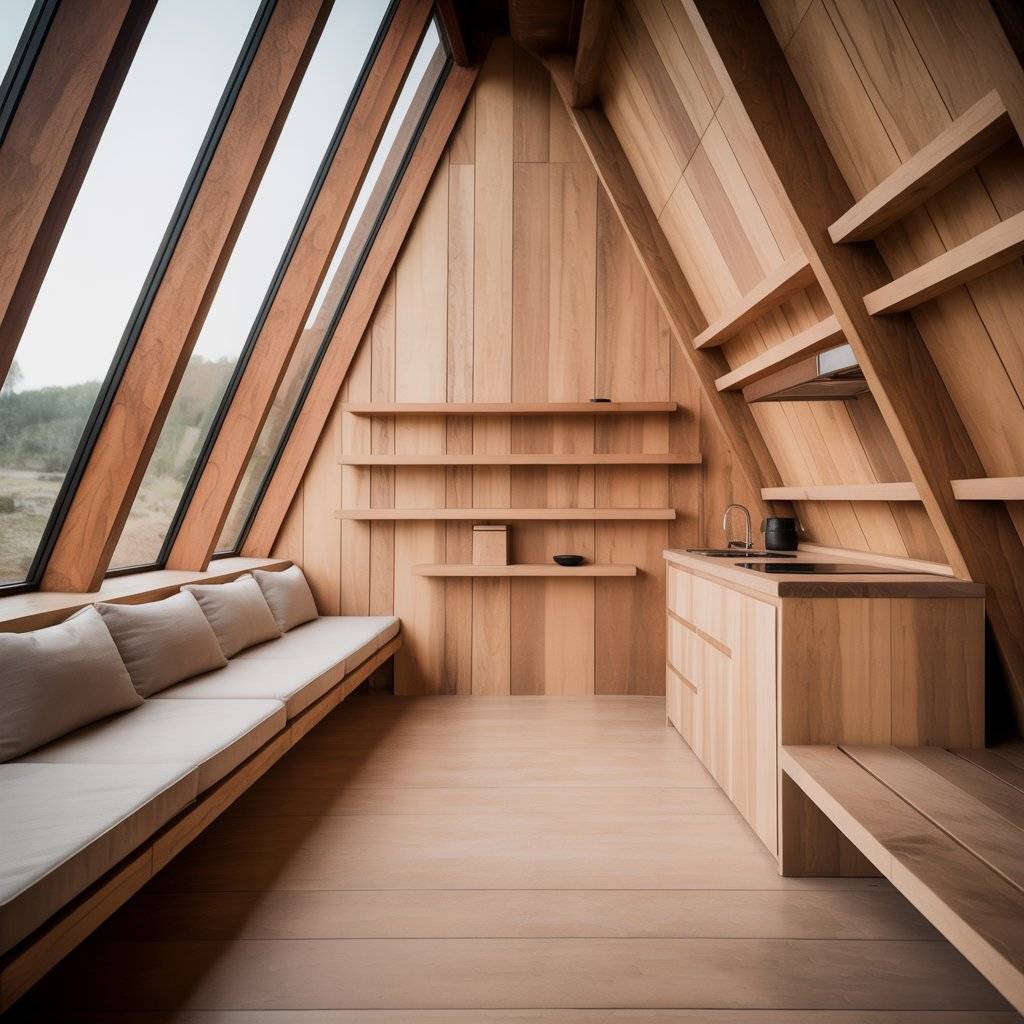
21. Island A-Frame Retreat with Simple Living
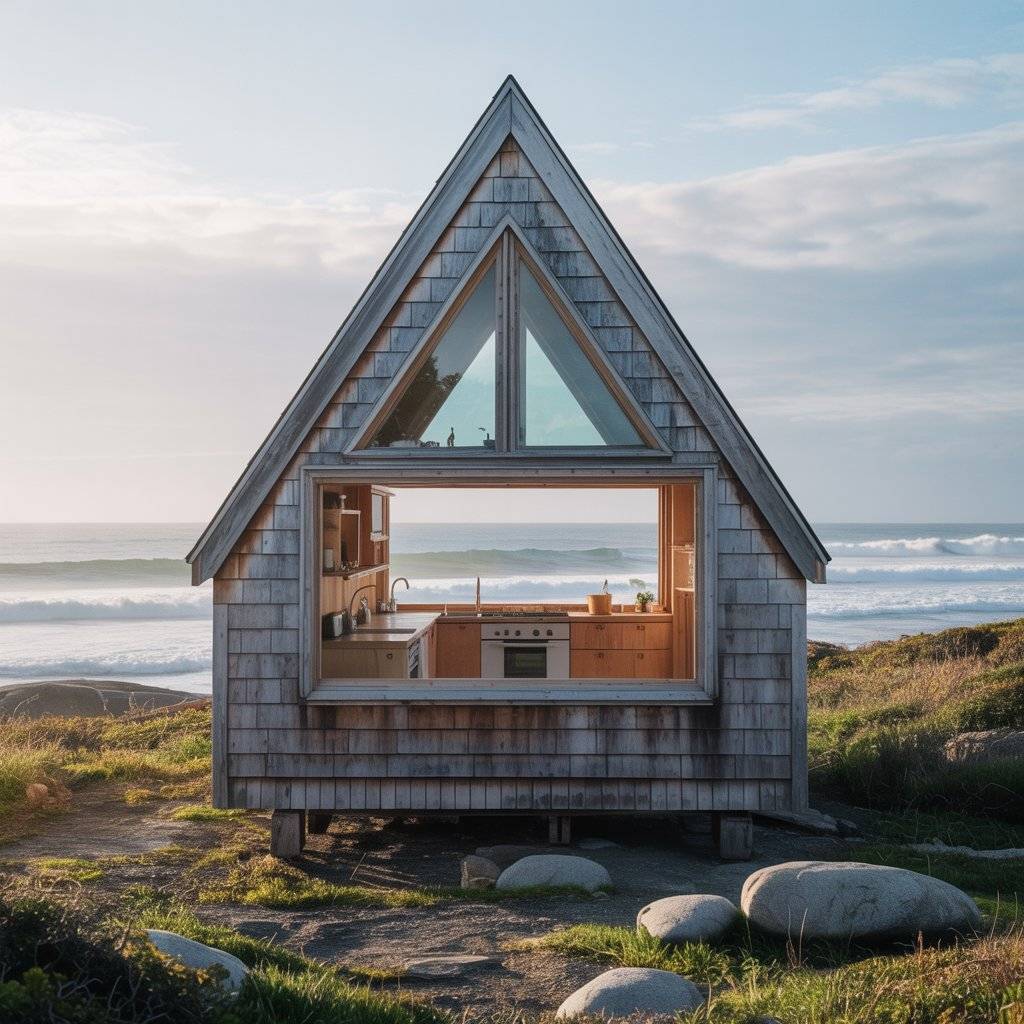
An island A-frame sanctuary works best when it stays practical. Transporting materials and supplies isn’t easy, so design choices tend to be thoughtful. These retreats often rely on simple systems, natural ventilation, and durable materials that can handle salt air and wind.
Inside, the space is open but carefully planned. The kitchen is compact and efficient. Furniture is sturdy and easy to maintain. Windows are placed to capture light and breezes without exposing the interior too much.
This kind of A-frame encourages a slower pace. You cook simple meals, move with the daylight, and rest when the evening comes. For quiet weekends, island retreats offer natural separation from everyday noise without needing excess comfort.
22. Woodland Clearing A-Frame for Gentle Mornings
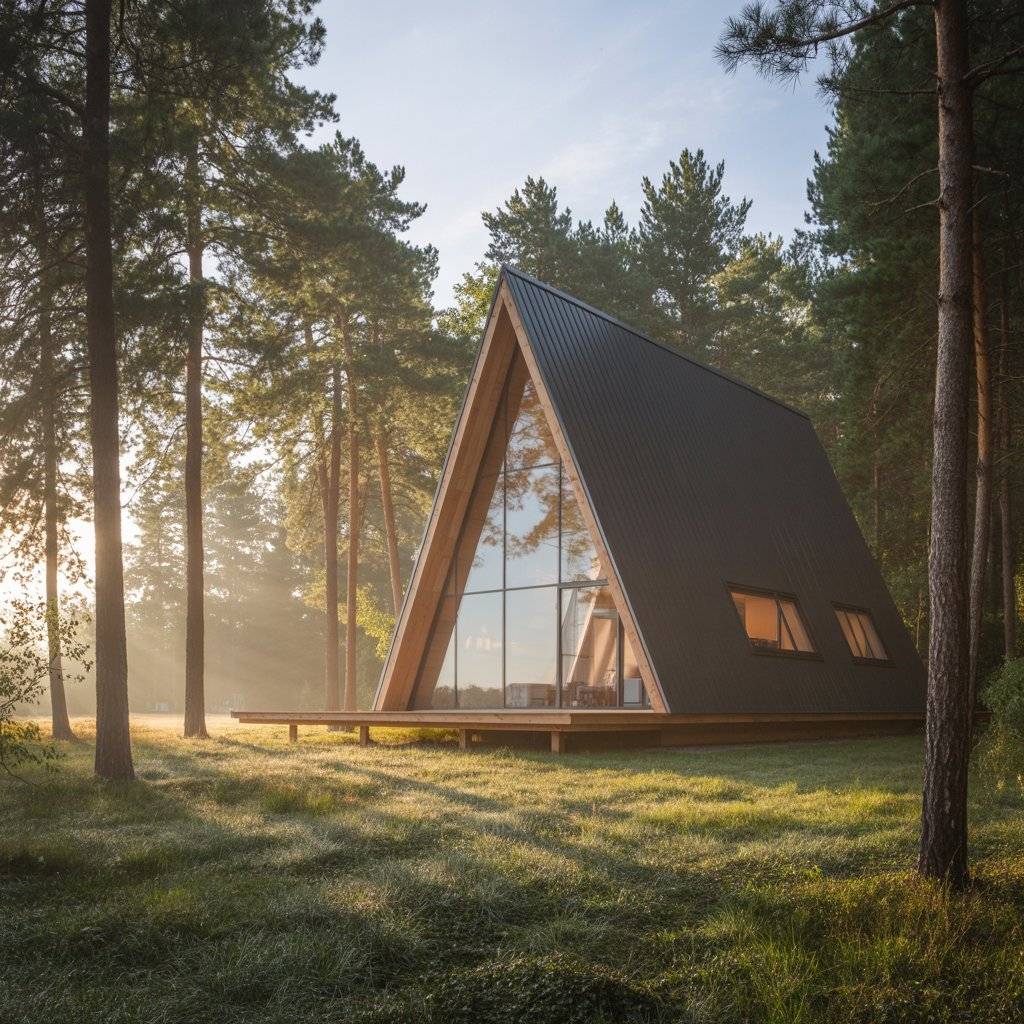
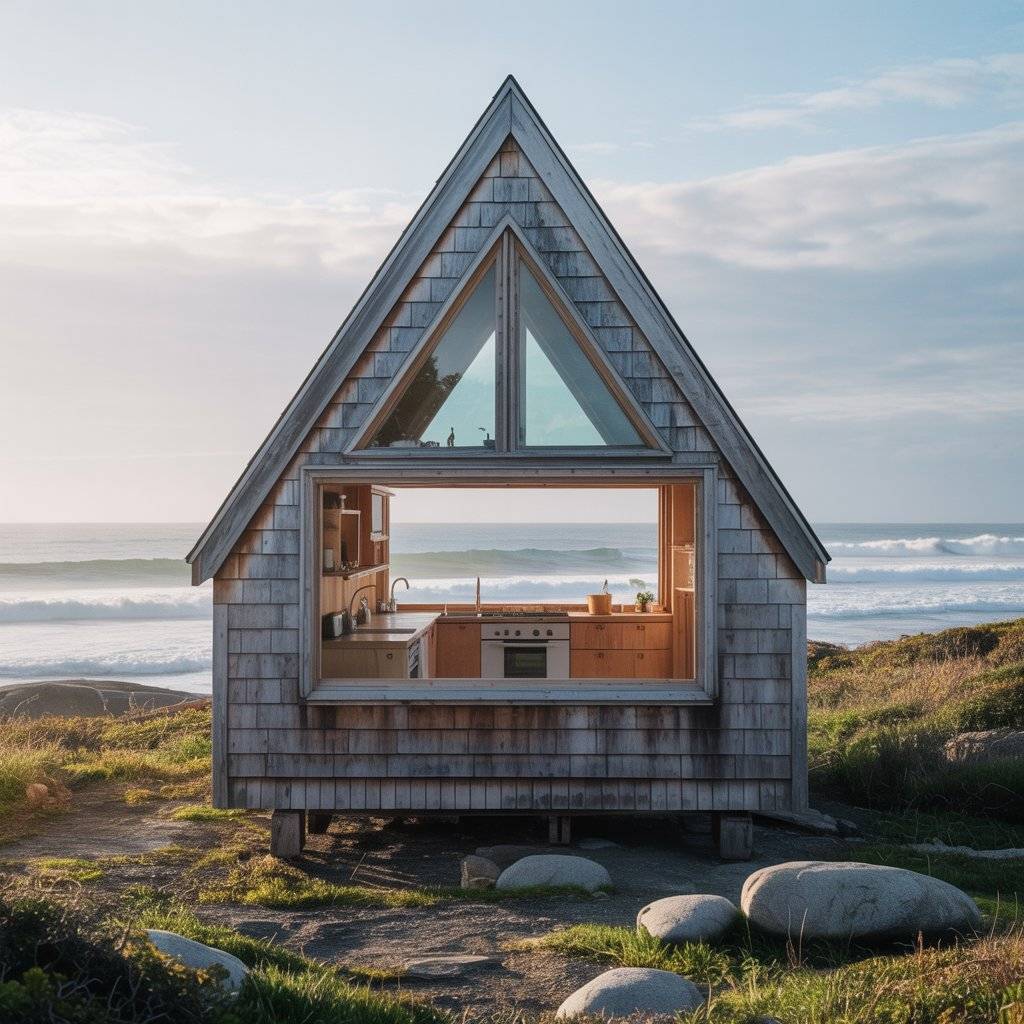
An A-frame set in a woodland clearing feels balanced. Trees offer protection, but open space allows light to move freely. These sanctuaries often use wide front windows paired with smaller side openings to create soft, even lighting.
Inside, the design stays warm and uncomplicated. Wood surfaces dominate. Furniture is chosen for comfort, not decoration. Storage is built in so everyday items don’t crowd the space.
This type of retreat supports gentle mornings slow breakfasts, quiet reading, and unplanned time. It’s ideal for people who want rest without feeling closed in by dense forest.
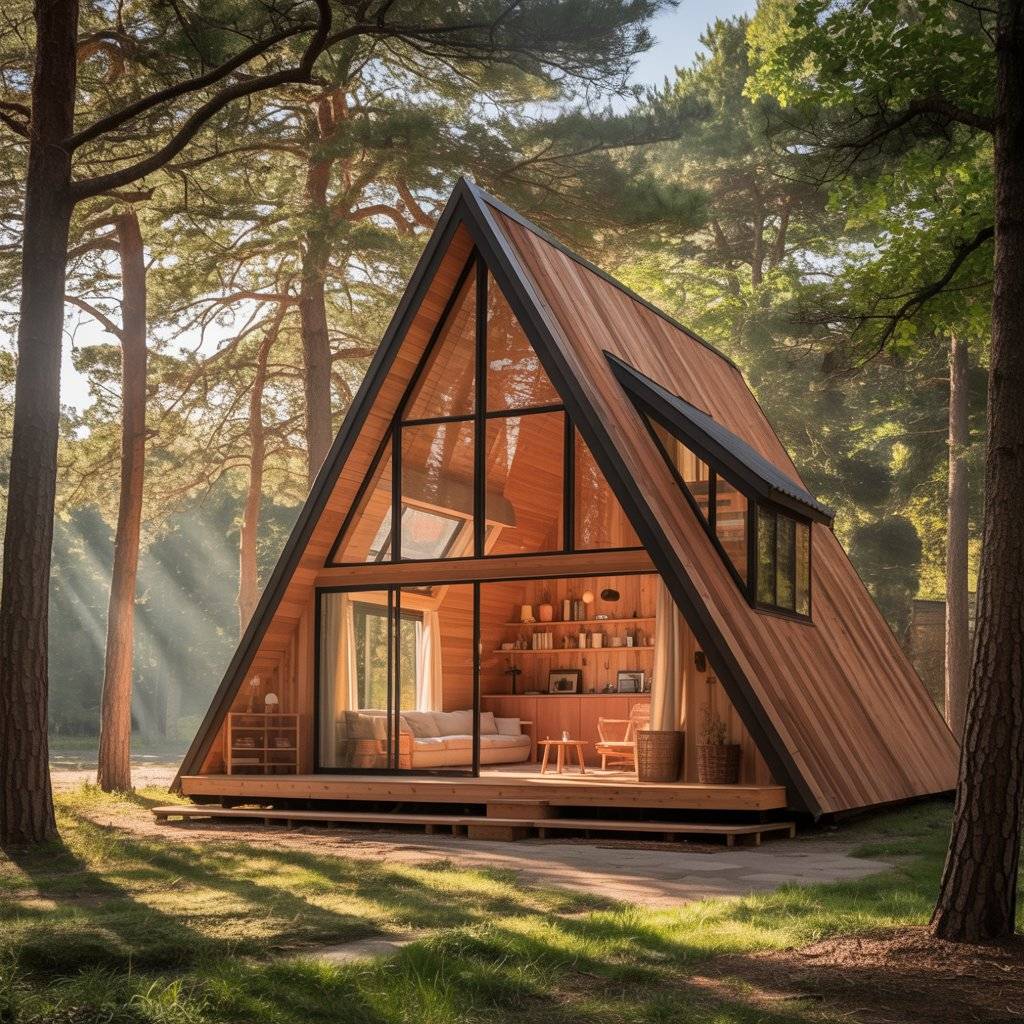
23. Stone-Base A-Frame with Grounded Interior
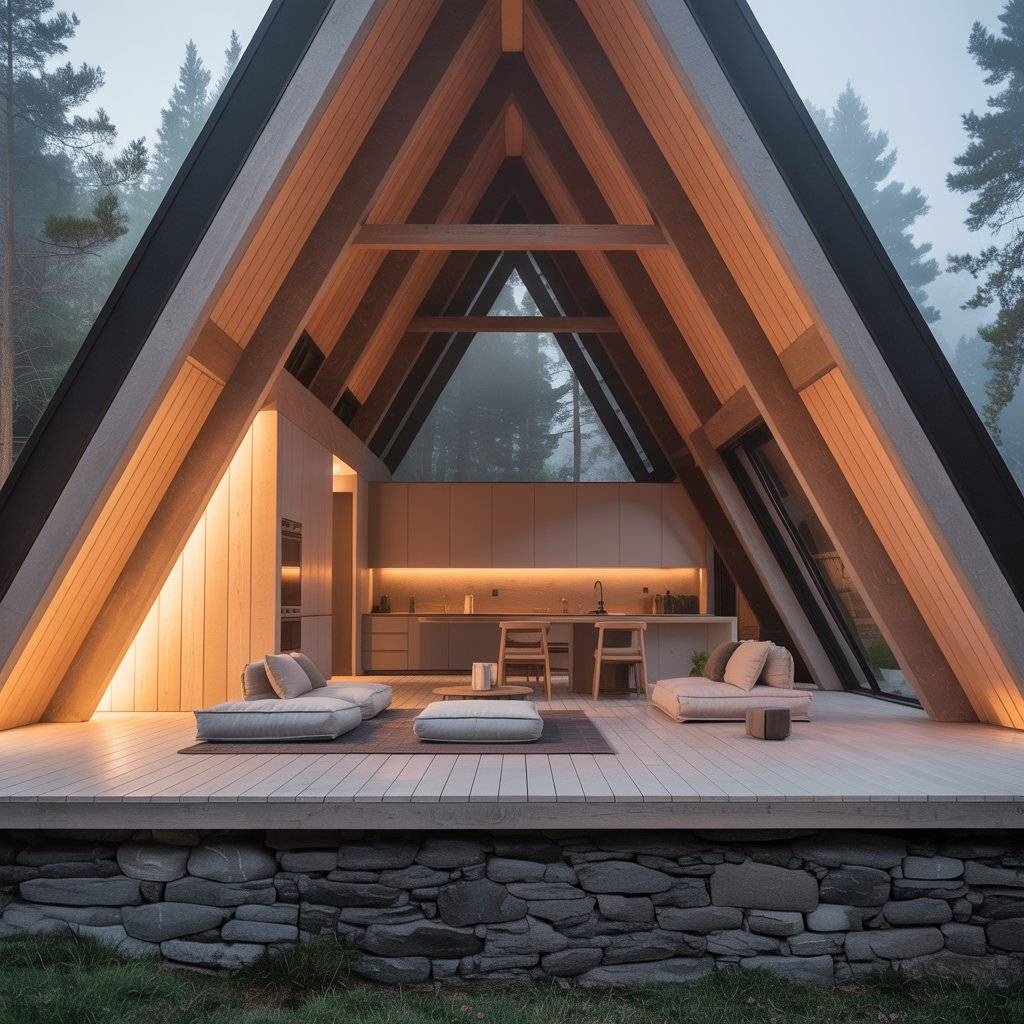
Some modern A-frame sanctuaries use a stone base to anchor the structure. This adds weight and stability, especially in areas with changing weather. The contrast between stone and wood creates a grounded feeling inside.
The interior usually features neutral colors and minimal furnishings. Seating stays close to the floor. Lighting is warm and indirect. The kitchen blends into the space without standing out.
This type of retreat feels steady and calm. It’s well-suited for quiet weekends spent indoors, especially during cooler months. Everything about the design encourages stillness and focus.
24. Narrow-Plot A-Frame Designed for Privacy
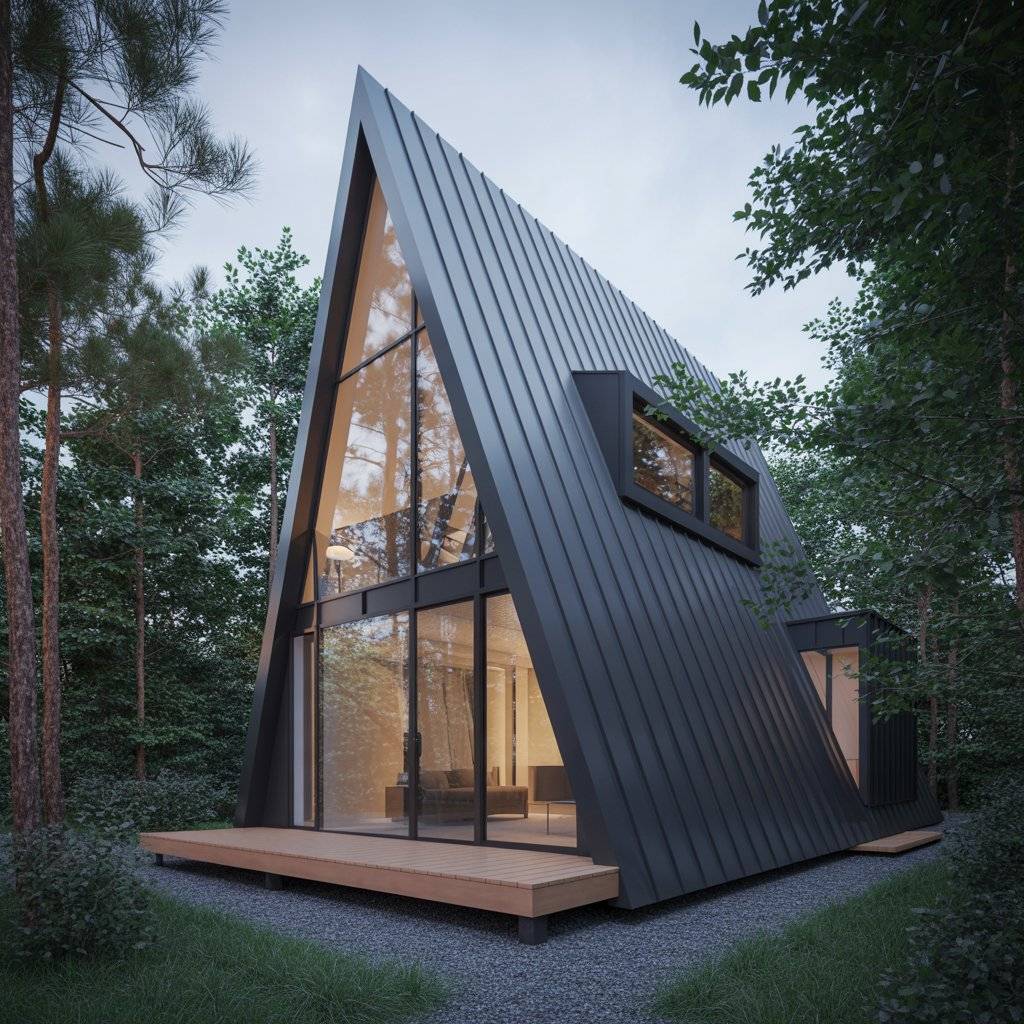
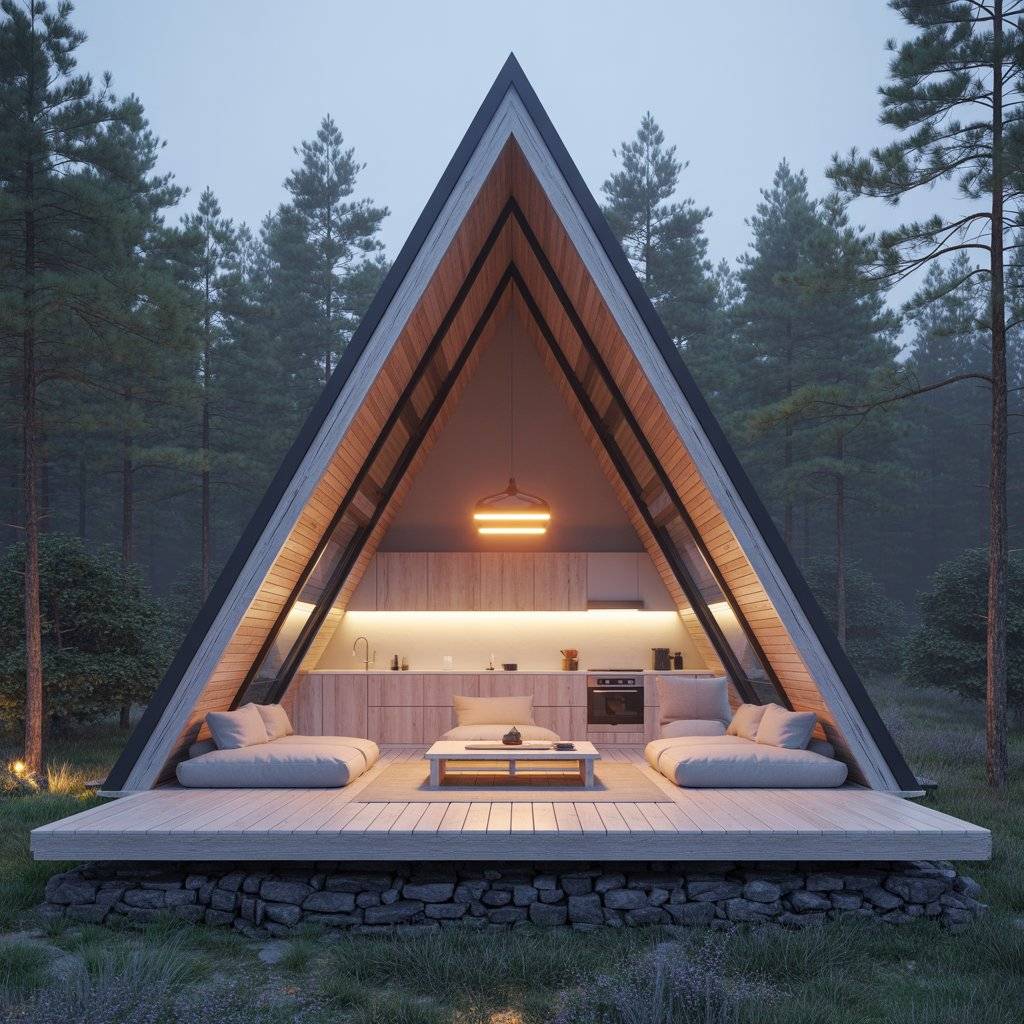
A-frame retreats built on narrow plots often surprise people. When designed well, they feel private and spacious despite limited width. The steep roof allows vertical space to do the work.
Inside, rooms are stacked efficiently. The living area stays open while sleeping space is tucked above. Windows are placed high or angled to block nearby views.
This kind of sanctuary works well in semi-developed areas where privacy matters. It shows that quiet isn’t about size. It’s about how space is used.
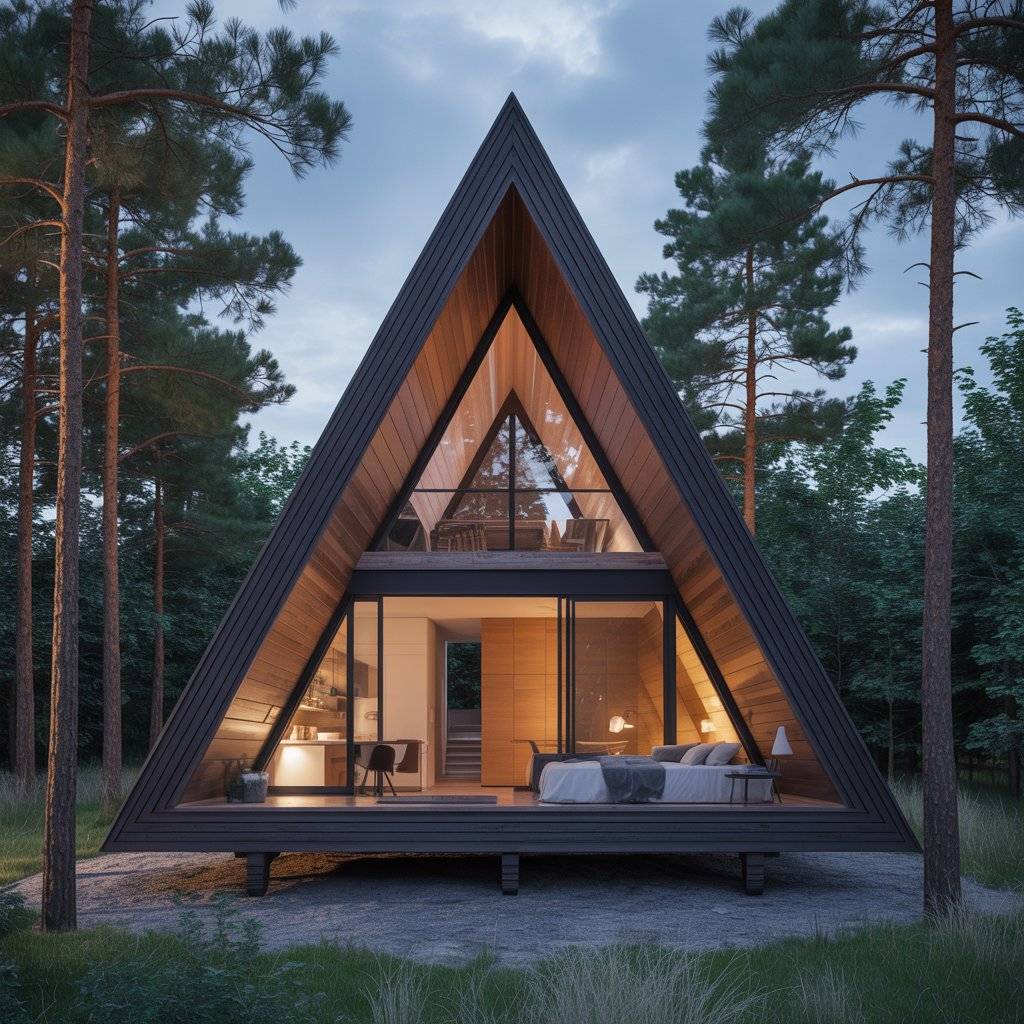
25. Long-Term Stay A-Frame for Slow Living
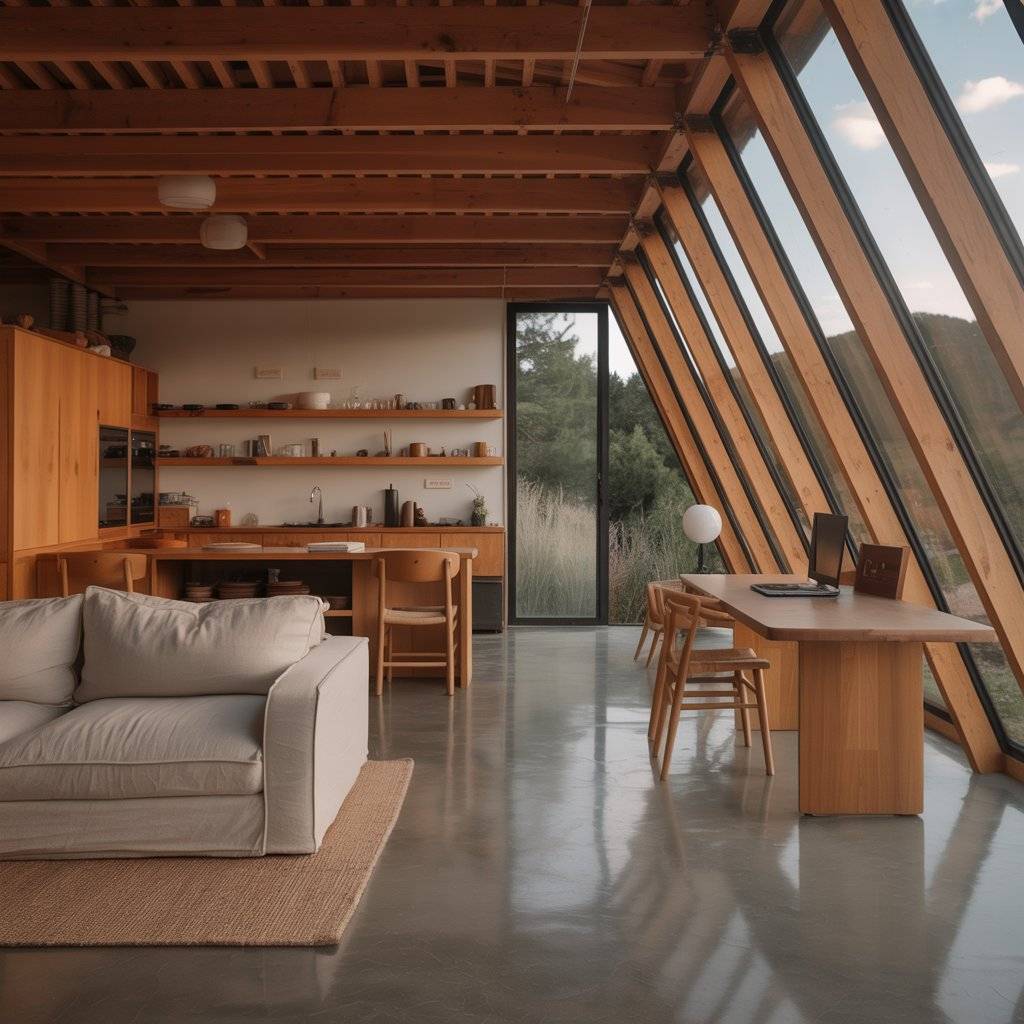
Some A-frame sanctuaries are designed not just for weekends, but for longer stays. These homes still keep a minimalist approach, but include slightly more storage and work space.
The layout remains open. Furniture stays simple. Materials are chosen for durability and comfort. The kitchen supports daily cooking without excess.
This type of retreat supports slow living settling in, building routines, and letting days pass without urgency. It’s ideal for people who want quiet to last longer than a weekend.
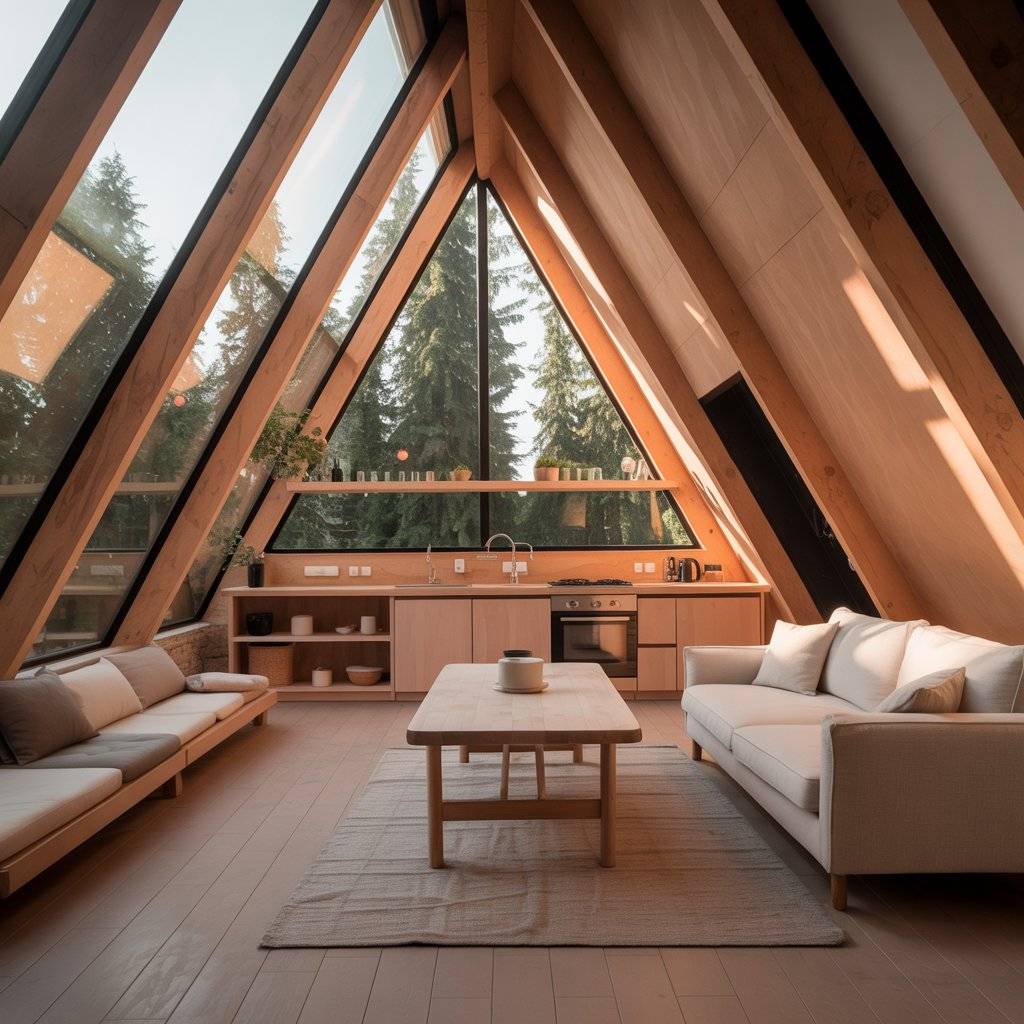
26. River Bend A-Frame with Changing Light
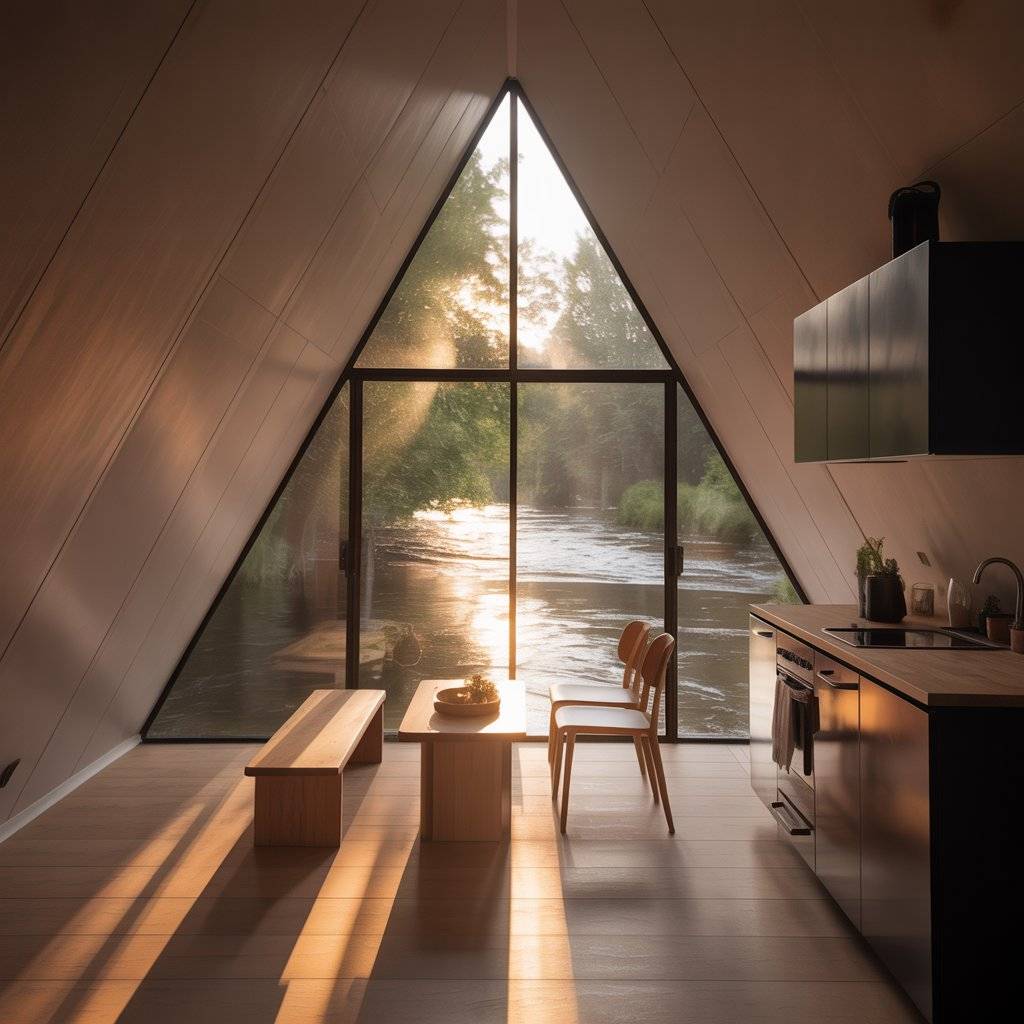
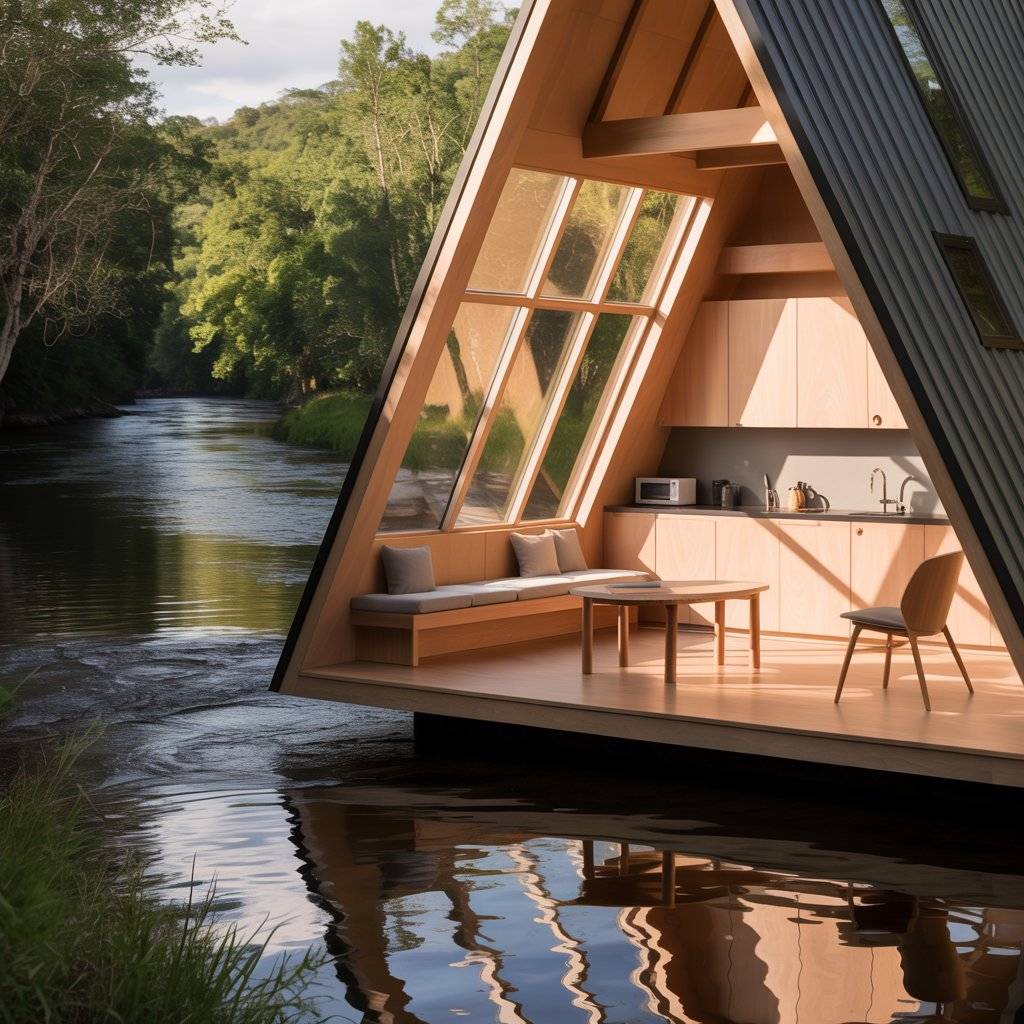
A river bend A-frame retreat feels different throughout the day. Light moves slowly across the water and reflects into the interior. Good designs take advantage of this by keeping walls simple and surfaces matte, so light feels soft instead of harsh.
Inside, furniture stays minimal and flexible. A small table, a bench, and a few chairs are enough. The kitchen remains compact, allowing more open space near the windows. Storage stays tucked away so the focus remains on movement outside.
This type of sanctuary works well for quiet weekends when you want time to pass naturally. You notice light, sound, and small changes. Nothing demands attention, and that’s the point.
27. Northern Light A-Frame for Long Evenings
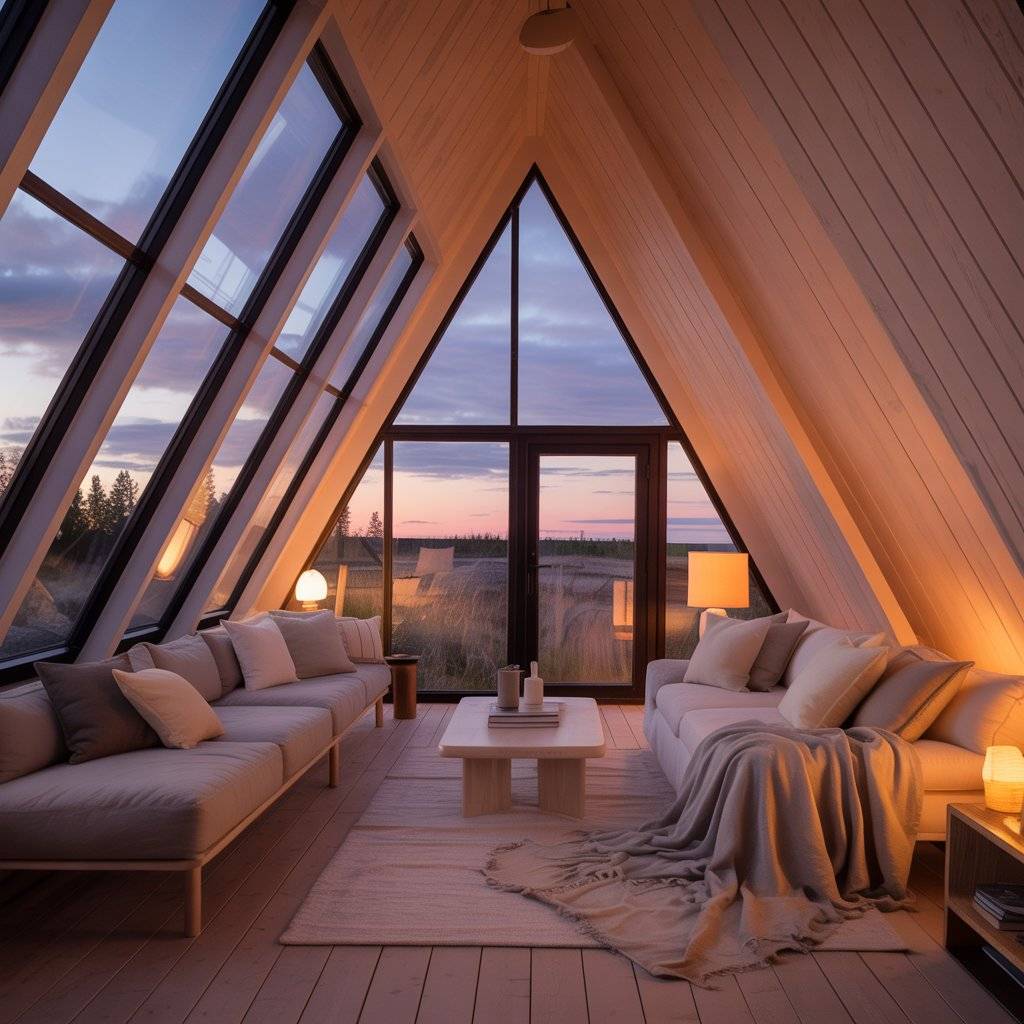
In northern regions, A-frame retreats are often designed around long daylight hours. Windows are positioned to capture low-angle light without overheating the space. Rooflines help guide light deeper inside.
Interiors stay neutral and calm. Wood tones are light. Textiles are soft. Lighting is layered so evenings feel comfortable when the sun finally sets.
This kind of retreat supports long, quiet evenings reading, writing, or simply sitting. It’s built for patience and presence, not stimulation.
28. Fire-Centered A-Frame Built Around Warmth
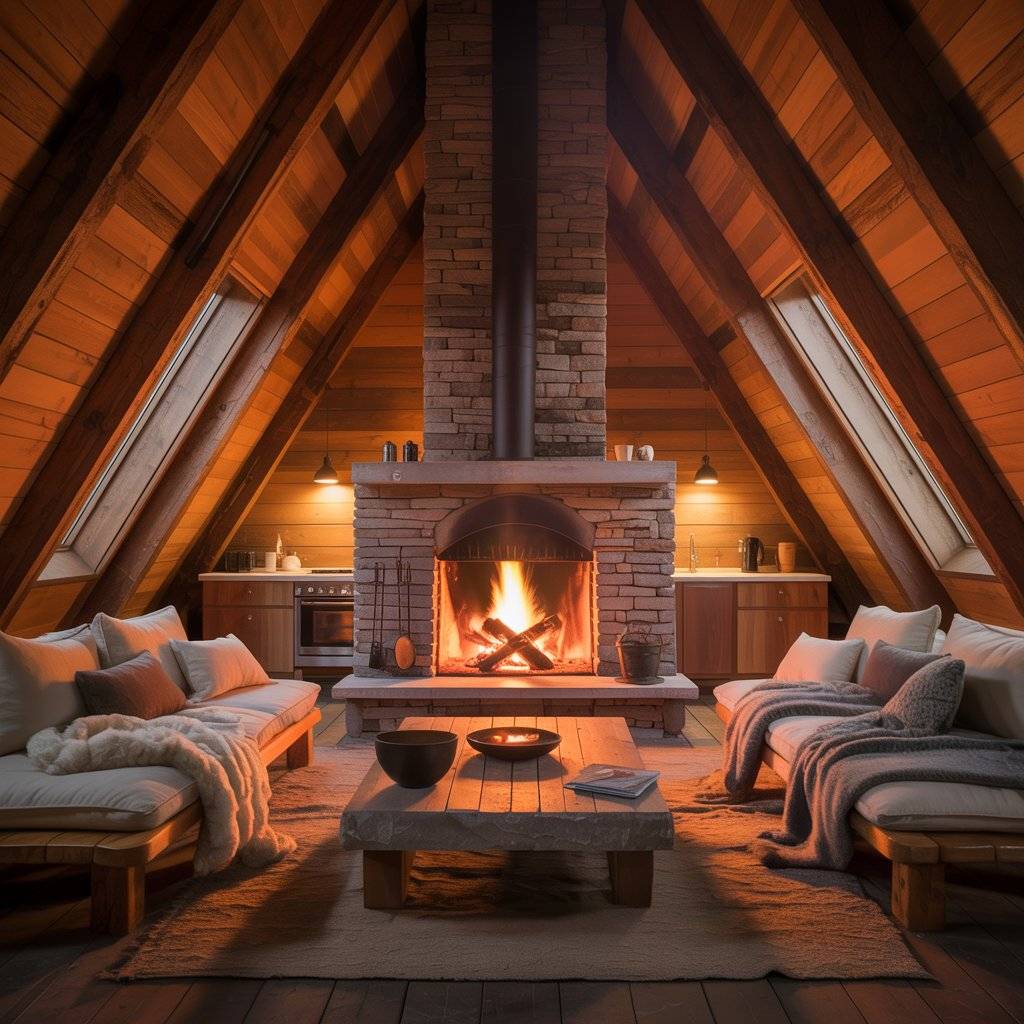
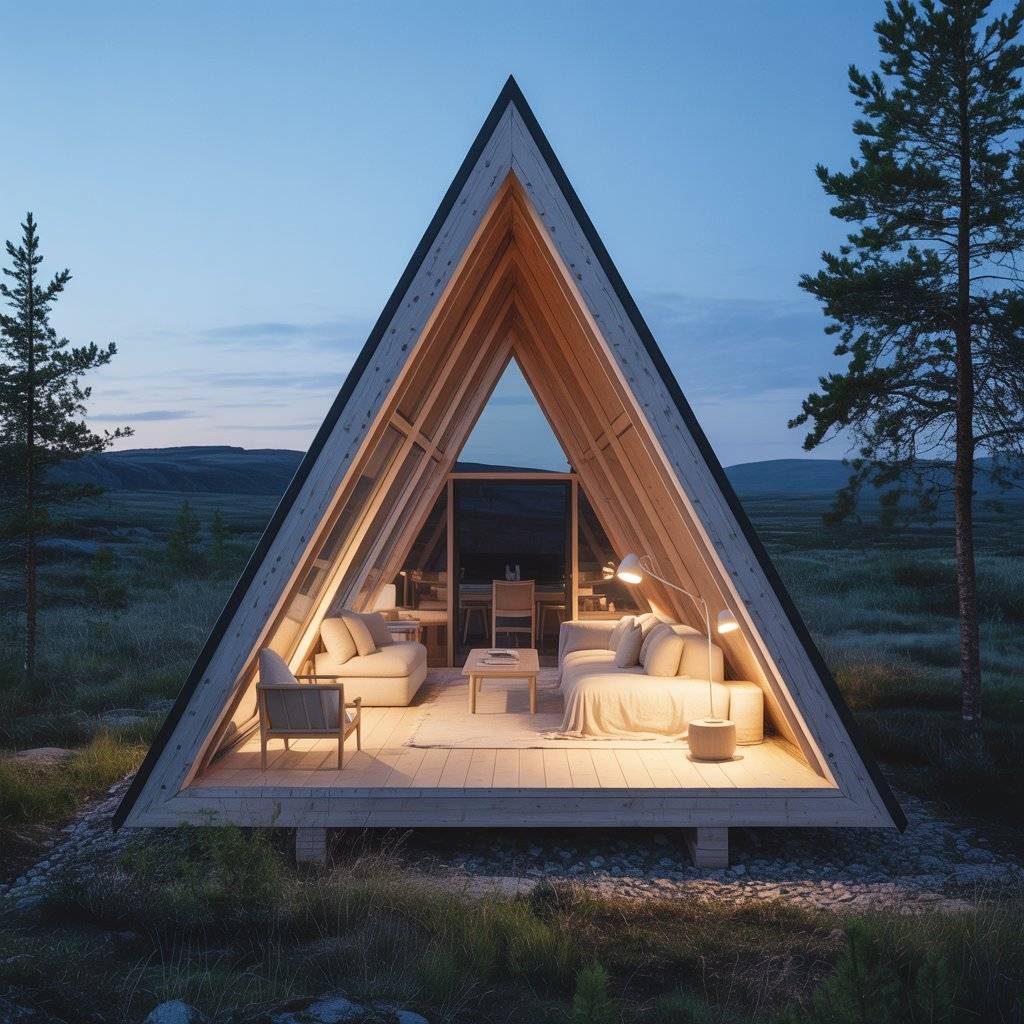
Some A-frame sanctuaries place the fireplace at the center of the design. Everything else is arranged around it. This creates a natural gathering point without noise.
Seating stays close. Materials are chosen for warmth wood, stone, and wool. The kitchen remains secondary, keeping the focus on rest rather than activity.
This type of retreat works well for colder climates and short winter stays. Fire slows time. Conversation becomes softer. Silence feels comfortable instead of empty.
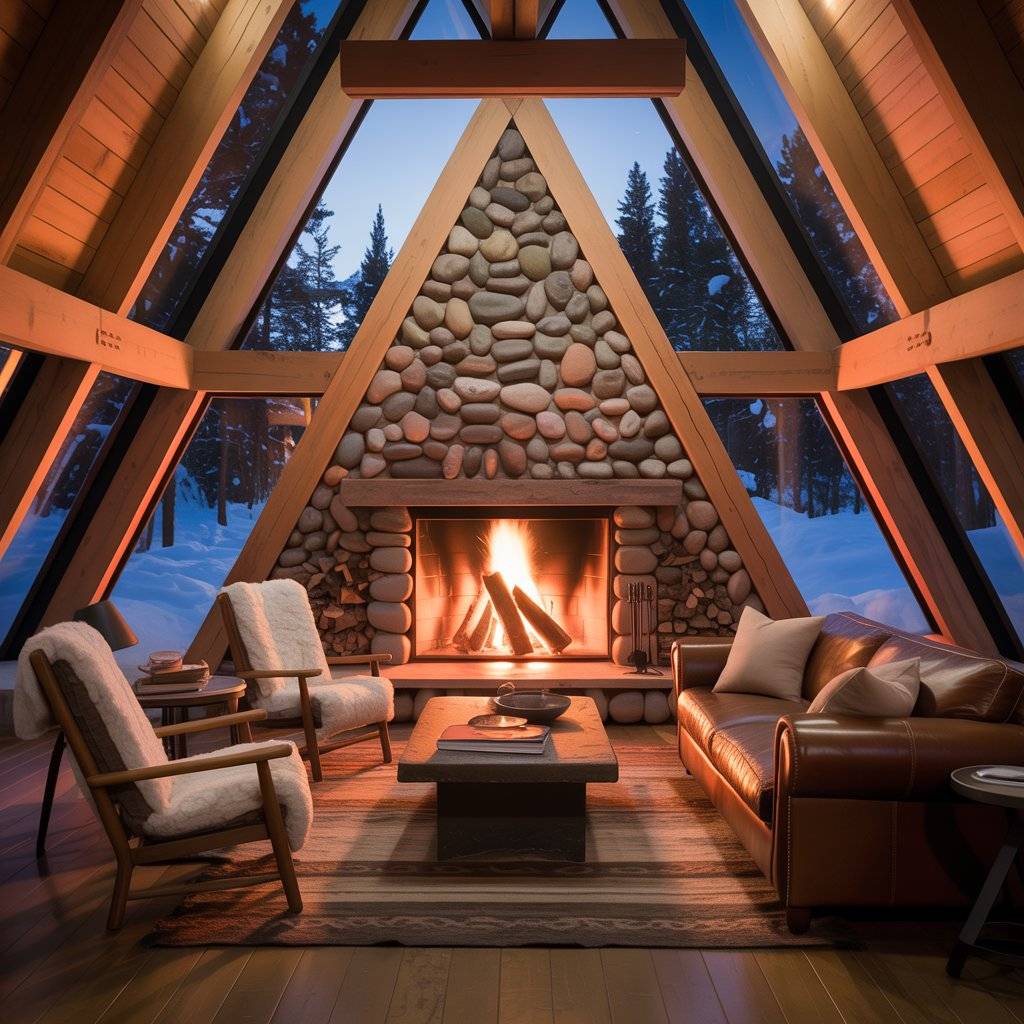
29. Open-Field A-Frame with Sky Views
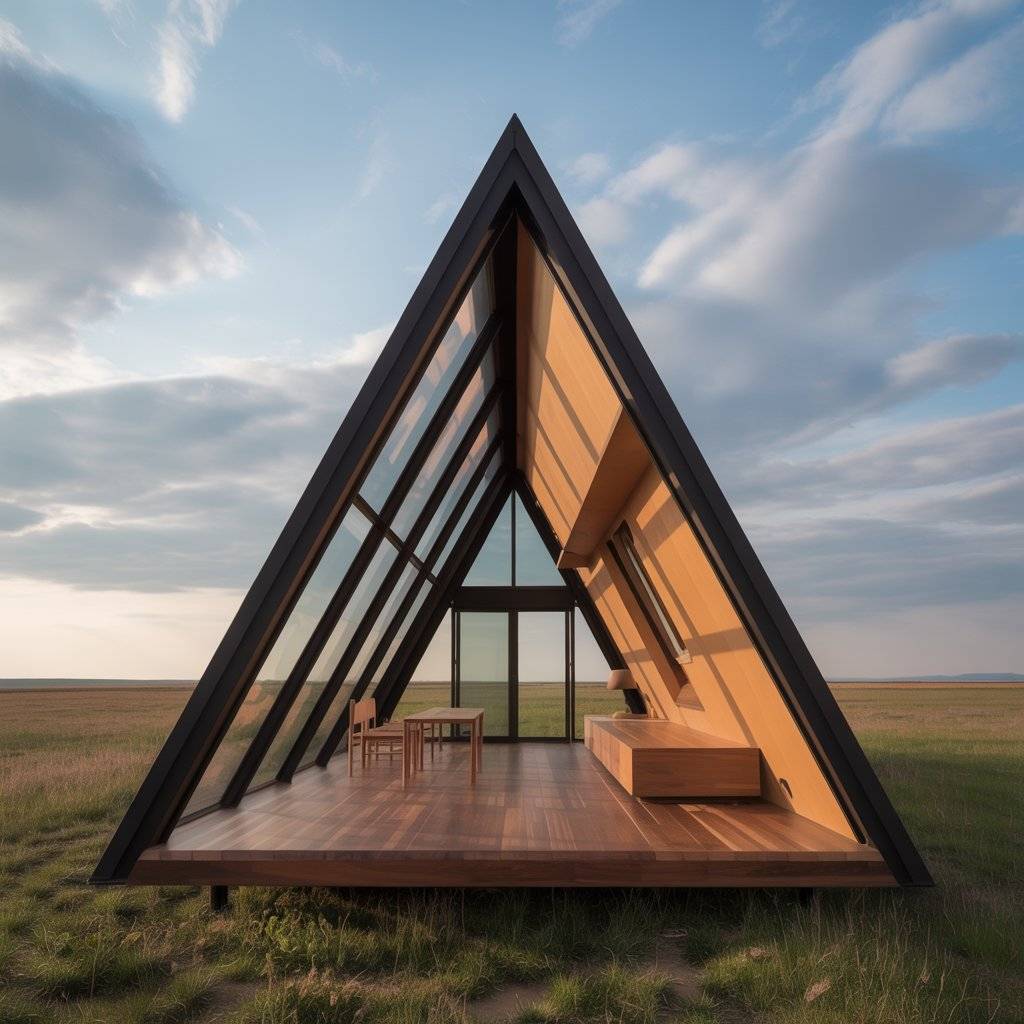
An open-field A-frame sanctuary offers a different kind of quiet. There’s no forest, no water just sky. These retreats use large front windows or skylights to bring that openness inside.
The interior stays grounded with darker wood floors and simple furniture. Storage is minimal. Movement slows because there’s nothing competing for attention.
This type of retreat suits people who need mental space. Wide views help thoughts settle. The quiet feels expansive rather than enclosed.
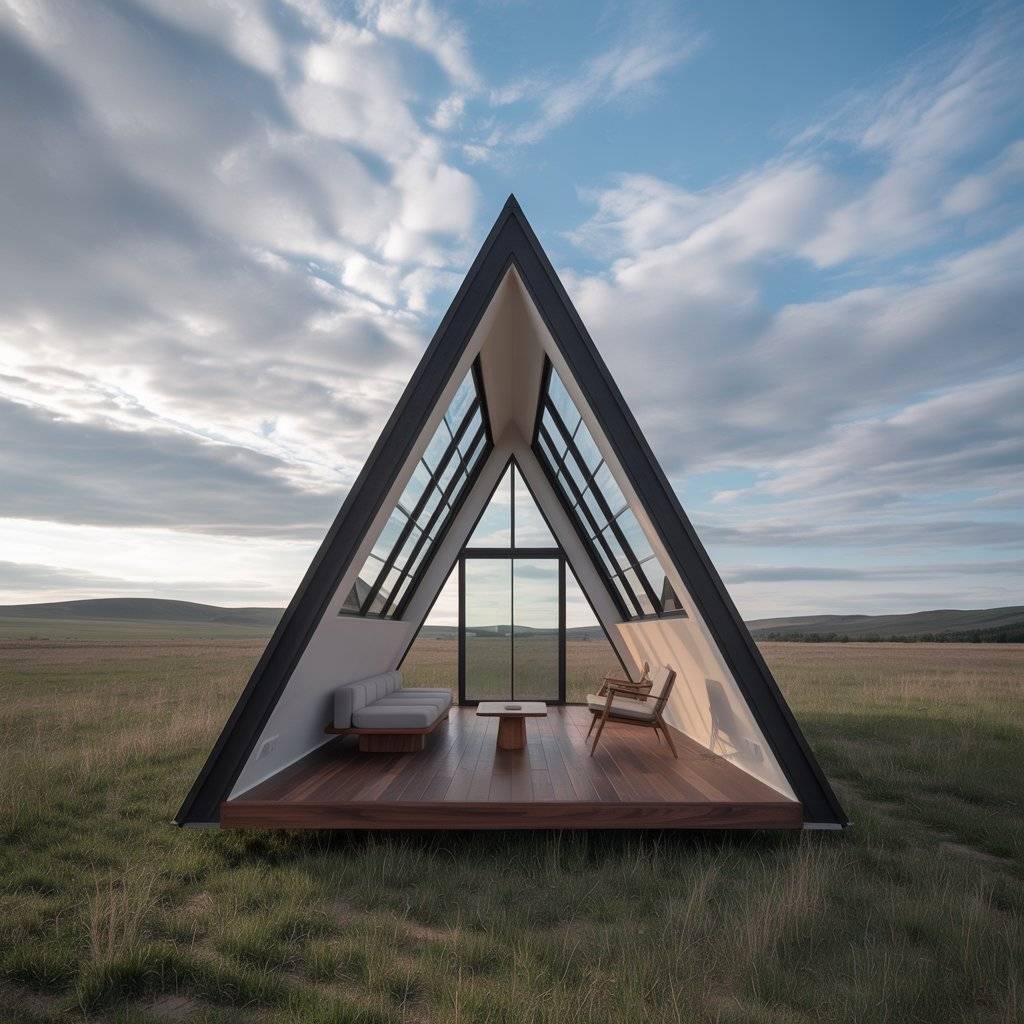
30. Personal Build A-Frame Made Over Time
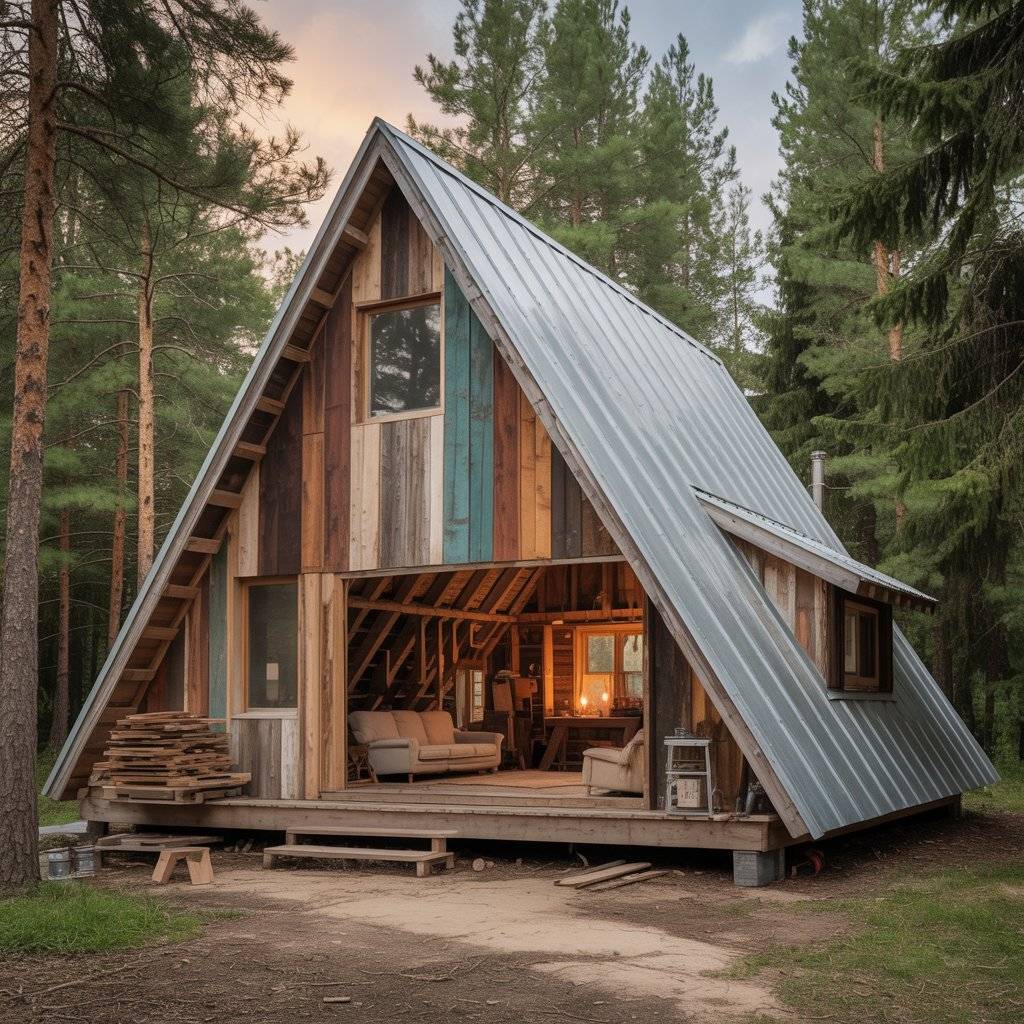
Some of the most meaningful A-frame sanctuaries aren’t perfect or finished. They’re built slowly, improved over time, and shaped by use.
These retreats often start simple: one room, basic utilities, and room to grow. Furniture is added as needed. Layout changes with experience.
This kind of sanctuary feels honest. It supports quiet weekends not because it’s polished, but because it’s personal. It reminds you that quiet isn’t something you buy. It’s something you build, slowly and carefully.
Wrap-Up
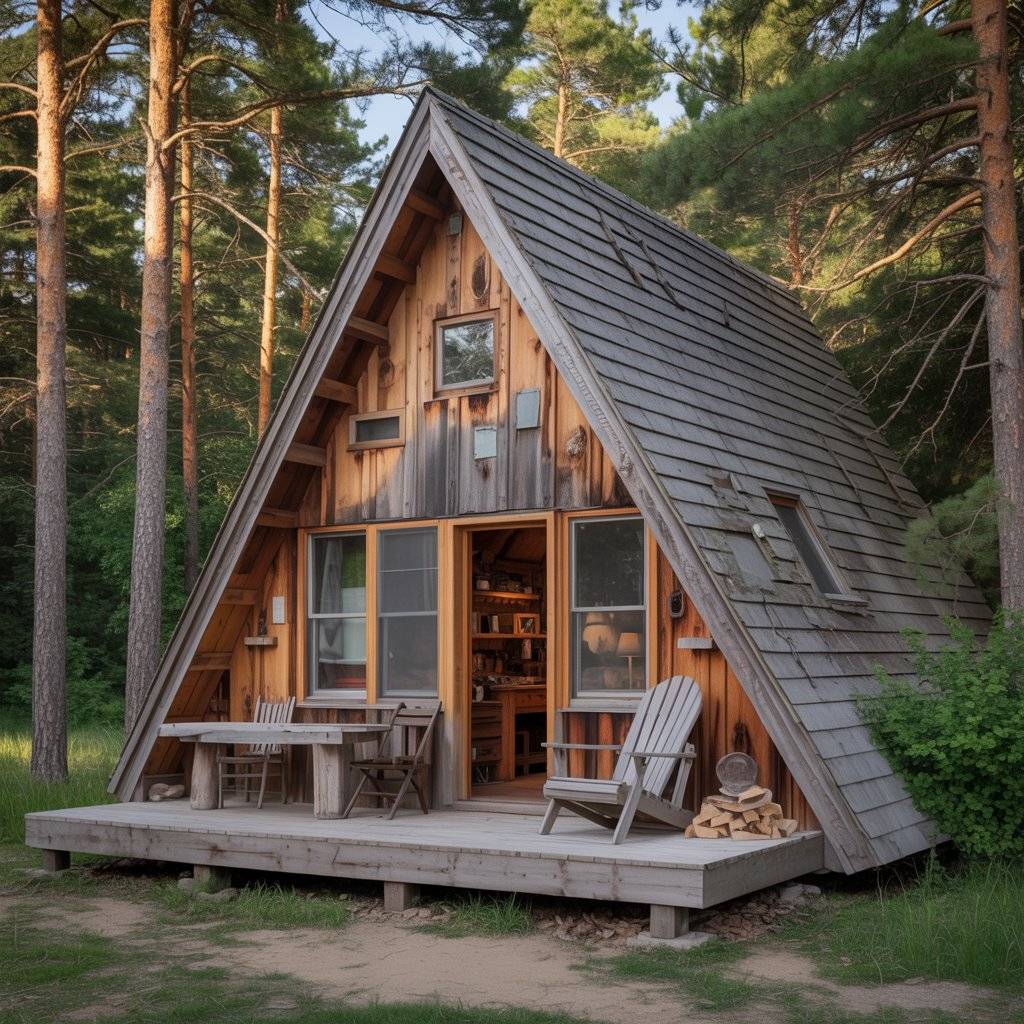
Modern A-frame sanctuaries work because they remove what isn’t needed. Across all 30 designs, the pattern is clear: simple layouts, natural light, honest materials, and clear purpose. These spaces don’t ask for attention. They offer room to breathe.
Quiet weekends don’t require luxury or distance. They require intention. An A-frame retreat large or small can help create that space if it’s designed with care.
Sometimes the most useful thing a home can do is stay out of the way.
Related Post: