
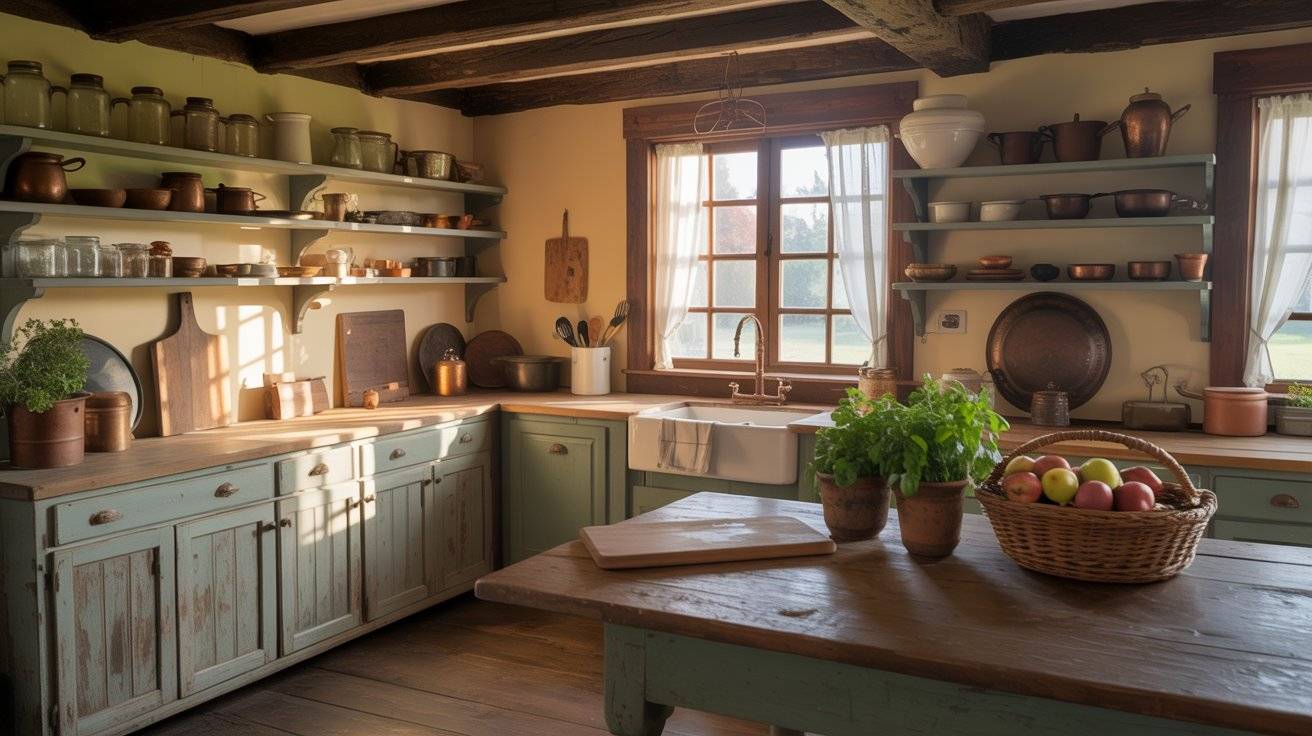
I’ve always liked kitchens that feel warm and lived in. Not perfect. Not shiny. Just honest spaces where you can cook, gather, and feel comfortable. That’s what a primitive kitchen reminds me of.
Primitive kitchens take inspiration from old country homes where things were built to last. Wood shelves, simple cabinets, handmade pottery, and iron hooks were not decoration back then. People used them every day. Over time, that simple style turned into something many of us still love.
The good news is you don’t need to rebuild your entire kitchen to get this look. Most of the time, it’s about small changes natural materials, simple storage, and pieces that look like they have a story.
I’ll walk you through some primitive kitchen ideas that actually work in a real home. These are things you can add slowly without spending a lot of money.
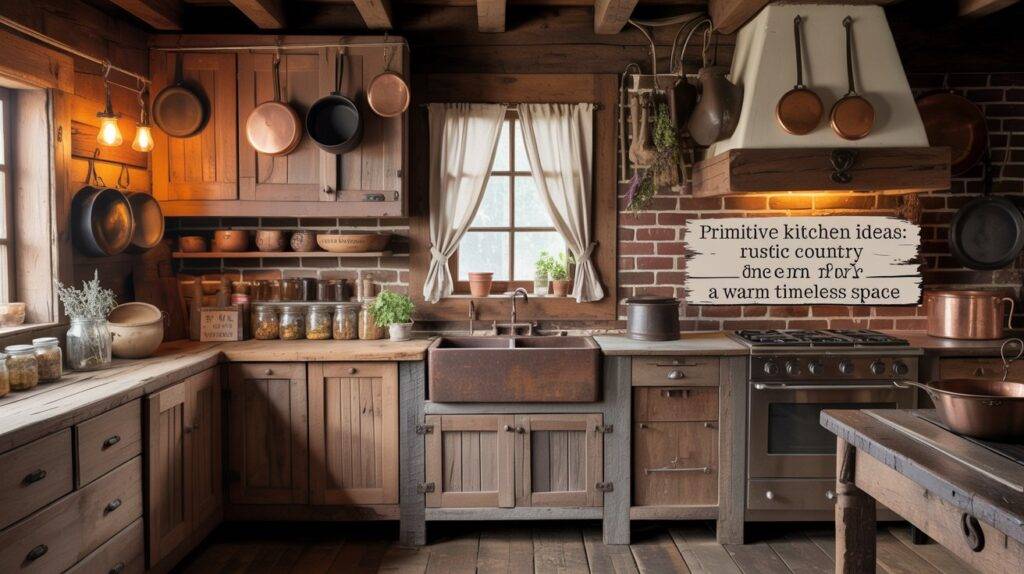
Open Wooden Shelves Instead of Upper Cabinets
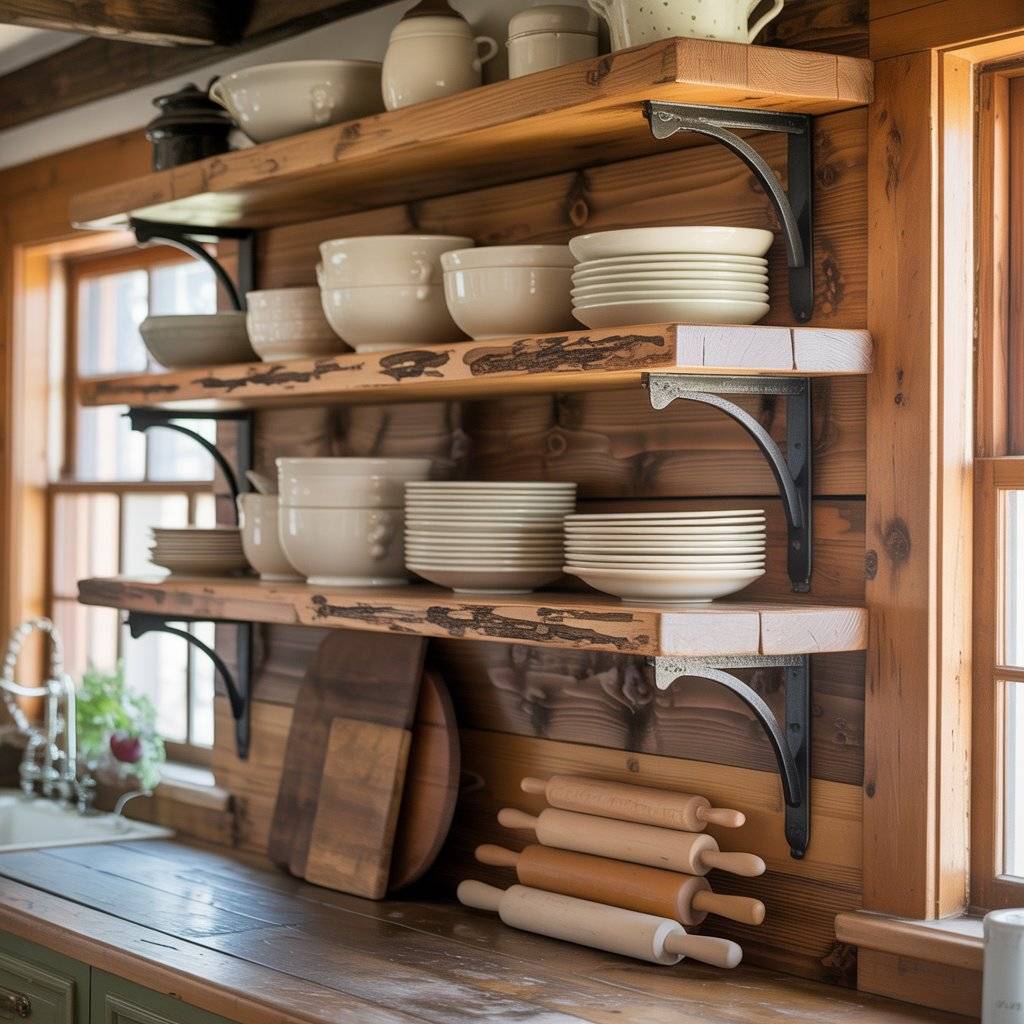
One of the easiest ways I’ve seen people create a primitive kitchen feel is by replacing some upper cabinets with open wooden shelves. Old kitchens rarely had rows of closed cabinets. Instead, dishes, bowls, and cooking tools were kept on simple shelves where they were easy to grab.
You don’t need fancy wood for this. Reclaimed wood, pine boards, or even lightly distressed lumber can work well. The goal is to keep it natural and slightly imperfect. When you mount the shelves with black iron brackets, it immediately gives the space that rustic country charm.
What makes open shelves really work is what you place on them. Stack white plates, add a few stoneware bowls, maybe a wooden rolling pin or two. Keep it practical, not crowded.
Over time the shelves start to look lived in, and that’s exactly the feeling a primitive kitchen is meant to have.
Use Natural Wood for Counters and Furniture
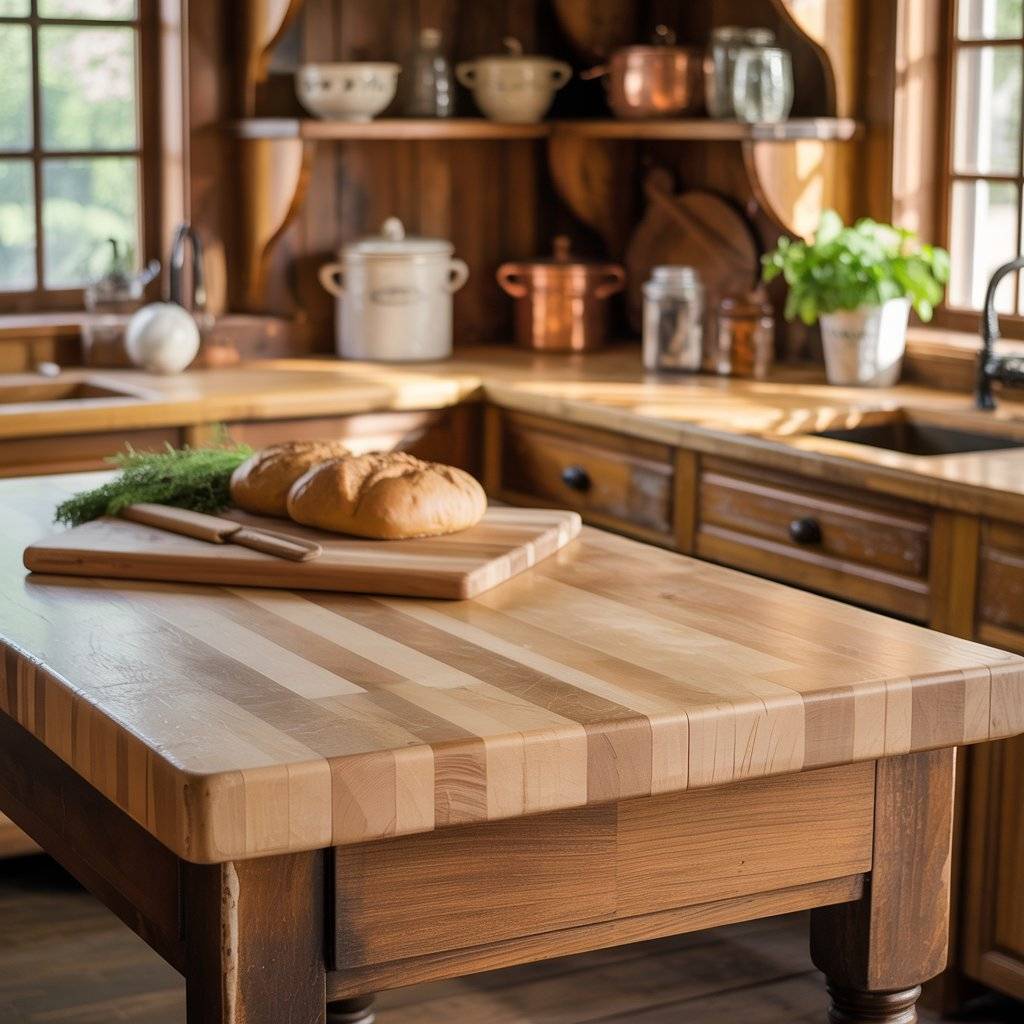
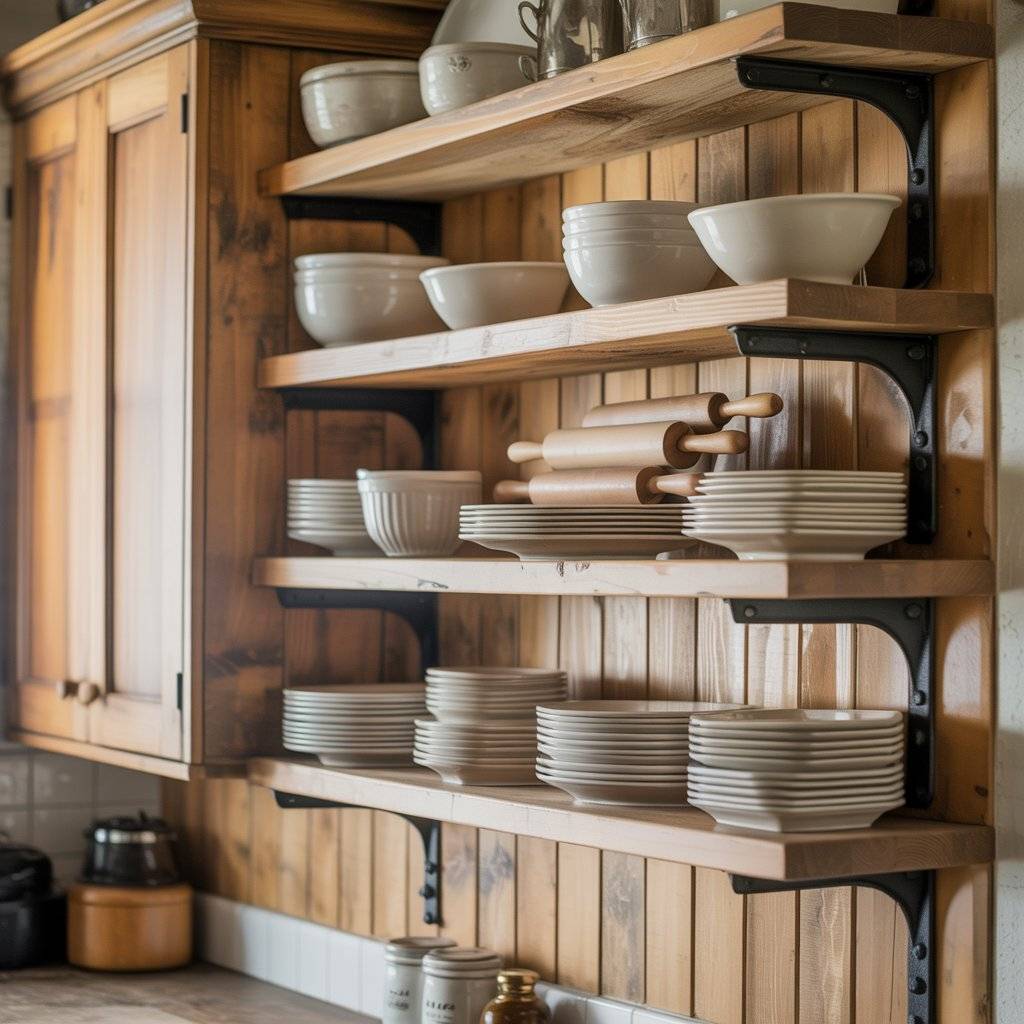
If there’s one thing that defines a primitive kitchen, it’s natural wood. Older country kitchens often had wooden work tables instead of modern counters, and many of those tables lasted for decades.
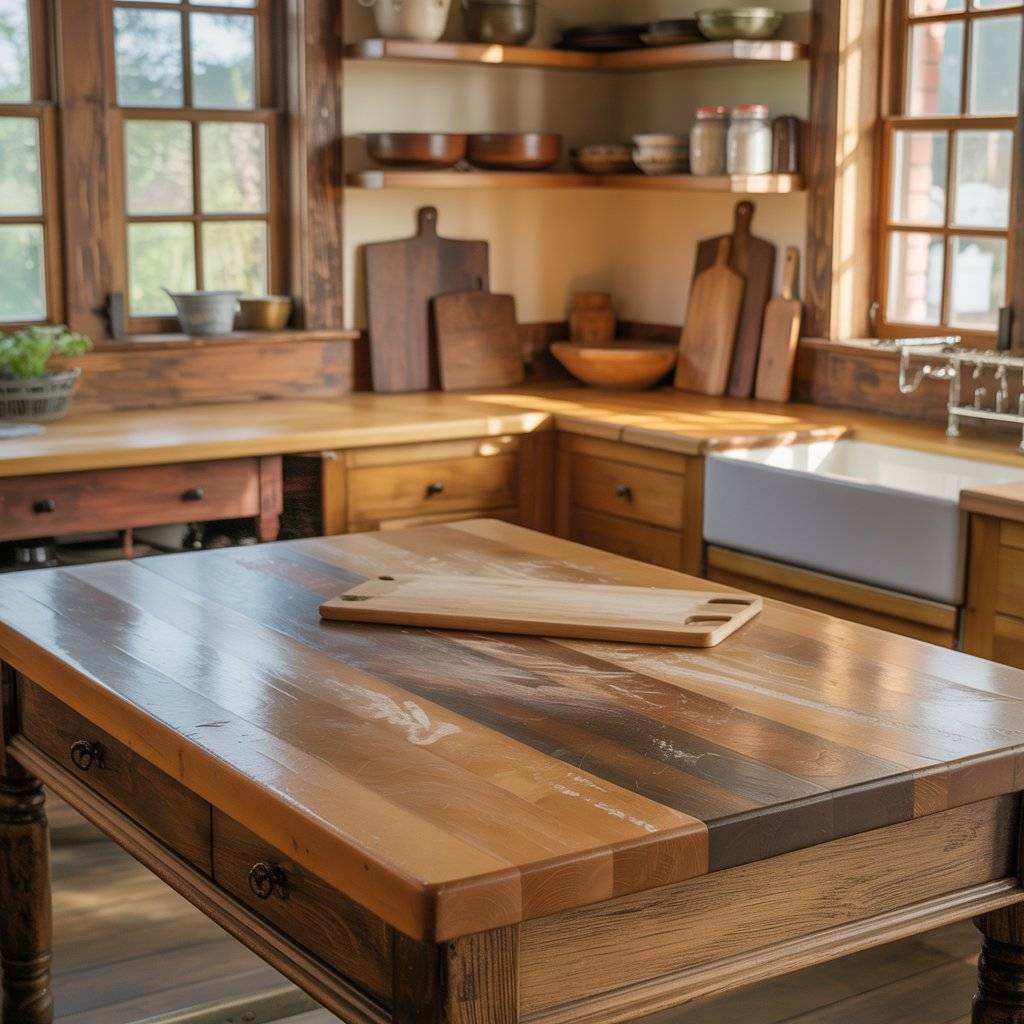
You don’t have to remove your existing countertops to bring this idea in. Sometimes adding a simple wooden prep table or butcher block island can change the whole feel of the room.
Look for woods like maple, oak, or pine. They age well and develop character over time. Small marks and scratches actually make the surface look better instead of worn out.
Another easy idea is to add a wooden bread board or large chopping block that stays on the counter. It’s useful for cooking, but it also adds that rustic warmth that primitive kitchens are known for.
The goal is to let the wood feel real, not overly polished.
Hang Iron Hooks for Everyday Tools
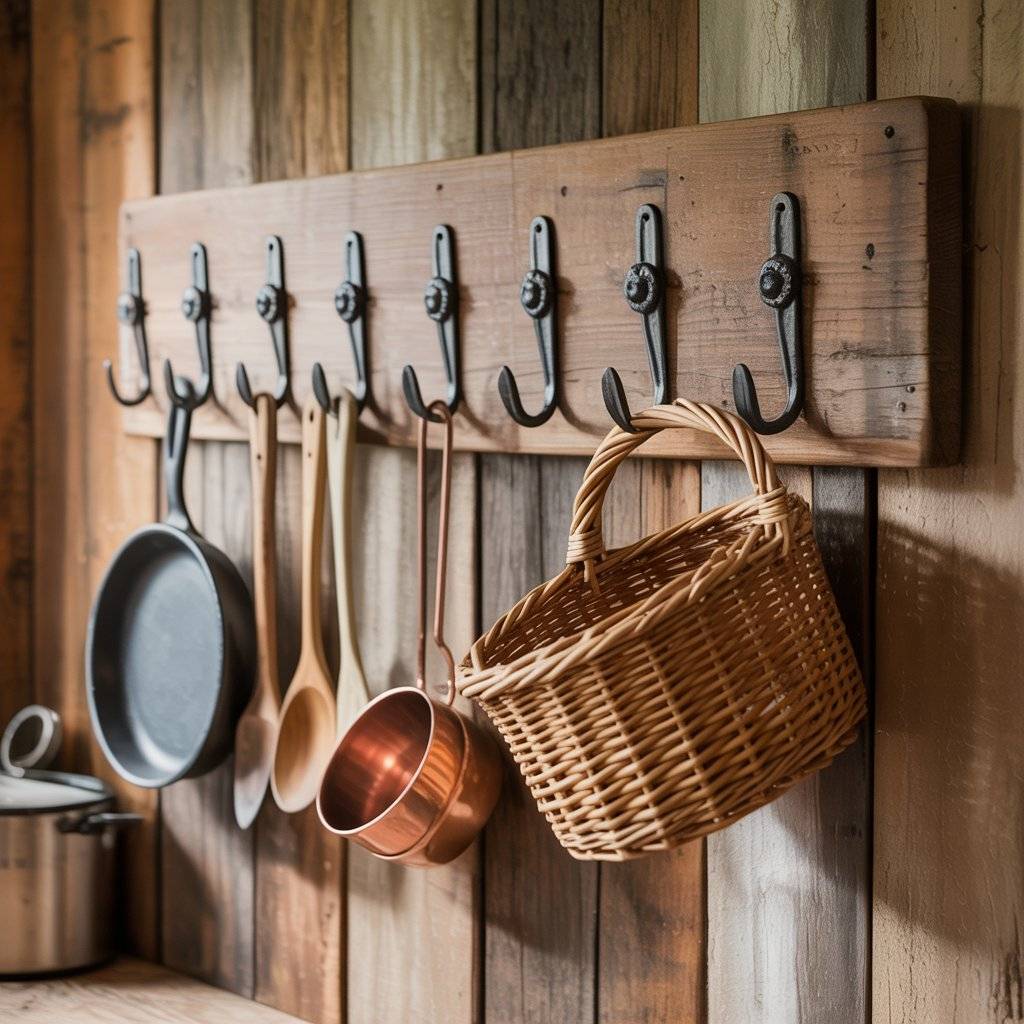
Something I always notice in older farmhouse kitchens is how tools were stored in the open. Instead of hiding everything in drawers, people used wall hooks, rails, and pegs.
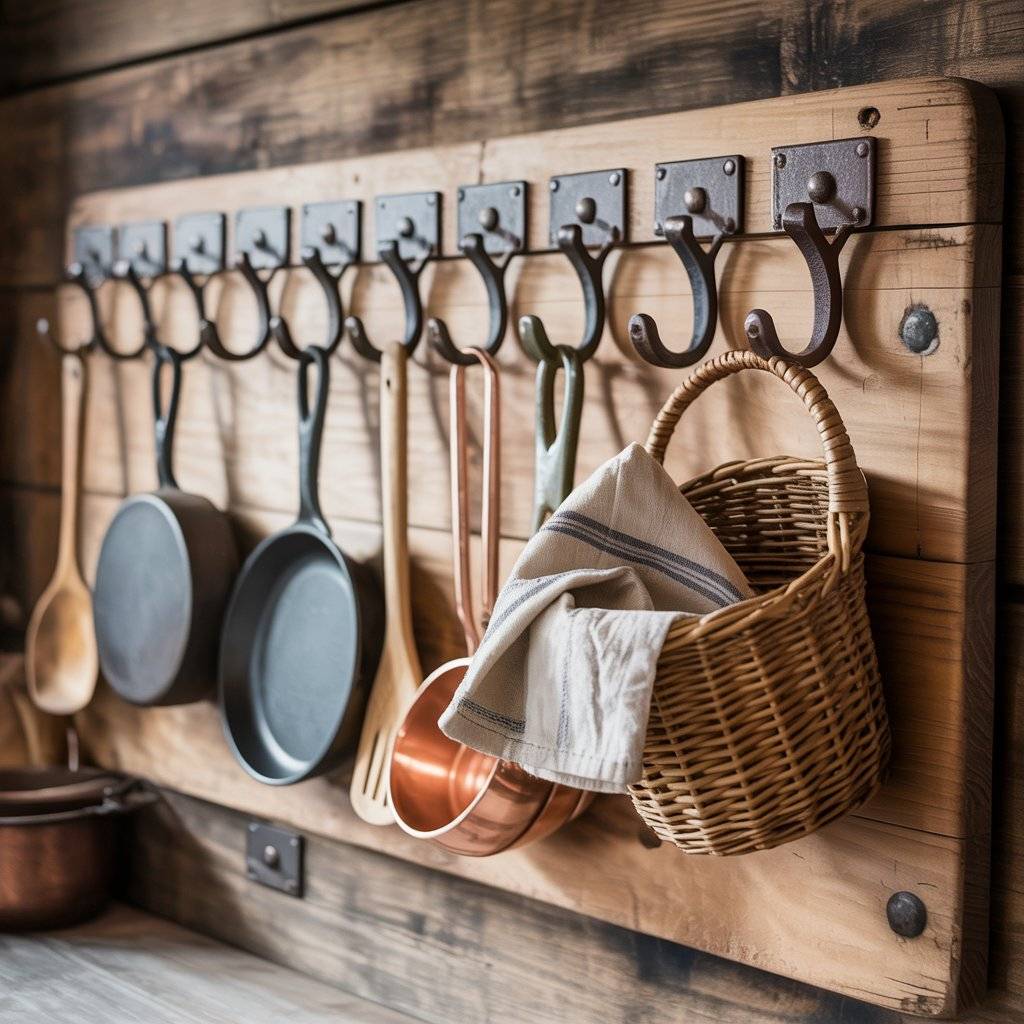
Adding a row of iron hooks is a simple change that can make a kitchen feel more primitive right away. You can mount them on a wooden board or directly on the wall.
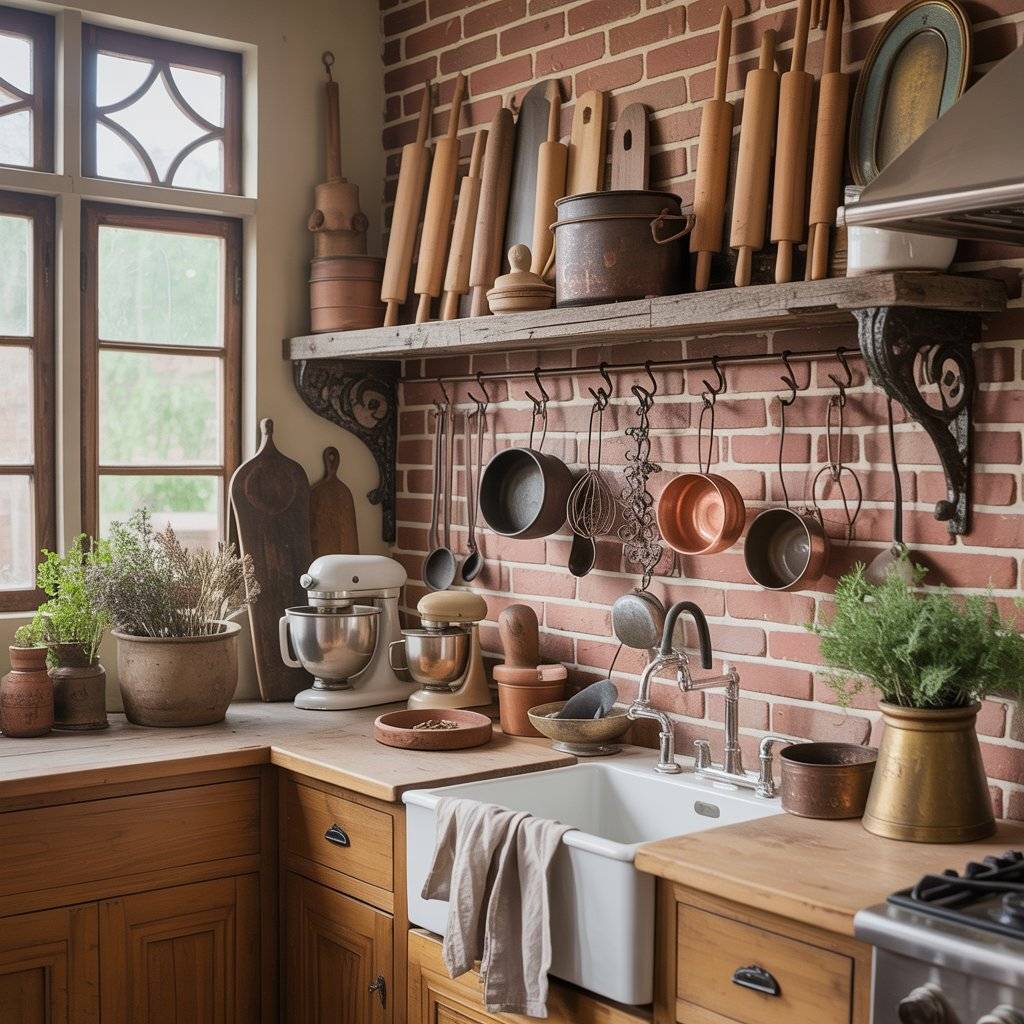
From there you can hang things you actually use: cast iron pans, wooden spoons, measuring cups, or even a small basket for dish towels. It keeps tools within reach while adding texture to the wall.
What I like about this setup is that it’s practical. Nothing is hidden away, and everything has a place. Over time the metal darkens and the wood picks up wear, which only adds to the rustic character.
Primitive kitchens were always about function first, and this is a good example of that.
Antique-Style Kitchen Lighting
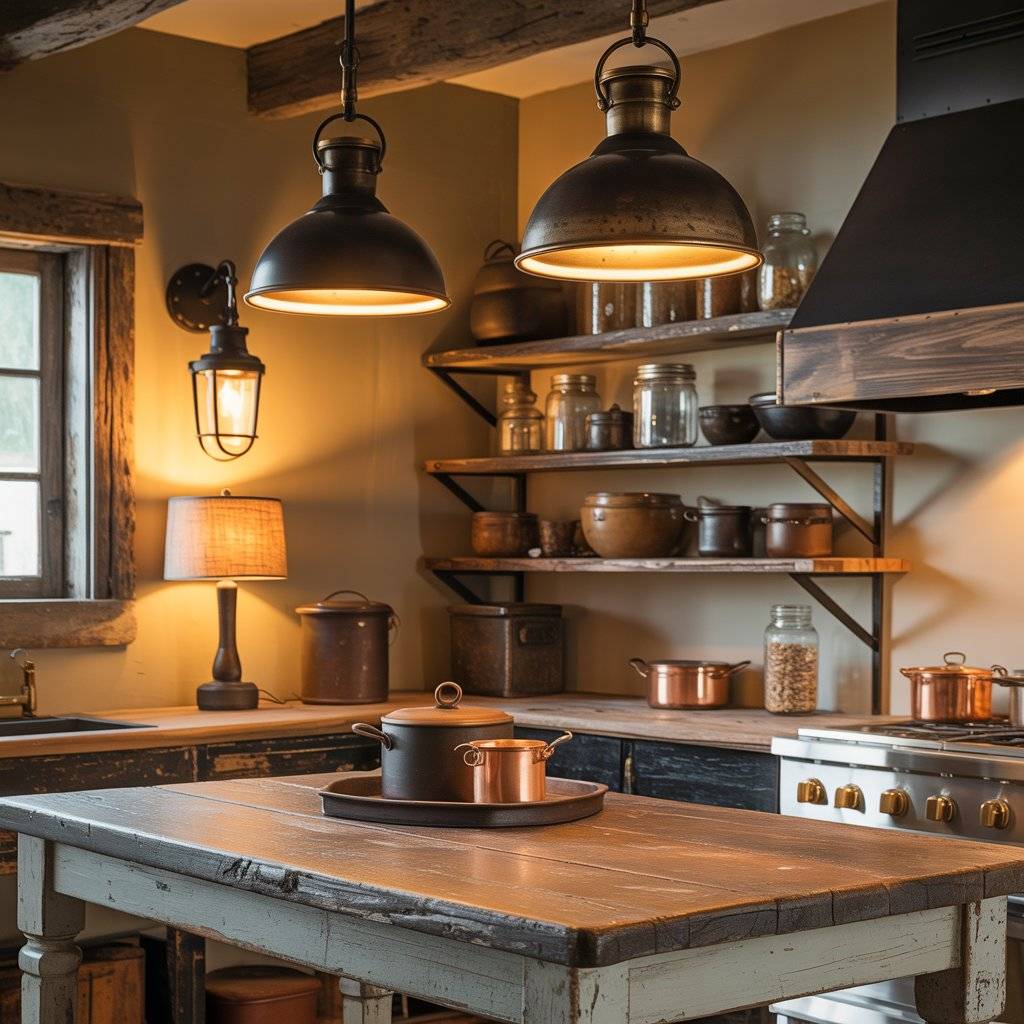
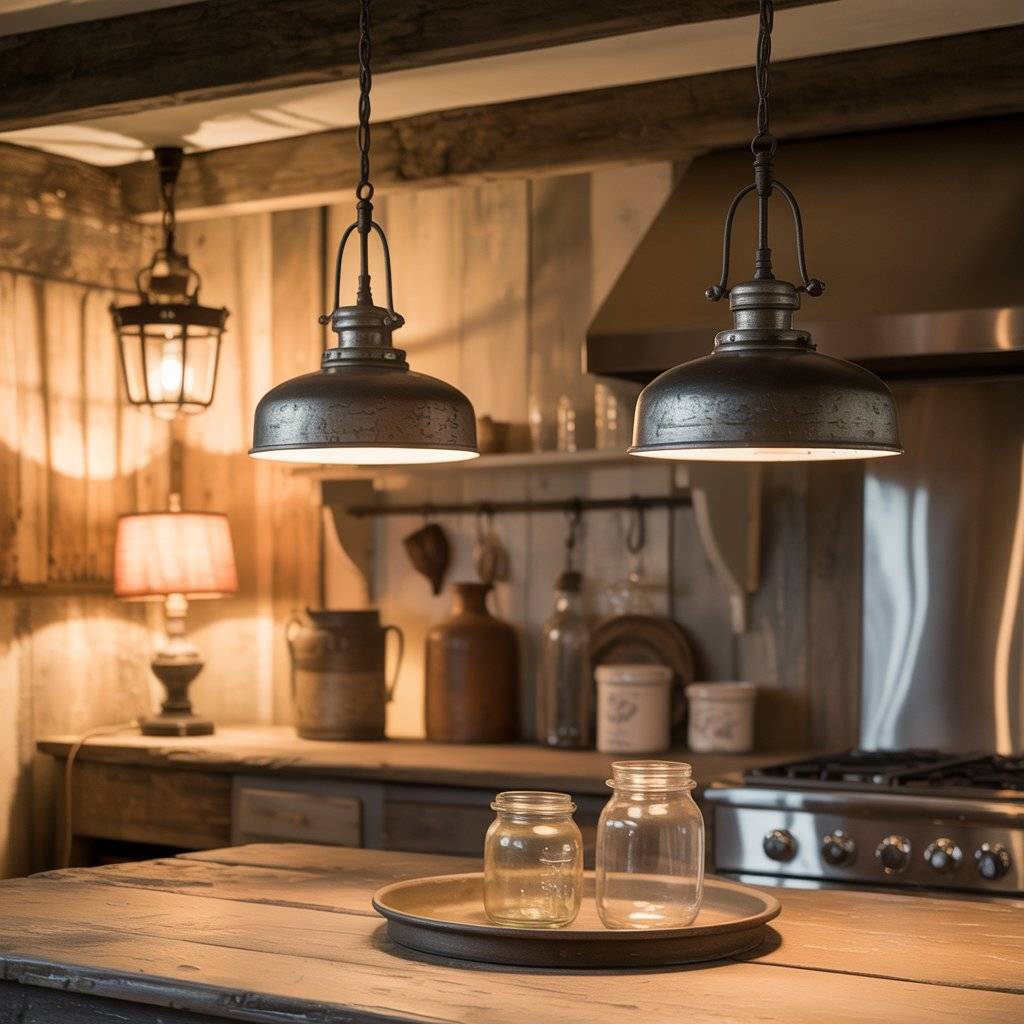
Lighting can change the mood of a kitchen more than most people realize. In a primitive kitchen, the goal is soft, warm light instead of bright modern fixtures. I’ve noticed that antique-style lighting works really well for this. Simple pendant lights with metal shades or lantern-style fixtures instantly give the space a rustic country feeling.
You don’t have to hunt for real antiques either. Many stores sell reproduction lights that have that old farmhouse look. Black metal, aged bronze, or even weathered tin finishes fit the primitive style nicely.
Another idea I like is placing a small table lamp on a wooden counter or side table. That might sound unusual in a kitchen, but older homes often used lamps for softer lighting in the evening.
The key is avoiding anything too shiny or modern. Primitive kitchens feel calm and comfortable, and warm lighting helps create that atmosphere without trying too hard.
Primitive Pottery and Stoneware
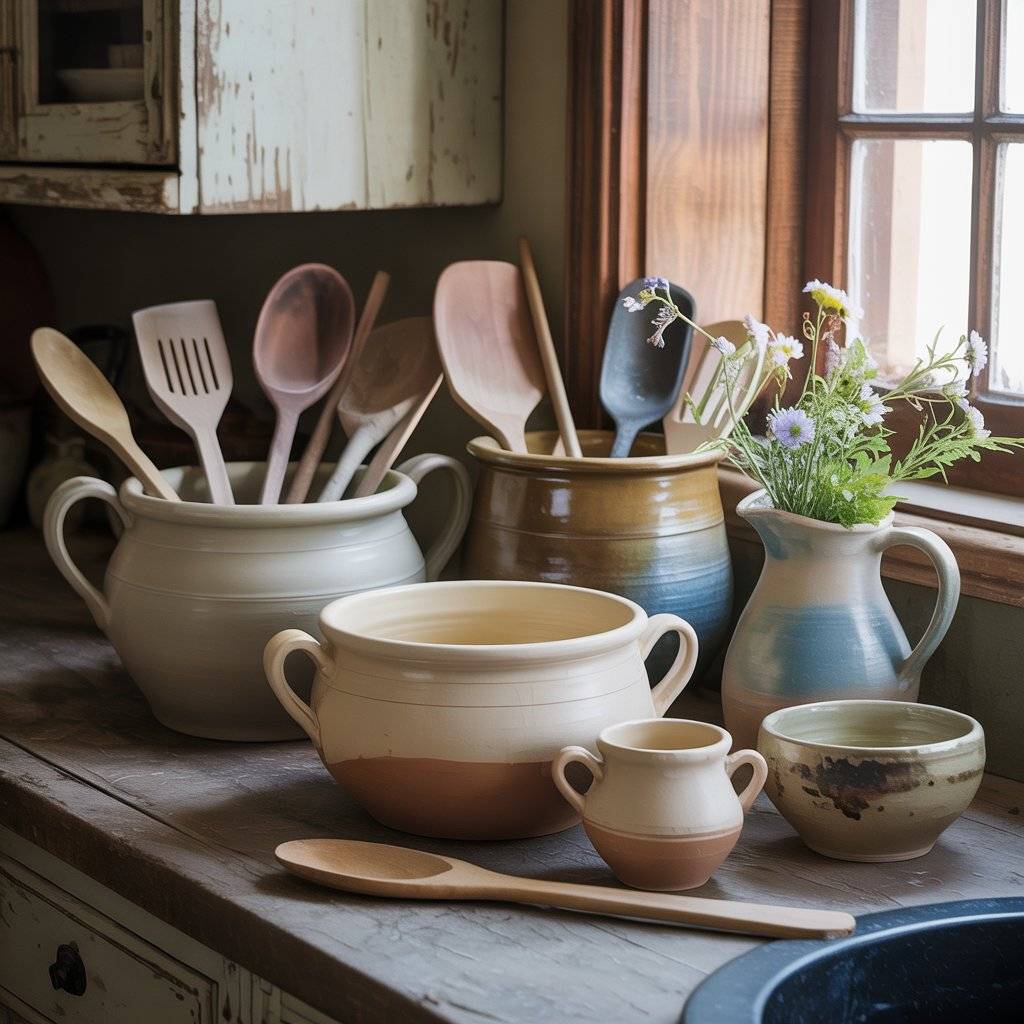
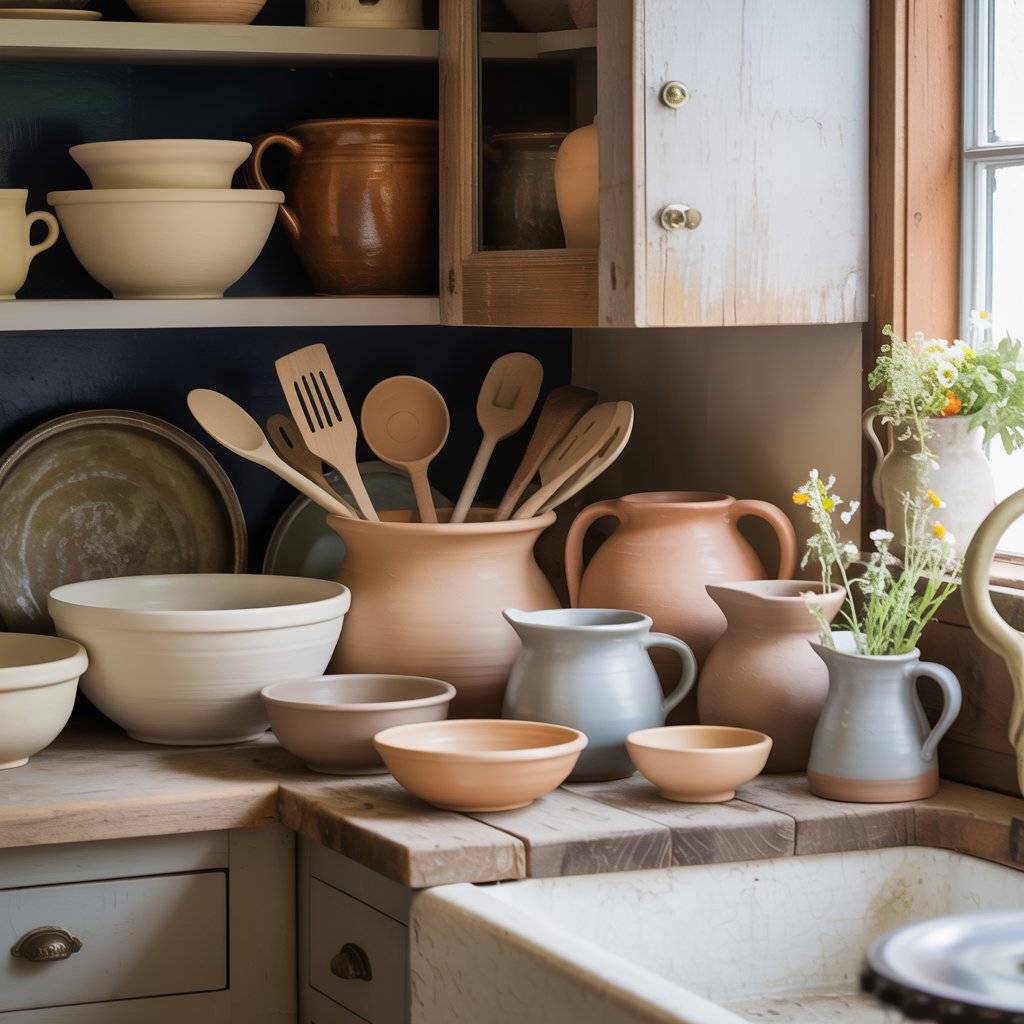
One thing I always notice in traditional country kitchens is the use of pottery and stoneware. These pieces were once everyday kitchen tools, not decorations. Mixing bowls, crocks, and simple pitchers were used for cooking, storing food, or holding utensils.
Adding a few stoneware pieces to your kitchen can make a big difference. Large crock bowls on the counter can hold wooden spoons or spatulas. A simple pitcher works well for fresh flowers or even as a water jug.
Neutral colors work best here creams, browns, soft blues, and earthy tones. They blend naturally with wood and other rustic materials. What I like about stoneware is that it feels sturdy and timeless.
You don’t need a huge collection. Even two or three well-placed pieces can add that primitive charm. Over time, these pieces become part of the kitchen’s everyday rhythm.
Wooden Crates for Simple Storage
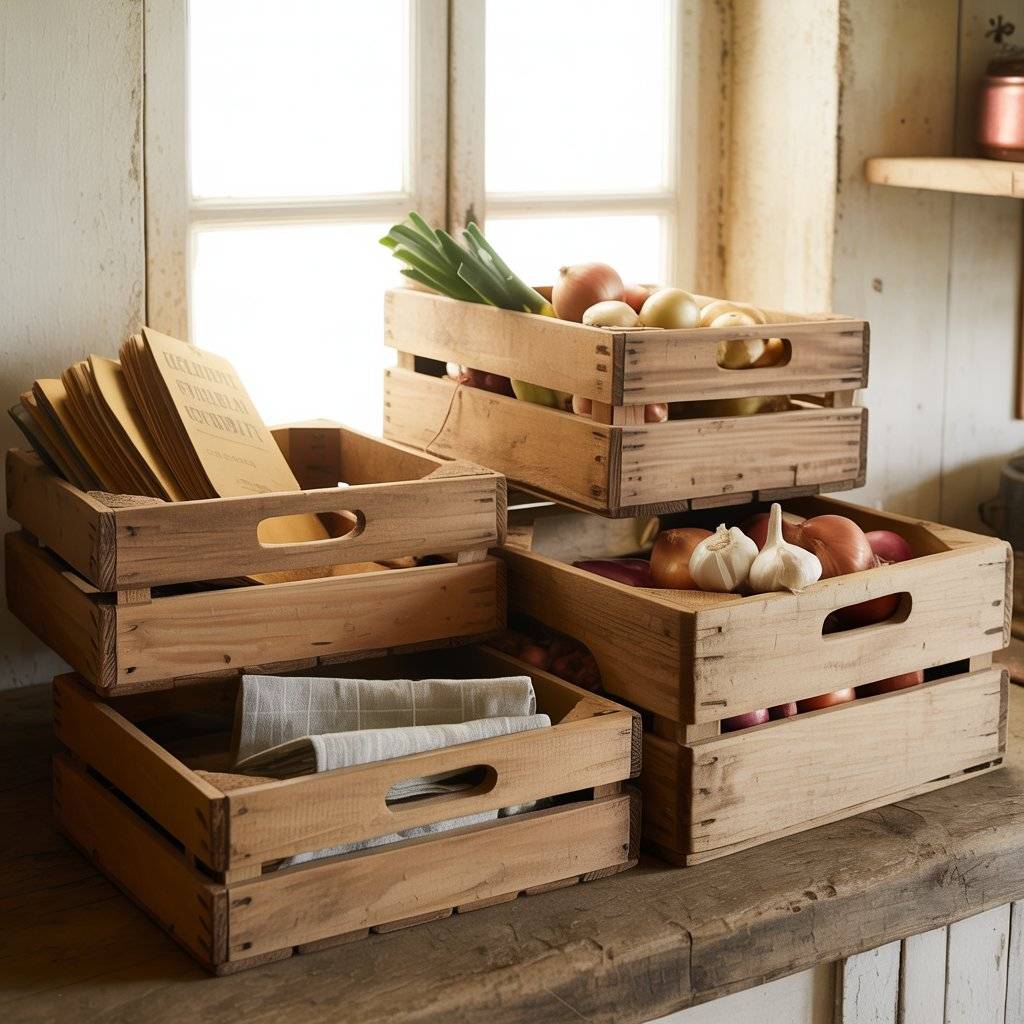
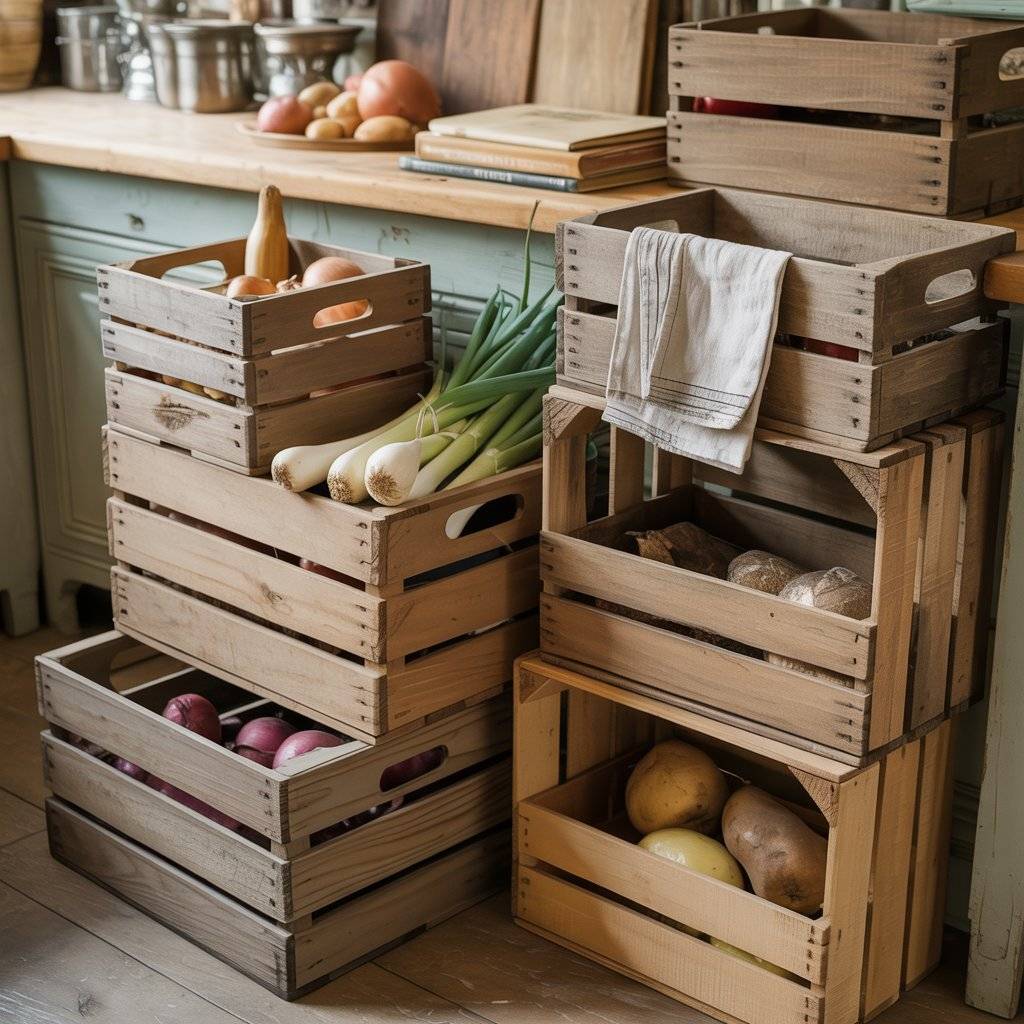
Storage in a primitive kitchen is usually simple and practical. Instead of plastic bins or modern cabinets, wooden crates are a great option. They bring texture into the room and help keep everyday items organized.
I’ve seen people use crates for storing vegetables like onions, potatoes, or garlic. They can also hold cookbooks, folded kitchen towels, or pantry items. If you stack two or three crates together, they even work as small shelving units.
Another thing I like about wooden crates is that they’re easy to customize. You can leave them natural, lightly stain them, or even sand the edges to give them a worn look.
They don’t have to look perfect. In fact, a slightly aged crate fits better with the primitive style. The goal is simple storage that feels useful and natural rather than overly designed.
Farmhouse Sink for a Classic Country Look
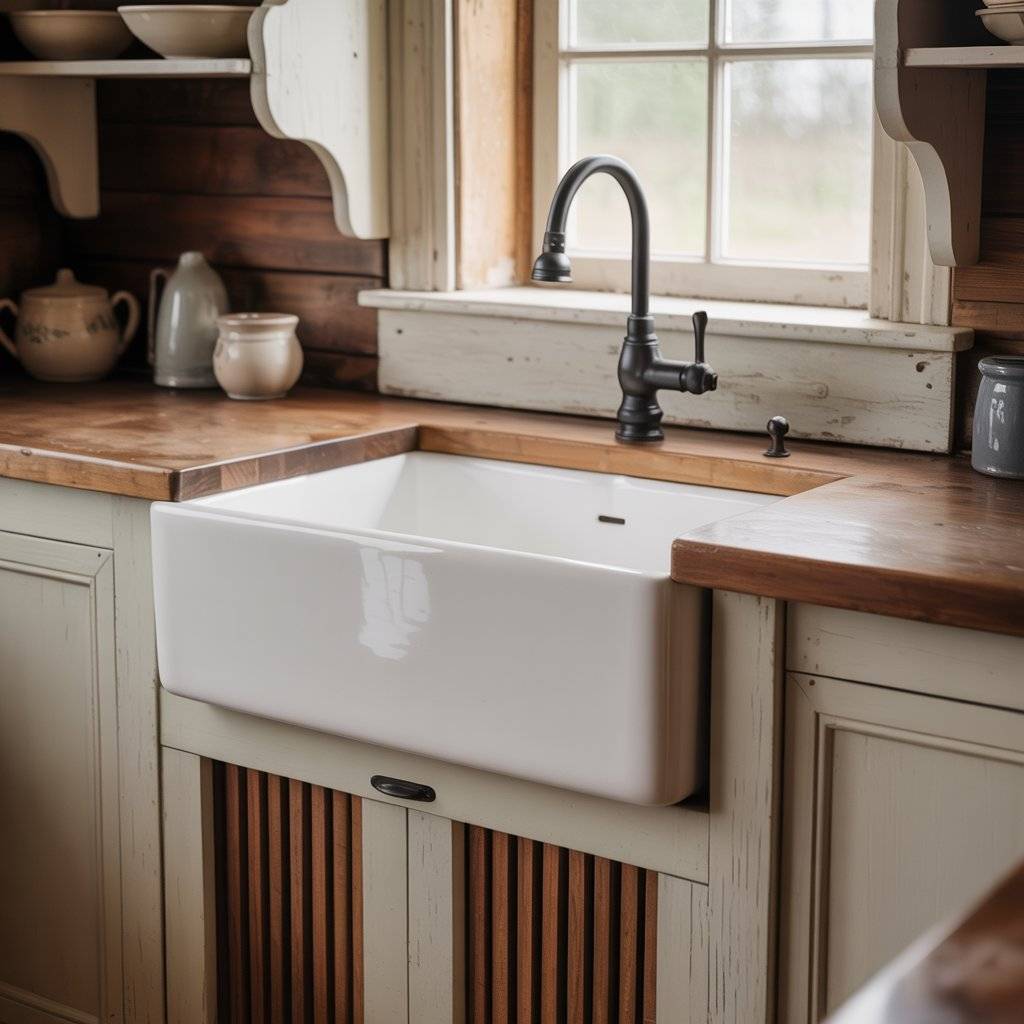
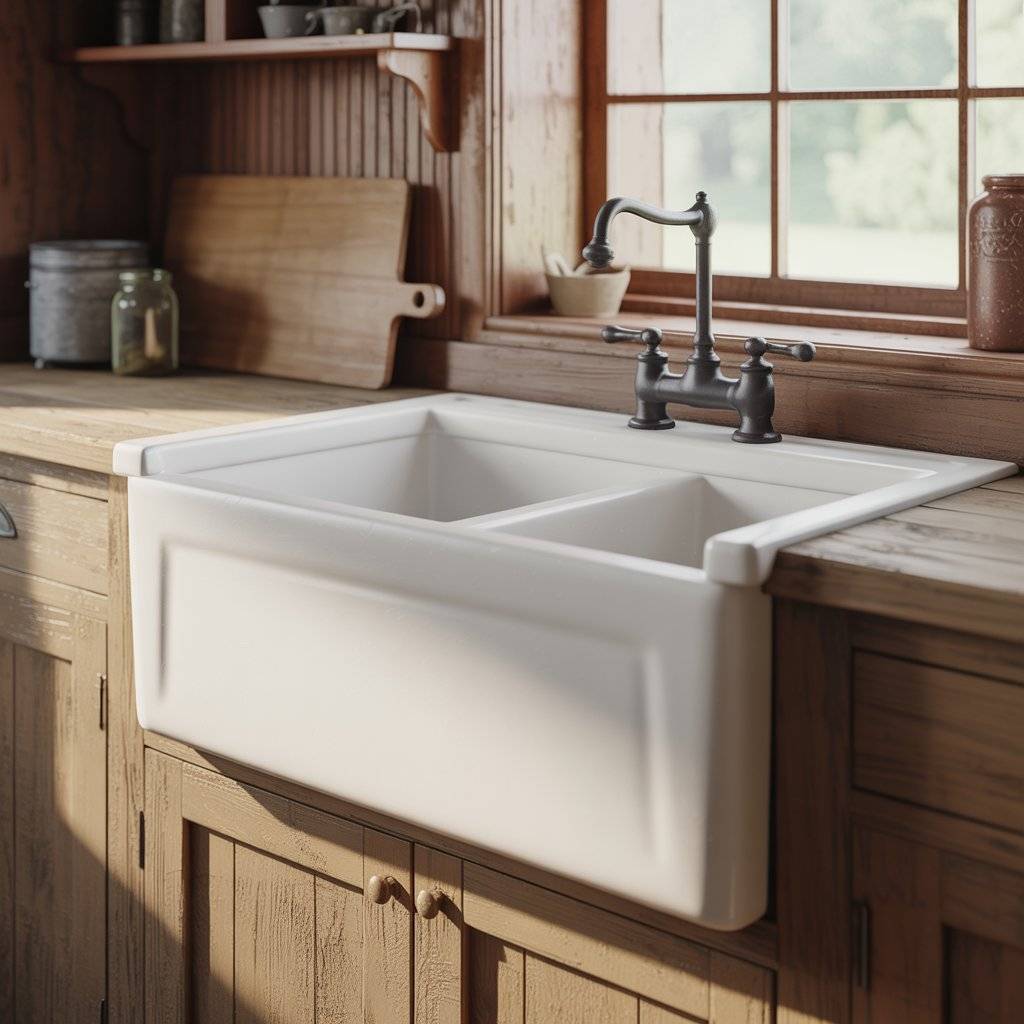
One feature that fits naturally in a primitive kitchen is a farmhouse sink. These sinks were common in older homes because they were deep and practical for washing large pots, pans, and vegetables from the garden. Today they still bring that same country feeling into a kitchen.
If replacing your sink isn’t possible, you can still create a similar look by focusing on the area around it. A wooden sink skirt instead of a cabinet door works well in a primitive space. It hides storage while keeping that simple, old-fashioned style.
White fireclay sinks are popular, but even a basic apron-front design works if the rest of the kitchen keeps the rustic feel. Pairing the sink with a simple faucet in matte black or brushed metal helps keep the style grounded.
What I like about a farmhouse sink is that it feels both practical and timeless. It’s one of those features that makes a kitchen feel welcoming instead of overly modern.
Woven Baskets for Everyday Kitchen Storage
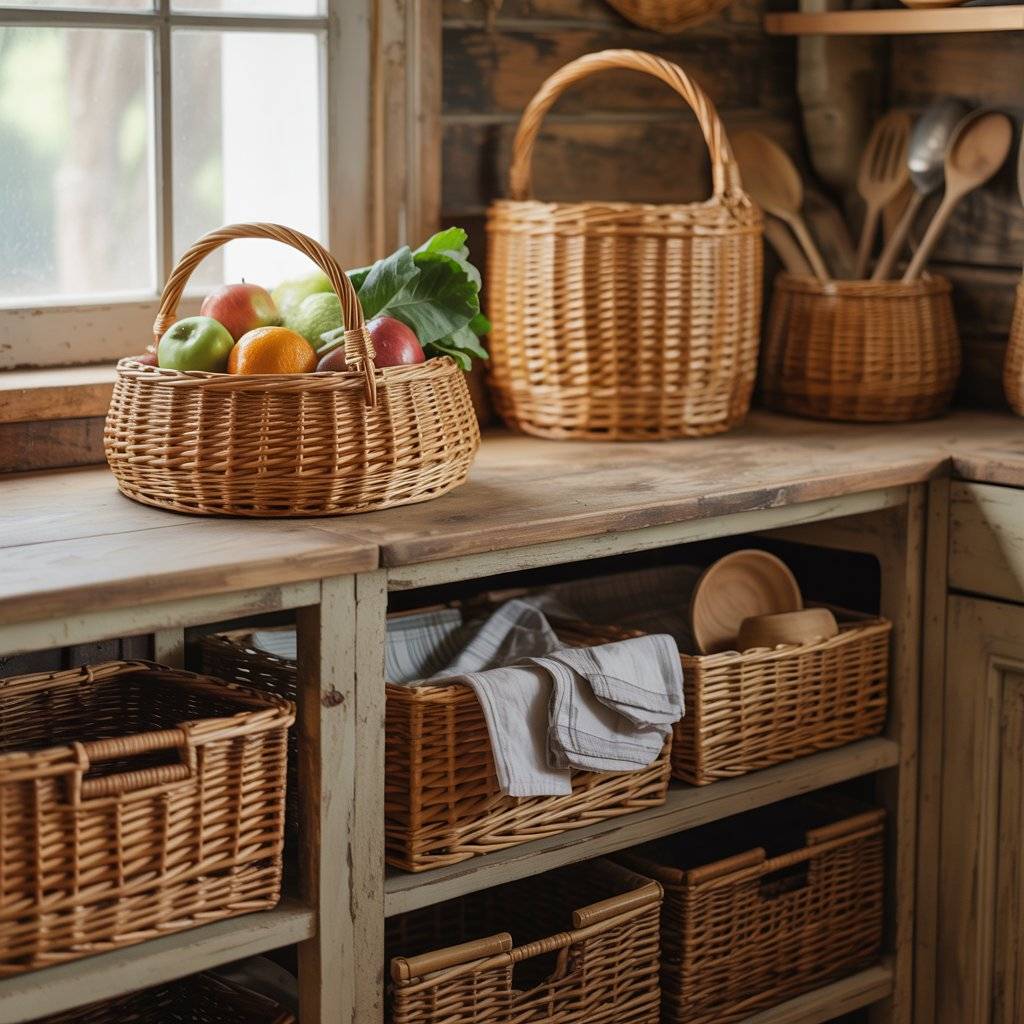
Woven baskets are one of the easiest ways to add primitive charm to a kitchen. They’ve been used in homes for generations because they’re simple, durable, and useful for storing everyday items.
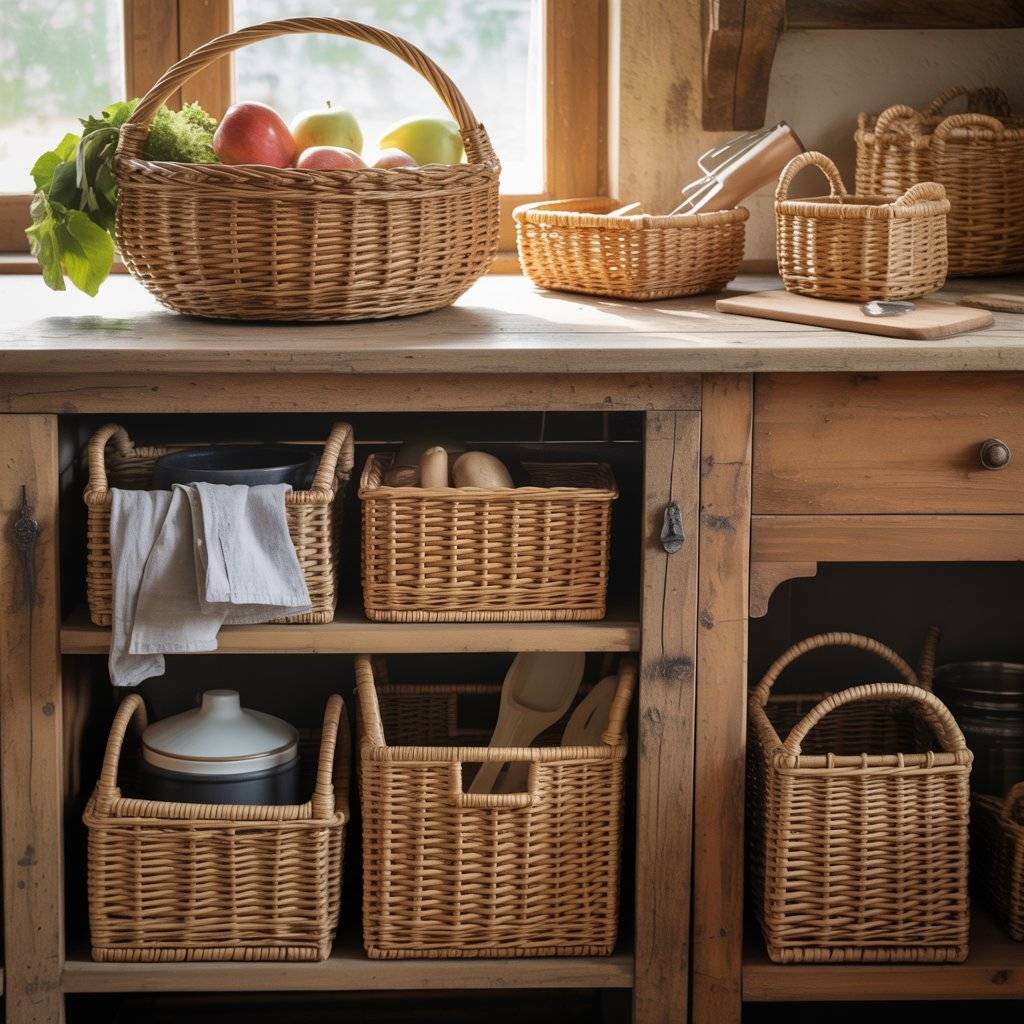
In a primitive kitchen, baskets can hold fresh produce, bread, dish towels, or even pantry items. I like placing a large basket on the counter for fruits and vegetables. Smaller baskets work well on open shelves to organize things like napkins or cooking tools.
Natural materials such as rattan, wicker, or seagrass work best. Their warm tones blend nicely with wood shelves and rustic furniture. The slight imperfections in handwoven baskets actually make them feel more authentic.
Another good idea is hanging a shallow basket on the wall. It can hold mail, recipe cards, or small kitchen tools while adding texture to the room.
These simple pieces remind us that storage doesn’t always have to be hidden behind cabinet doors.
Vintage Kitchen Textiles for Soft Rustic Charm
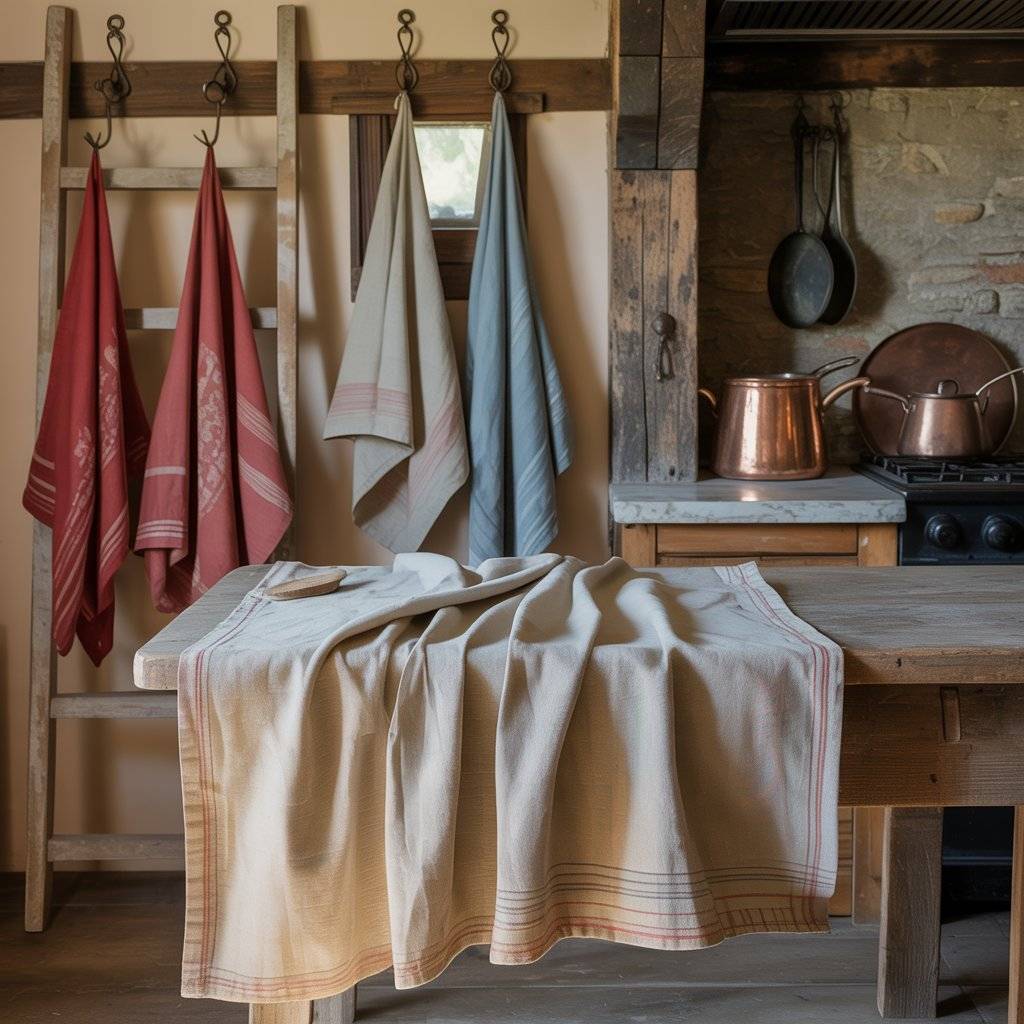
Primitive kitchens often include simple textiles that add warmth without making the space feel busy. Things like linen dish towels, grain sack fabrics, or cotton table runners were common in older kitchens because they were practical and easy to wash.
One small change that works well is switching to neutral or muted fabric colors. Cream, faded red, soft blue, or natural linen tones fit nicely in a primitive kitchen. These colors blend with wood and iron elements without standing out too much.
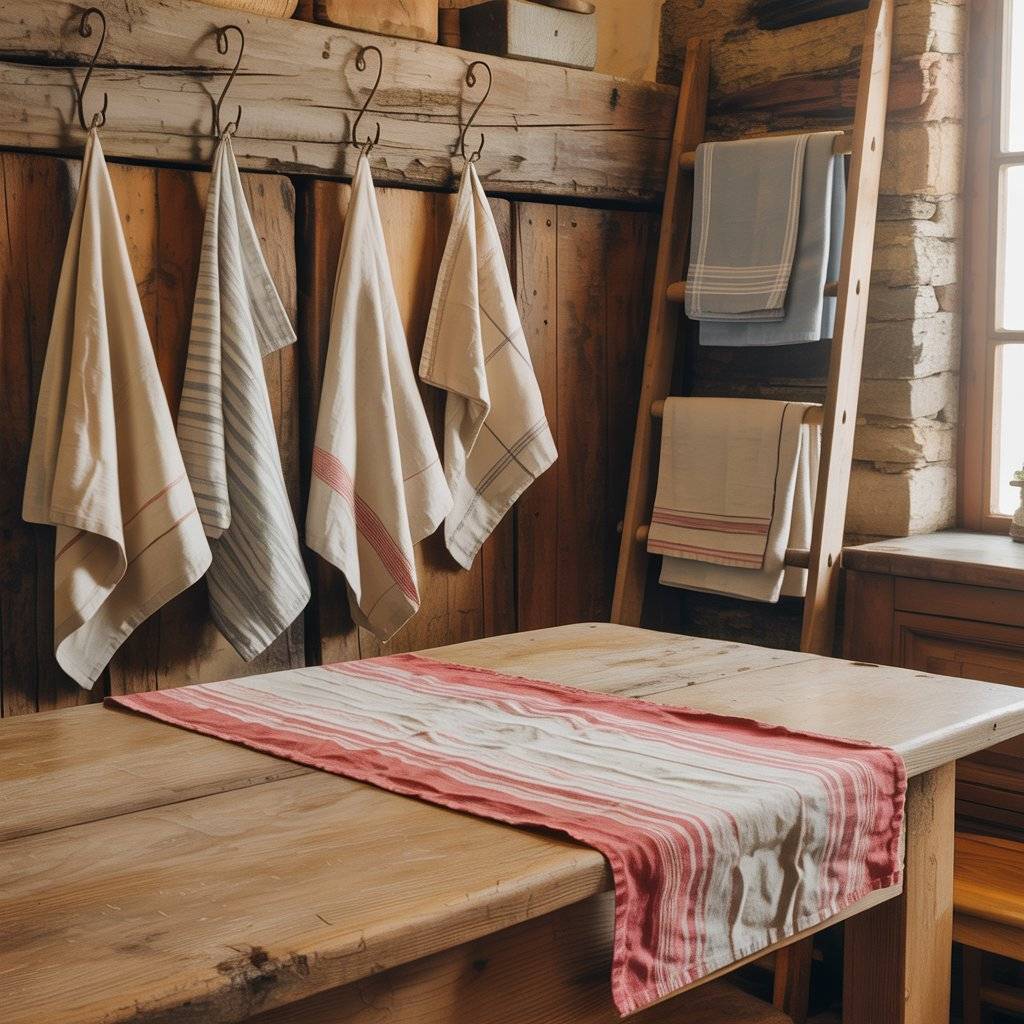
A simple table runner on a wooden table can soften the space, especially if the rest of the kitchen has a lot of wood or stone surfaces. Hanging a few folded towels on a wall hook or ladder rack also adds character while keeping them within reach.
These fabrics don’t need to be perfect. Slight wrinkles or faded textures actually make them feel more natural and lived in.
Rustic Kitchen Island for a Work and Gathering Space
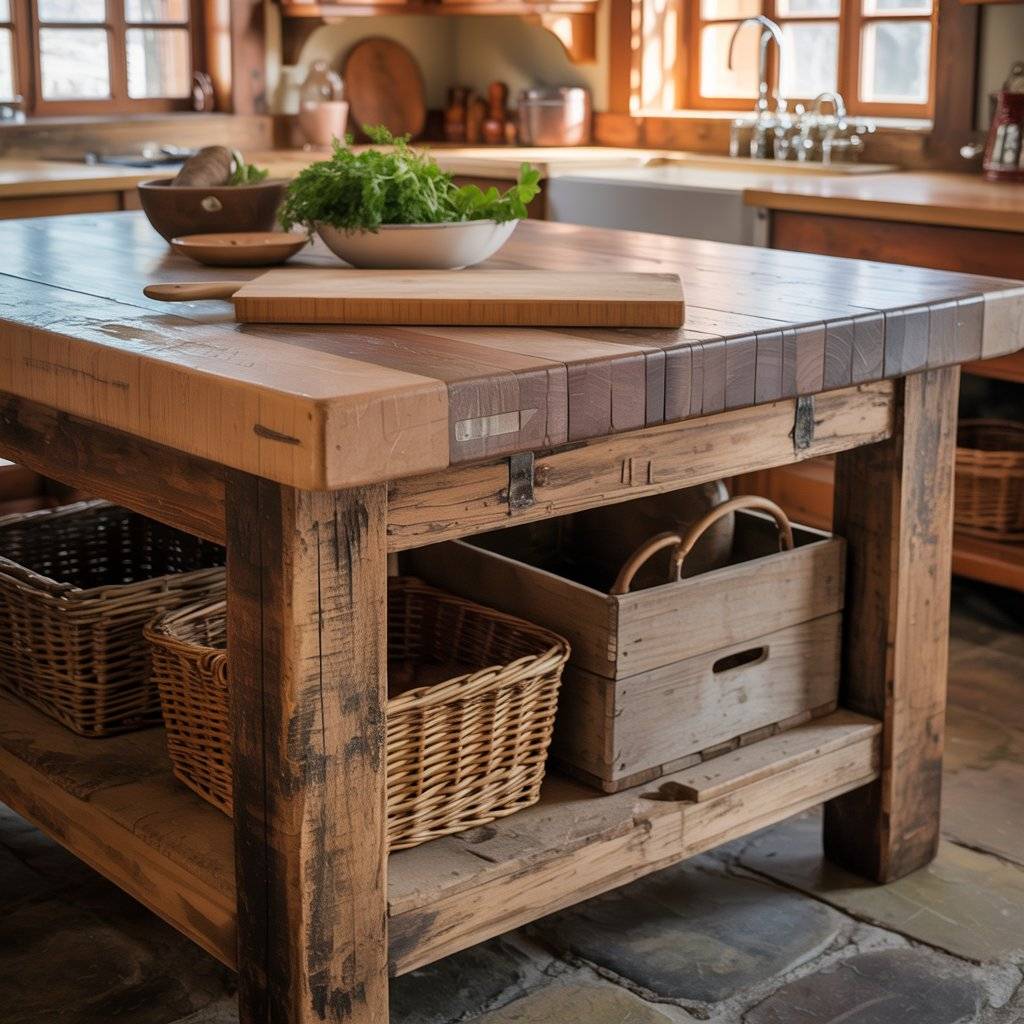
A rustic kitchen island can bring a lot of warmth to a primitive kitchen. In older homes, people often used a sturdy work table in the middle of the room for preparing meals, kneading dough, or gathering with family. That same idea works well today.
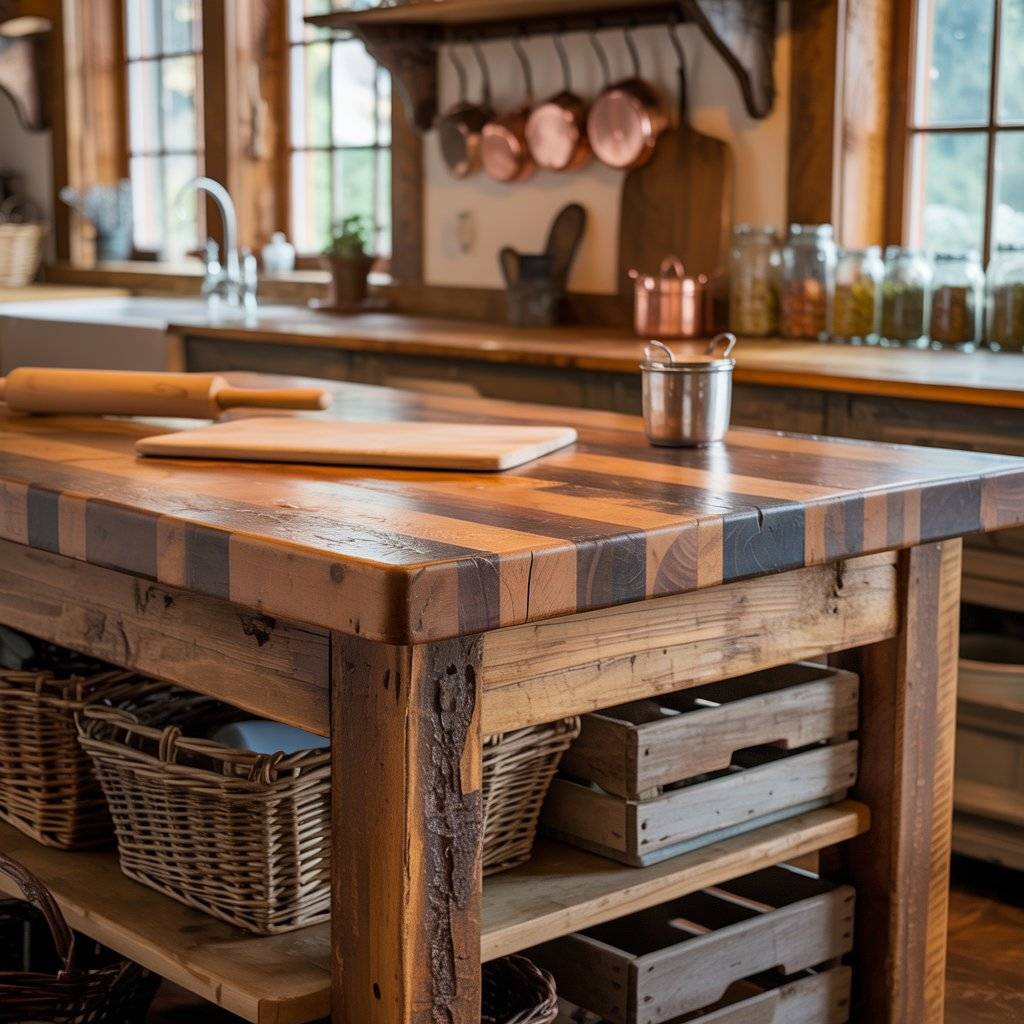
Instead of a modern island with shiny surfaces, look for something that feels solid and simple. A reclaimed wood table, an old farmhouse workbench, or even a sturdy wooden cart can serve the same purpose. The small marks and uneven textures in the wood actually add character.
You can place baskets or wooden crates underneath the island for extra storage. Some people also keep a large bread board or chopping block on top so the surface stays useful for cooking.
What I like about this setup is that it keeps the kitchen practical. The island becomes a place where people naturally gather, and it fits perfectly with the relaxed feel of a primitive kitchen.
Primitive Wall Decor That Feels Authentic
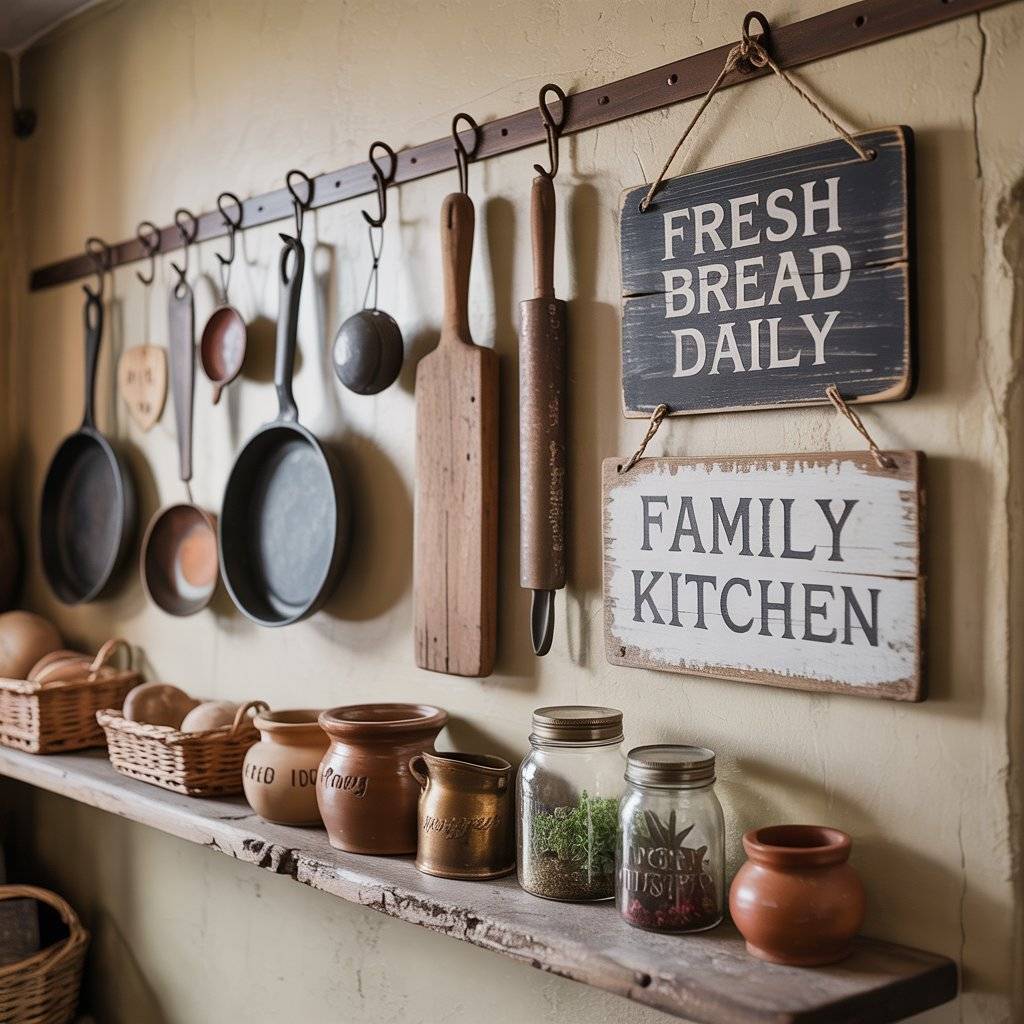
Wall decor in a primitive kitchen should feel simple and meaningful rather than overly styled. In older homes, most wall items had a purpose or told a small story about the household.
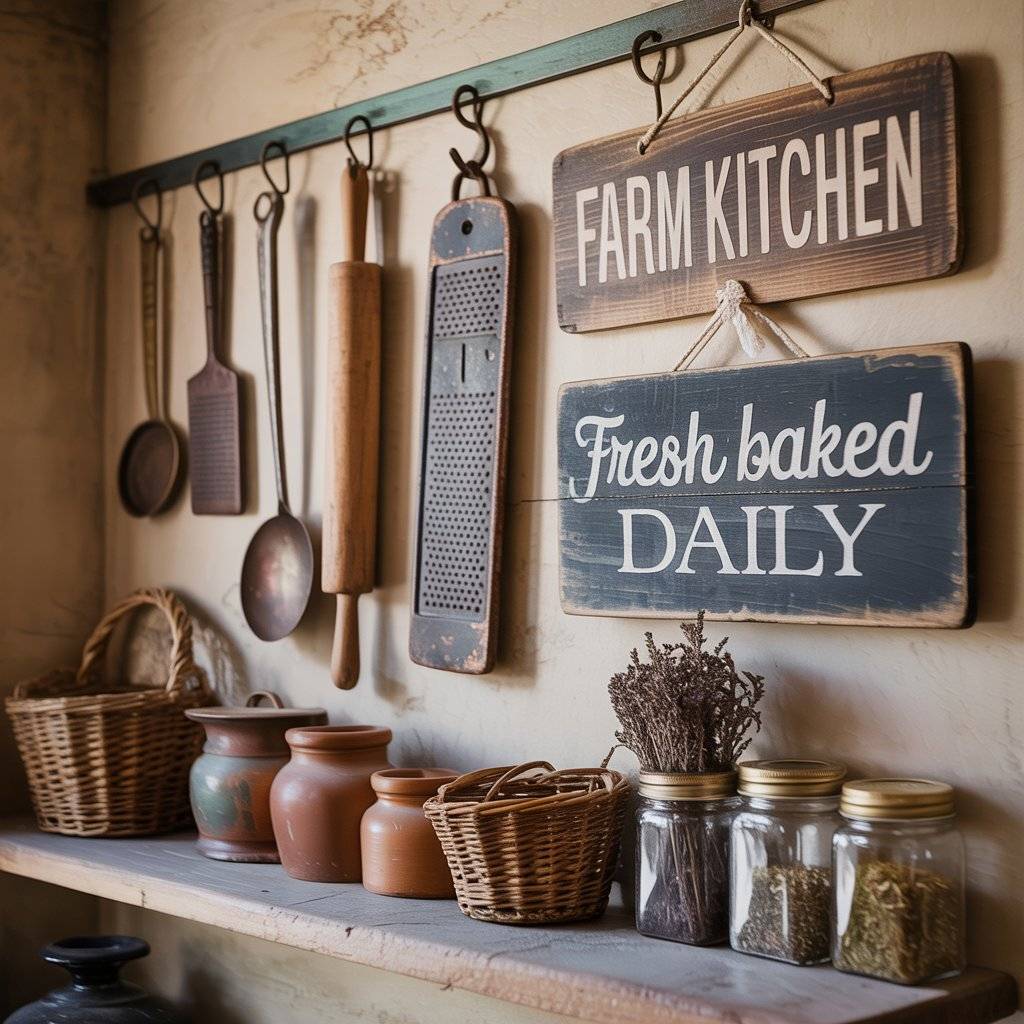
Wooden signs with simple lettering, antique kitchen tools, or small framed prints can work well here. I’ve also seen people hang old rolling pins, vintage graters, or hand-carved wooden utensils as part of their wall display.
Another idea is using a narrow wooden shelf to hold a few pottery pieces, jars, or small baskets. This adds interest to the wall while still keeping things practical.
The key is to avoid filling every empty space. Primitive kitchens feel calm because the decor is minimal and intentional. A few well-chosen pieces often look better than a crowded wall.
When each item has a purpose or history behind it, the room feels more authentic and welcoming.
Open Pantry Storage for a Country Kitchen Feel
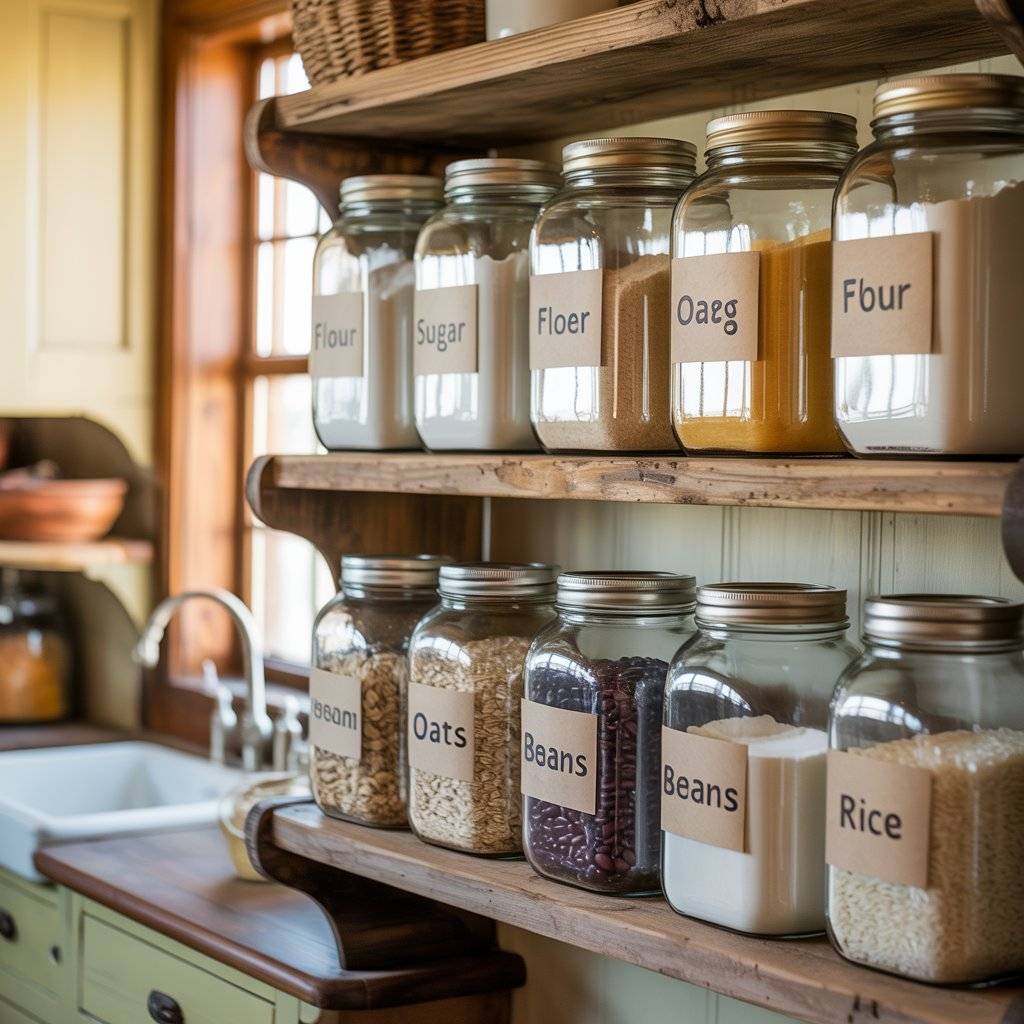
Primitive kitchens often relied on open pantry storage instead of hidden cabinets. People stored dry goods in jars, crocks, or simple containers where everything was easy to see and reach.
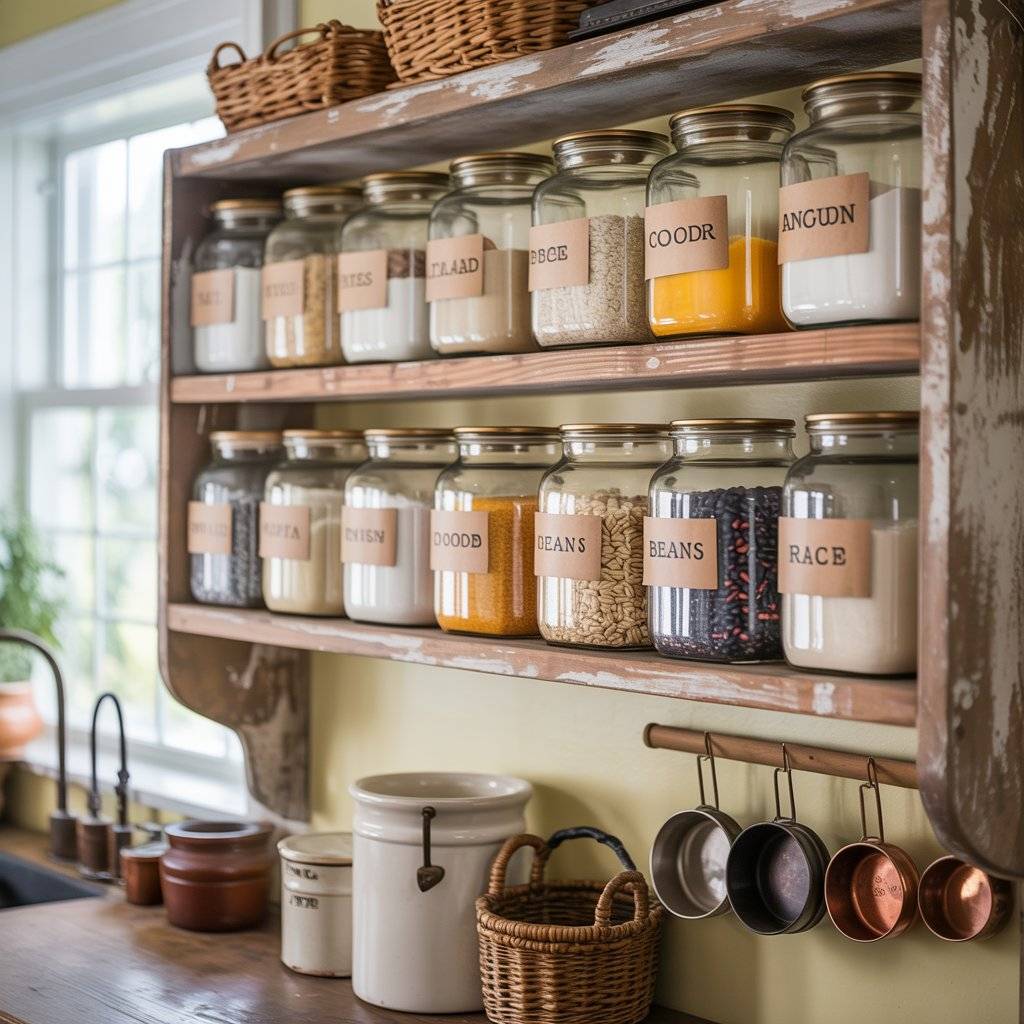
You can bring that idea into a modern kitchen by dedicating a small shelf or cabinet area to open pantry storage. Glass jars filled with flour, sugar, oats, beans, or rice create a clean and organized look while staying practical.
Wooden shelves work best for this because they match the rustic style of the kitchen. Labeling jars with simple tags or chalk labels can also make the pantry feel more organized.
I like this approach because it encourages you to keep the kitchen simple. When ingredients are visible, you naturally use them more often and waste less food.
It’s a small change, but it makes the kitchen feel more like a traditional country workspace.
Wooden Peg Rails for Simple Kitchen Organization
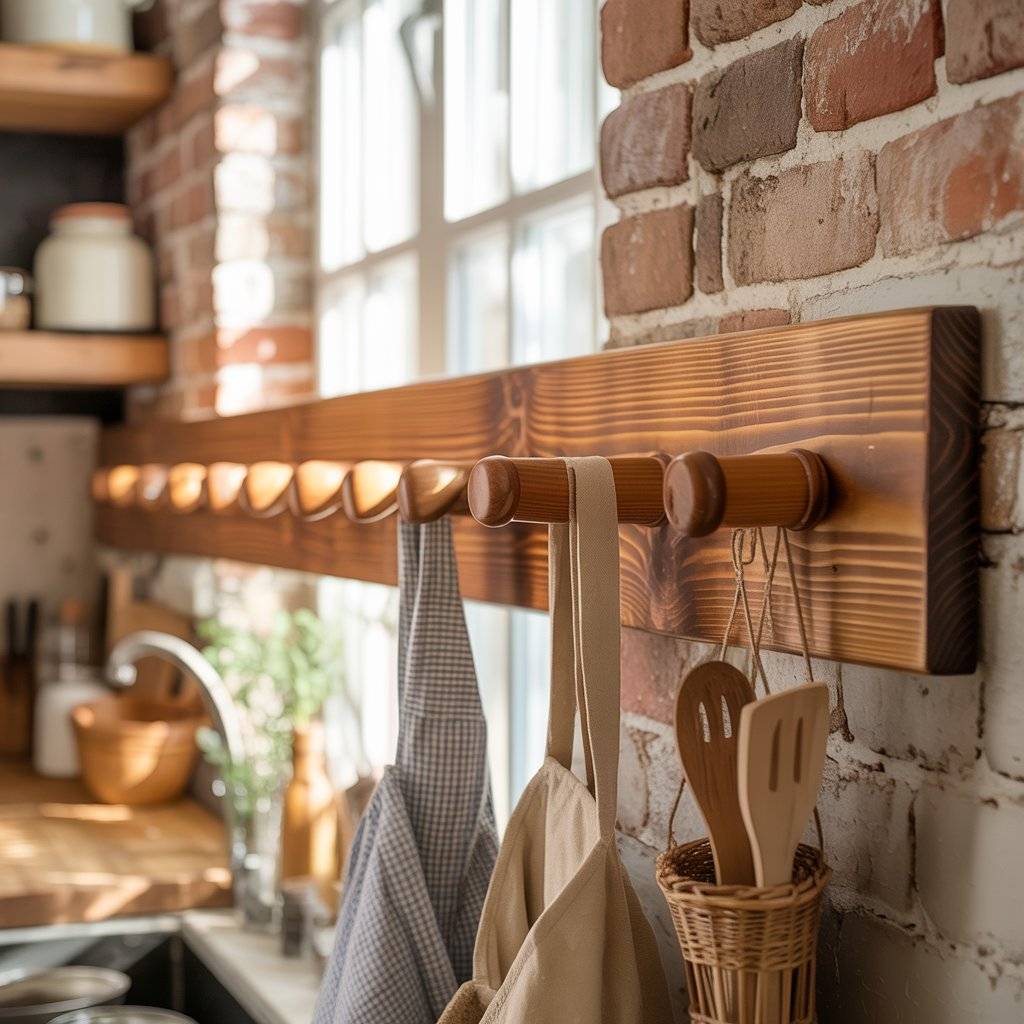
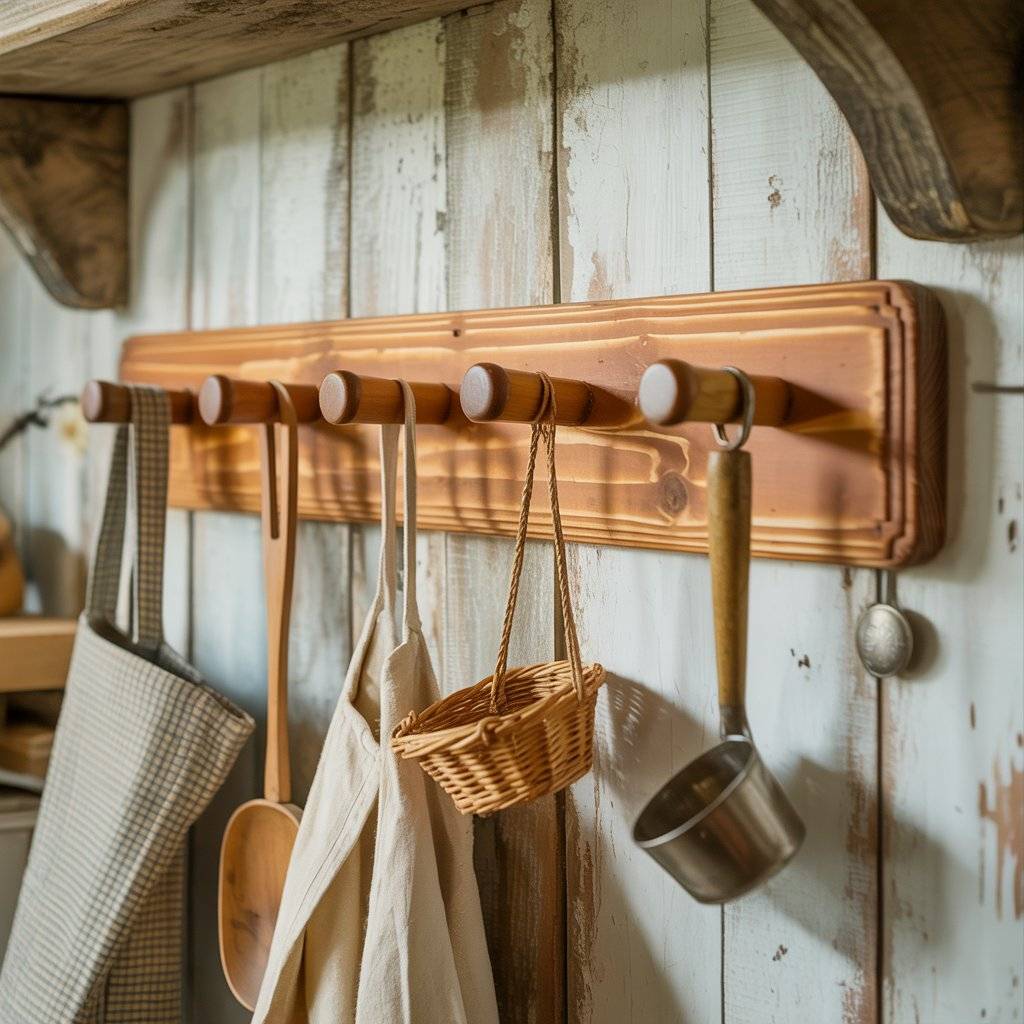
One feature I really like in primitive kitchens is a wooden peg rail. It’s simple, useful, and it instantly adds that old farmhouse character to the room. In the past, peg rails were used in many parts of the house to hang everyday items so they stayed within reach.
In a kitchen, a peg rail can hold dish towels, aprons, small baskets, or even cooking utensils. A basic wooden board with evenly spaced pegs is all you need. Pine or oak works well, and you can leave the wood natural or lightly stain it for a warmer look.
Mounting the rail along a wall or under a shelf keeps things organized without adding bulky cabinets. It also makes the kitchen feel more relaxed and practical.
Over time the wood darkens slightly and shows a little wear, which actually adds to the charm. Primitive kitchens were always about function first, and peg rails are a perfect example of that.
Displaying Cast Iron Cookware
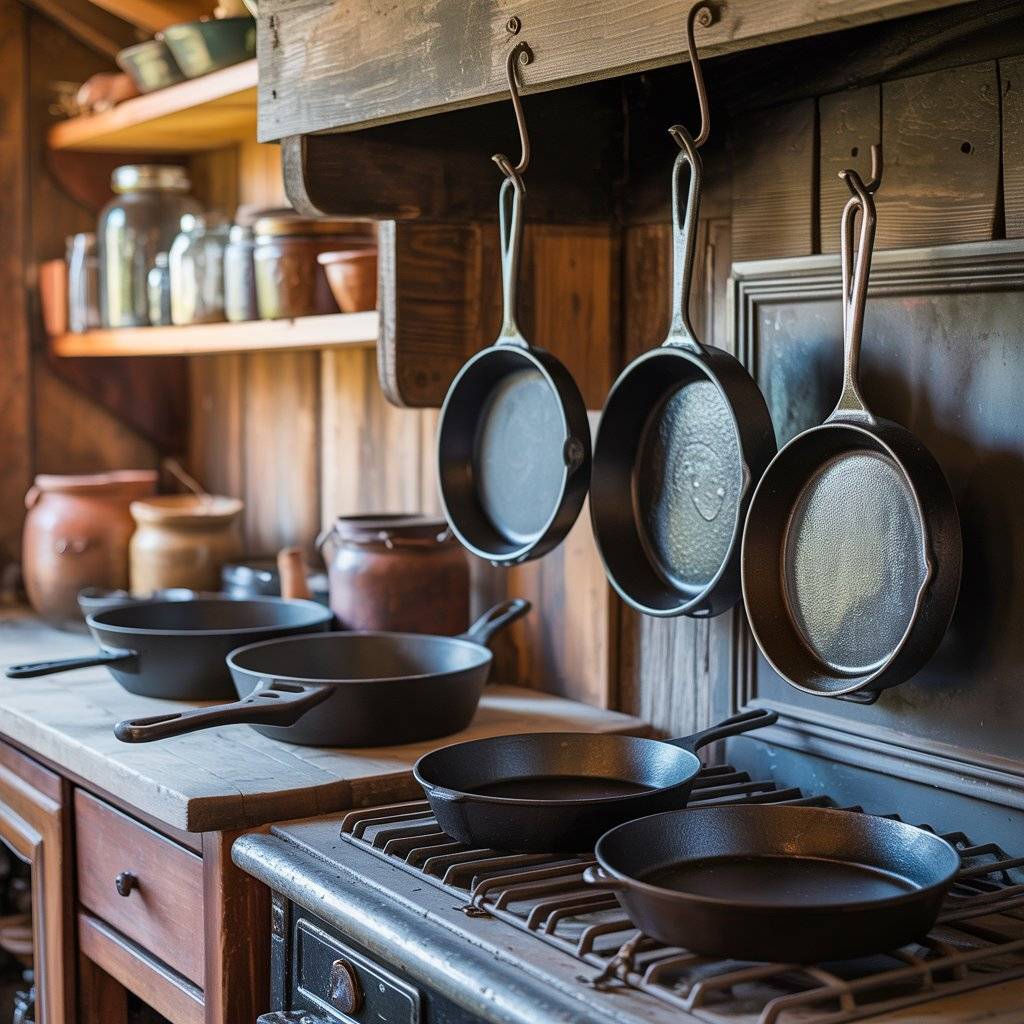
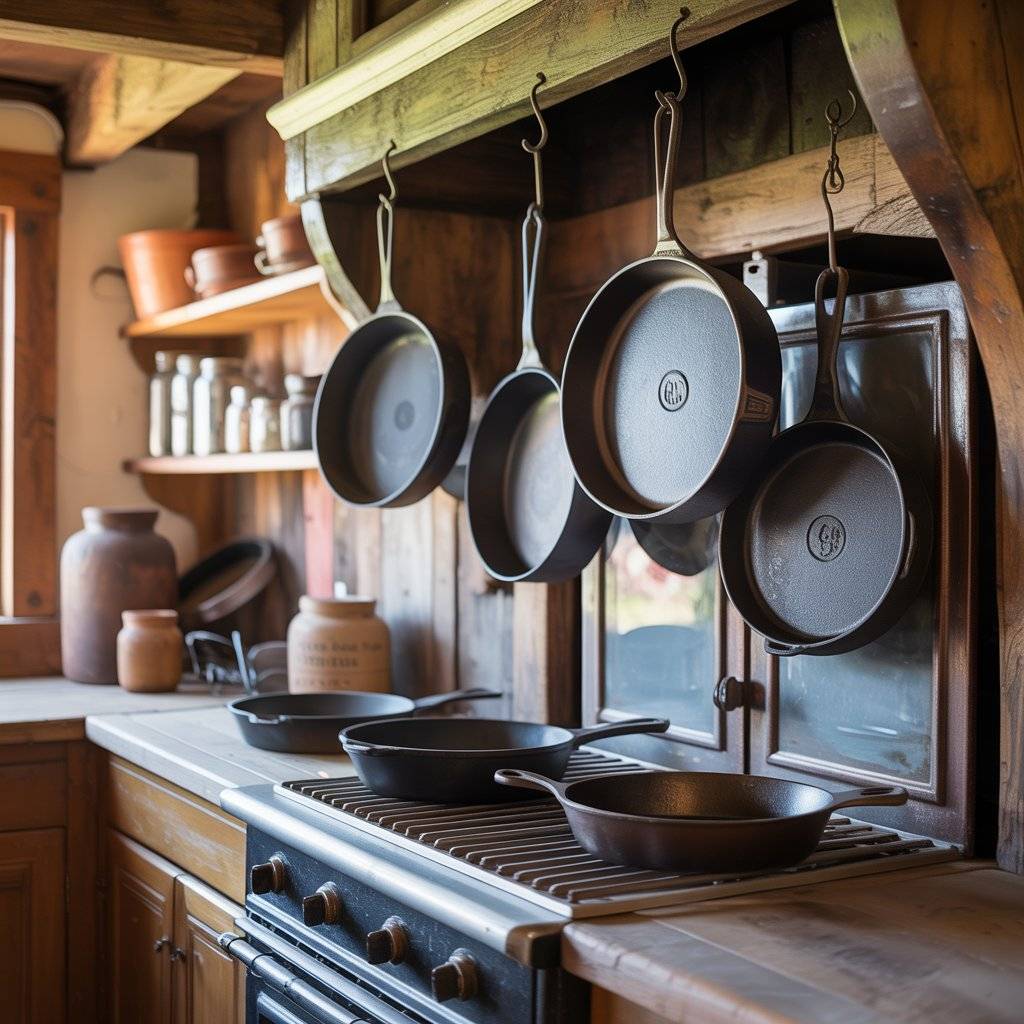
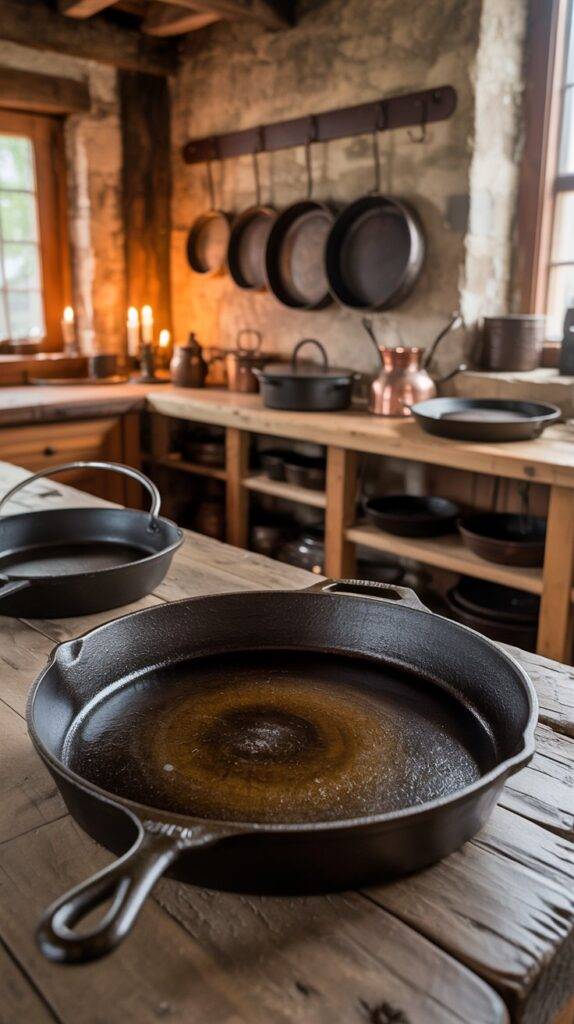
Cast iron cookware fits naturally into a primitive kitchen. These heavy pans have been used for generations because they last for years and cook food evenly. Instead of hiding them in cabinets, many country kitchens keep them on display.
You can hang cast iron skillets on wall hooks, place them on open shelves, or store them on a small rack near the stove. Their dark finish and solid shape add a strong rustic element to the kitchen.
I like this idea because it’s both decorative and practical. When the pans are visible, they’re easy to grab when cooking. Over time, well-used cast iron develops a deep seasoned surface that tells a story of many meals prepared.
Even one or two pans can add that primitive kitchen character. They remind us that good kitchen tools are meant to be used, not hidden away.
Using Old Kitchen Tools as Decor
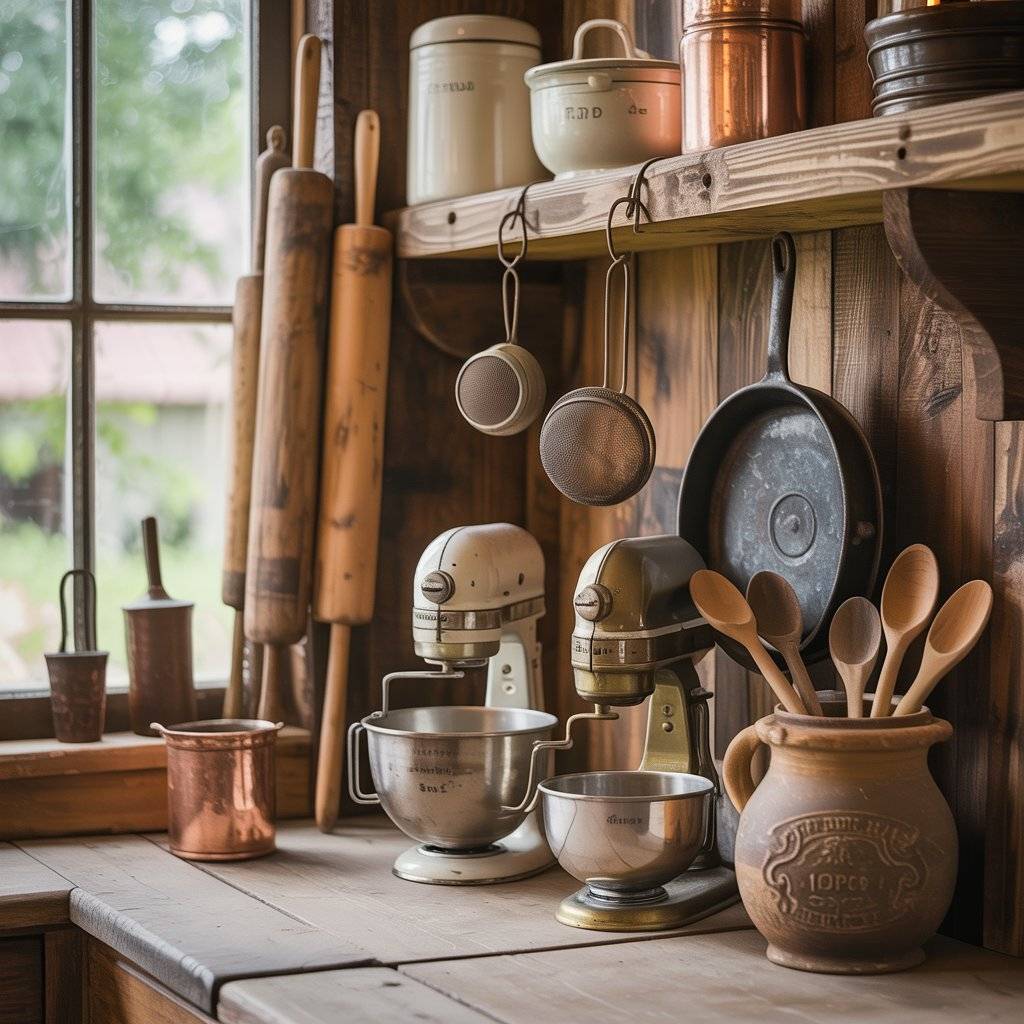
One of the easiest ways to give a kitchen a primitive feel is by displaying old kitchen tools. These pieces add history and personality without needing major changes to the room.
Things like wooden rolling pins, hand mixers, flour sifters, or old measuring cups can be placed on shelves or hung on the wall. They remind people of how cooking was done before modern appliances took over.
You might find these items at flea markets, antique shops, or even in family storage boxes. A few well-placed tools can make the kitchen feel more personal and lived in.
The trick is not to overdo it. Choose pieces that look interesting and still connect to cooking. When mixed with wood shelves, pottery, and simple fabrics, these small items help bring the whole primitive kitchen style together.
Sometimes the smallest details are what give a space its real character.
Heavy Duty Cast Iron Skillet for a True Primitive Kitchen
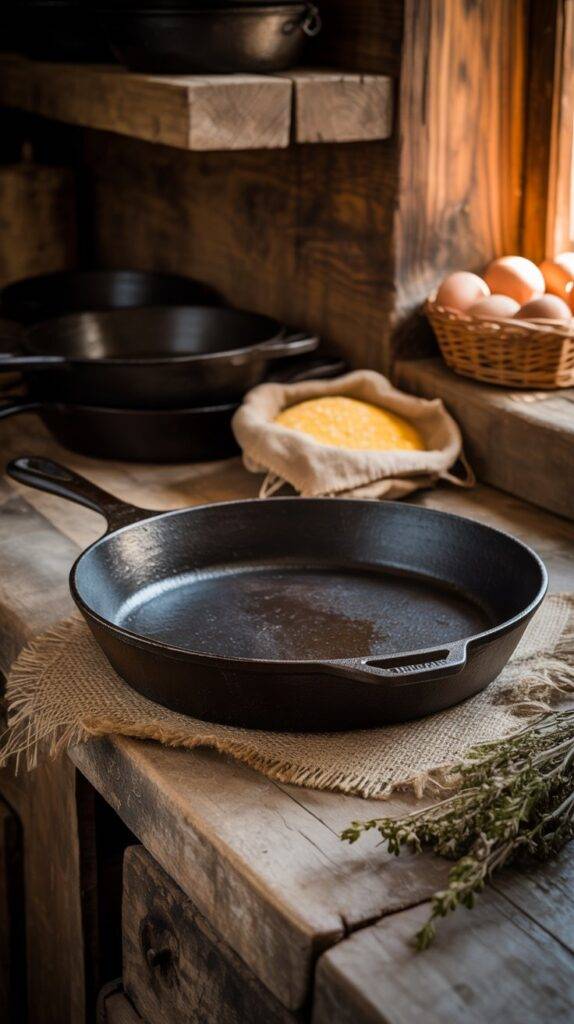
A good cast iron skillet is one of those kitchen tools that fits perfectly with the primitive kitchen style. It’s simple, durable, and it does its job well. Many country kitchens relied on cast iron for everyday cooking because it holds heat evenly and can last for generations when cared for properly.
What I like about using a cast iron skillet is how versatile it is. You can fry eggs, bake cornbread, cook vegetables, or even use it for roasting in the oven. The pan slowly builds a natural seasoning layer that improves the flavor of food over time.
In a primitive kitchen, cast iron doesn’t just stay hidden in cabinets. Many people hang their skillets on wall hooks or display them on open shelves near the stove. It adds a strong rustic look while keeping the pan easy to reach during cooking.
If someone is building a primitive-style kitchen, this is one tool that truly fits both the style and the function.
Suggested Supply:
Cast Iron Skillet
👉 Check price on Amazon.com
Rustic Wooden Open Shelves to Create a Primitive Kitchen Look
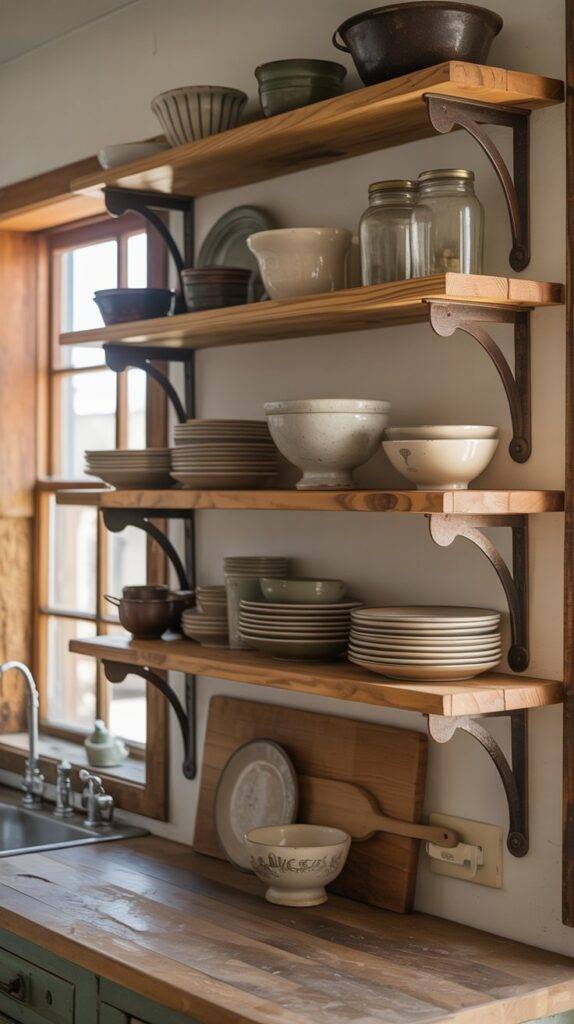
Open wooden shelves are one of the easiest ways to bring primitive style into a kitchen. Older country homes often used simple shelves instead of large cabinets, keeping dishes and cooking tools easy to reach.
Adding rustic wooden shelves today can instantly change how the kitchen feels. Natural wood shelves supported with iron brackets give the room that warm farmhouse character. They also make the space feel more open compared to heavy cabinets.
I’ve seen people use these shelves to store everyday plates, stoneware bowls, glass jars, and cooking tools. When items are arranged neatly, the shelves become both practical storage and part of the kitchen’s design.
Another benefit is flexibility. Shelves can be installed almost anywhere above a counter, beside the sink, or along an empty wall. Over time the wood develops small marks and wear, which actually adds to the rustic charm.
For anyone trying to create a primitive kitchen without a full renovation, this is a simple upgrade that can make a big difference.
Suggested Supply:
Rustic Floating Wood Shelves with Iron Brackets
👉 Check price on Amazon.com
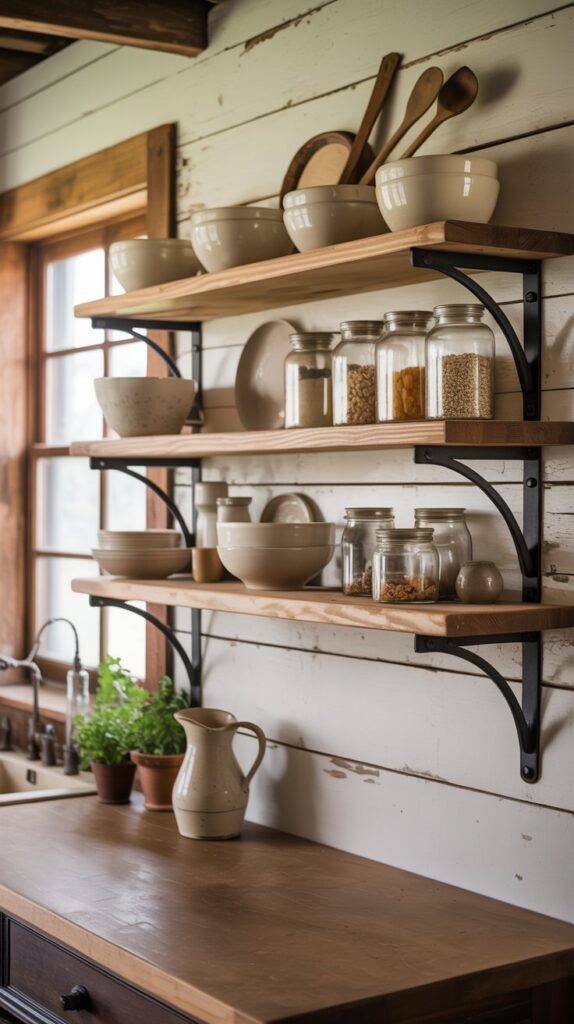
Stoneware Mixing Bowl Set for a Classic Country Kitchen
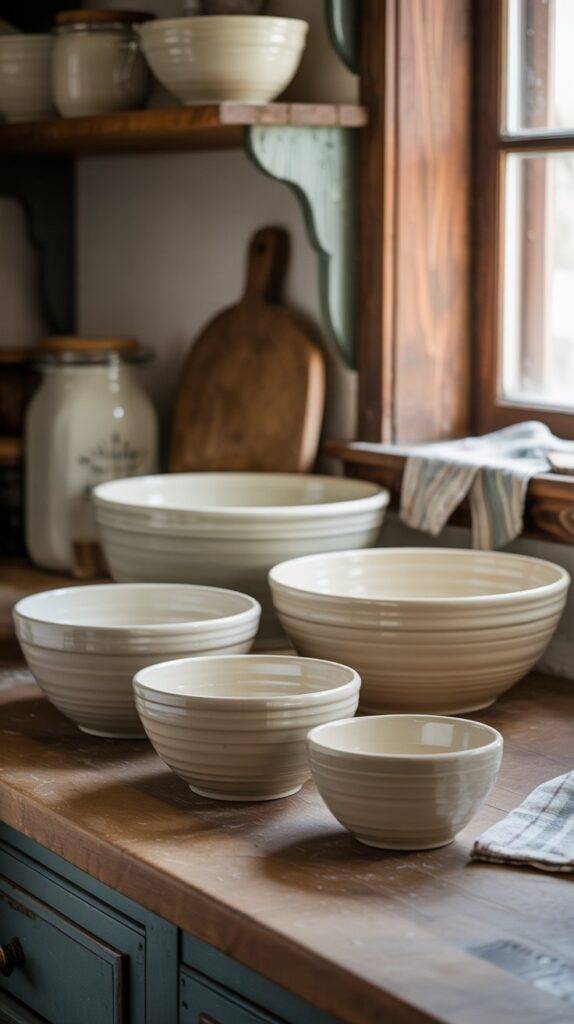
Stoneware bowls have always been a part of traditional kitchens. Long before plastic and stainless steel became common, cooks relied on sturdy ceramic bowls for mixing dough, preparing vegetables, and serving food at the table.
What makes stoneware special is its weight and durability. The bowls stay steady on the counter while mixing, and they hold up well through daily use. Their simple shapes and neutral colors also fit naturally into a primitive kitchen style.
I like leaving a few stoneware bowls right on the counter or open shelves. They’re easy to grab when cooking, and they add that old-world charm many people want in a rustic kitchen.
Many sets include several sizes, which makes them useful for everything from baking bread to mixing pancake batter. Because they’re both functional and attractive, they work well as everyday kitchen tools instead of something that sits hidden in a cabinet.
For a primitive kitchen setup, a good stoneware bowl set is both practical and timeless.
Suggested Supply:
Stoneware Mixing Bowl Set
👉 Check price on Amazon.com
Conclusion
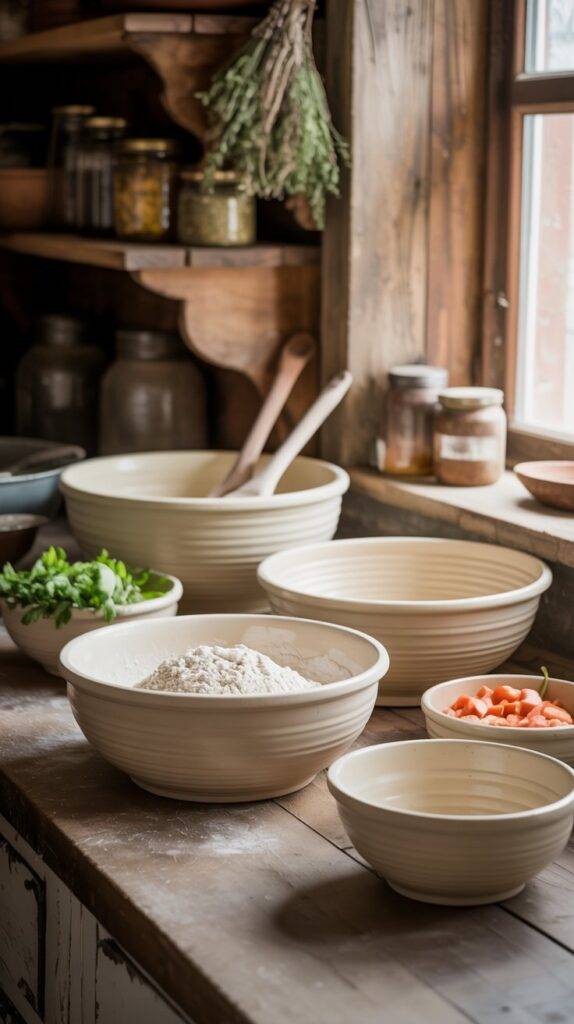
A primitive kitchen is not about perfection or expensive renovations. It’s about creating a space that feels warm, simple, and connected to everyday living. Natural wood, practical storage, handmade pottery, and well-used kitchen tools all work together to build that timeless country atmosphere.
What I appreciate most about this style is that it grows slowly. You don’t have to change everything at once. A wooden shelf here, a few baskets there, maybe a peg rail or stoneware bowl. Over time the kitchen begins to feel more relaxed and welcoming.
Primitive kitchens remind us that the heart of the home doesn’t need to be complicated. When a space is practical, comfortable, and filled with pieces that are actually used, it naturally becomes a place where people enjoy spending time.
Related Post: Primitive Bathroom Decor Ideas for a Cozy Vintage Country Look