
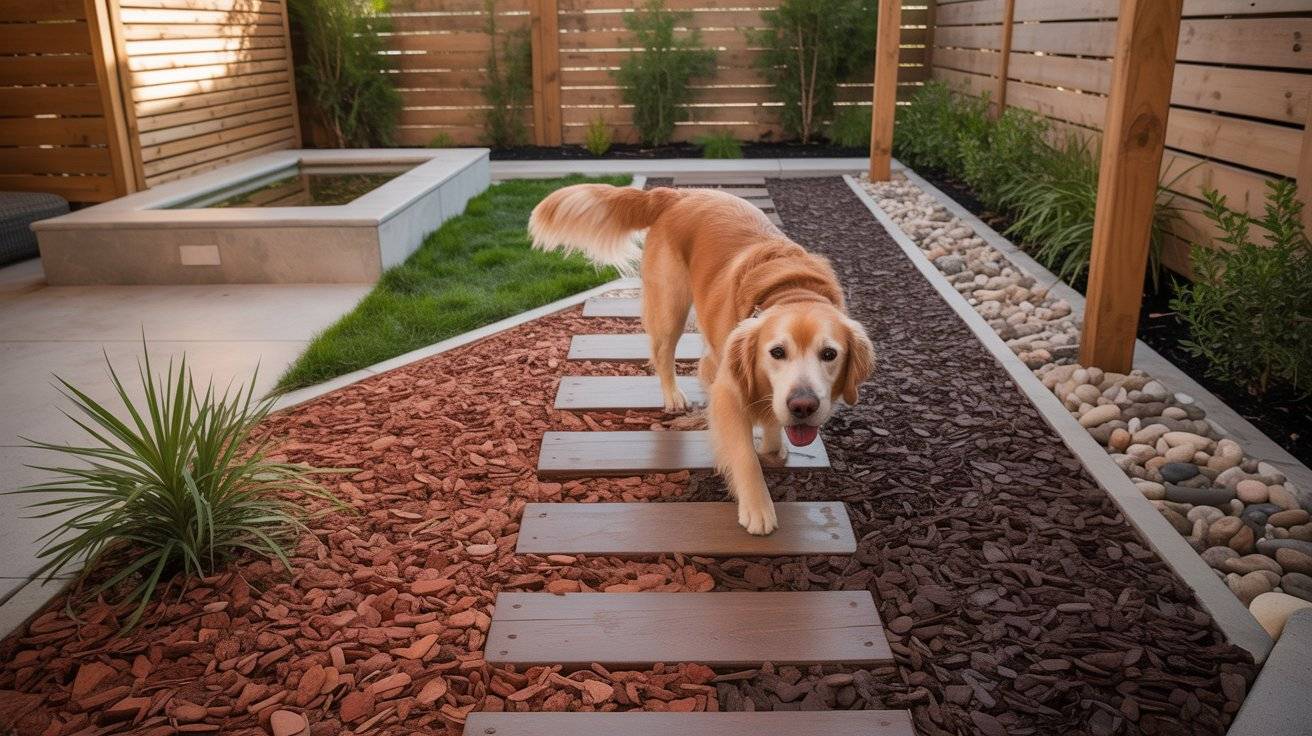
When you have dogs at your backyard usually stops looking for perfect pretty quickly. Grass gets worn down. Mud shows up after rain. And certain spots turn into digging zones whether you like it or not.
I went through all of that in my own yard.
At one point I realized I didn’t need a fancy patio or expensive stonework. I just needed something that worked better for the dogs and was easier to maintain. That’s when I started experimenting with mulch areas.
Mulch surprised me. It drains water well, it stays softer under paws than gravel, and it’s easier to refresh when it starts looking worn out. Plus, it’s one of the few materials that still feels natural in a backyard.
The designs below are things I’ve tried myself or seen in other dog owners’ yards that actually work. Nothing complicated. Just practical ways to build a mulch patio that both you and your dogs will use.
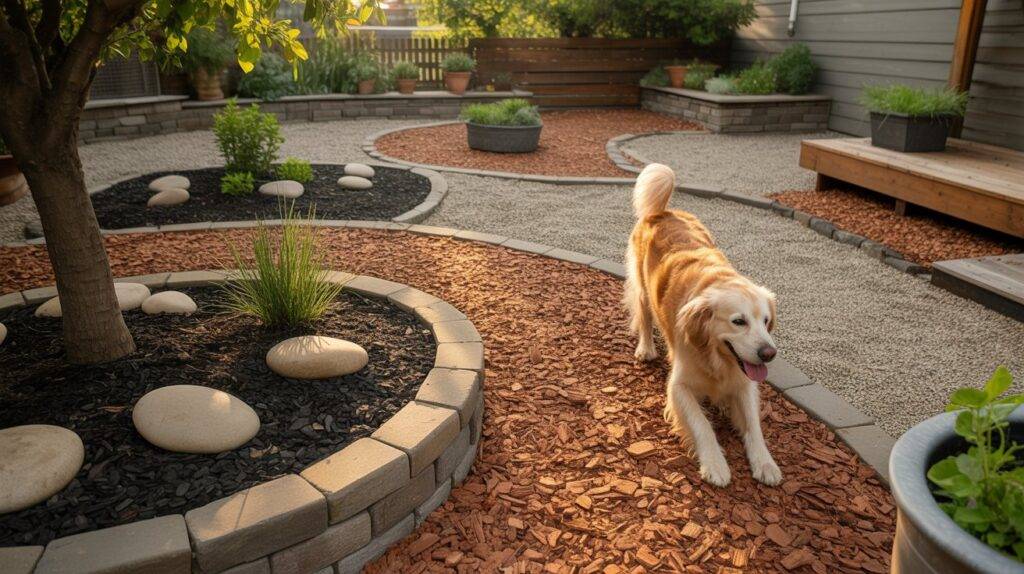
1. A Simple Mulch Hangout Spot Near the Fence
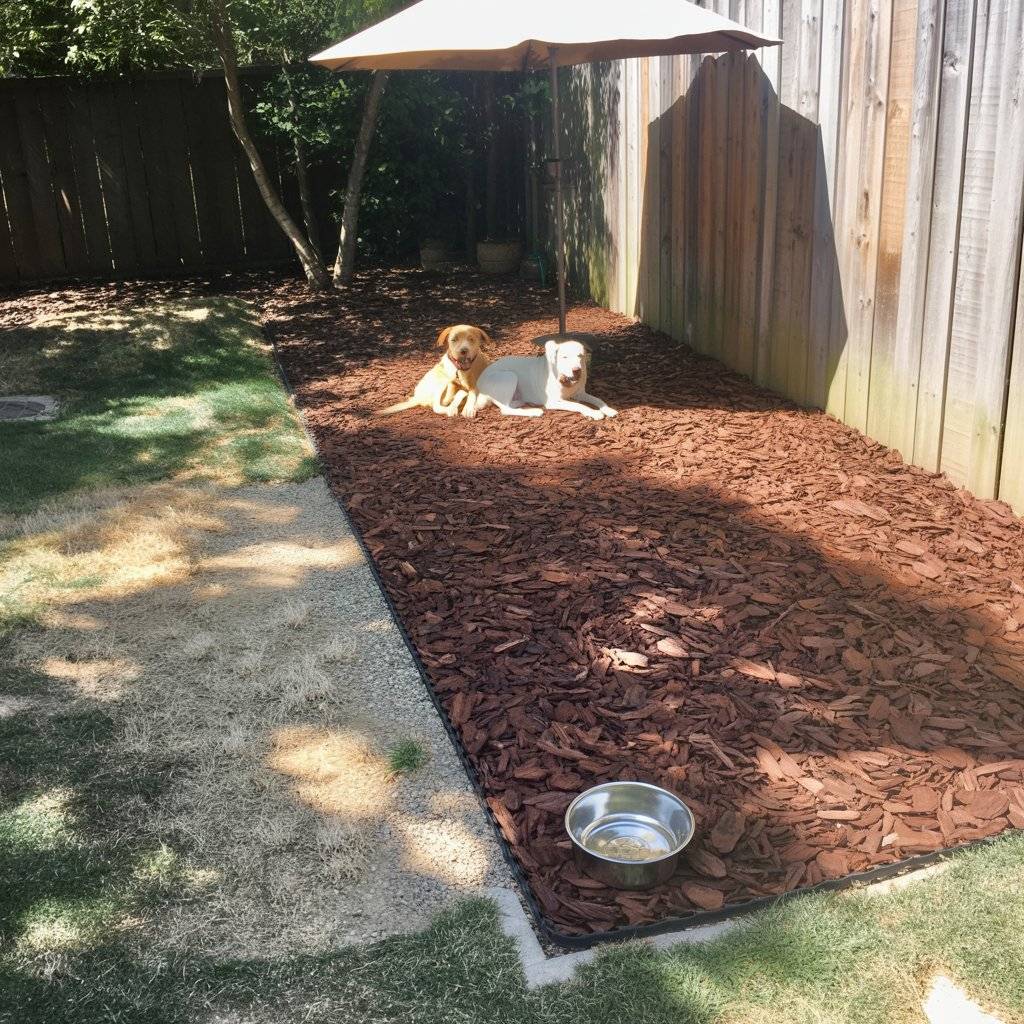
One of the first things I did was clear a small area along the fence where my dogs liked to lay anyway. That spot had already turned into patchy dirt, so it felt like the right place to start.
I pulled out the remaining grass, leveled the ground a little, and laid down landscape fabric so weeds wouldn’t take over later. After that I spread a thick layer of bark mulch across the space.
That alone made a big difference. The ground stayed dry after rain, and the dogs stopped bringing mud back into the house.
Later I added a simple shade setup using a small outdoor umbrella and moved their water bowl there. It slowly became their regular resting spot during the day.
What I like about this kind of mulch patio is that it doesn’t require perfect design. If your dogs already have a favorite place in the yard, turning that spot into a mulch area usually works naturally.
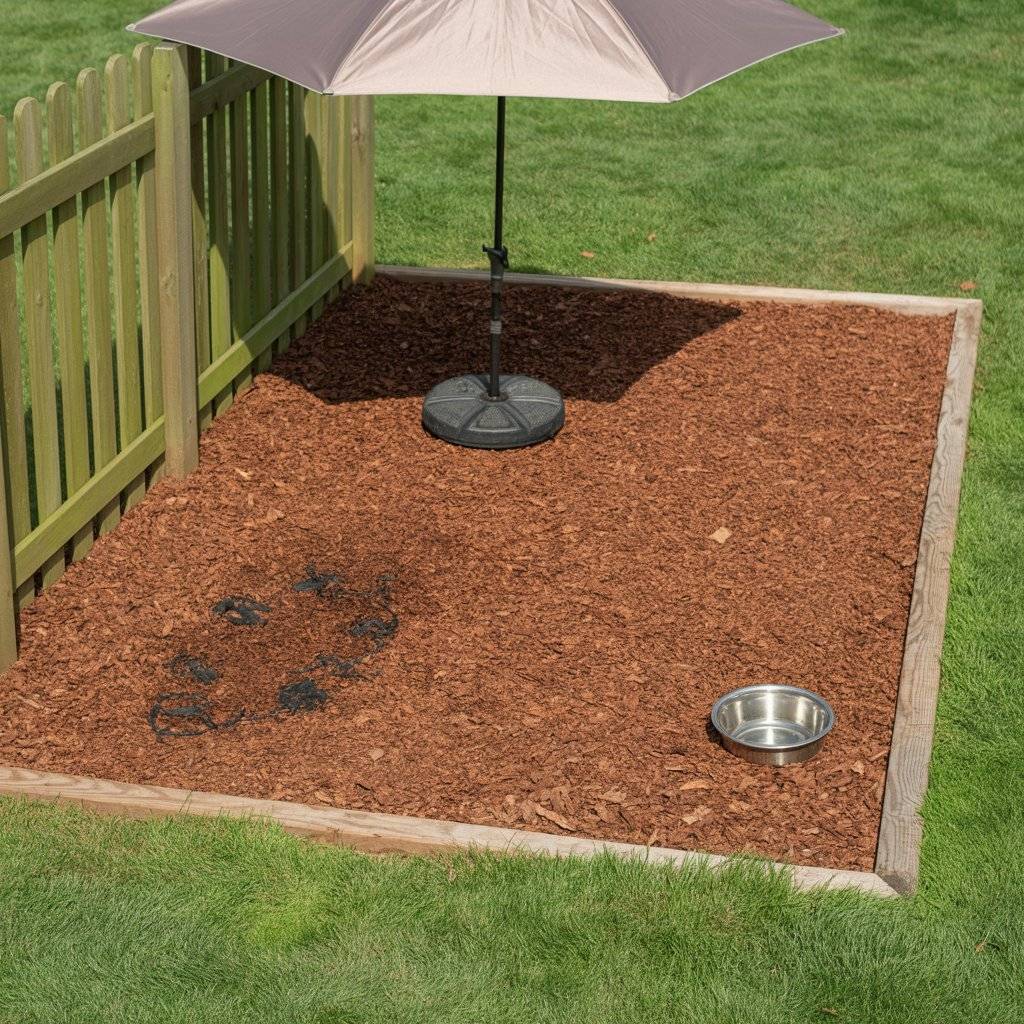
2. A Mulch Patio with a Path People Can Walk On
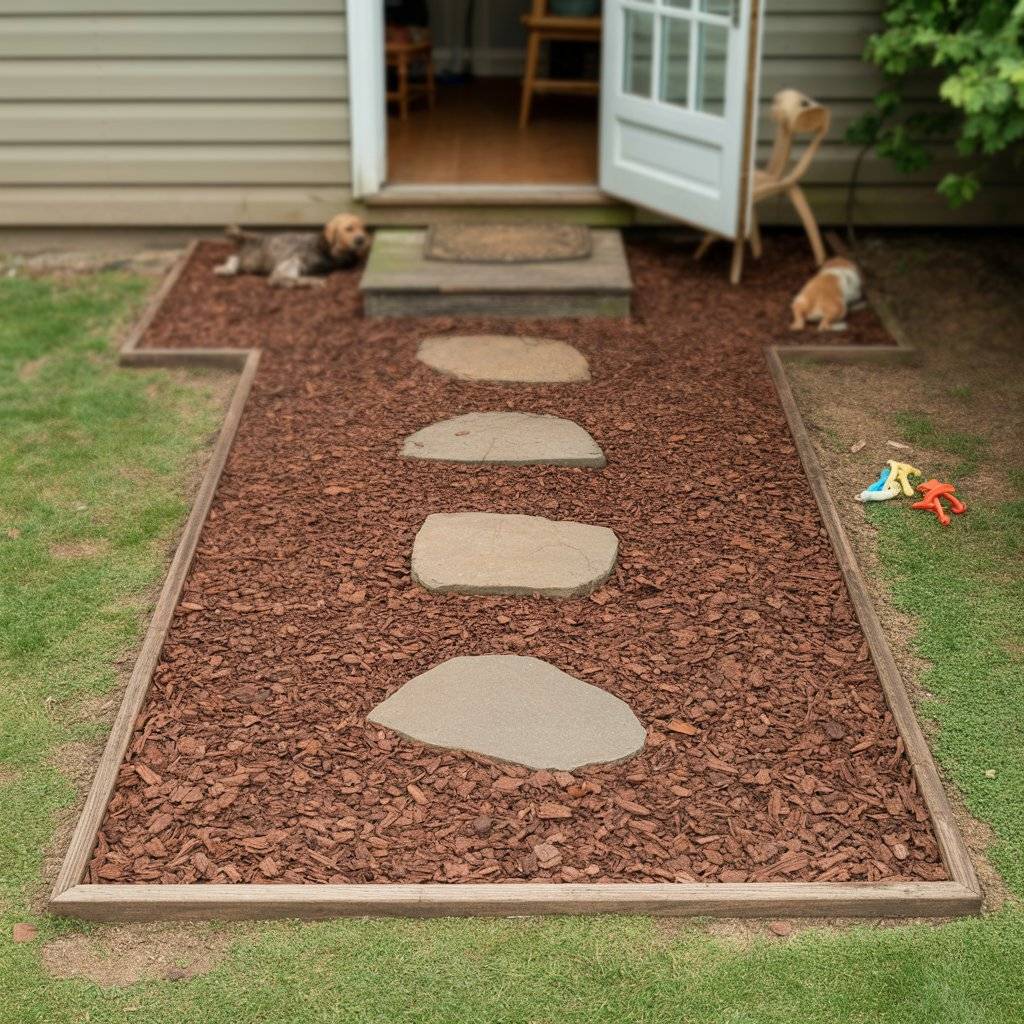
One thing I learned quickly is that mulch alone can move around a lot, especially if dogs run through it every day. So the next improvement I made was adding a simple walking path.
I kept the mulch area wide so the dogs still had space to move around. Then I placed a row of large flat stepping stones across the patio so I could walk through without sinking into the mulch.
It sounds like a small change, but it helped keep the space looking much more organized.
The dogs didn’t mind the stones at all. In fact, they started using them too. After a while I noticed they often followed the same path when running toward the gate.
This kind of layout works well if the patio connects two areas of the yard. The mulch keeps things soft and dog-friendly, while the stone path gives you a clean way to walk through the space.
3. A Mulch Patio with a Digging Corner
If you’ve ever tried to stop a dog from digging, you probably know it rarely works for long.
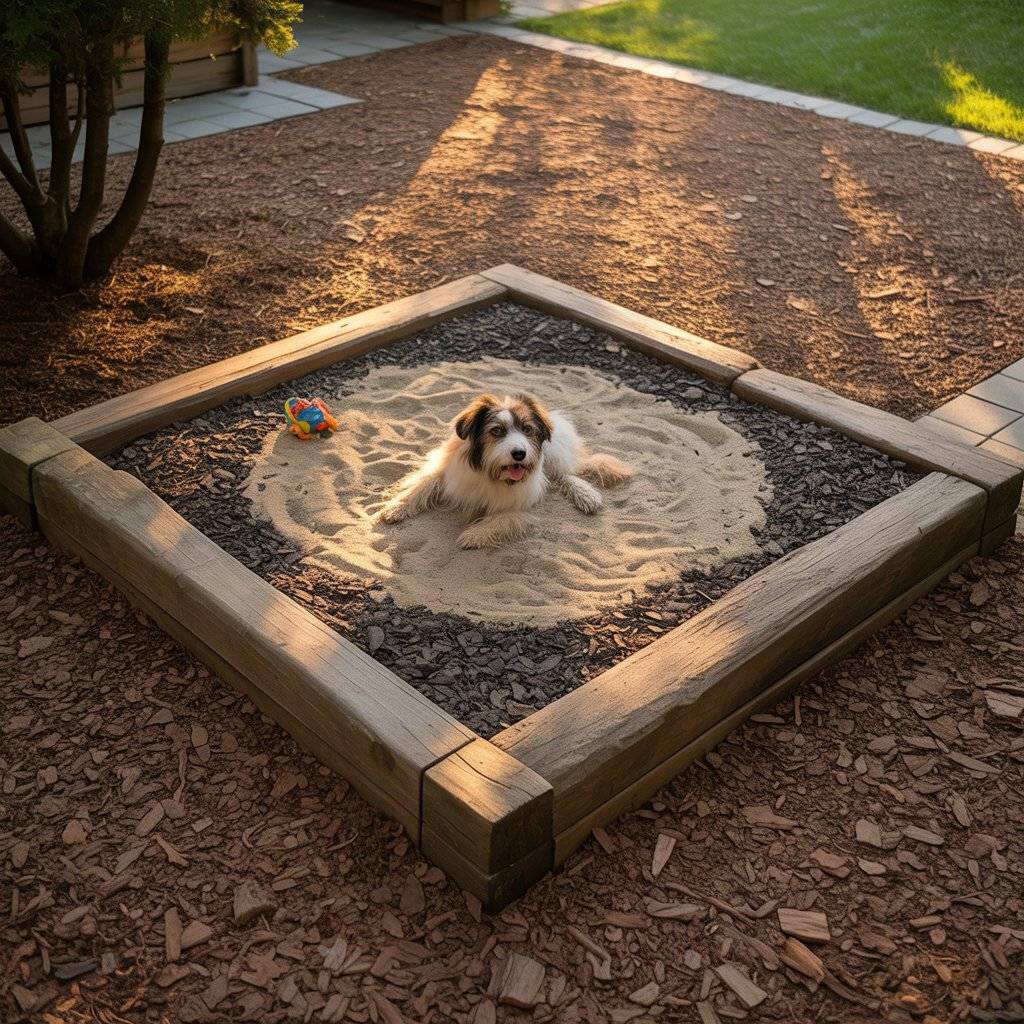
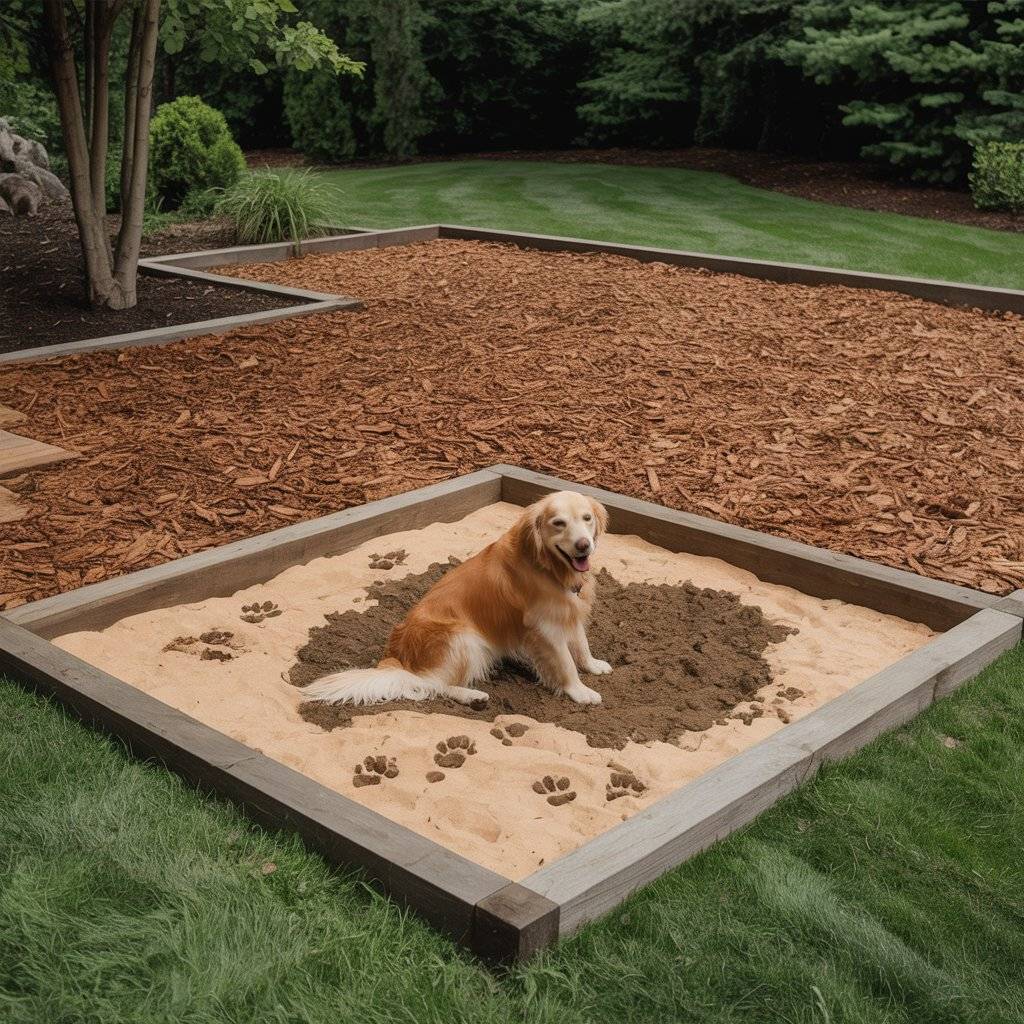
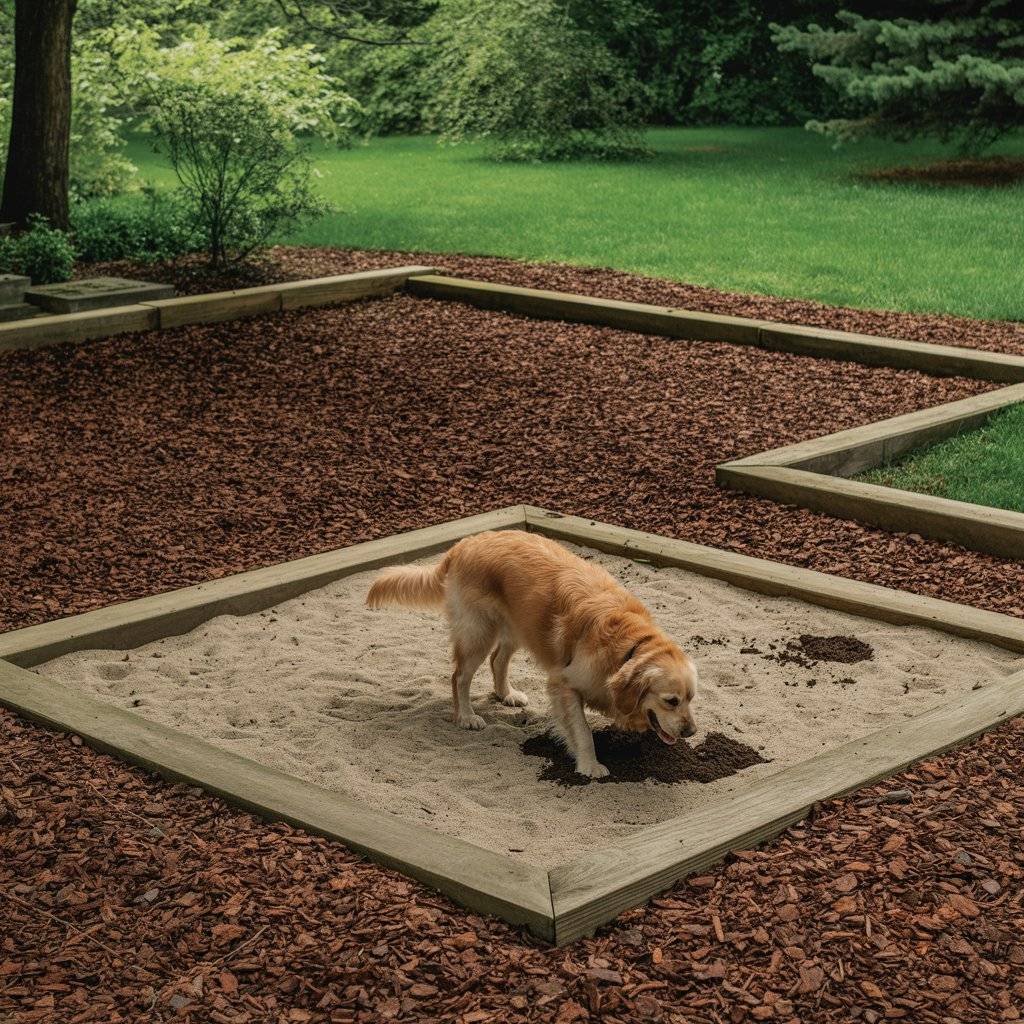
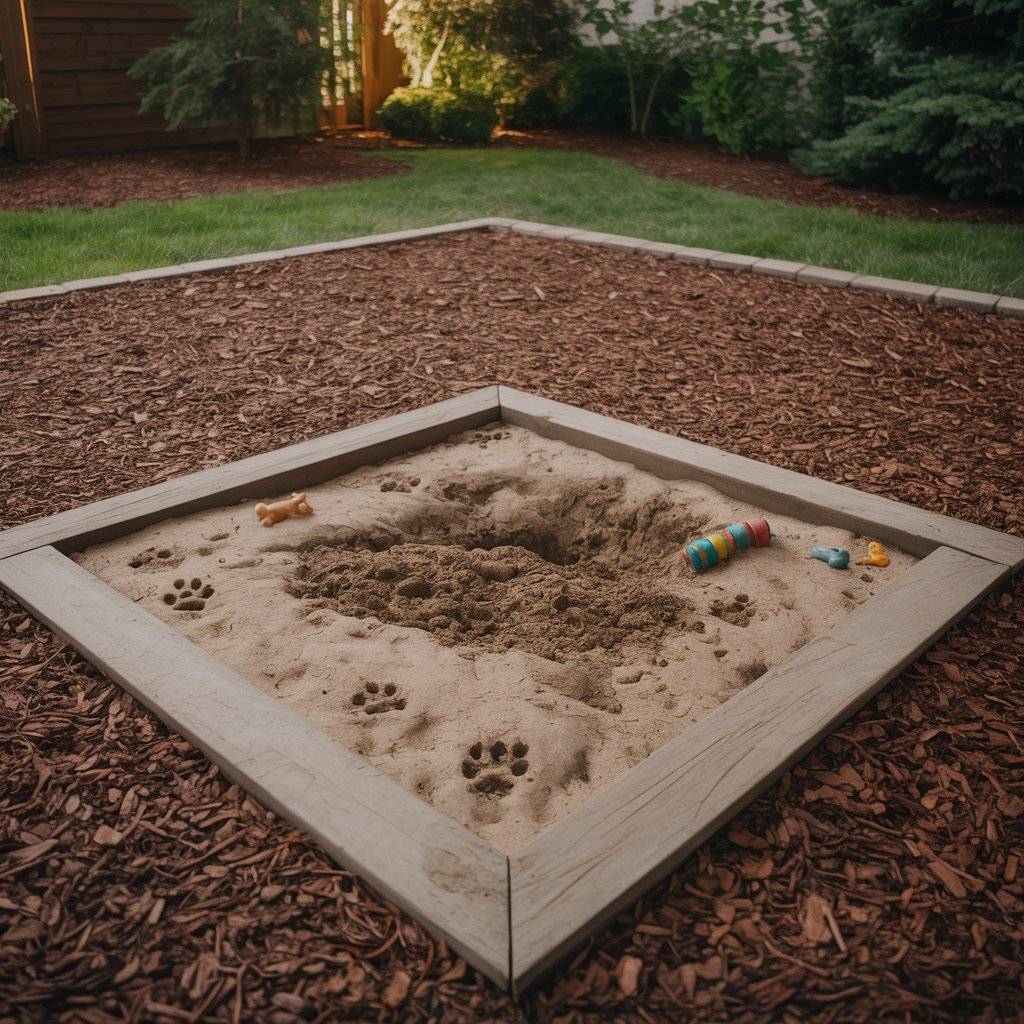
One thing that helped in my yard was creating a specific place where digging was allowed. Instead of fighting the habit, I redirected it.
Inside the mulch patio, I built a small square section using landscape timbers. I filled that section with loose mulch mixed with some sand. The soil there stayed softer than the rest of the yard, which made it naturally appealing to dig in.
For the first week or so, I buried a couple of old toys there just to help the dogs figure it out.
After a while they started going to that area on their own. It didn’t stop digging completely, but it definitely reduced the random holes around the yard.
And the rest of the mulch patio still worked as a clean space where they could relax or play.
4. A Mulch Patio Under a Shady Tree
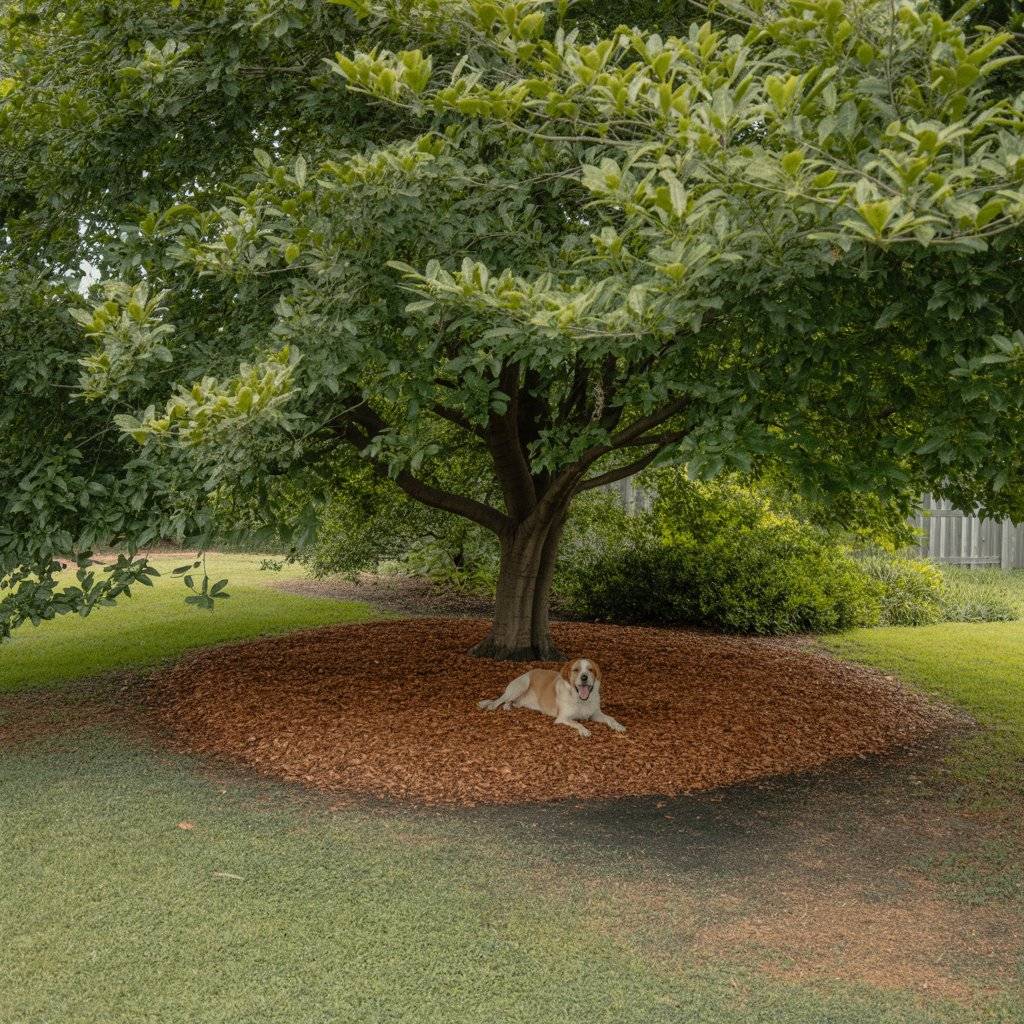
One area in many backyards that dogs naturally like is the spot under a large tree. The shade keeps the ground cooler, and dogs tend to settle there during warmer days. In my case, that area used to turn into dusty dirt after a while because the grass couldn’t grow well under the tree.
So I decided to turn that spot into a mulch patio instead of trying to fix the grass. I cleared out the loose dirt, laid down landscape fabric, and added a few inches of hardwood mulch. The mulch helped keep moisture in the soil and stopped the area from becoming muddy after rain.
The dogs started using it right away. It stayed cooler than other parts of the yard, and the ground was soft enough for them to lie down comfortably.
If you already have a tree that creates natural shade, this is probably one of the easiest mulch patio designs to try. It works with the landscape you already have instead of forcing something new into the yard.
5. A Mulch Patio with a Dog Water Station
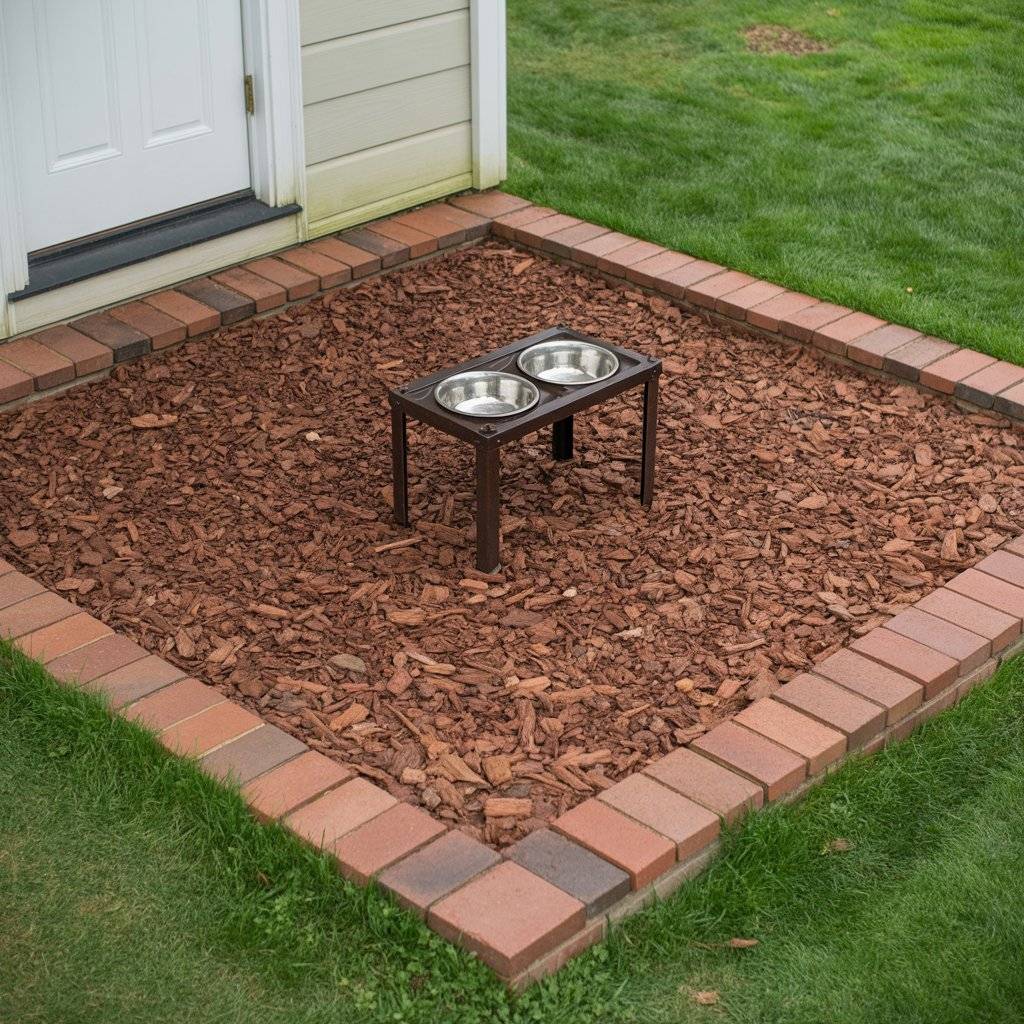
After watching my dogs run around outside during summer, I realized they often went back to the same spot to drink water. That gave me the idea to build a small mulch patio around their water area.
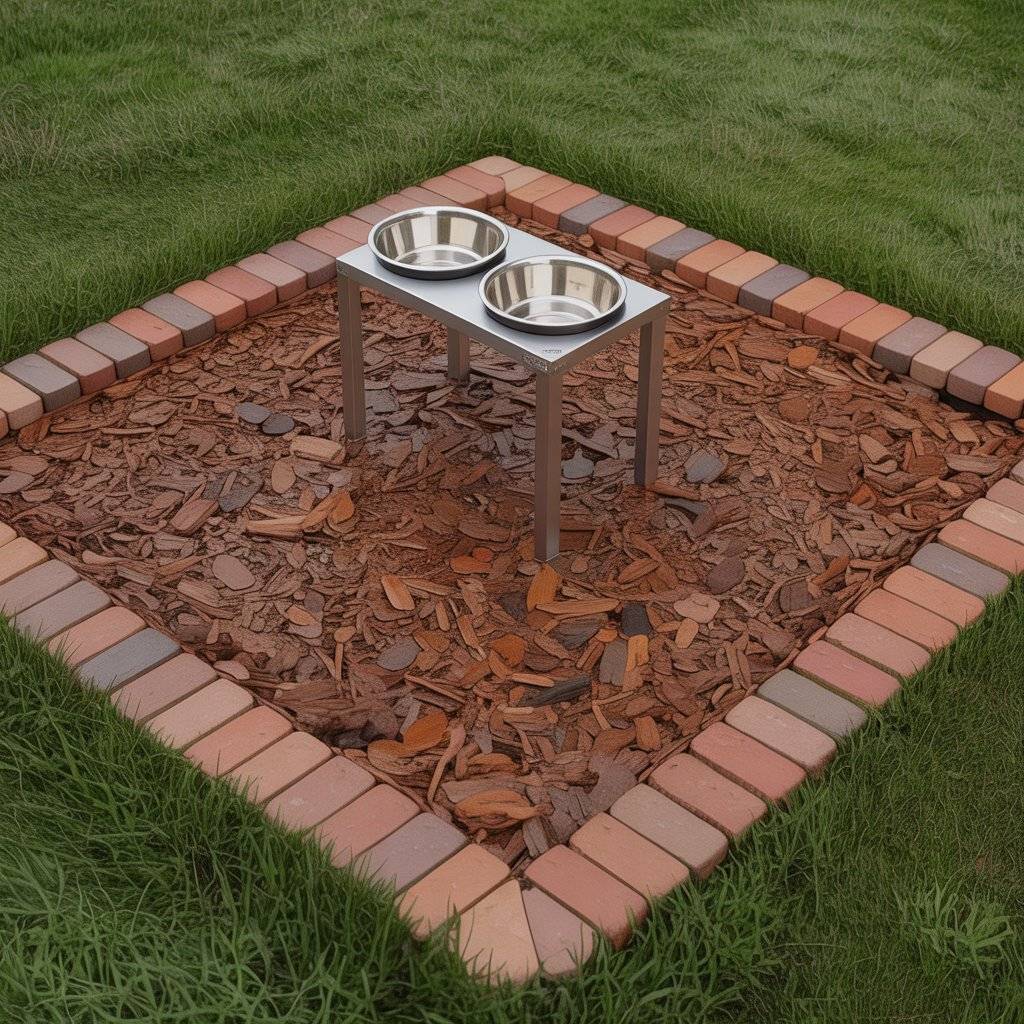
I started by marking a square space near the back door where I usually placed their bowls. Then I removed the grass and added mulch just like the other areas of the yard. Around the edges I installed simple brick borders to keep everything contained.
Next I placed a sturdy water bowl stand in the middle so the bowls wouldn’t tip over. Having mulch underneath helped absorb small spills instead of turning the ground into mud.
What I like about this setup is how practical it feels. The dogs know exactly where to go for water, and the mulch keeps that area clean. It also makes the space look more organized than just setting bowls directly on the lawn.
6. A Mulch Patio with a Border Dogs Won’t Kick Apart
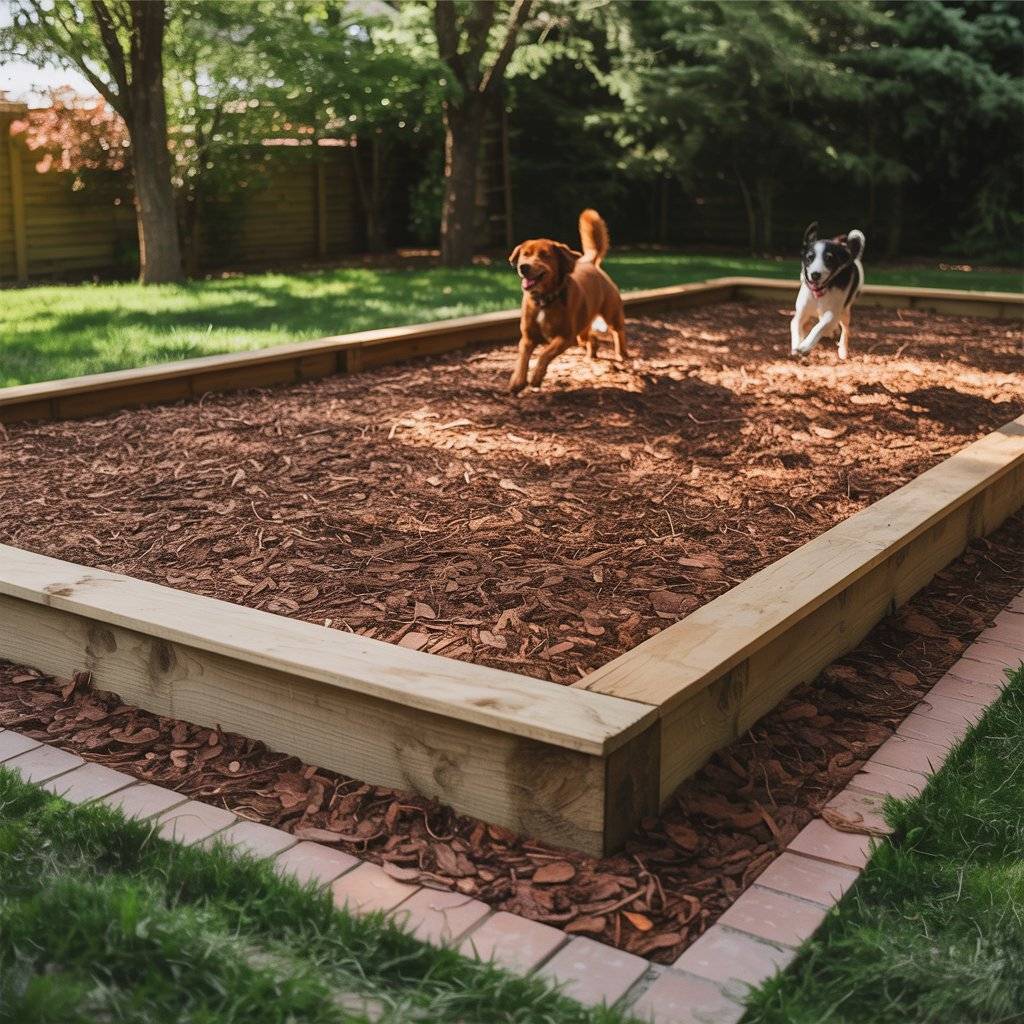
One small problem with mulch patios is that energetic dogs can scatter the mulch while running or playing. That happened to me a few times before I realized the edges needed better structure.
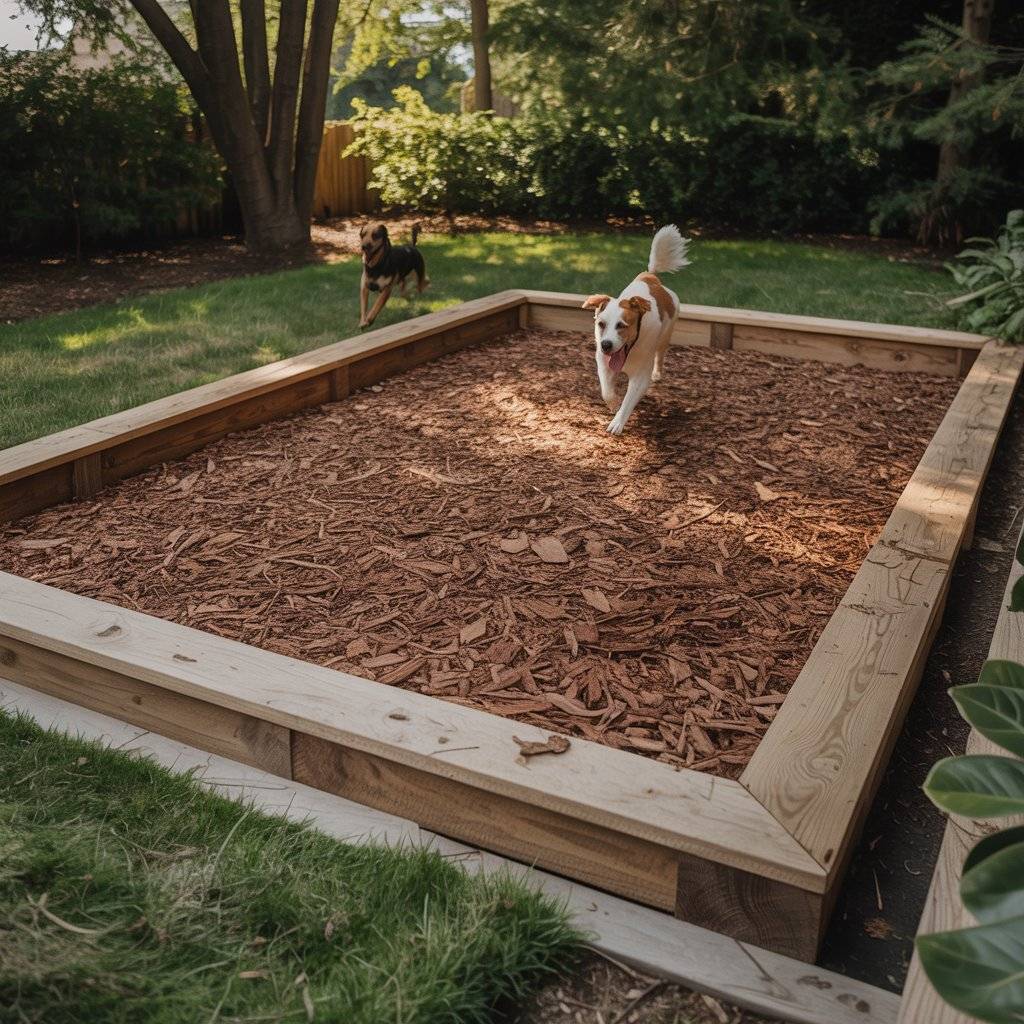
The solution was adding a stronger border around the patio area. Instead of thin plastic edging, I used low landscape timbers to frame the mulch section. They sit just a few inches above the ground but help keep everything contained.
After installing the border, I filled the area with fresh mulch again. This time it stayed where it belonged, even when the dogs ran through the space.
The border also made the patio look more intentional, almost like a real outdoor room inside the yard.
If you plan to build a mulch patio for dogs that like to run and play, having a solid edge like this can save you a lot of time cleaning up scattered mulch later.
7. A Mulch Running Path Along the Fence
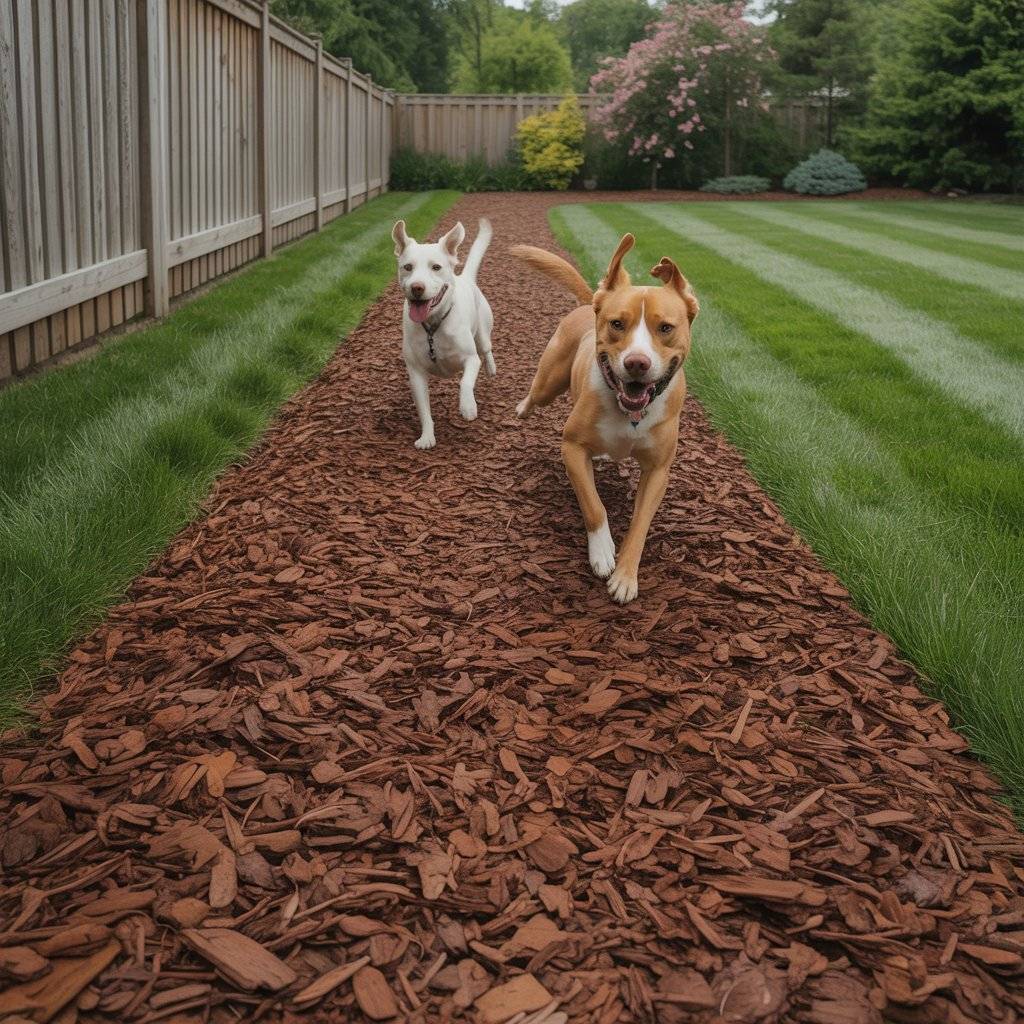
One thing I noticed about dogs is they tend to run the same routes around the yard. In my case, it was the strip of grass along the fence line. After a few months, that path turned into bare dirt because the dogs used it so often.
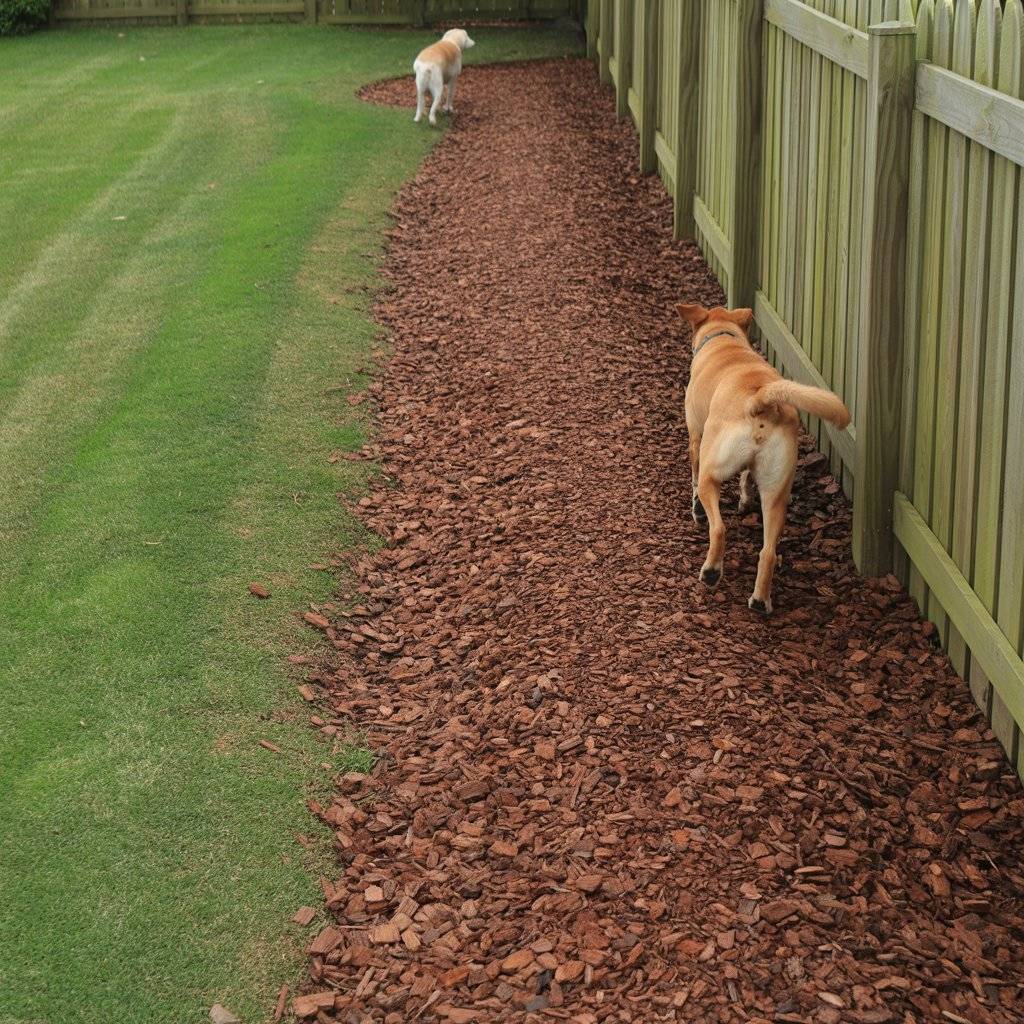
Instead of trying to repair the grass again, I turned that strip into a mulch running path. I removed the remaining grass, leveled the soil a little, and spread several inches of mulch along the length of the fence. The path ended up being about three feet wide, which gave the dogs enough room to run comfortably.
This simple change helped a lot. The mulch reduced mud during rainy days and made the running track softer on their paws. It also kept that worn strip of yard from looking messy.
If your dogs already have a favorite running route, turning that area into a mulch patio path can solve a lot of small yard problems at once.
8. A Small Mulch Patio Right Outside the Back Door
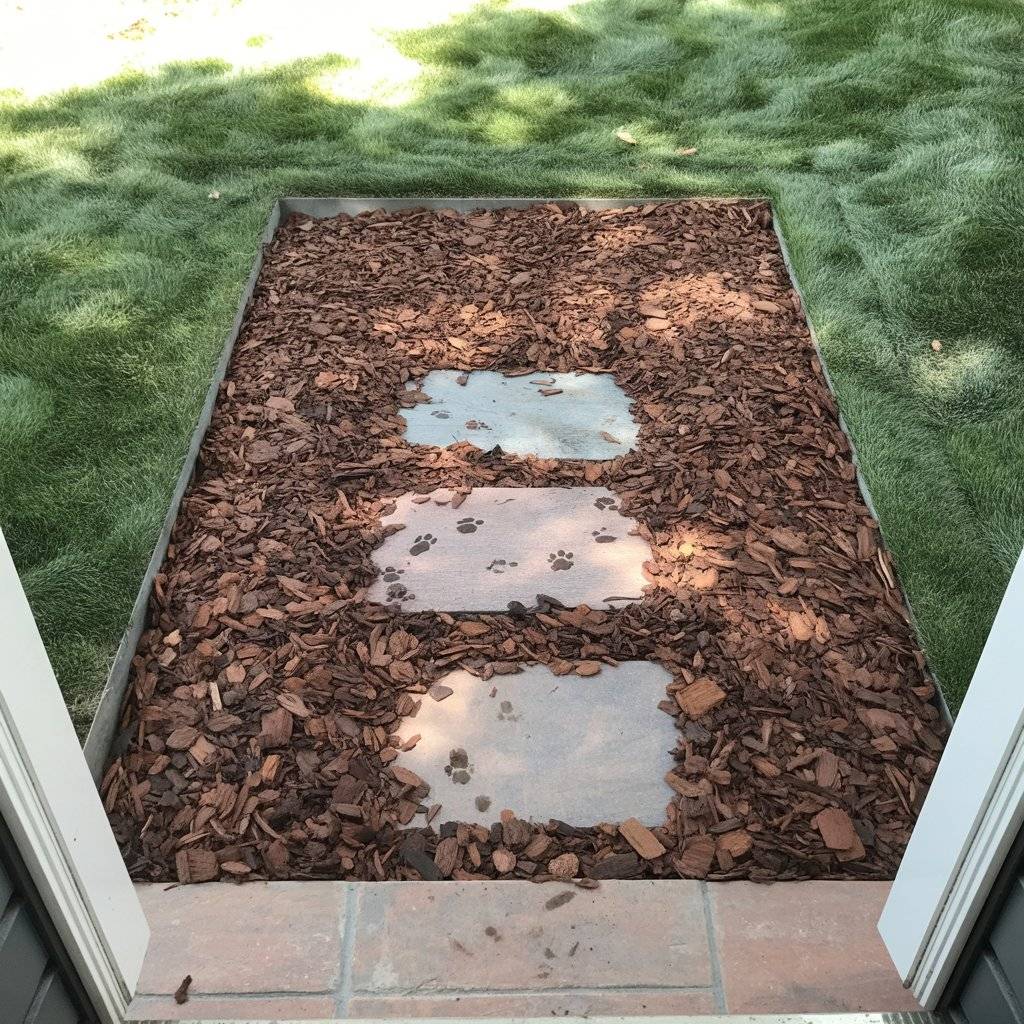
Another area that worked well for mulch was the space just outside the back door. Before I changed it, that spot used to become muddy because the dogs ran in and out all day.
To fix that, I created a small mulch patio right at the doorway. I cleared the grass, added landscape fabric, and filled the area with a thick layer of mulch. Then I placed a few large stepping stones in the center so people could walk across without kicking the mulch around.
This made the entrance area much cleaner. The mulch helped absorb water from rain or spilled bowls, and the stepping stones gave the space a simple walkway.
The dogs still run through the area like before, but now they’re not dragging mud inside every time. It’s a small change, but it makes daily life with dogs a lot easier.
9. A Mulch Patio Around a Dog Play Area
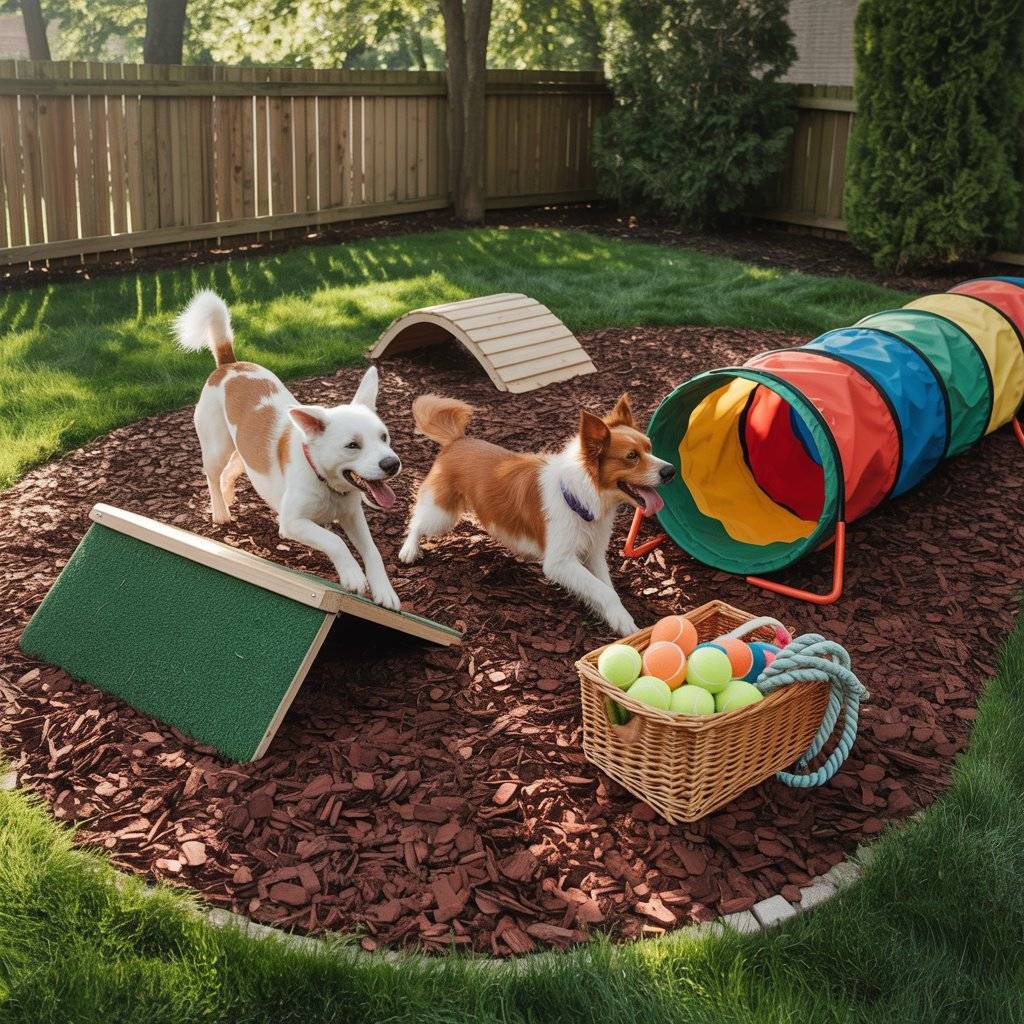
Some dogs enjoy having a small play zone with toys, balls, or agility equipment. I once saw a backyard where the owner built a mulch patio around a simple dog play area, and it worked surprisingly well.
The main section was covered with mulch, which kept the ground soft and easy on the dogs’ joints when they jumped or ran. In the middle of the space they placed a few basic items like a small ramp, a tunnel toy, and a basket for balls.
Mulch worked well here because it drains quickly and doesn’t become slippery like some hard surfaces. It also cushions small jumps better than packed dirt.
What I liked about this design is that the mulch area naturally defined the play space. The dogs seemed to understand that this was the place where they could run around and burn off energy.
It turned a simple part of the yard into a space that both the dogs and the owner used every day.
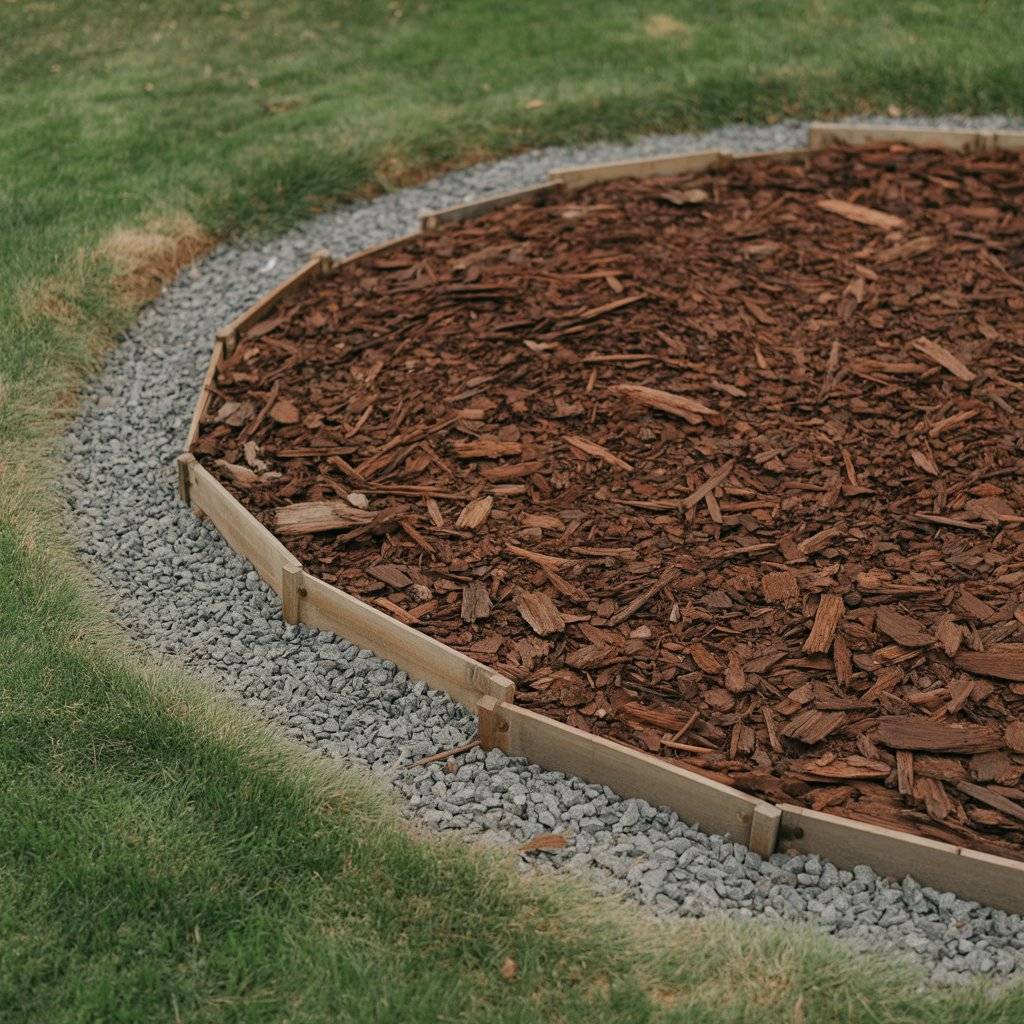
10. A Mulch Patio with a Gravel Drainage Edge
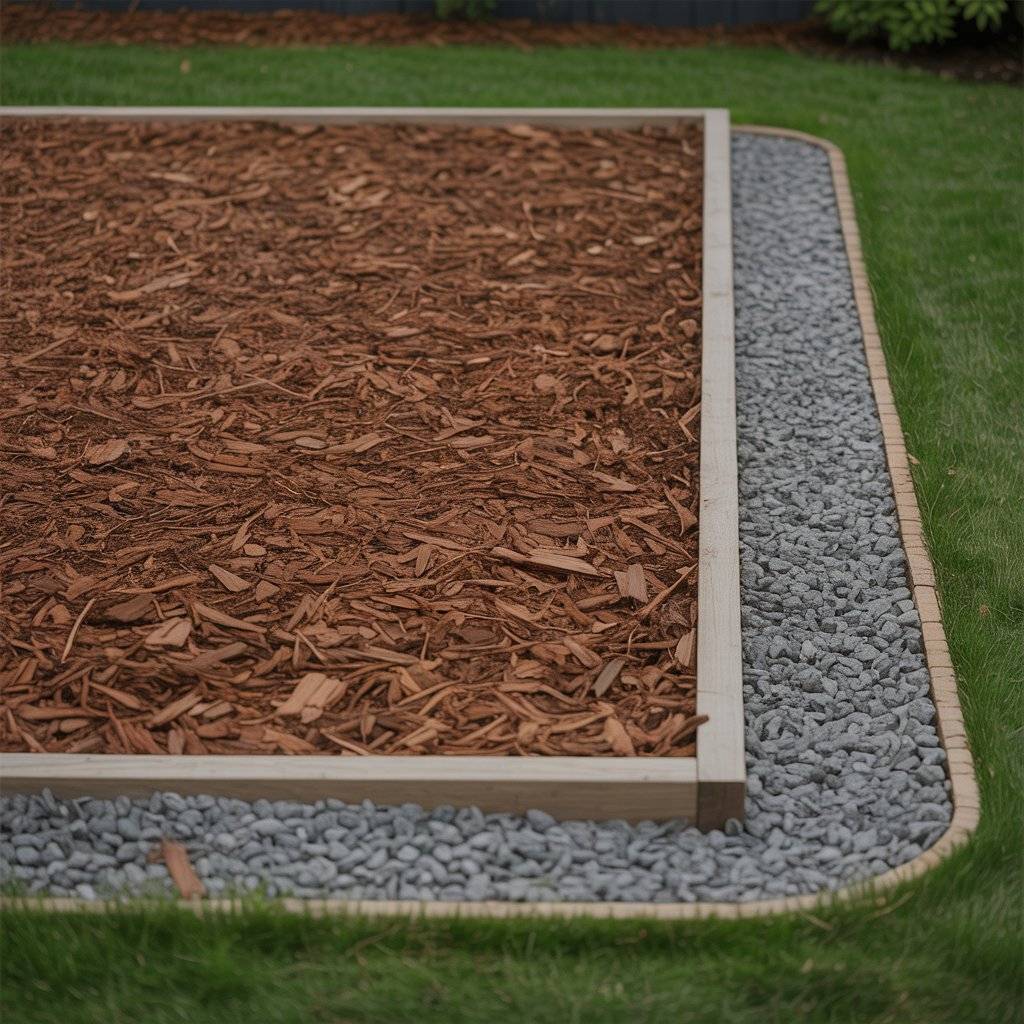
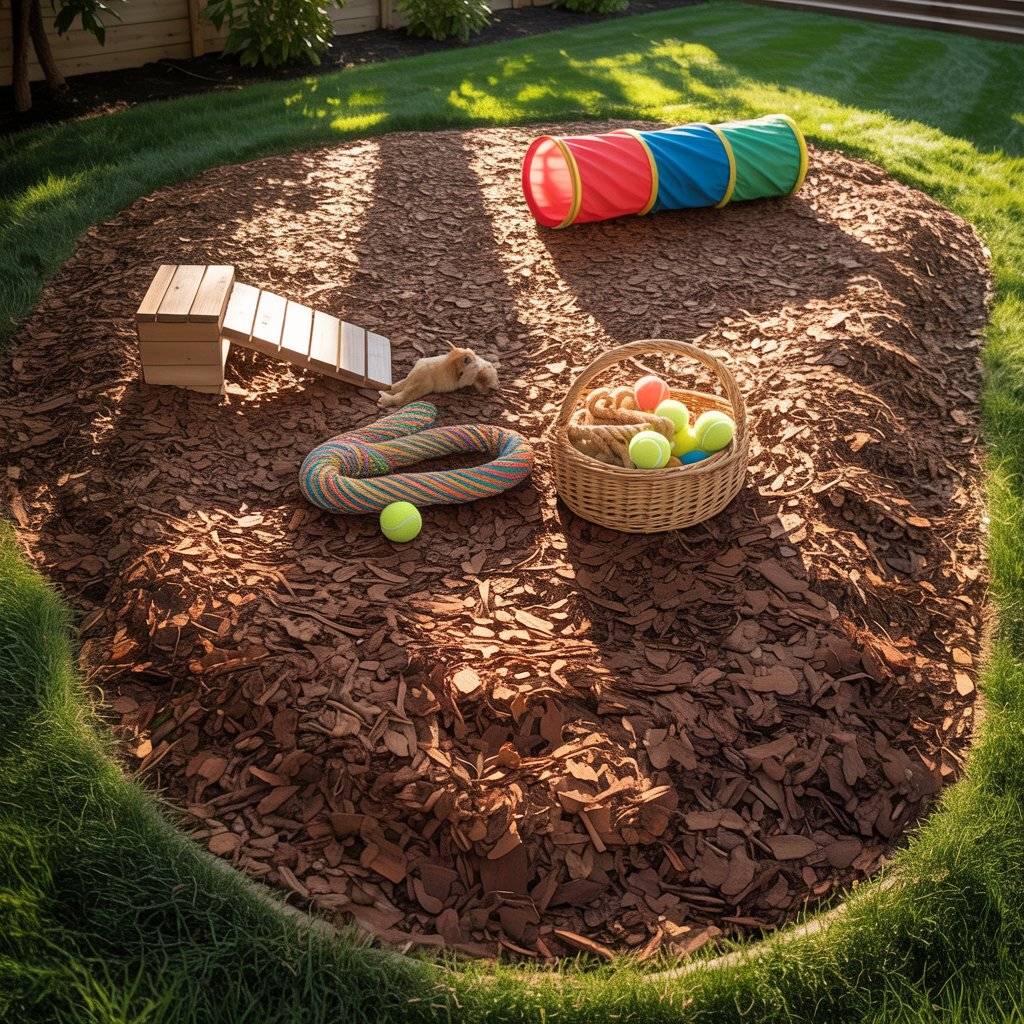
One problem I ran into with mulch patios is that heavy rain can sometimes push mulch into the surrounding lawn. A simple fix I tried was adding a narrow gravel border around the patio.
The main patio area stayed covered in mulch so the ground remained soft for the dogs. Around the outer edge, I dug a shallow trench and filled it with small gravel. That border worked like a barrier and helped keep the mulch where it belonged.
The gravel also helped with drainage. When rainwater moved across the yard, it filtered through the stones instead of washing the mulch away.
From a design standpoint, it also made the patio look a little more finished. The contrast between the darker mulch and lighter gravel gave the space some structure.
If you live in an area that gets frequent rain, adding a simple gravel edge like this can make a mulch patio last longer with less maintenance.
11. A Quiet Mulch Corner for Older Dogs
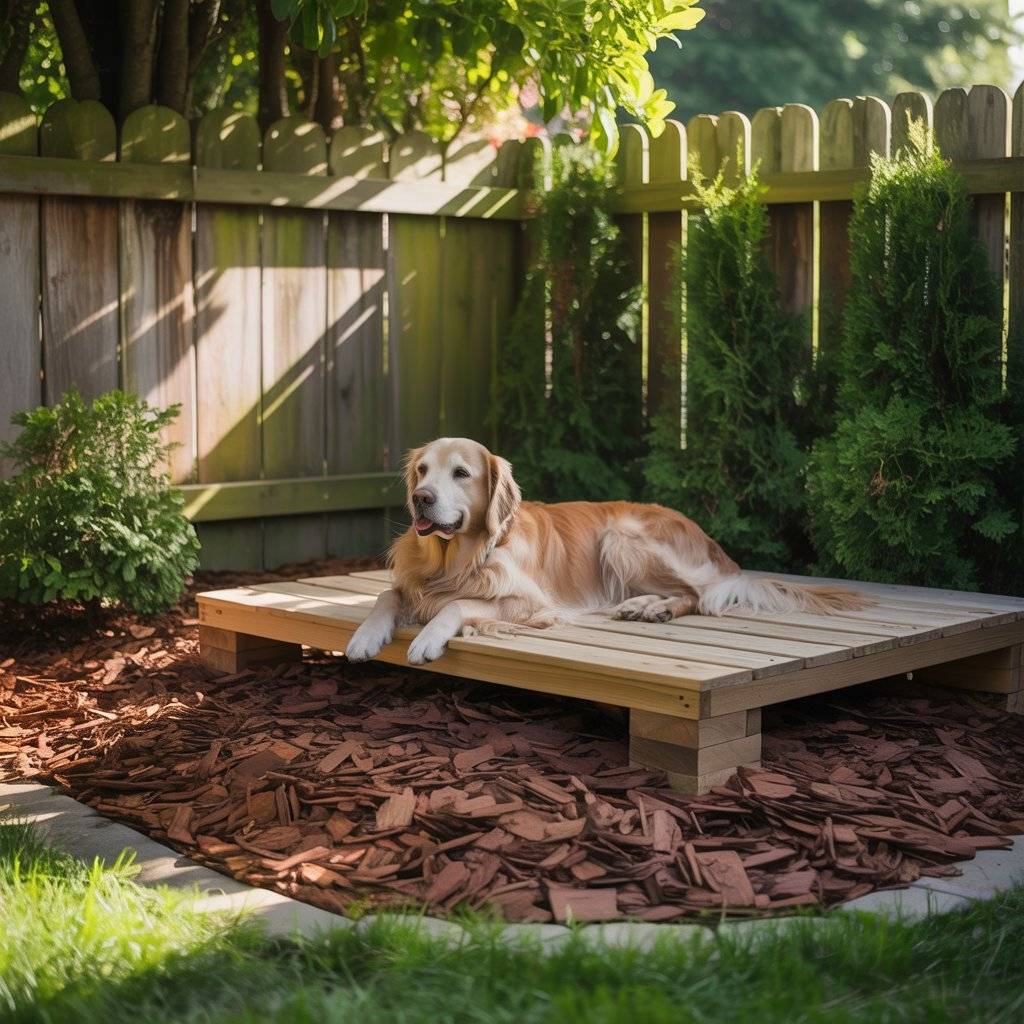
Not every dog in the yard is running around all the time. Older dogs often prefer a quiet spot where they can relax without too much activity around them.
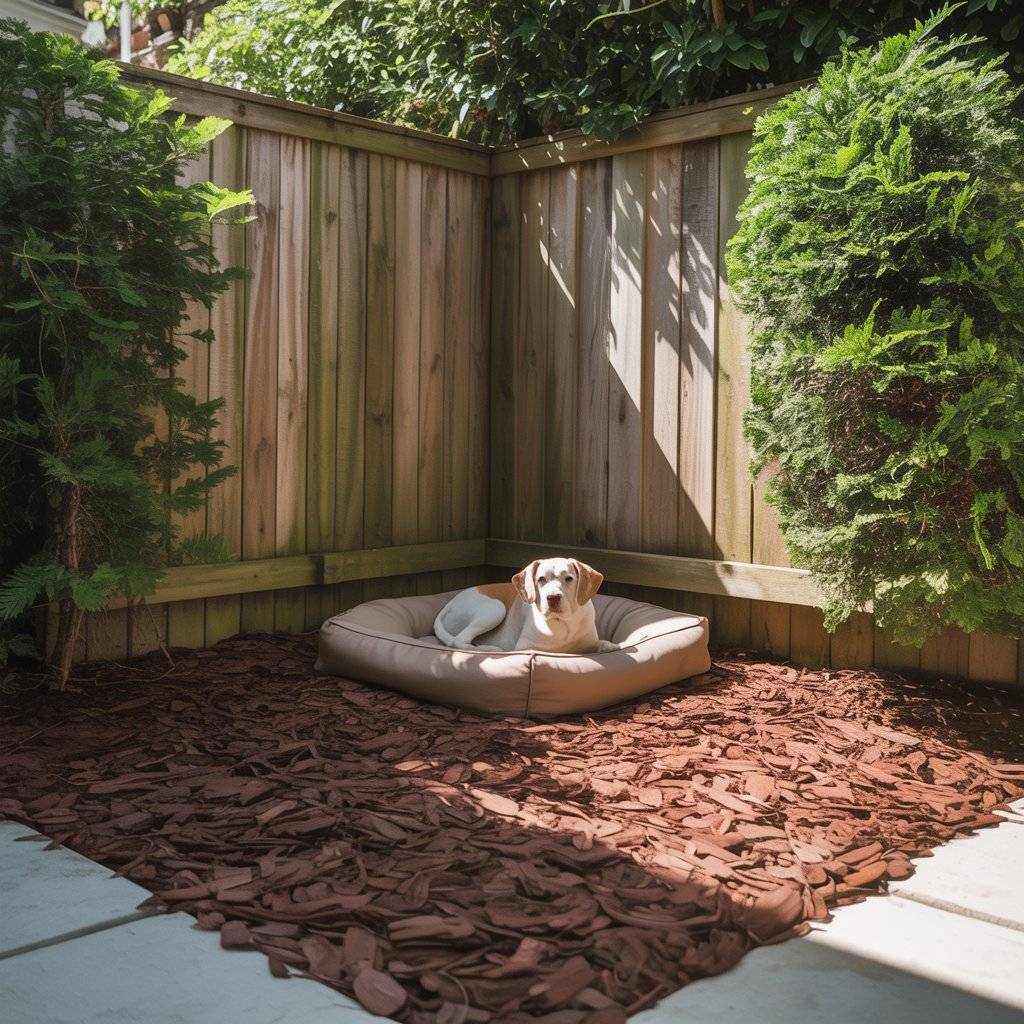
In one backyard I helped with, we created a small mulch patio in a corner of the yard specifically for the older dog. The area was partially shaded by a fence and a few shrubs, which made it naturally calm and cooler during the day.
We spread a thick layer of mulch and added a simple raised dog bed so the dog could rest comfortably. Because mulch stays softer than stone or concrete, it made the whole space feel more comfortable underfoot.
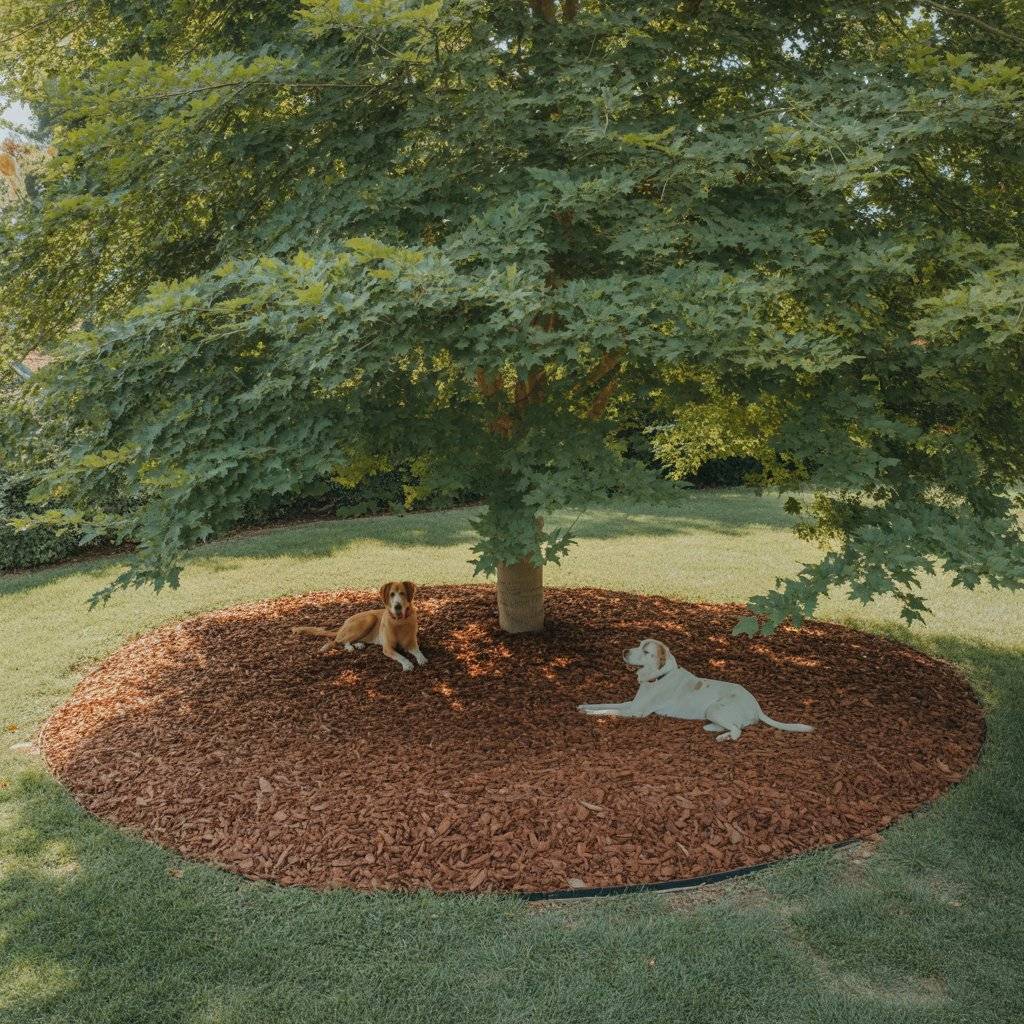
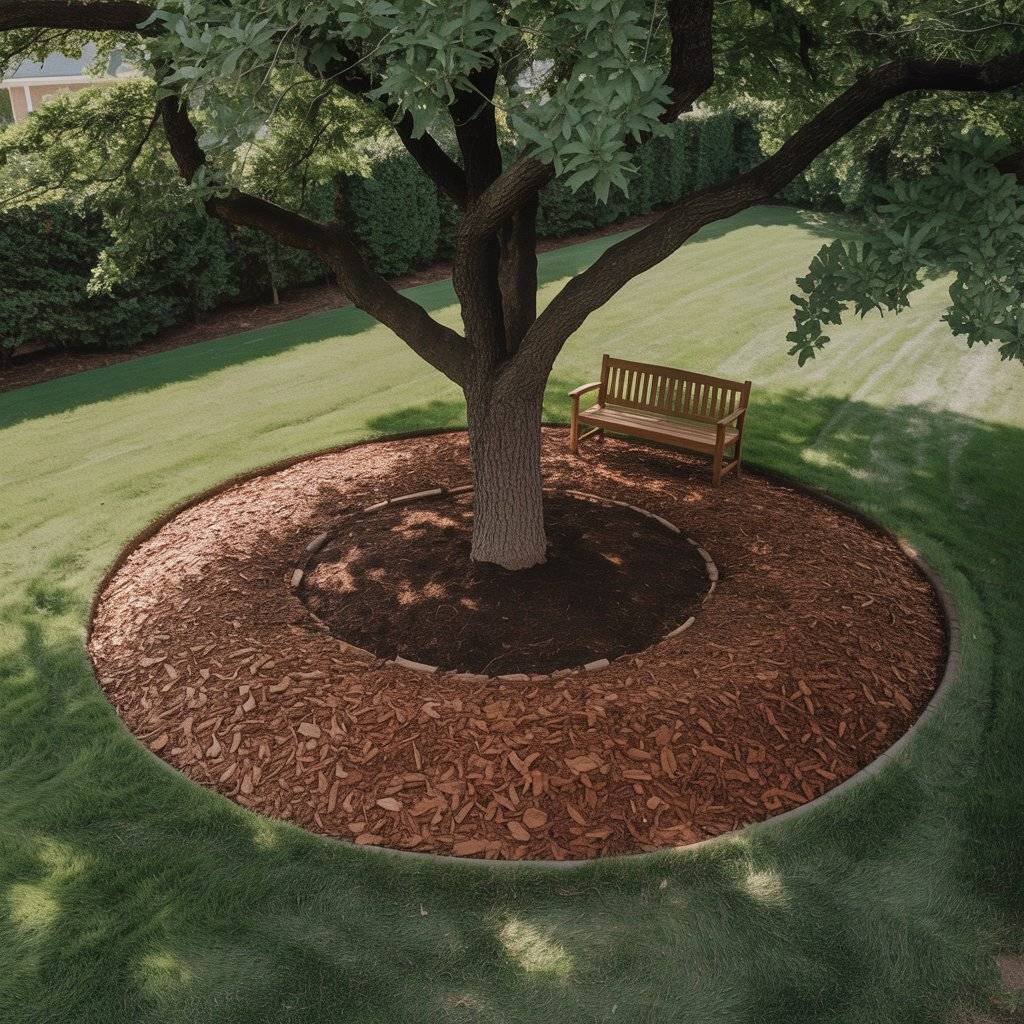
12. A Circular Mulch Patio Around a Tree
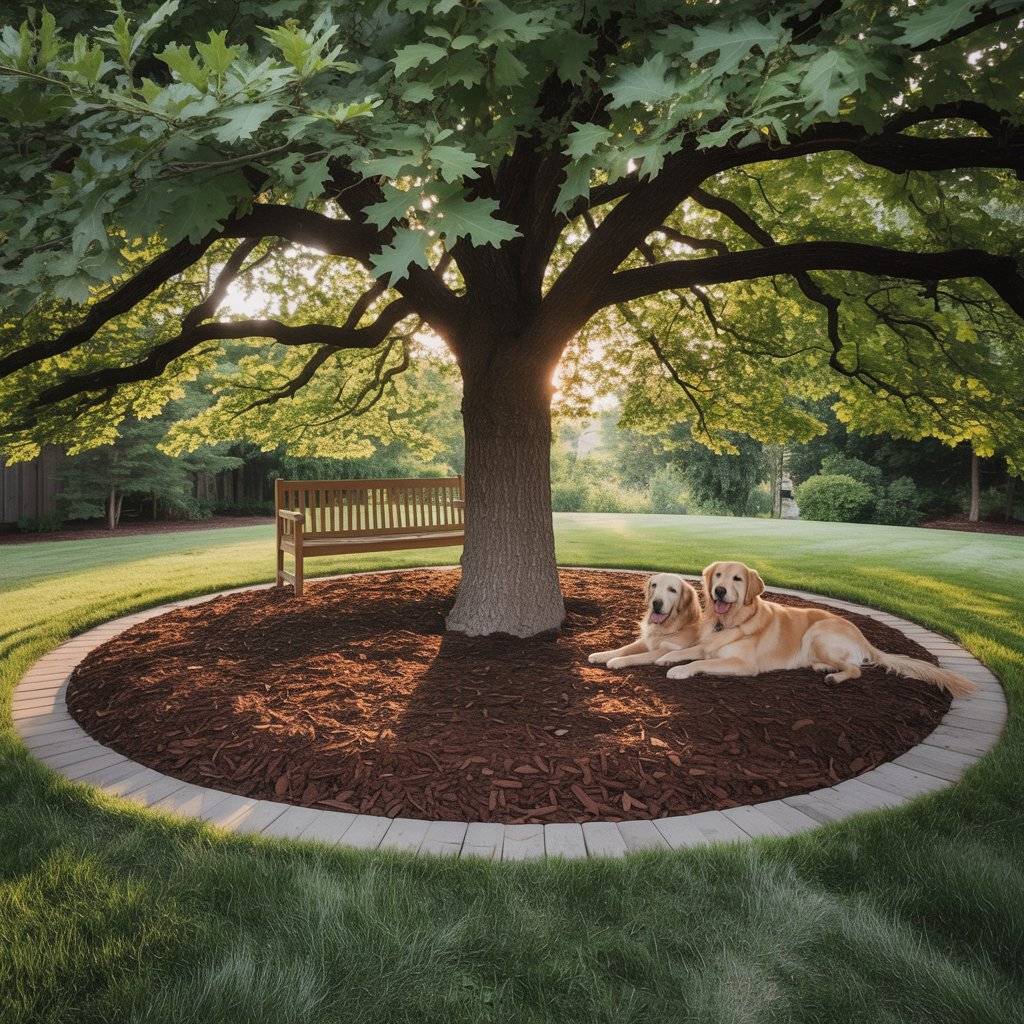
Another design I’ve seen work well is building a circular mulch patio around a tree. This idea works especially well in yards where a large tree already acts as a natural focal point.
The process is simple. First, mark out a circle around the tree that gives enough room for dogs to move around comfortably. Then remove the grass inside that circle and spread landscape fabric before adding mulch.
The tree provides shade for most of the day, which keeps the mulch cooler during warm weather. Dogs naturally gravitate toward these shaded spots.
Some people add a bench or a couple of outdoor chairs nearby so both people and dogs can use the space together.
It turns an ordinary tree area into something that feels more like a small backyard retreat while still staying practical for dogs.
13. A Mulch Patio Around a Dog House
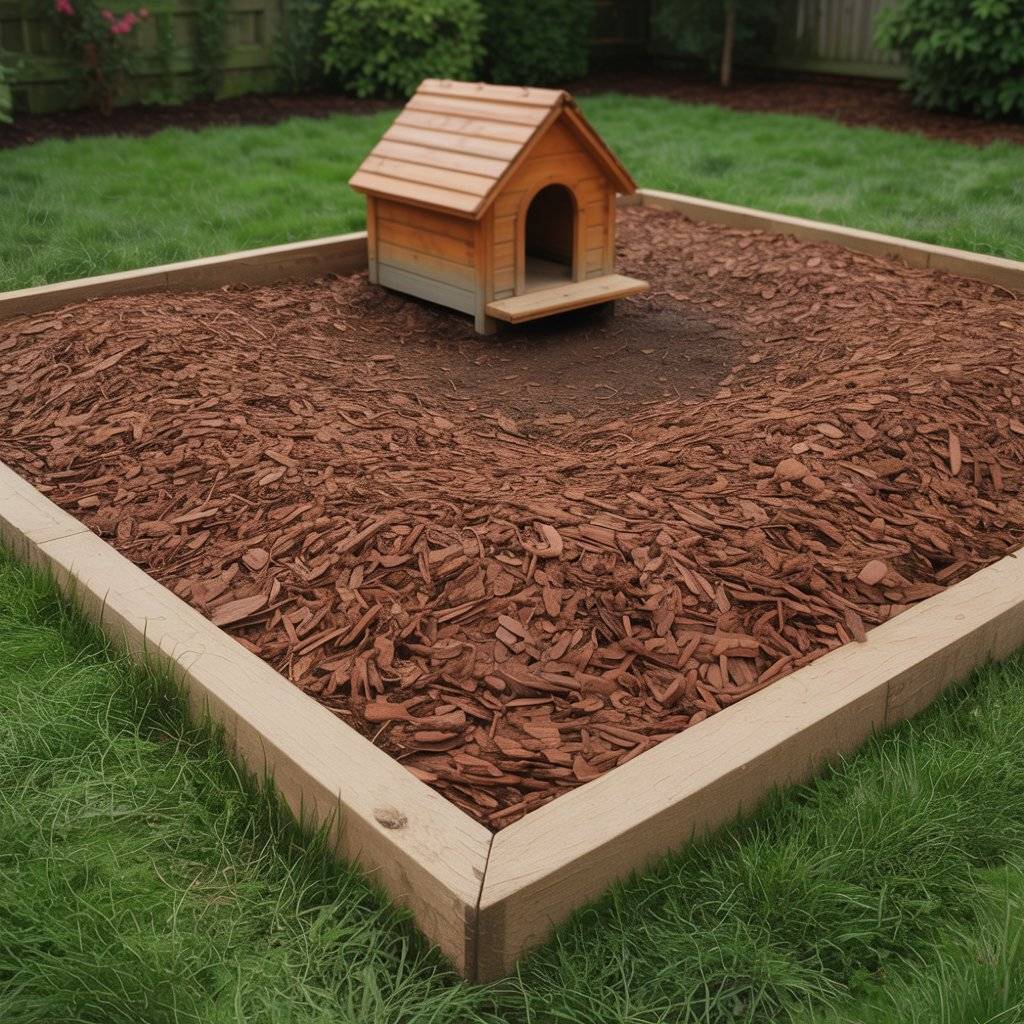
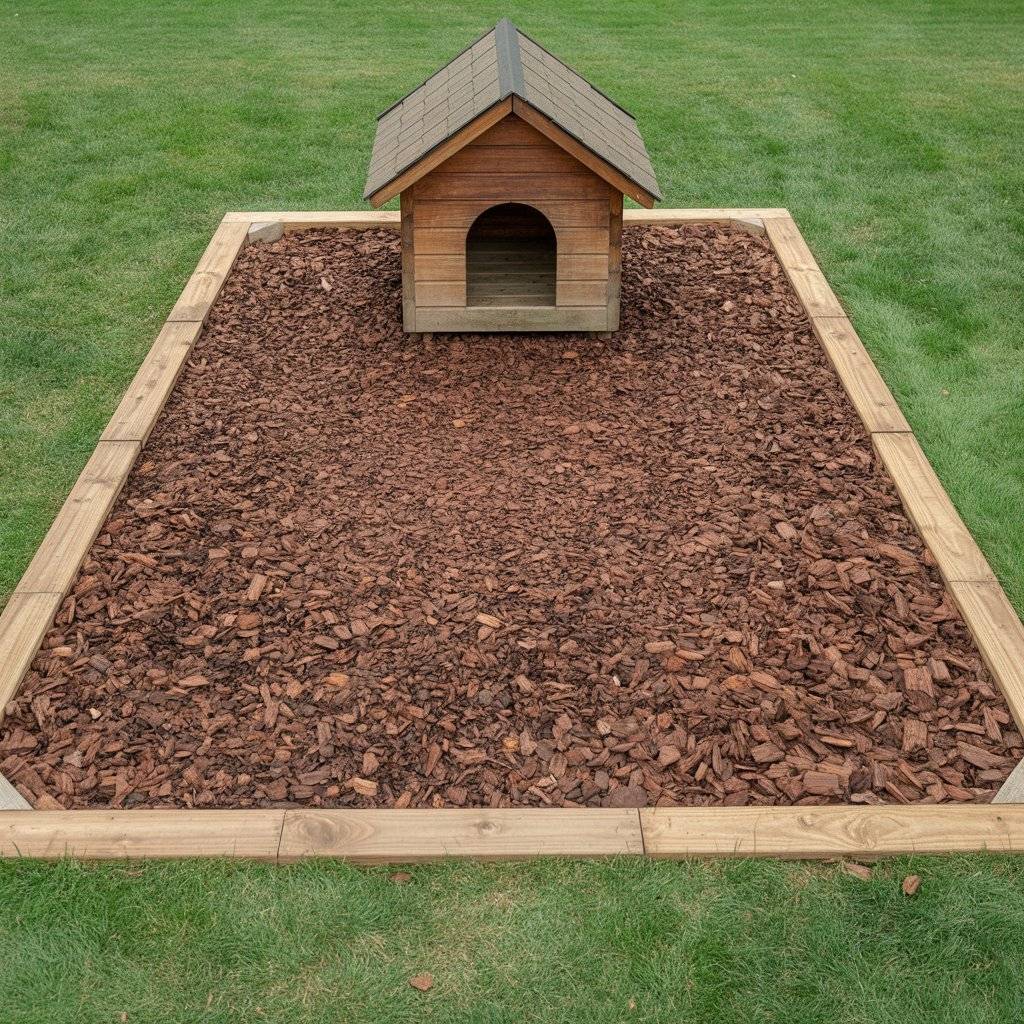
One last idea that worked well in a neighbor’s yard was building a mulch patio around the dog house area. Before the change, the ground around the dog house turned into packed dirt and mud whenever it rained.
To fix that, they cleared the space around the dog house and filled it with several inches of mulch. They also framed the area with simple wood edging to keep the mulch from spreading.
This helped keep the dog house entrance dry and much cleaner. The mulch absorbed water and reduced the muddy mess that usually forms around shelters.
It also made the space look more organized instead of feeling like a worn patch in the yard.
For anyone who keeps a dog house outdoors, adding a mulch patio around it is one of the simplest upgrades you can make.
Natural Cedar Mulch for Dog-Friendly Patios
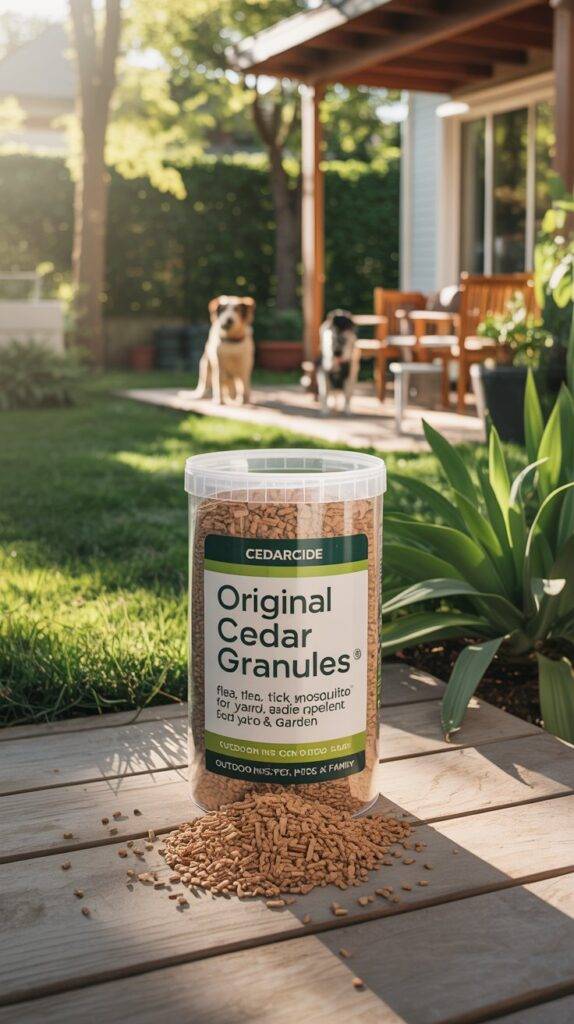
If you’re building a mulch patio for dogs, the first thing you’ll need is quality mulch. One option many backyard owners prefer is natural cedar mulch because it lasts longer and has a pleasant smell.
Cedar mulch is made from cedar bark and wood fibers, and it’s widely used in landscaping because it helps retain soil moisture, suppress weeds, and protect soil from erosion.
Another reason people choose cedar mulch is durability. Compared with many other organic mulches, cedar tends to break down more slowly, which means you won’t have to replace it as often. In many cases, cedar mulch can last around two to three years depending on climate and maintenance.
For dog patios, this type of mulch works well because it creates a softer surface than gravel or stone. Dogs can run and rest on it comfortably, and it drains water better than bare soil.
Suggested Supply: Check price on Amazon.com
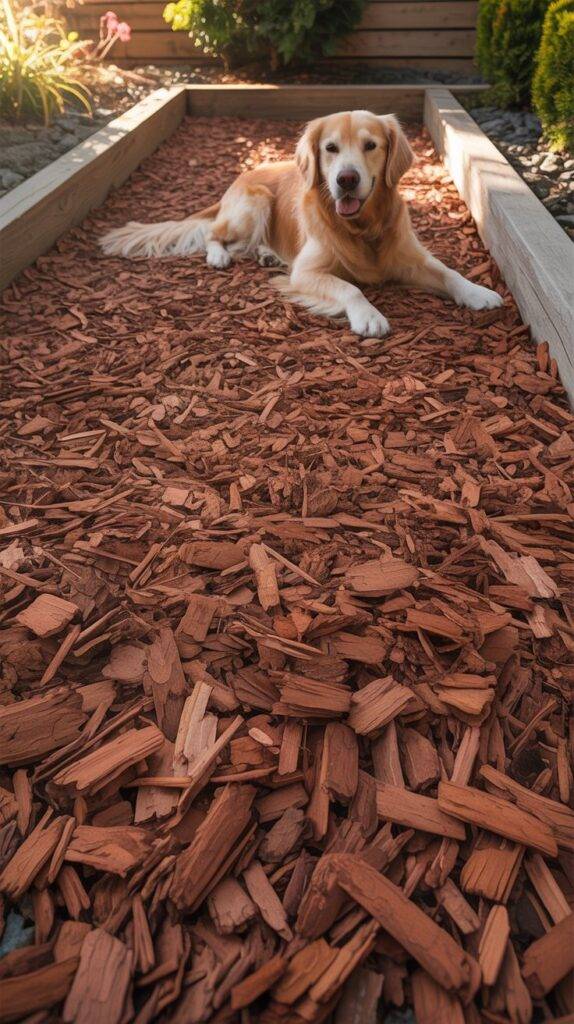
Heavy-Duty Landscape Fabric Weed Barrier
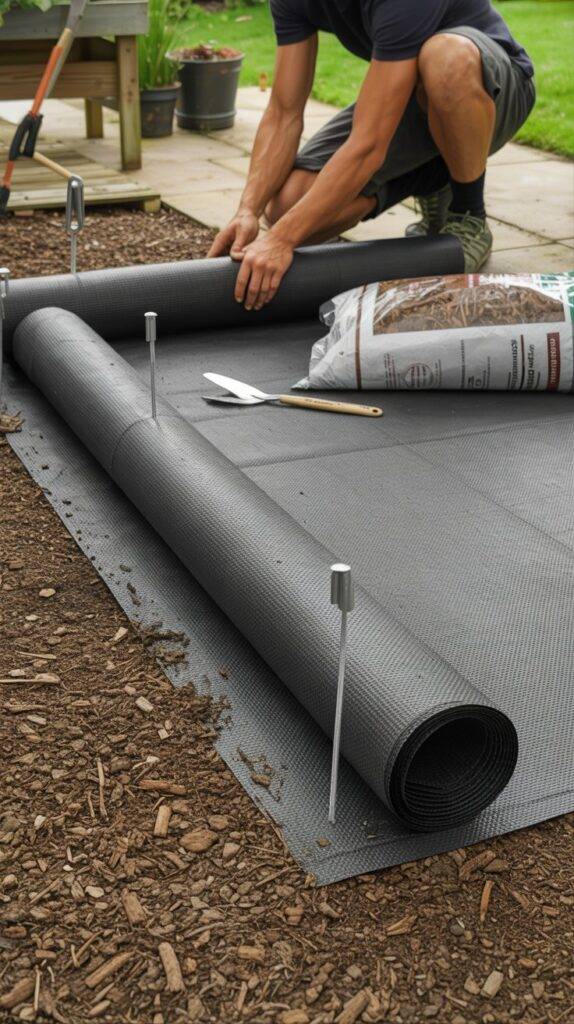
Before spreading mulch, it helps to install a landscape fabric weed barrier underneath the patio area. This simple step can save a lot of maintenance later.
Landscape fabric works by creating a breathable layer between the soil and the mulch. It allows water to drain through while slowing down weed growth from underneath. When used properly, it keeps the mulch surface cleaner and reduces how often you need to pull weeds.
For a dog-friendly patio, this layer also helps keep the mulch from mixing into the soil too quickly. Over time, dogs running across the space can push mulch into the ground, but a weed barrier slows that process.
When installing it, roll the fabric across the cleared soil and secure it with landscape staples. After that, spread your mulch evenly over the top.
Suggested Supply: Check price on Amazon.com
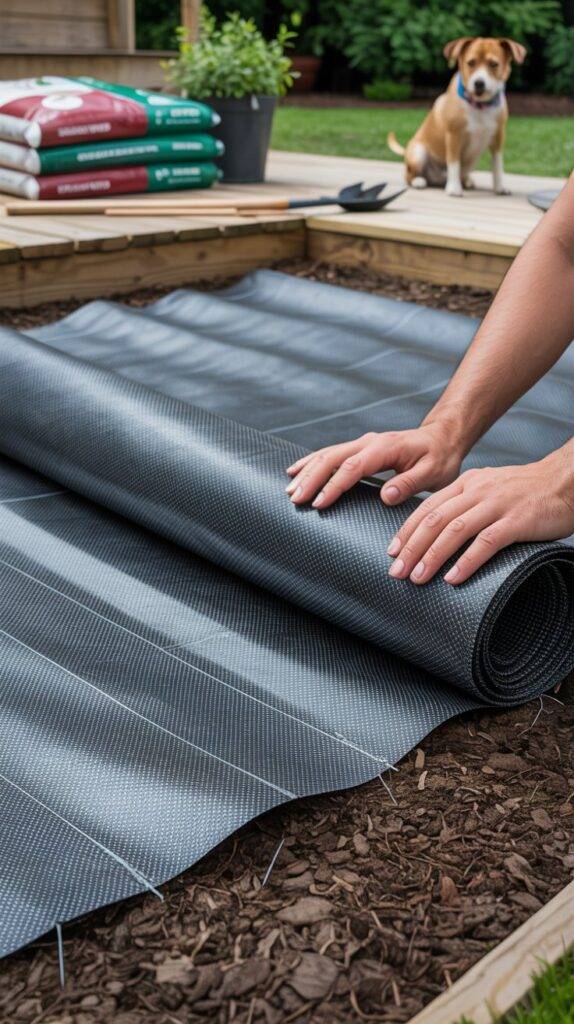
Landscape Edging to Keep Mulch in Place
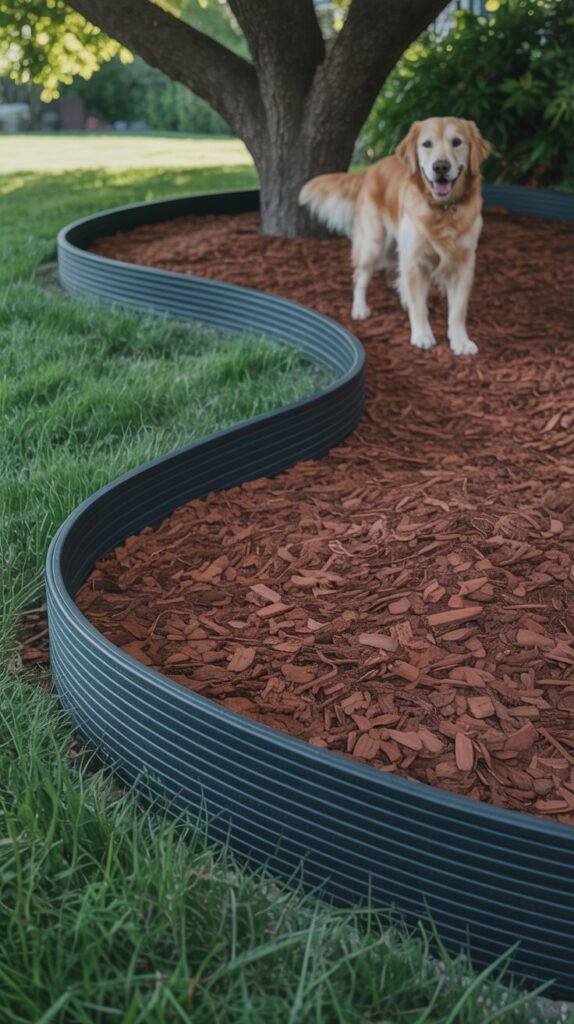
One thing many people discover after installing mulch is that dogs can scatter it around the yard. Running, digging, and playing can push mulch into the lawn if the patio doesn’t have a strong edge.
That’s where landscape edging comes in.
Edging creates a physical border around the patio that keeps the mulch contained. It also makes the space look more organized and intentional instead of just a pile of wood chips in the yard.
There are several types you can use, including rubber edging, metal edging, or simple plastic garden borders. Many homeowners prefer flexible edging kits because they are easier to install and can curve around trees or corners.
For a backyard dog patio, edging also helps protect nearby grass areas. Instead of constantly raking mulch back into place, the border keeps everything where it belongs.
Suggested Supply: Check price on Amazon.com
Final Thoughts
After working on a few different backyard setups, I’ve learned that mulch patios are one of the easiest ways to make a yard more dog-friendly. They’re affordable, simple to install, and much easier to maintain than trying to keep grass perfect in high-traffic areas.
The best part is that mulch patios don’t have to follow strict rules. Sometimes the most effective design comes from watching where your dogs already spend their time and improving that area.
Whether it’s a shaded resting spot, a running path along the fence, or a small patio near the back door, these simple mulch ideas can make the backyard more comfortable for both dogs and people.
And in many cases, they can be built in a single weekend with basic tools and materials.
Related Post: