
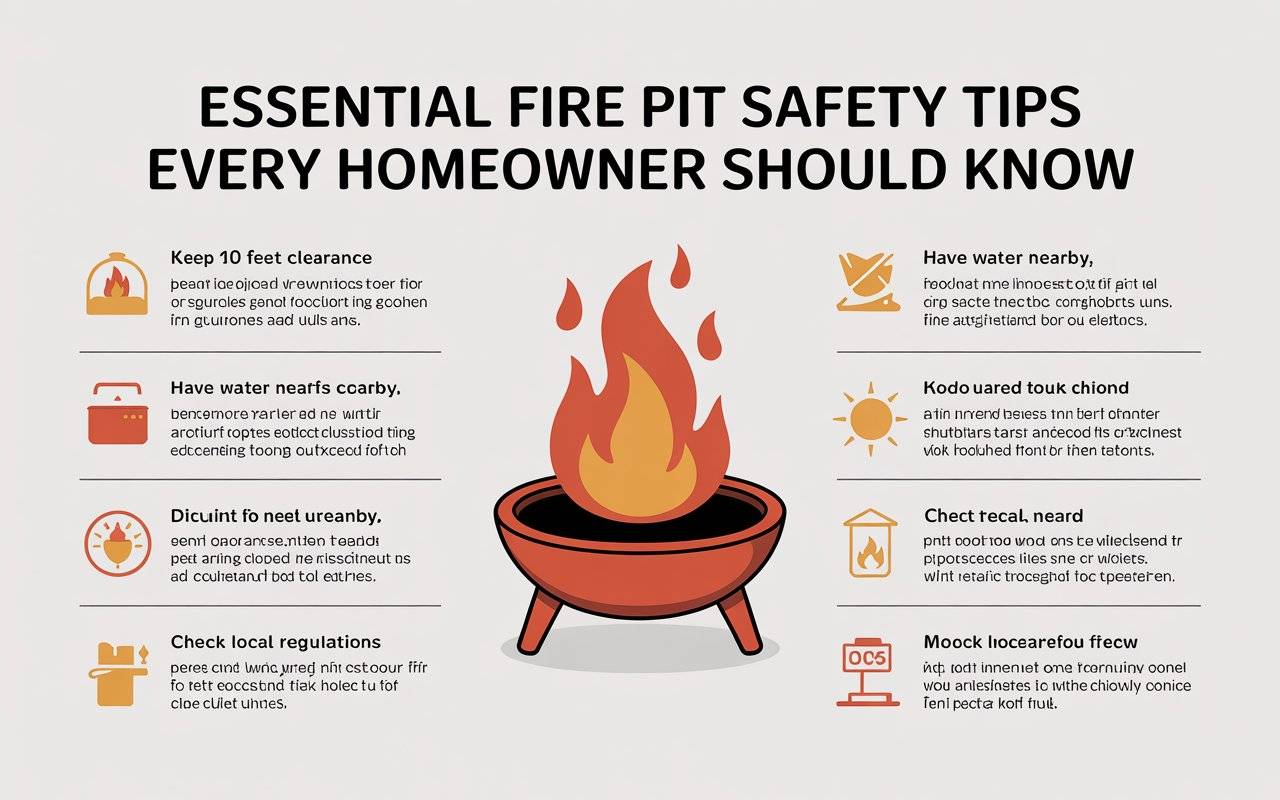
A fire pit can turn a regular backyard into a spot where people want to hang out. Kids roast marshmallows. Adults sit around and talk. It feels good.
But fire is dangerous if you don’t handle it right.
Every year, fire pits cause burns, property damage, and even house fires. Most of these accidents could have been prevented with a few simple safety steps.
I’ve owned a fire pit for years. I’ve made mistakes. I’ve also learned what works to keep everyone safe. This article covers the essential tips you need before you light that first match.
Why This Matters
Here’s the reality: between 2008 and 2017, more than 5,300 fire pit-related injuries landed people in emergency rooms every single year. Kids are especially at risk, with a study finding nearly 11,000 burns in children and young adults from 2006 to 2017.
And it’s not just injuries. Backyard barbecues and outdoor fires lead to nearly 10,000 home fires annually. A simple spark can travel farther than you think and ignite dry leaves, wood siding, or even your house.
The good news? Almost all of these accidents are preventable. You just need to know the rules, follow them every time, and never get too comfortable around the flames. Let’s go through exactly what you need to know.
8 Essential Fire Pit Safety Tips
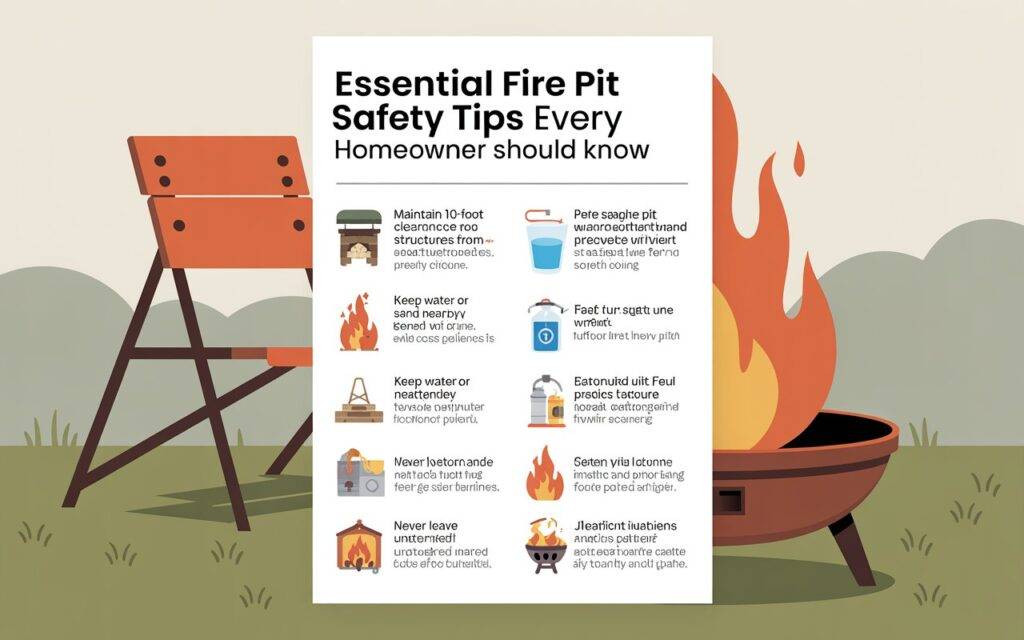
1. Place Your Fire Pit at the Right Distance
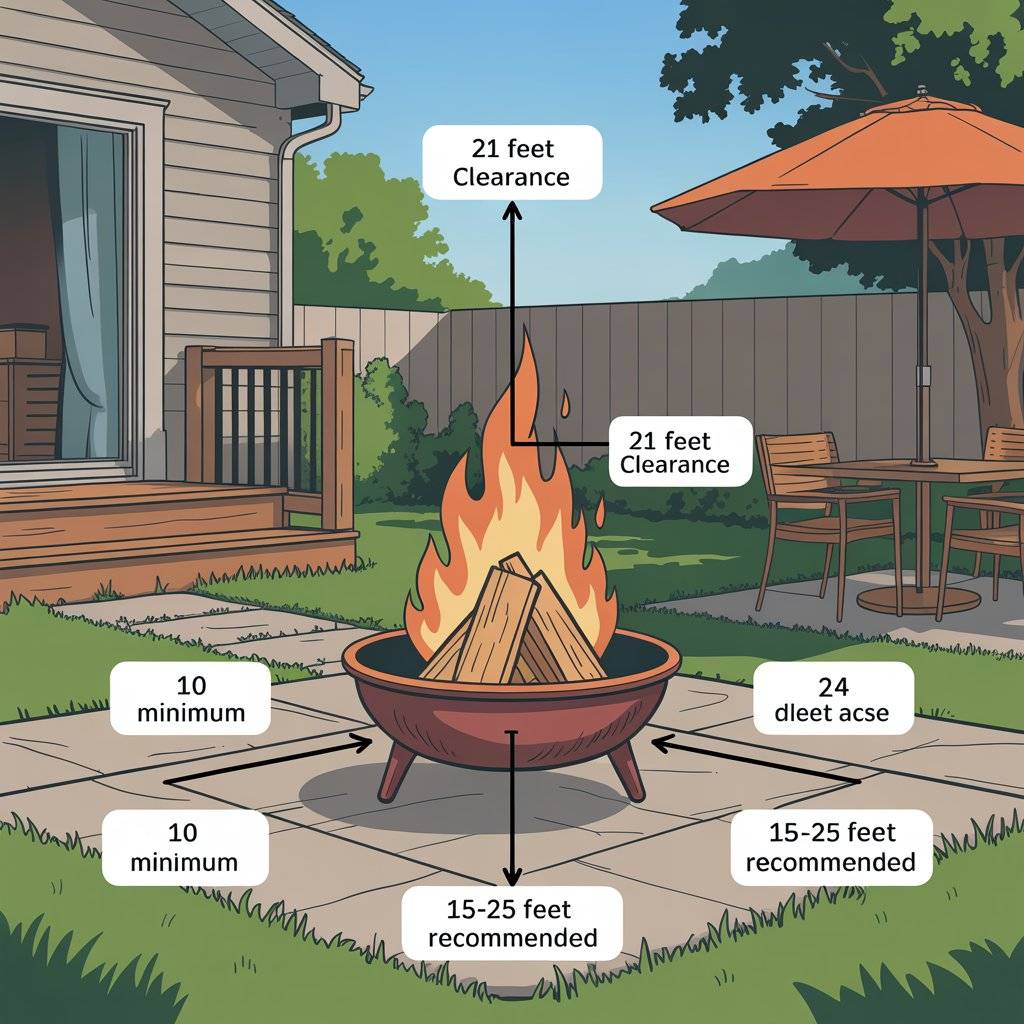
Distance is the most important safety factor. According to the National Fire Protection Association (NFPA), you should keep your fire pit at least 10 feet away from anything that can burn your house, shed, trees, fences, or deck railings.
But here’s the catch: 10 feet is the minimum. Many experts say 15 to 25 feet is better, especially if you have kids and pets around. Wood-burning pits that throw sparks and embers need even more space aim for 15 to 25 feet from any structure.
You also need to look up. Keep at least 21 feet of clearance above your fire pit for overhanging branches, string lights, or patio covers. Don’t ever put a fire pit under a covered porch, low tree branches, or awnings. The heat alone can damage them, and sparks can start a fire fast.
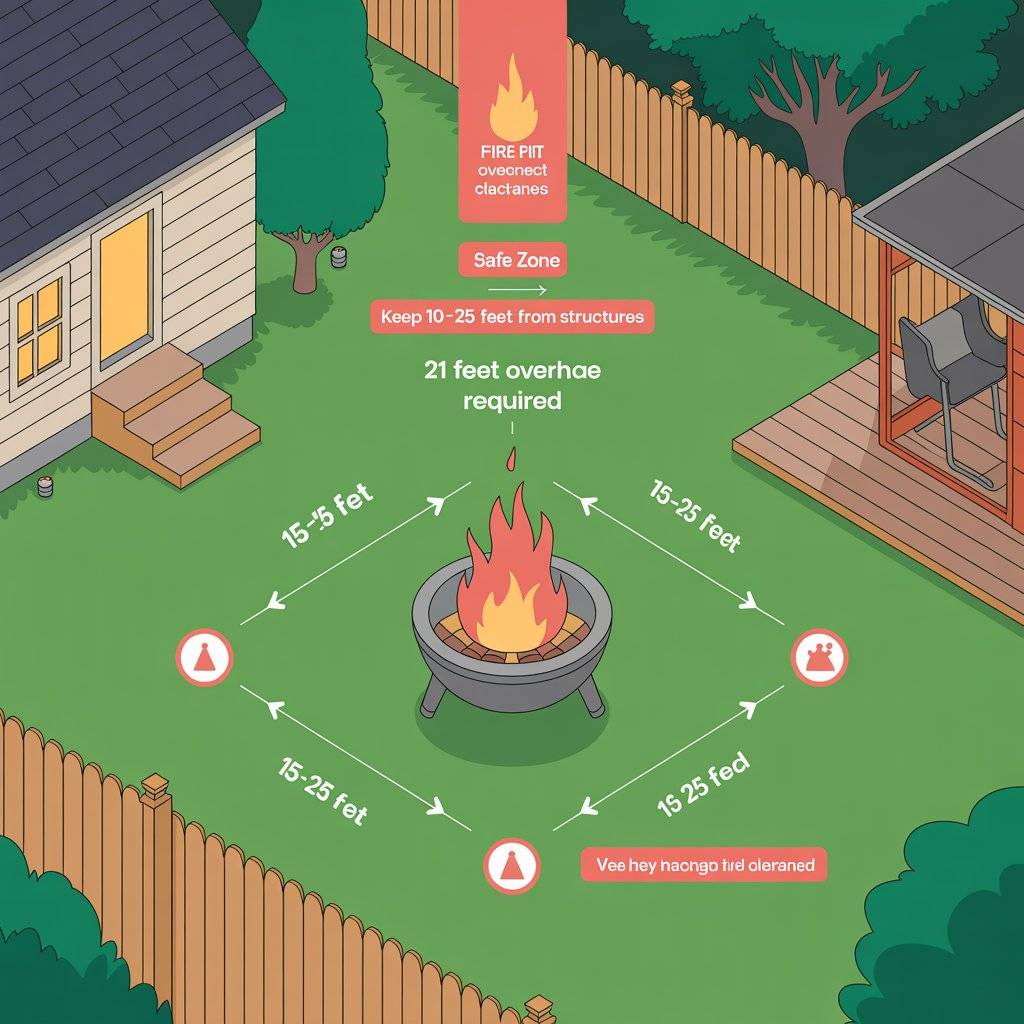
2. Put It on the Right Surface
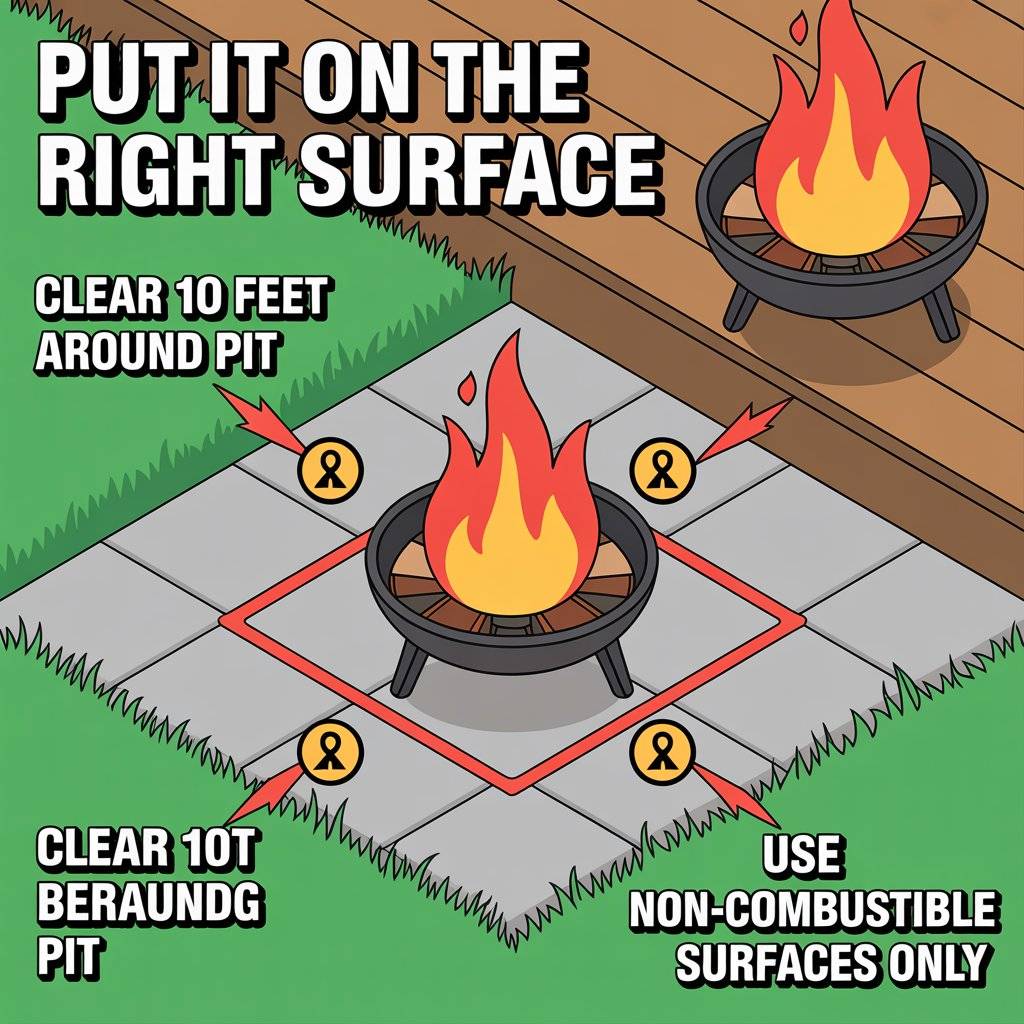
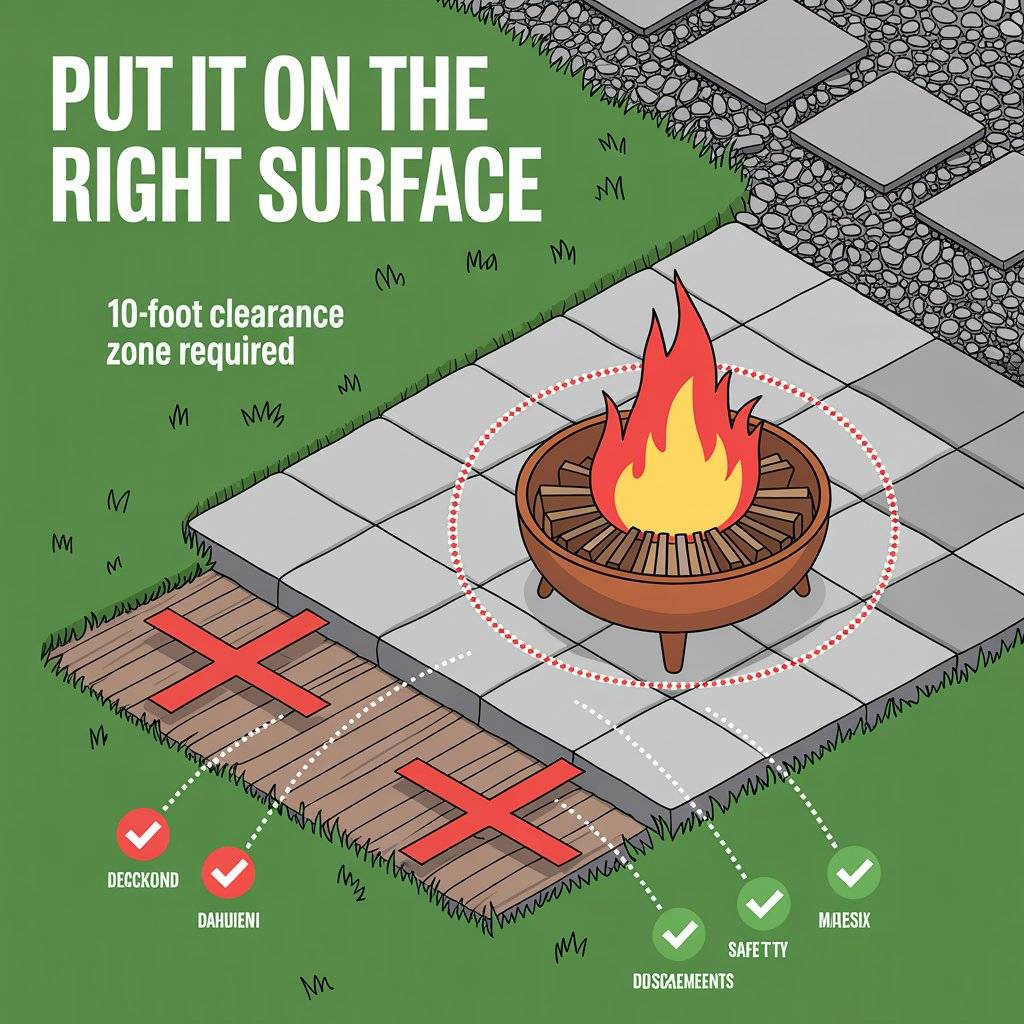
Never place a fire pit directly on grass, a wooden deck, or dry mulch. Those surfaces can catch fire from sparks or even just from the heat underneath the pit.
Instead, put your fire pit on a level, non-combustible surface like concrete pavers, bricks, stone patio, or gravel. If you absolutely must put it on a wood deck (not recommended), use a fire-resistant mat made specifically for that purpose.
Also, clear a circle at least 10 feet wide around the pit. Remove dry leaves, pine needles, mulch, firewood stacks, and anything else that could catch a spark.
3. Never Leave a Fire Unattended
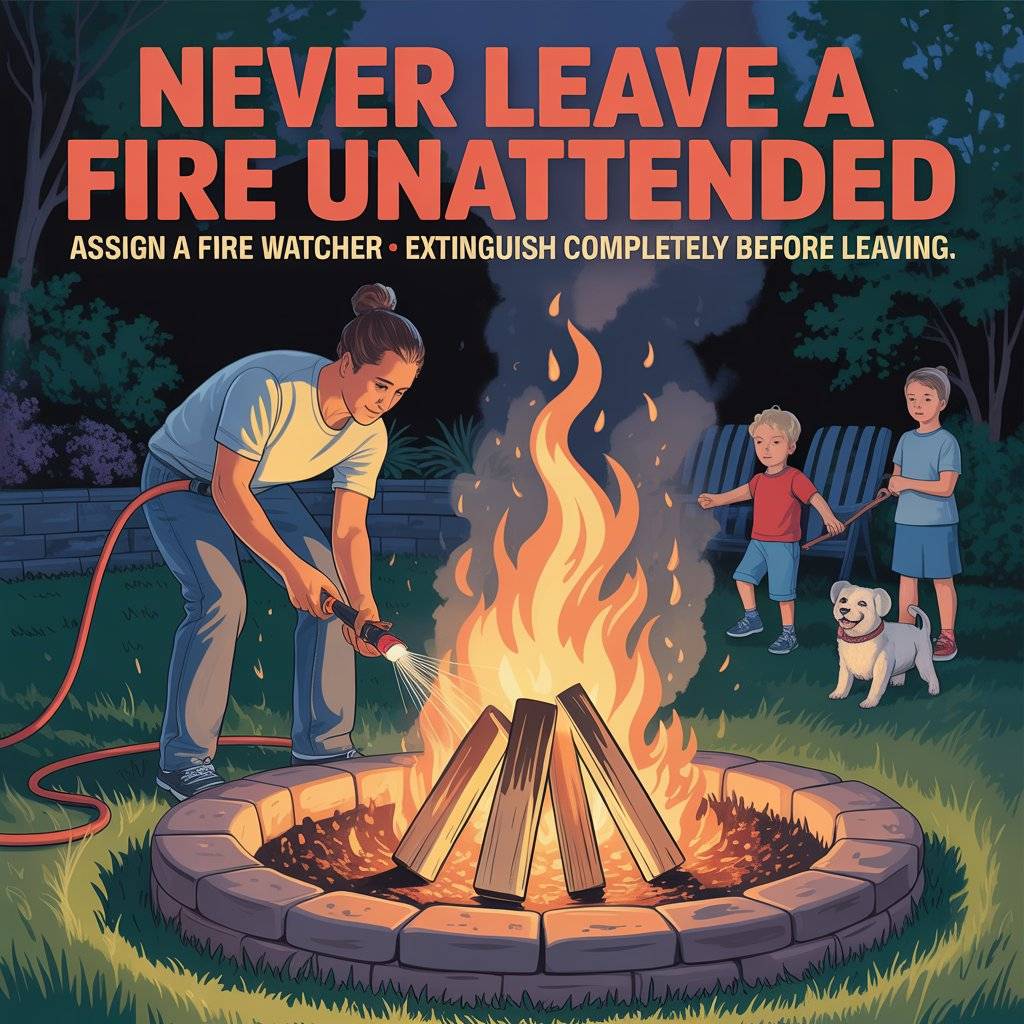
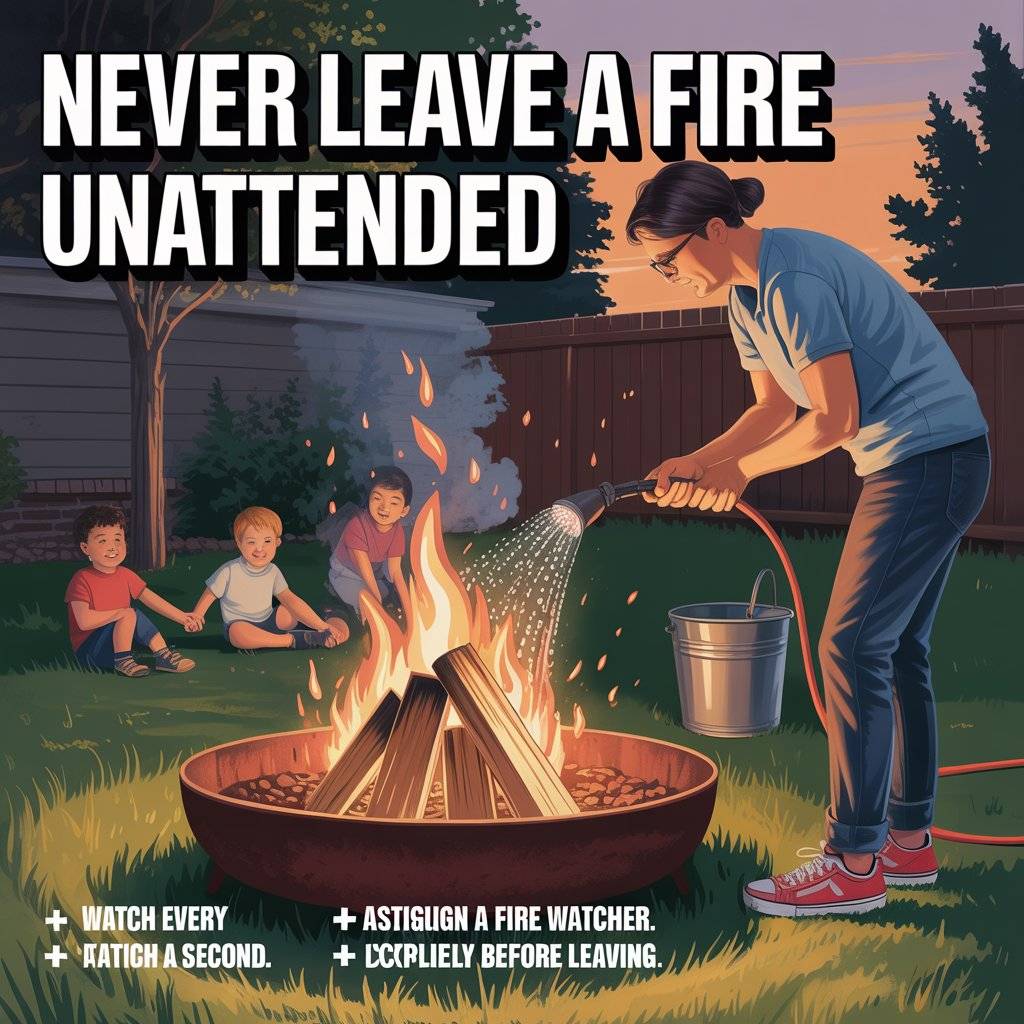
This one seems obvious, but it’s worth repeating: you must watch your fire every single second. Never walk away, even for a few minutes.
A sudden gust of wind can blow sparks onto dry grass or your house. A child or pet could run too close. The fire could flare up unexpectedly. If you need to go inside, put the fire out completely first.
Assign one responsible adult to be the “fire watcher” at any gathering. Make sure everyone knows who that person is. When the last person leaves the fire pit area, the fire should already be out.
4. Check Wind and Weather First
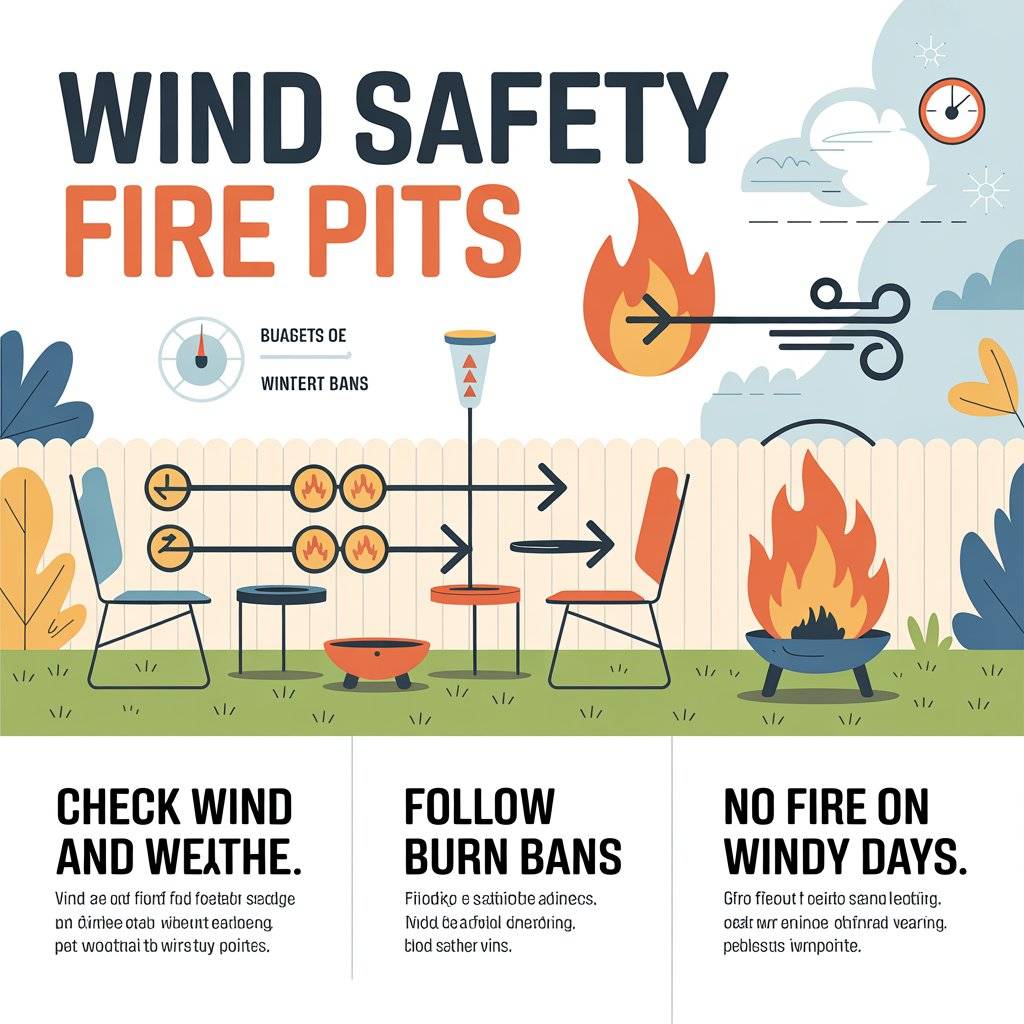
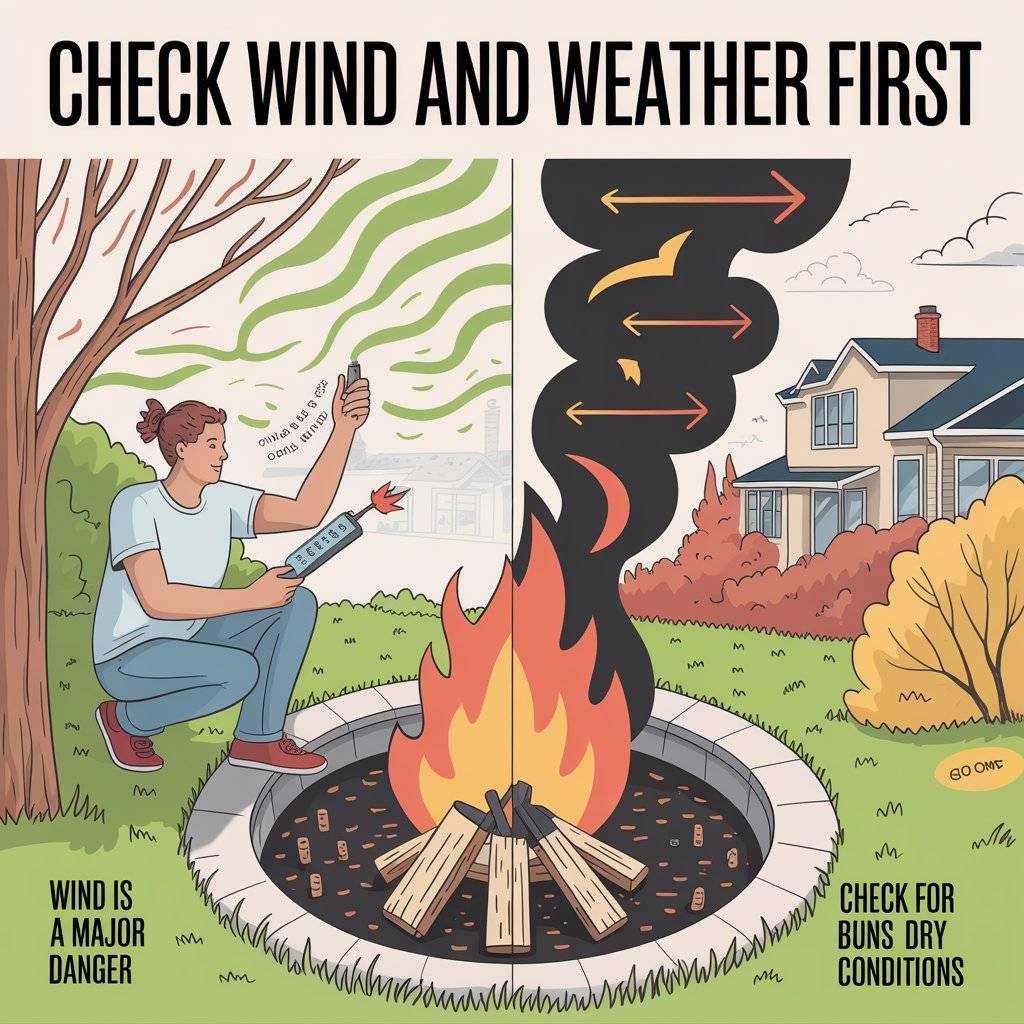
Wind is a major danger. It can blow sparks and embers onto your house, your neighbor’s yard, or dry vegetation. If it’s windy, don’t light the fire at all.
Also check for burn bans or dry conditions. Many local fire departments issue no-burn alerts during droughts or high fire danger. Follow them. Ignoring a burn ban isn’t just unsafe you can face fines.
If there’s a light breeze, have guests sit on the upwind side of the pit so smoke blows away from them. But if winds are strong or gusty, save the fire for another night.
5. Use a Spark Screen Every Time
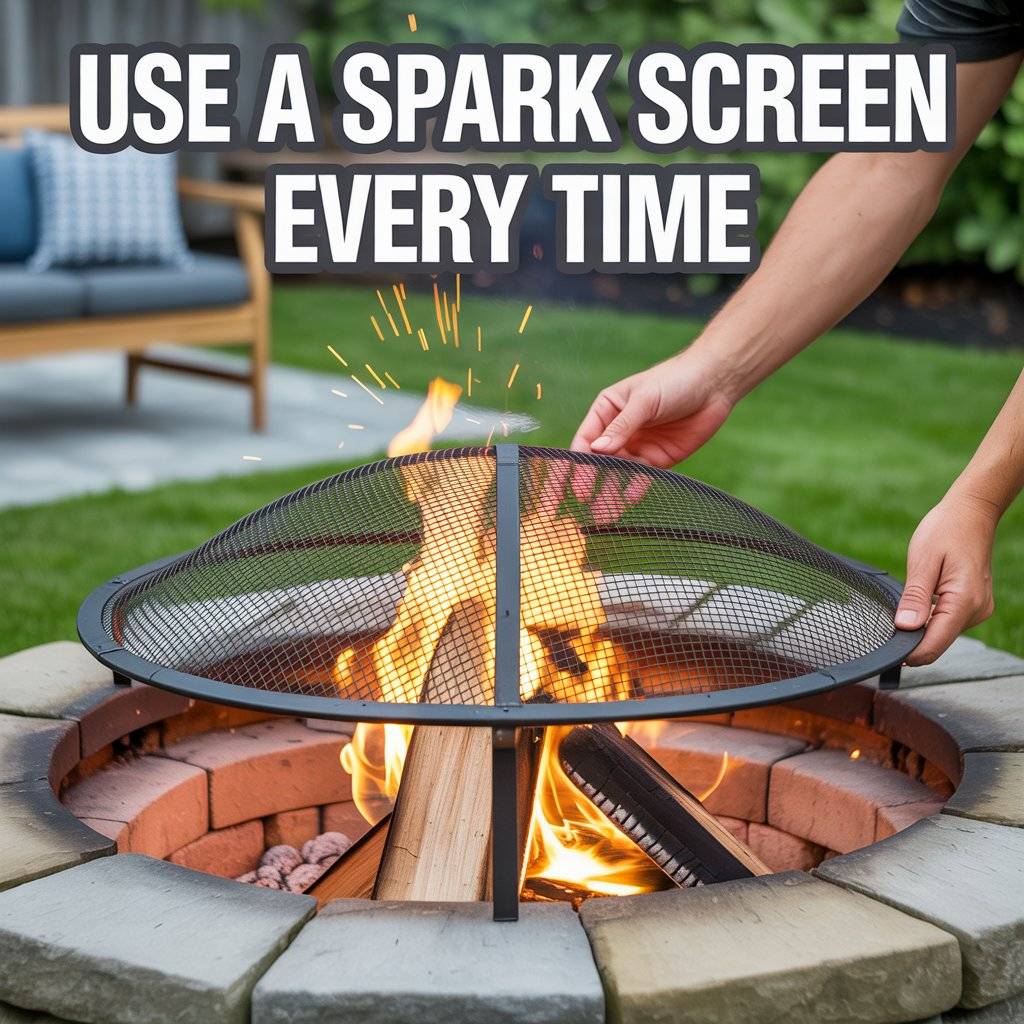
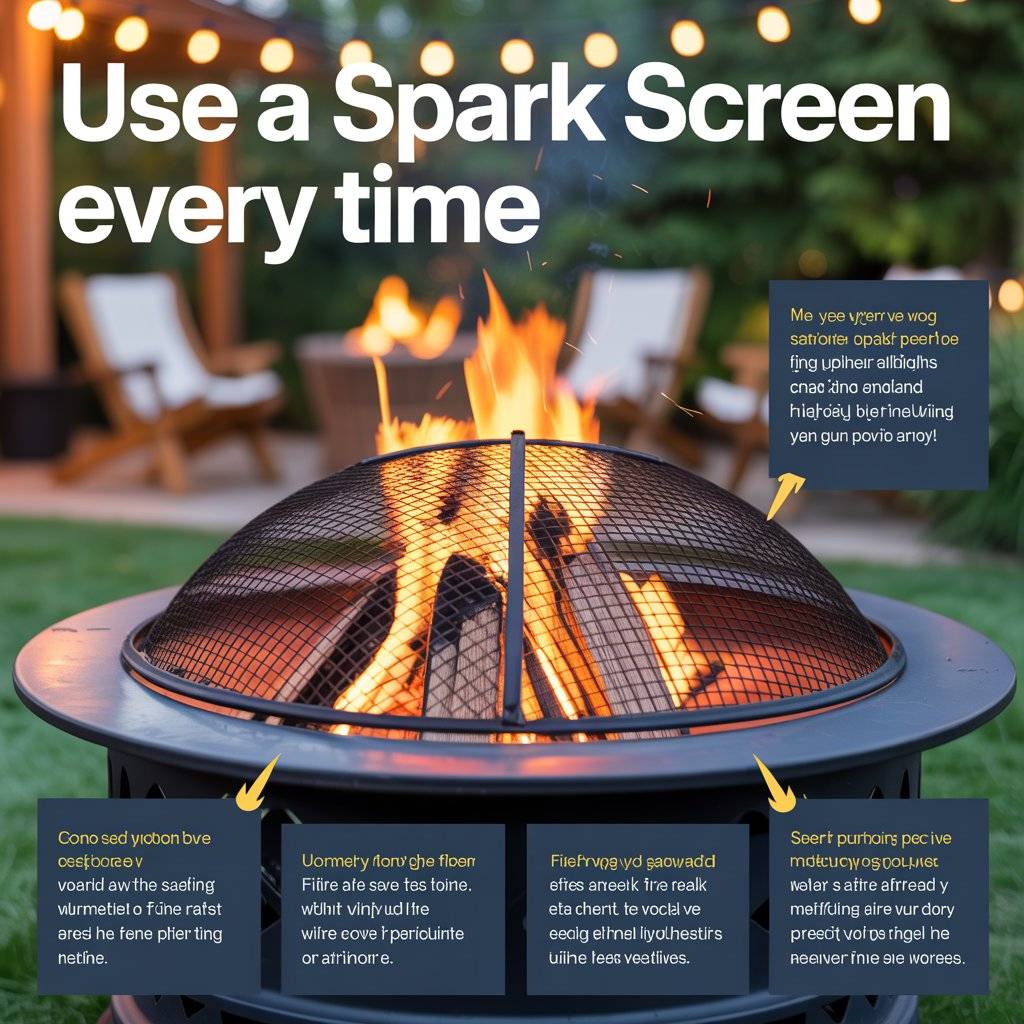
A spark screen (also called a mesh cover) sits on top of your fire pit and catches flying embers. This simple device prevents most accidental fires.
Put the screen on as soon as the fire is going well. Make sure it fits securely and covers the entire opening. Don’t take it off until you’re ready to put the fire out.
For gas fire pits, you don’t need a spark screen, but you do need an accessible shut-off valve in case something goes wrong.
Also you can read: Outdoor Fire Pit Designs That Feel Like a Mini Vacation
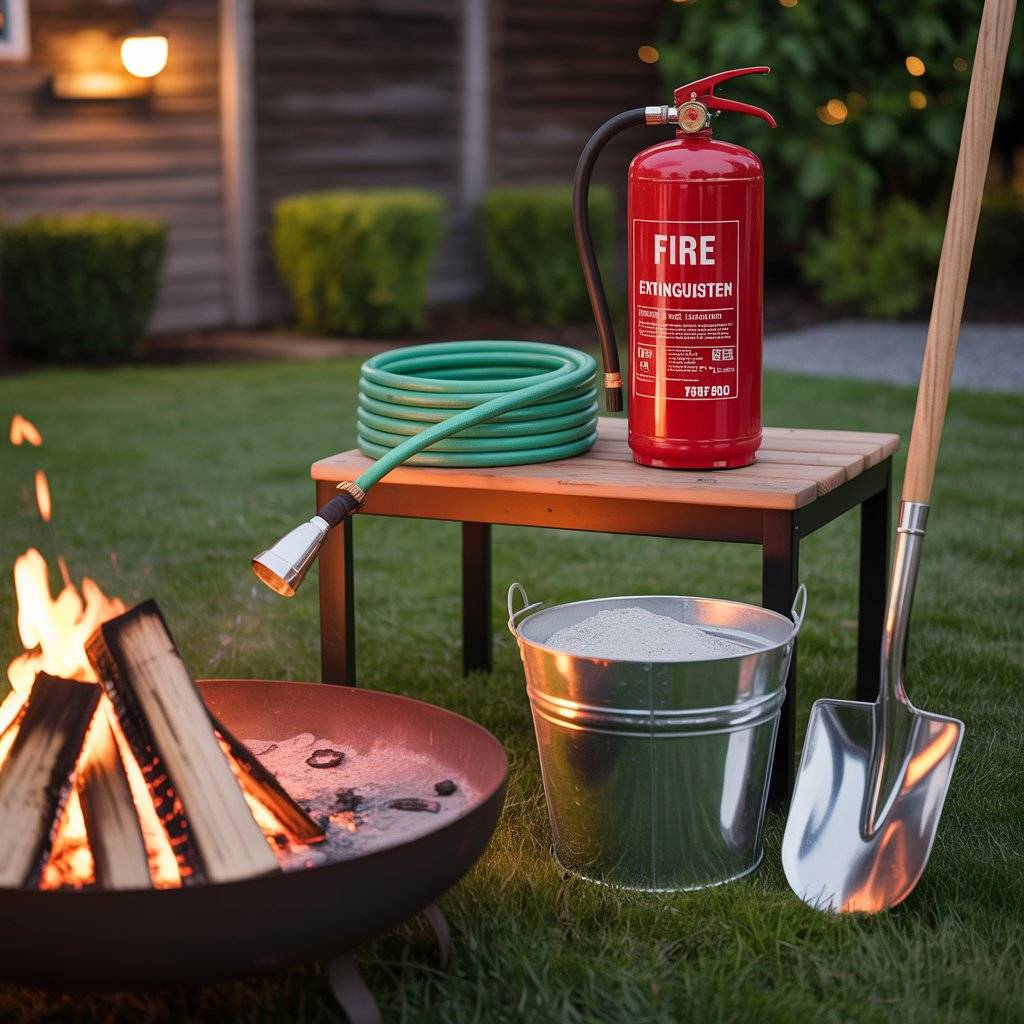
6. Keep Fire-Fighting Tools Within Reach
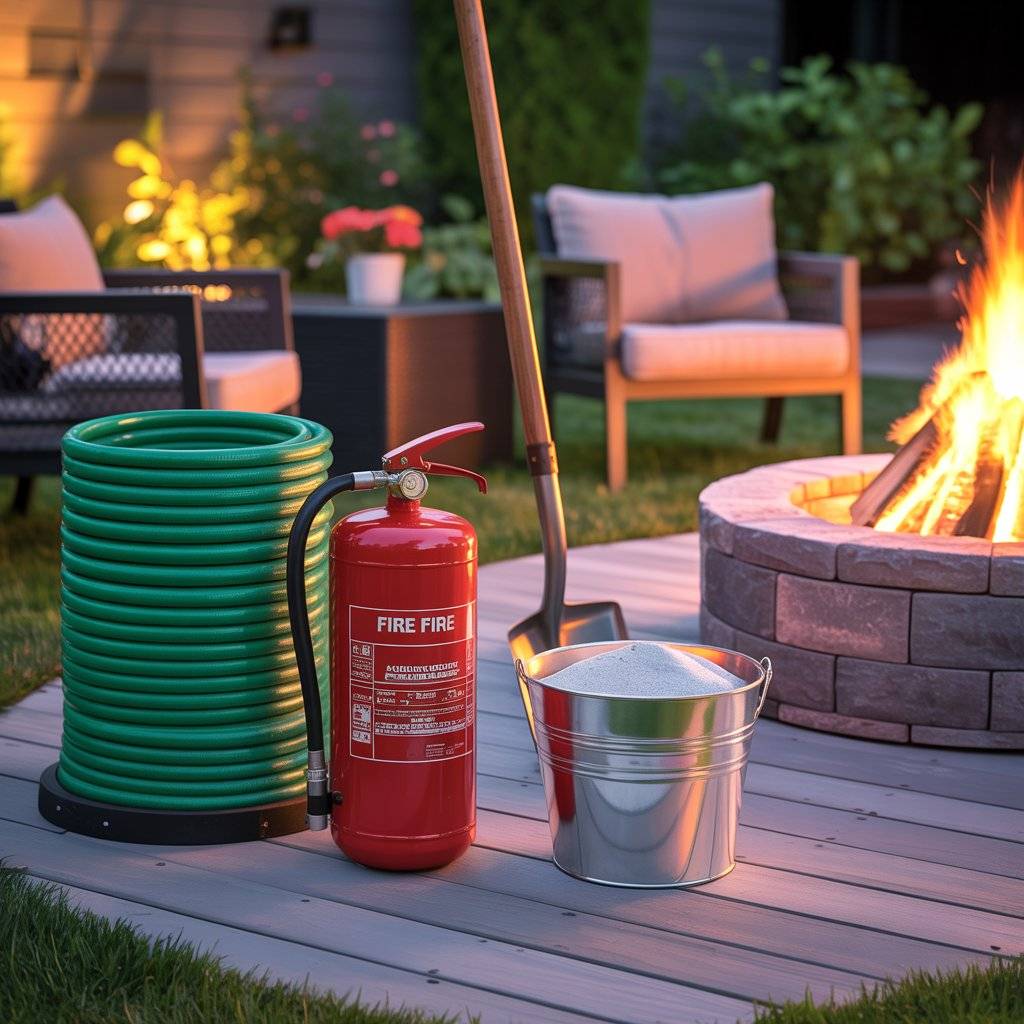
Before you light anything, have your extinguishing tools ready. You should have at least one of these options within a few steps of your fire pit:
- A garden hose connected to a water source
- A fire extinguisher rated for wood and gas fires
- A bucket of sand or dirt
- A shovel for stirring and smothering
Do not rely on running inside to fill a bucket if a fire starts. You won’t have time. Set up your tools before you light the match.
7. Burn Only the Right Fuel
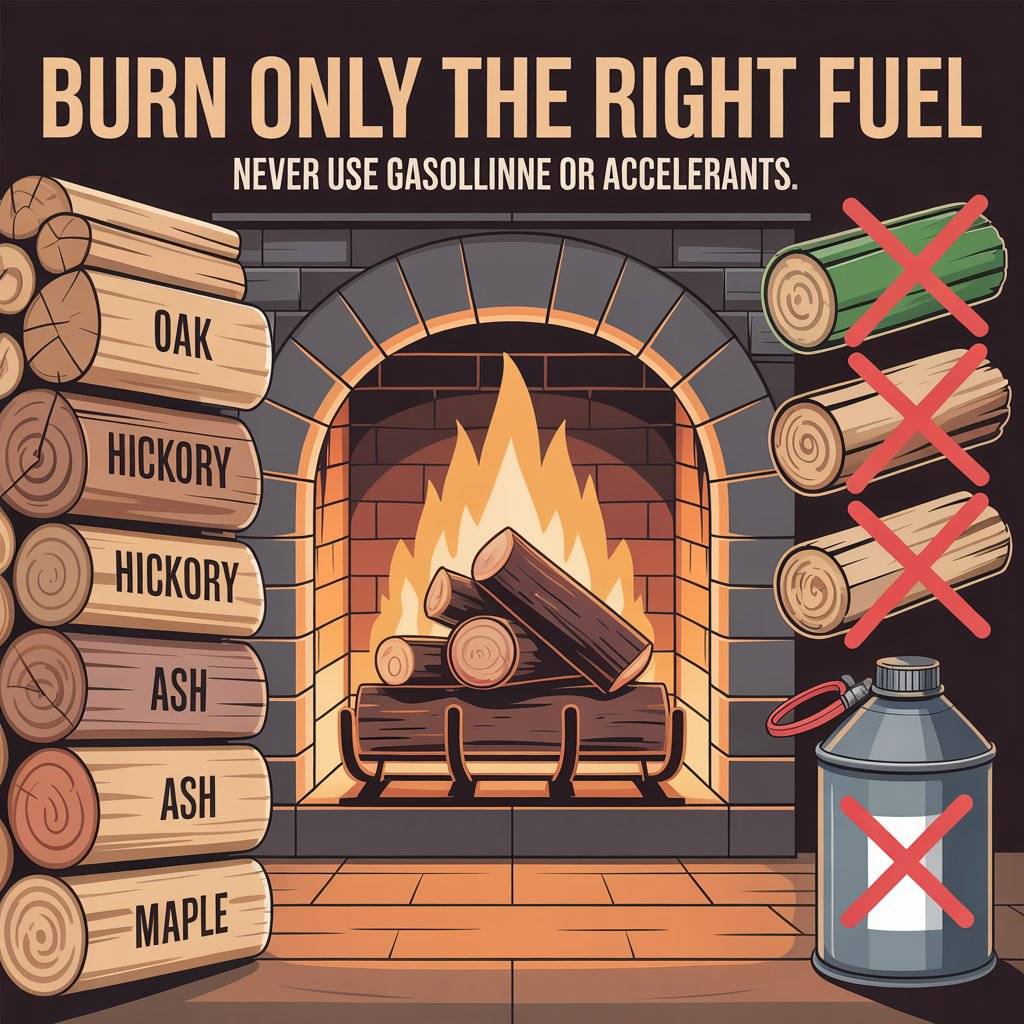
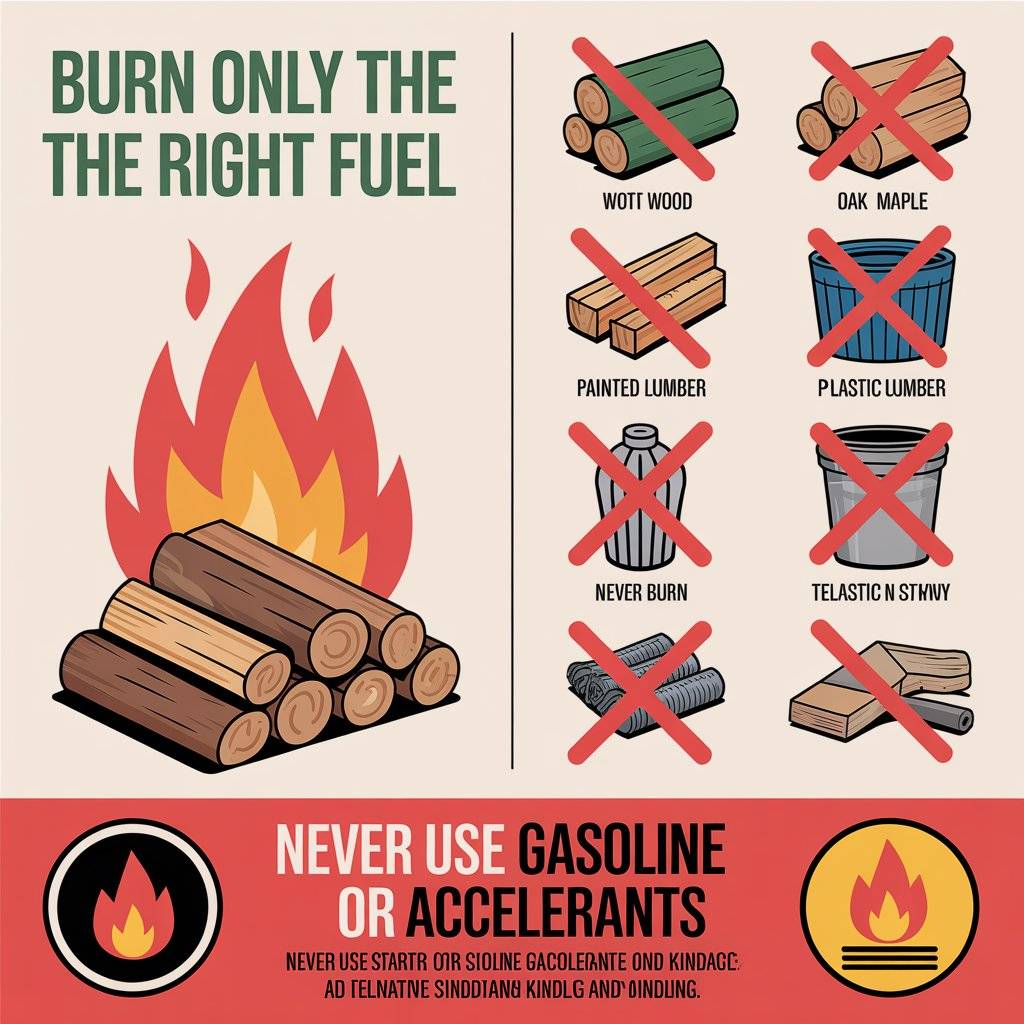
What you burn matters a lot. Only use dry, seasoned hardwood like oak, hickory, ash, or maple. These woods burn hot, produce less smoke, and throw fewer sparks.
Never burn:
- Green or wet wood (it smokes and pops dangerously)
- Treated or painted lumber (toxic fumes)
- Trash, leaves, or yard debris
- Construction scraps or plywood
- Plastics, rubber, or aerosol cans
And here’s a big one: never use gasoline, lighter fluid, kerosene, or any other accelerant to start or speed up a fire. That’s how people get severe burns. Use a fire starter, newspaper, or a charcoal chimney instead.
8. Put the Fire Out Completely
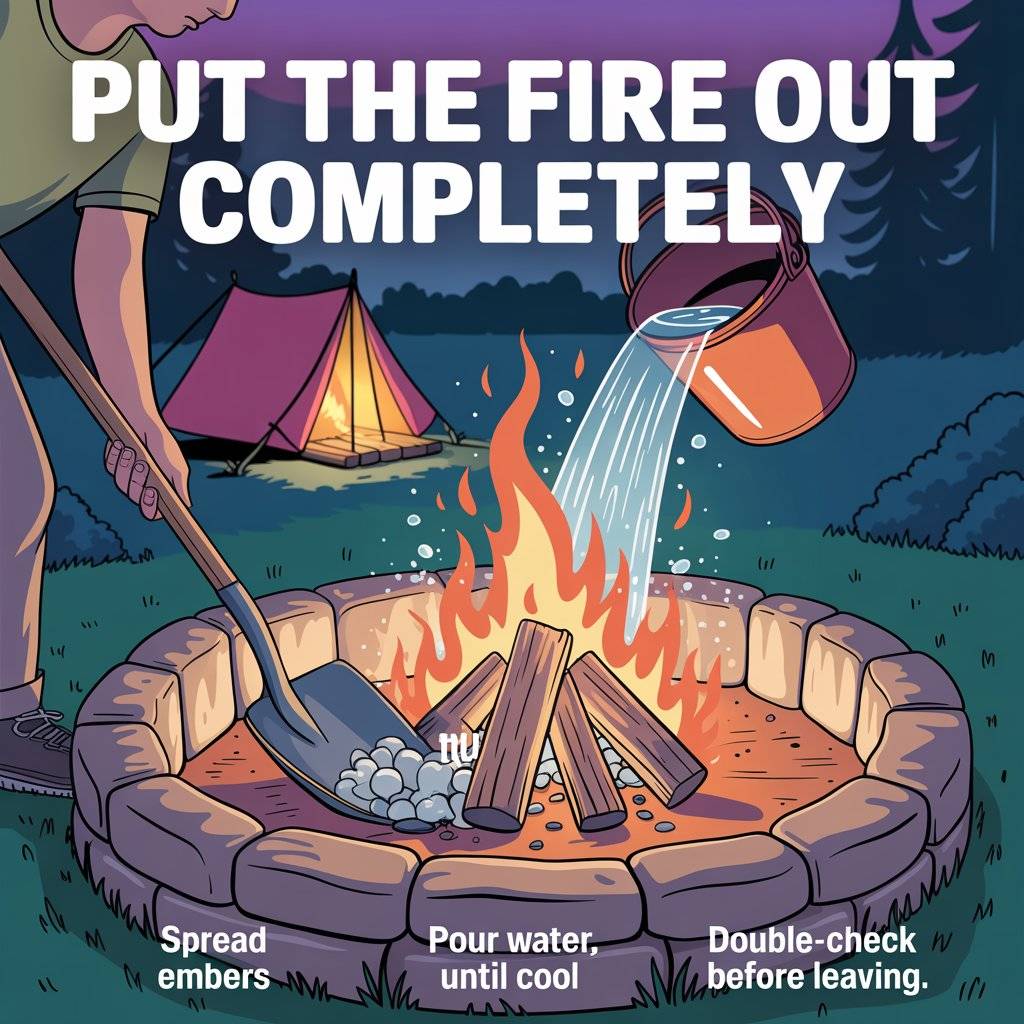
At the end of the night, don’t just let the fire burn down and assume it’s safe. You need to extinguish it fully.
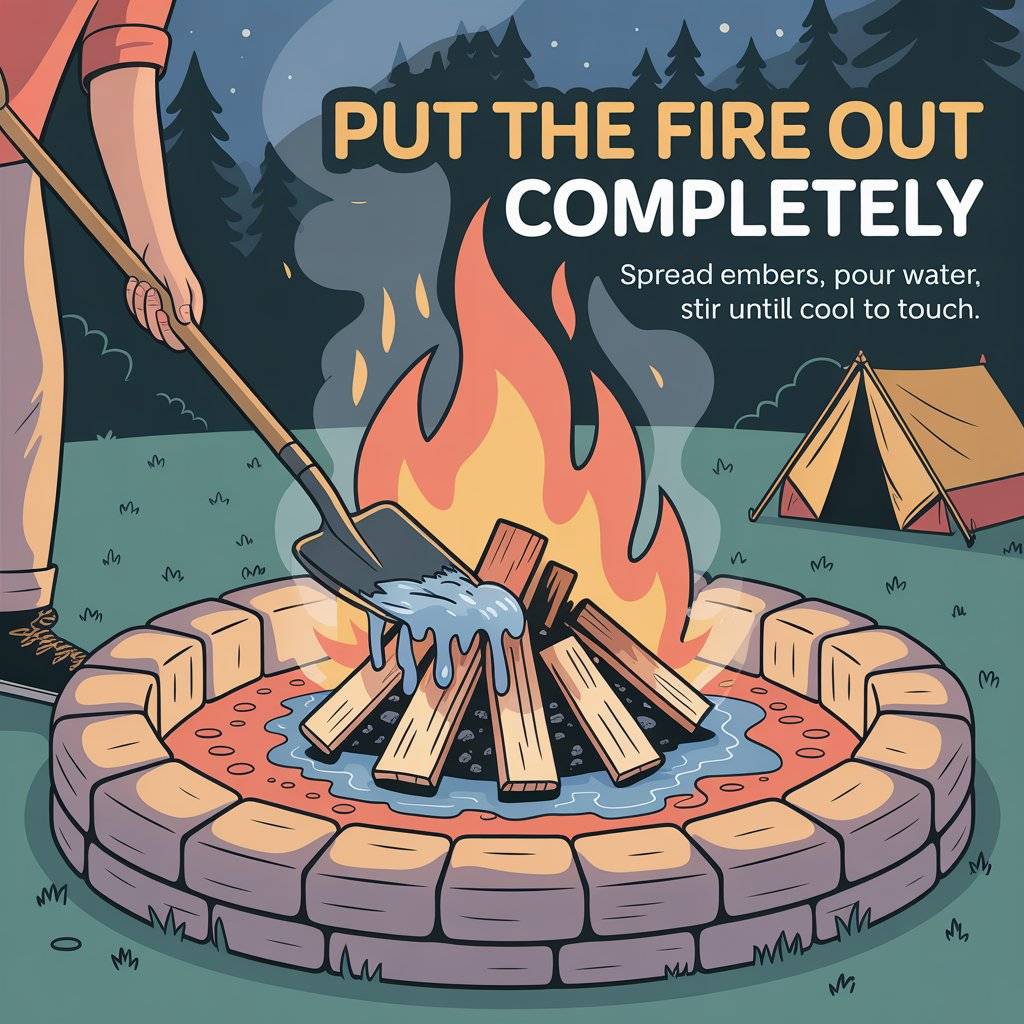
For wood fires: spread out the embers, pour water over everything, and stir with a shovel. Keep pouring and stirring until no steam rises and you can touch the ashes without feeling heat. For gas pits: turn off the fuel supply completely.
If you used sand instead of water, stir the sand into the coals until everything is cool to the touch.
Before you go inside, double-check. Many house fires start from embers that looked “out” but reignited after everyone went to bed.
Common Fire Pit Mistakes to Avoid
- Putting the pit too close to the house. Ten feet is the minimum, but 15 to 25 feet is safer. Heat can damage siding even without flames touching it.
- Leaving the fire to “burn out” on its own. Embers can stay hot for hours and reignite. Always drown and stir until cold.
- Using softwoods like pine or cedar. They pop and throw sparks much more than hardwoods do. Stick with oak, hickory, or maple.
- Wearing loose or flammable clothing. Nylon, polyester, and loose sleeves can catch fire easily. Stick with cotton and keep sleeves rolled up.
- Storing firewood too close to the pit. Keep wood stacks at least 30 feet away from the fire and your house. A spark could ignite the whole pile.
- Letting kids or pets run loose around the fire. Designate a 3-foot kid‑free zone around the entire fire pit area. Kids can trip or reach in faster than you can react.
- Tossing ashes in the trash while still warm. Ashes can stay hot for days. Put them in a metal container with a lid and soak them with water. Wait at least 24 hours before disposing.
- Building a fire too big. Flames should never be taller than the fire pit’s sides. A small, controlled fire is safer and more enjoyable.
AFQs
Q1: How far should a fire pit be from a house?
The NFPA says at least 10 feet from any structure or combustible material. But experts recommend 15 to 25 feet when space allows, especially for wood‑burning pits. Gas fire pits can be closer, but 10 feet is still a good minimum.
Q2: What’s the safest type of fire pit?
Gas fire pits (propane or natural gas) are generally safer than wood‑burning pits. They don’t throw sparks or embers, and you can turn them off instantly. Wood pits have that classic campfire feel but require much more caution and maintenance.
Q3: Can I use a fire pit on a wooden deck?
It’s not recommended. If you must, put a fire‑resistant mat or pavers underneath and keep the pit at least 10 feet away from the house. Gas pits are safer for decks than wood pits because they don’t throw sparks.
Q4: Can I use lighter fluid or gasoline to start a fire?
Never. Never. Never. Gasoline and lighter fluid can cause explosive flare‑ups that cause severe burns. Use a charcoal chimney, fire starter squares, or crumpled newspaper instead.
Q5: How long should I wait before disposing of fire pit ashes?
Ashes can hold enough heat to start a fire for several days. Put them in a metal container with a tight‑fitting lid. Add water and stir. Let them sit for at least 24 to 48 hours before throwing them away. Never put ashes in a paper bag, cardboard box, or plastic trash can.
Fire Pit Design & Styling Ideas
A safe fire pit can still look great. Here are a few simple ideas:
- Create a fire ring using bricks or concrete pavers. This defines the space and keeps fire contained. Make sure the materials are rated for high heat.
- Add a gravel or stone base around the fire pit. It’s non‑flammable, drains well, and looks clean. Extend it at least 3 feet in all directions.
- Set up seating at the right distance. Place chairs and benches at least 3 feet from the flames. Mark the safety zone with a border of stones or pavers so everyone knows where to stop.
- Install low lighting around the seating area. A well‑lit space prevents trips and falls when people walk near the fire at night.
- Build a windbreak using a short stone wall or decorative fence panels. Position it on the side where wind usually comes from, but make sure it’s at least 5 feet away from the fire pit itself.
- Use a spark screen that matches your style. Many come in black, bronze, or copper finishes. A good‑looking screen blends in while doing its job.
- Store firewood in a rack at least 30 feet away. This keeps it dry and accessible without creating a fire hazard.
Conclusion
A backyard fire pit is one of the best ways to enjoy cool evenings with family and friends. But it only stays that way if you use it safely.
The main things to remember: keep it at least 10 feet away from anything that burns. Never leave it unattended. Use a spark screen. Burn only dry hardwood. Keep water or a fire extinguisher nearby. And put the fire out completely not just “mostly” out.
Take a few minutes before each fire to check your setup. It’s worth the peace of mind. Your family and your home depend on it.
Related Post:
Cozy Backyard Fire Pit Corners You’ll Want to Copy