
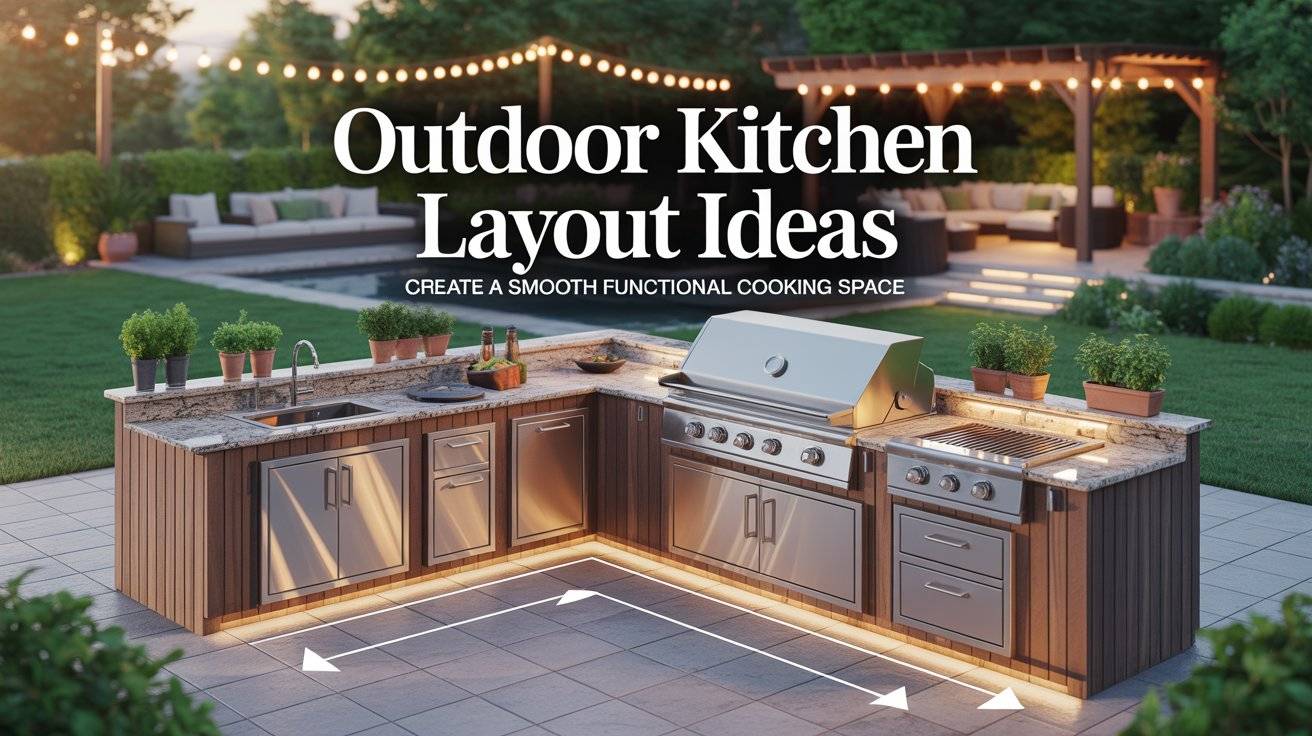
When I started planning an outdoor kitchen, the first thing I learned was that layout matters more than anything else. It’s easy to focus on the grill, the counter materials, or fancy appliances, but if the layout is wrong the space never feels comfortable to cook in.
A good outdoor kitchen layout should make cooking simple. You should be able to move between the grill, prep space, and serving area without feeling cramped or constantly walking back and forth.
Over time, I’ve seen a few layouts work really well for outdoor spaces. Some are perfect for small patios, while others are better if you have a larger backyard. The good news is that most of them are practical and not hard to build.
Here are some outdoor kitchen layout ideas that help create a smooth, functional cooking space.
1. Straight Line Outdoor Kitchen Layout
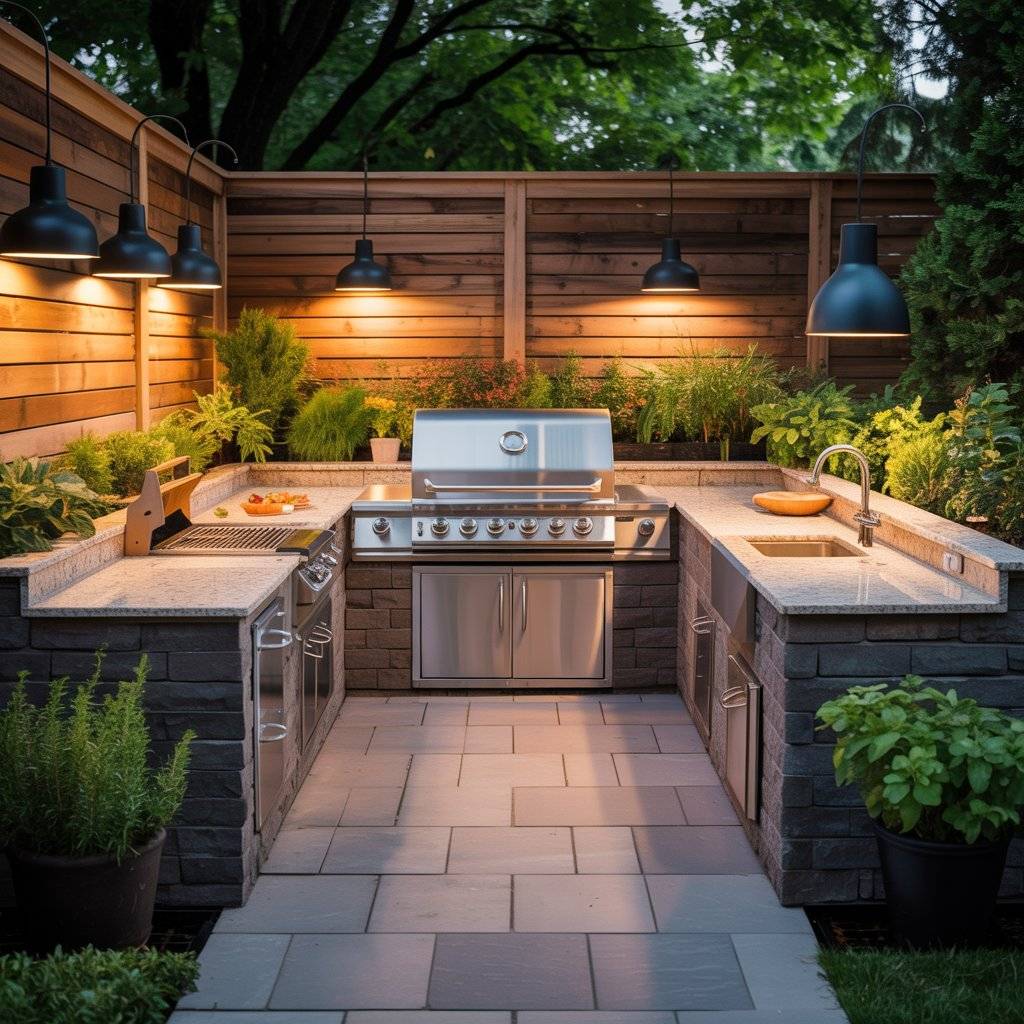
One layout I’ve seen work really well, especially in smaller yards, is the straight line kitchen. Everything sits along one wall or one long counter. The grill goes in the center, with prep space on one side and a small sink or cooler on the other.
This layout works because it keeps things simple. You don’t need a lot of walking space, and it fits nicely against a fence, wall, or the side of the house. I’ve helped set one up where the counter ran along the back patio wall, and it made cooking outside feel organized without taking up the whole yard.
Another good thing about the straight layout is the cost. Plumbing and gas lines are easier to install because everything stays in one place. If you’re building your first outdoor kitchen, this layout is often the easiest way to start while still getting a functional cooking space.
2. L-Shaped Outdoor Kitchen Layout
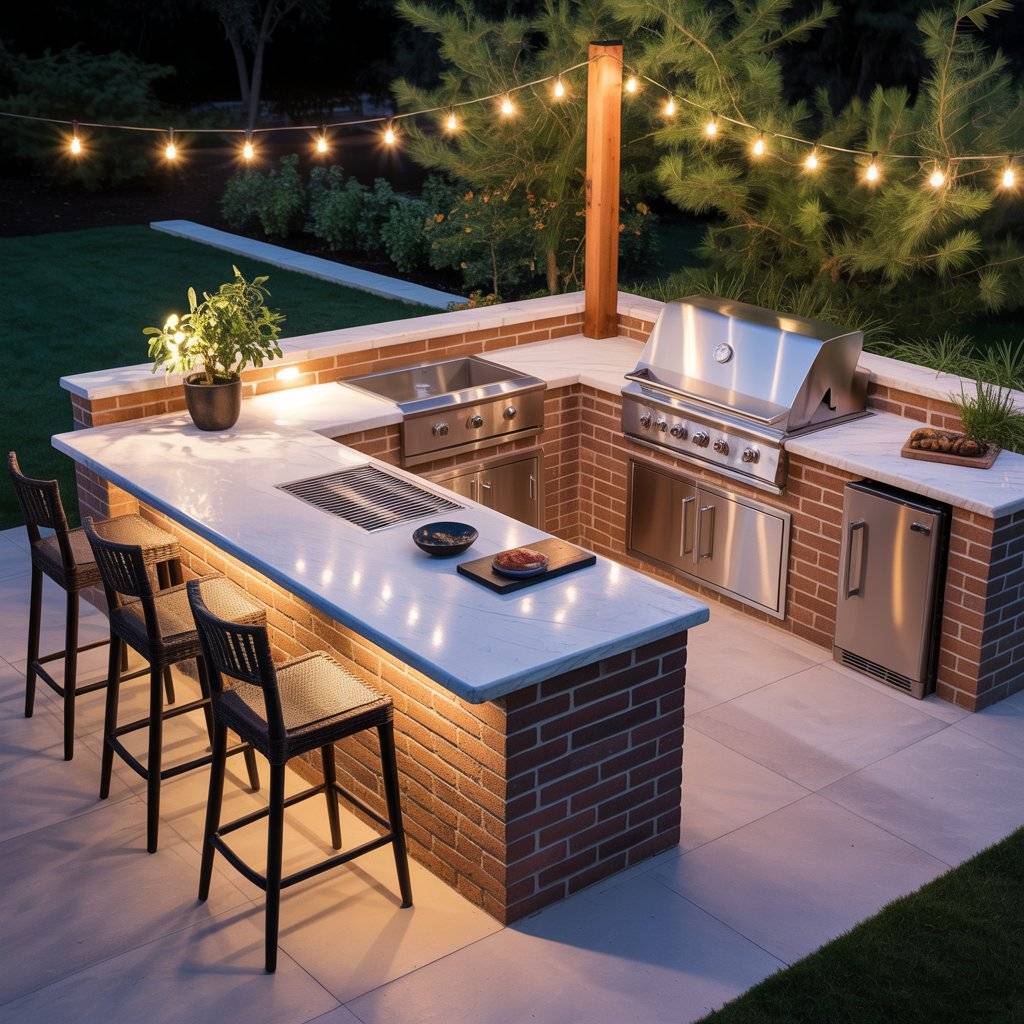
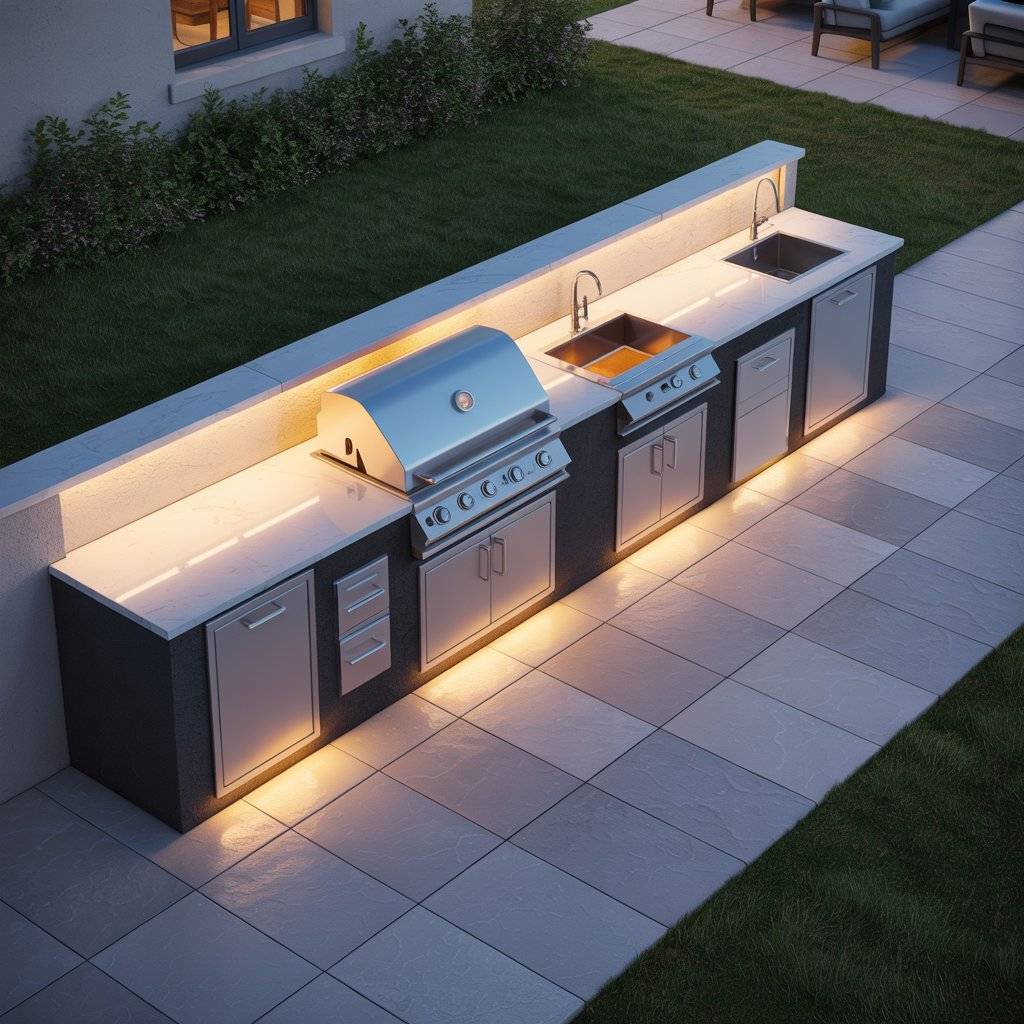
The L-shaped layout is one of the most common outdoor kitchen designs, and for good reason. It gives you more counter space while still keeping everything close together.
In one setup I worked on, the grill sat on the longer section of the counter, while the shorter side held the prep area and a small refrigerator. The corner naturally created a cooking zone where everything was within arm’s reach.
This layout also works well for entertaining. Guests can stand or sit on the outer side of the counter while you cook on the inside. That way people can talk with you without getting in the way of the cooking area.
Another benefit is flexibility. You can build an L-shape against two walls or create a freestanding corner island. It’s a good balance between compact and spacious, which is why many homeowners choose it.
3. U-Shaped Outdoor Kitchen Layout
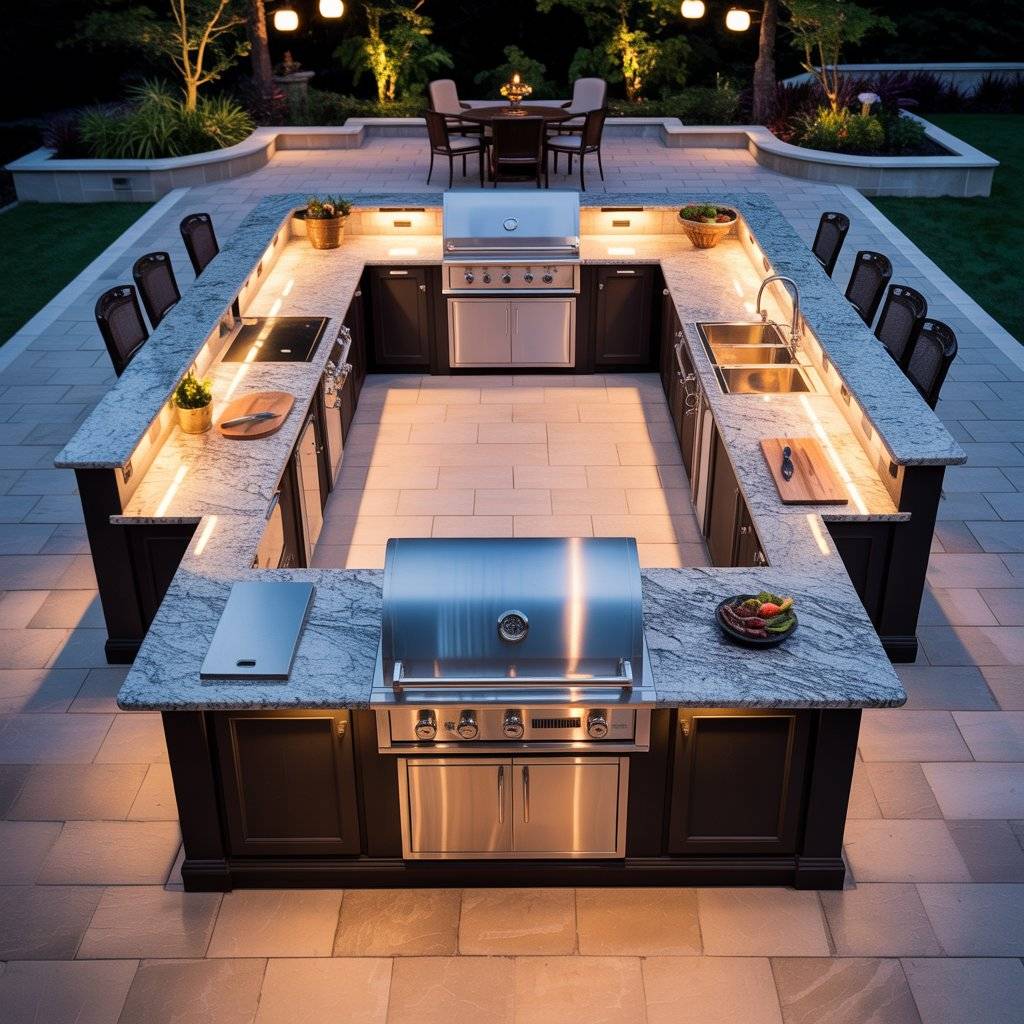
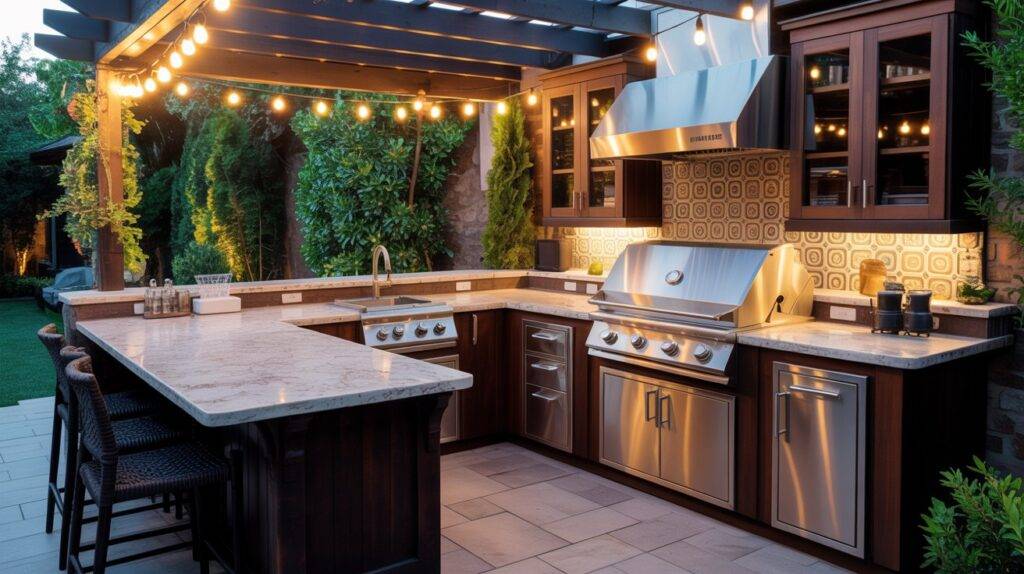
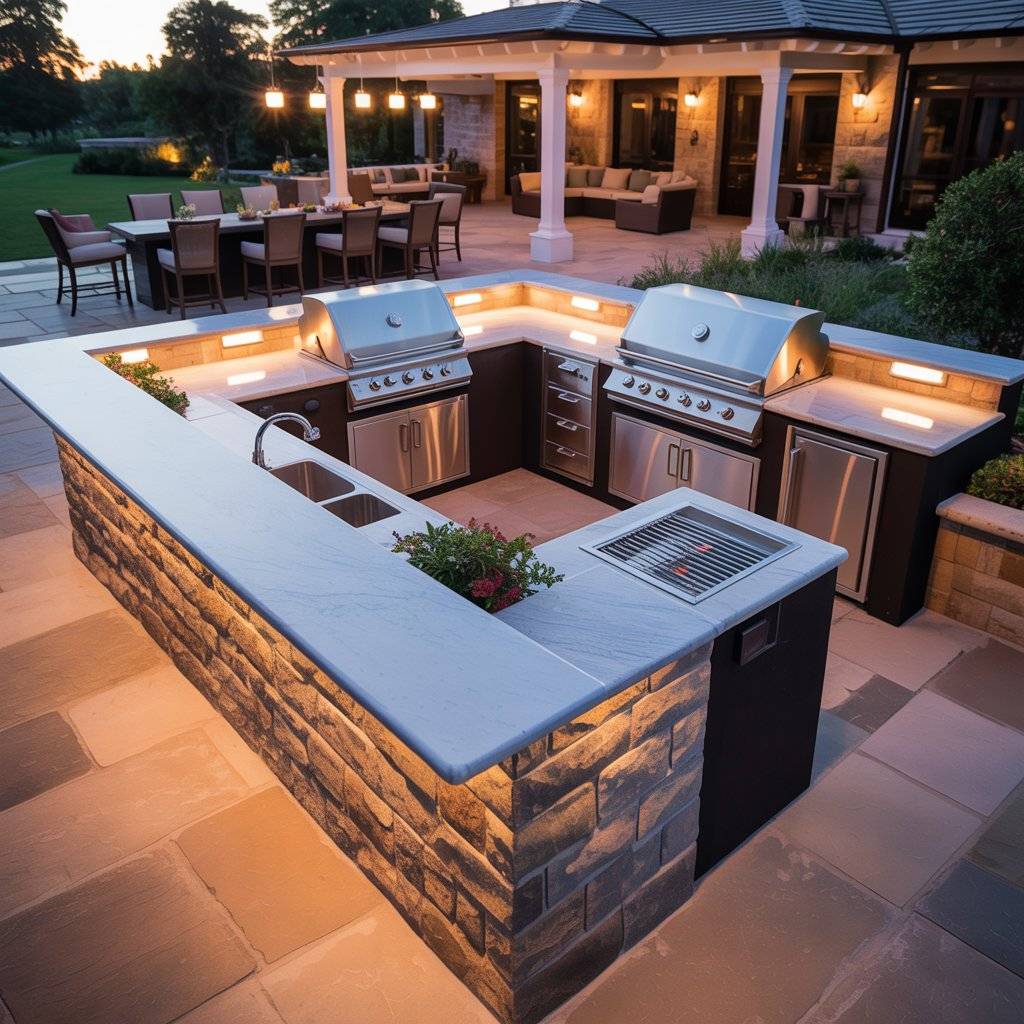
If you want a layout that feels like a full cooking station, the U-shape is worth considering. This design surrounds the cook with counters on three sides. The grill sits in the center section, while the other sides hold prep space, storage, or a sink.
I’ve seen this layout work best in larger patios where there’s room to move around comfortably. The advantage is that everything stays within a few steps. You can prep food, cook, and plate meals without leaving the cooking zone.
Another thing I like about the U-shape is how organized it feels. Each side can have its own purpose. One side for prepping, one for cooking, and one for serving or drinks.
It does take a little more planning and space, but when done right it creates a very smooth cooking workflow outdoors.
4. Outdoor Kitchen Island Layout
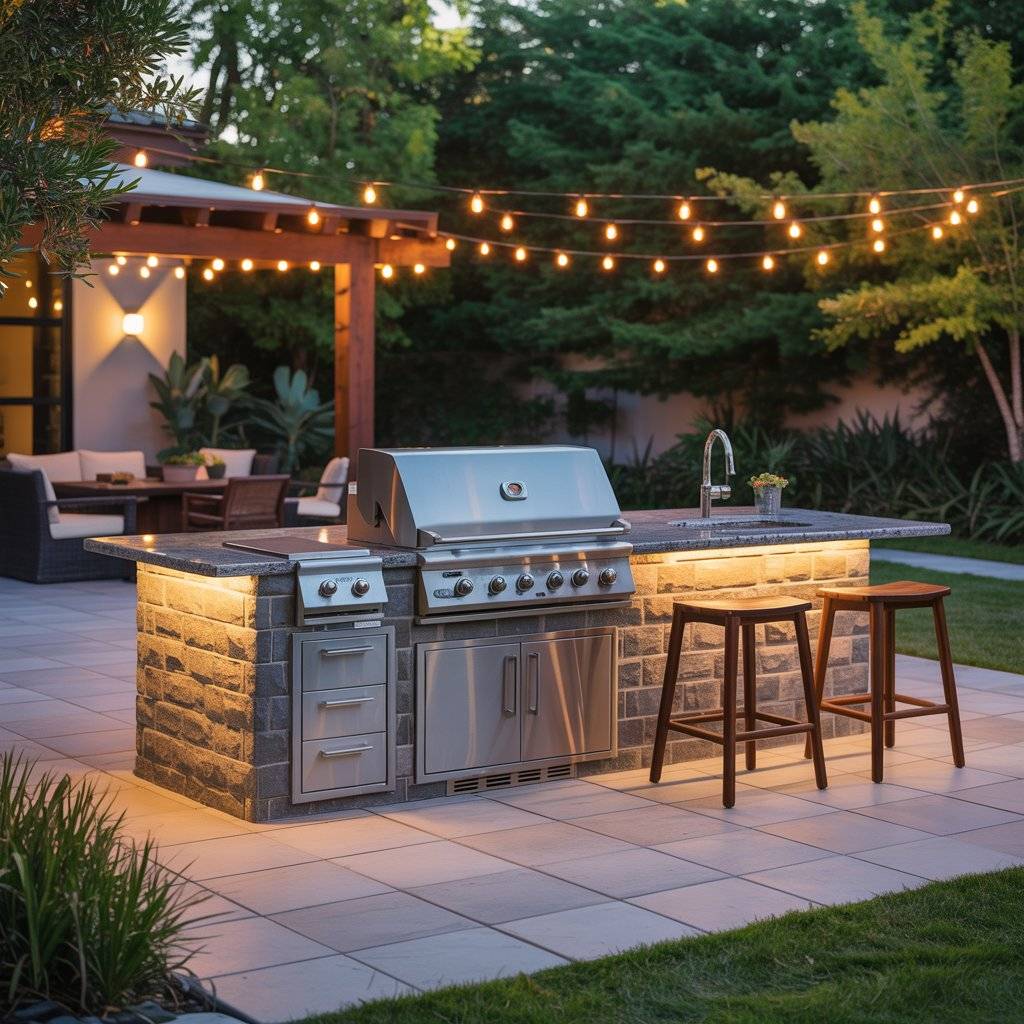
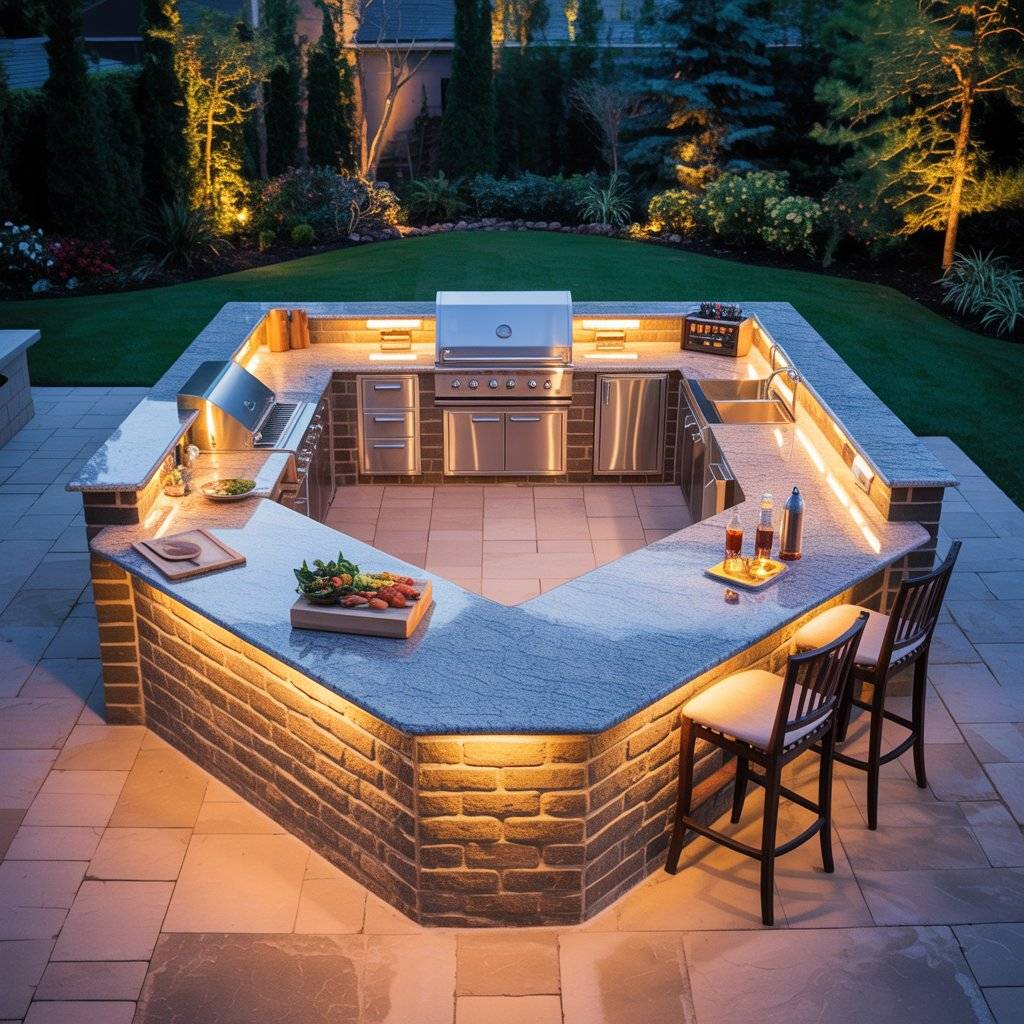
An outdoor kitchen island is something I’ve seen work really well in open backyard spaces. Instead of building the kitchen against a wall, everything sits in one central island. The grill usually goes in the middle, with prep counters on both sides.
What I like about this layout is how social it feels. When you’re cooking, you’re not facing a wall. You can talk with friends or family sitting nearby while you grill. I’ve seen people add bar stools along one side so guests can sit and chat while food is being prepared.
This layout works best when there’s enough space around it for movement. You’ll want room behind the cook for walking and serving food. Even a simple island with a grill and prep counter can turn a backyard into a comfortable cooking spot.
It’s also easier to expand later. Some people start with a grill island and later add a sink, fridge, or storage cabinets.
5. Outdoor Kitchen with Bar Seating
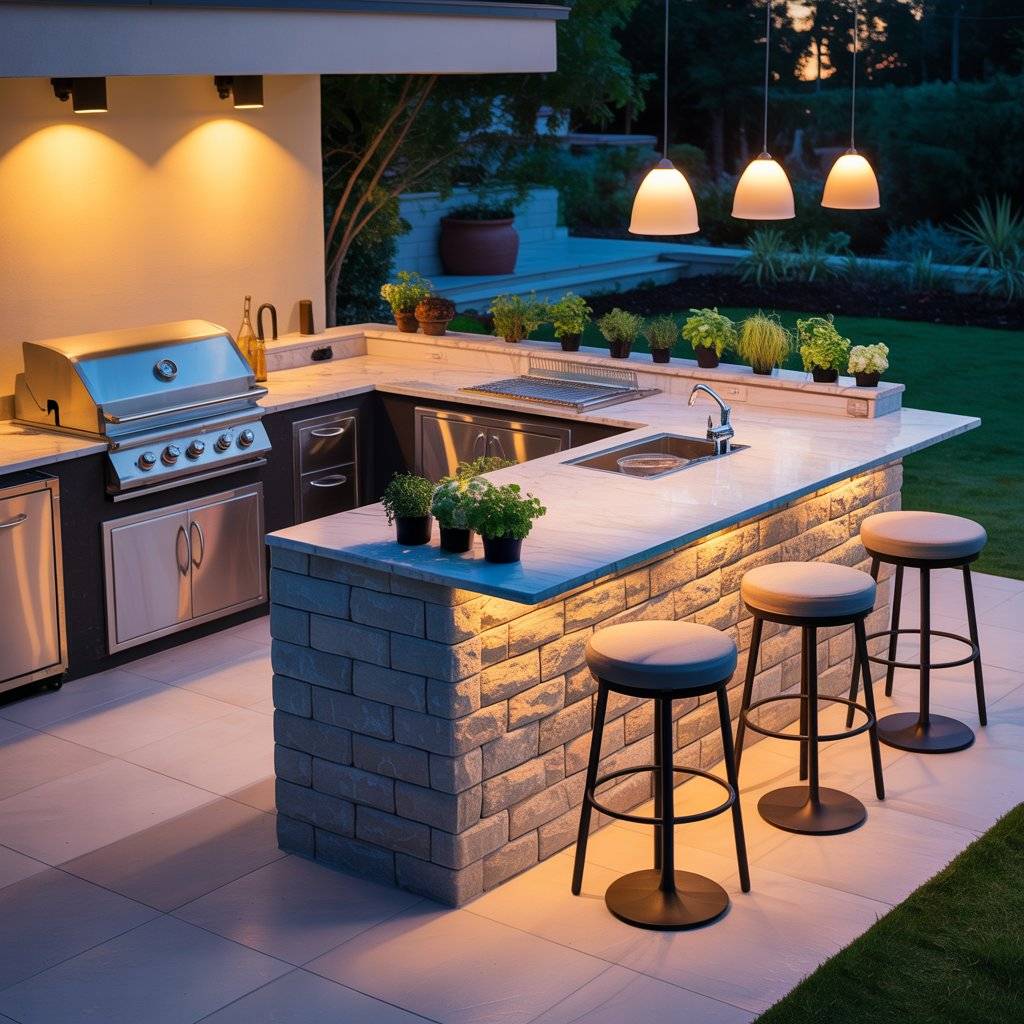
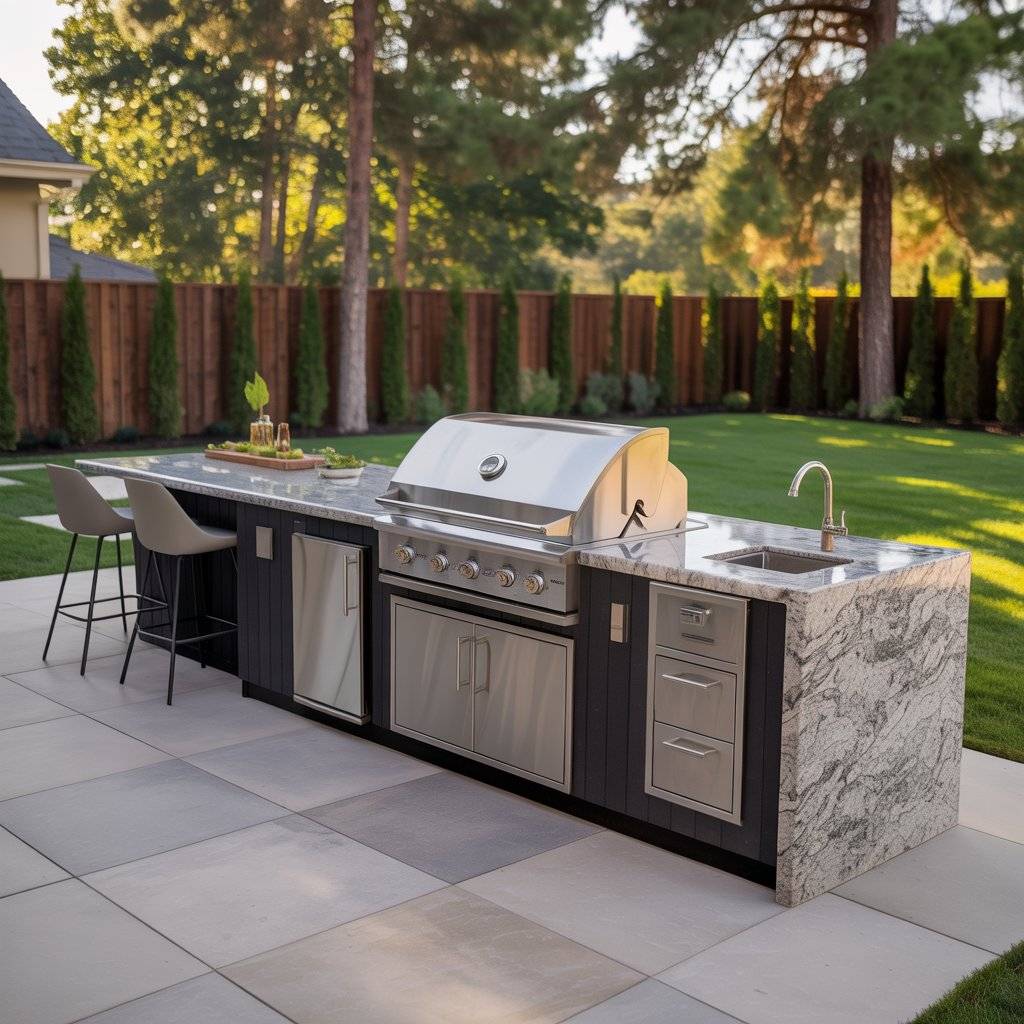
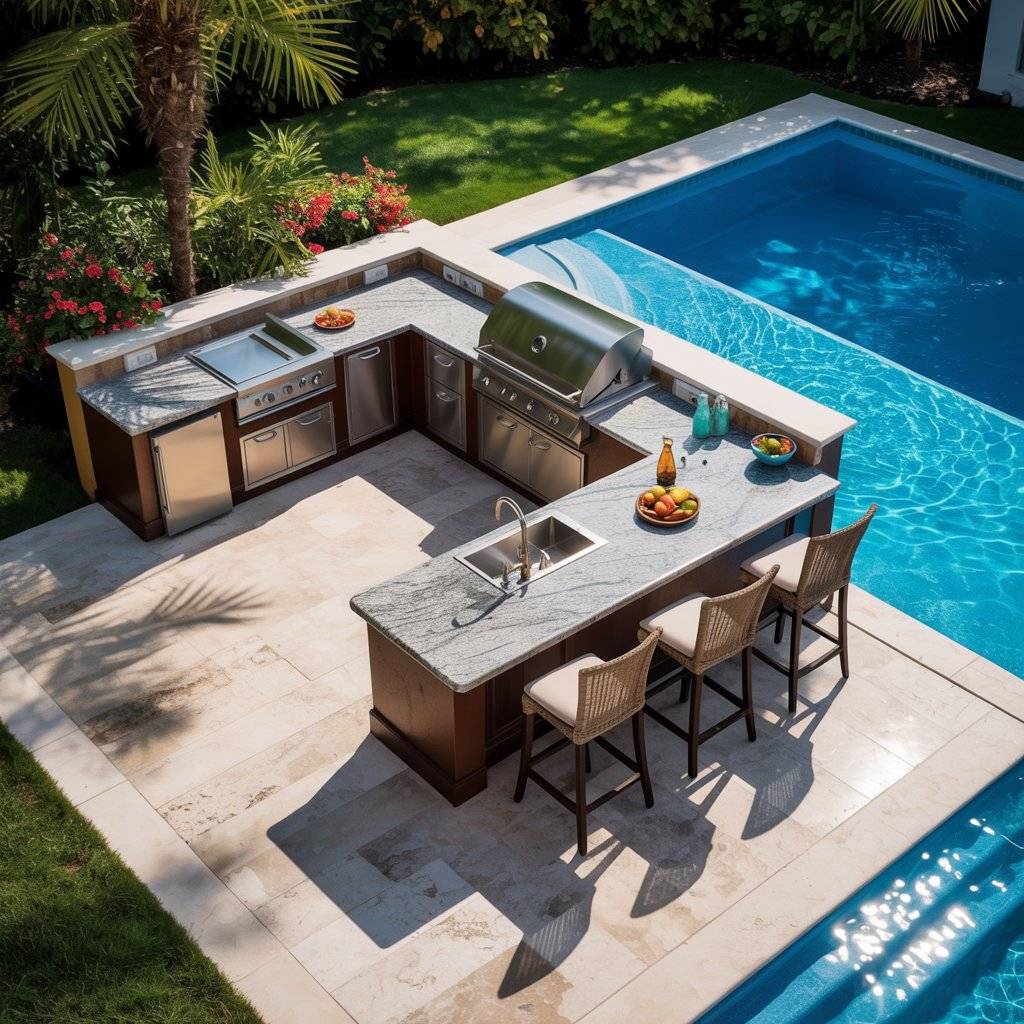
Another layout that works well, especially for entertaining, is adding bar seating to the outdoor kitchen. Instead of separating the cooking area from the dining area, the counter extends outward to create a small bar.
I’ve seen this done with an L-shaped counter where the outer side is slightly raised for stools. The cook stays inside the kitchen zone while guests sit on the outside. It keeps the cooking space clear but still lets people gather around.
This setup makes outdoor cooking feel more relaxed. People can sit, talk, and enjoy a drink while the food is being prepared. It also saves space because you don’t always need a separate dining table nearby.
When planning this layout, it helps to leave about a foot of overhang on the counter for comfortable seating. That small detail makes the bar area much more usable.
6. Parallel Outdoor Kitchen Layout
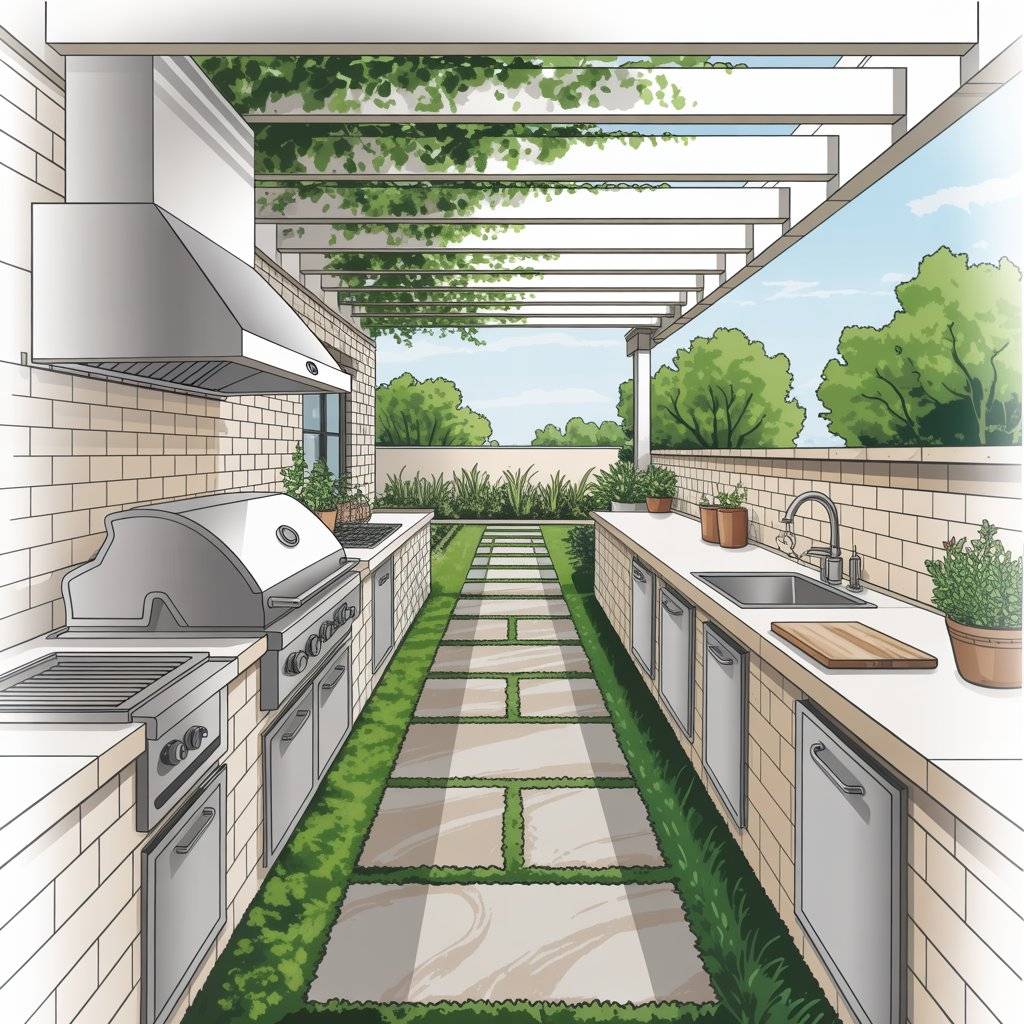
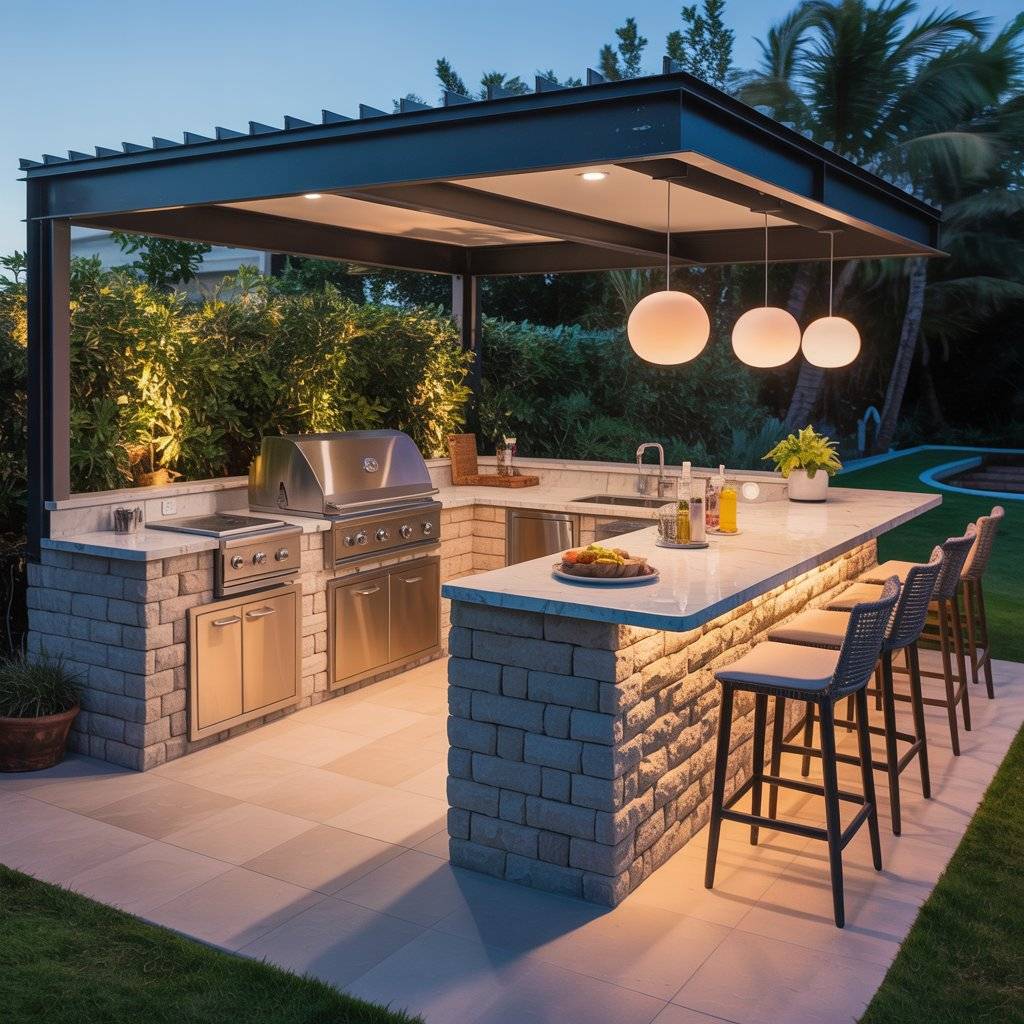
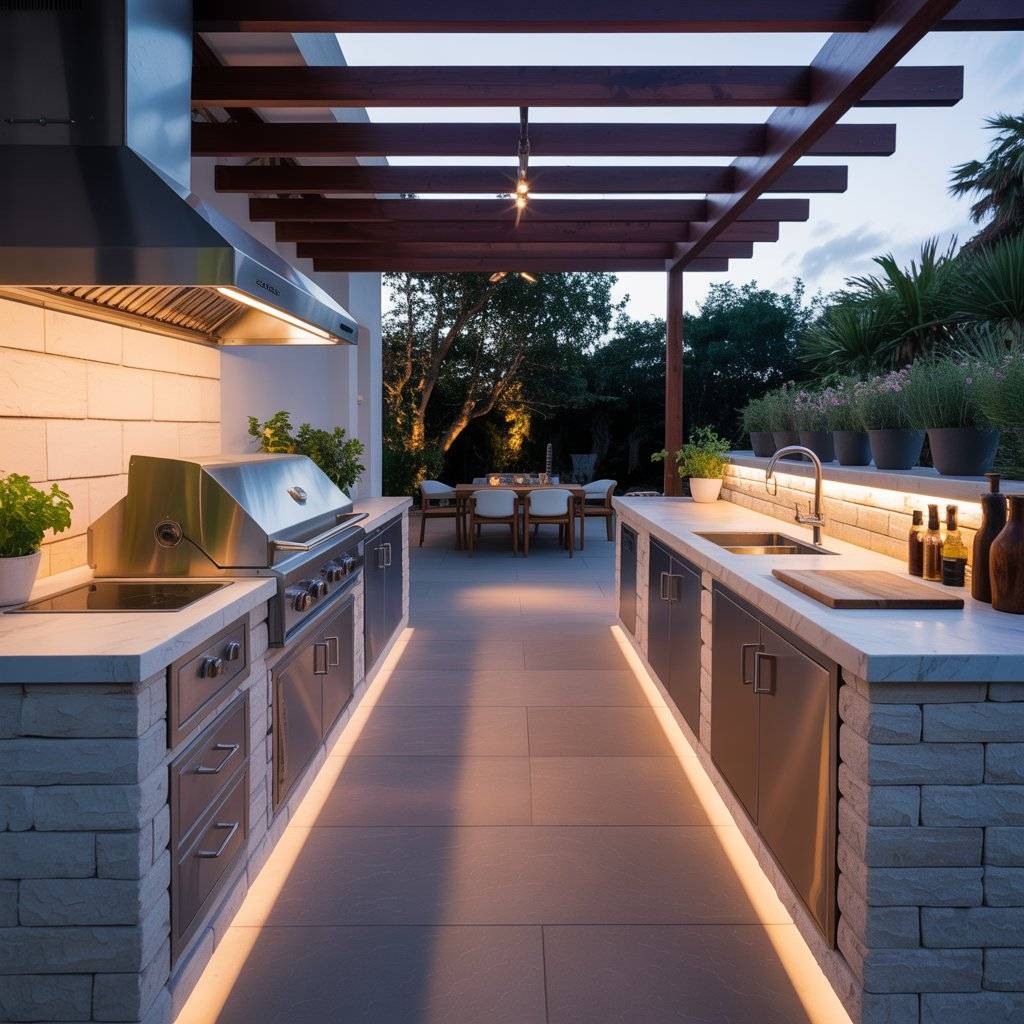
The parallel layout is something I’ve seen used when the outdoor kitchen sits between two structures, like a house wall and a fence or pergola. Instead of one counter, you have two counters facing each other.
One side usually holds the grill and cooking appliances, while the other side is used for prep work, serving, or storage. This setup creates a small walkway in the middle where the cook can move easily between both sides.
What makes this layout practical is how organized it feels. Cooking happens on one side, prepping happens on the other. It naturally separates tasks without needing a huge space.
It’s especially useful in narrow patios or side yards where a wider layout wouldn’t fit. As long as you leave enough walking space in the middle, it becomes a very efficient outdoor cooking area.
7. Corner Patio Outdoor Kitchen
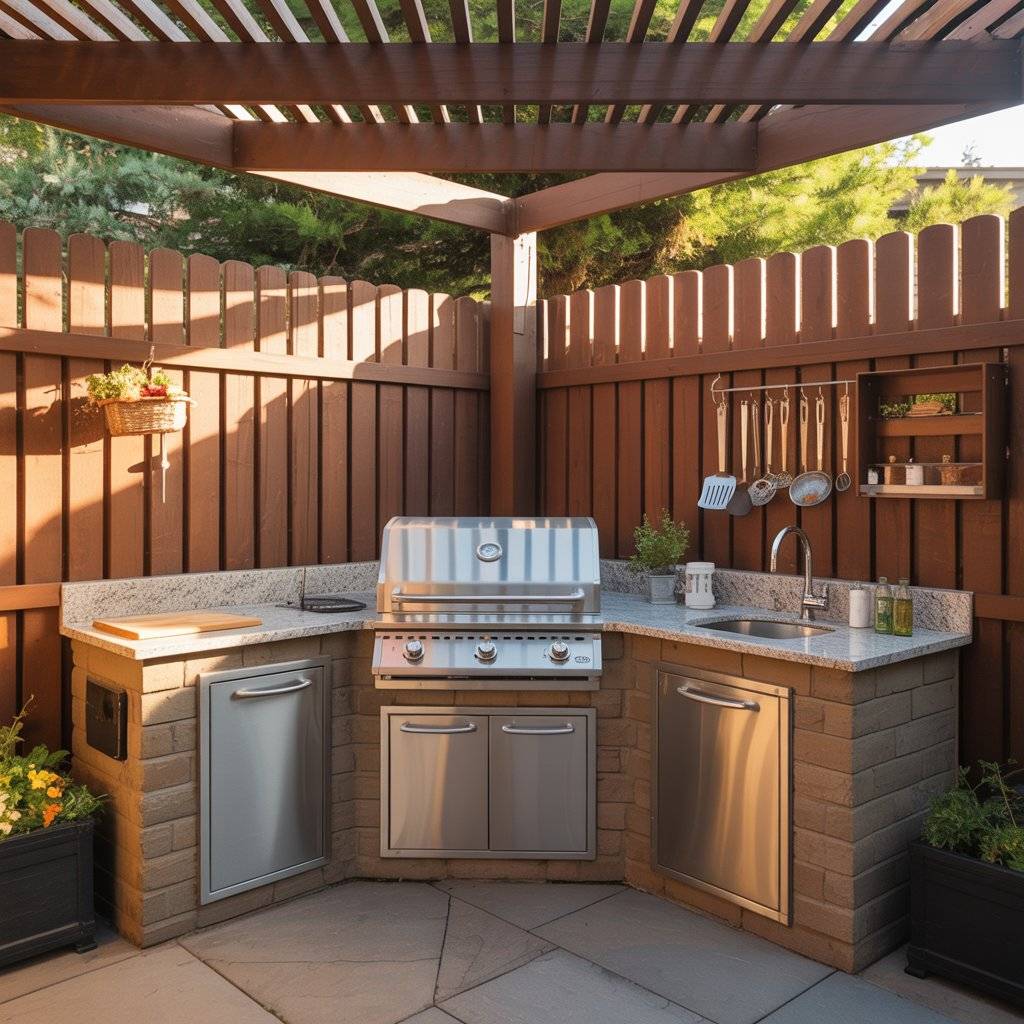
Sometimes the best place for an outdoor kitchen is simply the corner of a patio. I’ve seen homeowners use an unused corner and turn it into a compact cooking space with a grill, small counter, and storage underneath.
The advantage of a corner layout is that it makes use of space that might otherwise stay empty. Two walls or fences can help define the kitchen area and protect it from wind.
I once helped design a small setup like this where the grill sat in the corner and the counters ran out on both sides. It didn’t take much space, but it still allowed for food prep and serving.
For smaller backyards, this layout can be one of the most practical options. It keeps the kitchen tucked away while still making outdoor cooking easy and enjoyable.
8. Outdoor Kitchen with Dining Table Integration
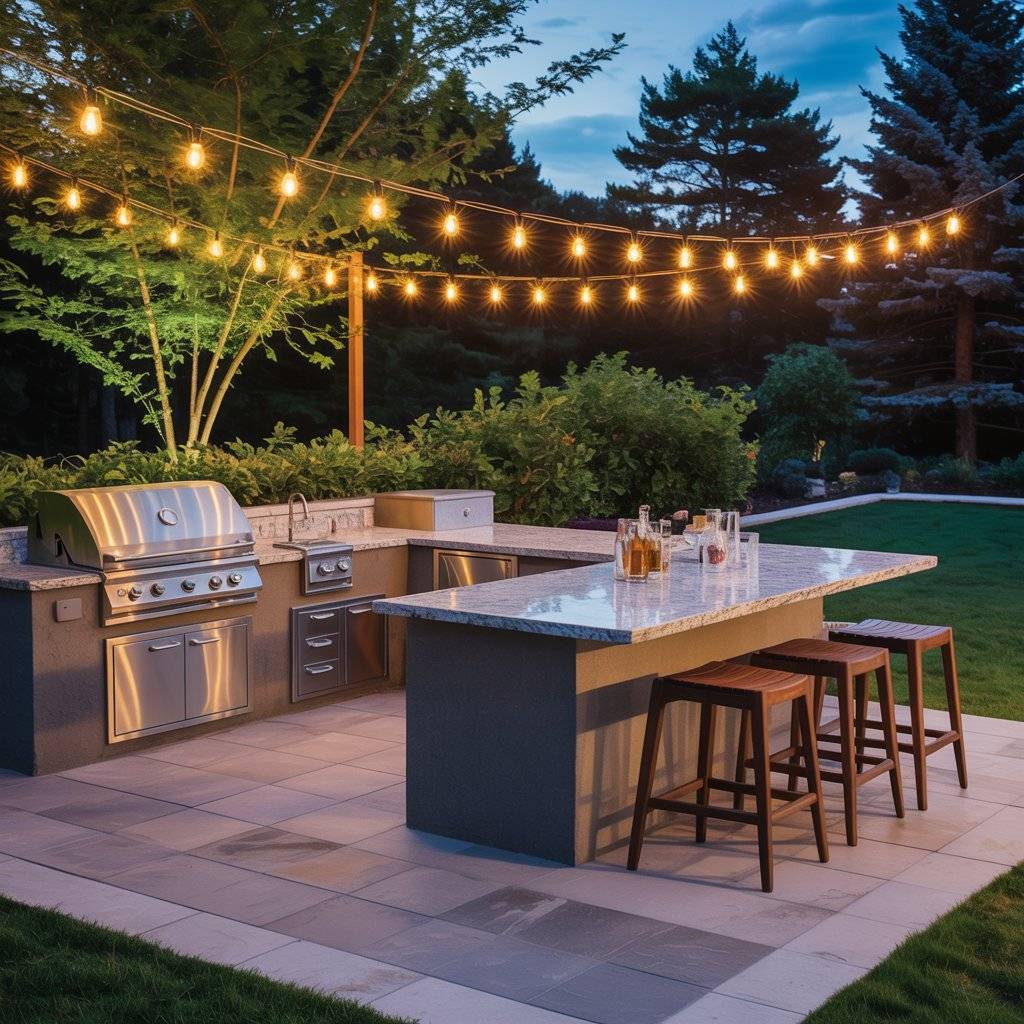
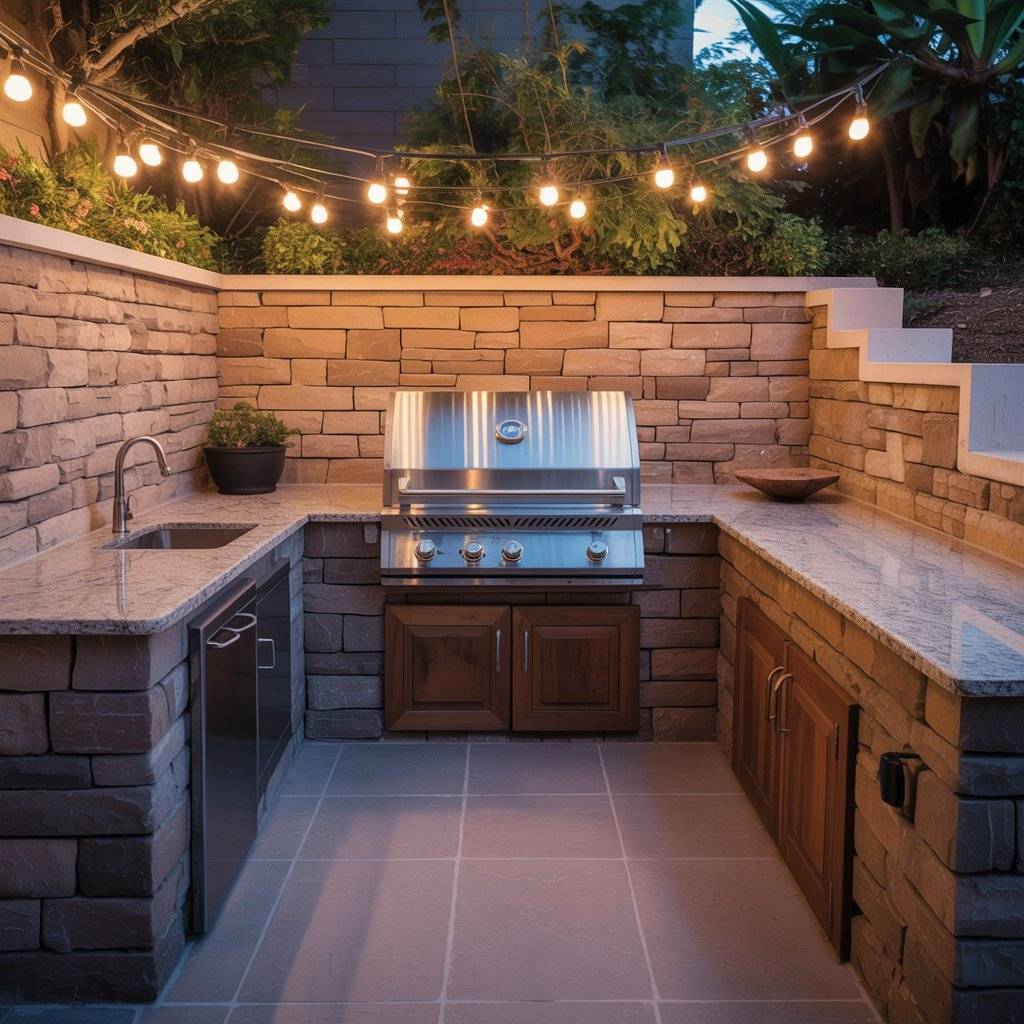
One layout I’ve seen work really well is connecting the outdoor kitchen directly to the dining table. Instead of placing the table somewhere else on the patio, the cooking area flows right into the eating space.
In one setup I helped plan, the grill and prep counter sat on one side, and the counter extended into a sturdy table where everyone could sit down to eat. It made the whole space feel connected. The cook didn’t have to walk across the yard carrying plates, which made serving food much easier.
This layout works especially well for family dinners or small gatherings. Once the food is ready, it goes straight from the grill to the table. It also helps keep the outdoor space organized because cooking, serving, and eating all happen in the same area.
If you’re building this layout, it helps to use durable materials for the table surface. Stone, concrete, or sealed wood can handle outdoor weather and frequent use.
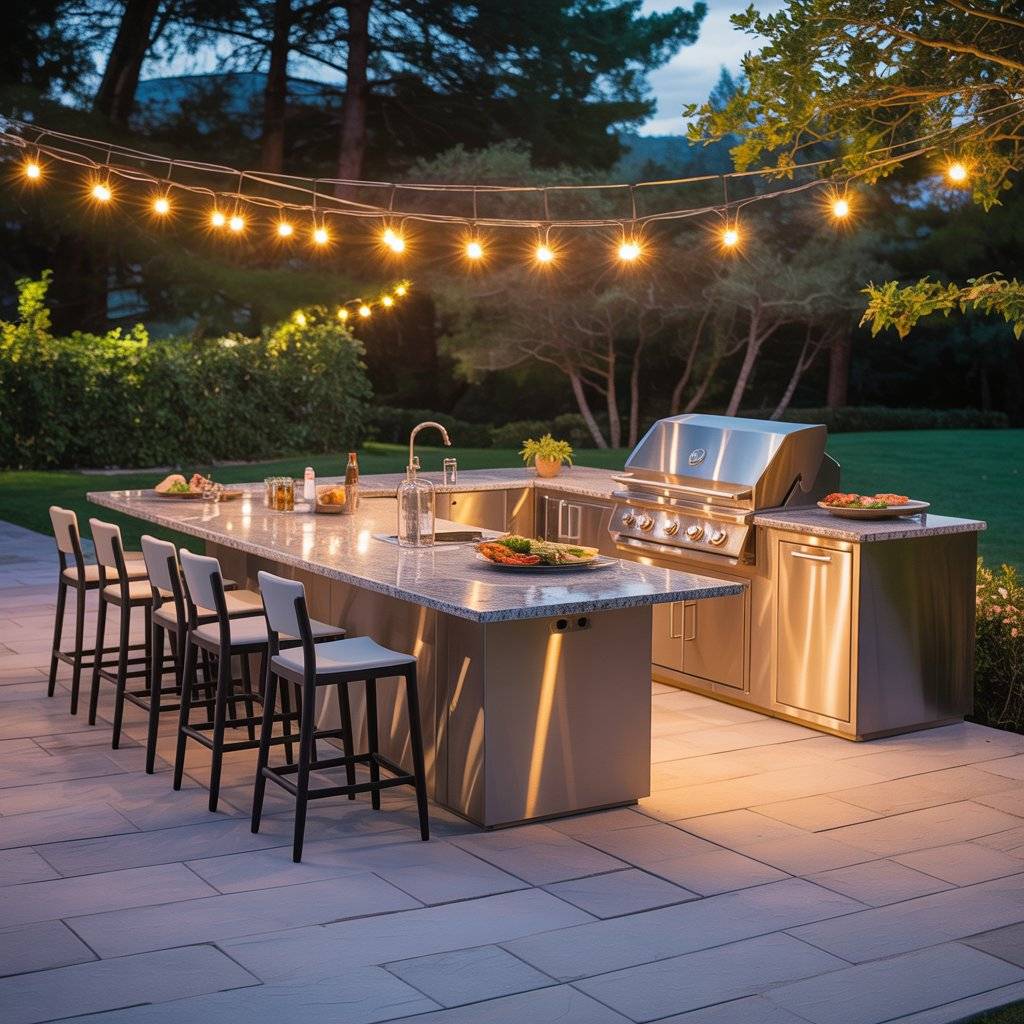
9. Pergola-Covered Outdoor Kitchen Layout
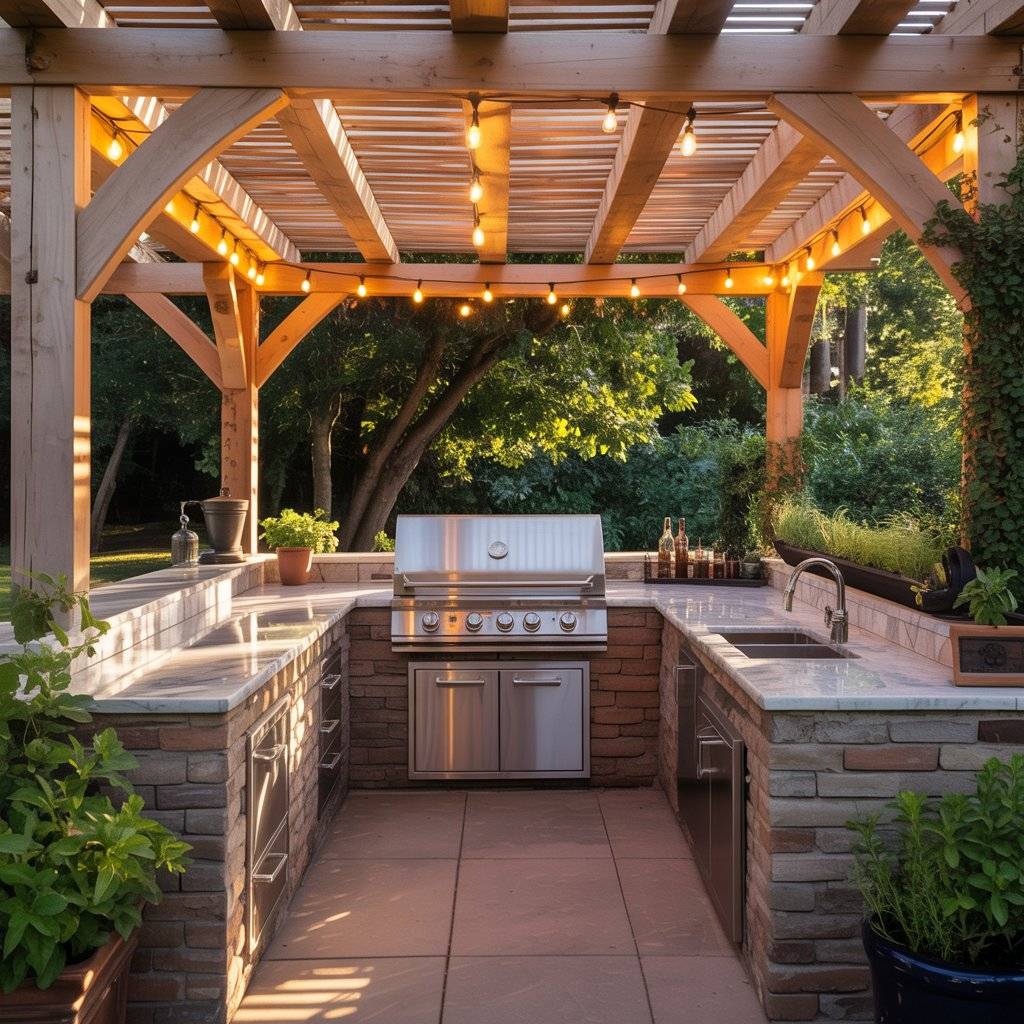
A pergola can completely change how an outdoor kitchen feels. Instead of placing the cooking space out in the open, the kitchen sits under a simple structure that provides shade and a bit of protection from weather.
I’ve seen this layout work nicely when the kitchen island or L-shaped counter sits directly under the pergola. The grill, prep space, and storage stay covered, while the open sides still allow smoke and heat to escape.
Another advantage is comfort. Cooking outside in the middle of the afternoon sun can get tiring. A pergola makes the space cooler and more inviting, especially during summer. Some homeowners also add string lights or small fans, which makes the area usable in the evening too.
This layout doesn’t require complicated construction either. Even a basic wood or metal pergola can turn a simple outdoor kitchen into a comfortable cooking space.
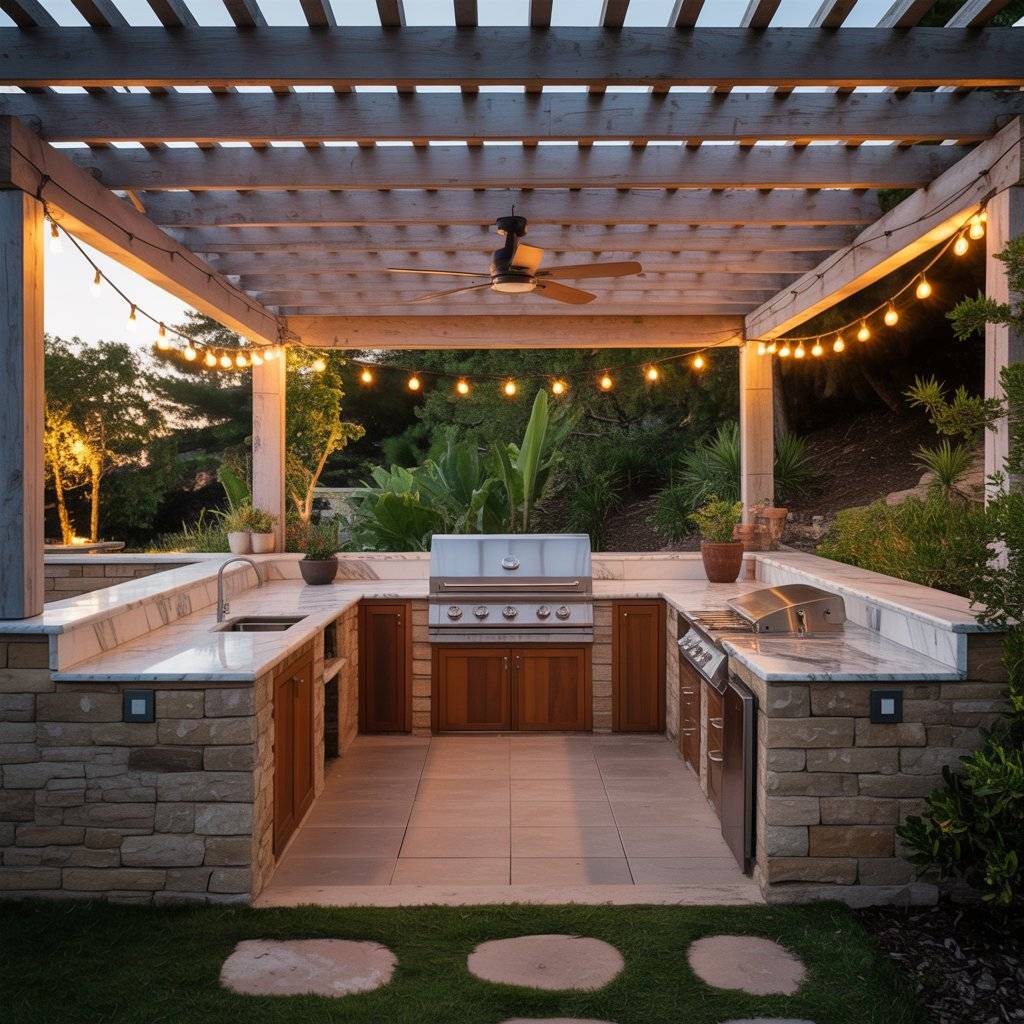
10. Poolside Outdoor Kitchen Layout
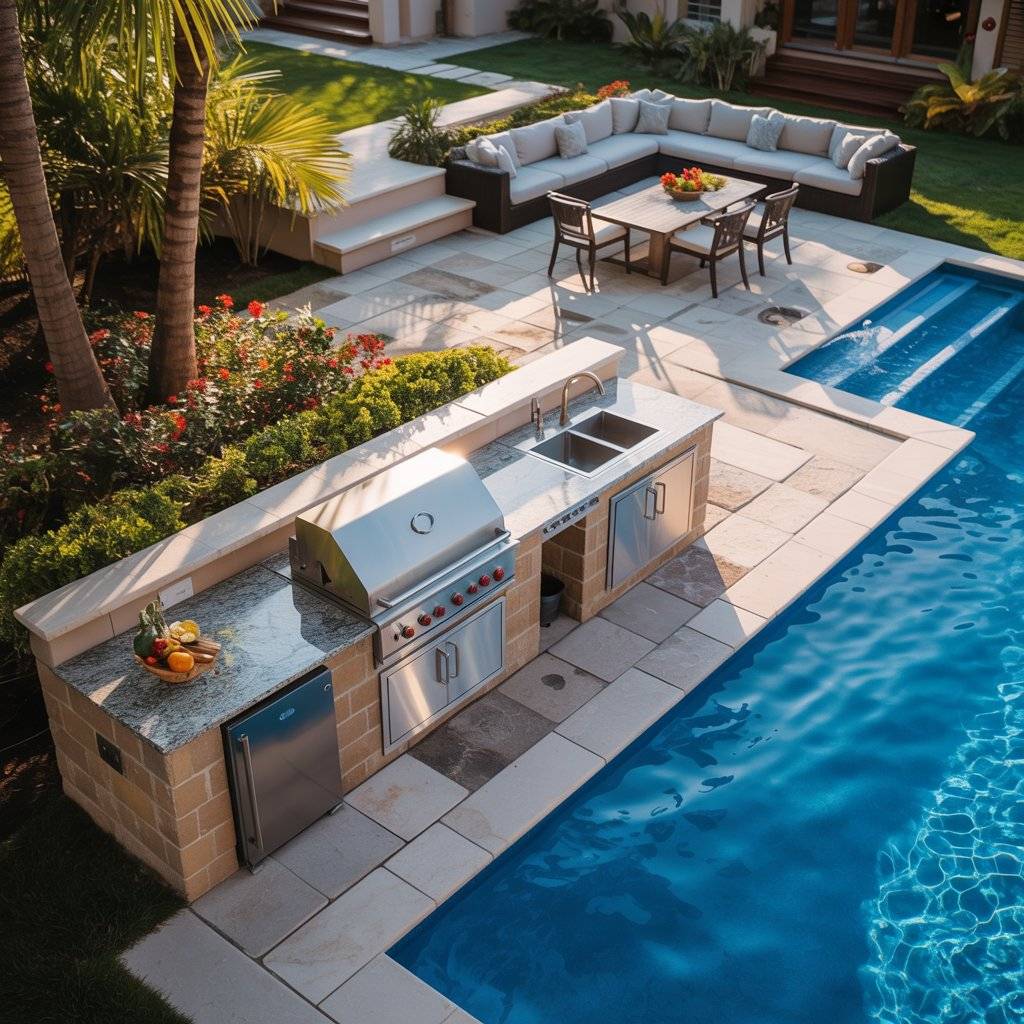
If a backyard already has a pool, placing the outdoor kitchen nearby can make the space much more useful. I’ve seen this layout work well because it keeps food, drinks, and seating close to where everyone is already spending time.
Usually the grill and prep counters are placed along one side of the pool patio, leaving enough space for safe walking paths. Some setups include a small fridge or cooler for drinks so people don’t have to run inside the house.
What makes this layout practical is convenience. Kids and guests can grab snacks or drinks without leaving the pool area, and the cook can still keep an eye on everything while preparing food.
When designing a poolside kitchen, it helps to choose materials that handle water and humidity well. Non-slip flooring and weather-resistant counters make the area safer and easier to maintain.
11. Modular Outdoor Kitchen Layout
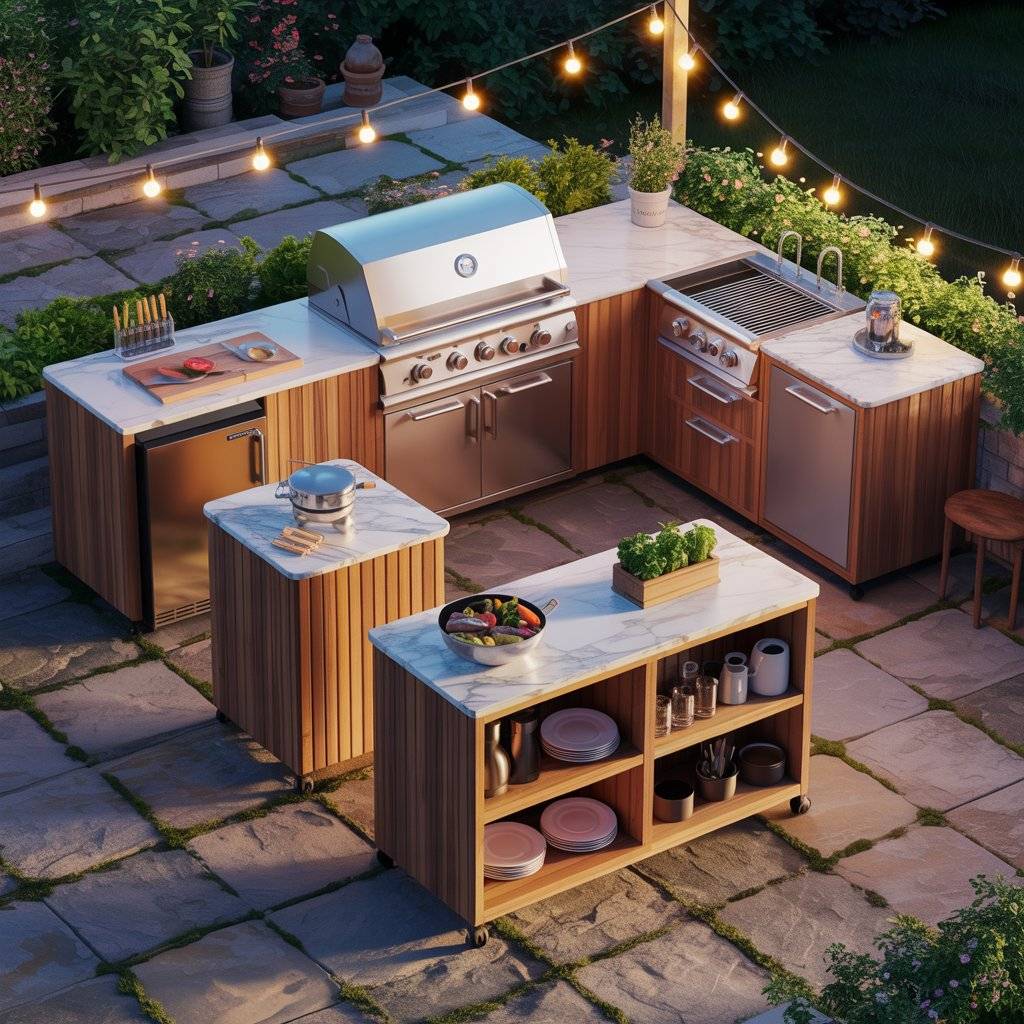
A modular outdoor kitchen is something I often recommend when someone doesn’t want to build everything at once. Instead of installing a permanent structure right away, the kitchen is created using separate units that can be arranged together.
For example, one module might hold the grill, another could be a prep counter, and another might include storage or a sink. These pieces can be moved around until the layout feels comfortable.
I’ve seen people start with just a grill station and one counter. Later they added a fridge unit and extra storage when they had the budget. It’s a practical way to build a functional cooking space without committing to a large project from the start.
Another benefit is flexibility. If you rearrange the patio later, the modules can move with it.
12. Outdoor Kitchen Along a Fence or Wall
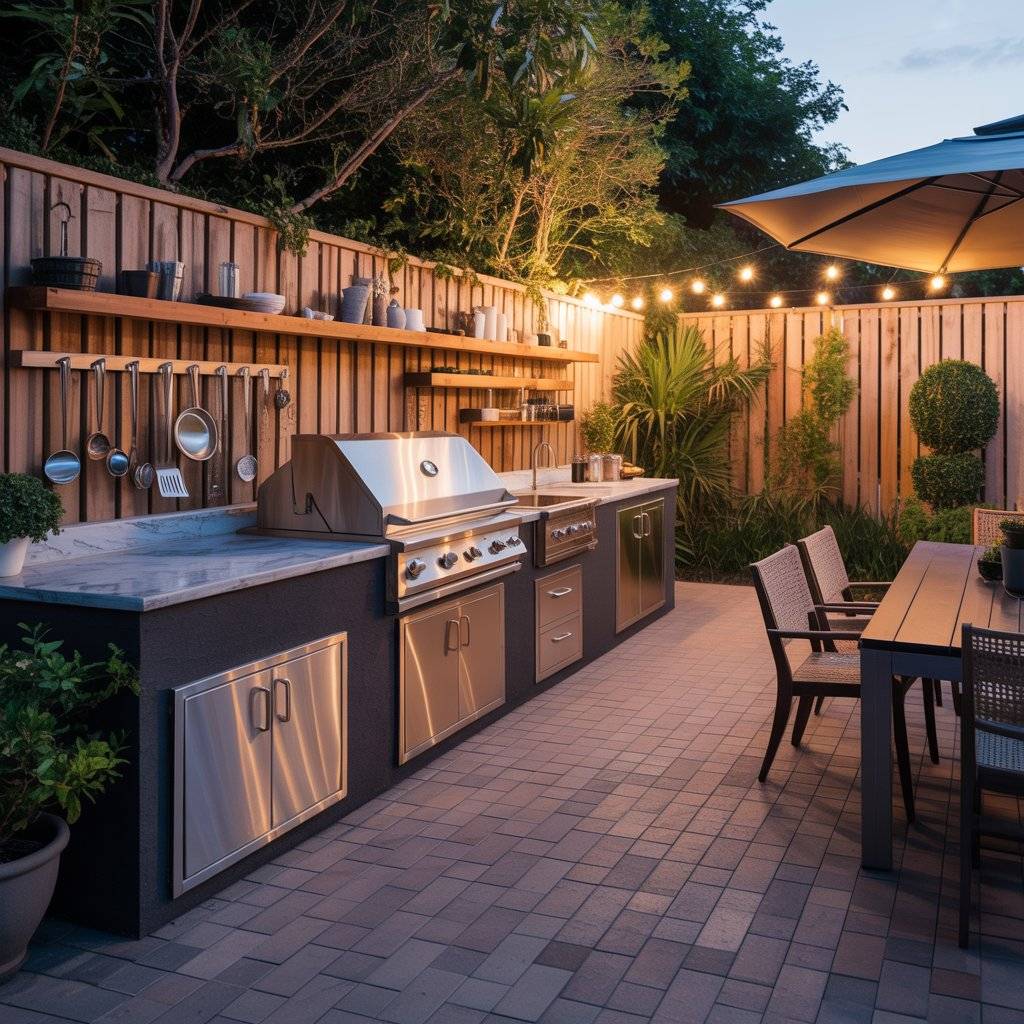
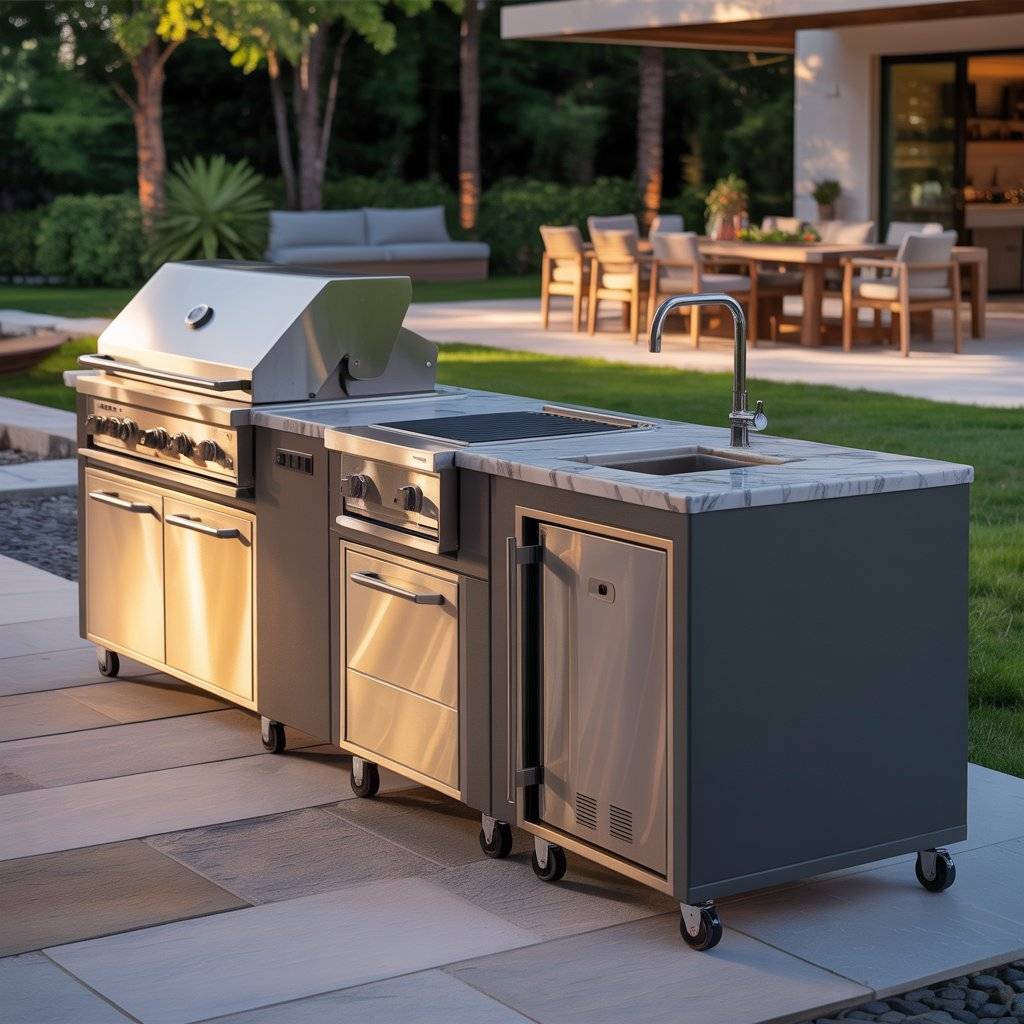
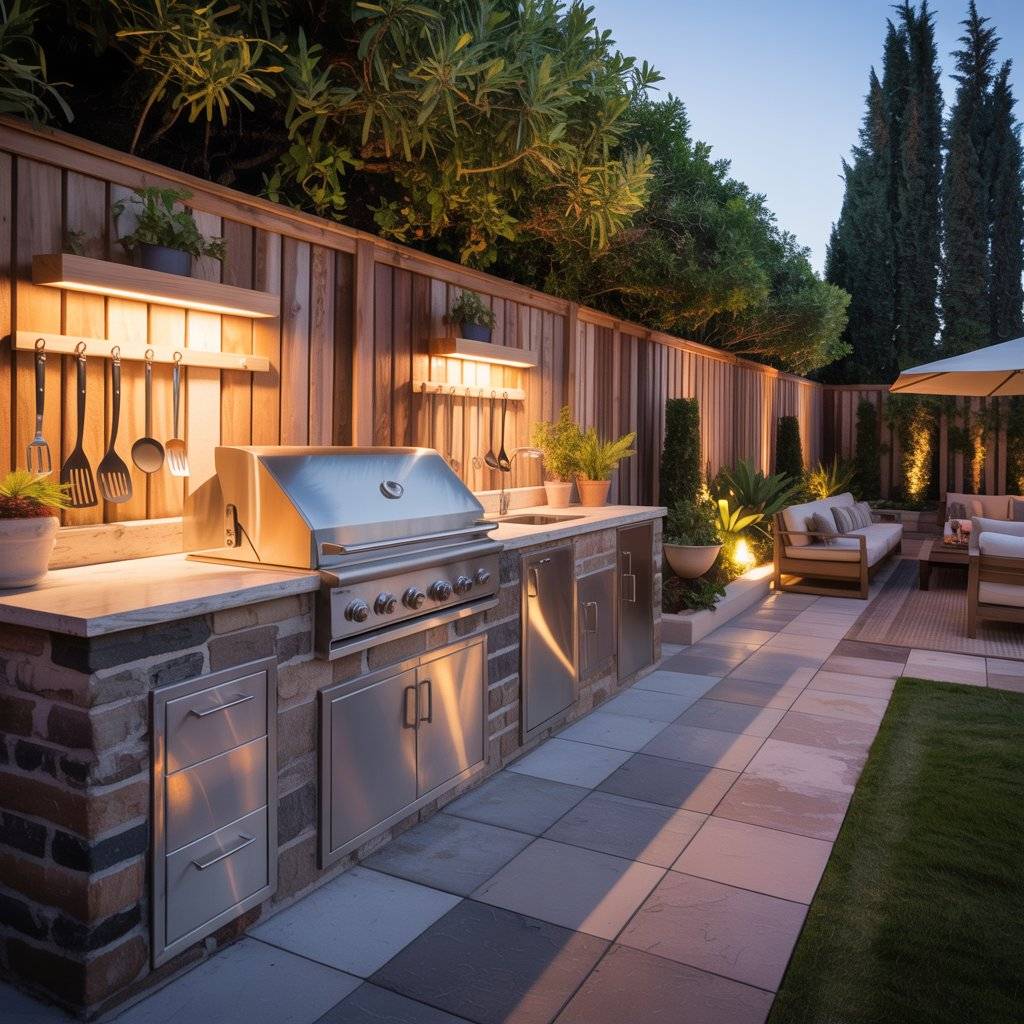
One layout I’ve seen work well, especially in smaller yards, is placing the outdoor kitchen along a fence or exterior wall. Instead of building something in the middle of the yard, the grill and counters run along the edge of the space.
This approach keeps the center of the patio open for seating or walking. It also makes installation easier because the wall can support cabinets, lighting, or even shelves for cooking tools. I’ve seen people mount simple hooks for spatulas and tongs, which keeps everything within reach.
13. Covered Patio Outdoor Kitchen
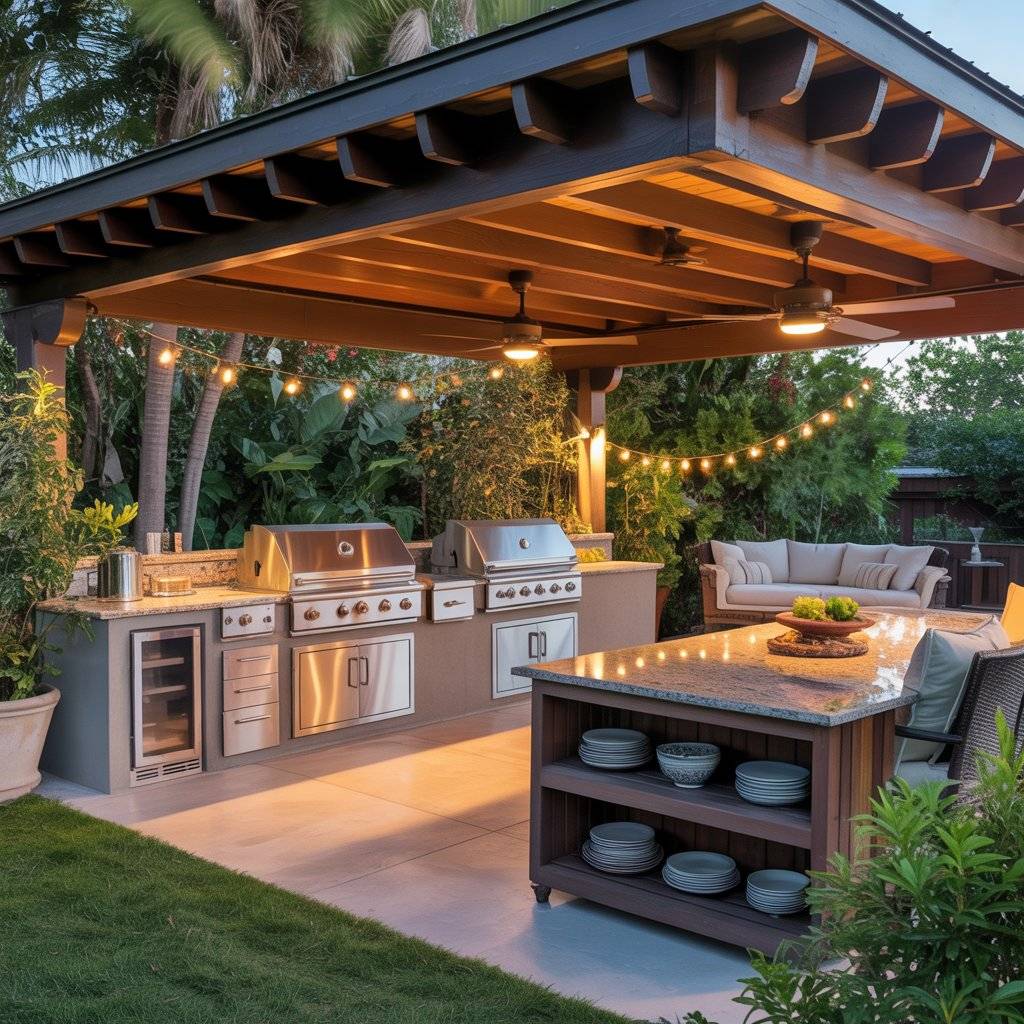
If you already have a covered patio, it can be the perfect place for an outdoor kitchen. Instead of building a separate structure, the kitchen fits right under the existing roof.
I’ve seen this layout used where the grill and prep counter sit along the back wall of the patio while the seating area stays nearby. The roof provides shade and protects the appliances from rain, which helps everything last longer.
Cooking under a roof also makes the space more comfortable in different weather conditions. You can grill even if it’s lightly raining, and the shade helps during hot afternoons.
The key thing to plan carefully here is ventilation. The grill should have enough open space around it so smoke doesn’t get trapped under the roof. With good airflow, this layout can feel just as comfortable as an indoor kitchen.
14. Garden Edge Outdoor Kitchen
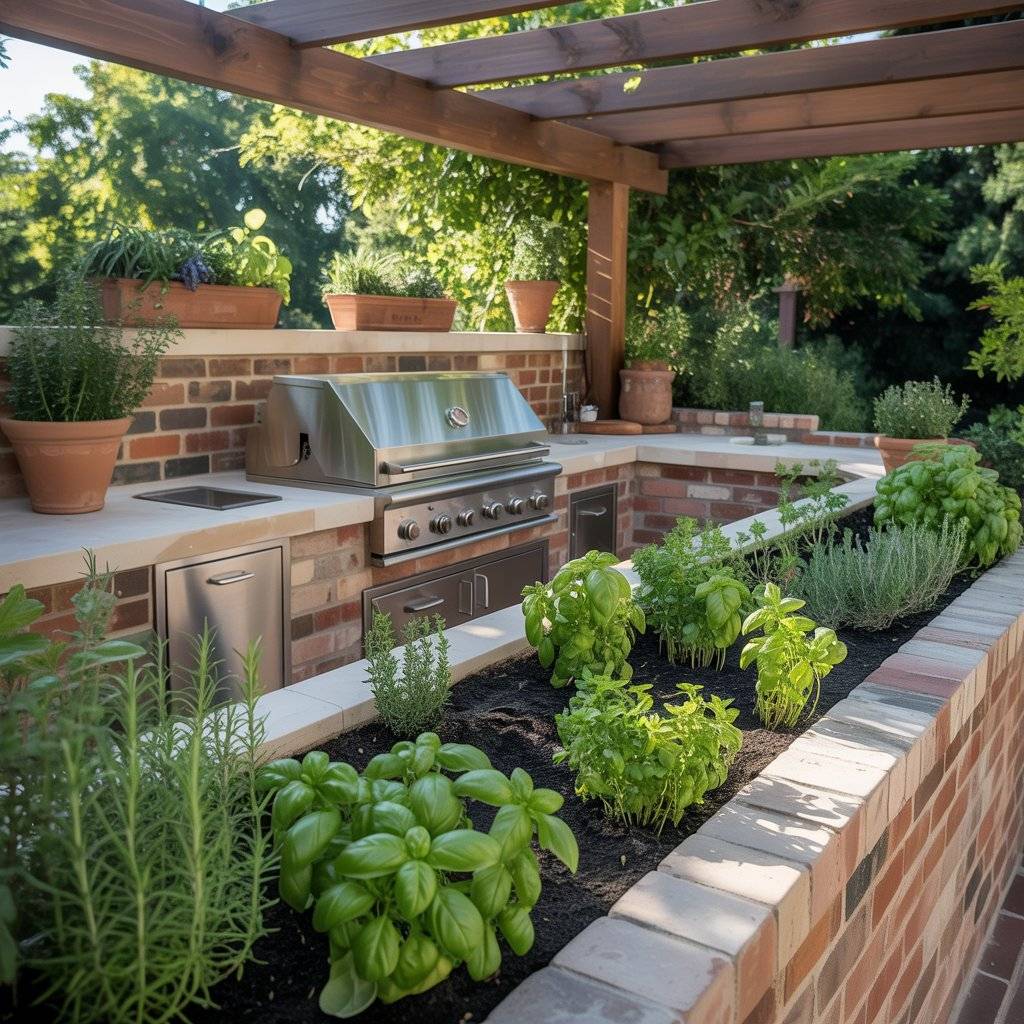
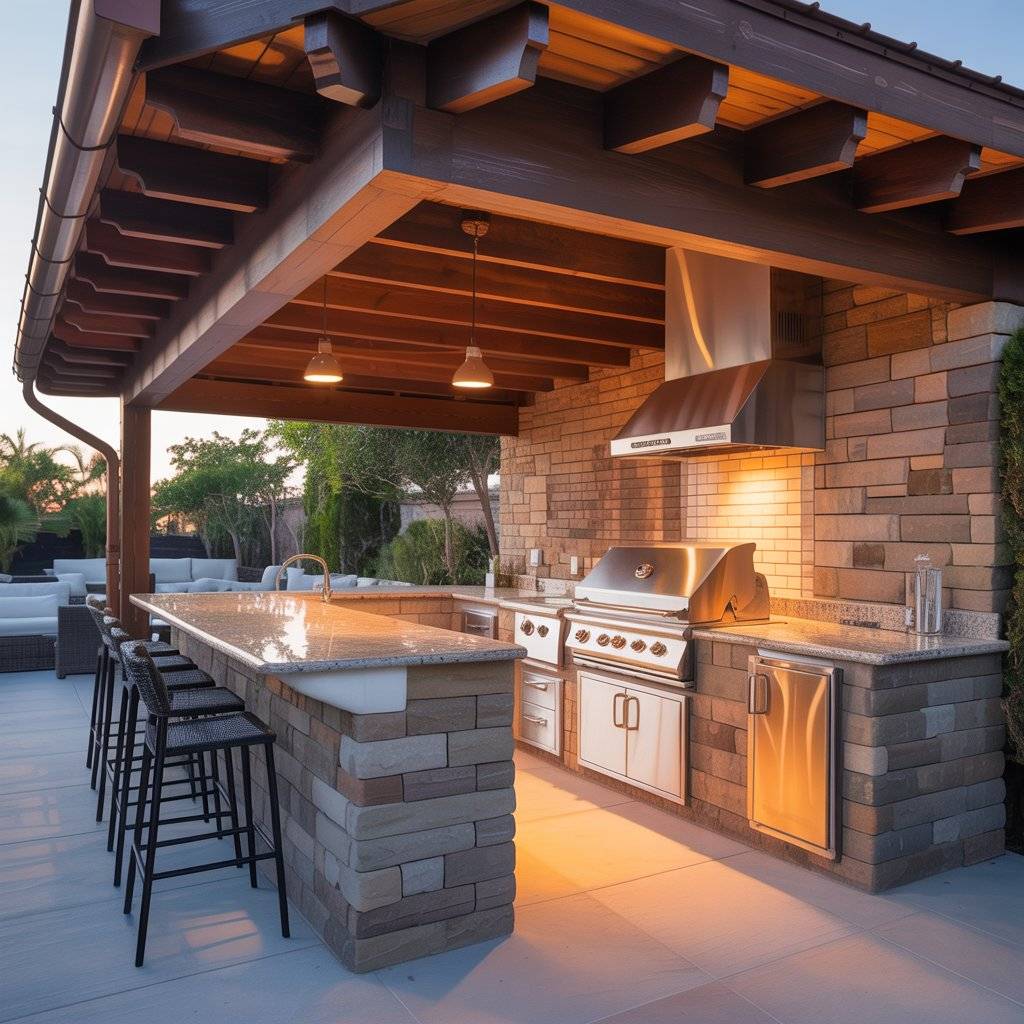
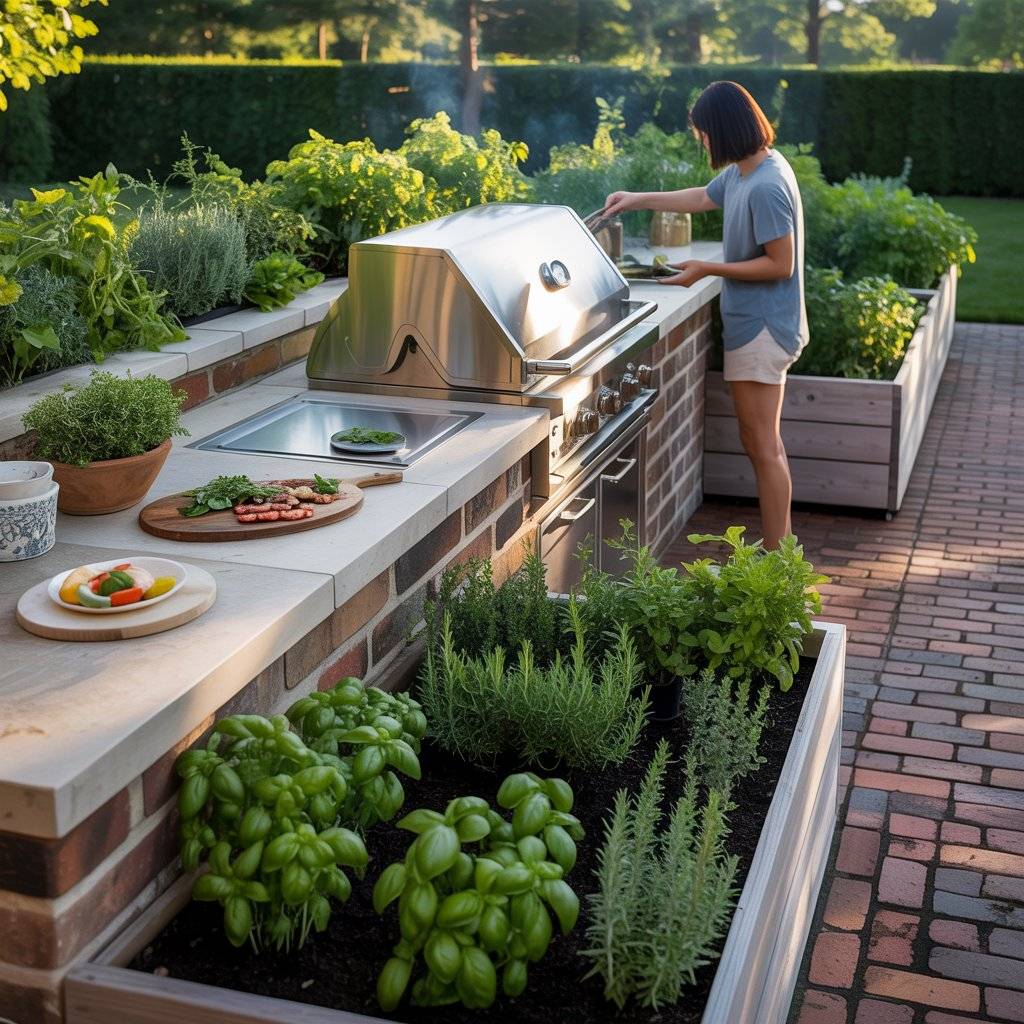
Another layout I’ve seen used nicely is placing the outdoor kitchen right along the edge of a garden. Instead of separating the cooking area from the yard, the kitchen becomes part of the landscape.
In one backyard I visited, the grill station sat next to raised garden beds filled with herbs and vegetables. The cook could step over and cut fresh rosemary or basil while preparing food. It made the whole cooking experience feel more connected to the garden.
This layout works best when the counters and materials blend with the outdoor surroundings. Natural stone, brick, or wood finishes tend to fit nicely.
Besides the visual appeal, it’s also practical. Fresh herbs are right there when you need them, and the kitchen area feels like a natural extension of the yard.
15. Compact Balcony Outdoor Kitchen
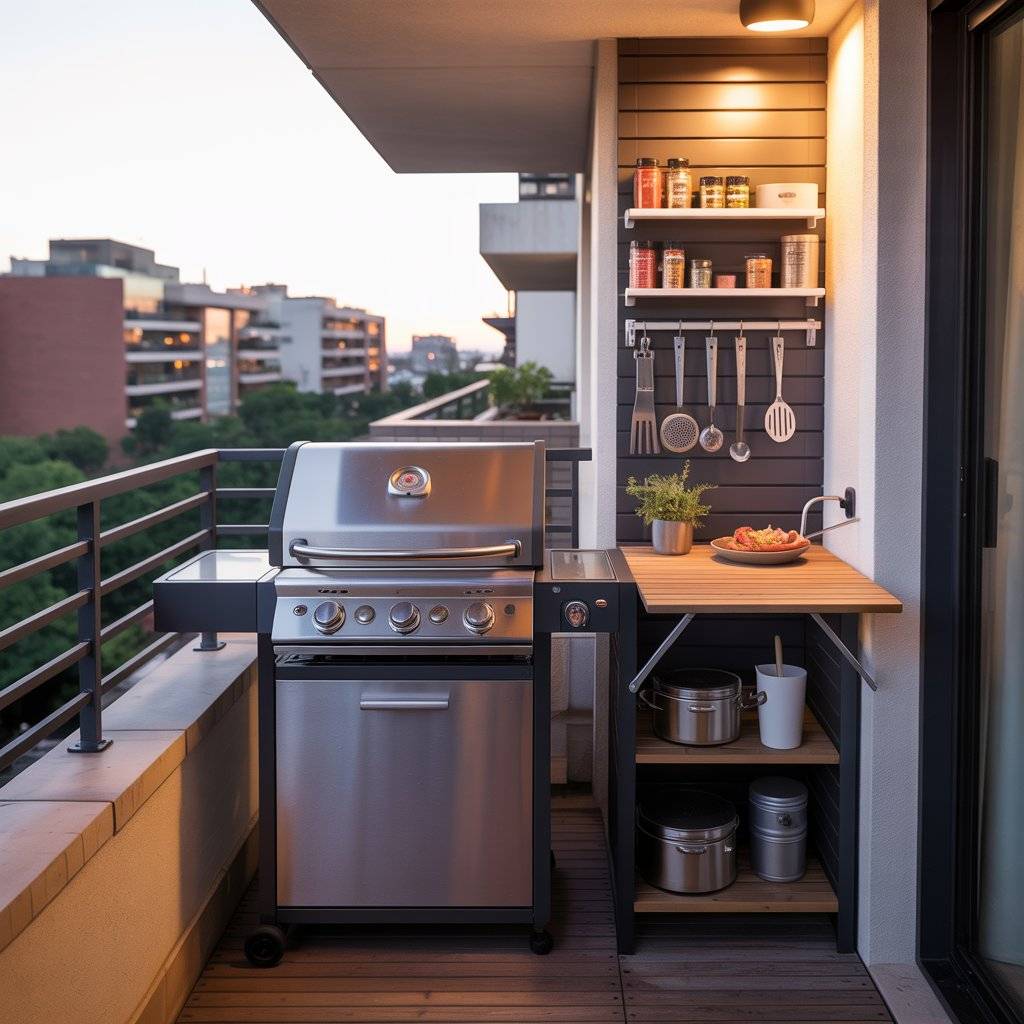
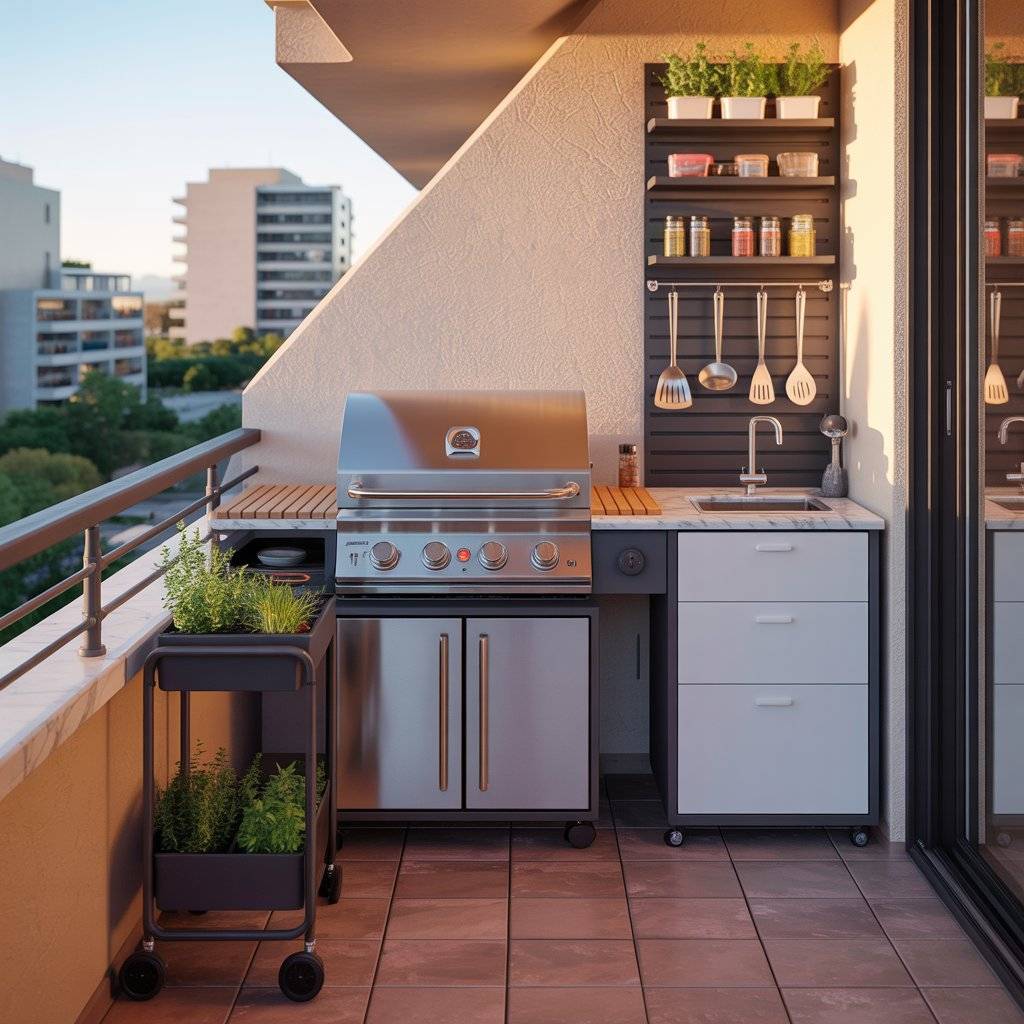
Not everyone has a large backyard, but that doesn’t mean outdoor cooking isn’t possible. I’ve seen small outdoor kitchens set up on balconies using compact layouts.
In these cases, the design stays simple. A small grill, a narrow prep counter, and maybe a compact storage cabinet can be enough to create a functional cooking space. Folding tables or rolling carts can also help add extra prep space when needed.
The key is to keep everything lightweight and organized so the balcony doesn’t feel crowded. Vertical storage, like wall shelves or hanging hooks, can also make a big difference.
This type of layout shows that an outdoor kitchen doesn’t have to be large to be useful. Even a small balcony can become a comfortable place to cook and enjoy fresh air.
16. Outdoor Kitchen with Fire Pit Seating
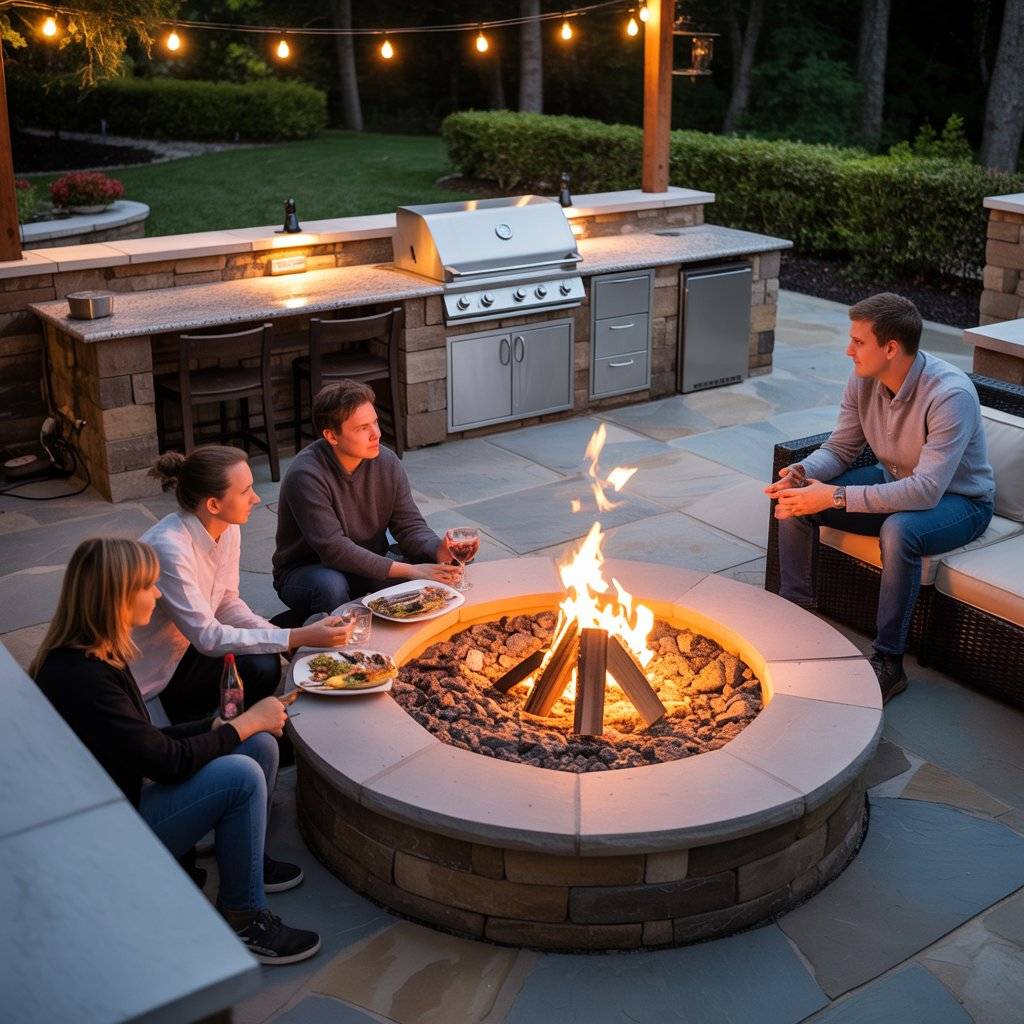
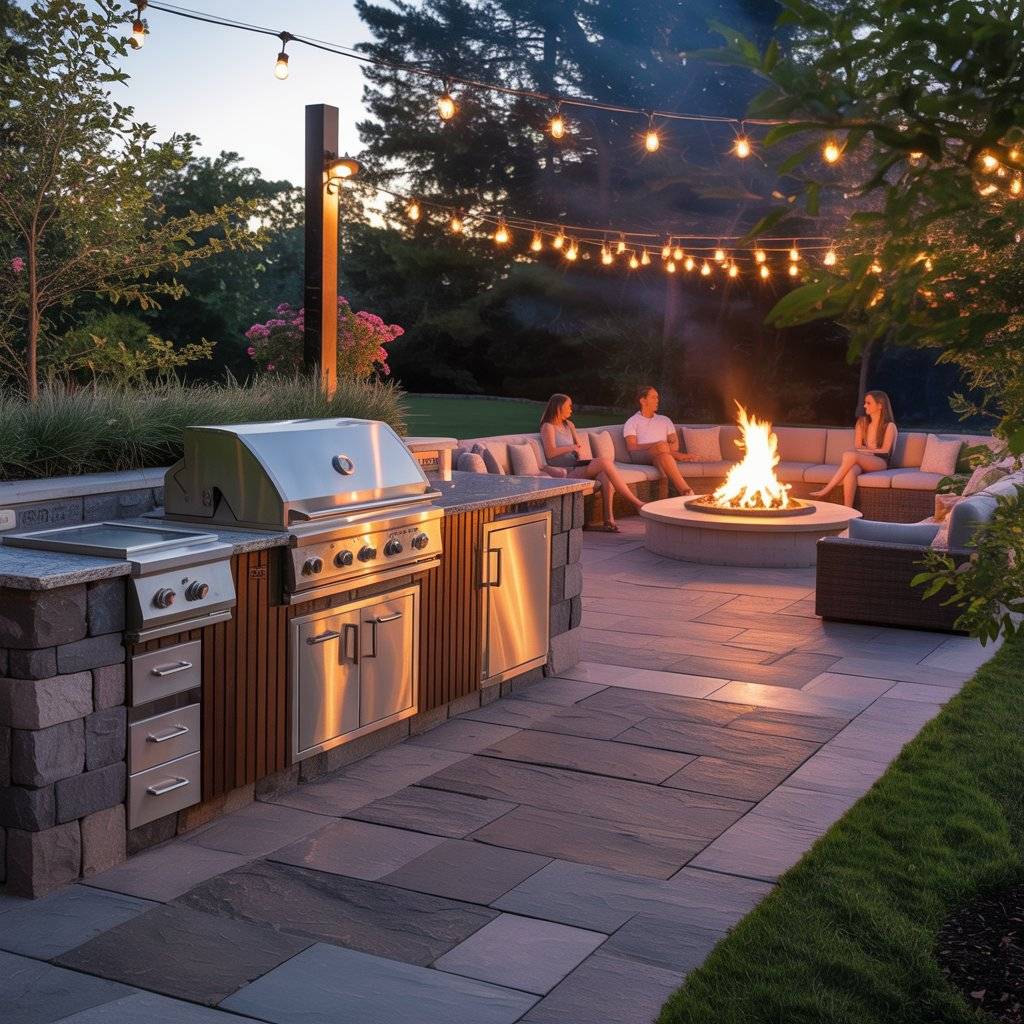
One layout I’ve seen people enjoy a lot is placing the outdoor kitchen near a fire pit seating area. Instead of separating cooking from relaxing, both spaces work together.
In one backyard setup, the grill station sat along the patio wall while a circular fire pit area was only a few steps away. After the food was ready, everyone naturally moved to the fire pit to sit, eat, and talk. It created a comfortable flow from cooking to gathering.
This layout works well for evening cooking and weekend get-togethers. The fire pit becomes the center of the space while the kitchen supports it. Guests can grab food from the counter and then sit around the fire.
When planning this kind of layout, it helps to leave clear walking paths between the kitchen and the seating area. That way carrying food and drinks stays easy and safe.
17. Courtyard Outdoor Kitchen Layout
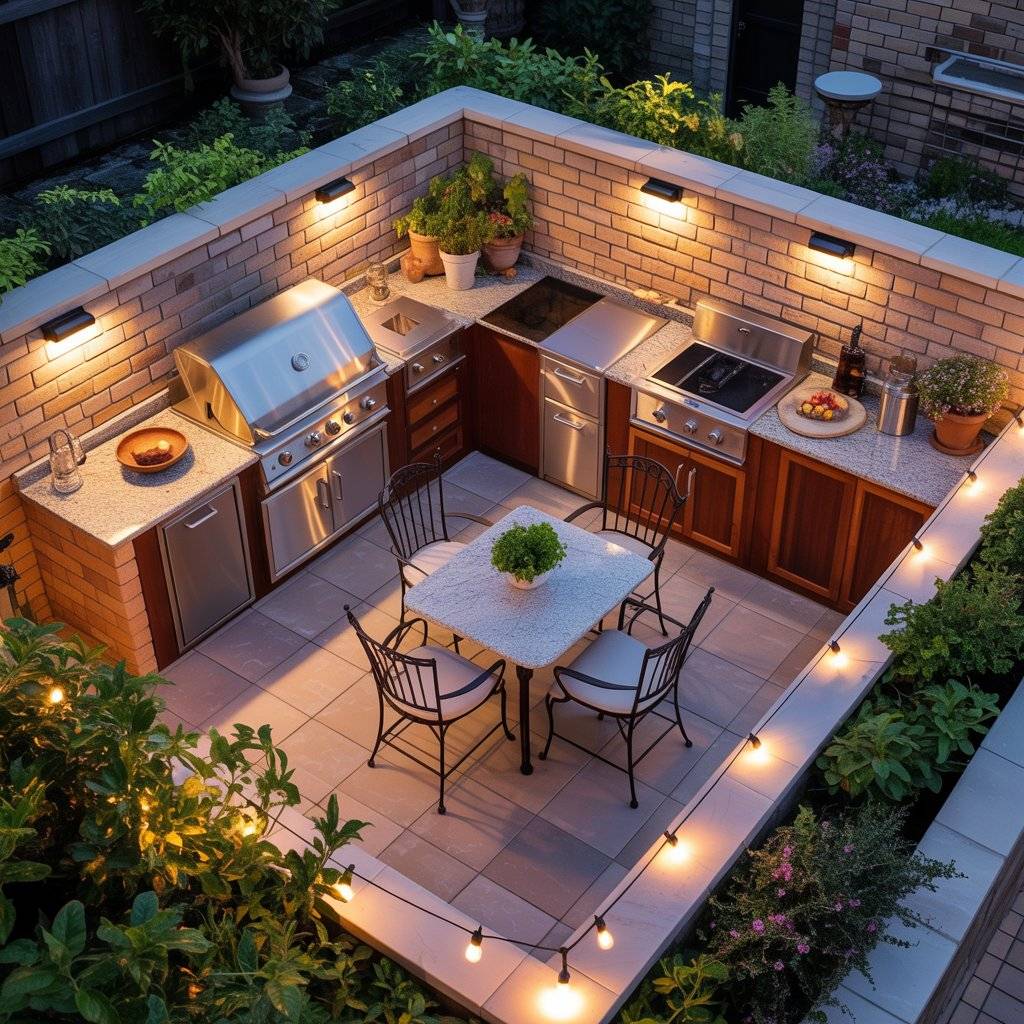
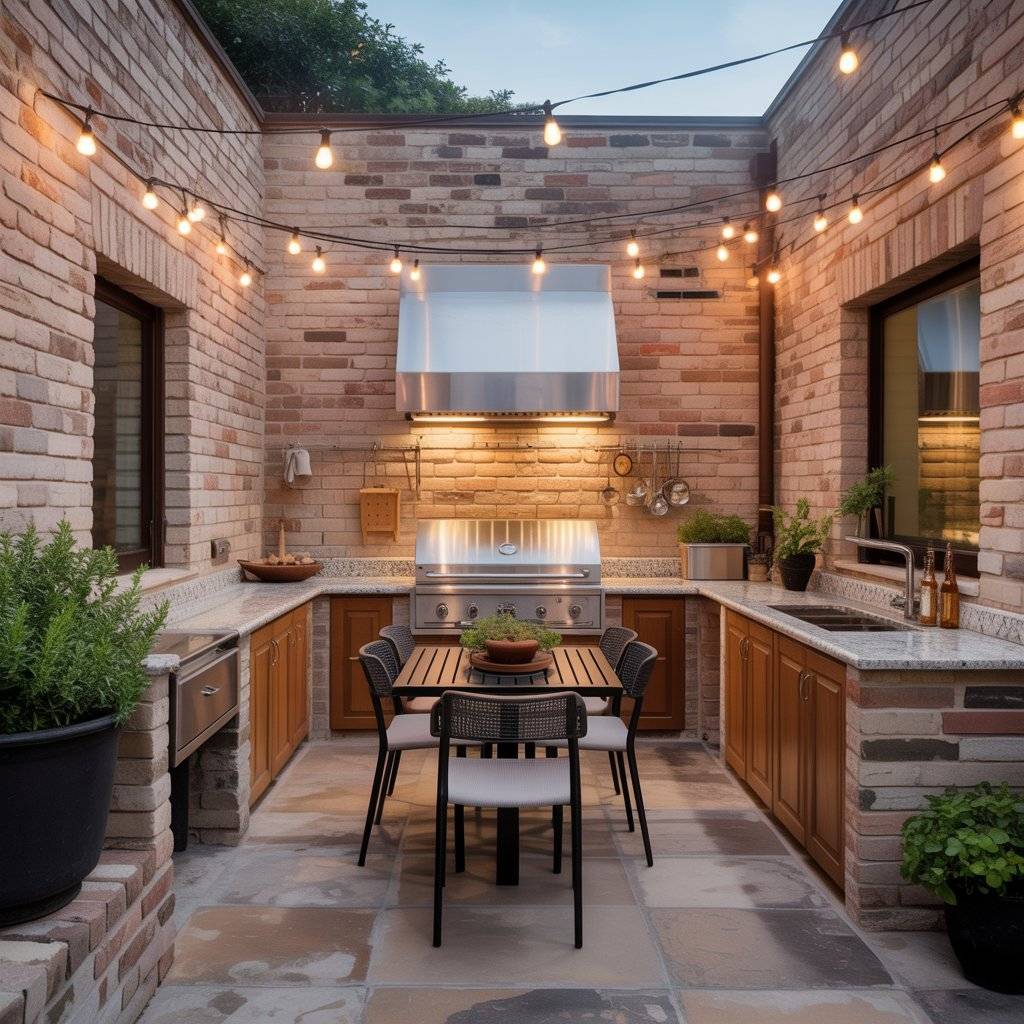
A courtyard outdoor kitchen can feel surprisingly organized because the space is naturally enclosed. Instead of spreading everything across a large backyard, the cooking area sits within a defined patio or courtyard space.
I’ve seen this layout used where the kitchen runs along one side of the courtyard wall, while the rest of the area holds a small table or seating area. Because the walls surround the space, it often feels more private and comfortable for cooking.
Another benefit is protection from wind. The surrounding walls help shield the grill and cooking area, which can make outdoor cooking easier on breezy days.
This layout doesn’t need a lot of space to work well. Even a modest courtyard can hold a grill, prep counter, and a small seating area. With good lighting and durable surfaces, it becomes a practical outdoor kitchen that people can enjoy day or night.
Stainless Steel Outdoor BBQ Grill – A Reliable Centerpiece for Backyard Cooking
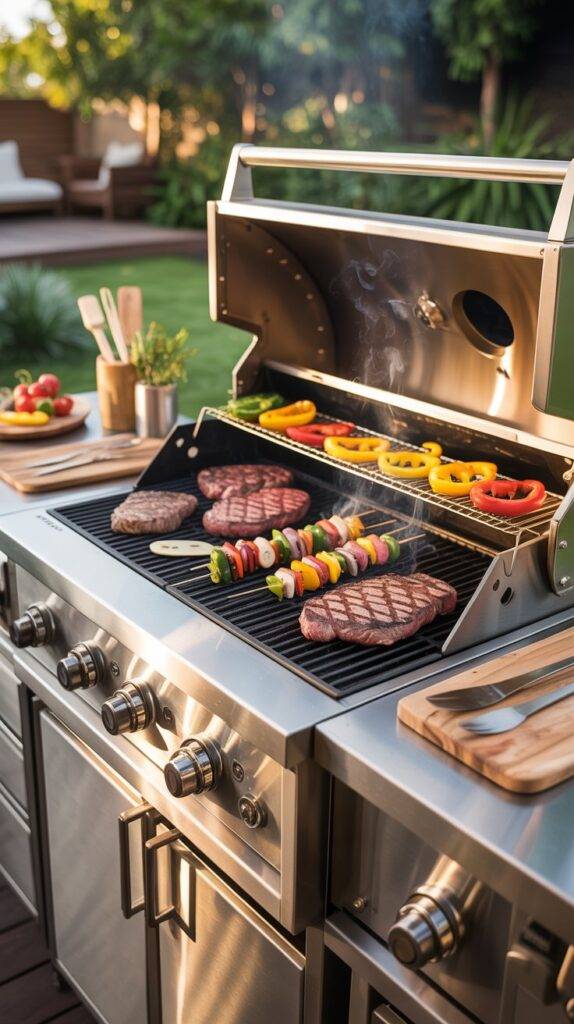
If you’re building a functional outdoor kitchen, the first appliance most people start with is a solid grill. I’ve noticed that stainless steel grills tend to last longer outdoors because they resist rust and handle heat well. A good grill also spreads heat evenly so food cooks properly without constant flipping or moving things around.
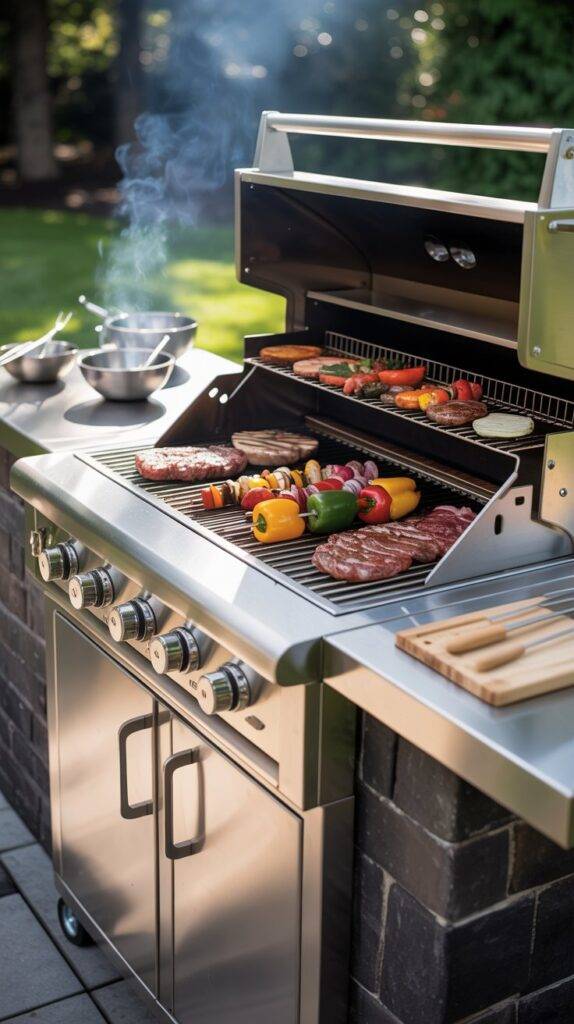
One setup I saw used a stainless charcoal grill placed right in the middle of the cooking station. It worked well because there was enough space on both sides for prep and serving. The grill itself was large enough to cook meat, vegetables, and skewers at the same time, which helped when several people were eating together.
Another thing I like about these grills is the simple design. Many models include adjustable vents that help control heat and airflow, making it easier to cook different types of food. Stainless steel construction also makes cleaning easier after cooking sessions.
Stainless steel grills are commonly used for outdoor cooking because they distribute heat well and are built to last through regular use.
Suggested Supply:
➡️ Check price on Amazon.com Stainless Steel Outdoor BBQ Grill
Portable Outdoor Pizza Oven – A Fun Addition for Backyard Cooking
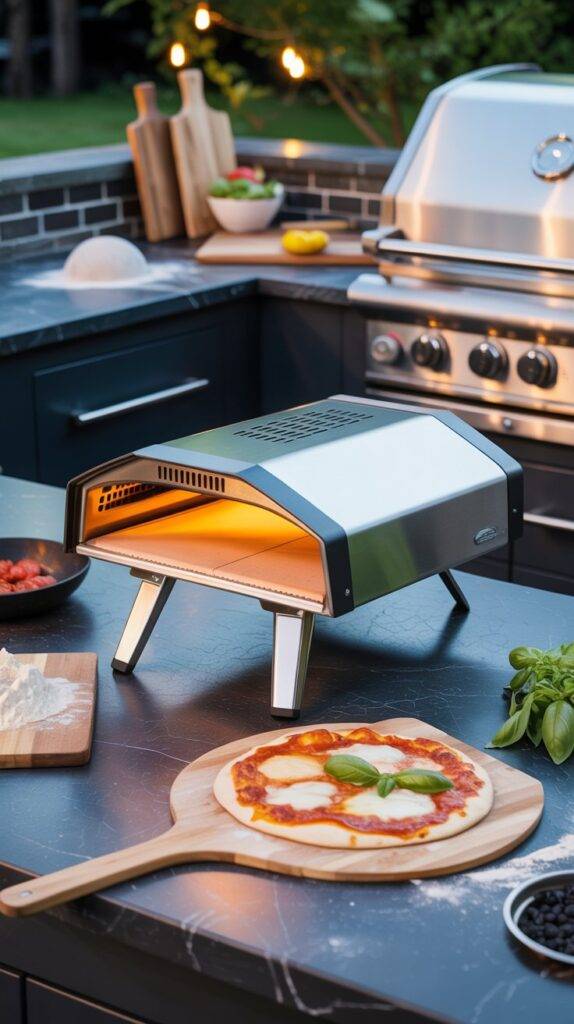
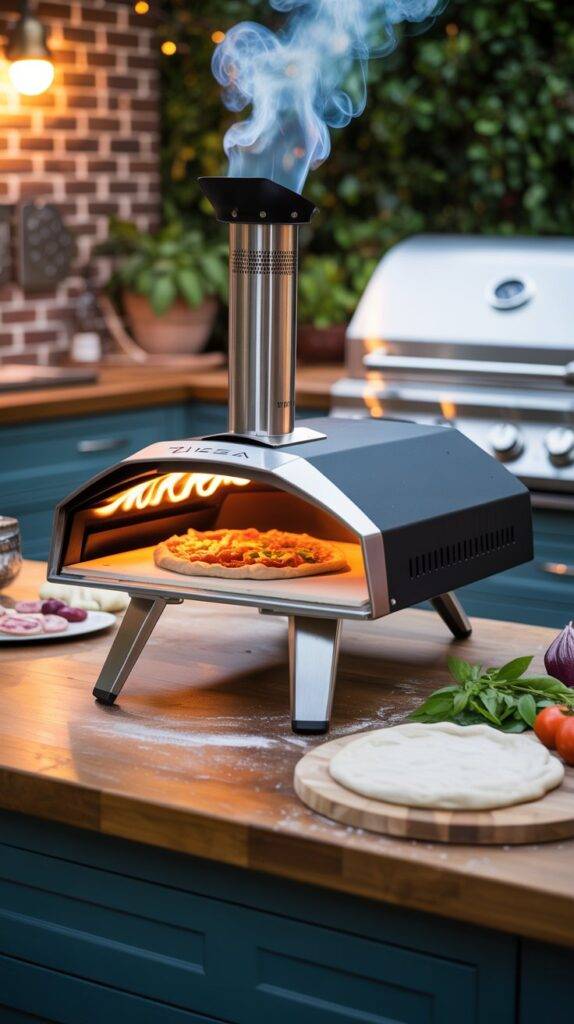
A pizza oven can completely change how an outdoor kitchen feels. I’ve seen people add one beside the grill, and it quickly becomes a favorite cooking spot. It’s not just for pizza either. You can bake flatbreads, roast vegetables, or even cook small dishes that need high heat.
One thing that makes portable pizza ovens practical is their size. They don’t take up much space on the counter, and many models heat up quickly. That means you don’t have to wait long before cooking.
In one outdoor kitchen I visited, the pizza oven sat on a prep counter next to the grill. The cook would prepare the dough on one side, add toppings, and slide it straight into the oven. It made the cooking process feel smooth and organized.
The high heat of these ovens cooks pizza in just a few minutes, which makes them great for family gatherings or casual outdoor meals. Once people try it, they usually end up using it more often than expected.
Suggested Supply:
➡️ Check price on Amazon.com Portable Outdoor Pizza Oven
Outdoor Refrigerator – Keep Drinks and Ingredients Close to the Cooking Area
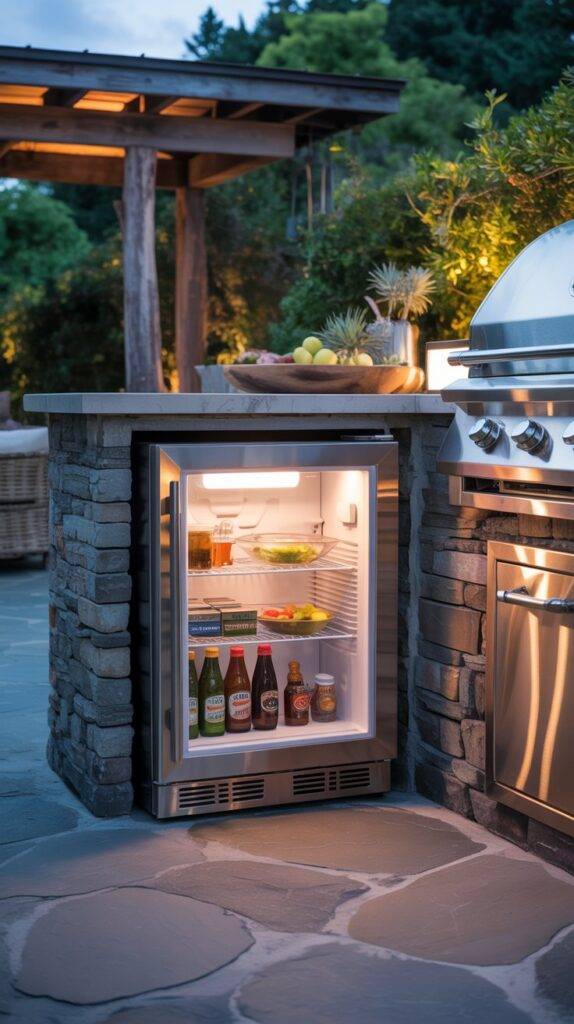
One feature I always recommend in an outdoor kitchen is a small outdoor refrigerator. At first it may seem unnecessary, but once you have one, it makes cooking outside much easier.
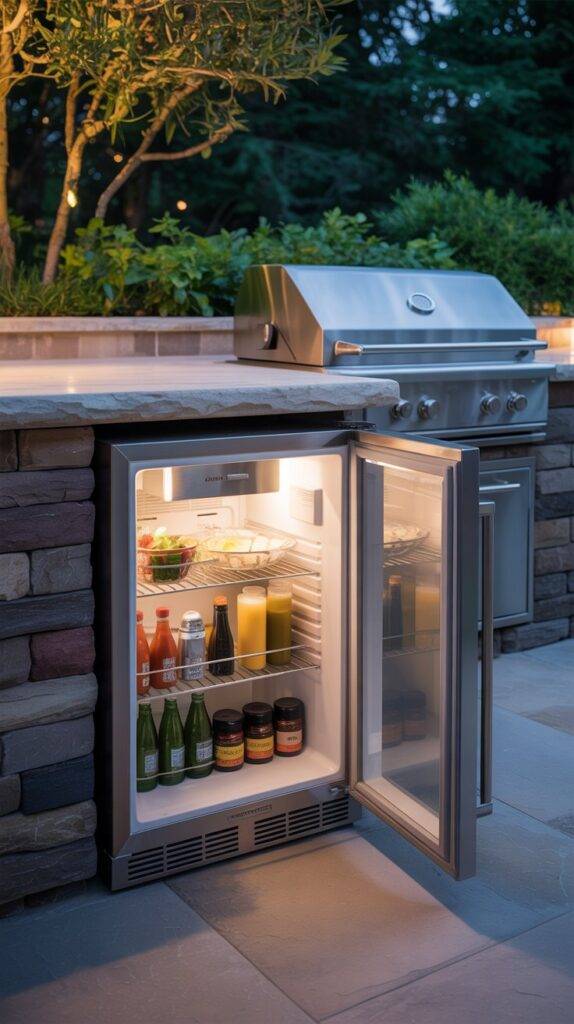
Instead of running back into the house for drinks, sauces, or ingredients, everything stays right where you’re cooking. I’ve seen outdoor kitchens where the fridge sits under the prep counter, which keeps the design clean while still being easy to access.
This setup works especially well when guests are around. People can grab a cold drink without interrupting the person cooking. It also helps keep ingredients fresh when you’re grilling multiple dishes.
Outdoor refrigerators are built to handle changing temperatures and moisture better than regular indoor models. That’s why they’re commonly used in outdoor kitchens, bars, and patio cooking areas.
If you cook outside often, this is one upgrade that makes the whole cooking space feel more complete and convenient.
Suggested Supply:
➡️ Check price on Amazon.com Outdoor Refrigerator
Final Thoughts
When I look at all these outdoor kitchen layouts, the main thing I keep coming back to is this: the space just needs to work for you. It doesn’t have to be huge, and it doesn’t have to look like something from a magazine.
I’ve seen people cook great meals on a simple grill with a small counter beside it. What made the difference was the layout. The prep space was close, the tools were within reach, and there was a place for people to sit and talk while the food was cooking.
That’s really what an outdoor kitchen should do. It should make cooking outside easier and a little more enjoyable. Once the layout feels right, everything else becomes easier to add later.
If you’re still planning your setup, take another look at the ideas above and picture how you’d move around while cooking. Sometimes that simple step helps you see what will actually work in your yard.
And if one layout stands out to you, start there. You can always build from it later.
Related Post: