
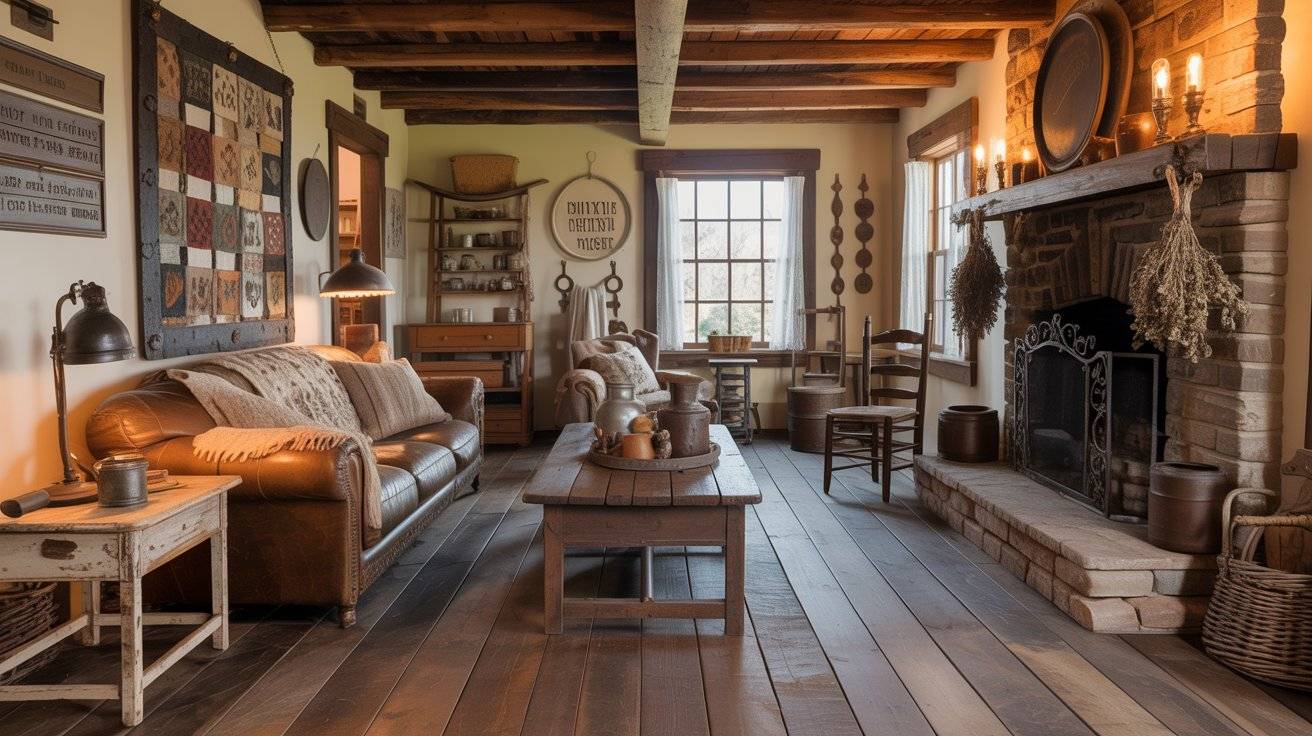
I’ve always liked living rooms that feel cozy and easy to relax in. Not the fancy, polished kind you know, the ones that look like a showroom but spaces where you can sit, have coffee, and not feel like you need to keep everything perfect. That’s what I call a primitive living room.
When I started, I realized it’s mostly about keeping things simple, using natural materials, and picking furniture that feels real, not forced. I added a few vintage pieces I already had, some handmade touches, and a lot of wood and linen textures. The room felt different immediately warmer, calmer, inviting.
You don’t need to buy a lot or make everything yourself. It’s more about mixing old and new, keeping it functional, and layering simple textures. I want to show you the things I tried and liked the most. These are easy ideas anyone can do, and they really make a living room feel lived-in but still stylish.
1. Warm, Neutral Colors
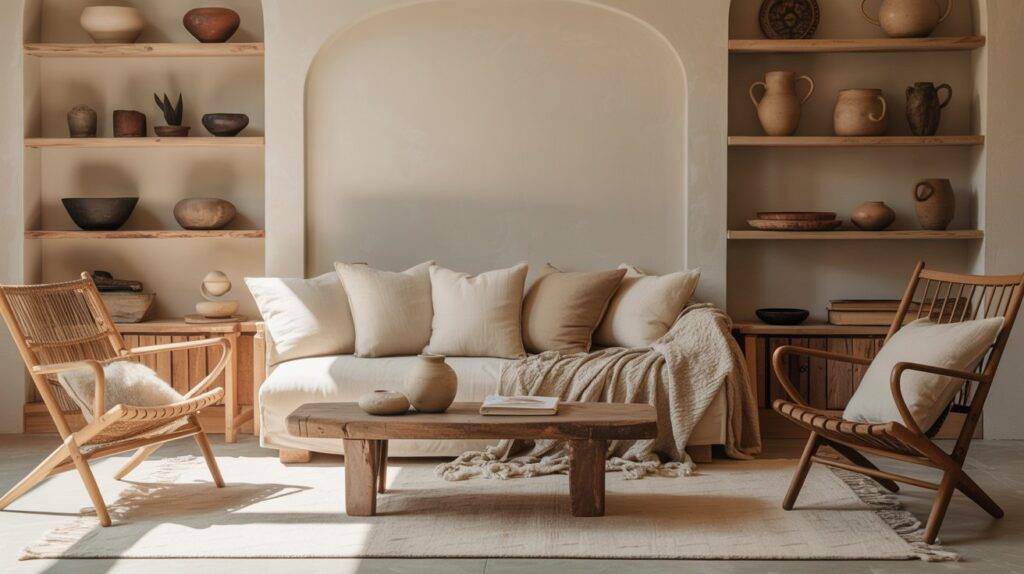
The first thing I did was look at the colors in my room. I went for soft browns, beige, and cream tones. Nothing bright or flashy just warm, natural colors that make a space feel calm. I painted one wall off-white and kept the wooden furniture natural.
Even little things, like linen throw or a small neutral pillow, helped tie the look together. Neutral colors let you mix old wooden pieces, vintage finds, and handmade items without it feeling messy. I noticed that once the walls and big pieces were neutral, the room instantly felt more inviting.
2. Vintage or Wooden Furniture
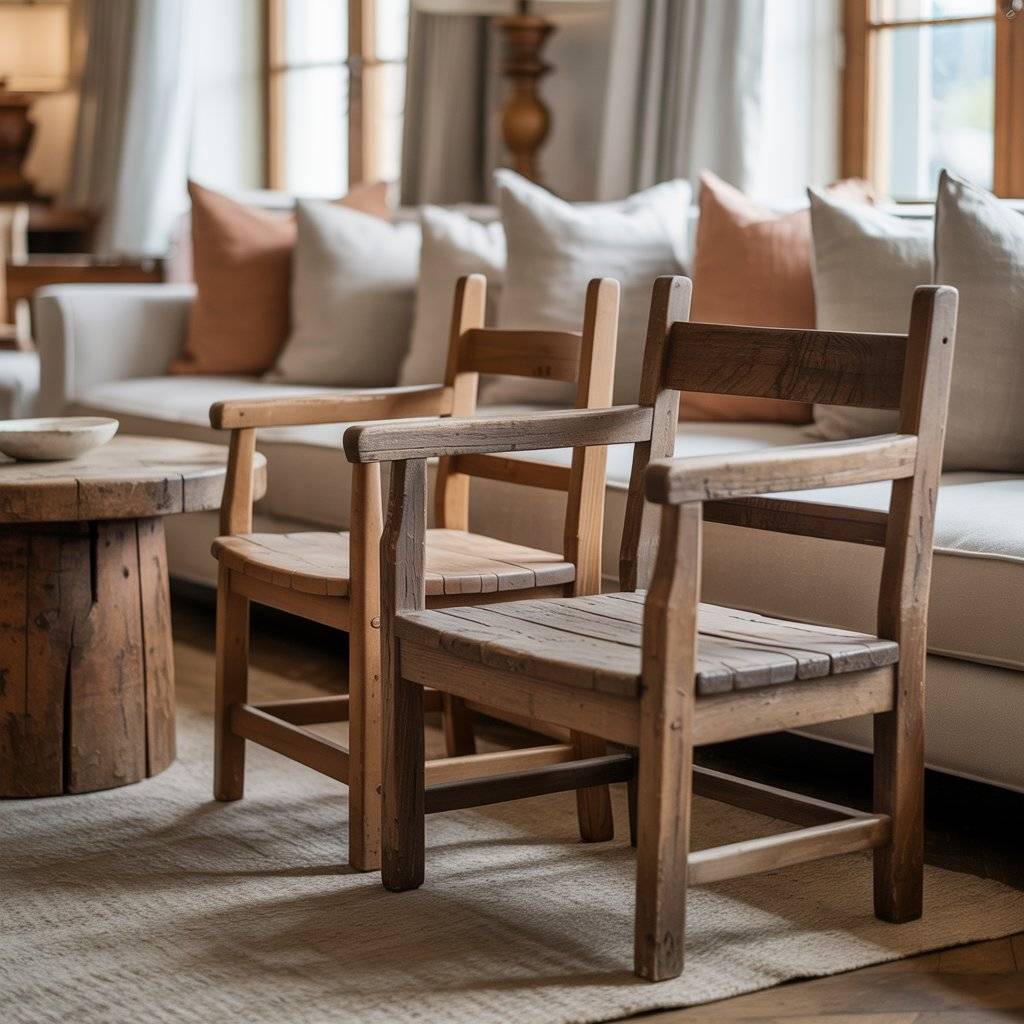
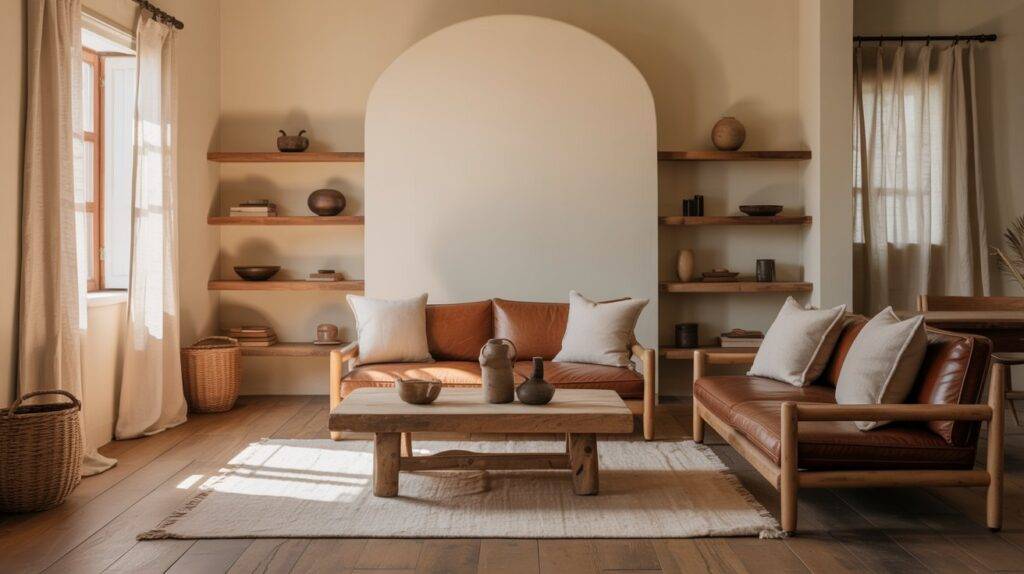
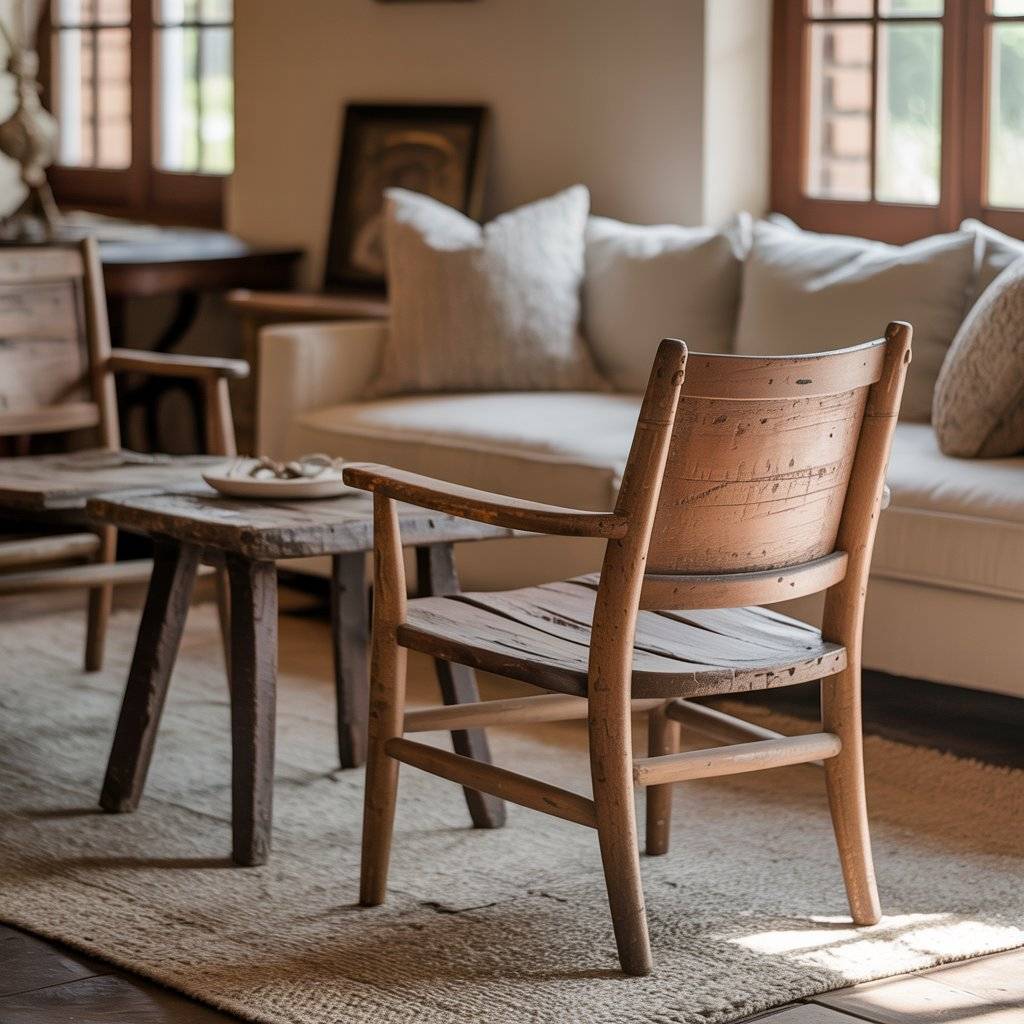
I brought in some old wooden chairs and a side table that looked a little worn. You don’t need antiques just pieces with a bit of character. Even a modern piece with a rough finish works.
I paired them with a soft sofa and cushions, and it felt balanced. People notice wood it makes the room feel natural, grounded, and simple. I liked that it didn’t need fancy decorations. Just a few thoughtful pieces made a big difference.
3. Mix Natural Textures
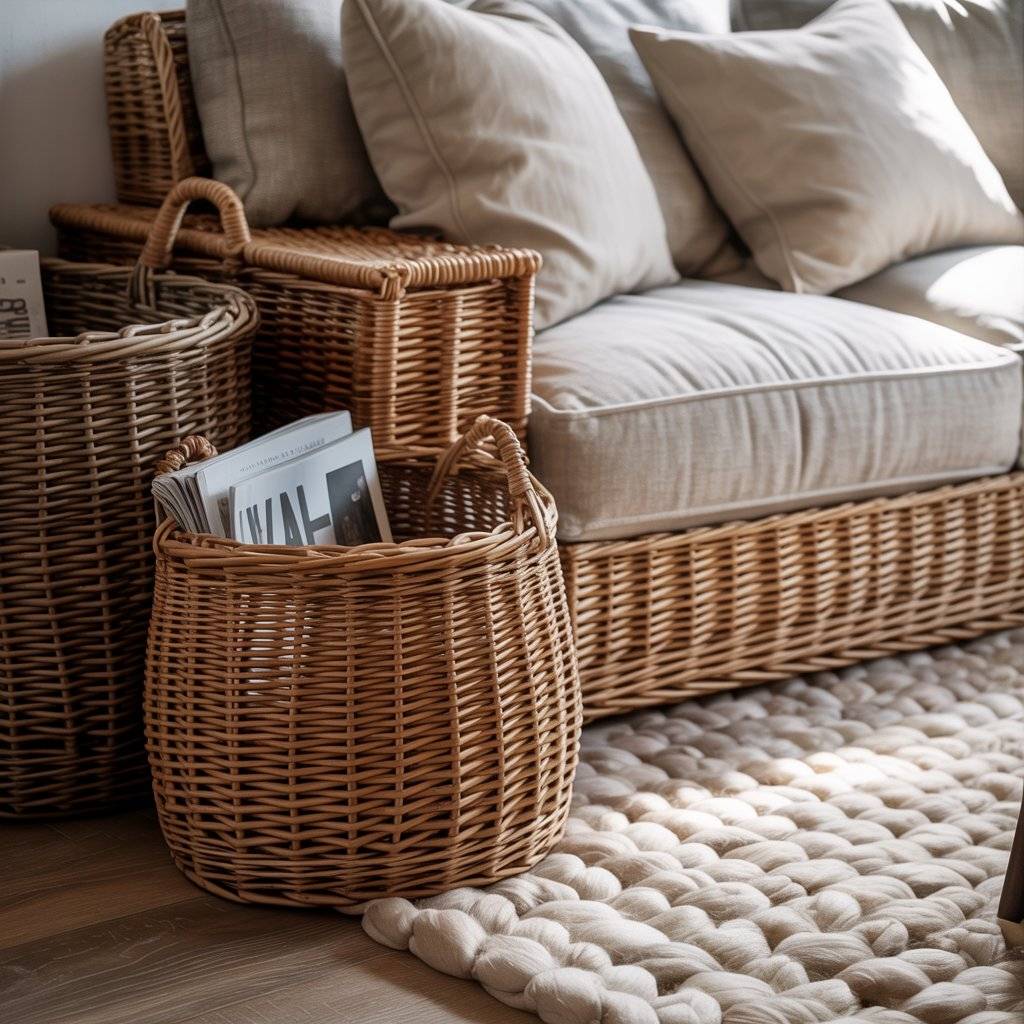
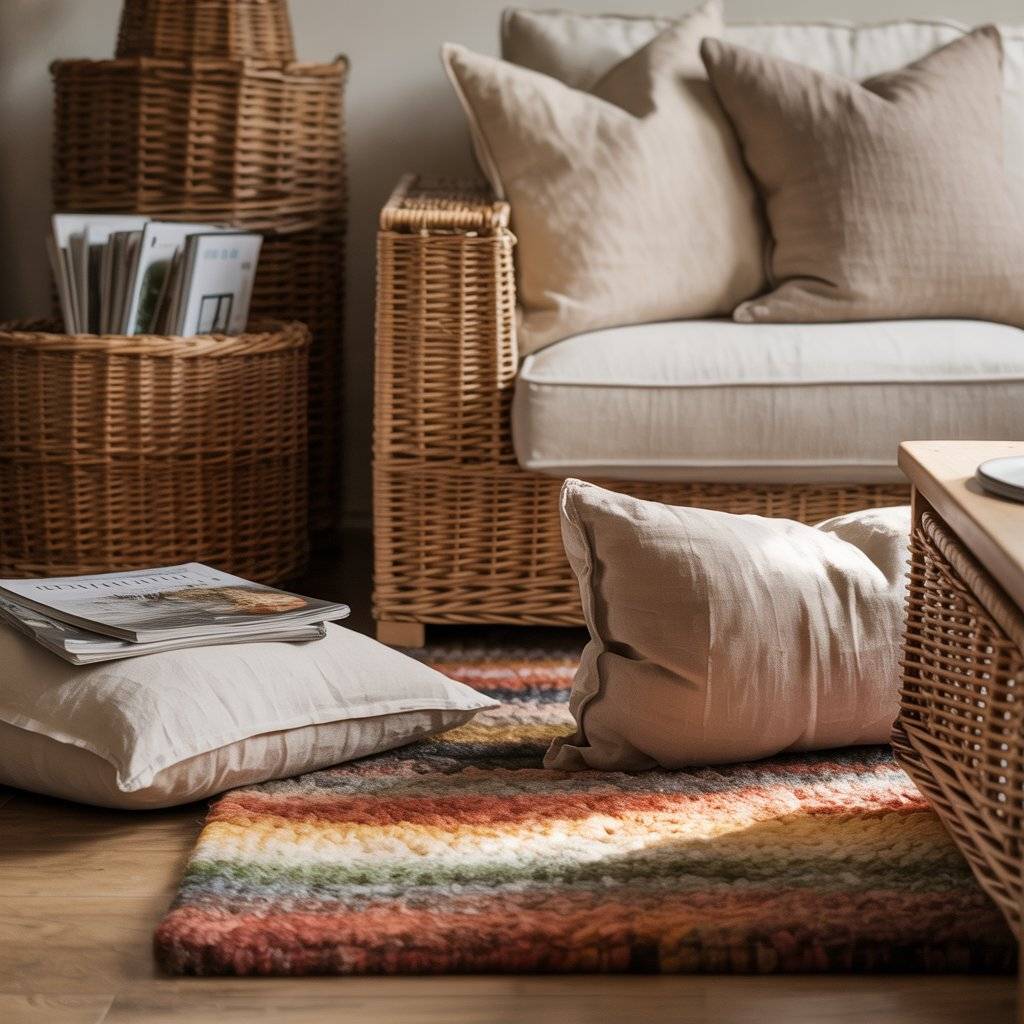
I started adding baskets, a wool rug, and some linen pillows. At first, I thought it might look messy, but mixing textures actually made the room cozy.
The rug felt warm underfoot, the baskets were handy for magazines, and the linen pillows softened the furniture.
You don’t need a lot of stuff just layer a few textures to give depth and a lived-in feeling. I still keep it simple, but it looks intentional, not cluttered.
4. Rustic Lighting
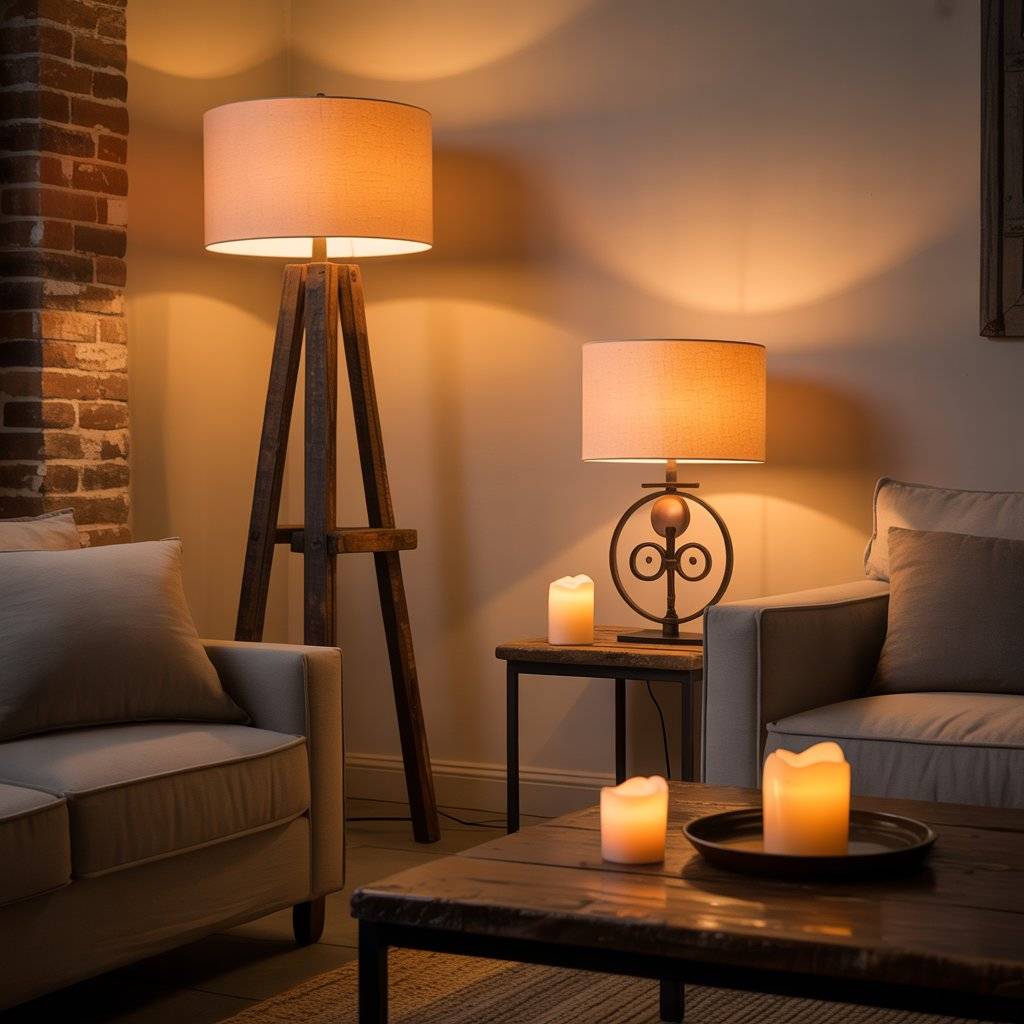
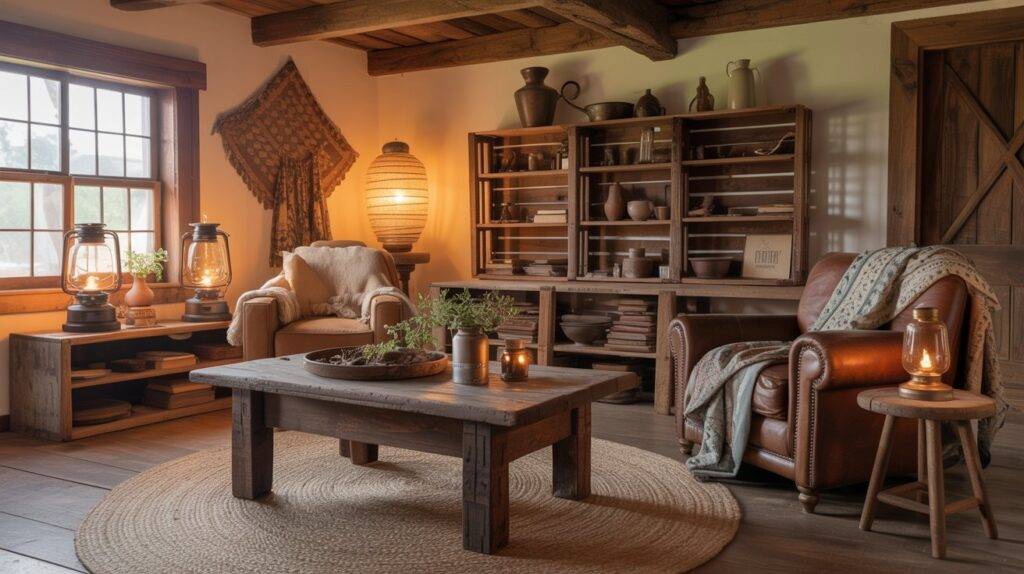
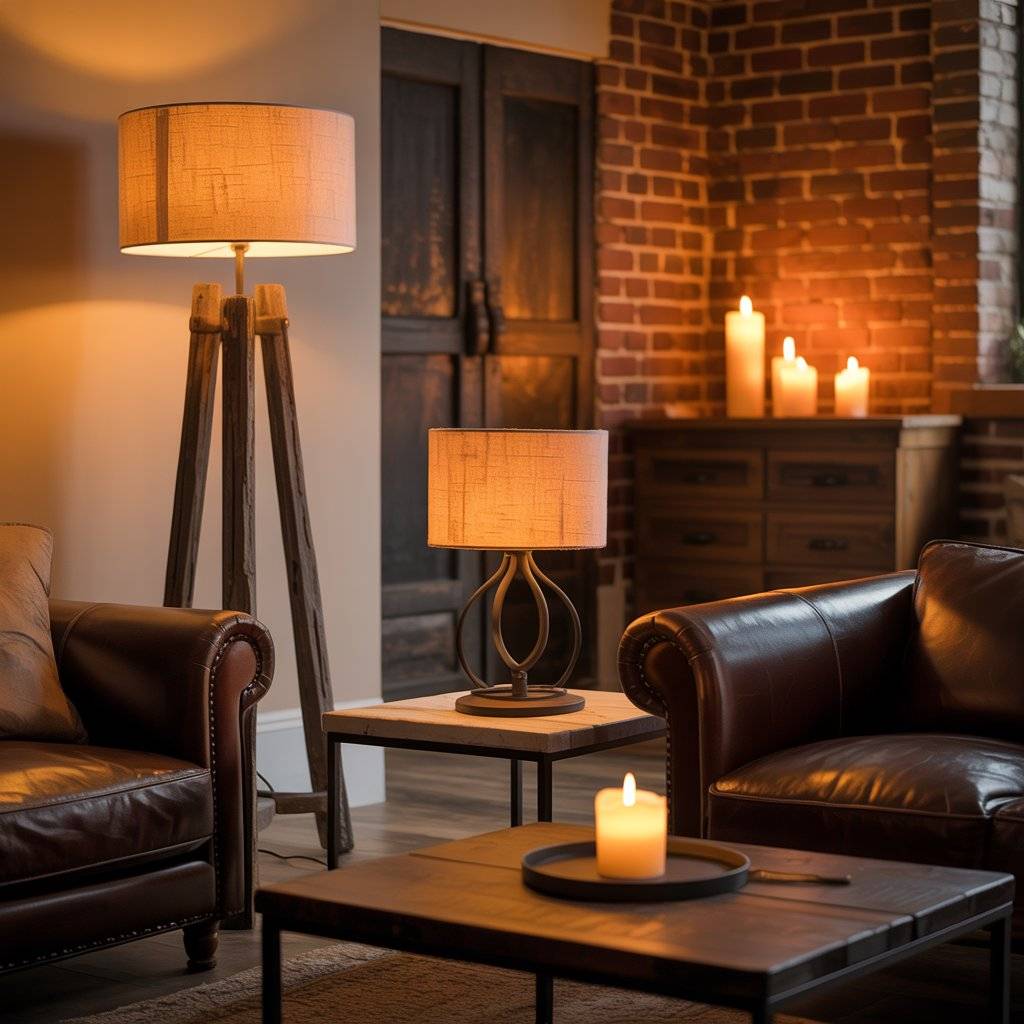
I swapped my plain lamps for ones with wooden or iron bases. A few candles didn’t hurt either. Soft light makes a big difference it highlights the textures and makes everything feel warmer.
I like having a mix: a floor lamp in the corner and a small table lamp near the sofa. Even just one candle on the coffee table can make the room feel like it’s inviting you to sit down.
5. Handcrafted or Vintage Decor
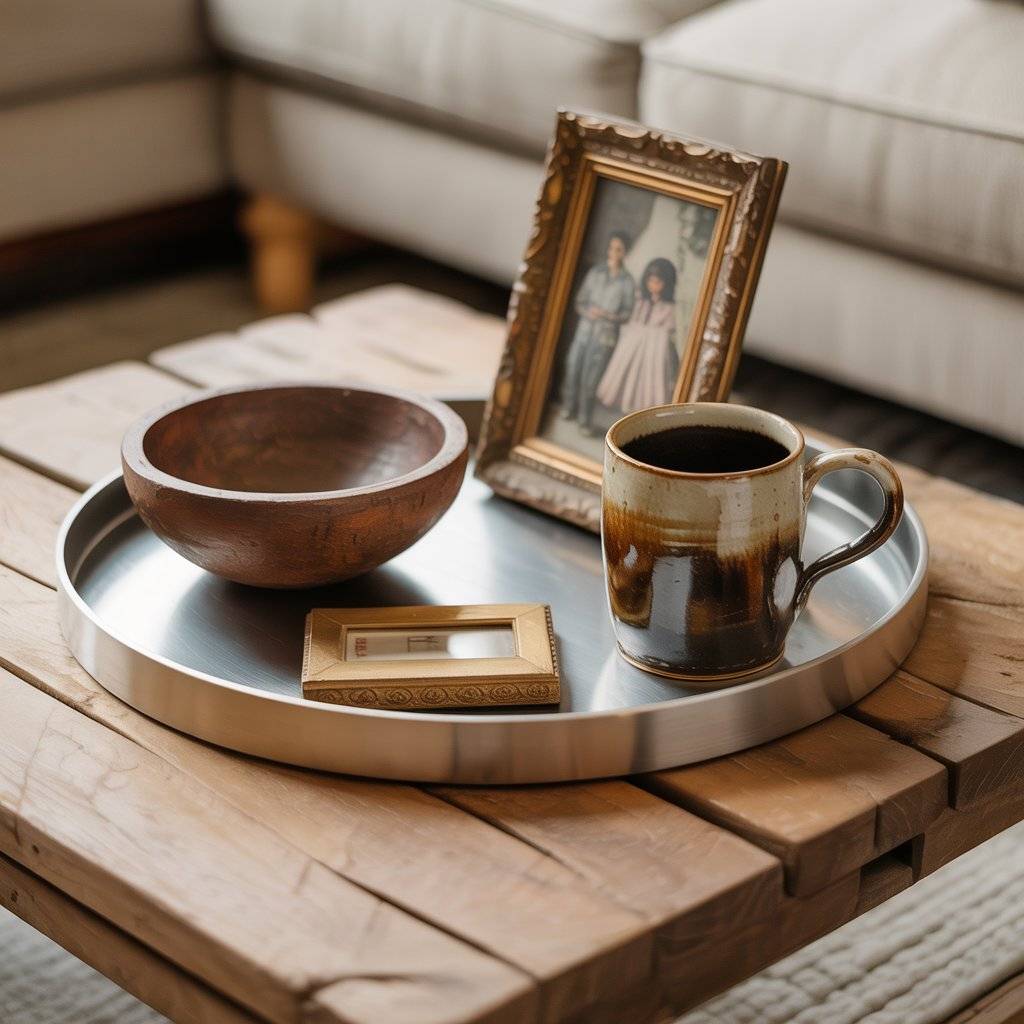
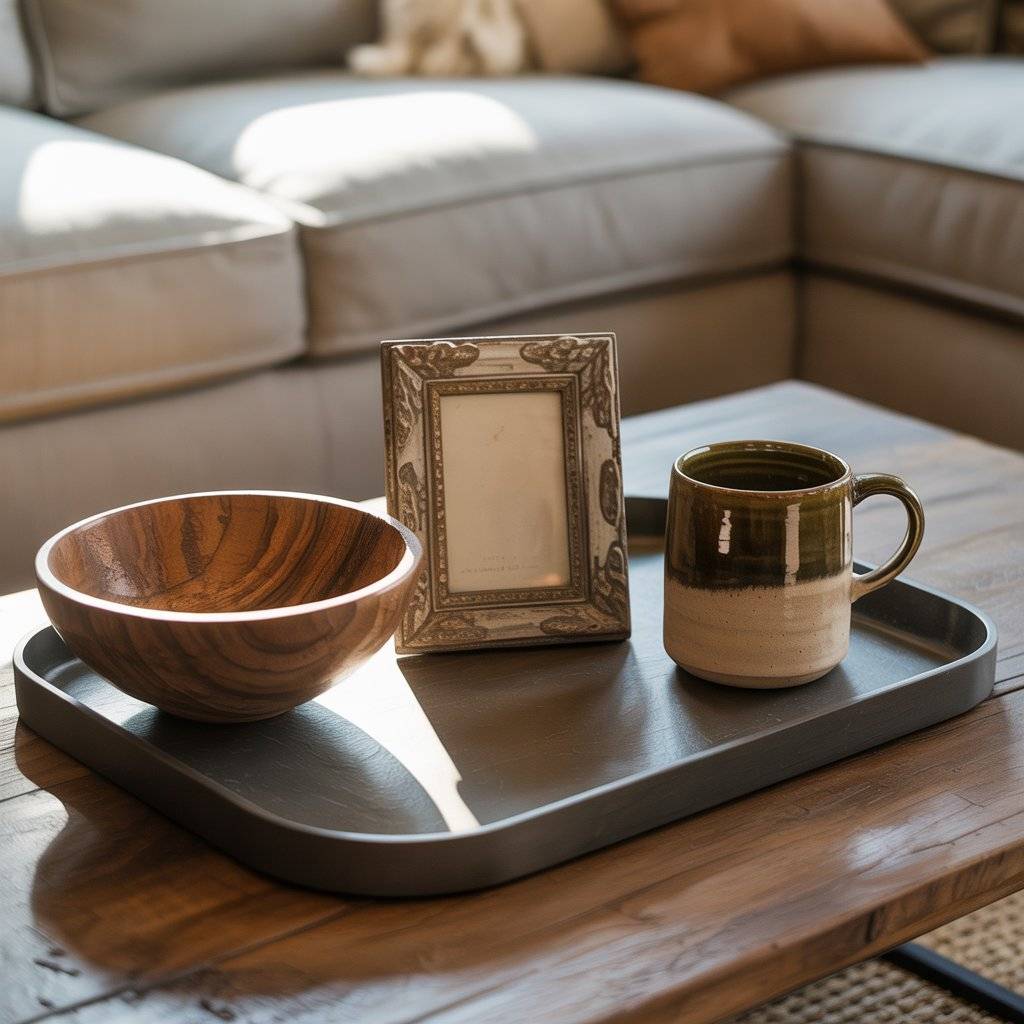
I put out a few things I already had: a carved wooden bowl, a small vintage frame, and a handmade pottery mug. It didn’t take much, but it made the room feel personal.
I also like to mix in modern functional pieces, like a simple tray on the coffee table. Little touches like this make a space feel lived-in and genuine, not staged. You don’t need everything to be handmade just a few pieces that tell a story.
6. Simple Window Treatments
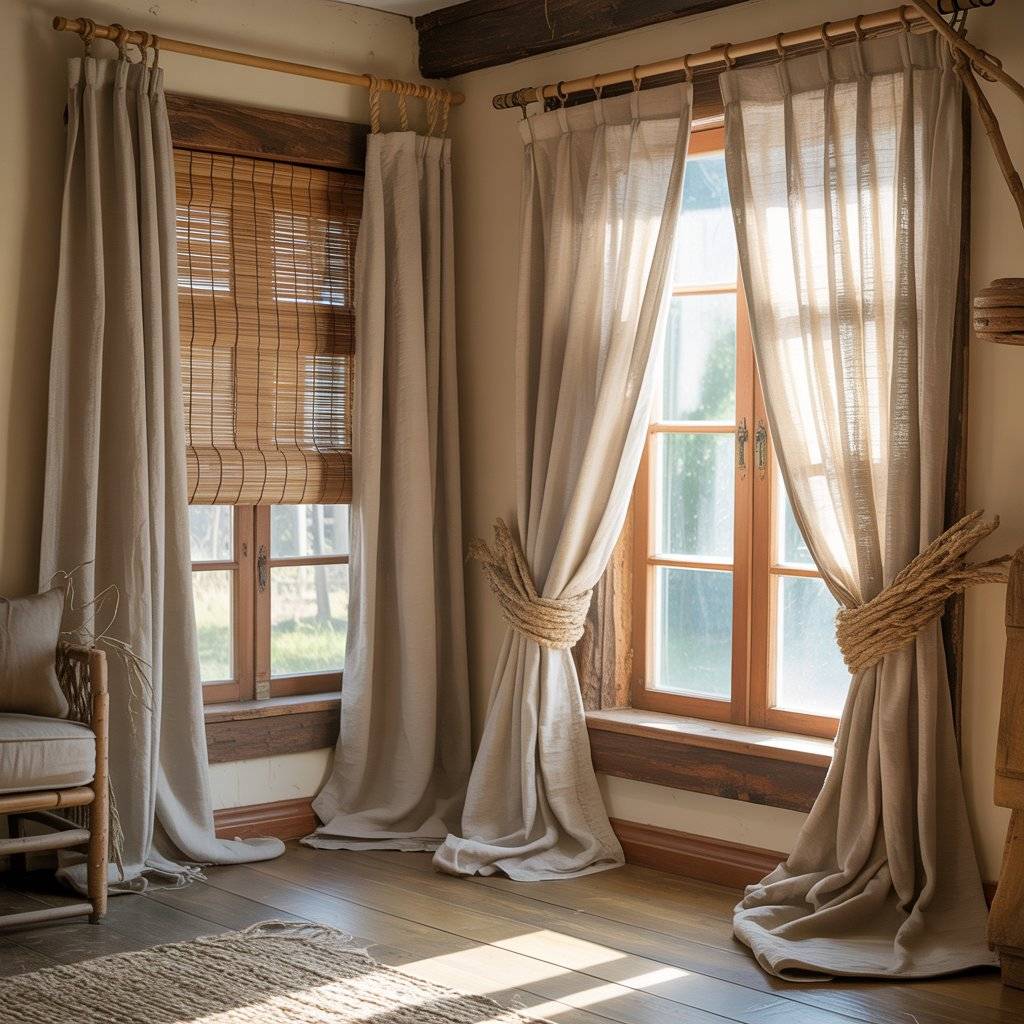
I kept my window coverings really simple. I went with linen curtains that just brushed the floor, and it made a big difference. I wanted light to come in naturally, not block it with heavy drapes.
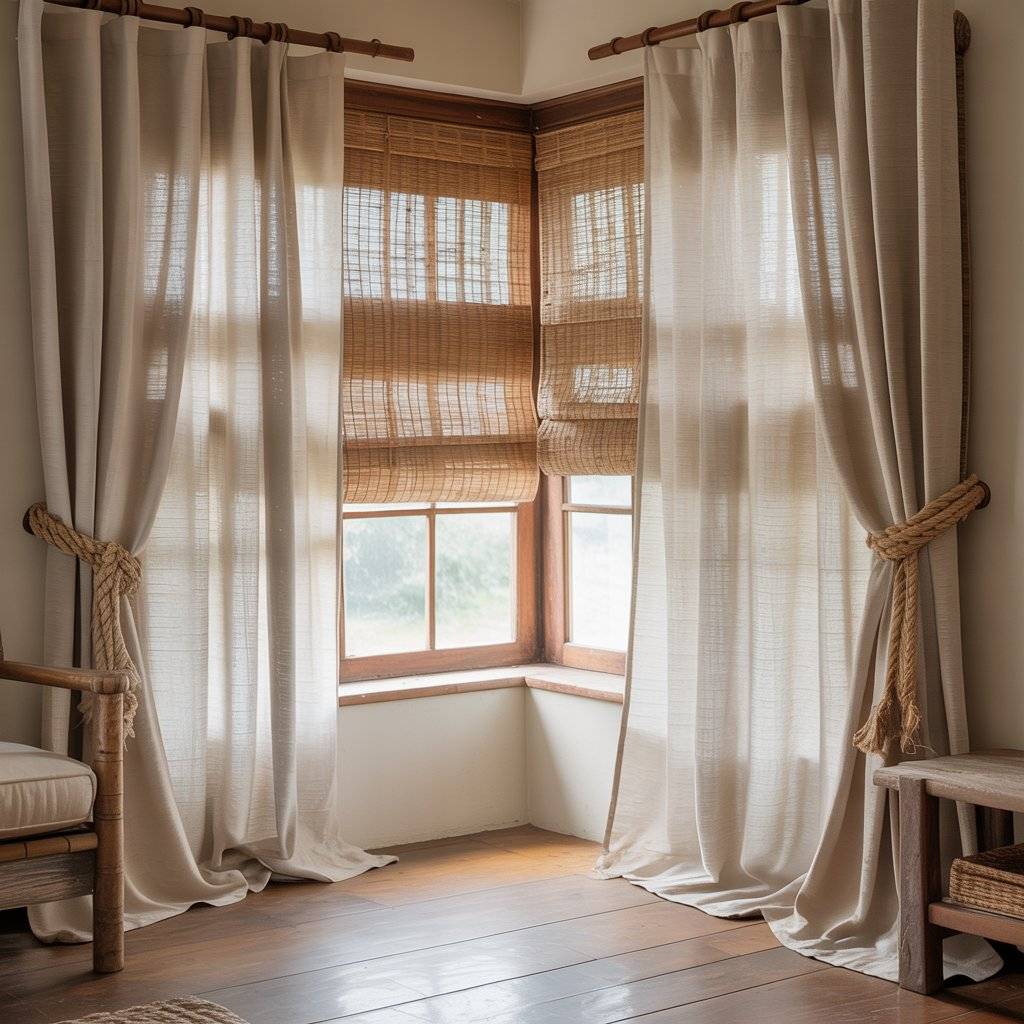
The linen gives the room a soft texture without being fussy. I also experimented with a woven bamboo shade for a corner window it adds a subtle rustic touch. What I like is that simple treatments don’t compete with the other textures in the room, and they’re easy to swap if I ever want a seasonal change.
Even tying the curtains back with a piece of jute rope makes it look intentional. Windows in a primitive living room should feel natural, airy, and part of the room, not something hidden behind heavy fabric.
7. Plants and Greenery
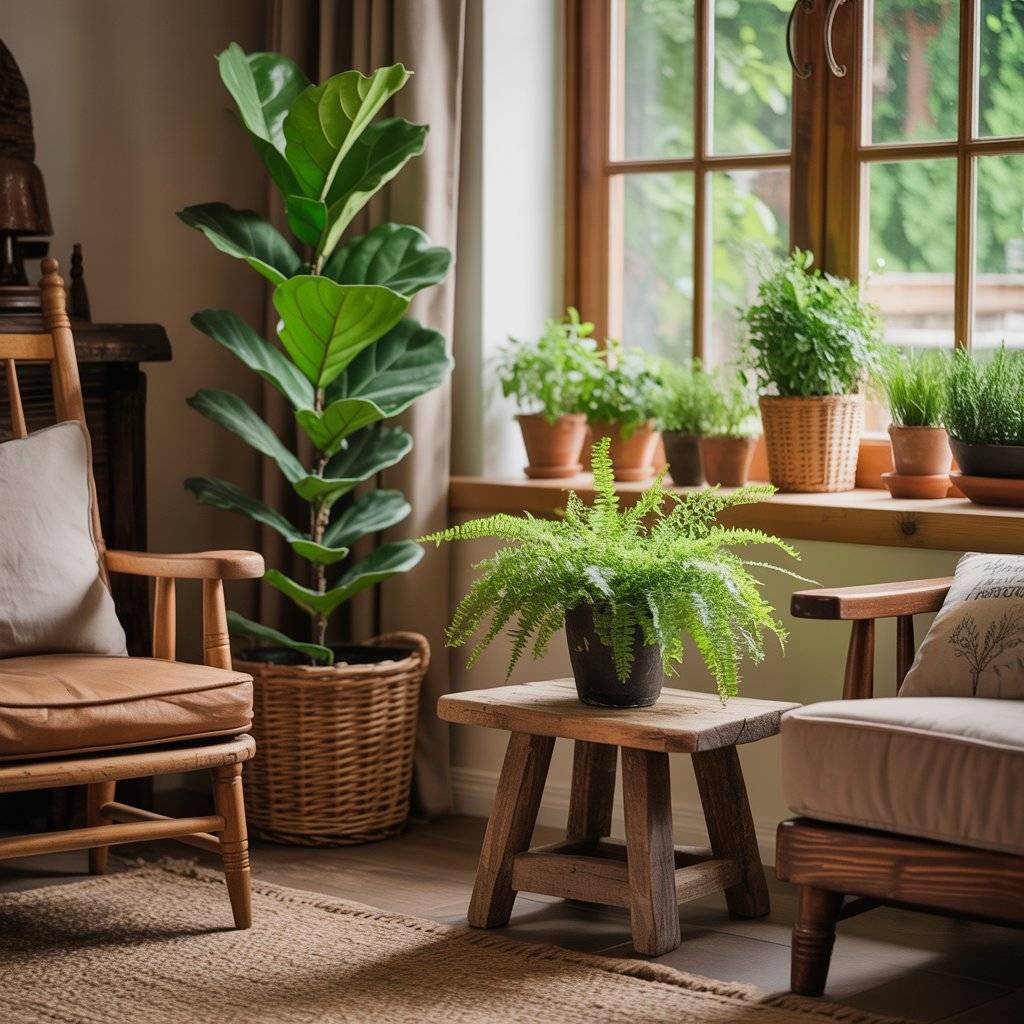
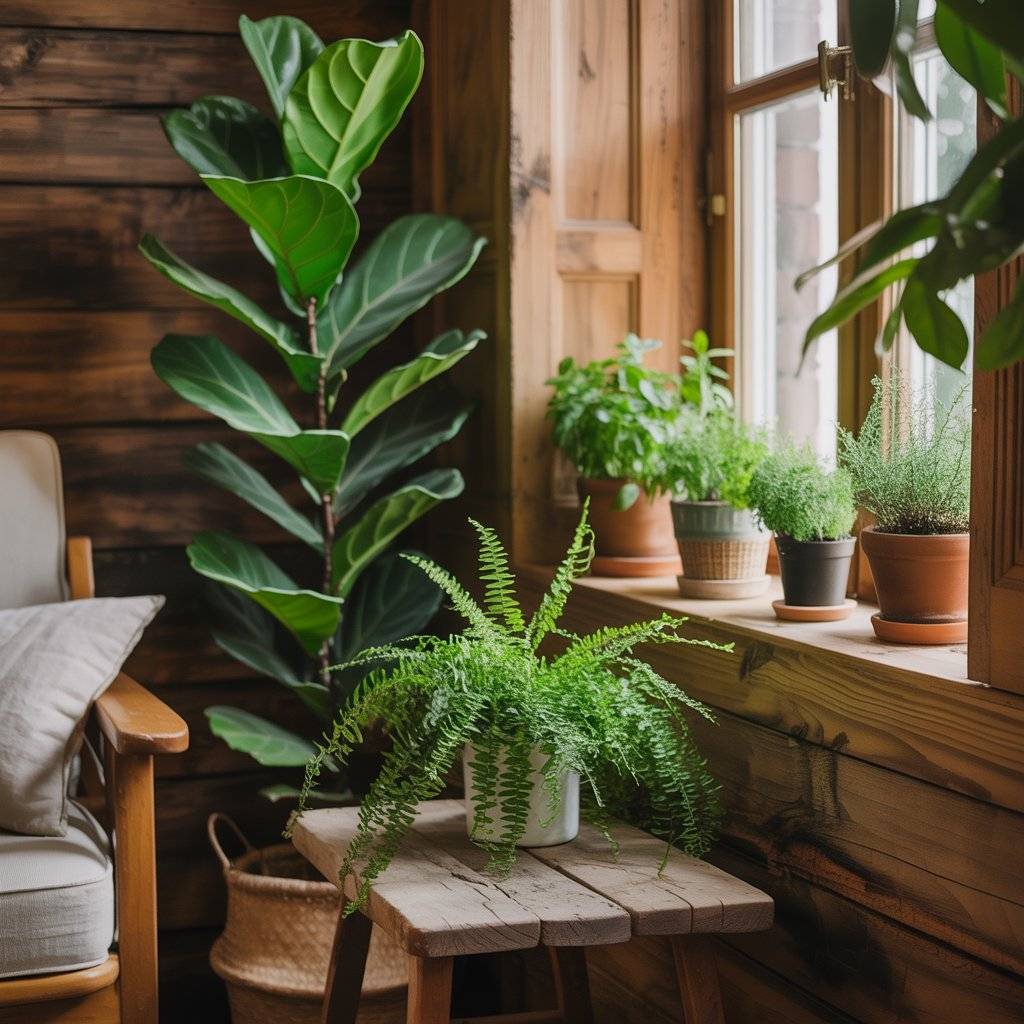
Adding plants was a game-changer for me. I started with a tall leafy plant in the corner and a few small potted herbs on the window sill. It instantly made the room feel alive. I like using terracotta or woven baskets as plant holders, which fit the primitive style perfectly.
Even a simple fern on a side table can bring in color and texture without being overwhelming. What I noticed is that plants soften the harder wood tones and help the room feel more inviting.
They don’t have to be complicated low-maintenance ones like snake plants or pothos work really well. It makes the space feel natural, cozy, and lived-in.
8. Layered Rugs
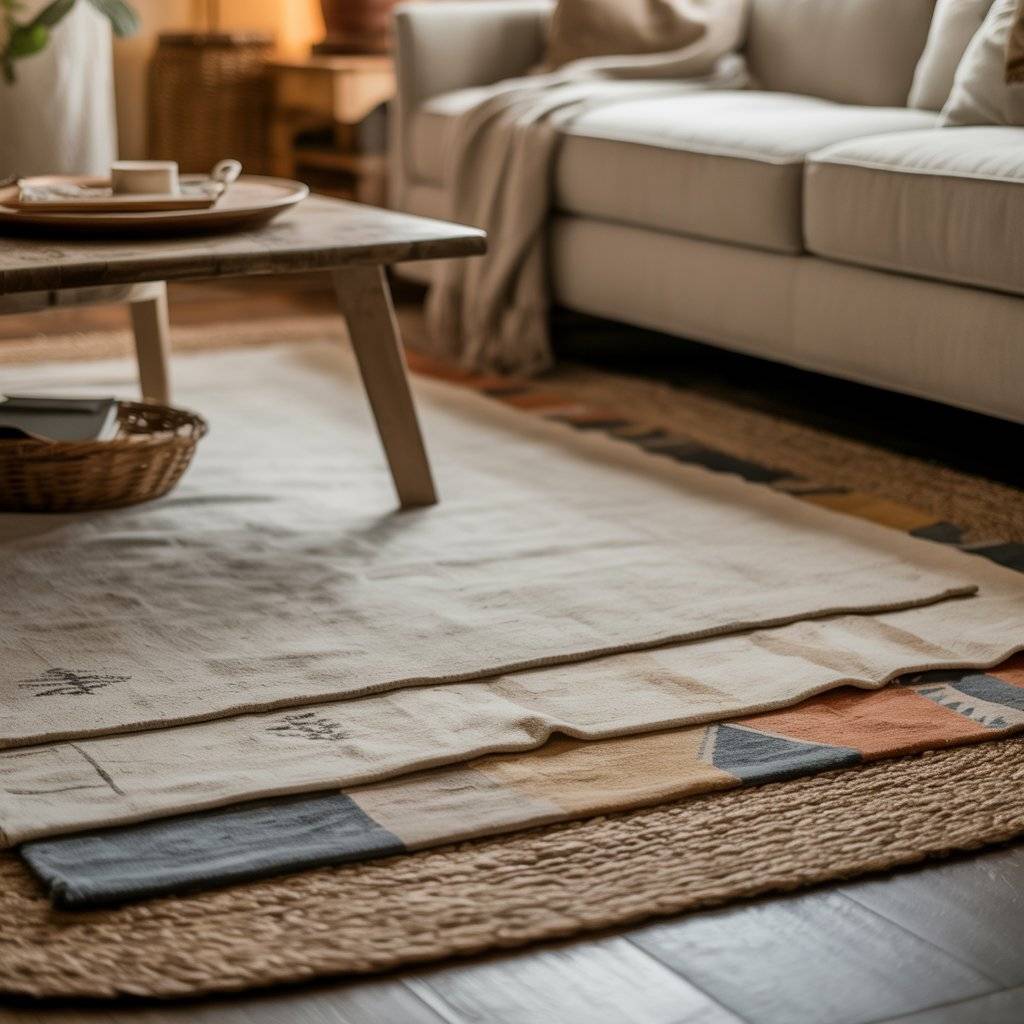
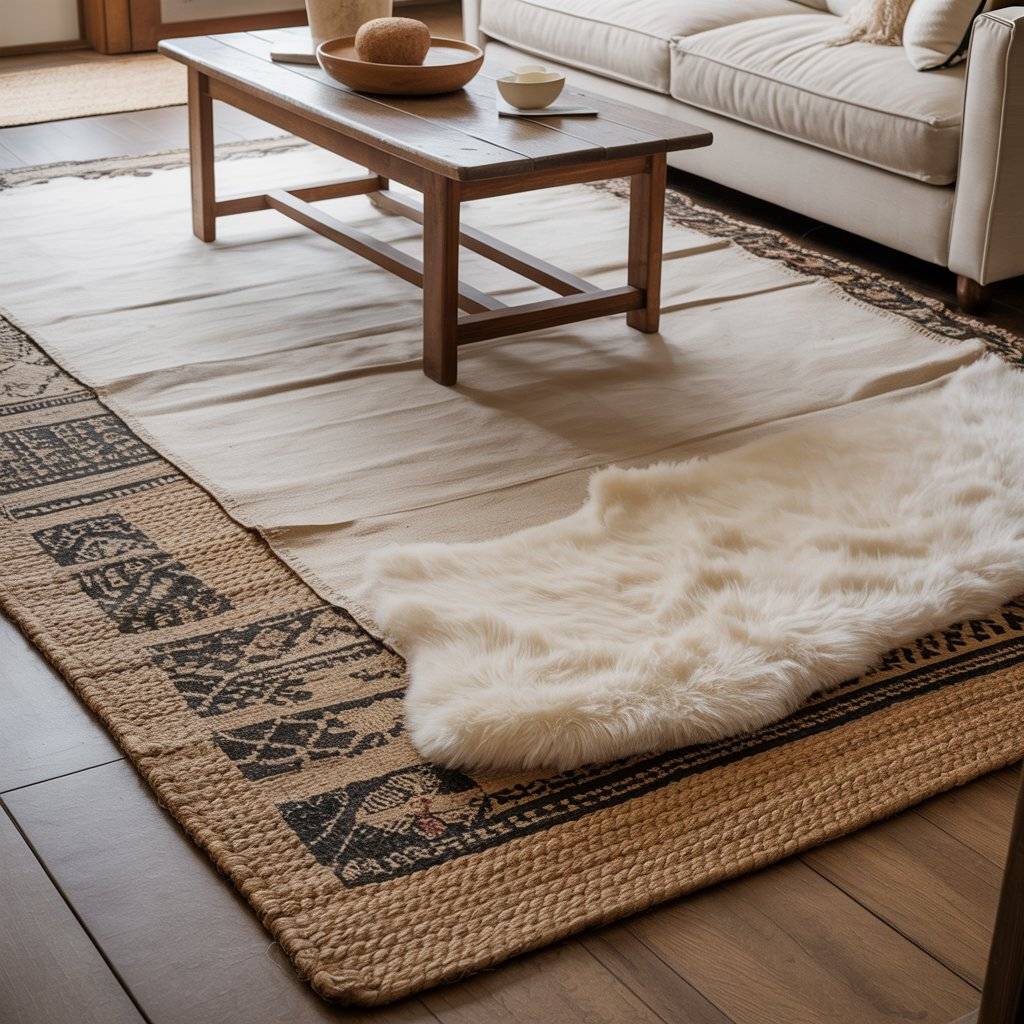
I experimented with layering rugs in front of the sofa and under the coffee table. I used a neutral wool rug as the base and added a smaller, patterned jute rug on top. It creates interest and makes the seating area feel more grounded.
I like that layered rugs give a sense of warmth without being busy, and they’re easy to change seasonally or switch if I want a new look. It also makes the living room feel tactile and cozy every step feels soft, and the patterns add subtle character. Even a small runner near the entrance or hallway connecting to the living room adds to the primitive vibe.
9. Functional Vintage Accessories
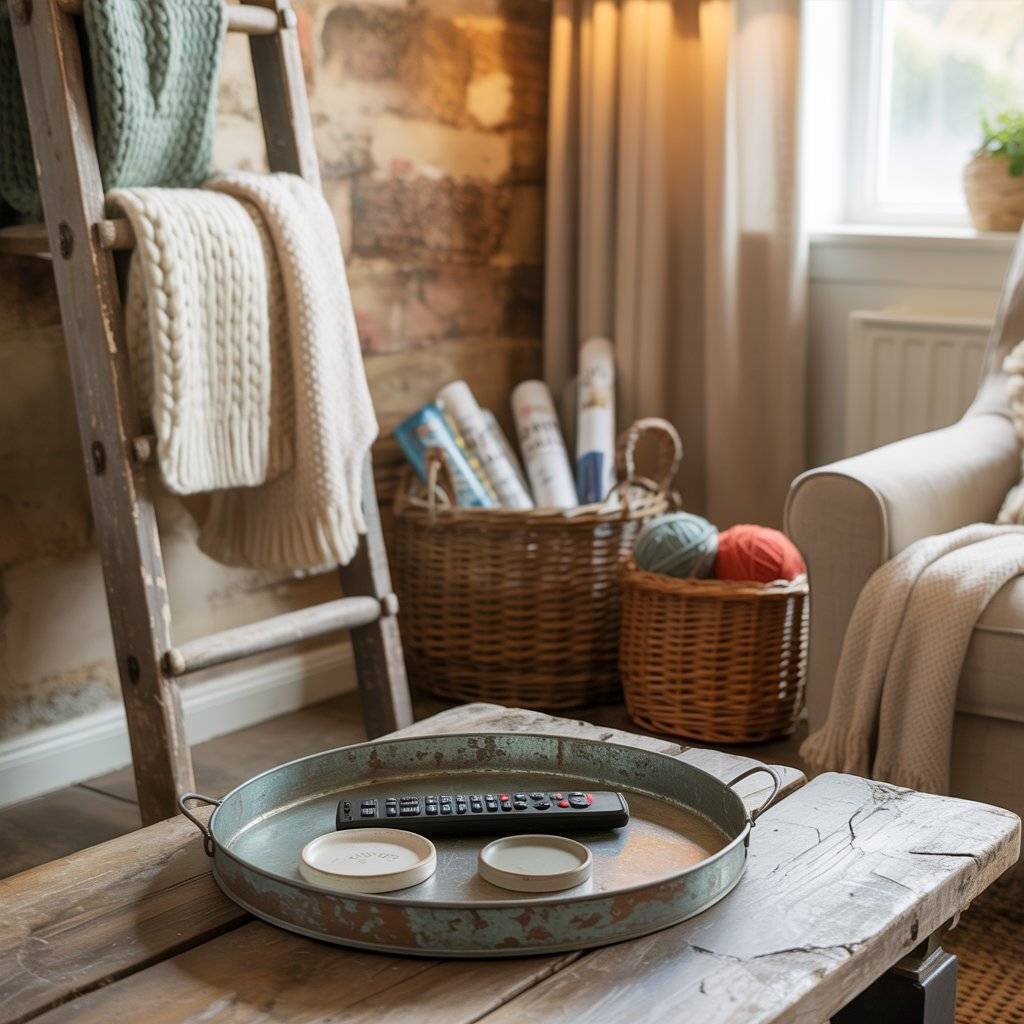
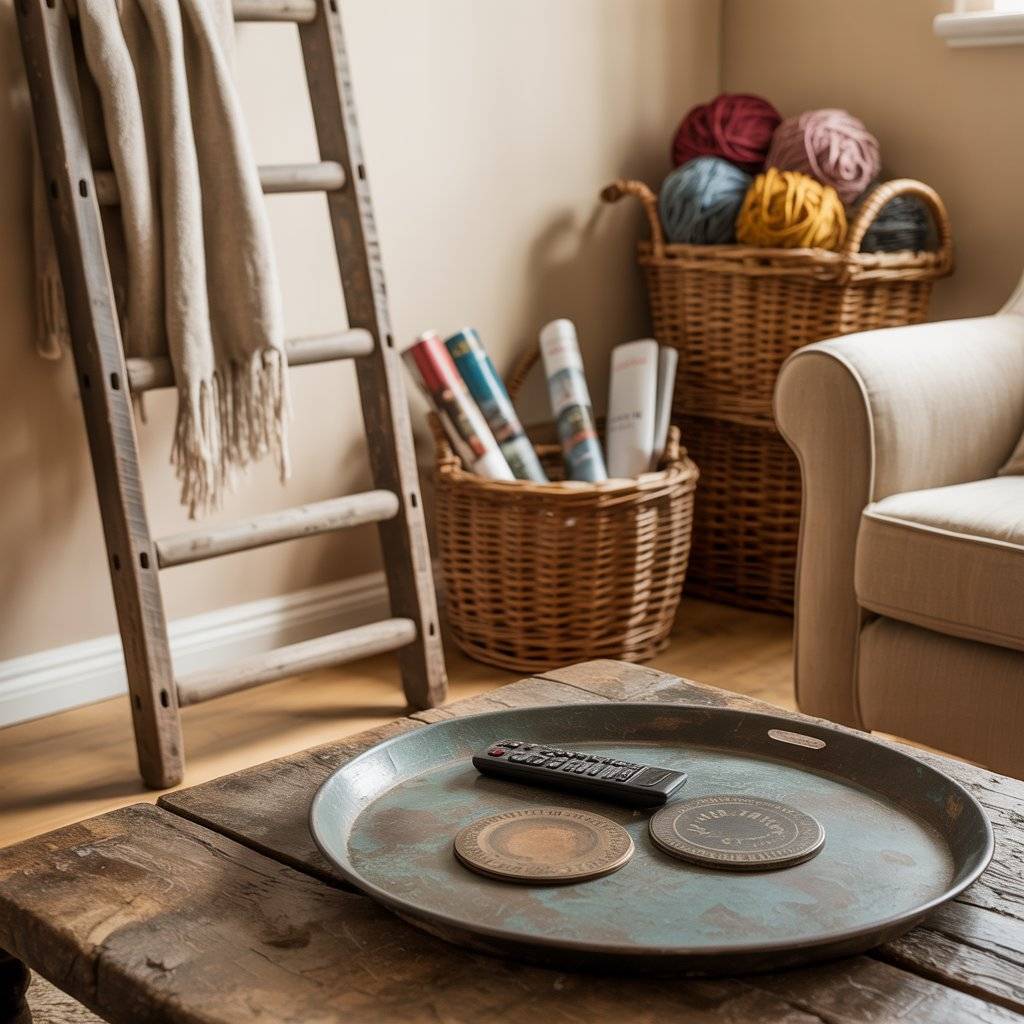
I brought in some functional vintage pieces like an old wooden ladder as a blanket holder and a simple metal tray for organizing remotes and coasters. I noticed that functional decor works twice as hard it looks good and keeps the space organized.
You can find inexpensive vintage pieces at thrift stores or flea markets, and they instantly give your living room personality. I also like using old baskets for magazines or knitting supplies they’re practical and fit the primitive aesthetic.
Adding things that are useful but have a story makes the room feel authentic. People often comment that these small touches make the space feel warm and welcoming.
10. Accent Wall With Subtle Texture
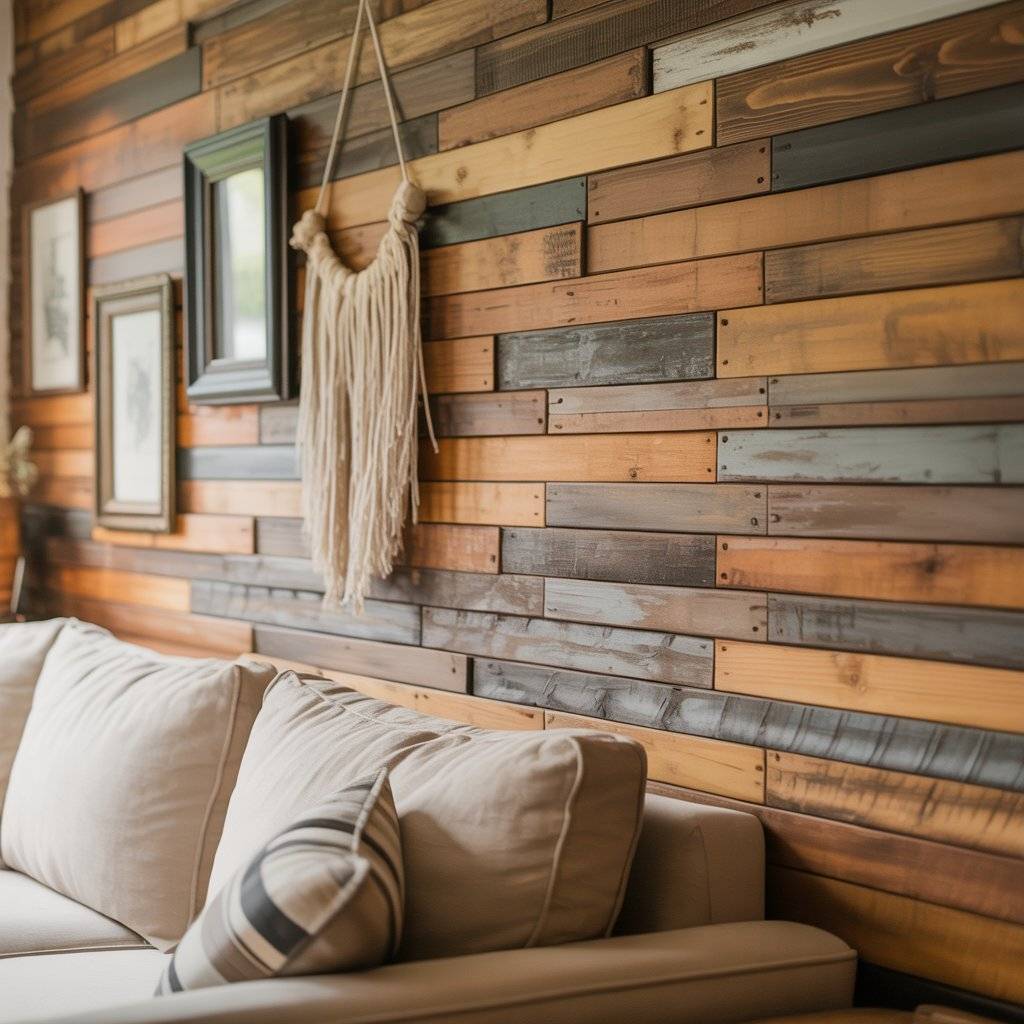
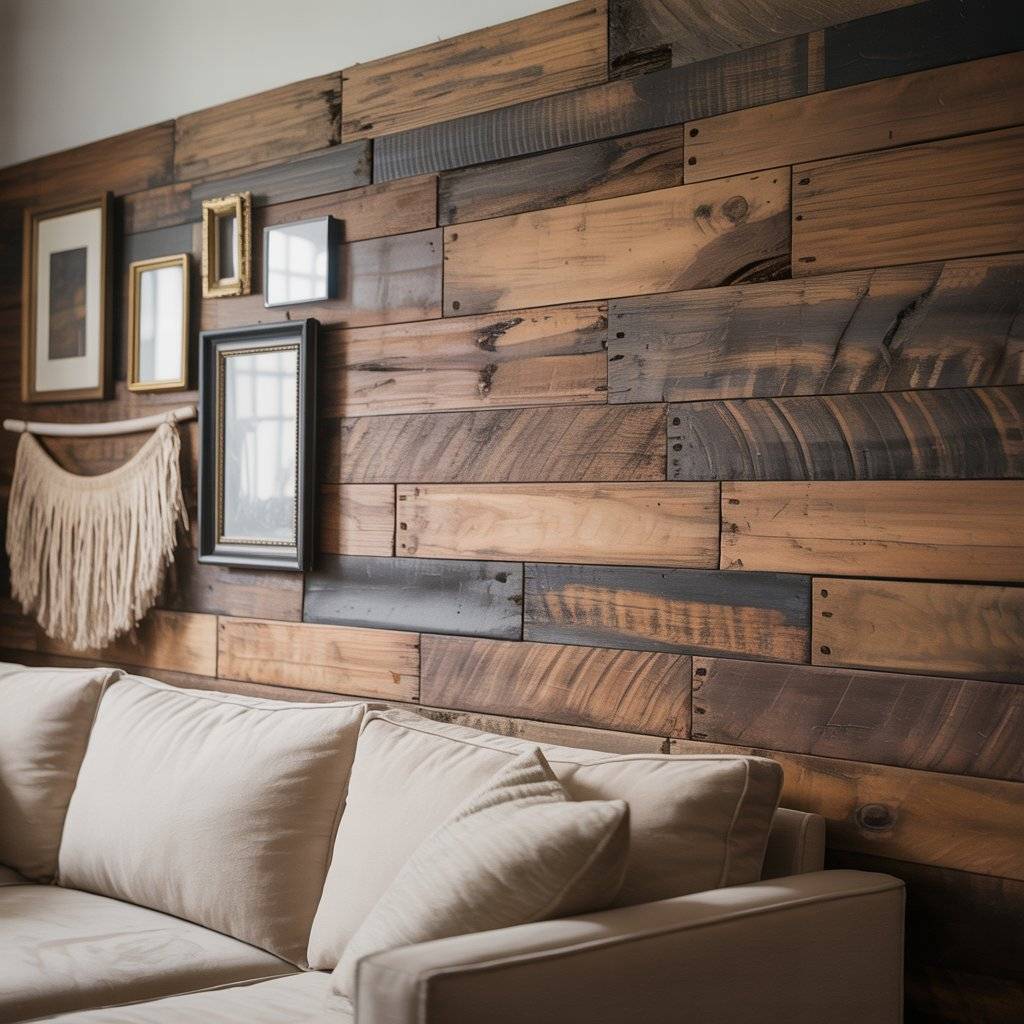
Instead of painting a bold color, I used an accent wall with subtle texture behind the sofa. I went with a reclaimed wood panel wall, but you can also use textured plaster or shiplap. It adds depth without overpowering the room, and highlights the furniture in front of it.
I hung a few simple vintage frames and a woven wall hanging, and the wall became a quiet focal point. It’s amazing how a little texture can change the feel of a space.
You don’t need a big budget; even a DIY project with salvaged wood or inexpensive panels works. The goal is to make the room feel layered and intentional, yet still simple and inviting.
11. Cozy Kitchen Corner
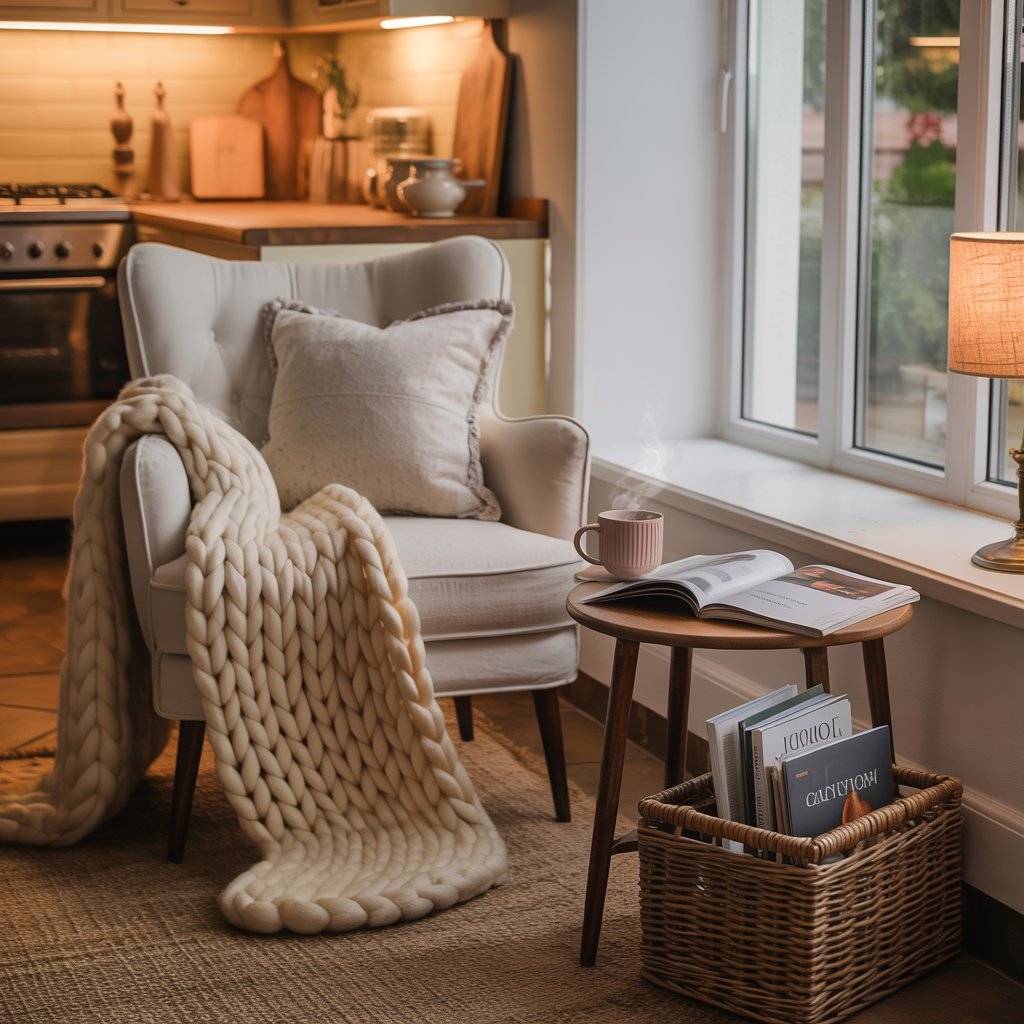
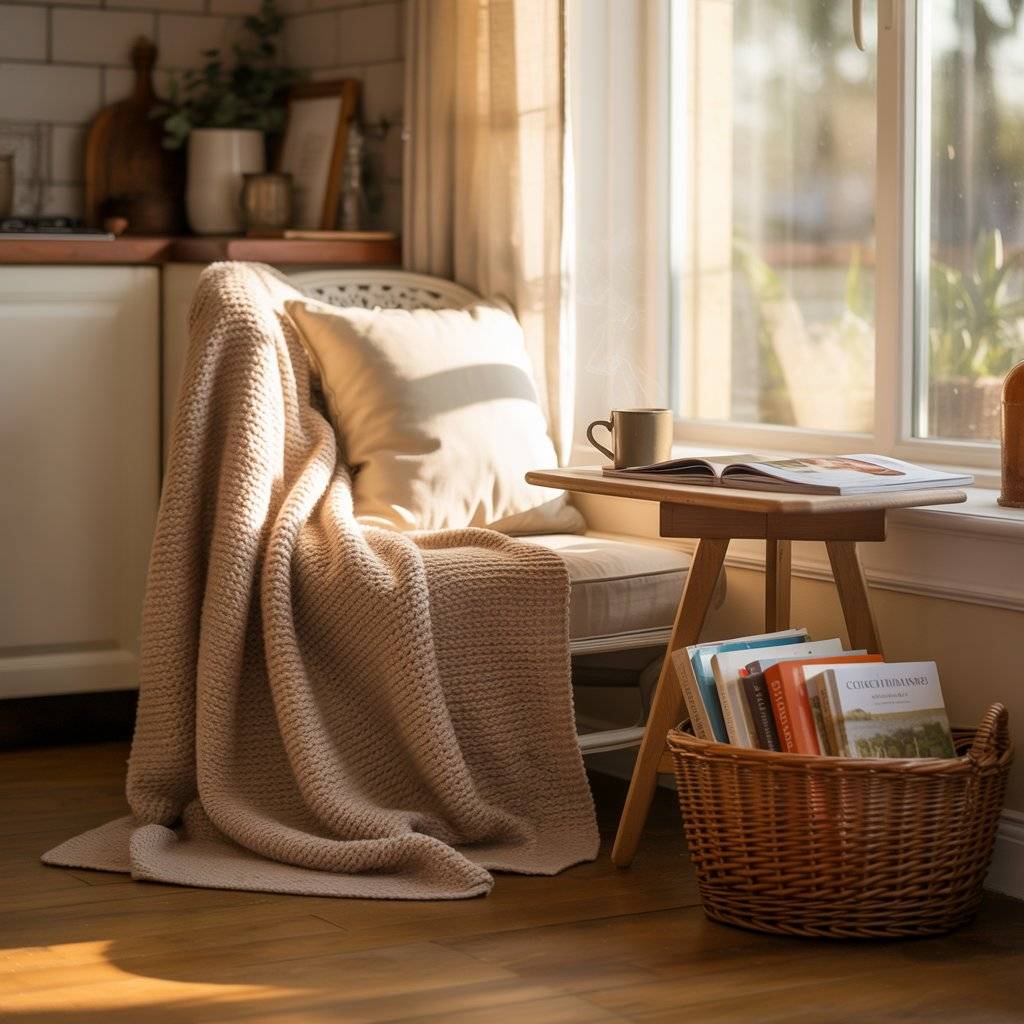
I set up a small corner in my kitchen-living room with a simple chair and a soft throw, right near the window where the light comes in. I added a tiny side table and a basket for cookbooks or magazines. Even though it’s just a small spot, it quickly became one of my favorite places in the house. Having a little corner like this makes the whole kitchen-living room feel more lived-in and inviting.
You don’t need anything fancy just a comfortable chair, a soft pillow, and a cozy throw. I also added a small lamp for evenings, so it feels warm even when it’s darker outside.
It’s perfect for sipping coffee, flipping through a magazine, or just relaxing while someone’s cooking. Plus, it’s great when friends stop by it becomes a little conversation spot without taking up much space.
12. Functional Shelf Corners and Utensils
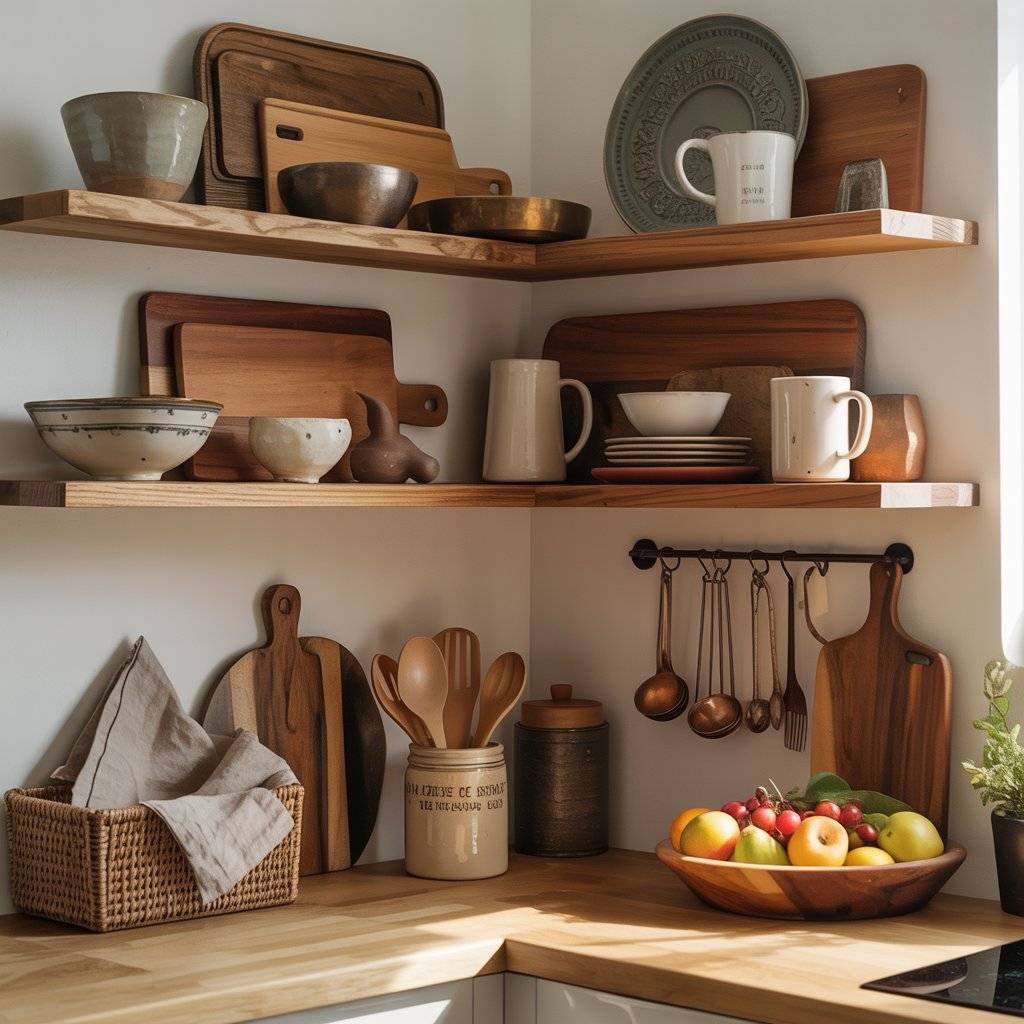
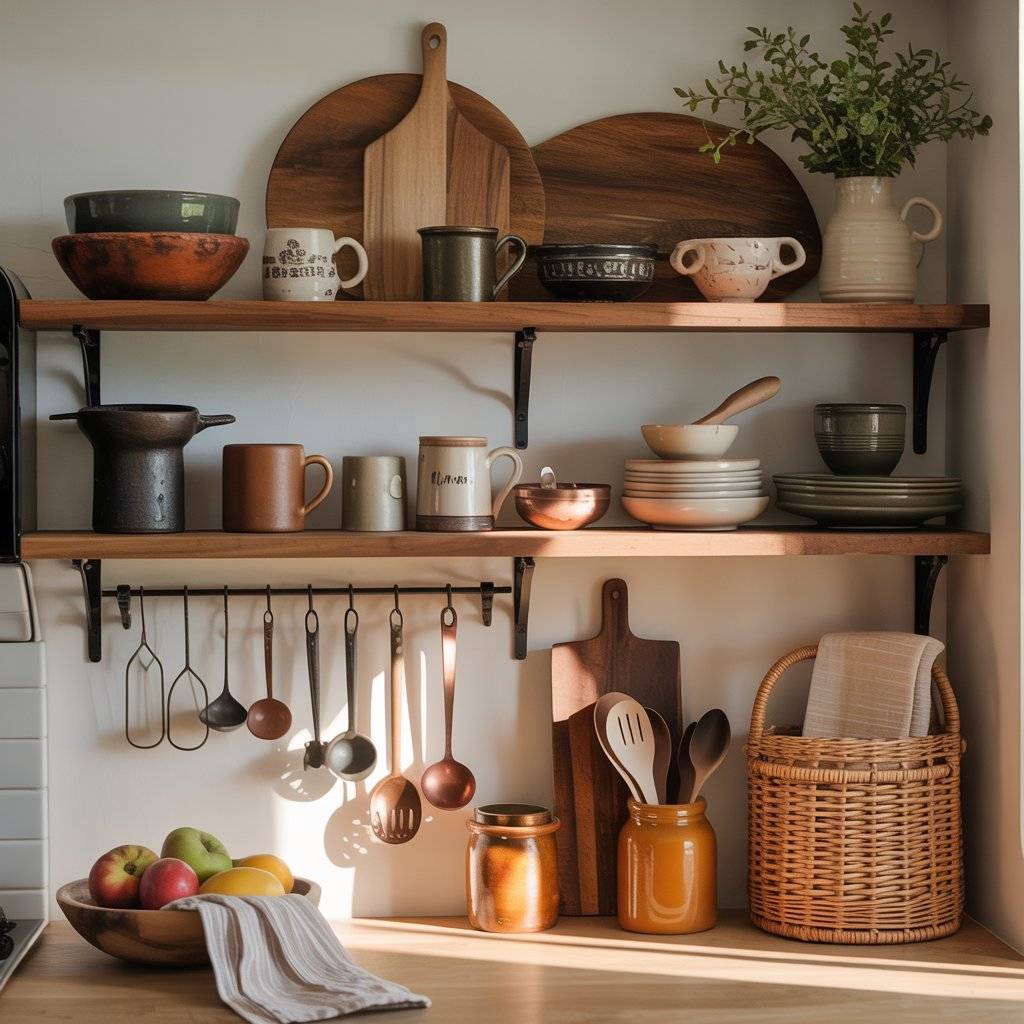
I started using small shelf corners in my kitchen-living room to display everyday utensils and a few decorative items. Wooden shelves, simple hooks, or a small rack can hold cutting boards, vintage bowls, or handmade mugs. Even just arranging your spoons, ladles, and measuring cups neatly adds texture and warmth to the space.
I like to mix functional items with small decorative touches like a ceramic jar for spoons, a woven basket for napkins, or a wooden bowl for fruit. It keeps everything handy for cooking while also making the room feel inviting.
I even rotate items seasonally: herbs and fresh produce in spring and summer, warm spices or dried flowers in fall and winter. This approach makes the kitchen-living room feel alive and lived-in without adding clutter or buying new furniture.
13. Simple Coffee Table Styling
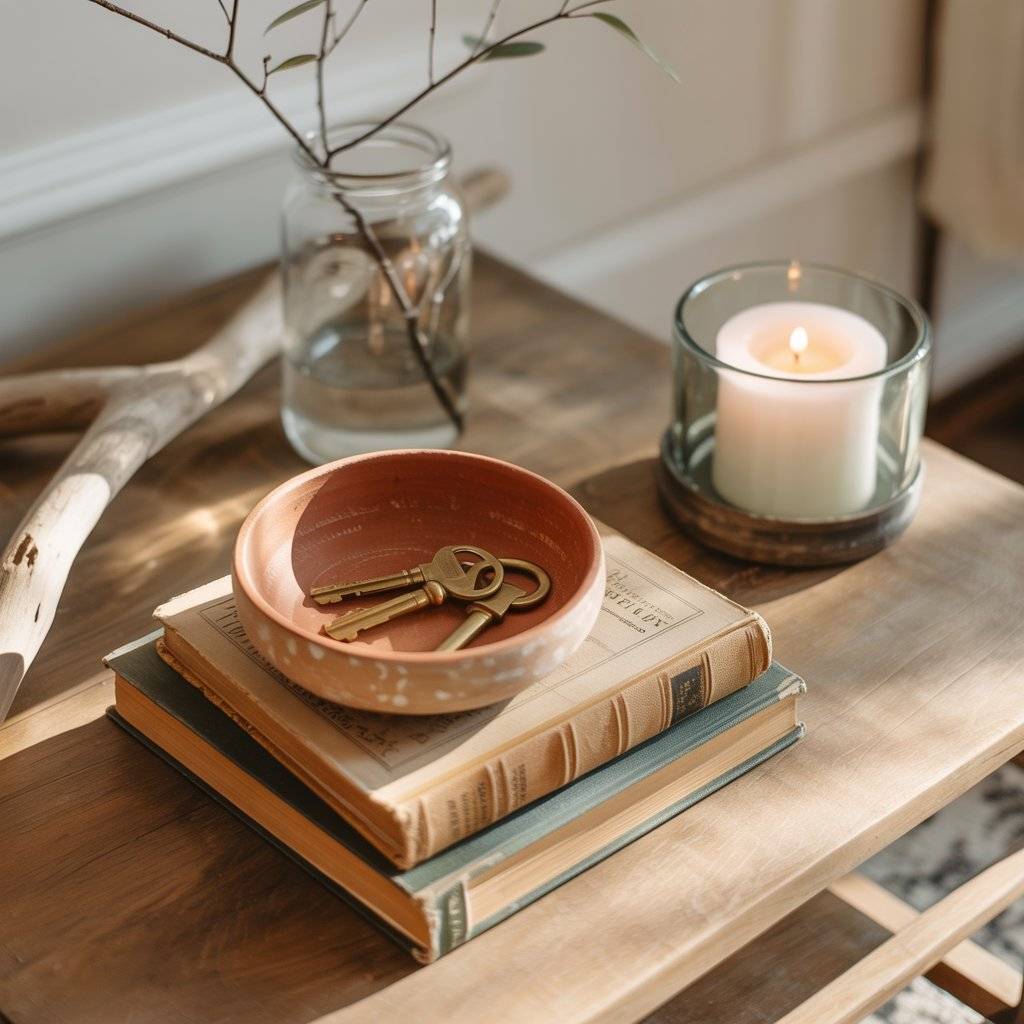
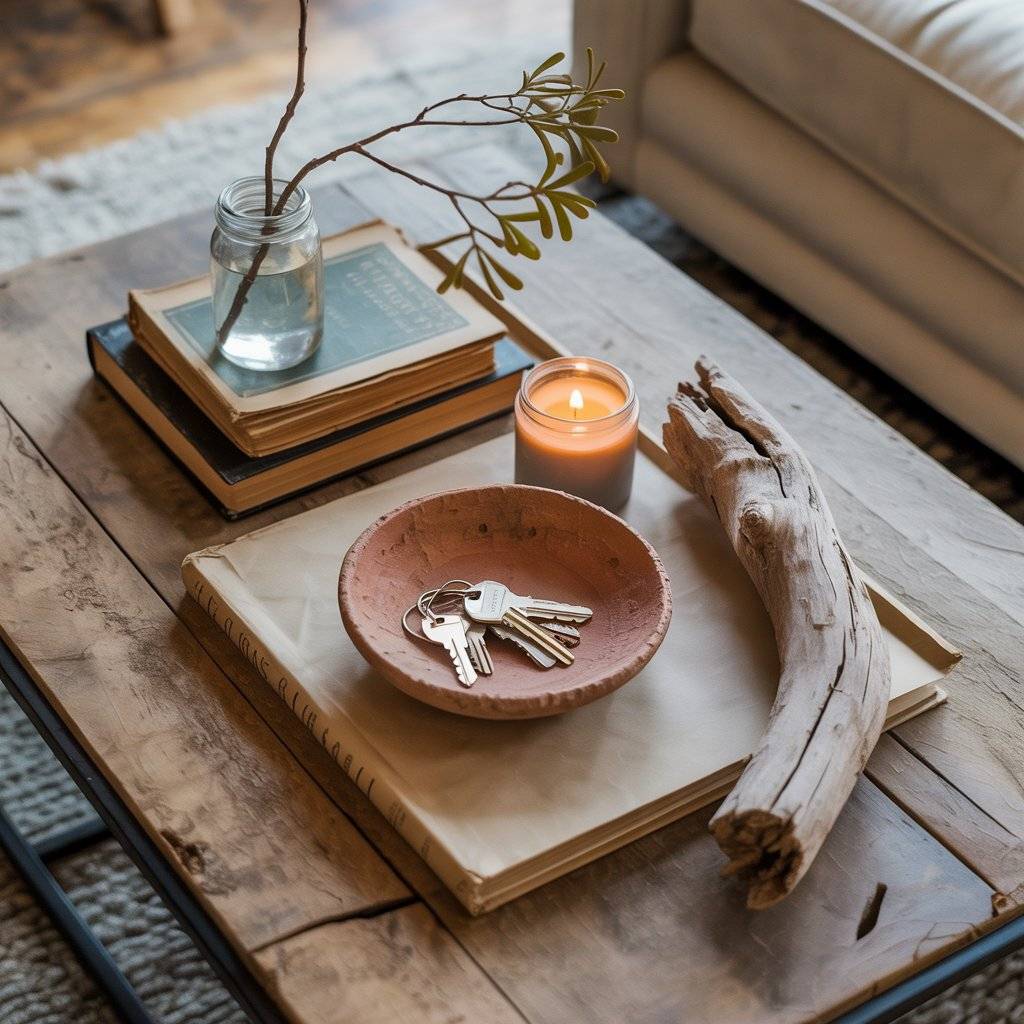
I arranged a few functional pieces on my coffee table: a small stack of vintage books, a handmade bowl for keys, and a candle. I avoid overdecorating just enough to make it interesting but still usable.
I noticed that a well-styled table makes the room feel curated without looking staged. Adding natural elements, like a small branch in a jar or a piece of driftwood, ties the table to the primitive vibe. I keep it flexible, so it’s easy to rearrange when guests come or when I just want a new look.
14. Wall Shelves for Display
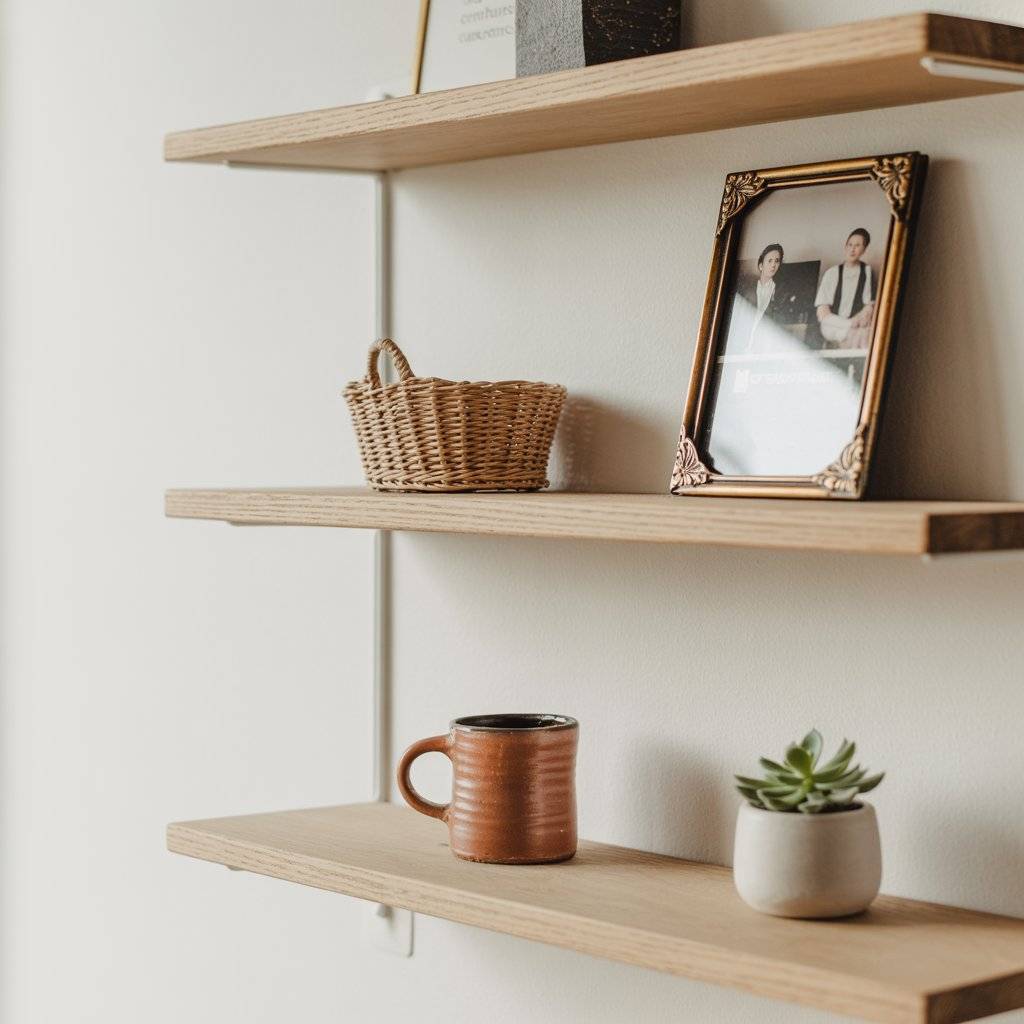
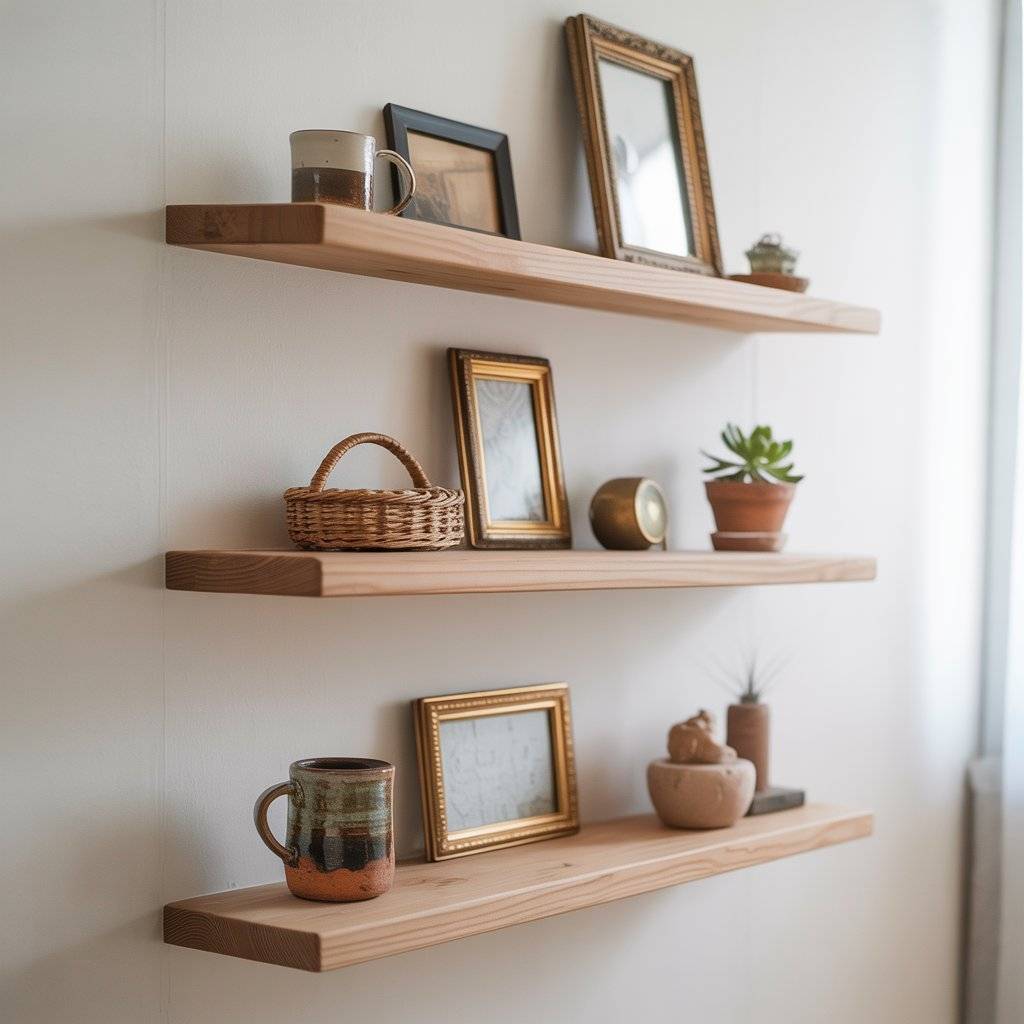
I installed a few floating wooden shelves to display small handcrafted pieces, vintage finds, or even small potted plants. I like that shelves save space while showing off personality.
I keep them uncluttered, with a mix of heights and textures. A handmade pottery mug, a small woven basket, or a vintage frame works perfectly.
Shelves let me rotate items easily and highlight things I love without crowding surfaces. It’s practical, functional, and keeps the room feeling open and airy.
15. Natural Fiber Rugs
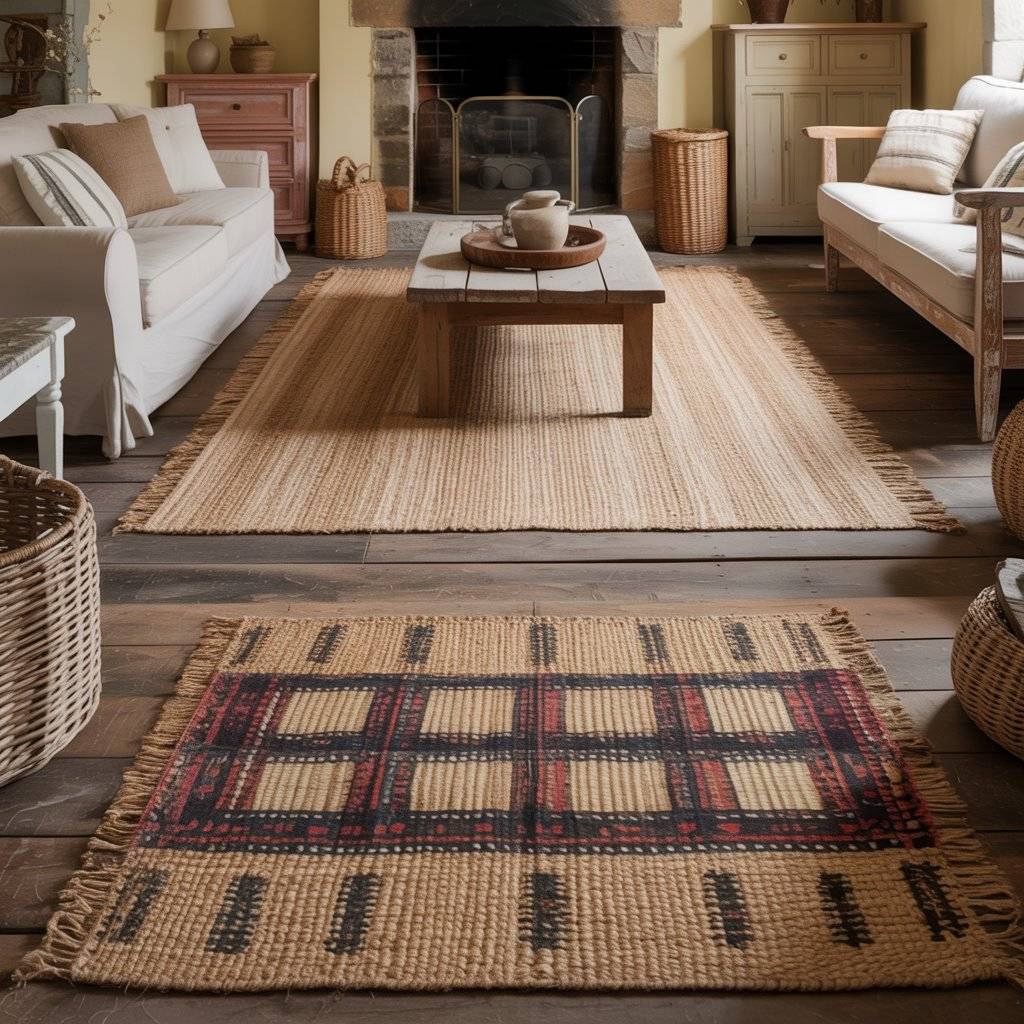
I added a jute rug in front of the fireplace, and it instantly anchored the seating area. I’ve found that natural fiber rugs are durable, easy to clean, and really fit the primitive style. They complement wooden furniture and neutral walls without competing for attention.
I layered a smaller wool or cotton rug on top when I wanted extra texture. Even a few woven floor mats around the room add warmth and softness. Rugs are one of those things that make the living room feel complete, cozy, and grounded.
16. Mix Old and New Pieces
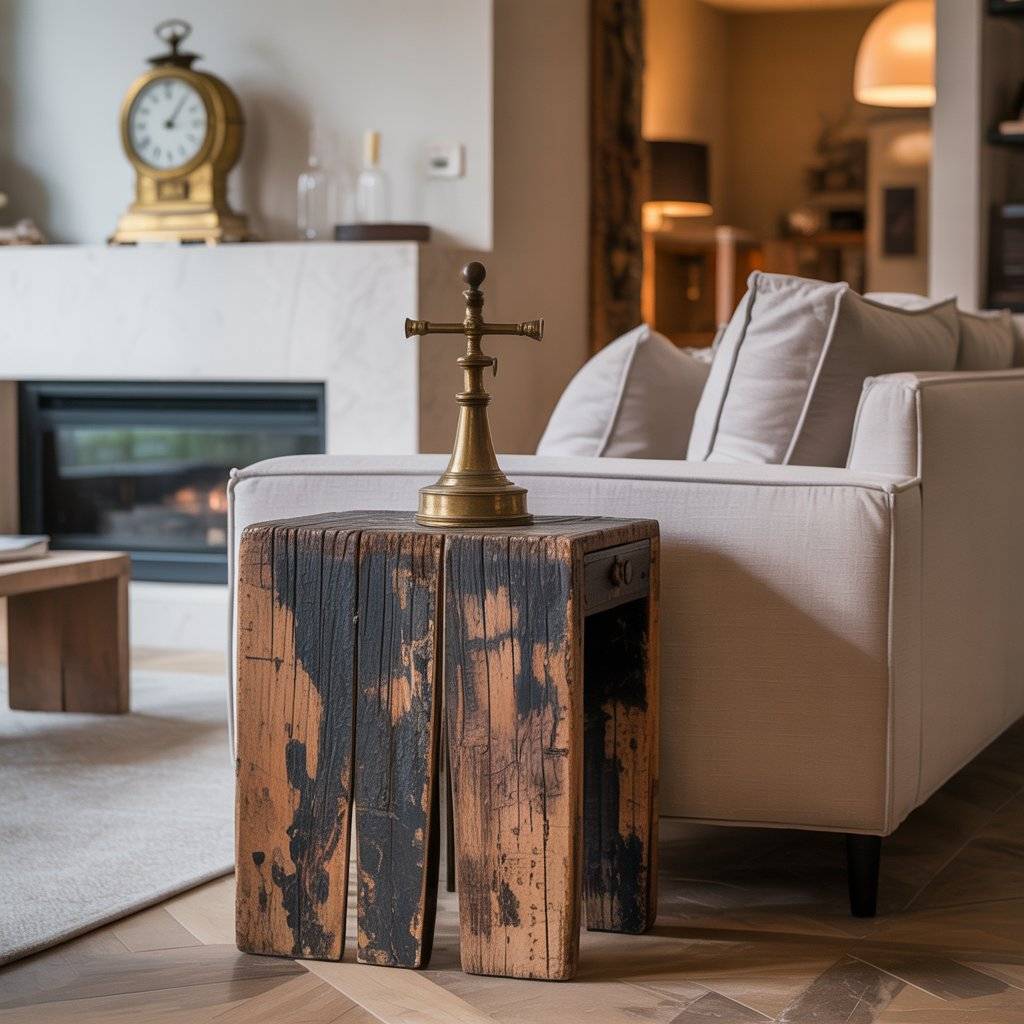
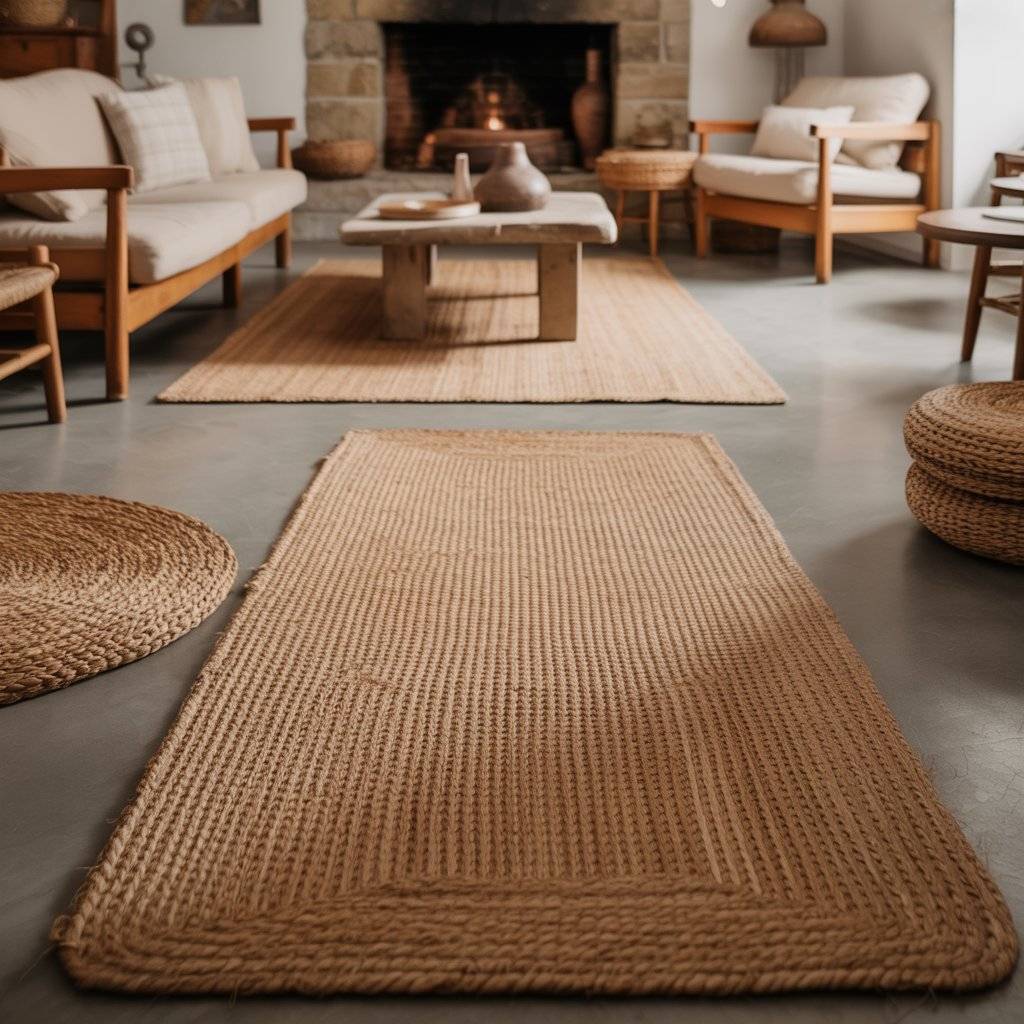
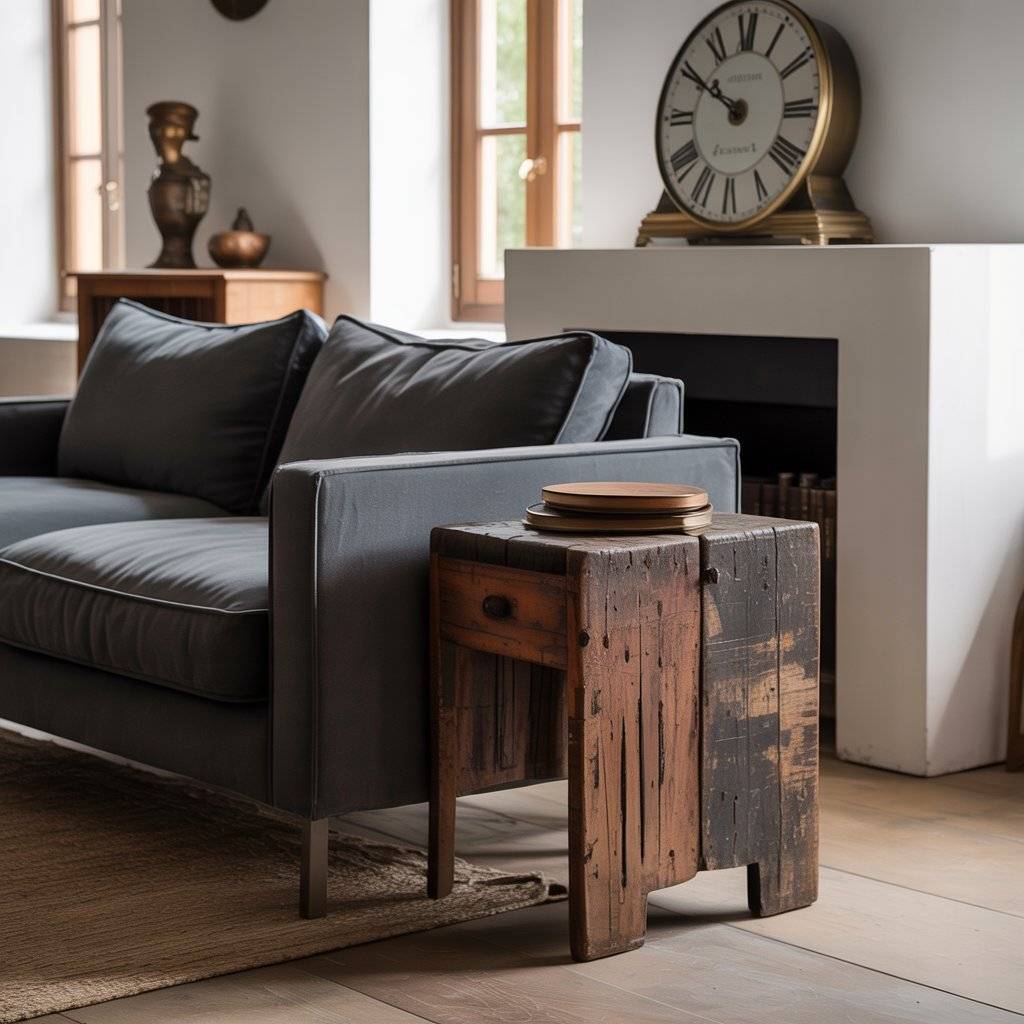
I noticed that blending old vintage pieces with new, functional furniture keeps the room from feeling dated. I kept a vintage wooden side table next to a modern sofa, and it worked surprisingly well.
Mixing old and new gives balance, letting the room feel comfortable but still current. Even small touches like an old clock on a clean, modern mantel add character. The key is simplicity: don’t overcrowd with antiques, just pick a few meaningful pieces that highlight the primitive vibe.
17. Neutral Upholstery
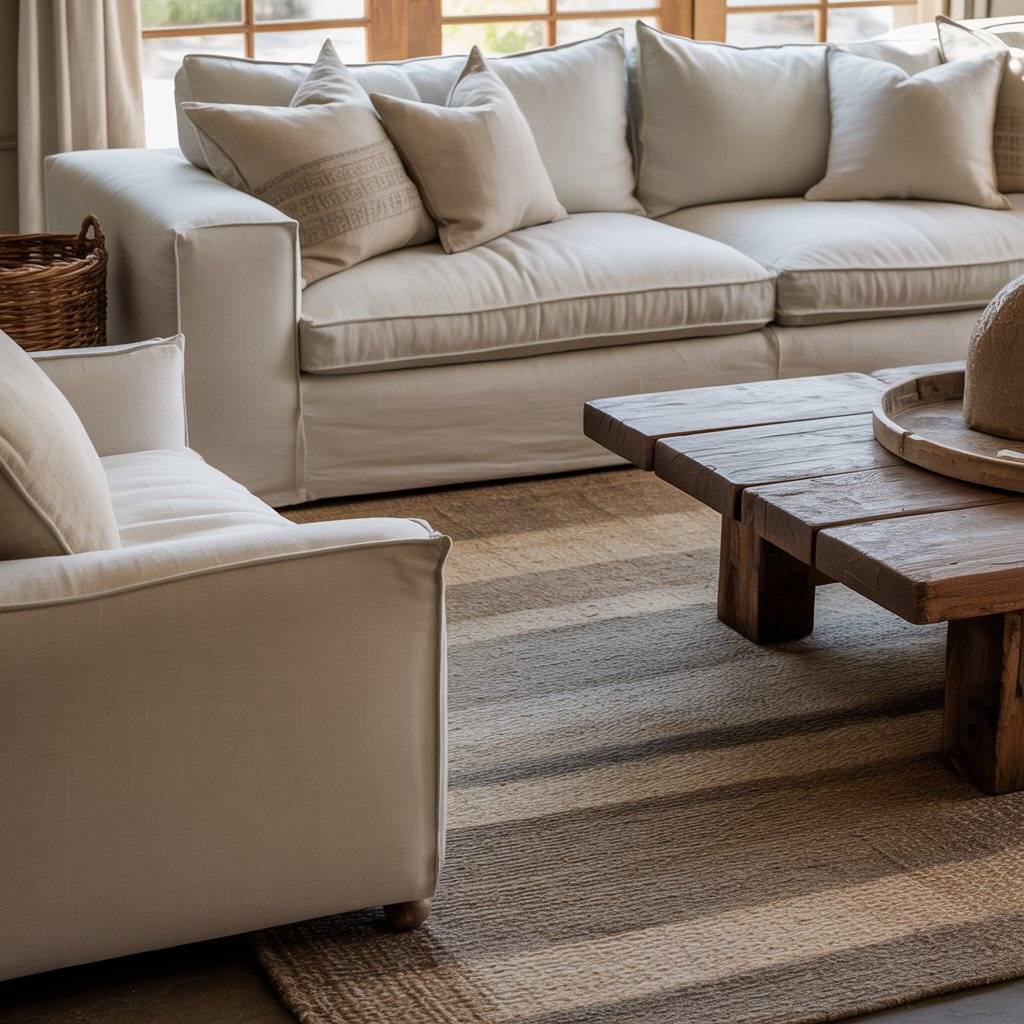
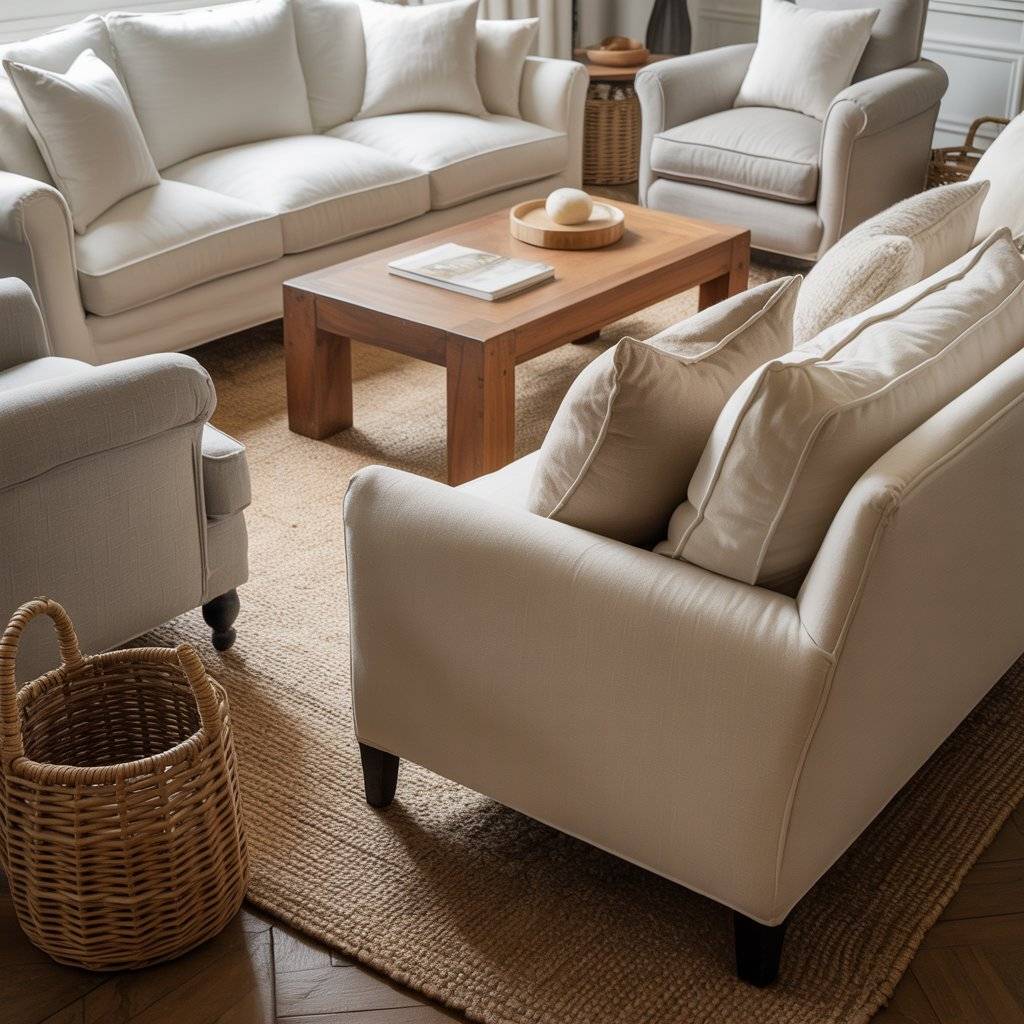
I picked neutral tones for my sofa and chairs soft cream, taupe, and light gray. This way, I can swap pillows, throws, or small accents without worrying about clashing colors. Upholstery in natural fabrics like linen or cotton also adds texture without feeling heavy.
It’s practical, comfortable, and blends seamlessly with wooden furniture, layered rugs, and woven baskets. Choosing neutral upholstery made decorating much easier and helped tie the room together organically.
18. Handmade Wall Art
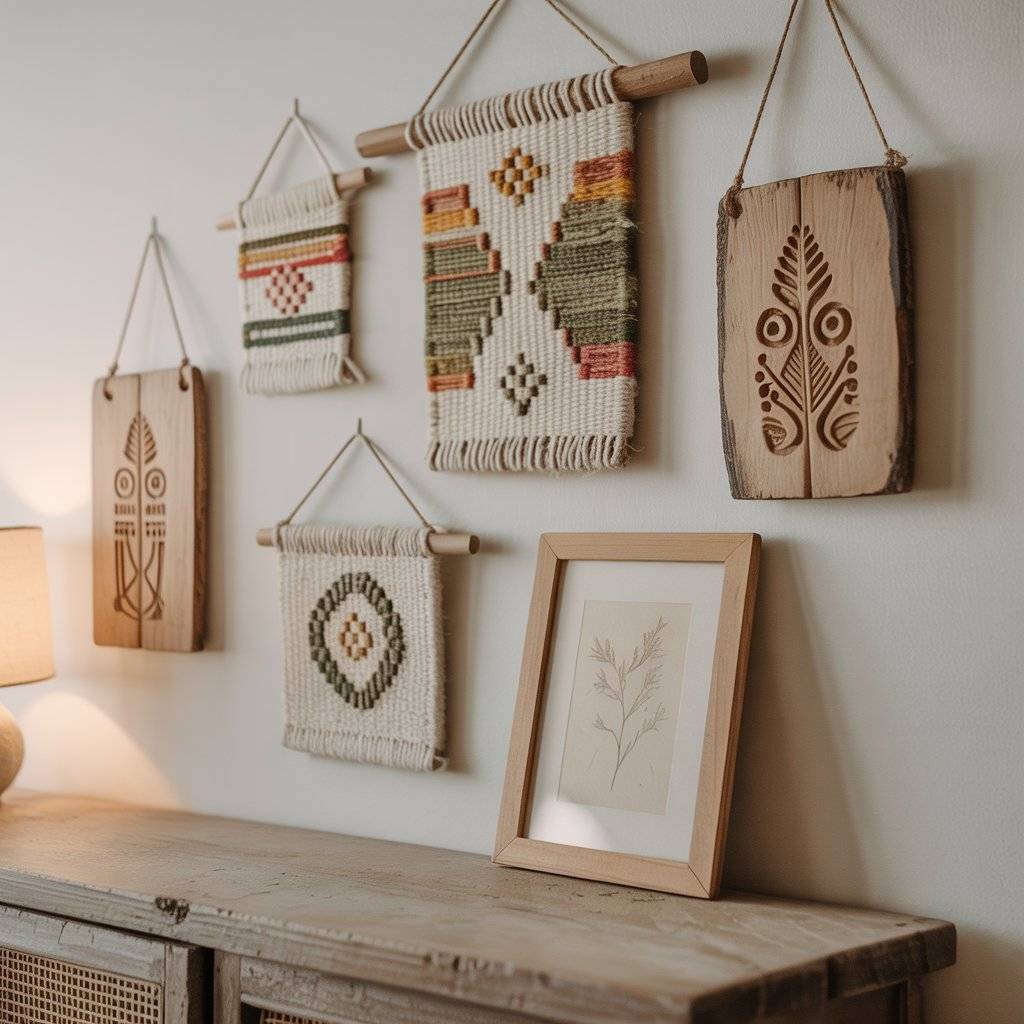
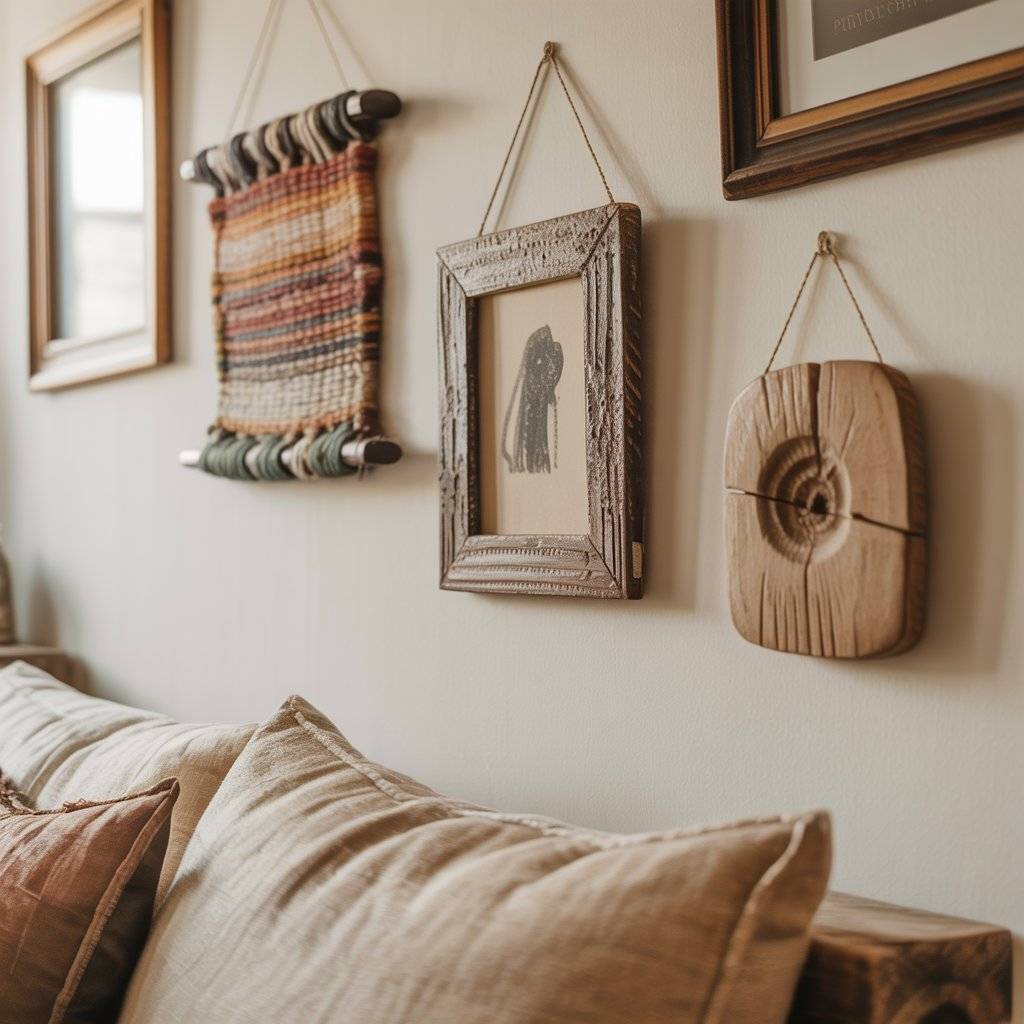
I hung a few small pieces of handmade wall art woven tapestries, framed sketches, or simple wooden plaques. Art adds personality without cluttering, and I like to rotate pieces seasonally or when I find something new.
Handmade items feel personal, and they fit the primitive aesthetic perfectly. Even a single woven wall hanging above a sofa or console makes a statement without overwhelming the room. The goal is warmth and simplicity, not crowded gallery walls.
19. Rustic Mirrors
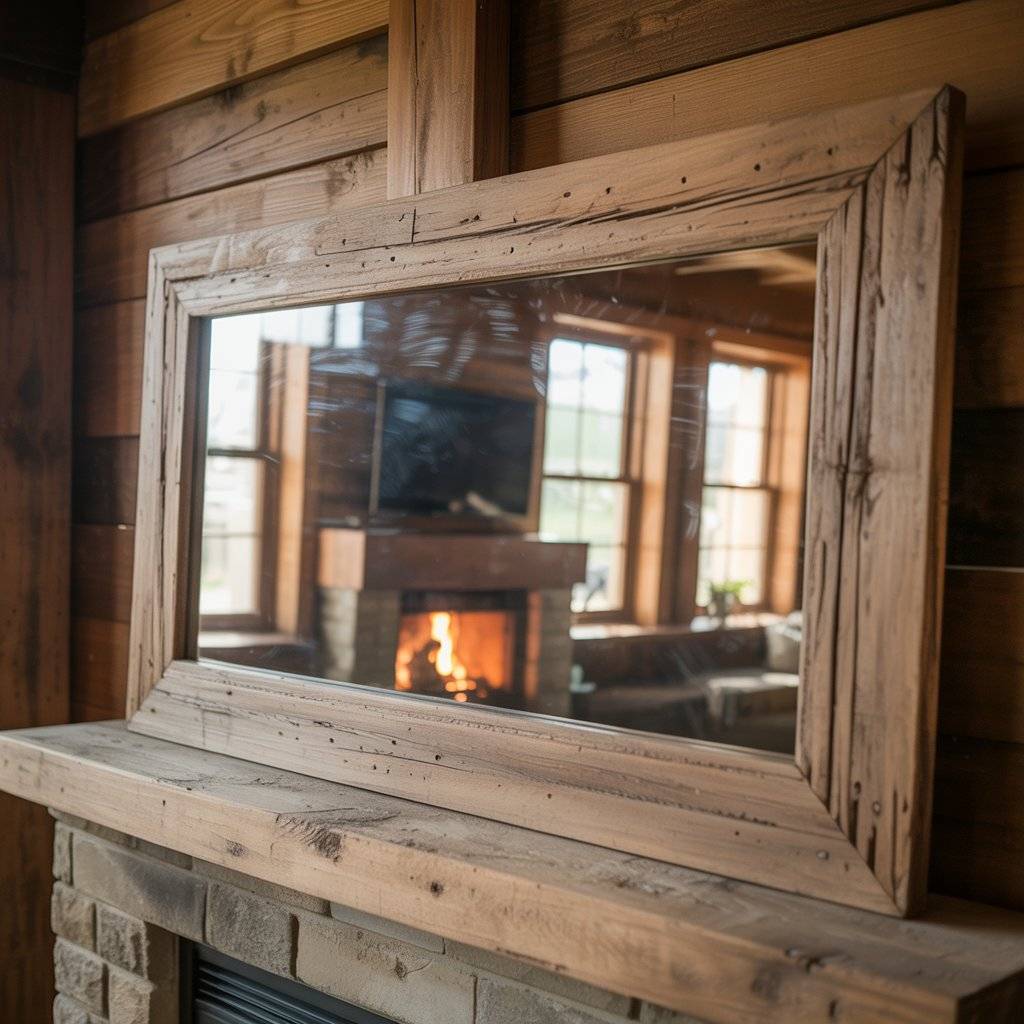
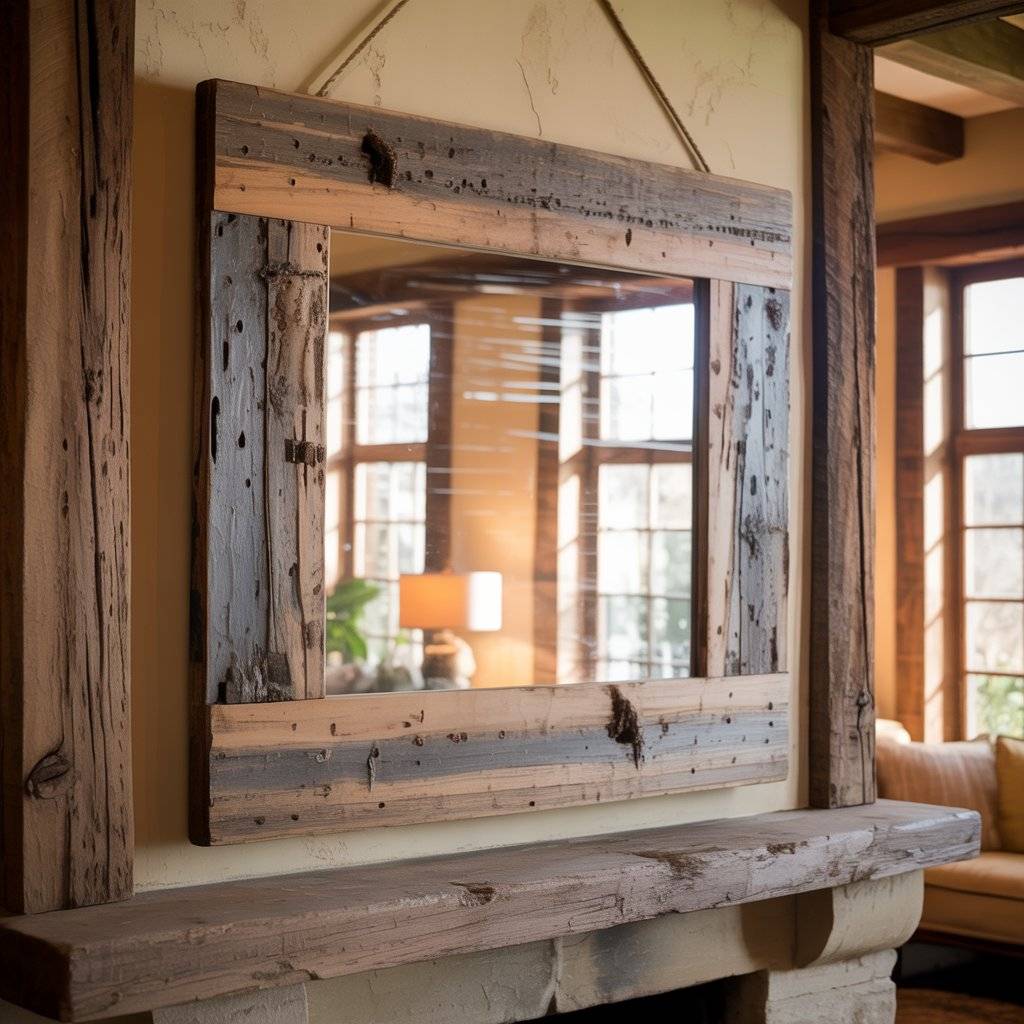
I added a rustic mirror above the mantel, and it changed how the room felt. Mirrors reflect light and make the space feel larger, but the frame is what gives it the primitive touch. I went for a weathered wood frame that had some imperfections it felt real and grounded.
A mirror like this also works as a functional piece for checking outfits or catching natural light during the day. Even a small mirror on a side wall adds depth and interest without feeling forced.
20. Practical Storage Baskets
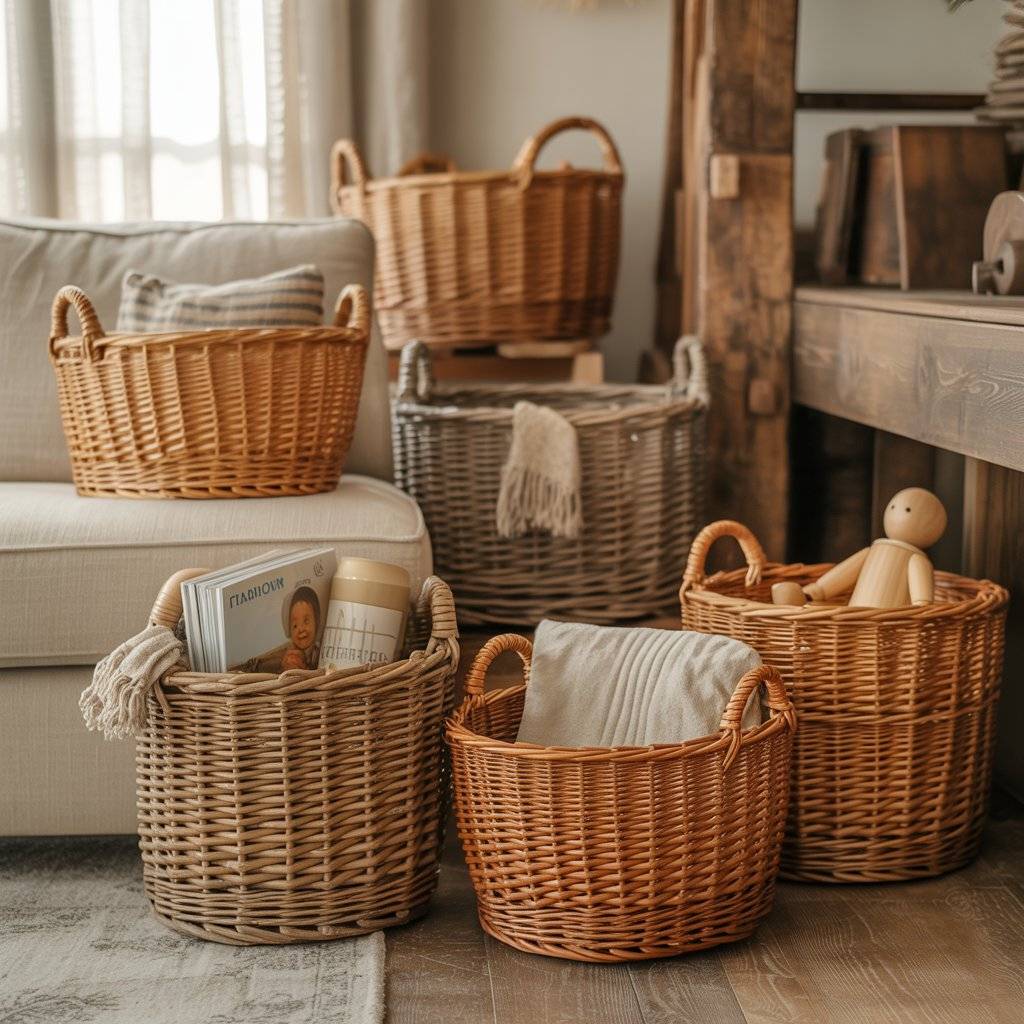
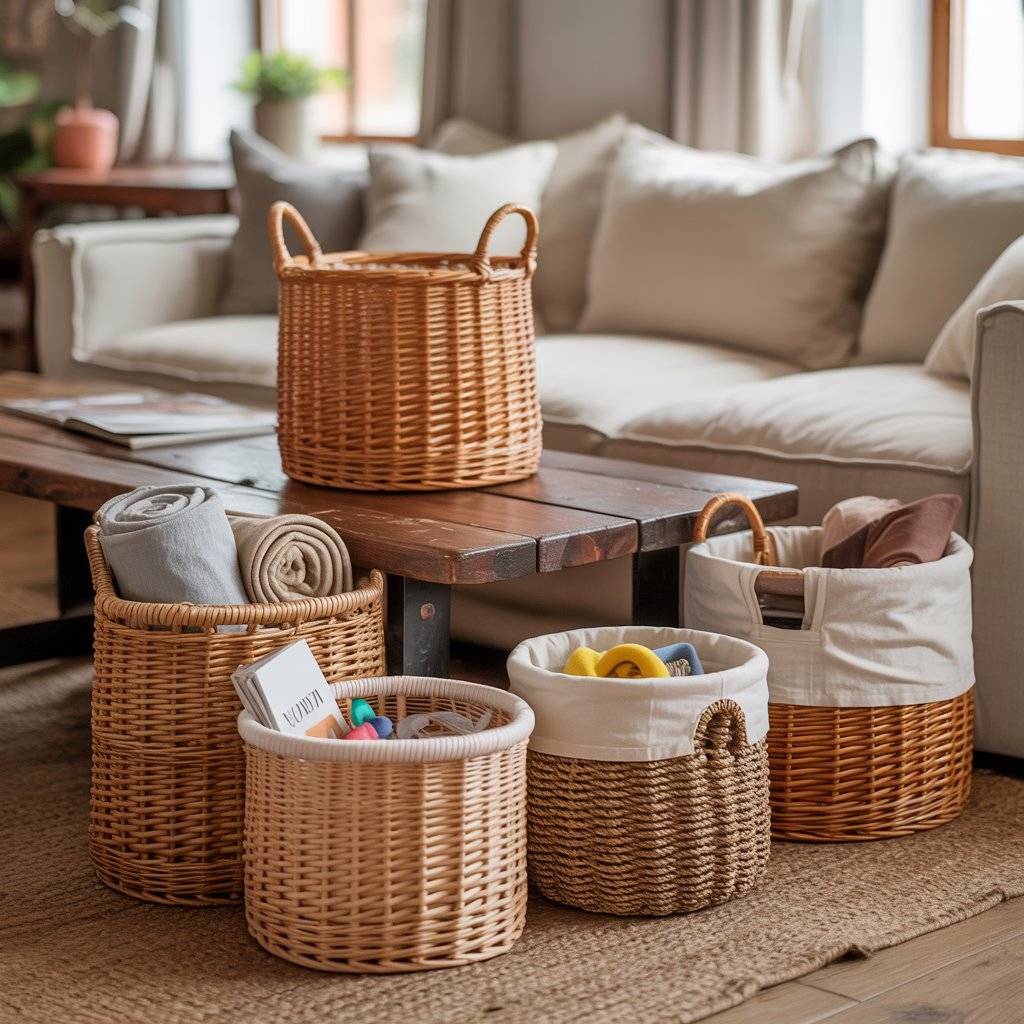
I keep several woven baskets around the living room for magazines, blankets, or small toys. They help me stay organized while looking natural. I like baskets with earthy tones and varied textures rattan, wicker, or jute.
Storage baskets also double as decor. Guests notice them but don’t feel like they’re “in the way.” It’s an easy way to keep a primitive living room tidy without losing the casual, lived-in feel.
21. Exposed Wood Accents
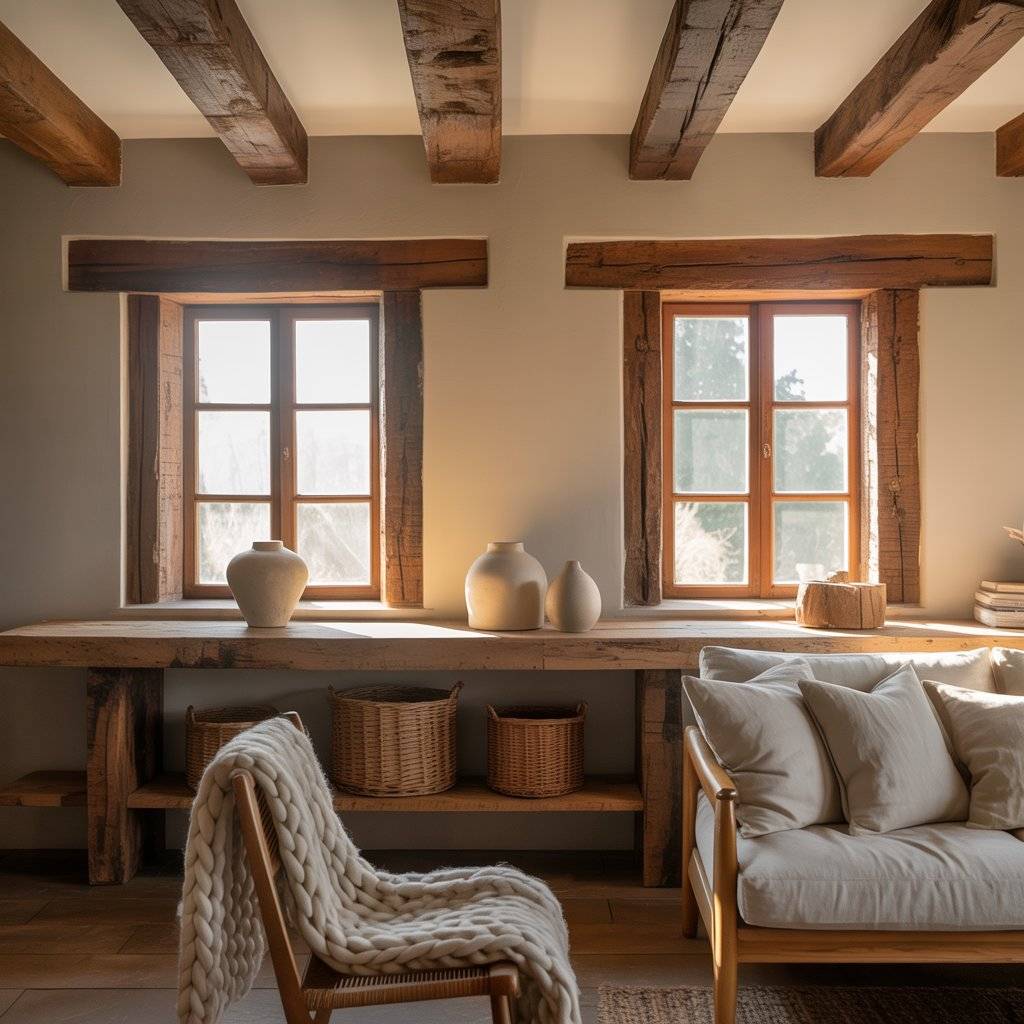
I made sure to highlight exposed wooden beams, window frames, or even simple wooden furniture edges. Natural wood adds warmth and authenticity, which is key to the primitive style.
Even a small wooden shelf or a reclaimed wood console table draws the eye and gives the space character. I like pairing wood with neutral textiles and simple decor to balance rough textures with soft touches.
22. Layered Lighting
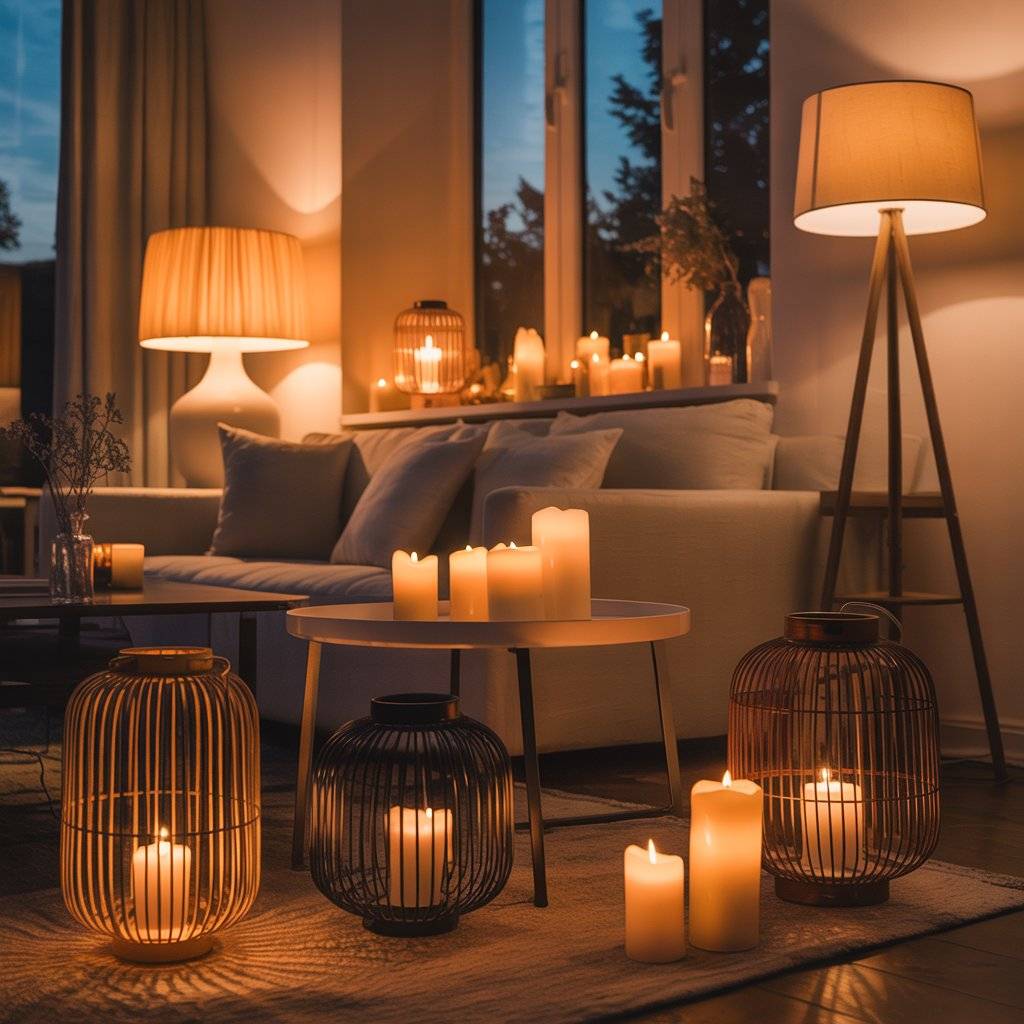
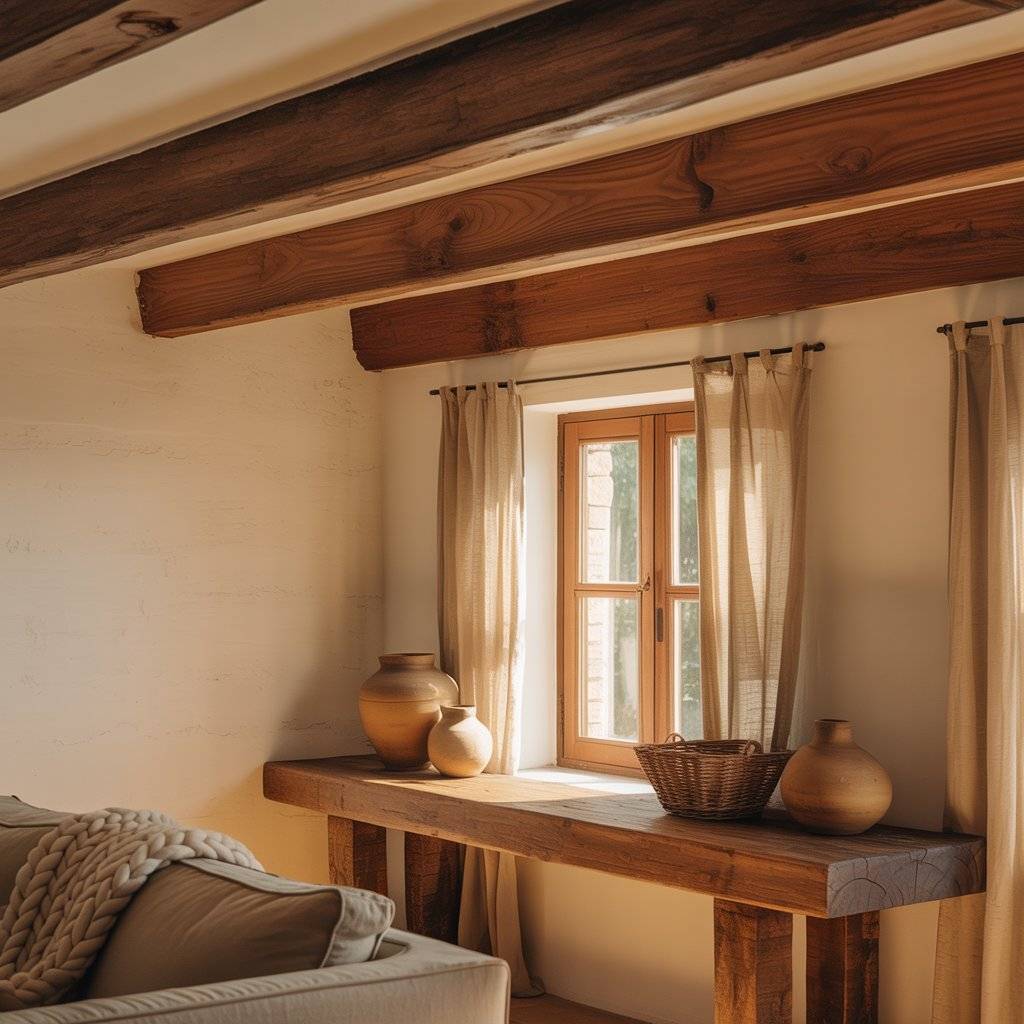
I added different light sources floor lamps, table lamps, and candles so I could control the mood easily. Layered lighting makes a big difference in comfort and warmth.
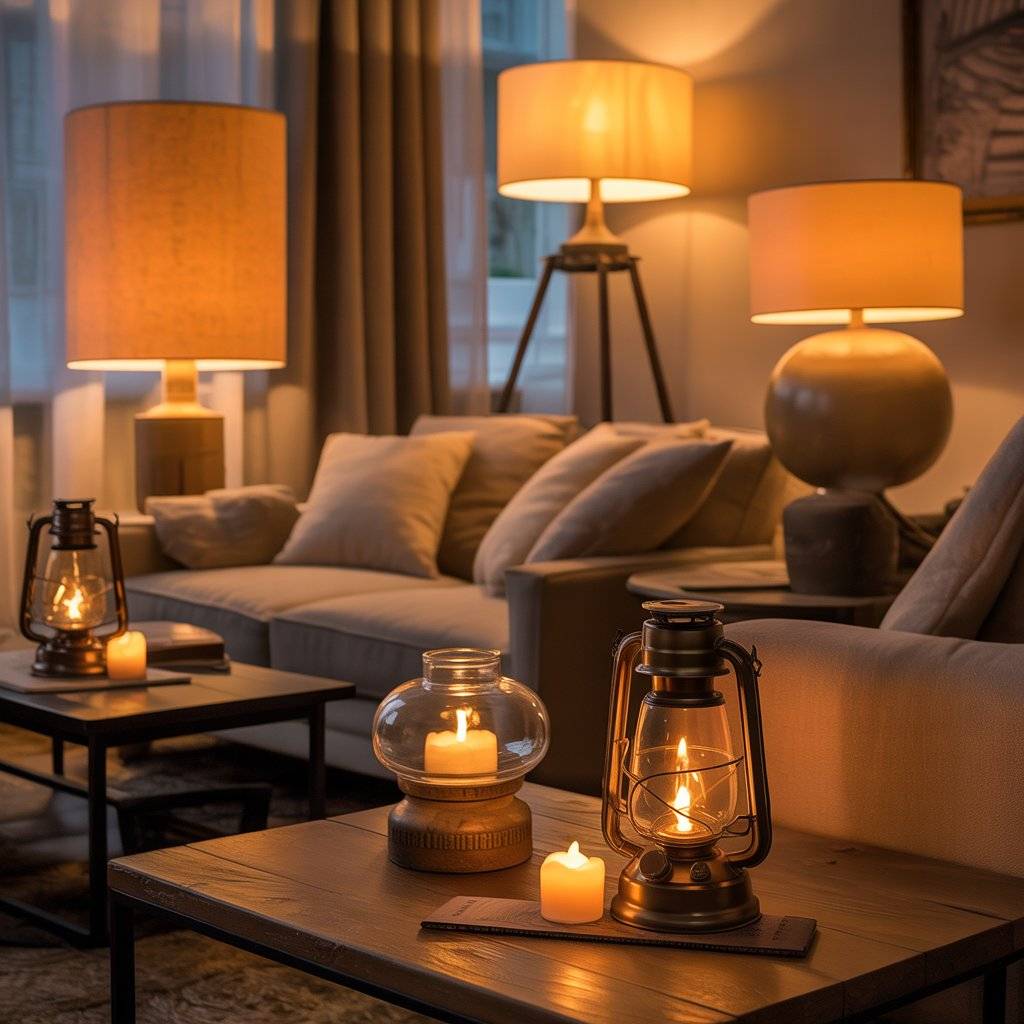
I avoid harsh overhead lights and focus on soft, warm bulbs. Candles or lanterns add a primitive charm, especially in the evening. I noticed the space instantly felt more inviting when I could adjust light based on the time of day or activity.
23. Simple Coffee Table Books
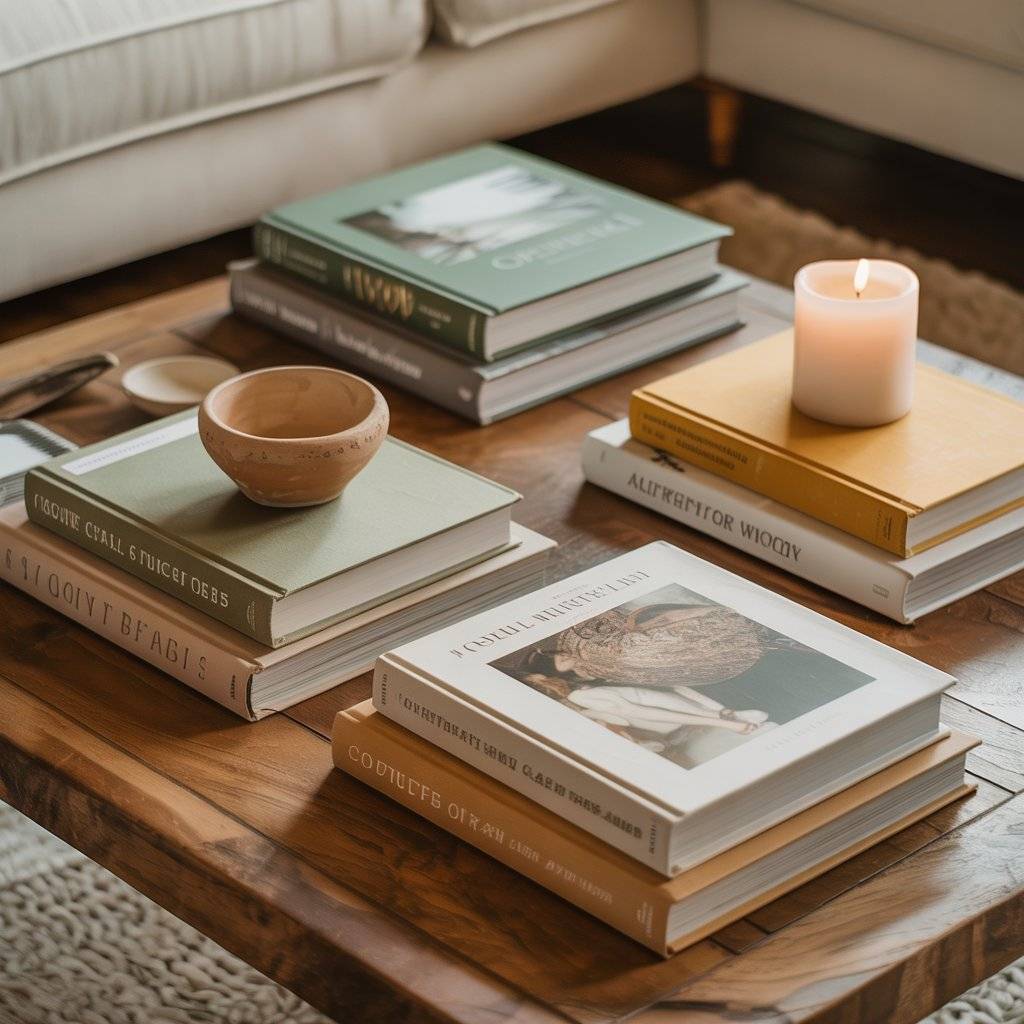
I added a few coffee table books with natural textures or vintage themes. They add visual interest and give guests something to browse, without cluttering the table.
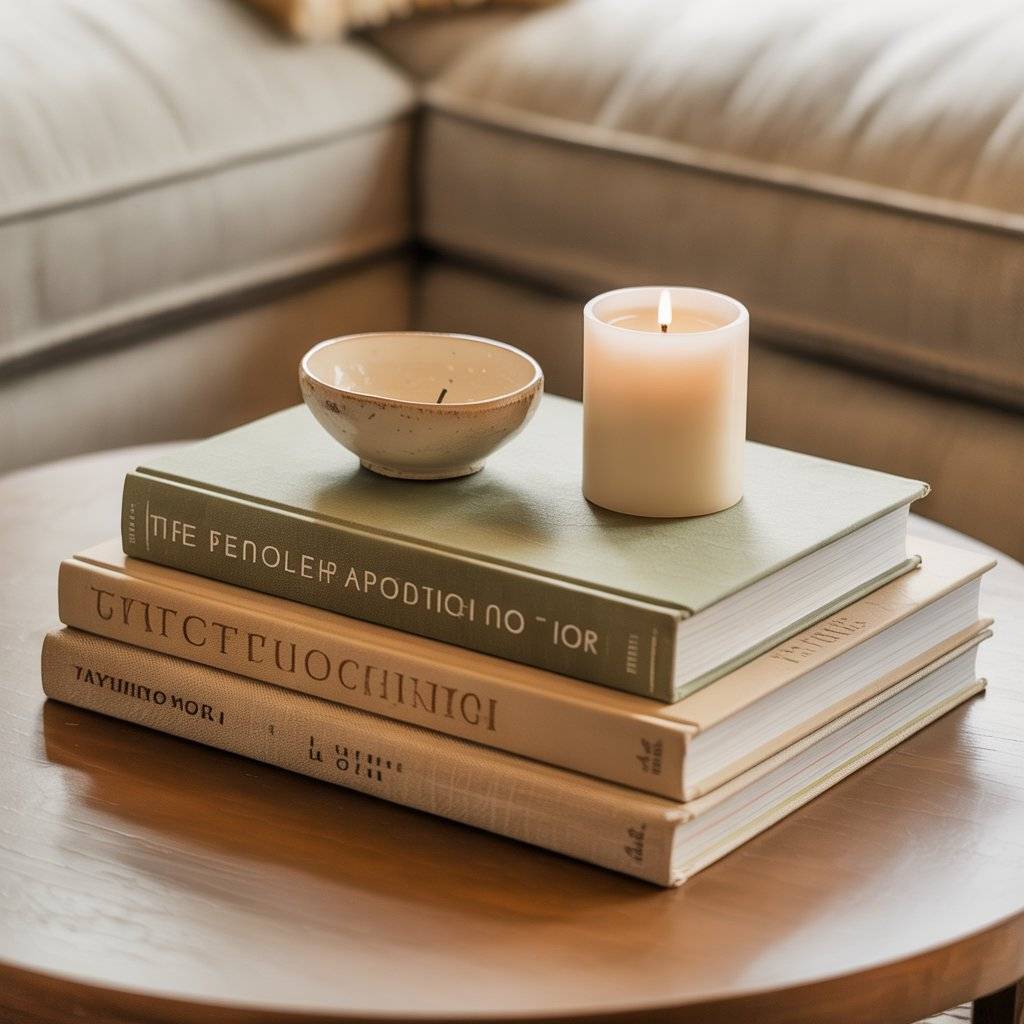
I pick books with muted colors that blend with the room, and sometimes stack them with a small handmade bowl or candle on top. It’s a subtle touch, but it makes the living room feel thought-out, lived-in, and cozy.
24. Minimal, Thoughtful Decor
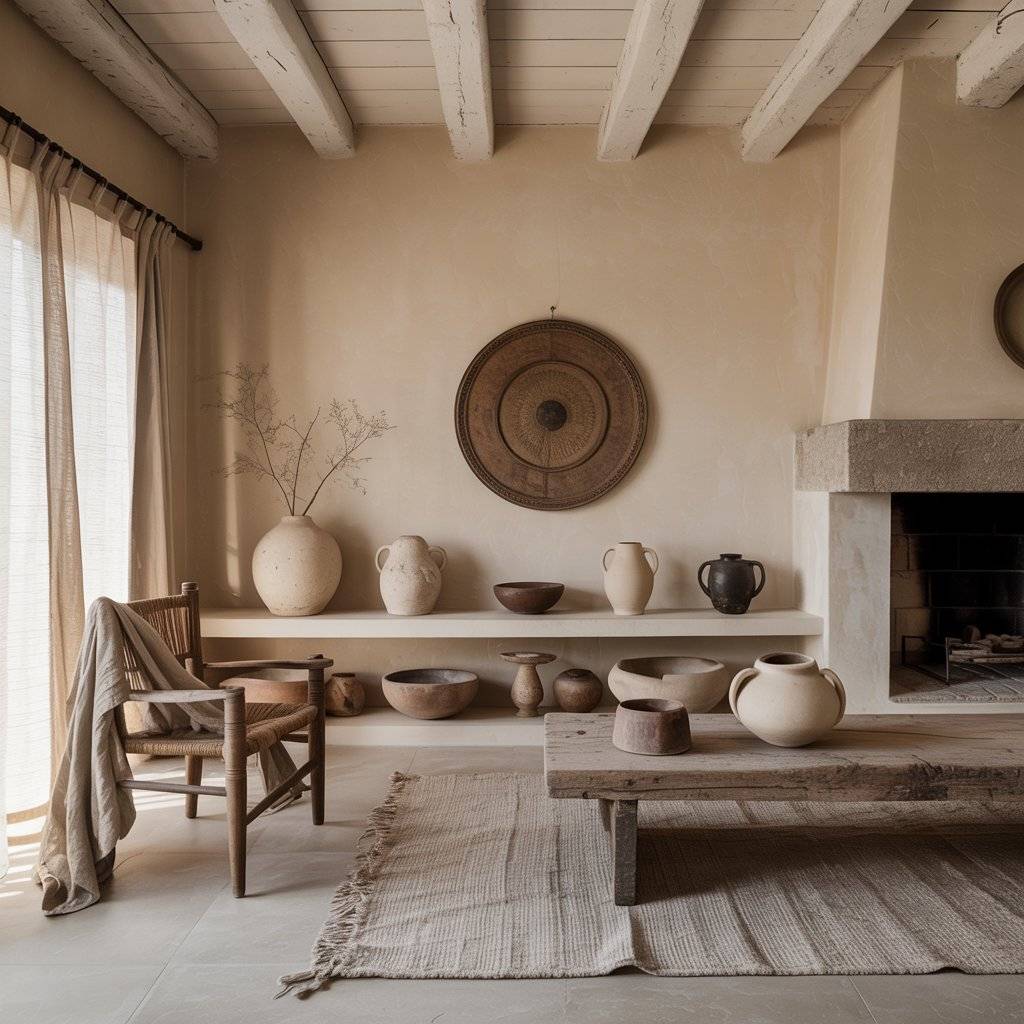
Finally, I try to keep the overall decor minimal. Primitive living rooms feel inviting when every item has purpose functional or decorative. I focus on a few handmade pieces, natural textures, and vintage items I love.
I avoid overcrowding shelves or surfaces. The simplicity lets the textures, wood, and neutral tones shine. The room feels calm, timeless, and easy to enjoy, which is exactly the feeling I wanted when I started.
Wrapping It Up
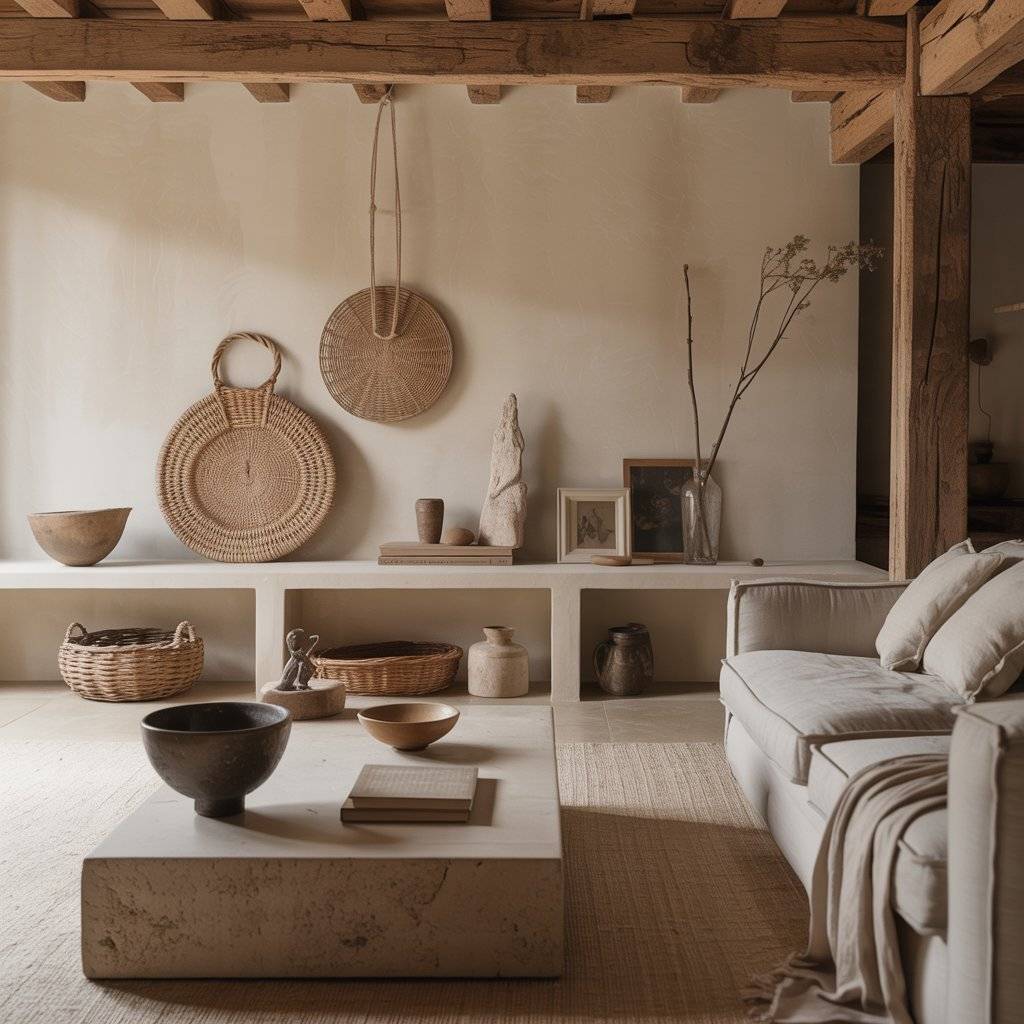
So, that’s 24 ideas I’ve used or seen work to make a living room feel simple, cozy, and a little rustic. You don’t have to do everything at once sometimes just adding a throw, a plant, or a little vintage find can completely change how the space feels.
What’s cool about a primitive living room is that it grows with you. I started with a few baskets and a small rug, and over time added a vintage chair here, a handmade bowl there. Every piece you add tells a story, and that’s what makes the room feel real and welcoming.
If you try even a couple of these tips, you’ll notice the room just feels… calmer, cozier, more like home. Take it slow, have fun with it, and don’t worry about making it perfect. The charm of this style is in the little things and the natural, lived-in feel. Your living room should be a place where you actually want to spend time, relax, and feel comfortable being yourself.
Related Post: White Living Room Seating Ideas Clean, Cozy, and Effortlessly Stylish