

Managing household waste does not have to be complicated. With a few practical changes, you can make it easier to separate recyclable materials, reduce unnecessary waste, reuse useful items, and handle food scraps responsibly.
A smart home recycling system starts with understanding what your household actually throws away. From there, you can create convenient sorting points, use clear labels, and make space for materials that need special handling.
The important thing is not to create a perfect system overnight. Start with the waste you produce most often and improve your routine step by step. Waste prevention should come before recycling whenever possible, followed by reuse, repair, recycling, and responsible disposal. (US EPA)
1. Create a Simple Multi-Section Recycling Station
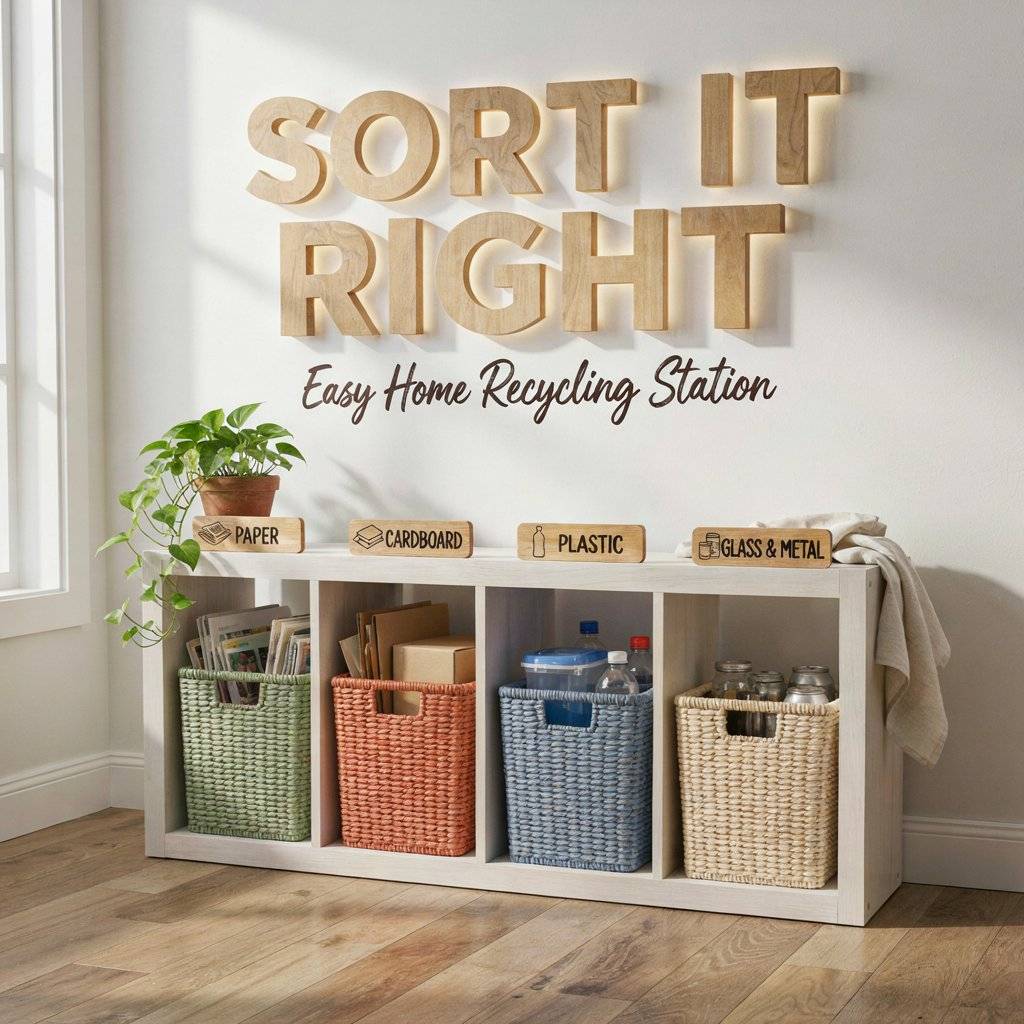
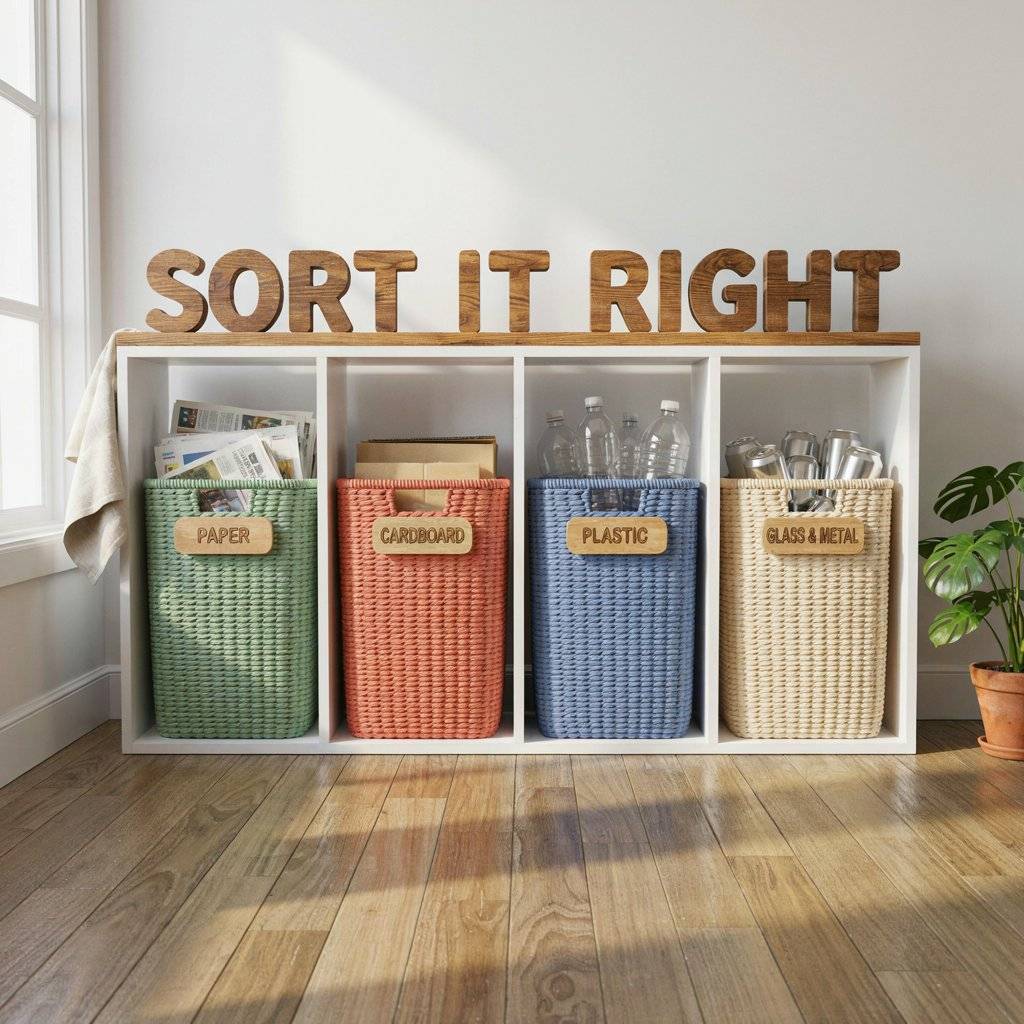
A multi-section recycling station is one of the easiest ways to make household waste sorting more organized. Instead of putting everything into one large bin, create separate spaces for the materials your local recycling service accepts. Depending on your area, this may include paper, cardboard, plastic containers, glass, or metal.
The station does not need to be expensive. You can use existing baskets, sturdy boxes, or separate containers as long as they are clean and clearly marked. Place the station somewhere convenient, such as near the kitchen or back door.
Keep the most frequently used sections within easy reach. A system that is simple to use is much more likely to become a normal household habit.
2. Use Clear Labels to Prevent Recycling Mistakes
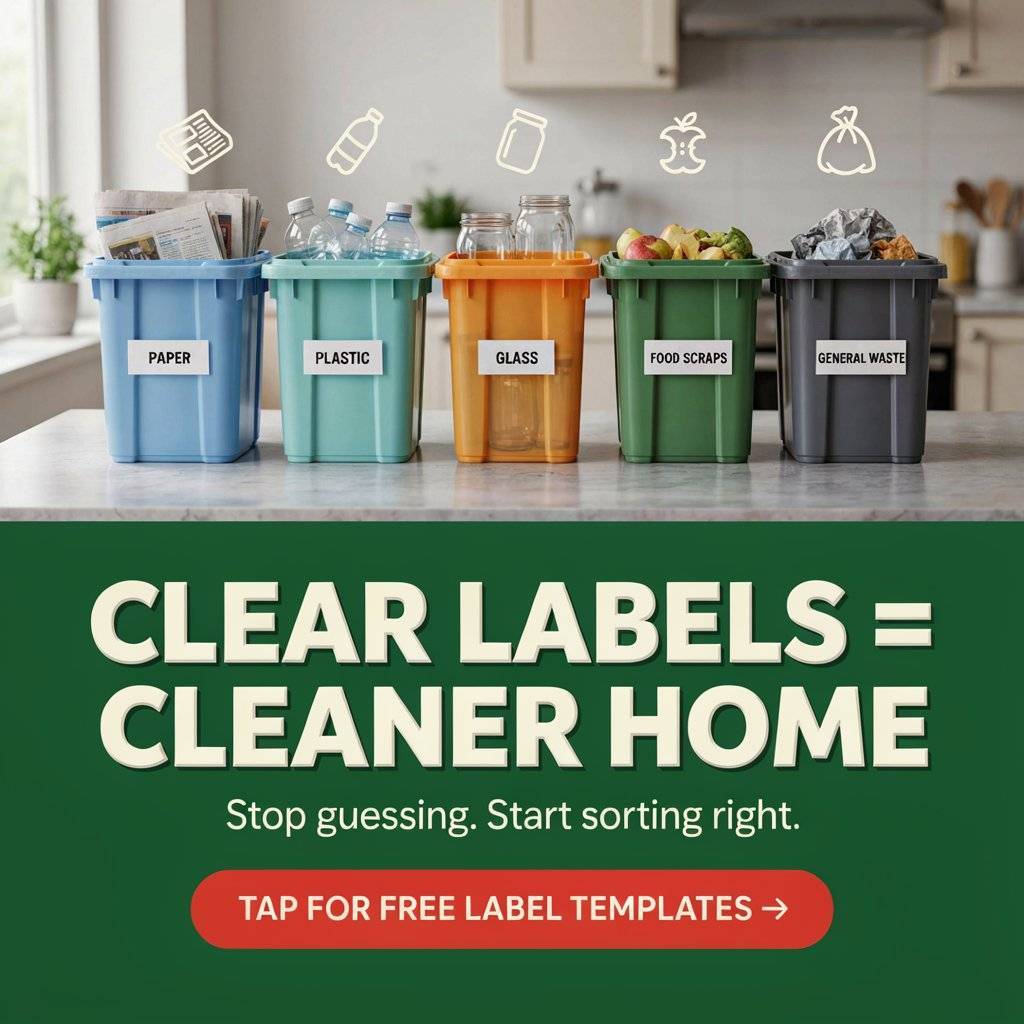
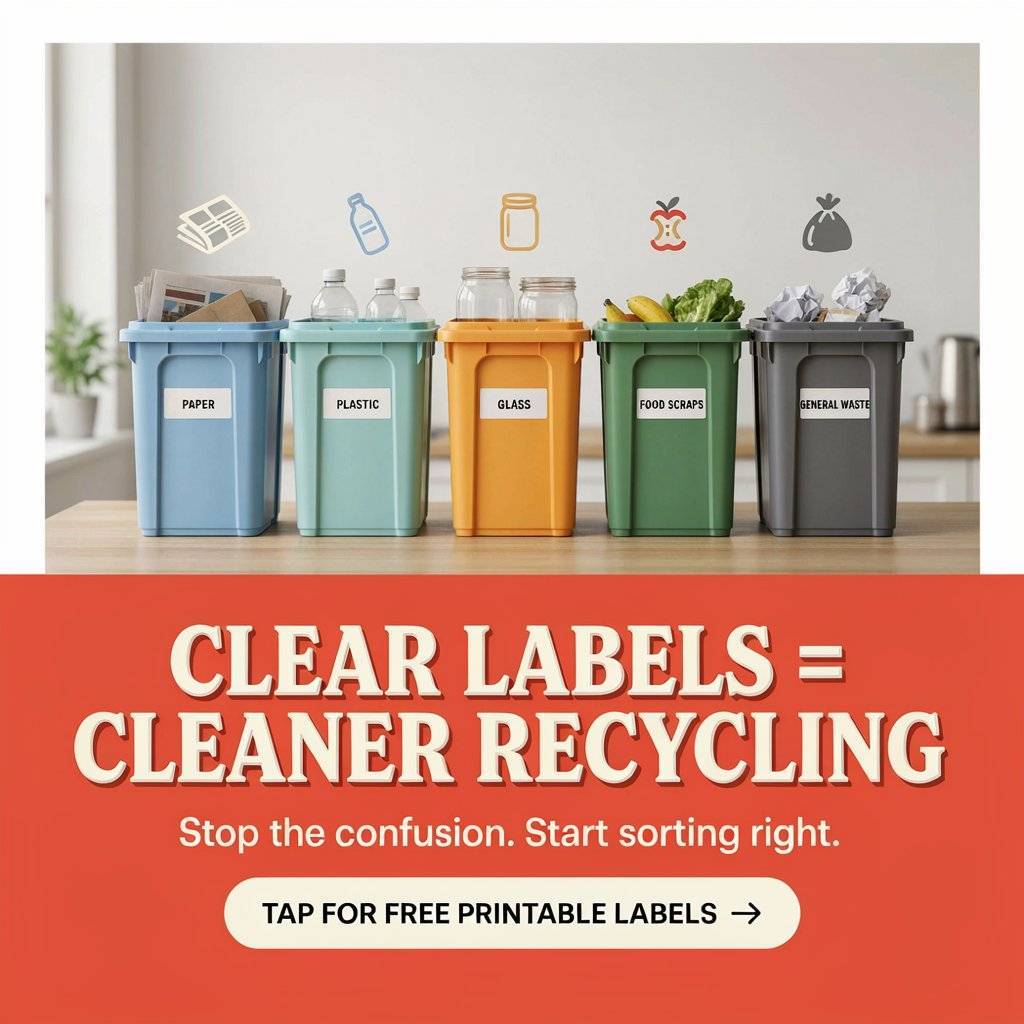
Good labels can make a major difference in a home recycling system. When family members are unsure where an item belongs, they may simply put it in the general waste bin. Clear labels remove much of that confusion.
Use simple words such as Paper, Plastic, Glass, Food Scraps, and General Waste, but only include categories that match your local collection system. You can also add small pictures of common items underneath each label.
Avoid filling the labels with long instructions. A short category name and a few examples are easier to understand.
It is also useful to check local recycling rules regularly because an item accepted by one recycling service may not be accepted by another. (US EPA)
3. Set Up a Dedicated Food Waste Container
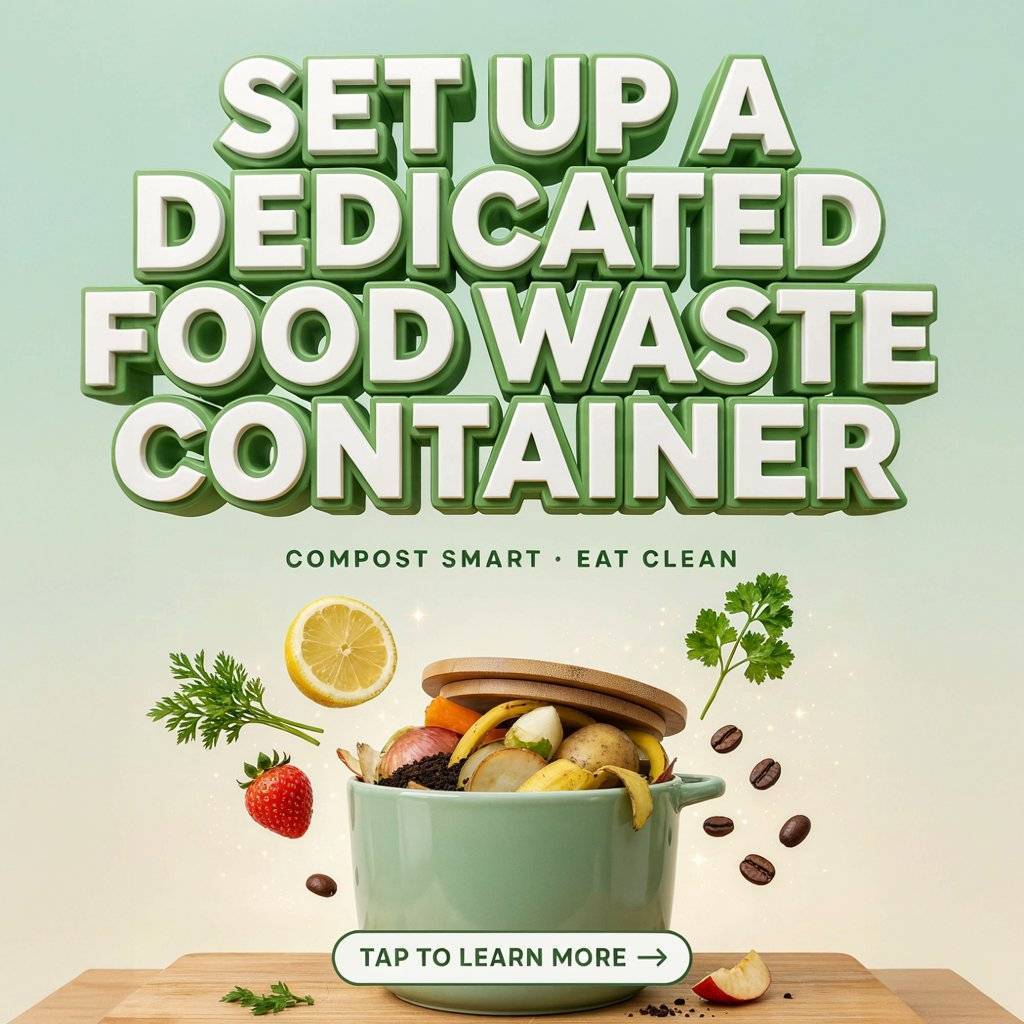
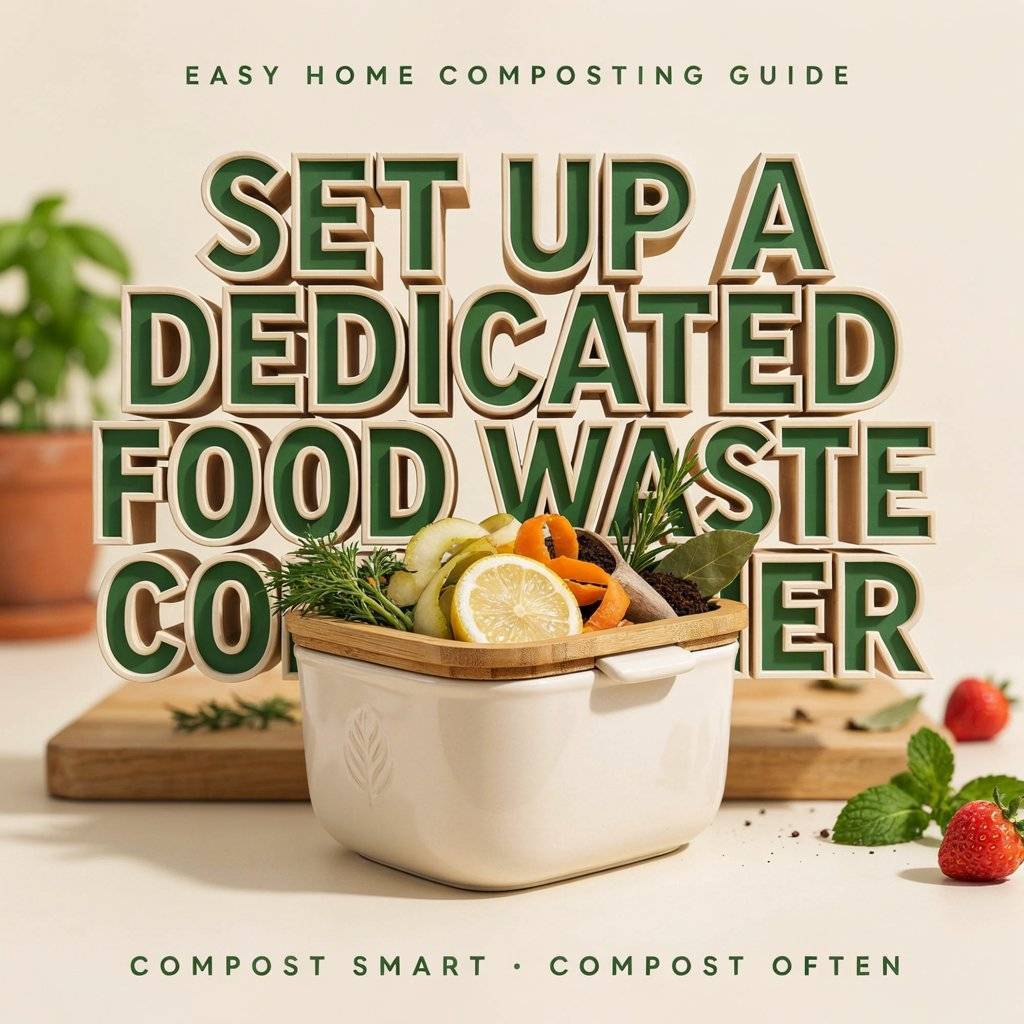
Food scraps are one of the easiest waste streams to separate at home. A small kitchen container can collect vegetable peelings, fruit scraps, coffee grounds, and other suitable organic material, depending on your local composting or collection rules.
Keep the container close to where food preparation happens. This makes it easier to use every day rather than throwing scraps into the general rubbish.
Choose a container that is easy to wash and large enough for your household’s normal food waste. Do not make it unnecessarily large because food scraps can become unpleasant when they sit for too long.
Once full, transfer the contents to your appropriate composting system or local organic waste collection. Separate food waste collection can help keep organic material out of mixed waste streams. (European Environment Agency)
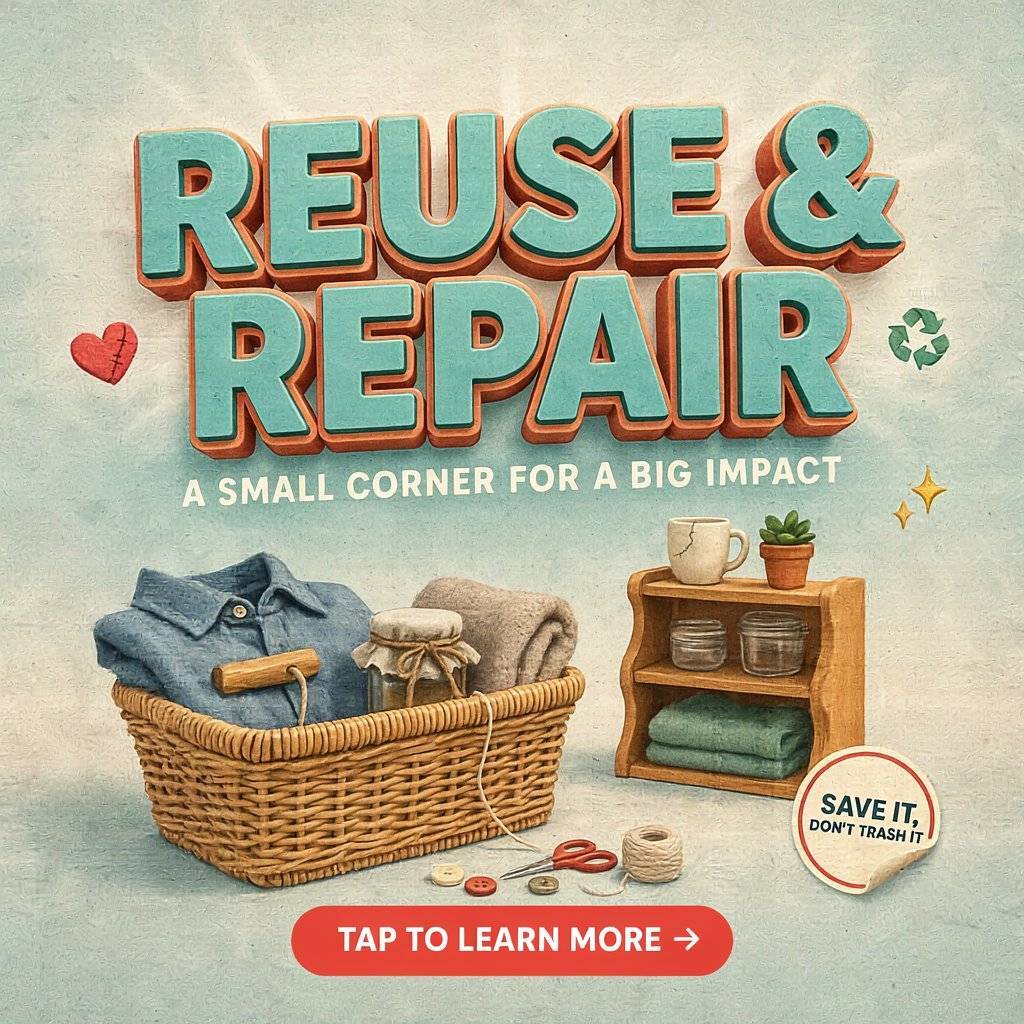
4. Create a Small Reuse and Repair Area
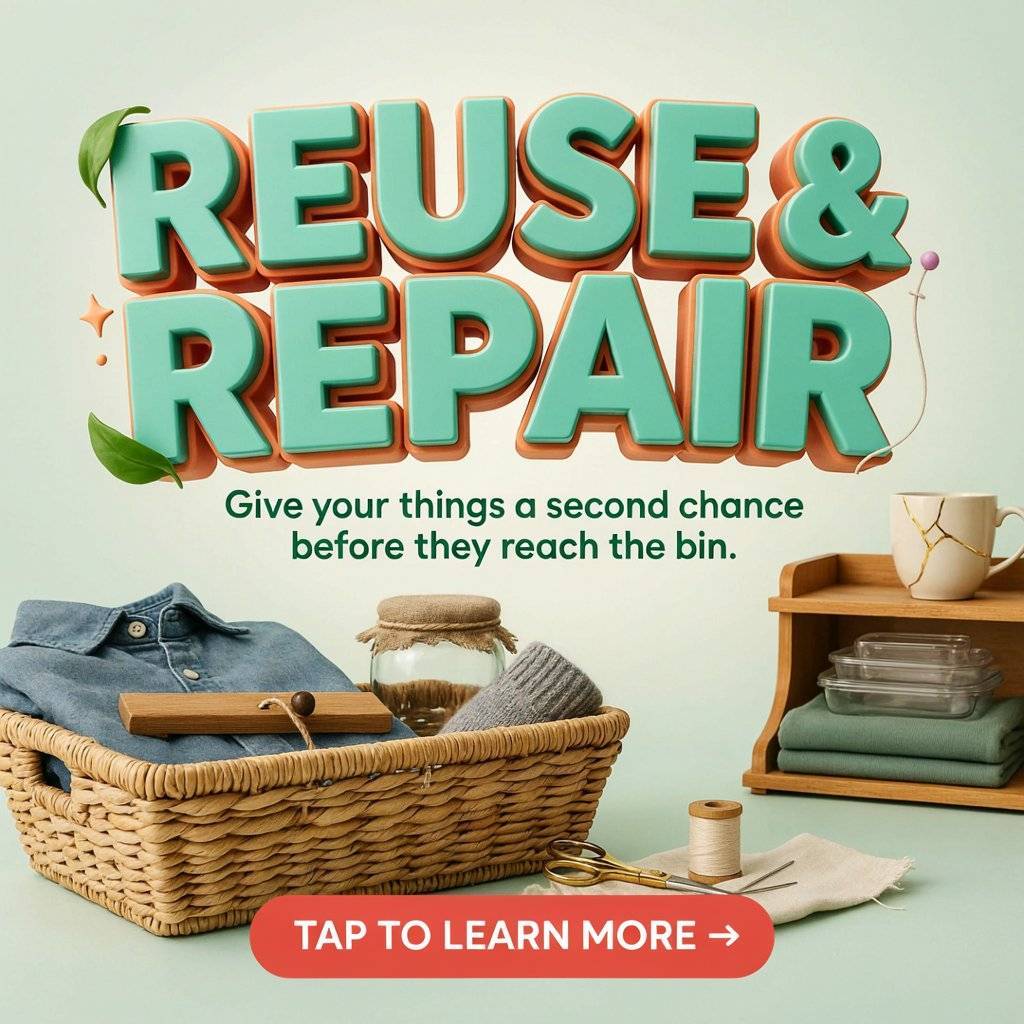
Not everything that looks unwanted needs to become waste. A small reuse and repair area can give household items a second chance before they reach the rubbish bin.
Use a basket, shelf, or box for things that need attention. This might include a shirt that needs stitching, a loose household handle, a container that can be reused, or an item that could be donated.
Set a regular time to review the area. If something can be repaired, repair it. If another person could use it, consider donating it. If it has no realistic purpose, move it into the correct waste stream.
This simple pause can prevent useful products from being thrown away too quickly. Repair and reuse are important parts of waste prevention because they keep products useful for longer.
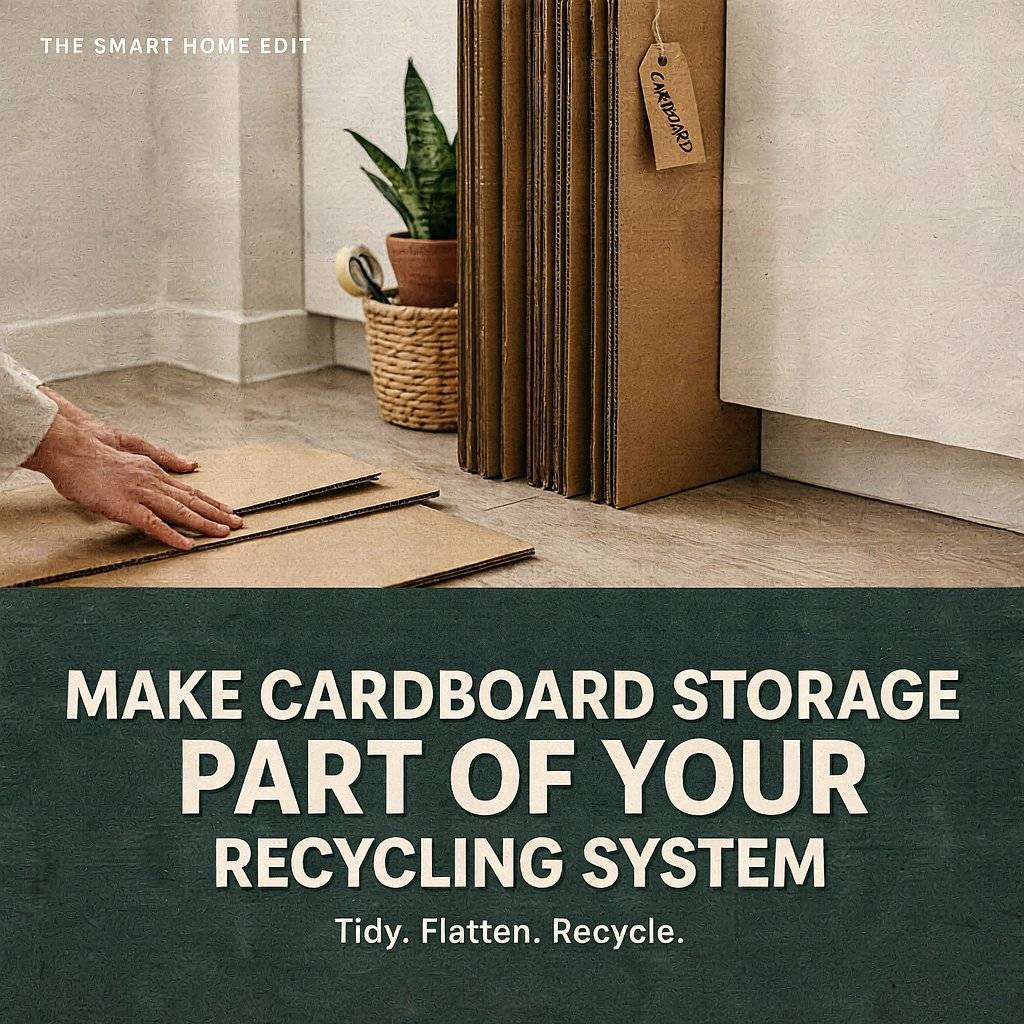
5. Make Cardboard Storage Part of Your Recycling System
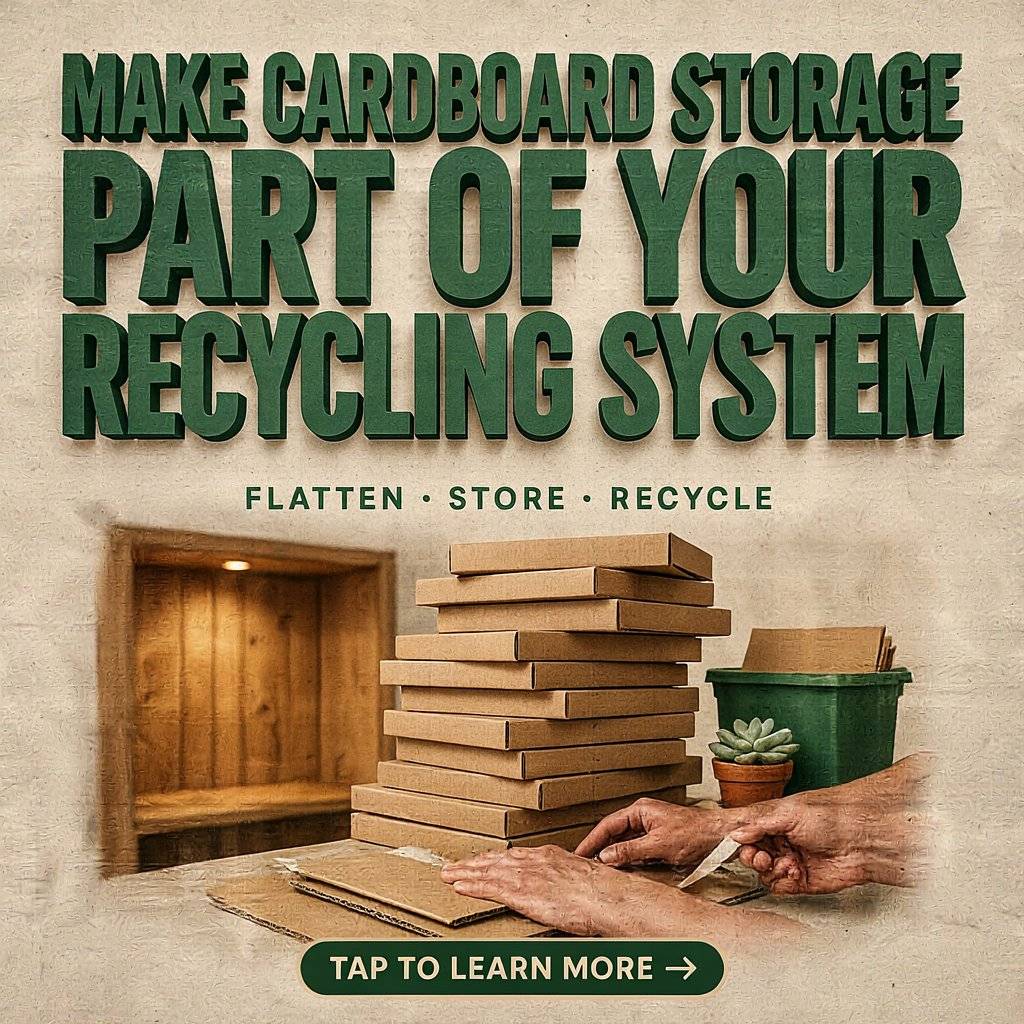
Cardboard can quickly take over a recycling area, especially in homes that receive regular deliveries. Instead of throwing boxes into a mixed pile, create a specific place for clean cardboard.
Flatten boxes before storing them. Remove unnecessary tape and packing materials where appropriate, and follow your local recycling instructions for anything that cannot be recycled with cardboard.
A narrow space beside a cabinet, behind a door, or inside a utility area may be enough for temporary storage. If you have a large family, a larger cardboard collection point may be useful.
Do not keep boxes simply because you might need them someday. Keep a reasonable number for storage, moving, crafts, or future deliveries, and recycle the rest according to local rules.
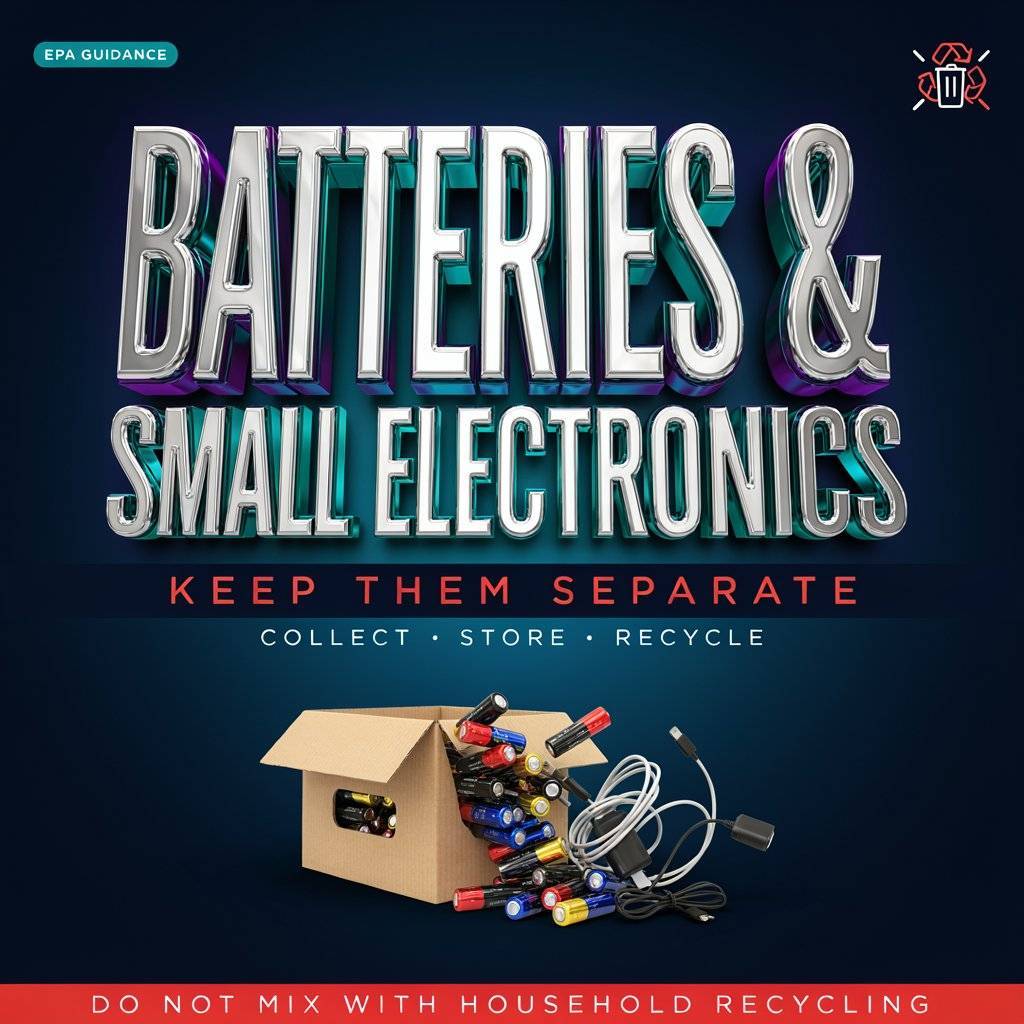
6. Use a Separate Container for Batteries and Small Electronics
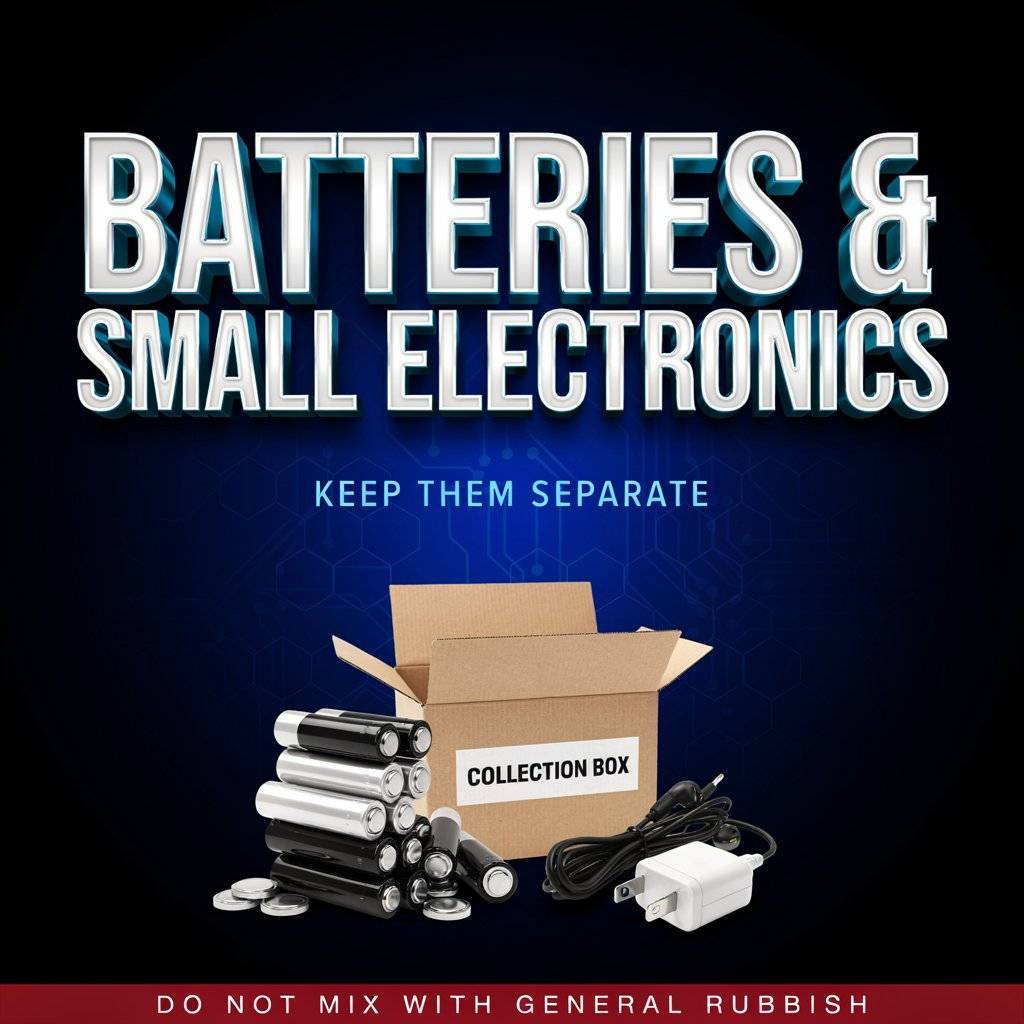
Batteries and unwanted electronics should not automatically be placed in ordinary household recycling or general rubbish. They can require separate collection because of the materials and components they contain.
Create a small, clearly marked collection box in a dry and secure household area. Use it for appropriate items such as old batteries, small cables, or unwanted electronic accessories until you can take them to a suitable collection point.
Do not dismantle batteries or electronic devices at home. Instead, check the instructions from your local authority, manufacturer, retailer, or approved recycling service.
This small collection area prevents special items from disappearing into the wrong bin. EPA guidance also recommends checking appropriate recycling options for electronics and batteries rather than assuming they belong in normal household recycling.
7. Try a Vertical Recycling Station for a Small Home
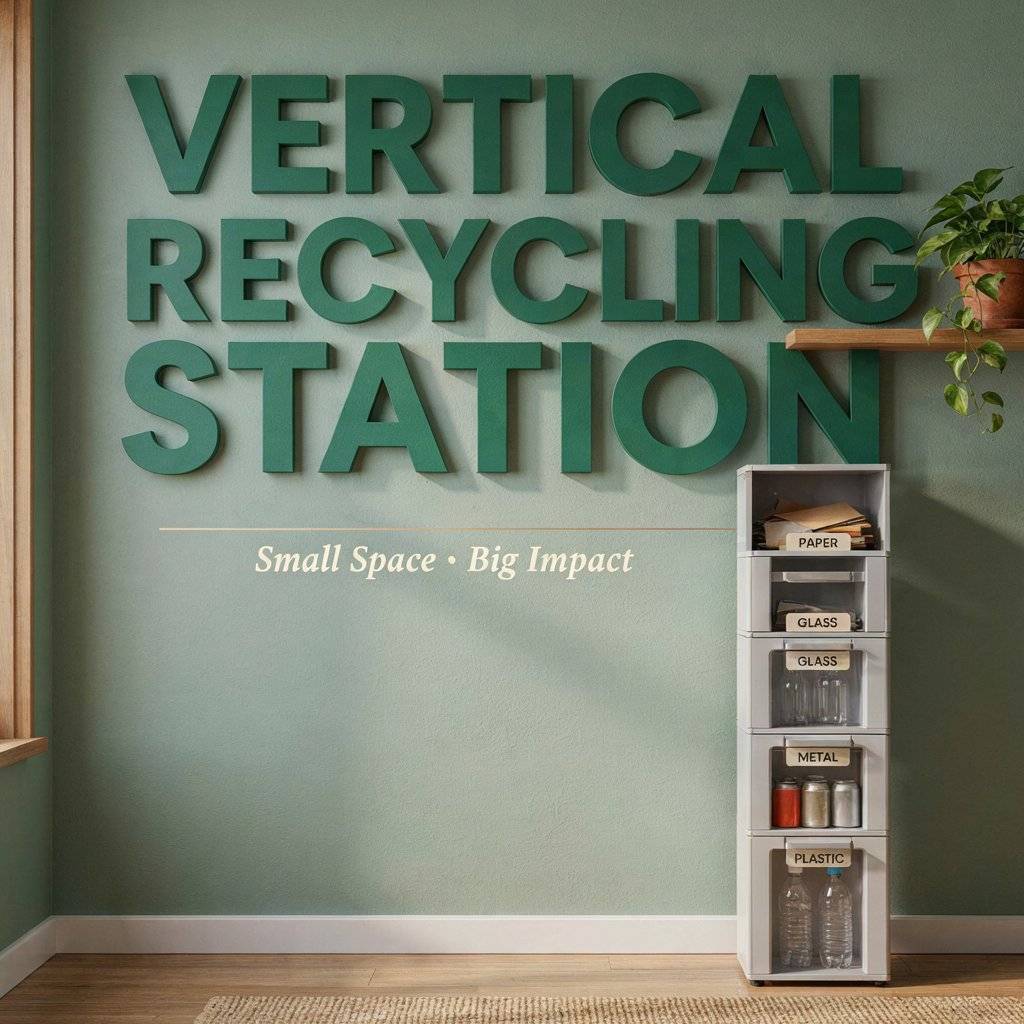
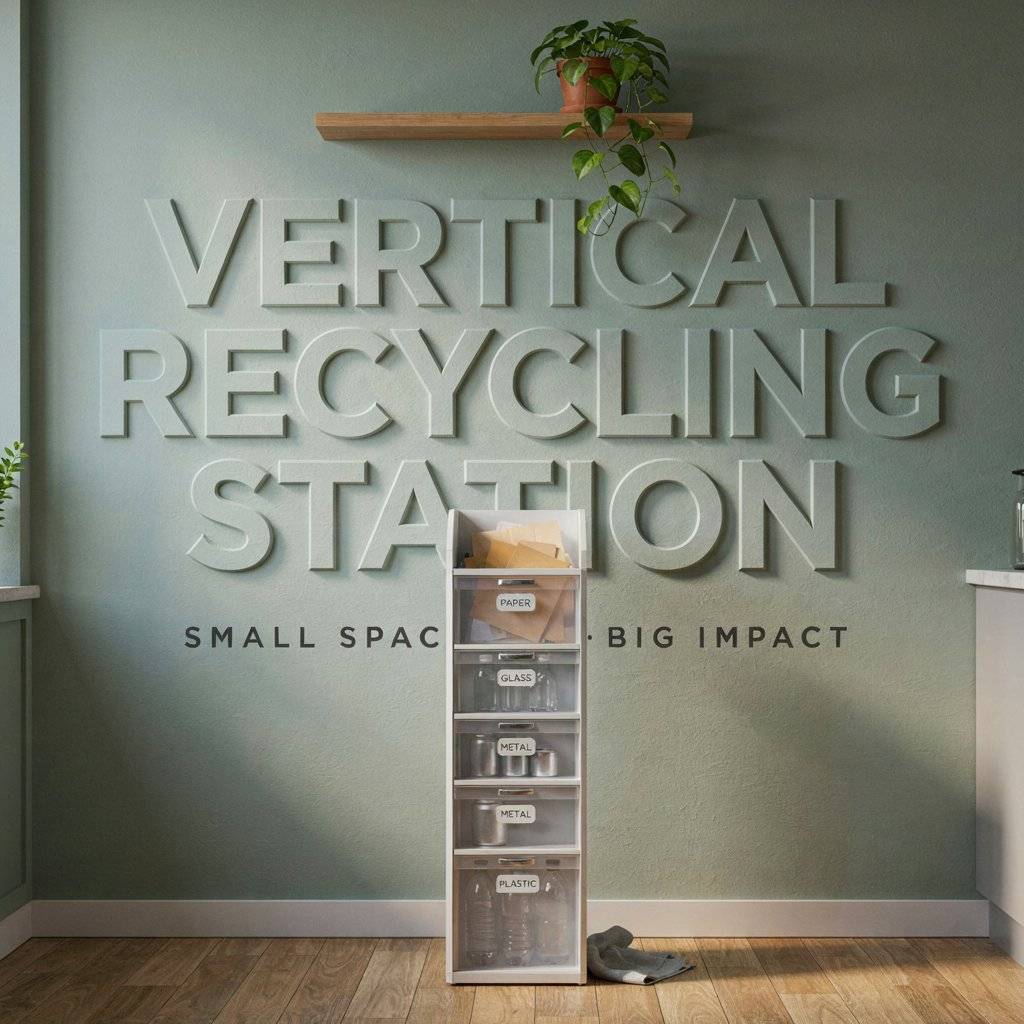
Limited floor space does not mean you have to give up on organized recycling. A vertical recycling station can make use of wall or cabinet space while keeping different materials separate.
Stackable containers or narrow pull-out compartments can work well in a small kitchen, apartment, laundry room, or utility area. The important thing is to make every section easy to reach.
Avoid stacking containers so high that the lower sections become difficult to use. If people have to move several containers before reaching the correct one, they may stop using the system.
Choose container sizes based on your actual waste. If your household produces little glass but lots of cardboard, do not give both materials equal space simply for appearance.
The best small-space system saves room without making sorting harder.
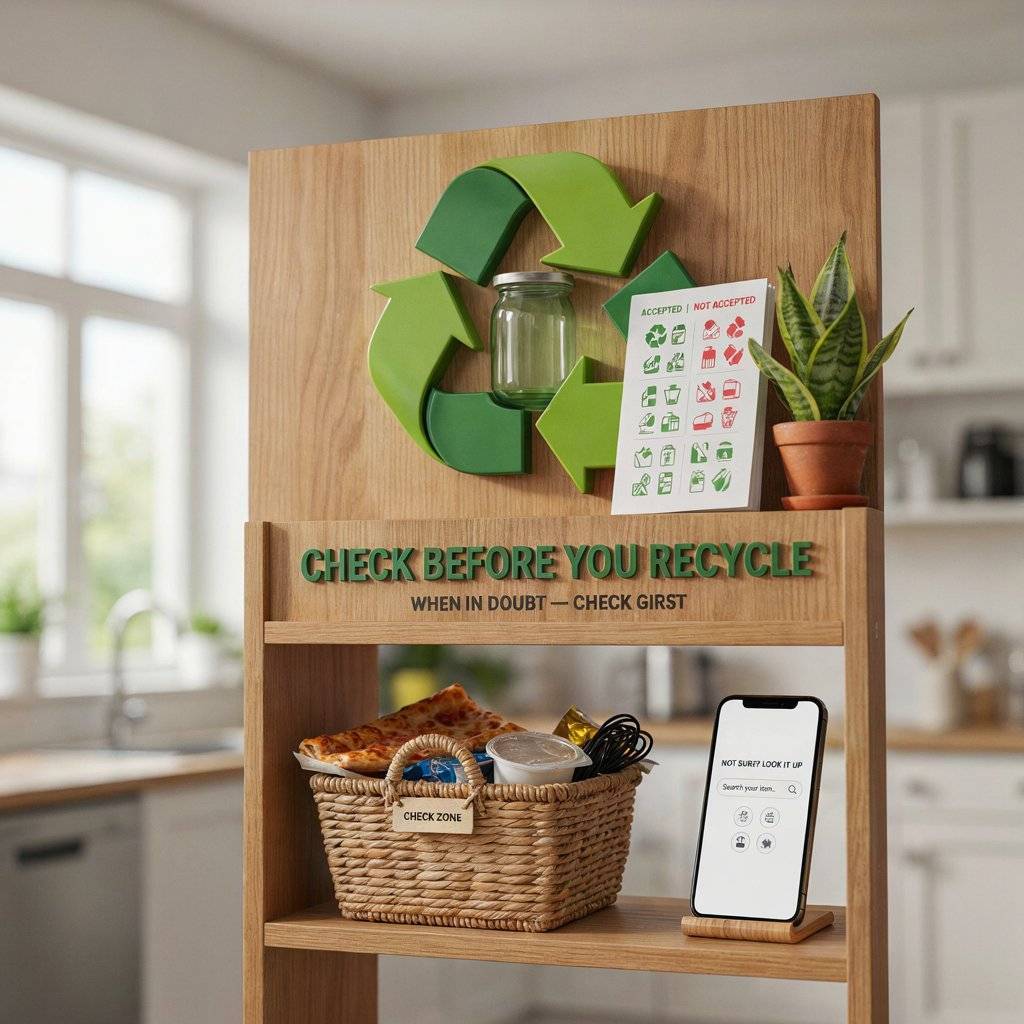
8. Add a Simple “Check Before You Recycle” Area
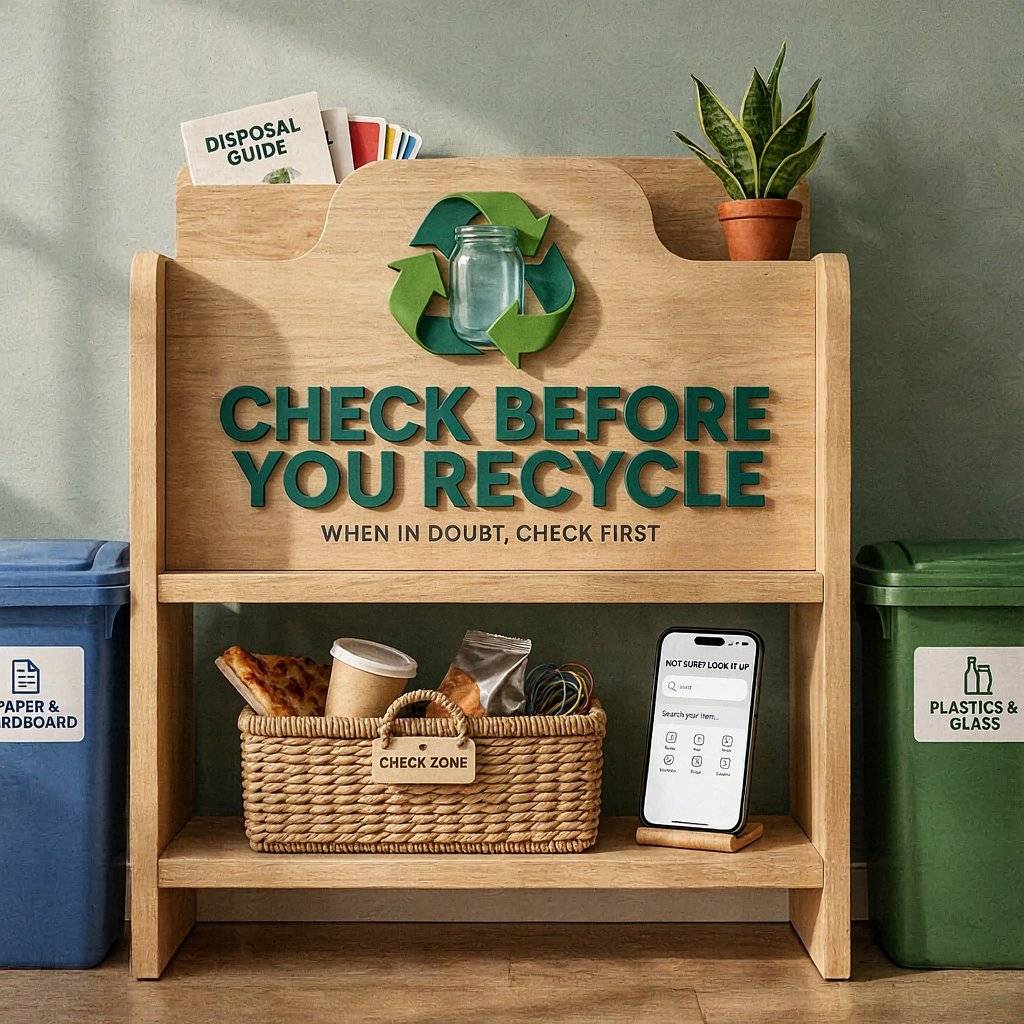
One common recycling problem is uncertainty. People may see a recycling symbol on packaging and assume that the item automatically belongs in the recycling bin. That is not always true because local programs have different requirements. (US EPA)
Create a small checking area for unusual items. This could be a shelf, basket, or section of your recycling station where confusing packaging can wait briefly while you check the correct disposal method.
You can keep a phone nearby to access your local waste service information. A printed guide can also help if several people share the home.
The goal is to avoid guessing. If you are unsure whether something is accepted, check first instead of placing it into the recycling bin and potentially contaminating the collection.
9. Build a Home Composting System Where Suitable
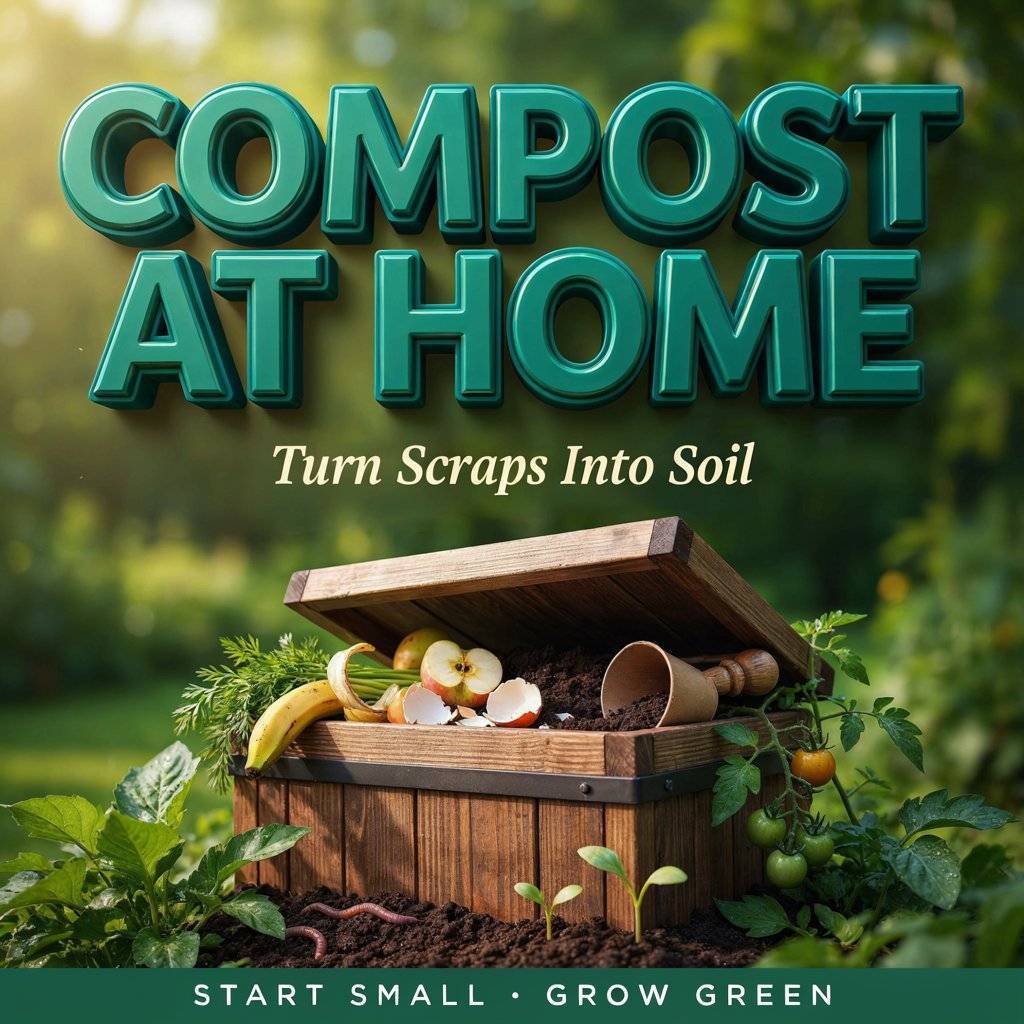
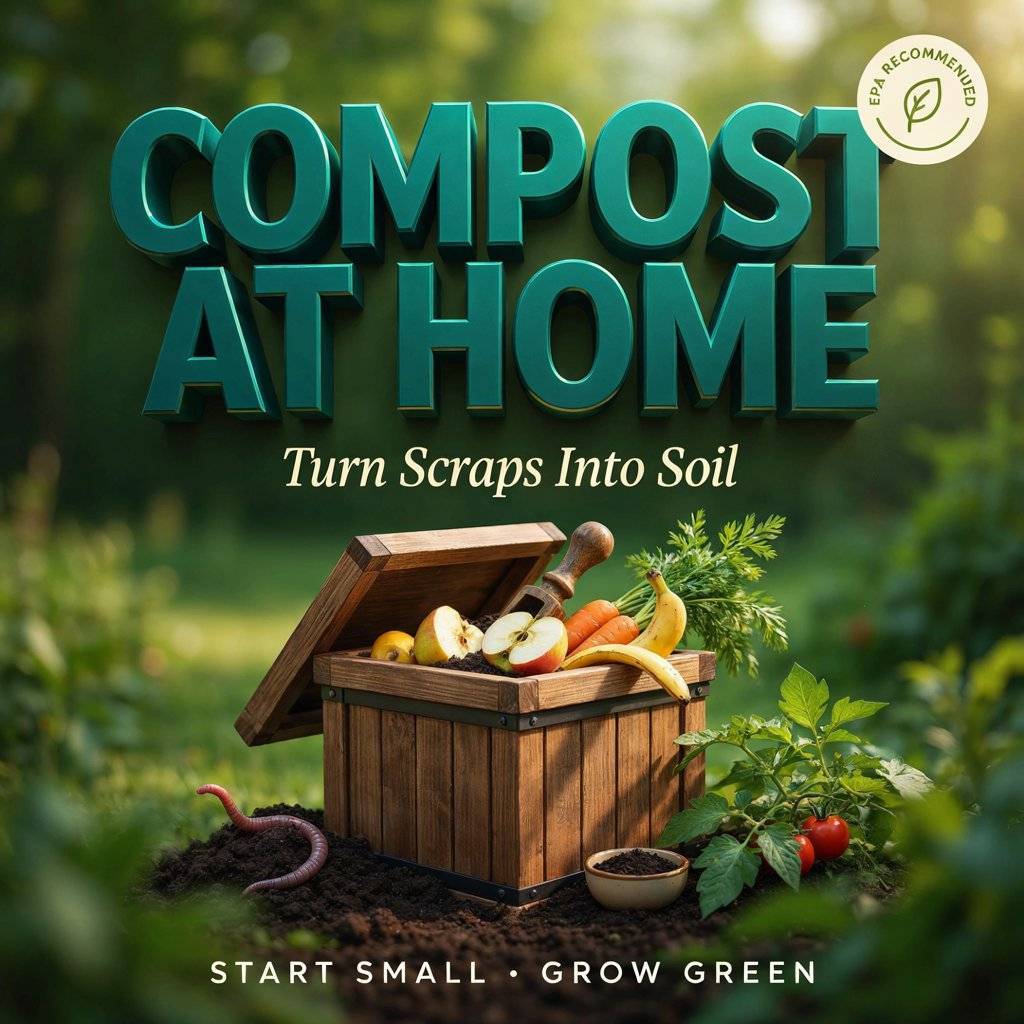
If you have suitable outdoor space and the right conditions, composting can be a practical way to manage certain food and garden waste. Instead of sending suitable organic material into general rubbish, you can place it into an appropriate composting system.
A basic setup may include a compost bin or designated compost area, depending on your location and household needs. Follow guidance about what your chosen system accepts.
Start small rather than trying to compost everything at once. Fruit and vegetable scraps, suitable garden material, and other approved organic waste can be added according to the composting method you use.
Good composting requires balance, airflow, moisture control, and regular attention. If home composting is not practical, look for an appropriate local organic waste collection service instead. Composting food and yard waste is also recommended by the EPA as a household waste-reduction option. (US EPA)
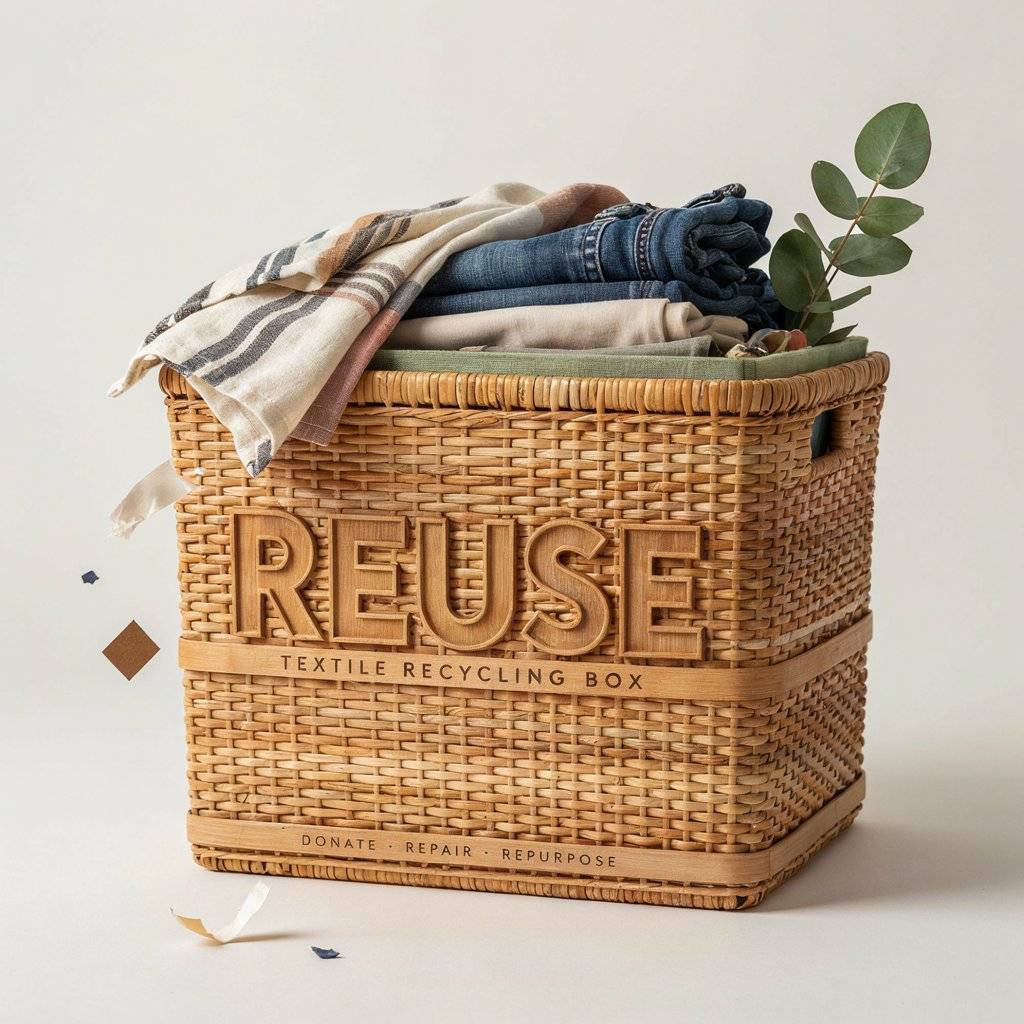
10. Create a Textile Reuse and Recycling Box
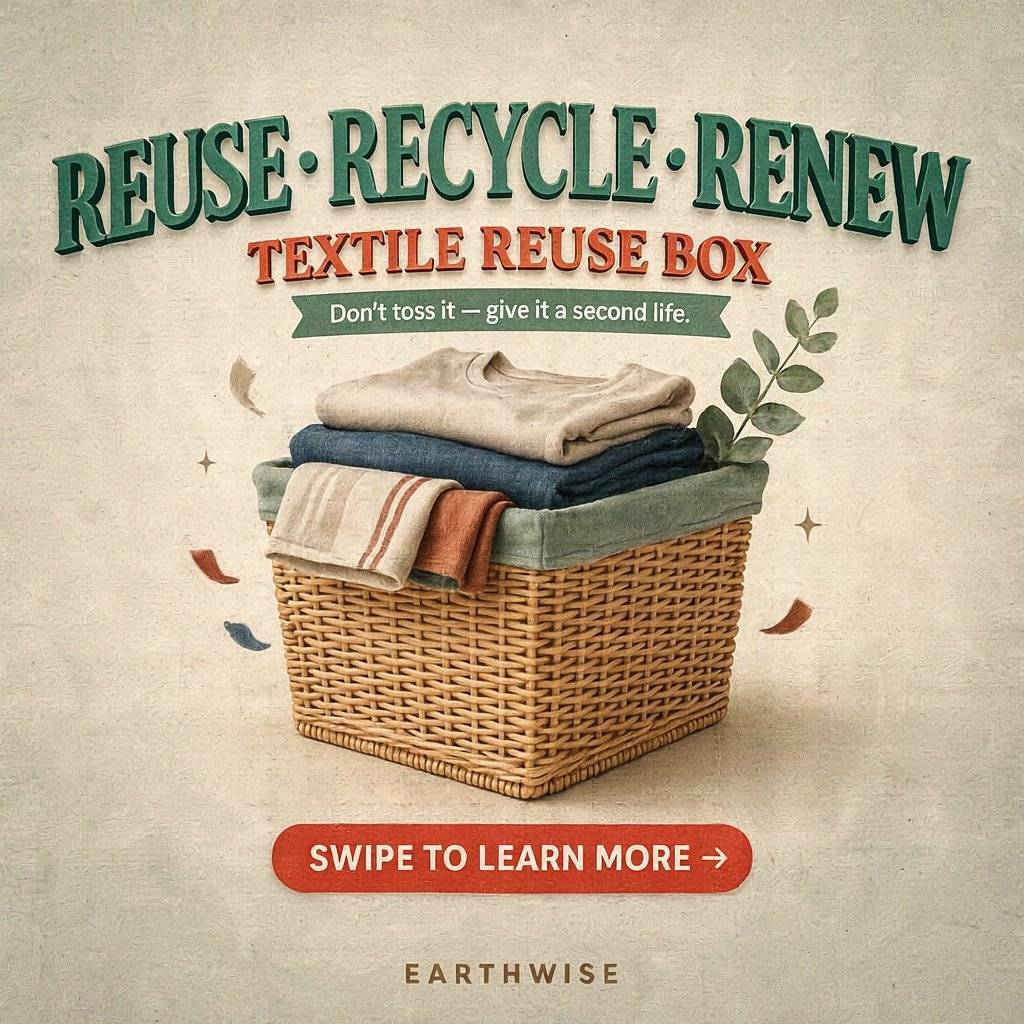
Old clothing and household textiles should not automatically go into the general waste bin. Before discarding them, check whether they can be repaired, reused, donated, or accepted by a textile collection program.
Place a dedicated box or basket in a bedroom, laundry area, or storage space. When clothing becomes unwanted, decide whether it can still be worn, repaired, donated, repurposed, or recycled through an appropriate service.
Do not allow the box to become permanent storage. Review it regularly and move the items to their next destination.
You can also keep useful fabric scraps for simple household projects. Old jeans, cotton fabric, towels, and other textiles may have practical second uses depending on their condition.
The goal is to keep usable materials circulating for as long as possible rather than treating every unwanted textile as rubbish. Reuse is an important part of waste prevention. (European Environment Agency)
11. Make Your Recycling Station Easy for the Whole Family
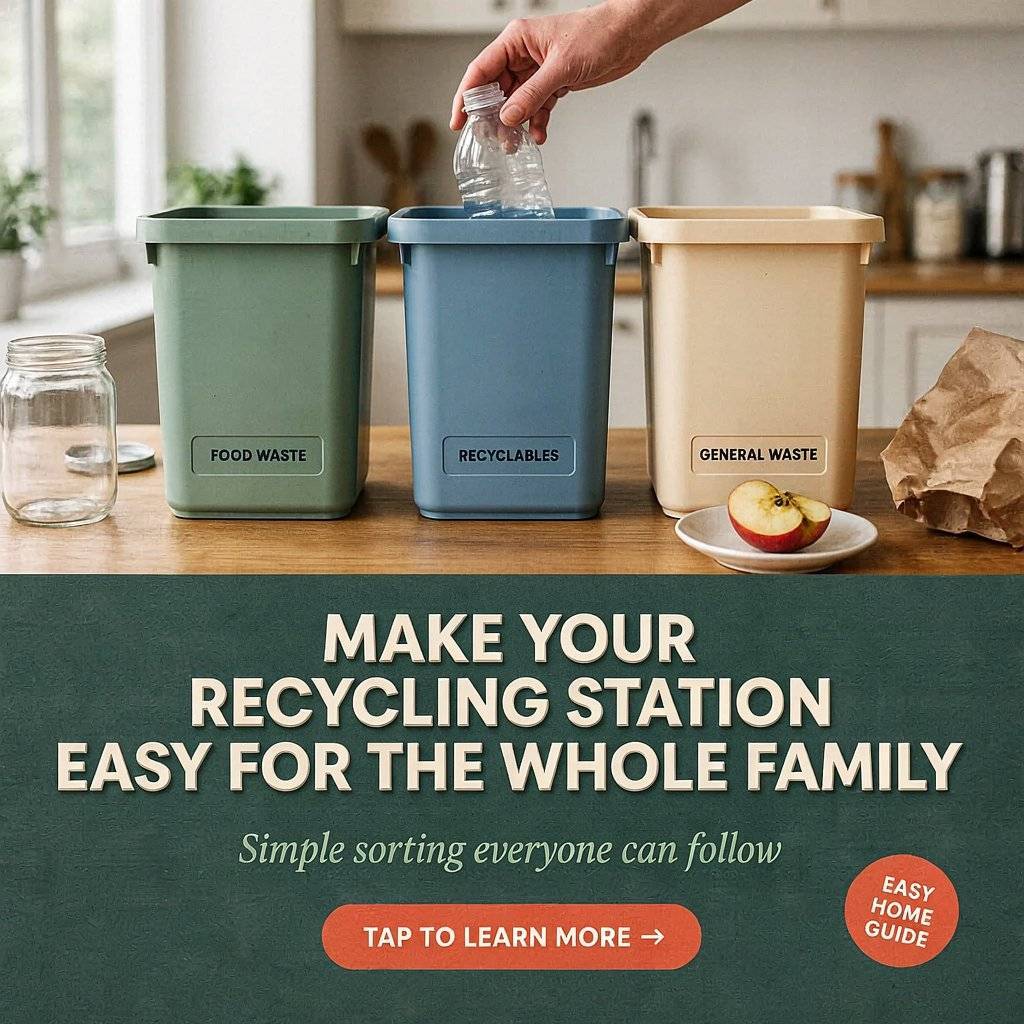
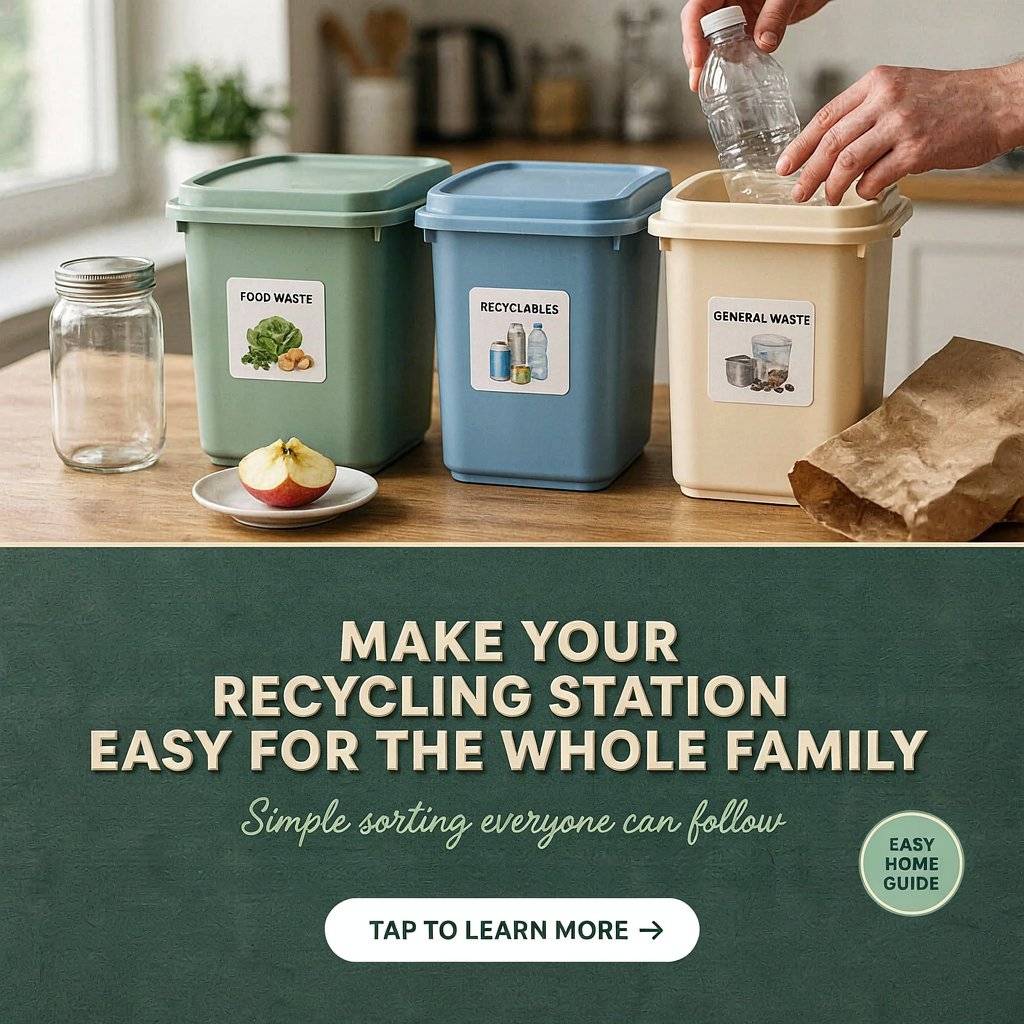
A recycling system only works when everyone in the home understands it. If one person knows where everything belongs but other family members do not, sorting mistakes are likely to continue.
Keep the system simple enough for everyone to follow. Use large labels, clear categories, and pictures for common materials. Children can also learn the basic difference between food waste, recyclable materials, reusable objects, and general waste.
Do not create ten categories if your local service only needs three or four. Too many choices can make everyday sorting frustrating.
You can also review the system together when a new type of packaging becomes common in the household. Explain where it belongs and why.
A practical recycling station should support everyday life rather than feel like a complicated environmental project.
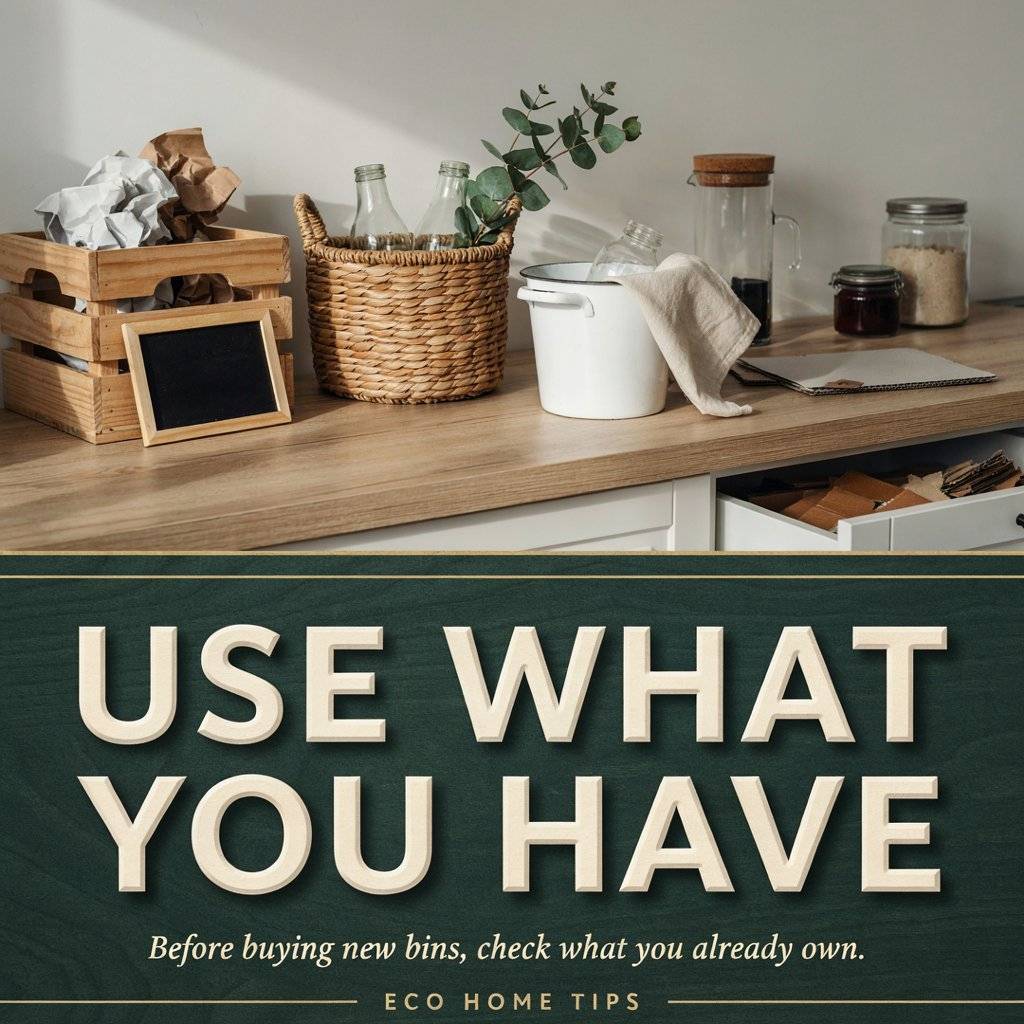
12. Use Existing Containers Before Buying New Ones
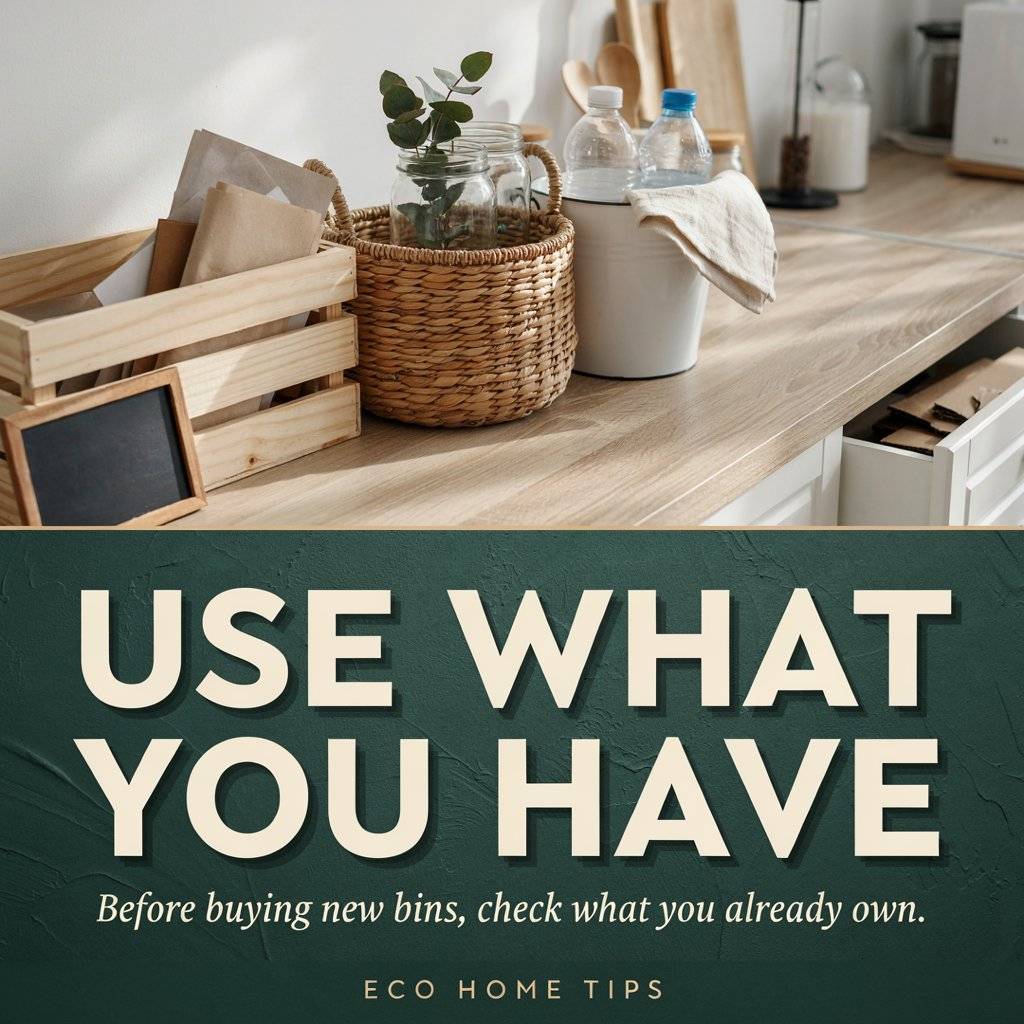
Creating an eco friendly waste sorting system does not mean buying a completely new collection of bins. In many homes, useful containers already exist.
Old storage boxes, sturdy baskets, buckets, drawers, or containers can become sorting compartments when they are safe, clean, and suitable for the job. This approach can also reduce the need to purchase additional products simply to organize your recycling.
Before buying anything, look at what you already have. Measure the available space and decide which categories actually need separate containers.
If you eventually purchase new containers, choose durable options that are easy to clean and likely to last for years.
The most sustainable system is not necessarily the one with the newest design. A simple setup that uses existing resources and works every day can be much more practical.
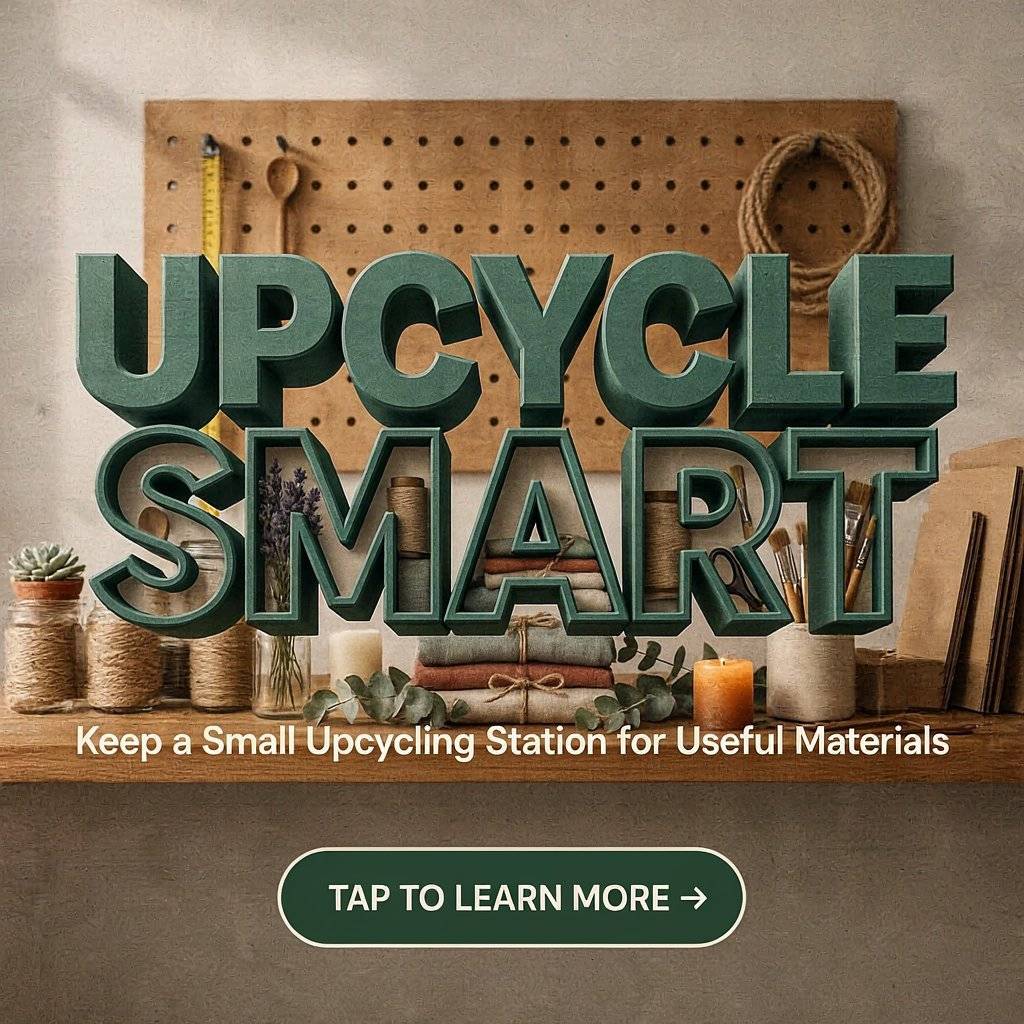
13. Keep a Small Upcycling Station for Useful Materials
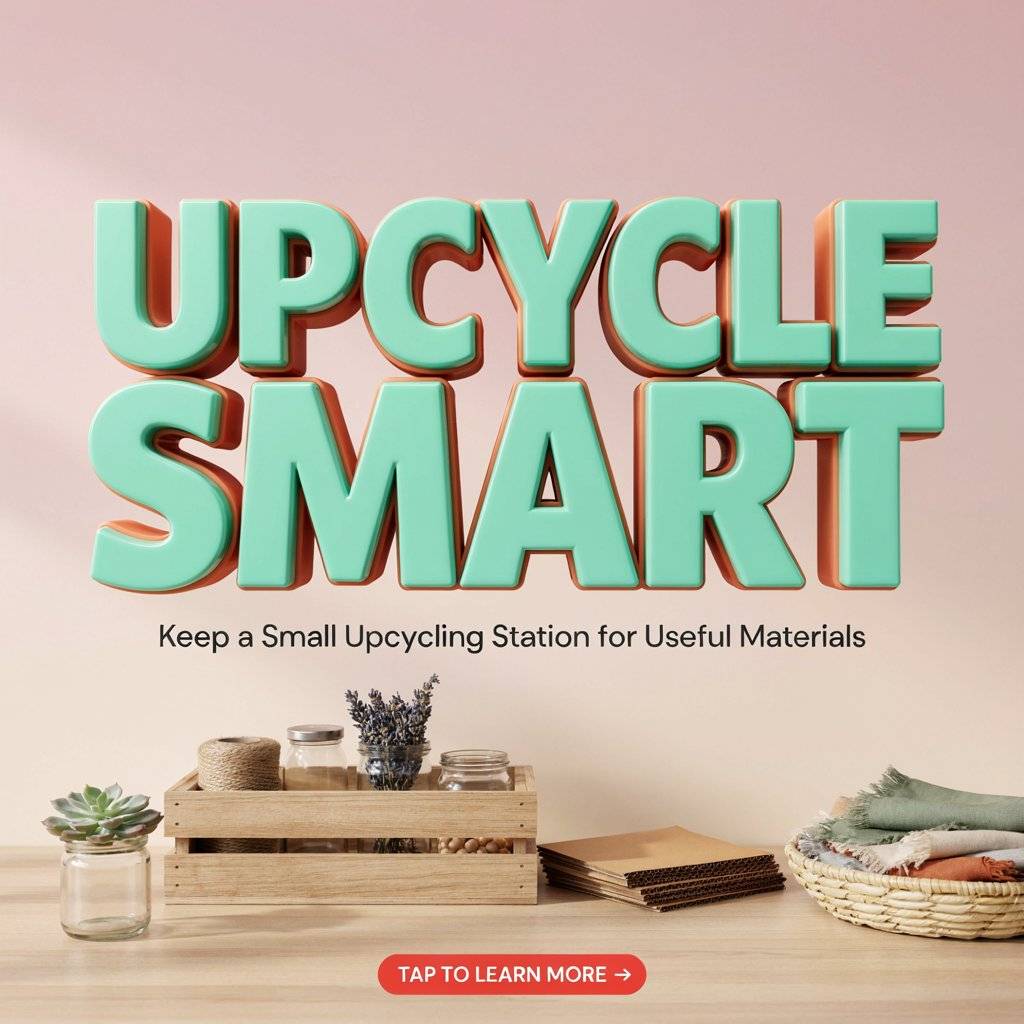
An upcycling station can help you keep useful household materials available for practical projects. It might contain clean jars, cardboard, fabric pieces, sturdy containers, or other materials that you genuinely expect to use.
The key is to keep this area controlled. Do not save every piece of packaging simply because it might become useful one day. That can quickly turn an environmental idea into household clutter.
Choose materials based on real projects or regular needs. For example, clean jars might be useful for organizing small gardening items, while cardboard can be used for drawer dividers or simple craft projects.
Review the station every few weeks. If something has not been used and there is no clear purpose for keeping it, place it into the correct recycling or disposal stream.
This keeps upcycling practical rather than creating another pile of unwanted materials.
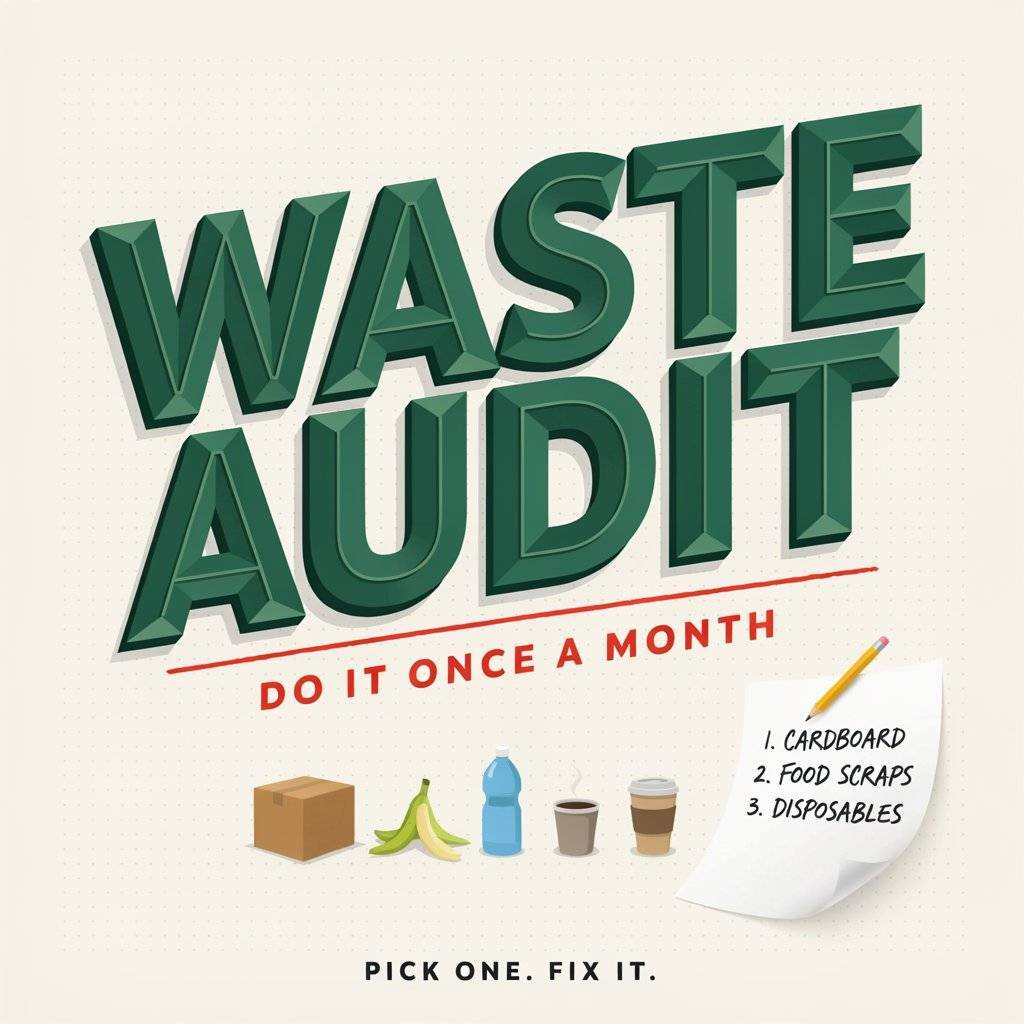
14. Do a Household Waste Audit Once a Month
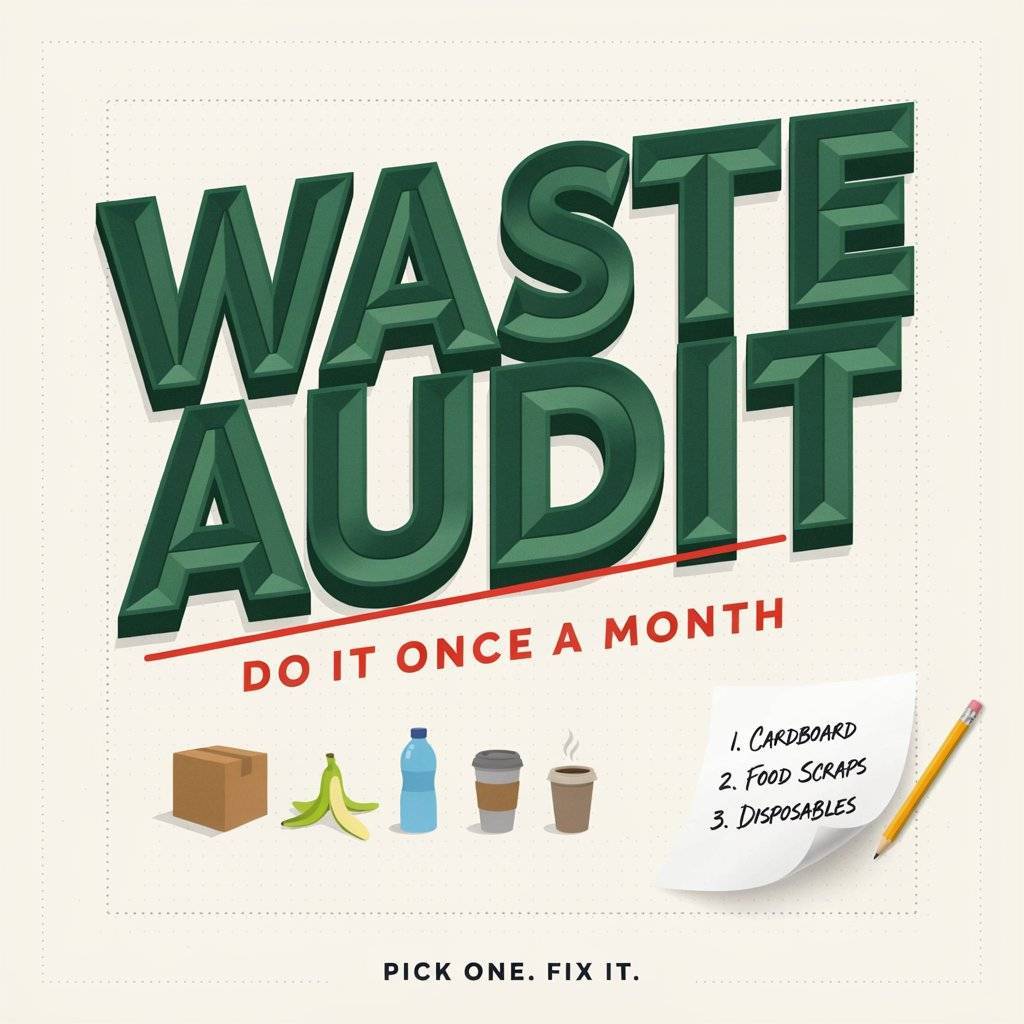
A simple waste audit can show you what your household throws away most often. You do not need complicated equipment or detailed measurements. Spend a short amount of time reviewing your waste and look for repeated patterns.
Perhaps your home produces large amounts of cardboard from deliveries. Maybe food scraps make up a large part of your general rubbish. You might also discover that many disposable items could be replaced with reusable options.
Write down the three most common waste types you notice. Then choose one to address first.
For example, if cardboard is the biggest problem, improve your cardboard storage. If food waste is common, create a better food-sorting routine.
This method keeps your improvements realistic. Instead of copying another household’s recycling setup, you build a system around the waste your own home actually produces.
15. Use a Smart Digital Recycling Guide
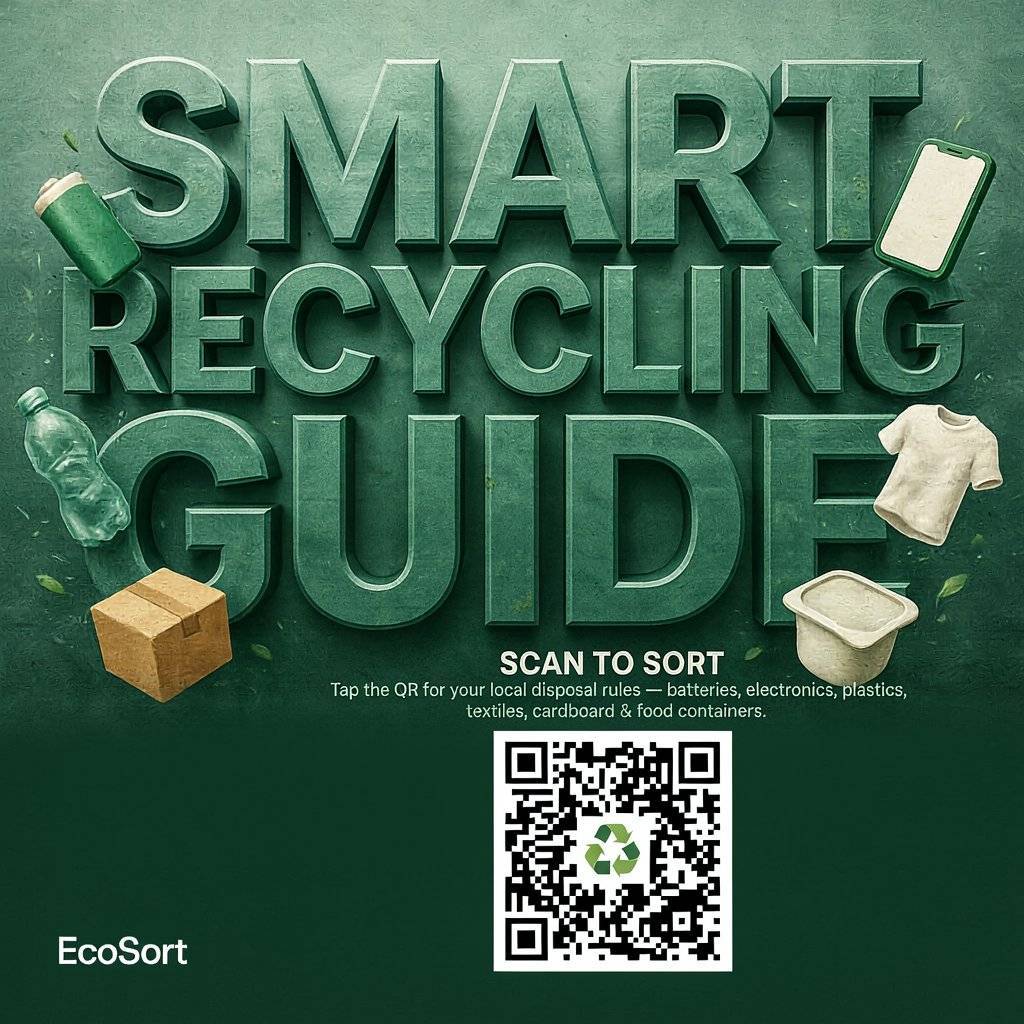
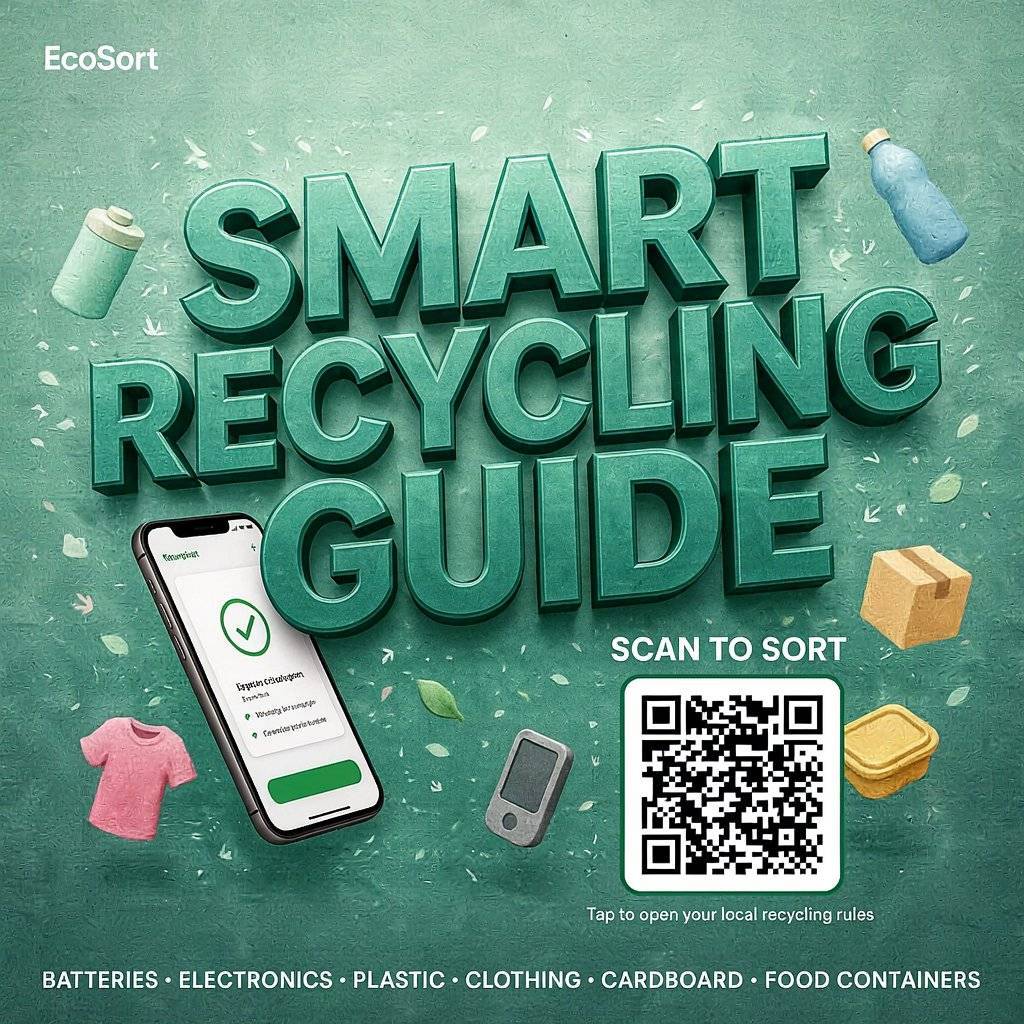
Technology can make waste sorting easier when it provides useful information at the right time. A simple digital recycling guide can be stored on a phone, tablet, or household computer.
Create a short list of common confusing items and their correct local disposal routes. You could include items such as batteries, electronics, plastic packaging, old clothing, large cardboard, and food containers.
A QR code placed near the recycling station can also open a local recycling guide or your household’s own instructions.
Emerging smart waste systems are also exploring computer vision and artificial intelligence to identify materials. However, these tools should be treated as assistance rather than a replacement for local recycling rules. An object-recognition system may identify an item without knowing whether your local service accepts it. (My Garbage Collection)
For most homes, a simple digital guide is enough to make confusing decisions easier.
How to Build a Smart Eco Friendly Waste Sorting System
A good household recycling system should fit your home, your habits, and your local waste services. There is no need to copy a complicated system from another household.
Start by identifying the materials you throw away most often. Then decide which ones can be reduced, reused, repaired, composted, recycled, or handled through special collection.
Your basic setup might include:
- A general recycling area
- A food waste container
- A cardboard storage space
- A reuse and repair basket
- A battery and electronics collection box
- A small textile reuse area
- A general waste container
You can add more categories when they are genuinely useful.
The waste hierarchy is helpful here. Waste prevention comes before reuse, followed by recycling and other forms of recovery, with disposal lower in the hierarchy. (US EPA)
The aim is not to recycle everything. The aim is to prevent unnecessary waste first and then manage the waste that remains in the most suitable way.
Smart Waste Sorting Mistakes to Avoid
Even a well-planned recycling station can cause problems if it becomes too complicated.
One common mistake is creating too many categories. If everyone needs to stop and think for several minutes before throwing something away, the system may not be practical.
Another problem is assuming that the recycling symbol means an item is accepted everywhere. Local collection rules differ, so always check your own service requirements. (US EPA)
Do not put obviously unsuitable materials into a recycling container simply because you want to recycle more. Contamination can make sorting more difficult and may cause unsuitable materials to be removed from the recycling stream.
Finally, avoid buying unnecessary storage products before understanding your waste habits. A short waste audit can tell you what you actually need.
How to Keep Your Home Recycling Station Clean
Cleanliness is important because waste containers can quickly become unpleasant when food residue, liquids, or dirty packaging are left inside them.
Start by following your local instructions for preparing recyclable materials. Some programs ask residents to empty containers, while requirements for rinsing or other preparation can vary.
Use washable containers where practical. Empty them regularly rather than allowing recyclable materials to build up for weeks.
Food waste containers need particular attention. Empty them according to your composting or collection routine and clean them regularly.
It also helps to keep wet and dry waste separated. Paper and cardboard can become difficult to handle when soaked with food or liquid.
A clean recycling station is easier to use, easier to maintain, and more pleasant to keep inside the home.
FAQs
What is the best way to start waste sorting at home?
Start with the waste your household produces most often. Create clearly labeled spaces for locally accepted recyclables, food waste where appropriate, and general waste. Then add special areas for items such as batteries, electronics, textiles, or reusable goods when necessary.
Does the recycling symbol always mean something can be recycled?
No. A recycling symbol on packaging does not automatically mean that your local recycling service accepts the item. Collection systems differ between locations, so check your local rules before placing unfamiliar materials into your recycling bin.
Should I wash recyclable containers before recycling them?
Follow your local recycling service’s instructions because preparation requirements vary. In general, containers should not contain significant food or liquid residue. The important thing is to avoid contaminating other recyclable materials.
Can food scraps be recycled?
Food scraps are normally managed through composting or organic waste collection rather than traditional recycling. Whether you can compost them at home depends on your available space and local conditions. Check which materials your composting or organic waste service accepts.
What should I do with old batteries and electronics?
Do not assume that batteries and electronics belong in ordinary household recycling. Keep them in an appropriate temporary collection area and check with your local authority, retailer, manufacturer, or approved recycling service for the correct handling option.
Wrapping It Up
Smart eco friendly waste sorting does not have to mean buying expensive technology or filling your home with different bins. A well-planned system can start with a few simple containers, clear labels, and better daily habits.
The first step is to understand what your household actually throws away. From there, separate suitable materials, create a food waste routine, keep useful items for repair or reuse, and make special arrangements for materials such as batteries and electronics.
Remember that recycling is only one part of responsible waste management. Reducing what you buy, reusing products, repairing damaged items, and keeping useful materials in circulation can prevent waste before it reaches the recycling bin. The EPA and European Environment Agency both place waste prevention and reuse ahead of recycling in the waste hierarchy. (US EPA)
The best home recycling system is one that people can actually follow every day. Keep it simple, make it convenient, review it regularly, and always use local recycling guidance when deciding where an unfamiliar item belongs.
Small changes made consistently can turn an ordinary household waste area into a smarter, cleaner, and more useful part of your home.
Related Post: