
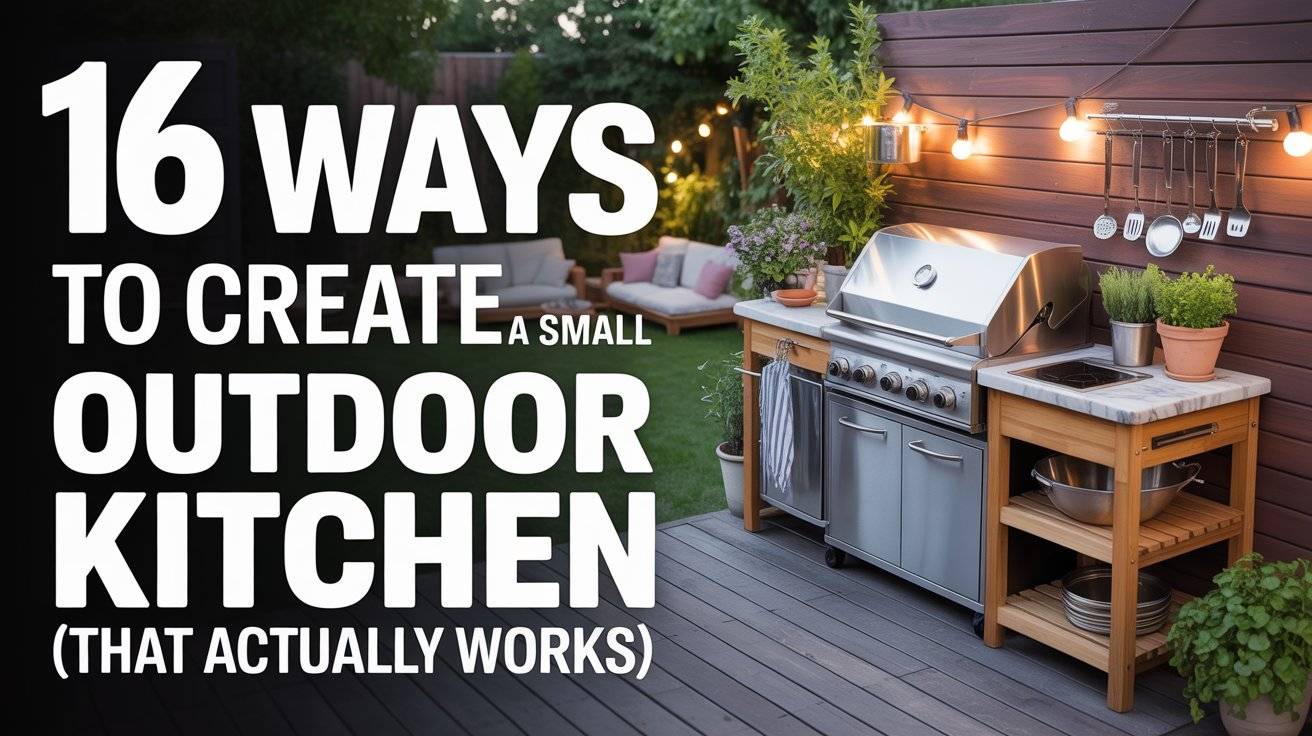
You don’t need a massive backyard to enjoy cooking outside. I’ve seen people turn tiny patios, narrow balconies, and even small side yards into outdoor kitchens that are genuinely useful. The secret isn’t square footage it’s smart planning.
If you’ve been telling yourself “my yard’s too small for an outdoor kitchen,” I’m here to tell you otherwise. With the right layout, a few space-saving tricks, and some honest thinking about how you’ll actually use the space, you can build something that works for you.
Let’s get into it.
Why a Small Outdoor Kitchen Is Worth the Effort
Here’s the thing about cooking outdoors: it keeps the mess outside, gets you out of the stuffy kitchen, and makes casual meals feel like an event. Even a modest setup changes how you entertain. Plus, outdoor kitchens are known to add value to a property if you ever decide to sell.
But a small space means you can’t just throw money at the problem. You have to be intentional. Every inch needs to earn its keep. That’s what this guide is about practical ideas you can actually use, not magazine fluff.
16 Practical Ideas for Creating a Small Outdoor Kitchen
1. Start with a Straight-Line Layout
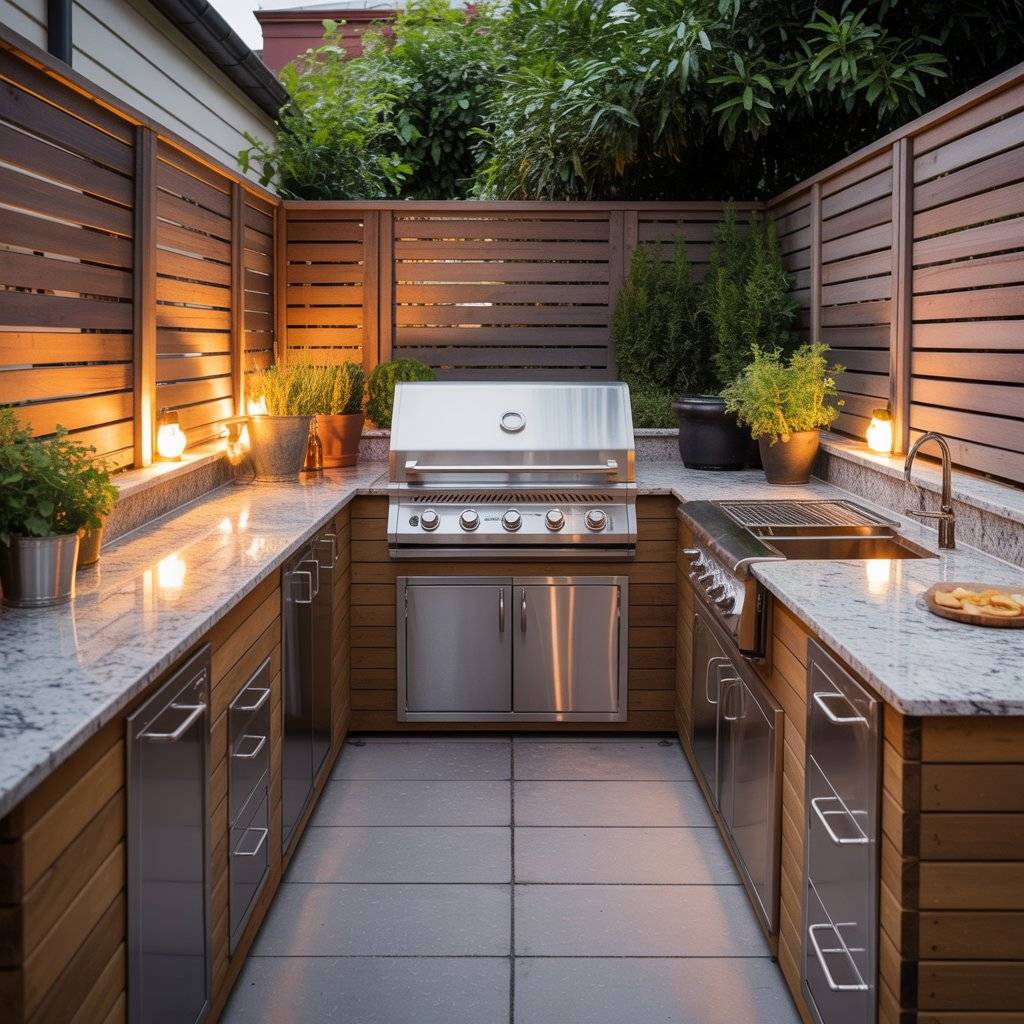
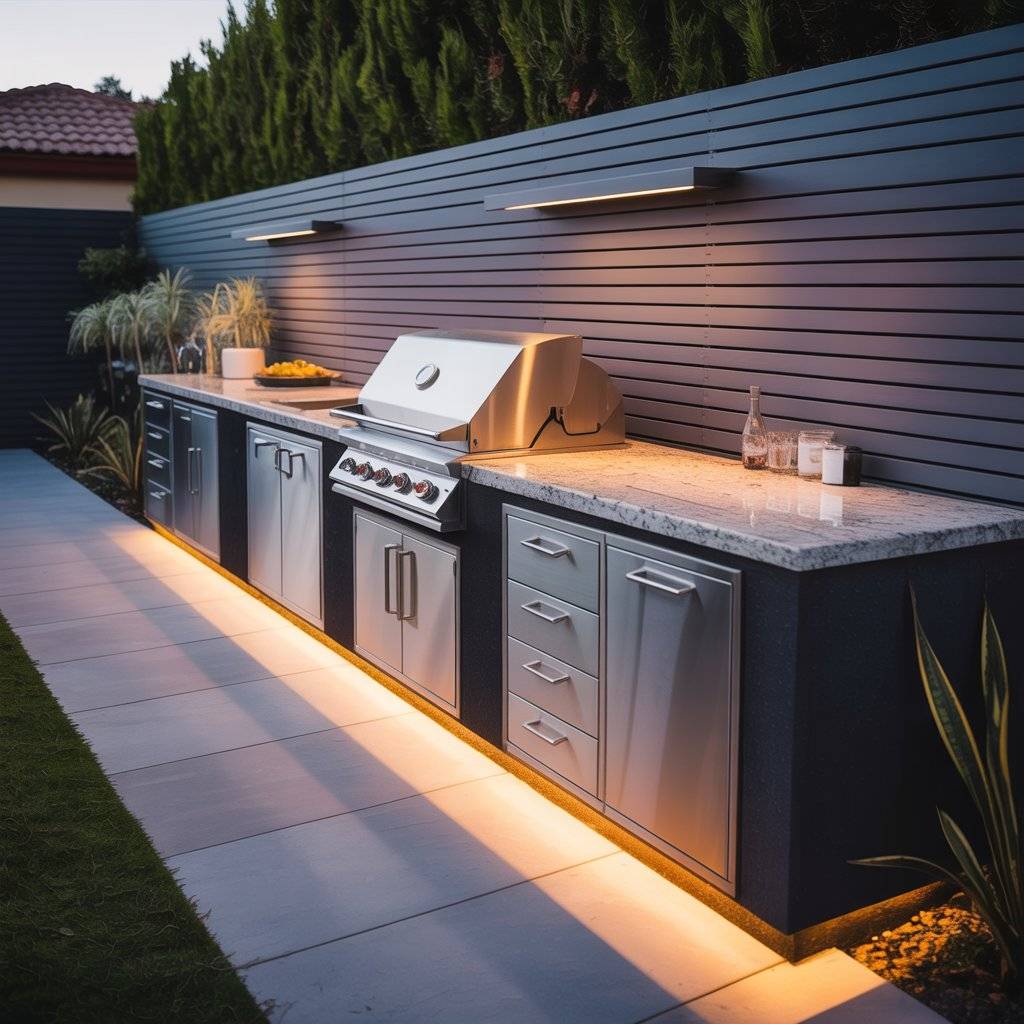
The simplest layout is often the best for small spaces. Keep everything along one wall or fence line grill in the middle, landing space on both sides, and compact storage underneath. This setup works for narrow patios and is easier to expand later if you want to add more features.
You don’t need a complicated design to cook well. A straight line keeps your workflow simple: grab ingredients, prep on one side, cook in the center, and plate on the other side. It’s clean, efficient, and won’t overwhelm your yard.
2. Tuck an L-Shape into a Corner
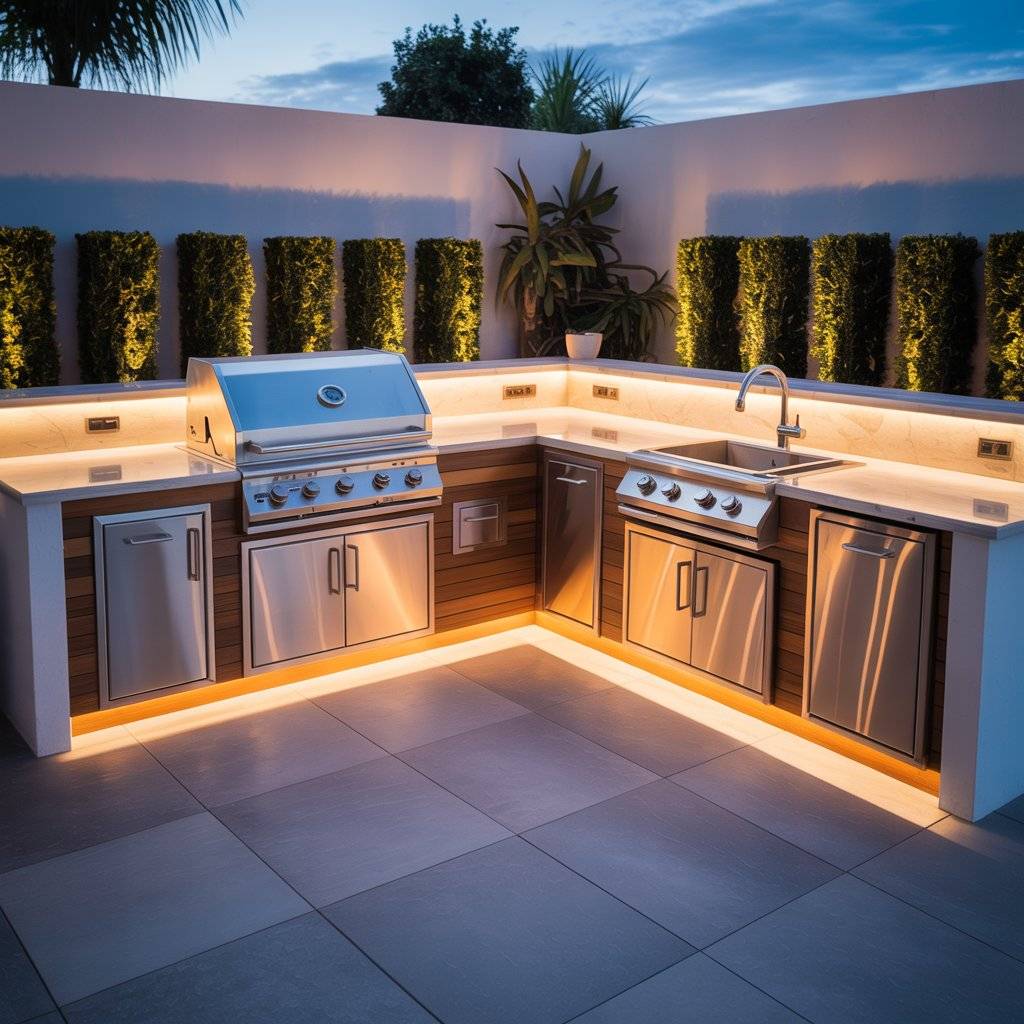
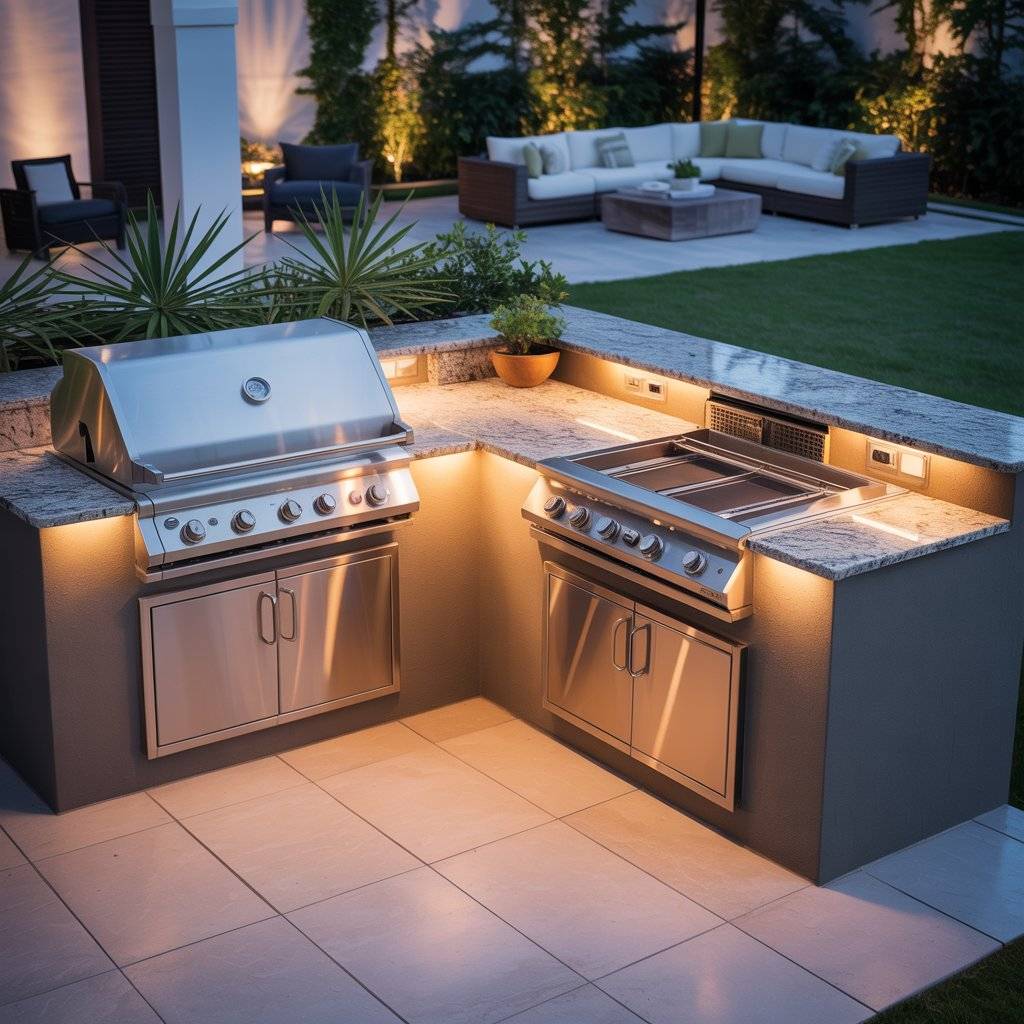
If you have a corner to work with, an L-shaped kitchen is a great choice. It uses two walls to create separate zones one leg for the grill and cooking, the other for prep and serving. This setup frees up the rest of your patio for seating or just breathing room.
The key is keeping the footprint tight. Don’t let the L extend too far into your space. Just enough to create two functional work surfaces is all you need. L-shapes are my go-to for modest patios because they frame the space without taking over.
3. Use a Portable Grill and Rolling Cart
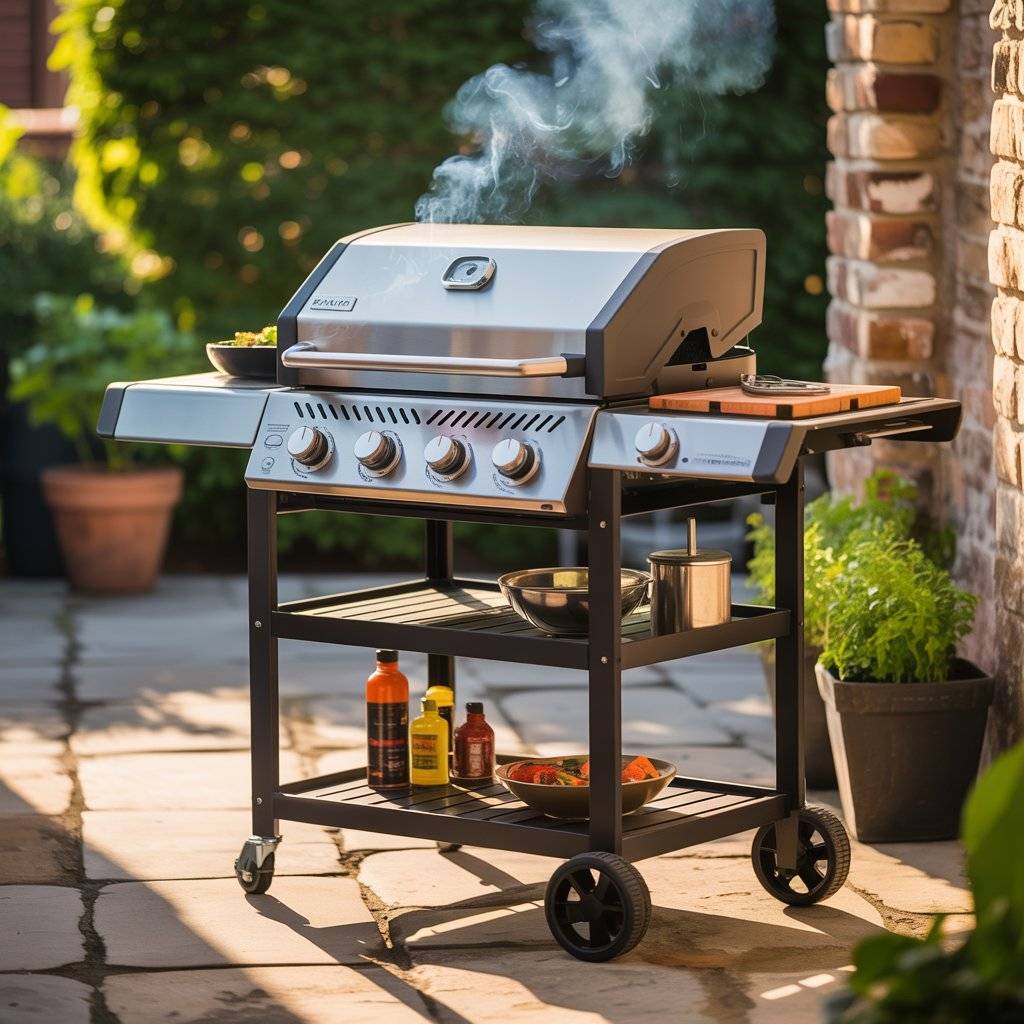
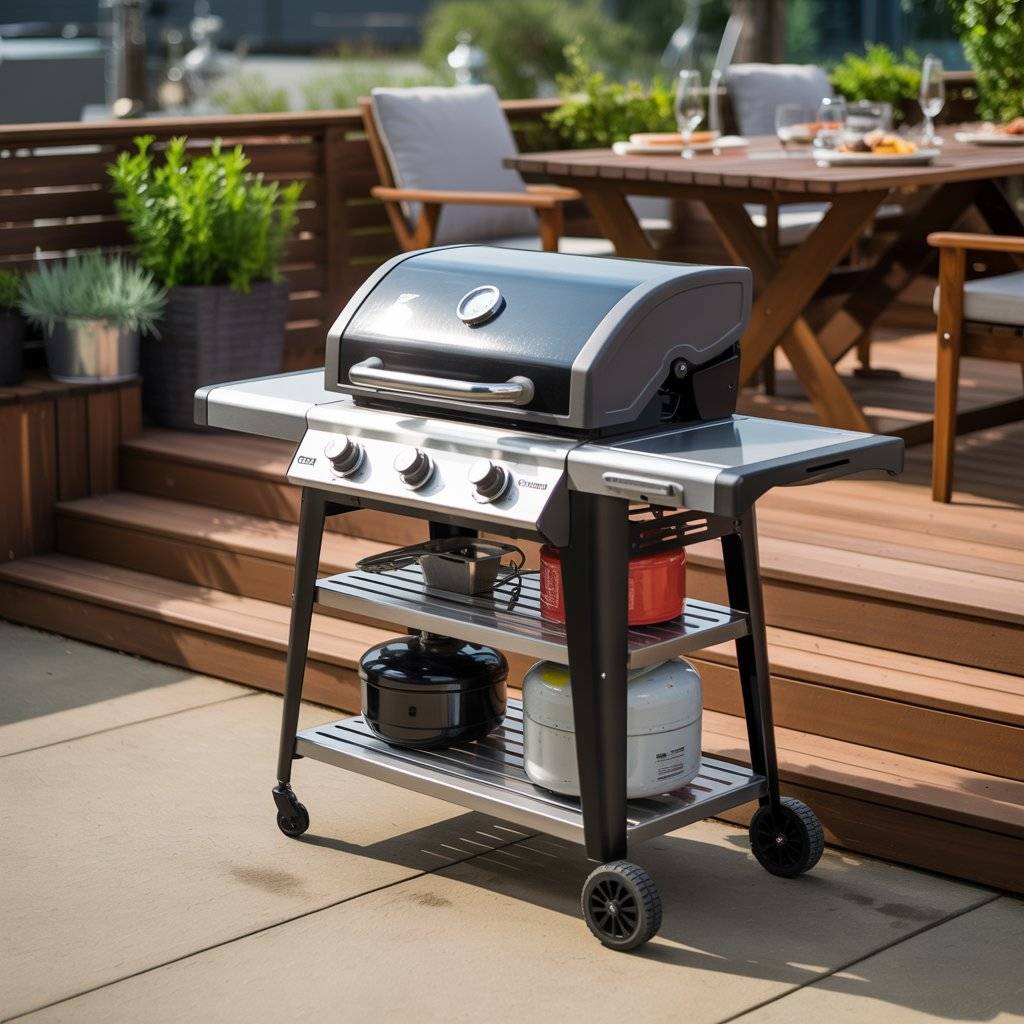
Here’s a low-commitment option that works great for renters or anyone who isn’t ready to build something permanent. A quality portable gas grill paired with an outdoor-rated rolling cart gives you counter space, storage, and flexibility. When you’re done cooking, roll it out of the way.
This product can help you test what you actually need before investing in a built-in setup. You might find you don’t miss having a sink, or that you want more prep space. A rolling cart lets you figure that out without regret.
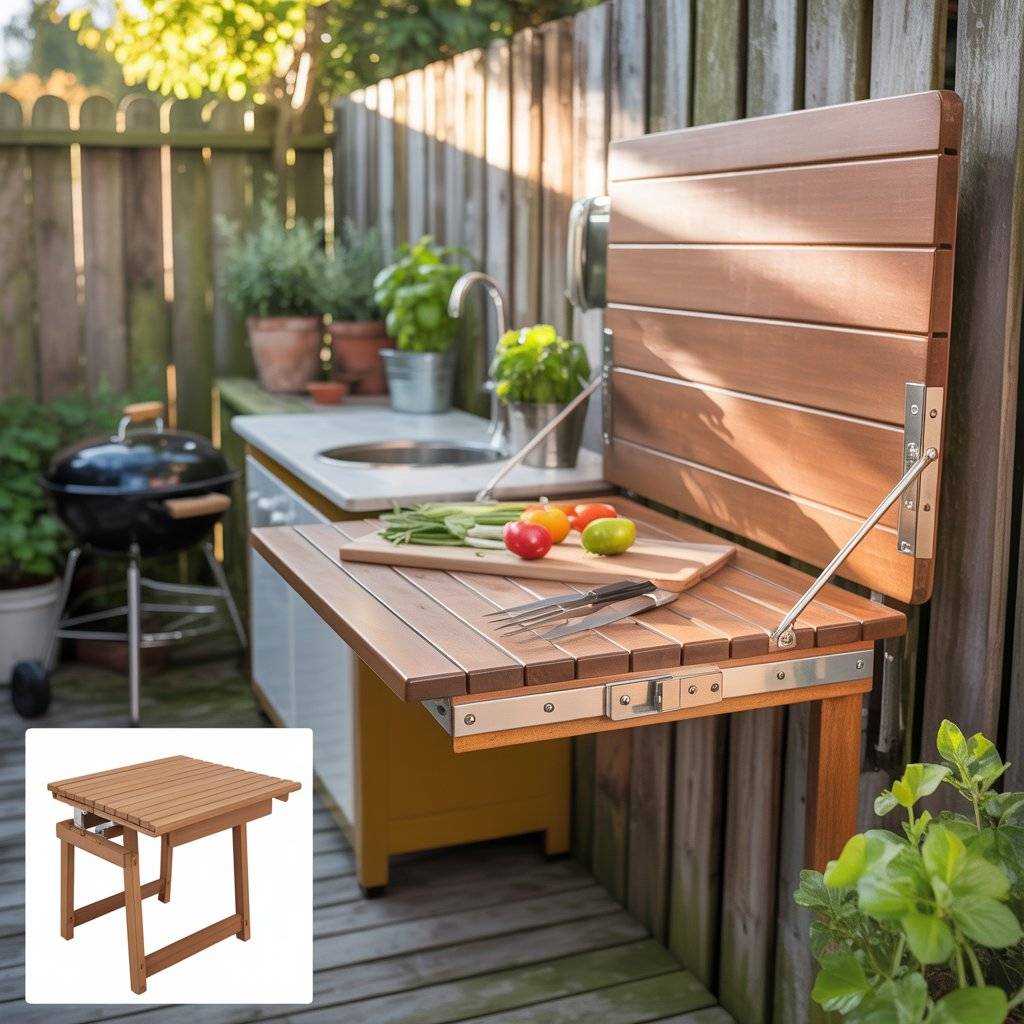
4. Build a Fold-Down Prep Table
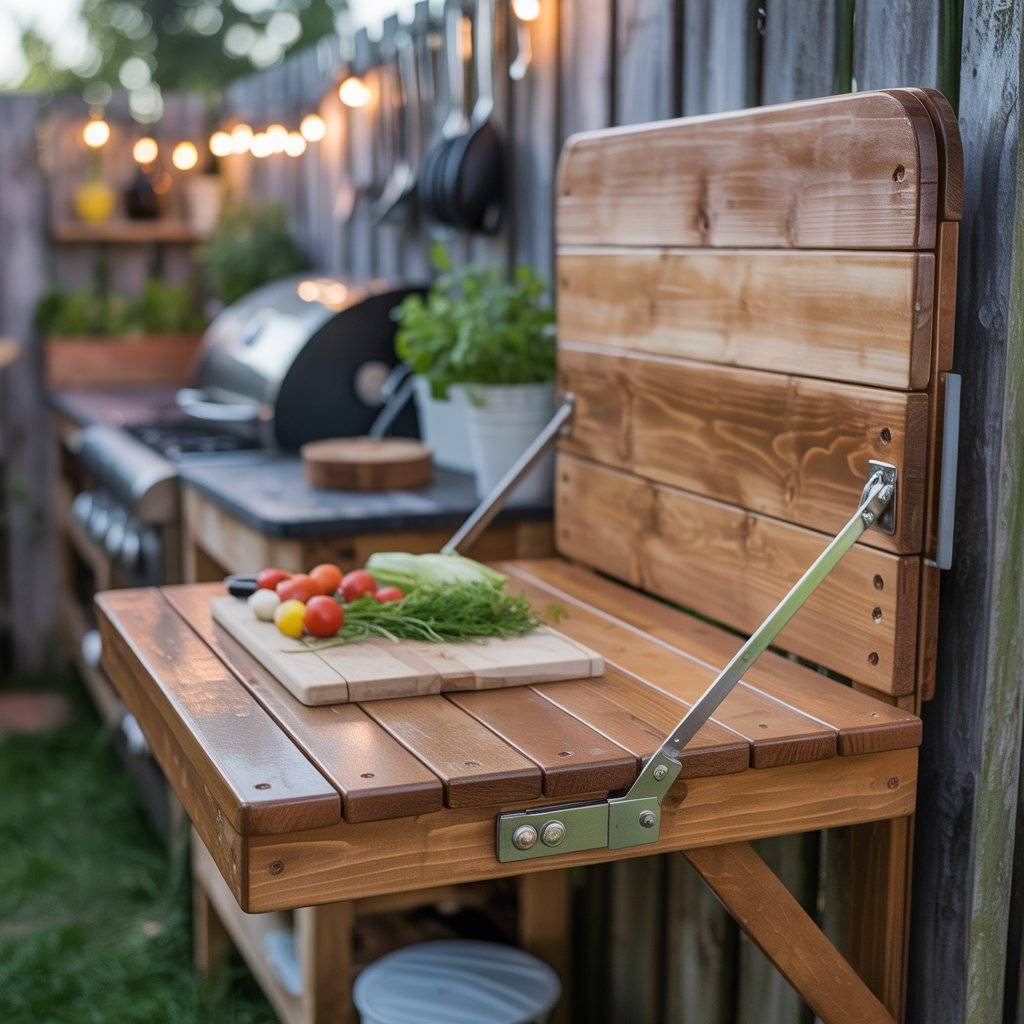
Wall space is valuable in a small outdoor kitchen. A fold-down table mounted to a fence or exterior wall turns into a prep surface when you need it and disappears when you don’t. Use exterior-grade hardware and seal the wood properly so it holds up to weather.
Think of it like a Murphy bed for your kitchen gear. Lower it when you cook, fold it flat when you’re done. It’s simple, inexpensive, and perfect for tight spaces.
5. Go Vertical with Your Storage
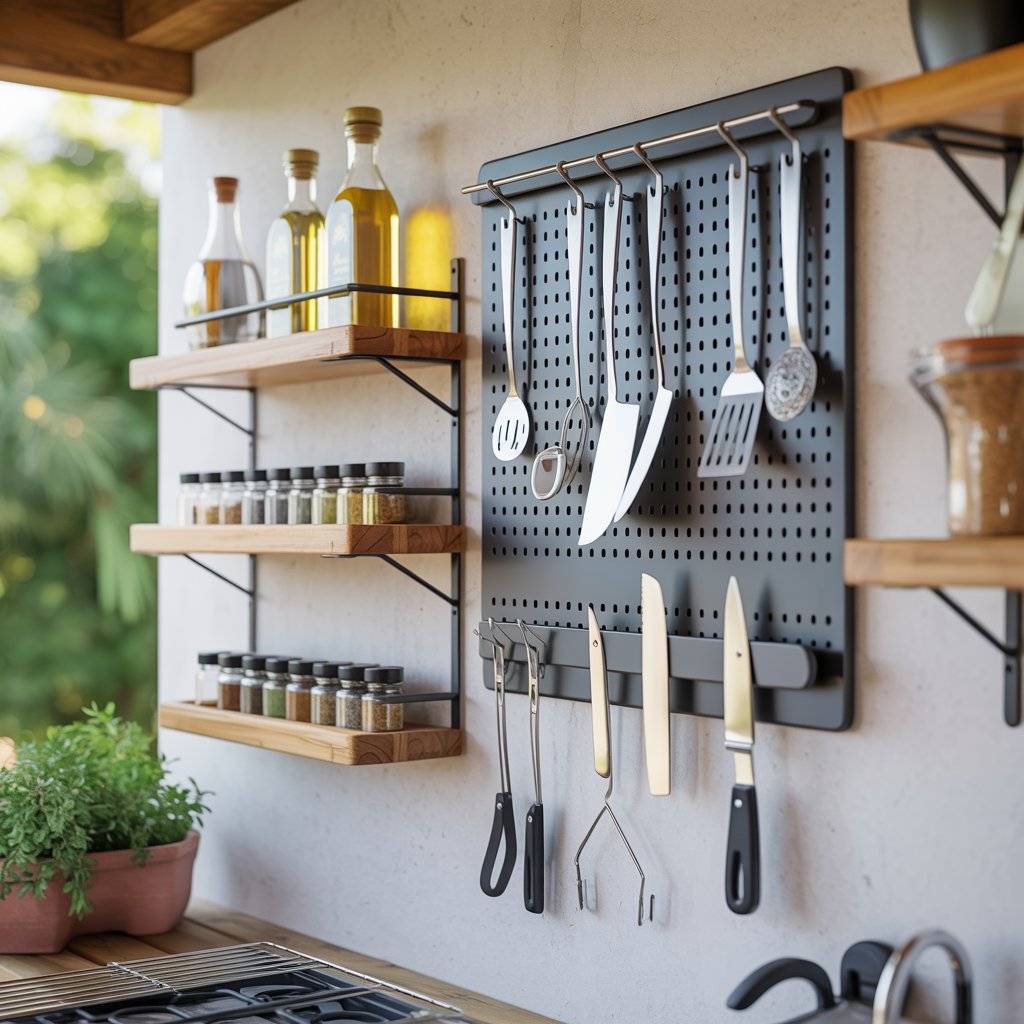
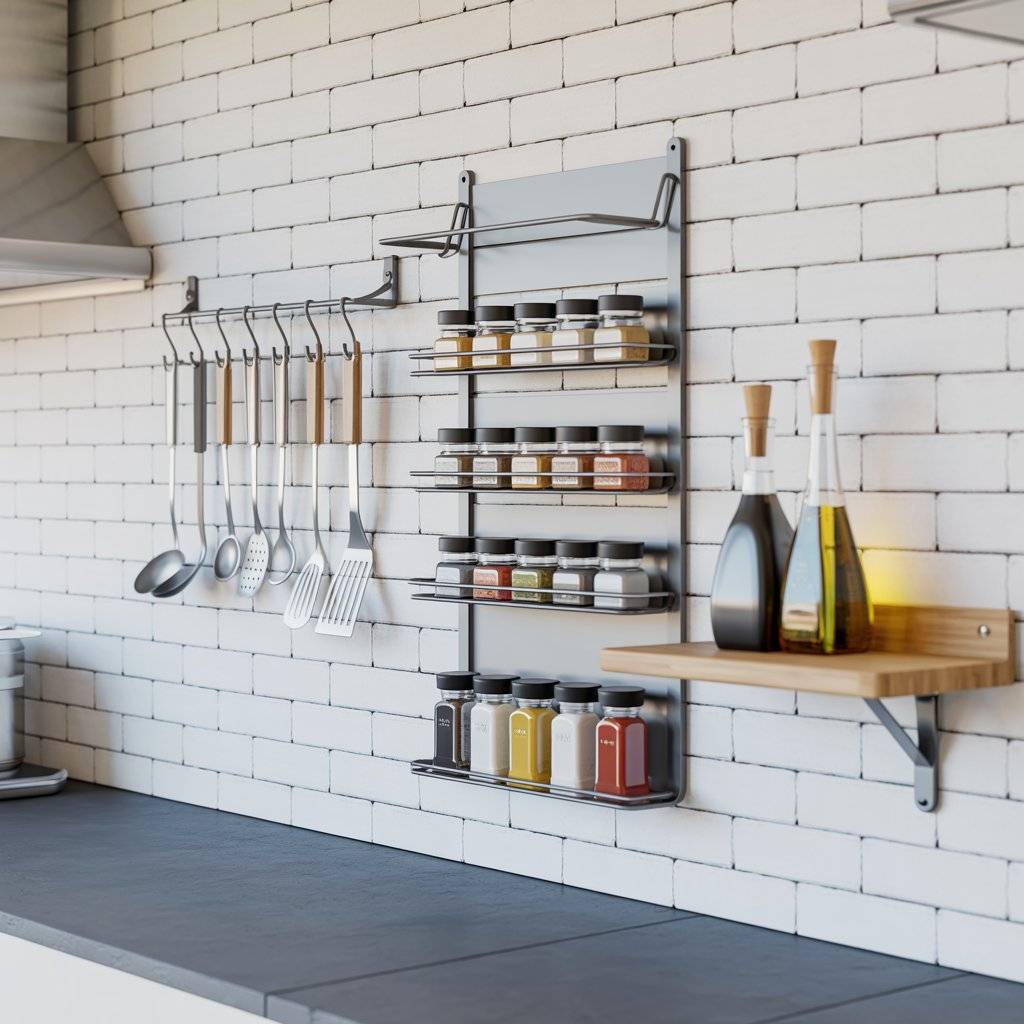
When floor space is tight, think upward. Install open shelving on walls, hang a pegboard for utensils, or add a magnetic strip for knives. These solutions keep your counters clear and your tools within reach without taking up any floor area.
One client’s patio wall became a full kitchen organizer hooks for spatulas, a rack for spices, and a small shelf for oil and vinegar. The whole thing took up zero floor space and made cooking outdoors genuinely easier.
6. Choose Slimline Appliances
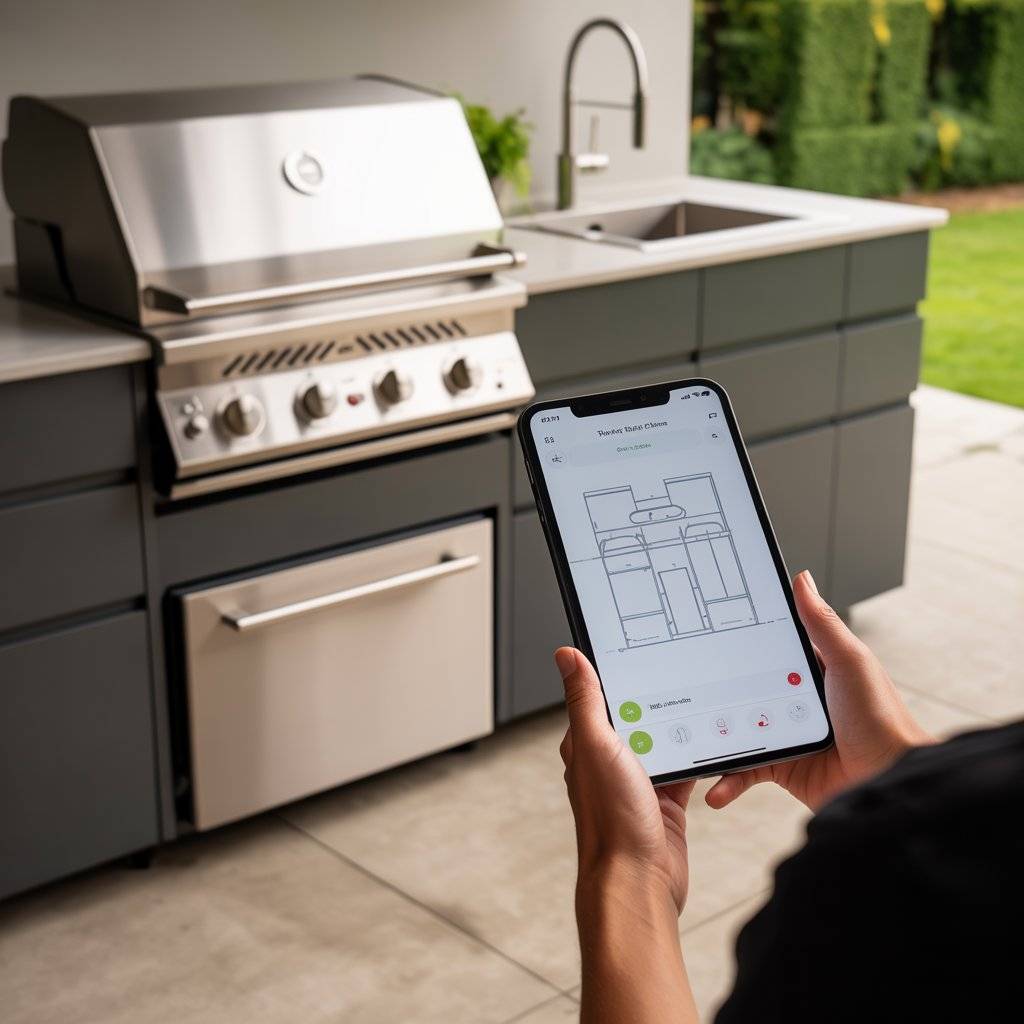
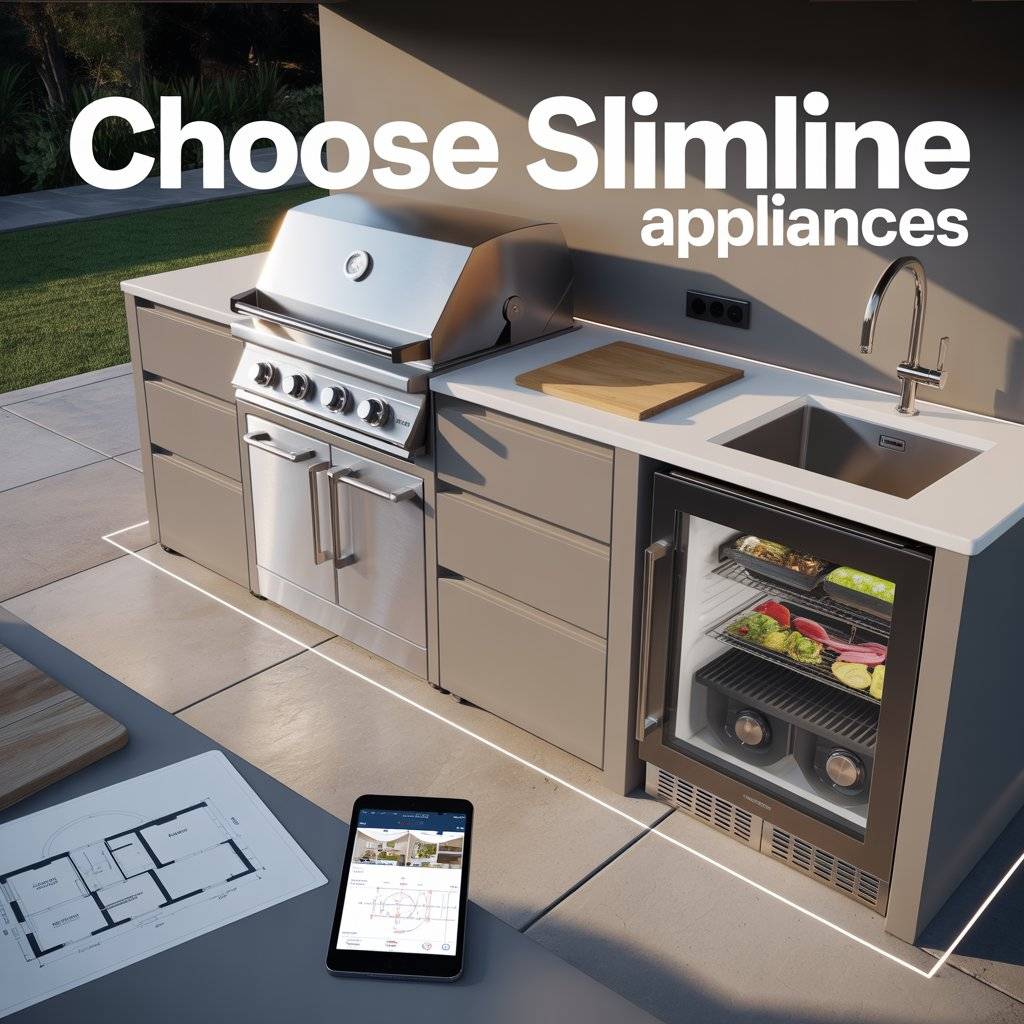
You don’t need full-size everything. Compact grills, mini-fridges, and narrow sinks are designed specifically for tight spaces. A 28-inch grill can feed a crowd just fine, and an undercounter fridge drawer keeps drinks cold without a bulky cabinet.
The trick is mapping out appliance sizes before you buy anything. Sketch your layout or use a free online tool to visualize how everything fits together. A few inches saved here and there adds up fast.
7. Add a Built-In Cooler Drawer Instead of a Fridge
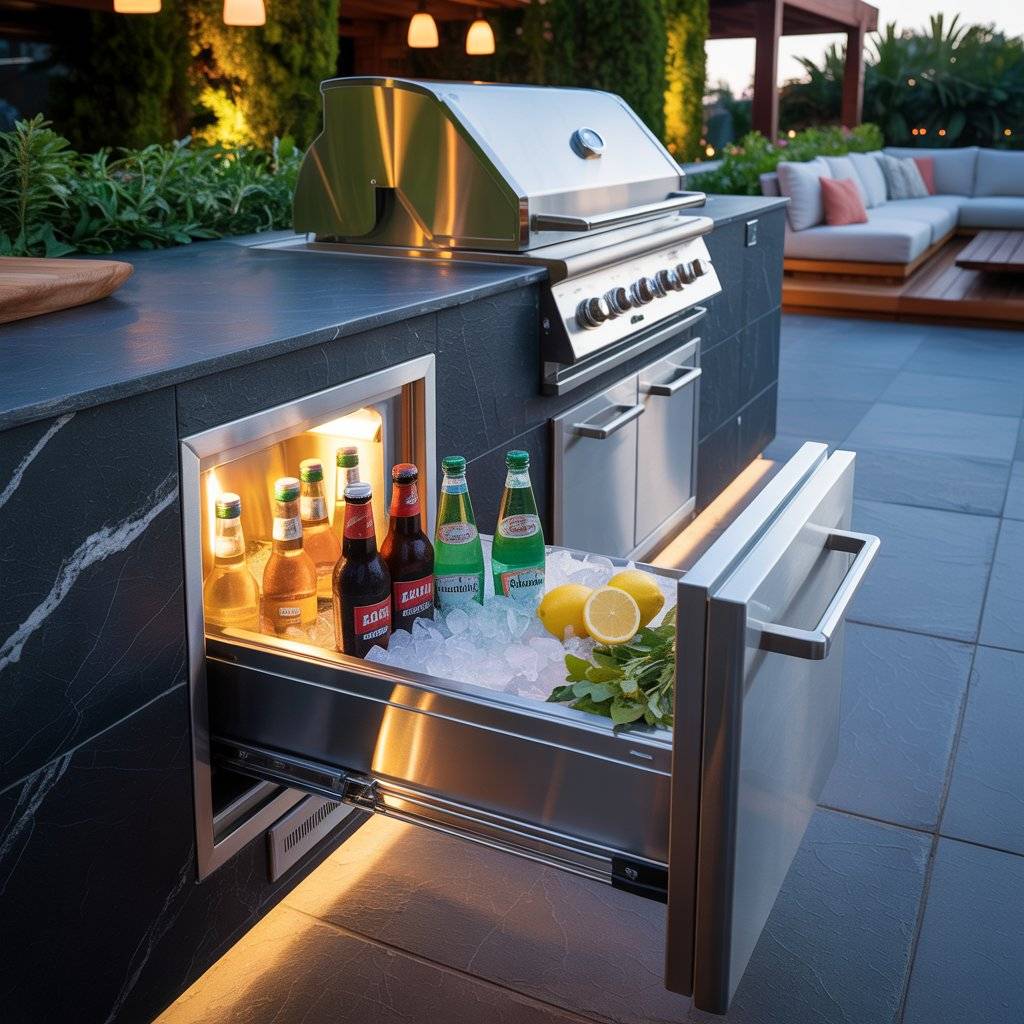
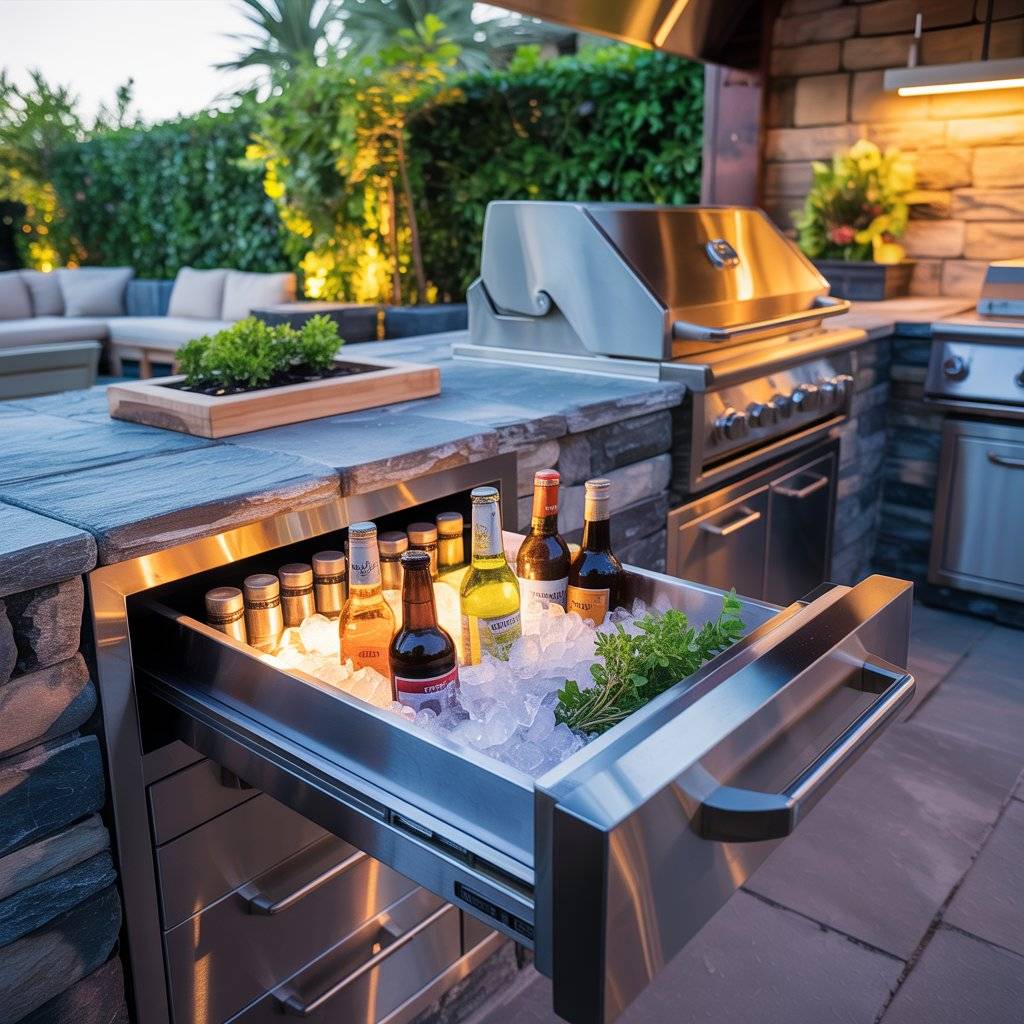
If you’re mainly storing drinks and a few ingredients, a pull-out cooler drawer might be all you need. It takes up less space than a full refrigerator and doesn’t require electricity. Guests can grab a drink without crowding the cook, and you stay hydrated without leaving the grill.
This works especially well if your outdoor kitchen is close to your indoor fridge. You don’t need two full refrigerators. A cooler drawer handles the essentials just fine.
8. Use Concrete Blocks for a Budget-Friendly Base
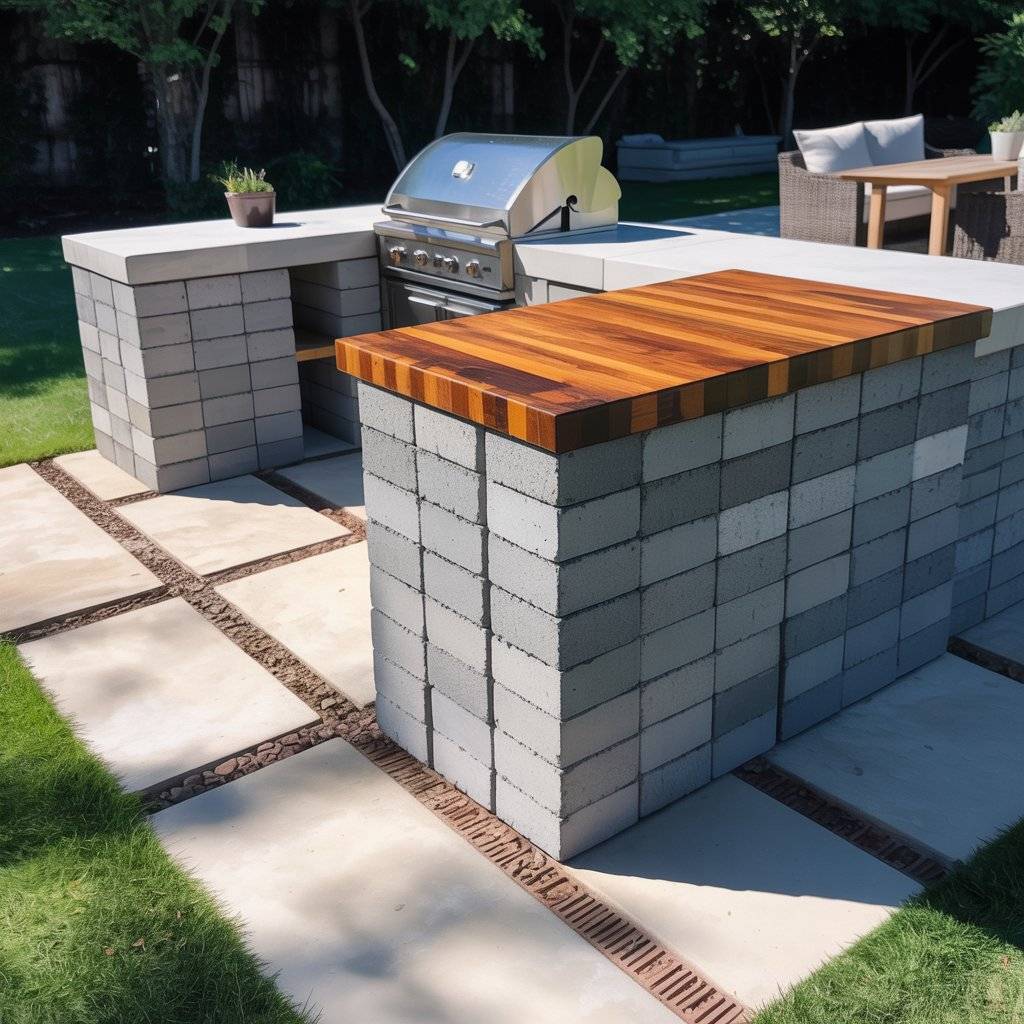
You don’t need custom cabinetry to build a sturdy outdoor kitchen. Dry-stack concrete blocks (CMUs) create a solid, fire-friendly base for a fraction of the cost. Cap them with a butcher block or tile top, and you’ve got a durable work surface that looks intentional.
This product can help you build a semi-permanent kitchen without breaking the bank. Just level your pad and leave gaps for drainage. The catch? Moving it later is a workout, so choose your spot carefully before the first block goes down.
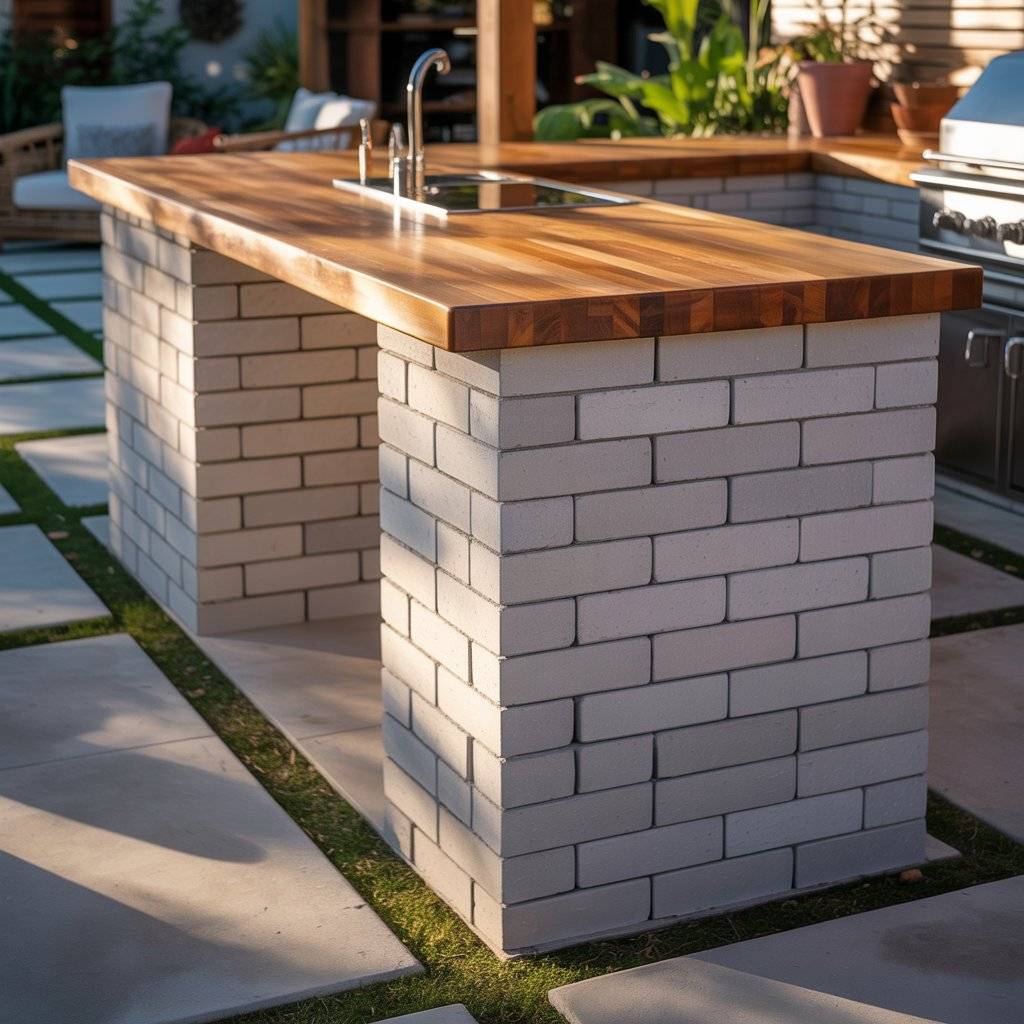
9. Install a Corner Kitchen Layout
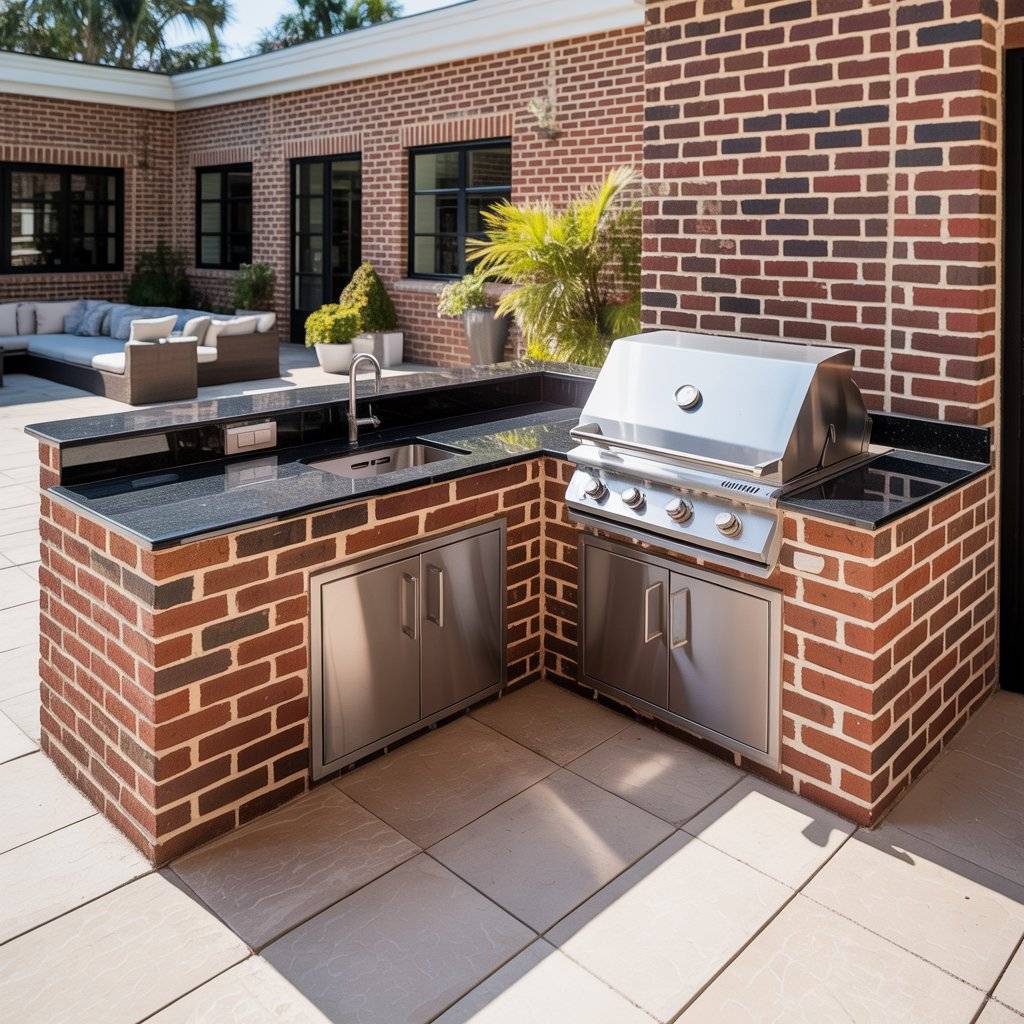
Shifting your outdoor kitchen to a corner frees up the rest of your patio for seating and movement. You can fit a grill, sink, and prep area into a surprisingly small footprint by using both walls.
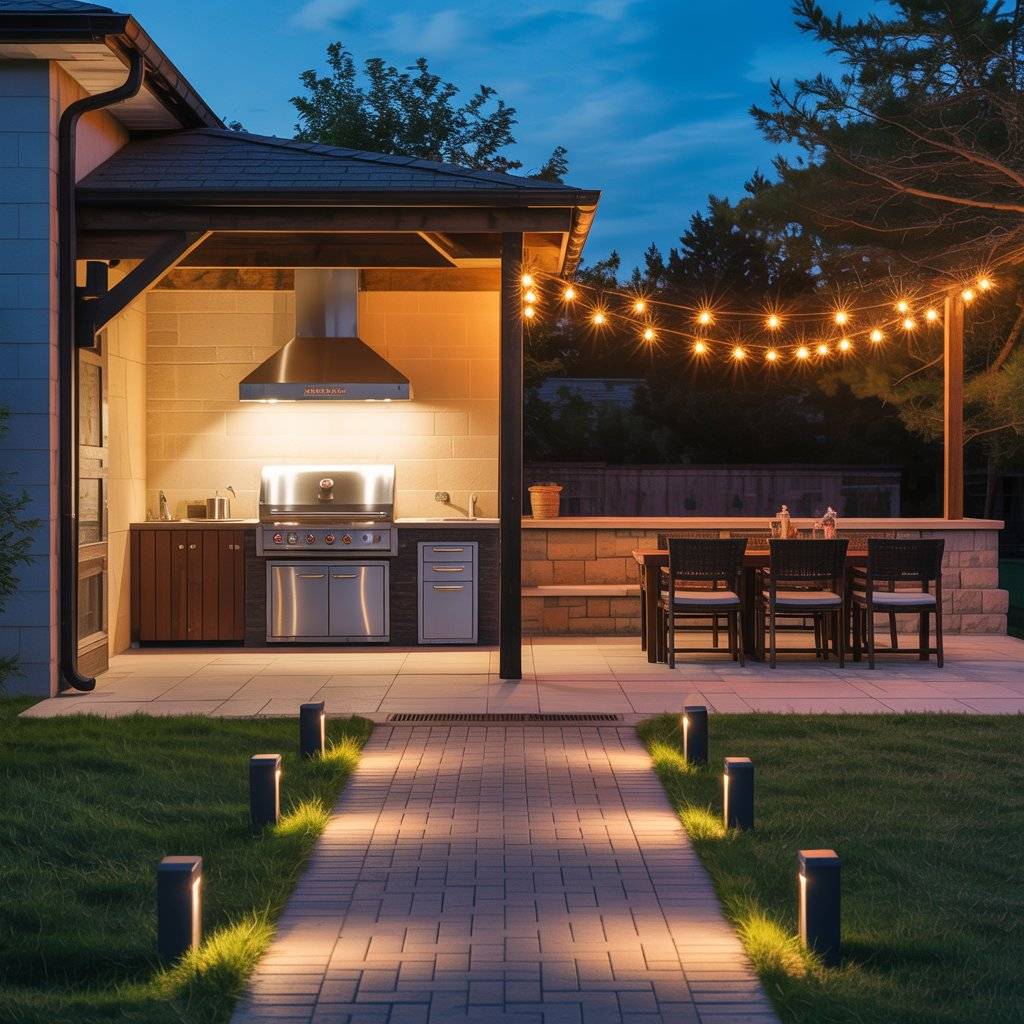
Tiling or brick cladding on the walls adds character, while stainless steel appliances keep things looking clean. This layout works especially well on patios and in small gardens where every square foot matters.
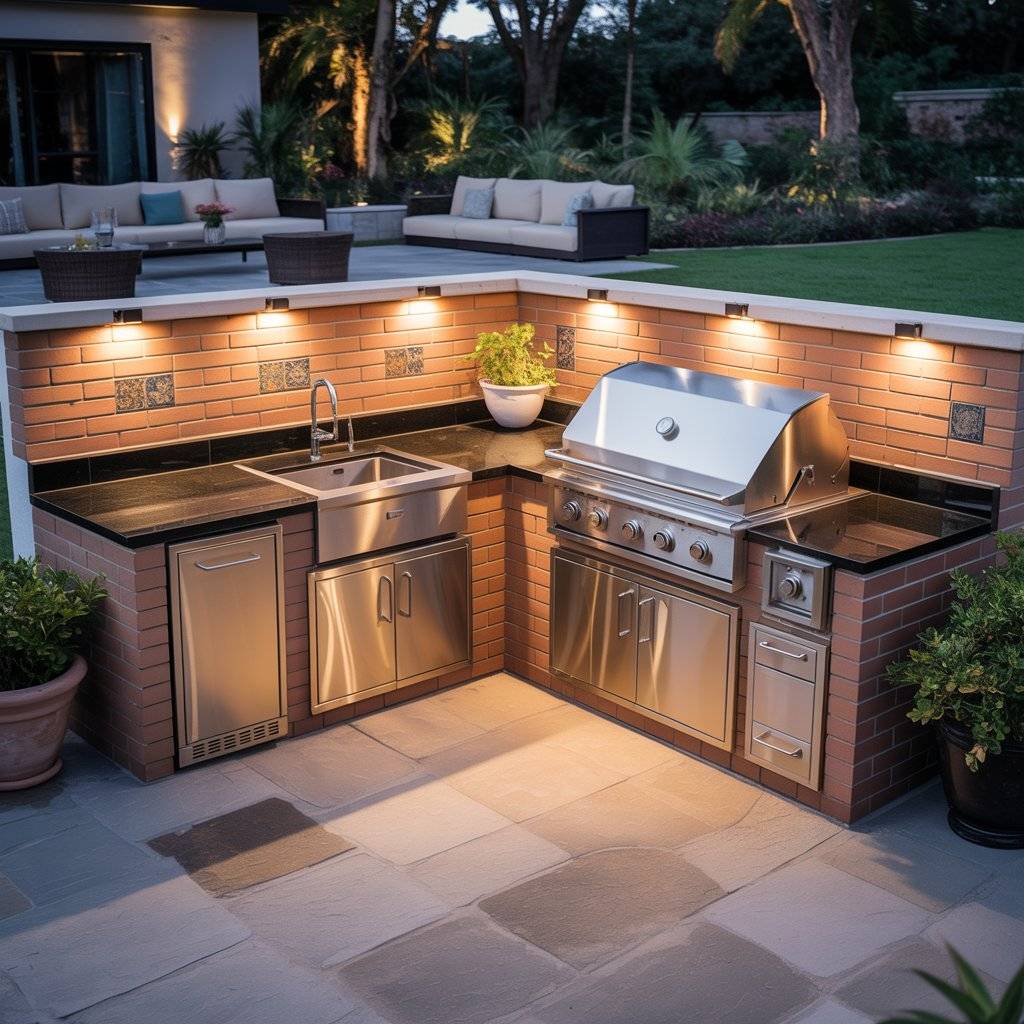
10. Add a Pergola or Shade Structure
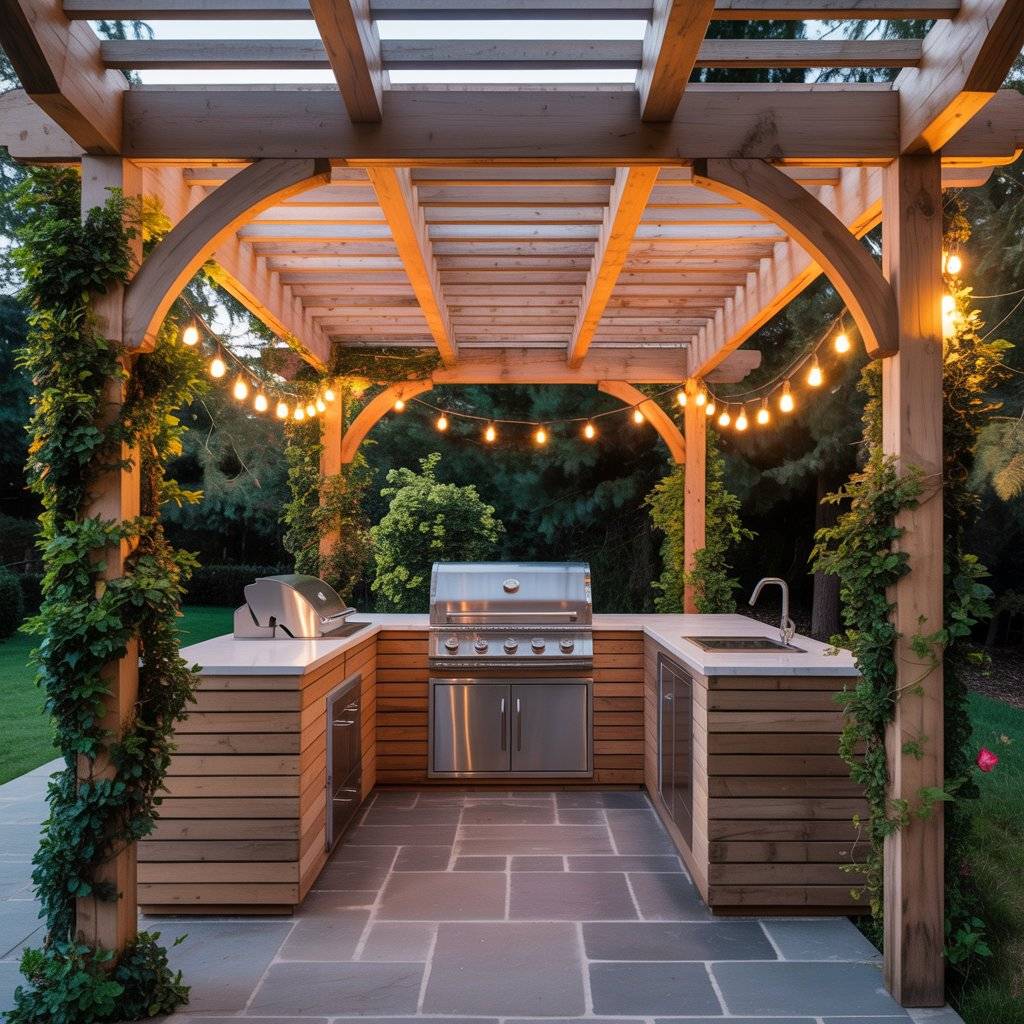
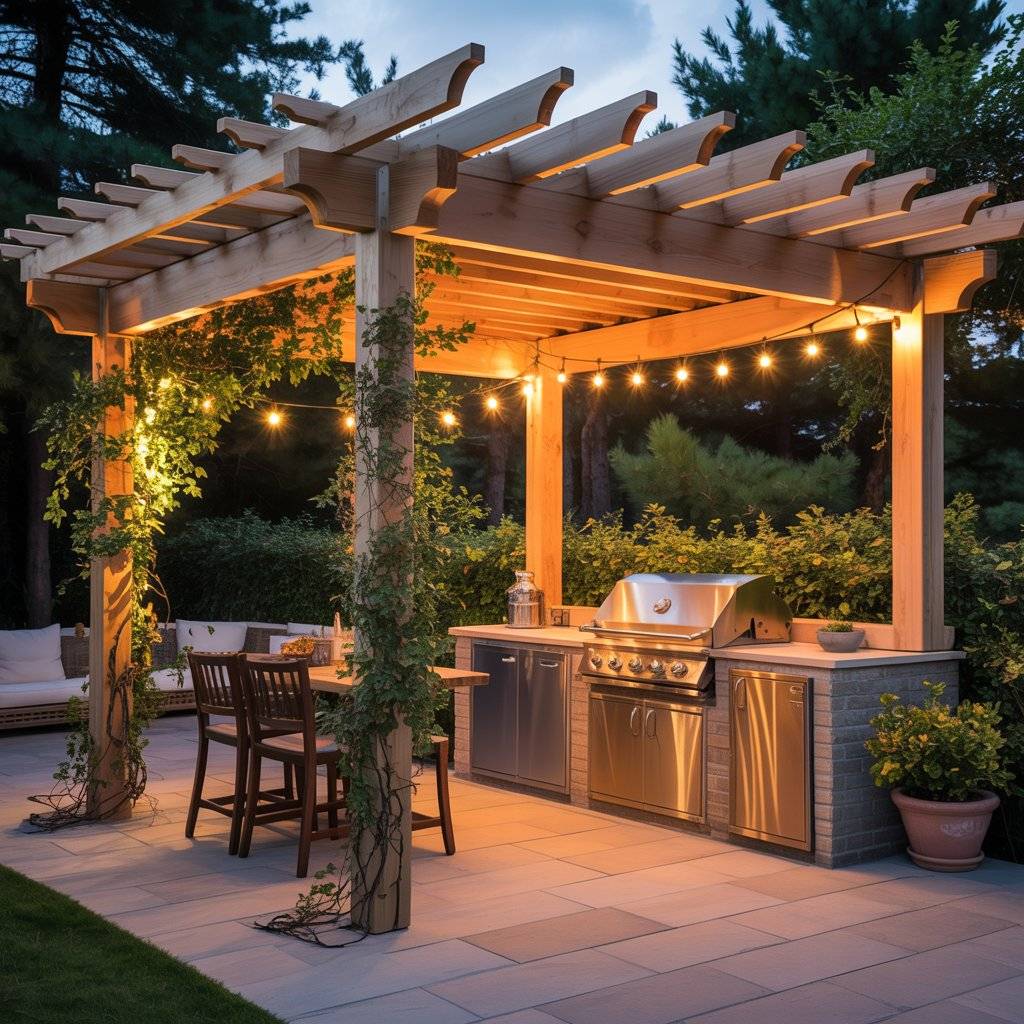
A pergola does two things for a small outdoor kitchen: it defines the space without walls, and it protects you and your appliances from sun and rain. Even a modest overhead structure makes the space feel like a room instead of just a grill sitting on a patio.
Add climbing plants or string lights to make it cozy for evening use. The covered area also helps your appliances last longer by keeping direct weather off them.
11. Create a Built-In Bench with Hidden Storage
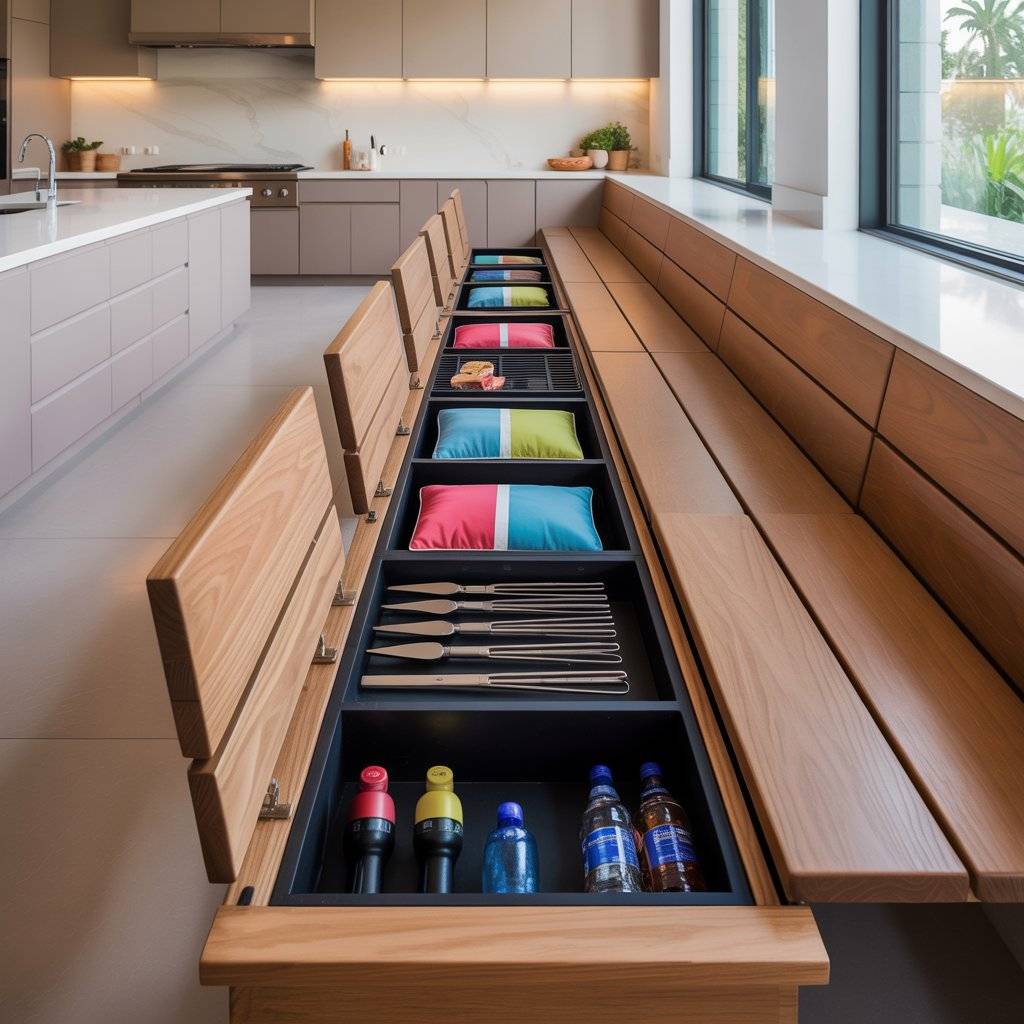
Instead of bulky chairs that take up floor space, consider a built-in bench along one side of your kitchen. The space underneath can hold cushions, grill tools, or even a stash of drinks. It doubles as seating and storage without adding clutter.
This is one of those ideas that seems simple but makes a huge difference in how the space functions. You get a place for guests to sit and a place to store gear, all in one.
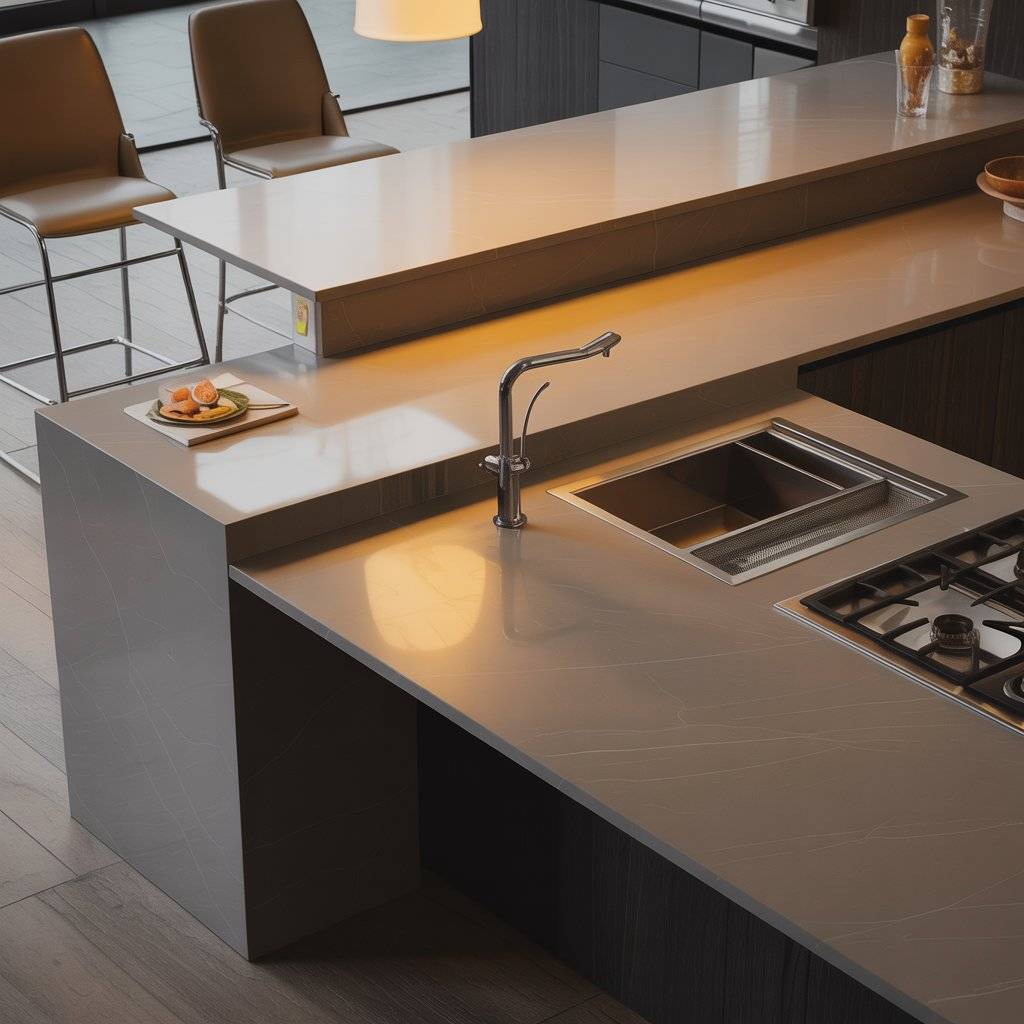
12. Use Multi-Level Countertops
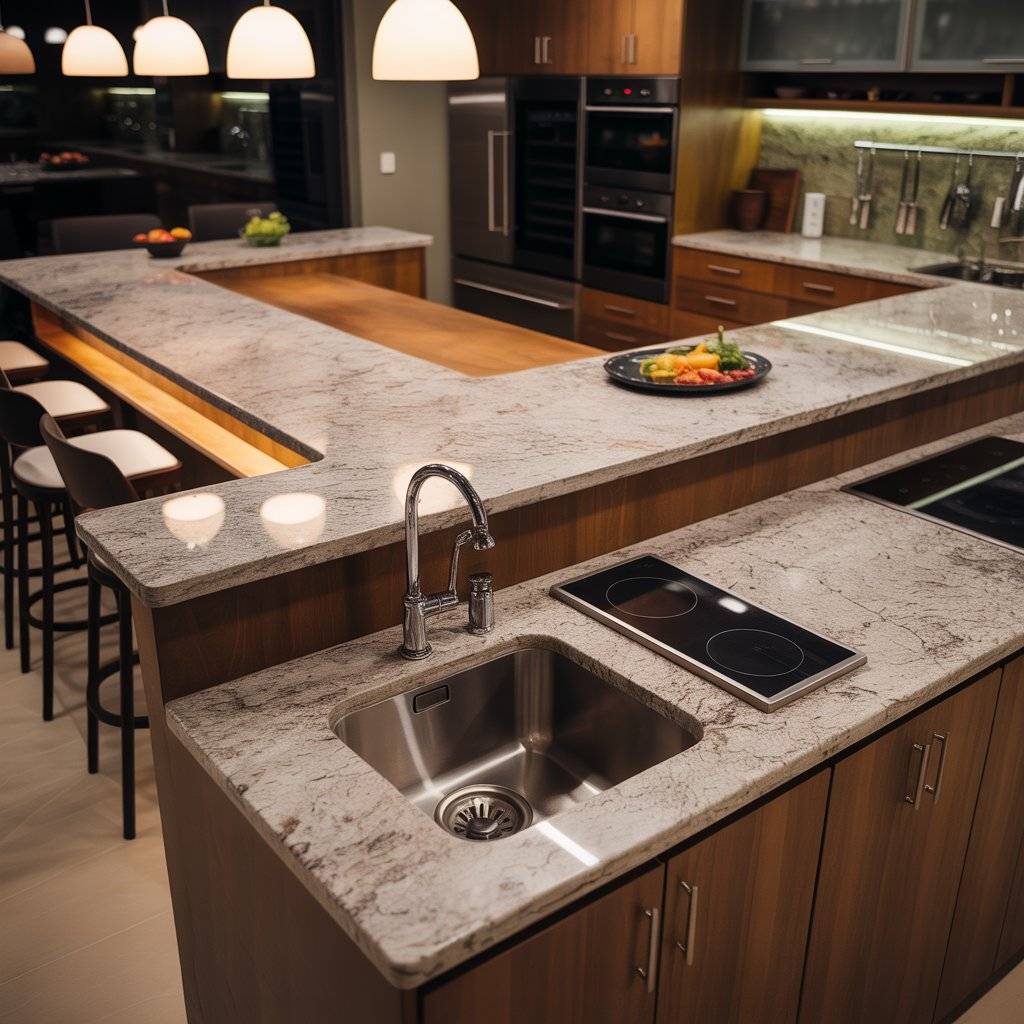
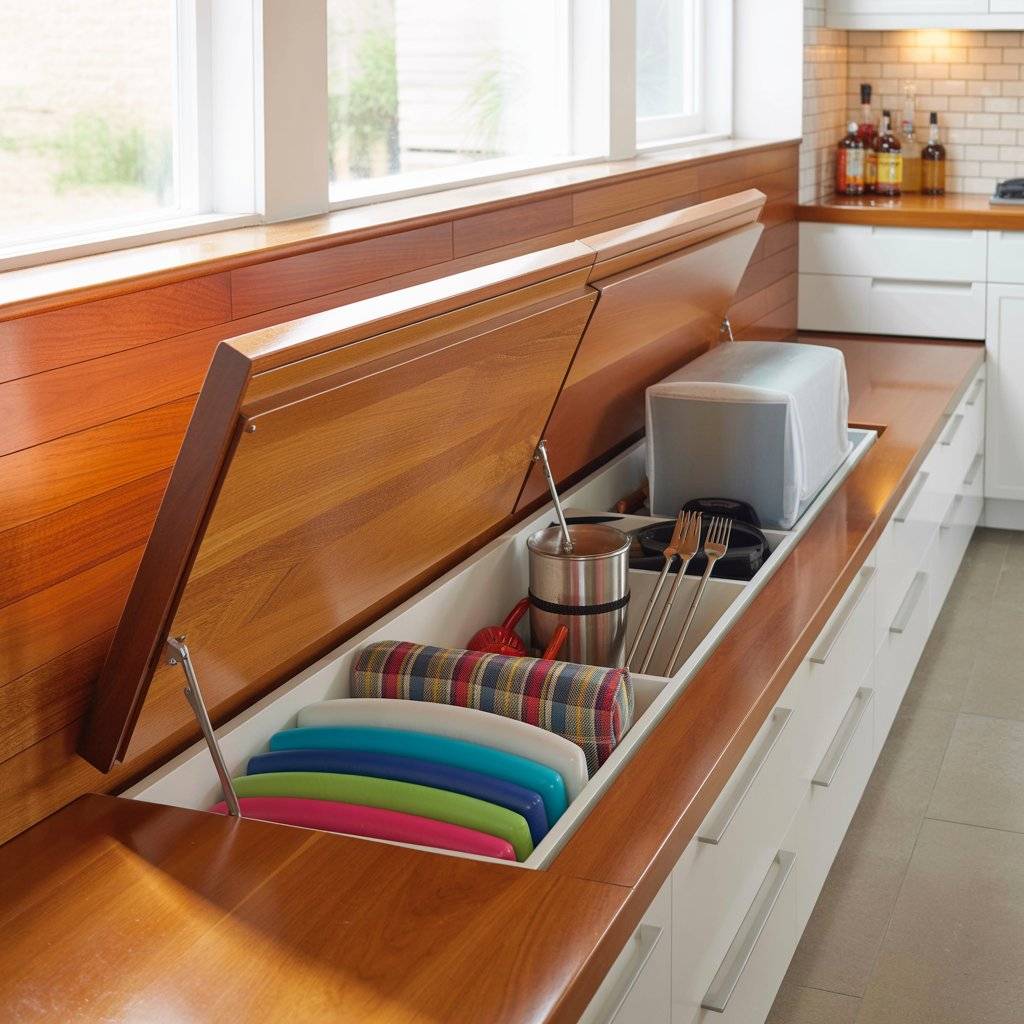
Staggering your counter heights lets you cook on one level and serve on another. A raised bar counter, for example, gives guests a place to sit and chat while you grill, without crowding your prep area.
It’s a small change that improves workflow and makes entertaining easier. You can also use the lower level for a compact sink or side burner, keeping everything within easy reach.
13. Add Task and Ambient Lighting
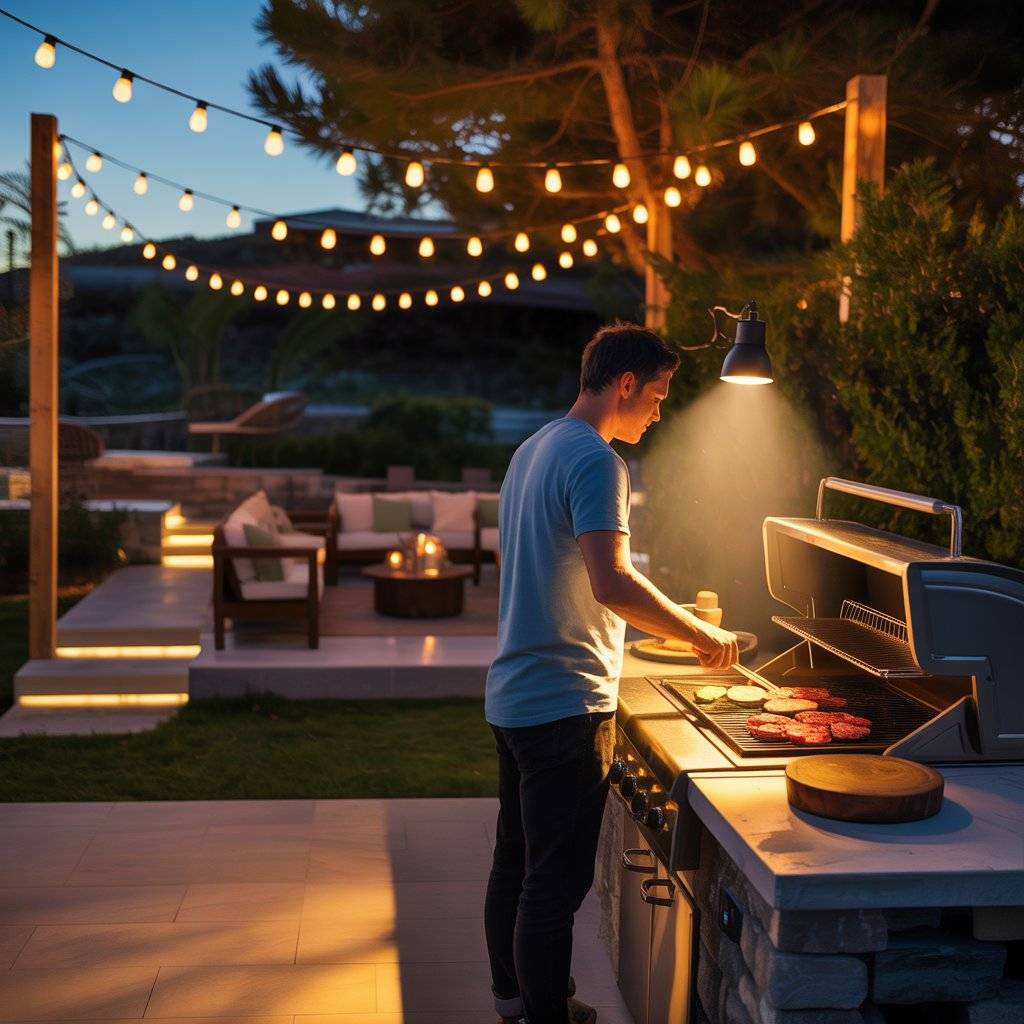
Cooking by phone flashlight is not a plan. Fit a focused task light over your grill and prep area so you can actually see what you’re doing after sunset. Add softer ambient lighting where people sit, and low markers along steps and pathways.
Warm white bulbs around 2700 to 3000 K flatter food and stone surfaces and help the space feel welcoming. A string of outdoor LEDs can transform a modest setup into something inviting for less than fifty bucks.
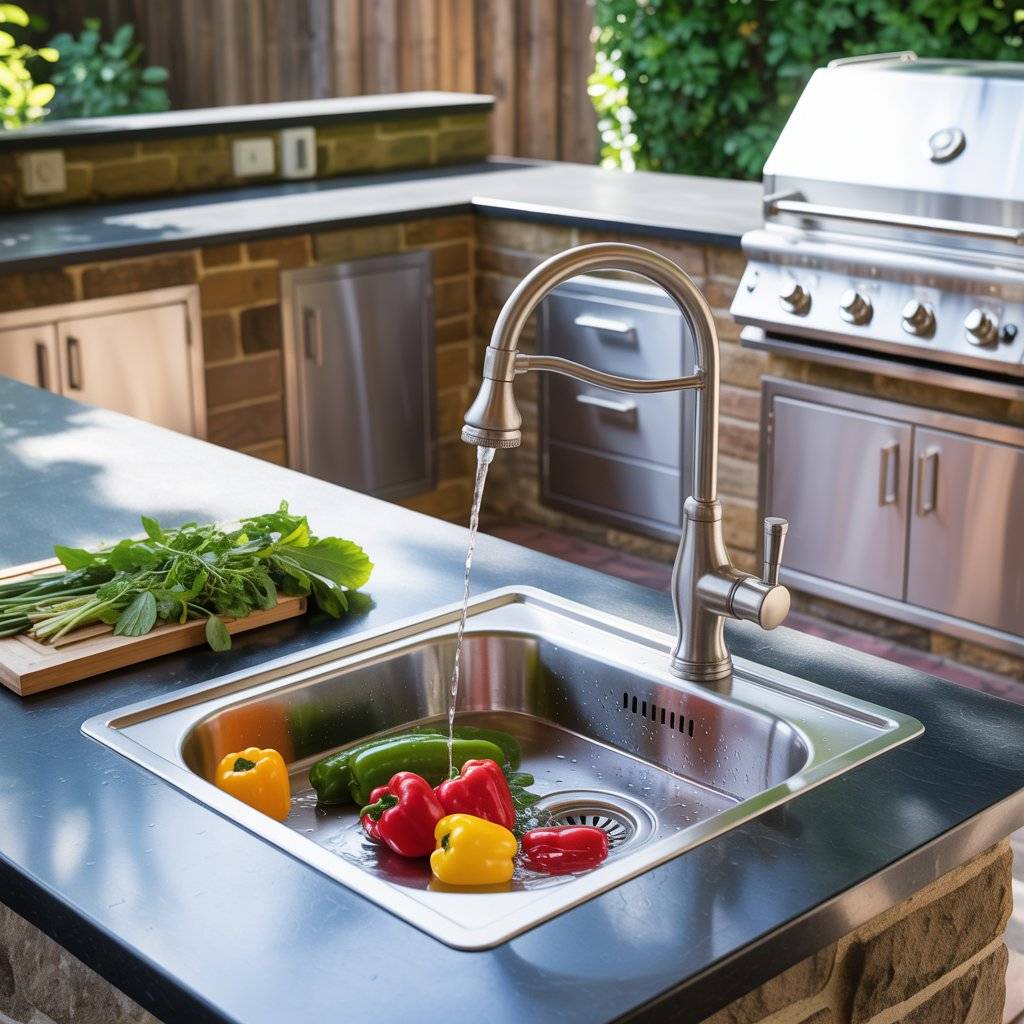
14. Don’t Skip a Small Sink
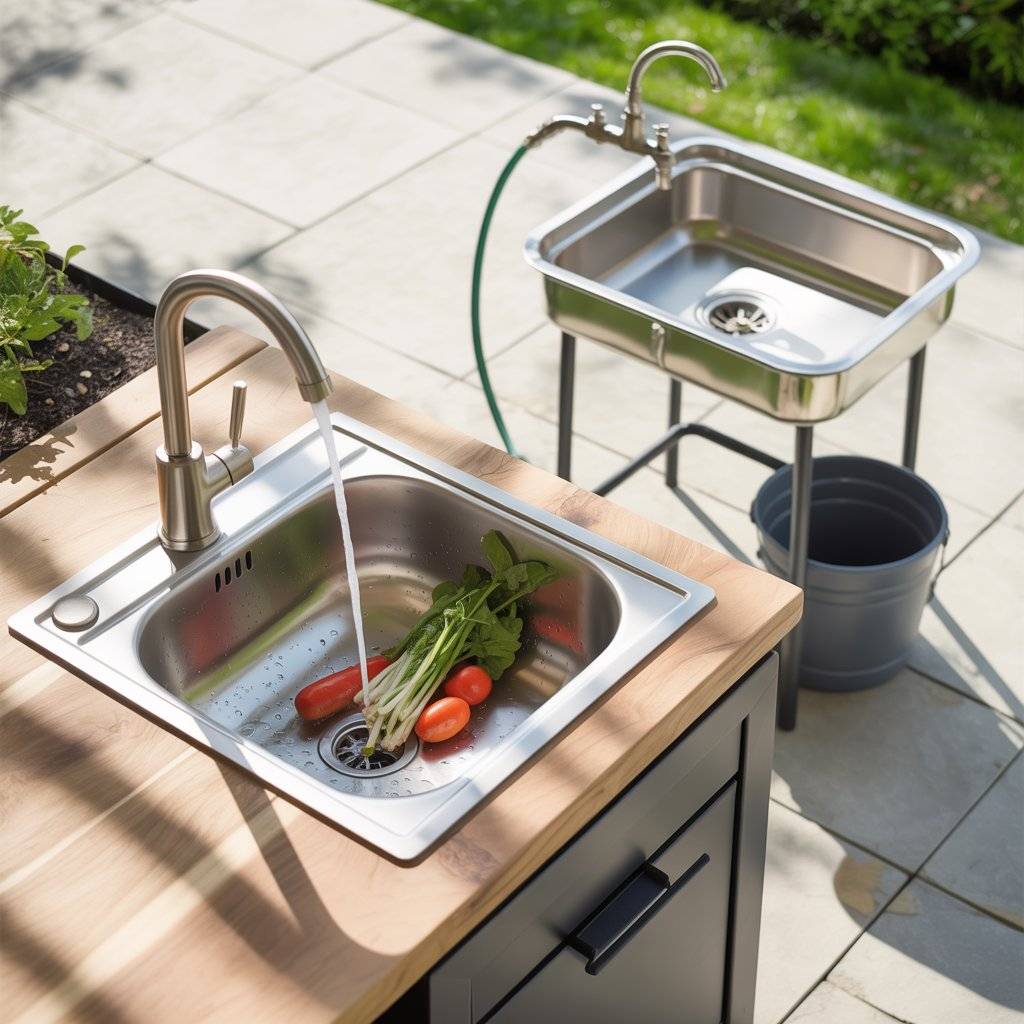
One of the top regrets homeowners report after installation is not including a sink or choosing one that’s too small. You need a place to rinse vegetables, wash your hands after handling raw meat, and clean up as you cook.
If running permanent plumbing isn’t practical, you can connect a garden hose to a portable sink basin with a gray-water bucket. This product can help you get the convenience of a sink without the expense of a full plumbing install.
15. Use Planters as Natural Partitions
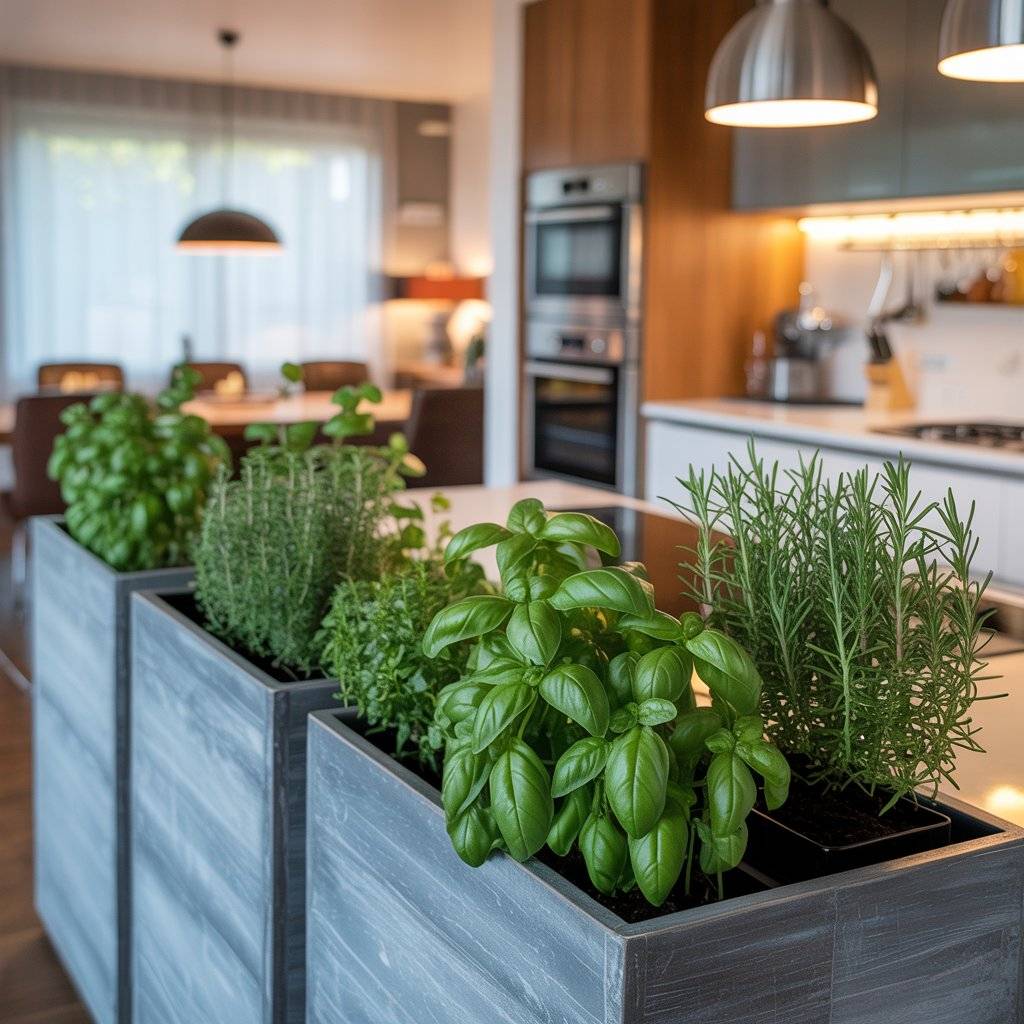
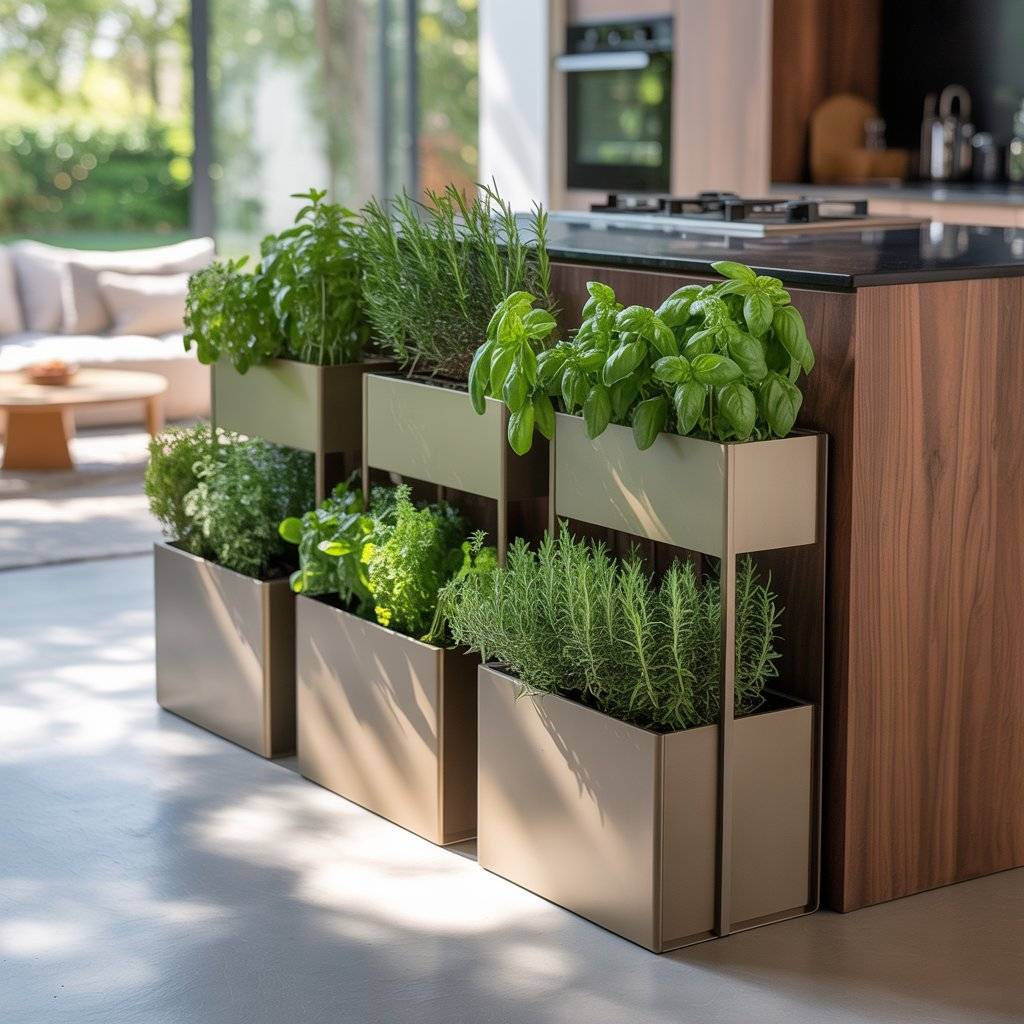
Tall planter boxes can define your kitchen area without building walls. They add privacy, soften the look of appliances, and keep herbs within arm’s reach while you cook. Bonus: fresh basil and rosemary taste way better when you snip them right before cooking.
This works especially well if your kitchen is near a seating area. The plants create a subtle boundary that separates cooking from lounging without making the space feel closed off.
16. Plan Your Workflow First
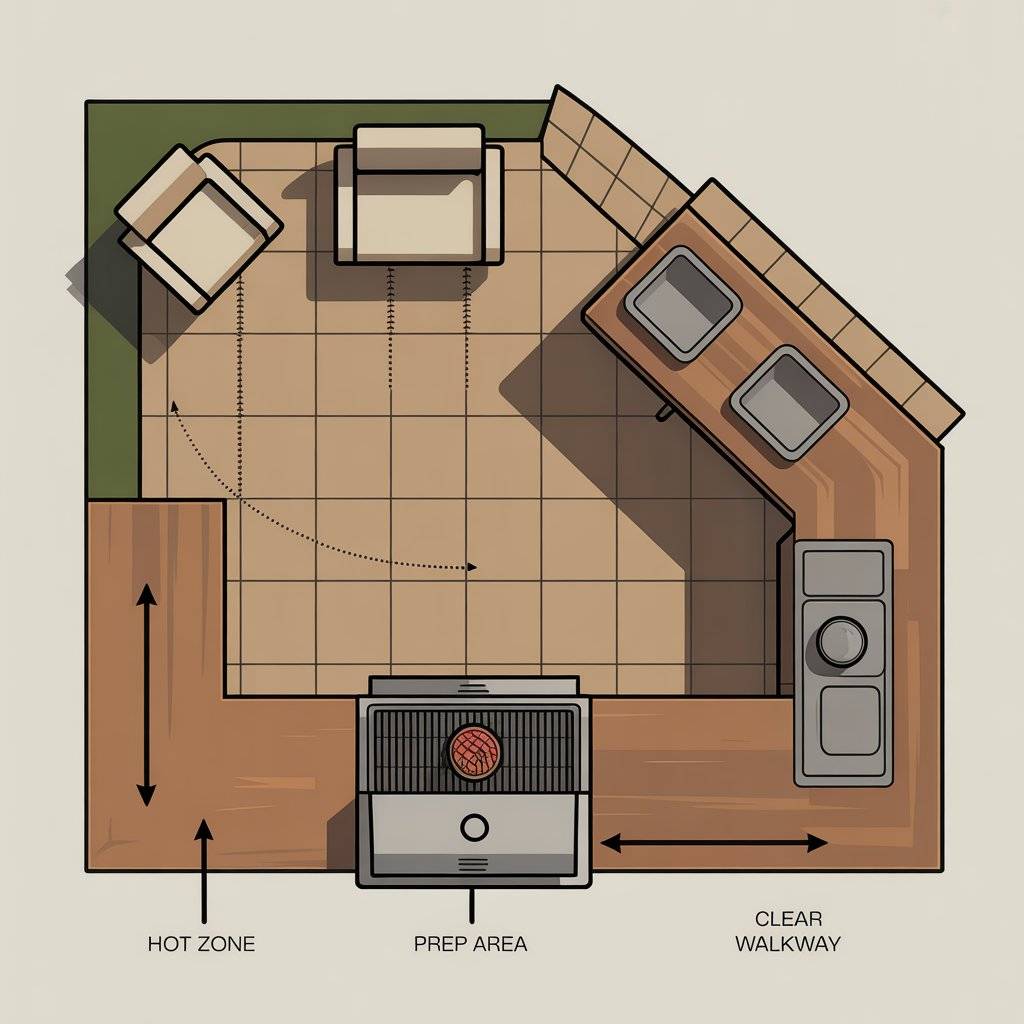
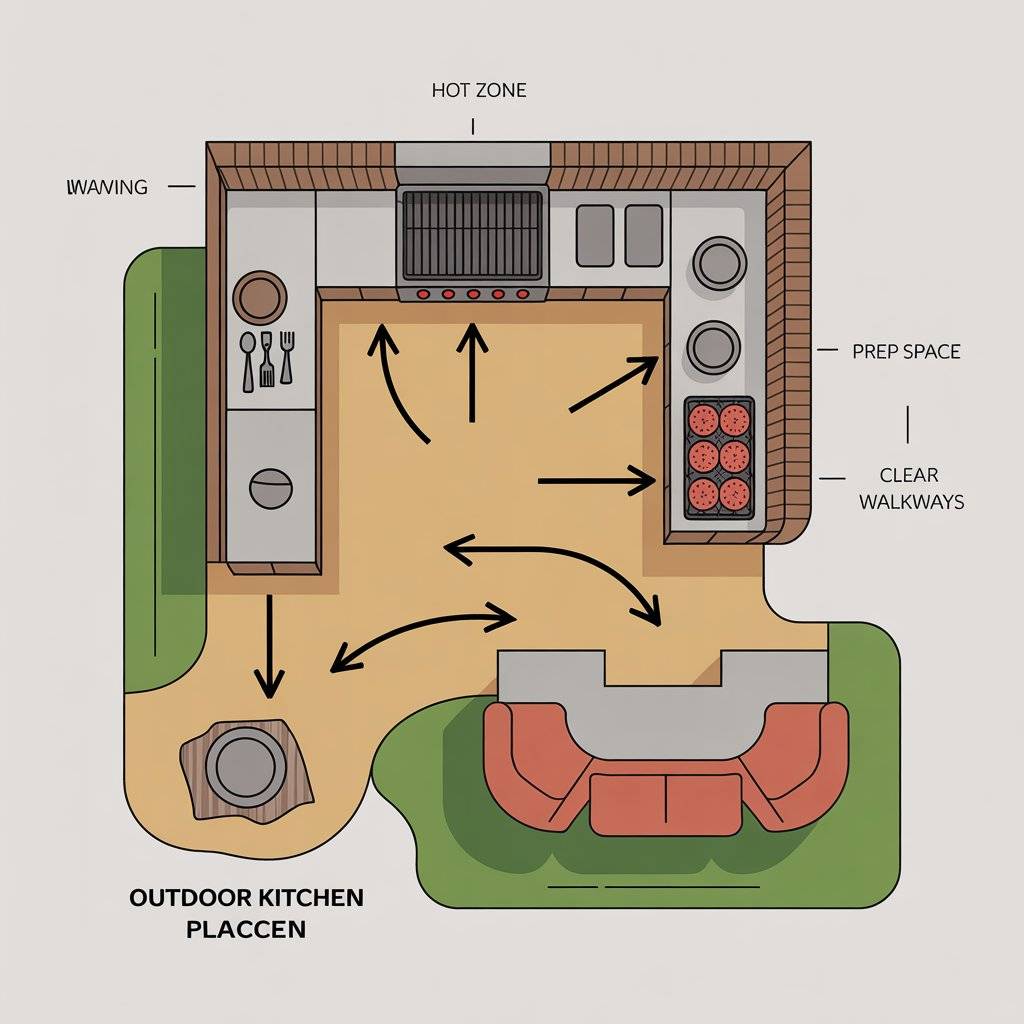
Before you buy a single appliance, think about how you’ll actually move through the space. Keep the hot zone at the edge of your cooking area so people can move behind you. Put prep space to your dominant hand and a landing shelf on the other side. Seat guests where smoke won’t drift toward them.
This simple arrangement keeps food and conversation flowing. A good rule of thumb: plan for clear walkways and avoid placing the grill where people naturally pass through. No one wants a traffic jam next to open flames.
💡 Three Unique Picks for Your Small Outdoor Kitchen
Here are three standout products you won’t find on every “Top 10” list, each chosen to help you build a smarter, more efficient cooking space.
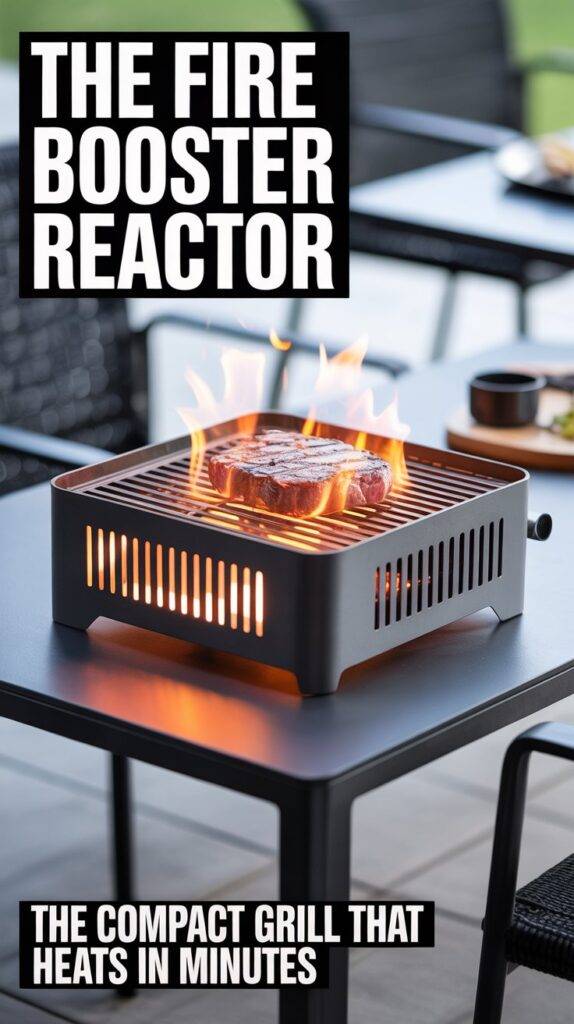
1. The Fire Booster Reactor – The Compact Grill That Heats in Minutes
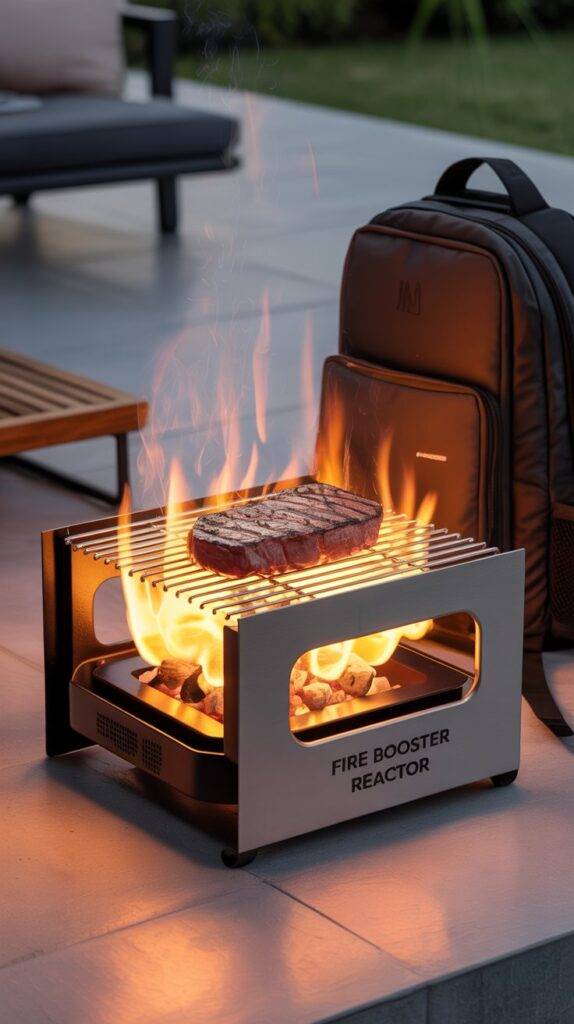
The biggest lie about small grills is that they don’t get hot enough. The Fire Booster Reactor shatters that myth. This compact charcoal grill uses a unique reactor design that spreads flames across the entire cooking surface in just a few minutes.
We’re talking serious, restaurant-quality heat from a grill that fits in a backpack. Its ultra-slim frame tucks away easily, but the firepower is anything but small. This product can help you get that perfect sear on a steak without taking over your entire patio.
Fire Booster Reactor: The Small, Insanely Fast Grill for Tiny Spaces
Check Price on Amazon.com
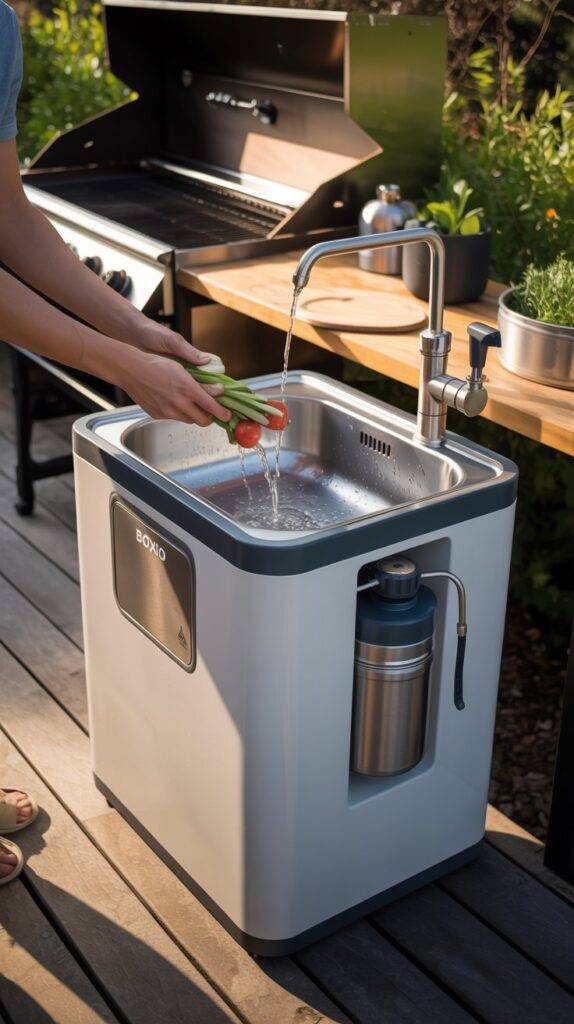
2. BOXIO Mobile Sink – The Portable Sink That Runs on a Hand Pump
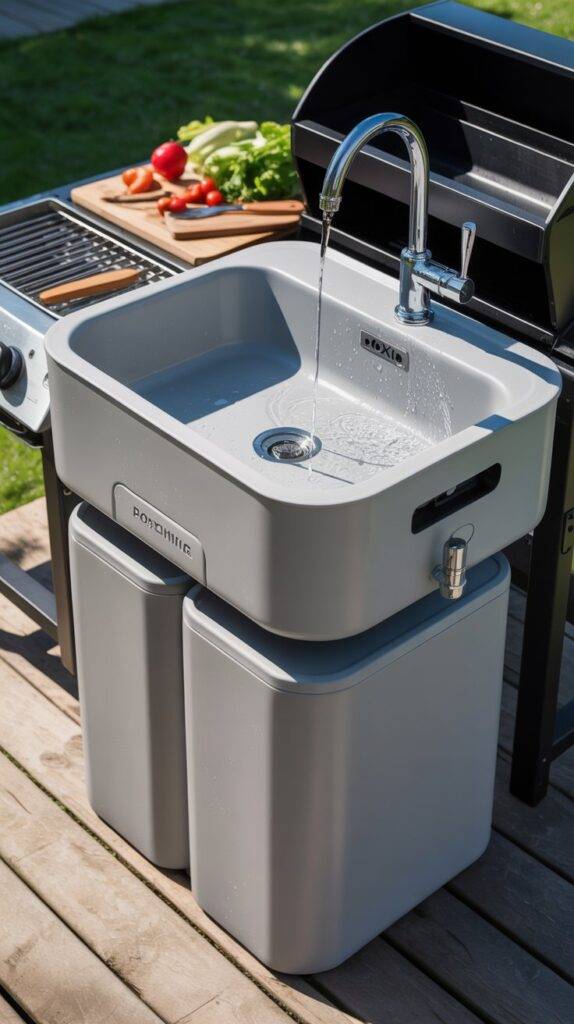
Adding a sink to a small outdoor kitchen is smart, but running new water lines is a pain. The BOXIO Mobile Sink solves this beautifully. It’s a complete, portable sink that uses a simple hand pump to deliver running water on demand, with no electricity required.
It comes with its own fresh and waste water tanks, so you can place it anywhere. Rinse vegetables, wash your hands, or clean up right at your grill without running inside. This product can help you keep things sanitary and convenient, without a plumber’s bill.
BOXIO Mobile Sink: The Hand-Pump Sink That Needs No Electricity
Check Price on Amazon.com
3. Brio Kitchen Box – The Modular Storage That Grows with You
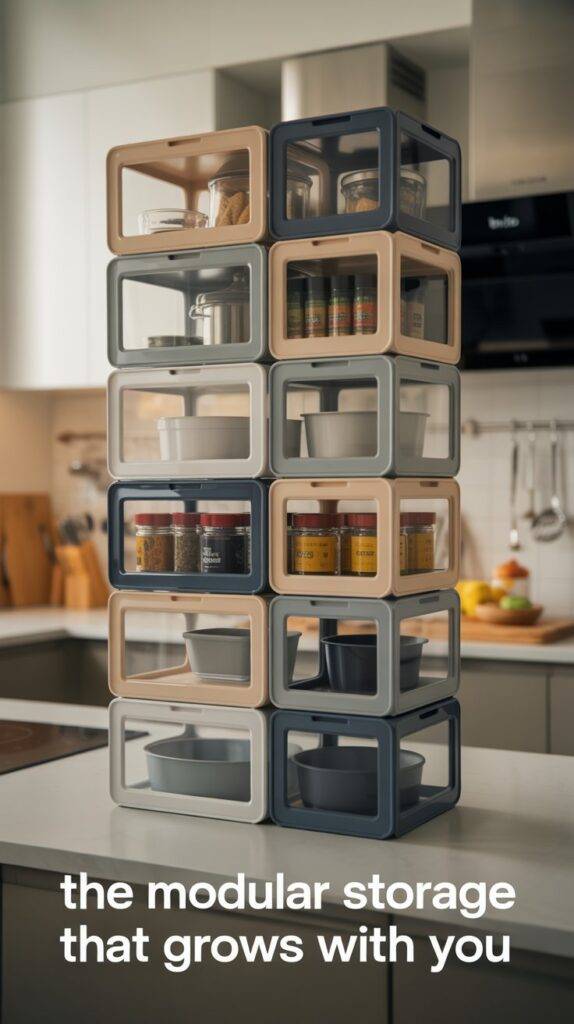
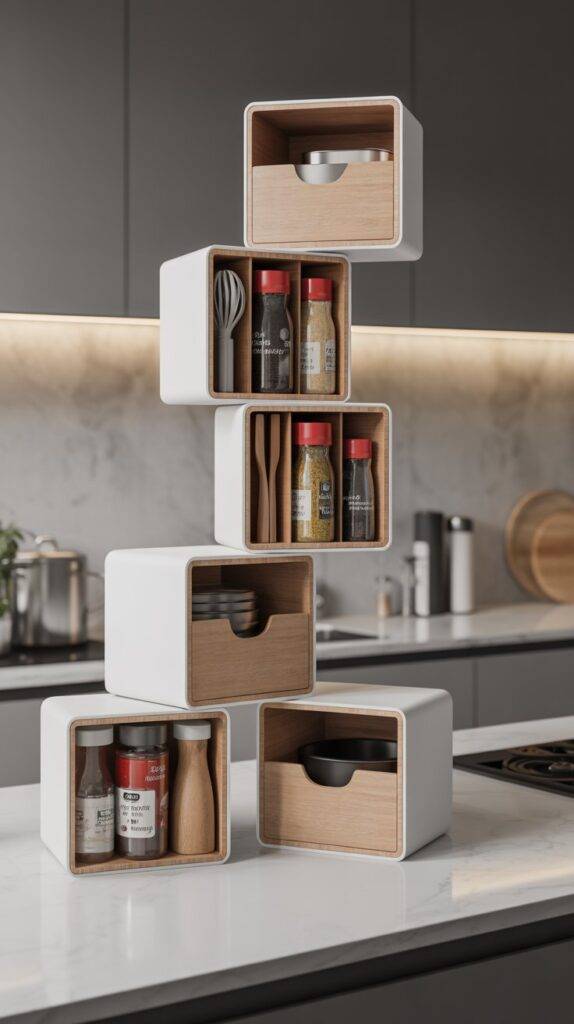
Storage is a challenge in any small kitchen. The Brio Kitchen Box is a unique, patent-pending system of stackable boxes that lock together. One box can hold your spices and utensils, another your pots and pans.
They are designed to be mixed and matched like LEGO bricks, creating a custom storage tower that fits your exact space. When you need more room, just add another box. When you’re done, it all packs down into a portable unit. This product can help you stay organized and keep your outdoor countertops completely clear.
Brio Kitchen Box: Stackable, Modular Storage for Your Outdoor Gear
Check Price on Amazon.com
Helpful Tips for Your Small Outdoor Kitchen
- Measure twice before buying anything. Map out your space with a tape measure and sketch your layout. A few inches can make or break a small kitchen.
- Use weatherproof materials from day one. Marine-grade stainless steel, powder-coated aluminum, and sealed stone resist rust and staining better than untreated metals or softwoods.
- Start simple and expand later. A grill, a small prep surface, and basic storage are enough to start. You can always add a sink, fridge, or pizza oven in phase two.
- Keep clearances practical. Aim for about 36 inches of walkway space and at least 24 inches of prep depth. It’s comfortable and safe.
Mistakes to Avoid
- Skipping the sink. Running back inside to wash your hands or rinse a cutting board gets old fast. Even a small sink makes a huge difference.
- Forgetting about weather protection. Metal rusts, plastic warps, and wood swells if they aren’t made for outdoor use. Don’t use indoor cabinets outside and expect them to last.
- Not enough counter space. Cooking in a cramped area is frustrating. You need room to set down a hot tray, chop vegetables, and plate food without shuffling things around.
- Choosing style over function. That massive stone island might look great online, but if it doesn’t fit your workflow or your yard, you won’t use it.
FAQs
Q: What’s the smallest functional outdoor kitchen size?
Most functional mini-kitchens work well in a 6-to-8-foot linear run or a 6×6-foot corner for a compact L-shape. That’s enough for a grill, small sink, and storage if planned tightly.
Q: Do I need permits to build an outdoor kitchen?
Often yes if you change gas lines, plumbing, or electrical systems. Rules vary by location, so check with your local building department before you start.
Q: Can I use indoor appliances outside?
No. Indoor appliances aren’t designed to handle temperature swings, moisture, or direct sun. Always use outdoor-rated appliances that are built to withstand the elements.
Q: How do I protect my outdoor kitchen in winter?
Use waterproof covers, disconnect plumbing and drain lines, and store portable units indoors during freezing conditions. If you live in a harsh climate, consider a full cover for the entire kitchen area.
Designs and Styling Ideas
- Modern minimalist. Clean lines, stainless steel counters, neutral tones, and hidden storage. Less clutter makes a small space feel bigger.
- Rustic stone. Natural stone cladding, weathered wood accents, and copper fixtures create a cozy cabin vibe that handles weather beautifully.
- Compact L-shaped. Tuck appliances and counters into a corner to free up open space for dining or lounging. This is one of the most efficient layouts for small yards.
- Portable cart setup. A rolling kitchen on wheels lets you rearrange for parties or tuck everything away when guests leave. Perfect for renters or anyone who likes flexibility.
Conclusion
A small outdoor kitchen isn’t a compromise it’s an opportunity to be smart about how you use your space. Focus on what you’ll actually use, choose materials that can handle the weather, and plan your workflow before you build anything.
Start simple. You can always add more lately. The best outdoor kitchen is the one you actually use, not the one that looks good in photos. Now go fire up that grill.
Related Post: