
Clay crafting has become a legit side hustle, not just a hobby. Materials are cheap, the learning curve is manageable, and people are actively looking for handmade pieces over mass-produced stuff.
You don’t need a kiln or a studio. Air-dry and polymer clay work great on a kitchen table with basic tools. The profit margins are solid too earrings that cost $1.00 in materials sell for $12.00 on average. Even after time and fees, you’re looking at 45-55% net profit.
This list covers 27 clay crafts that are actually selling right now on Etsy, at craft fairs, and in small shops. Some are beginner-friendly, others take more skill. All of them are aesthetic, useful or wearable, and in demand.
Let’s get into it.
Step 1: Clay Jewelry That People Actually Wear
1. Polymer Clay Dangle Earrings
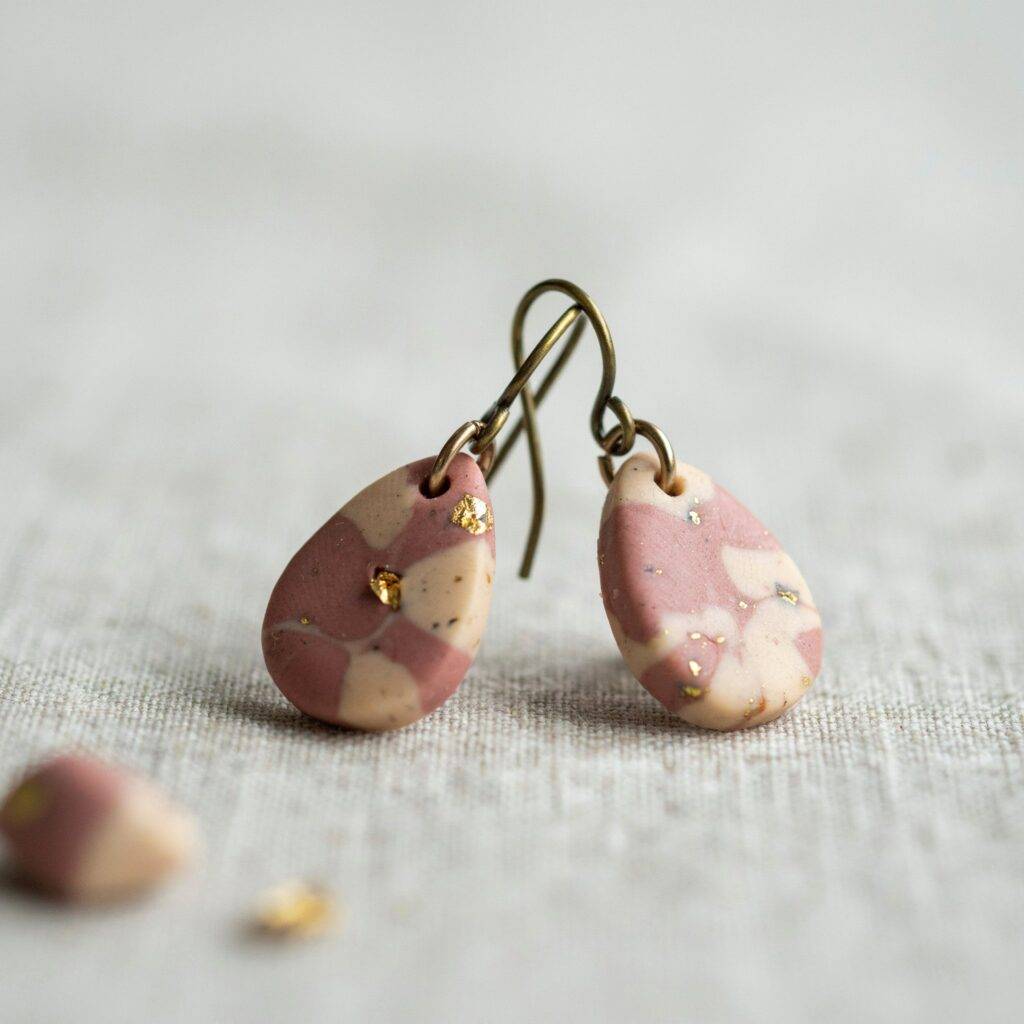
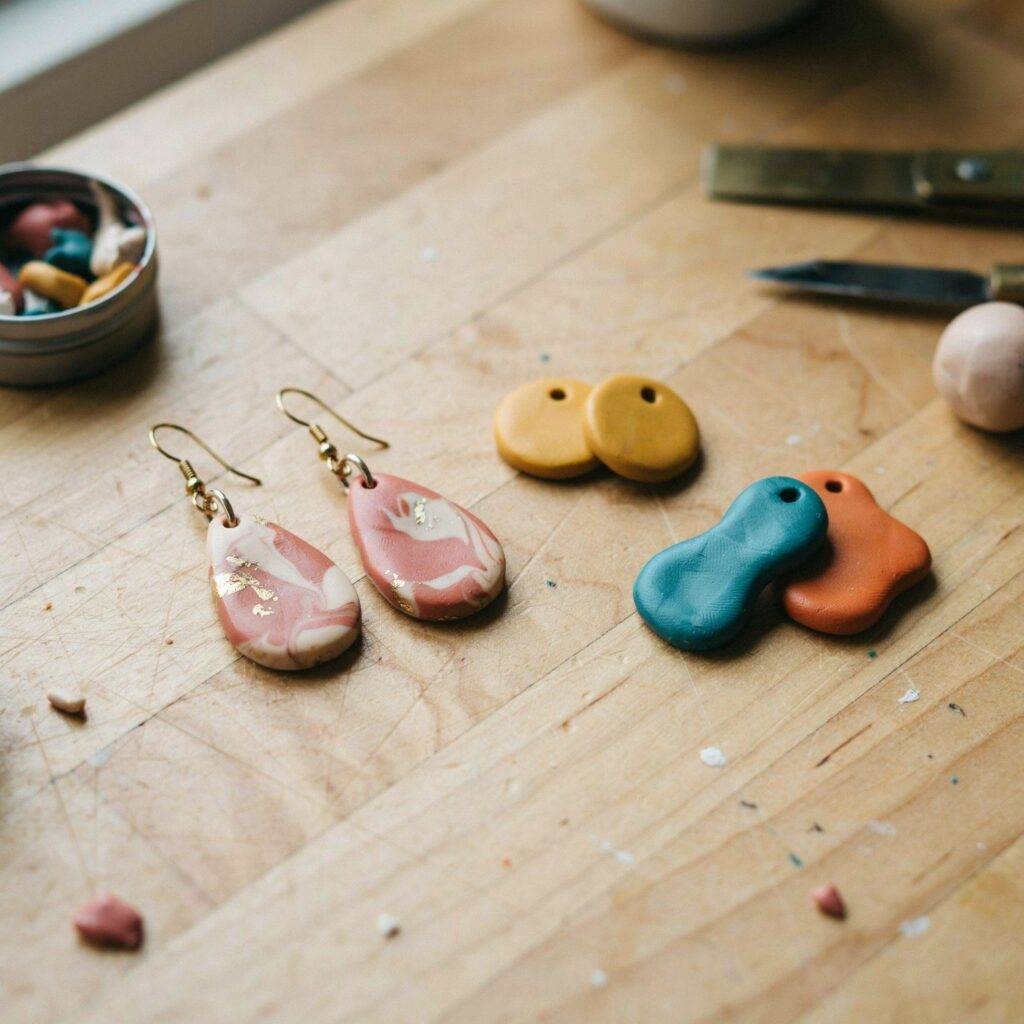
These are the bread and butter of the clay craft world. Take a few colors of polymer clay, condition them, roll them into thin sheets, and cut out shapes circles, triangles, abstract blobs, whatever.
Bake them, add earring hooks, and you’re done. What makes them sell is the color combos and the slight imperfections that make each pair look handmade. People want unique, not cookie-cutter. A pair costs about $1.50 in materials (clay, hooks, jump rings) and sells for $12–$18.
You can make six pairs in an hour once you get the rhythm. The trick is to keep your shapes consistent and your holes straight so the earrings hang evenly. If you want to stand out, try marbling two colors together or adding gold foil before baking.
Check price on Amazon.com – Polymer clay starter kit (search for Sculpey or Fimo).
2. Clay Stud Earrings
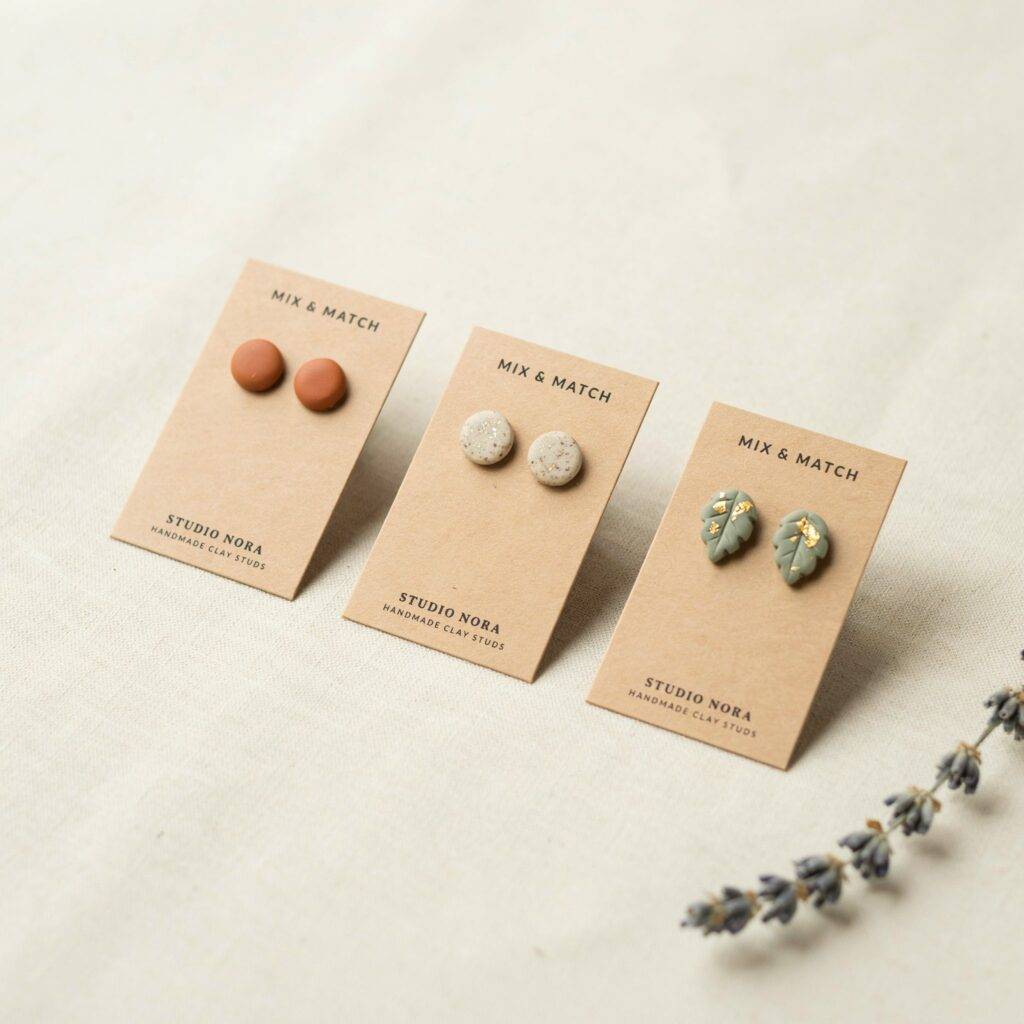
Small and simple, but they move fast. These are just little domes, discs, or tiny shaped charms that sit right on the earlobe. The appeal is minimalism they go with everything.
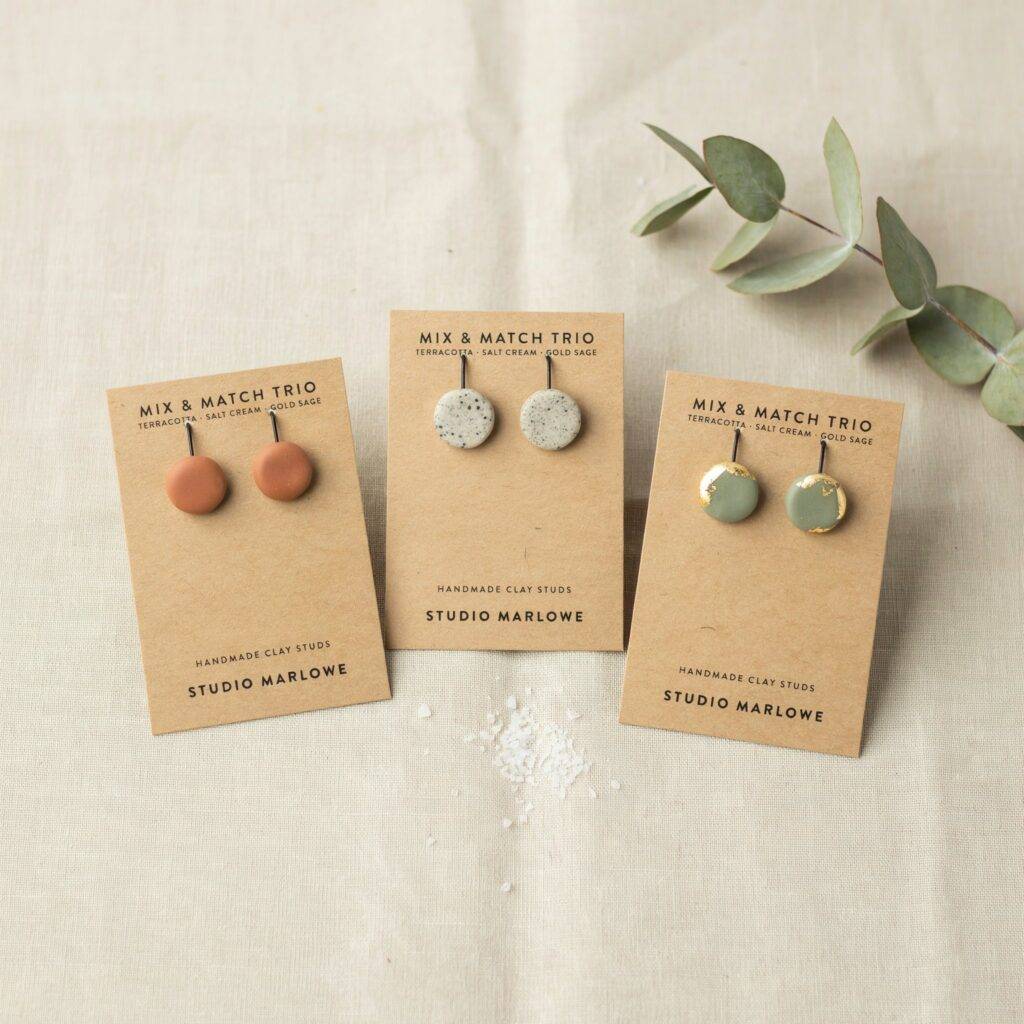
You can make them in solid colors, speckled with salt for texture, or with a thin layer of gold leaf on top. They’re beginner-friendly because there’s no worrying about them being too heavy. Materials cost under $1.00 per pair, and they sell for $8–$14.
The packaging matters here put them on a small branded card and they instantly look more premium. Batch them out in sets of three colors and sell as a “mix and match” trio for a higher price point. Many sellers report these being their best-seller at craft fairs because they’re low-commitment for customers.
Check price on Amazon.com – Earring posts and backs.
3. Clay Beaded Necklaces
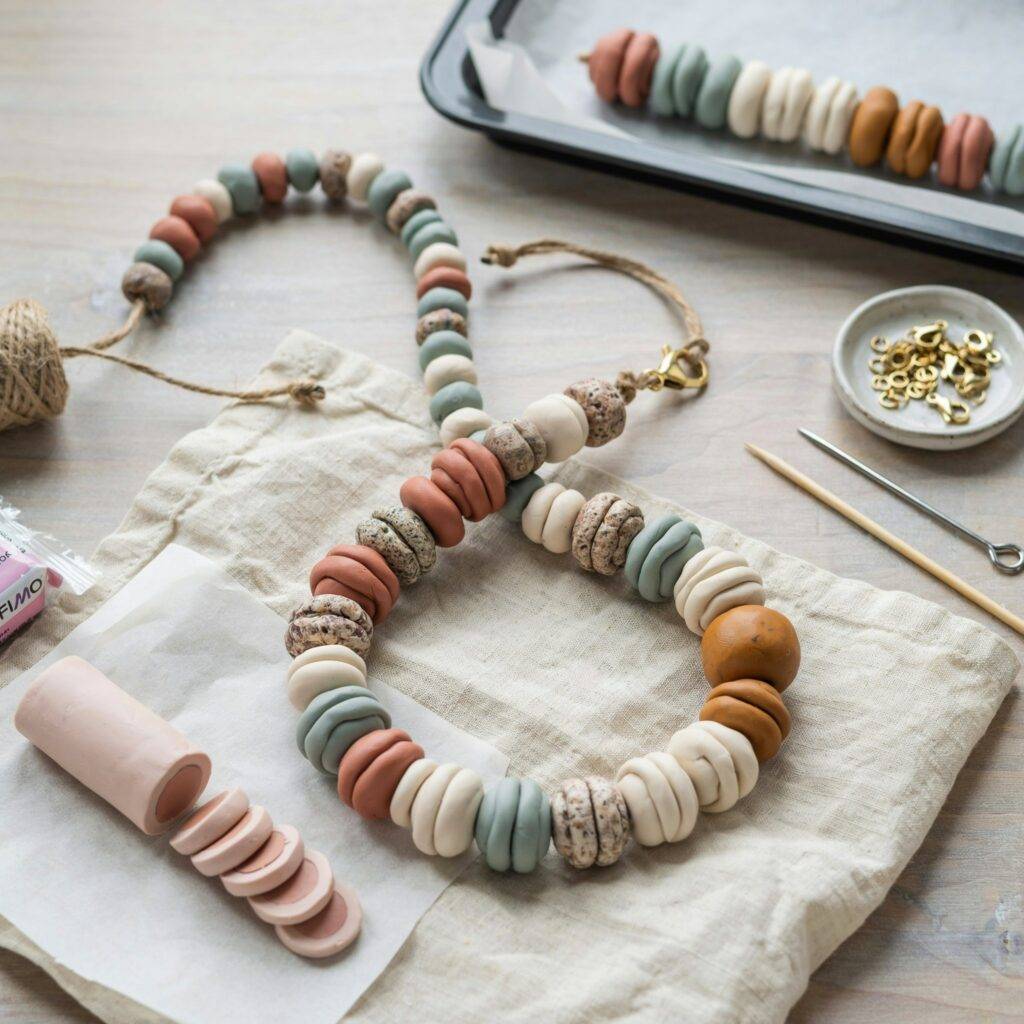
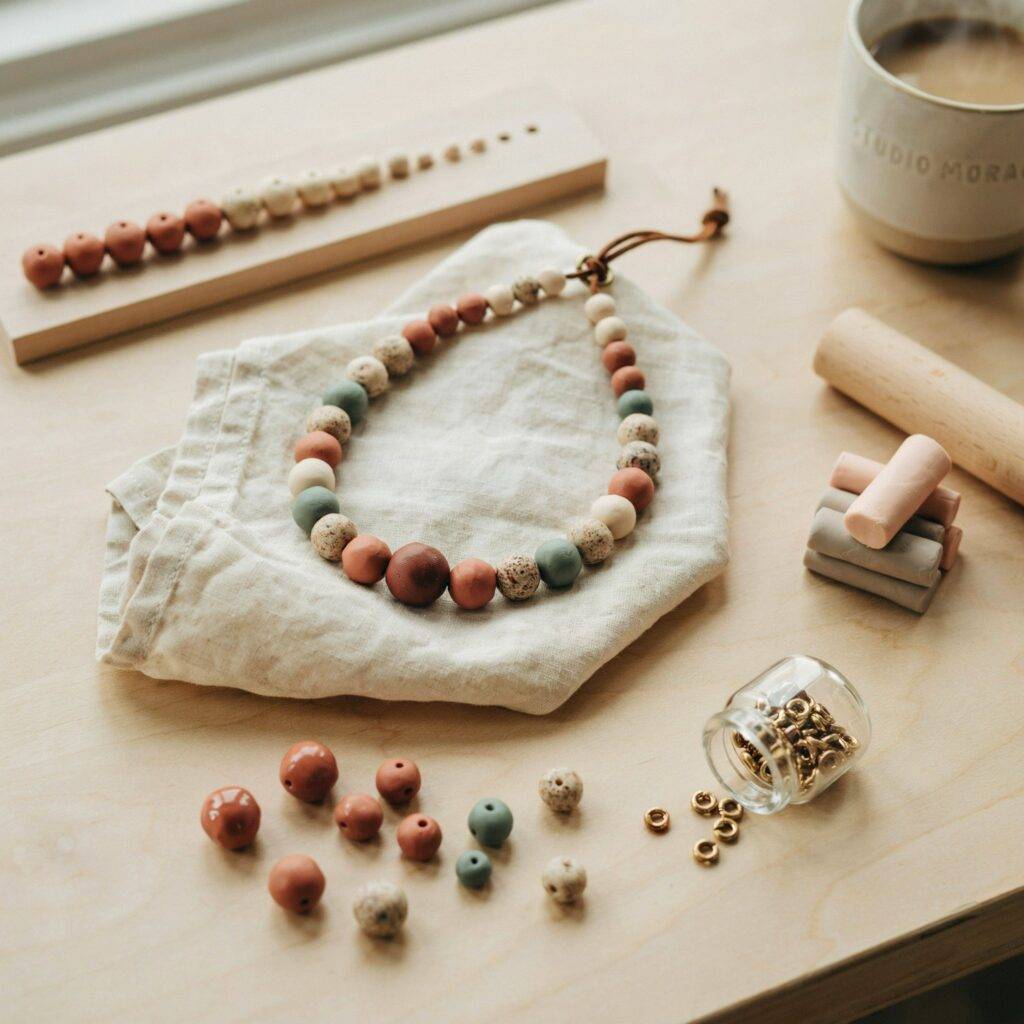
Big, chunky beads are having a moment. Roll polymer clay into logs, slice them into bead-sized pieces, poke a hole through each one, bake, and string them on cord or chain.
The aesthetic is playful but not childish think muted earth tones, pastels, or speckled neutrals. These necklaces work because they’re bold without being loud. Materials run about $3.00 per necklace (clay plus cord and clasp), and they sell for $20–$35.
The time investment is higher because you have to shape and hole each bead, but you can make multiple necklaces at once by baking a whole tray of beads. To keep costs down, buy bulk jump rings and clasps. Some makers add a single larger focal bead in a contrasting color to make the design pop.
Check price on Amazon.com – Bead reamer tool.
4. Clay Ring Dishes
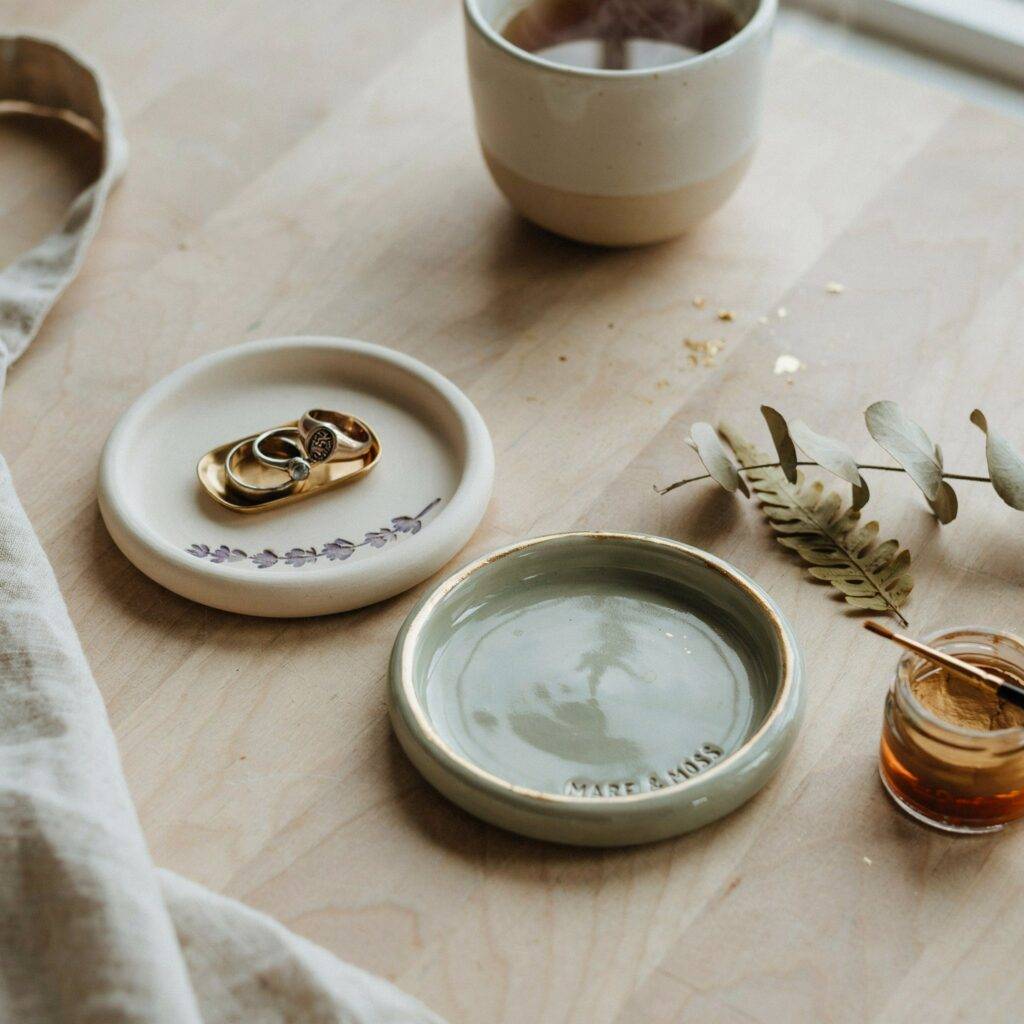
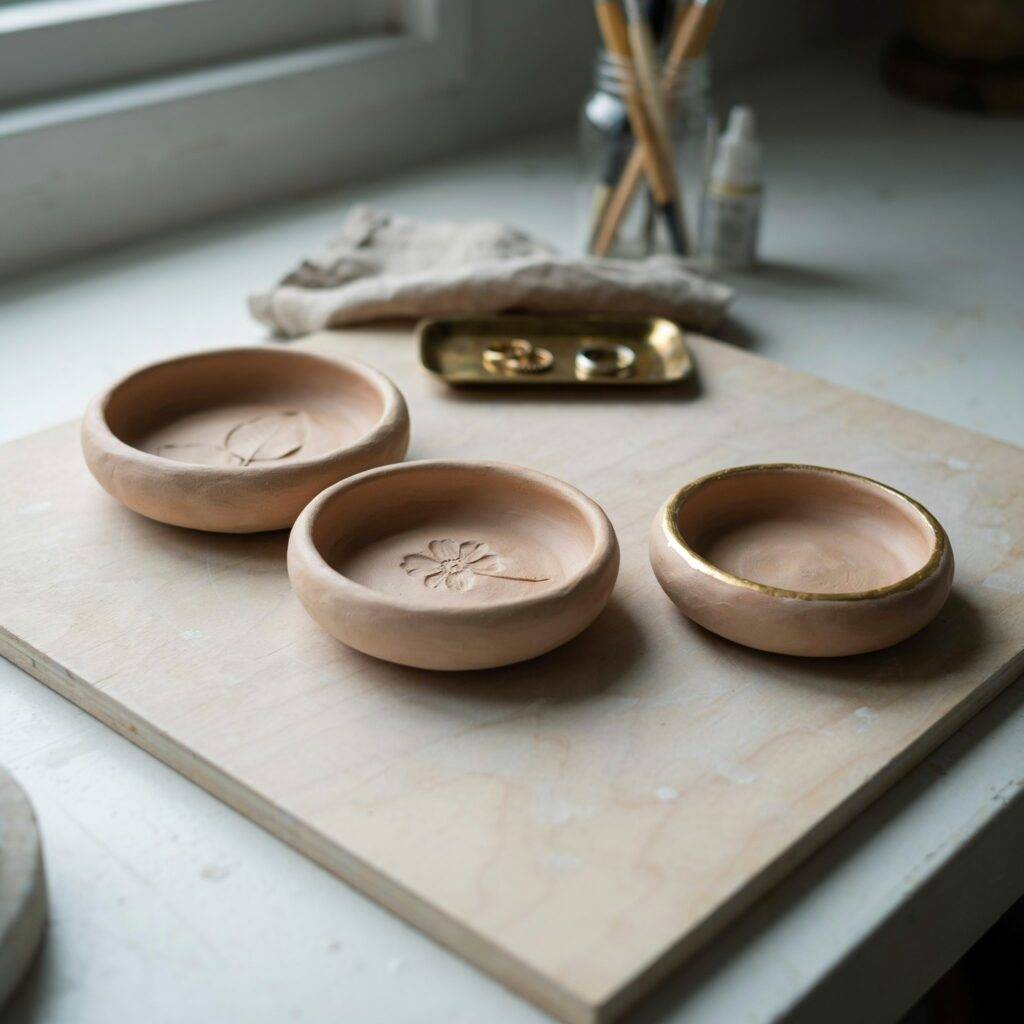
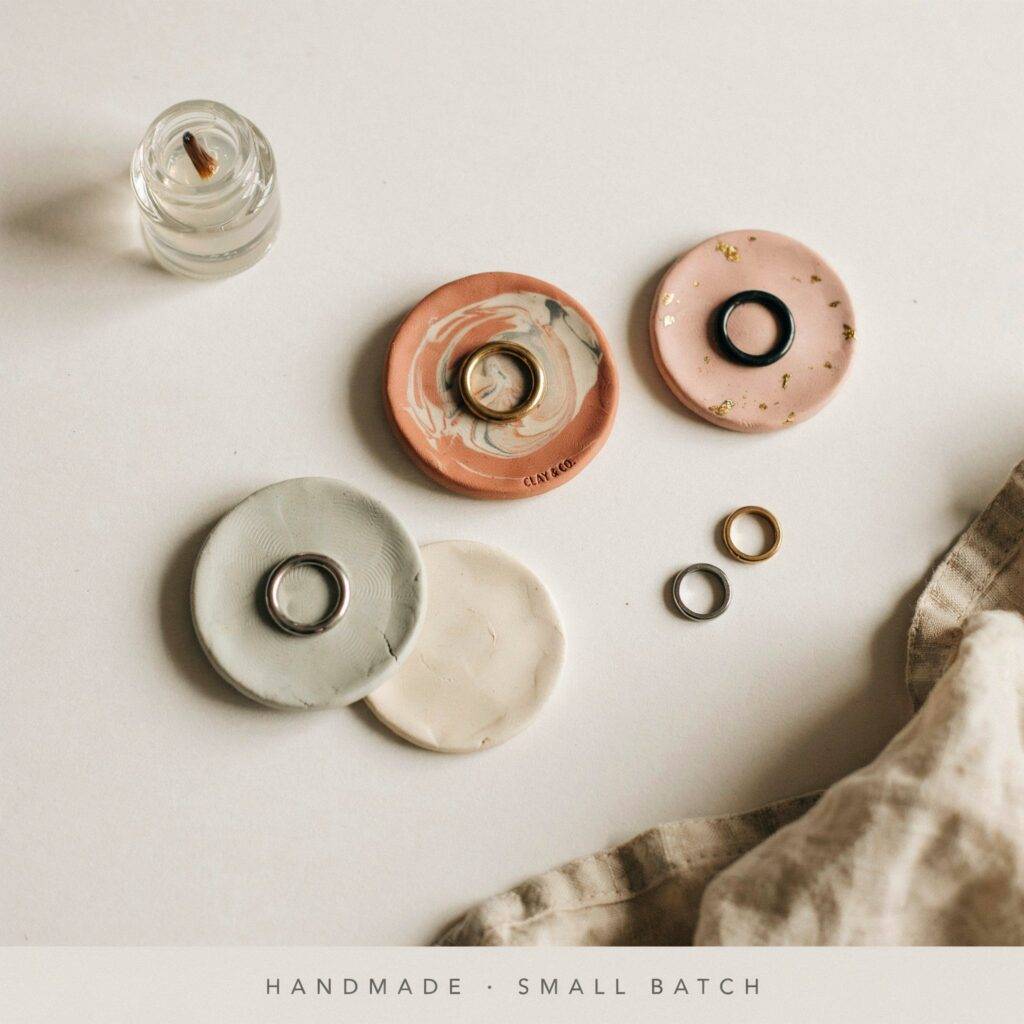
Everyone needs a spot to stash their rings by the sink or on their nightstand. These are just small dishes think palm-sized with a slight lip. You can press a dried flower or leaf into the clay before baking to leave an imprint, or paint them after with a glossy sealant.
They’re functional, which makes them easy to sell. People buy them as gifts, too. Material cost is about $1.50 per dish (clay and sealant) and they sell for $10–$18. The key is to make them feel substantial not too thin, and with a nice smooth finish.
You can also add a gold rim with liquid gold leaf to increase perceived value. These are quick to make once you have a mold or a consistent hand-shaping technique.
Check price on Amazon.com – Air-dry clay.
5. Clay Incense Holders
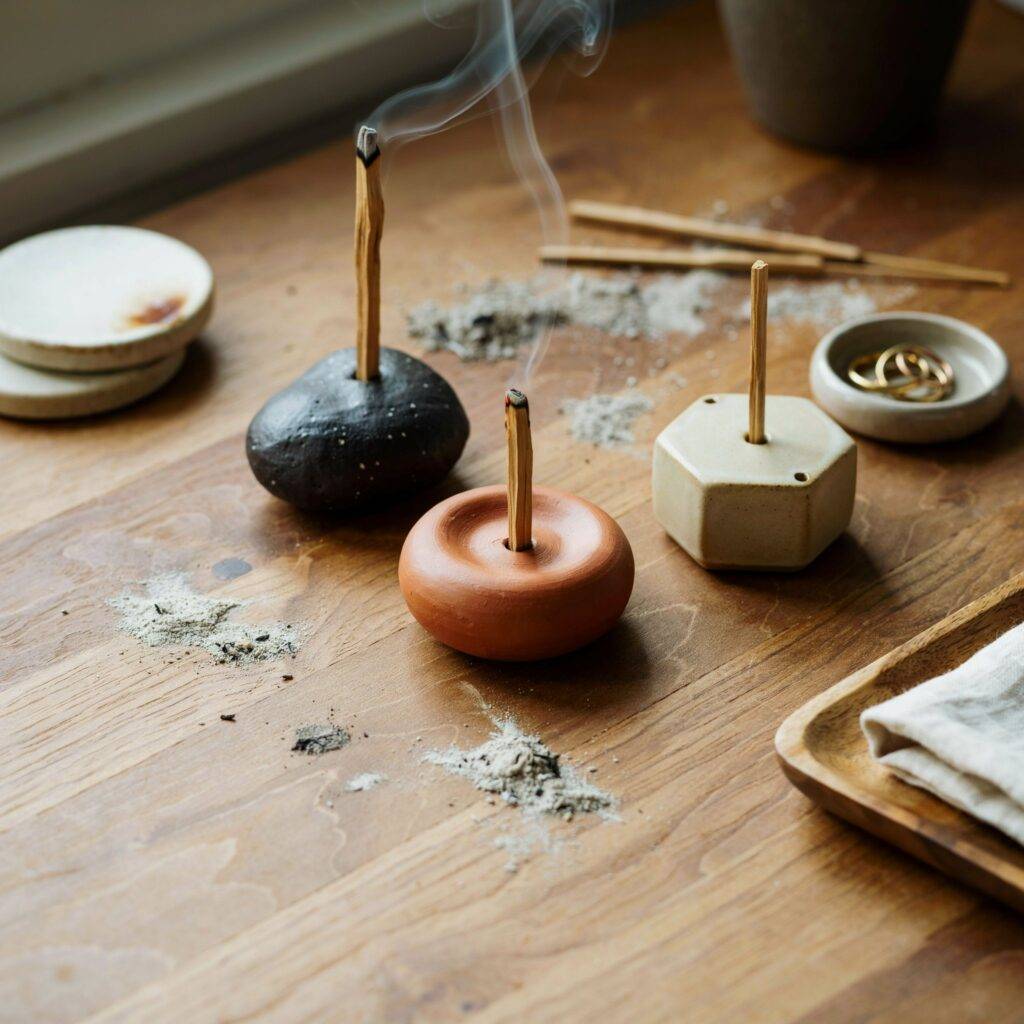
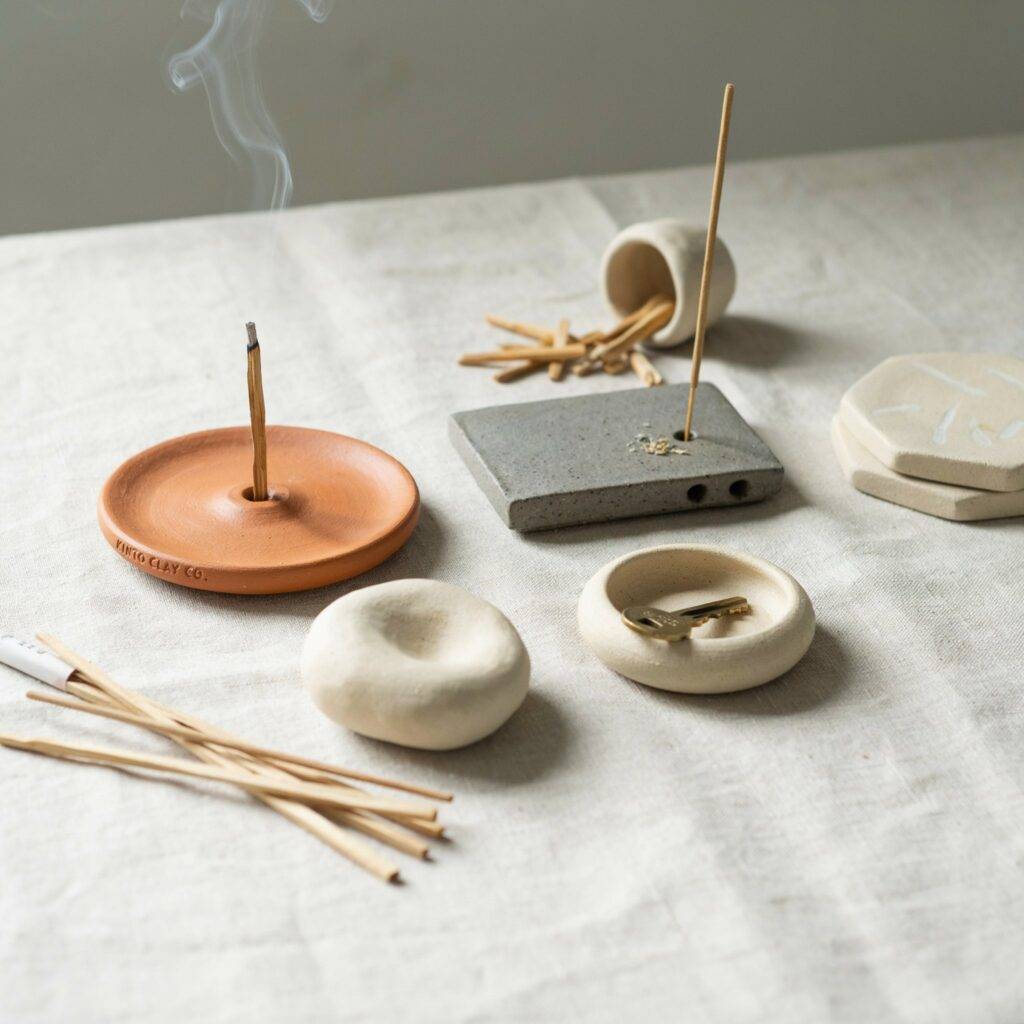
Incense is popular again, and people want a holder that looks good sitting out. Shape a flat base with a small hole or a curved indent to rest the stick. You can do simple geometric shapes or organic, freeform designs.
They sell because they’re both pretty and useful. Cost: about $2.00 in clay, sell for $12–$20. The trick is making sure the hole is the right depth too shallow and the incense falls over, too deep and it doesn’t stand straight.
Test a few before you sell. You can also add drainage holes for ash if you want to get fancy. These are especially popular in sets with matching ring dishes or coasters.
Check price on Amazon.com – Sculpting tools set.
6. Clay Tassel Keychains
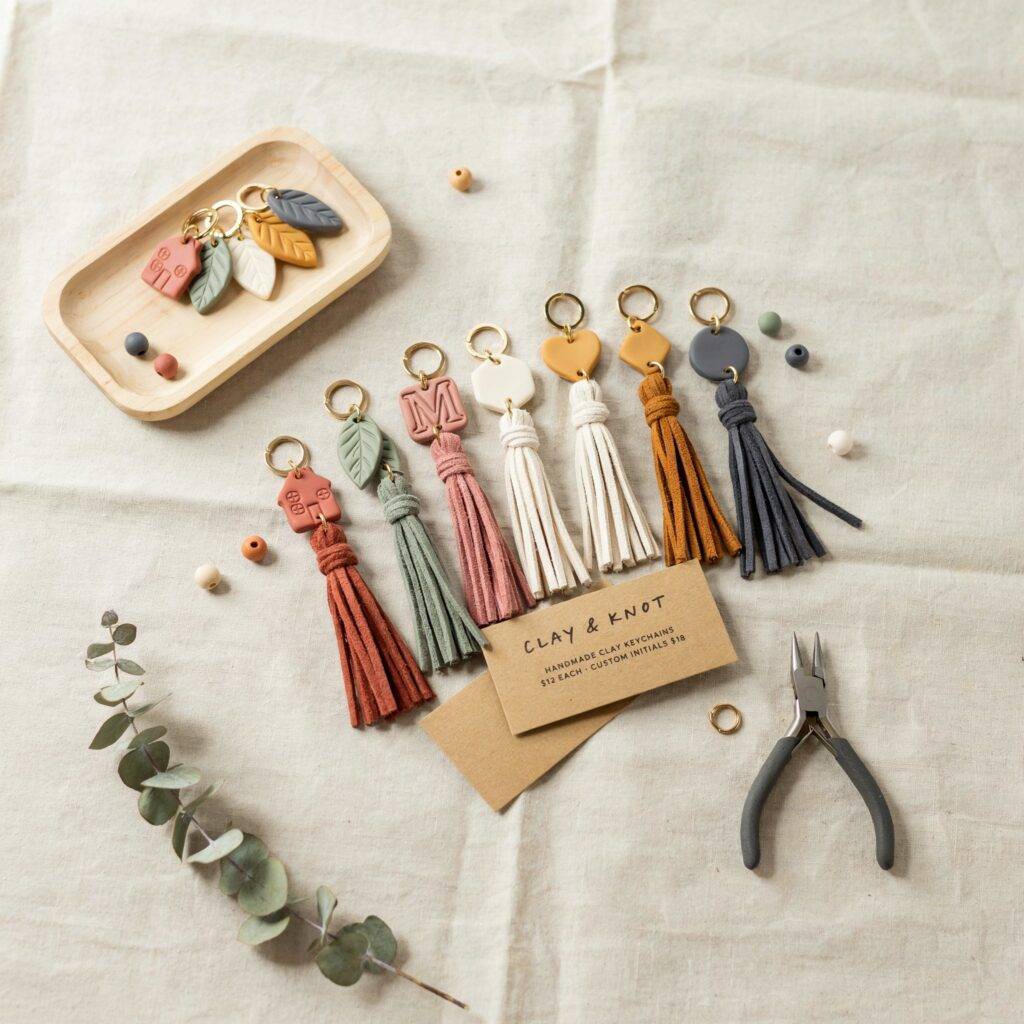
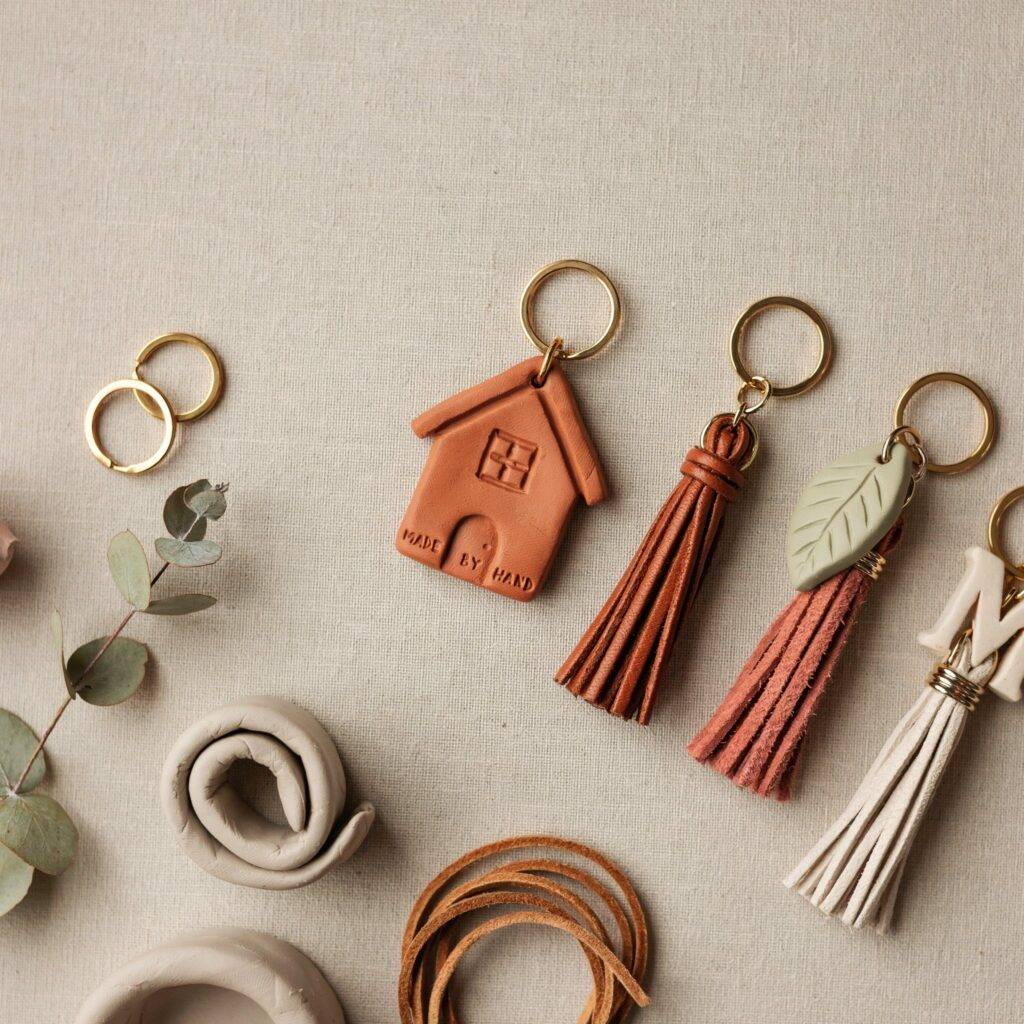
Combine a clay charm with a leather or suede tassel and a keyring. The charm can be a simple geometric shape, a tiny house, a leaf, or a letter. These sell because keychains are a low-cost, low-risk purchase for customers.
They also make great impulse buys at markets. Materials: about $2.50 (clay, tassel, keyring) and they sell for $10–$15. The challenge is making sure the clay charm is thick enough to not snap if dropped, and that the jump ring hole is placed so the charm hangs straight.
Batch production works well make a dozen charms, attach tassels, and assemble in one sitting. Offer custom initials for a higher price.
Check price on Amazon.com – Keychain hardware.
Step 2: Home Decor and Functional Pieces
7. Clay Coasters (Set of 4)
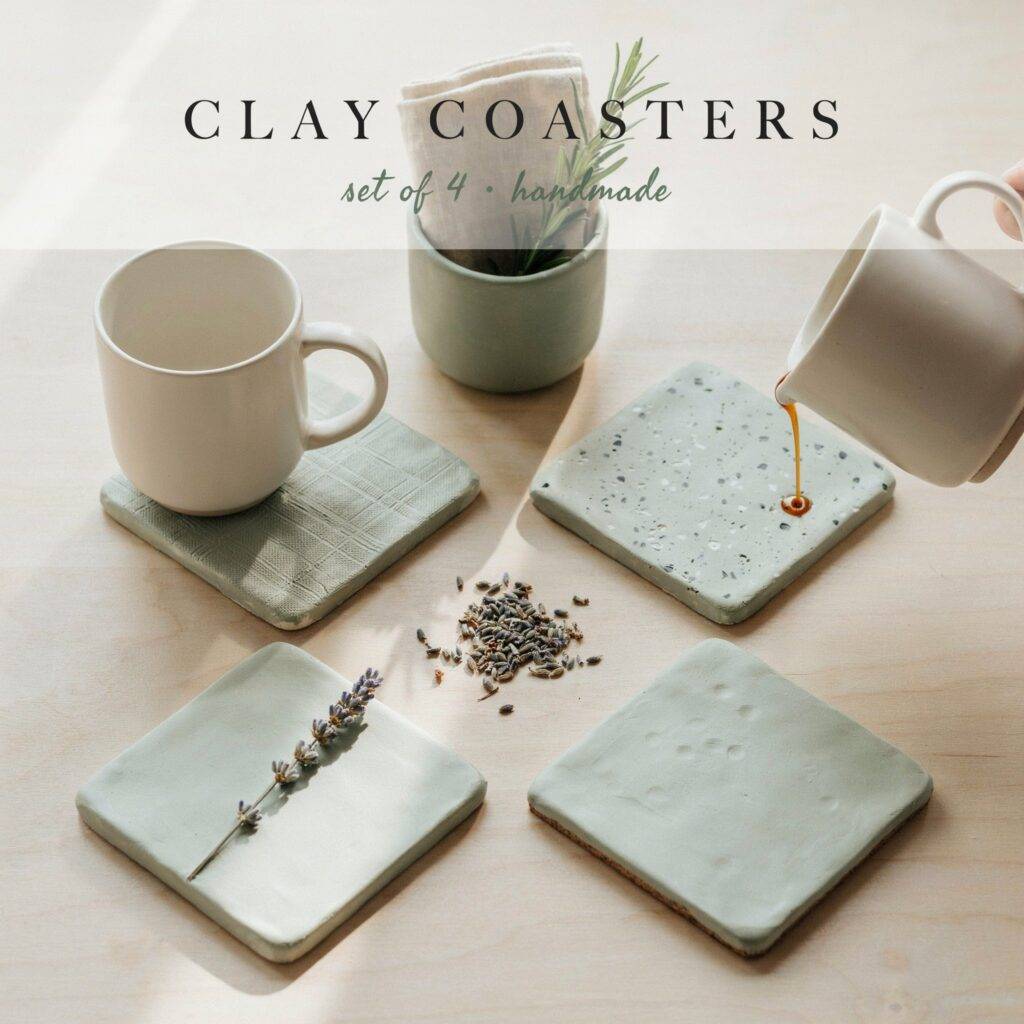
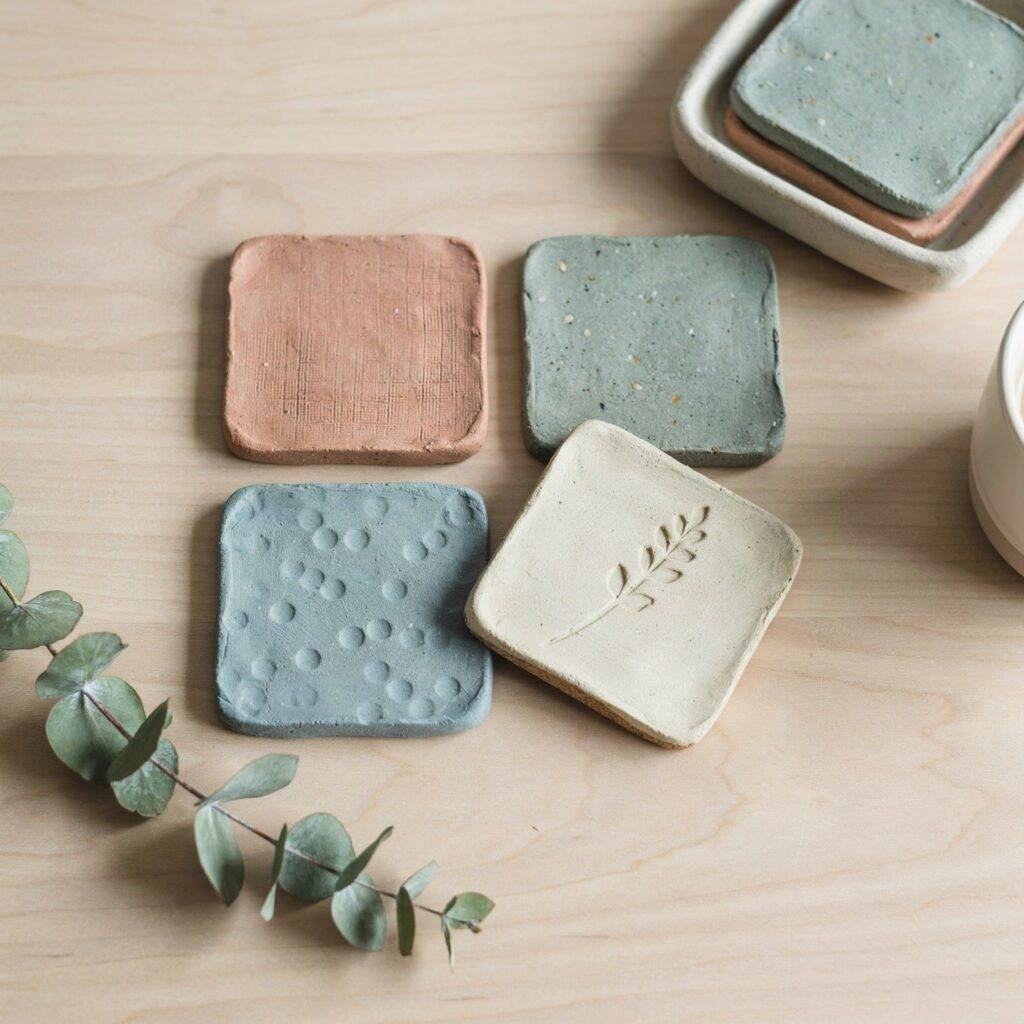
Roll out a slab of air-dry or polymer clay, cut it into four equal squares or circles, and add texture think linen imprints, speckles, or pressed herbs. The magic is in the set.
People buy coasters in groups, so you’re making one sale that feels like four. The sell here is protection for their furniture that doesn’t look ugly. Cost per set is about $3.00 in clay and sealant, and they go for $18–$28. Make sure they’re flat on the bottom so they don’t wobble.
A cork backing adds a nice touch and only costs a few cents. If you sell locally, bundle them with a simple clay holder for a higher ticket item.
Check price on Amazon.com – Air-dry clay roller.
8. Clay Wall Hangings
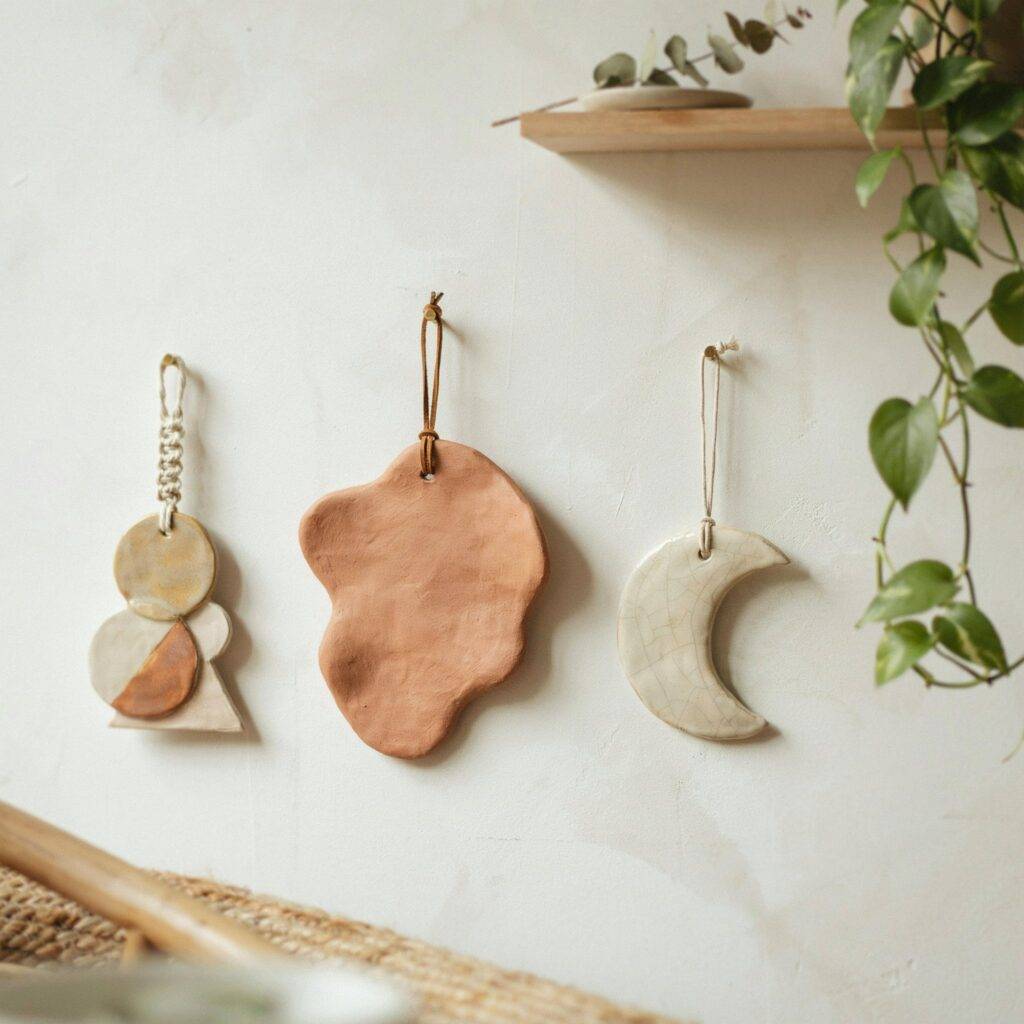
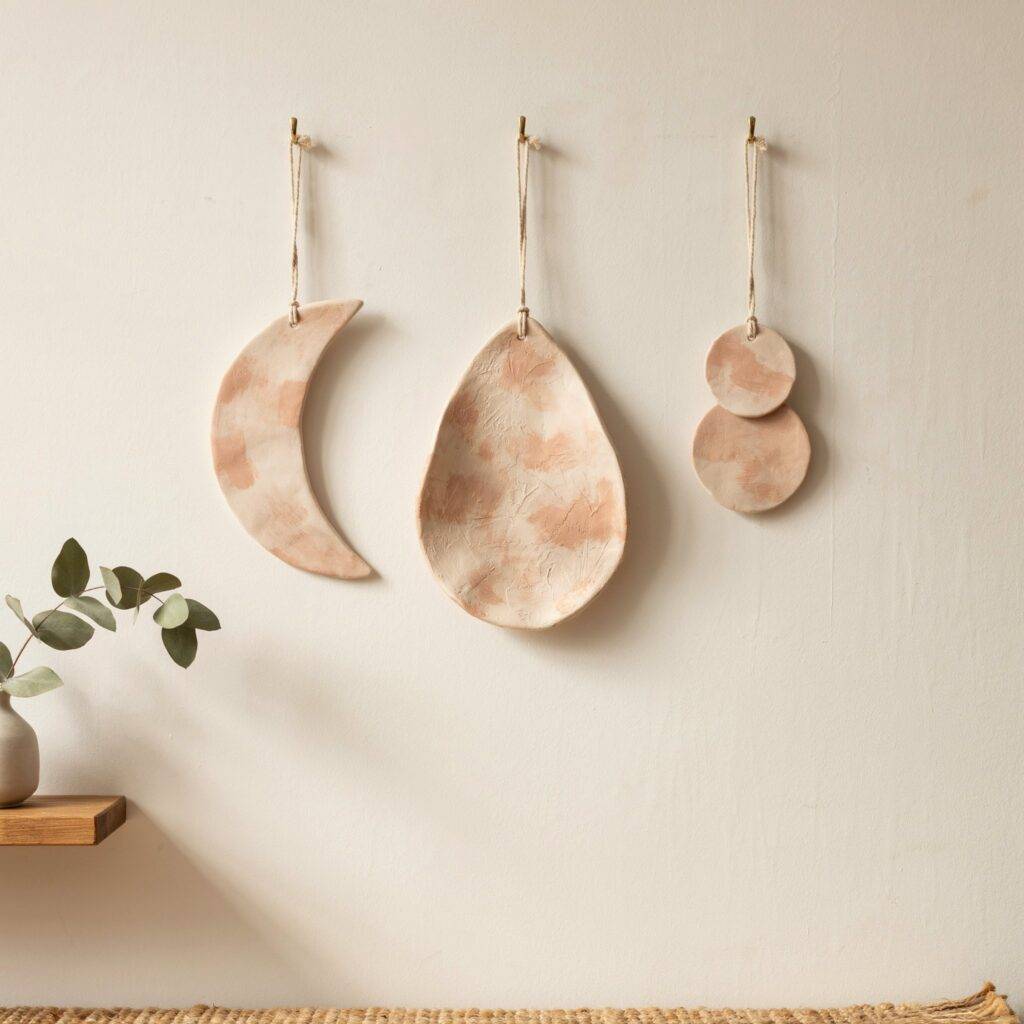
Think of these as modern art that hangs on a blank wall. You can create a series of connected geometric shapes, a single large organic form, or a set of three small pieces that go together.
The aesthetic is bohemian or minimalist, depending on your color choices. What makes them sell is how they instantly fill empty wall space without needing a frame. Materials cost around $4.00–$6.00 depending on size, and they sell for $25–$45.
The challenge is making them light enough to hang securely. Keep your clay thickness under half an inch and add a small hole at the top before baking. Some makers attach leather cord or macrame string to complete the look.
Check price on Amazon.com – Hanging hardware kit.
9. Clay Plant Pots (Small Succulent Size)
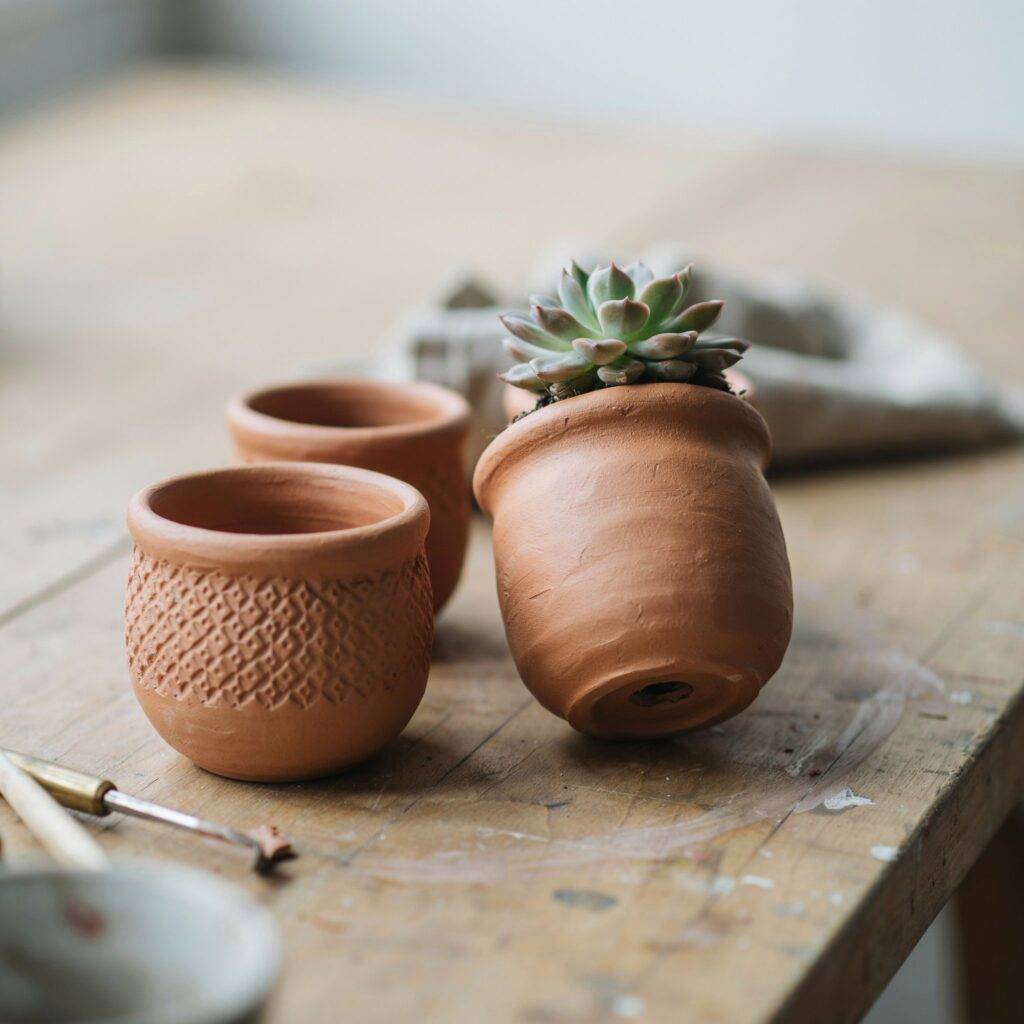
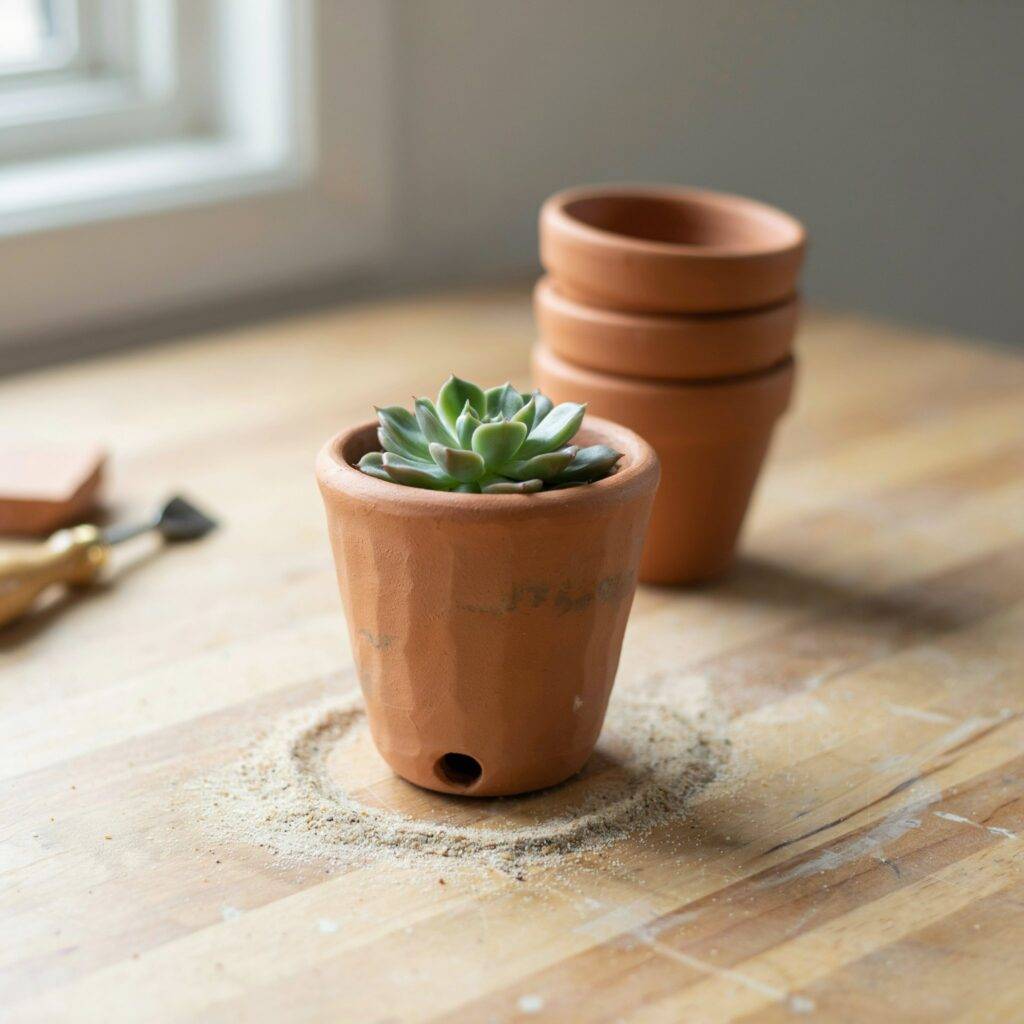
Succulents are everywhere, and people are always looking for cute pots to put them in. Shape a small pot with a drainage hole at the bottom. You can keep it smooth and simple or add texture with stamps and rollers.
These sell because they’re practical and decorative at the same time. A customer picks up a $5 succulent and needs a $12 pot to go with it. Your cost is about $2.50 in clay, and you can sell them for $12–$18. Make sure the walls are thick enough to hold soil without cracking.
These are also great in sets of three different sizes. If you use air-dry clay, seal the inside with a waterproof sealant so moisture doesn’t break it down over time.
Check price on Amazon.com – Sculpting rib tools.
10. Clay Trinket Trays
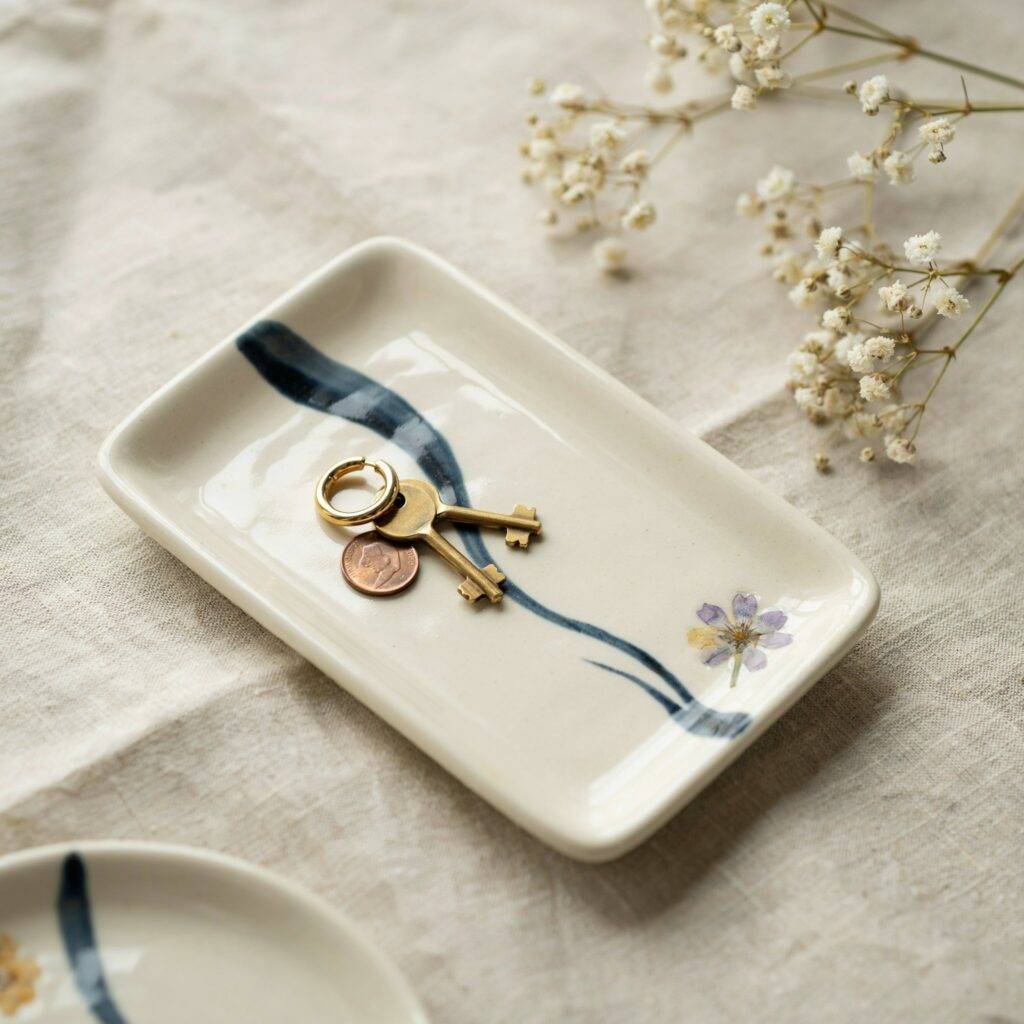
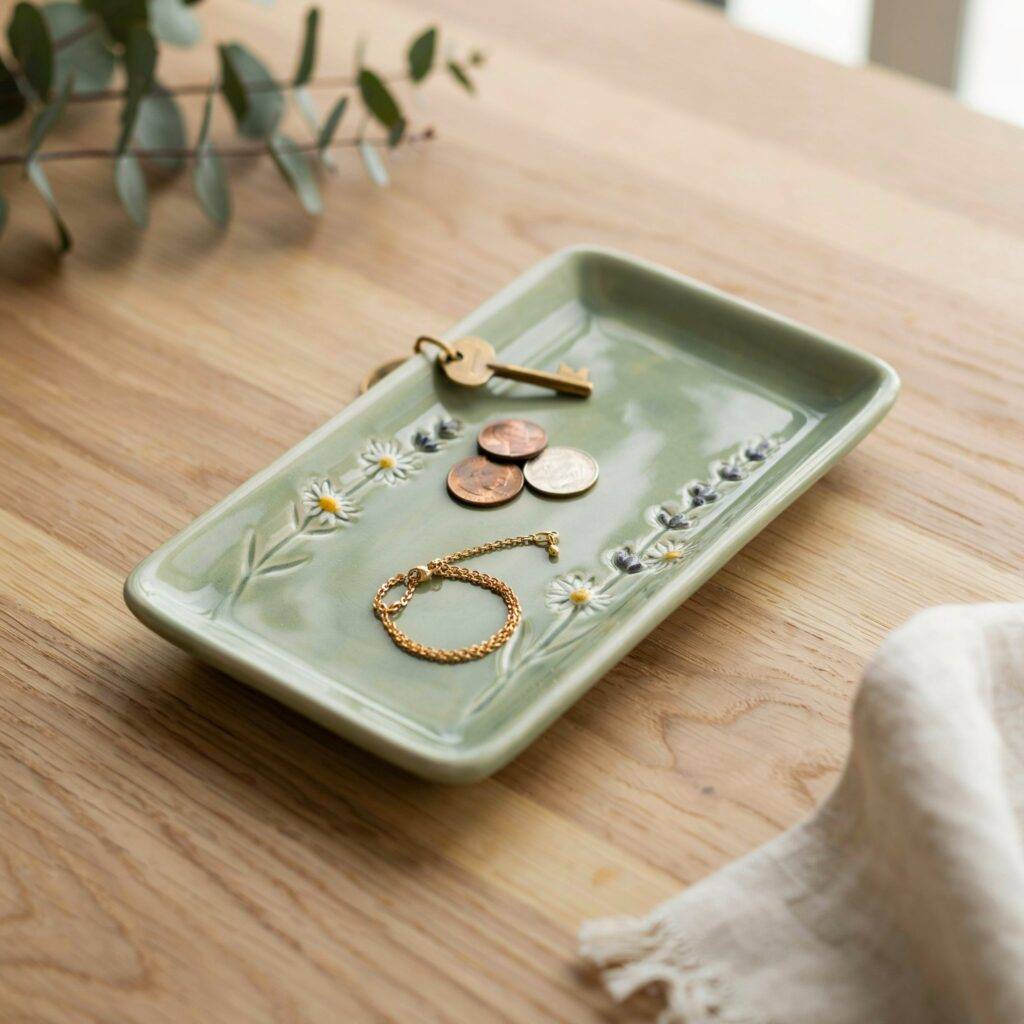
Larger than ring dishes, these are meant to hold keys, loose change, or a few pieces of jewelry on a dresser. They’re basically a shallow bowl or a rectangular platter with raised edges.
The size gives you room to play with patterns swirls, color blocking, or pressed flowers. They sell well as gifts because they feel useful and personal. Materials cost about $2.00 and they sell for $14–$22. The trick is getting the edges even and not too thick.
If the tray warps while drying, flip it over and press it flat on a smooth surface before it hardens completely. A glossy glaze makes them look much more expensive.
Check price on Amazon.com – Clay glaze sealant.
11. Clay Fridge Magnets
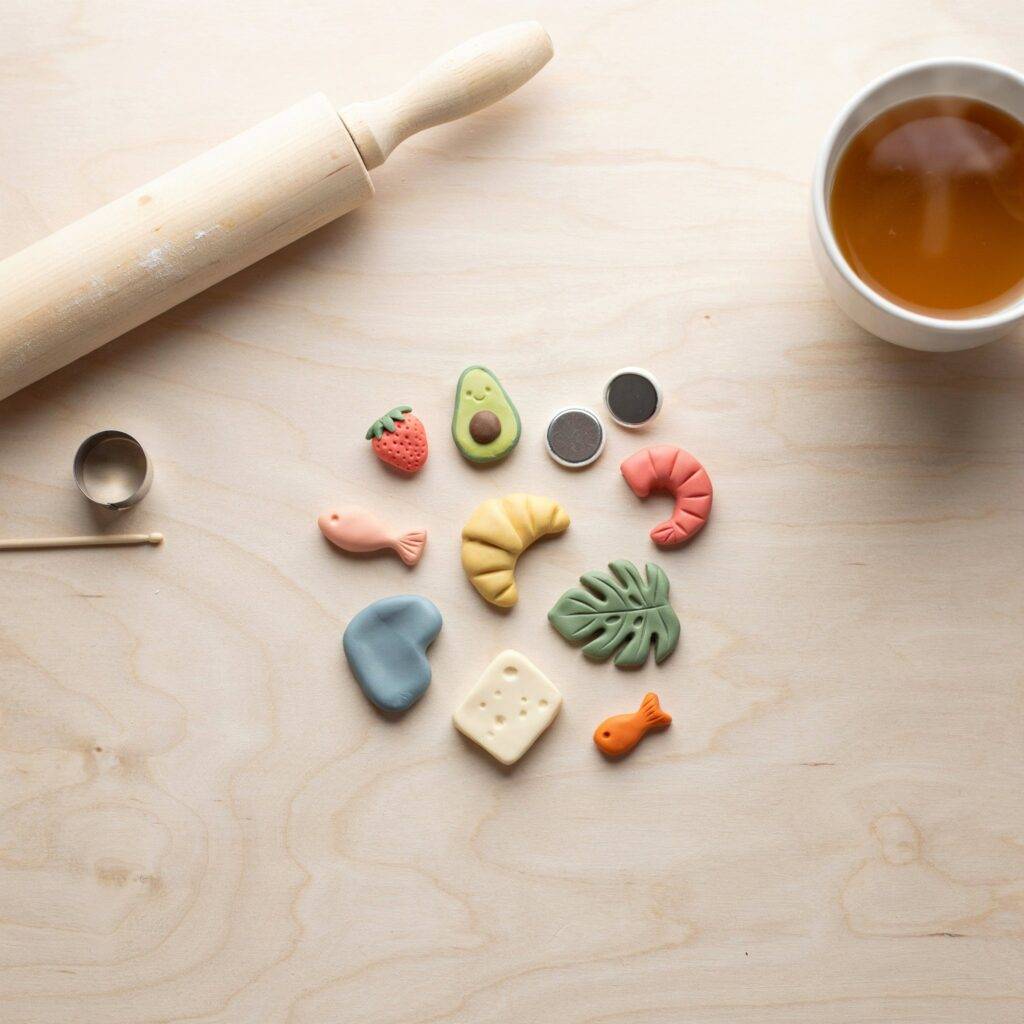
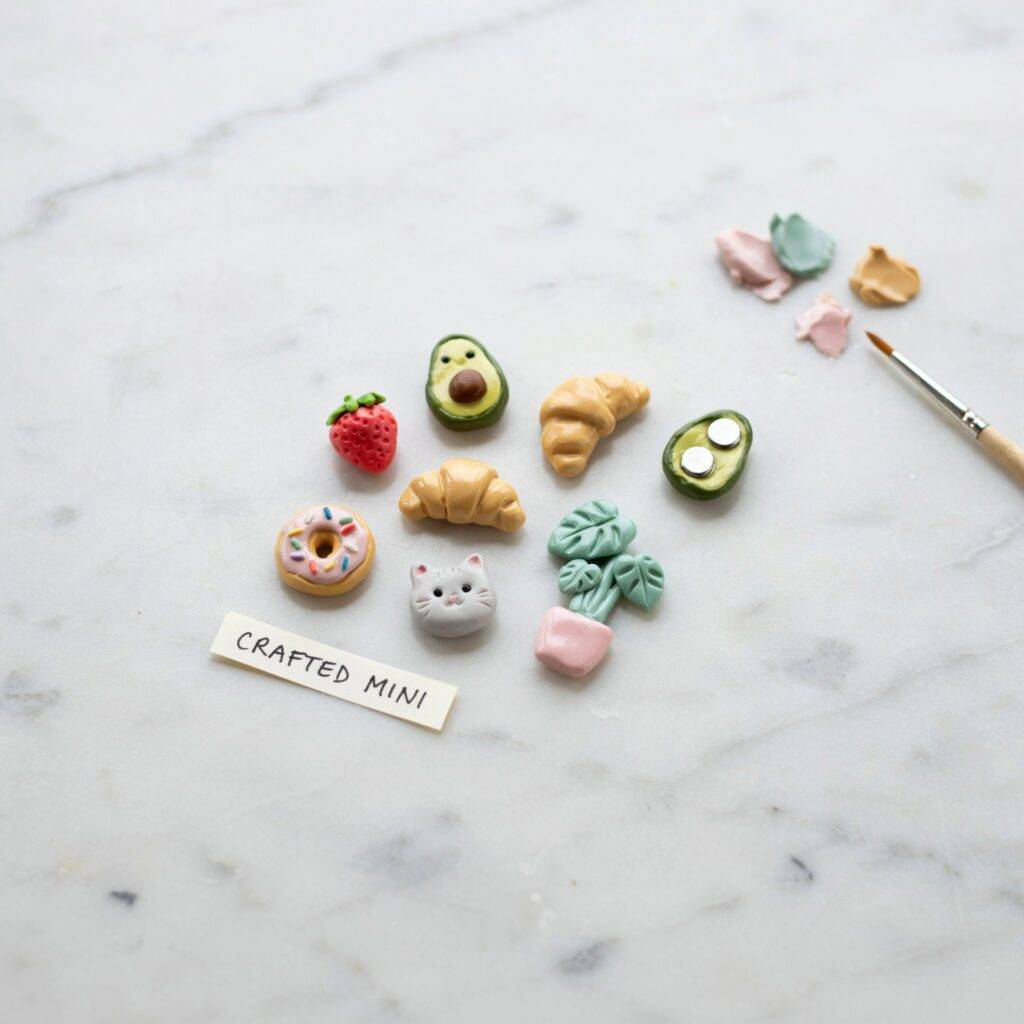
These are small, quick, and addictive to make. Roll out thin slabs, cut tiny shapes fruits, animals, abstract blobs, or even mini versions of popular foods. Glue a small magnet on the back and you’re done. What makes them sell is the low price point.
Customers will grab a few as impulse buys or gifts for coworkers. Cost is under $0.50 each, and they sell for $4–$8. The key is making them detailed enough to be cute but simple enough to produce in batches.
You can create themed sets like breakfast foods, house plants, or ocean animals and sell them as a pack for a better margin.
Check price on Amazon.com – Rare earth magnets.
12. Clay Tea Light Candle Holders
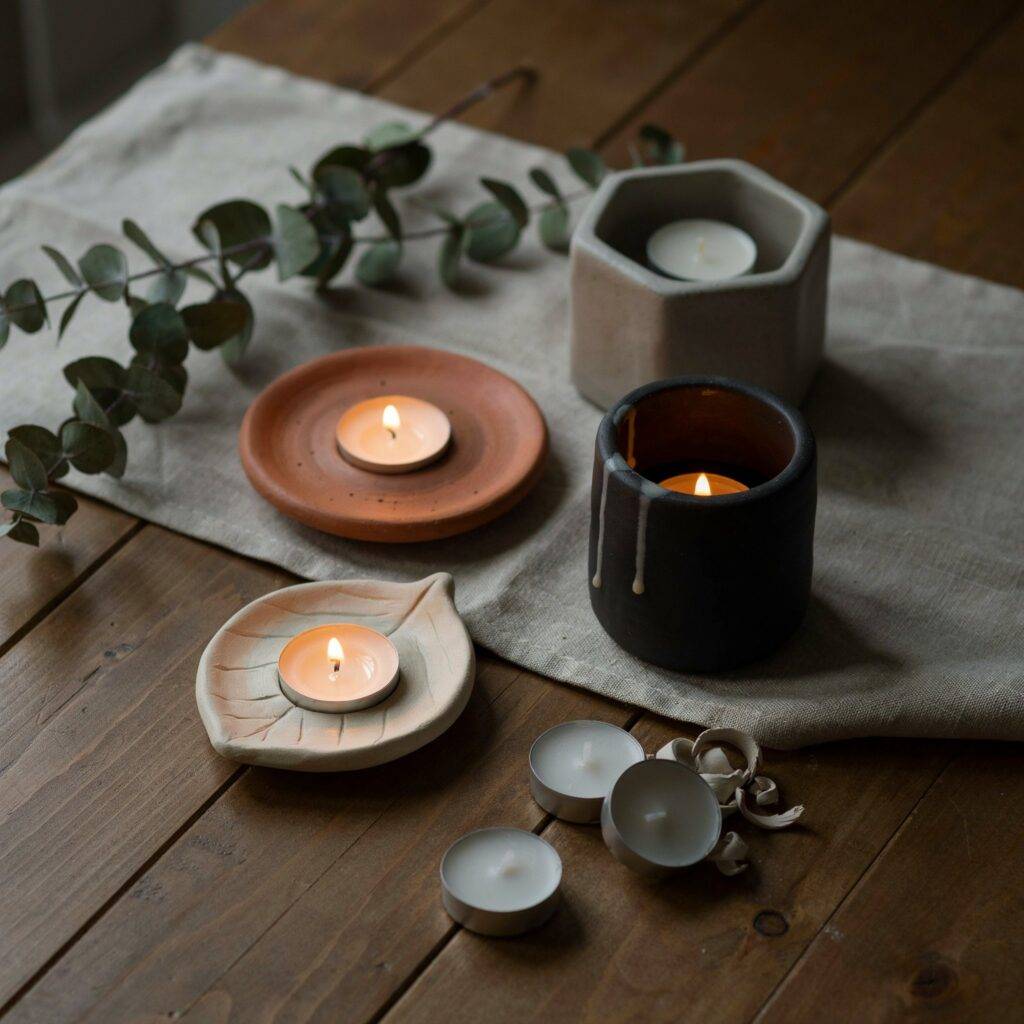
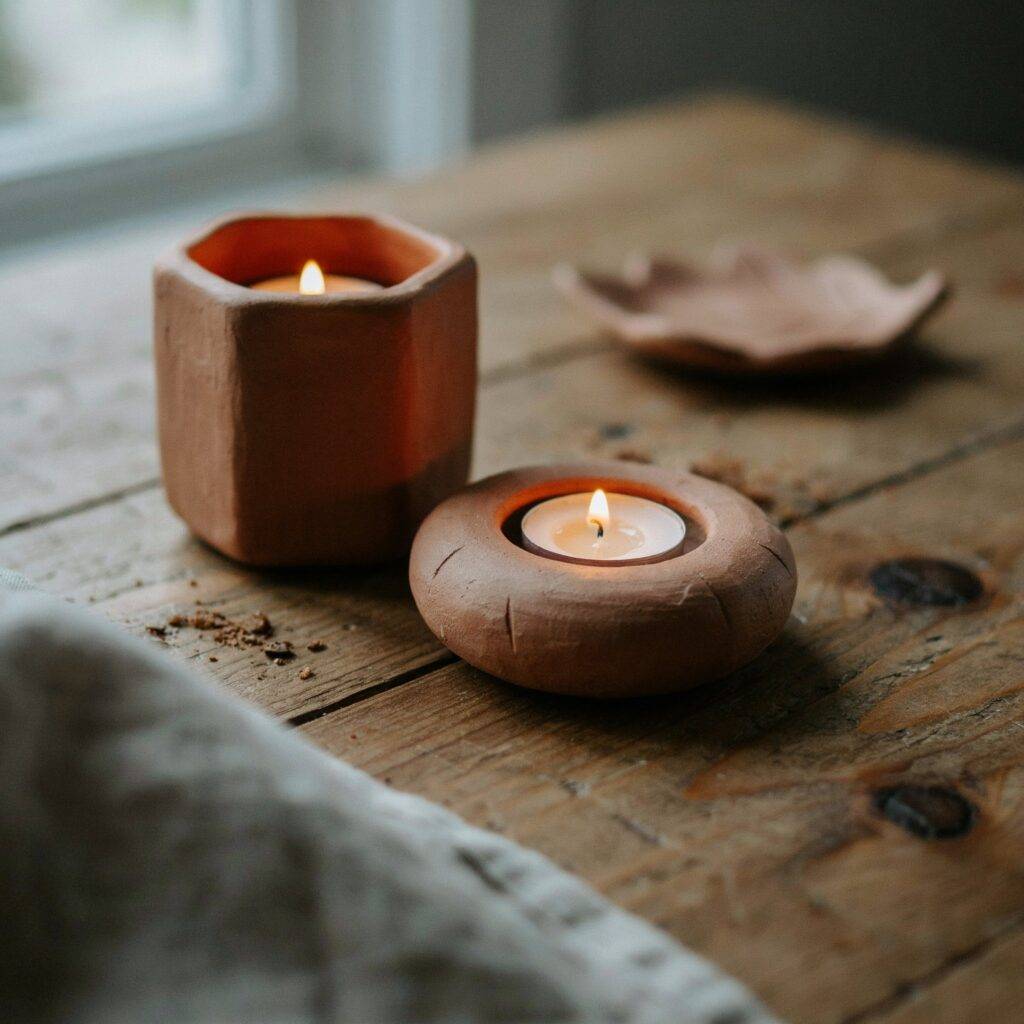
A small flat disc with a slight indent in the middle to hold a tea light candle. The indent keeps the candle from sliding off. You can make them round, hexagonal, or even leaf-shaped.
The appeal is the warm glow that reflects off the clay surface. Materials cost under $2.00, and they sell for $8–$15. The main thing to get right is the depth of the indent too shallow and the candle slips, too deep and it’s hard to remove the spent wax.
You can also make taller holders that encase the candle for a more dramatic look. These are popular for weddings and home staging.
Check price on Amazon.com – Clay cutters set.
Step 3: Sculptural and Decorative Items
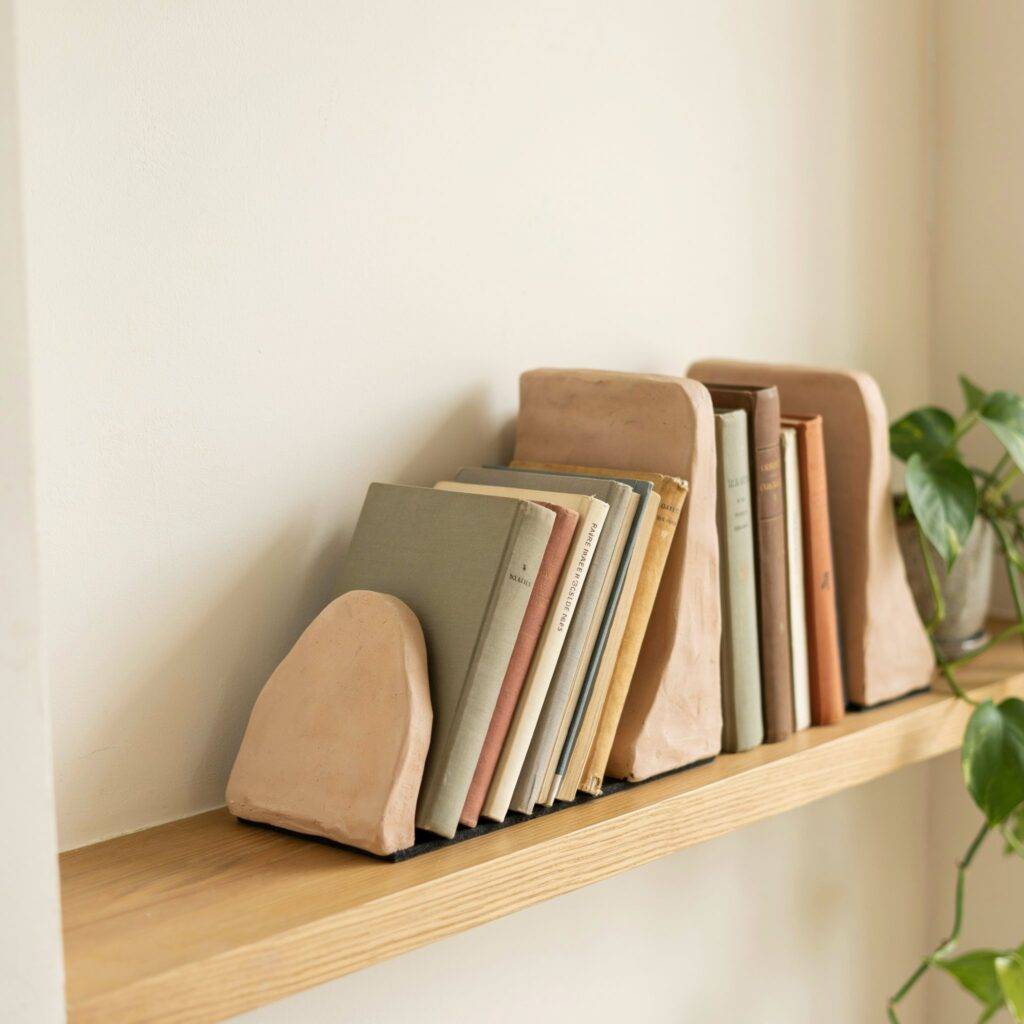
13. Clay Bookends
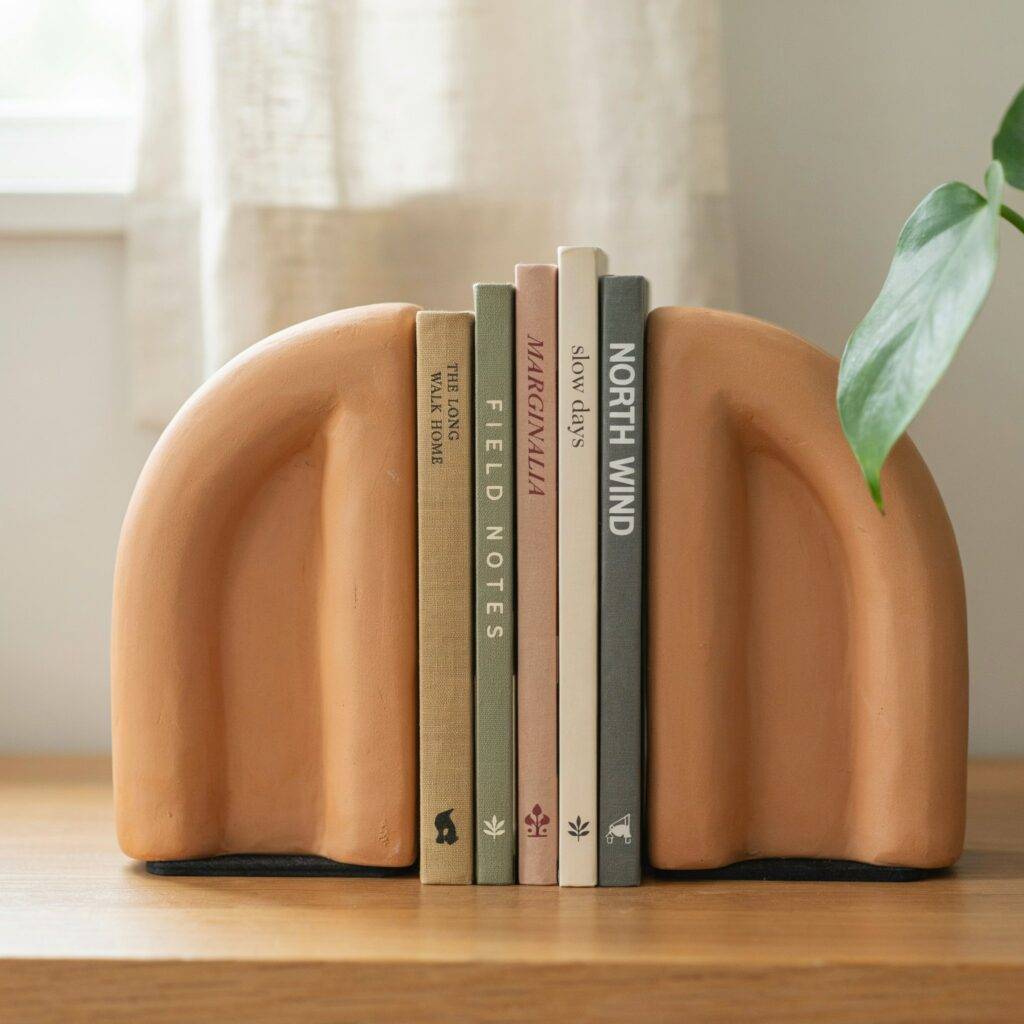
These are basically heavy blocks or shapes that hold books upright. You can make them as simple triangles, or get creative with arched shapes, animal silhouettes, or geometric stacks.
The weight of the clay does the work, so you need to make them thick enough to actually hold books steady. What makes them sell is how they double as decor. Materials run about $5.00–$7.00 per set because of the amount of clay, and they sell for $30–$50.
The trick is making sure both bookends match in weight and shape so they look like a set. You can also add a felt bottom to protect shelf surfaces. These are slower to make but the profit per sale makes up for it.
Check price on Amazon.com – Large clay blocks.
14. Clay Napkin Rings
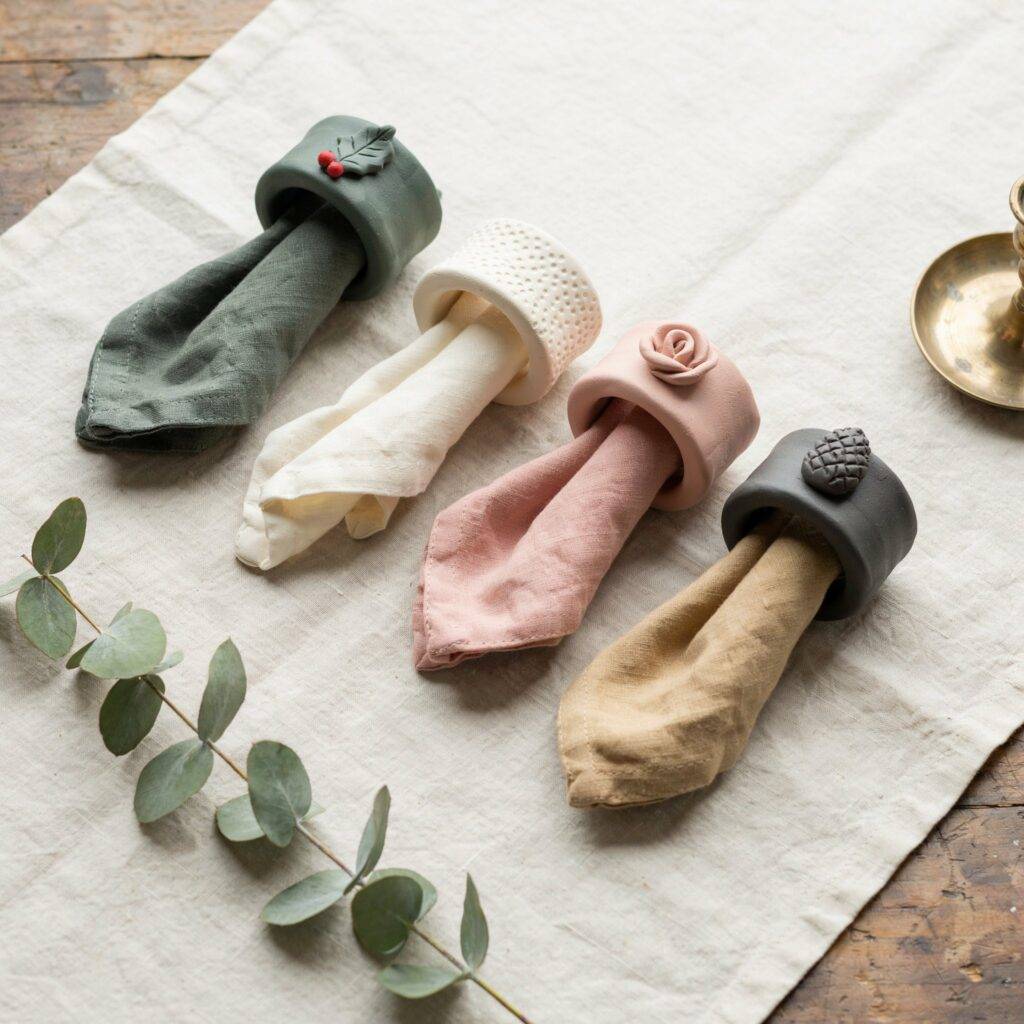
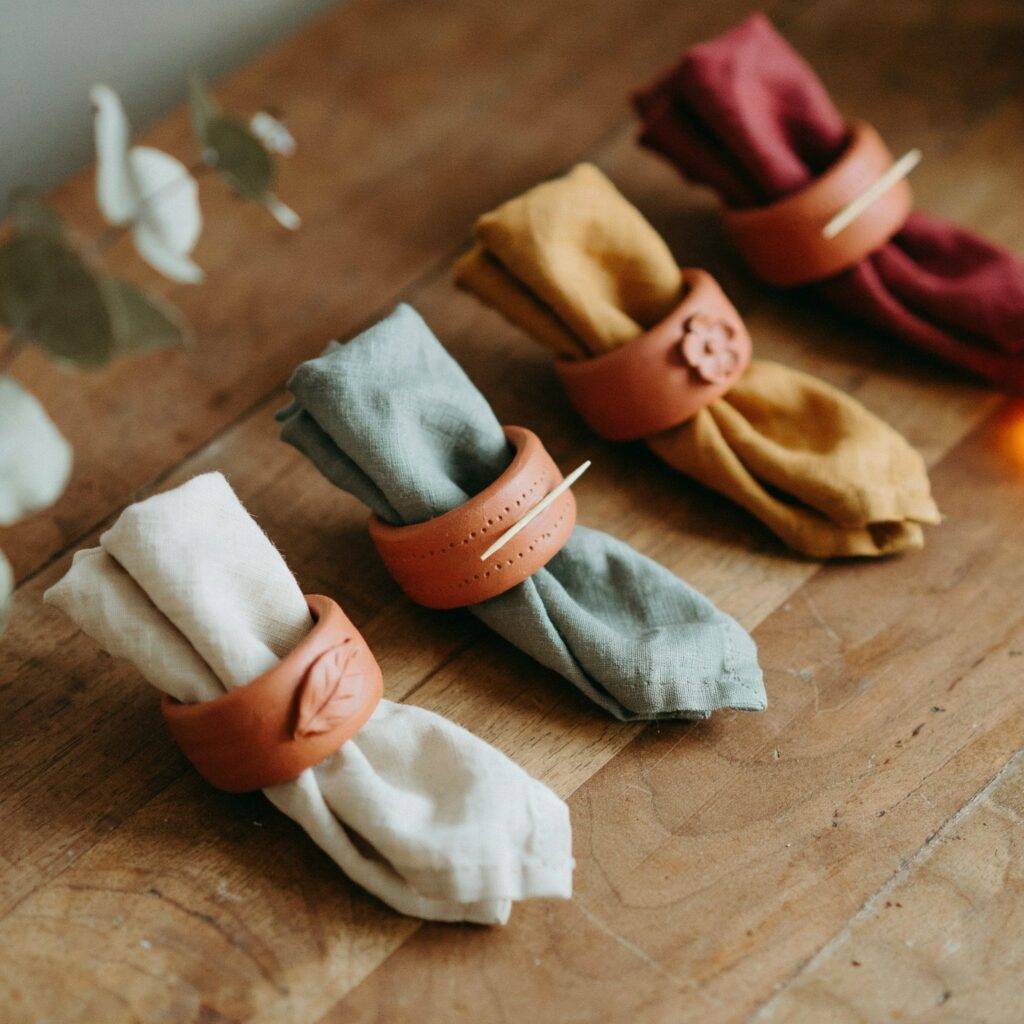
Roll out thin strips of clay, wrap them around a cardboard tube to form a ring, and add a small decorative element a leaf, a dot pattern, or a tiny flower on top. These sell because people who host dinners love small touches that make their table look put together.
A set of four costs about $2.00 in materials and sells for $14–$20. The key is making sure the ring is big enough to hold a standard cloth napkin without squishing it.
Also make sure the decorative piece doesn’t stick out so far that it catches on things. These are especially popular around holidays, so seasonal colors do well.
Check price on Amazon.com – Clay extruder.
15. Clay Bud Vases
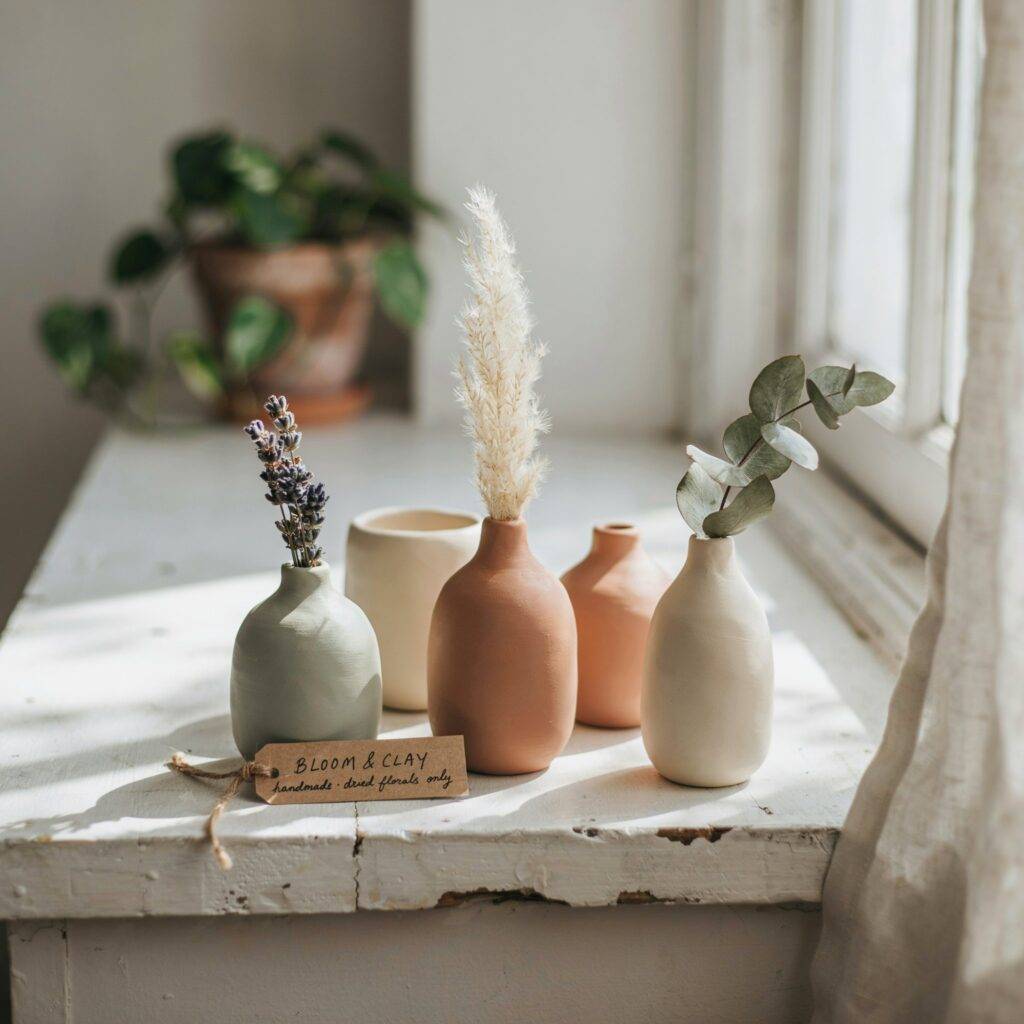
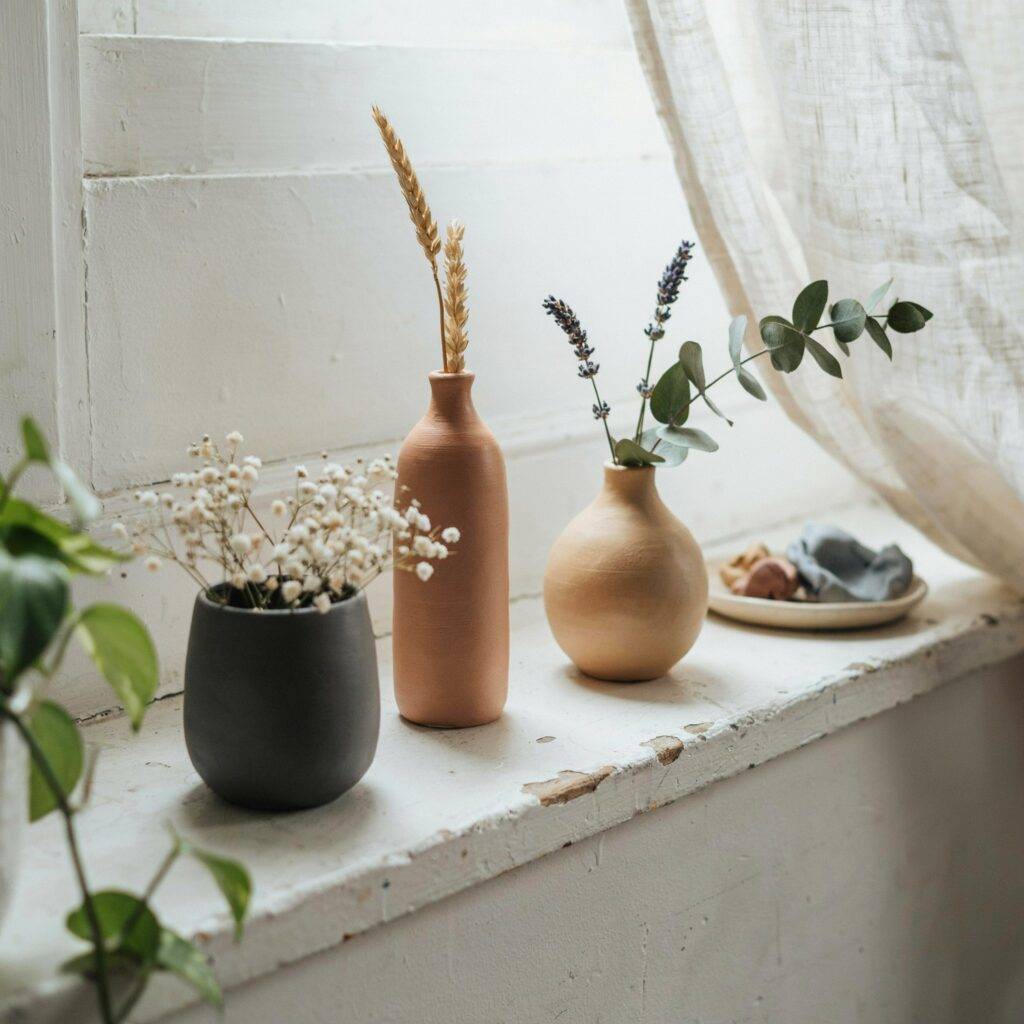
Small vases meant for a single flower or a few sprigs of dried greenery. You can hand-build them in a cylinder shape or a wider bulbous form with a narrow neck. The small size means you use less clay than a full-size vase.
They sell because they fit on windowsills, nightstands, and small desks where a big vase would be too much. Materials cost about $3.00, and they sell for $16–$25. The main challenge is keeping the opening centered and the walls even so it stands straight.
If using air-dry clay, seal the inside thoroughly if you plan to use water. Otherwise, market them for dried flowers only it saves you the sealing step.
Check price on Amazon.com – Pottery rib set.
16. Clay Coil Bowls
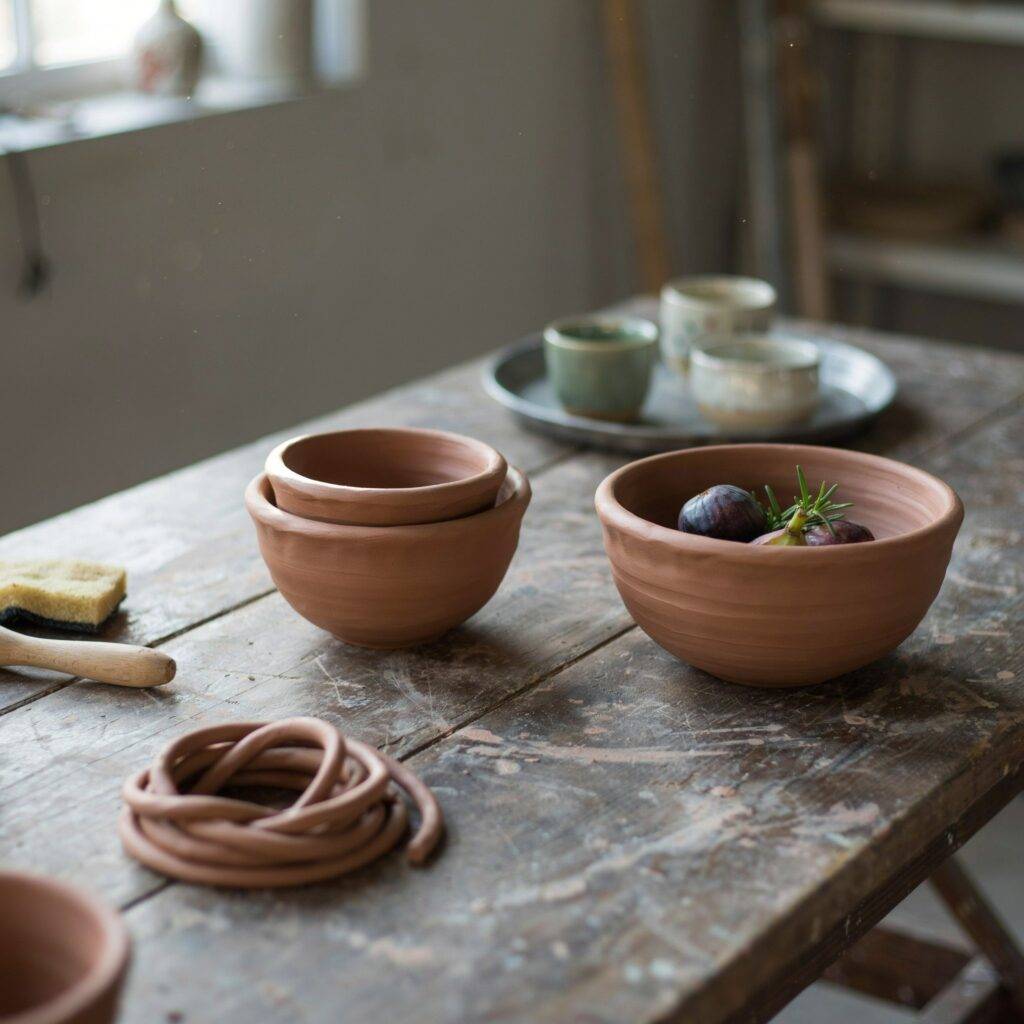
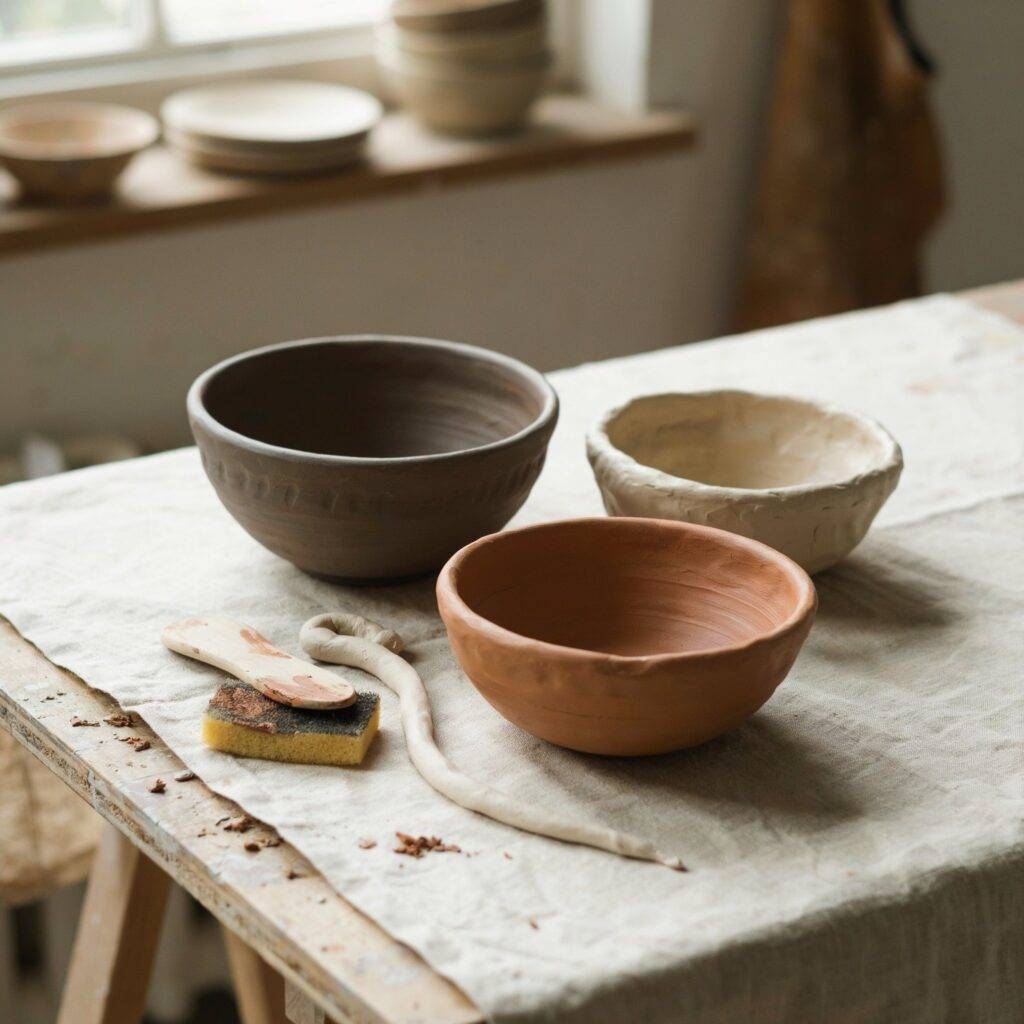
These look like they came from a pottery class, but you can do them without a wheel. Roll out long ropes of clay and coil them on top of each other, smoothing the inside and outside as you go.
The result has that hand-built, organic look that sells well in rustic or bohemian decor. They’re great for holding fruit, keys, or just sitting empty as a statement piece. Materials cost about $4.00, and they sell for $22–$35.
The time investment is higher because of the coiling and smoothing, but the look is harder for competitors to copy. Focus on getting the rim smooth and even that’s what people notice first.
Check price on Amazon.com – Smoothing tools.
17. Clay Ornaments (Holiday and Everyday)
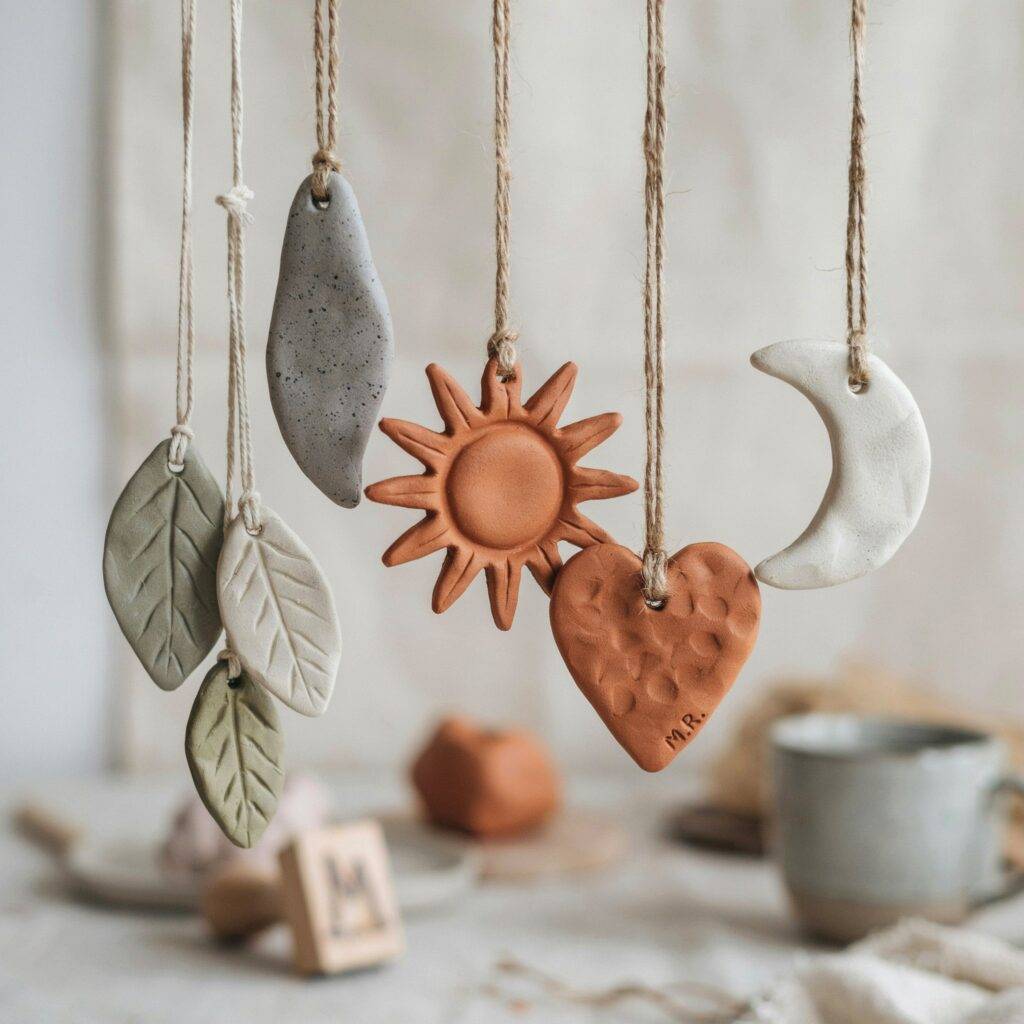
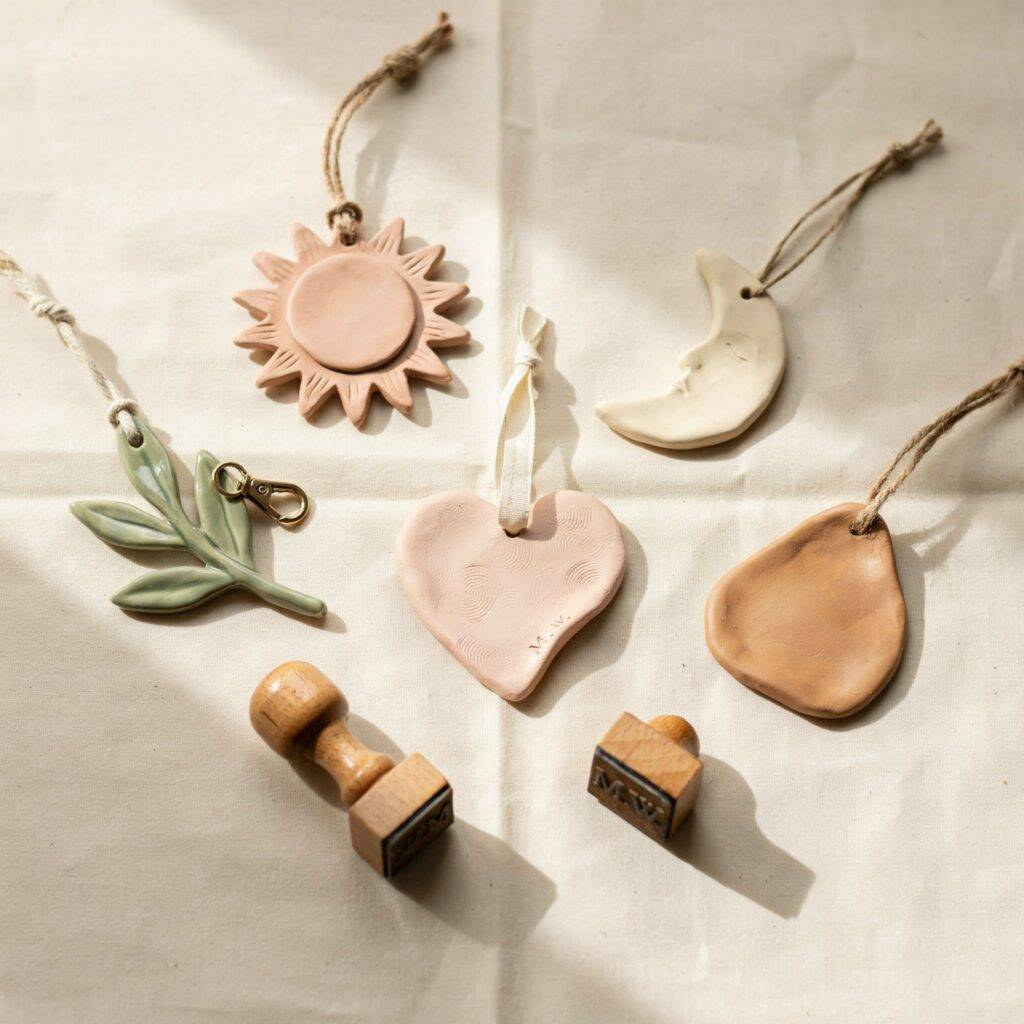
Small hanging decorations that aren’t just for Christmas. Think suns, moons, leaves, hearts, or abstract shapes that can hang in a window or from a rearview mirror. They sell because they’re lightweight, easy to ship, and make great gifts.
Cost is under $1.00 each, and they sell for $6–$12. The variety here is huge. You can do a full set of seasonal ornaments, or keep it general with nature themes.
The main thing is to put your hanging hole in a spot that won’t tear out. Also stamp your logo or initials on the back it adds a professional touch without much extra work.
Check price on Amazon.com – Letter stamps for clay.
18. Clay Business Card Holders
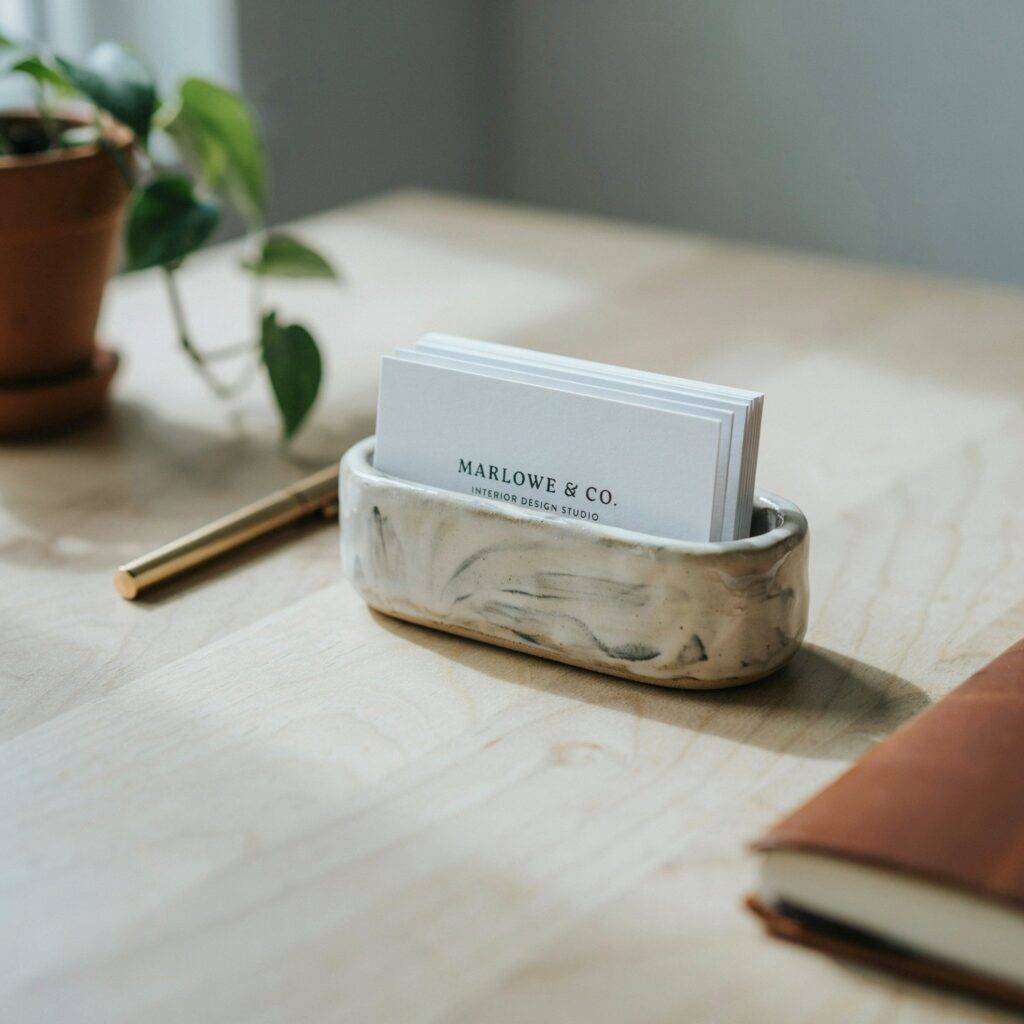
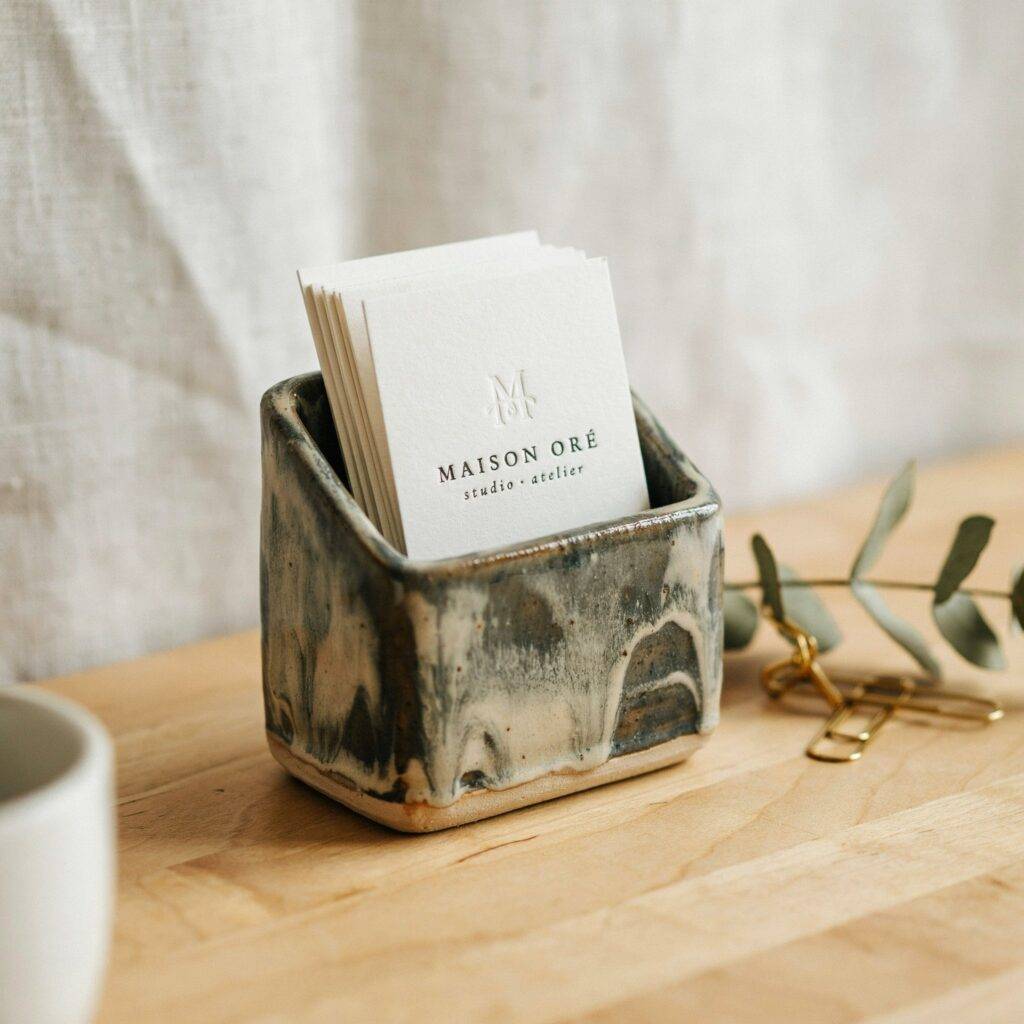
A small slotted piece that holds a stack of business cards on a desk or counter. You can make them as a simple folded shape or a more elaborate sculpted form.
What makes them sell is the practical use small business owners and office workers always need one. Materials cost about $2.50, and they sell for $14–$20. Make sure the slot is wide enough to hold multiple cards without jamming.
Test it with a few standard cards before you commit to a design. A textured or marbled surface looks more high-end and justifies a higher price.
Check price on Amazon.com – Clay texture rollers.
Step 4: Jewelry and Accessories (Part 2)
19. Clay Brooches and Pins
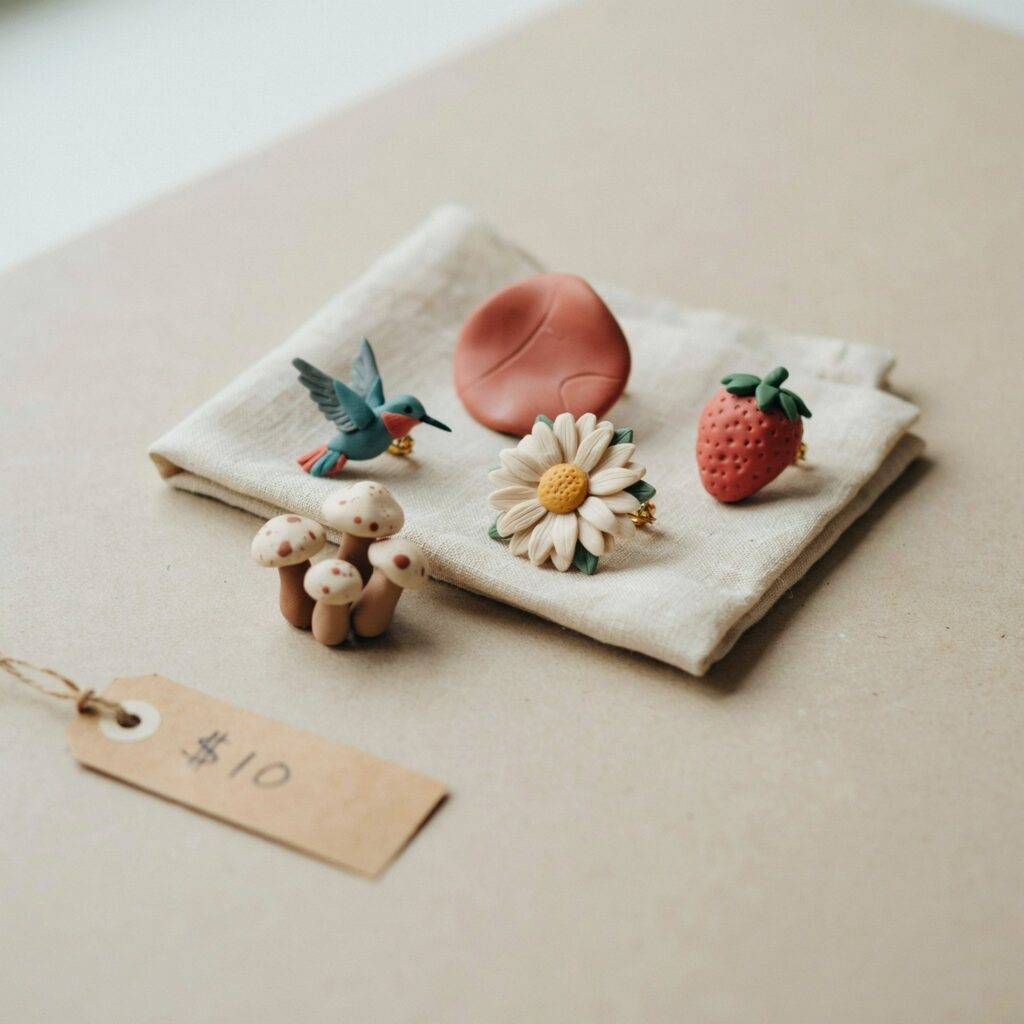
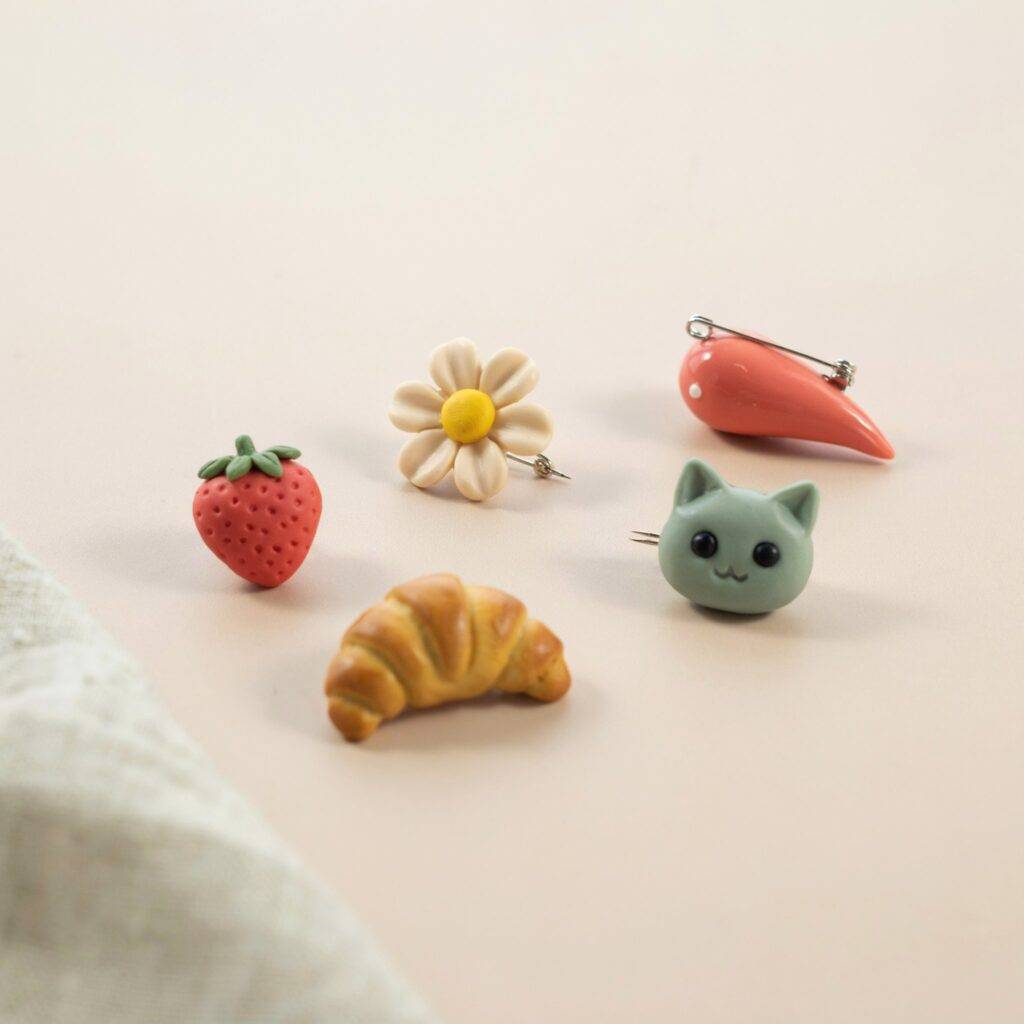
A small sculpted piece with a pin back glued on. Think little flowers, abstract shapes, animals, or even miniature food items. What makes them sell is the versatility people put them on jackets, bags, hats, and even scarf pins.
The small size means you use very little clay. Materials cost under $1.00 per pin, and they sell for $8–$14. The pin backs themselves are cheap in bulk, so your margins stay high.
The main skill is keeping the sculpting detailed enough to be interesting but not so fragile that it breaks if bumped. These are great for craft fairs because they catch the eye and people pick them up to look at them.
Check price on Amazon.com – Pin back findings.
20. Clay Bracelets (Beaded and Chunky)
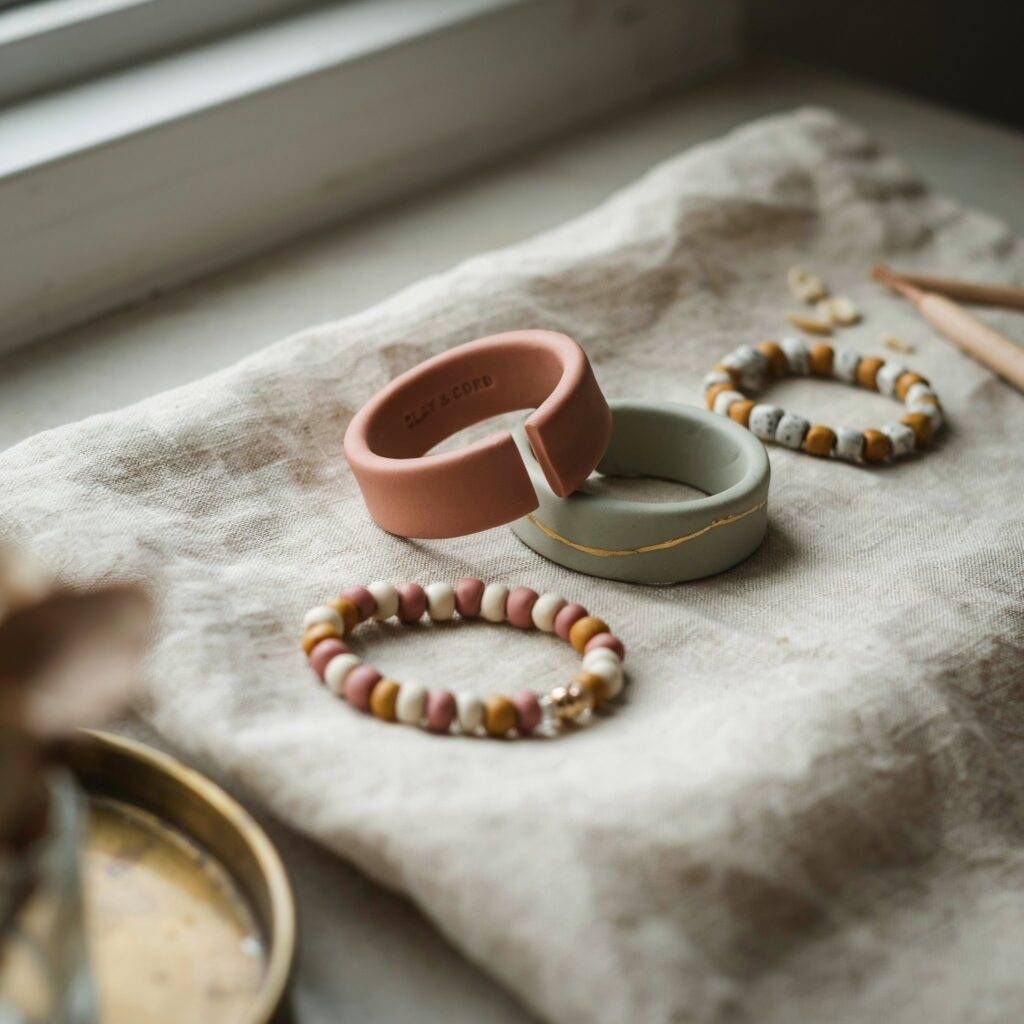
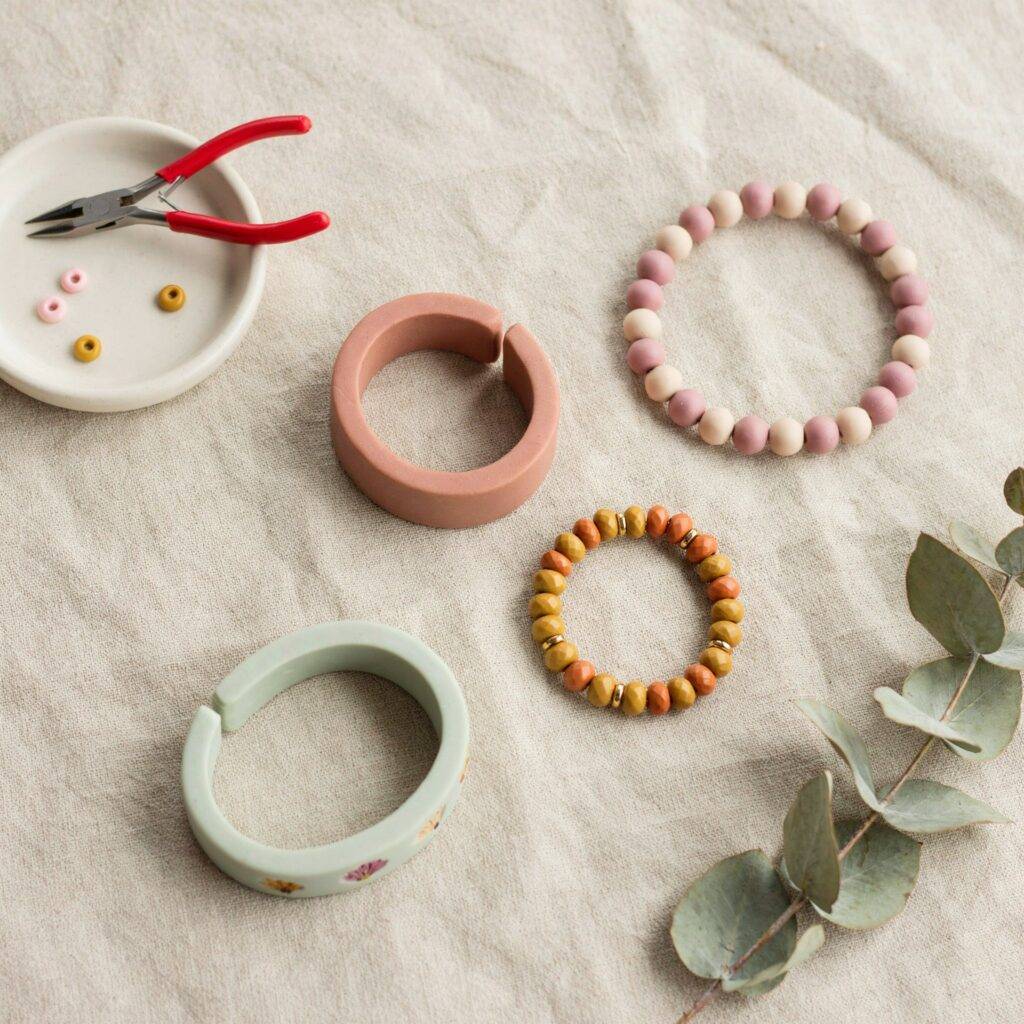
Similar to the necklaces but for the wrist. You can do stretchy beaded bracelets with polymer clay beads, or wider chunky cuffs that open and close.
The cuffs are made by wrapping clay around a curved form and then cutting a slit so they can flex open. These sell because they’re adjustable and work for most wrist sizes. Materials cost about $2.00–$3.00 per bracelet, and they sell for $15–$22. The stretchy bead version is easier and faster to make.
The cuff version looks more high-end and commands a better price. For the cuffs, make sure the clay is thick enough to not snap when someone bends it to put it on.
Check price on Amazon.com – Bracelet mandrel.
21. Clay Hair Clips and Barrettes
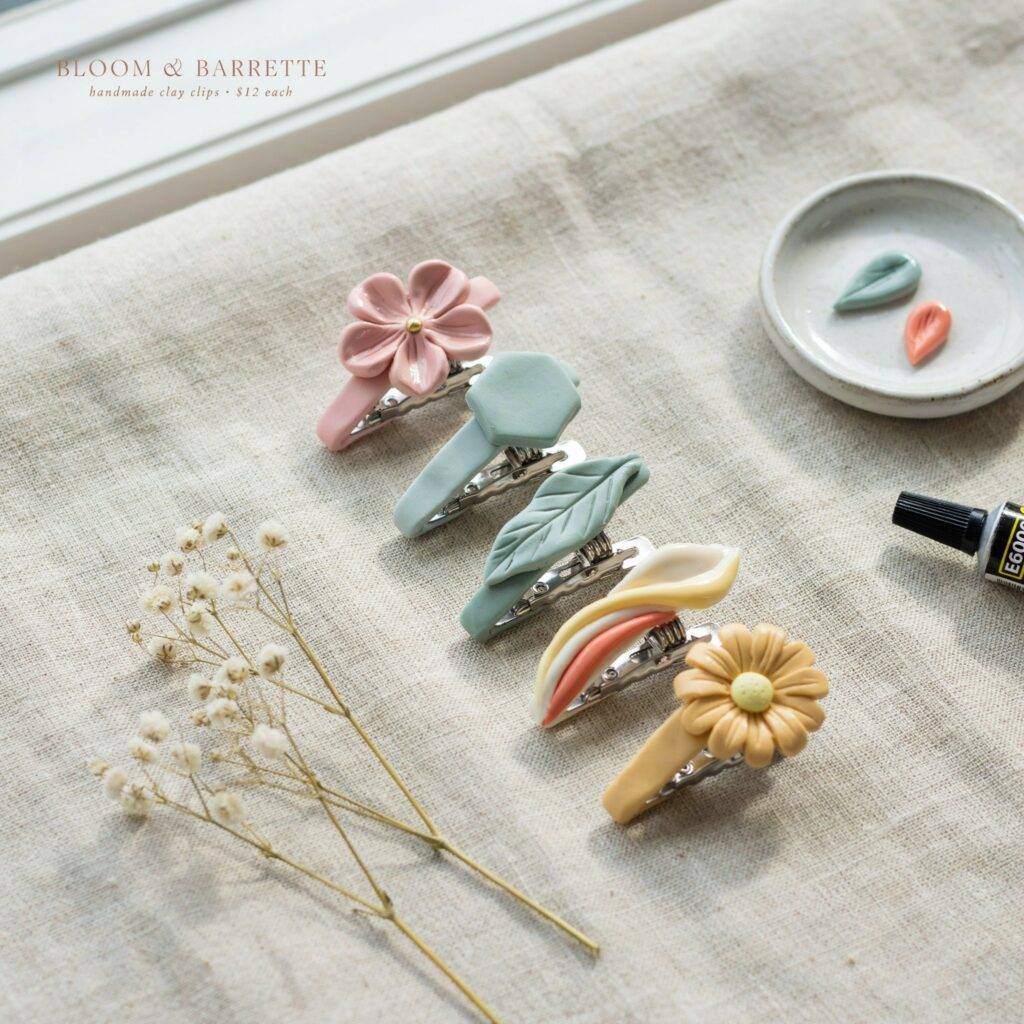
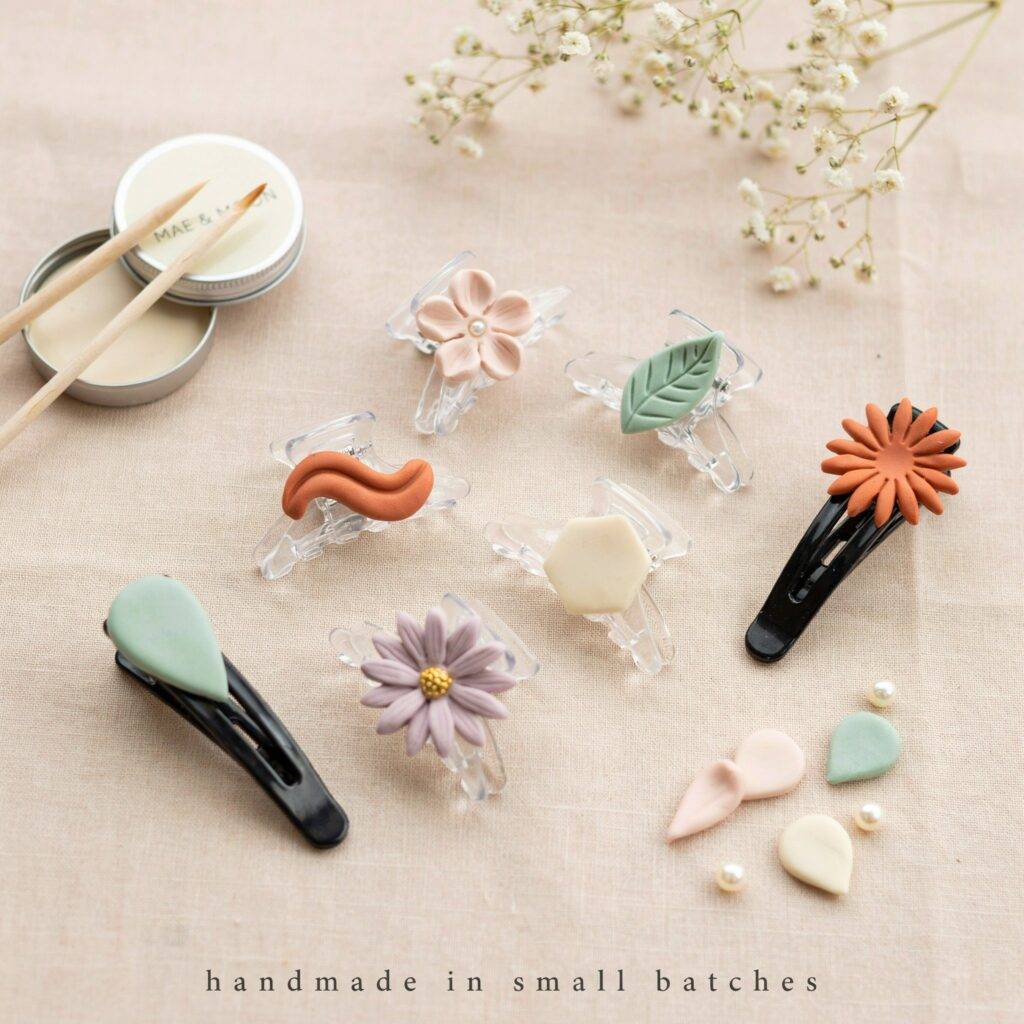
Take a plain metal or plastic hair clip and glue a small clay piece on top. The clay piece can be a flower, a geometric shape, a leaf, or an abstract wave. These are huge right now, especially on social media.
People love matching their jewelry to their hair accessories. Cost per clip is about $1.50–$2.00 for the clay piece plus the clip base, and they sell for $10–$16. The key is keeping the clay thin and lightweight so the clip doesn’t drag down.
Also make sure the glue you use is strong enough to survive everyday use. These are quick to batch out once you have the shapes down.
Check price on Amazon.com – Hair clip blanks.
22. Clay Phone Grip Rings
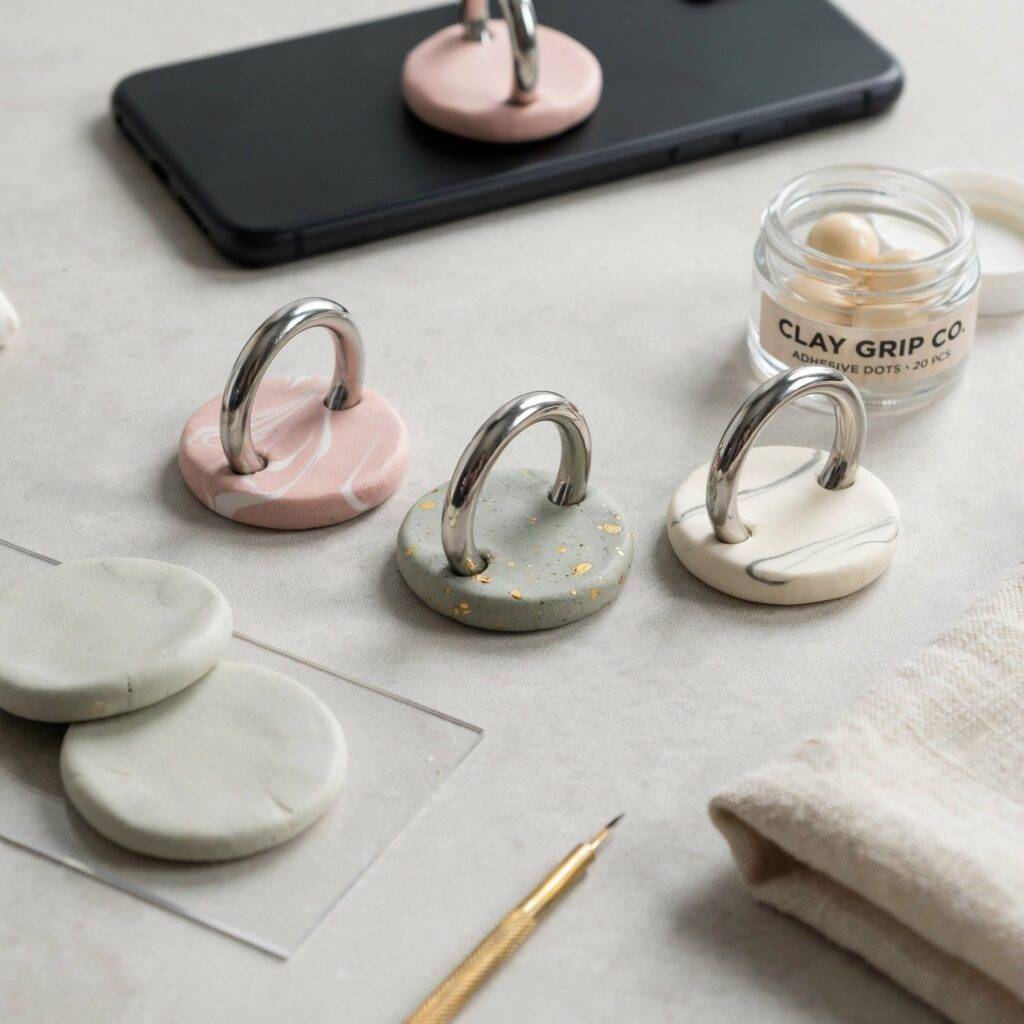
These are small discs with a finger ring on top that stick to the back of a phone. The base is clay, and you attach the metal or plastic ring part after baking.
They sell because phone grips are a practical accessory and the clay version looks much nicer than the plain plastic ones. Materials cost about $2.00 and they sell for $12–$18. The tricky part is making the base flat enough to stick securely to a phone.
Use a smooth, even surface and test the adhesive before you sell them. You can also add a small design or marbled pattern to stand out from mass-produced options.
Check price on Amazon.com – Phone grip ring hardware.
23. Clay Earring Stands
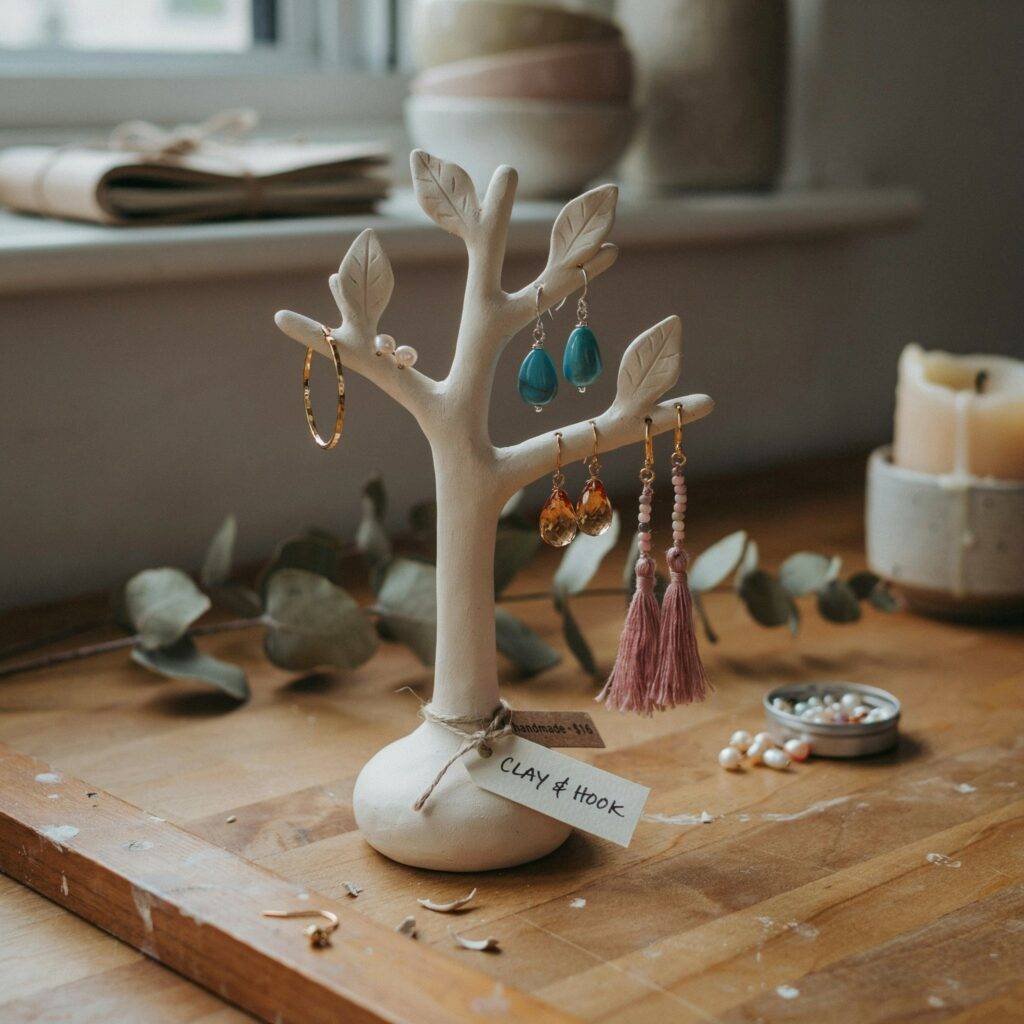
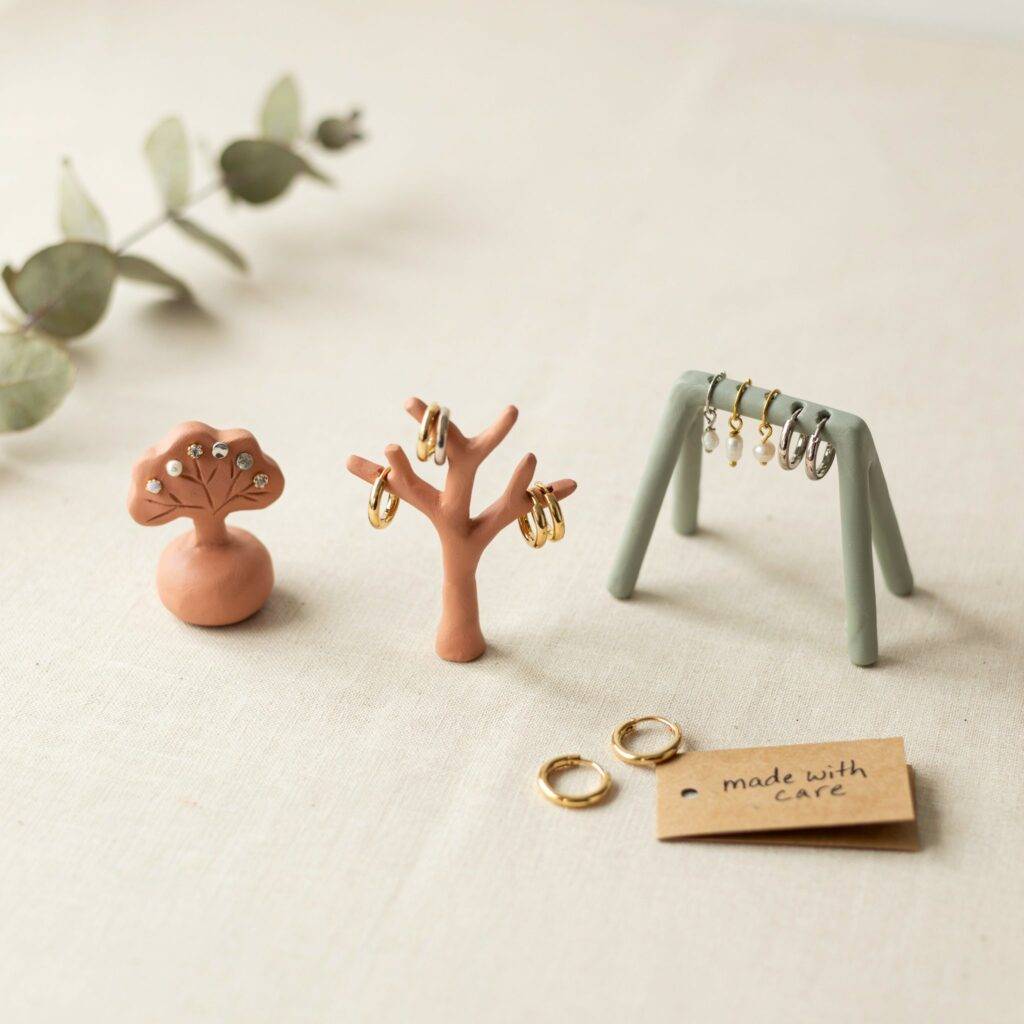
This one’s for jewelry makers themselves or people who want a pretty way to display their earrings. A small sculpted holder with slits or holes to hang earrings on.
It can be a simple branch shape, a geometric frame, or a small tree form. The appeal is both functional and decorative. Materials cost about $3.00, and they sell for $14–$20. The main requirement is making the slots or holes big enough to fit earring hooks easily.
These are popular gifts for crafty friends or as an add-on sale if you also sell earrings. A good way to increase your average order value.
Check price on Amazon.com – Sculpting wire.
24. Clay Anklets
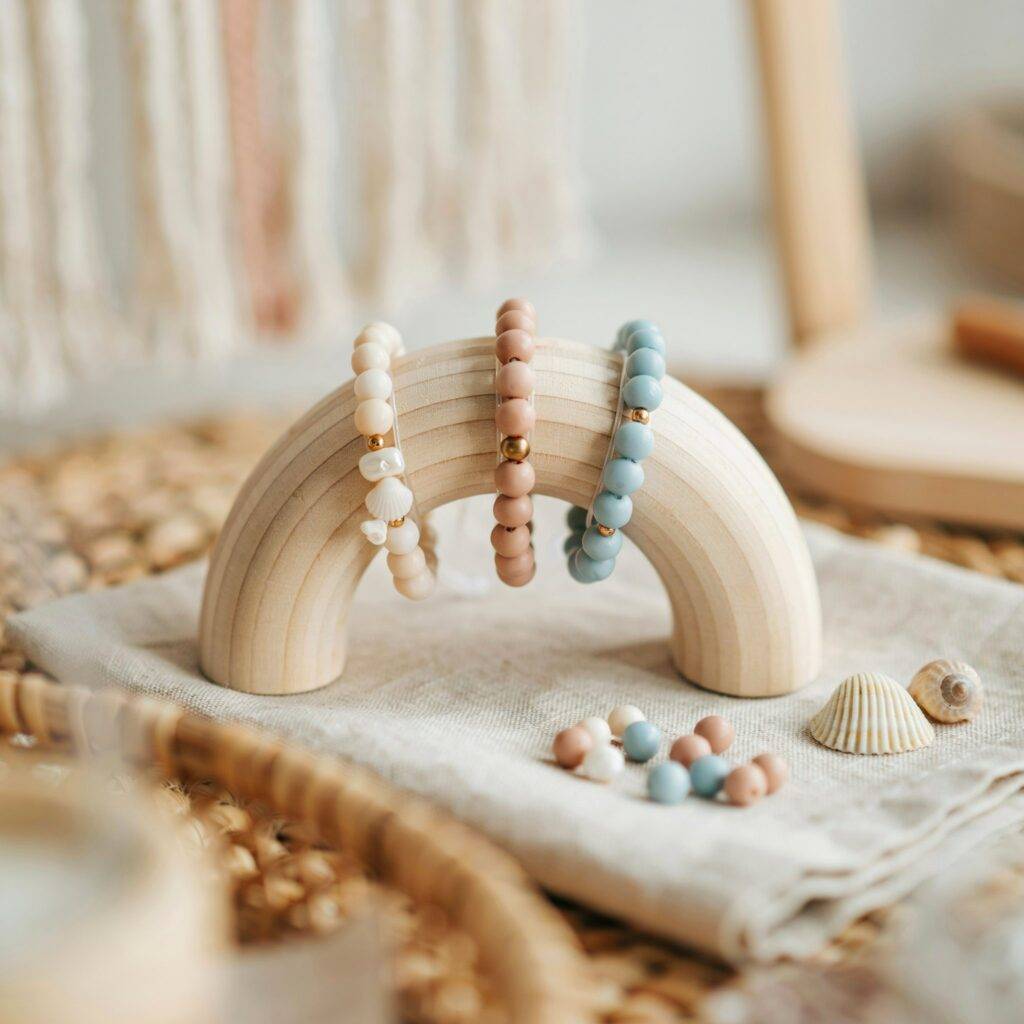
Small beads strung on elastic cord that fit around the ankle. These use the same technique as beaded bracelets but with a slightly larger circumference.
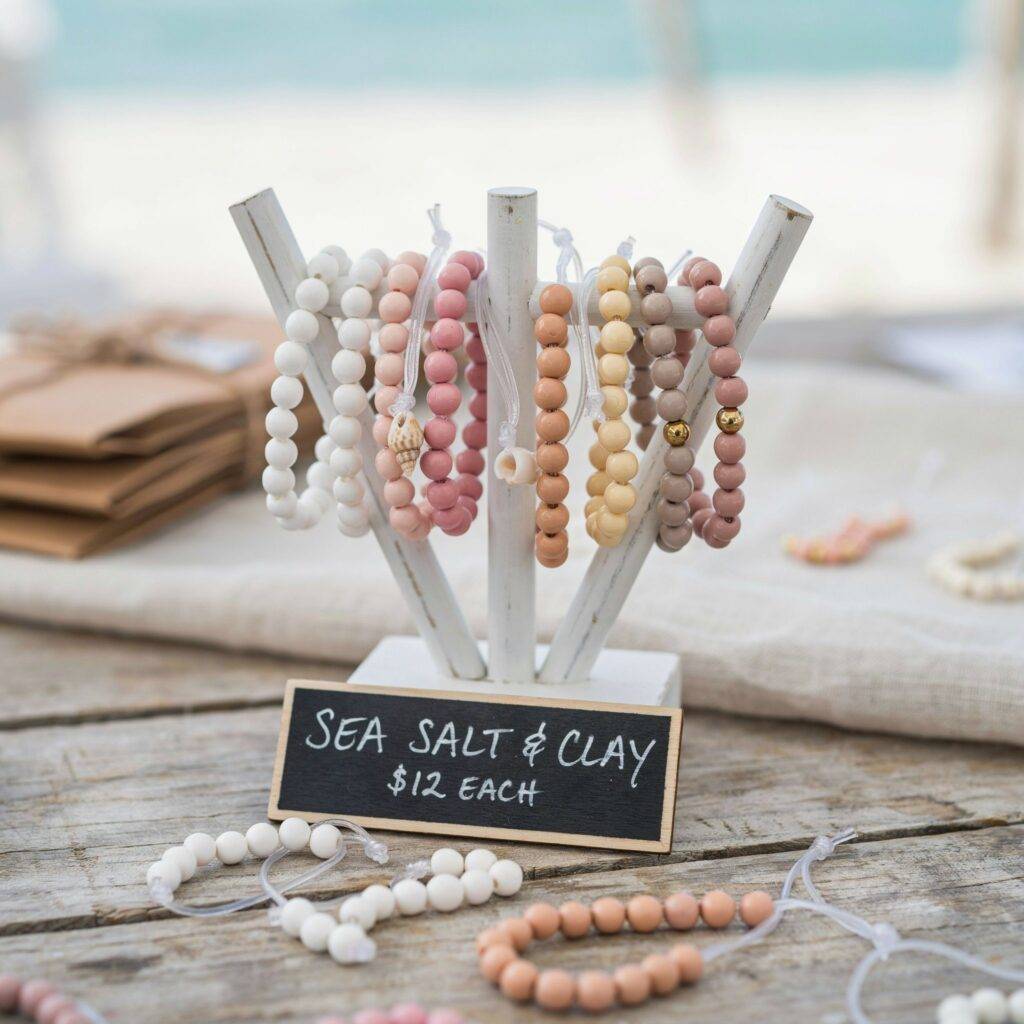
What makes them sell is the summer vibe people want them for beach trips, vacations, and casual warm weather looks. Materials cost about $1.50 per anklet, and they sell for $10–$14. The bead colors work best in whites, pastels, and sandy neutrals.
You can also add a tiny shell charm or a single gold bead to give it a beachy feel. These are quick to make in bulk and easy to display on a small stand at markets.
Check price on Amazon.com – Elastic jewelry cord.
Step 5: Unique and Specialty Items
25. Clay Candle Holders (Pillar Size)
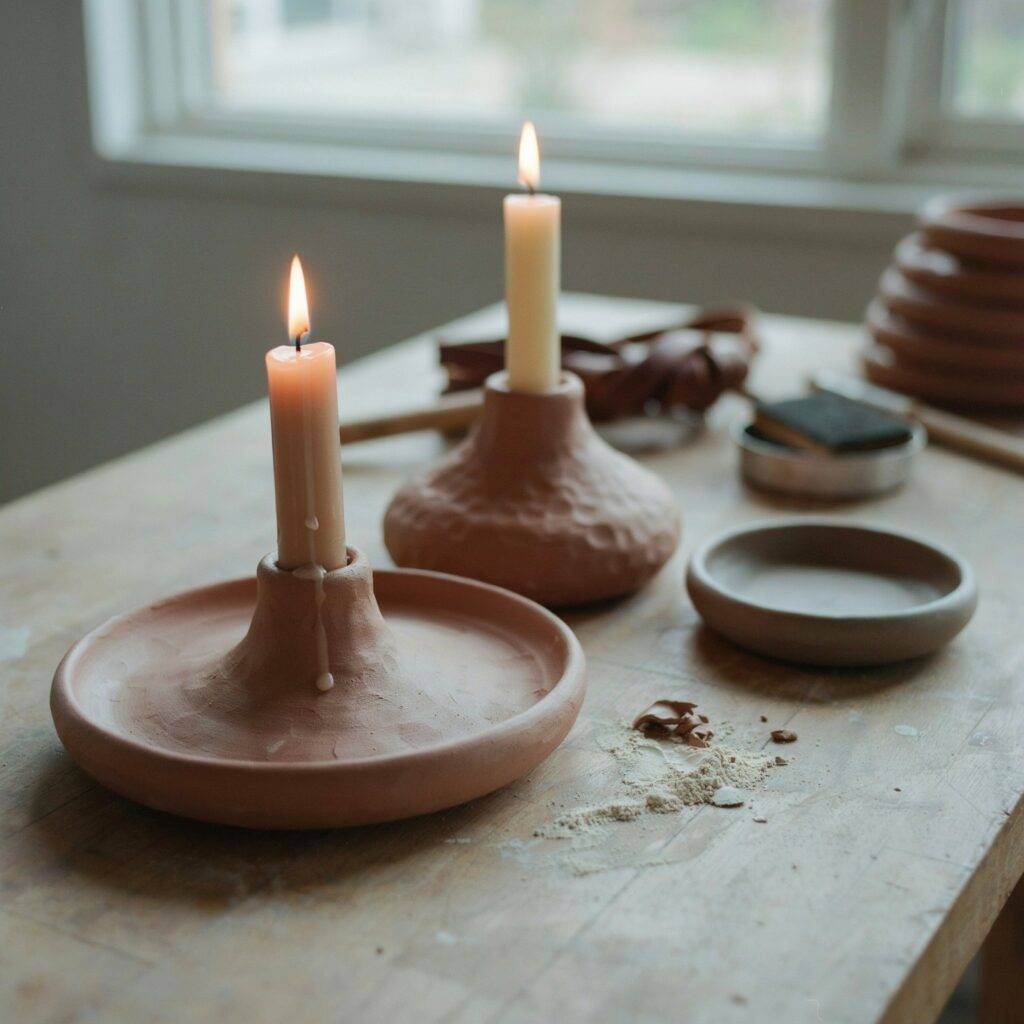
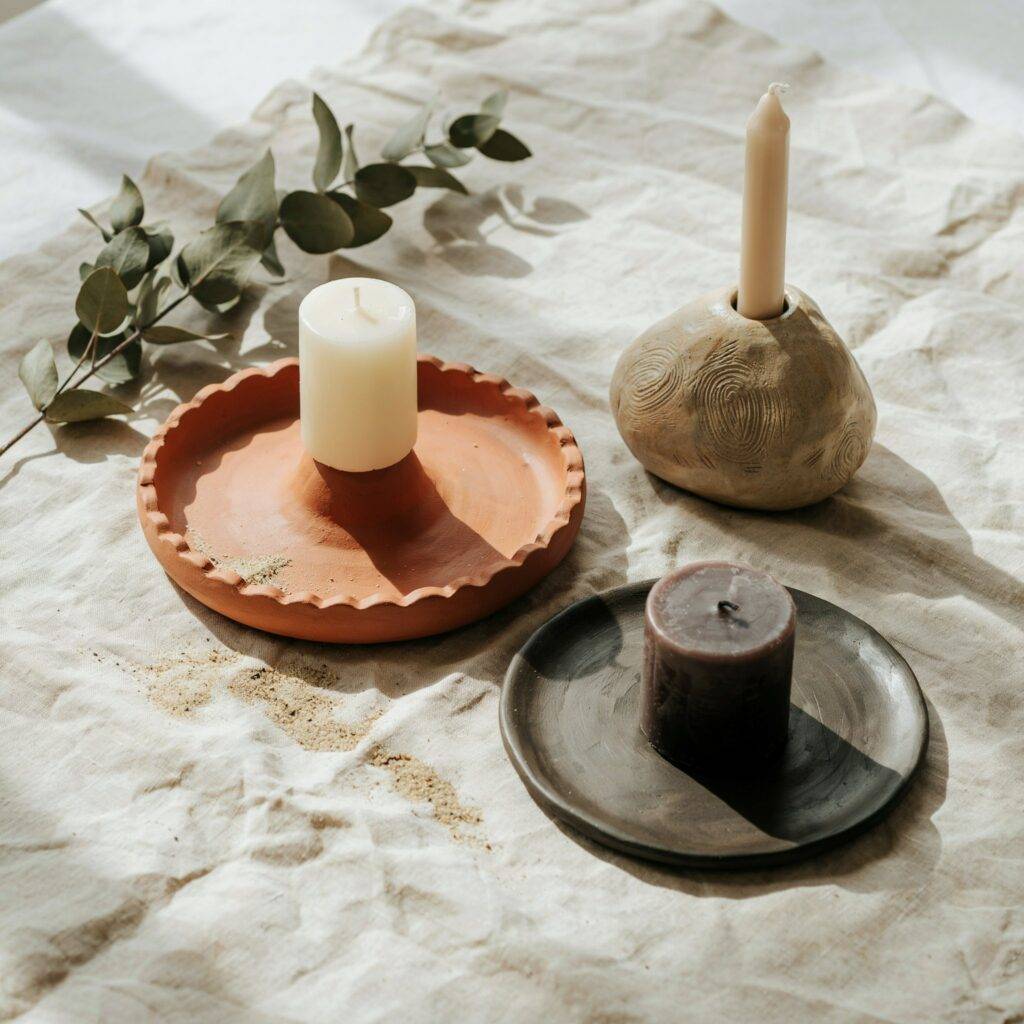
These are larger holders designed to hold pillar or taper candles. Think of a flat base with a raised lip or a central spike to hold the candle in place.
You can make them as simple discs or more sculpted forms with texture. The sell here is the weight they feel substantial and expensive. Materials cost about $4.00–$5.00 in clay and they sell for $20–$30 each. The challenge is making the base wide enough to be stable.
A narrow base will tip over easily, which is a safety issue. Test your design with a lit candle before selling. If using air-dry clay, seal it well so wax drips wipe off easily.
Check price on Amazon.com – Candle making supplies.
26. Clay Lids and Jar Toppers
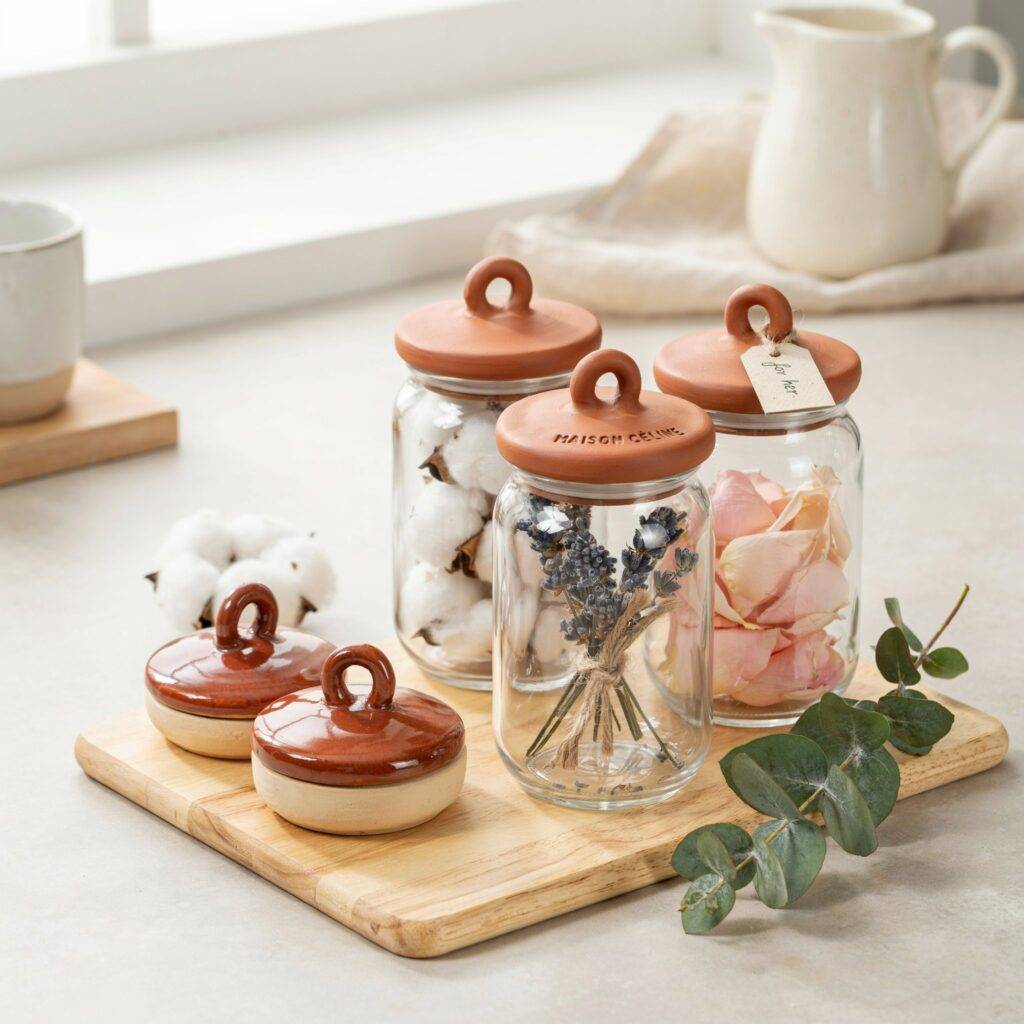
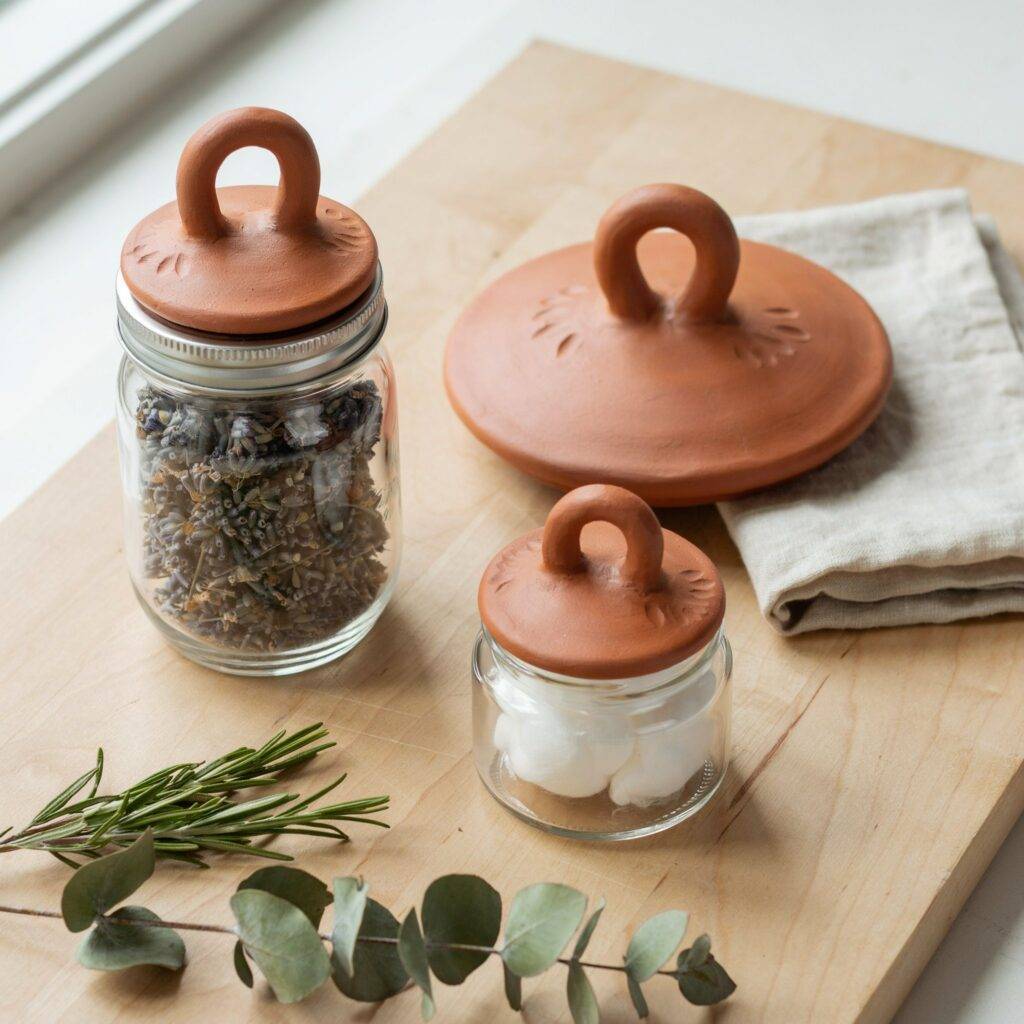
These are small flat discs with a little handle on top that sit over mason jars or small glass containers. They turn a plain jar into a decorative piece for holding cotton balls, dried herbs, or kitchen trinkets.
The lid fits right over the metal ring of a mason jar, so it’s an easy standard fit. What makes them sell is how they upcycle something ordinary into something gift-worthy. Materials cost about $2.00 and they sell for $12–$18.
The key is getting the size right measure your jar opening carefully before you make them. Also make sure the handle is comfortable to grab. These are especially popular for wedding favors and home goods stores.
Check price on Amazon.com – Mason jar lids.
27. Clay Paperweights
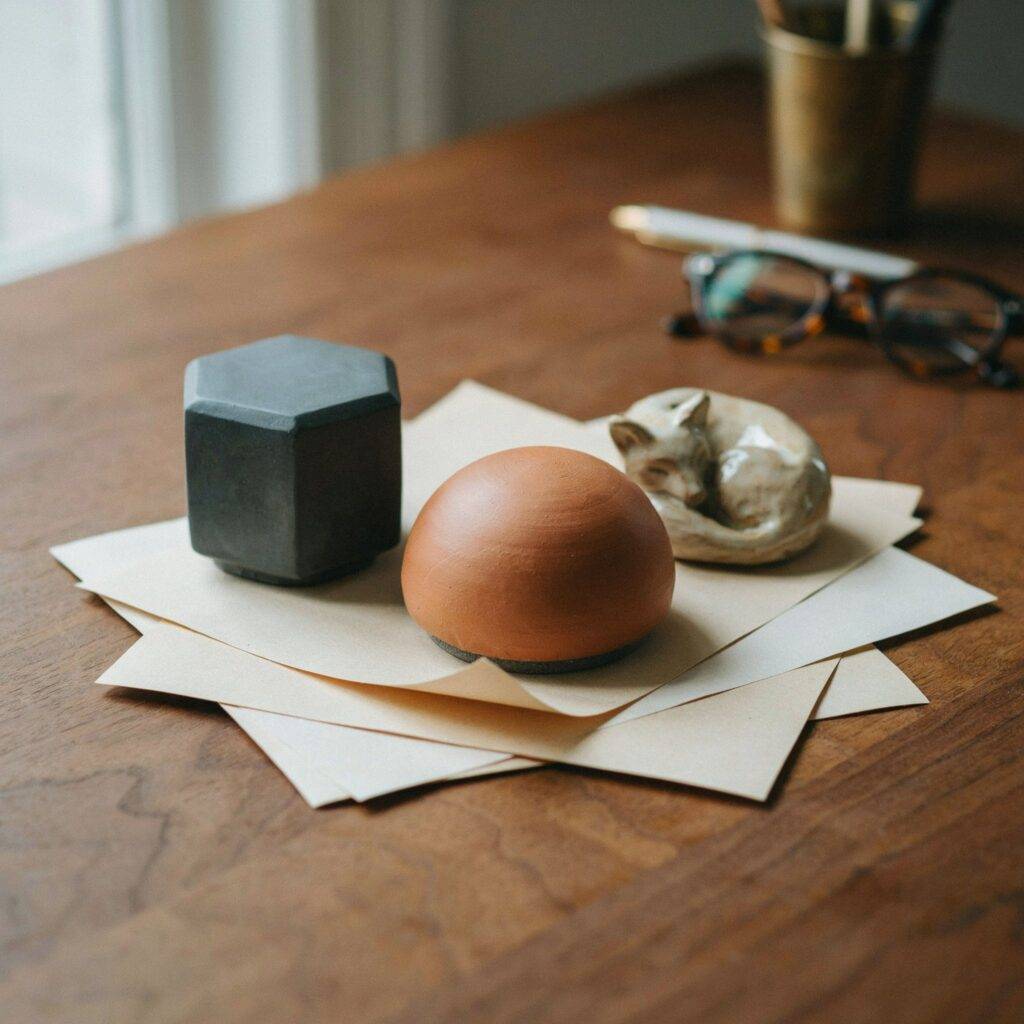
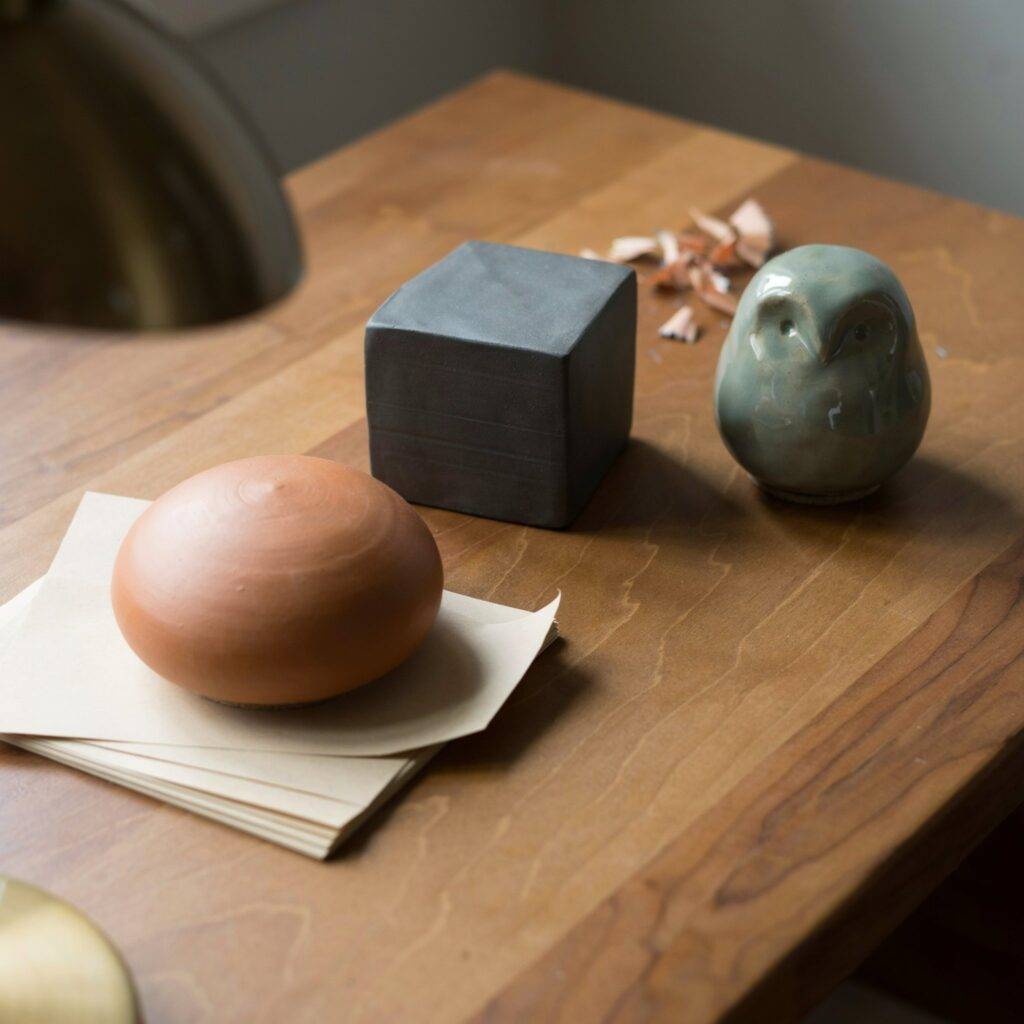
Simple, heavy, and decorative. A paperweight can be a smooth dome, a geometric block, or a small sculpted animal. The weight keeps papers from blowing away, but the look is what sells it.
People put these on their desks for the aesthetic. Materials cost about $3.00 and they sell for $15–$22. The trick is getting the weight right they need to be heavy enough to actually hold down paper.
Make them at least half an inch thick and use a denser clay if you can. A felt bottom protects desk surfaces and adds a professional touch. These make great corporate gifts or office items.
Check price on Amazon.com – Felt pad sheets.
Pros and Cons of Selling Clay Crafts
Pros:
- Low startup cost. You can begin with under $50 in materials and tools.
- Good profit margins. Most items have a 50%+ net margin after factoring in time and fees.
- No expensive equipment needed. No kiln, no wheel, no studio. Air-dry clay works fine.
- Easy to ship. Most clay items are lightweight and fit in small boxes or padded envelopes.
- Trend is strong. Aesthetic home decor and handmade jewelry are still growing markets.
- Scalable. Once you have a design, you can batch produce it quickly.
Cons:
- Fragile. Clay can break if dropped or if it’s made too thin. You need to pack carefully.
- Time-intensive. Some pieces take a lot of hand work. The hourly rate only works if you batch.
- Learning curve. It takes practice to get smooth finishes and consistent shapes.
- Competition. Lots of people are making clay crafts. You need a unique style to stand out.
- Shipping risk. Even well-packaged pieces can break in transit. Factor in replacements.
Tips for Success
Start simple. Pick two or three items and master them before adding more. Earrings and coasters are good entry points.
Buy materials in bulk. Polymer clay, jump rings, earring hooks, and sealant are all cheaper in larger quantities. Your margins go up when you buy smart.
Invest in good tools. A pasta roller for even sheets, a set of cutters, and smooth tools make a huge difference in quality. Cheap tools produce cheap-looking results.
Photograph well. Natural light, a clean background, and a simple setup matter more than an expensive camera. Good photos sell items.
Price for profit. Don’t just cover materials. Factor in your time, packaging, fees, and shipping. A common mistake is pricing too low to compete.
Test your designs. Wear your earrings for a day. Use your coasters with a cold drink. Make sure your items hold up to real use before you sell them.
Offer bundles. A set of three earrings or a coaster set with a matching holder sells better than single items. Higher order value, less packaging waste.
Mistakes to Avoid
Skipping the sealant. Unsealed clay absorbs dirt, oil, and moisture. Always seal functional pieces.
Making pieces too thin. Thin clay is fragile clay. Add extra thickness to high-stress areas like earring holes and ring dishes.
Forgetting the hole. It sounds basic, but forgetting to poke a hanging hole before baking ruins the whole piece. Make it a habit.
Not testing the fit. If you’re making jewelry, test the earring hooks or clasp before you list them. A piece that doesn’t work is a refund waiting to happen.
Overbaking. Polymer clay burns or discolors if you leave it in too long or at the wrong temperature. Follow the package instructions exactly.
Using too much glaze. A thick layer of sealant can drip, pool, and look messy. Thin, even coats are better.
Skipping packaging. Your product is only as good as how it arrives. A cheap bag makes it look cheap. Use tissue paper, a small box, or a branded card.
FAQs
What type of clay is best for beginners?
Air-dry clay is the easiest to start with. No baking required. Just shape, let it dry, and sand it smooth. For jewelry, polymer clay is better because it’s more durable.
How much money do I need to start?
About $40–$50. You need clay, a roller, a few cutters, and some basic findings for jewelry. As you grow, reinvest your profits into better tools.
How do I price my clay crafts?
Try this: Materials + time (hourly rate) + shipping + packaging + 30% for profit. If that number feels too high, look at what similar items sell for and adjust. Don’t underprice yourself.
How long does air-dry clay last?
Properly sealed air-dry clay can last years. Without sealant, it can crack, absorb moisture, or get dirty.
Can I mix clay colors?
Yes. You can blend polymer clay by kneading colors together. This is how you get marbled or terrazzo effects. Air-dry clay also mixes but can get crumbly if you overwork it.
Is selling clay crafts worth it?
Yes, if you’re consistent and you make things people actually want. The profit margins are there. It won’t make you rich overnight, but it’s a real side income that can grow.
Design Ideas and Styling
Terrazzo style: Mix tiny colored clay flecks into a neutral base. Cut into earrings, coasters, or trays. This look is very popular and relatively easy to do.
Marbled effect: Roll two or more colors together without fully blending. The swirls look expensive and each piece is unique.
Pressed botanicals: Press dried leaves or flowers into air-dry clay before drying. The imprint stays after the clay hardens. Seal it well and it becomes a beautiful natural texture.
Gold accents: Add liquid gold leaf or gold mica powder to edges and rims. A small amount of gold makes a piece look much higher end.
Speckled look: Mix a small amount of coffee grounds, salt, or fine sand into your clay before shaping. It gives a textured, organic finish that sells well in boho decor.
Matte and gloss combo: Use a matte sealant on the body and a gloss sealant on a specific detail. The contrast draws the eye to your design.
Final Thoughts
Clay crafting is one of those rare hobbies that can actually turn into real income. It’s accessible, affordable, and there’s a hungry market for handmade, aesthetic items.
The 27 ideas in this list are all proven sellers. Not theoretical things people are buying right now. Pick a few that match your skill level and start with those. You don’t need to make everything at once.
Focus on doing a few things really well. Get your finishing clean. Take good photos. Price fairly. And don’t be afraid to start small.
Reated Post: