
Let’s be honest most of us have at least one kitchen drawer that’s a total mess. You know the one. You open it, and a bunch of stuff falls out, or you can’t find that one measuring spoon you know is in there somewhere.
The good news, getting your kitchen organized doesn’t have to mean buying a bunch of plastic bins and calling it a day. In fact, some of the best organization solutions are actually better for the planet too.
When you organize your kitchen with eco-friendly ideas, you’re not just making your space look nicer. You’re also reducing waste, saving money, and making it easier to cook at home. A well-organized kitchen means less food goes bad, you buy fewer duplicates, and you actually enjoy spending time in there.
I’ve put together 22 practical ideas that real people can actually do. No crazy renovations or expensive makeovers required. Just simple changes can make a big difference.
22 Eco-Friendly Kitchen Organization Ideas
1. Use Glass Jars for Pantry Staples
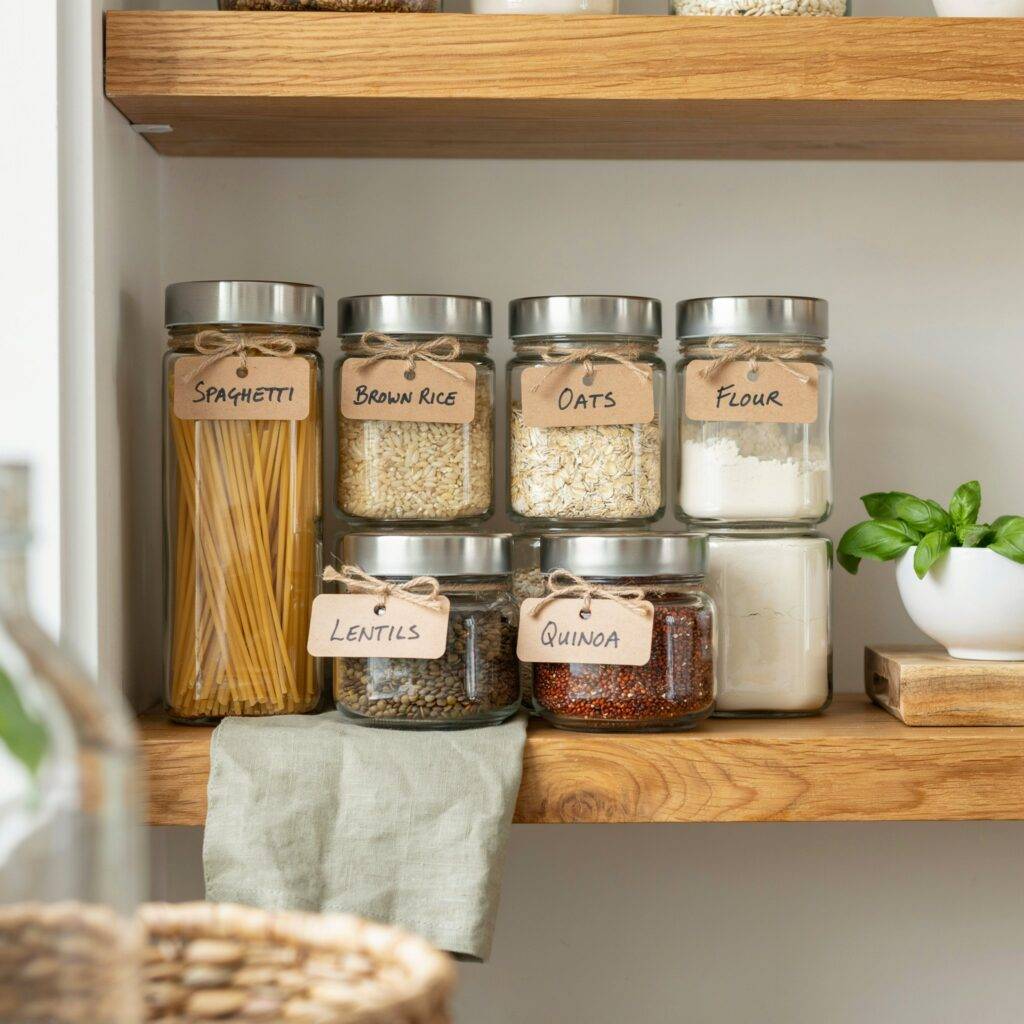
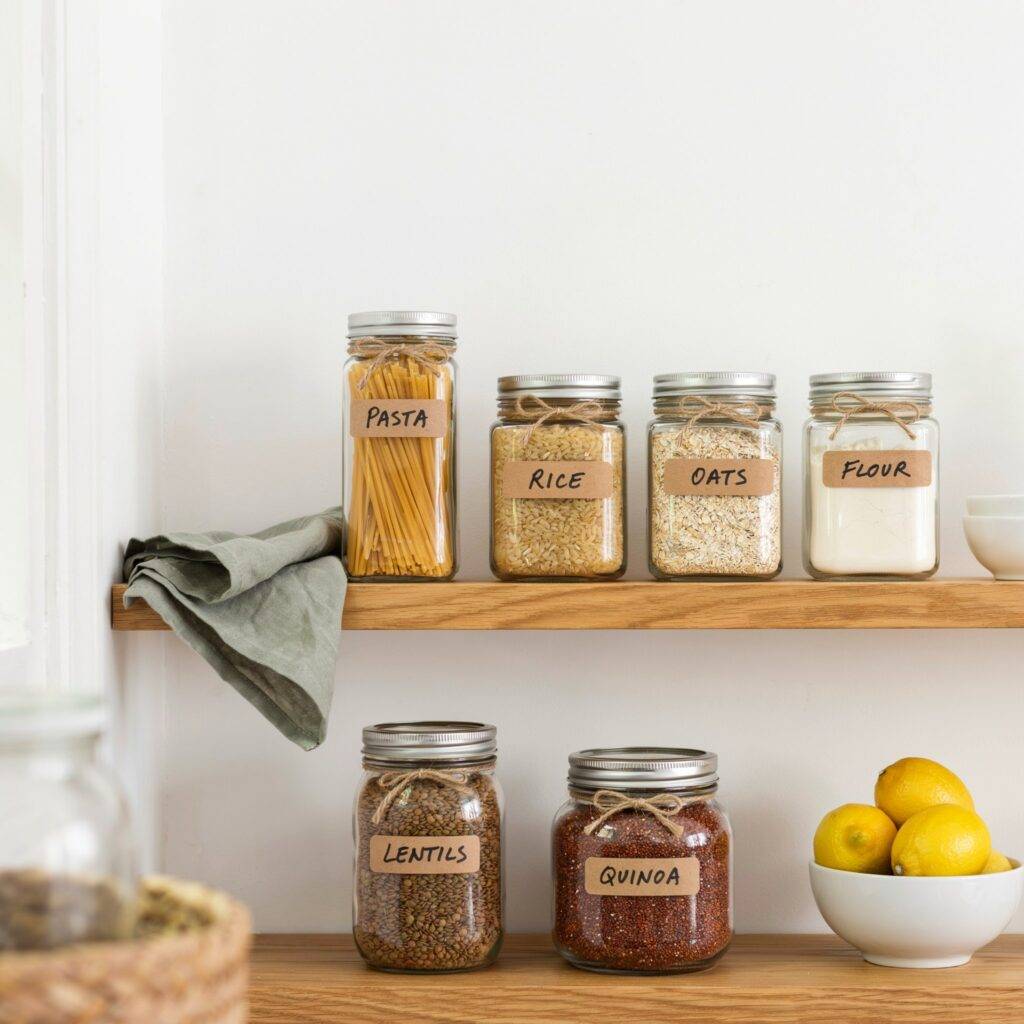
Those pasta, rice, and flour bags? They’re hard to stack, hard to see through, and they attract pantry moths. Swap them for clear glass jars.
You can see exactly what you have and how much is left. Square jars are especially great because they fit together neatly and don’t waste space. Plus, glass doesn’t leach chemicals into your food like plastic can.
You can buy new jars or reuse ones from spaghetti sauce, pickles, or jam. Just remove the labels, wash them well, and you’re good to go.
2. Upcycle Fruit Containers for Drawer Organization
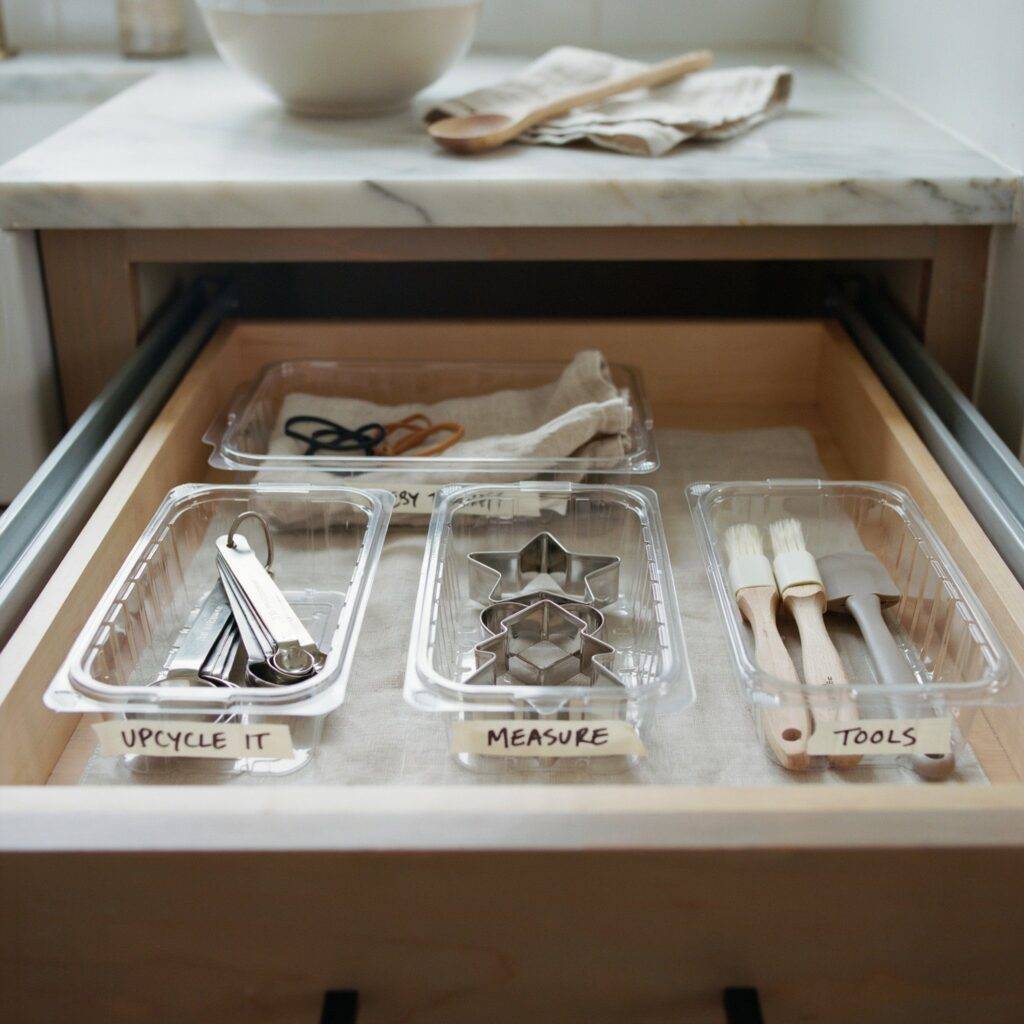
Those plastic clamshell containers that berries come in? Don’t toss them. Wash them, cut off the lids if needed, and use them as drawer dividers.
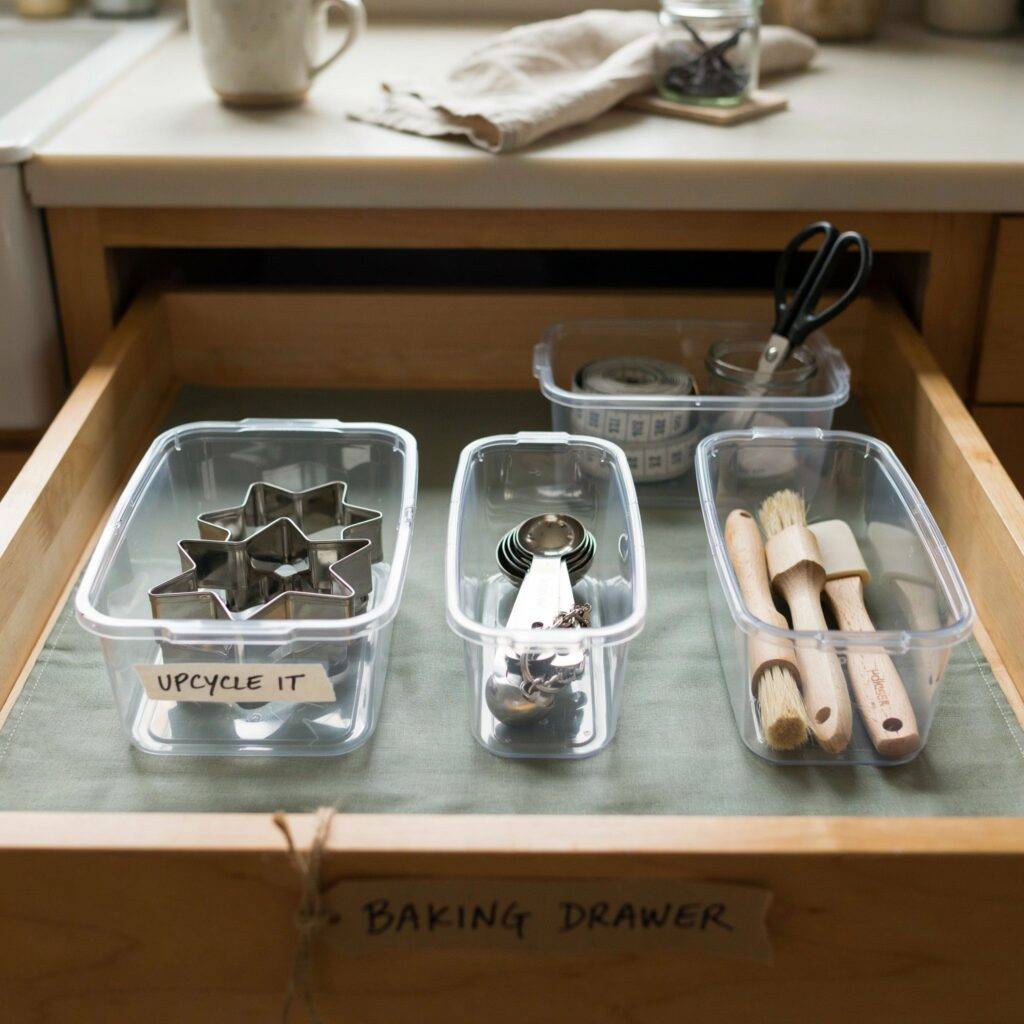
They’re perfect for separating cookie cutters, measuring spoons, pastry brushes, and other small tools. You can create a baking drawer, a coffee station drawer, or a utensil drawer all for free.
It keeps things from banging around and makes everything easy to find. Plus, you’re keeping plastic out of the landfill.
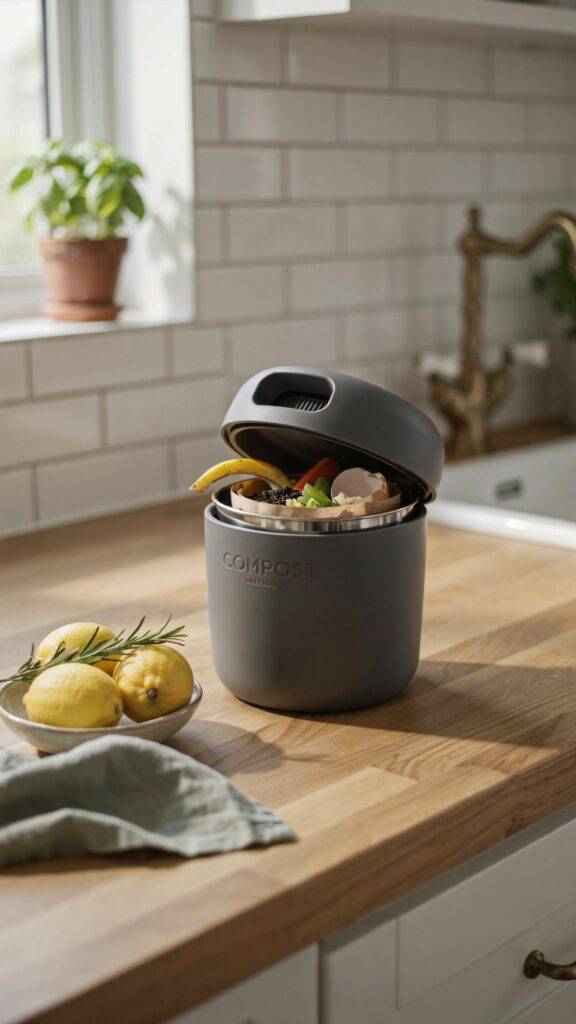
3. Start a Compost Station
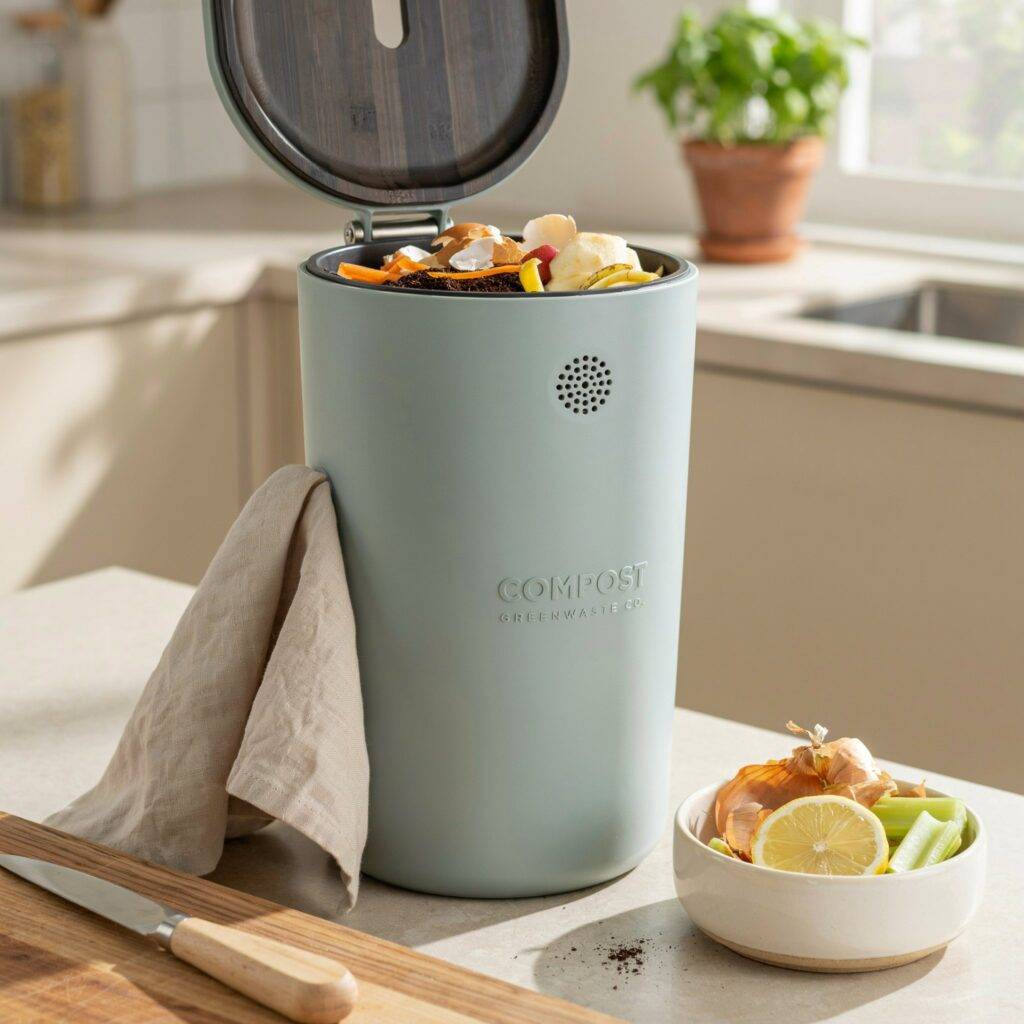
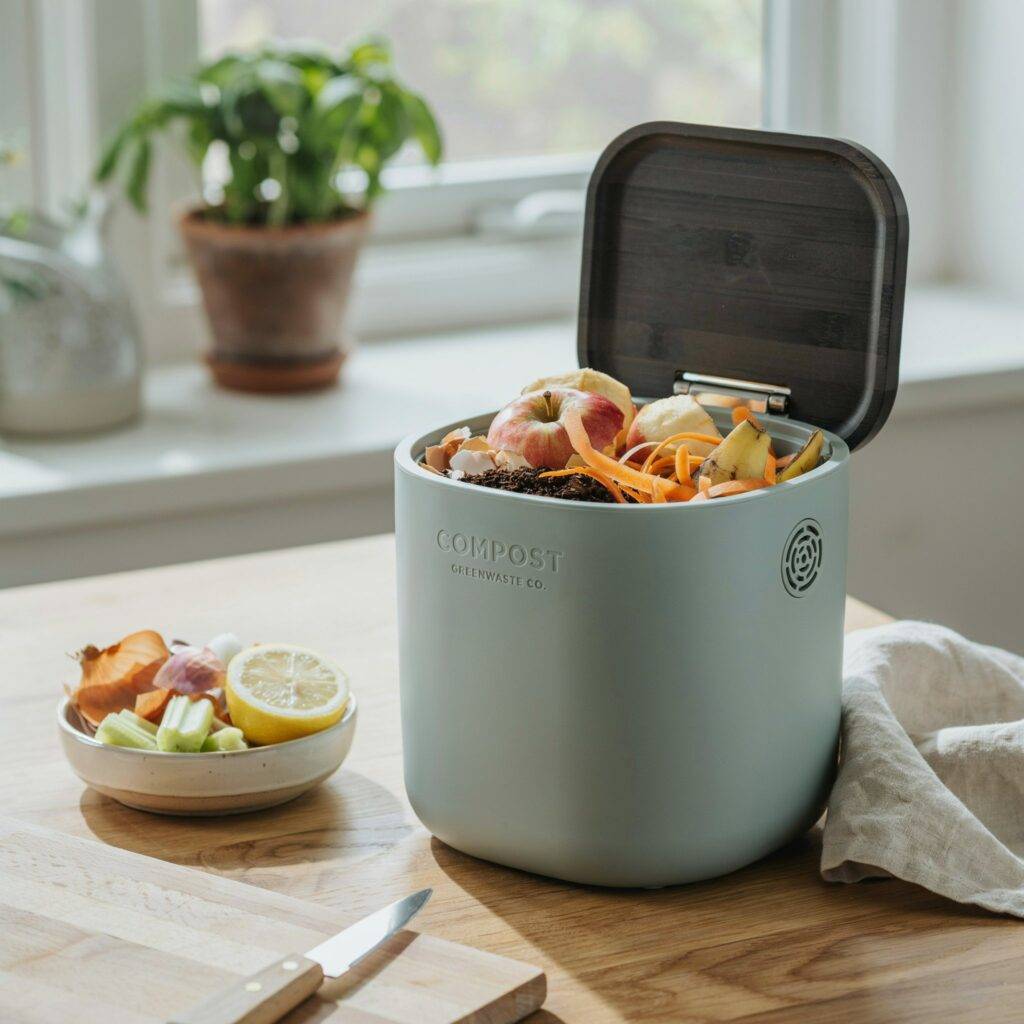
Food scraps don’t have to go in the trash. Set up a small compost bin under your sink or on your counter. Modern compost bins trap odors and look nice enough to leave out.
Toss in coffee grounds, eggshells, vegetable peels, and fruit scraps. Empty it into a backyard compost pile or your city’s green waste bin.
Composting reduces the methane that would otherwise come from food rotting in a landfill. And if you garden, you get free fertilizer.
4. Switch to Beeswax Wraps
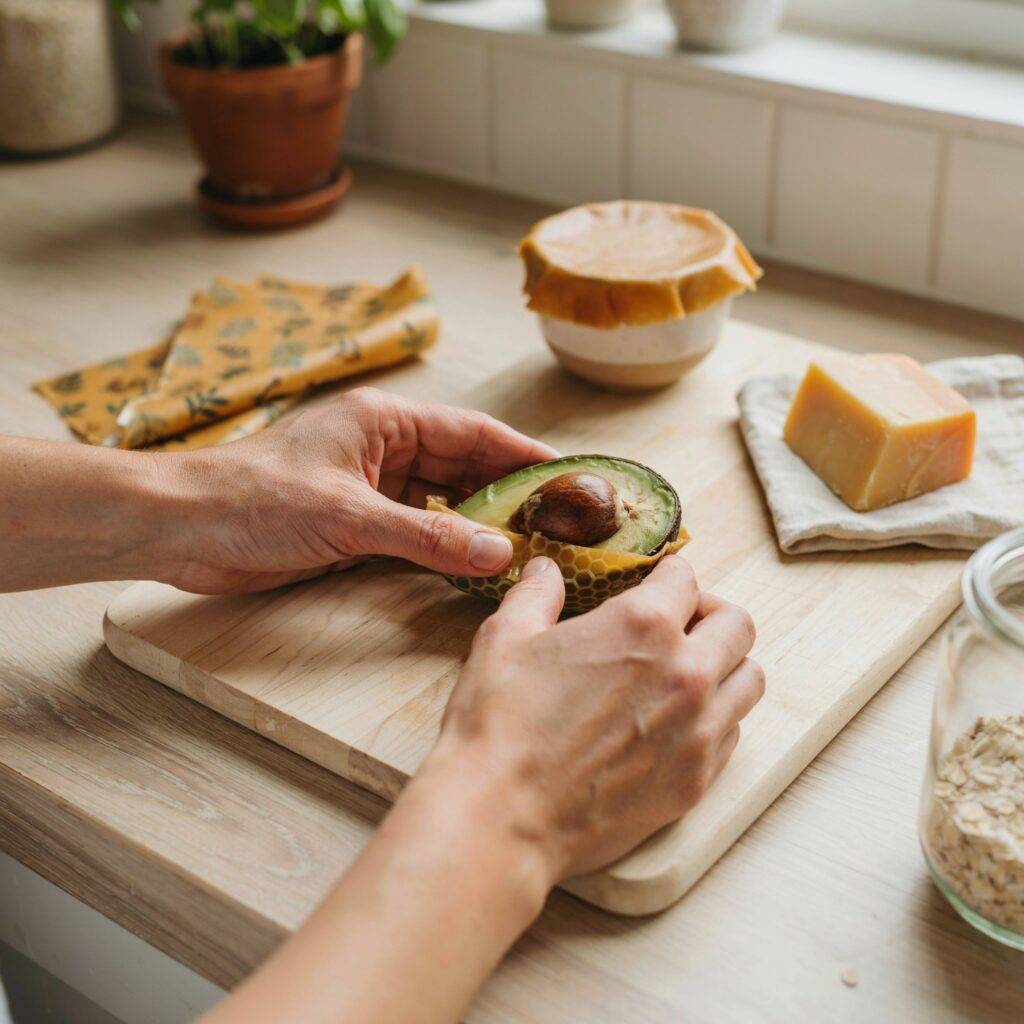
Plastic wrap is convenient, but it’s also single-use and terrible for the environment. Beeswax wraps are a reusable alternative that works just as well.
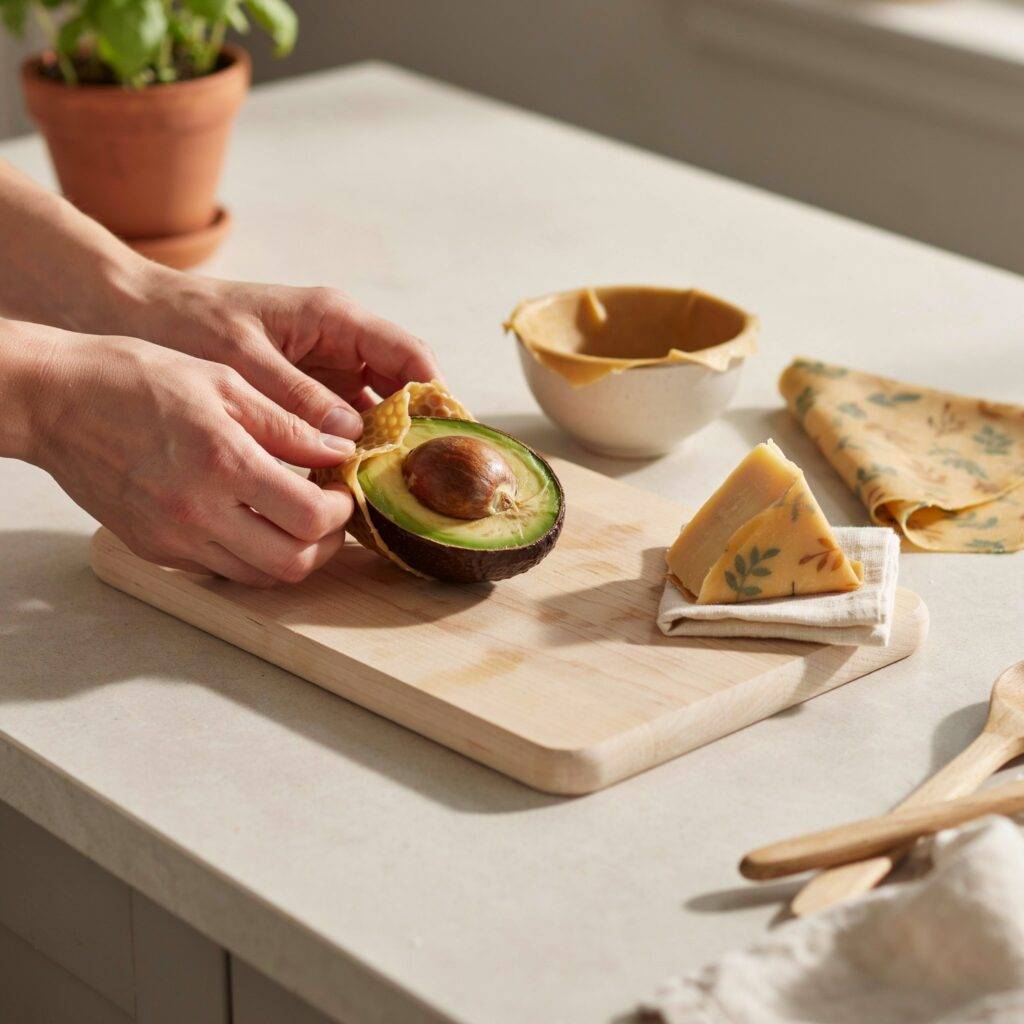
They’re great for covering bowls, wrapping half an avocado, or storing cheese. The warmth of your hands makes them soft and moldable.
When they cool, they hold their shape. They last about a year, and when they’re done, you can compost them.
5. Install a Pegboard Wall
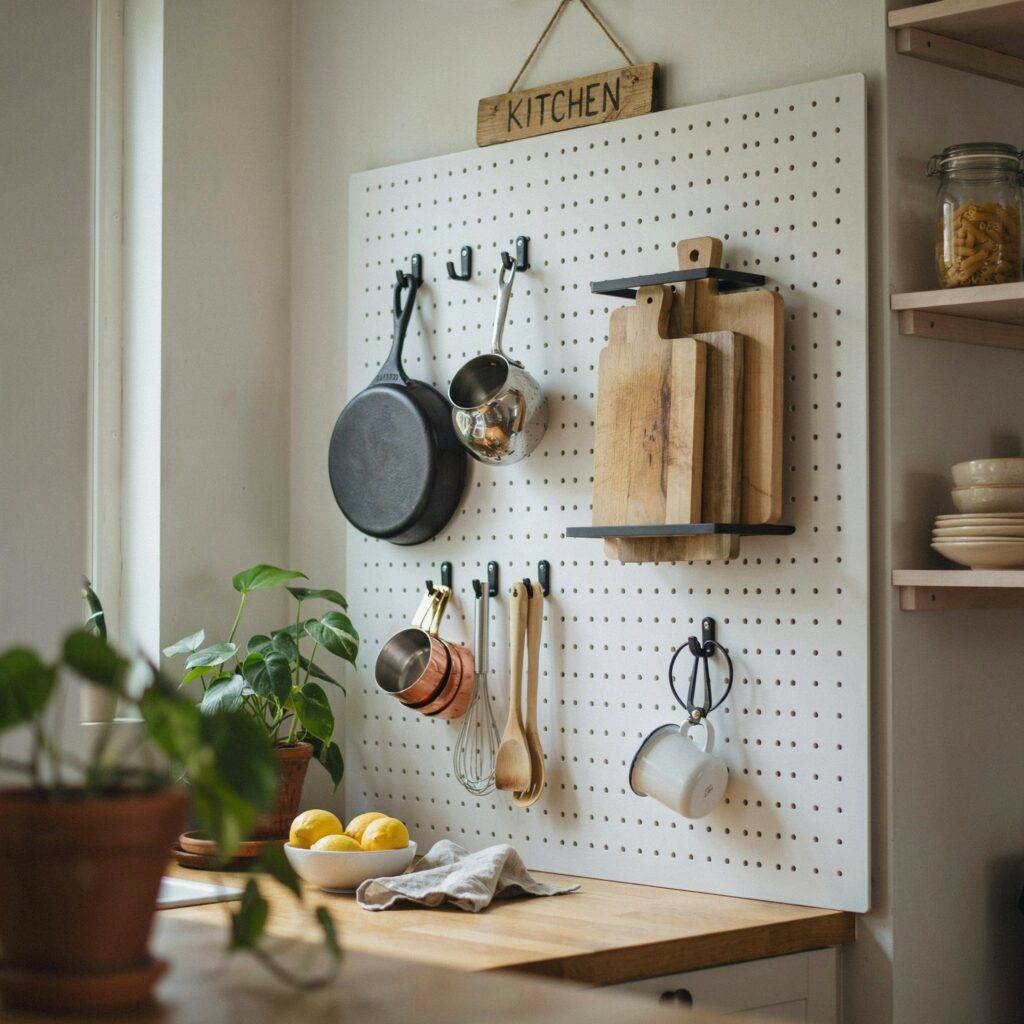
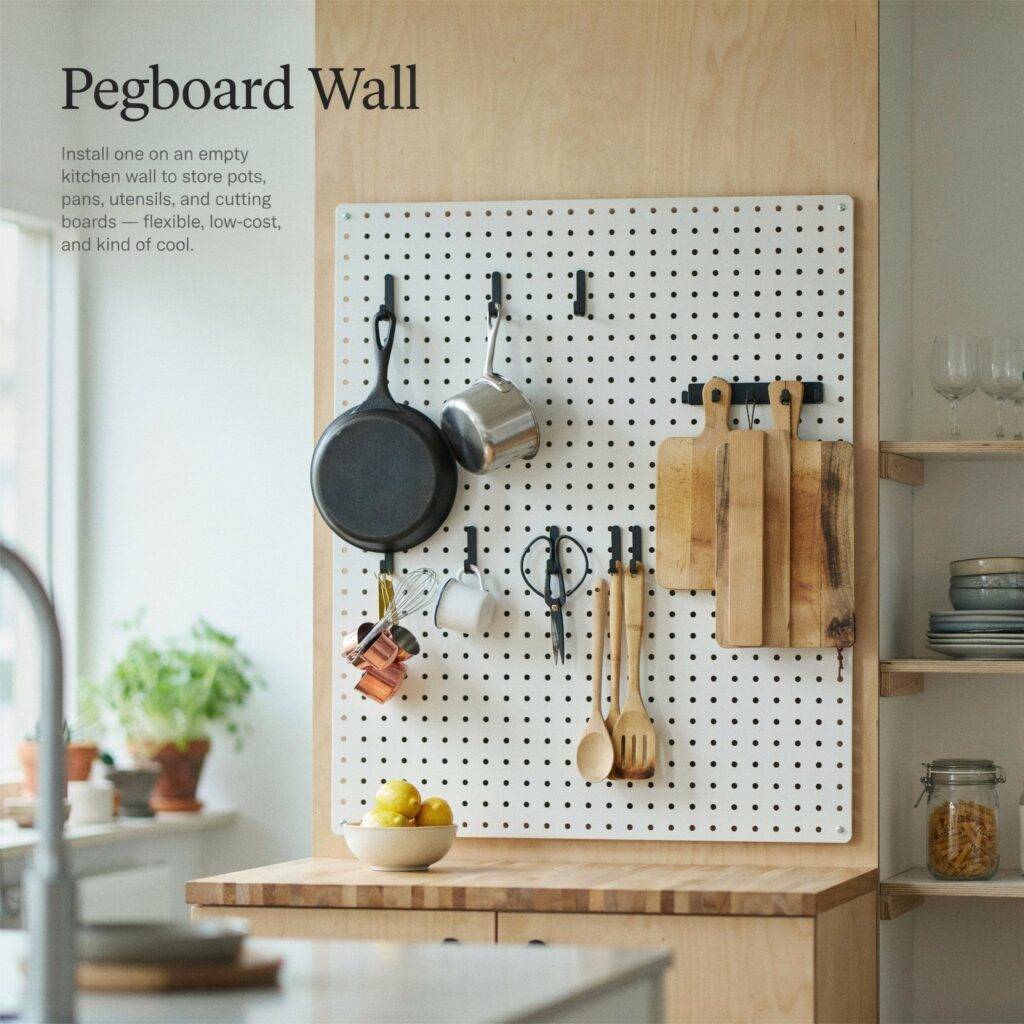
Pegboards aren’t just for garages. Hang one on an empty kitchen wall and use it to store pots, pans, utensils, and cutting boards.
It keeps frequently used items within easy reach and frees up cabinet space. Plus, it looks kind of cool.
You can rearrange the hooks anytime your needs change. It’s a flexible, low-cost solution that uses vertical space you might otherwise waste.
6. Use Bamboo Drawer Dividers
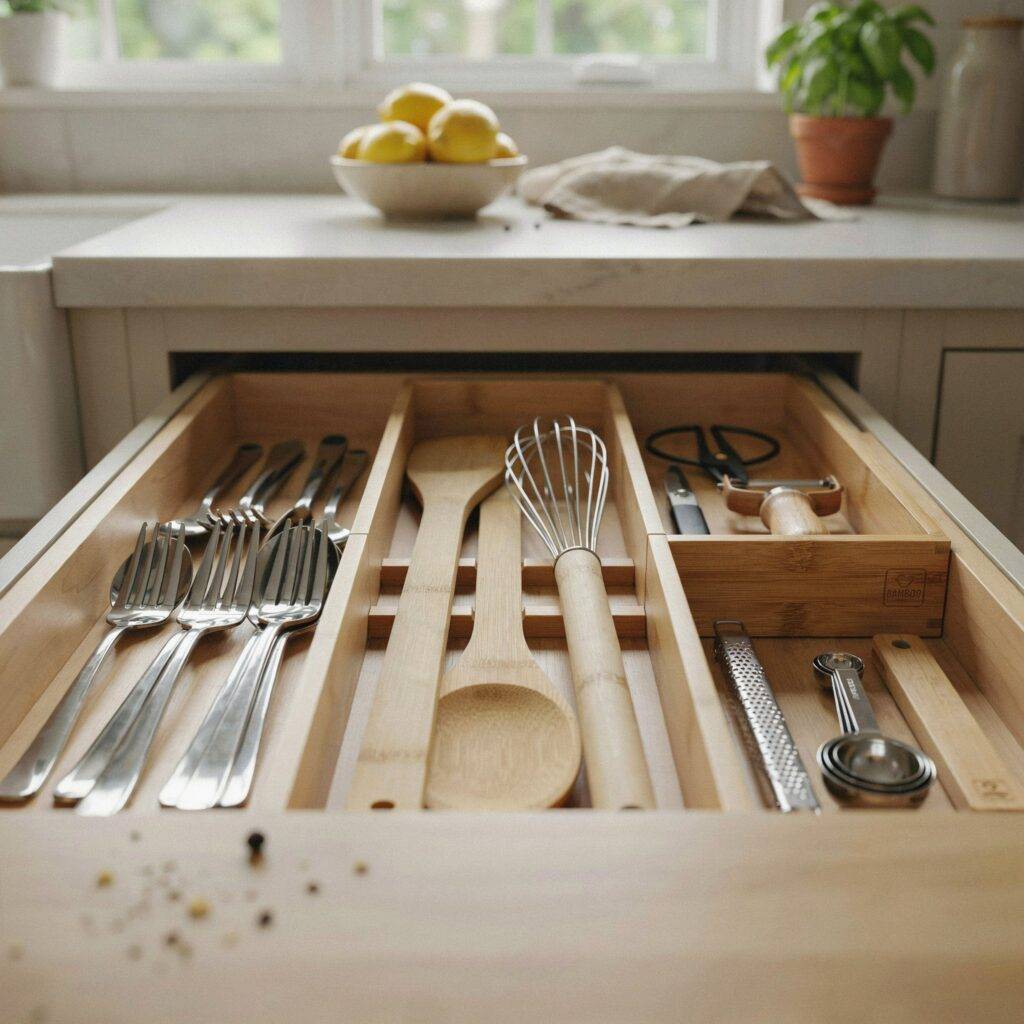
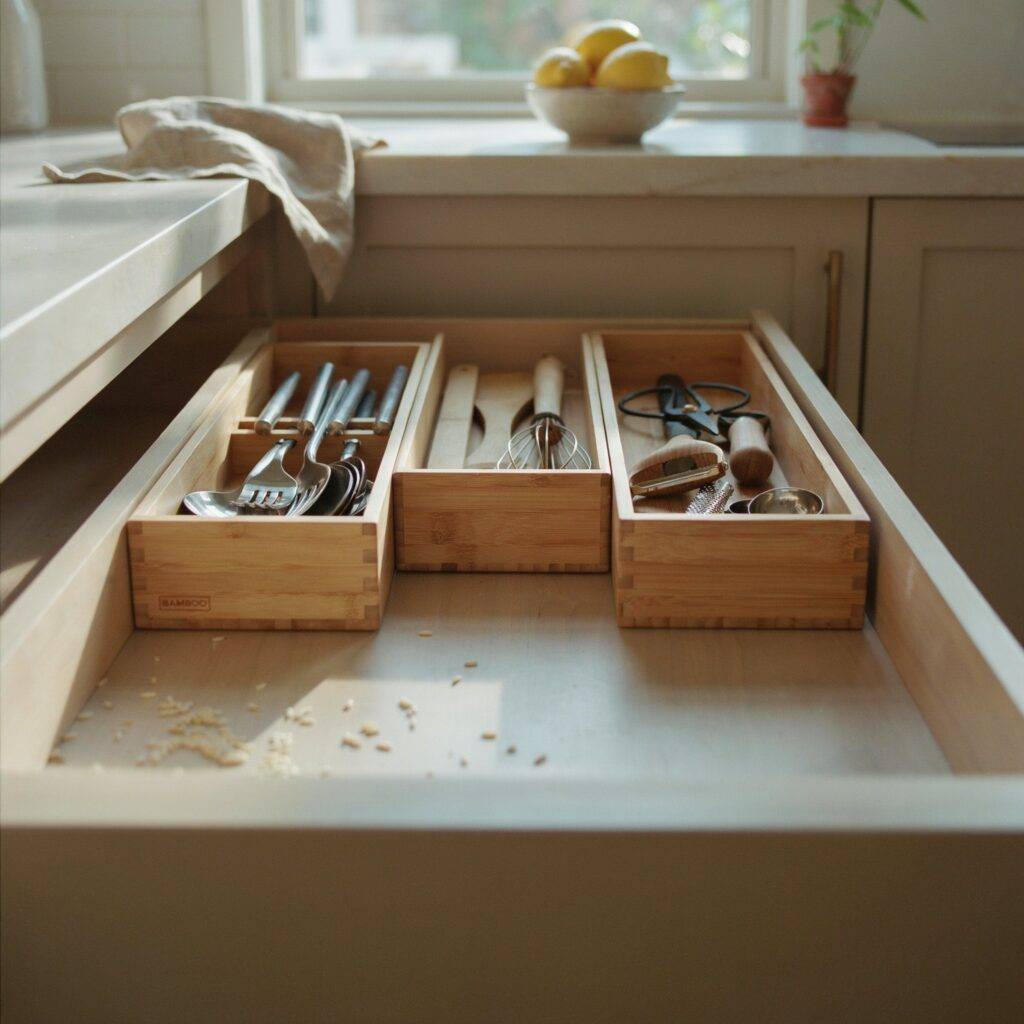
Plastic drawer organizers get the job done, but bamboo ones look better and are more sustainable.
Bamboo grows fast, doesn’t need pesticides, and absorbs carbon dioxide as it grows. These dividers keep your utensils, gadgets, and tools neatly separated.
They’re sturdy, warm-looking, and they won’t slide around. You can find them in various sizes to fit any drawer.
7. Create a Leftovers Zone in Your Fridge
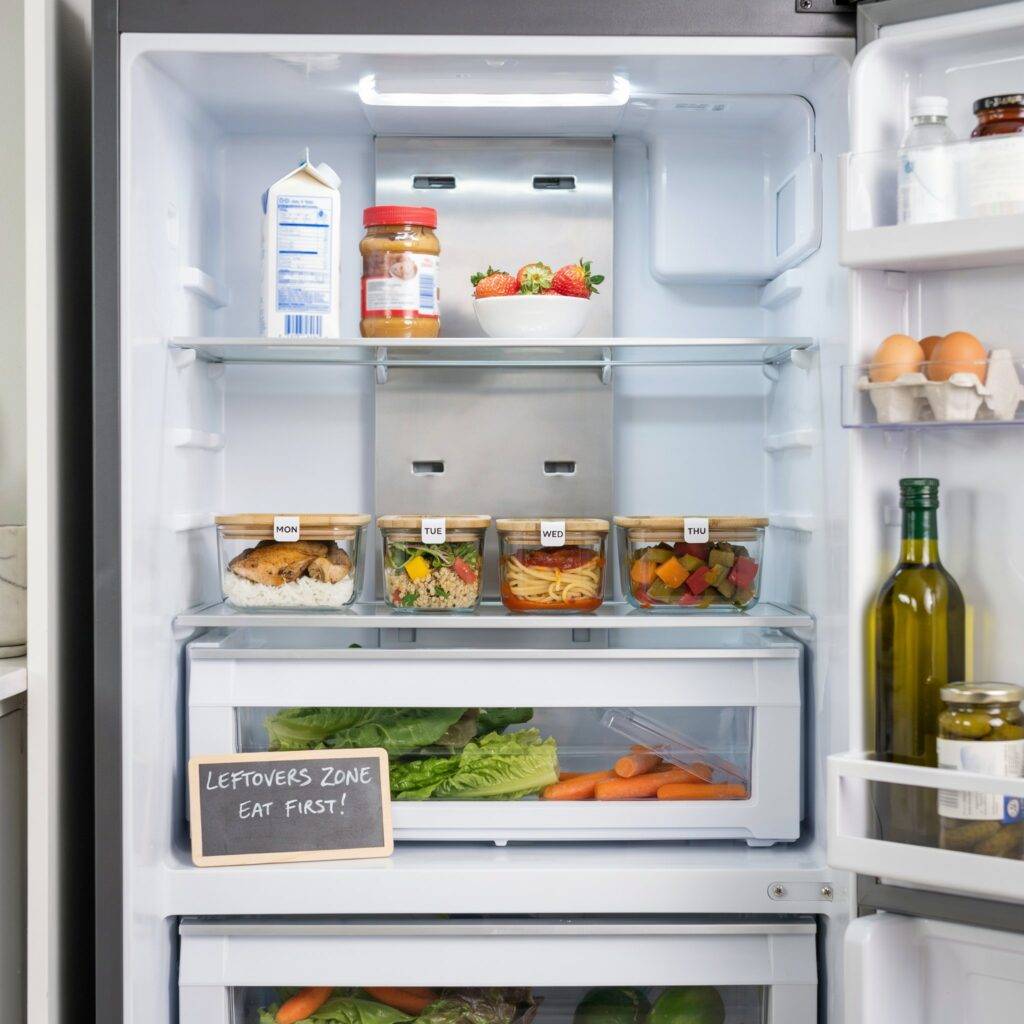
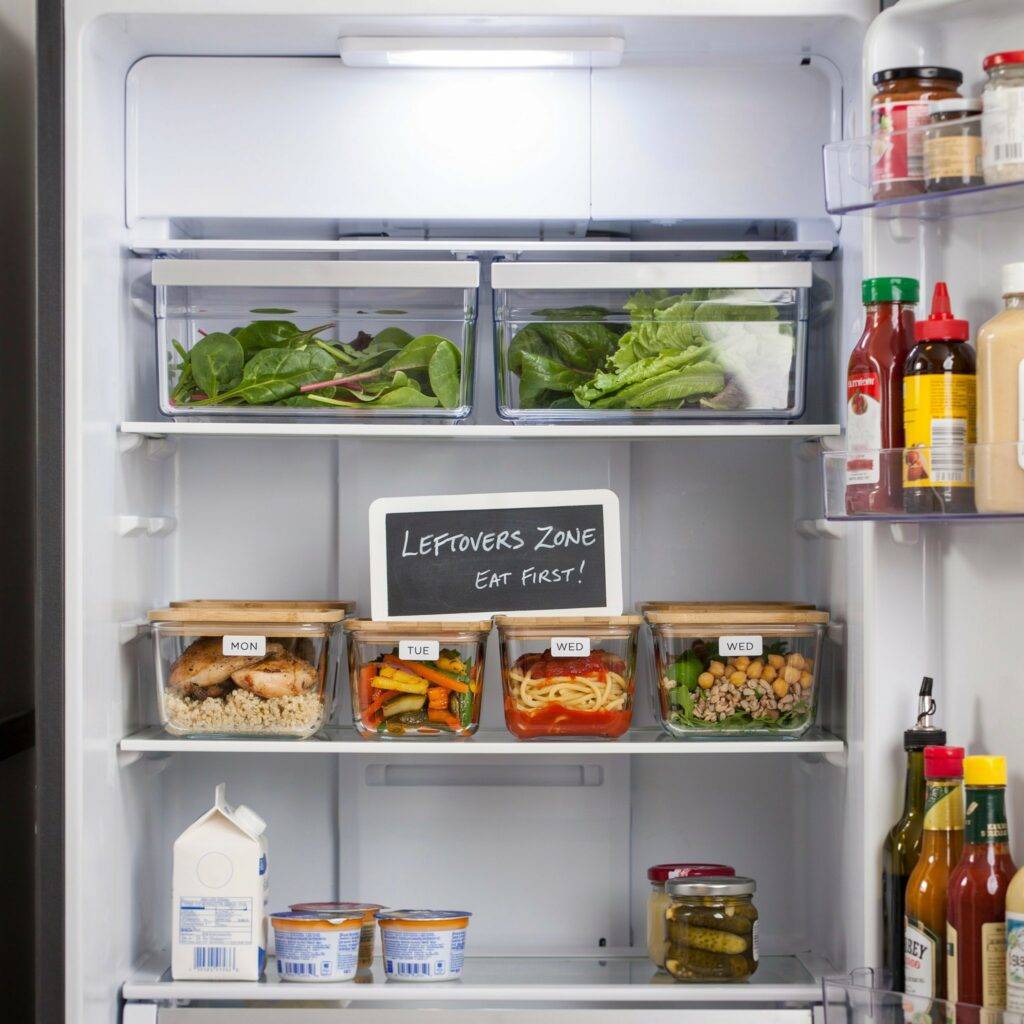
How many times have you found a container of something in the back of the fridge that you completely forgot about? Designate one specific shelf or spot for leftovers.
Put them there every single time. When you open the fridge, you’ll see them right away and actually eat them. This simple habit cuts down on food waste and saves you money.
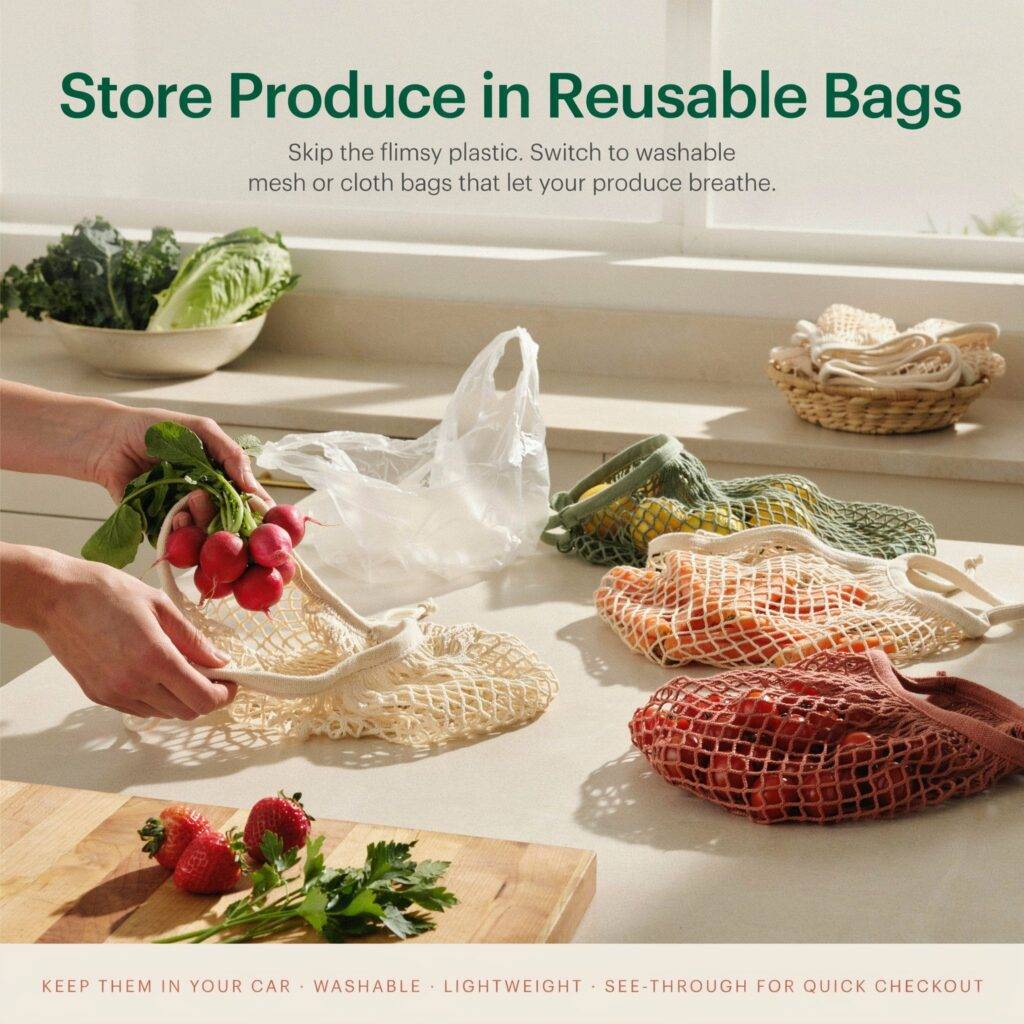
8. Store Produce in Reusable Bags
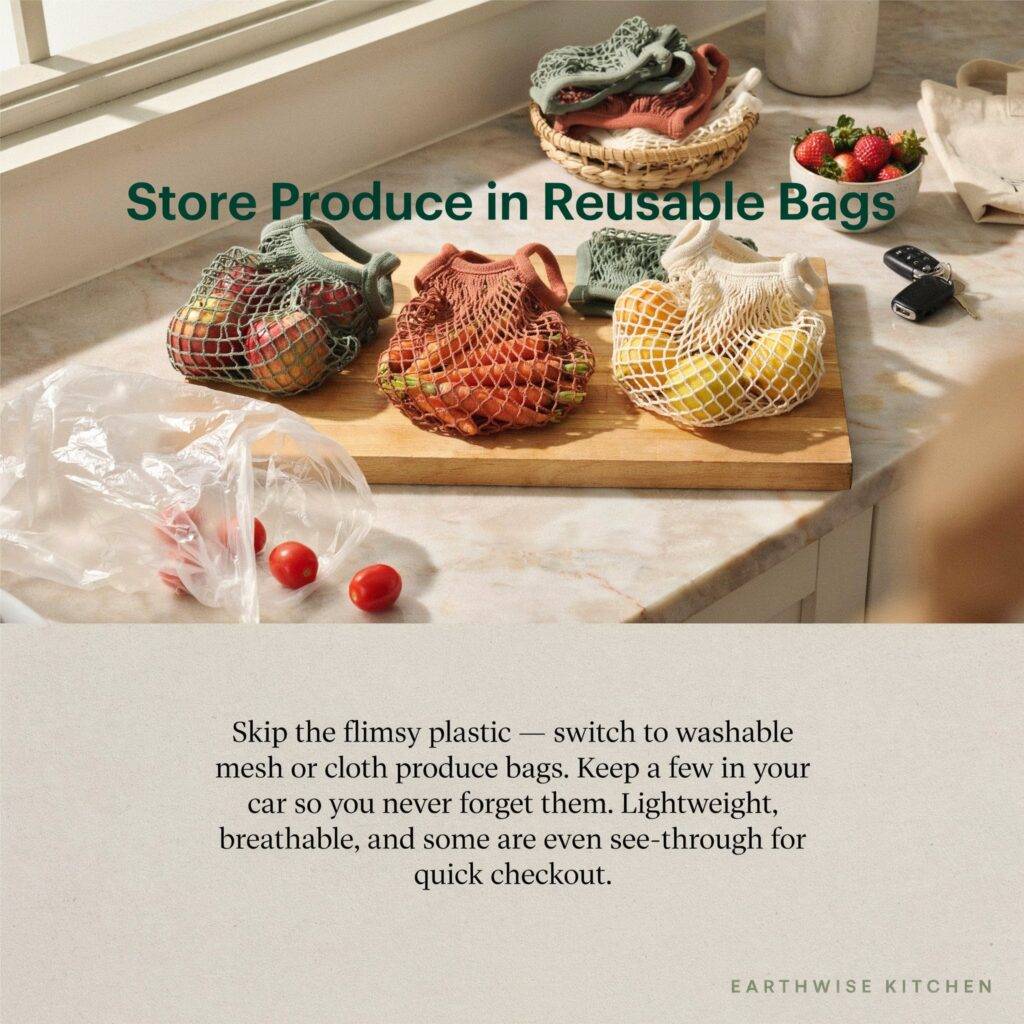
Those thin plastic produce bags from the grocery store are basically useless and wasteful. Switch to reusable mesh or cloth produce bags.
Keep them in your car so you never forget them. They’re washable, lightweight, and let your fruits and vegetables breathe. Some are even see-through so checkout is quick.
9. Hang Pots and Pans
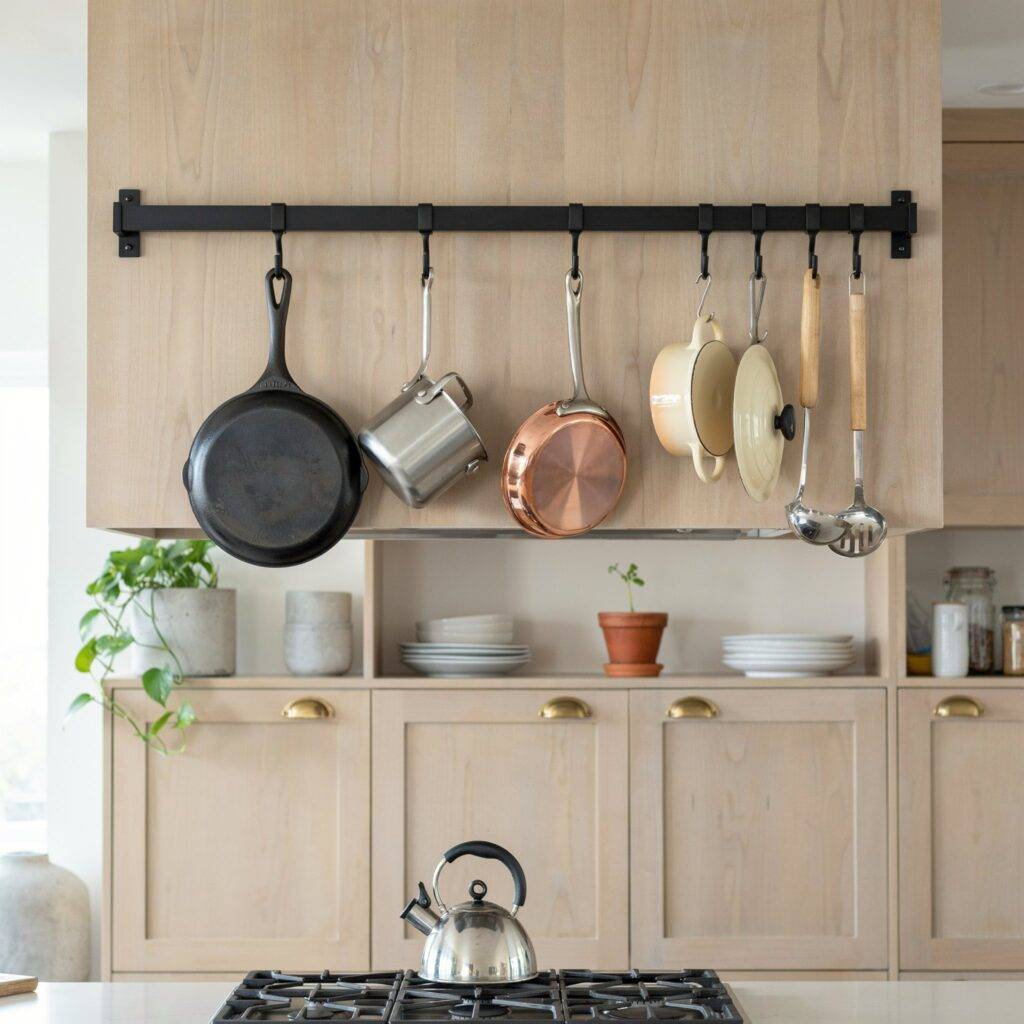
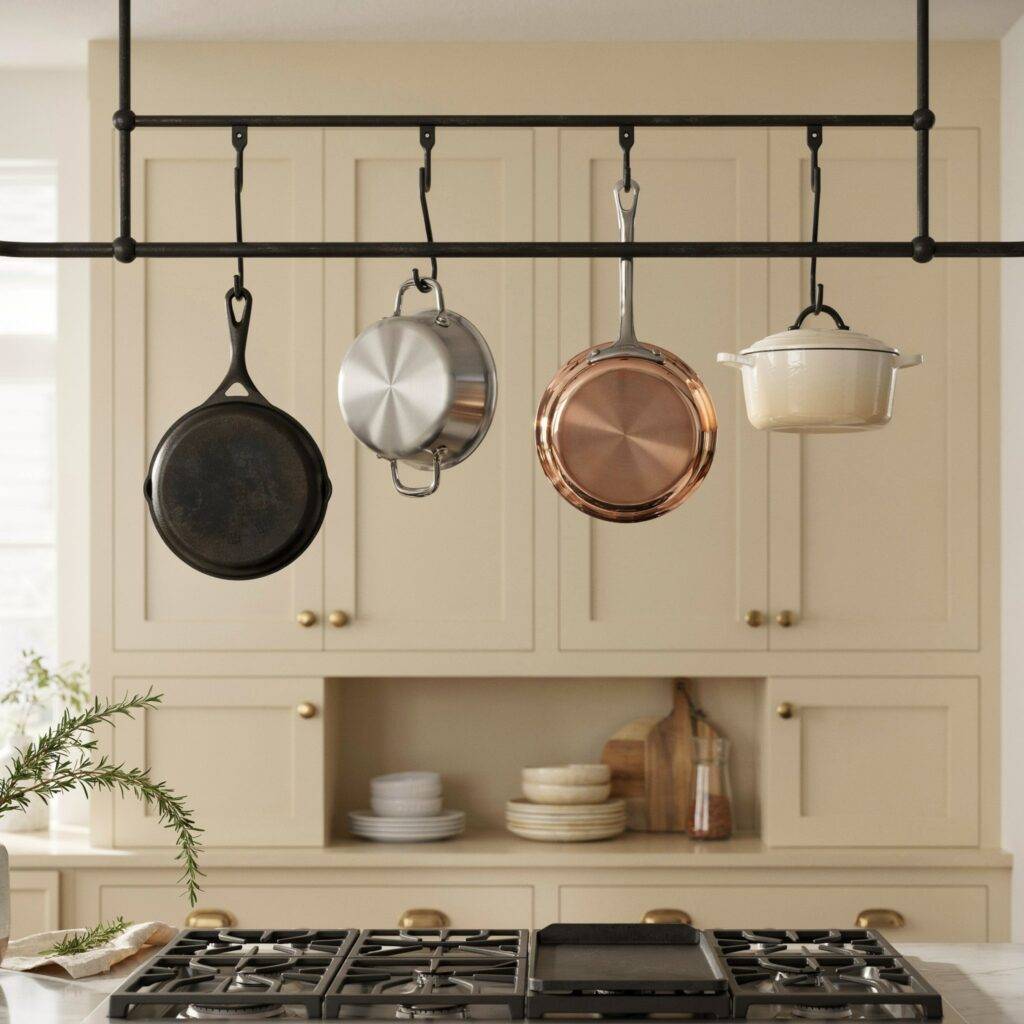
Stacking pots and pans in a cabinet is frustrating. You have to pull out three heavy pans just to get to the one you need. Install a pot rack or a wall-mounted rail and hang them instead.
It frees up cabinet space, protects your cookware from scratches, and makes cooking easier because everything is right there. Choose one made from recycled metal or sustainable wood.
10. Decant Spices into Matching Jars
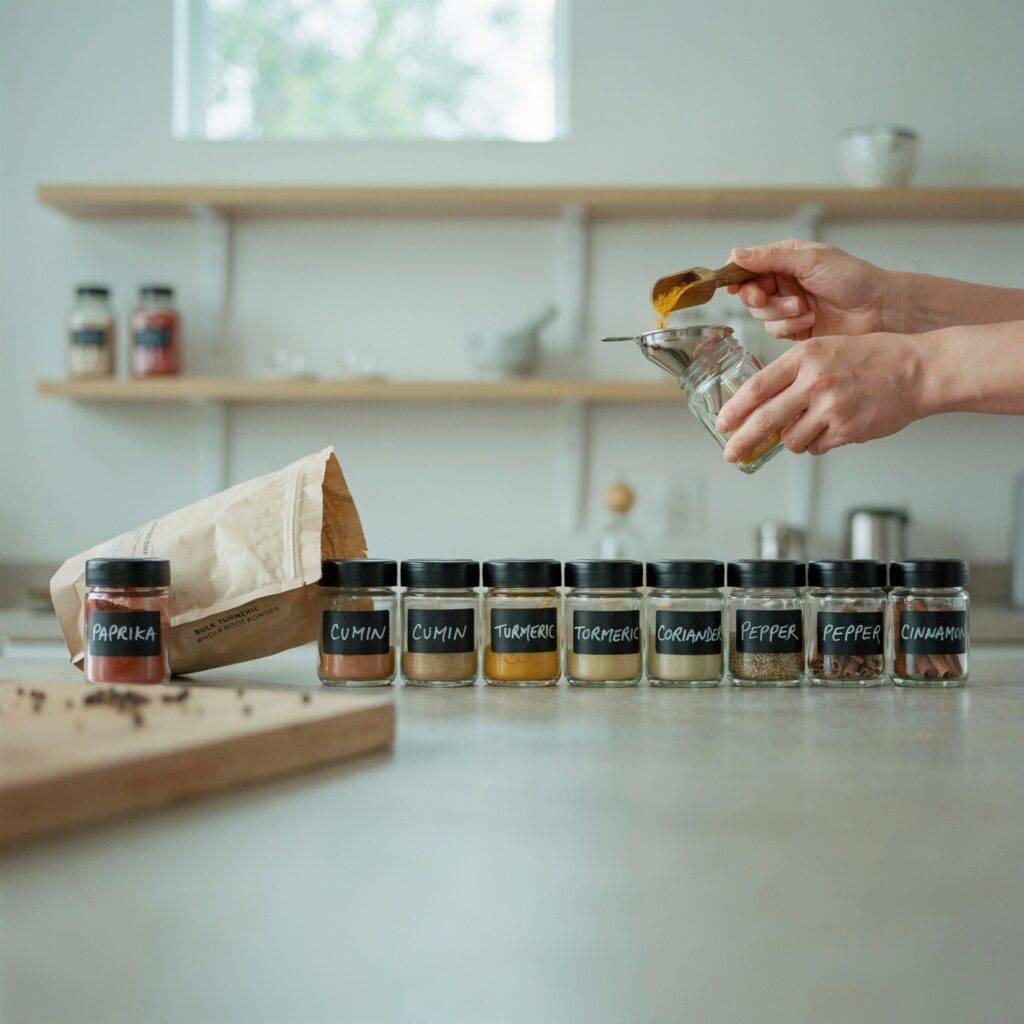
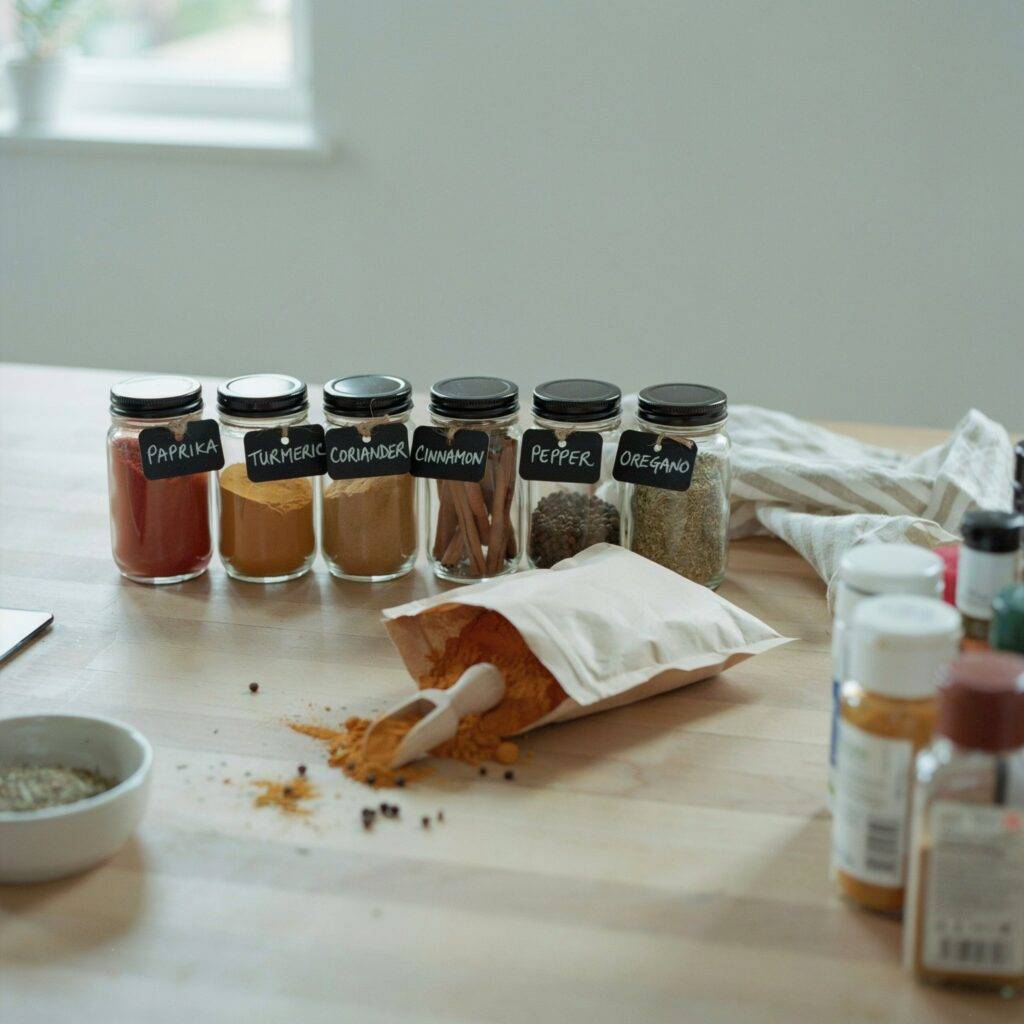
Spice bottles are all different shapes and sizes, which makes them hard to organize. Transfer your spices into matching glass jars. Label them with chalkboard labels or a permanent marker.
You can see what you have at a glance, and they look nice on a shelf or in a drawer. Buy spices in bulk to refill them and avoid all that packaging waste.
11. Use a Rolling Cart for Extra Storage
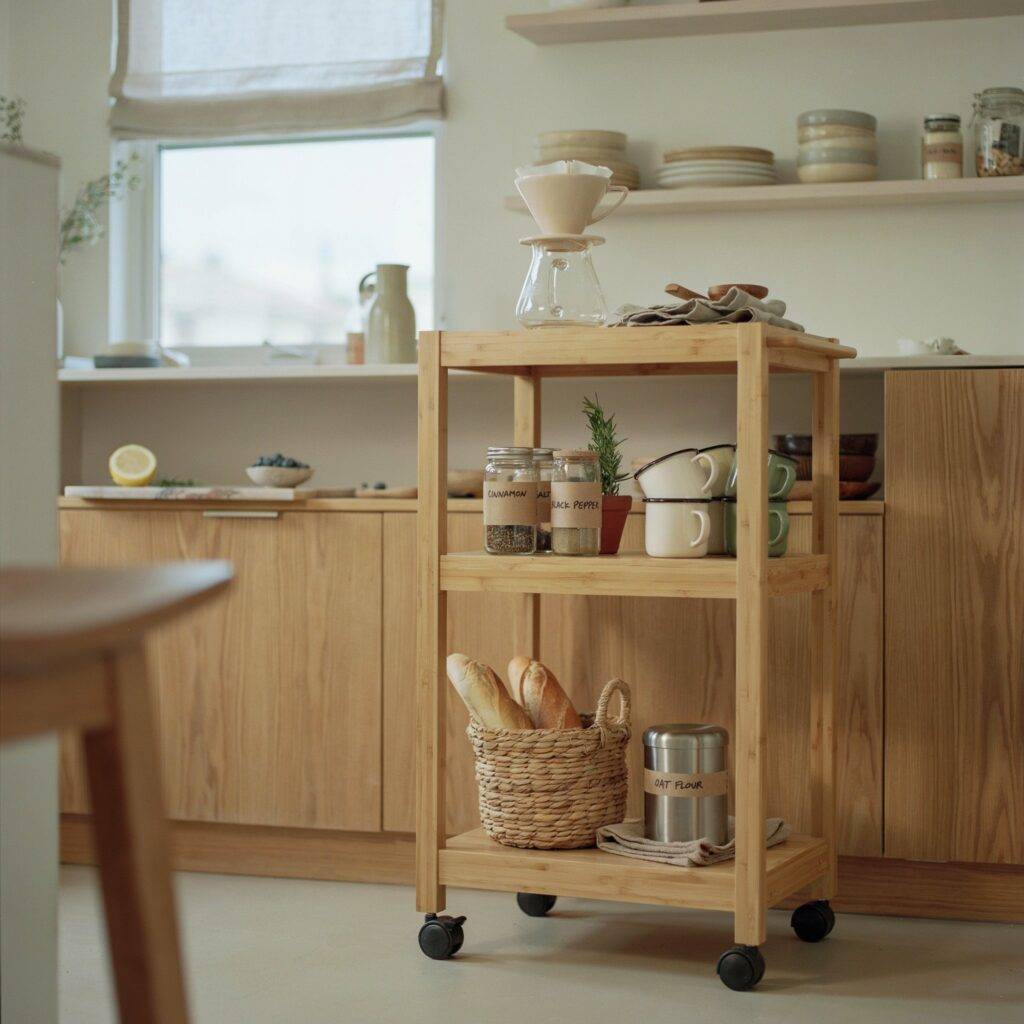
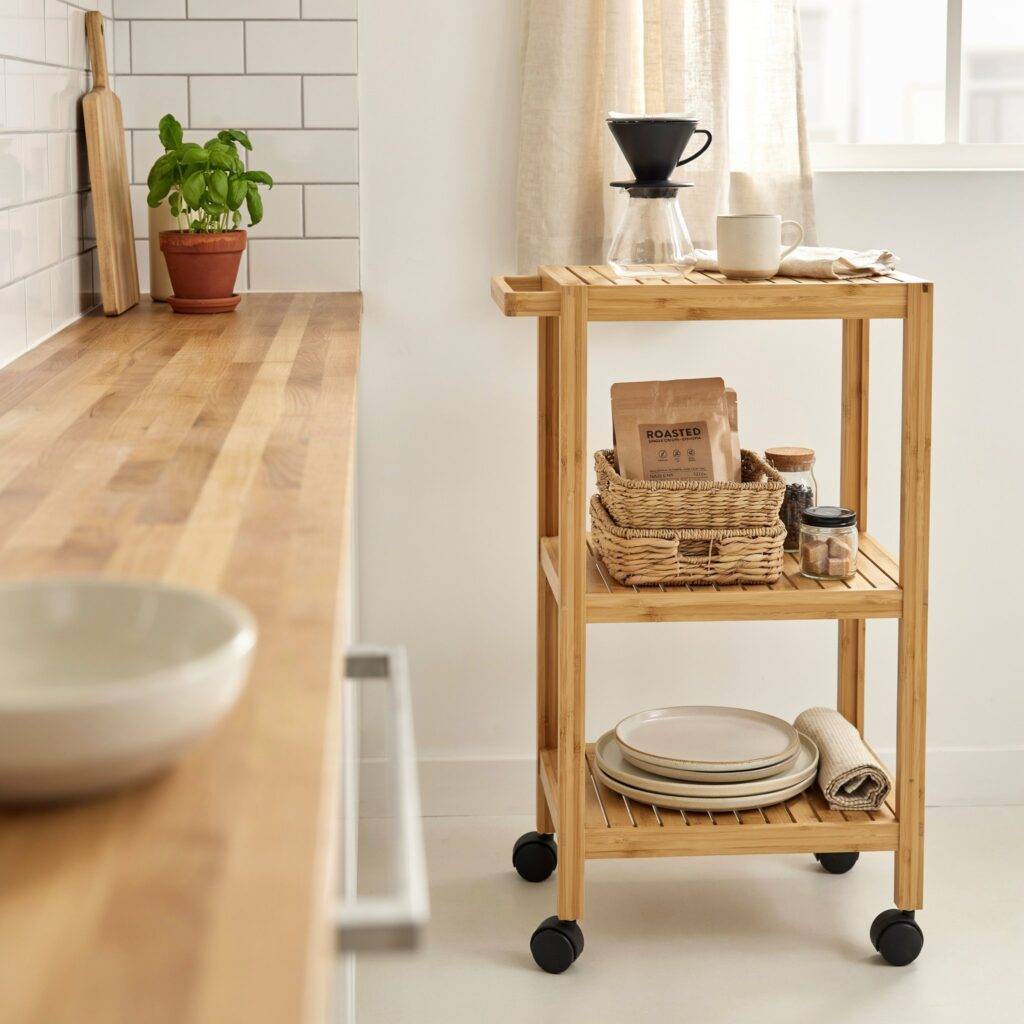
If your kitchen is short on counter or cabinet space, a rolling cart is a lifesaver. Use it as a coffee station, a baking prep area, or extra pantry storage.
The wheels mean you can move it wherever you need it. Look for one made from sustainable materials like bamboo or reclaimed wood.
12. Repurpose Old Mason Jars
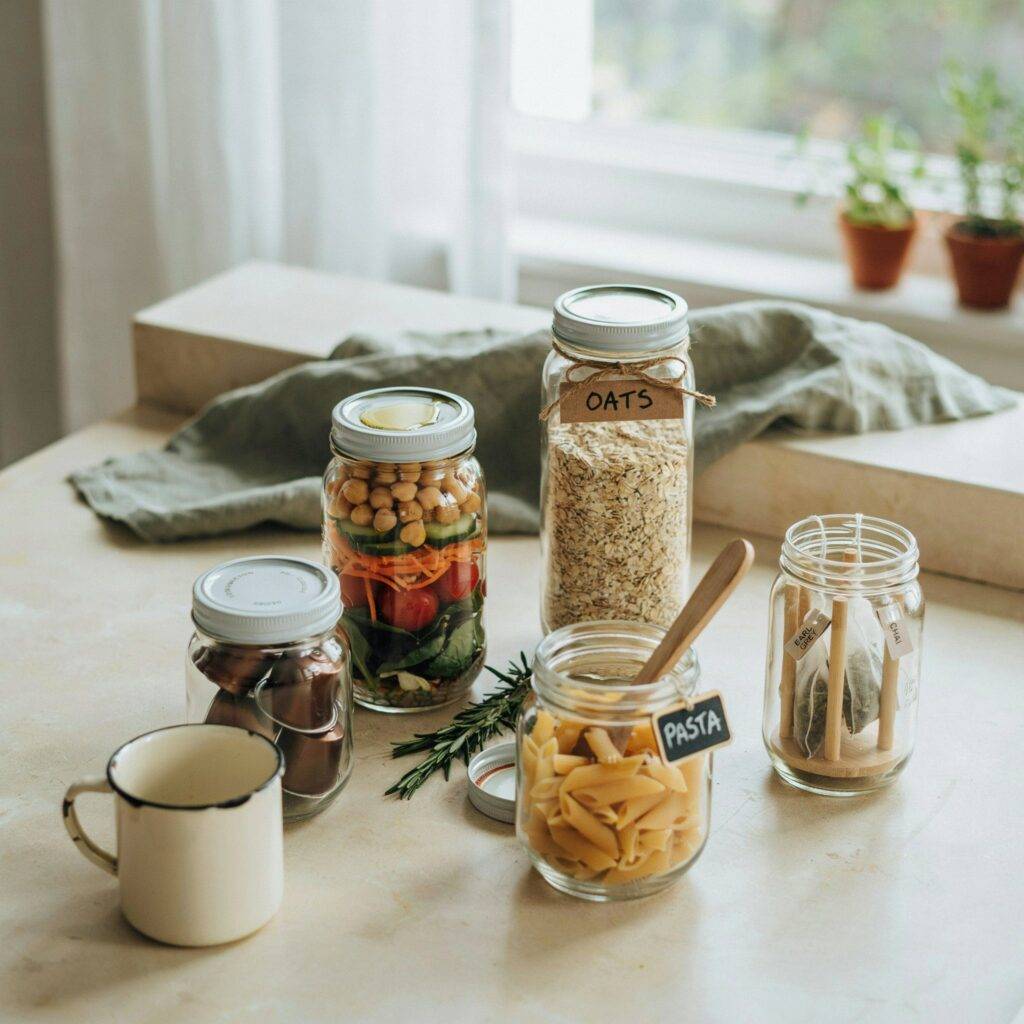
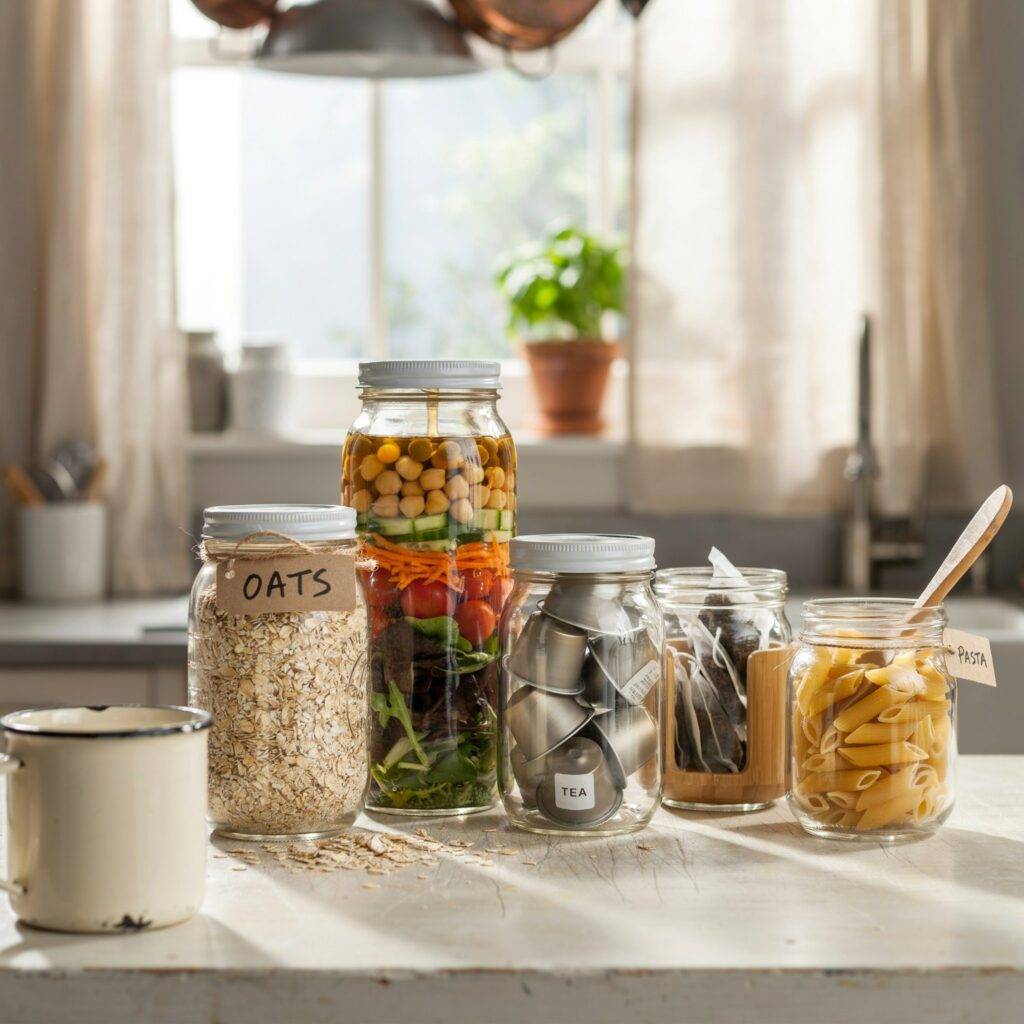
Mason jars are incredibly versatile. Use them to store dry goods, make overnight oats, pack salads for lunch, or organize small items like tea bags and coffee pods.
They’re cheap, reusable, and they look charming. You can find them at thrift stores for next to nothing. Just make sure the lids seal properly if you’re storing food.
13. Install a Wall-Mounted Spice Rack
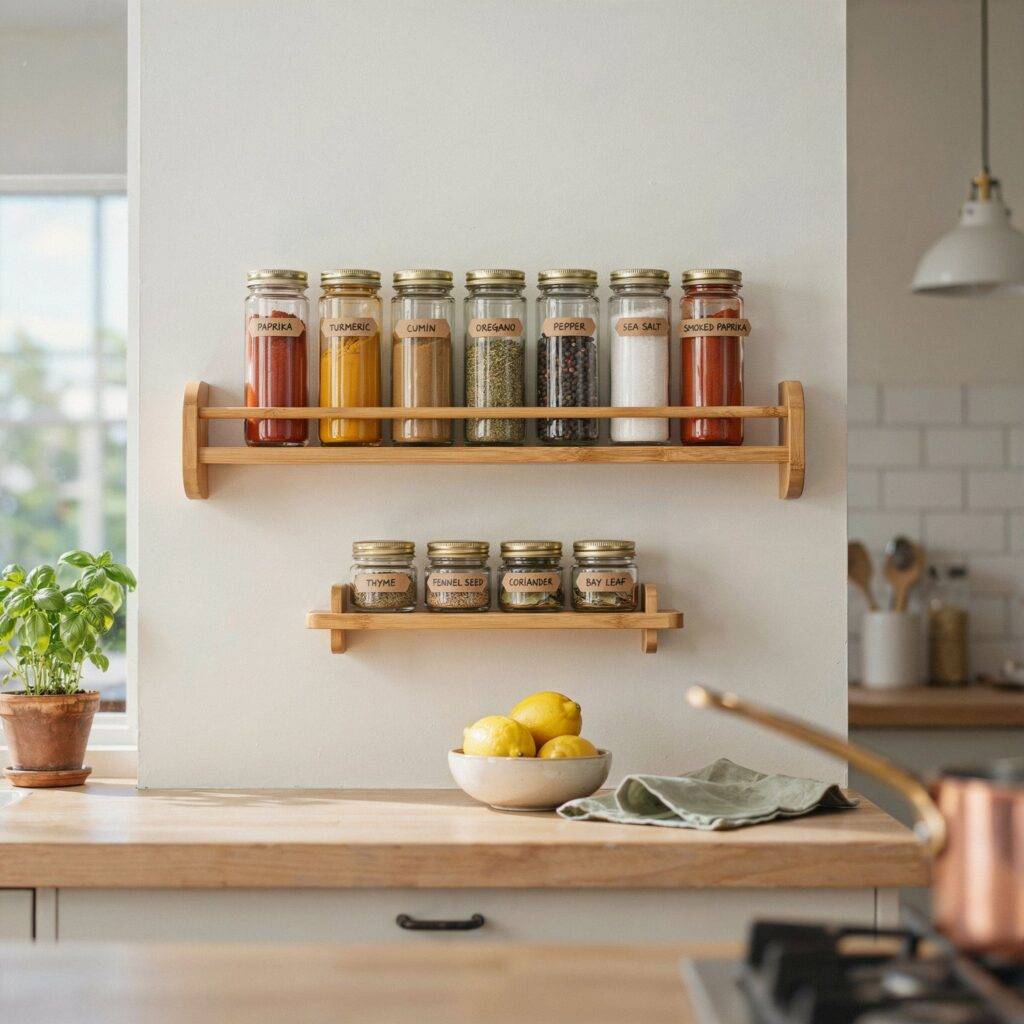
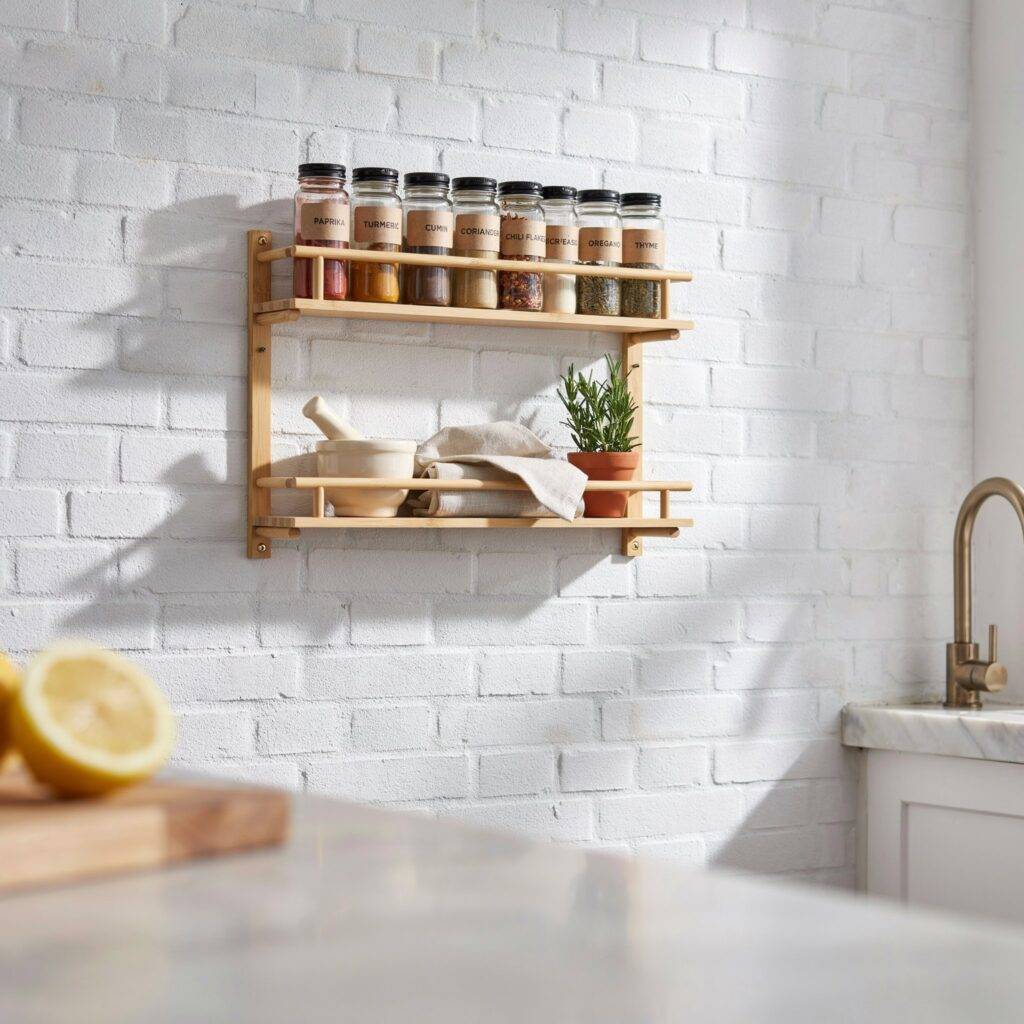
If you don’t have space in your cabinets for spices, put them on the wall. A simple shelf or a magnetic rack keeps your spices visible and accessible.
It frees up cabinet space and adds a decorative element to your kitchen. Choose one made from bamboo or reclaimed wood to keep it eco-friendly.
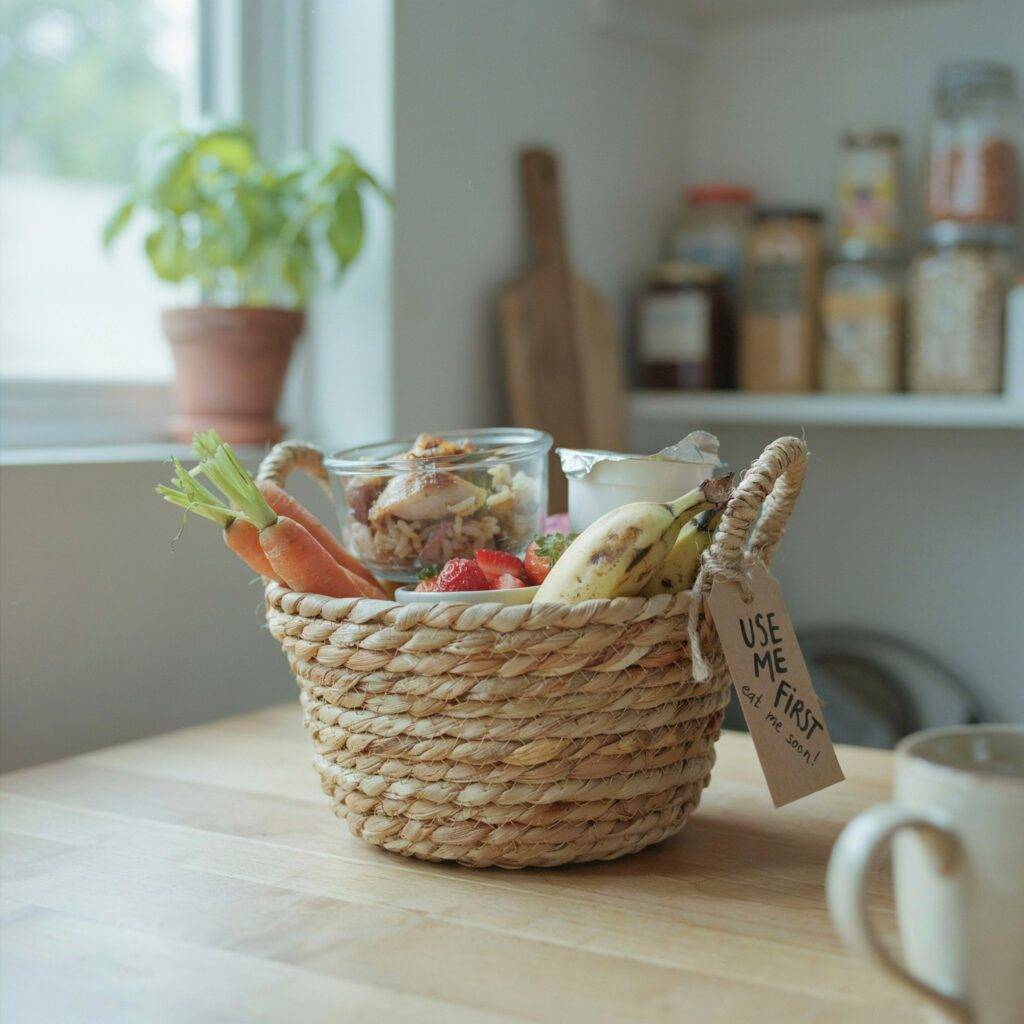
14. Keep a “Use Me First” Basket
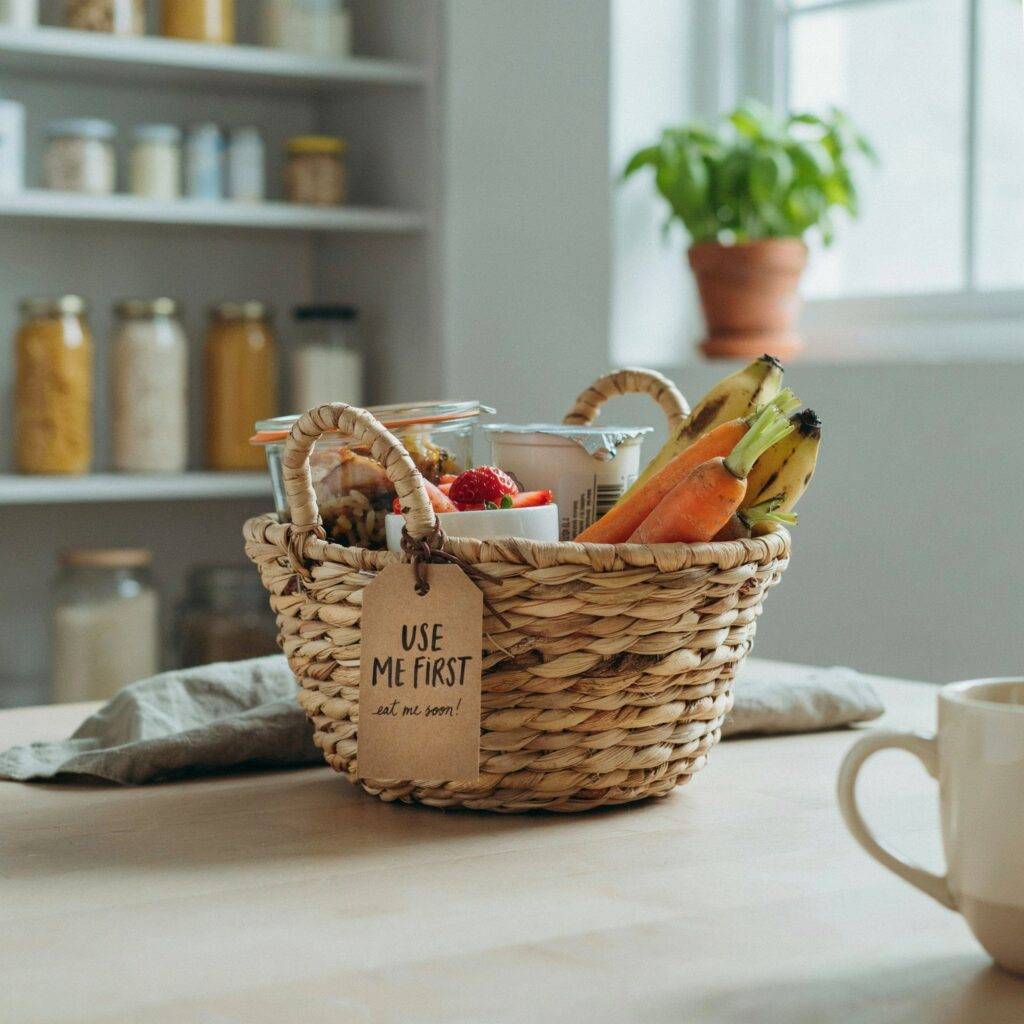
Designate a small basket or bin in your pantry or on your counter for foods that need to be eaten soon.
This might be leftovers, produce that’s starting to soften, or things with upcoming expiration dates. When everyone in the household knows to check that basket first, less food goes to waste.
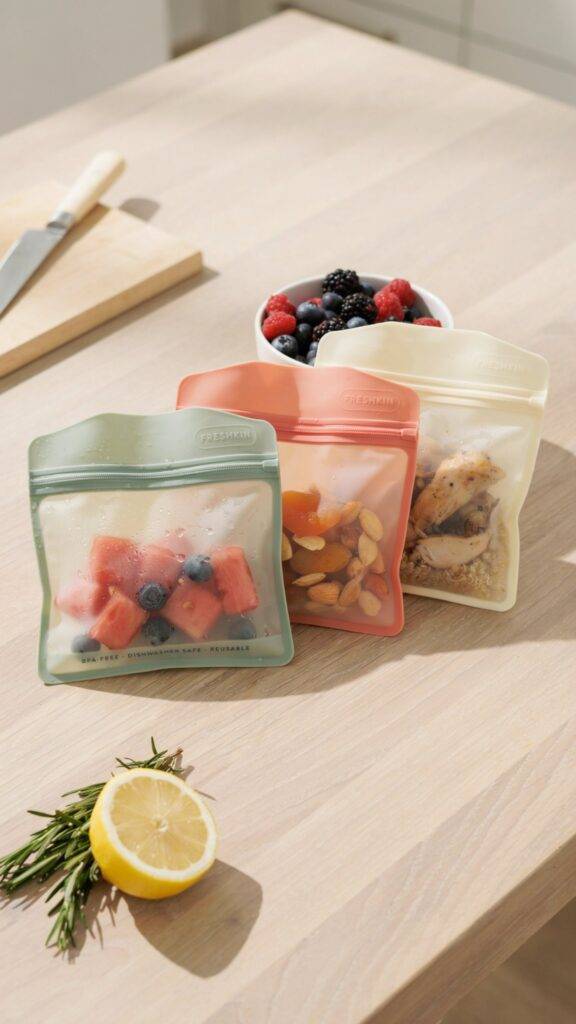
15. Switch to Silicone Storage Bags
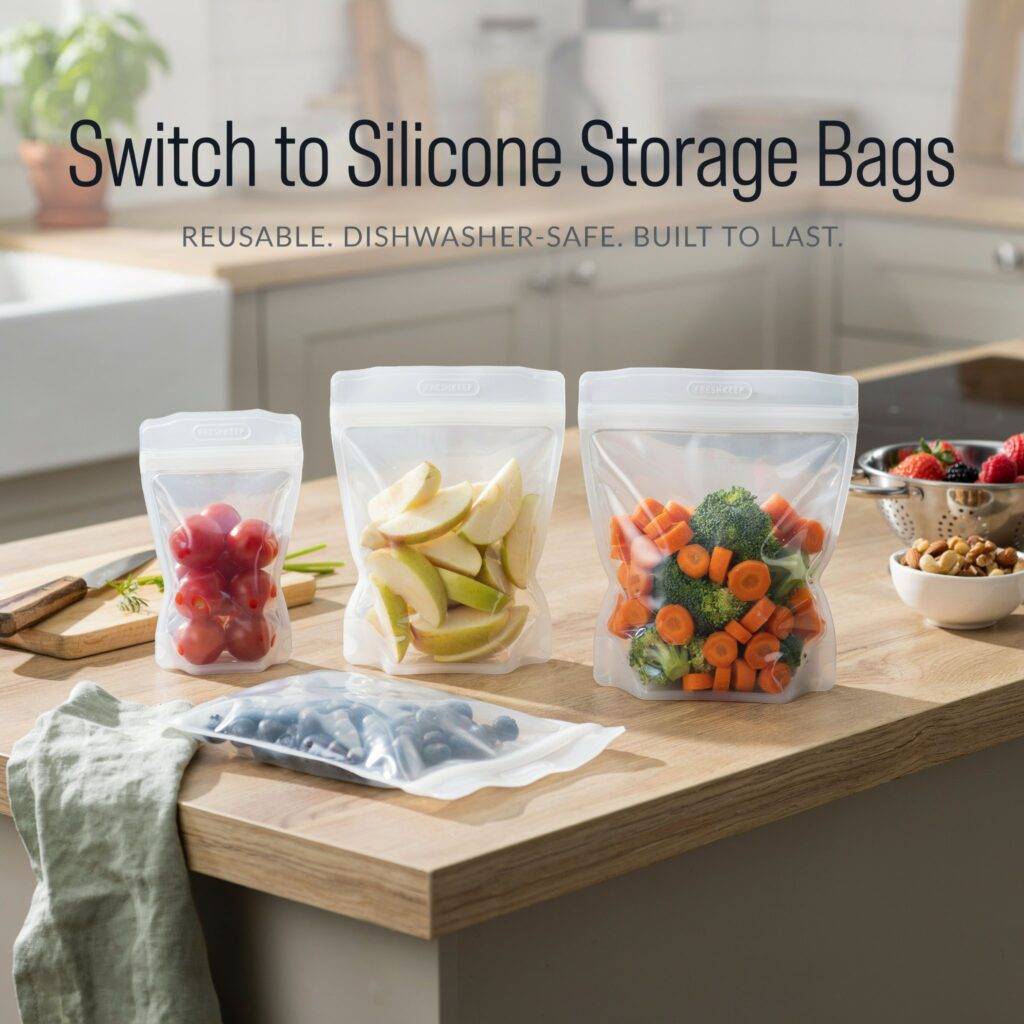
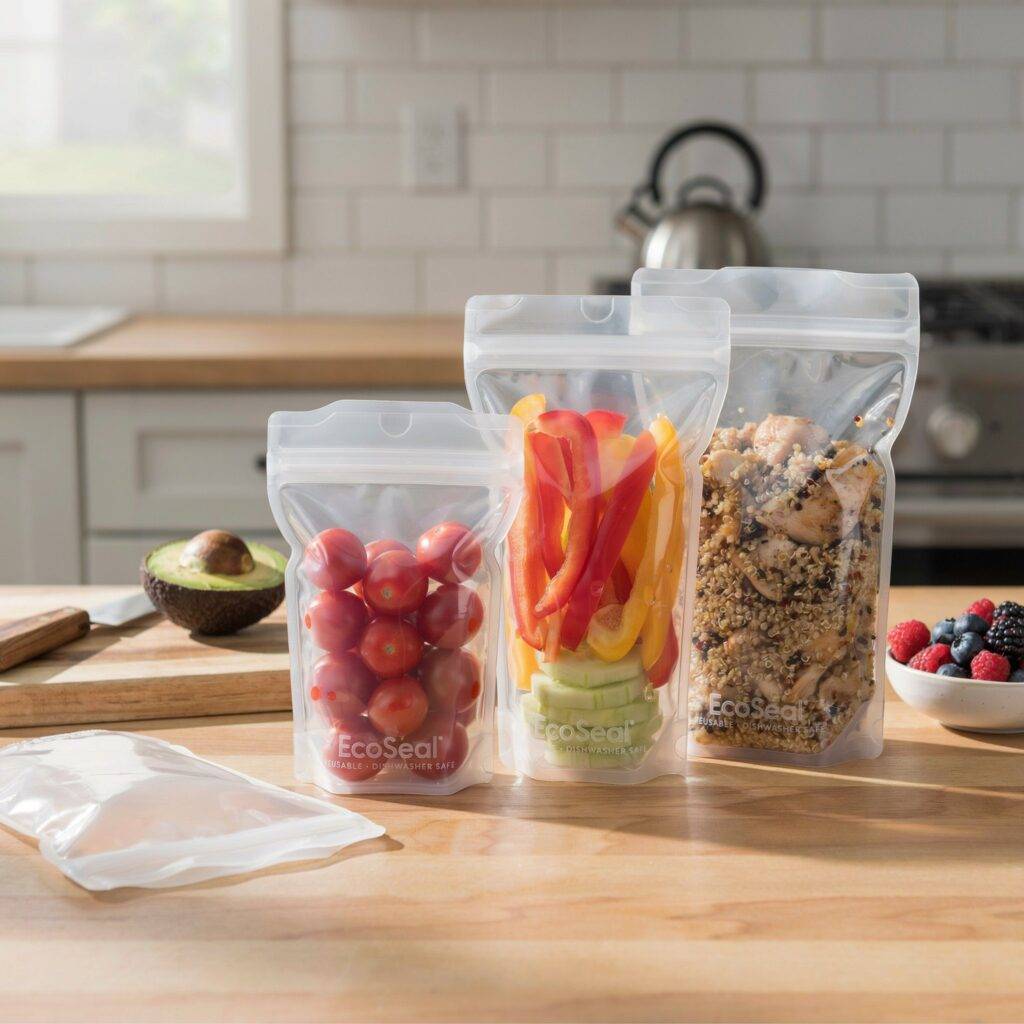
Ziploc bags are convenient, but they’re also single-use plastic. Silicone bags are a reusable alternative that works for everything from snacks to leftovers. They’re dishwasher-safe, freezer-safe, and they seal tightly.
You can use them over and over for years. They come in various sizes and even stand up on their own for easy filling.
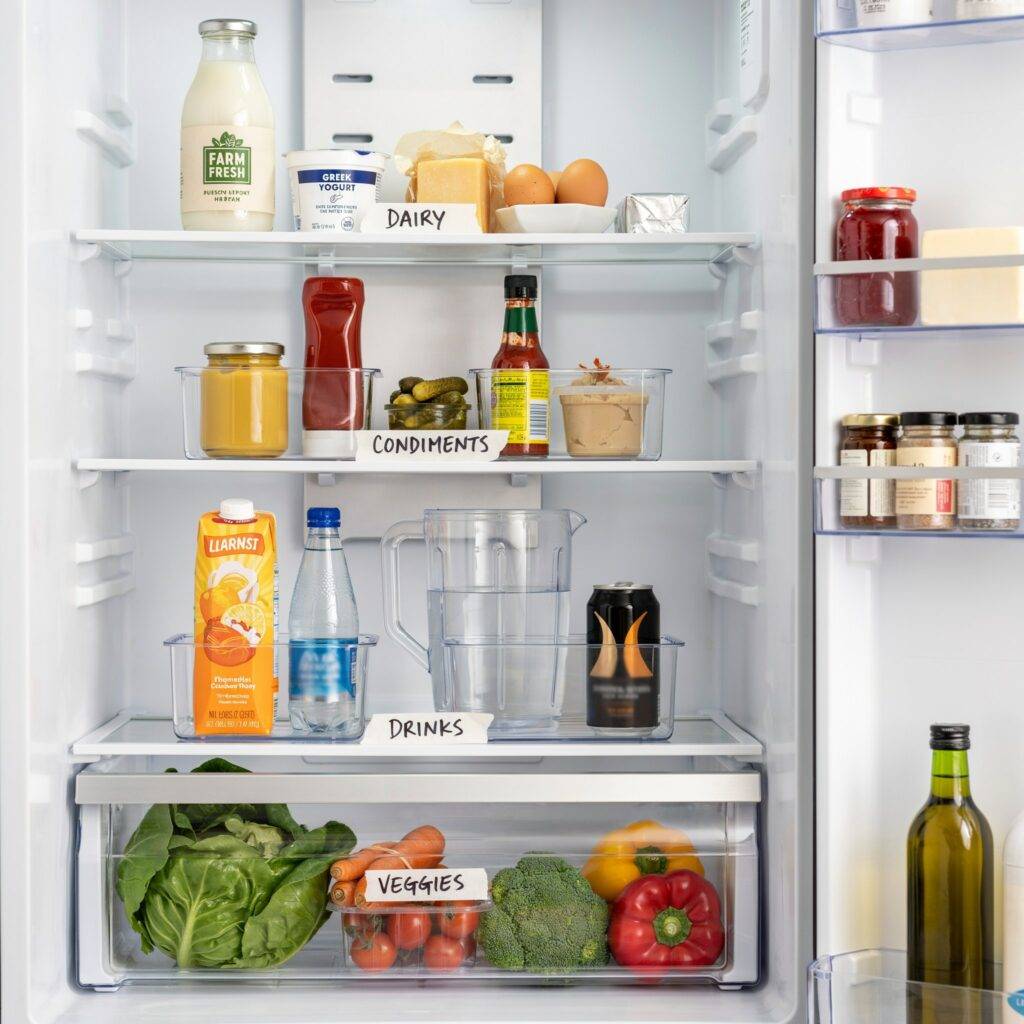
16. Organize Your Fridge by Category
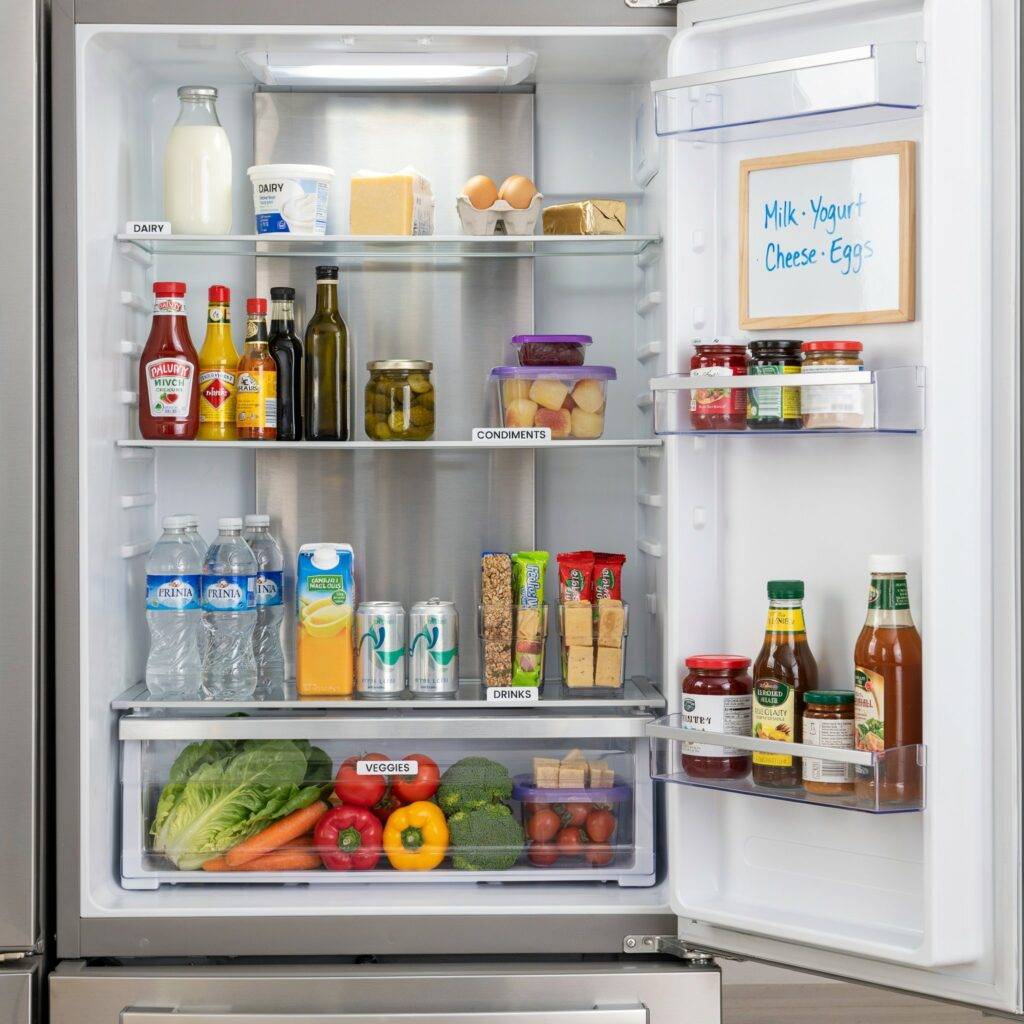
Instead of just shoving things in wherever they fit, assign specific areas for specific types of food.
Put dairy together, condiments together, vegetables in the crisper drawers. This makes it easier to find what you need and harder to lose things in the back. You’ll waste less food because you can actually see everything you have.
17. Use Stackable Bamboo Storage Boxes
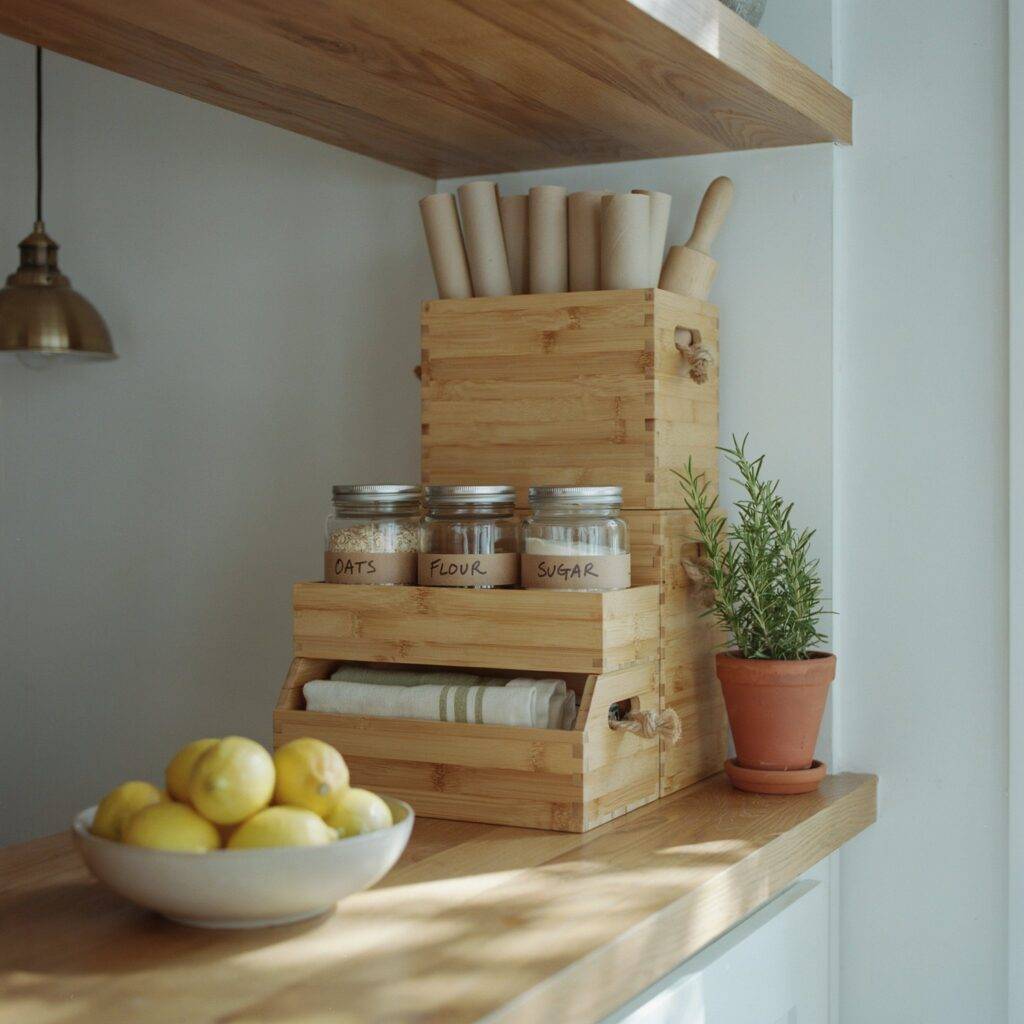
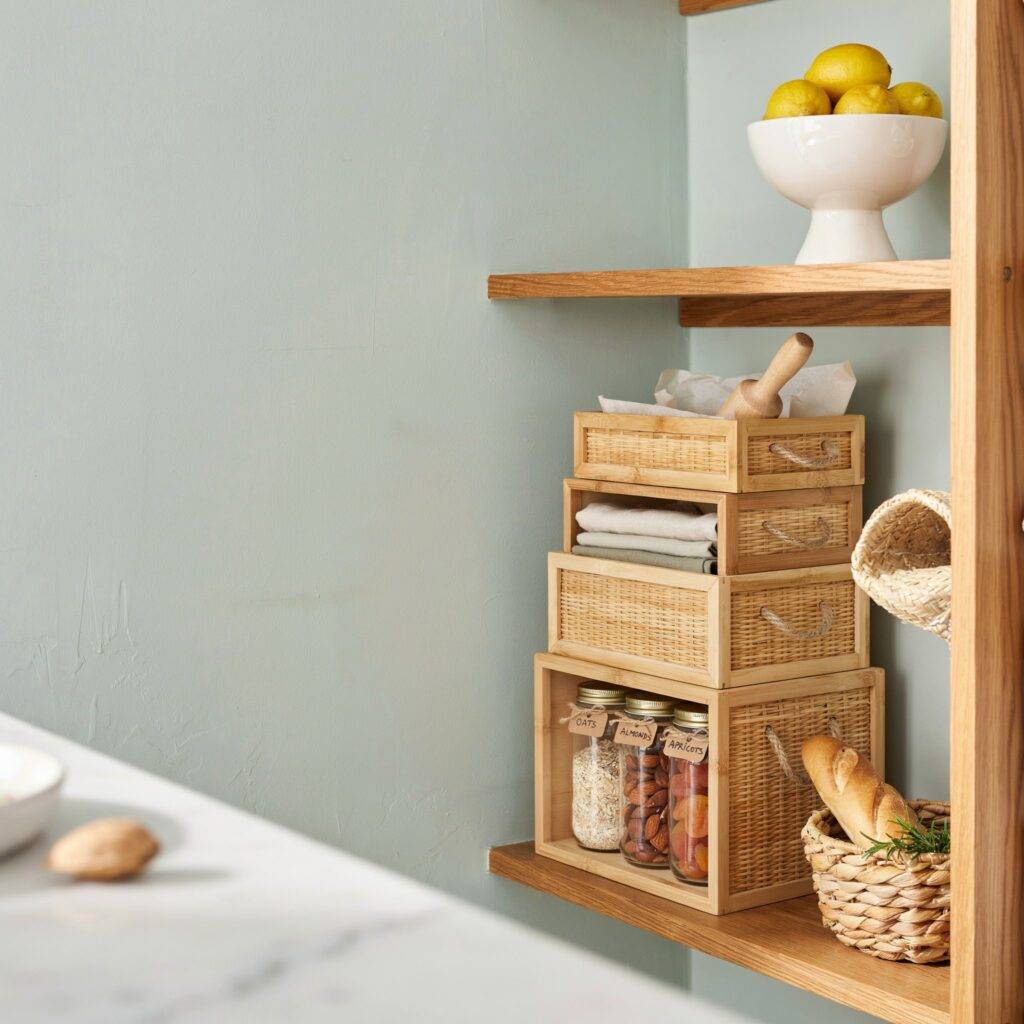
Bamboo storage boxes are a great alternative to plastic bins. They’re durable, renewable, and they look warm and natural in any kitchen.
Stack them in your pantry or on open shelves. Use them for snacks, baking supplies, or anything else that needs corralling. They keep things neat and accessible.
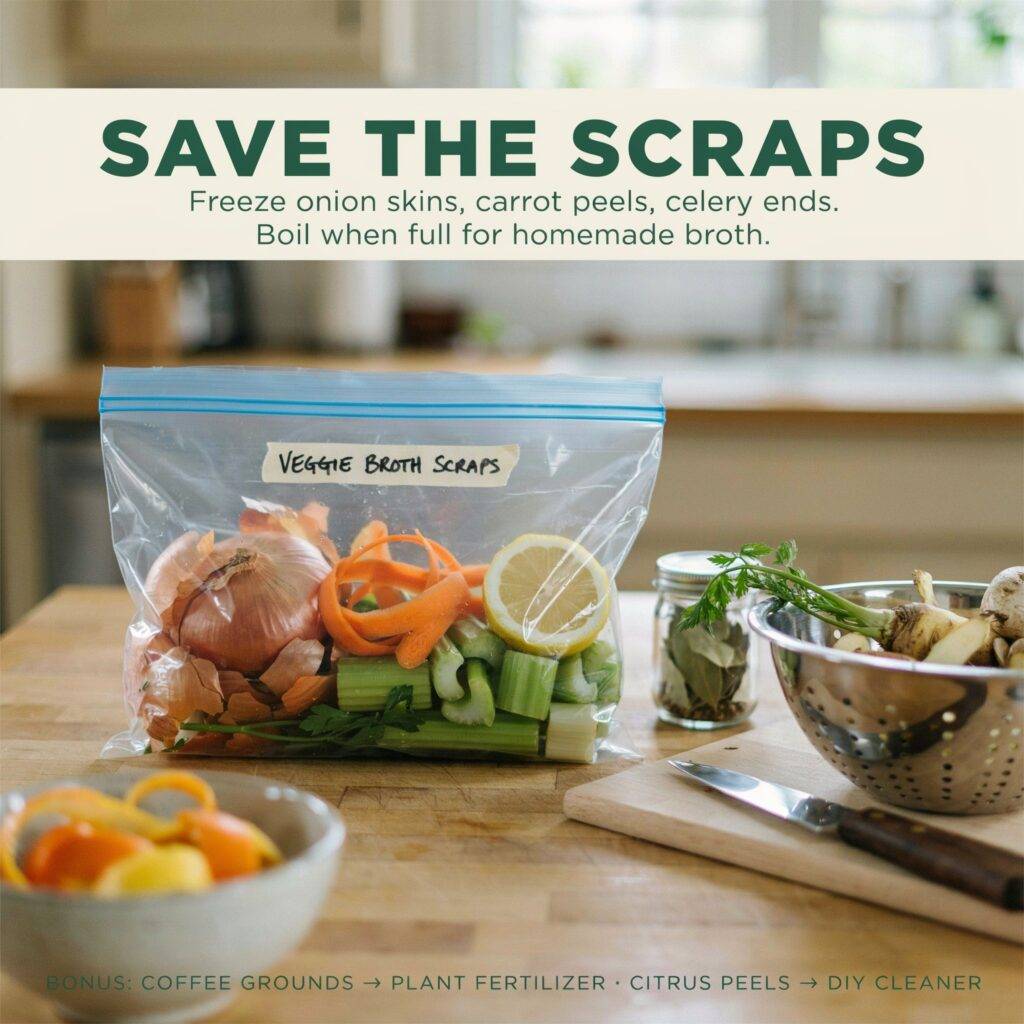
18. Save Vegetable Scraps for Broth
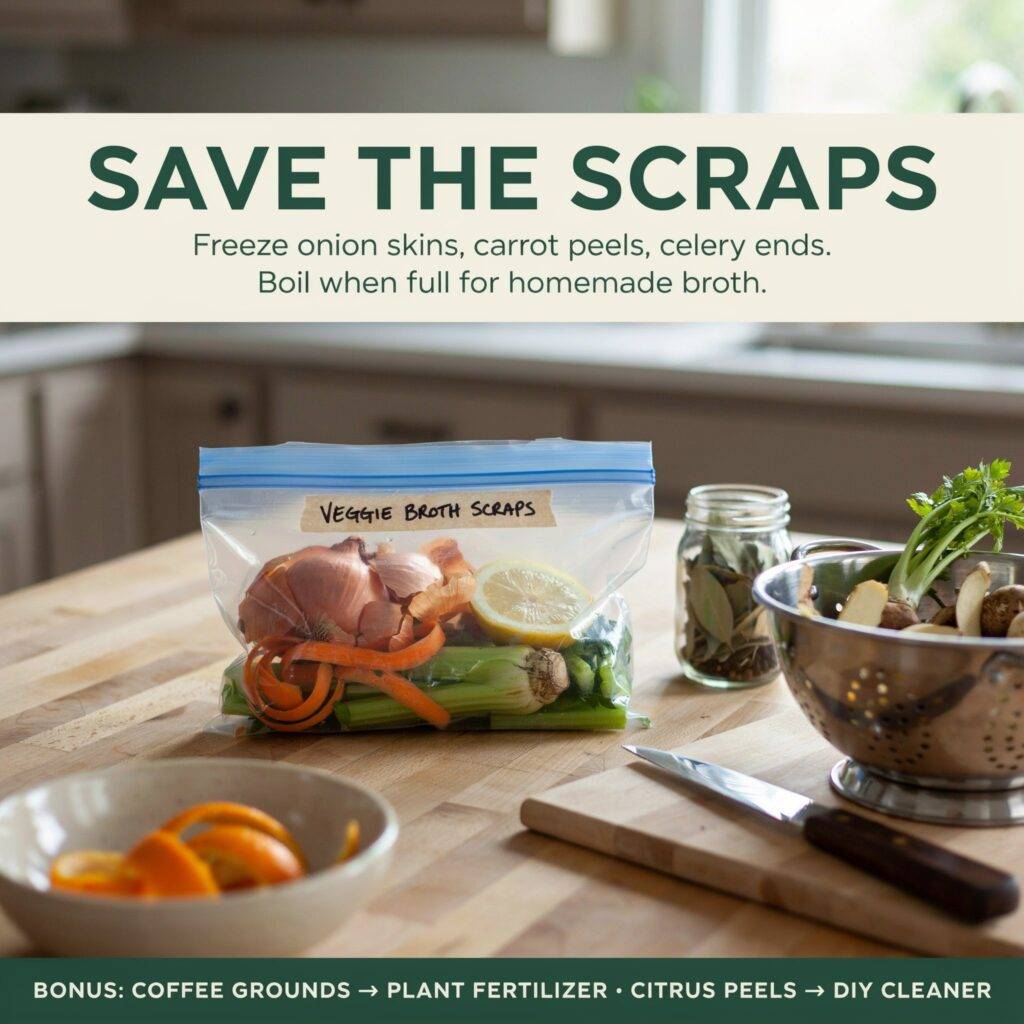
Instead of throwing away onion skins, carrot peels, celery ends, and other veggie scraps, freeze them. When you have a full bag, boil them with water and seasonings to make homemade vegetable broth.
It’s basically free, it’s delicious, and it reduces waste. You can also use coffee grounds as plant fertilizer and citrus peels to make DIY cleaner.
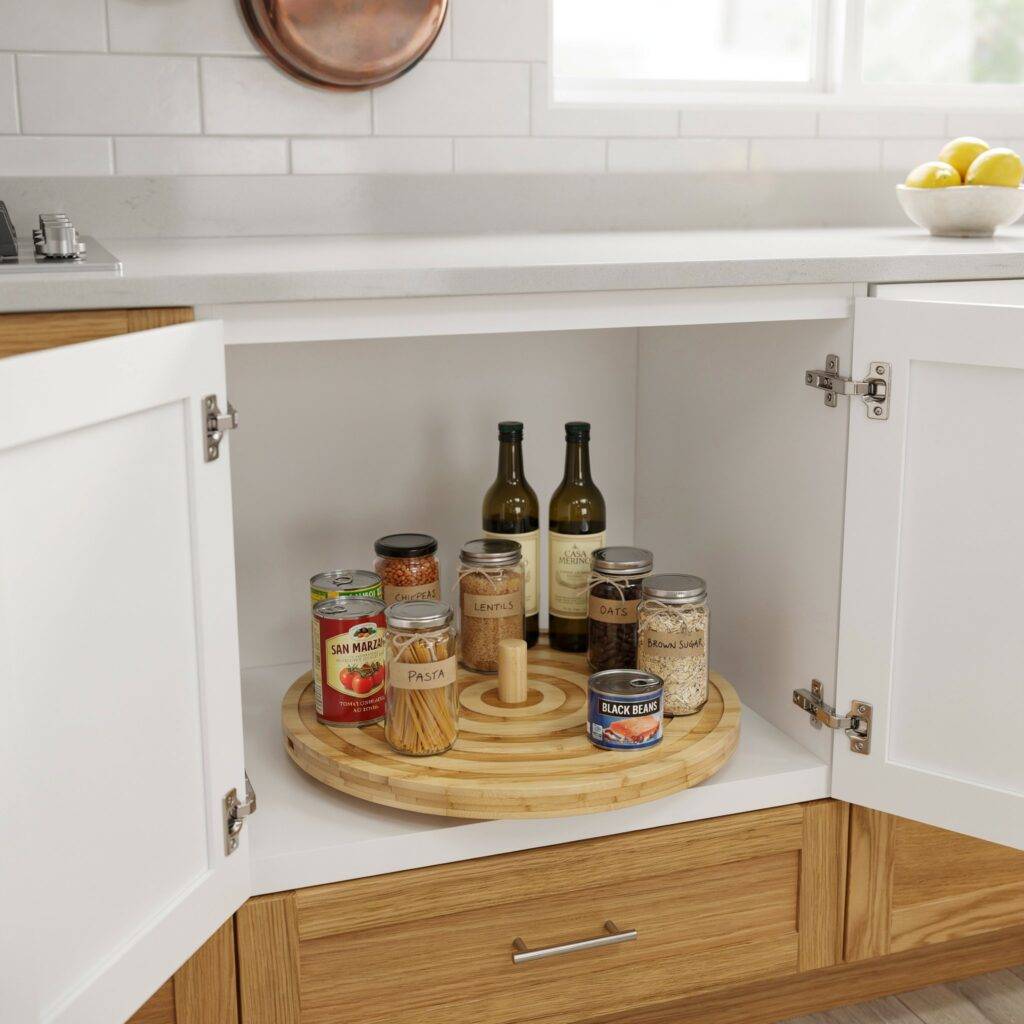
19. Use a Lazy Susan for Corner Cabinets
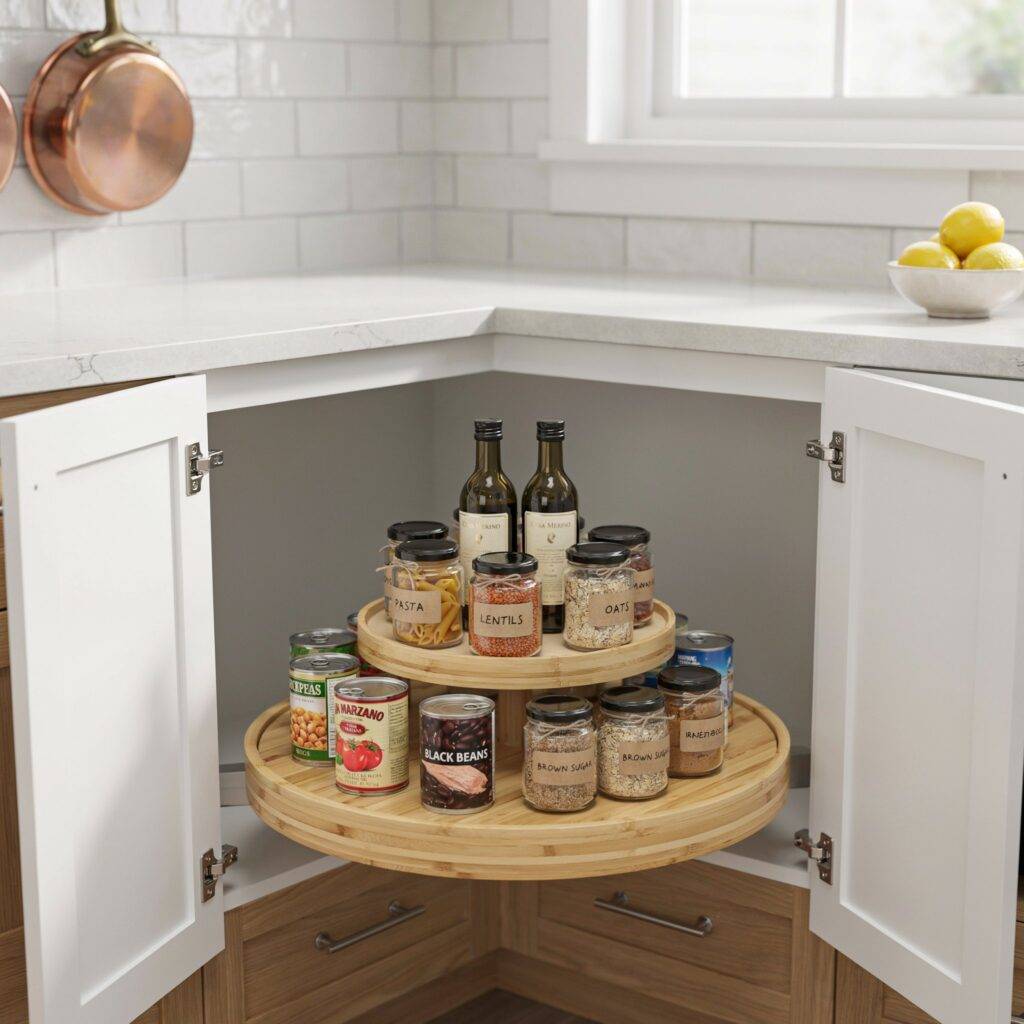
Corner cabinets are notoriously hard to organize. Things get lost in the back and you forget they exist. A lazy Susan (turntable) solves that problem.
Put canned goods, jars, or bottles on it and spin to find what you need. Look for one made from bamboo or recycled materials.
20. Store Lids Separately
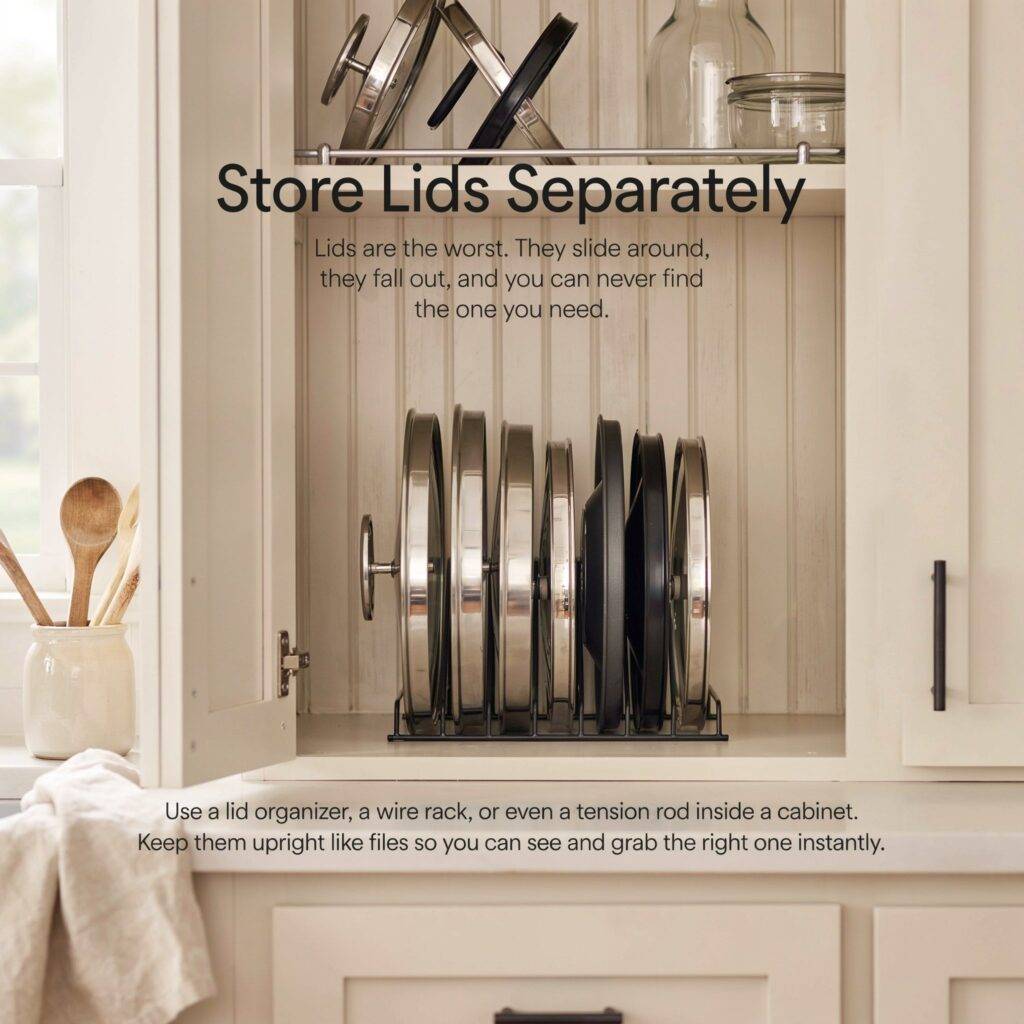
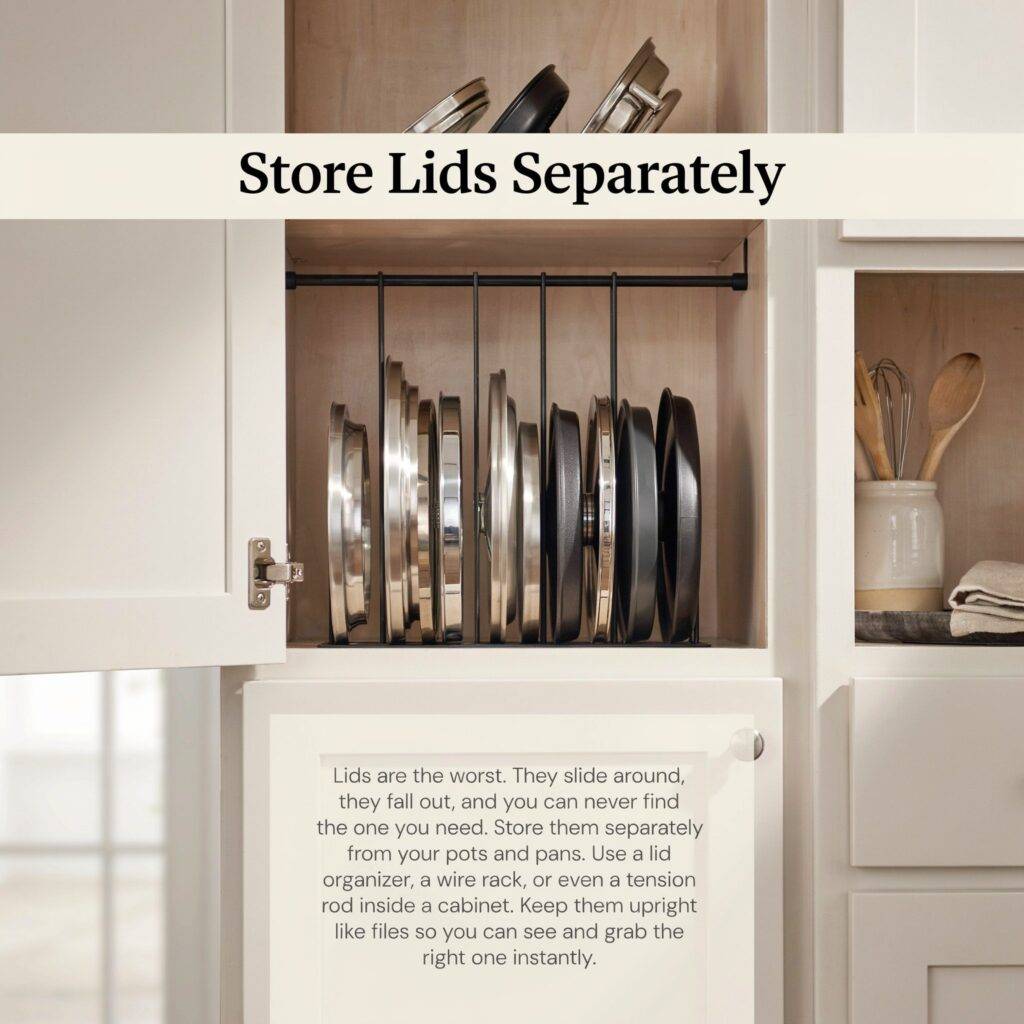
Lids are the worst. They slide around, they fall out, and you can never find the one you need. Store them separately from your pots and pans.
Use a lid organizer, a wire rack, or even a tension rod inside a cabinet. Keep them upright like files so you can see and grab the right one instantly.
21. Designate a Reusable Container Drawer
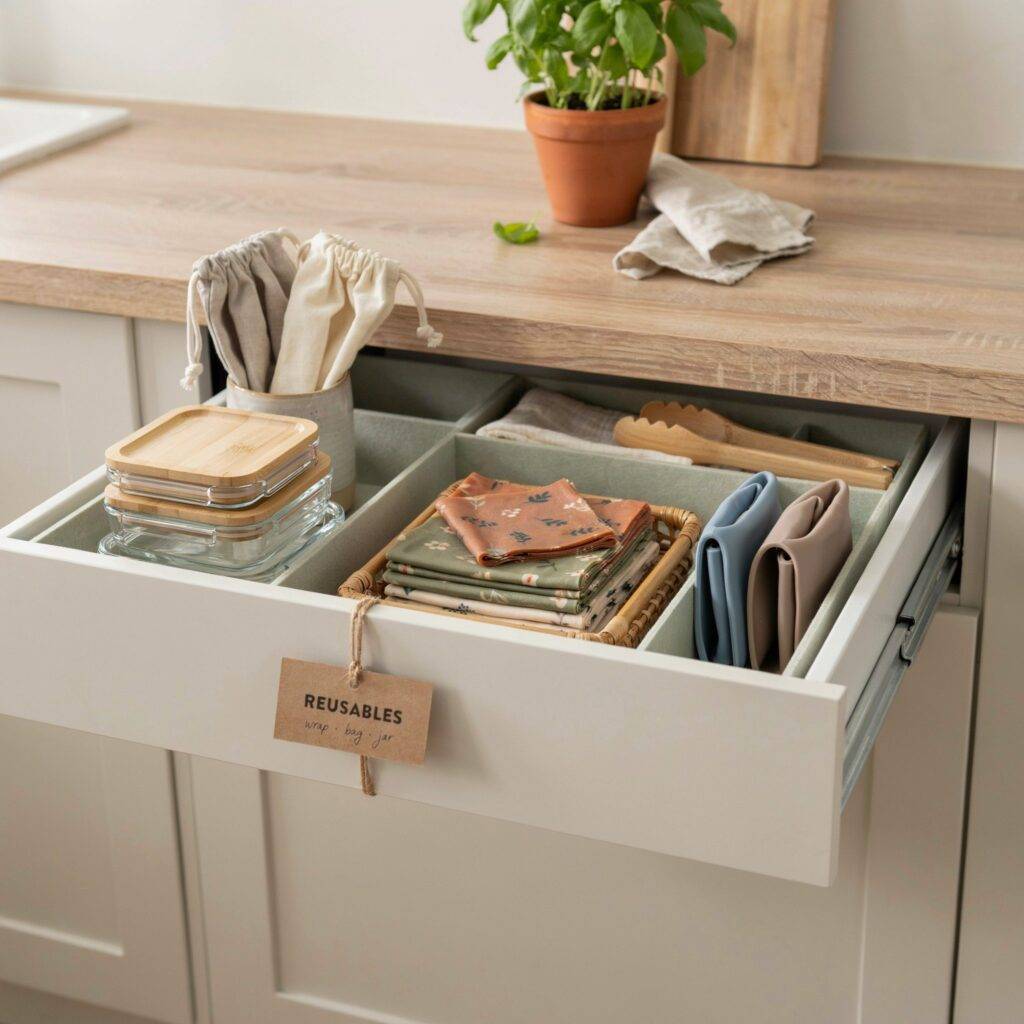
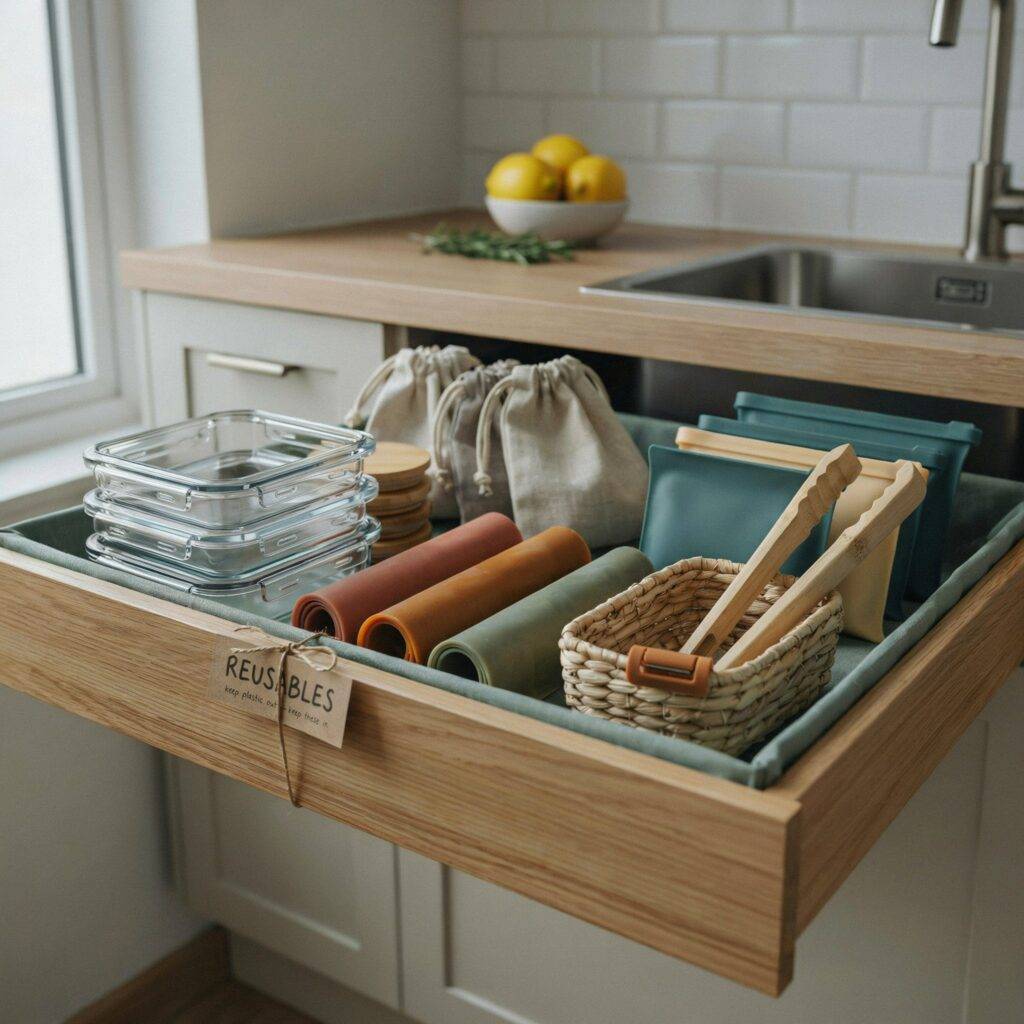
Keep all your reusable containers, beeswax wraps, silicone bags, and fabric produce bags in one dedicated drawer or shelf.
When they’re easy to find and grab, you’re more likely to use them instead of reaching for plastic disposables. It’s a small change that makes eco-friendly choices the easy choice.
22. Adopt a “One In, One Out” Rule
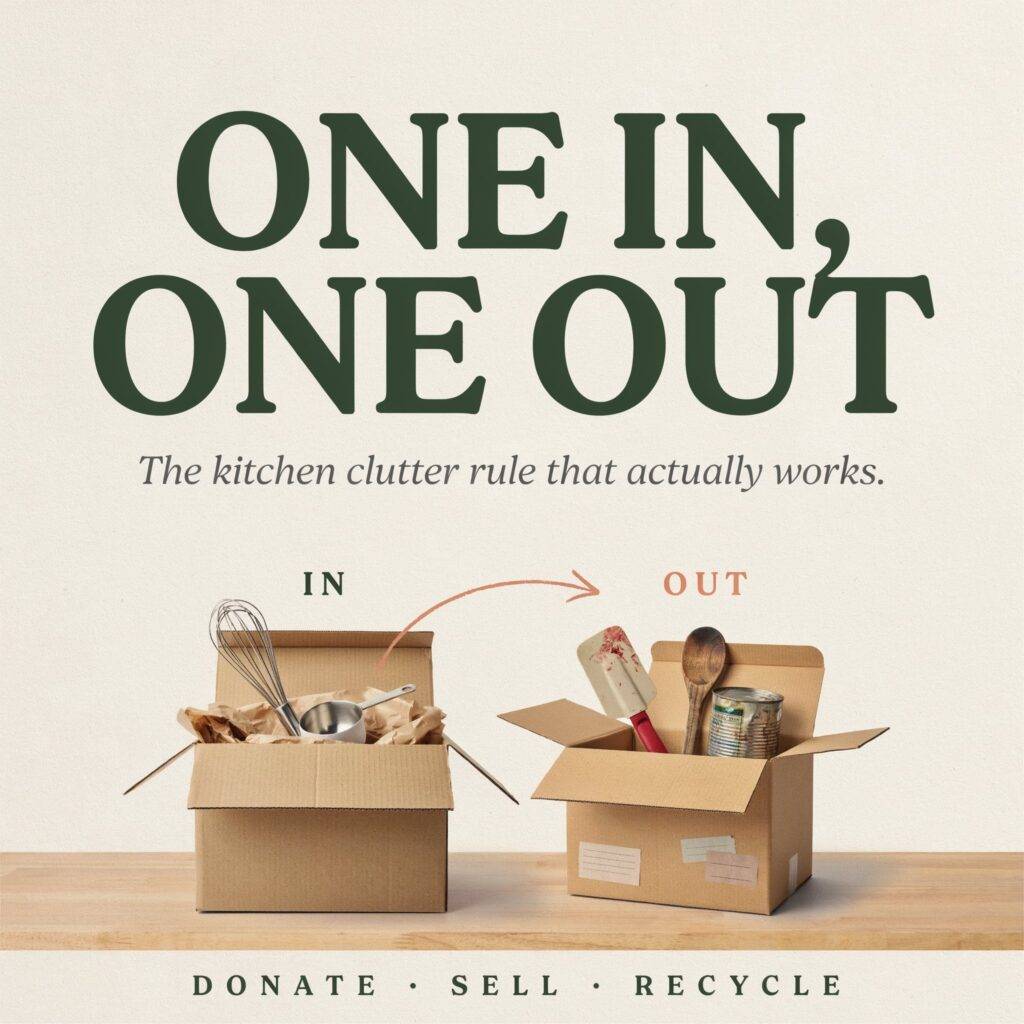
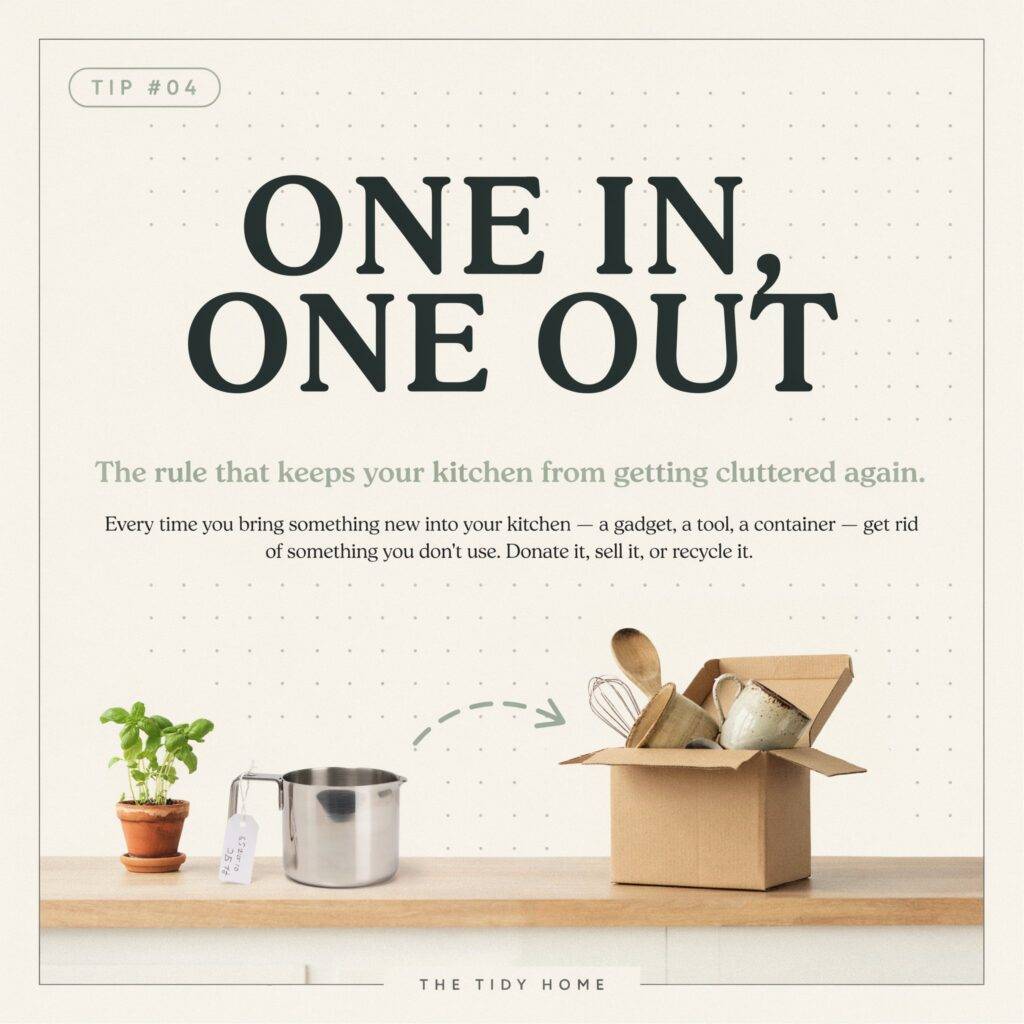
This isn’t strictly about organization, but it keeps your kitchen from getting cluttered again. Every time you bring something new into your kitchen a gadget, a tool, a container get rid of something you don’t use.
Donate it, sell it, or recycle it. This keeps your space manageable and prevents stuff from piling up.
Pros and Cons of Eco-Friendly Kitchen Organization
Pros:
- Less waste: You’ll throw away less food and less plastic.
- Saves money: Reusing what you have and buying less stuff adds up.
- Healthier: Glass and stainless steel don’t leach chemicals into your food.
- Looks better: Natural materials like glass, bamboo, and wood just look nicer.
- Easier cooking: When everything has a place, you can find what you need quickly.
Cons:
- Upfront cost: Some eco-friendly products cost more than plastic alternatives.
- Takes time: Organizing your kitchen isn’t a five-minute job.
- Beeswax wraps need care: They don’t go in the dishwasher and can’t handle hot foods.
- Glass breaks: Unlike plastic, glass can shatter if you drop it.
- Requires habits: You have to actually use the systems you set up.
Recommended Products
Note: These are affiliate links. If you buy through them, I may earn a small commission at no extra cost to you.
Glass Food Storage Containers
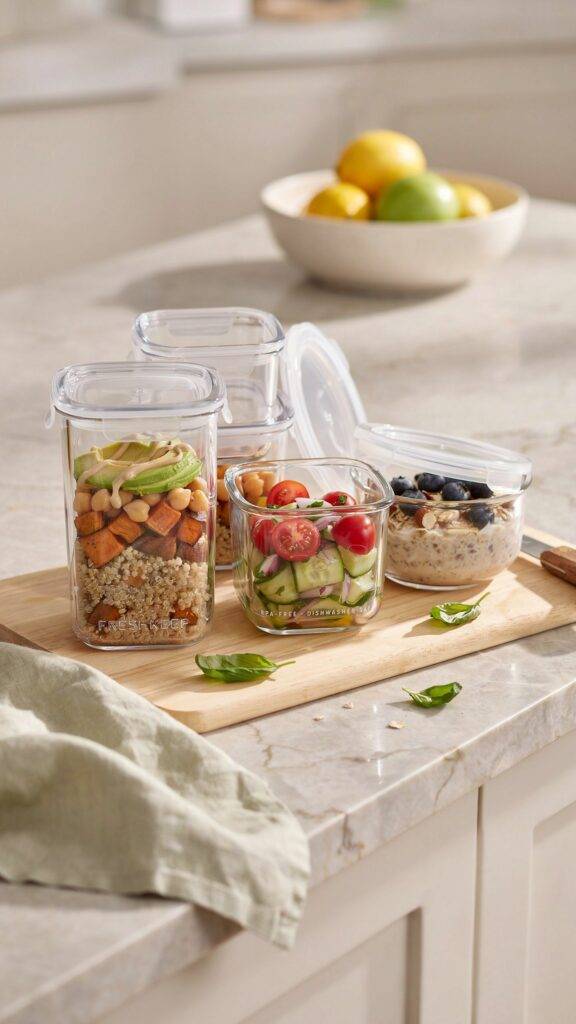
Glass containers are the gold standard for eco-friendly food storage. They don’t stain, don’t absorb odors, and don’t leach chemicals. Look for sets with airtight lids and various sizes.
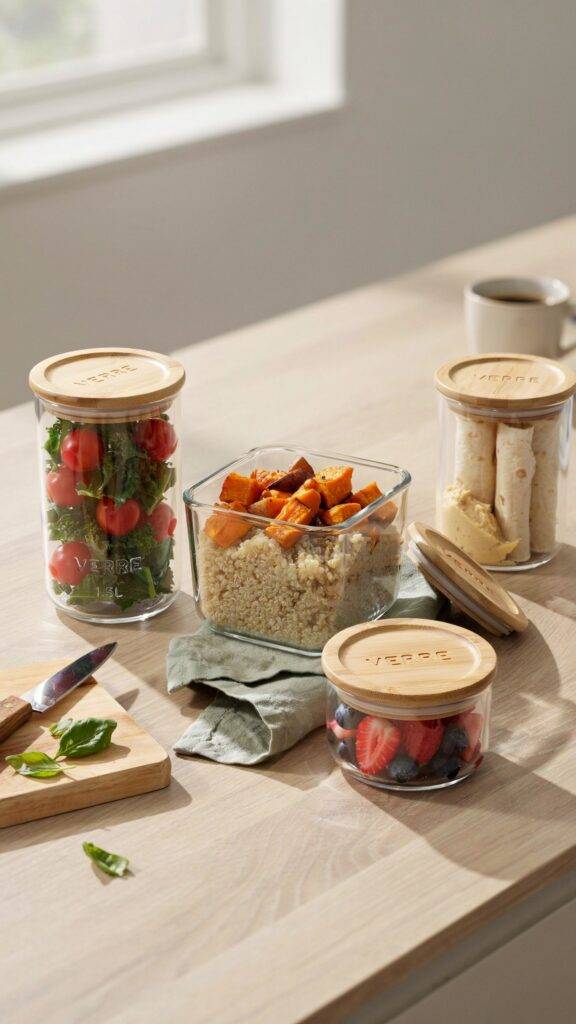
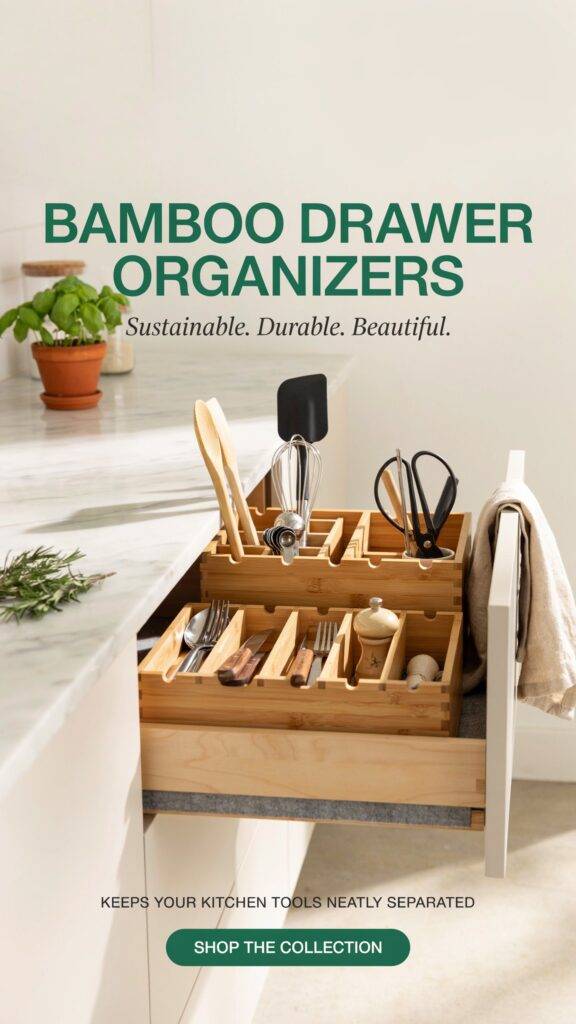
Bamboo Drawer Organizers
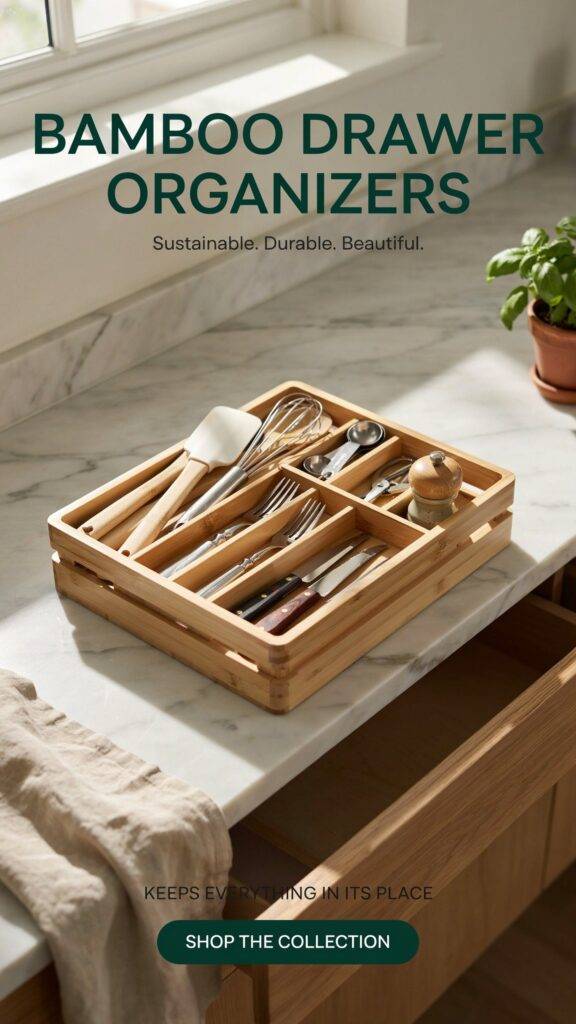
Bamboo is sustainable, durable, and looks great. These organizers keep your utensils and gadgets neatly separated.
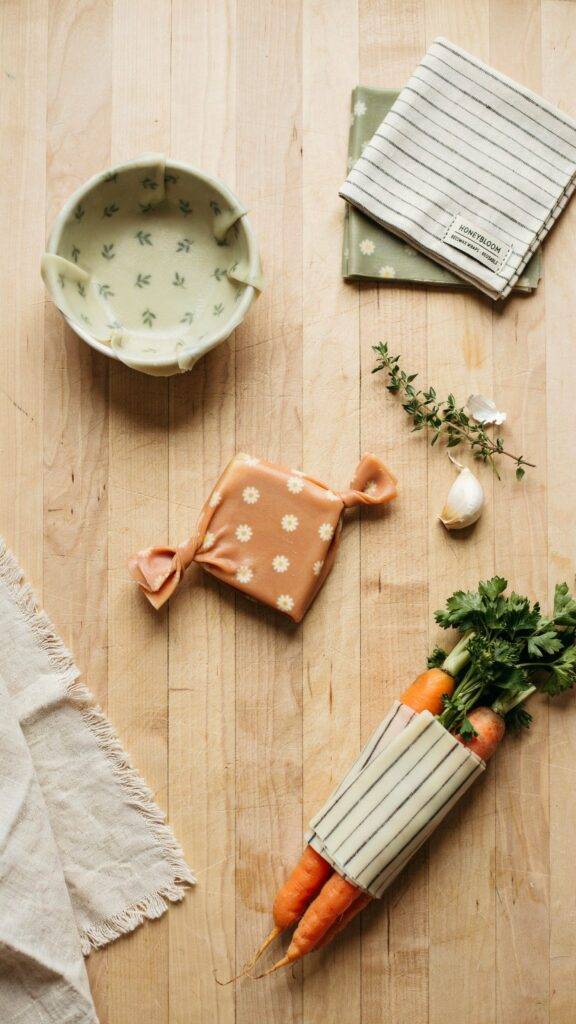
Beeswax Wrap Set
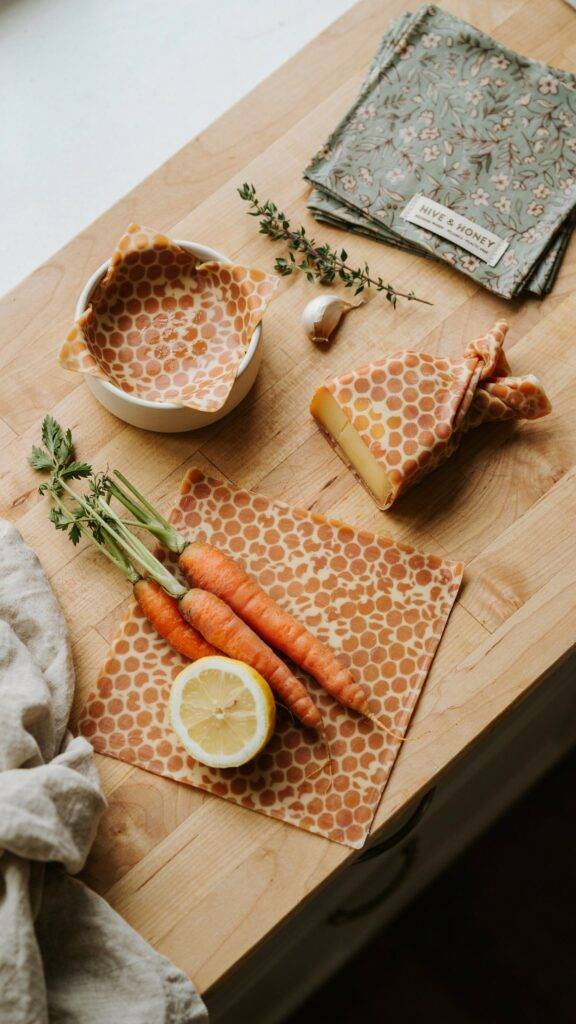
A pack of beeswax wraps in different sizes replaces plastic wrap for covering bowls, wrapping cheese, and storing produce. Bee’s Wrap Beeswax Wraps for Bread – Beeswax Bread Wrap
Silicone Storage Bags
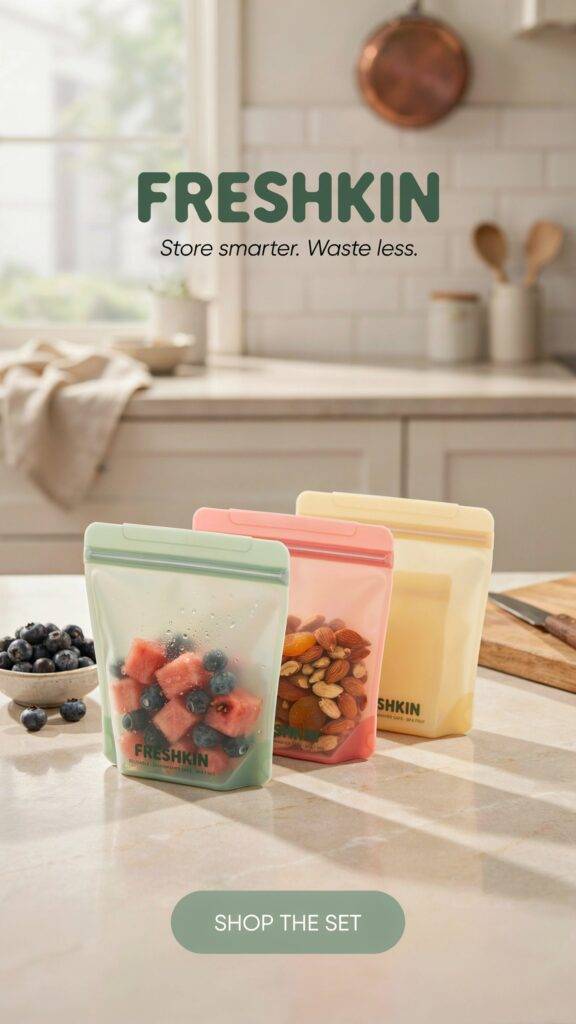
Reusable silicone bags are perfect for snacks, leftovers, and freezer storage. They’re dishwasher-safe and last for years. Reusable Storage Bags – 10 Pack BPA FREE Freezer Bags
Compost Bin for Countertop
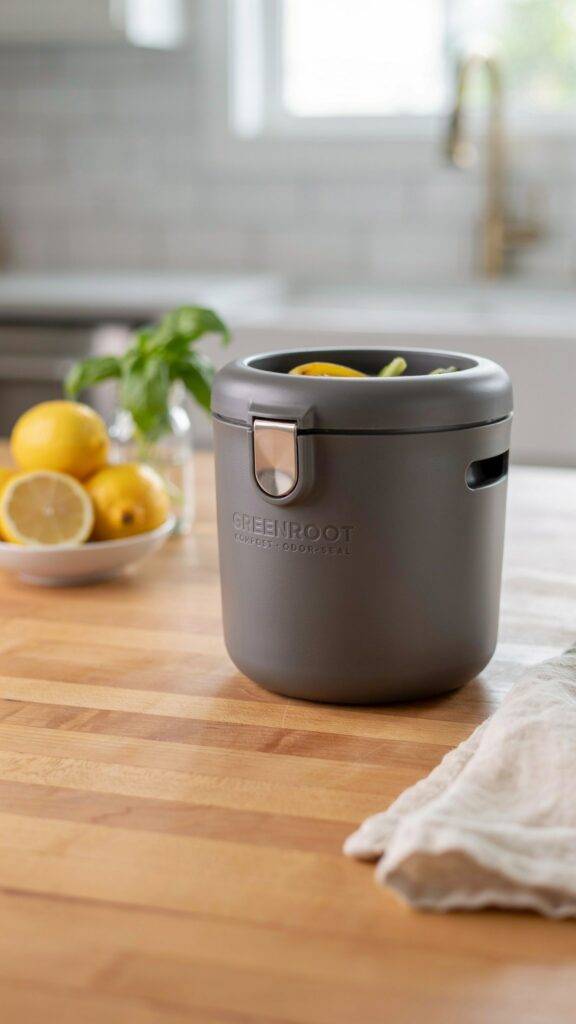
A small, odor-sealing compost bin makes it easy to collect food scraps without attracting fruit flies or smelling up your kitchen.
EPICA Countertop Compost Bin Kitchen with Carbon Filters
Tips for Getting Started
- Start small. Don’t try to organize your whole kitchen in one day. Pick one drawer or one cabinet and do that first.
- Take everything out. Empty the space completely before you put anything back. You’ll see what you actually have.
- Group similar items. Put all your baking stuff together, all your spices together, all your canned goods together.
- Clean as you go. Wipe down shelves and drawers before you put things back.
- Label things. Labels help everyone in the household know where things belong.
Mistakes to Avoid
- Buying organizers before you declutter. You don’t know what you need until you know what you’re keeping. Declutter first.
- Keeping things you don’t use. If you haven’t used it in a year, let it go.
- Forgetting about vertical space. Walls, the inside of cabinet doors, and the space above cabinets are all usable.
- Using plastic containers. They stain, they crack, and they’re not great for the planet. Switch to glass or stainless steel.
- Overcomplicating things. The best system is the one you’ll actually use. Keep it simple.
FAQs
Q: What’s the most eco-friendly way to store leftovers?
Glass containers with airtight lids are your best bet. They’re reusable, non-toxic, and you can see what’s inside. Beeswax wraps are also great for items that don’t need a full container.
Q: How do I reduce food waste in my kitchen?
Plan your meals before you shop, check your pantry and fridge before you buy more, store food properly so it lasts longer, and eat leftovers. Also, designate a “use me first” spot for things that need to be eaten soon.
Q: Are bamboo organizers actually eco-friendly?
Yes. Bamboo grows fast, doesn’t need pesticides or fertilizers, and absorbs carbon dioxide as it grows. It’s one of the most sustainable materials you can choose.
Q: Can I really organize my kitchen without buying anything new?
Absolutely. Use glass jars you already have, repurpose fruit containers as drawer dividers, and rearrange what you already own. You don’t need to spend money to get organized.
Q: What should I do with kitchen items I don’t want anymore?
Donate them to a thrift store, give them to a friend, or sell them online. If they’re broken, check if they can be recycled. Try not to just throw things in the trash.
Design and Styling Ideas
- Open shelving: Display your prettiest jars, bowls, and plants on open shelves. It makes the kitchen feel more spacious and encourages you to keep things tidy.
- Natural materials: Wood, bamboo, glass, and ceramic all look warm and inviting. They also feel more calming than plastic.
- Color coordination: Group items by color for a visually pleasing pantry or cabinet.
- Label everything: Chalkboard labels or simple white labels on jars and bins add a polished look.
- Add plants: A small herb plant or a potted plant on the counter adds life and freshness.
Final Thoughts
Organizing your kitchen in an eco-friendly way isn’t about being perfect. It’s about making small changes that add up over time. Start with one idea from this list. Maybe it’s switching to glass jars for your pantry. Maybe it’s setting up a compost bin. Maybe it’s just using up those fruit containers instead of tossing them.
Every little bit helps. Your kitchen becomes more functional, you waste less food, and you use fewer single-use plastics. That’s a win for you and a win for the planet.
Pick one thing and try it this week. You might be surprised how much of a difference it makes.
Related Post: