
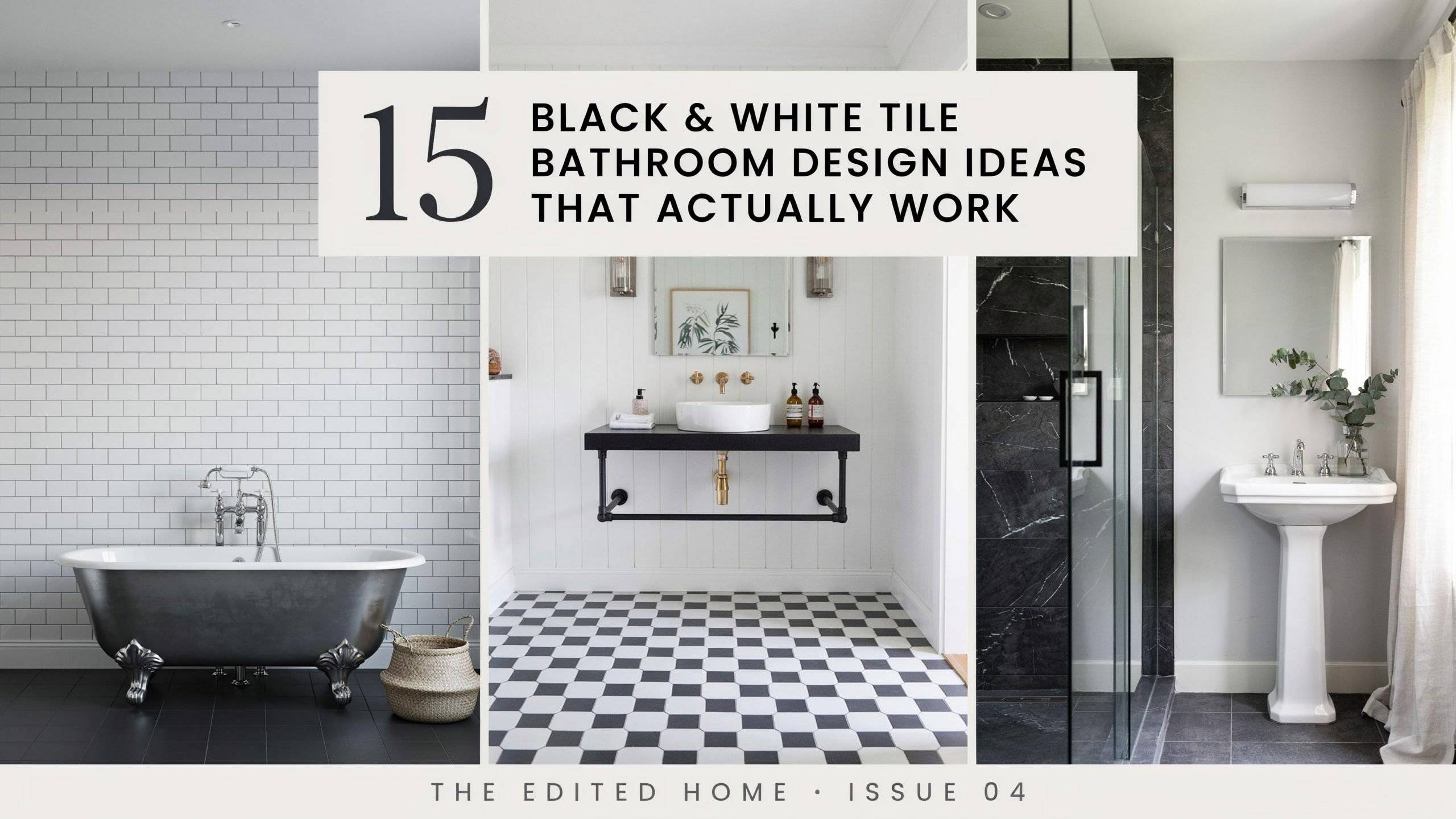
Black and white bathrooms aren’t just a trend. They’ve been around for a very long time because they work. The contrast is sharp, the look is clean, and you can dress it up or down however you like.
But here’s the thing picking the right tile pattern isn’t always easy. I’ve seen plenty of bathrooms where the checkerboard felt more like a dizzying chess game than a relaxing space. And black floors? They can show every bit of dust if you’re not careful.
That’s why I put together this list. These are 15 black and white tile bathroom design ideas that I’ve seen work in real homes. Straight forward looks for that you can actually live with.
Let’s get into it.
15 Black and White Tile Bathroom Design Ideas
1. Classic Checkerboard with Bigger Tiles
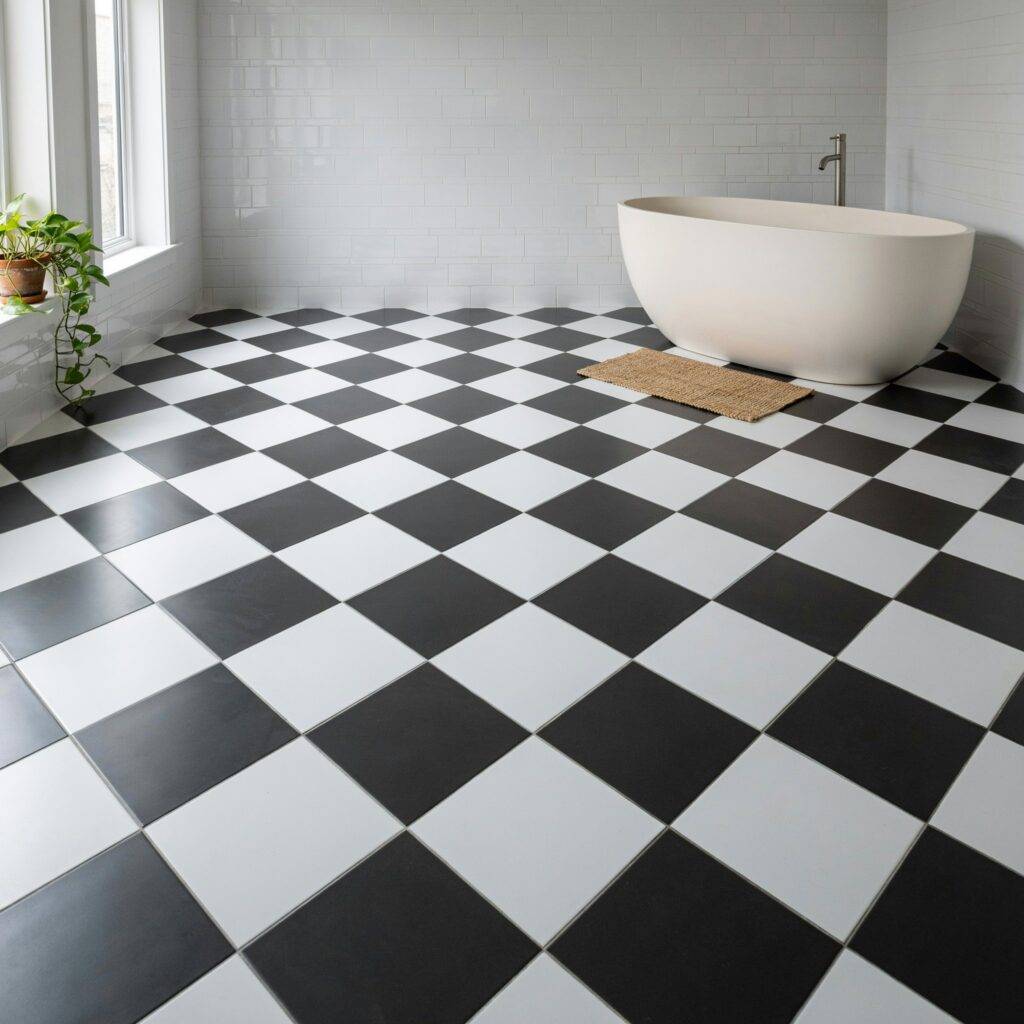
You’ve probably seen checkerboard floors before. But here’s a twist that makes it feel more modern: use larger tiles. Think 12-inch or even 16-inch squares instead of the tiny ones. Fewer grout lines mean the pattern looks calmer and less chaotic.
I once worked on a narrow bathroom where we laid the checkerboard on a diagonal. It made the room feel wider instantly. The eye follows the diagonal lines from one corner to another, so the space doesn’t feel as tight. White tiles bounce light around, and black tiles ground the look.
Pros: Timeless pattern that works with any style. Diagonal layout makes small bathrooms feel bigger. Easy to find tiles at most home stores.
Cons: Alignment has to be precise. If lines drift even a little, you’ll notice. Black tiles show dust and lint more than white ones. Keep a microfiber mop handy.
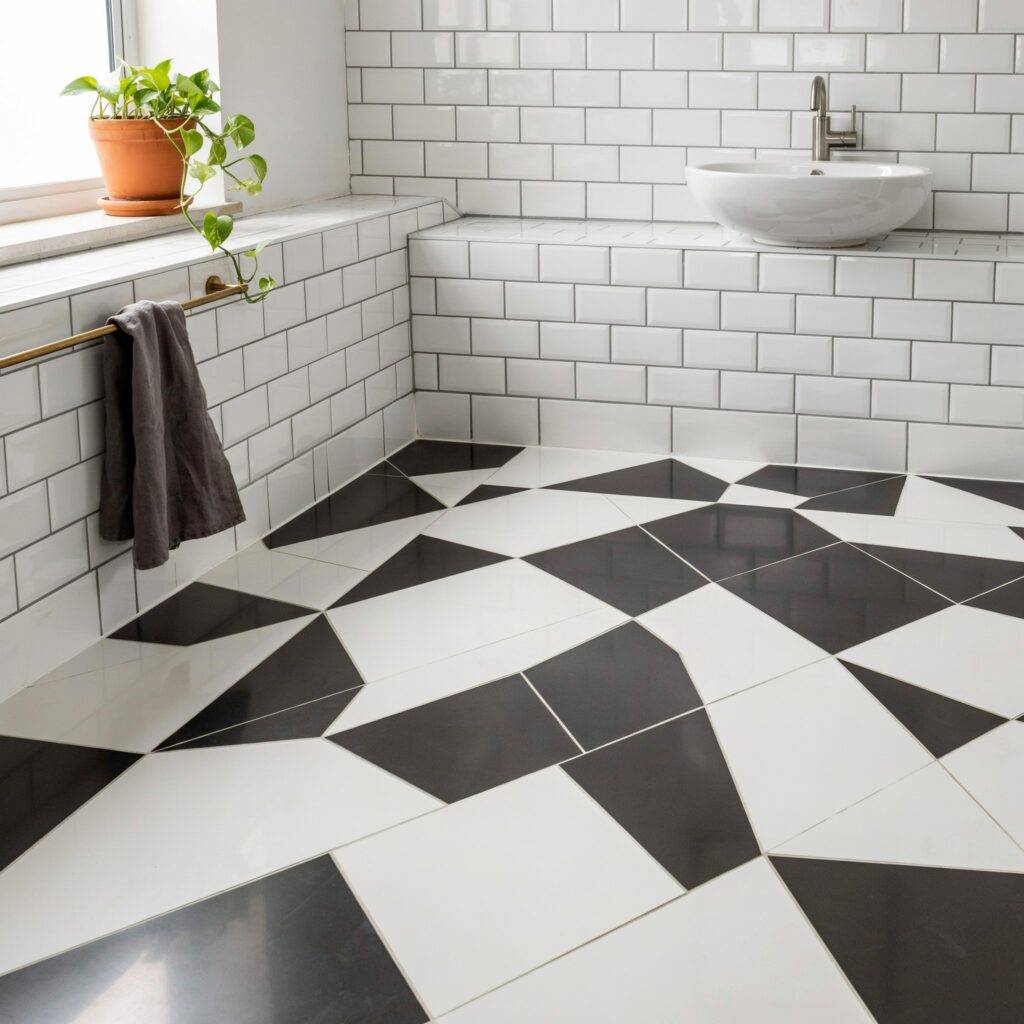
2. White Subway Tile with Black Grout
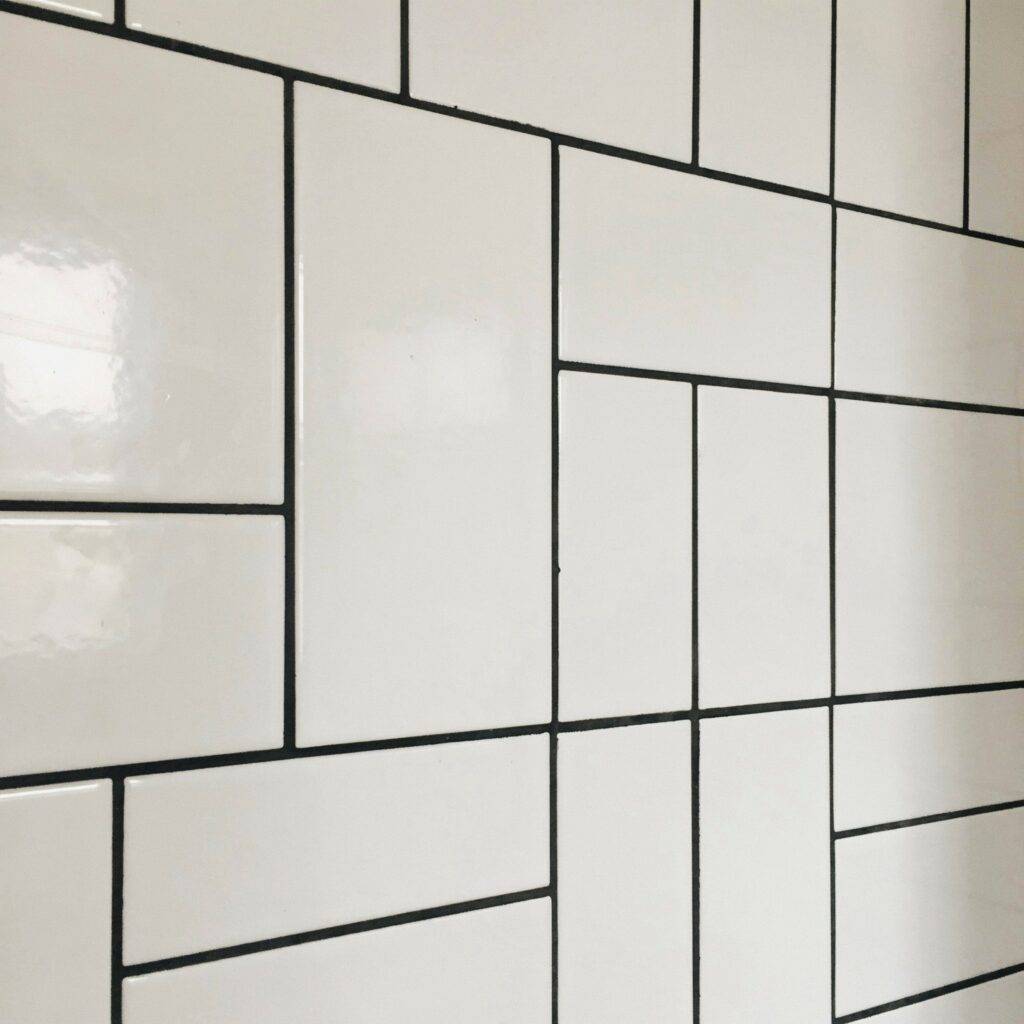
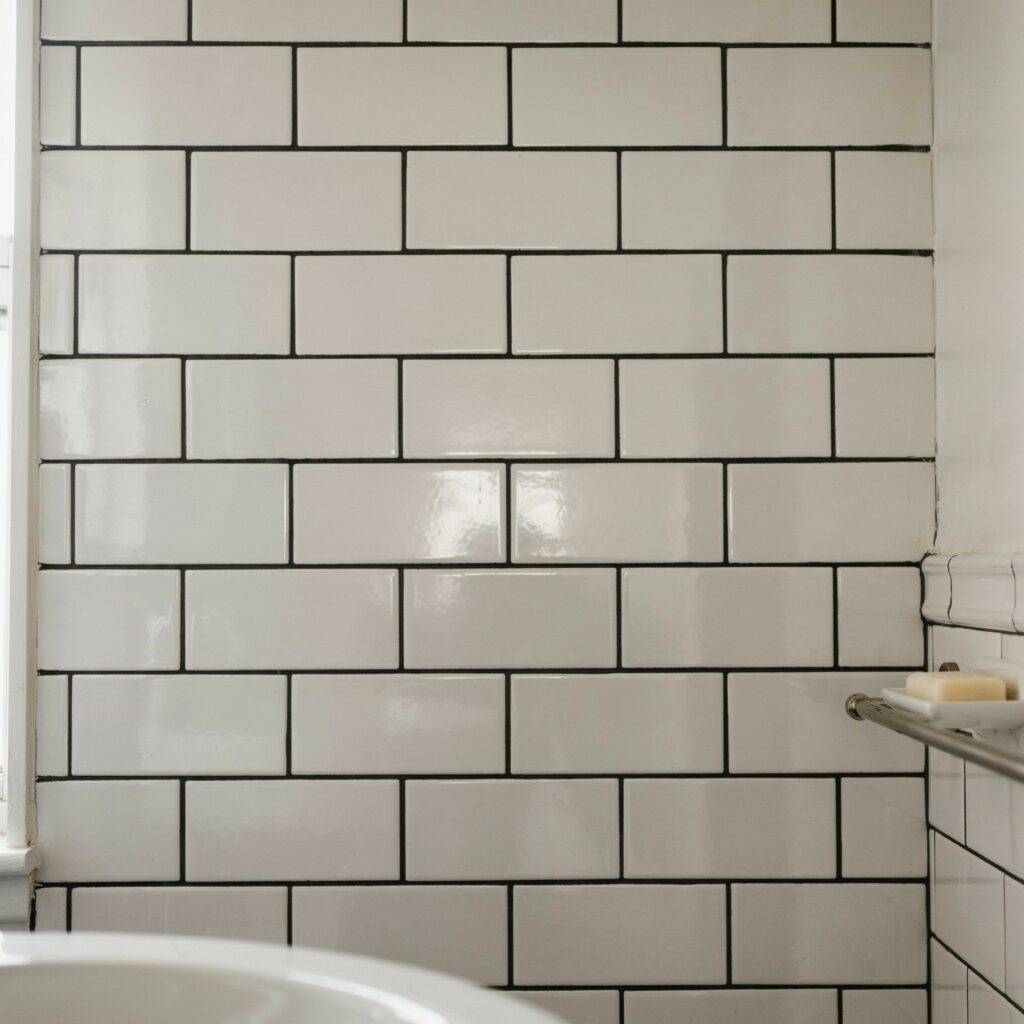
This is one of my favorites because it’s simple but makes a statement. Regular white subway tiles are cheap and easy to find. But when you use black grout instead of white, the whole look changes. The dark lines pop against the white tile, and the pattern feels intentional rather than basic.
I used this in a small rental bathroom once. The owner couldn’t believe how much better it looked with just a grout change. The black grout also hides dirt better than white grout, which is a nice bonus if you don’t want to scrub every week.
Pros: Budget-friendly since white subway tiles are inexpensive. Dark grout doesn’t show stains. Easy to clean with mild soap and water.
Cons: Can feel too industrial if you cover every wall. Dark grout may fade over time if you use harsh cleaners. Stick to pH-neutral stuff.
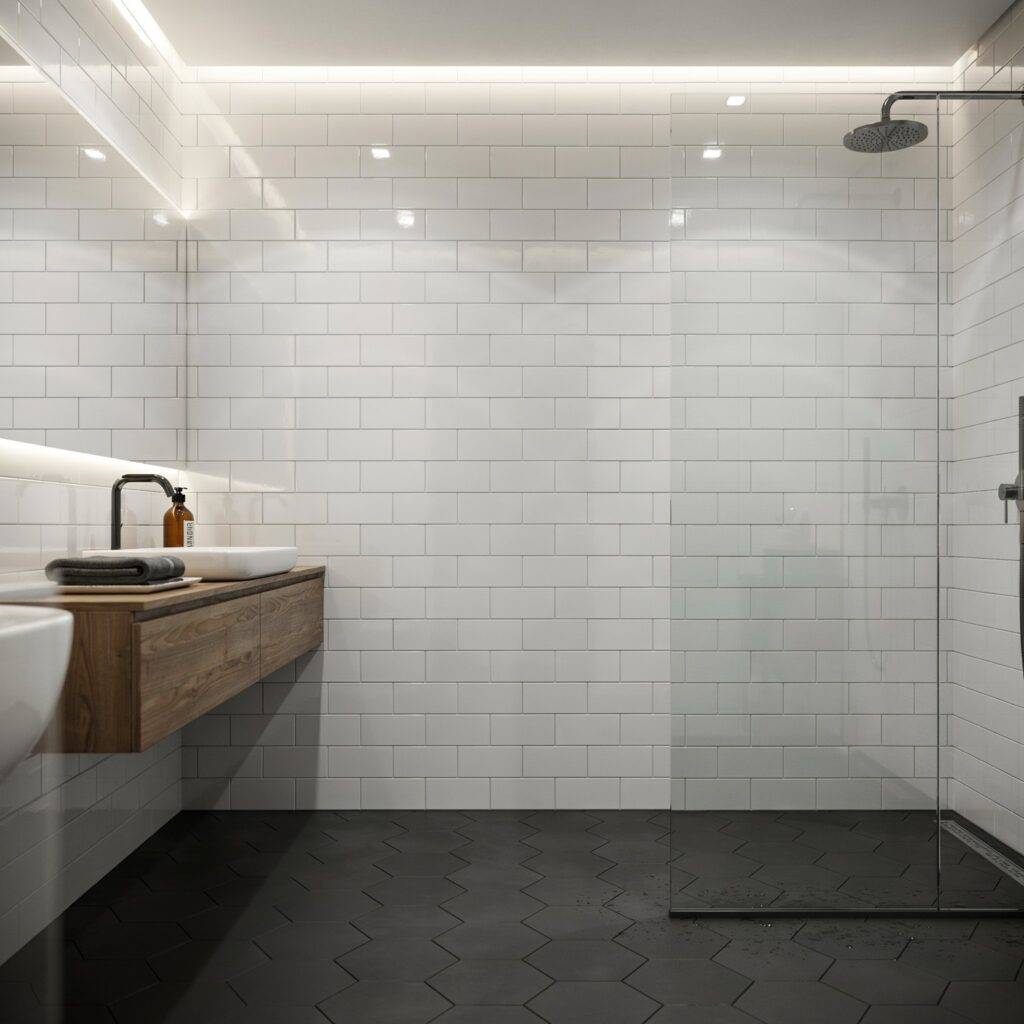
3. Black Hexagon Floor with White Walls
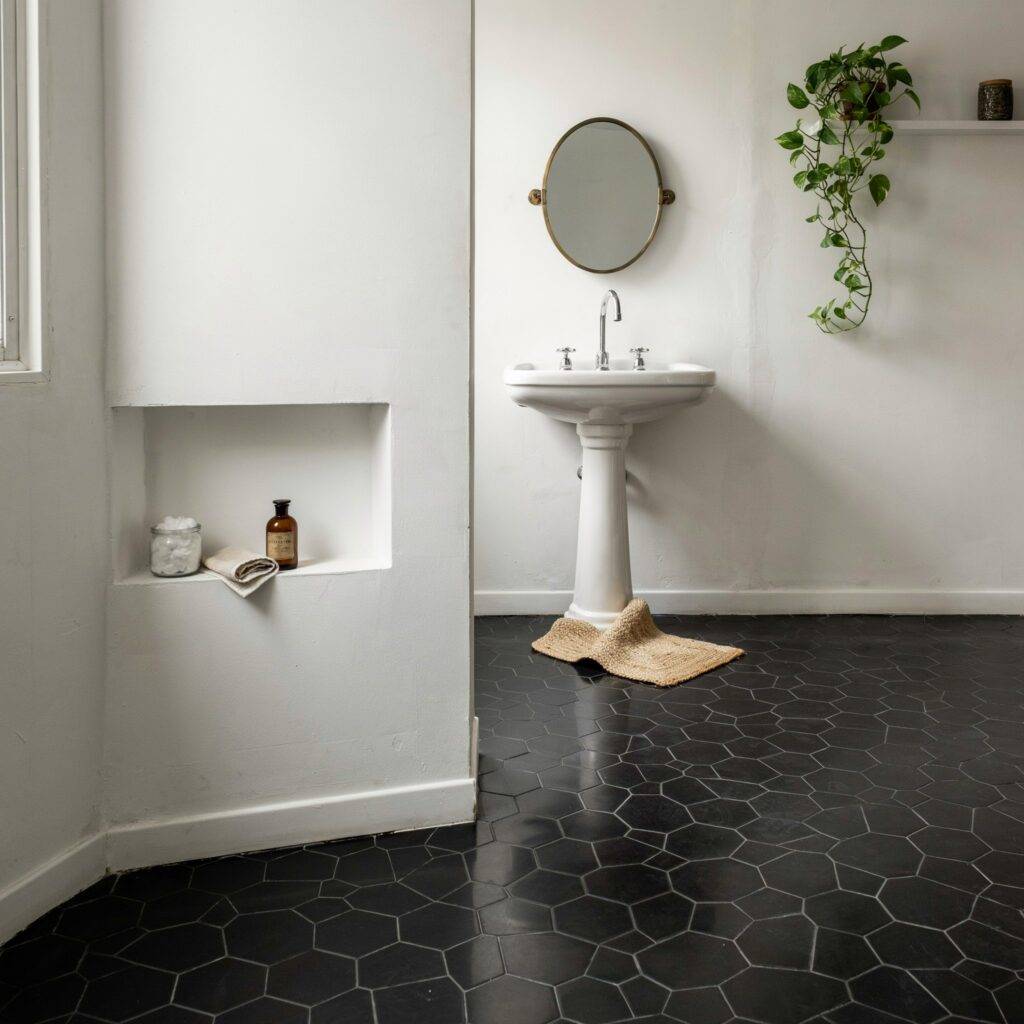
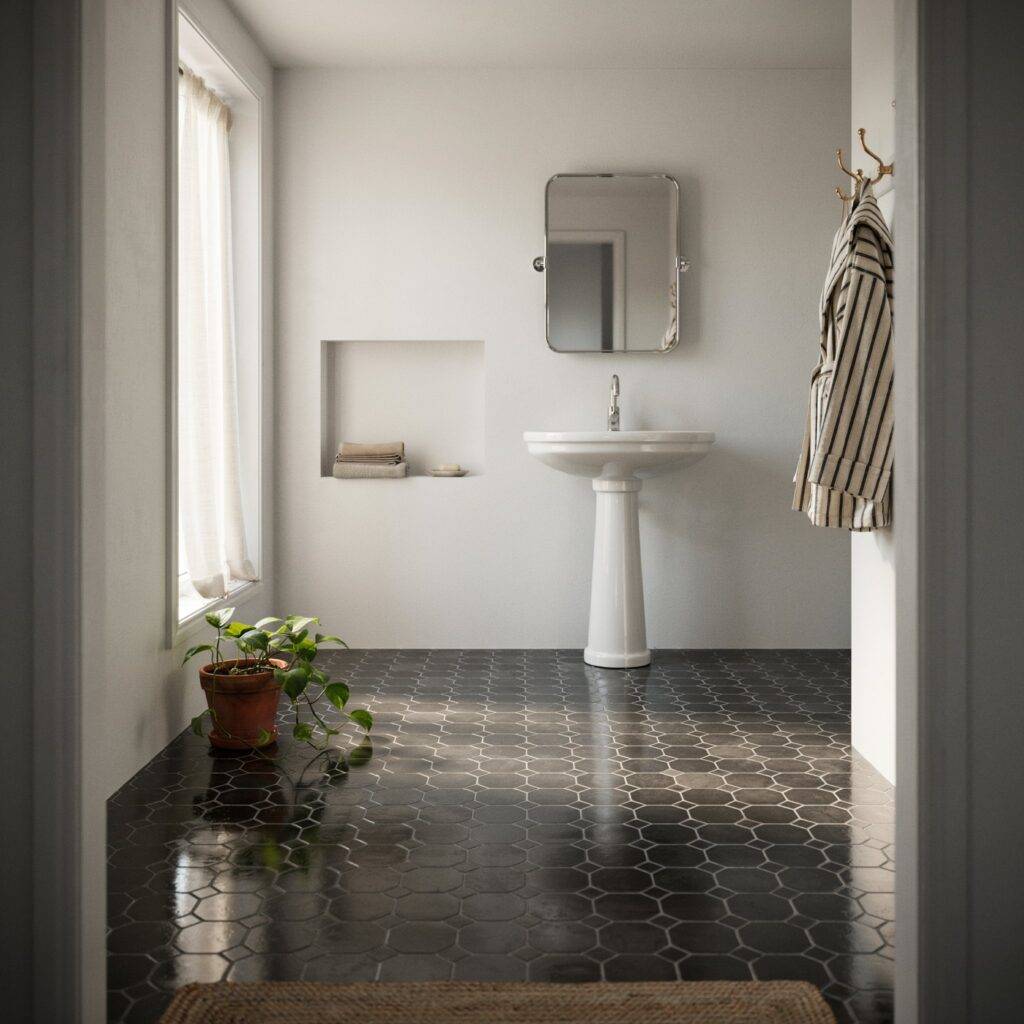
Hexagon tiles have a soft, geometric look that feels both classic and fresh. Black hexagons on the floor give you that vintage bathroom feel think 1920s Parisian bistro. Pair it with simple white walls and fixtures, and the floor becomes the star without screaming for attention.
In one renovation, I paired black hex floors with a white pedestal sink. The look was elegant and didn’t cost a fortune. The only catch is that pedestal sinks don’t offer much storage, so you’ll need a recessed niche or a small cabinet nearby.
Pros: Hexagons add texture without being too busy. The shape is less common than squares, so it feels special. Matte black hex tiles hide water spots better than glossy ones.
Cons: More grout lines means more cleaning. Pedestal sinks look great but lack storage. Plan for a cabinet or shelves.
4. Herringbone Pattern for Movement
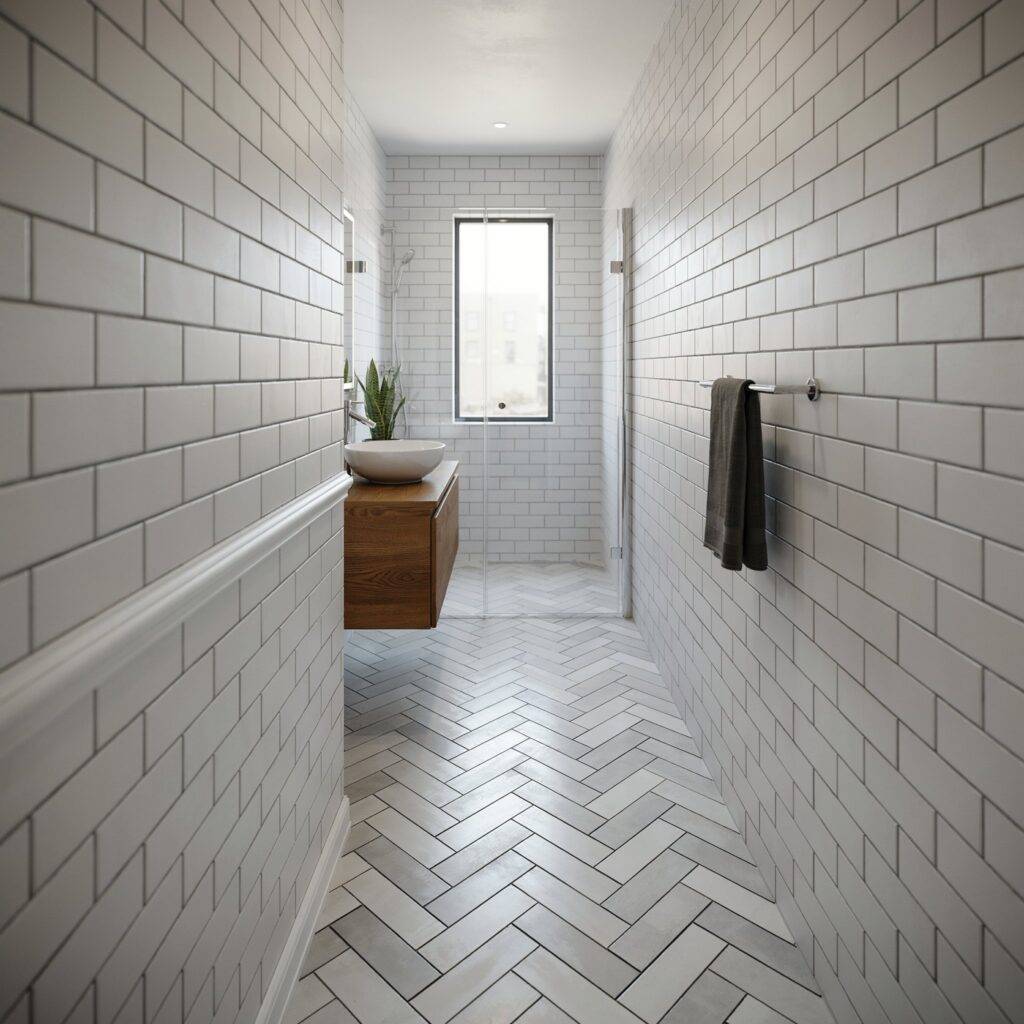
Herringbone is like the zigzag pattern you see on fancy wood floors. When you do it in black and white tiles, it adds energy to the room. The angled lines pull your eye through the space, which is great for narrow or long bathrooms.
I tried this in a studio apartment bathroom, and it worked beautifully. The herringbone floor added movement while white subway walls kept things calm. Just be ready for a higher labor cost herringbone requires more cuts than a straight layout.
Pros: Directional pattern makes rooms feel longer. Looks custom and expensive. Works on floors or as a shower wall accent.
Cons: Labor costs more because of all the cutting. If the installer rushes, the pattern can look off. Budget for extra tile waste.
5. High-Contrast Floor, Soft Matte Walls
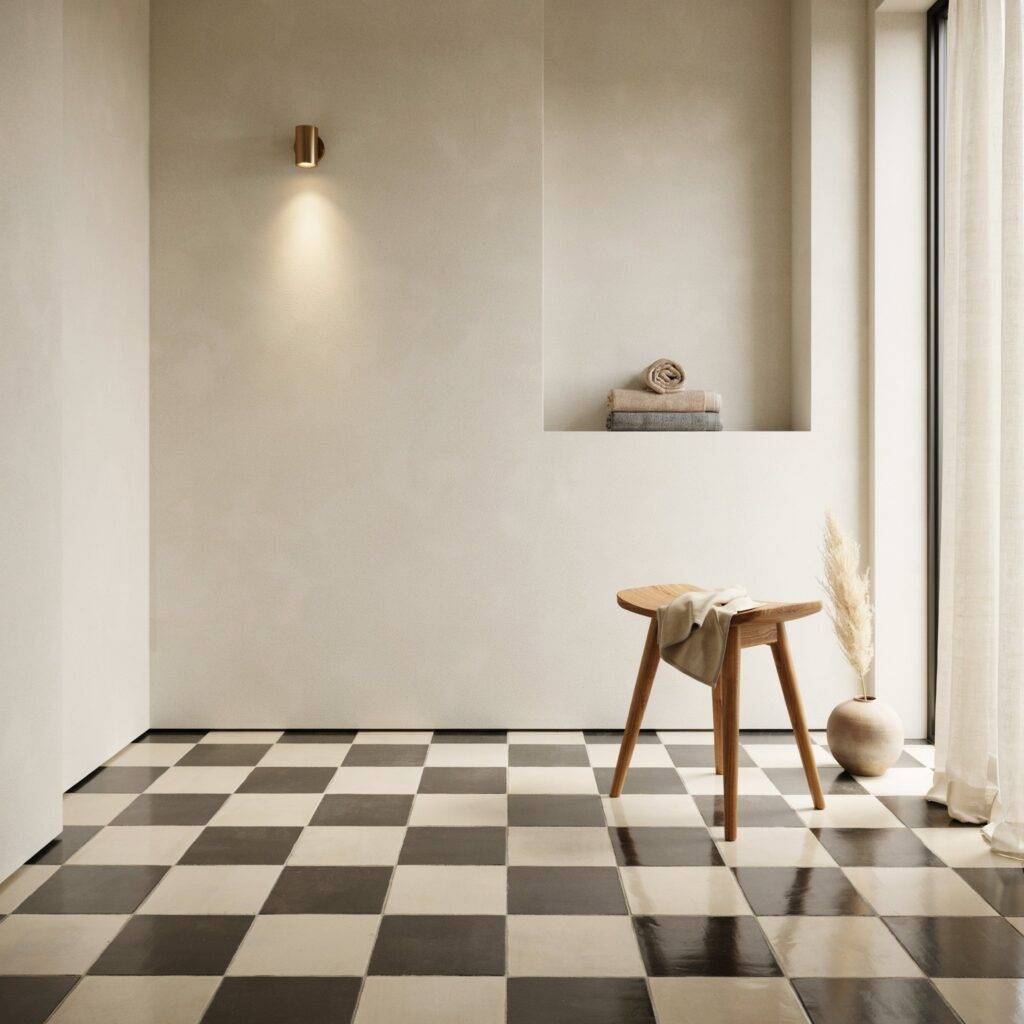
Here’s a trick that keeps the space from feeling too harsh. Use bold black and white floor tiles checkerboard, geometric, whatever you like. But on the walls, go with a soft, warm white matte paint instead of more tile.
The floor anchors the room with drama, while the matte walls prevent glare and keep things calm. I once paired a geometric floor with a warm off-white wall color and added a teak stool. The wood tones softened everything and made the bathroom feel spa-like.
Pros: Budget-friendly because you only tile the floor. Matte paint is easy to touch up. The look is dramatic but not overwhelming.
Cons: You need to pick the right white tone. Too cool or too bright, and it feels sterile. Test paint samples before committing.
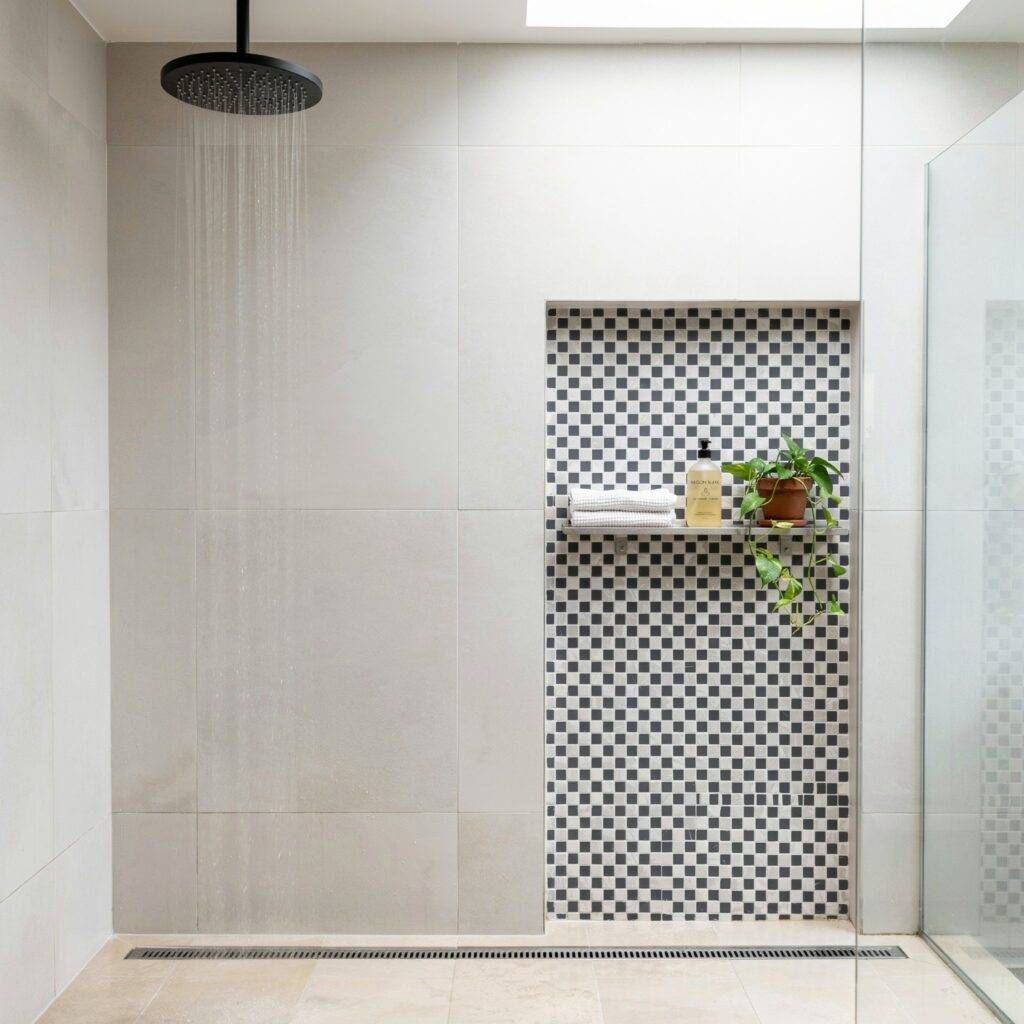
6. Checkerboard Shower Niche as an Accent
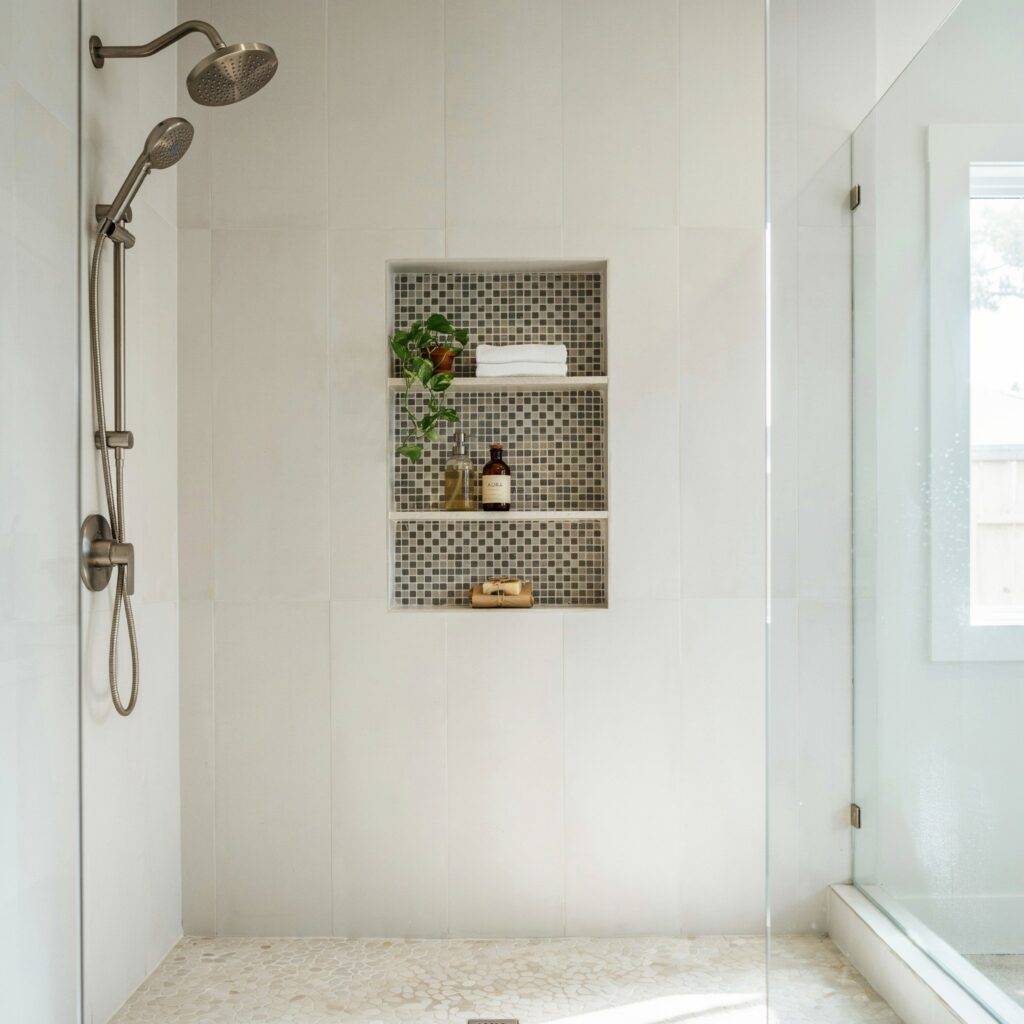
You don’t have to cover your whole bathroom in a pattern to get the look. Instead, tile just the shower niche with tiny black and white checkerboard tiles. The niche becomes a little surprise a focal point that gives the shower personality.
I’ve done this in several projects where the homeowner wanted something fun but not overwhelming. The small scale of the niche keeps the pattern from taking over the room. Just make sure your installer waterproofs everything properly before adding the mosaic.
Pros: Low commitment to bold pattern. Adds personality without overwhelming. Uses only a small amount of tile, so it costs less.
Cons: Cutting tiny mosaic tiles takes patience. Proper waterproofing is critical. Not a DIY job unless you’re experienced.
7. Matte Black Accent Wall with White Tile Floor
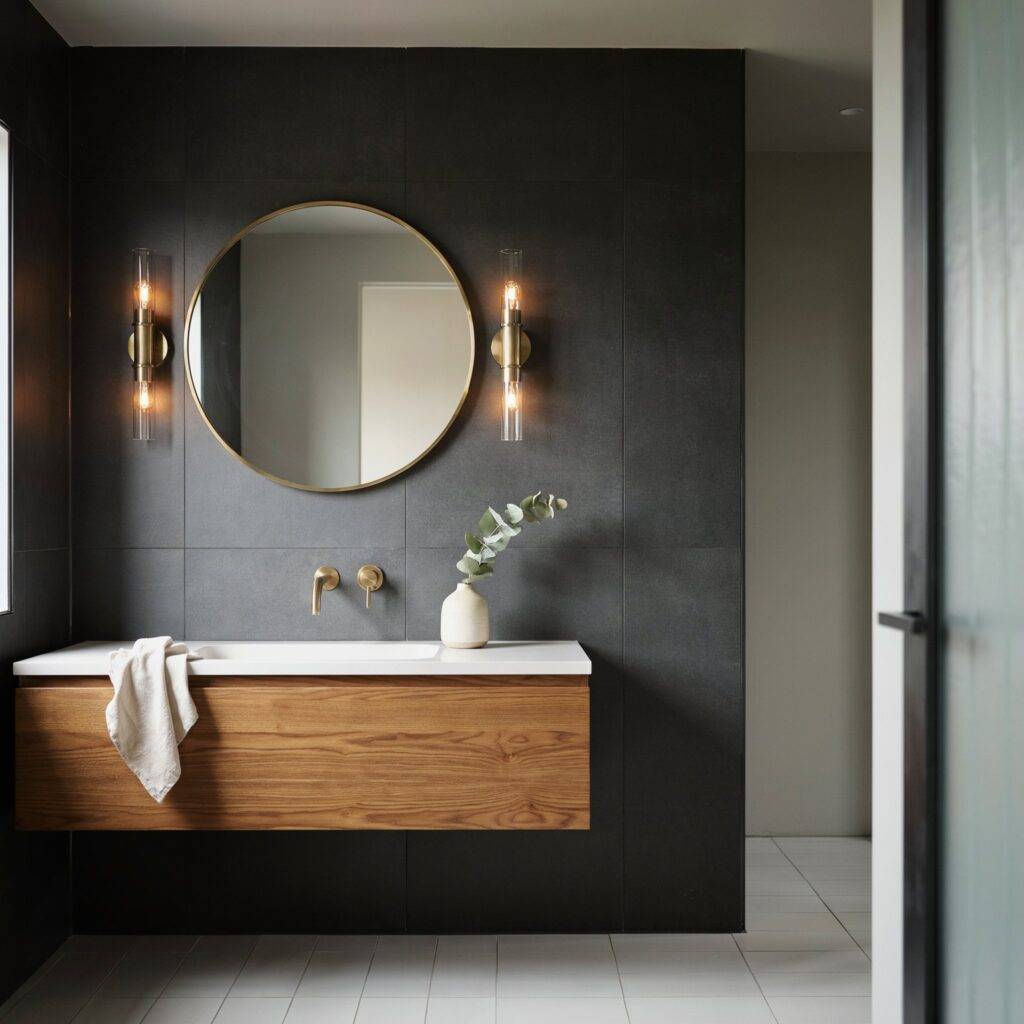
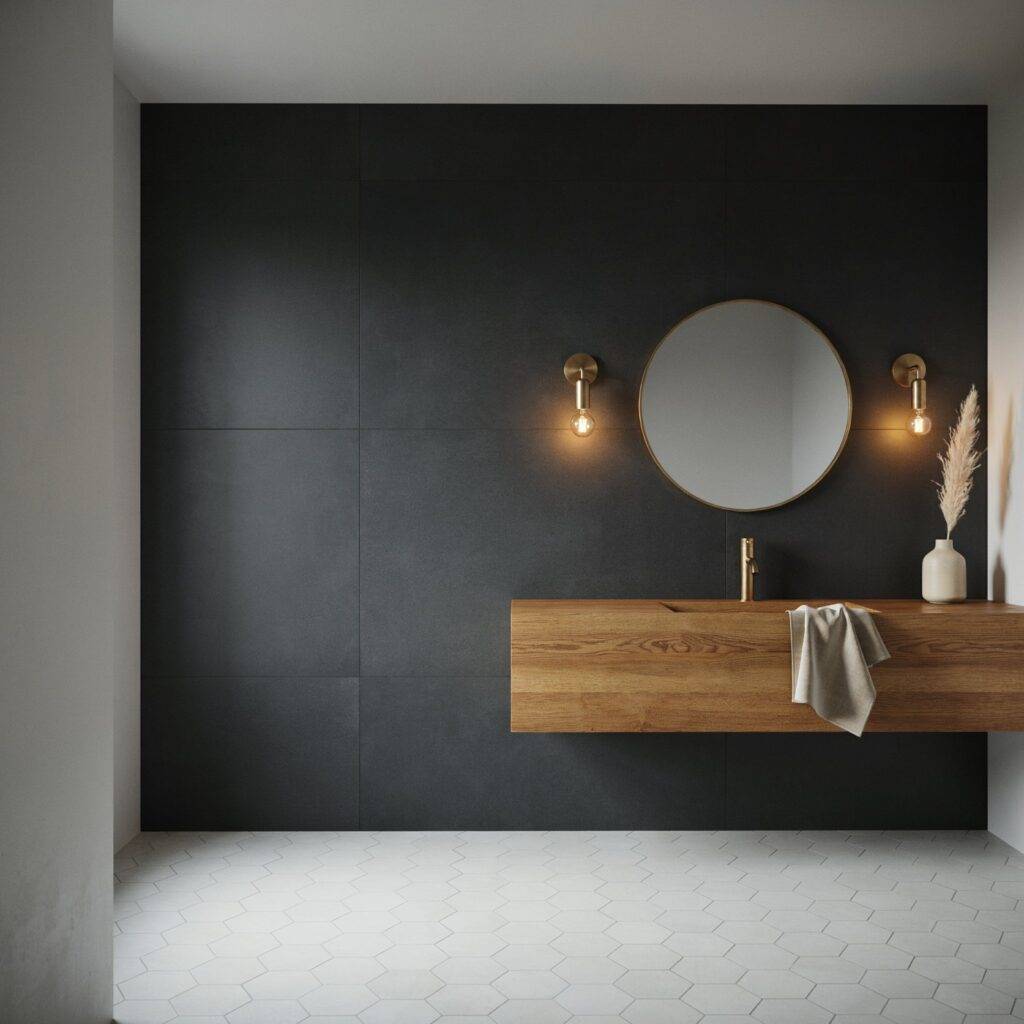
Here’s a modern take that feels fresh. Cover one wall usually the one behind the toilet or vanity in matte black tile. Then use white or light gray tile on the floor. The contrast is strong, but the matte finish keeps it from feeling too shiny or cold.
I used this in a client’s powder room, and the effect was striking. The dark wall receded visually, making the small space feel deeper. We added a round mirror and brass sconces to warm things up.
Pros: Bold but contained to one wall. Matte black hides water spots better than glossy. White floor keeps the room bright.
Cons: Black wall absorbs light, so you need good lighting. Dark tile shows dust and lint. Plan on wiping it down regularly.
8. Vertical Stack Subway for Height
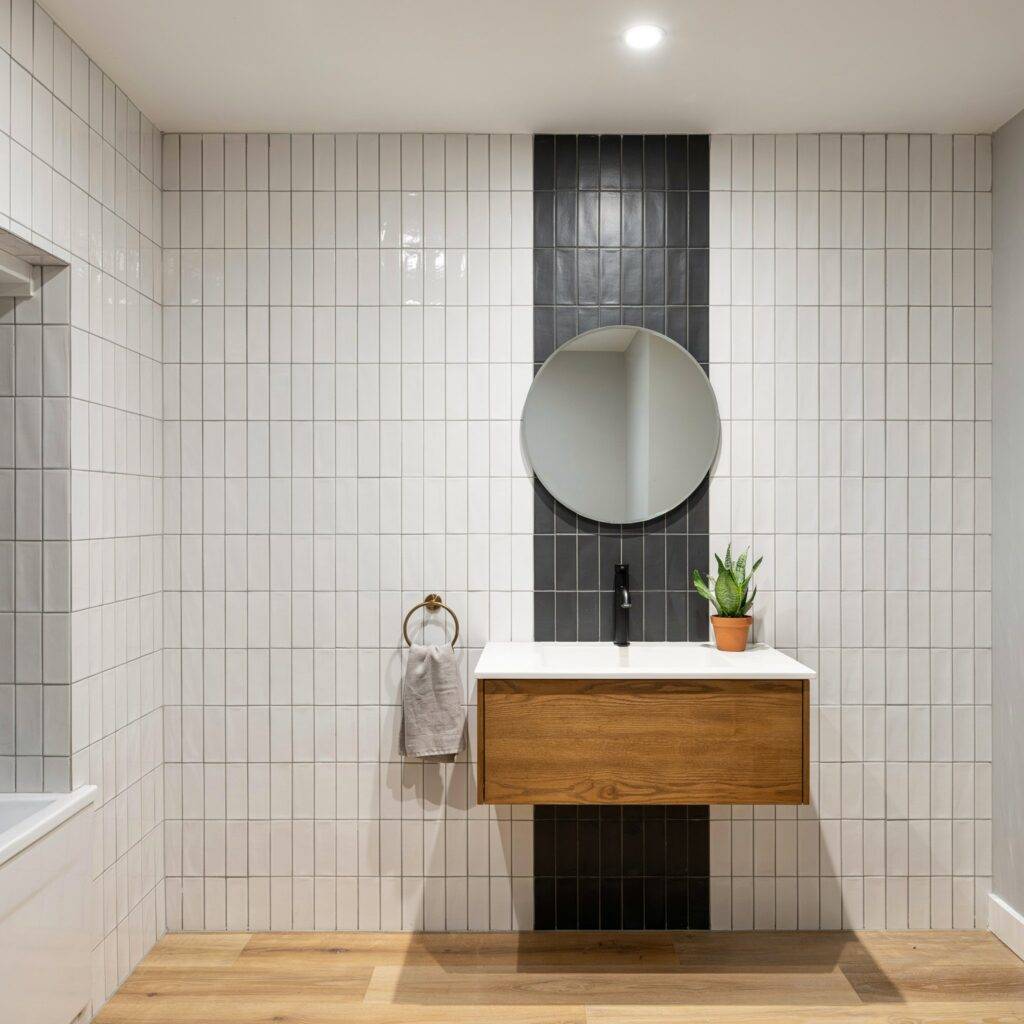
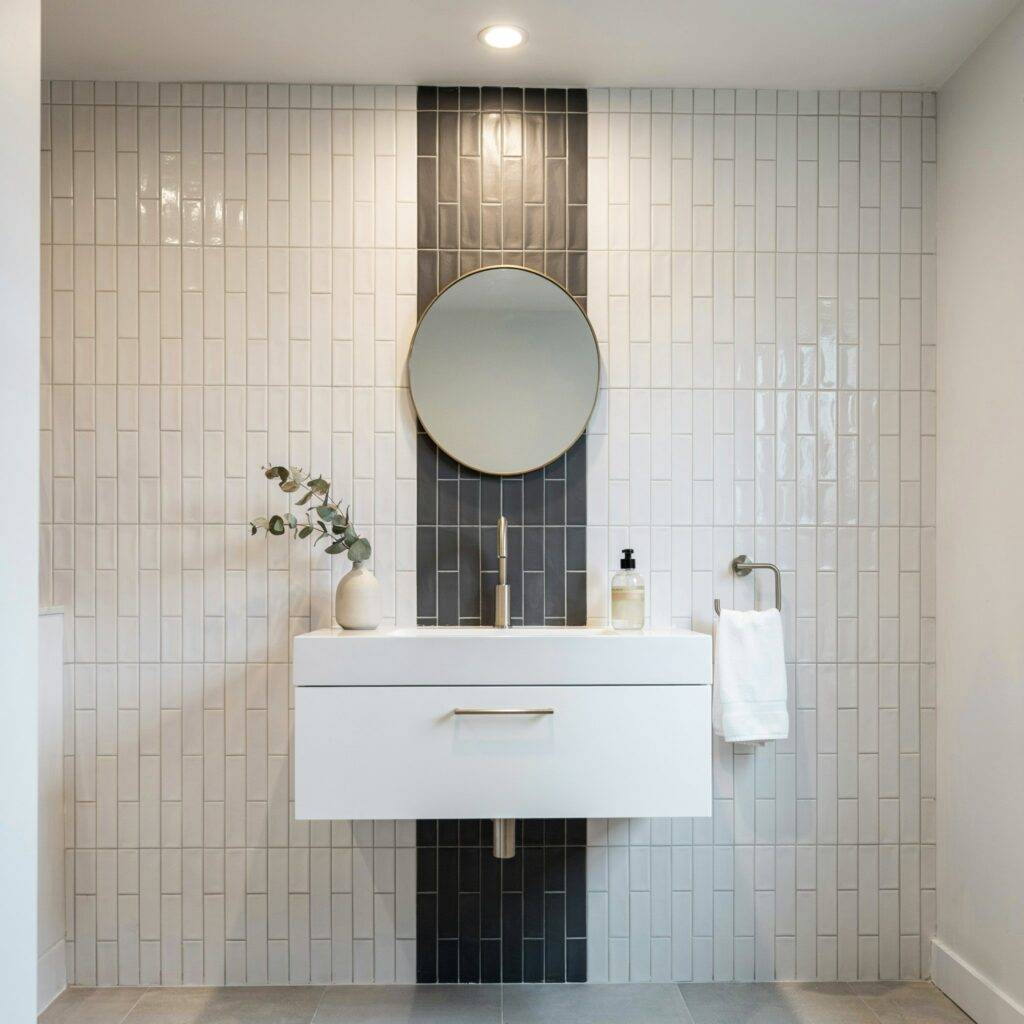
If your bathroom has low ceilings, this trick will help. Install subway tiles in a vertical stack bond instead of the usual brick pattern. The vertical lines draw the eye upward, making the ceiling feel higher than it actually is.
You can keep it all white for a clean look, or alternate a single black column behind the vanity for a focal stripe. I did this in a basement bathroom with a low ceiling, and the difference was noticeable. The room felt taller and more open.
Pros: Easy DIY-friendly pattern. Visually raises the ceiling. Can be done with standard subway tiles.
Cons: Grout lines need regular upkeep. Vertical pattern might feel too linear if overdone. Mix in some horizontal elements for balance.
9. Monochrome Mosaic Backsplash
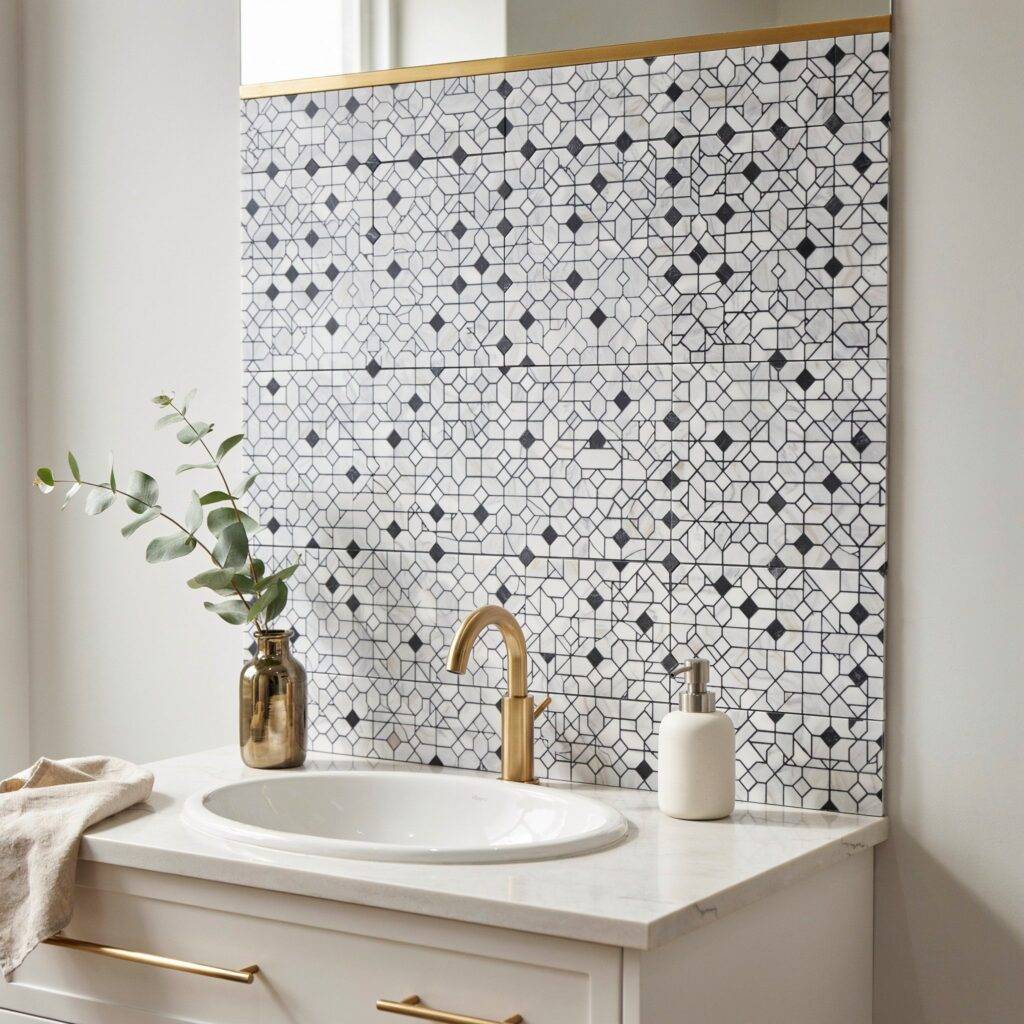
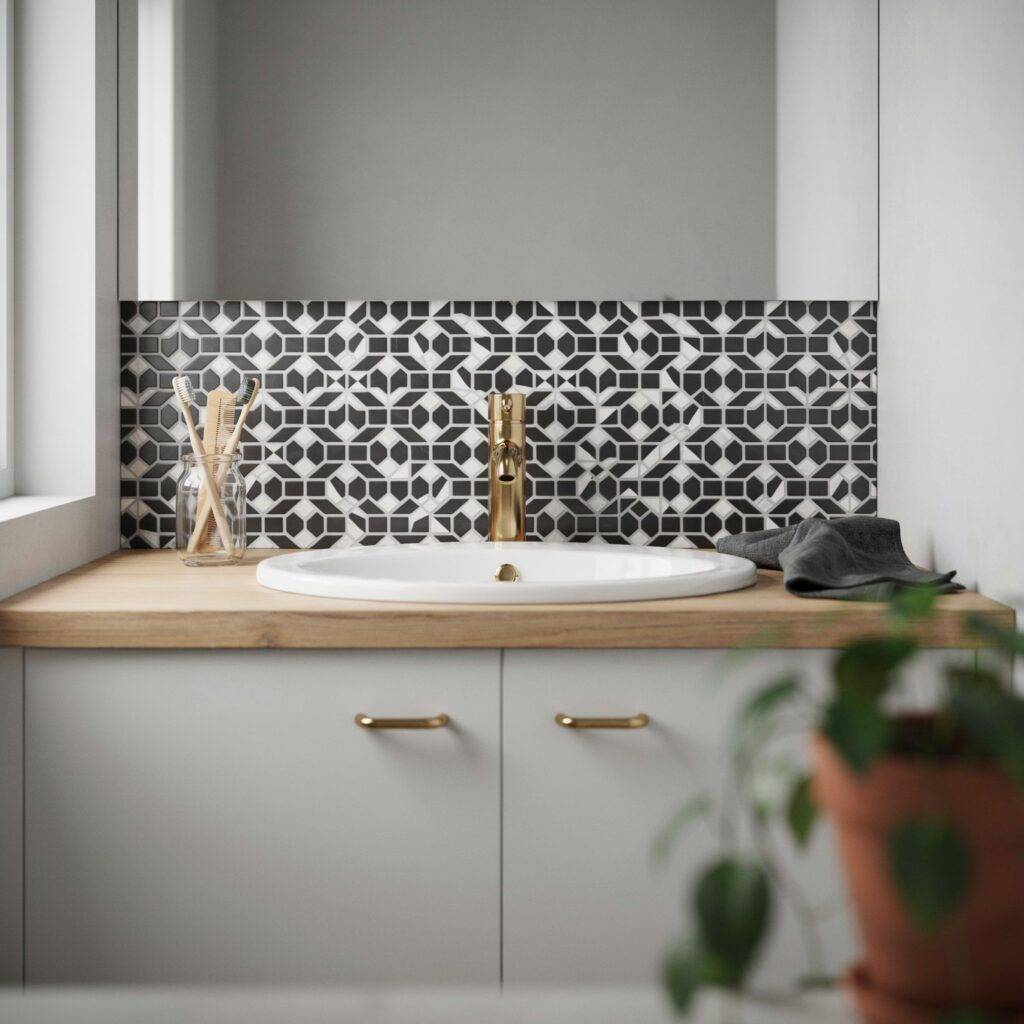
Instead of tiling the whole wall, focus on the area behind the sink. An intricate black-and-white mosaic backsplash adds a luxurious feel without costing a fortune. It’s a small area, so you can splurge a little on nicer tile.
I paired a mosaic backsplash with warm brass fixtures in one project. The brass added warmth and kept the space from feeling cold. You can also use inexpensive brass-look pulls on your vanity to get a similar effect on a budget.
Pros: High visual impact in a small area. Mosaic tiles offer slip resistance. You can use nicer tile because it’s a small space.
Cons: Mosaic costs more per square foot. Installation is more complex. More grout lines to clean.
10. Border Frames to Define Zones
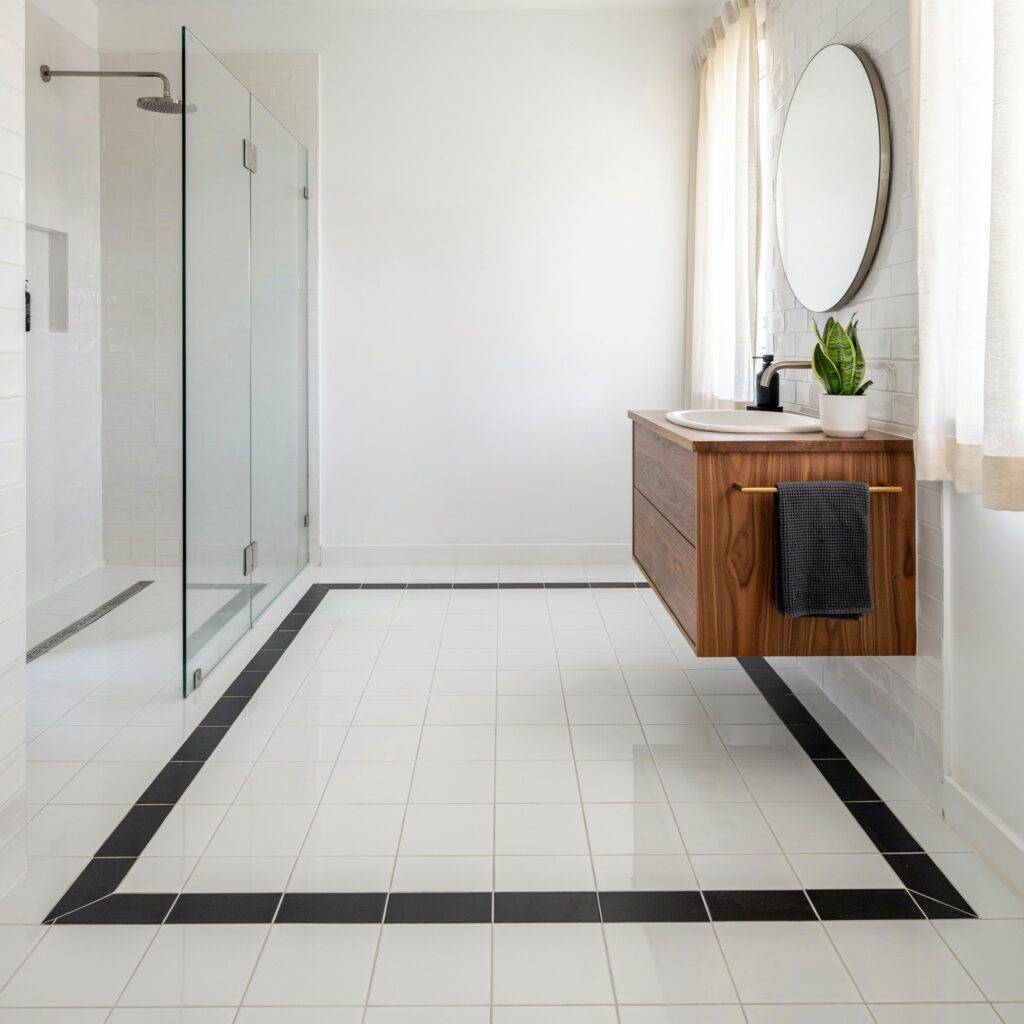
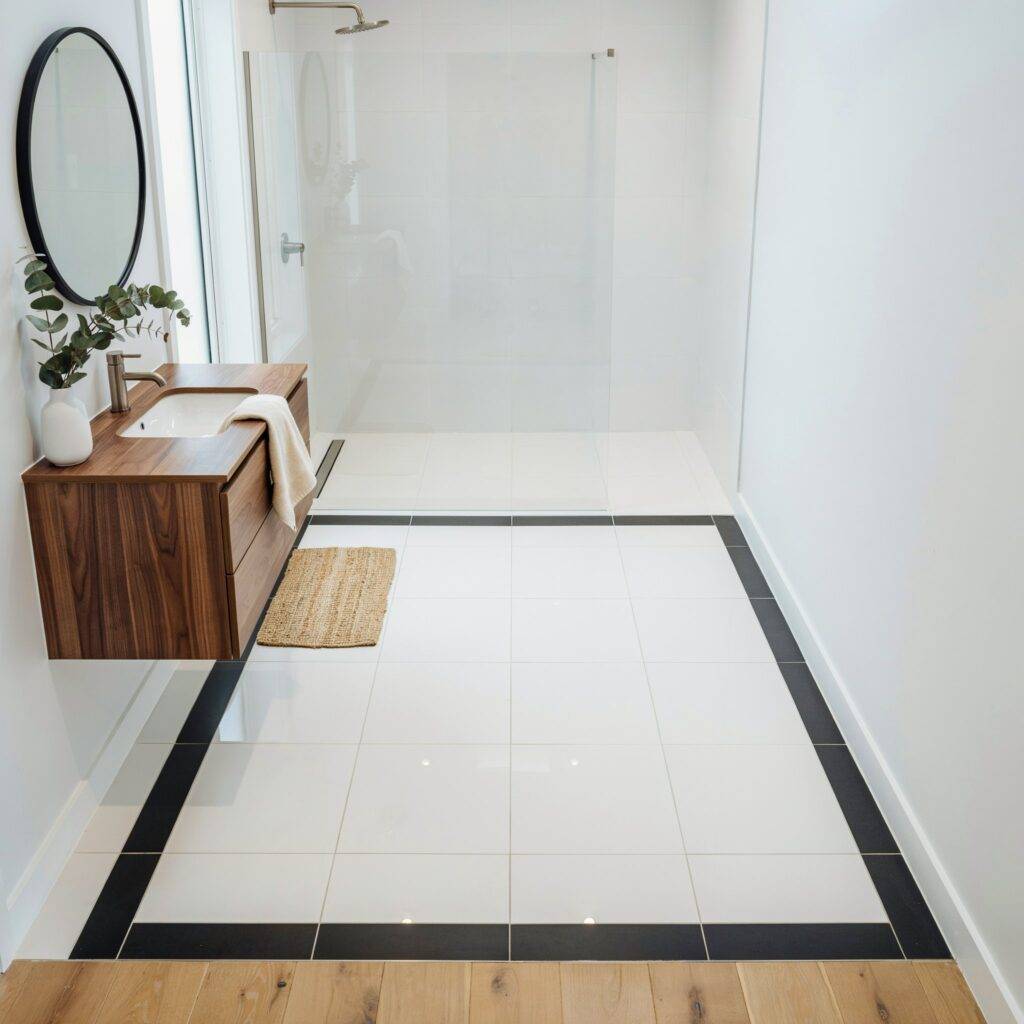
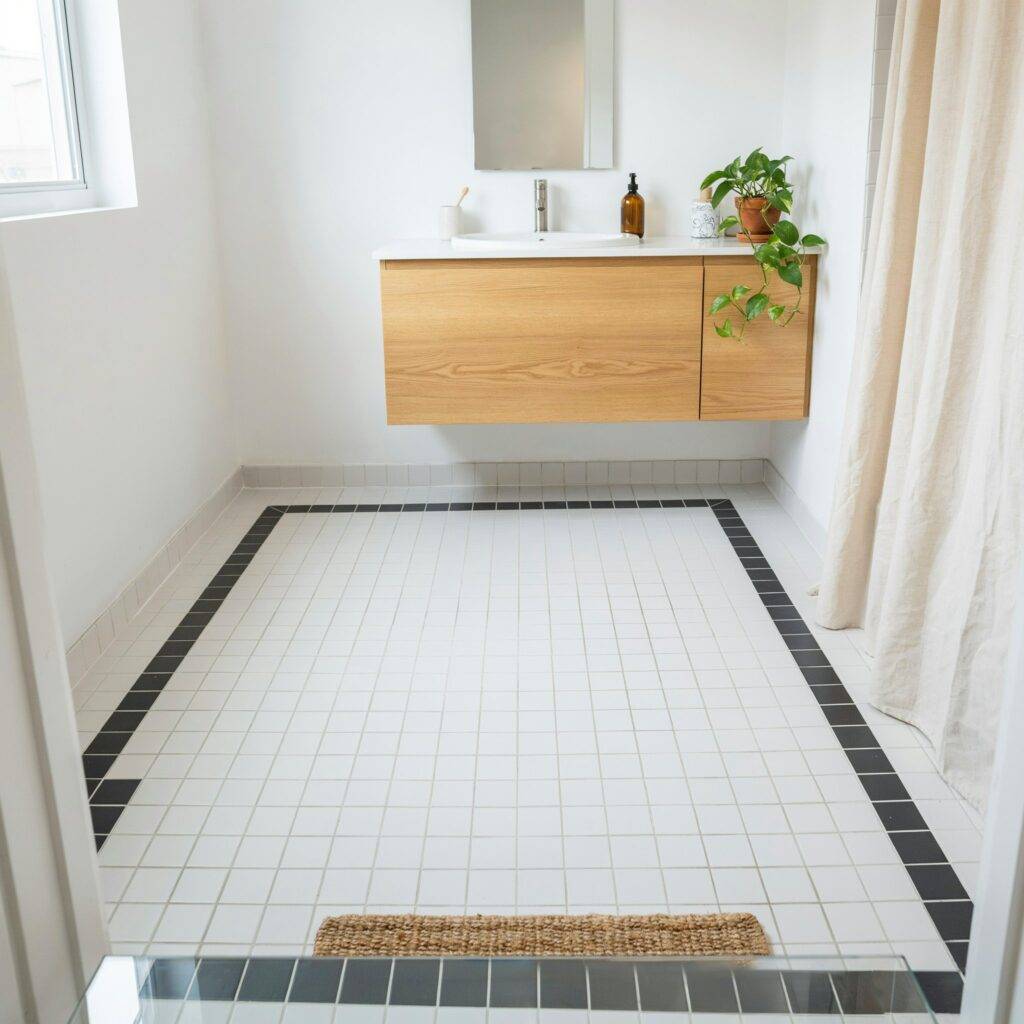
This idea works great for bathrooms with separate wet and dry areas. Use black tiles as a border or frame around a white tile field. The border creates an illusion of a rug and visually separates the shower area from the vanity zone.
I recommend a border that’s two or three tiles wide. Any thinner and it might not be noticeable. Any wider and it could feel heavy. Measure carefully before you start so the proportions look right.
Pros: Creates an architectural, tailored look. Hides imperfections along edges. Defines different areas in open layouts.
Cons: Borders must be carefully measured. Awkward proportions can ruin the effect. Takes more planning than a simple field.
11. Mixed Finishes: Matte + Glossy
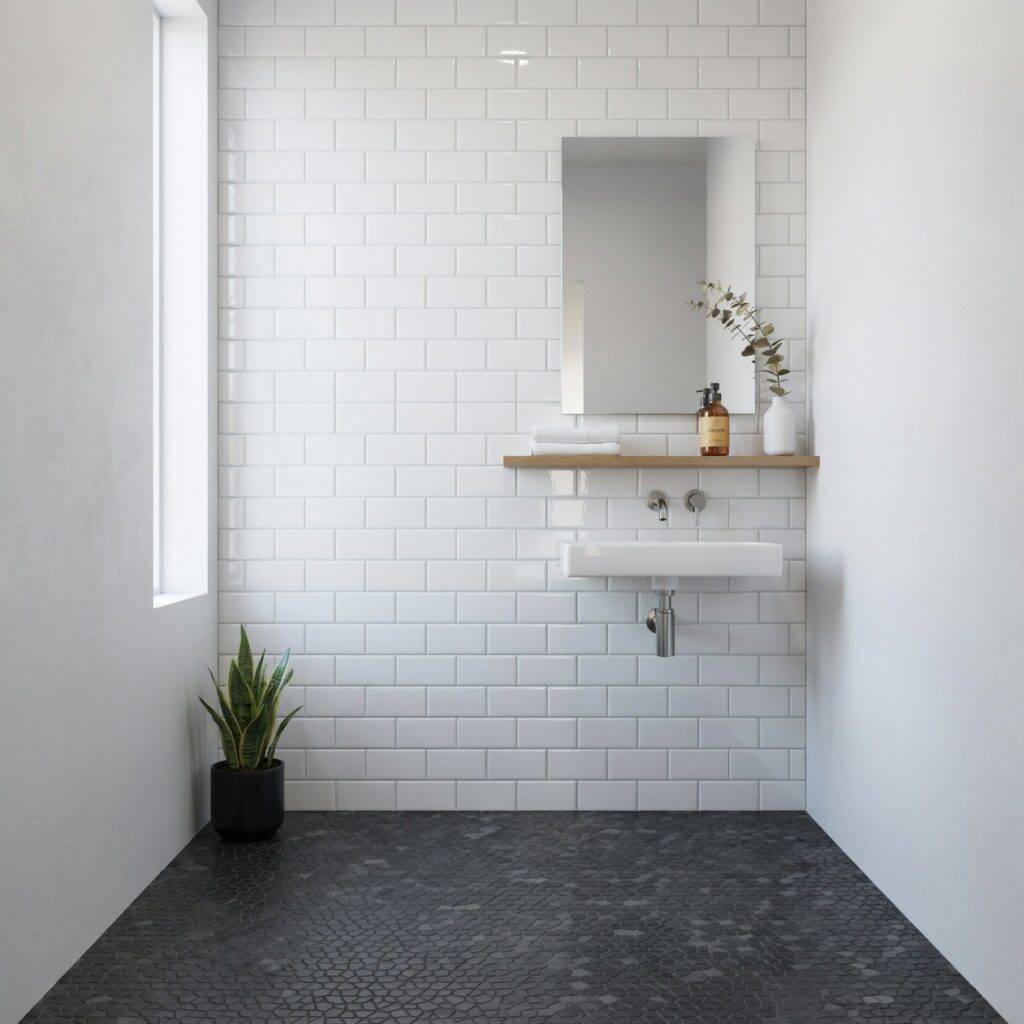
You don’t need multiple colors to add depth. Mix matte and glossy tiles in the same color instead. Try matte black hexagons on the floor with glossy white subway tiles on the walls. The light bounces off the gloss, while the matte grounds the look.
I used this combo in a bathroom with limited natural light. The glossy white walls reflected what little light there was, making the space feel brighter. The matte black floor hid minor water spots and gave the room a solid foundation.
Pros: Adds depth without introducing new colors. Glossy tile maximizes light reflection. Matte surfaces hide water spots better.
Cons: Gloss shows streaks if you don’t wipe it down. Mixing finishes takes intention. Too many finishes can feel messy.
12. Penny Tile Patterns
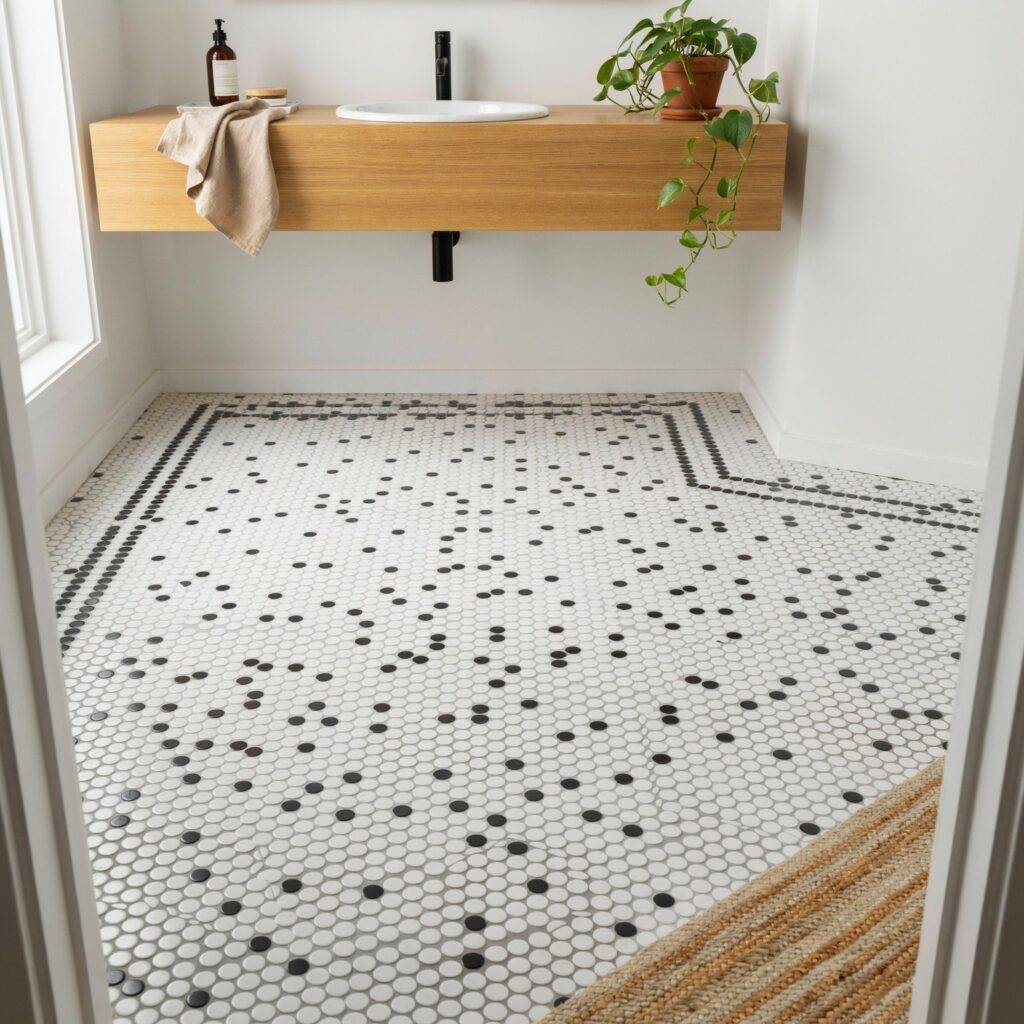
Penny tiles are those small round tiles that look like coins. They come in mesh sheets, which makes installation easier than it looks. You can scatter black pennies on a white background, create a gradient from dark to light, or draw a thin border around your vanity area.
The small scale of penny tiles adds texture underfoot. They’re also naturally slip-resistant because of all the grout lines. I’ve used them in shower floors and bathroom floors alike, and they always add a fun, vintage feel.
Pros: Round shape is unique and friendly. Small scale adds texture. Mesh sheets make DIY installation possible.
Cons: Lots of grout lines means more cleaning. Cutting around edges takes patience. Not the best choice if you want a seamless, modern look.
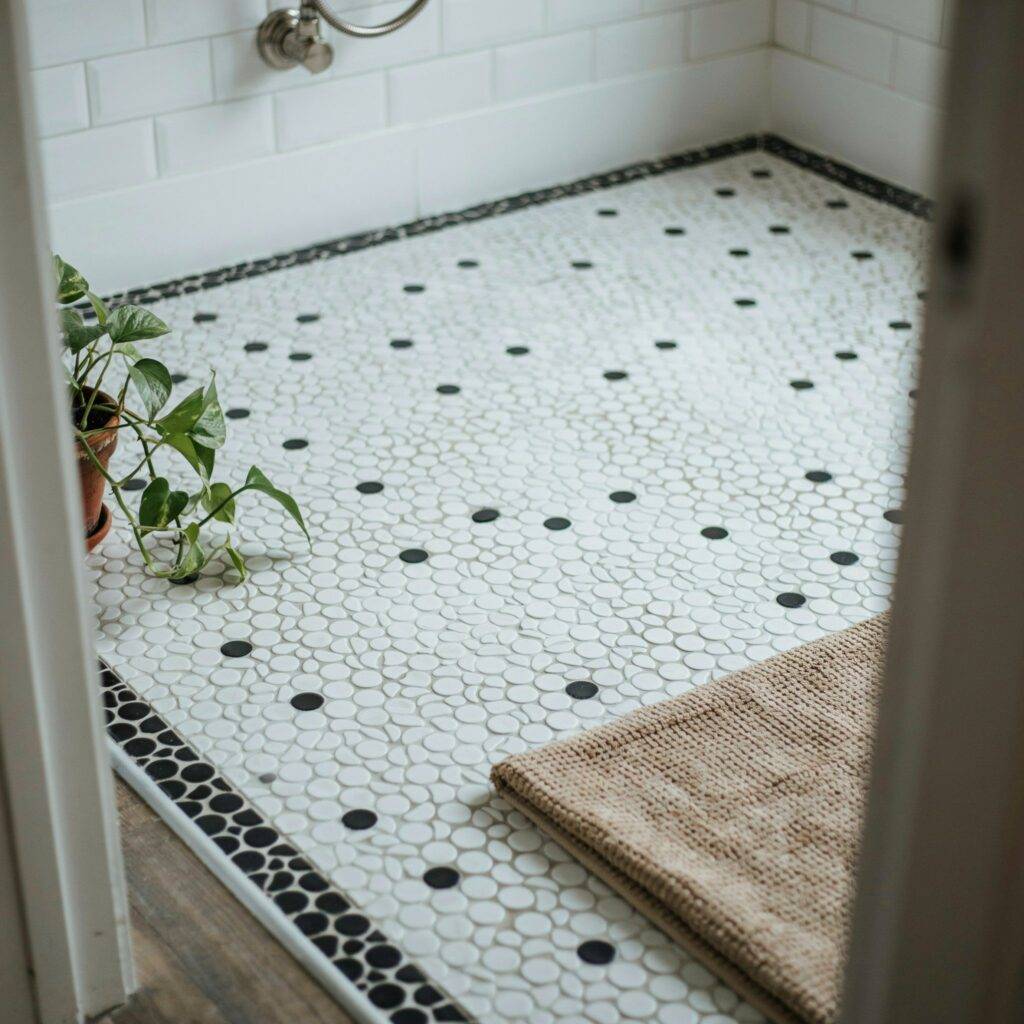
13. Vintage Encaustic-Look Tiles
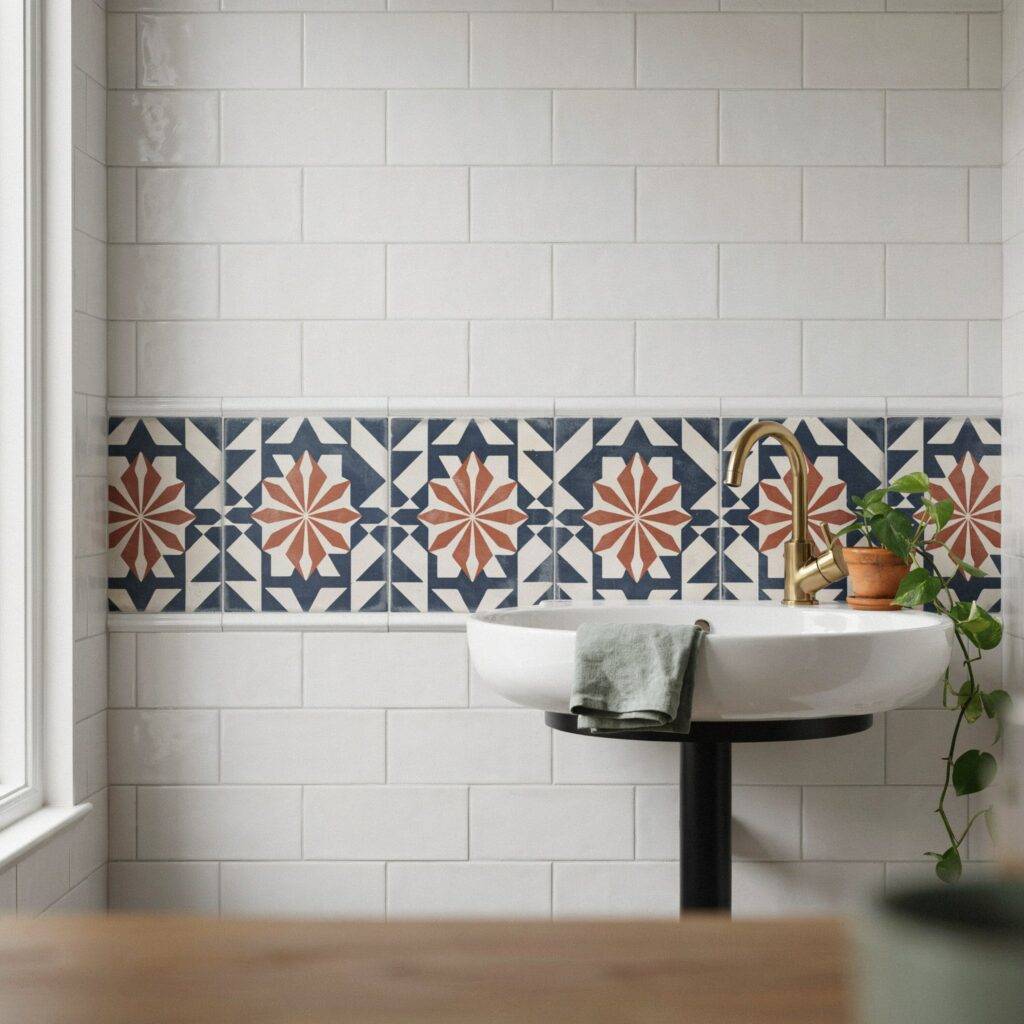
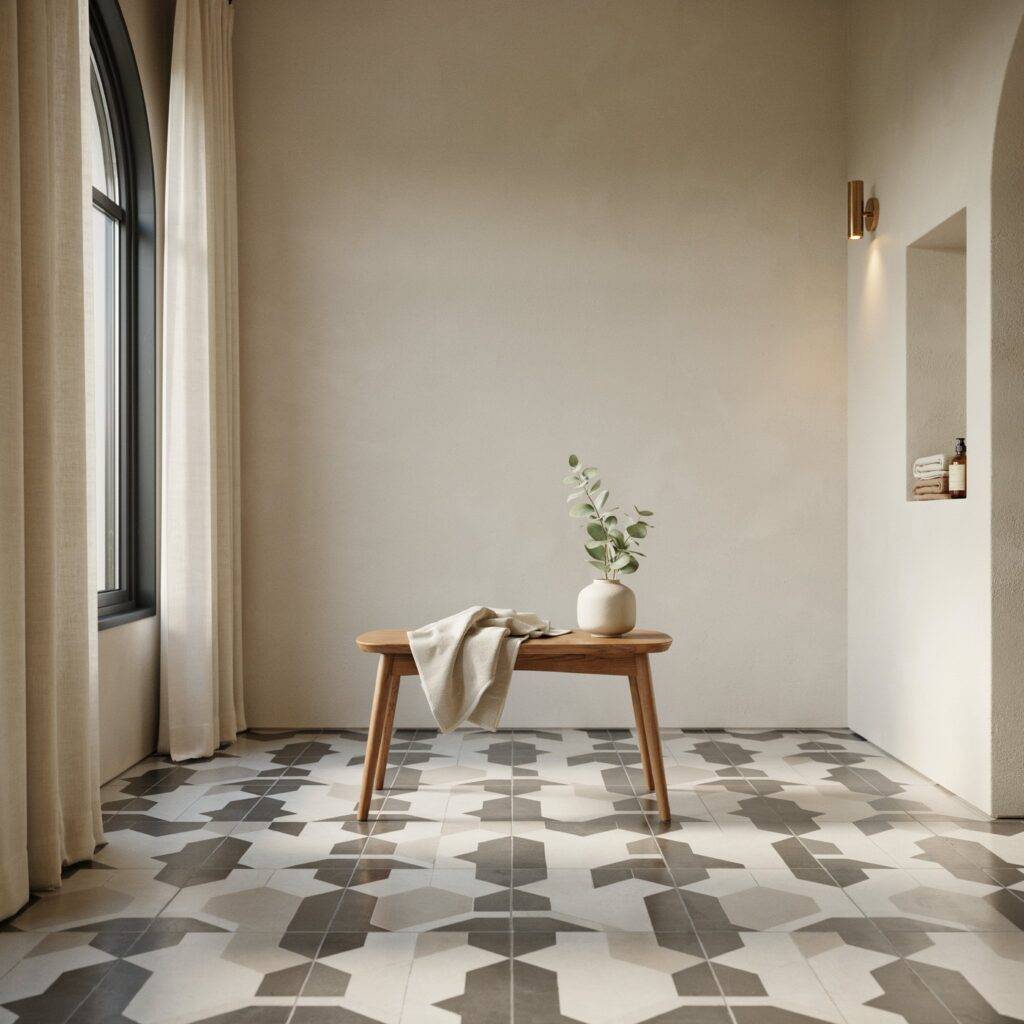
Encaustic tiles have patterns printed right into the tile instead of on the surface. They have that old-world, Moroccan feel. You don’t need to cover your whole floor with them. Just use a small band behind the sink or inside the shower niche as an accent.
I’ve done this in several vintage-inspired bathrooms. The patterned tile adds character without overwhelming the space. Since they cost more than plain tiles, using them sparingly keeps your budget under control.
Pros: Adds vintage charm and character. Patterns are durable because they go through the tile. Using a small band keeps costs down.
Cons: More expensive than plain tiles. Complex patterns can feel busy in small spaces. Not as easy to DIY as subway tile.
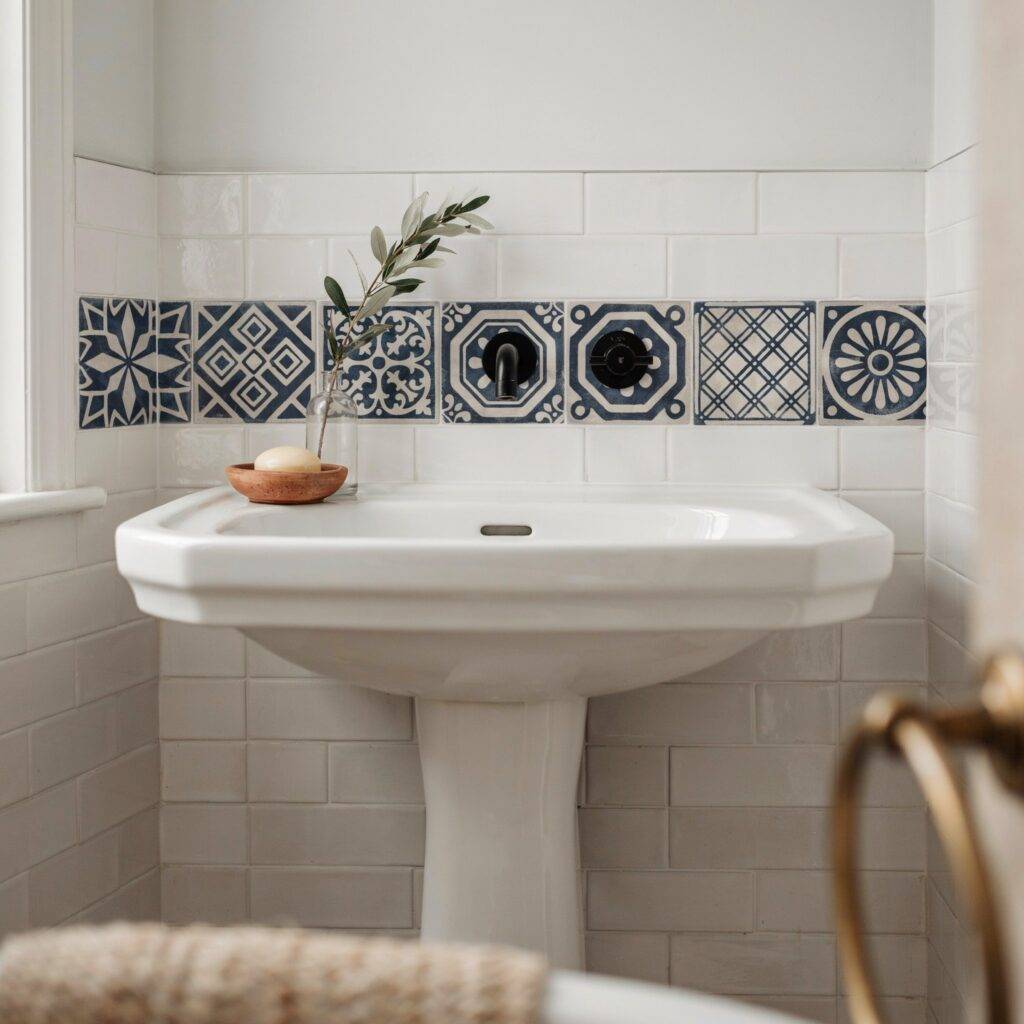
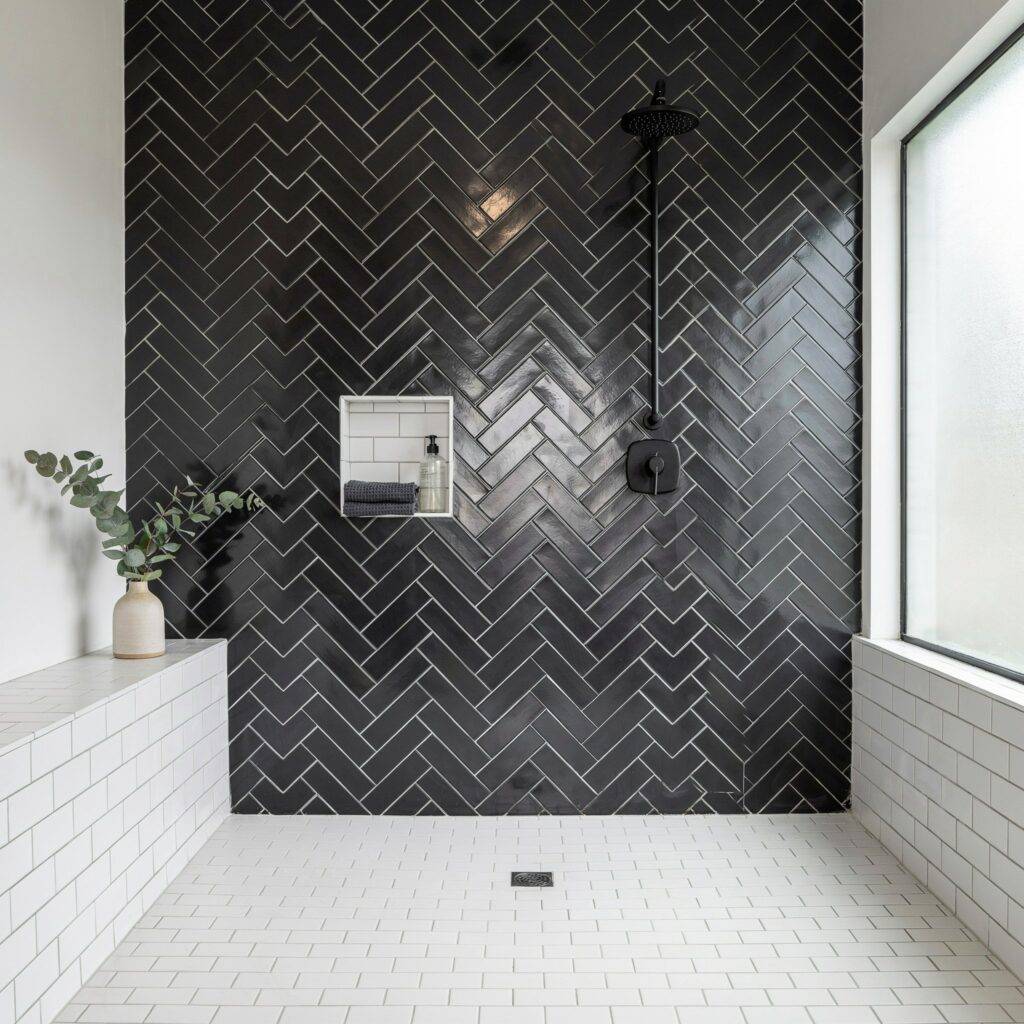
14. Herringbone on Walls, Subway on Floor
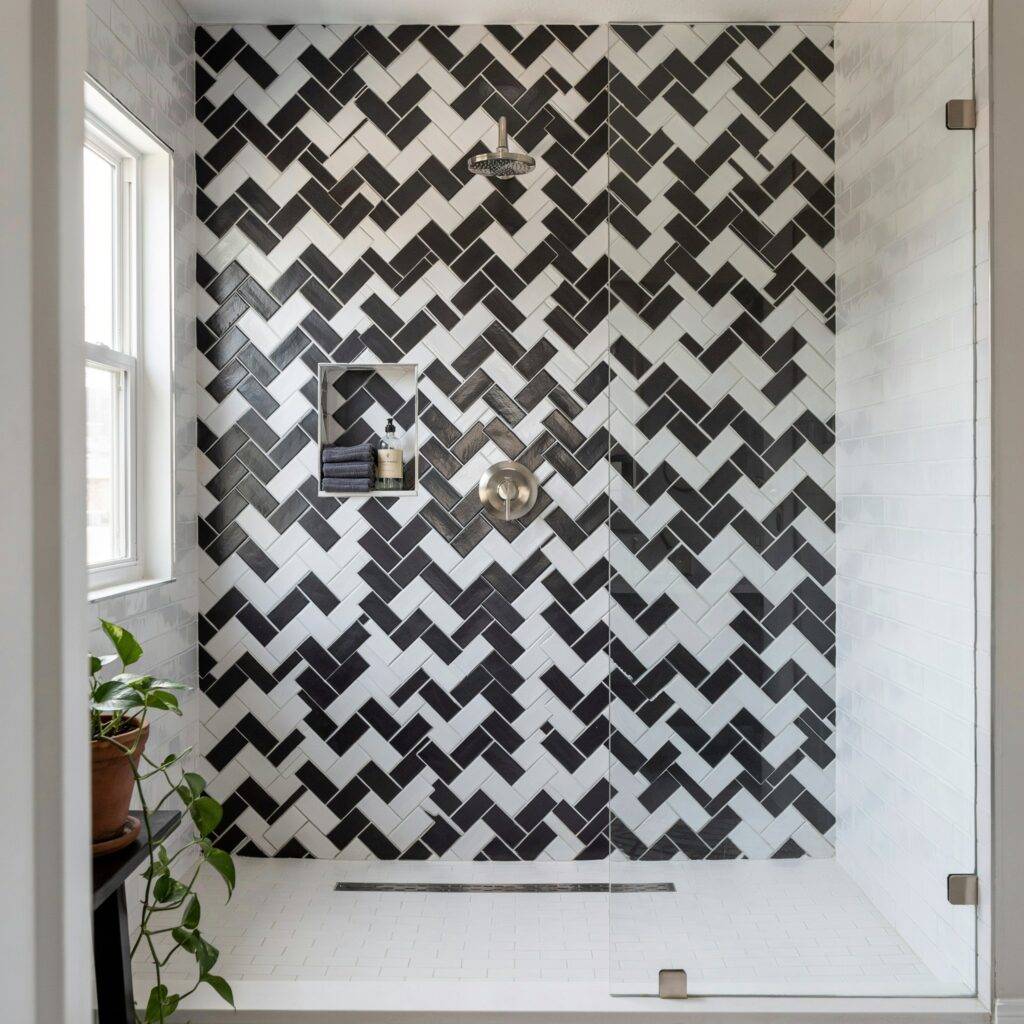
Flip the usual script. Put herringbone black and white tiles on your shower wall and use standard white subway tiles on the floor. The herringbone adds drama at eye level where you’ll see it most, while the simple floor keeps the room from feeling too busy.
I used this approach in a bathroom with a curbless shower. The herringbone wall became the focal point, drawing attention away from the tight floor space. It felt custom and considered without being over the top.
Pros: Herringbone at eye level makes a strong statement. Subway floor is classic and easy to clean. The mix of scales adds interest.
Cons: Herringbone installation costs more on walls. Patterned walls can clash with patterned floors, so keep one simple. Labor adds up fast.
15. Black Border Around White Field
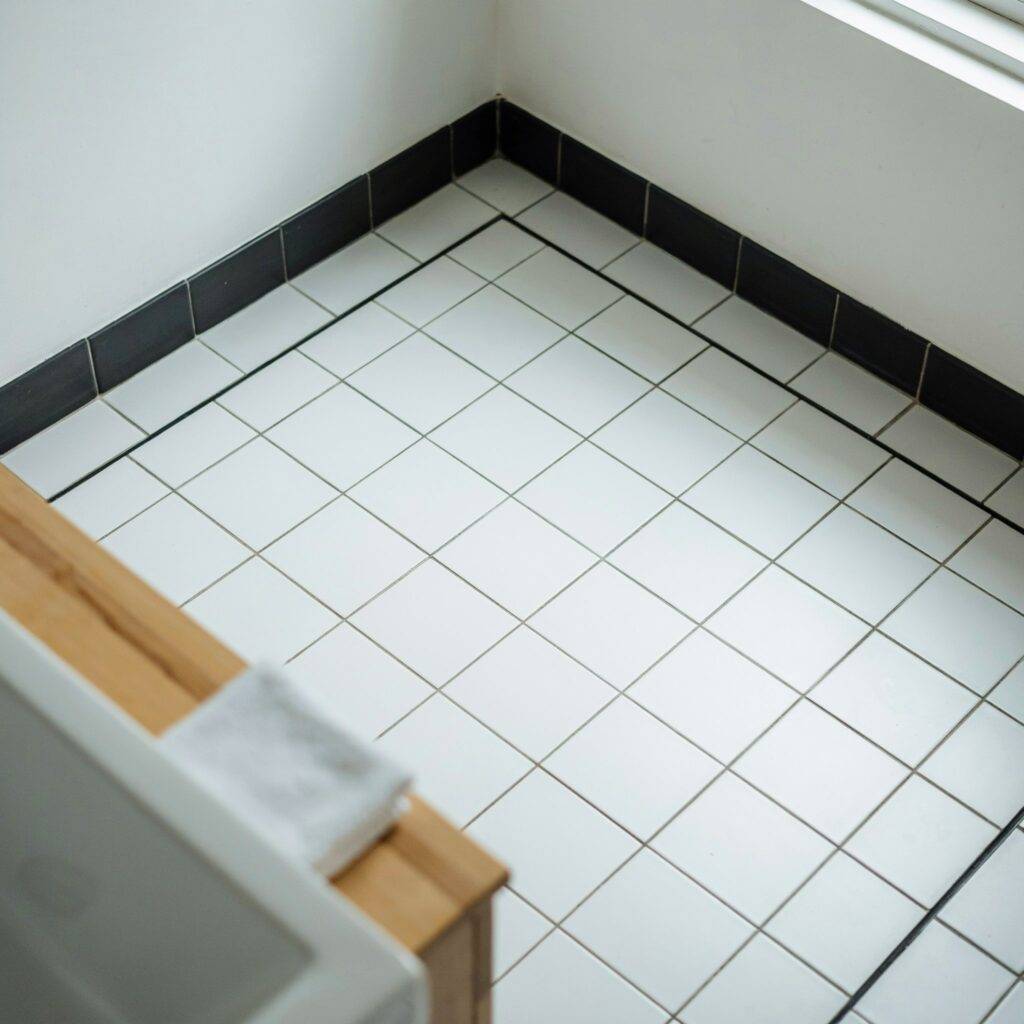
This is a subtle way to add definition without going full pattern. Lay a white tile field across your floor, then add a black border around the perimeter. The border frames the floor like a picture frame, making the room feel neat and tailored.
In small bathrooms, this trick makes the floor look like a rug. In larger bathrooms, it defines the tile area and gives the room structure. Keep the border slim one or two rows of black tile is usually enough.
Pros: Tailored look without heavy pattern. Slim border adds definition without drama. Works in any size bathroom.
Cons: Requires careful measuring. Border needs to be proportional to the room. Takes more time than a straight white floor.
Pros and Cons of Black and White Bathroom Tiles
Pros:
- Timeless look that never feels dated. A well-done black and white bathroom can last decades without needing a refresh.
- High contrast makes small spaces feel more intentional and designed.
- Easy to match with fixtures, towels, and accessories since black and white are neutral.
- Versatile enough for vintage, modern, industrial, or traditional styles.
Cons:
- Black tile shows dust, lint, water spots, and footprints. You will notice every bit of debris on a black floor. White tile can start looking dingy over time if not cleaned regularly.
- High-contrast patterns can feel visually busy if overdone. A small bathroom with checkerboard floors AND checkerboard walls might feel chaotic.
- Installation mistakes stand out. A crooked line or uneven grout will be obvious because of the strong contrast.
What to Buy
Matte Black Bathroom Accessories Set (5 pieces)
This kit includes a soap dispenser, toothbrush holder, tumbler, soap dish, and lotion pump. Made from resin, so no rusting or chipping. The matte black finish pairs perfectly with white tile and won’t show fingerprints like glossy black. 👉 Check Price on Amazon.com
Matte Black or White Subway Tile (Porcelain 3×6)
Porcelain is denser than ceramic and holds up better in wet bathrooms. Pick matte finish to hide water spots. White tile reflects light. Black tile grounds the space. Both look sharp with contrasting grout.
Peel and Stick Black and White Vinyl Floor Tiles
Not ready for a full tile job? These self-adhesive vinyl tiles are waterproof and install in an afternoon. No grout, no special tools. Just peel, stick, and press. Great for renters or temporary updates.
Black Hexagon Mosaic Floor Tiles (Matte Finish)
These small hexagons come on mesh sheets for easier installation. The matte finish hides water spots well than glossy. Perfect for bathroom floors or shower pans.
Tips for a Successful Black and White Tile Bathroom
Test tiles in your actual bathroom lighting. Black tiles can look blue or brown under warm lights. Bring samples home before buying.
Choose grout color carefully. Mid-gray grout is forgiving it blends with both black and white and hides dirt better than white or black.
Pick matte finishes for floors. Glossy black floors show every water spot and footprint. Matte or textured surfaces hide daily wear.
Use a squeegee after showers. Especially important for black tile. Drying the surface prevents hard water stains from building up.
Keep a microfiber mop handy. Black floors need frequent light cleaning. A quick pass every couple of days prevents dust buildup.
Mistakes to Avoid
Using too much pattern. High-contrast patterns like checkerboard compete with each other. Pick one star (floor or wall) and keep the other simple.
Skipping the layout mock-up. If your pattern is directional, lay it out before installing. Avoid sliced motifs at the ceiling line or awkward cuts in visible spots.
Choosing glossy black floors. They look amazing in photos but show every speck of dust, water spot, and footprint in real life. Matte is more practical.
Forgetting about storage. Vintage looks often use pedestal sinks, which leave you nowhere to put things. Plan for recessed niches or a small cabinet.
Using harsh chemicals on dark grout. Bleach and acidic cleaners can fade or discolor black grout over time. Stick with pH-neutral products.
FAQs
Are black and white tiles hard to keep clean? Yes and no. Black tile shows dust and water spots easily. White tile can look dingy if not cleaned regularly. Regular light cleaning with a microfiber mop and pH-neutral cleaner is usually enough.
What grout color should I pick? Mid-gray is the most forgiving. It blends with both tile colors and hides dirt better than white or black. If you want strong contrast, pick black grout with white tile or white grout with black tile just know you’ll clean more often.
Do black and white tiles make a small bathroom look smaller? Not if you do it right. High-contrast patterns can actually make a small space feel larger by creating depth and guiding the eye. Just keep the tile size appropriate bigger tiles for fewer grout lines.
Which is easier to maintain, matte or glossy? Matte is easier for floors. It hides water spots, footprints, and dust better than glossy. Glossy is fine for walls, but it shows streaks and soap residue.
Can I use peel-and-stick tiles in a bathroom? Yes, if you choose waterproof vinyl. They’re a good option for renters or temporary updates. Just clean the surface well before applying, and avoid putting them in standing water.
Final Thoughts
Black and white tile bathrooms have been around for a reason. They’re crisp, they’re classic, and they don’t try too hard. The key is picking the right pattern for your space and not overdoing it.
Start with one bold element maybe a checkerboard floor or a black grout accent wall and keep everything else simple. Test your tiles in your actual lighting. Choose matte finishes for floors. And don’t forget about maintenance. Black floors look sharp, but they show dust. White tiles look clean, but they show dirt. Know what you’re signing up for before you start cutting tile.
Take your time, plan your layout, and you’ll end up with a bathroom that feels both timeless and totally yours.
Related Post: