
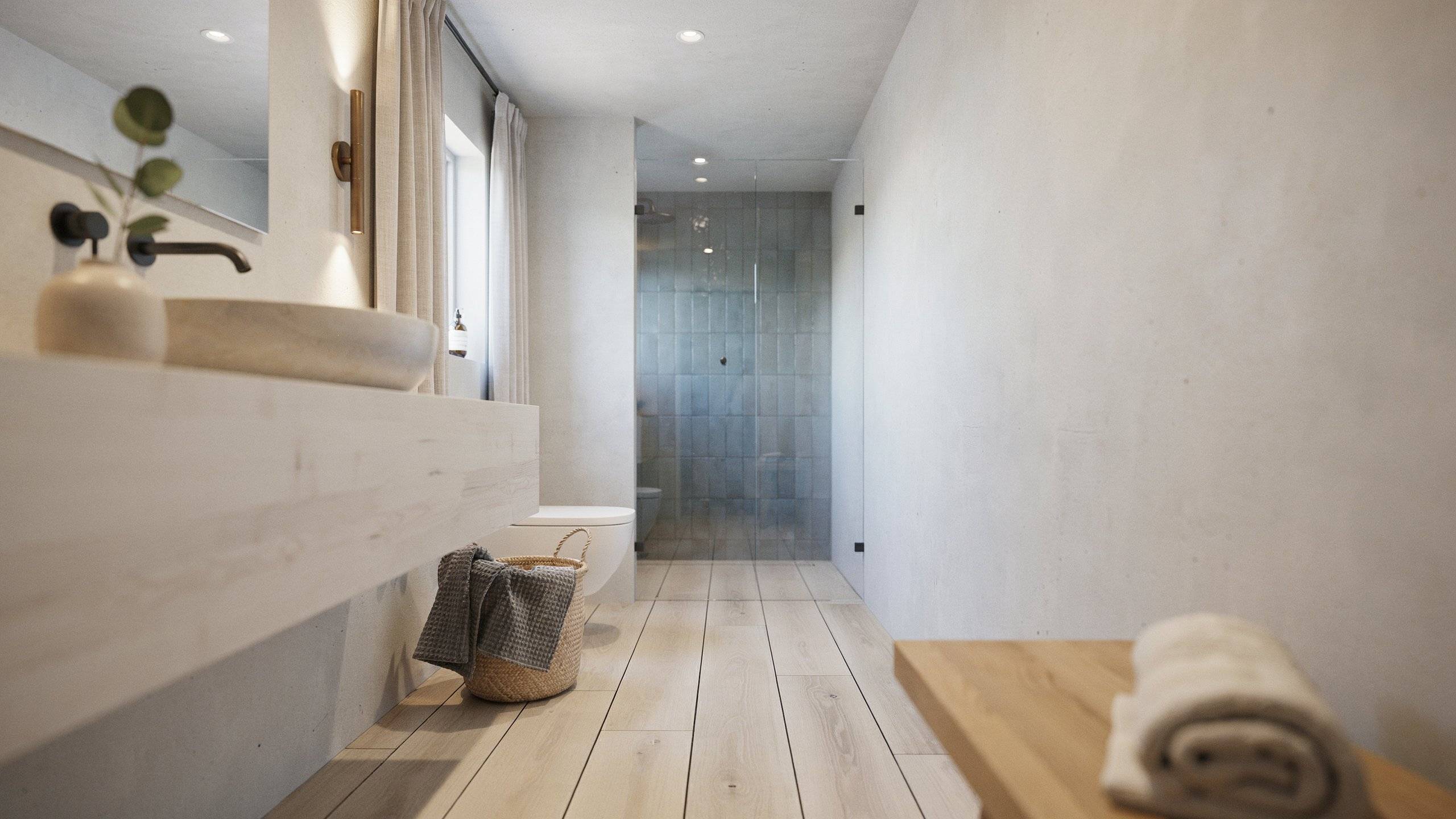
Bathrooms are the smallest rooms in most homes. But they get used every single day. You have probably seen Japandi style online. It mixes clean Japanese lines with soft Scandinavian warmth. The result is simple, calm, and very relaxing.
Small bathrooms can be tricky. Too much stuff makes them feel tight. Not enough warmth makes them feel cold. Natural wood accents are the fix. Wood adds comfort without taking up extra space.
I looked at real bathroom makeovers and talked to actual homeowners who did these projects. These are not just pretty pictures. These are things people really did in their own homes, often on a budget.
Why Japandi Works for Small Bathrooms
Japandi works so well in small bathrooms because it follows one simple rule: keep what you need and nothing else. Every item has a job. Every surface has a purpose. The Japanese side gives you clean lines and smart storage. The Scandinavian side adds soft textures and warm wood.
Together, they make a small bathroom feel open but not empty. Natural wood accents play a big role here. A single wooden element, like a shelf or a stool, can make the whole room feel warmer.
And because wood comes from nature, it never looks out of style. One homeowner I found said adding a cedar wood ceiling turned their bathroom into a space that truly feels like a spa.
Simple Ways to Add Natural Wood to Your Small Bathroom
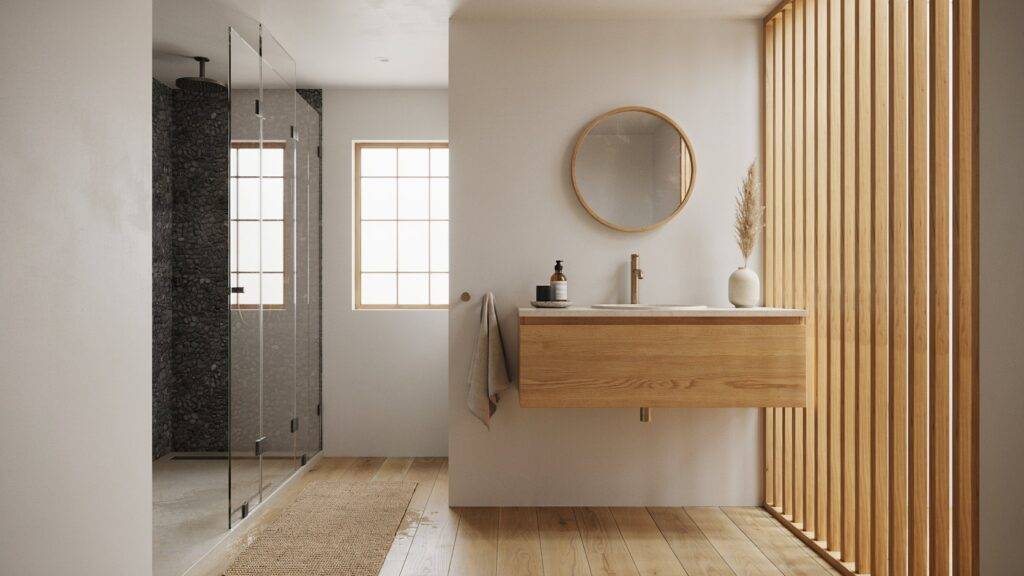
1. Try a Wood Slat Accent Wall on One Side
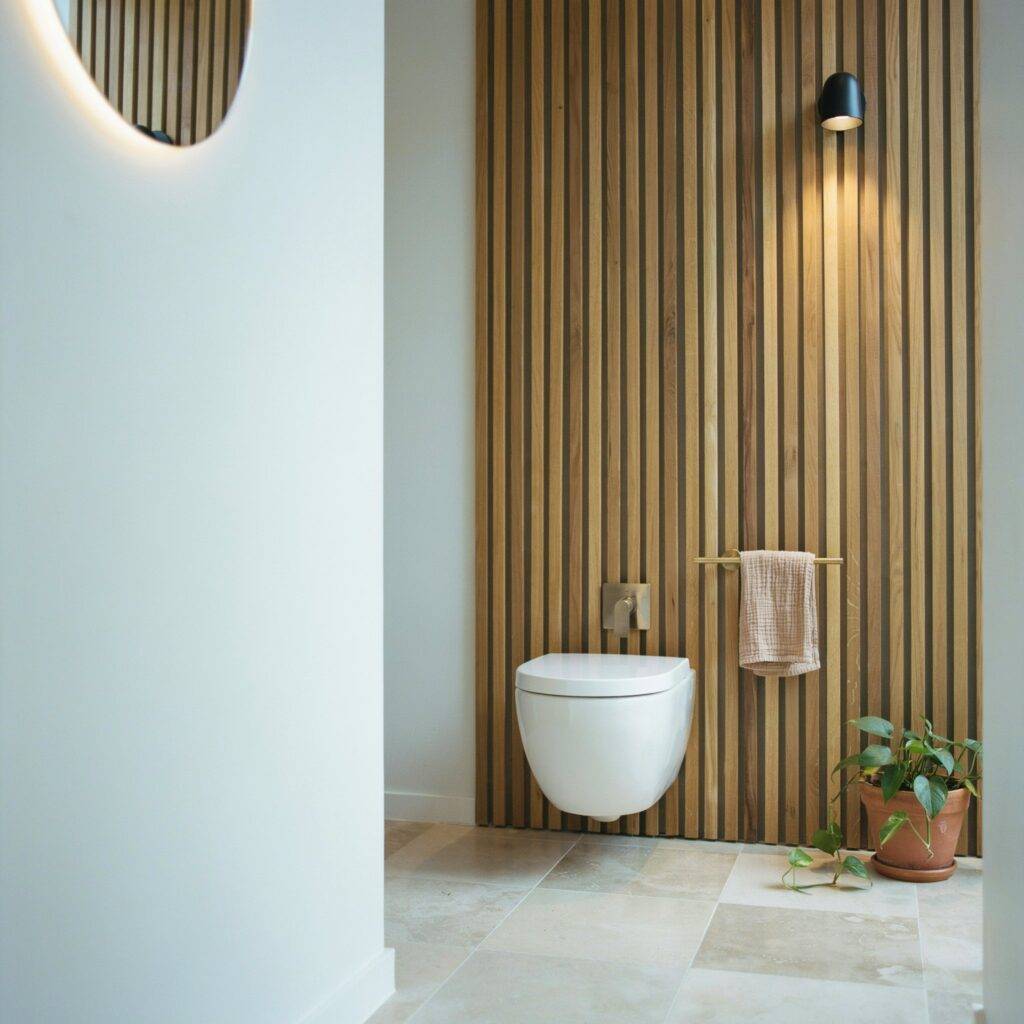
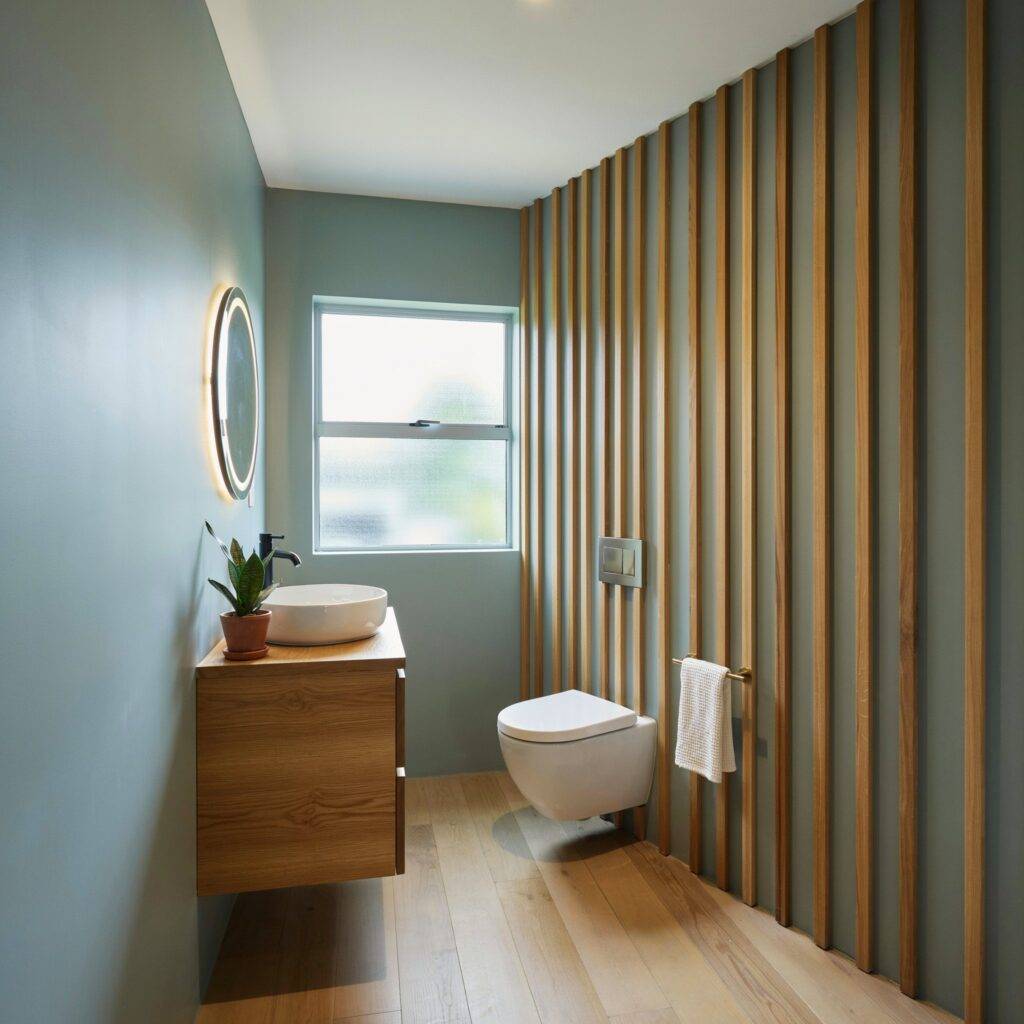
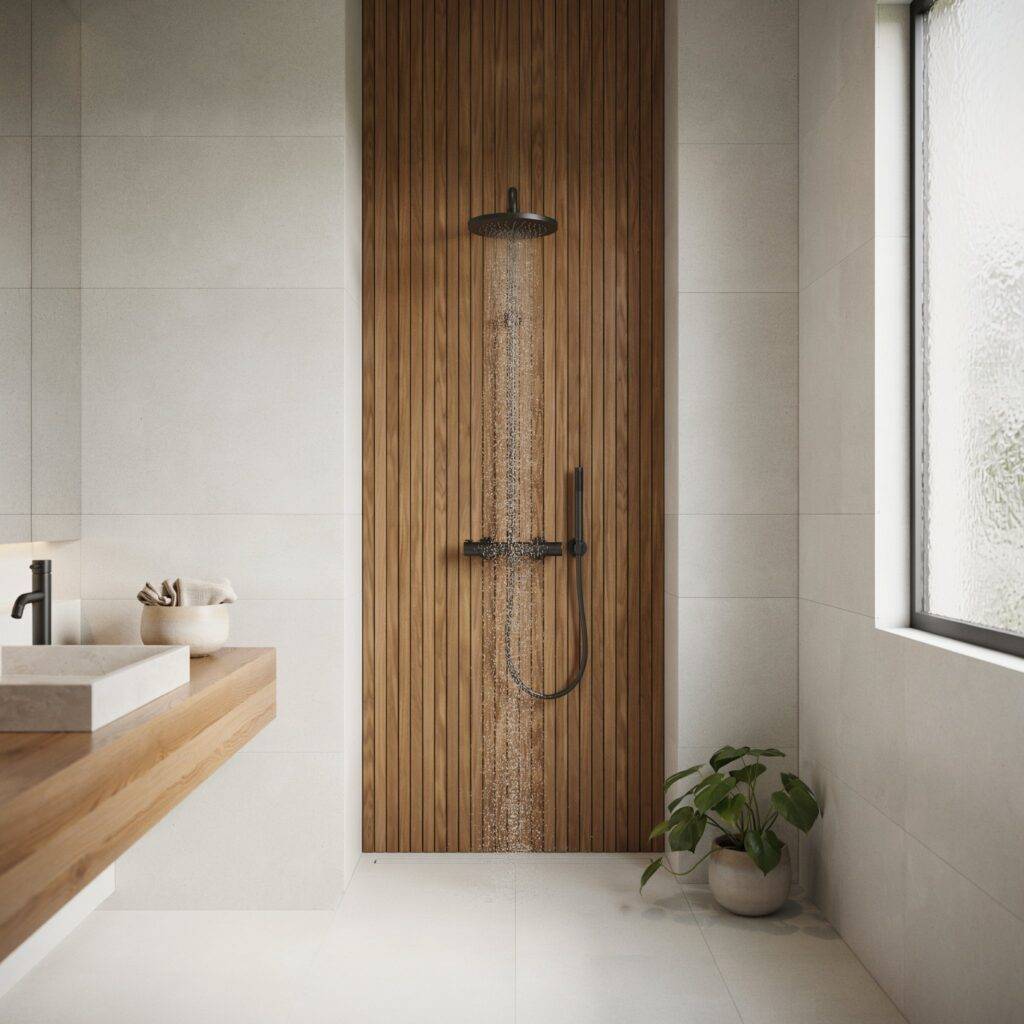
You might think accent walls are for living rooms. But in a small bathroom, one wall with wood slats can change everything. Wood slats are thin strips of wood placed vertically with small gaps between them. The gaps let some wall color show through. This softens the look and makes the room feel taller.
A real homeowner I read about actually added wood panel latticework to their bathroom side walls during a leak repair. It was not the original plan, but it turned out great. You can do this behind your toilet or on the wall opposite your mirror.
Use cedar or teak because they handle moisture well. The slats add texture and warmth without taking up any floor space. You can buy pre-made slat panels online or make your own with wood strips and a nail gun.
2. Use a Wooden Leaning Ladder for Towels
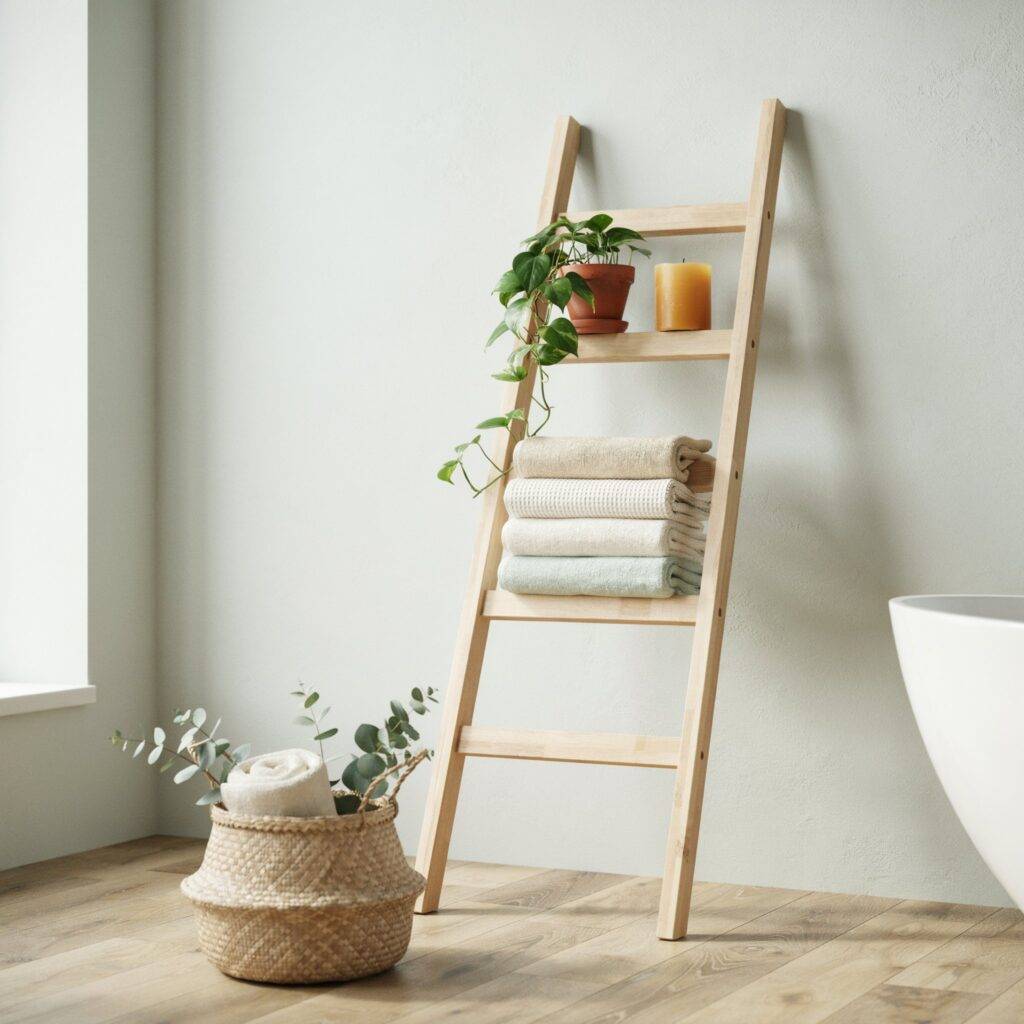
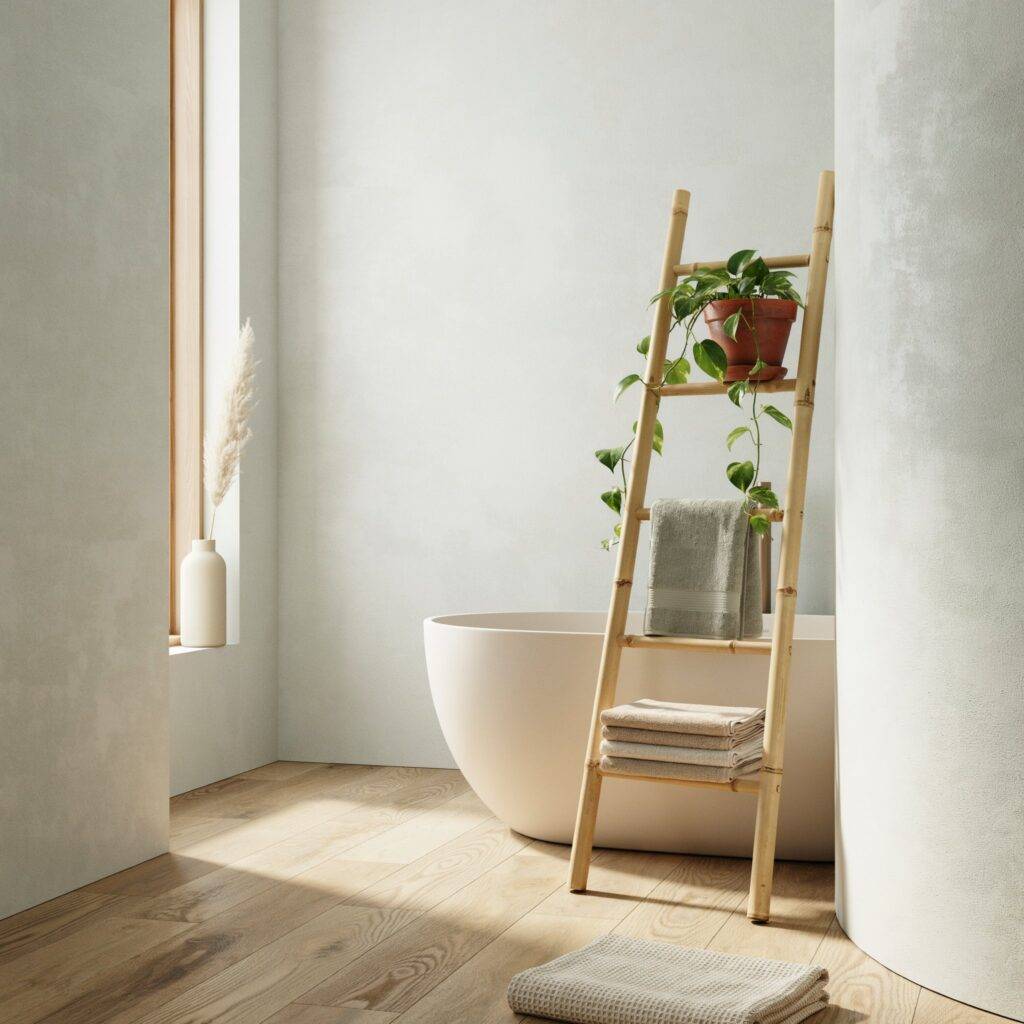
A towel bar is fine. But a wooden leaning ladder gives you more space and looks better. You just lean it against the wall near your shower or tub. The rungs hold folded towels, and the top can hold a small plant or a candle.
These ladders are common in real Japandi homes. You can find them for under fifty dollars. One design expert recommends a wooden leaning ladder as an ideal way to hang towels while adding natural warmth to the room. If you want to save money, make your own from wood dowels and rope.
The ladder takes up almost no floor space because it leans against the wall. Plus, you can move it whenever you clean. Use light wood like bamboo or pine to keep the room feeling bright.
3. Install a Wood Slat Shower Wall Instead of Tile
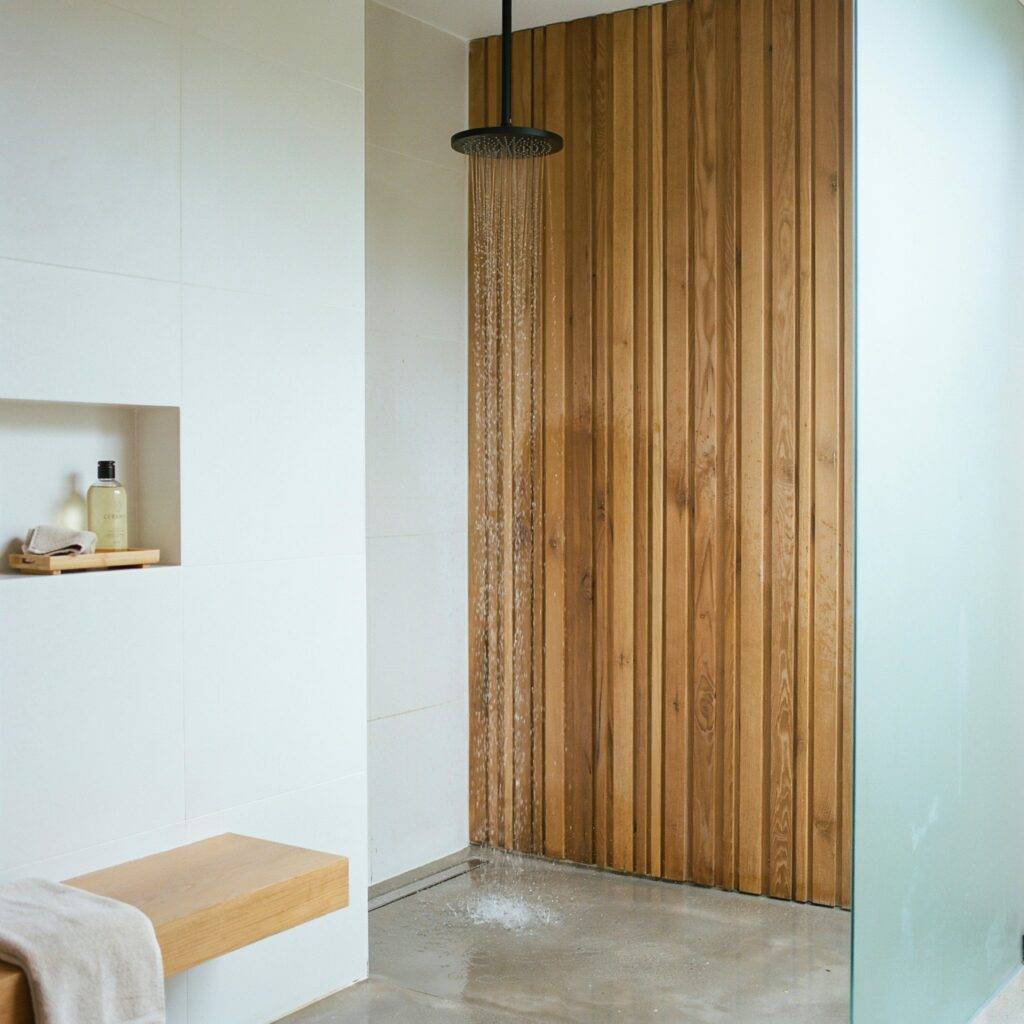
Tiles are fine. But wood slats on one shower wall create a spa feel that tile cannot match. You install vertical wood strips directly on the wall behind your shower fixtures. The water runs down the slats and into the drain. This is a bold choice, but real homeowners have done it.
Wood slat panelling is actually a cornerstone element of Japandi design. It creates the illusion of a wider, more expansive space. The trick is using the right wood. Cedar and teak are naturally water resistant. Do not use pine or untreated oak.
They will rot. You only need to cover one wall, not the whole shower. The rest can be simple white tile. The contrast between the wood slats and smooth tile is what makes the look work. This is one of those Japandi bathroom ideas that looks expensive but costs much less than floor-to-ceiling marble.
4. Hang a Wooden Branch as a Towel Rack
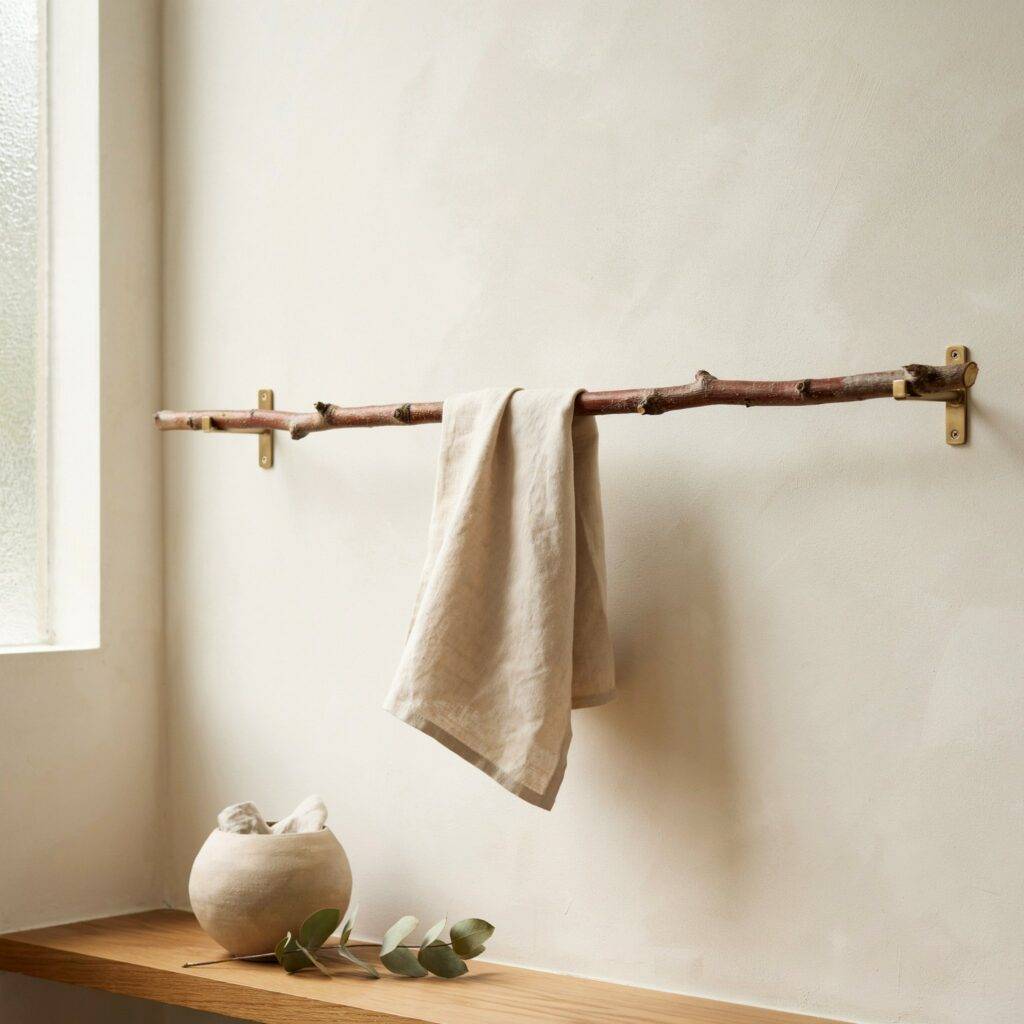
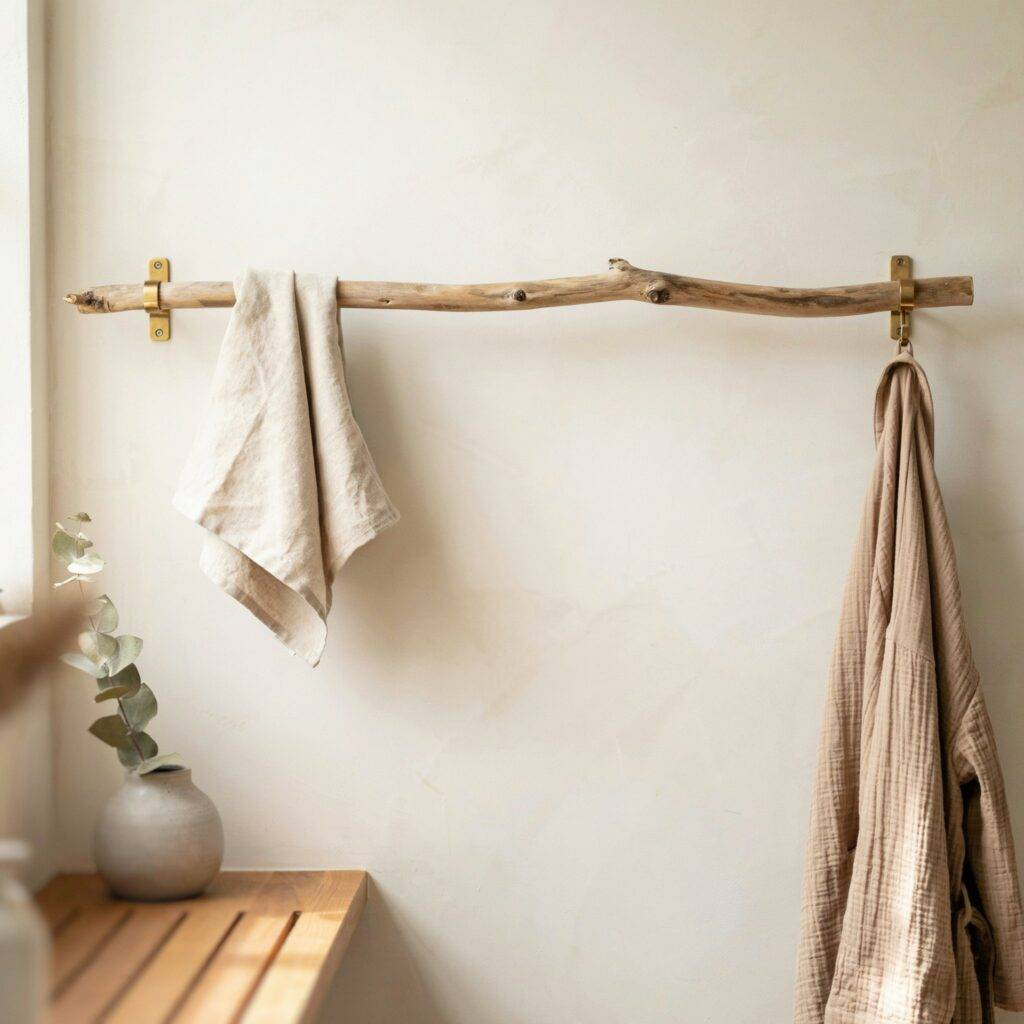
Instead of a metal bar, use a real tree branch. Find a fallen branch that is straight enough and about two feet long. Sand it smooth. Seal it with a clear waterproof finish. Then mount it on the wall with two small brackets. You can hang hand towels or a lightweight robe on it.
This idea comes from a real Japandi-inspired home tour I saw. The homeowner used a manzanita branch. It looked natural and added a sculptural feel. No two branches are the same, so your bathroom gets a one-of-a-kind piece. Keep the branch simple. Do not paint it or add decorations.
The natural shape and wood grain are the beauty. Make sure the branch is completely dry before sealing it. A fresh branch will shrink and crack. This costs almost nothing if you find a branch yourself. It also gives you a fun weekend project.
5. Add a Wood Soap Dish That Drains
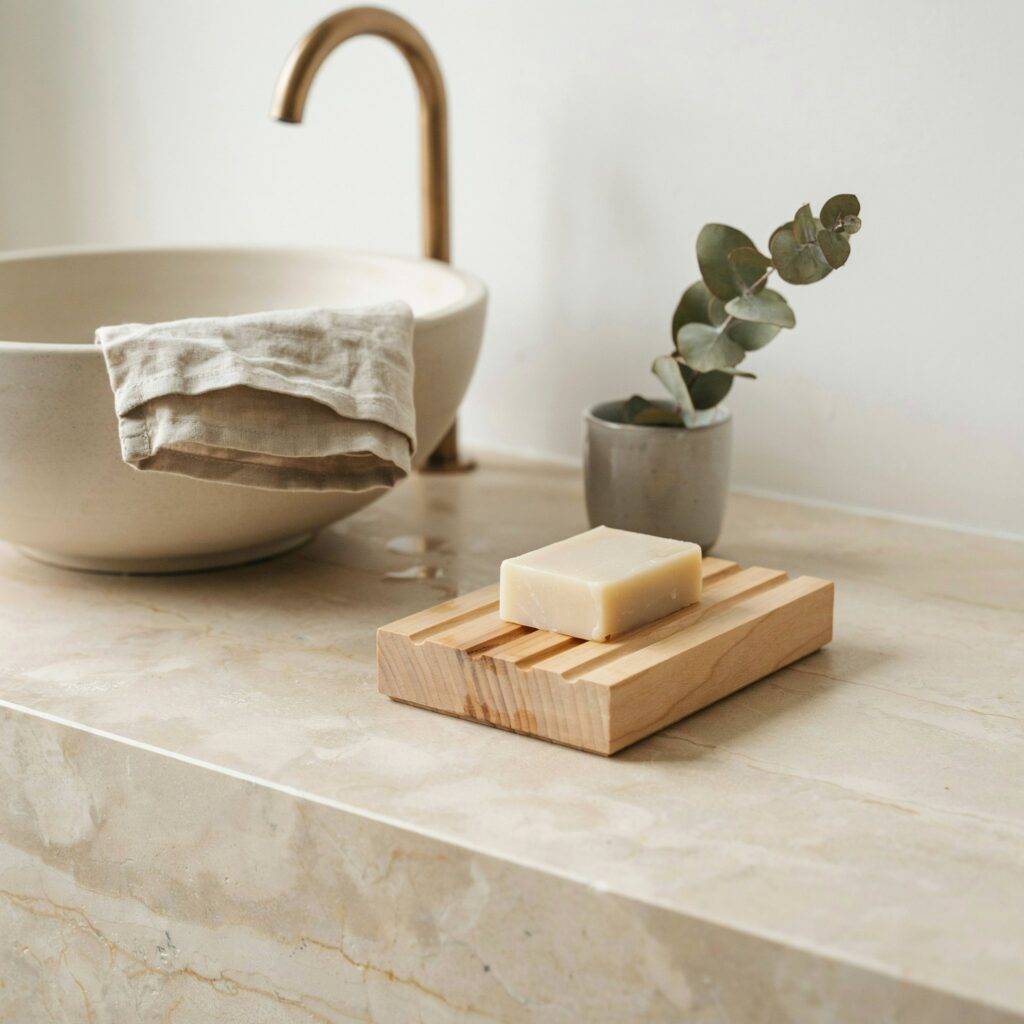
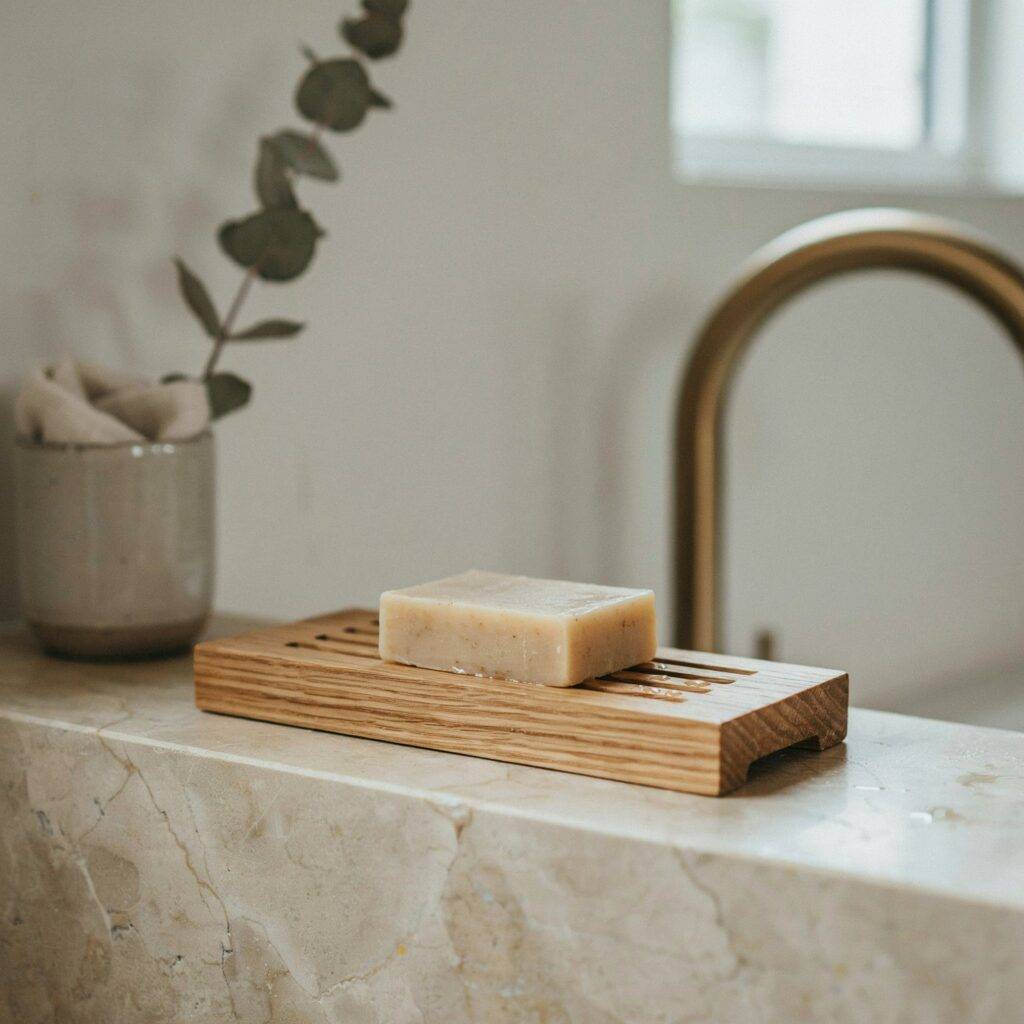
Most soap dishes are ceramic or plastic. The soap sits in a puddle and turns mushy. A wood soap dish has slats or a groove that lets water drain away. The soap stays dry and lasts longer. Hinoki wood is a popular choice because it smells good and resists water.
You can find these at small online shops or make one from a scrap piece of cedar. Simply cut a small rectangle and carve a few shallow channels. Place it next to your sink or inside the shower. The warm wood looks much better than a plastic dish.
Over time, the wood may darken. That is fine. It shows use. Replace it every year or two if it starts to crack. This is a tiny change, but it fits the Japandi idea of using natural materials for everyday objects. Plus, you will never have that gross slimy soap build up again.
6. Build a Simple Wood Frame Around Your Medicine Cabinet
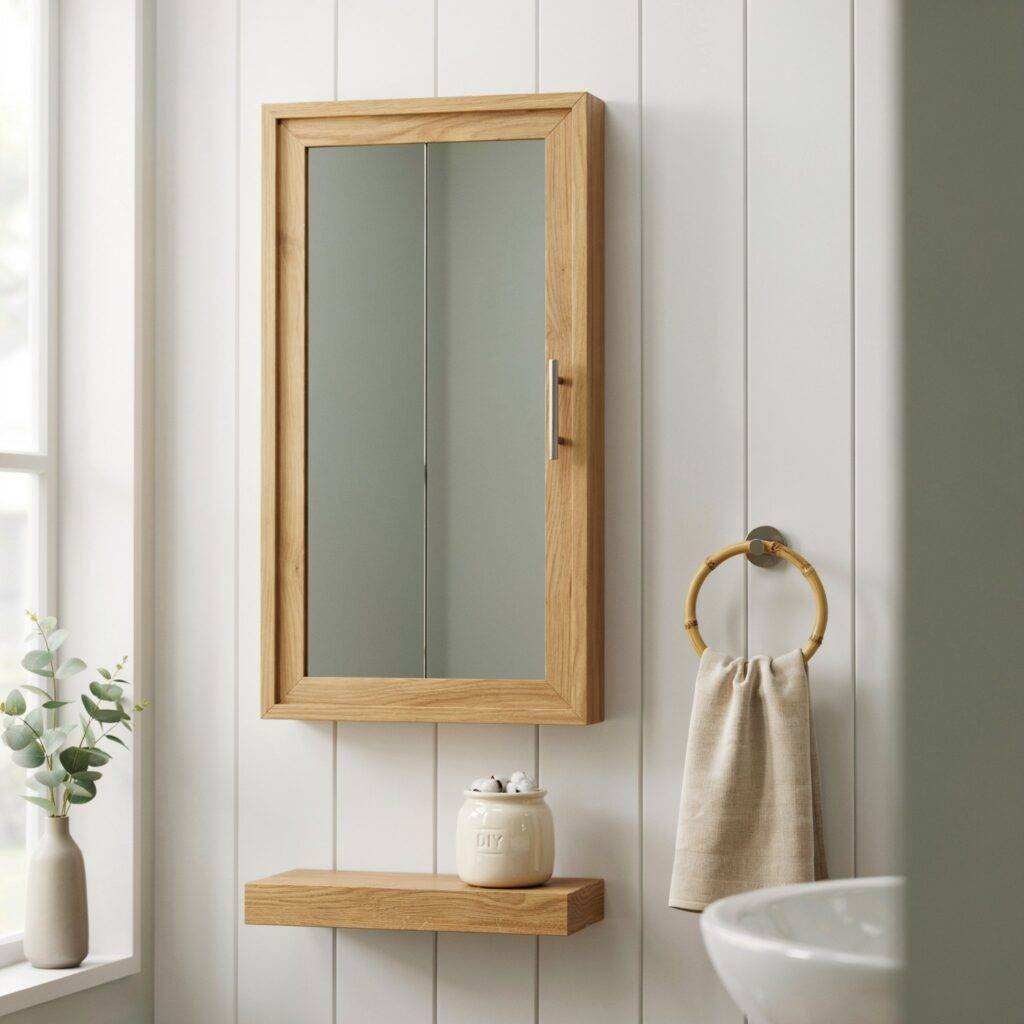
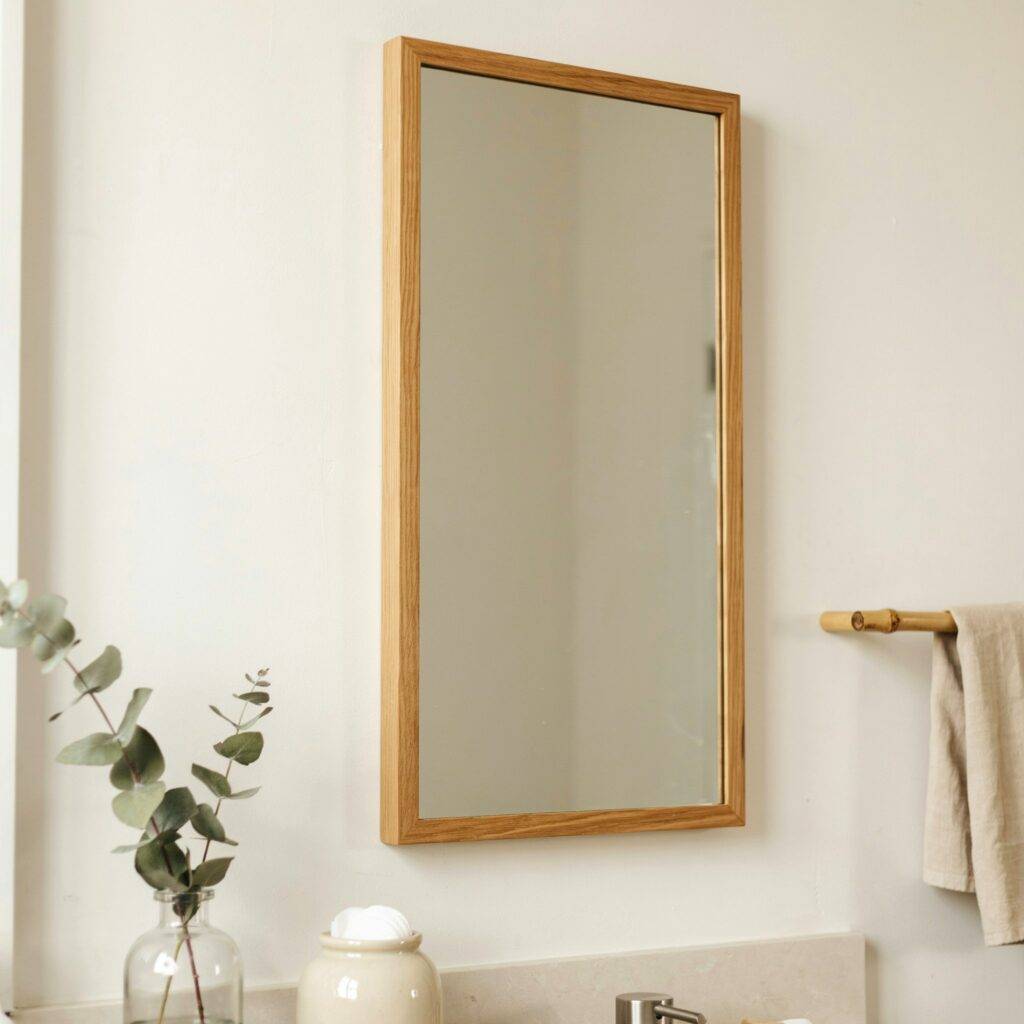
Medicine cabinets are useful but ugly. The shiny metal or white plastic frame stands out in a bad way. You can fix that by building a thin wood frame that wraps around the front edge. Use light oak or bamboo. Attach it with strong adhesive or small nails.
This trick comes from a DIY blogger who redid her small bathroom for under two hundred dollars. The wood frame makes the medicine cabinet look like a custom piece of furniture. It also ties into your other natural wood accents. Keep the frame simple.
No curves or decorations. Just a straight rectangle that is about one inch thick. Sand the edges smooth and seal it with a waterproof finish. The frame also hides any gaps between the cabinet and the wall. This is an afternoon project that makes a big difference.
7. Use a Wooden Bucket as a Trash Can
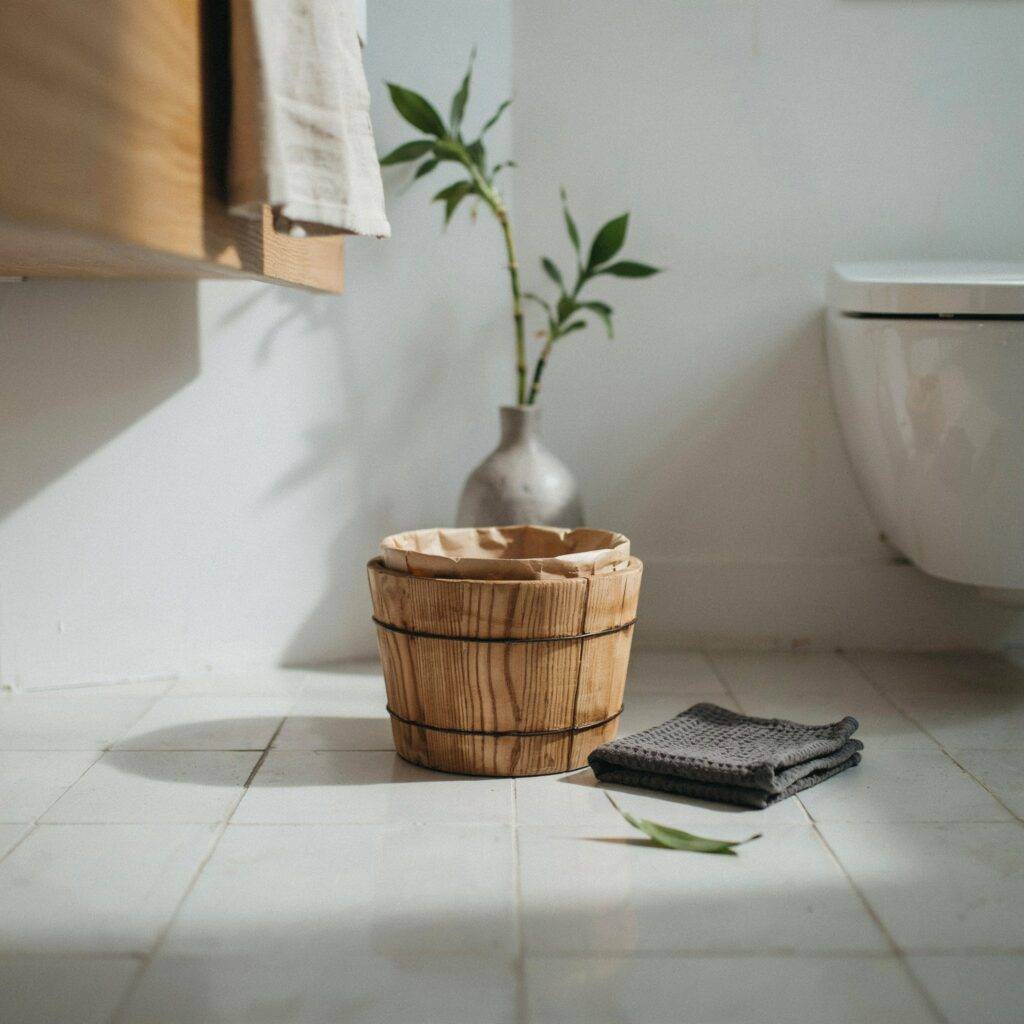
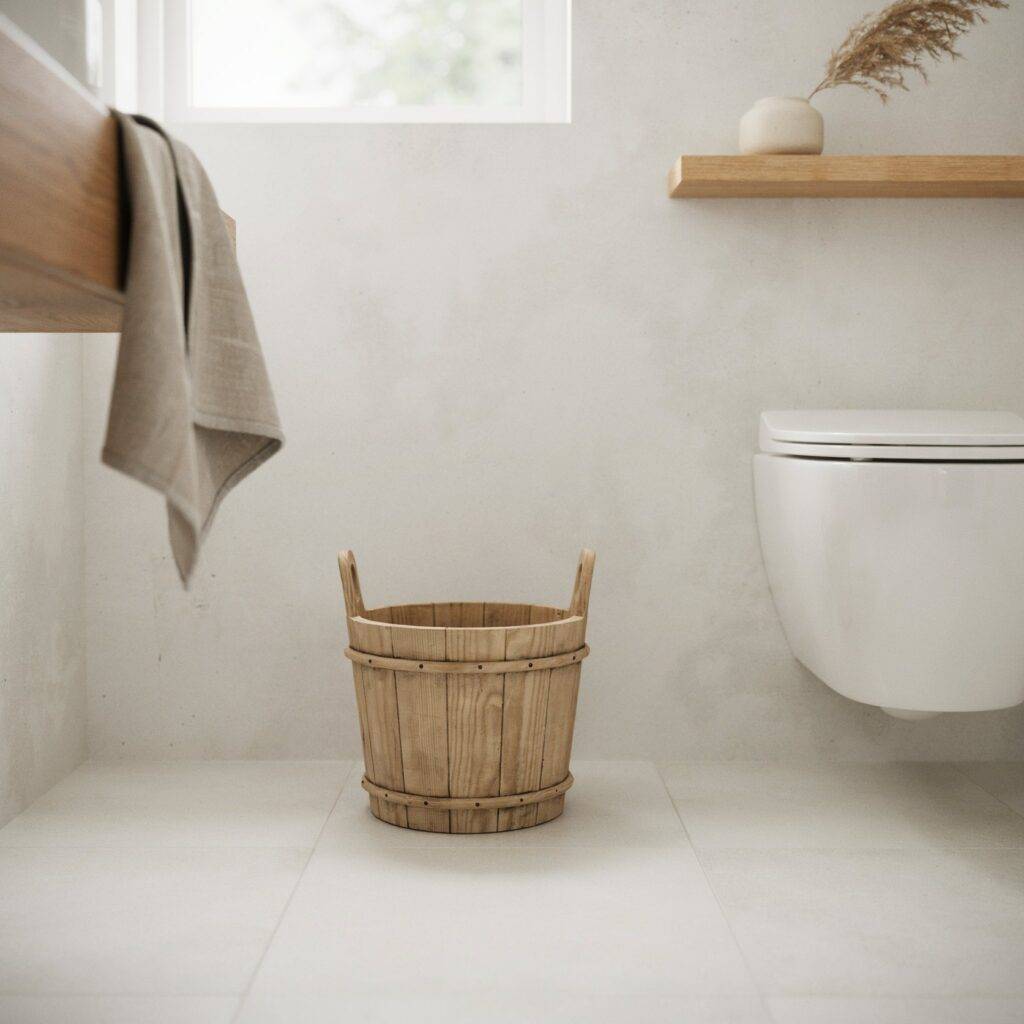
A plastic trash can is easy to clean but looks cheap. A wooden bucket or small planter box works as a trash can in a Japandi bathroom. Line it with a small bag or just wash it out regularly. The wood adds warmth and texture.
Look for a secondhand wooden bucket at a thrift store. Or buy a small untreated wooden planter box from a craft store. Seal the inside with waterproof coating so moisture does not cause rot. Place it next to the toilet or under the floating vanity.
The natural wood grain will stand out against white tile. One real homeowner used a small cedar bucket and said it made her bathroom feel like a spa changing room. Keep the bucket simple. No paint or decals. Let the wood speak for itself.
8. Install a Wood Grab Bar That Looks Like a Shelf
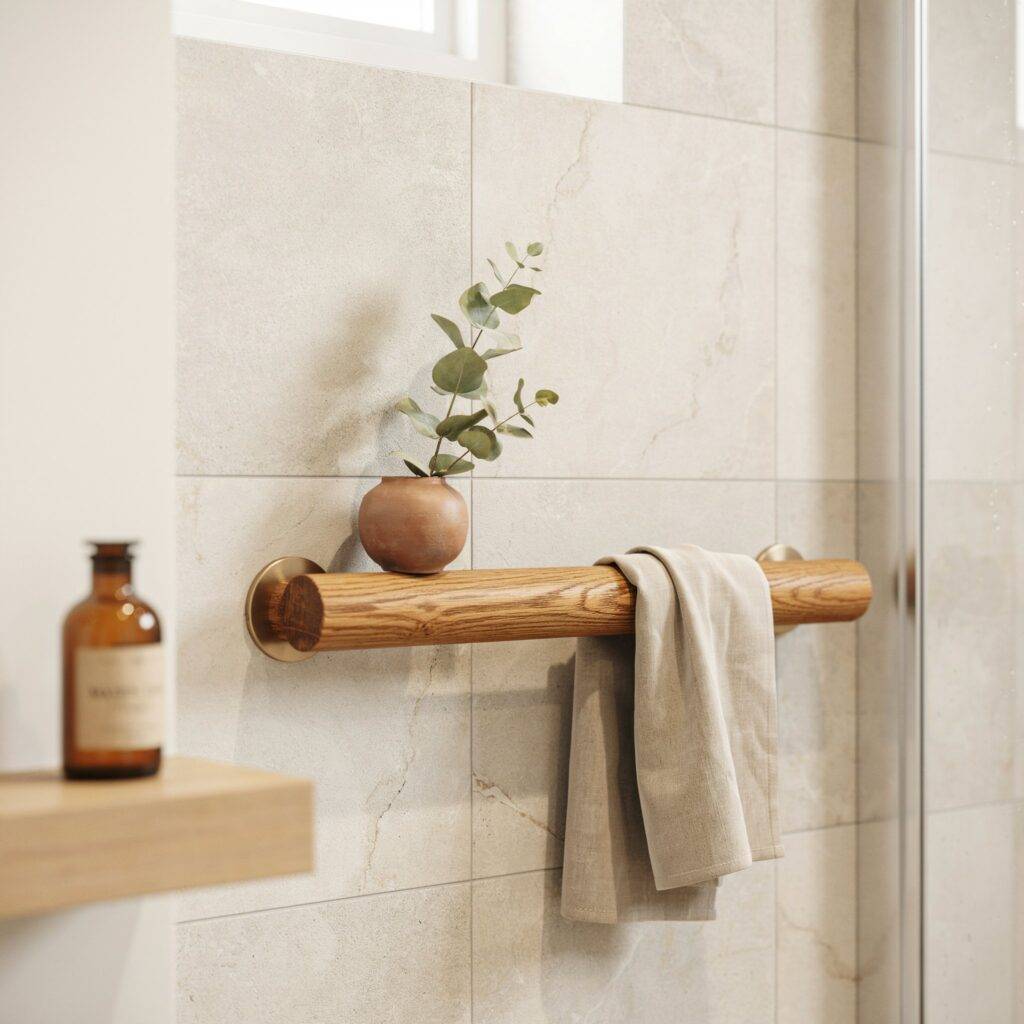
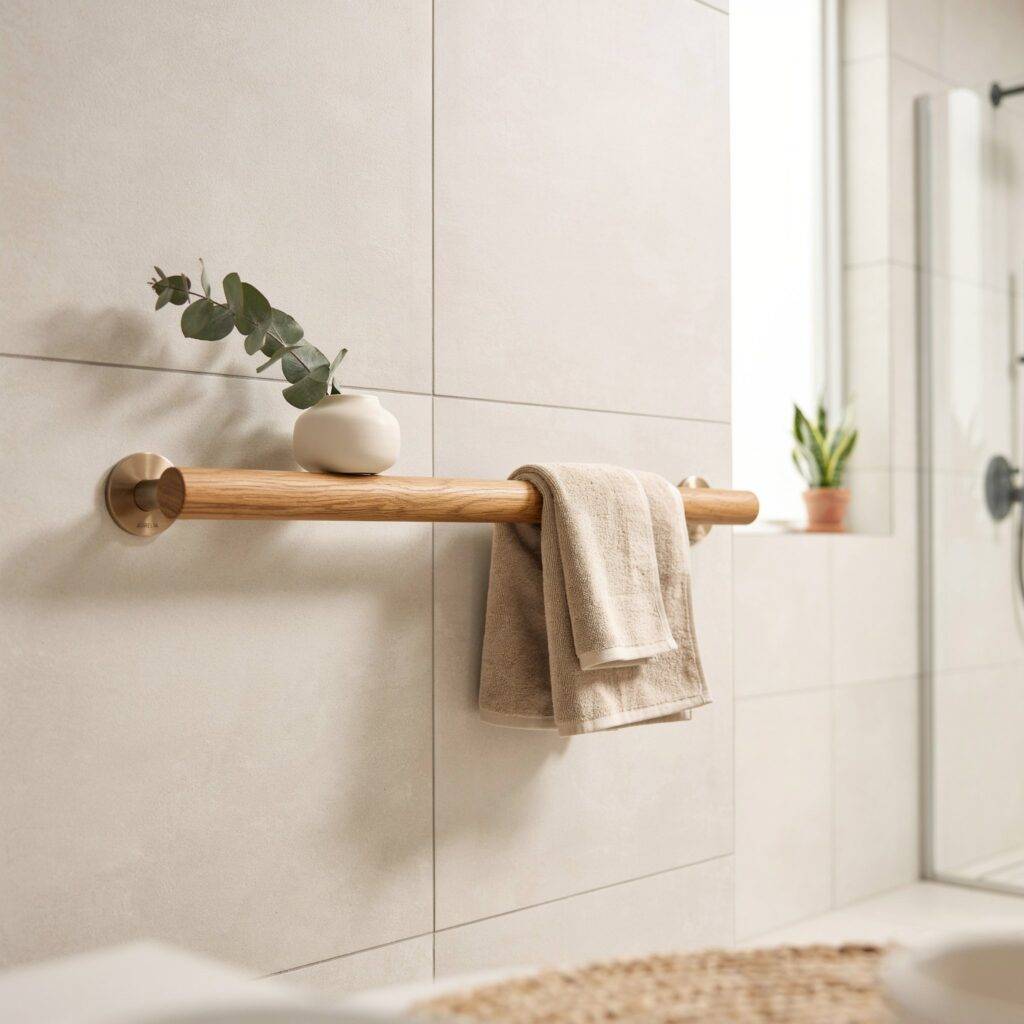
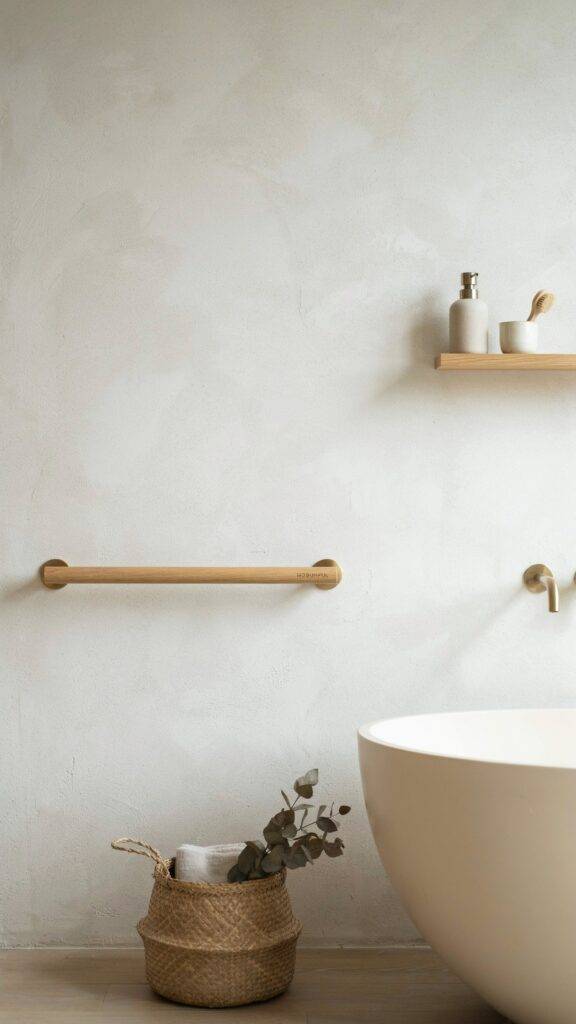
Grab bars are important for safety, but most look like hospital equipment. A wood grab bar solves that problem. You mount a thick, round piece of hardwood to the wall. It functions as a grab bar near the shower or toilet. But it also looks like a simple shelf or a design feature.
This is a real product you can buy from companies that make accessible design beautiful. Look for oak or teak grab bars that are about one and a half inches thick. The wood feels warmer than metal under your hands. It also matches your other wood accents.
Do not use a regular shelf as a grab bar. It needs to be strong enough to hold your full weight. Buy one that is rated for safety. The wood grain and warm color make it blend in so well that guests might not even notice it is a grab bar.
9. Add a Sliding Wood Panel to Hide Clutter
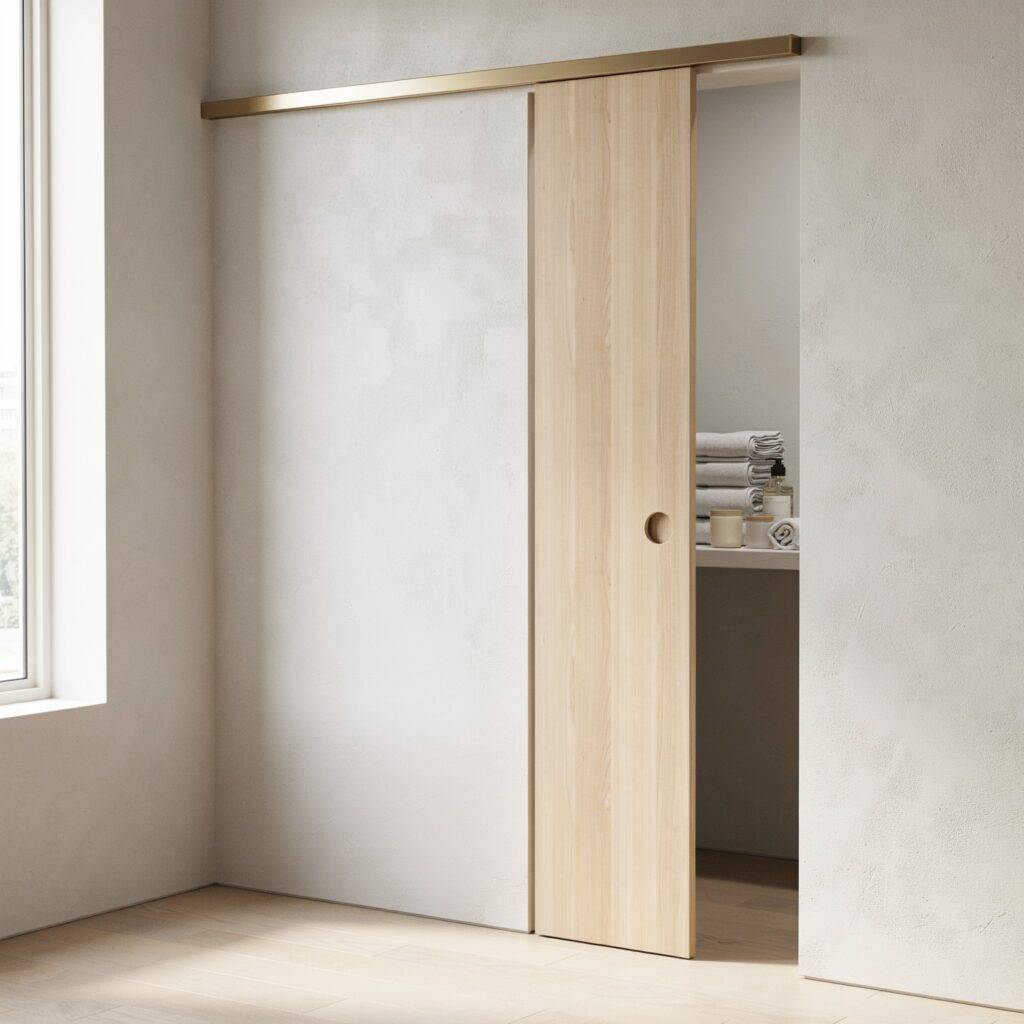
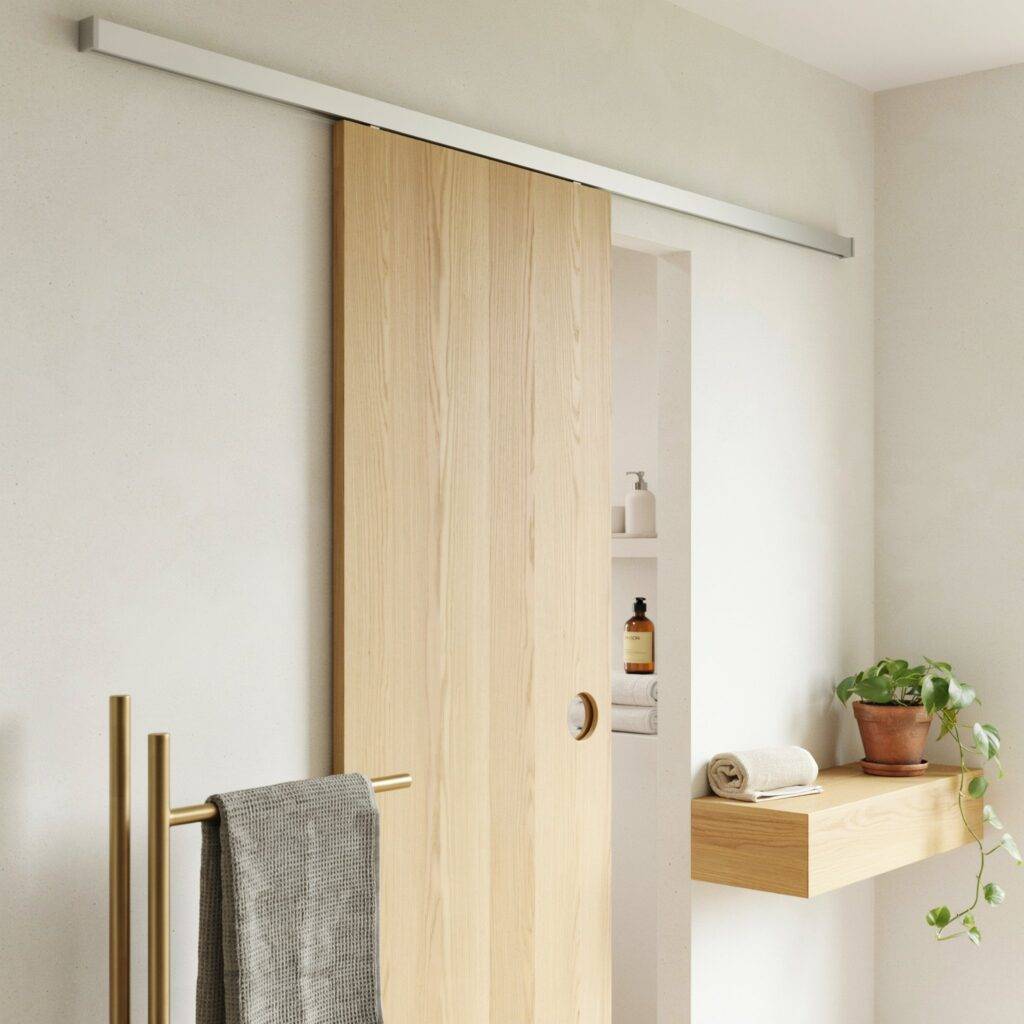
Not everything in your bathroom needs to be on display. A sliding wood panel can hide a section of open shelving or a messy area. You mount a thin piece of plywood on a small track. Slide it closed when you want things hidden. Slide it open when you need access.
This idea comes from small apartment design in Japan. They use sliding panels to hide laundry machines or storage nooks. In your bathroom, you could hide toilet cleaner, extra soap, or old towels. The panel itself is a natural wood accent that adds warmth to the wall.
Use light birch or maple. Keep the handle simple, maybe just a small cutout hole. This works especially well if you have a recessed area or an awkward corner. It turns wasted space into clean, hidden storage.
10. Use Wood Corner Shelves That Wrap Around
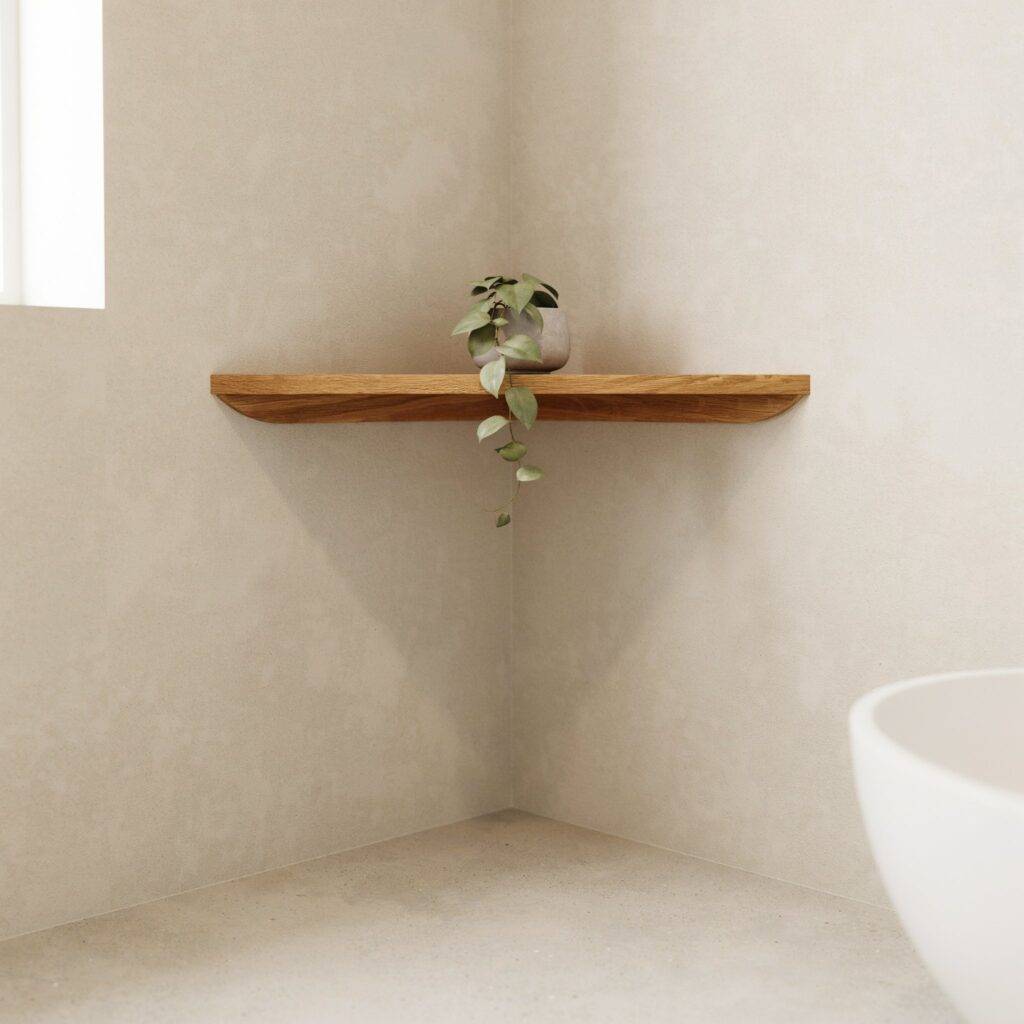
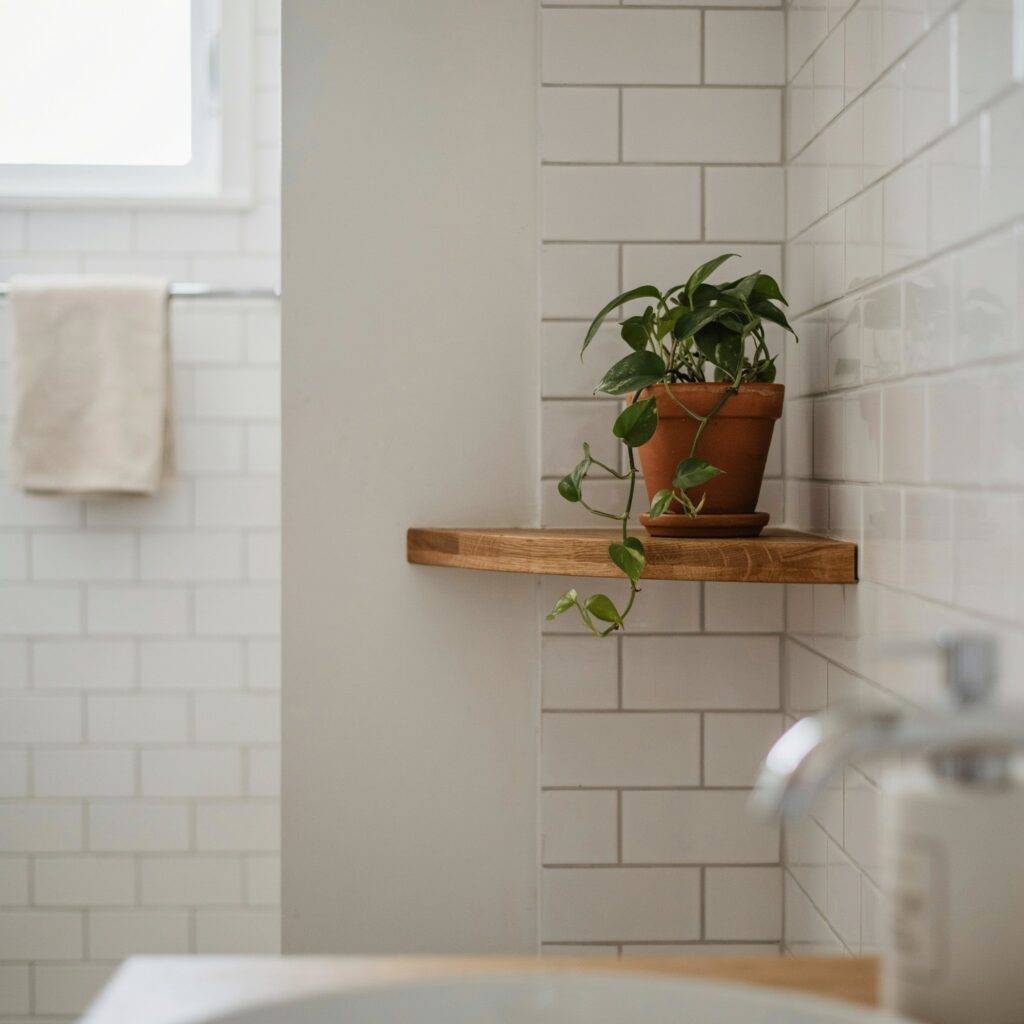
Regular corner shelves are triangles that stick out. Wood corner shelves that wrap around follow the curve of the corner. They are shaped like a quarter circle or a curved arc. This softens the room and holds small items like a candle or a seashell.
You can buy these or make them by cutting a circle into quarters. Sand the edges smooth and seal the wood. Mount them in the corner near your shower or above the toilet. The curved shape feels more organic than sharp triangle shelves. It matches the Japandi idea of soft, natural forms.
Do not put too many items on them. One small plant or one bottle of lotion is enough. The shelf itself is the decoration. The items on it are secondary. This is a simple way to add natural wood accents without taking up wall space.
11. Add a Wood Ceiling Beam (Even a Fake One)
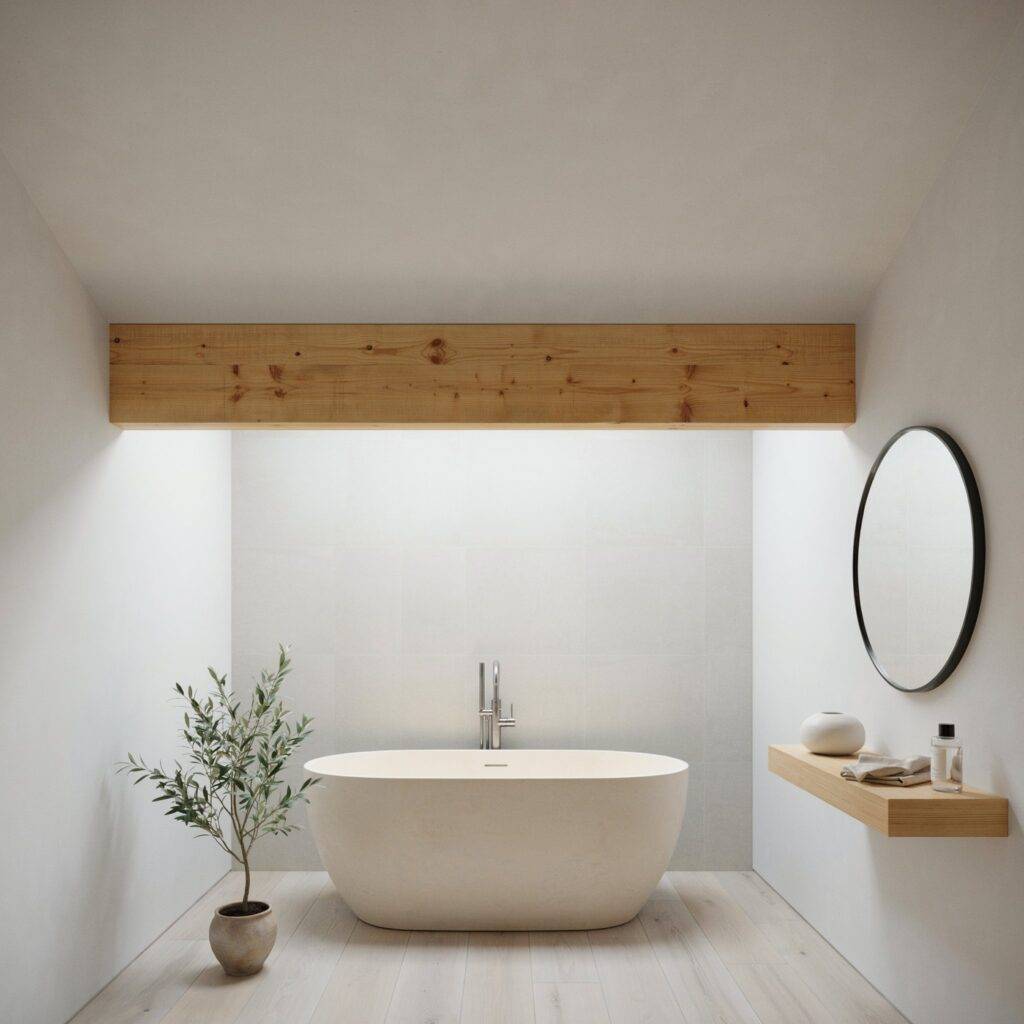
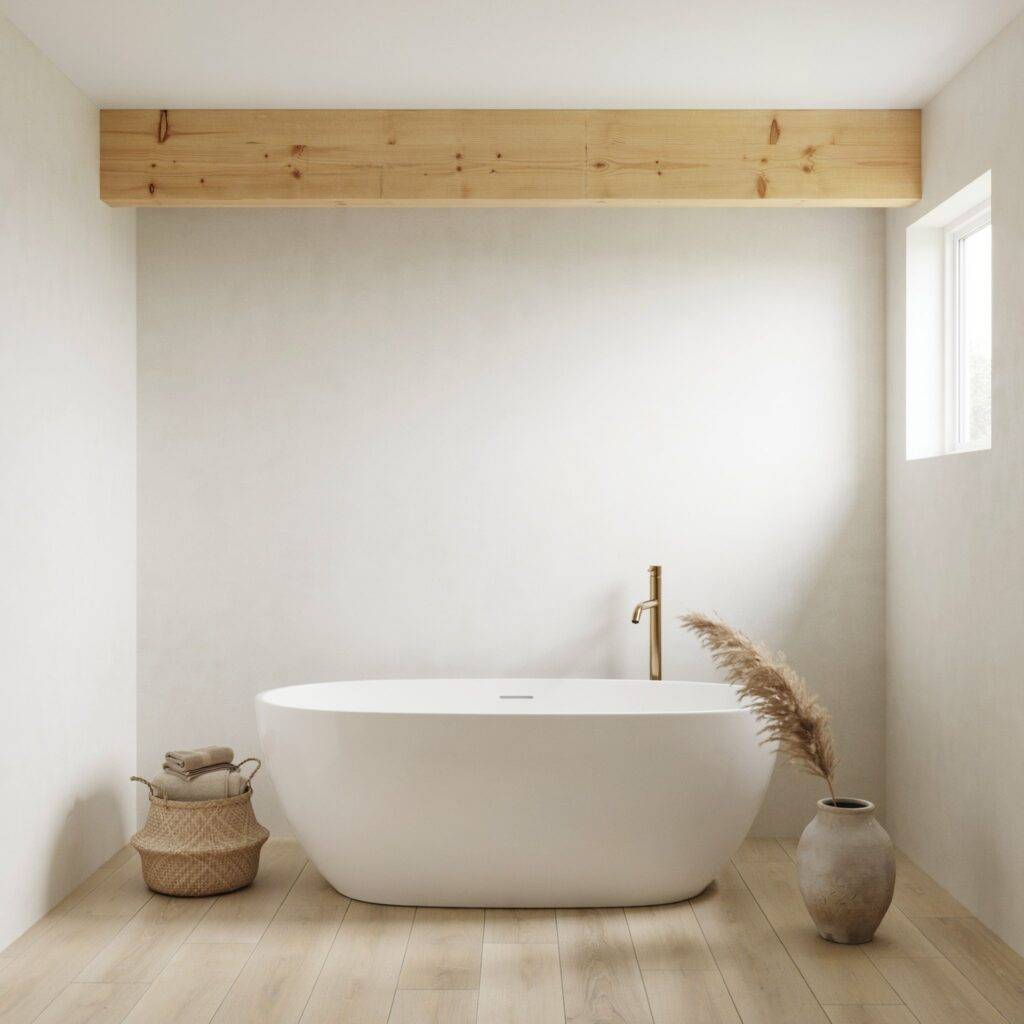
A wood ceiling beam adds warmth overhead. It draws your eye up and makes the ceiling feel taller. In a real Japandi home, exposed beams are common. If you do not have a real beam, you can add a fake one made from hollow wood.
You can buy lightweight faux beams at home stores. They are made from polyurethane but look like real wood. Or you can build a simple box beam from pine boards. Paint or stain it a light wood color. Mount it across the ceiling above your tub or sink.
The beam adds a rustic touch that balances out modern tile and fixtures. Keep it simple. One beam is enough. A grid of beams would feel heavy in a small bathroom. This idea works best if you have a plain white ceiling that needs some interest.
12. Use a Wooden Shower Caddy That Hangs from the Shower Head
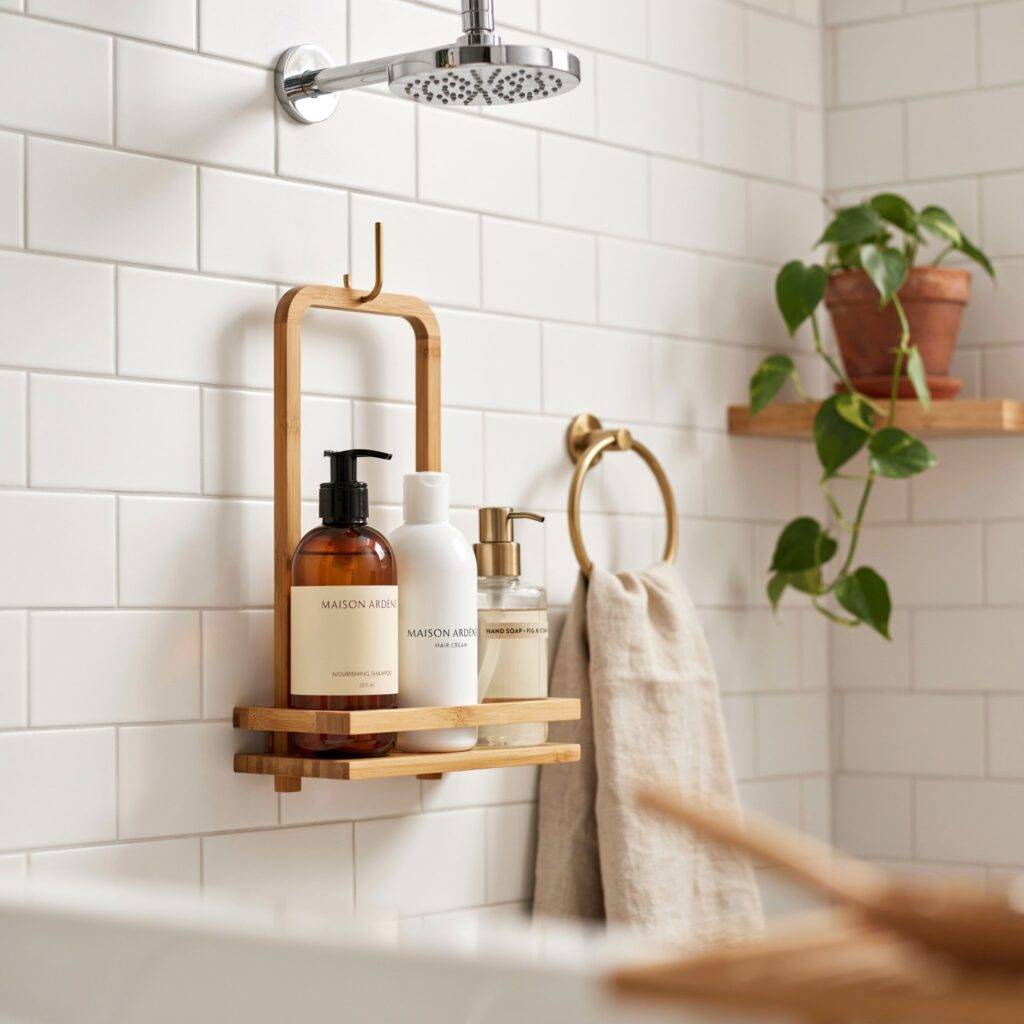
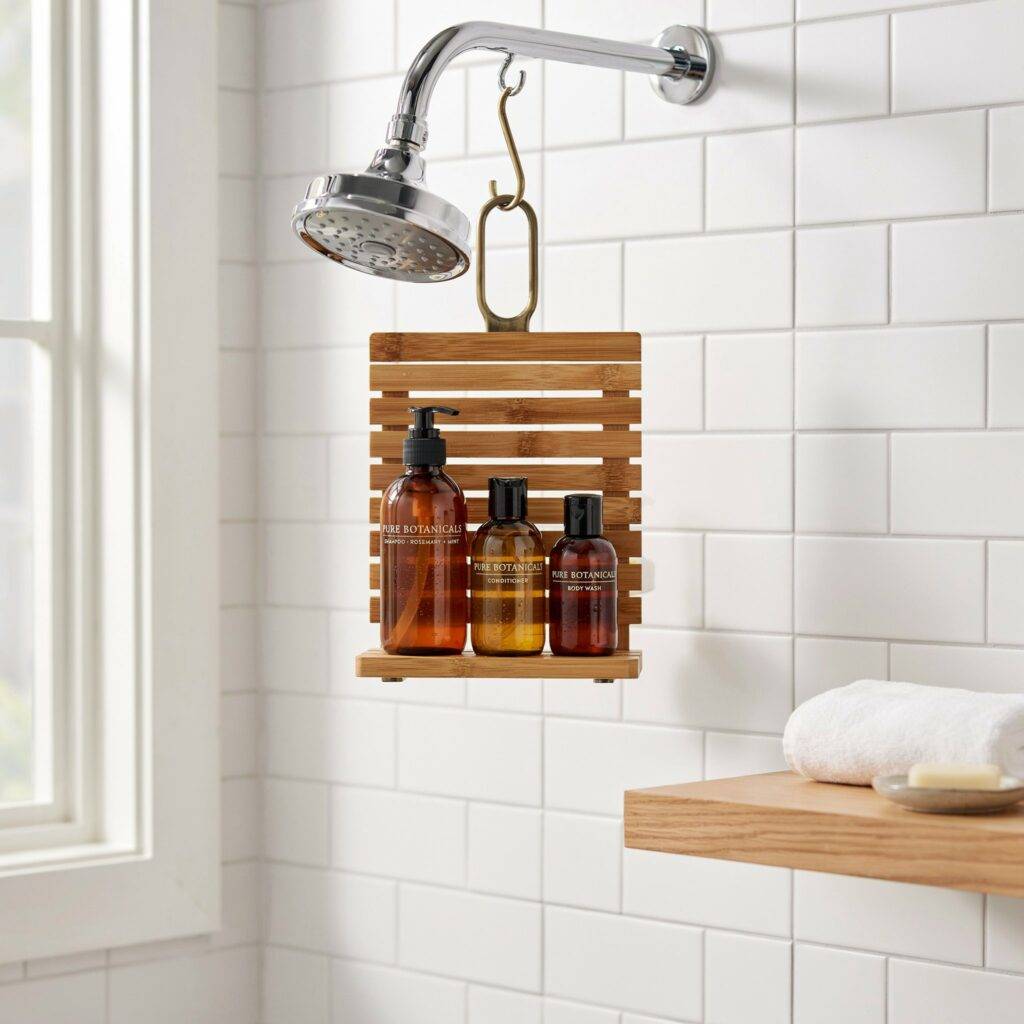
Shower caddies are usually plastic or metal. They rust or get slimy. A wooden shower caddy made from teak hangs from your shower head arm. It has slats so water drains through. Your bottles stay dry on the bottom.
These exist. You can find them on Etsy or from small woodworking shops. The teak wood resists water and looks beautiful. Unlike metal, it does not get rust stains. Unlike plastic, it does not look cheap. The warm wood tone matches other natural wood accents in your bathroom.
Hang it high enough that bottles are easy to reach. Take it down every few weeks to let it fully dry. This prevents any mold from growing between the slats. It costs more than a plastic caddy, but it will last for years and look good the whole time.
13. Make a Wood Toothbrush Holder from a Branch
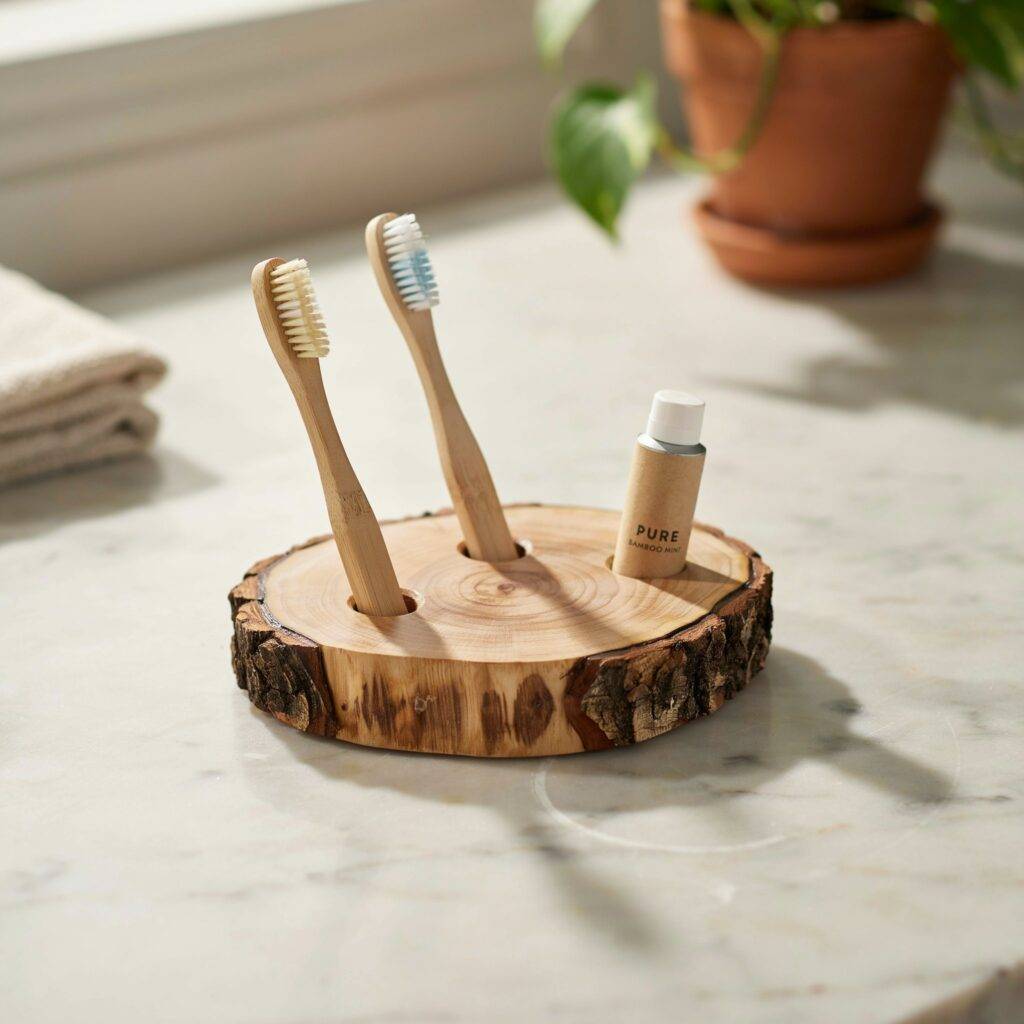
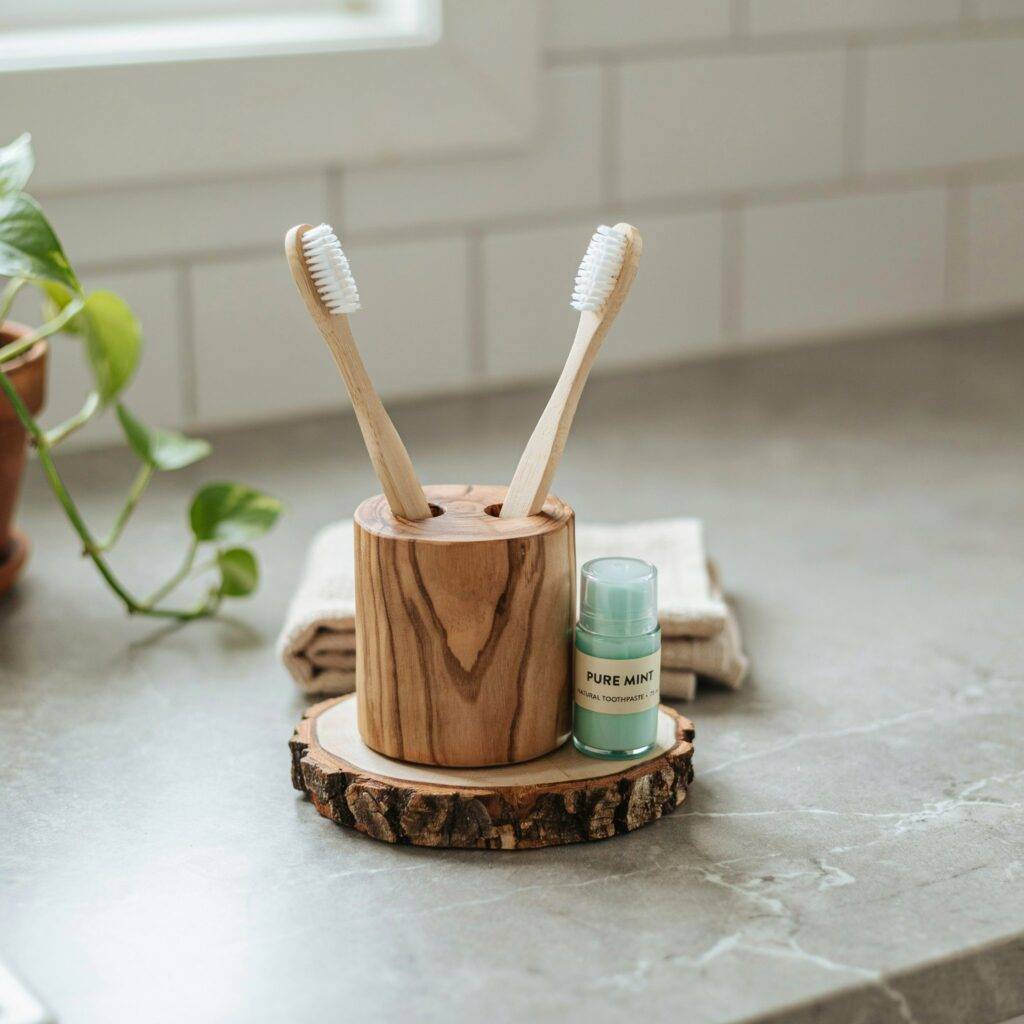
A small branch with a few holes drilled into it becomes a toothbrush holder. Cut a two inch thick slice from a log. Drill two or three holes in the top. The holes should be slightly wider than your toothbrush handles. The wood slice sits on your counter.
This is a real DIY project from a zero waste home blog. The bark adds texture and a natural edge. The flat bottom keeps it steady. Use a hardwood like maple or cherry. Seal it with waterproof finish so water does not soak in. This holder fits two toothbrushes and maybe a tube of toothpaste.
It takes up very little counter space. And it looks like something from a nature-inspired spa. If you do not want to drill, you can buy ready-made versions from woodworkers online. Either way, it is a small, useful piece of natural wood.
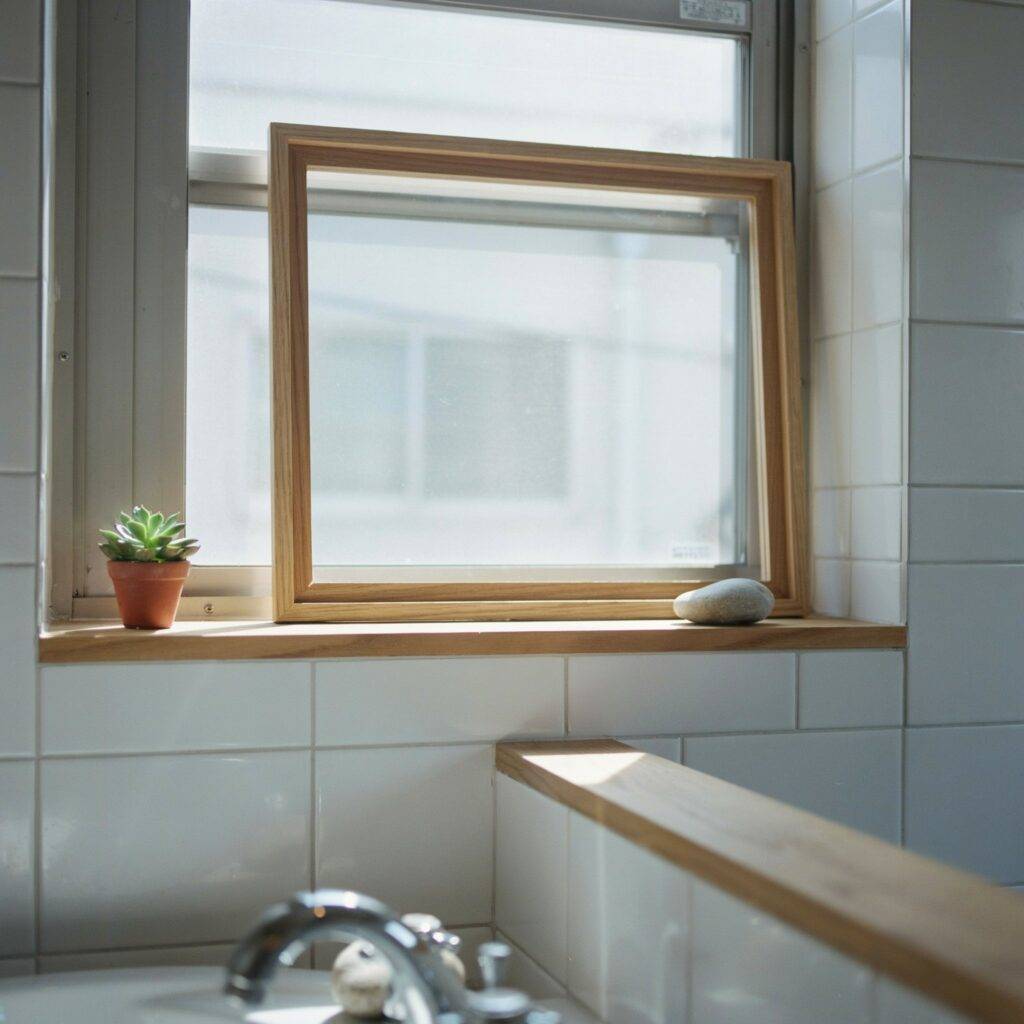
14. Add a Wood Window Frame Cover (Not a Shade)
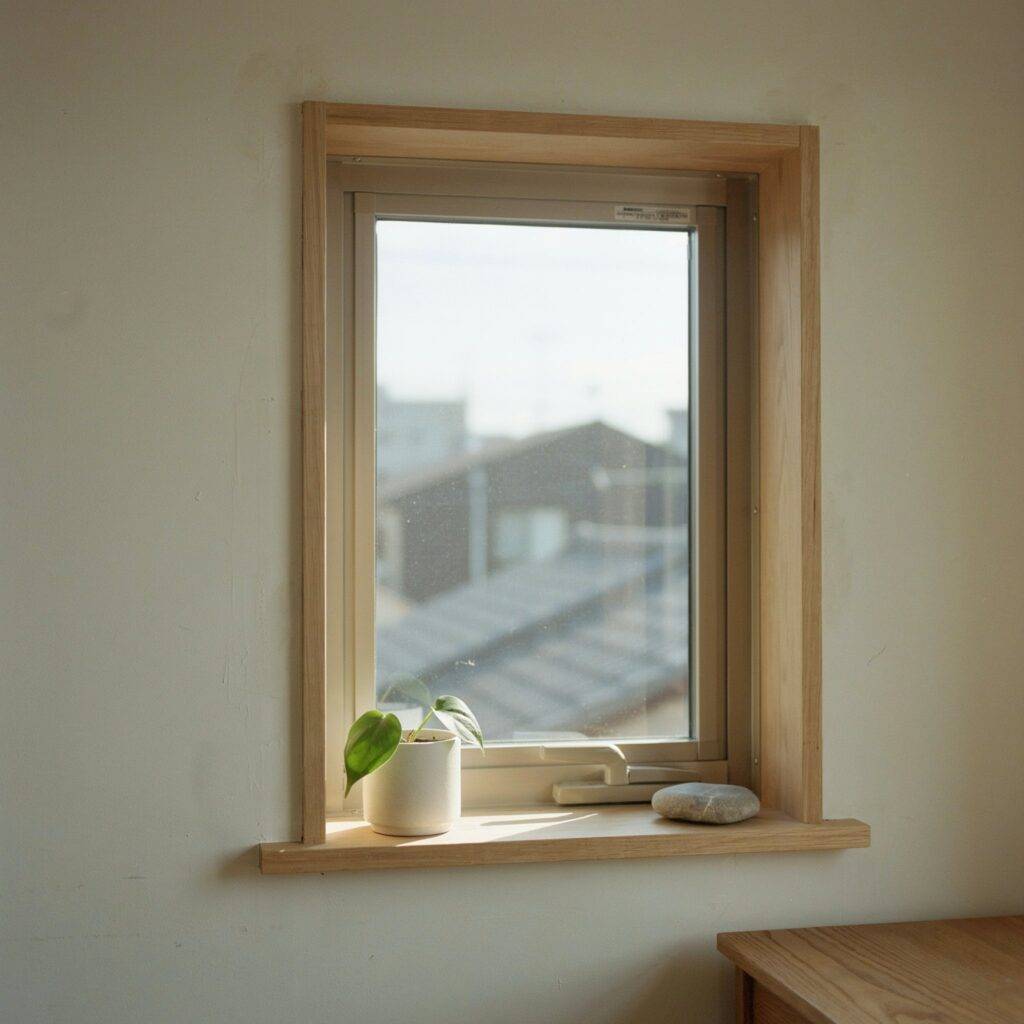
Most bathrooms have a small window. The plastic or aluminum frame looks industrial. You can add a thin wood cover that goes over the existing frame. Basically, you build a picture frame that fits right on top of your window frame. Use light oak or ash.
This idea came from a small bathroom renovation in a Tokyo apartment. The wood frame softens the window and ties it into the room’s other wood accents. Make sure the wood is sealed so moisture does not warp it. Leave the glass uncovered so light still comes in.
The frame adds warmth without blocking any light. You can also add a small wood sill below the window. Place a tiny plant or a stone on it. This is a subtle change, but it makes the window feel like part of the design instead of an afterthought.
🛒 Recommended Products
1. Fjord Teak Bathtub Caddy by JapandiSpirit
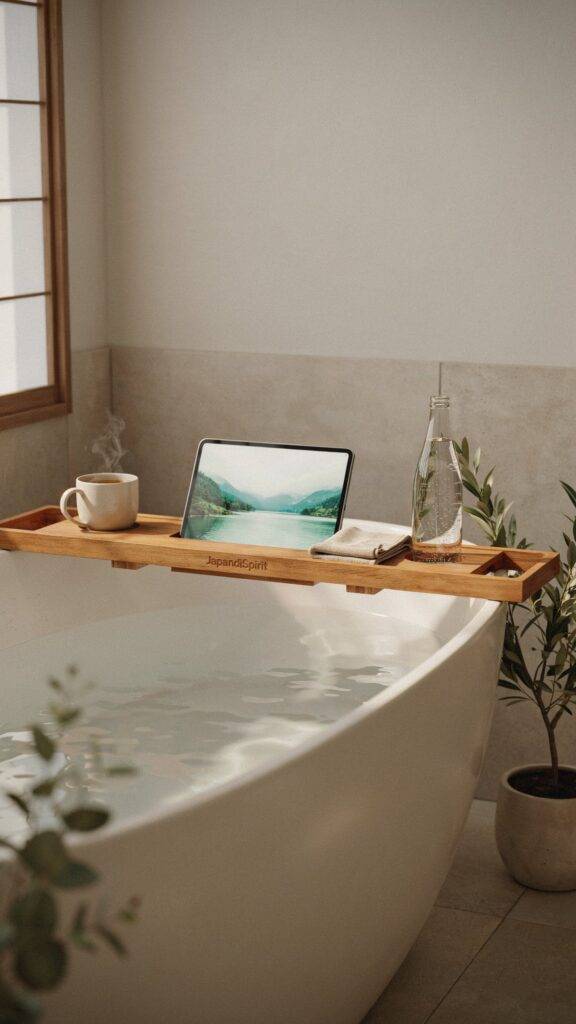
This bathtub tray is made from real teak, which is one of the most water-resistant woods you can buy. Unlike bamboo or acacia, teak will not crack or warp over time.
The tray is 29 inches wide, so it fits smaller tubs and alcove tubs. It has a slot for your tablet or phone, two deep drink holders, and adjustable legs for stability. It also comes with a soft hand towel in a gift-ready box.
For every tray sold, the company plants one tree. It is a solid, long-lasting piece that turns a regular bath into a spa experience. You can choose from several sizes to match your tub.
Check price on Amazon: Teak Bathtub Caddy Tray – Adjustable Wooden Spa Tray for Small Tubs
2. Navaris Bamboo Leaning Towel Ladder
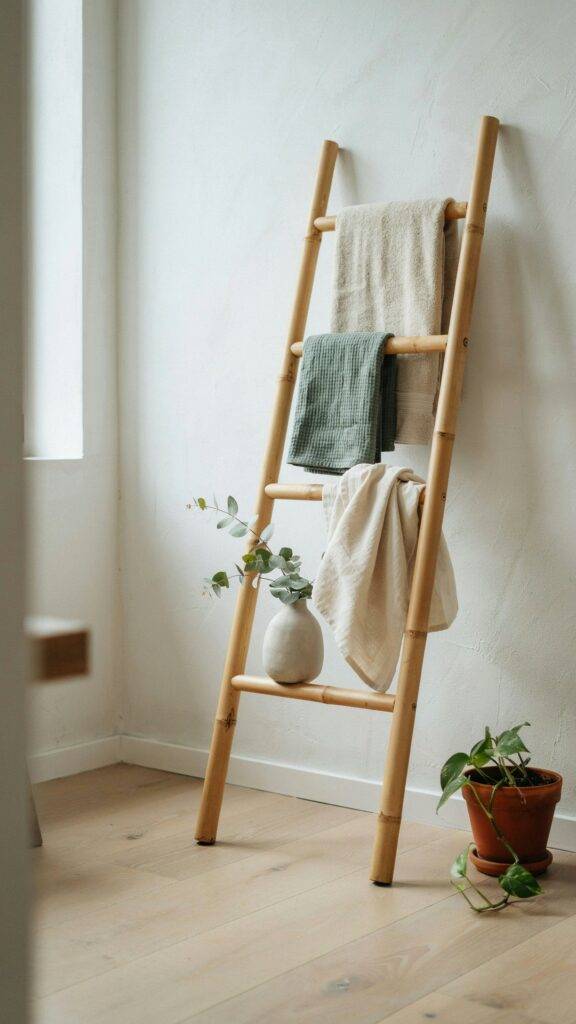
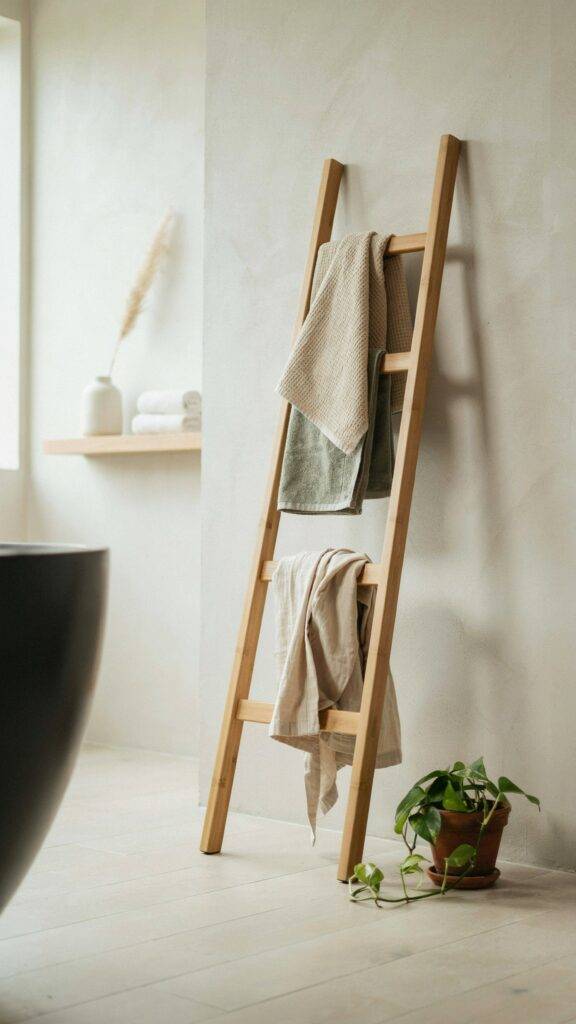
This leaning towel ladder is made from bamboo, a fast-growing and sustainable wood. It has four wide rungs that can hold towels, blankets, or even clothes.
The ladder leans against the wall, so it does not need any drilling or mounting. It is slim and takes up almost no floor space, which is great for small bathrooms. The natural bamboo color adds warmth and matches other light wood accents.
You can move it around easily when you clean. It is a simple, useful piece that also looks like a design feature. Many real Japandi homes use this exact rack.
Check price on Amazon: Bamboo Leaning Towel Ladder – 4-Tier Wooden Towel Rack for Bathroom
3. HartiiHome Teak Wood Self-Draining Soap Dish
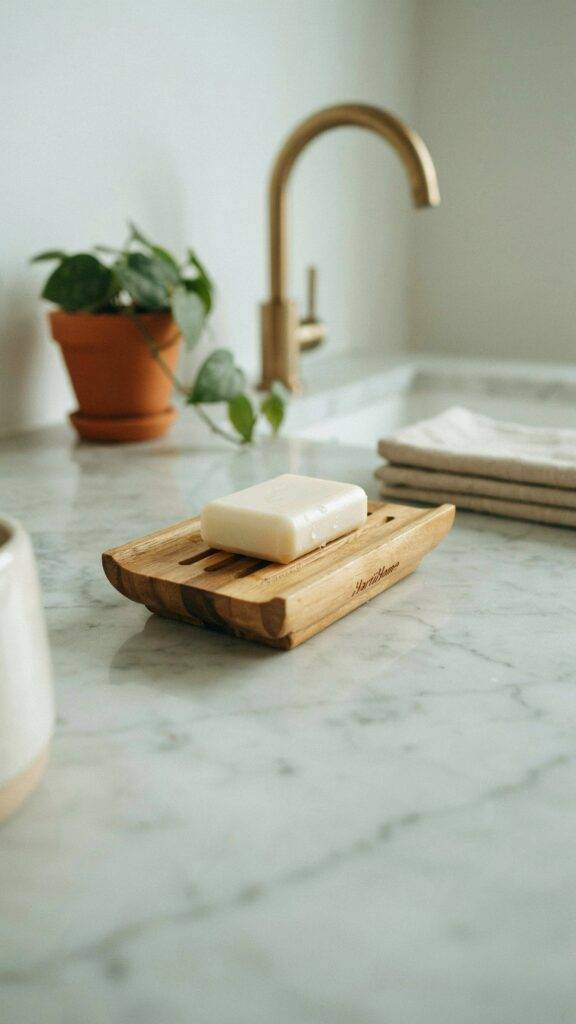
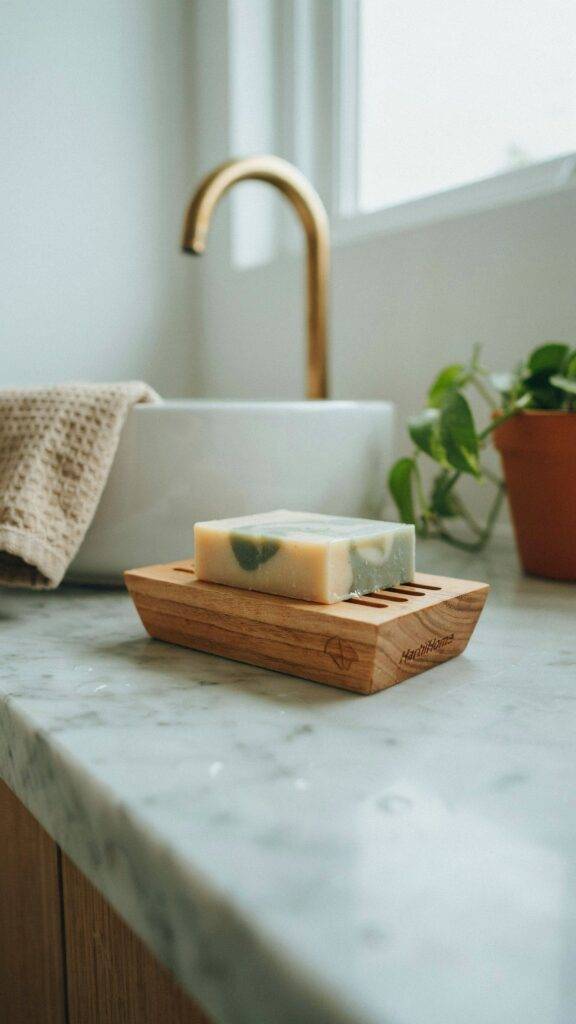
This soap dish is carved from a single piece of teak wood, with no glue or nails. It has a slanted design and open grooves that let water drain away quickly. Your soap stays dry and lasts much longer.
No more mushy, slimy soap bars. The dish is small and fits next to any sink or in the shower. It is easy to clean. Just run hot water over it and the soap residue dissolves.
Reviewers say it is much better than plastic dishes that trap water. The teak wood darkens slightly over time, which adds character. It is a small change that makes your counter look more natural and put together.
Check price on Amazon: Teak Wood Self-Draining Soap Dish – Natural Bar Soap Holder for Bathroom Sink
4. Modunful Wooden Shower Grab Bar
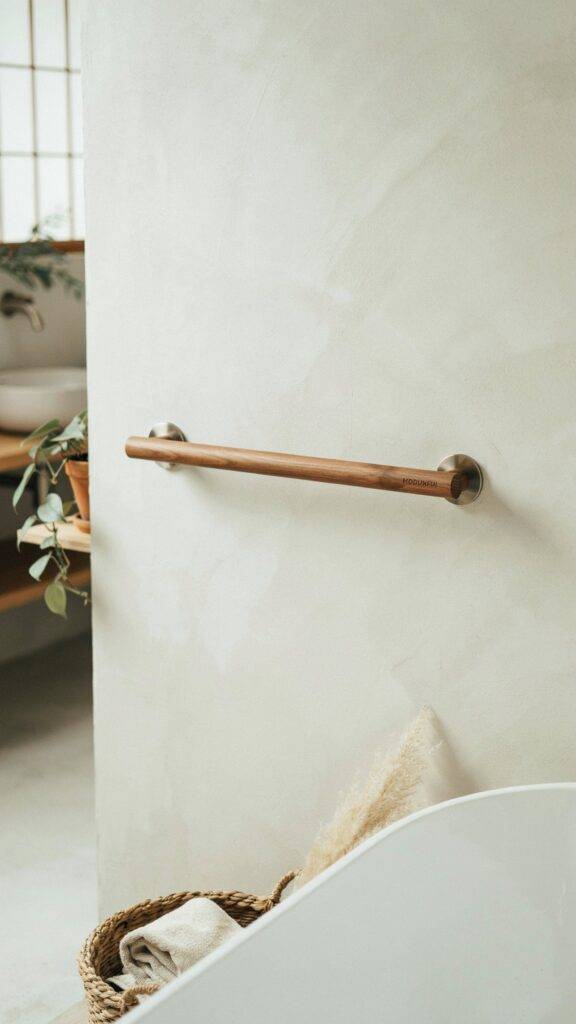
This grab bar looks like a simple wood shelf, but it is built for safety. It is made from high-quality ABS plastic with a wood finish, so it resists water and corrosion. The bar can hold up to 330 pounds.
It is 30 centimeters long, which is about 12 inches. You can mount it near your shower, toilet, or bathtub. The warm wood color blends in with other natural wood accents. It does not look like hospital equipment. The surface has a non-slip coating for extra grip.
This is perfect if you want safety features without ruining the calm Japandi look. It is also good for older adults or anyone who needs a little extra support in the bathroom.
Check price on Amazon: Wooden Shower Grab Bar – Waterproof Safety Handrail for Bathroom and Elderly
Tips to Make These Ideas Work
- Start with one wood piece. Pick the branch towel rack or the soap dish. Live with it for a week. Then add something else.
- Keep wood tones similar. If you use light oak, stick with light oak. Mixing dark walnut with pale bamboo can look messy.
- Seal everything. Any wood in a bathroom needs a waterproof finish. Use polyurethane or a natural oil like tung oil. Reapply once a year.
- Less is more. Two or three wood accents are enough in a small bathroom. More than that and the room feels like a log cabin.
Mistakes to Avoid
- Using untreated wood. Plain pine will warp, crack, and grow mold within months. Always seal it first.
- Placing wood in standing water. A wood soap dish needs drainage. A wood mat needs to dry underneath. Do not let water pool.
- Forgetting about ventilation. Wood needs airflow to dry. Run your exhaust fan during and after showers.
- Adding too many different woods. Stick to one or two types. A mix of oak, teak, bamboo, and cedar looks chaotic.
FAQs
Q: What is the best wood for a small Japandi bathroom?
A: Teak and cedar are the most water resistant. Oak and ash are fine if sealed well. Avoid pine and poplar.
Q: How do I clean wood accents in a bathroom?
A: Wipe with a dry cloth most days. Once a month, use a slightly damp cloth with mild soap. Dry immediately. Do not soak.
Q: Can I use these ideas in a rented apartment?
A: Yes for most. The branch towel rack, soap dish, wooden bucket, and shower caddy are all renter friendly. Skip the grab bar and ceiling beam.
Q: Where do I find these unique wood pieces?
A: Thrift stores for buckets and branches. Etsy for soap dishes and shower caddies. Home stores for wood slat panels. Make things yourself when you can.
Styling Ideas (Putting It All Together)
Here is one way to combine these ideas in a real small bathroom. Paint the walls warm white. Add a wood slat accent wall behind the toilet. Hang a branch towel rack above it.
Place a teak bath mat on the floor. Set a wooden soap dish next to the sink. Use a wood framed mirror. Keep one small plant on the wood corner shelf. That is five or six wood accents. The room feels warm, calm, and very Japanese-Scandinavian.
Another styling idea for a very tight bathroom (like a half bath). Use a floating wood vanity. Add a wood toothbrush holder on the counter. Hang a small wood shelf above the toilet with just a candle. Put a wooden bucket as the trash can. That is enough. The small space does not need more.
Final Thoughts
You do not need a big bathroom to enjoy Japandi style. In fact, small spaces show off natural wood accents better because you notice every detail. Pick one idea from this list and try it this weekend. Maybe that is the branch towel rack. Maybe it is the wooden soap dish. See how it feels. Wood warms up a room in a way that paint and tile cannot.
Japandi is not about spending a lot of money. It is about choosing simple, natural things that work well and look good together. A fallen branch costs nothing. A small wooden bucket from a thrift store costs a few dollars. A teak shower caddy might cost thirty bucks but lasts for years. Start small. Add slowly. Your bathroom will start to feel less like a utility room and more like a place you actually want to spend time in.
Related Post: