
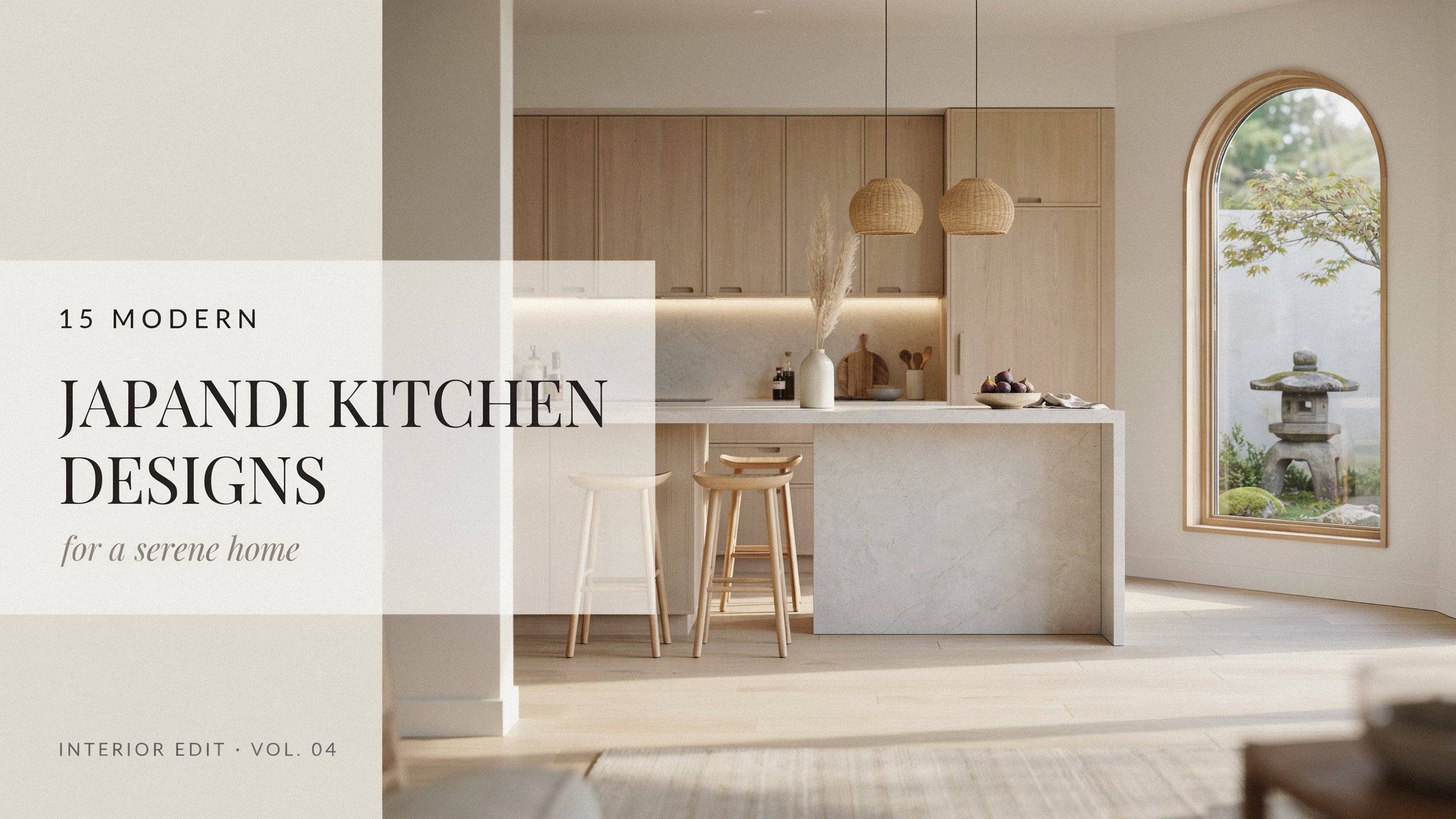
If you’ve been looking for a kitchen style that feels calm, functional, and beautiful all at once, Japandi might be exactly what you need.
Japandi is a blend of Japanese minimalism and Scandinavian functionality. It takes the clean lines and purposeful design from Japan and mixes them with the warmth and coziness from Scandinavia. The result? A space that feels peaceful without being boring, and practical without feeling cold.
What I love about Japandi kitchens is how they make you want to slow down. The soft colors, natural materials, and thoughtful layout just feel different from the usual busy kitchen vibe. It’s not about having less for the sake of it it’s about being intentional with what you keep.
In this post, I’ll walk you through 15 modern Japandi kitchen designs. Whether you’re planning a full renovation or just want to add a few Japandi touches, these ideas will help you create a kitchen that’s both serene and highly functional.
Why Japandi Kitchens Matter Right Now
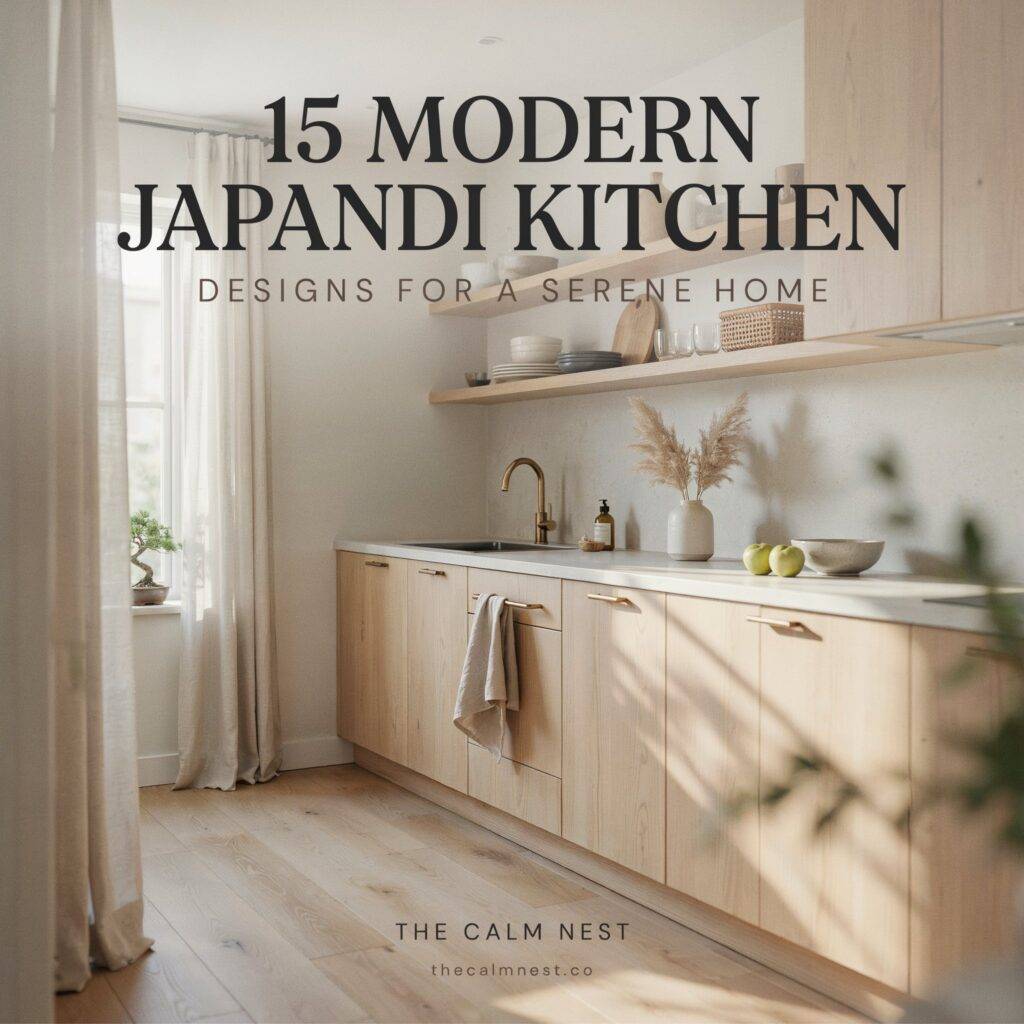
More people are looking for ways to make their homes feel peaceful. Life is busy, and the kitchen is often the most chaotic room in the house. Japandi offers a way out of that chaos.
The style leans heavily on natural materials like wood, stone, bamboo, and linen. It uses soft, neutral colors that don’t overwhelm your senses. And it prioritizes smart storage so your counters stay clear and your mind stays calm.
Another reason Japandi is gaining popularity? Sustainability. The focus on natural materials and simple designs makes it an eco-friendly choice. You’re not buying trendy items that will look dated in a few years. You’re investing in quality pieces that last.
15 Modern Japandi Kitchen Designs
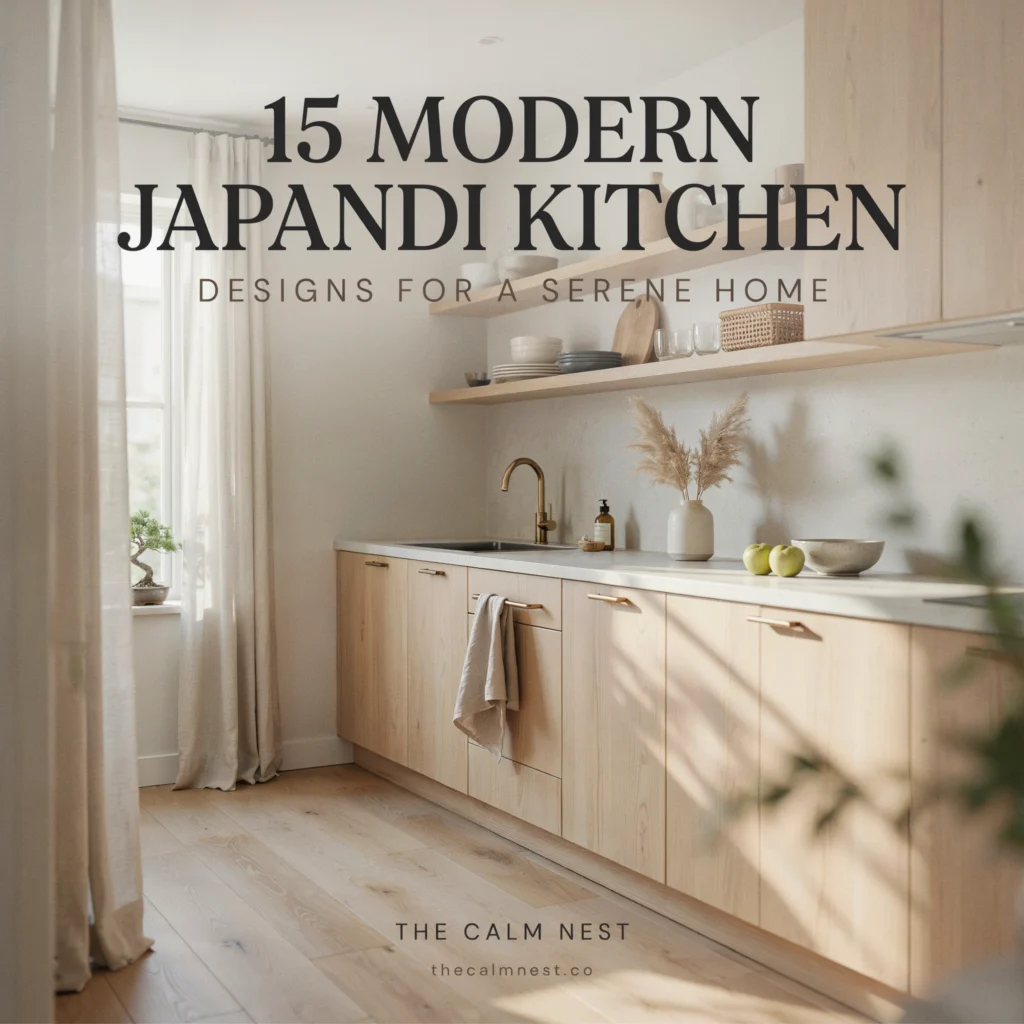
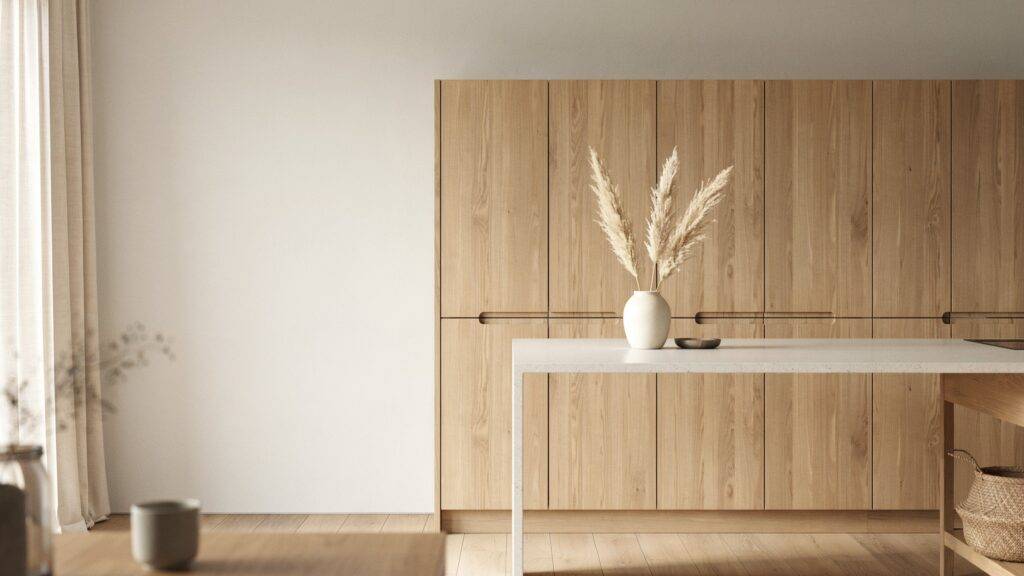
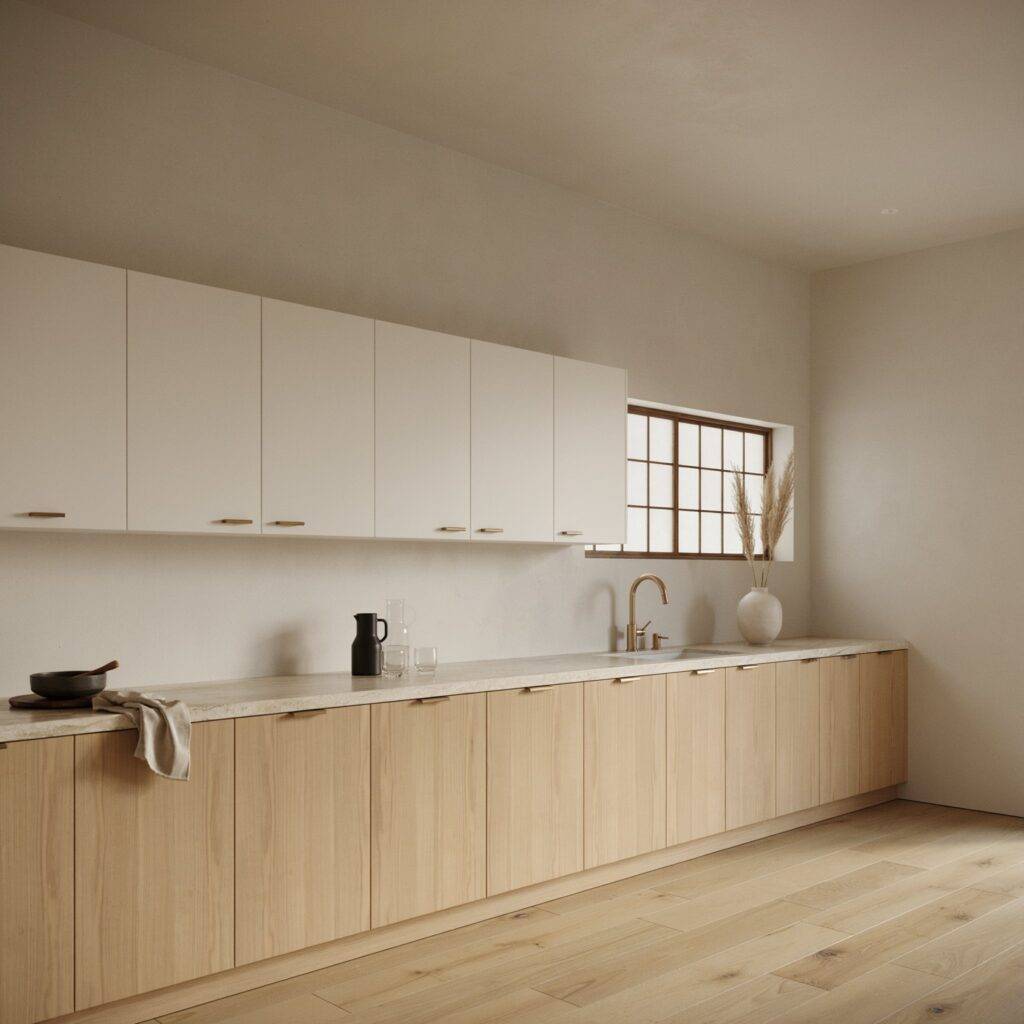
1. Light Wood Cabinetry with Handleless Doors
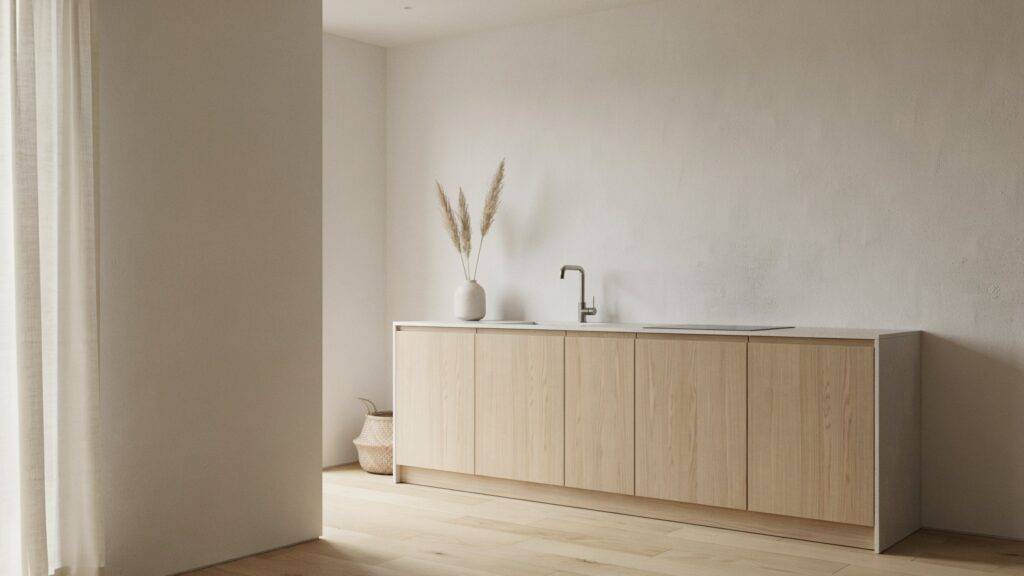
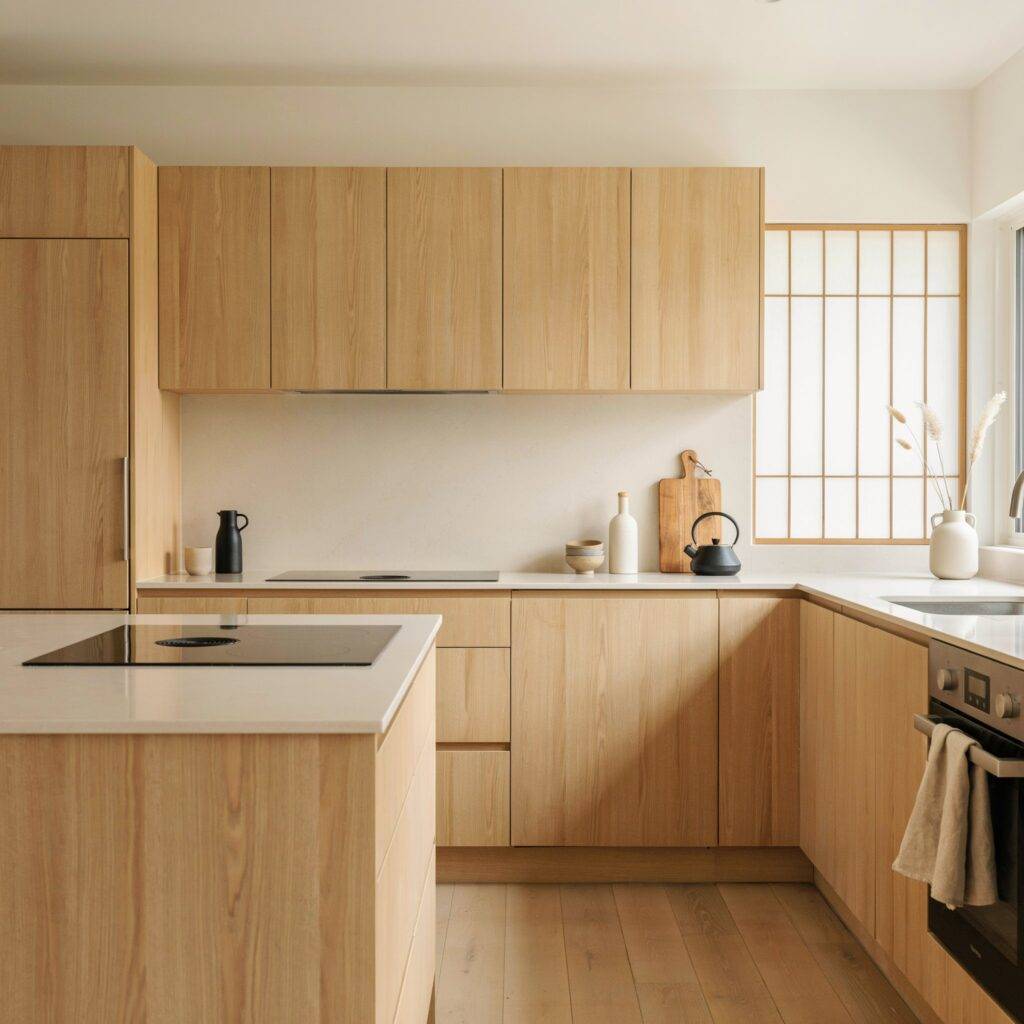
Start with the foundation. Flat-front cabinets in light oak or ash create that clean, uninterrupted look that defines Japandi. Skip the ornate handles and go for push-to-open or recessed pulls instead.
This keeps the visual flow smooth and makes the space feel bigger. The light wood brings warmth without making the room feel heavy. Pair these cabinets with soft white or greige walls for a base that feels open and airy.
2. A Neutral Color Palette with Earthy Accents
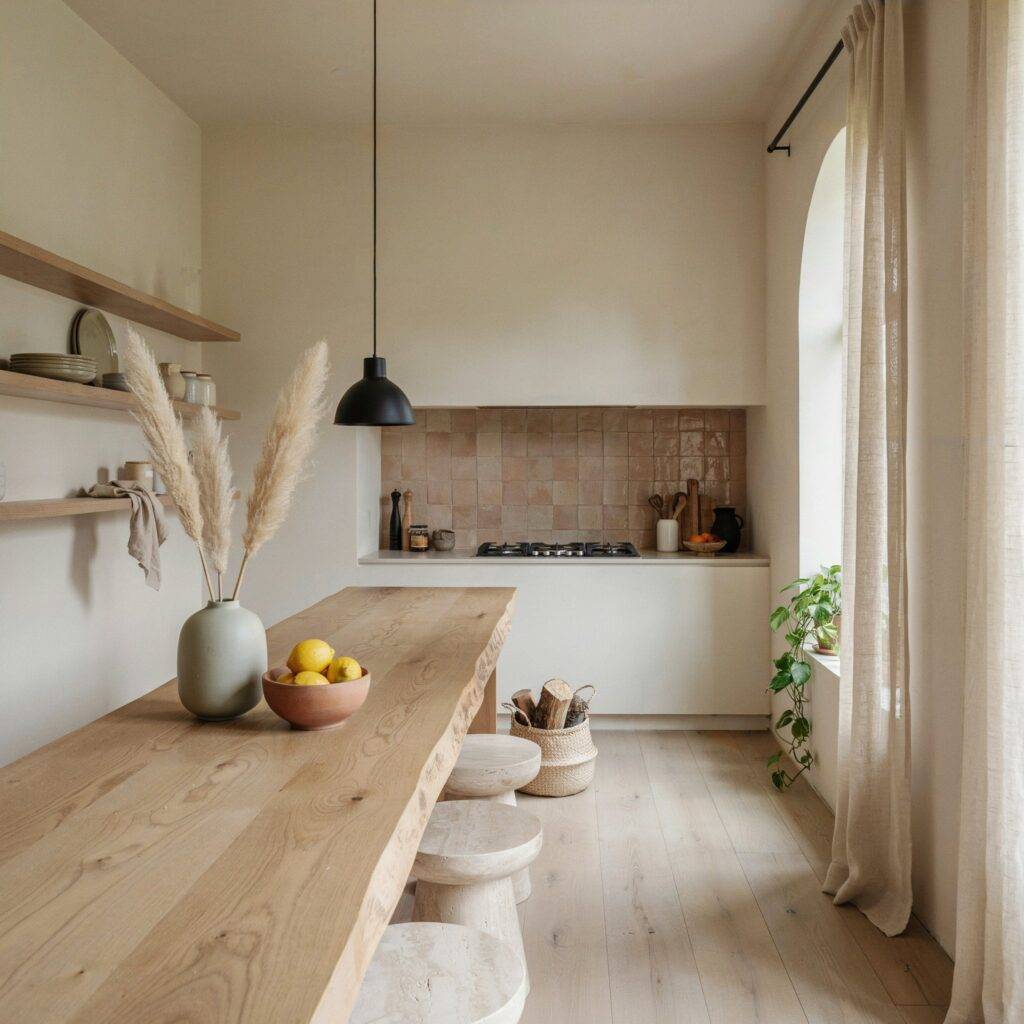
Japandi isn’t just about beige and white. While those are certainly part of it, you can add deeper earthy tones for more depth. Think muted greens like sage or olive, warm terracotta, or soft clay colors.
These colors work beautifully with wood tones and add visual interest without screaming for attention. Use them on an accent wall, in your backsplash, or through smaller decor pieces like vases or ceramics.
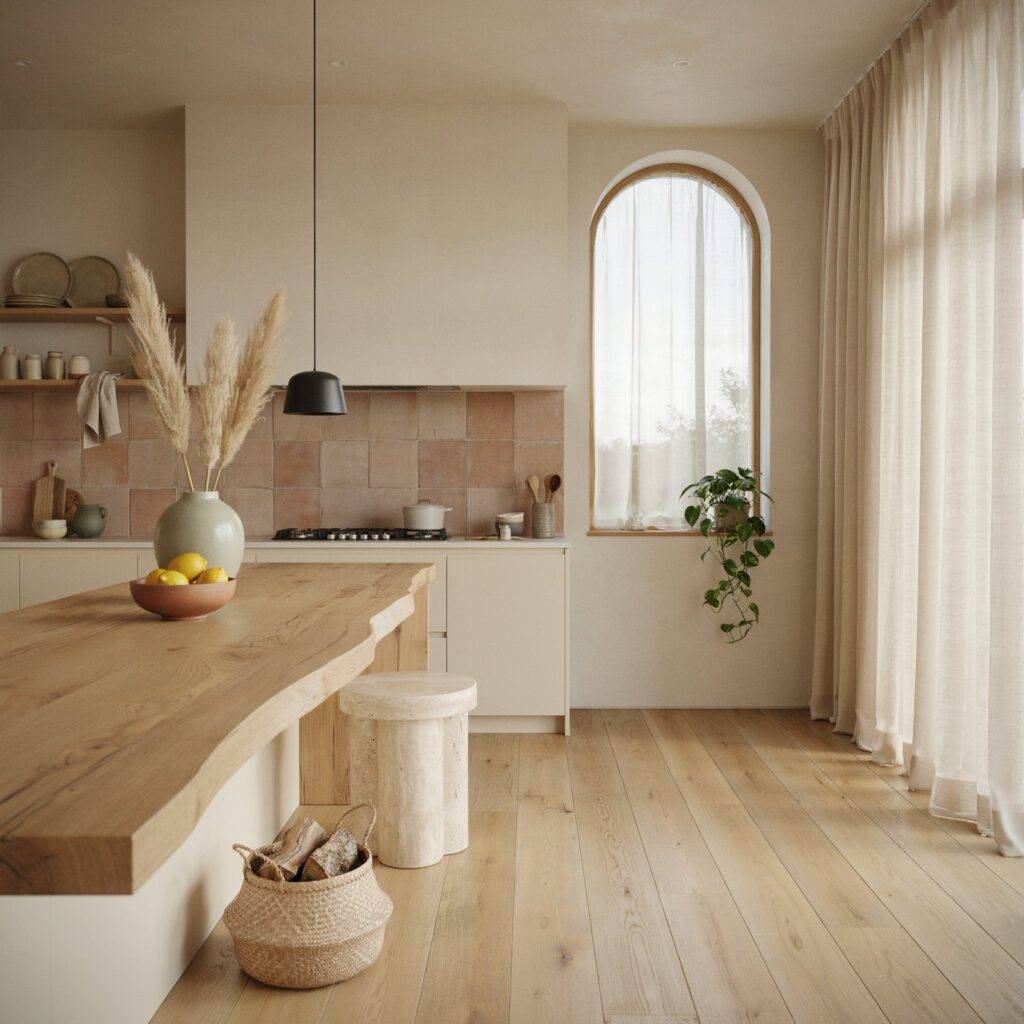
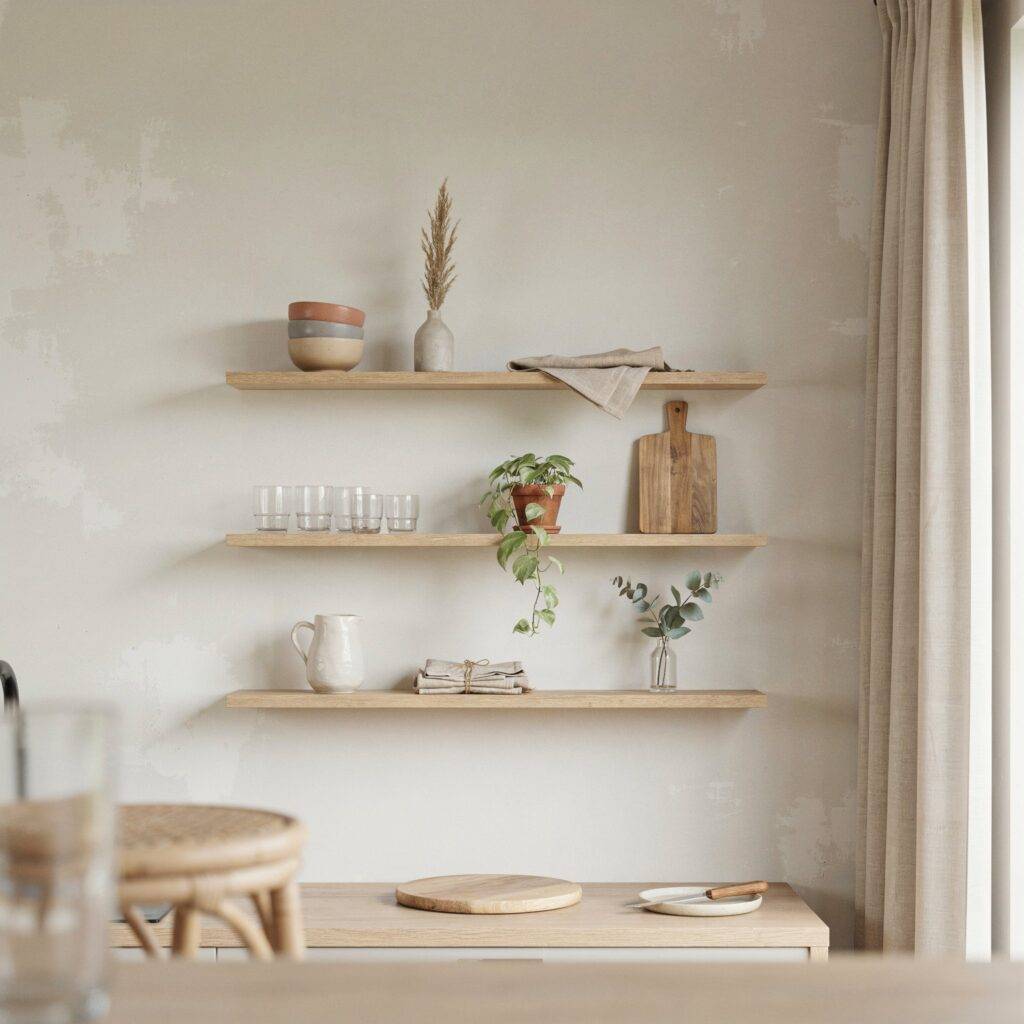
3. Open Shelving for Display and Function
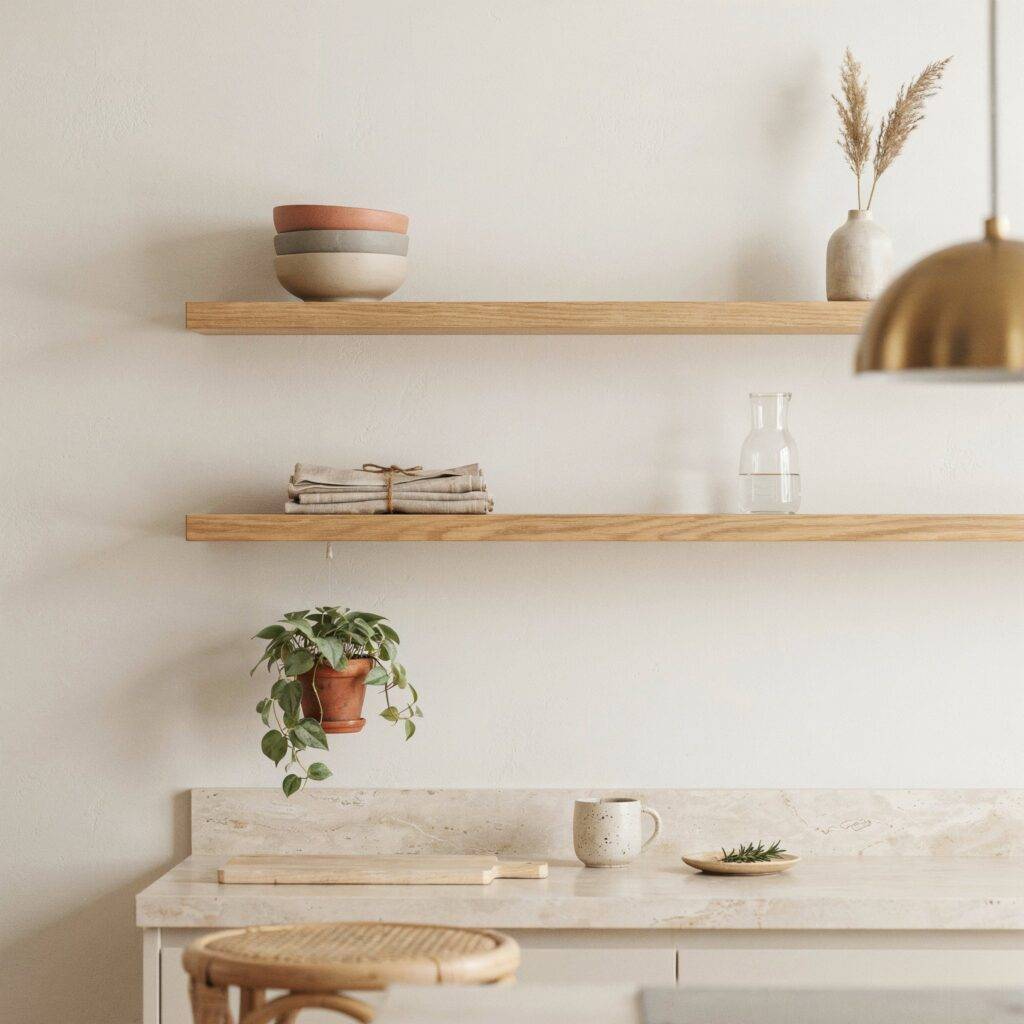
Open shelving is a classic Japandi element. Floating wooden shelves let you display your favorite ceramics, glassware, or a few carefully chosen plants.
The key is to keep it tidy don’t cram every shelf full. Leave some breathing room between items. This isn’t about showing off everything you own; it’s about showcasing pieces that are beautiful and useful.
Think handmade bowls, a stack of linen napkins, or a simple vase with dried branches.
4. A Wooden Island as the Focal Point
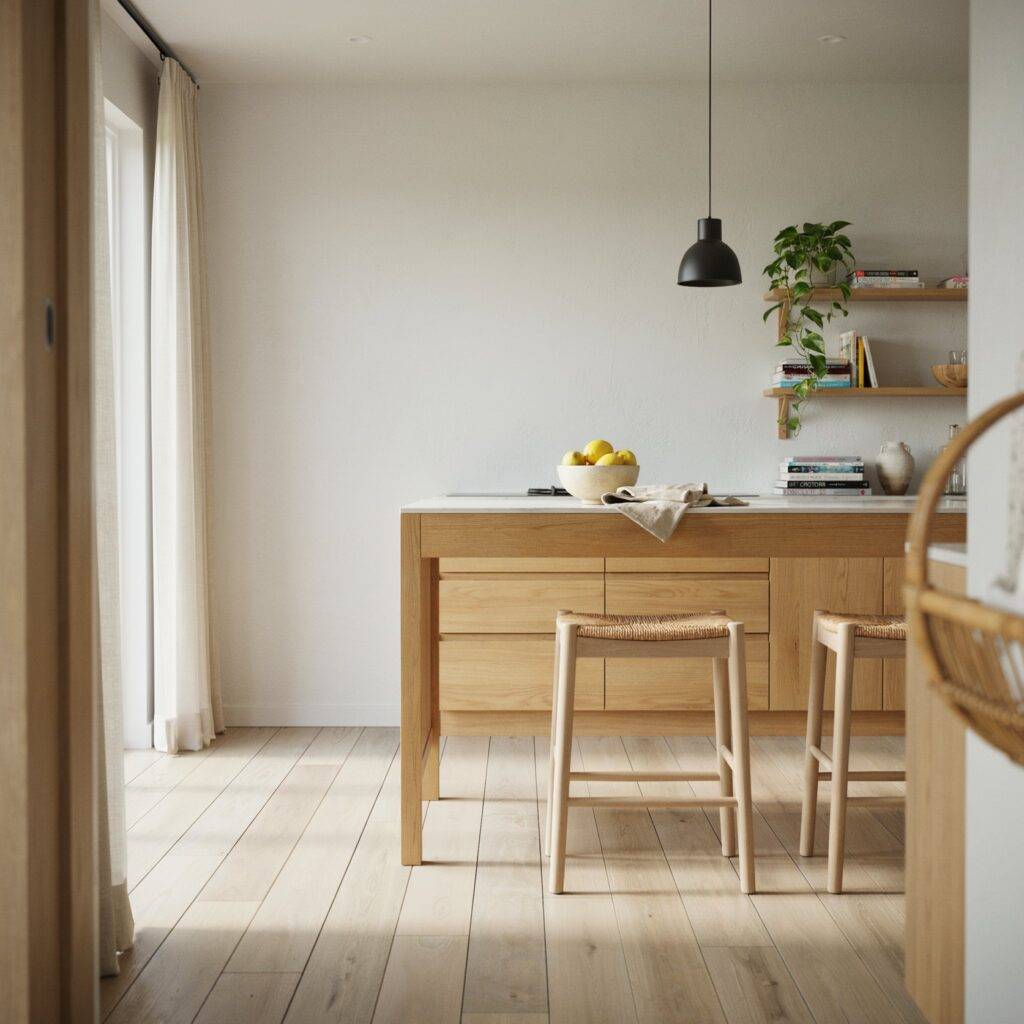
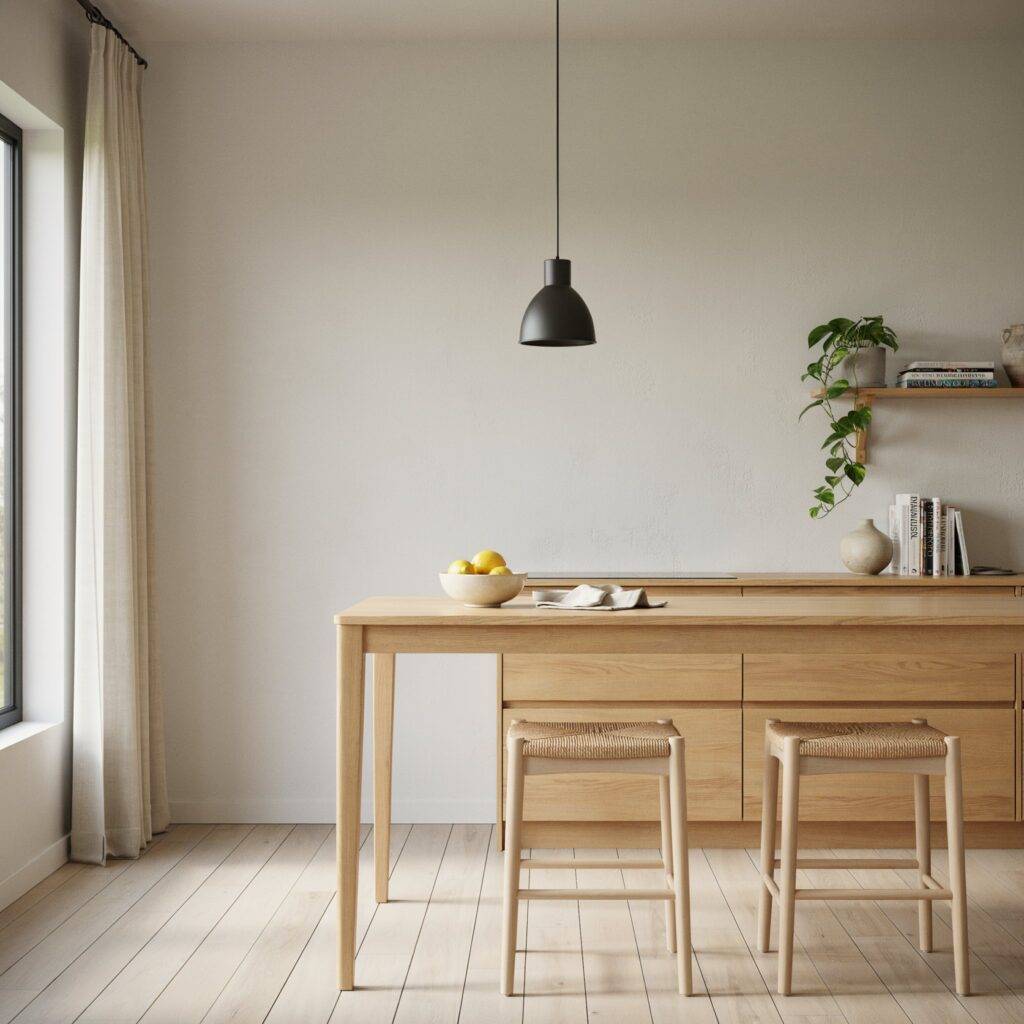
If you have space for an island, make it a warm wood one. A light oak or walnut island with clean, straight lines anchors the room and gives you extra prep space.
Go for an island with built-in storage on one side deep drawers for pots and pans, or open shelving for cookbooks.
The wood grain adds texture and warmth, while the simple shape keeps it from feeling cluttered. Add a couple of stools with natural fiber seats for a casual dining spot.
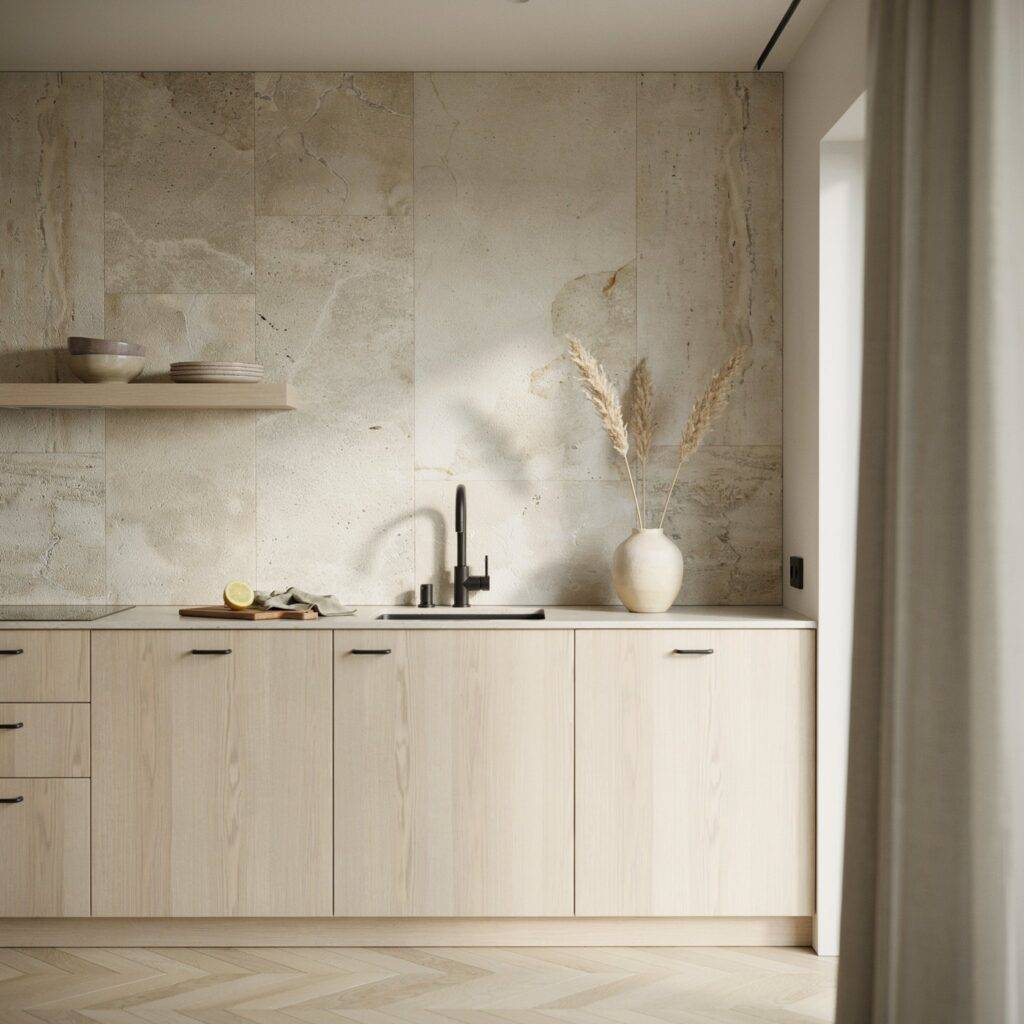
5. Natural Stone Backsplash
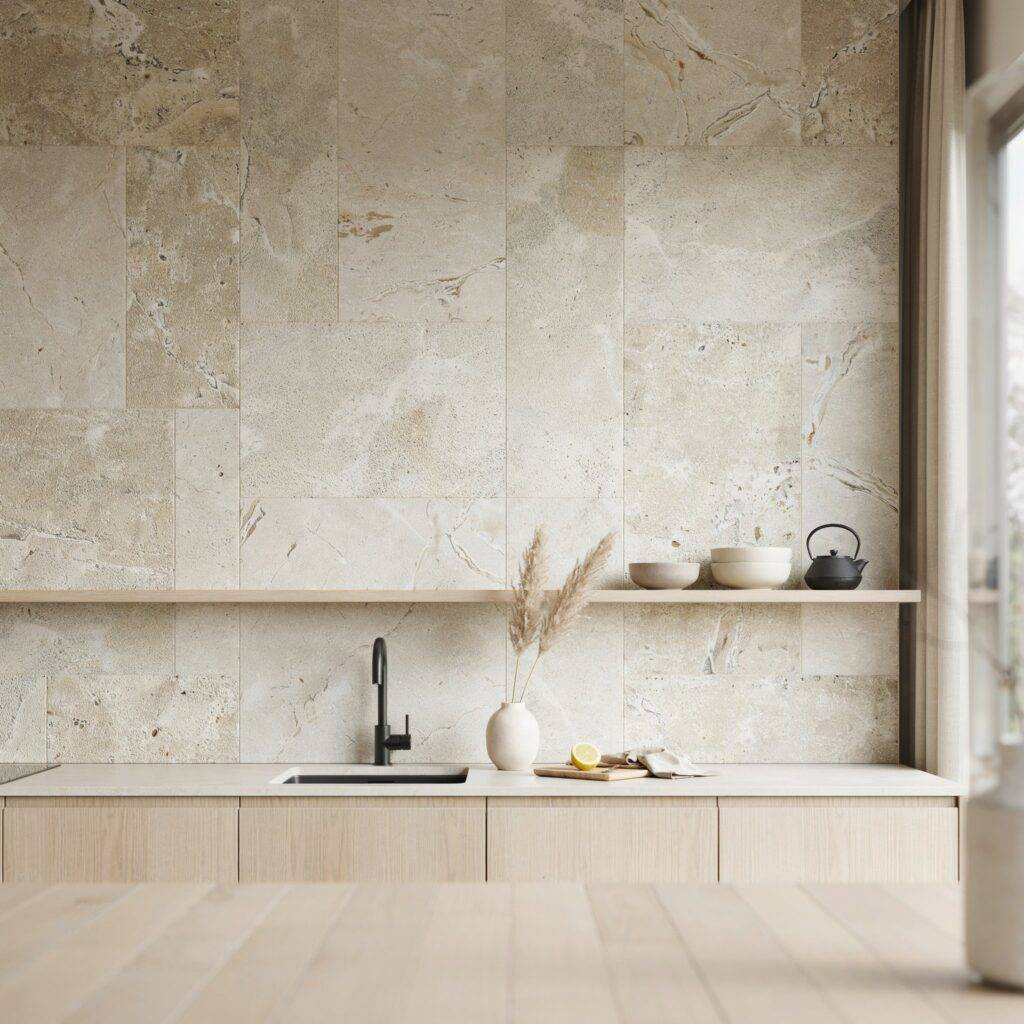
Instead of glossy tile, consider a natural stone backsplash. Think marble, limestone, or even a textured stone like travertine.
The raw, organic look fits perfectly with Japandi’s wabi-sabi influence celebrating natural imperfections. A stone backsplash adds depth and interest without overwhelming the space.
Keep the rest of the kitchen simple so the stone can shine. Pair it with light wood cabinets and matte black fixtures for a balanced look.
6. Black Fixtures for Subtle Contrast
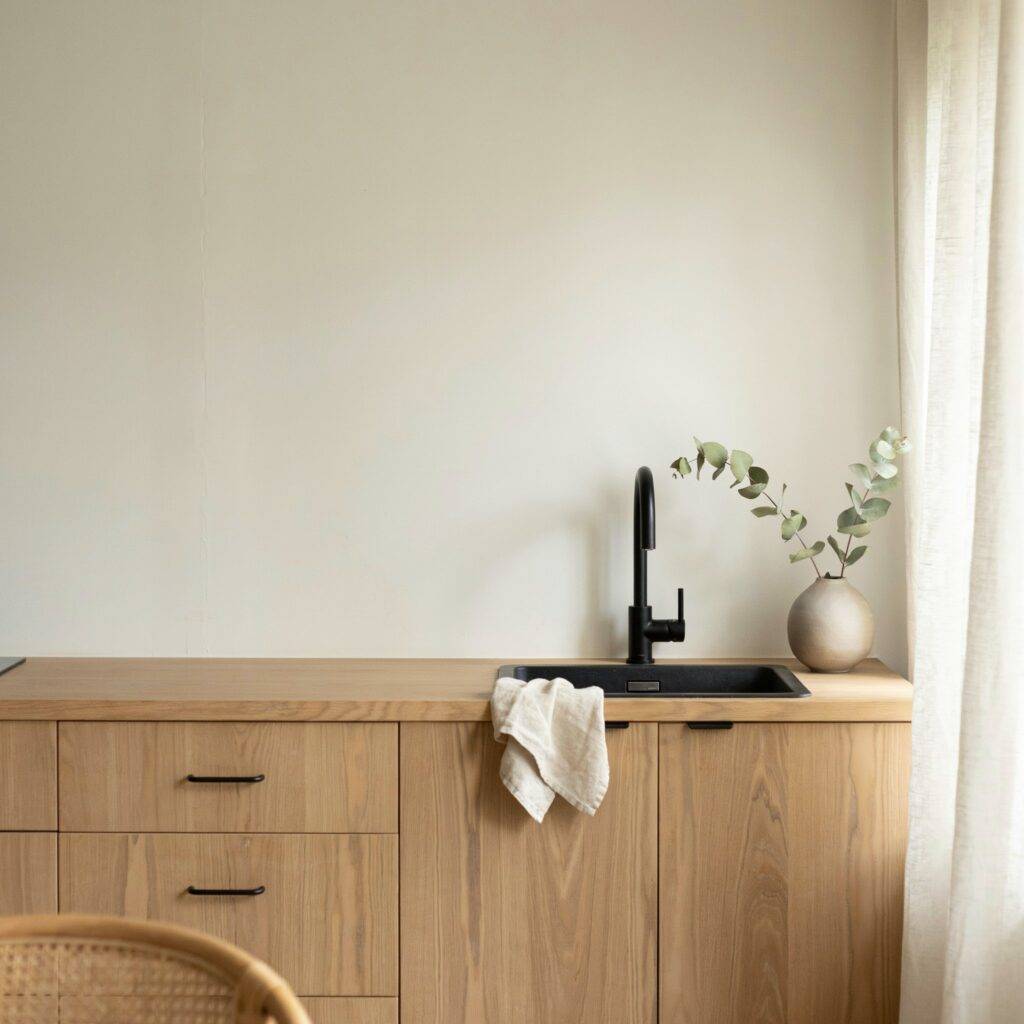
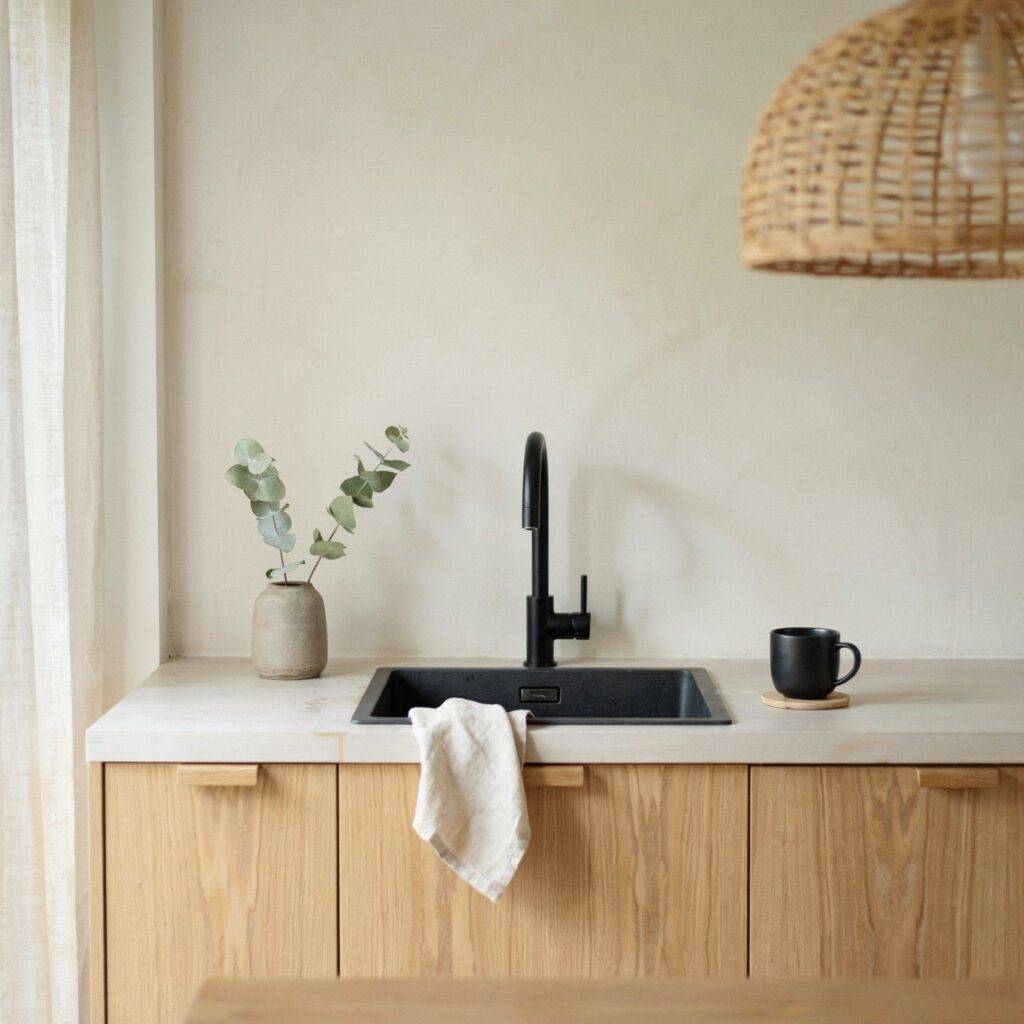
Japandi kitchens often use black accents to ground the space. A matte black faucet, black cabinet handles, or even a black sink can add just the right amount of contrast.
These dark touches keep the room from feeling too washed out. They give it a bit of edge while still feeling calm. Just don’t overdo it one or two black elements are plenty.
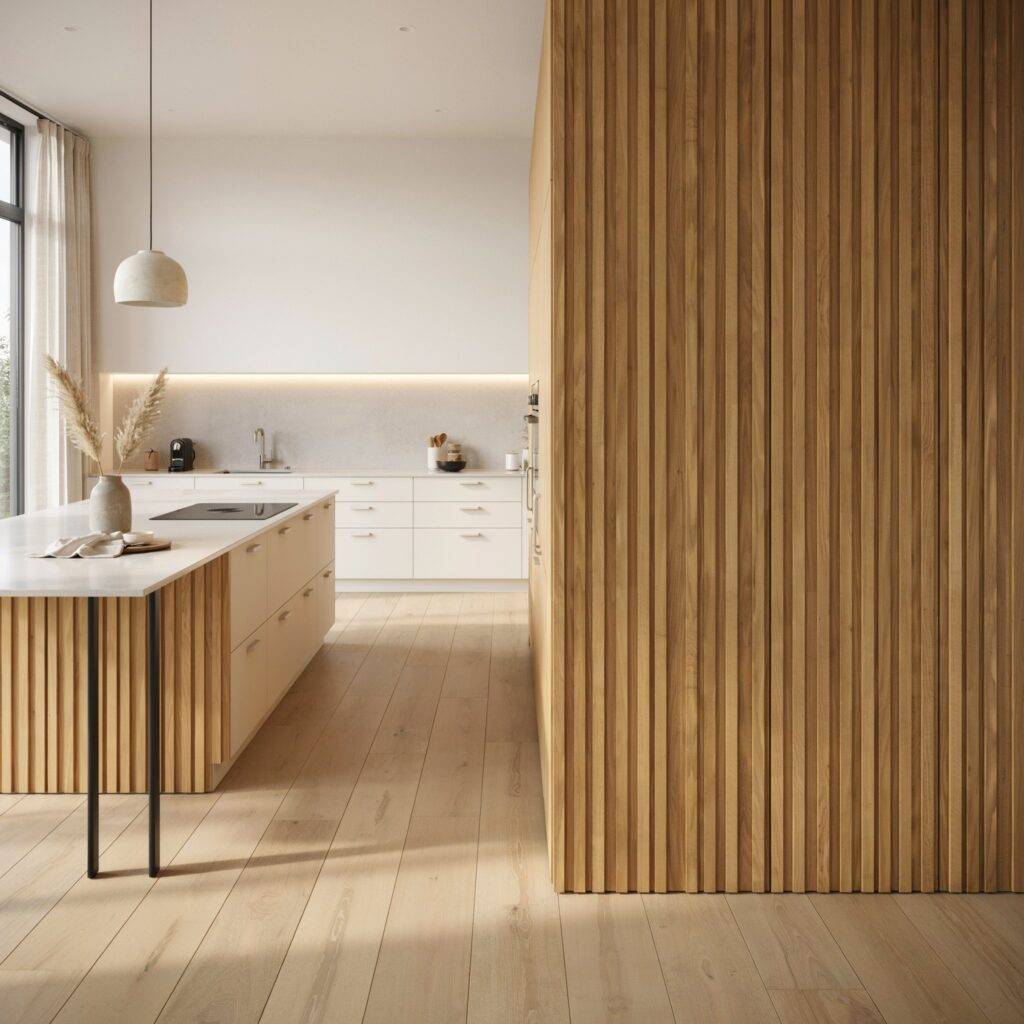
7. Slatted Wood Details
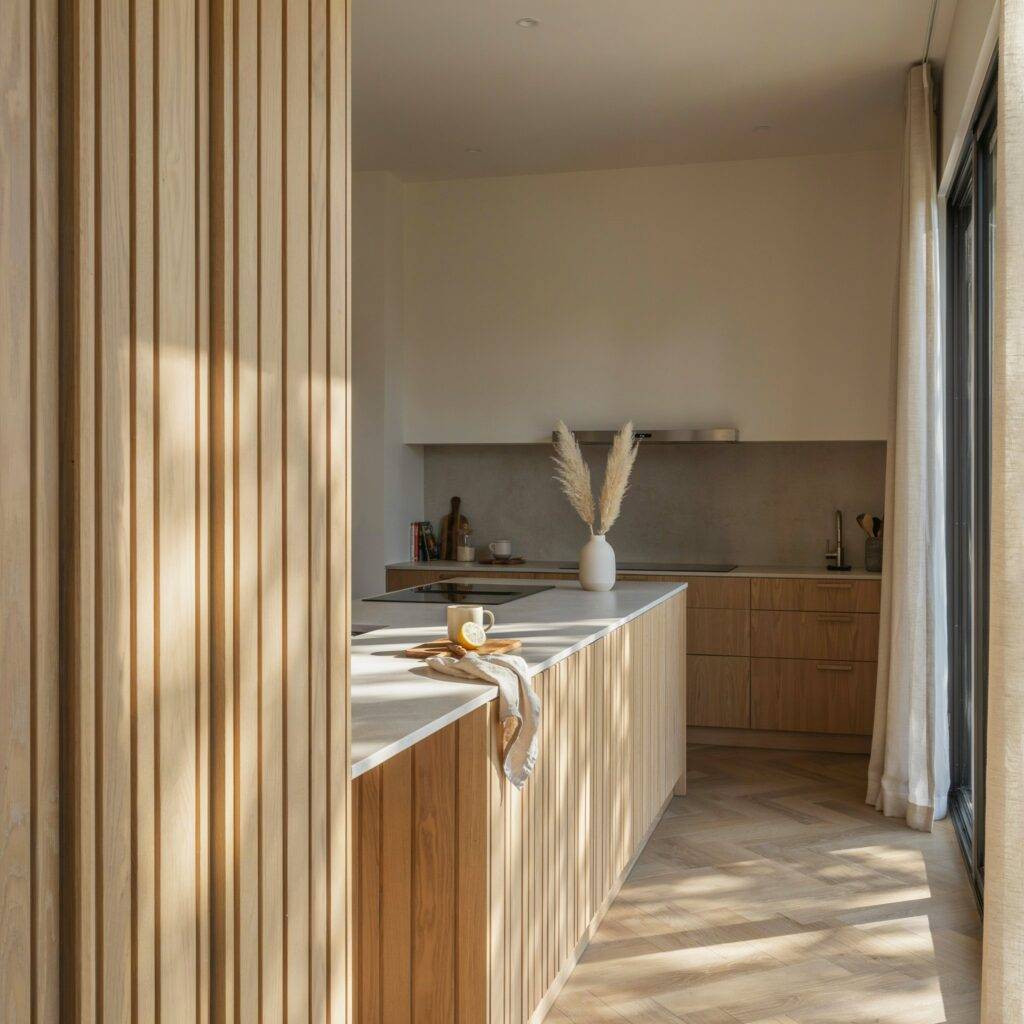
Slatted wood is a wonderful way to add texture without clutter. You can use it on a section of cabinetry, as a room divider, or even on the side of an island.
The vertical lines create a rhythm that feels modern and calming. It’s a small detail that makes a big impact. Choose a wood tone that matches or complements your main cabinetry for a cohesive look.
8. Integrated Appliances
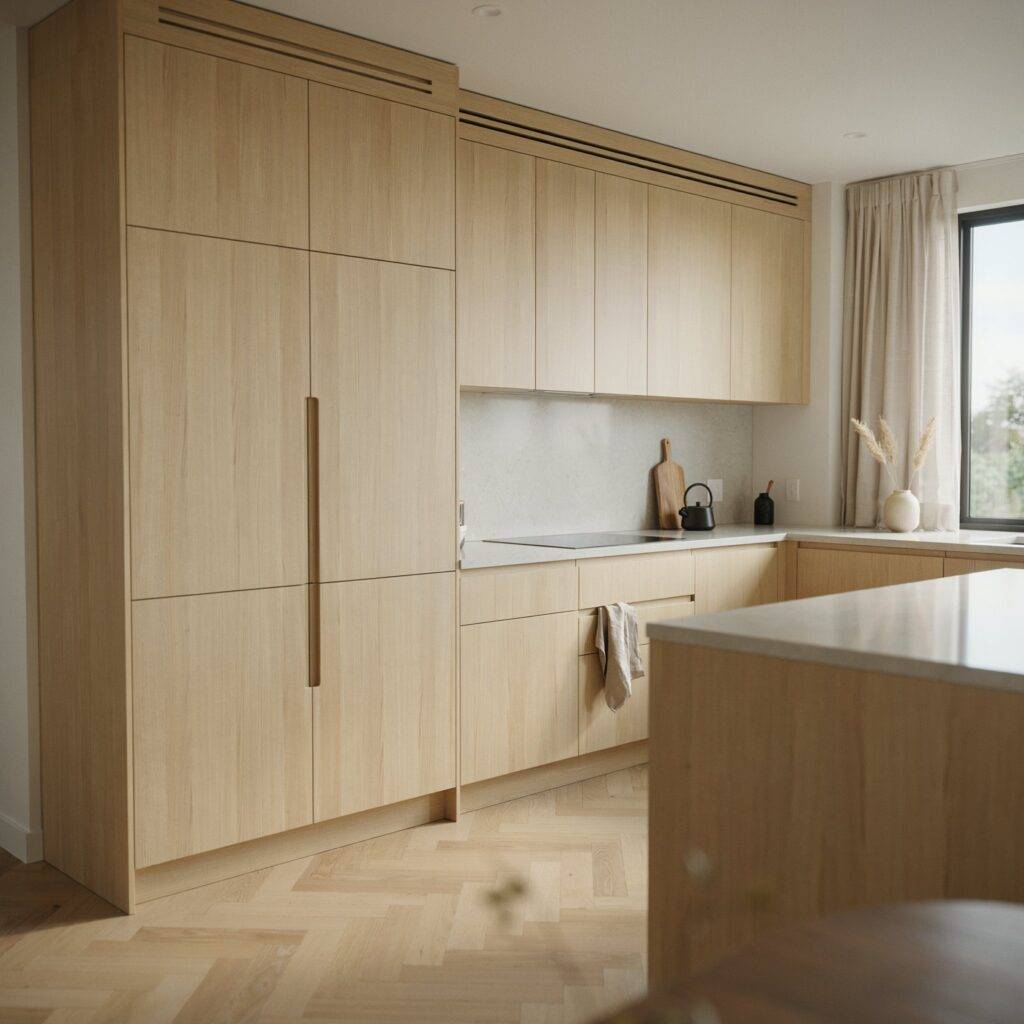
In a Japandi kitchen, appliances should blend in, not stand out. Panel-ready refrigerators, dishwashers, and even range hoods can be covered with cabinet fronts that match your kitchen.
This creates a seamless, streamlined appearance. The goal is for the kitchen to feel like one unified space, not a collection of separate appliances.
If you can’t fully integrate, choose appliances in neutral colors like stainless steel, black, or white with minimalist designs.
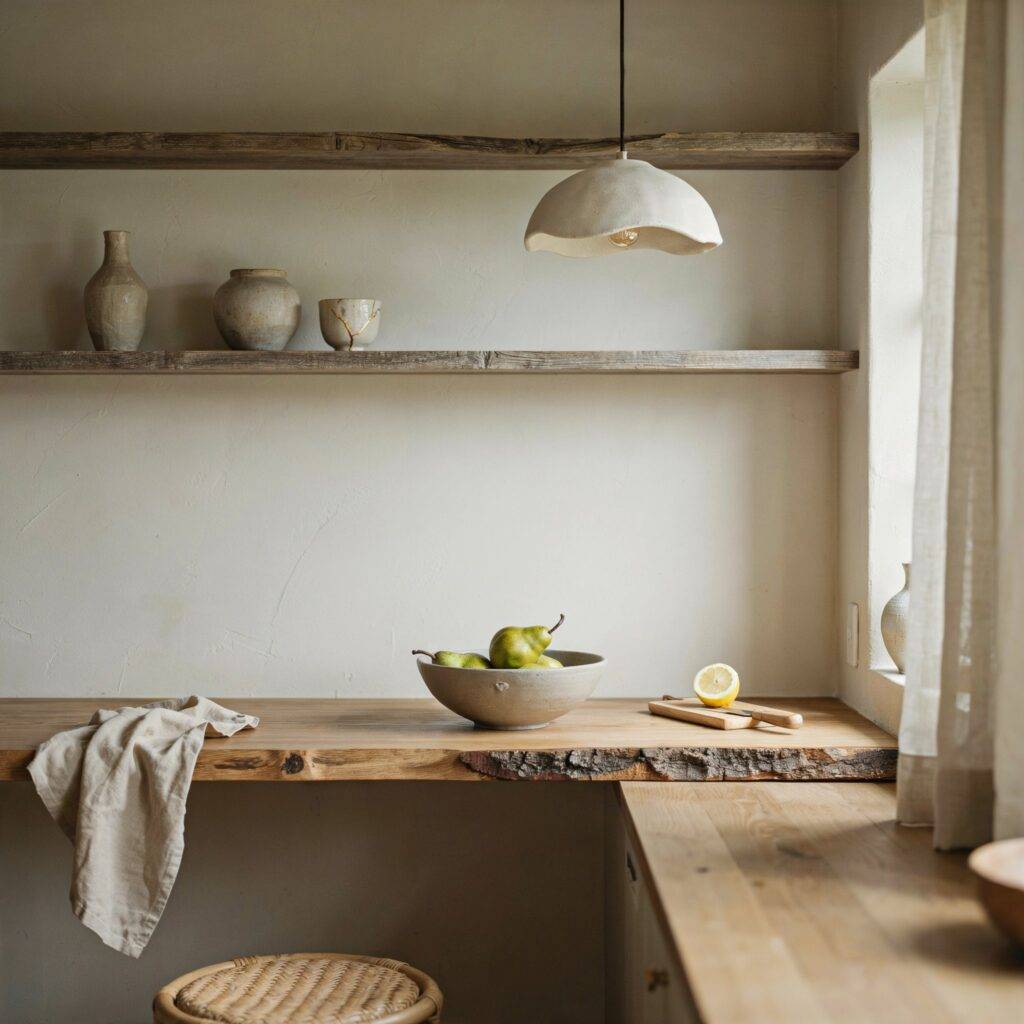
9. Wabi-Sabi Elements
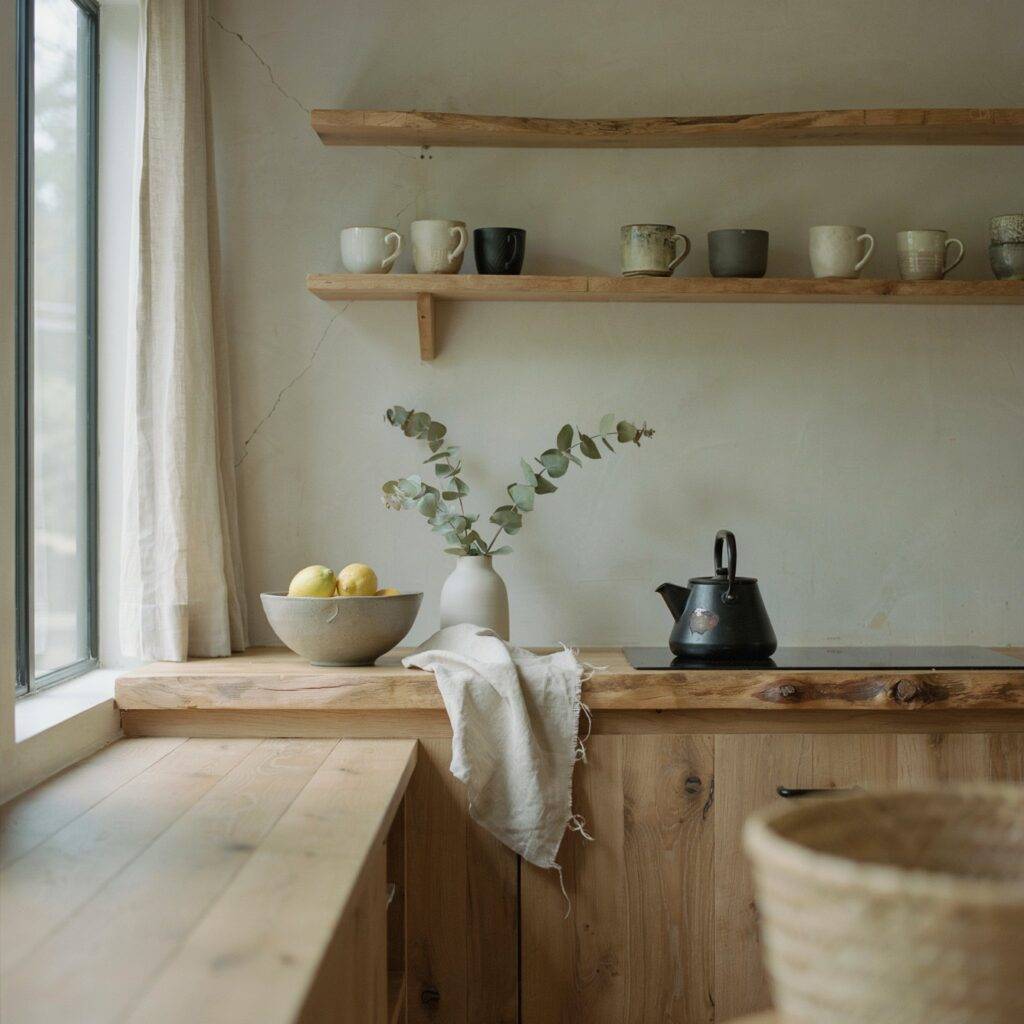
Wabi-sabi is the Japanese philosophy of finding beauty in imperfection. In a Japandi kitchen, this might mean a live-edge wooden countertop, a hand-thrown ceramic bowl with slight irregularities, or a piece of furniture that shows its natural grain.
These imperfect touches make the space feel more human and less like a showroom. They tell a story and add character without trying too hard.
10. Layered Lighting
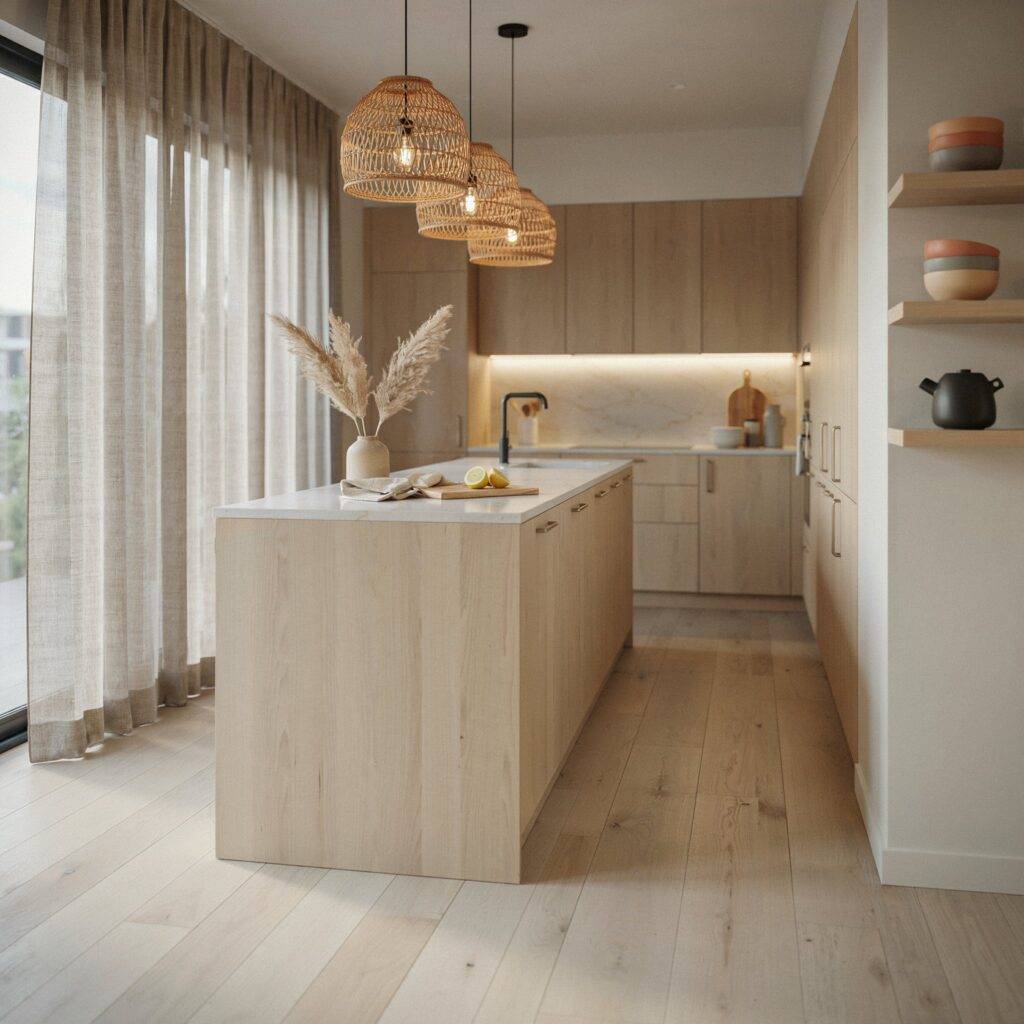
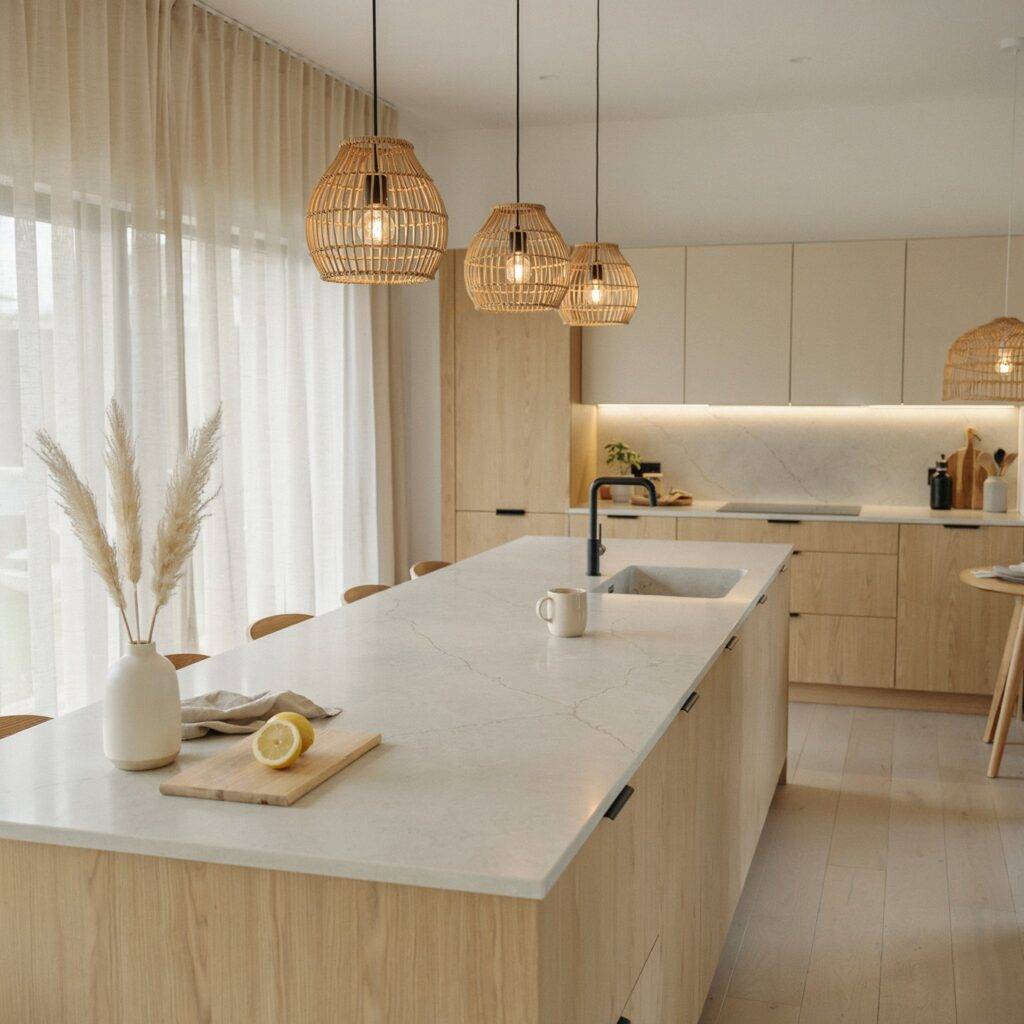
Lighting in a Japandi kitchen should be warm and layered. You don’t want one harsh overhead light. Instead, combine ambient, task, and accent lighting. Pendant lights with natural shades like wood, paper, or rattan create a soft glow over islands or dining areas.
Under-cabinet lights provide focused illumination for food prep. And maximize natural daylight by keeping windows clear with simple, sheer coverings. The right lighting makes wood tones richer and the whole space feel more inviting.
11. Smart Storage Solutions
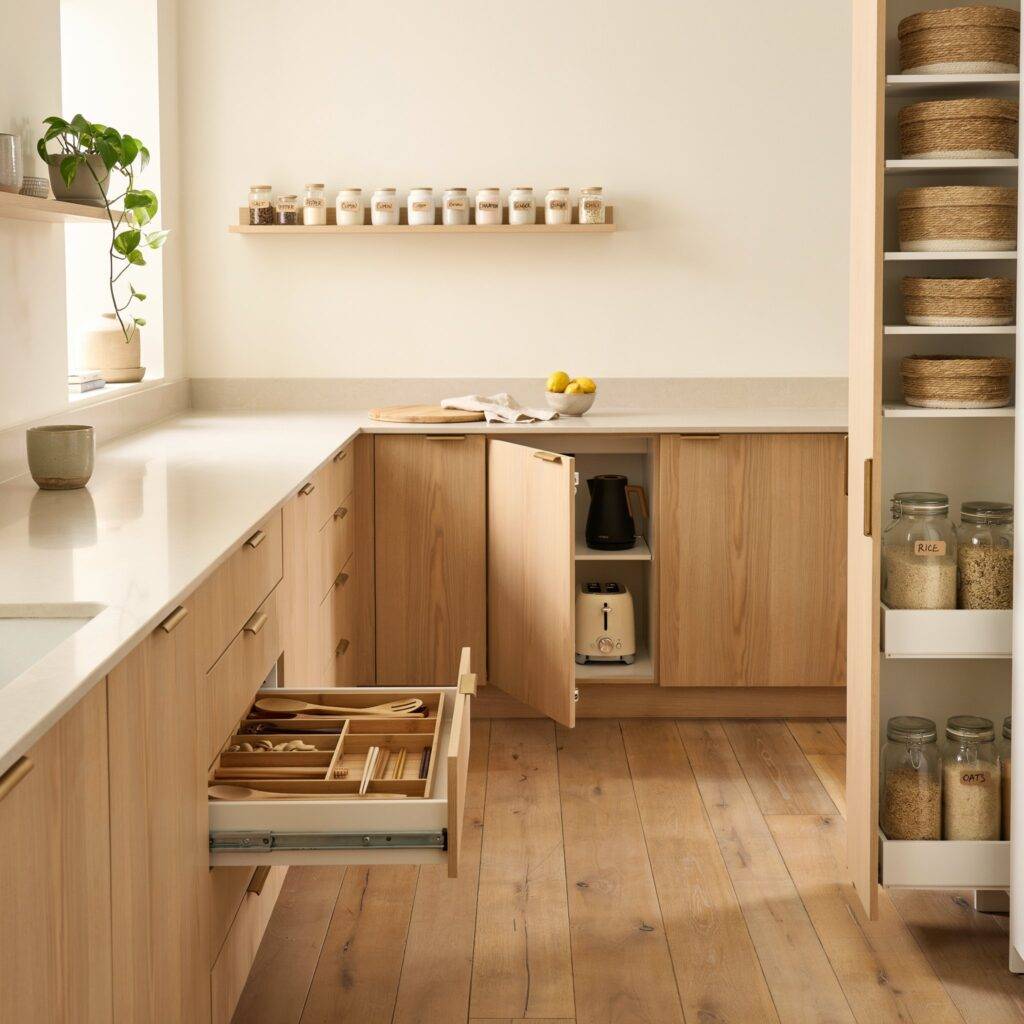
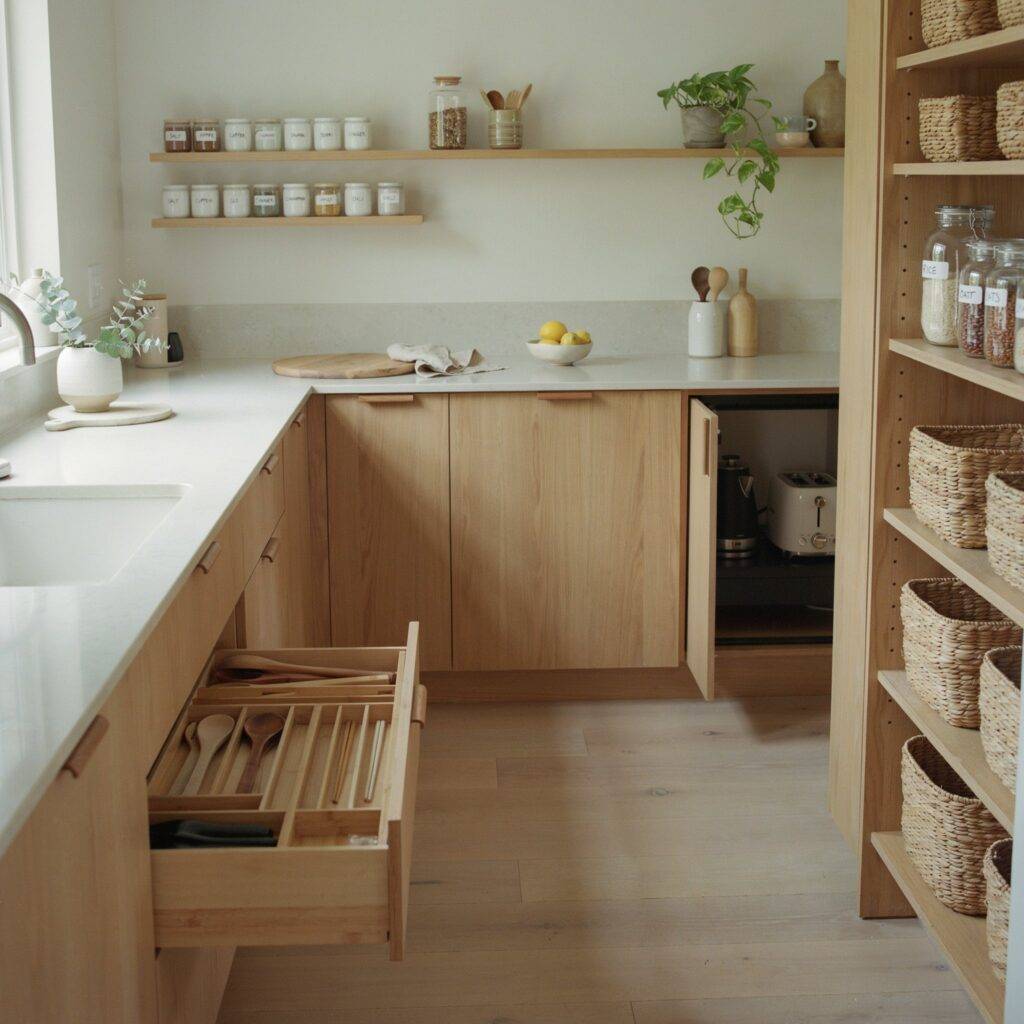
Clutter is the enemy of Japandi design. That’s why smart storage is so important. Think deep drawers with dividers for utensils, pull-out pantries, and appliance garages that hide small appliances.
The more you can keep off your counters, the calmer the space will feel. Storage should be both functional and beautiful bamboo organizers, wooden spice racks, and woven baskets all fit the aesthetic.
12. Beadboard or Fluted Paneling
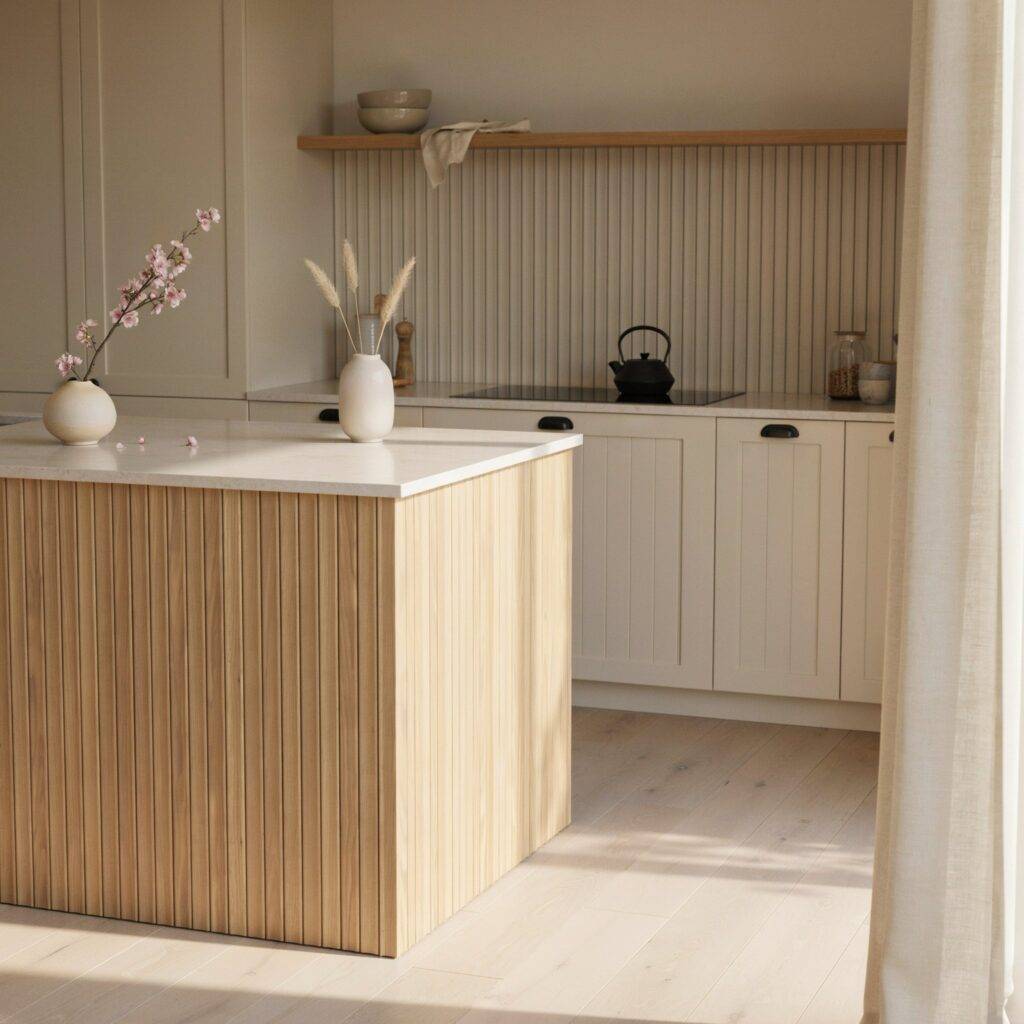
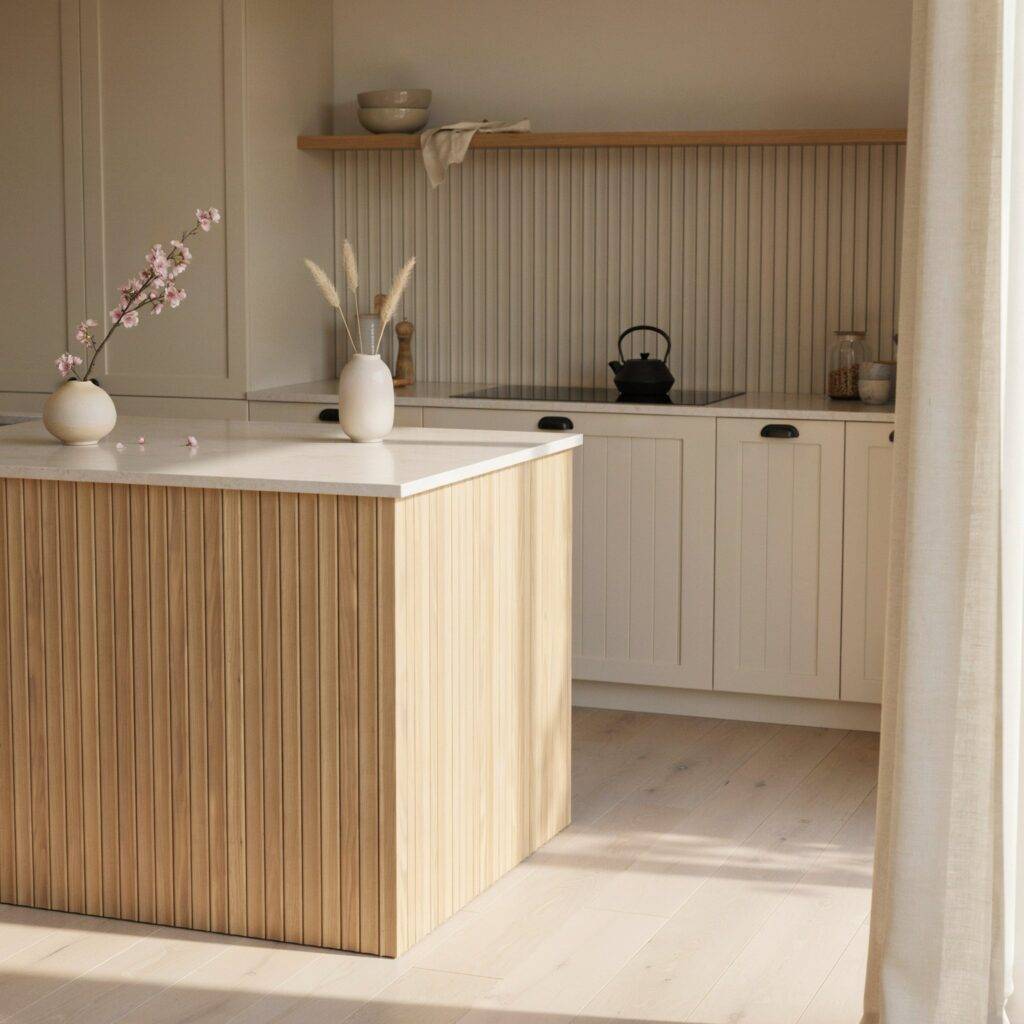
If you want to add some texture to your cabinets or walls, beadboard or fluted paneling is a great option. It adds subtle dimension and charm without being too busy.
Use it on a kitchen island, as a backsplash, or on the front of lower cabinets. It’s a small detail that adds visual interest and aligns perfectly with Japandi’s clean, minimalist vibe.
13. Plants and Greenery
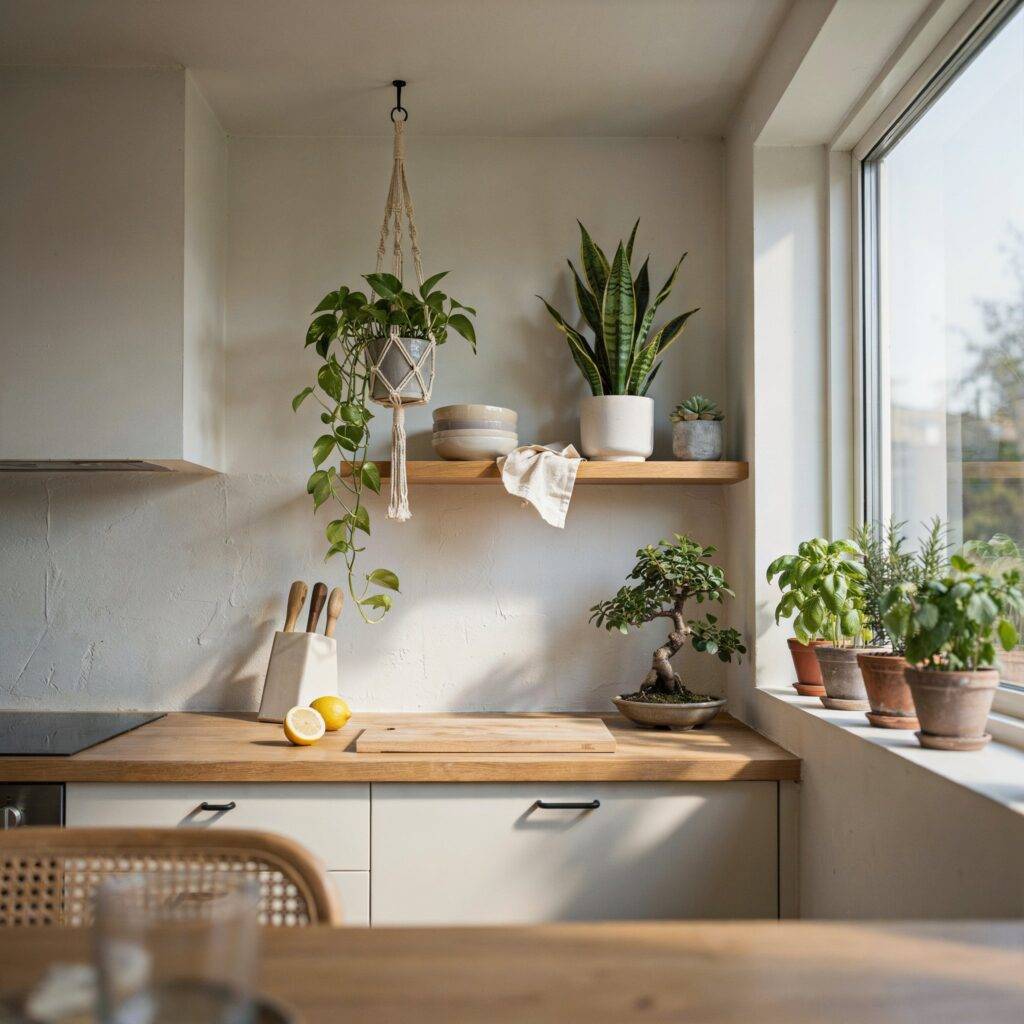
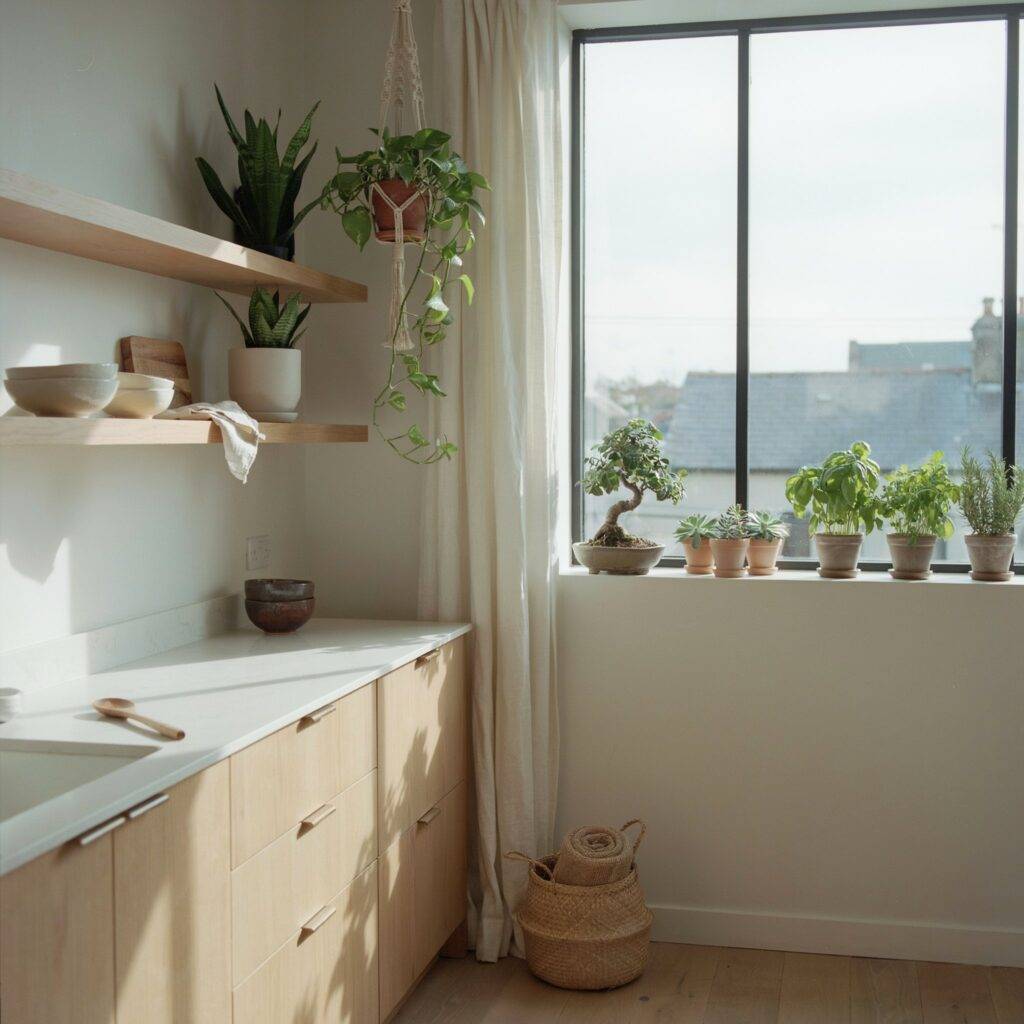
Plants are essential in a Japandi kitchen. They bring life, color, and a connection to nature. Choose plants with simple, sculptural shapes like snake plants, succulents, or a small bonsai. Place them on open shelves, windowsills, or even hang them from the ceiling.
Herbs on a windowsill are both beautiful and useful. The green adds a gentle contrast to the neutral palette and makes the space feel fresh.
14. Light Wood Flooring
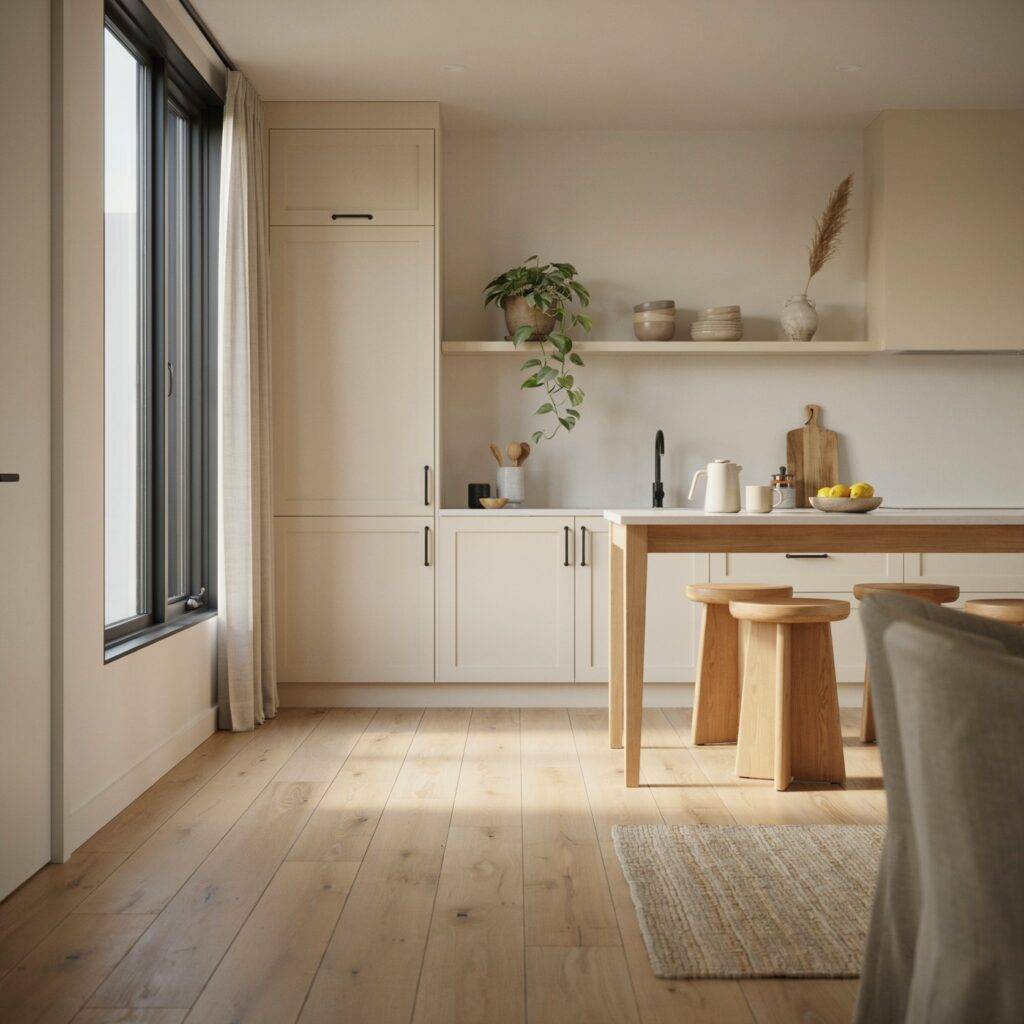
Your flooring sets the tone for the whole room. Light wood floors in oak, ash, or maple are a great choice for a Japandi kitchen. They feel warm underfoot and tie the whole space together.
If you’re worried about durability in a kitchen, wood-look porcelain tiles are a practical alternative that still gives you that warm, natural look.
15. Minimalist Hardware
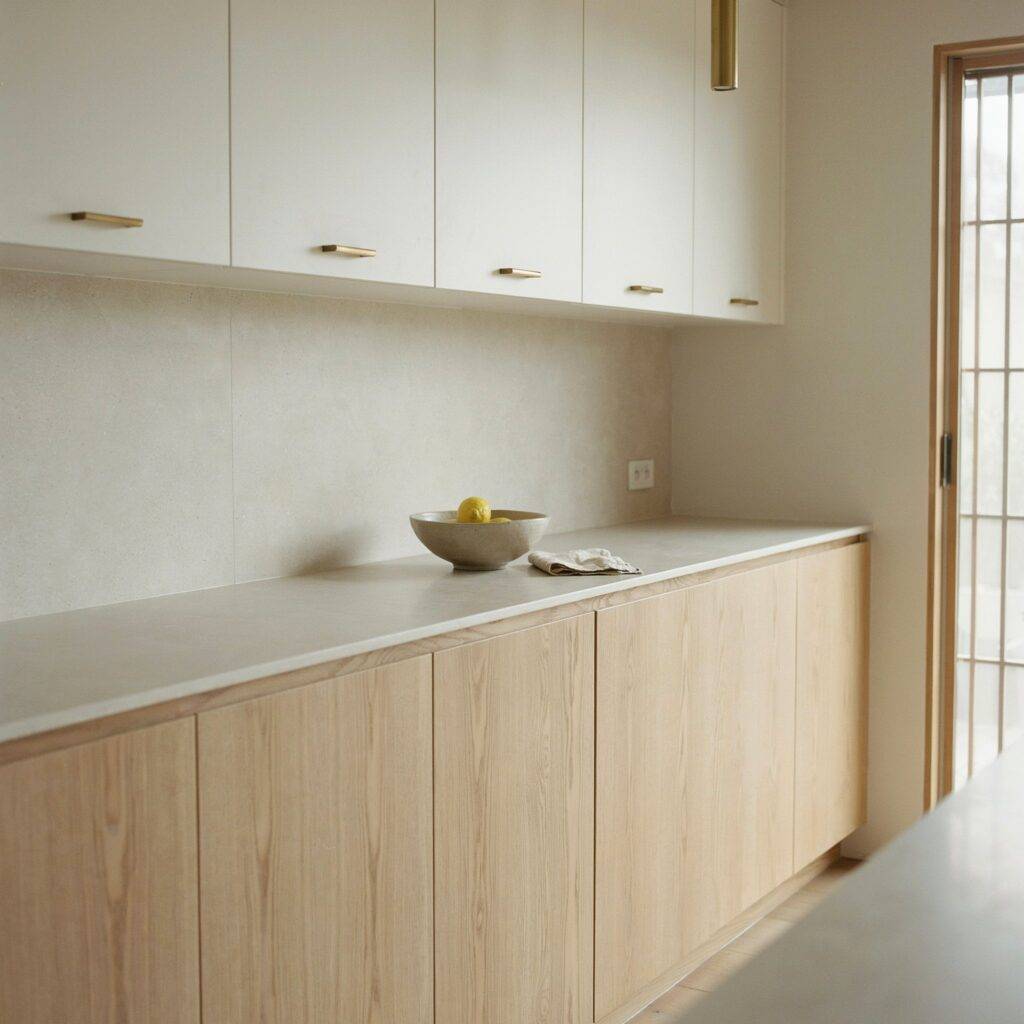
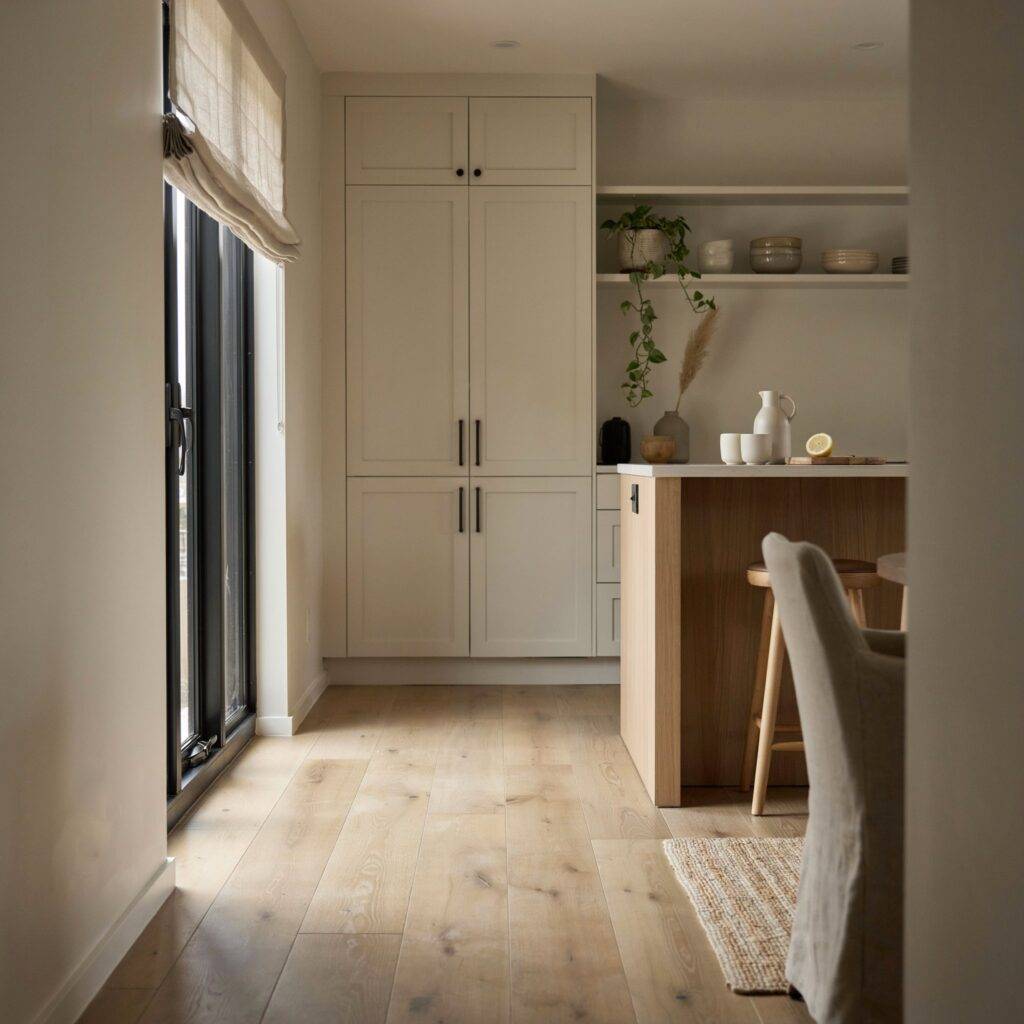
When it comes to hardware, less is more. Choose simple, understated pulls in matte black, brushed brass, or even wood. Or go completely handleless with push-to-open mechanisms.
The hardware should support the design, not distract from it. In a Japandi kitchen, the focus should be on the materials and the clean lines, not on flashy handles.
7 Must-Have Products for Your Japandi Kitchen
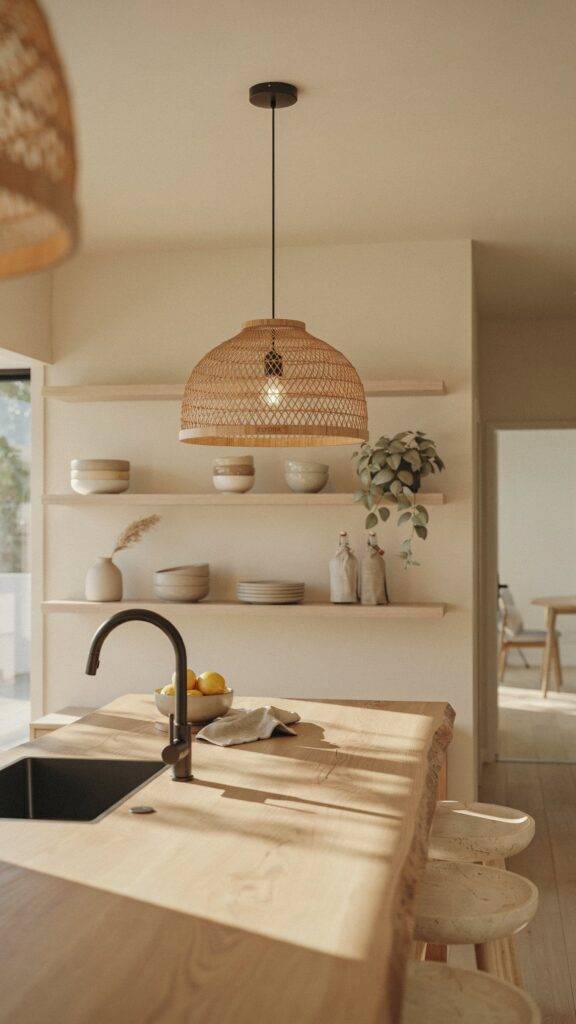
1. ELYONA Woven Japandi Pendant Light
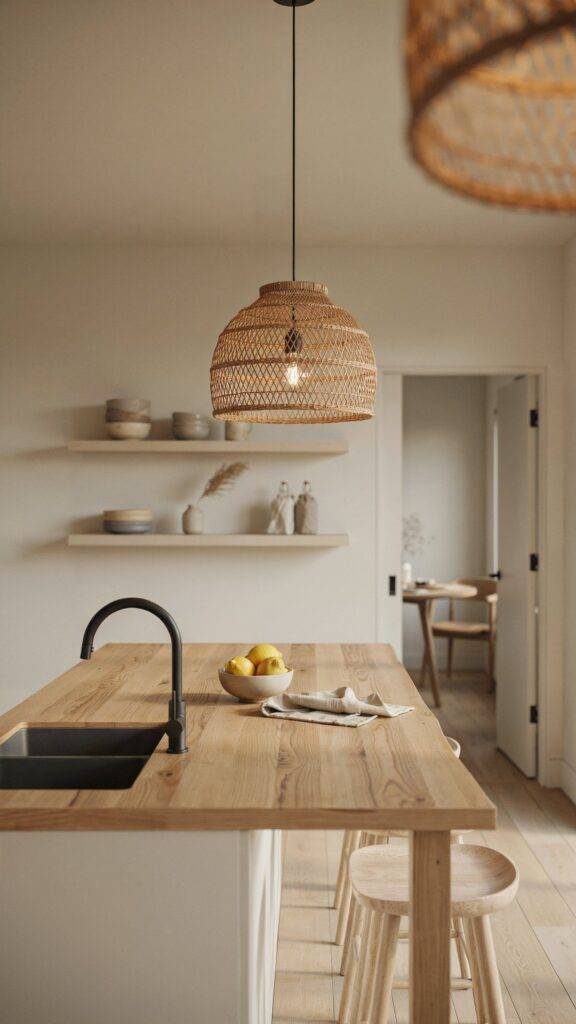
This rattan pendant light is the perfect blend of Japanese natural materials and Scandinavian simplicity. The handwoven basket shade casts a warm, diffused glow that softens the whole room.
Lighting is one of the most important elements in a Japandi kitchen, and this fixture does exactly what it should it adds warmth without being flashy.
Hang it over your kitchen island or dining table to create that cozy, intentional atmosphere. The 7-inch size works well in most spaces, and the adjustable cord means you can get the height just right.
Why it’s unique: Handwoven rattan gives each light a slightly different texture, embracing the wabi-sabi philosophy of finding beauty in imperfection.
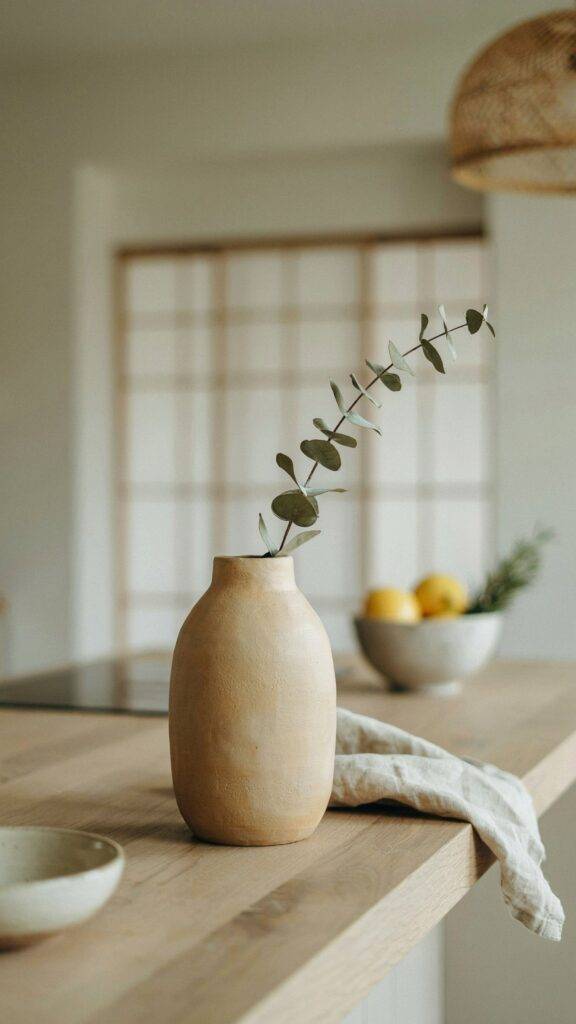
2. Sandstone Ceramic Vase with Organic Texture
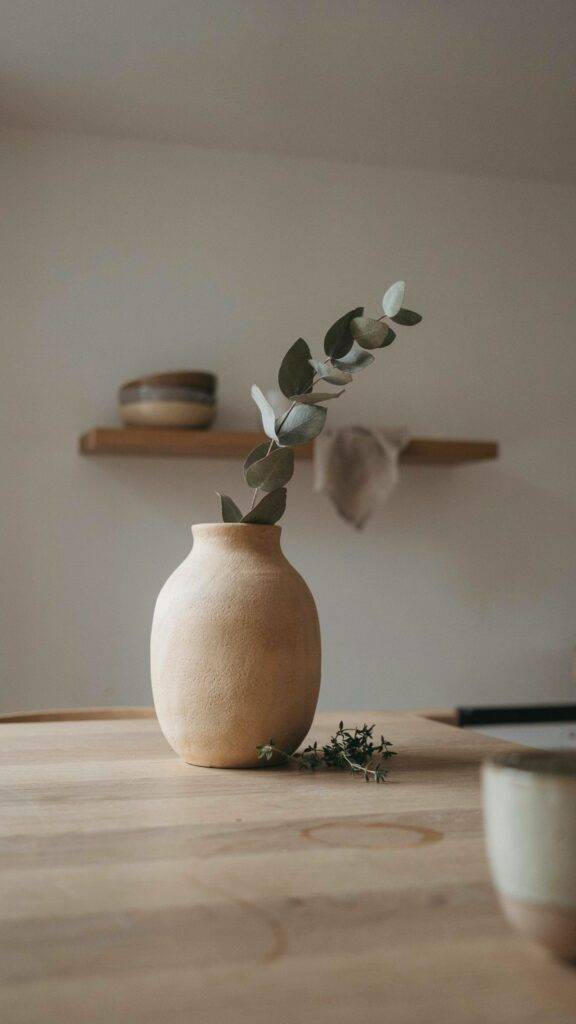
A simple vase might not seem like a big deal, but in a Japandi kitchen, it’s the small touches that make the space feel lived-in and intentional.
This sandstone ceramic vase has a beautiful organic texture that catches the light in a subtle way. At 9.8 inches, it’s the perfect size for a kitchen island, open shelf, or windowsill.
Leave it empty for a sculptural look, or add a single dried branch or fresh flower for a pop of natural color. The neutral tone fits seamlessly into any Japandi color palette.
Why it’s unique: The organic, slightly imperfect texture gives it that handcrafted feel that mass-produced vases just don’t have.
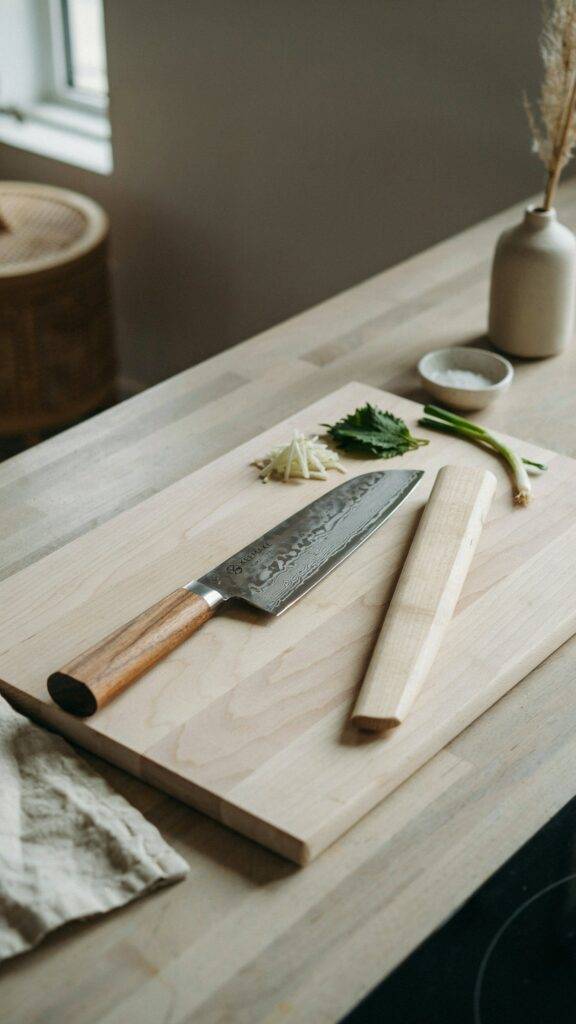
3. KEEMAKE Nakiri Japanese Chef Knife
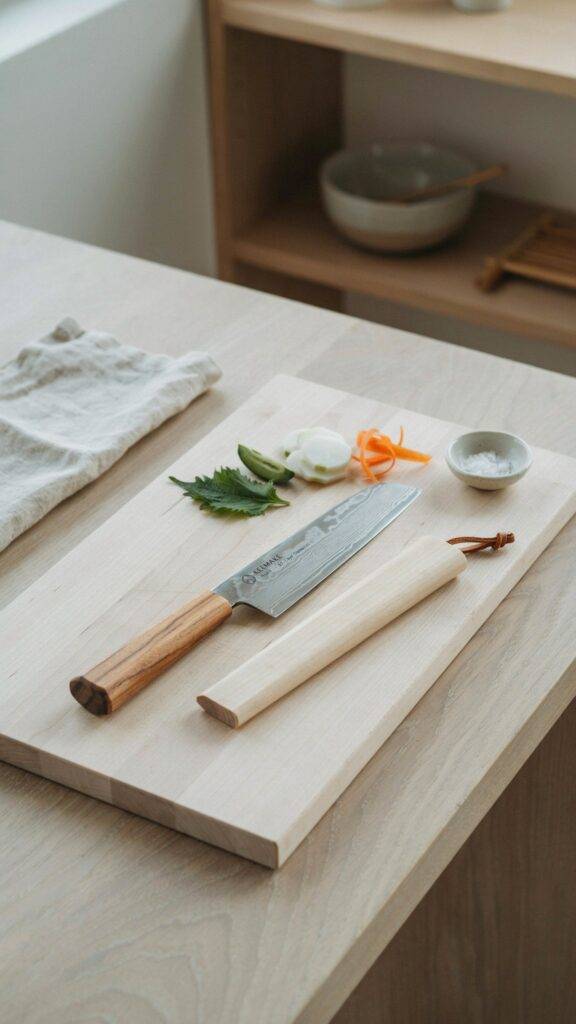
A good knife is non-negotiable in any kitchen, but a Japanese-style Nakiri knife fits the Japandi aesthetic perfectly.
This 7-inch blade is made from 67-layer Damascus steel, giving it that beautiful layered pattern that looks like art. The Pakkawood handle is both comfortable and durable, and the knife comes with an ash wood sheath for safe storage.
It’s designed specifically for chopping vegetables, so if you do a lot of prep work, this will quickly become your favorite tool. The clean, minimalist design looks right at home alongside your other Japandi pieces.
Why it’s unique: The Damascus steel pattern makes each knife one-of-a-kind, and the wooden sheath doubles as a display piece.
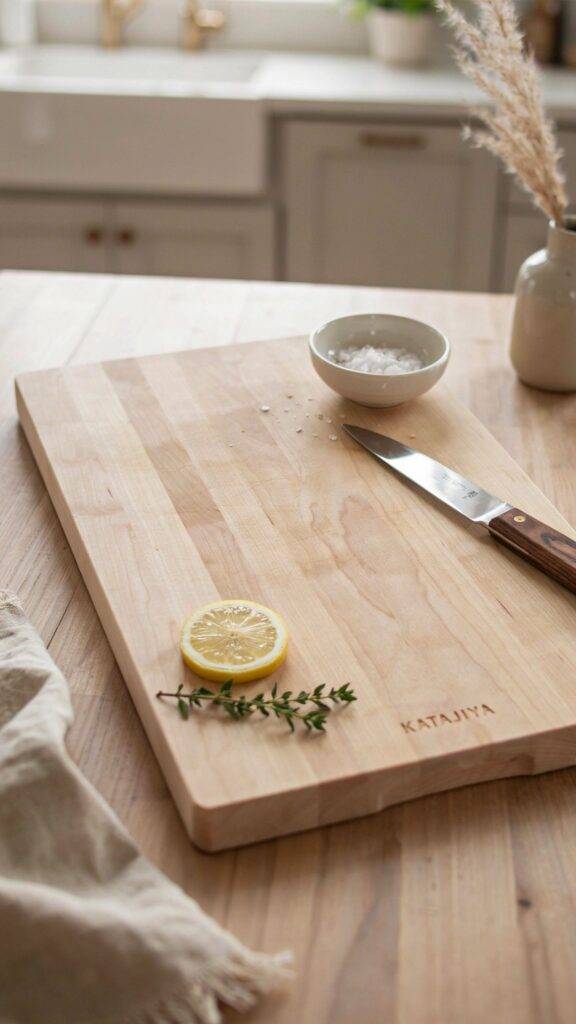
4. Katajiya Wooden Cutting Board (Ginkgo Wood)
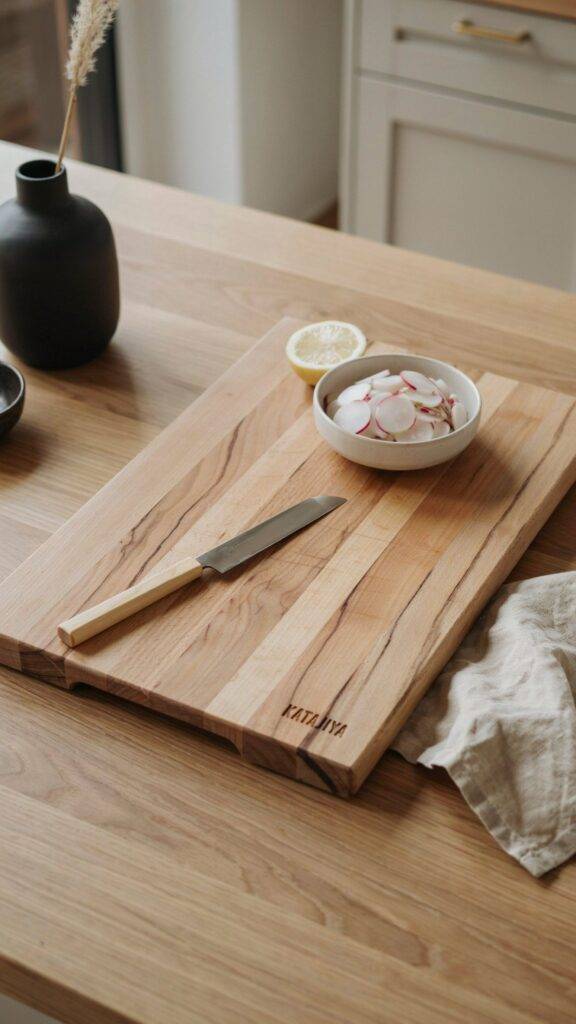
This single-plank cutting board from Japan is made from ginkgo wood, which has natural antibacterial properties and is gentle on your knife blades.
The large size (about 17.7 x 10.6 inches) gives you plenty of room for food prep, and the natural wood grain adds warmth to your countertop.
Unlike mass-produced boards, this one is crafted from a single piece of wood, so you can see the beautiful grain running all the way through. It’s a functional tool that also works as a serving board for cheese or appetizers when you have guests.
Why it’s unique: Made from Japanese ginkgo wood a material that’s harder to find outside of Japan and prized for its durability and antibacterial qualities.
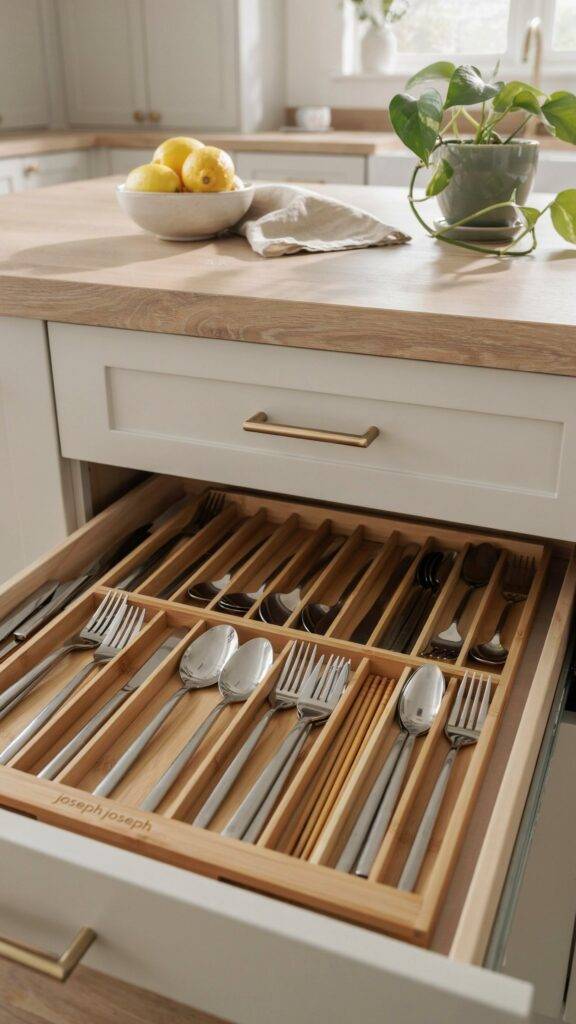
5. Joseph Joseph Bamboo Drawer Organizer
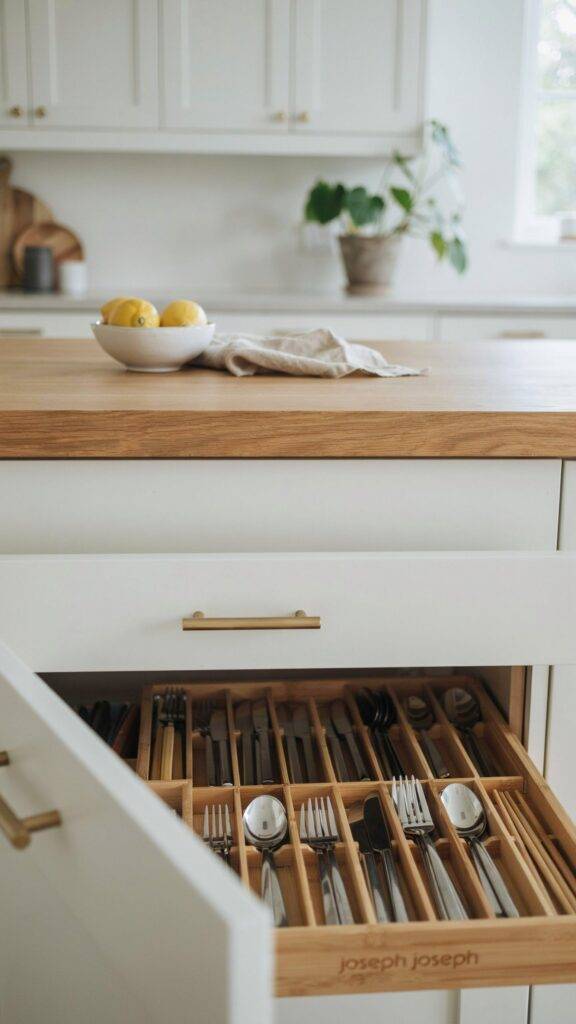
Clutter is the enemy of Japandi design, and this bamboo drawer organizer from Joseph Joseph is a smart solution.
It’s expandable, so it fits different drawer sizes, and it has individual compartments for separating cutlery. Bamboo is a sustainable material that fits perfectly with the Japandi focus on natural, eco-friendly choices.
The warm wood tone adds a nice contrast to white or light-colored drawers. It’s one of those simple upgrades that makes a surprisingly big difference in how your kitchen feel and how easy it is to find what you need.
Why it’s unique: The expandable design means it works in almost any drawer, and the bamboo material is both beautiful and planet-friendly.
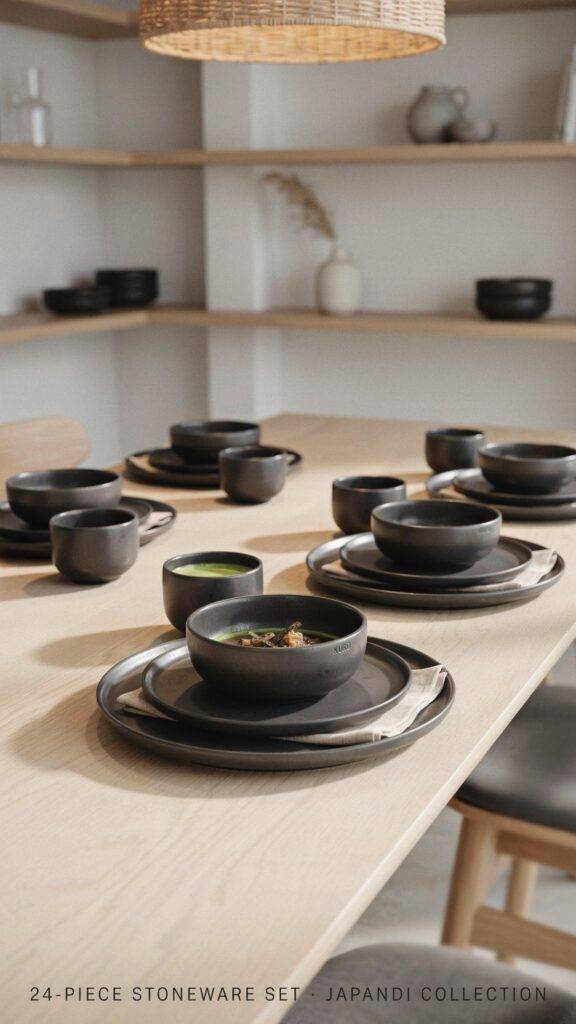
6. Modern Stoneware Dinner Set (Japandi Style)
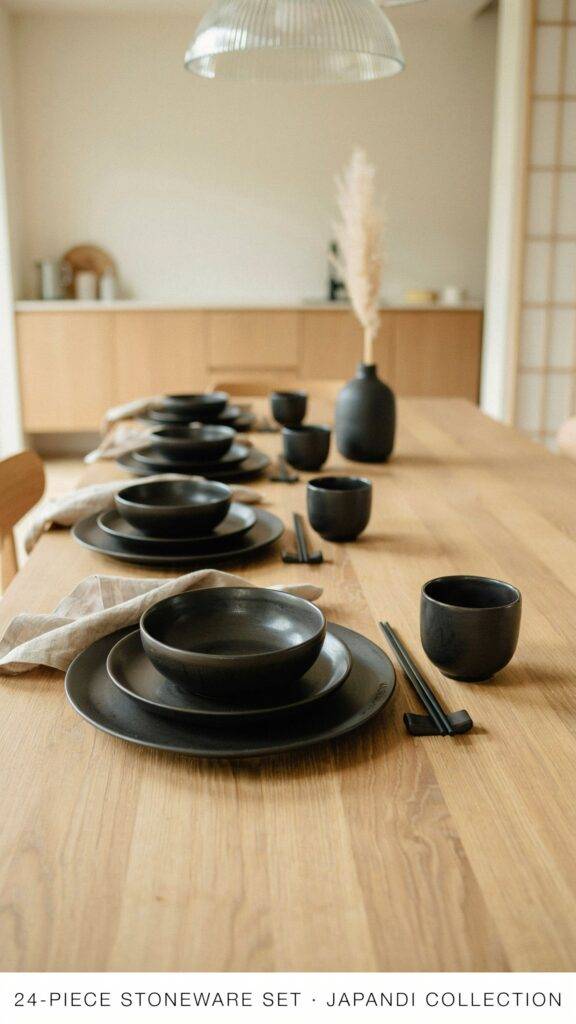
This 24-piece stoneware dinner set is designed specifically with Japandi style in mind. It includes six place settings with dinner plates, dessert plates, bowls, and cup everything you need for everyday meals or entertaining.
The black matte finish and clean lines give it a minimalist look that’s both modern and timeless. It’s made from durable stoneware that’s dishwasher and microwave safe, so it’s practical too. The simple design means it pairs well with any table linens or centerpieces you add.
Why it’s unique: The set is specifically marketed as Japandi style, so it’s curated to match the aesthetic perfectly. Plus, the black finish is a nice alternative to the usual white or beige options.
7. Expandable Bamboo Drawer Organizer (Oridom)
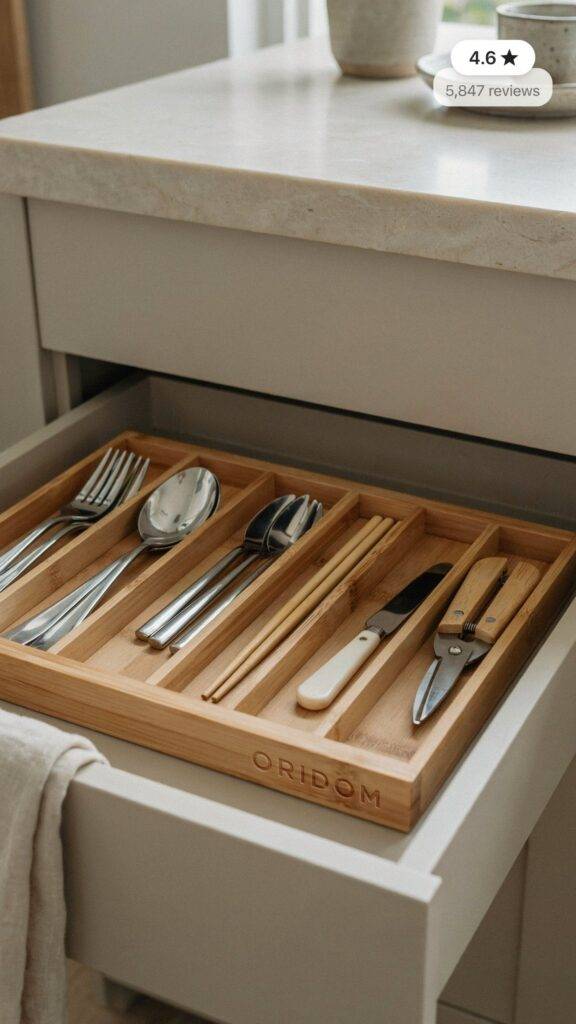
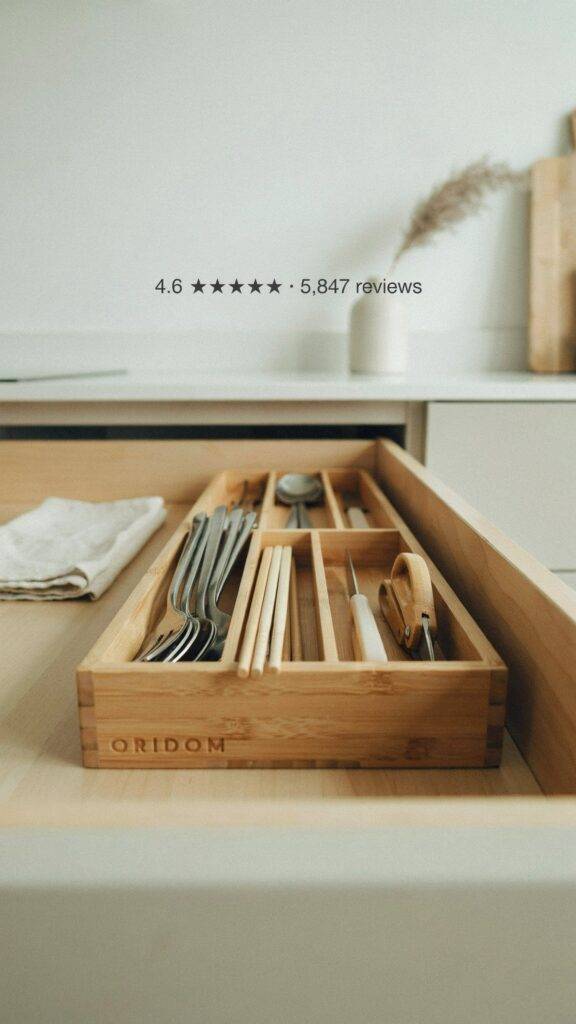
Here’s another bamboo organizer that deserves its own spot this one is specifically designed for cutlery and has an impressive 4.6-star rating with nearly 6,000 reviews.
The expandable design means it fits snugly in any drawer, and the individual compartments keep your utensils separated and easy to find.
It’s made from solid, crack-resistant bamboo that won’t warp over time. In a Japandi kitchen, organization is key, and this simple tool helps you maintain that clean, clutter-free look without any extra effort.
Why it’s unique: The high number of positive reviews makes it a trusted choice, and the expandable design is genuinely useful for different drawer sizes.
Quick Comparison Table
| Product | Key Material | Best For | Price Range |
| ELYONA Pendant Light | Rattan | Ambient lighting | $$ |
| Sandstone Vase | Ceramic | Decorative accent | $ |
| KEEMAKE Nakiri Knife | Damascus steel | Vegetable prep | $$$ |
| Katajiya Cutting Board | Ginkgo wood | Food prep & serving | $$$ |
| Joseph Joseph Organizer | Bamboo | Drawer organization | $ |
| Stoneware Dinner Set | Ceramic | Everyday dining | $$ |
| Oridom Organizer | Bamboo | Cutlery storage | $ |
Pros and Cons of Japandi Kitchen Design
Pros:
- Creates a calm, peaceful atmosphere – The neutral colors and natural materials are soothing.
- Timeless style – Japandi isn’t a passing trend. It’s a classic look that stays beautiful for years.
- Highly functional – The focus on smart storage and efficient layout makes cooking easier.
- Eco-friendly – Natural materials and quality craftsmanship mean less waste.
Cons:
- Can feel too minimalist – If you love bold colors and lots of decor, Japandi might feel sparse.
- Requires discipline – You need to keep surfaces clear and be intentional about what you display.
- Natural materials need care – Wood and stone require maintenance to stay beautiful.
- Can be expensive – Quality natural materials and custom cabinetry cost more than mass-produced options.
Tips for Creating Your Japandi Kitchen
- Start with a calm base – Choose soft whites, greiges, or warm beiges for your walls and large surfaces.
- Use wood deliberately – Pick one or two wood tones and stick with them throughout the space.
- Plan storage carefully – Think about where everything will go before you start building.
- Use open elements sparingly – A little open shelving is good; too much creates visual noise.
- Add texture – Mix smooth surfaces with rough ones like linen, raw wood, or stone.
- Keep counters clear – Only keep out items you use daily or that are truly beautiful.
Mistakes to Avoid
- Using stark white – Japandi warmth comes from off-whites, beiges, and greiges, not pure white.
- Over-cluttering shelves – Open shelving should display a few curated items, not everything you own.
- Choosing the wrong wood – Dark, heavy woods feel too traditional. Stick with light oaks and ashes.
- Skipping the lighting plan – Good lighting is essential. Don’t leave it to the end.
- Forgetting about texture – Japandi needs variety. Mix smooth cabinets with textured elements.
FAQs
What’s the difference between Japandi and Scandinavian style?
Scandinavian design is light, airy, and functional. Japandi adds the minimalist, thoughtful elements of Japanese design more intentional, slightly warmer, and with a focus on wabi-sabi.
Can I do Japandi in a small kitchen?
Absolutely. Japandi is great for small spaces because it prioritizes efficiency and calm. Light colors make the space feel bigger, and smart storage keeps counters clear.
What colors work best in a Japandi kitchen?
Soft whites, muted greys, beiges, warm wood tones, and earthy accents like sage green or terracotta.
Do I need expensive materials?
Not necessarily. You can achieve the look with quality plywood, laminate that mimics wood, and affordable ceramics. Focus on the overall feel rather than specific brands.
How do I keep a Japandi kitchen from feeling cold?
Add texture. Use linen textiles, rough ceramics, and plants. Warm lighting also makes a huge difference.
Final Thoughts
A Japandi kitchen isn’t just about how it look it’s about how it makes you feel. It’s a space where you can cook, gather, and simply be without feeling overwhelmed by clutter or noise.
The beauty of this style is that you don’t have to do everything at once. Start with one or two change maybe some open shelving, a fresh coat of warm neutral paint, or swapping out your hardware for something more minimal. See how it feels, and builds from there.
Remember, Japandi is about intention, not perfection. It’s about choosing quality over quantity, and calm over chaos. However you approach it, your kitchen can become a more peaceful place to be.
Related Post: