
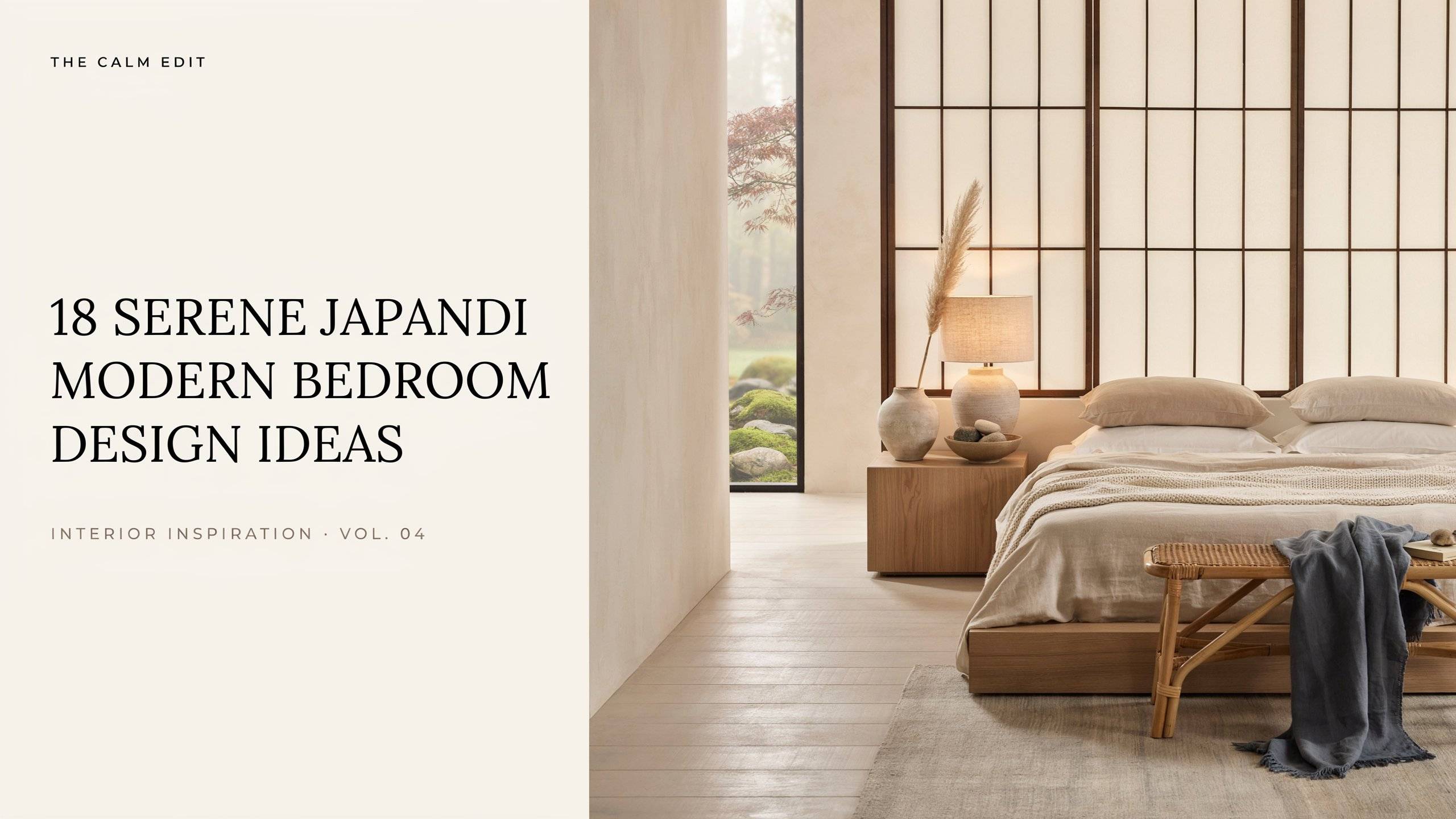
Japandi style is a blend of Japanese minimalism and Scandinavian warmth. It takes the clean lines and intentional simplicity from Japan and pairs them with the cozy, functional comfort from Nordic design. The result is a bedroom that feels calm, grounded, and genuinely restful.
This style matters because most bedrooms today are visually noisy. Too many colors, too much furniture, too many things competing for your attention. Japandi cuts through that. It’s not about living with nothing it’s about living with things that actually matter. A Japandi bedroom helps you sleep better because your mind isn’t racing through clutter. It’s a space that works for you, not against you.
The good news, You don’t need a huge budget or a custom renovation to get this look. Thoughtful choices in color, materials, and layout can transform any bedroom into a Japandi-inspired retreat. Here are 18 ideas to get you started.
18 Japandi Modern Bedroom Design Ideas
1. Start with a Neutral, Earthy Color Palette
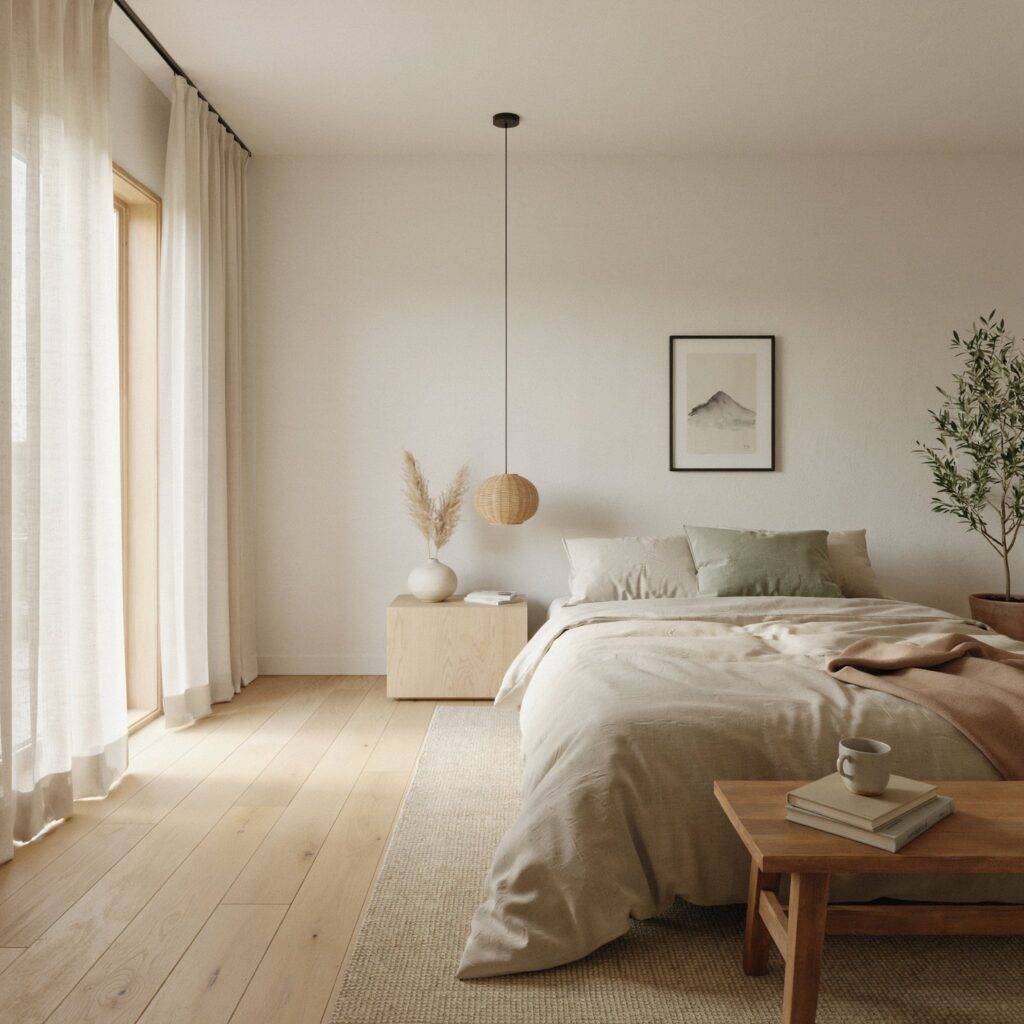
The foundation of any Japandi bedroom is the color palette. Think soft whites, warm beiges, muted grays, and gentle taupes. These colors act as a calm backdrop that doesn’t compete for your attention.
From there, you can bring in deeper earth tones warm browns, soft tans, muted greens to add depth and warmth. The goal is a space that feels grounded, not flat.
Avoid bright or saturated colors. Save those for accent pieces if you really want them. A simple rule: if the color feels like something you’d find in nature, it probably works. If it feels synthetic or loud, leave it out.
2. Choose a Low-Profile Platform Bed
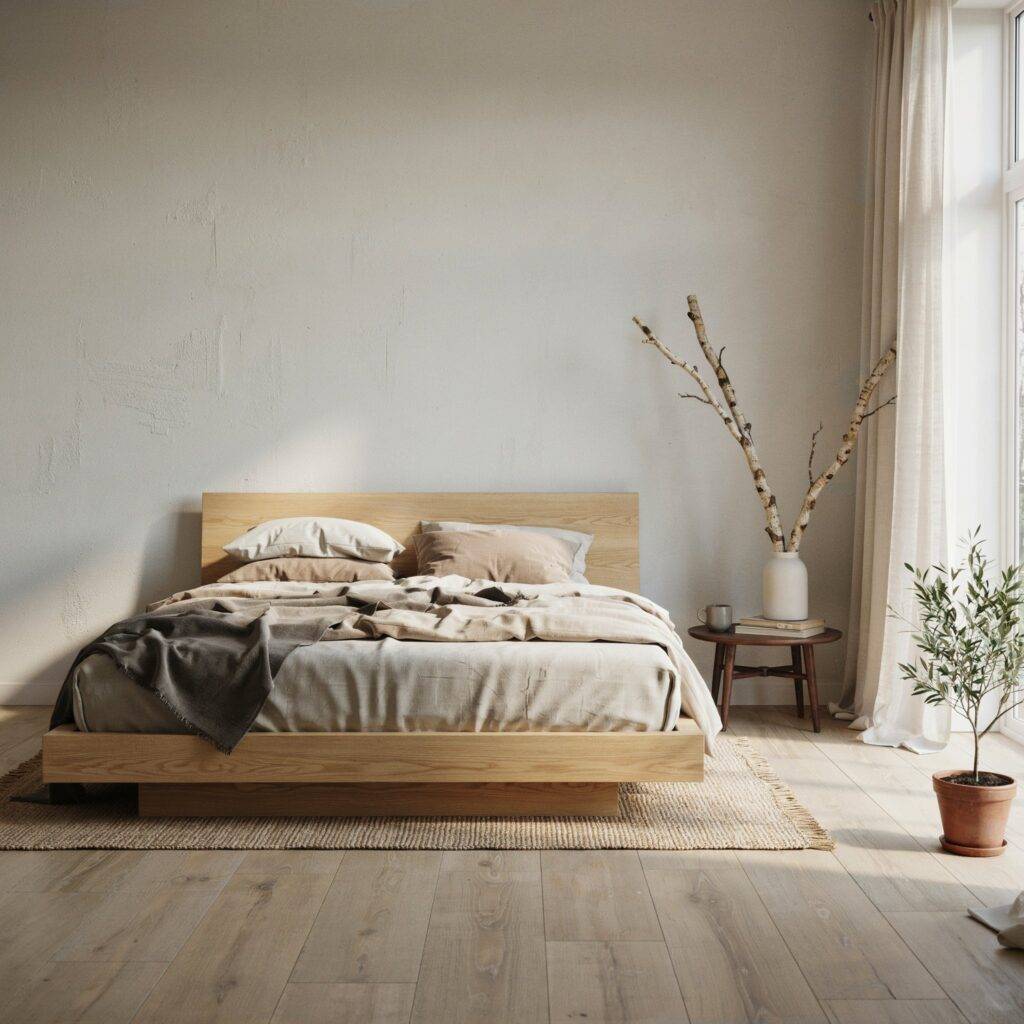
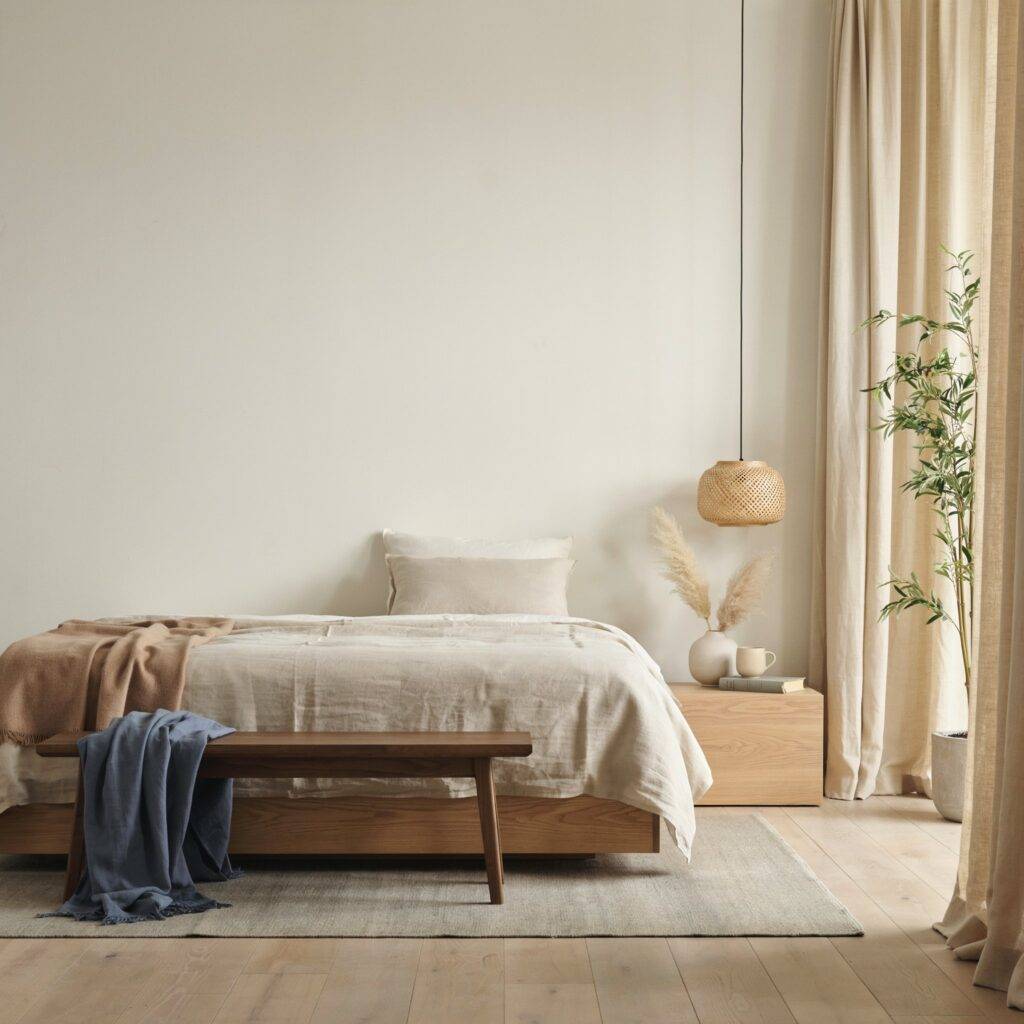
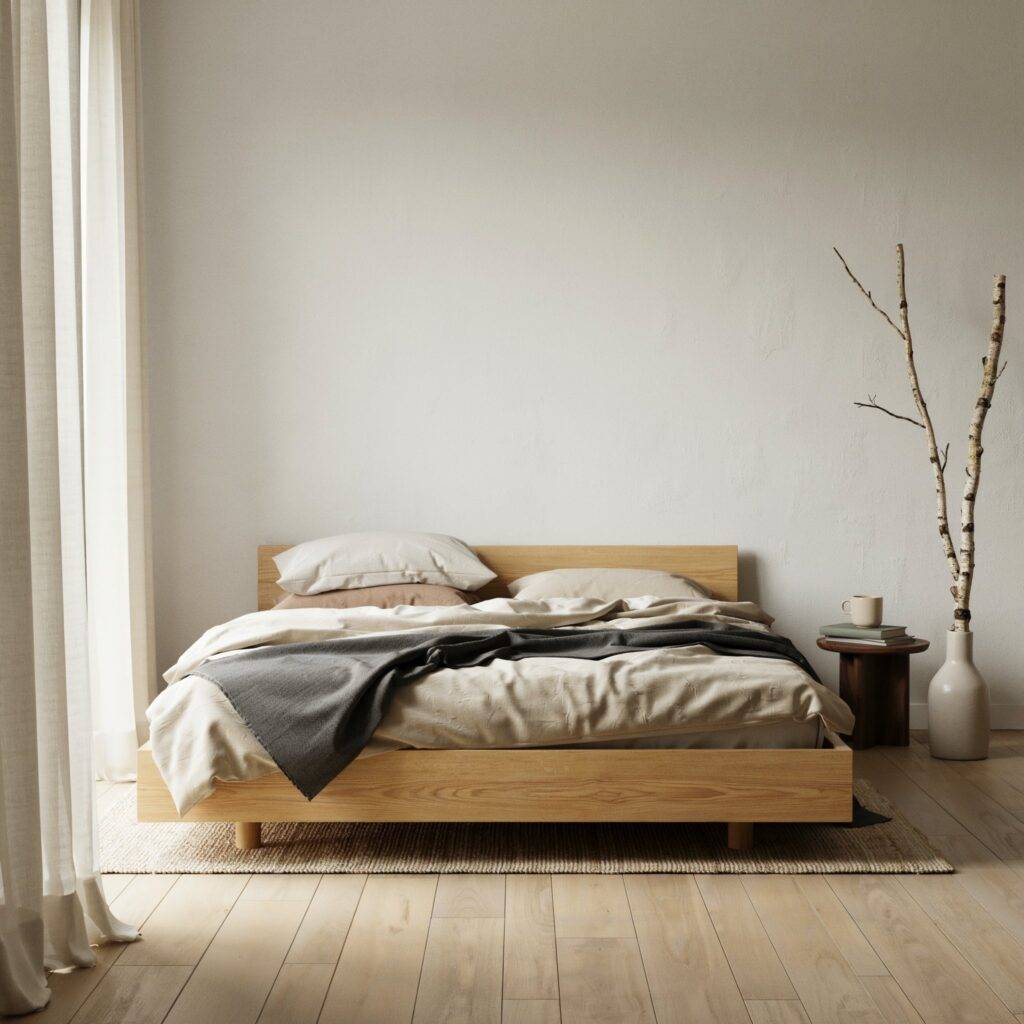
Japandi beds sit close to the floor. This low profile keeps the room feeling grounded and calm. A platform bed in natural wood oak, ash, or walnut serves as the anchor of the room.
The lower height makes the ceiling feel higher and the space more open, which is especially helpful in smaller rooms. You don’t need to buy an expensive custom frame. Look for simple designs with clean lines and visible wood grain.
The bed should feel like it belongs to the earth, not like it’s floating above it. Pair it with a simple headboard if you want something in wood or upholstered in a neutral fabric works well.
3. Layer Natural Textures
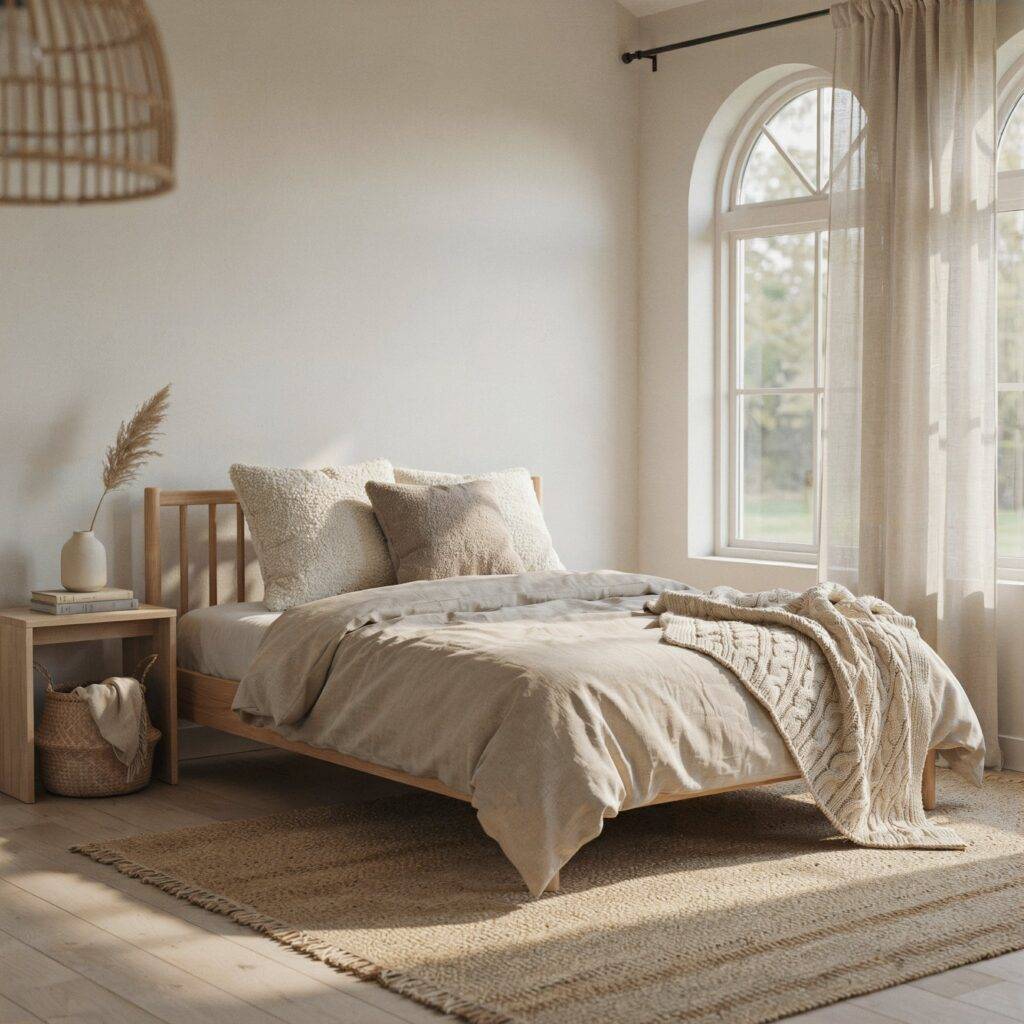
Without patterns or bright colors, texture becomes your main source of visual interest. Layer different materials to keep the room from feeling flat. Start with linen bedding in oatmeal or warm white.
Add a chunky knit throw at the foot of the bed. Use bouclé or wool accent pillows. Bring in a jute or wool rug underfoot.
The way natural light hits these different fabrics creates a subtle, cozy richness that feels high-end without any effort. The key is variety smooth wood next to nubby wool, soft linen against rough jute. Let the materials do the talking.
4. Keep Surfaces Clear and Intentional
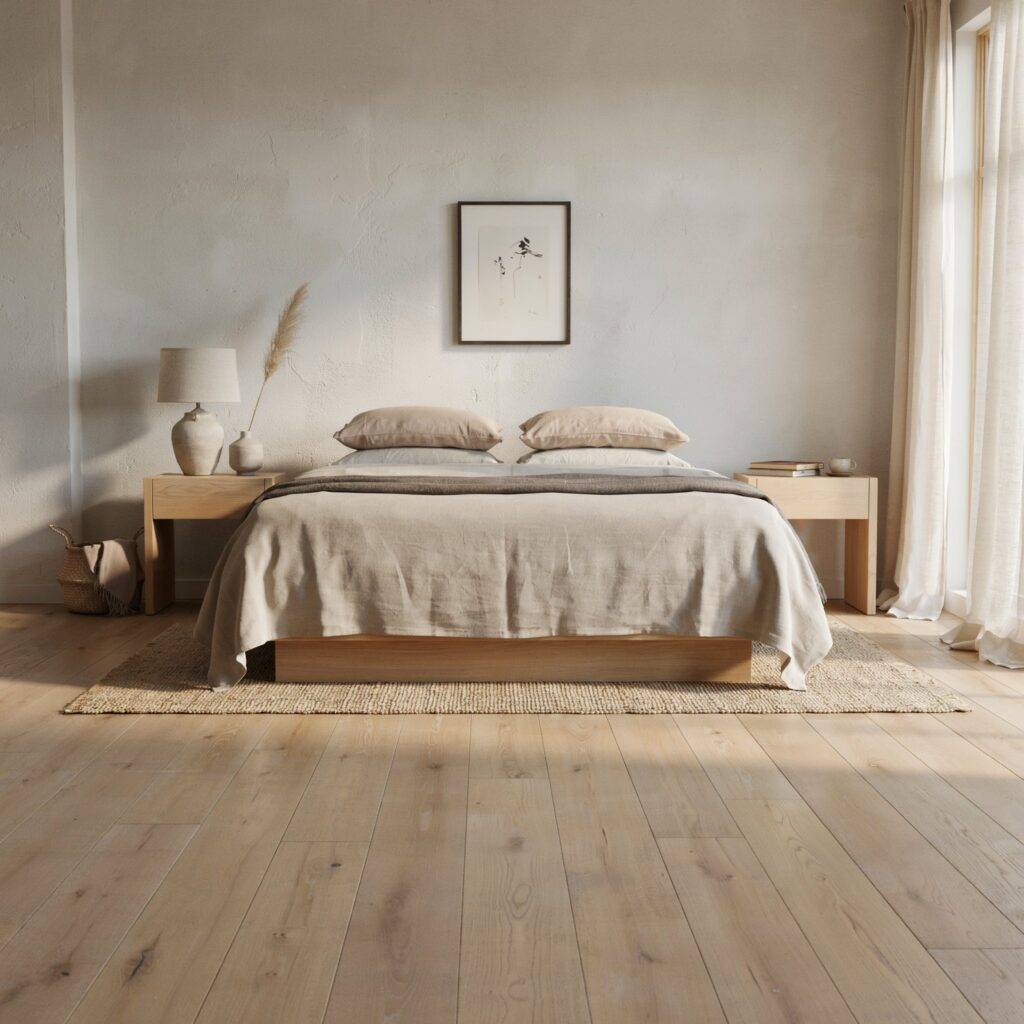
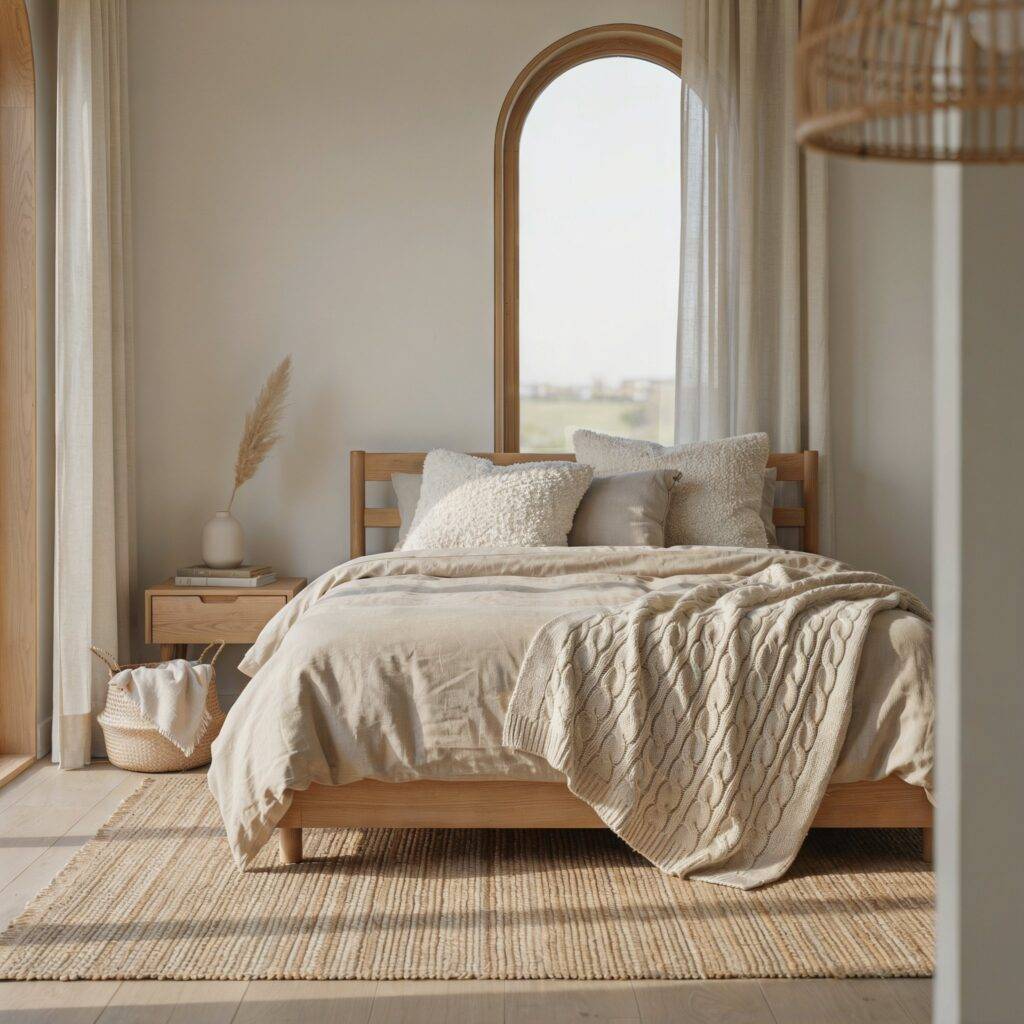
Japandi is not about filling every corner. It’s about leaving space to breathe. A quiet wall or bare floor can be just as restful as a beautifully decorated one.
Keep nightstands simple a single lamp, maybe a small ceramic vase. Avoid piling books, gadgets, or random objects on surfaces. This isn’t about being a perfectionist; it’s about reducing visual noise so your mind can settle.
When everything has a place and nothing screams for attention, the whole room feels more peaceful. Fewer pieces, better quality. That’s the Japandi way.
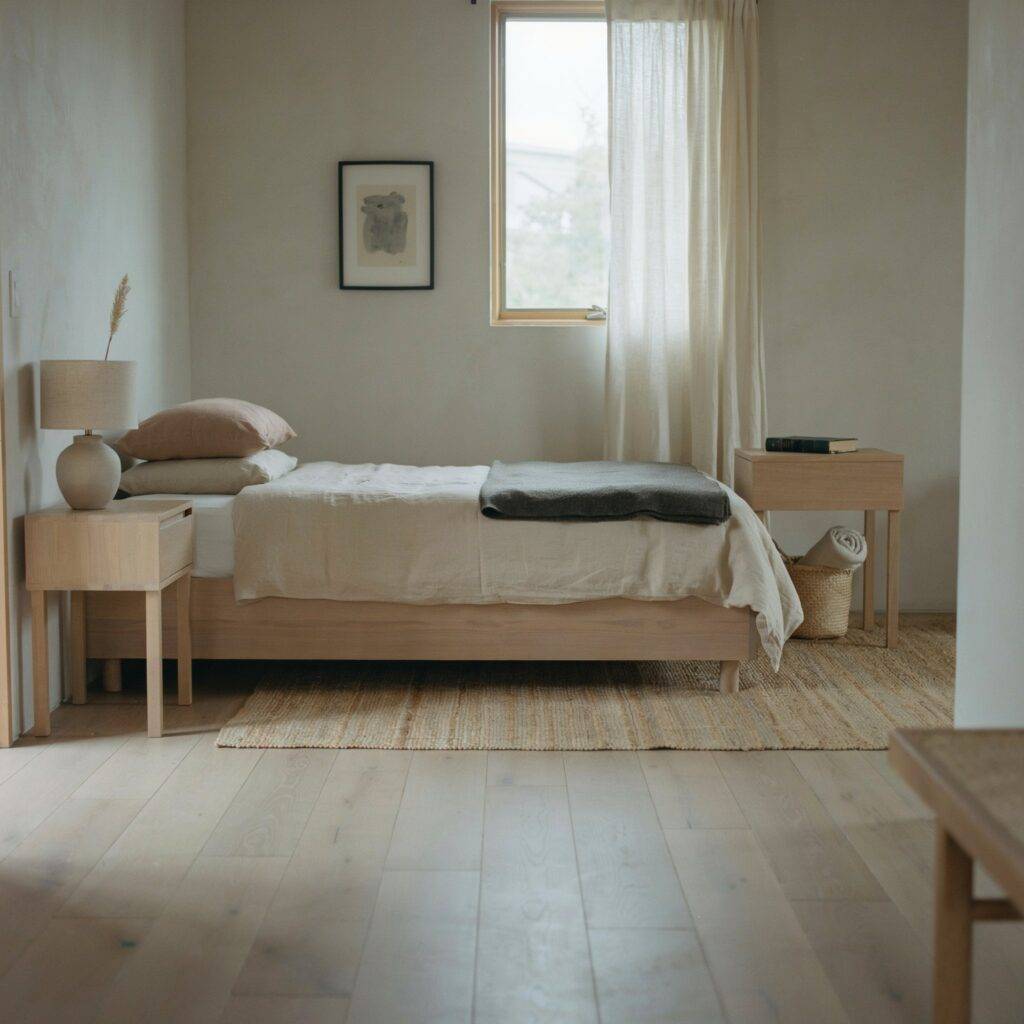
5. Add a Single Potted Plant
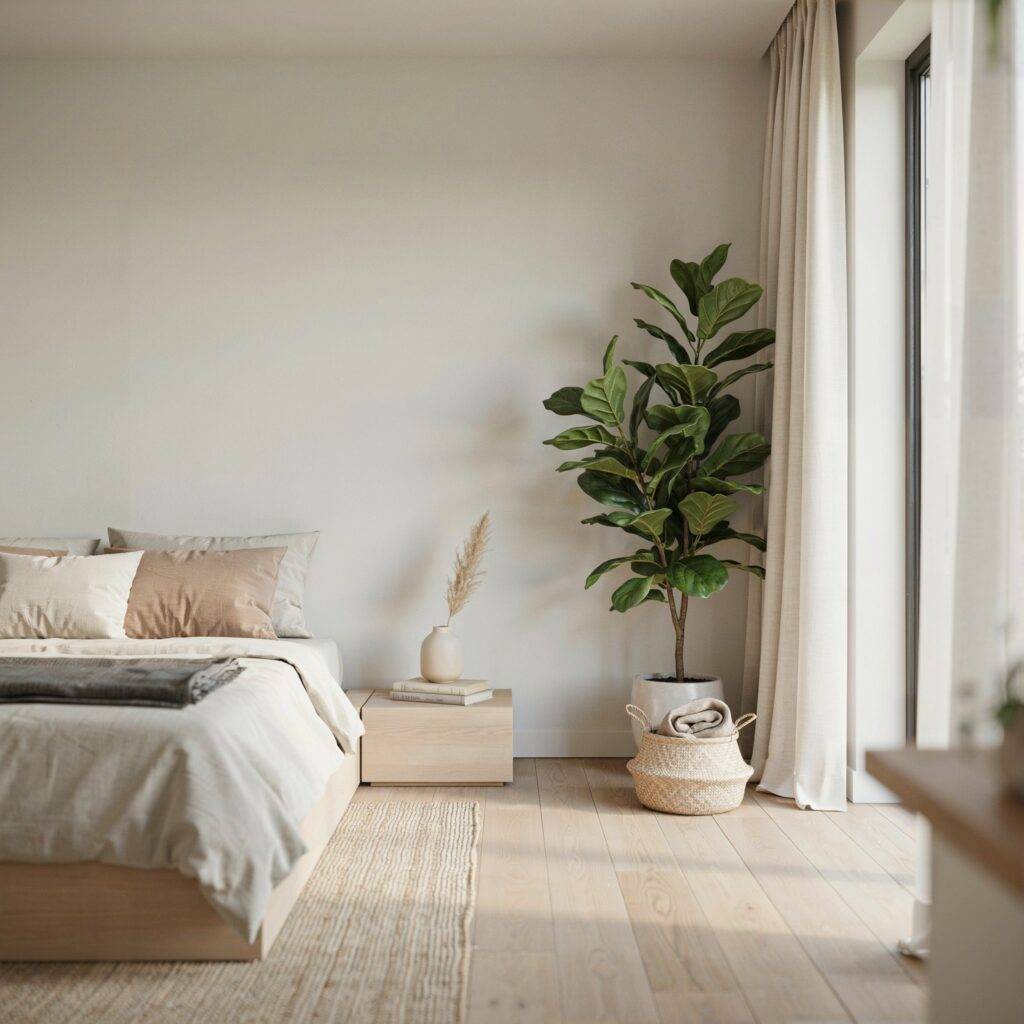
Greenery brings life and softness to a Japandi bedroom. One well-chosen plant in a simple ceramic or woven basket pot can transform the feel of the room.
Choose something low-maintenance like a snake plant, a fiddle leaf fig, or a simple floor-standing plant in the corner. The plant adds texture, color, and a connection to nature all key principles of Japandi design.
Don’t overcrowd the space with multiple plants. One statement plant is more effective than several small ones competing for attention. Place it where it gets natural light and where it can be seen but doesn’t block pathways.
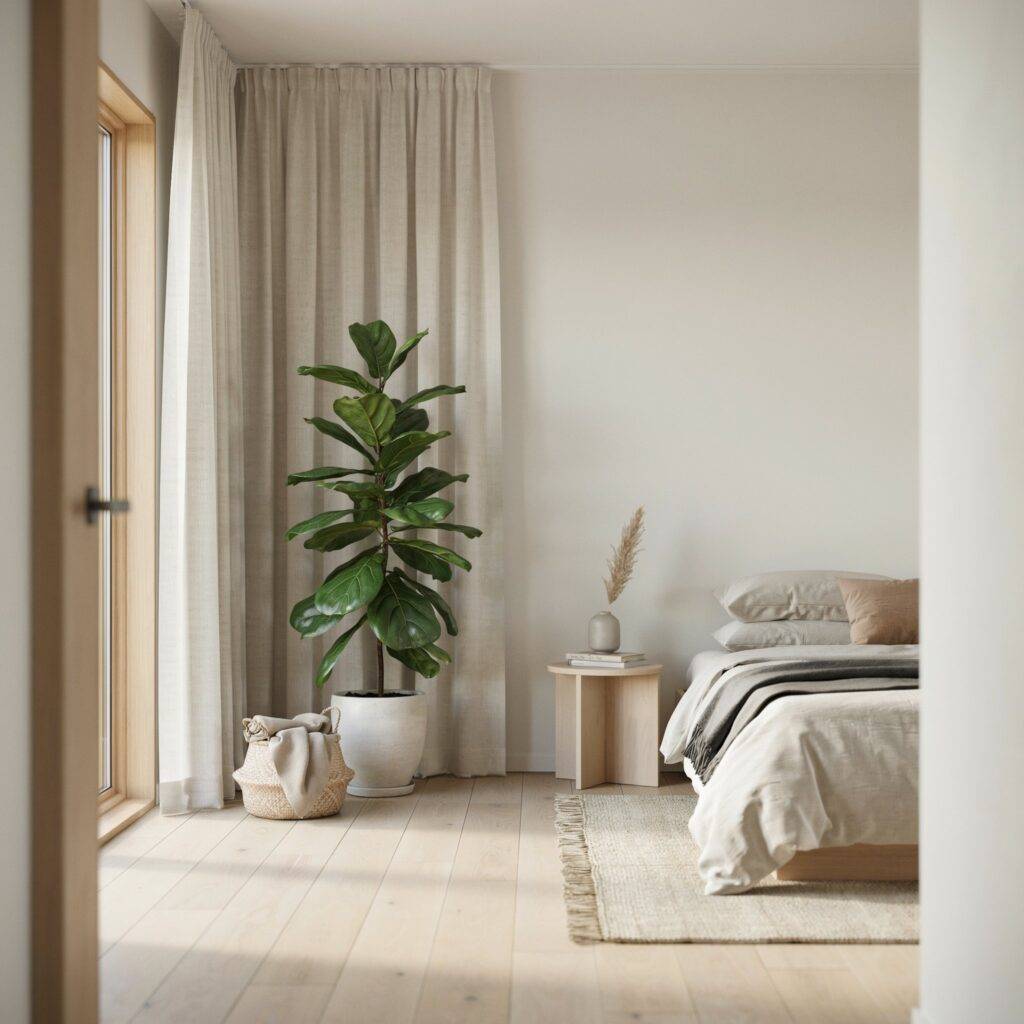
6. Use Soft, Warm Lighting
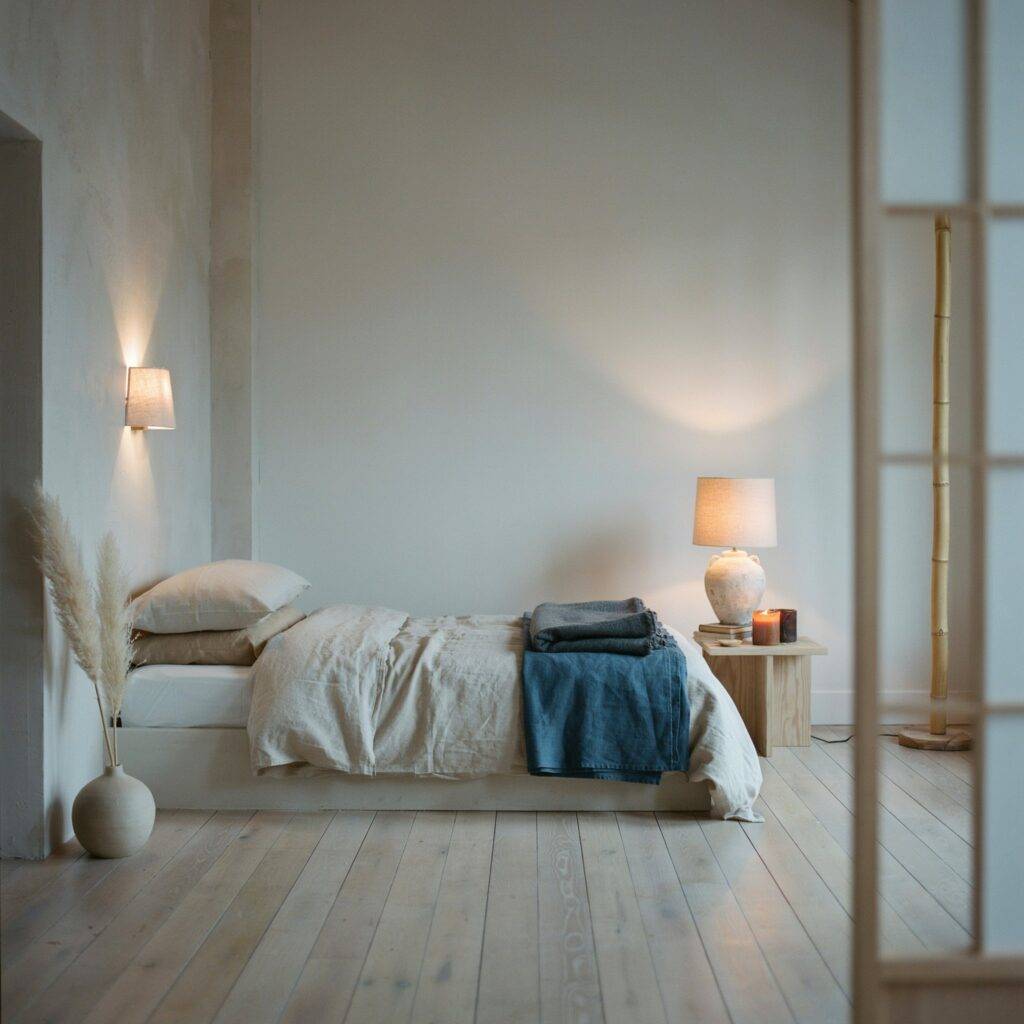
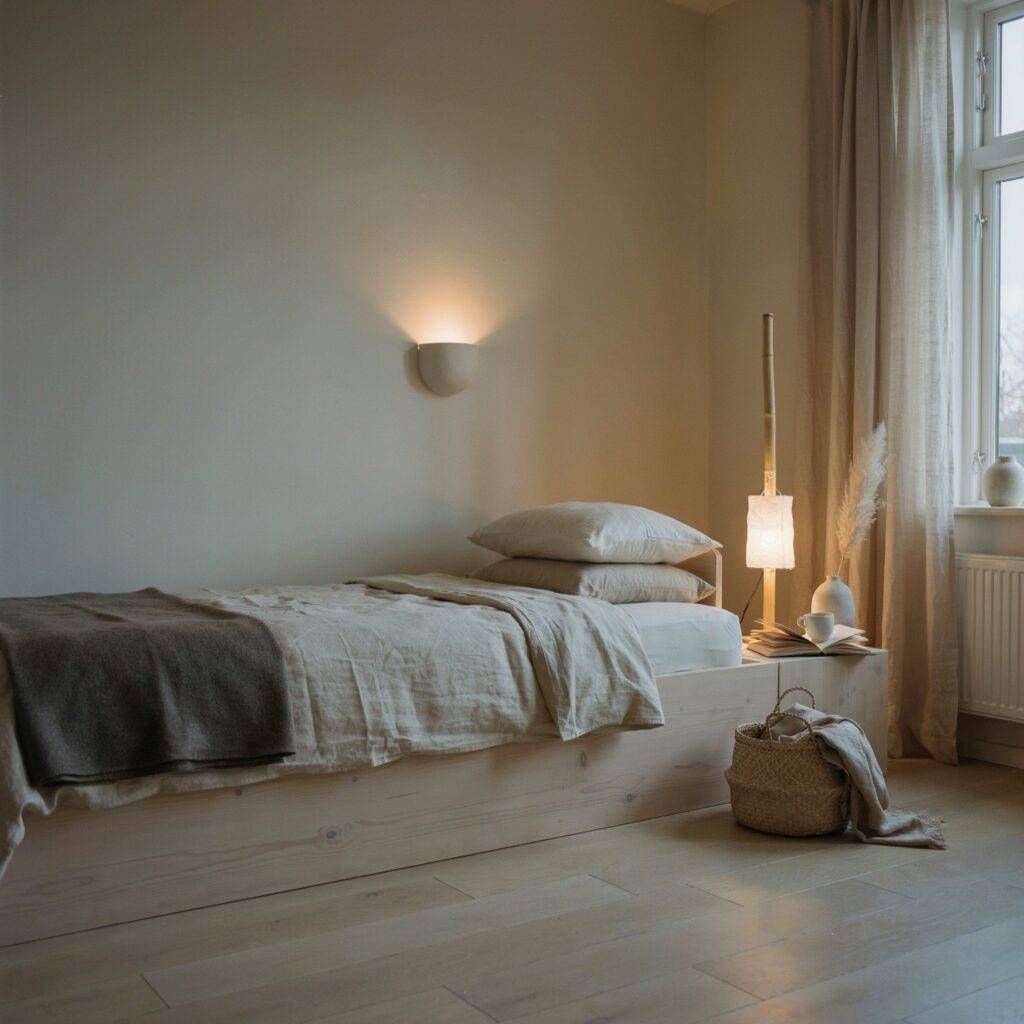
Lighting is one of the most important elements in a Japandi bedroom. Harsh overhead lights have no place here. Instead, opt for soft, warm lighting that creates a cozy, relaxed atmosphere. Paper lamps, bamboo floor lamps, and lantern-style pendants all work beautifully.
Wall sconces that cast light upward or sideways create a gentle glow without direct beams. Use warm white bulbs (around 2700K) to keep the light inviting rather than clinical. Dimmer switches are a great investment they let you adjust the light depending on your mood and the time of day.
7. Choose Streamlined, Functional Furniture
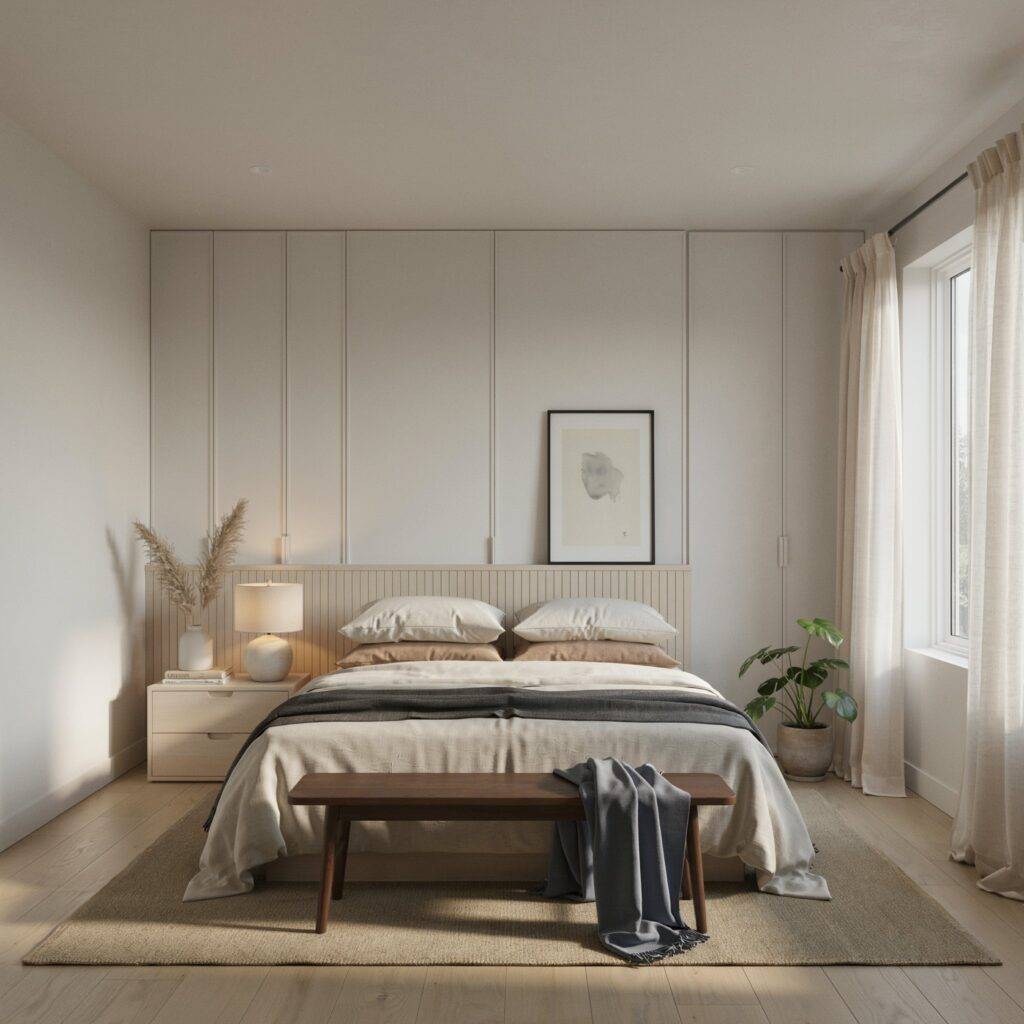
Every piece of furniture in a Japandi bedroom should earn its place. That means clean lines, simple forms, and clear purpose.
Avoid ornate details, busy patterns, or anything that feels fussy. A simple wooden nightstand, a streamlined wardrobe with hidden storage, a low bench at the foot of the bed these are the kinds of pieces that work well.
Fitted wardrobes help hide clutter and keep the room looking clean. The furniture should feel like it belongs together without being matchy-matchy. Mix light and dark woods for contrast, but keep the overall look cohesive and uncluttered.
8. Add Contrast with Darker Accents
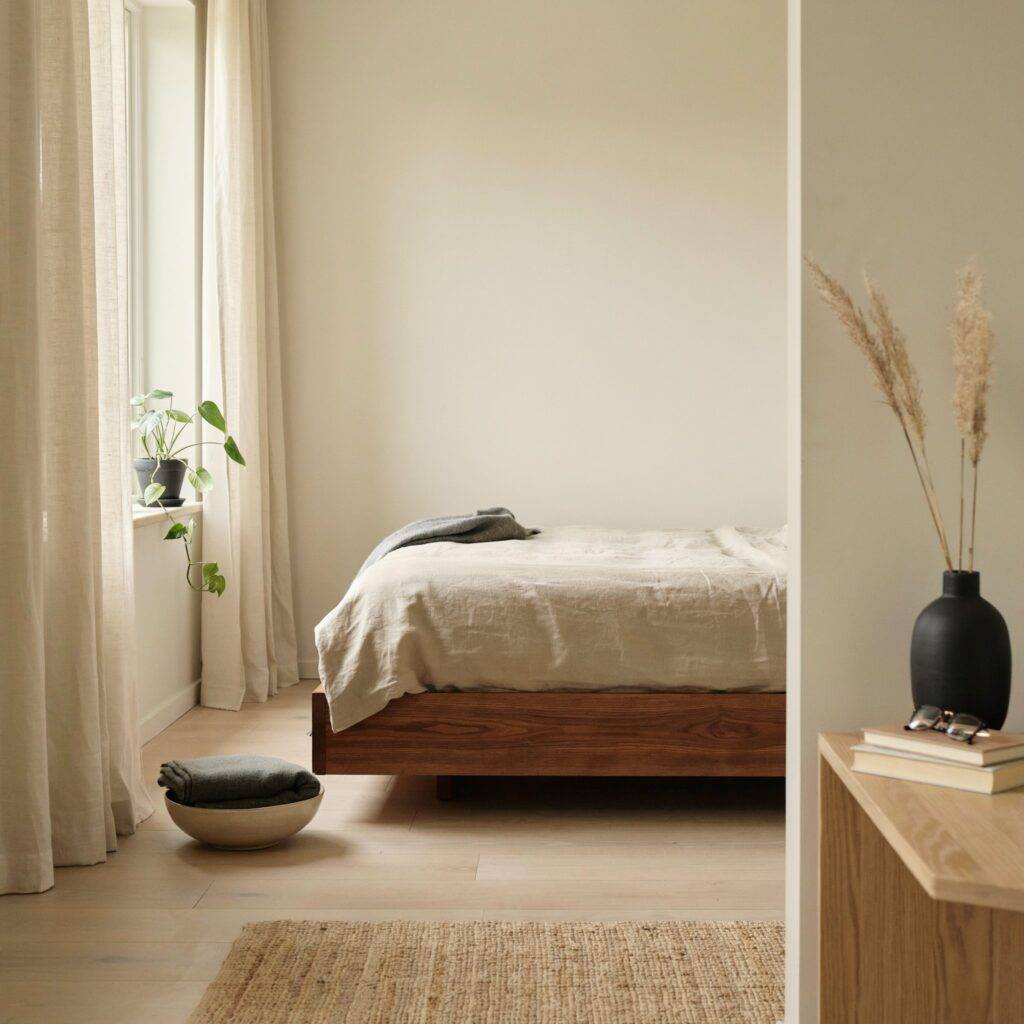
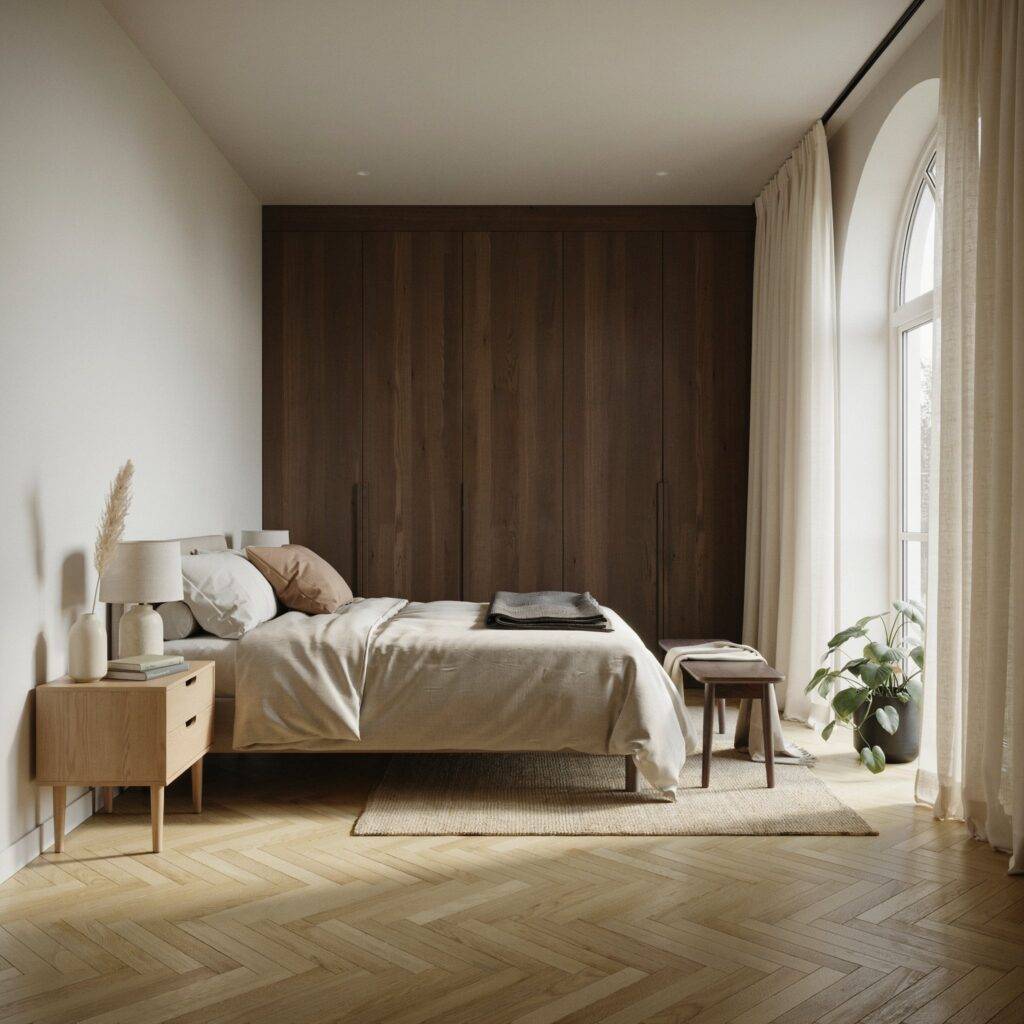
While the base palette is neutral, Japandi design often includes darker accents for contrast. Think charcoal, soft black, or deep walnut.
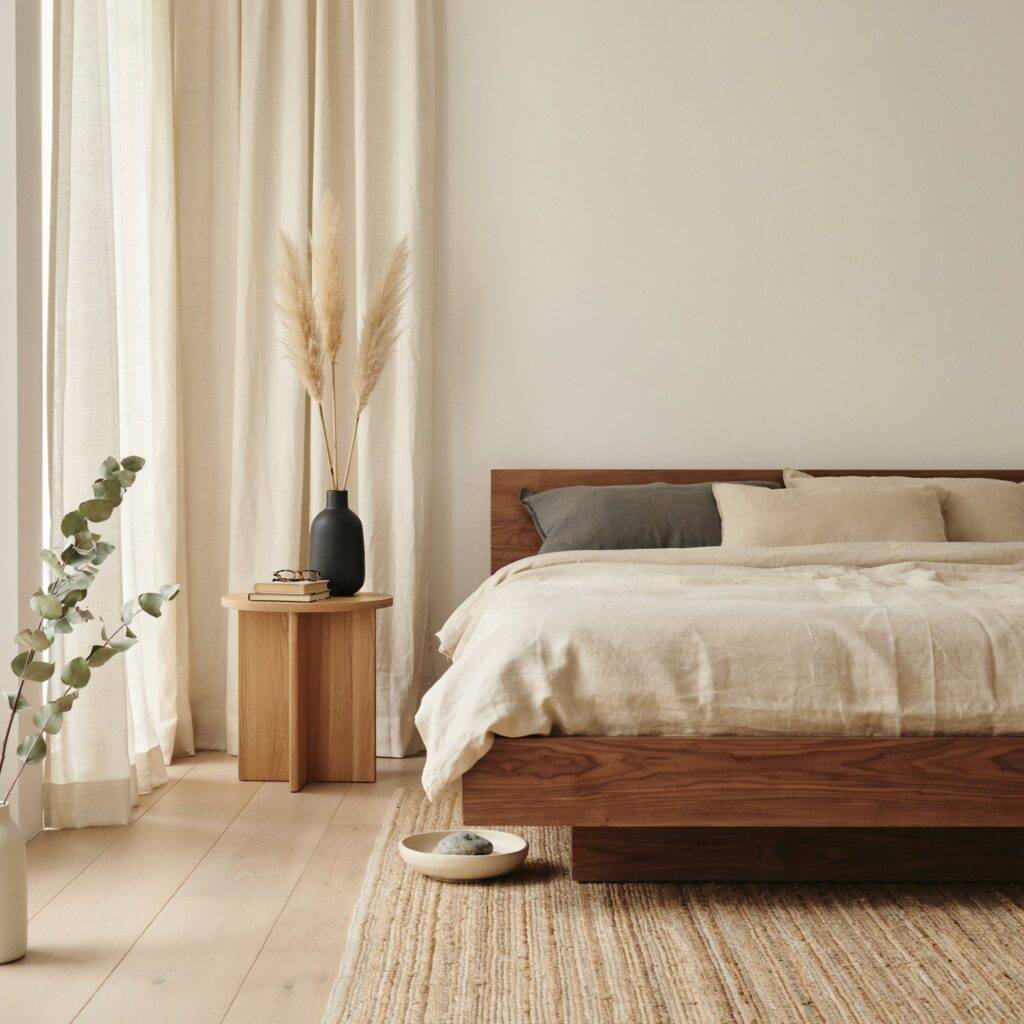
A dark wood bed frame, a black ceramic vase, or a charcoal throw pillow can add depth without disrupting the calm. These darker elements ground the room and prevent it from feeling washed out.
Use them sparingly a little contrast goes a long way. The goal is balance, not drama. Too much dark can make the room feel heavy. Just enough creates a sense of richness and sophistication.
9. Incorporate Handcrafted or Imperfect Pieces
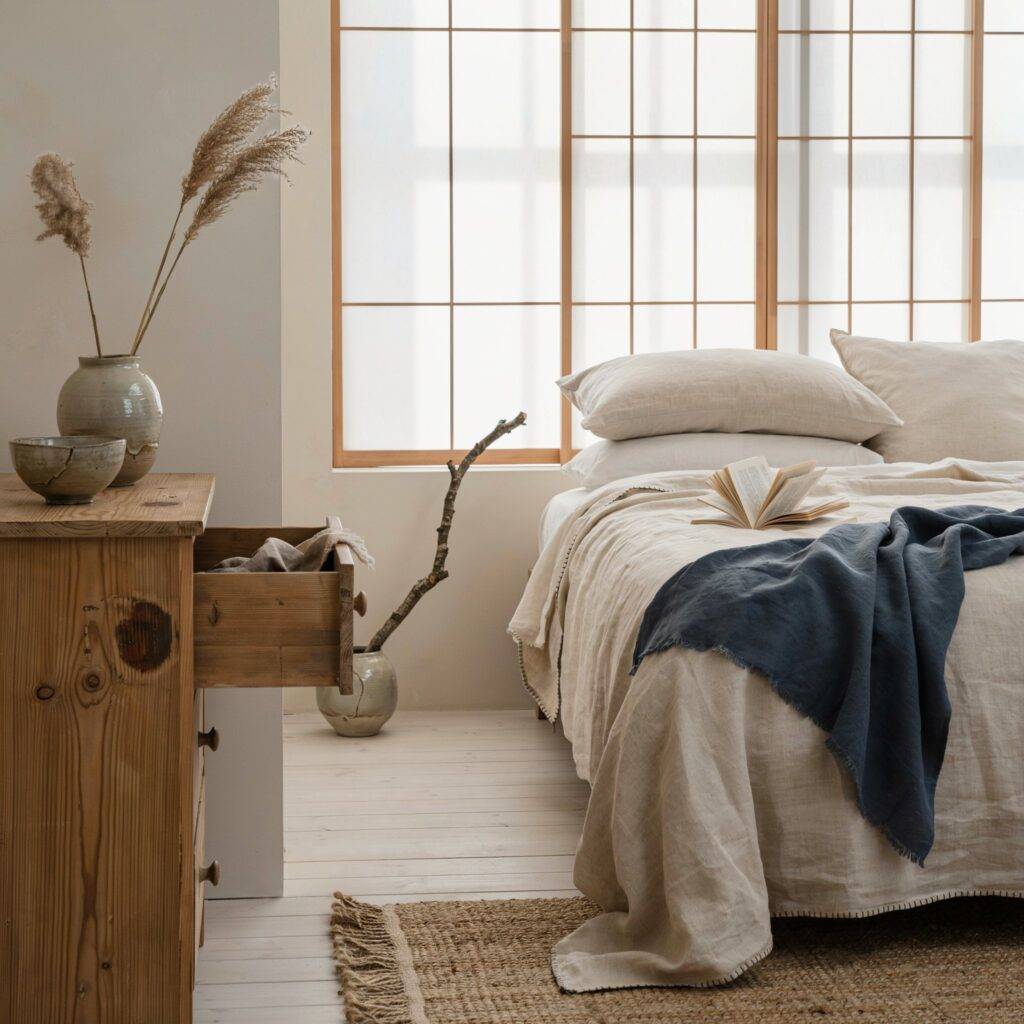
Wabi-sabi the Japanese philosophy of finding beauty in imperfection is central to Japandi design. Handmade ceramics, slightly uneven bowls, furniture with visible wood grain, textiles that soften with age these add character and warmth.
Don’t aim for perfection. Aim for authenticity. A hand-thrown ceramic vase with slight variations in shape is more interesting than a perfectly symmetrical factory-made one.
Worn timbers and natural patina are features, not flaws. This approach makes the room feel lived-in and personal, not like a showroom.
10. Use Fabric to Soften Hard Edges
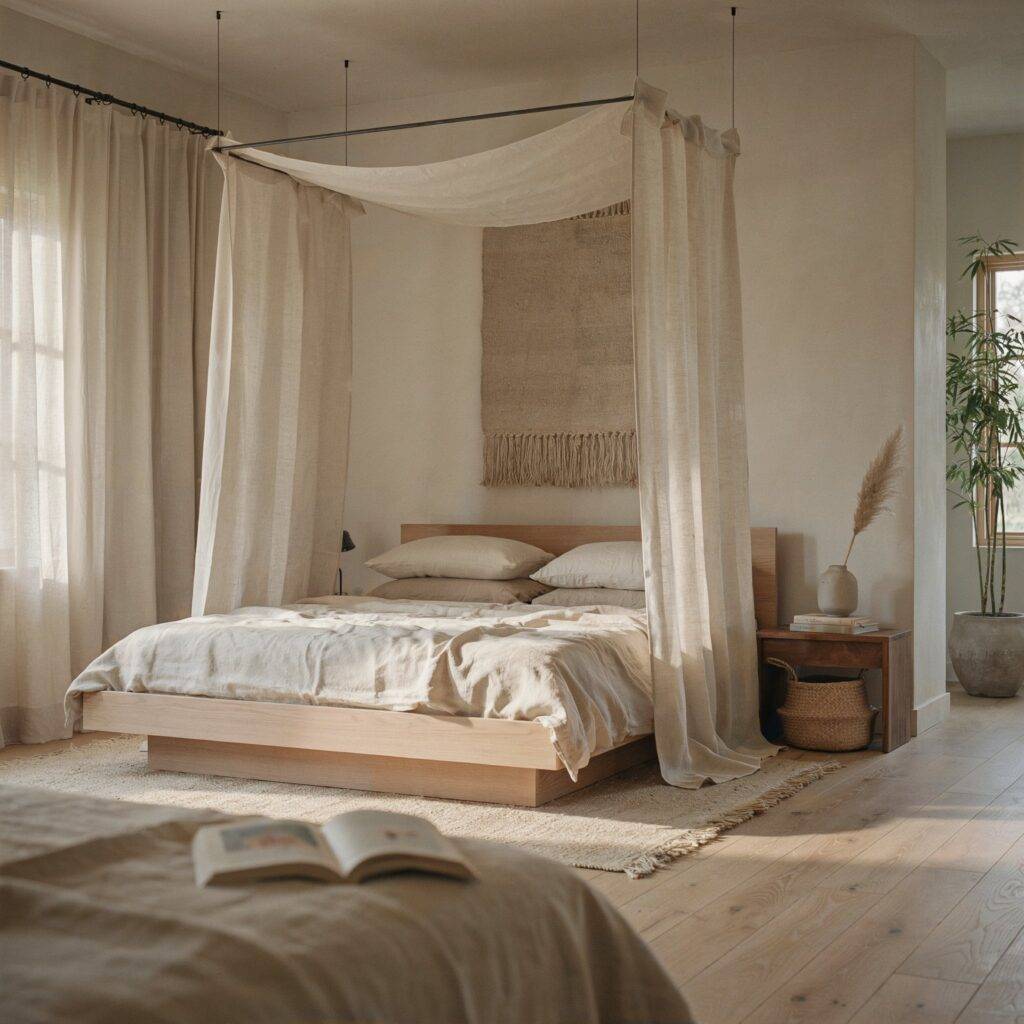
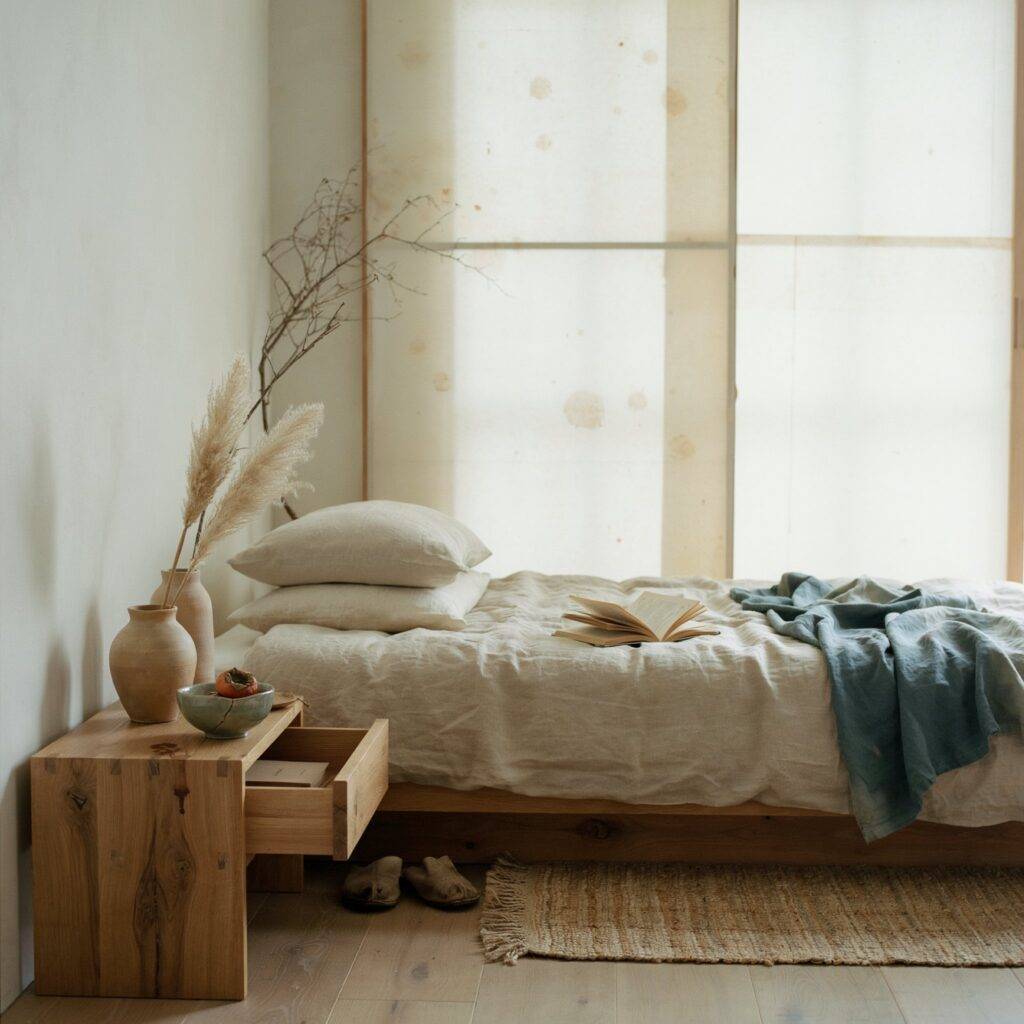
A Japandi room can feel too sharp if everything is wood and angles. Adding fabric softens the look and adds warmth.
Consider a linen canopy over the bed, a textured wall hanging, or long curtains in a natural tone. These soft elements balance the clean lines of the furniture and make the room feel more inviting. Keep fabrics in neutral or muted colors nothing loud or heavily patterned.
The texture is what matters, not the print. Think linen, cotton, wool, and bamboo natural fibers that feel good to touch.
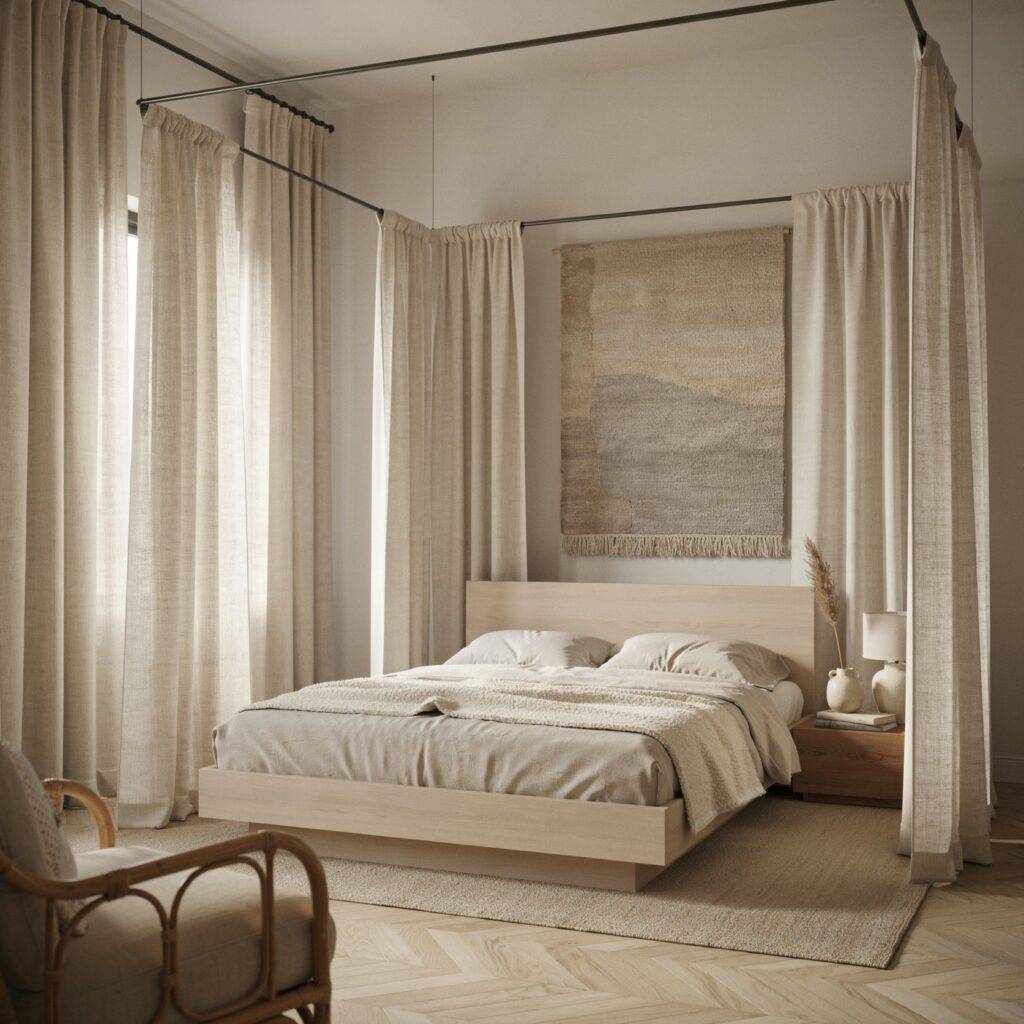
11. Choose Calm, Centered Artwork
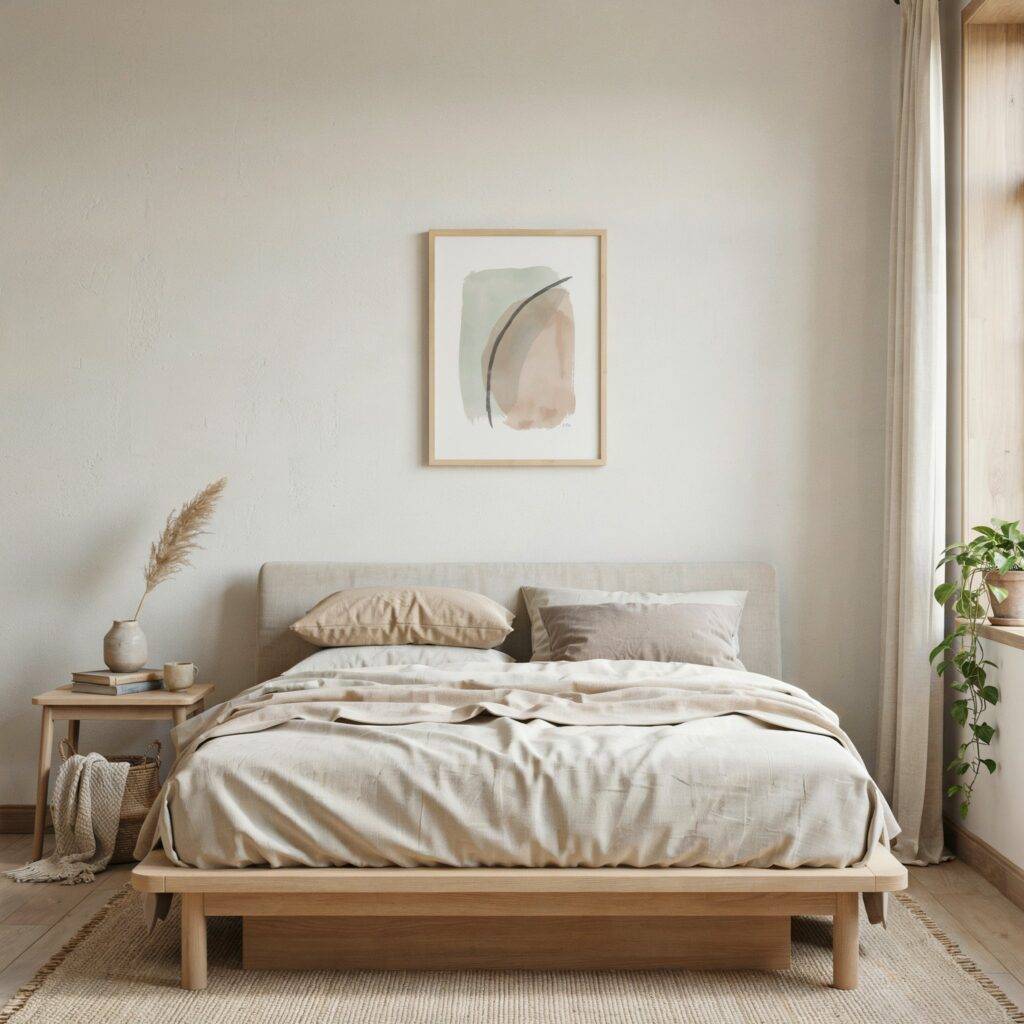
Art in a Japandi bedroom should add stillness, not noise. Choose pieces with muted tones, natural materials, or soft shapes.
Paper prints, linen canvases, simple wood frames these all work well. Hang artwork low and keep the spacing clean. Avoid busy patterns, bright colors, or anything that feels chaotic.
The art should complement the room, not compete with it. One or two well-chosen pieces are more effective than a gallery wall. Let the art breathe. Give it space.
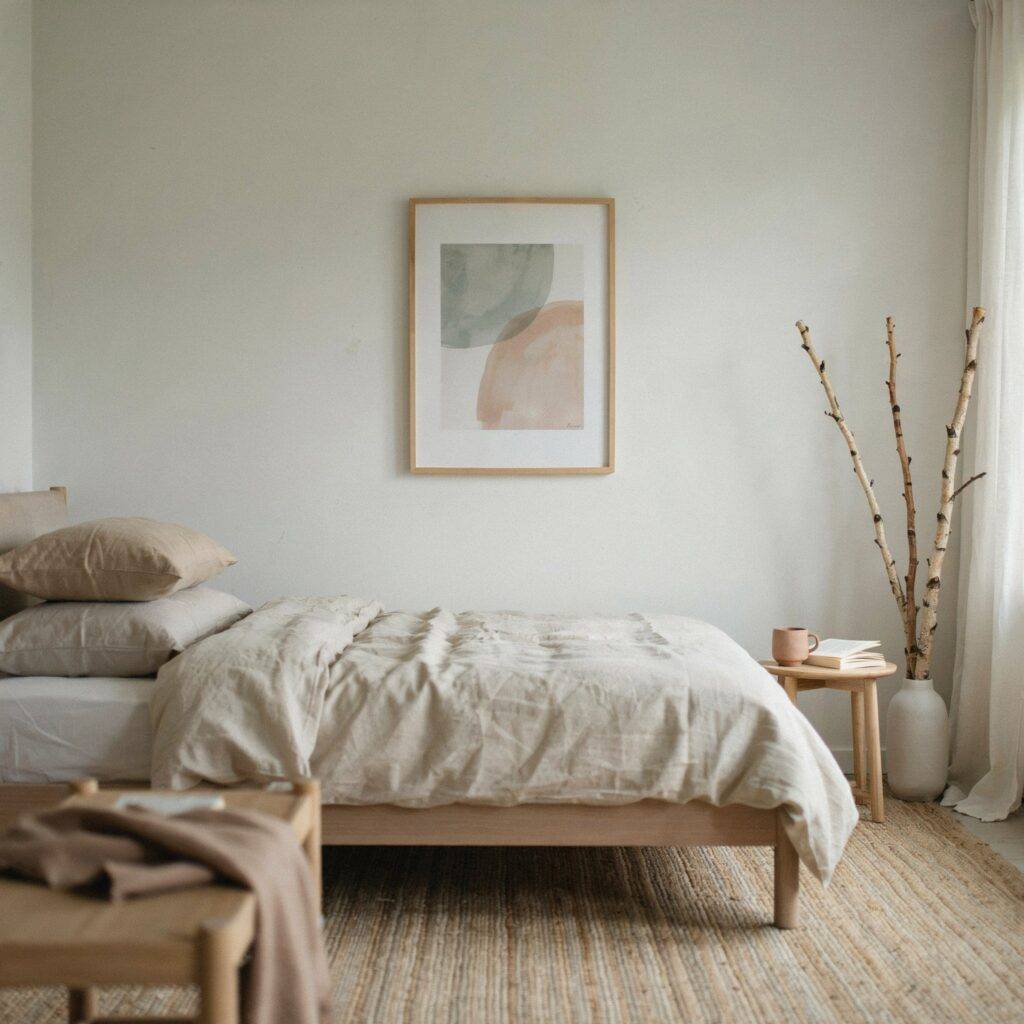
12. Maximize Natural Light
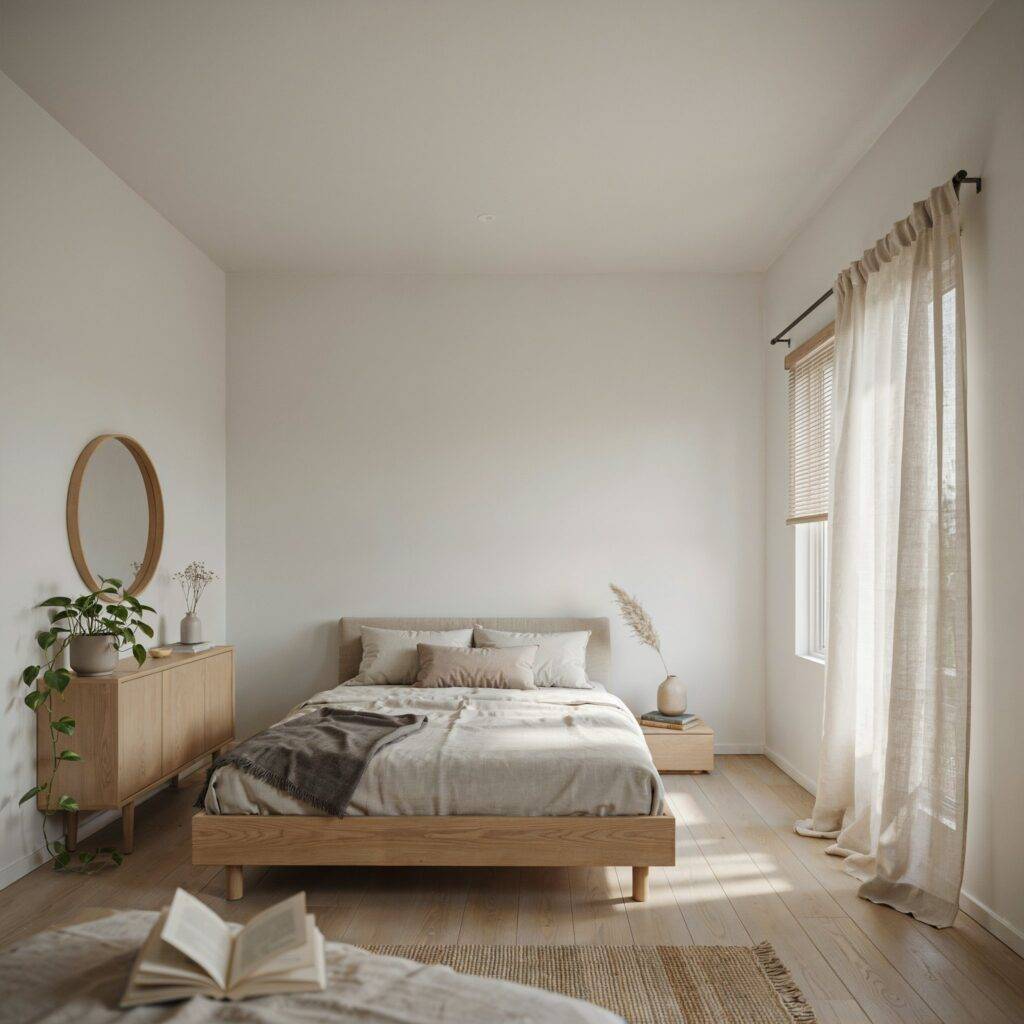
Natural light is essential in a Japandi bedroom. Position furniture away from windows to let sunlight flow in. Use sheer curtains or bamboo shades that filter light while providing privacy.
Avoid heavy drapes that block light or feel visually heavy. The goal is a space that feels open, airy, and connected to the outdoors.
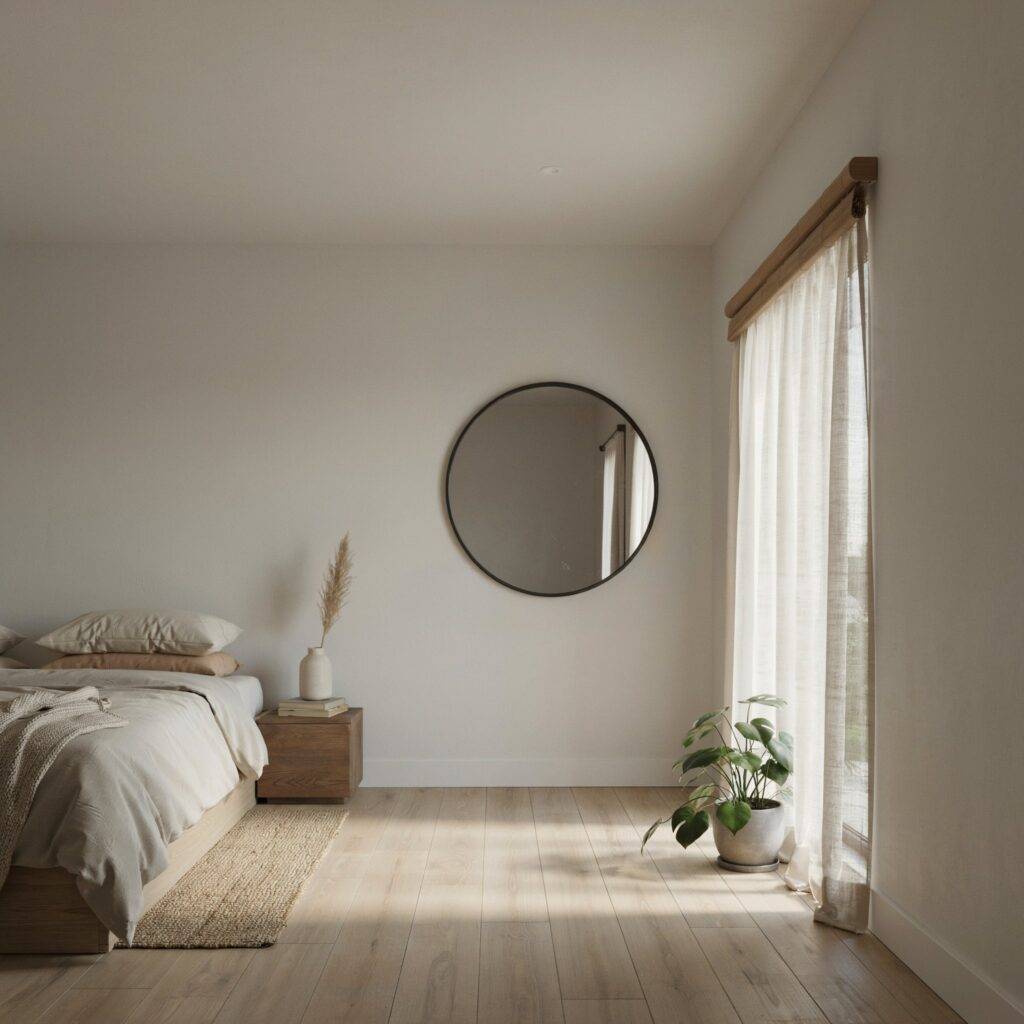
If your room doesn’t get much natural light, use mirrors to reflect what light there is. Keep window treatments simple and functional no fussy patterns or bold hardware.
13. Create a Corner for Quiet Moments
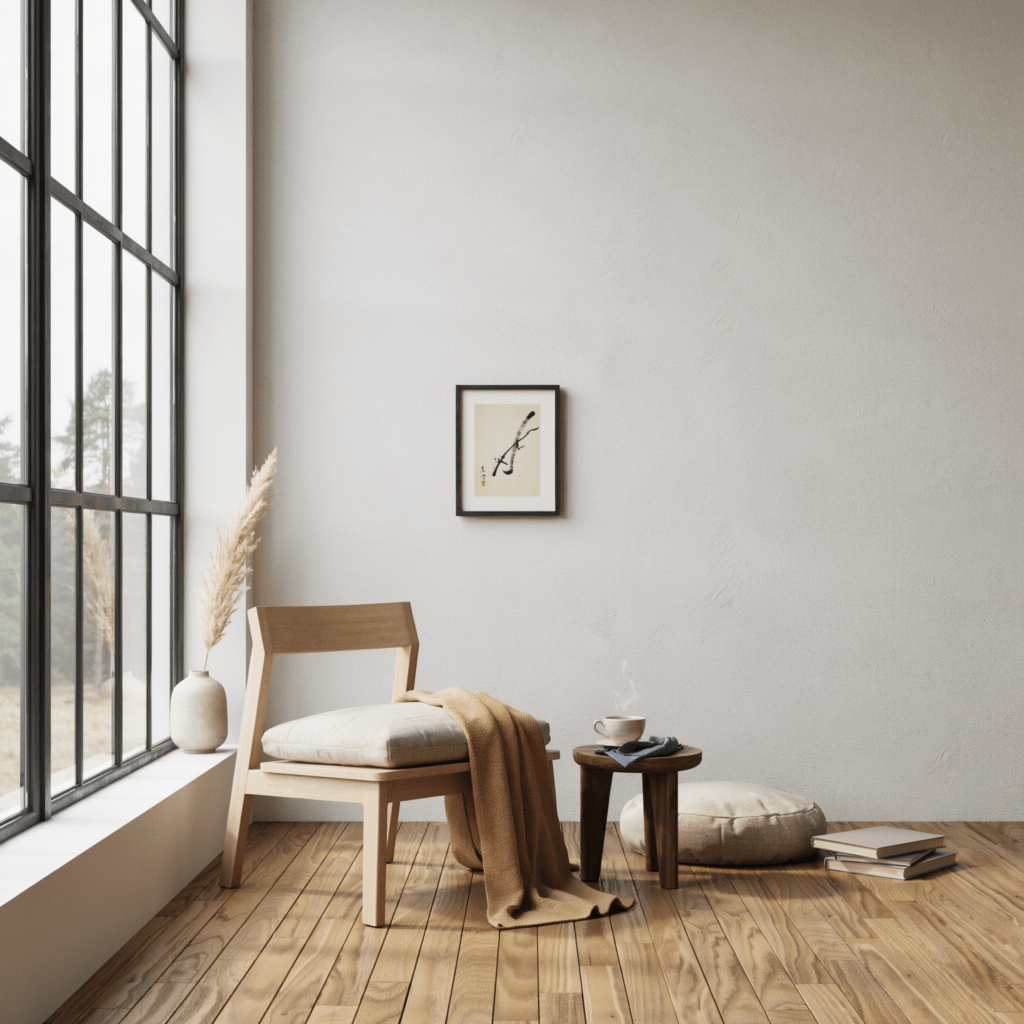
A Japandi bedroom isn’t just for sleeping it’s for resting in all forms. Consider creating a small corner for reading, meditating, or simply sitting quietly.
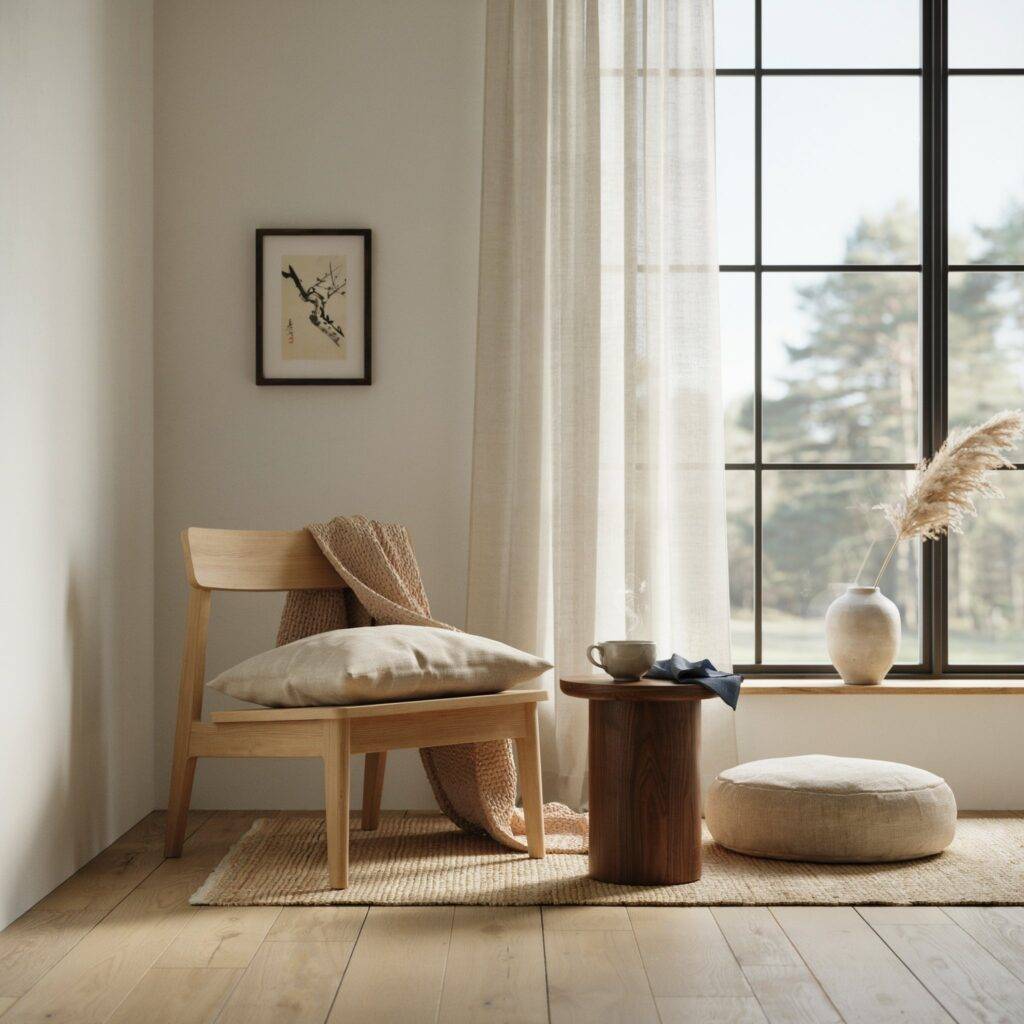
A simple wooden chair with a cushion, a floor cushion, or a low bench by the window can serve this purpose. Keep it minimal. A small side table for a cup of tea, a soft throw for comfort.
This corner becomes a space within the space a retreat within your retreat. It doesn’t need to be big. Even a window seat or a cozy nook can work.
14. Use Hidden Storage to Reduce Clutter
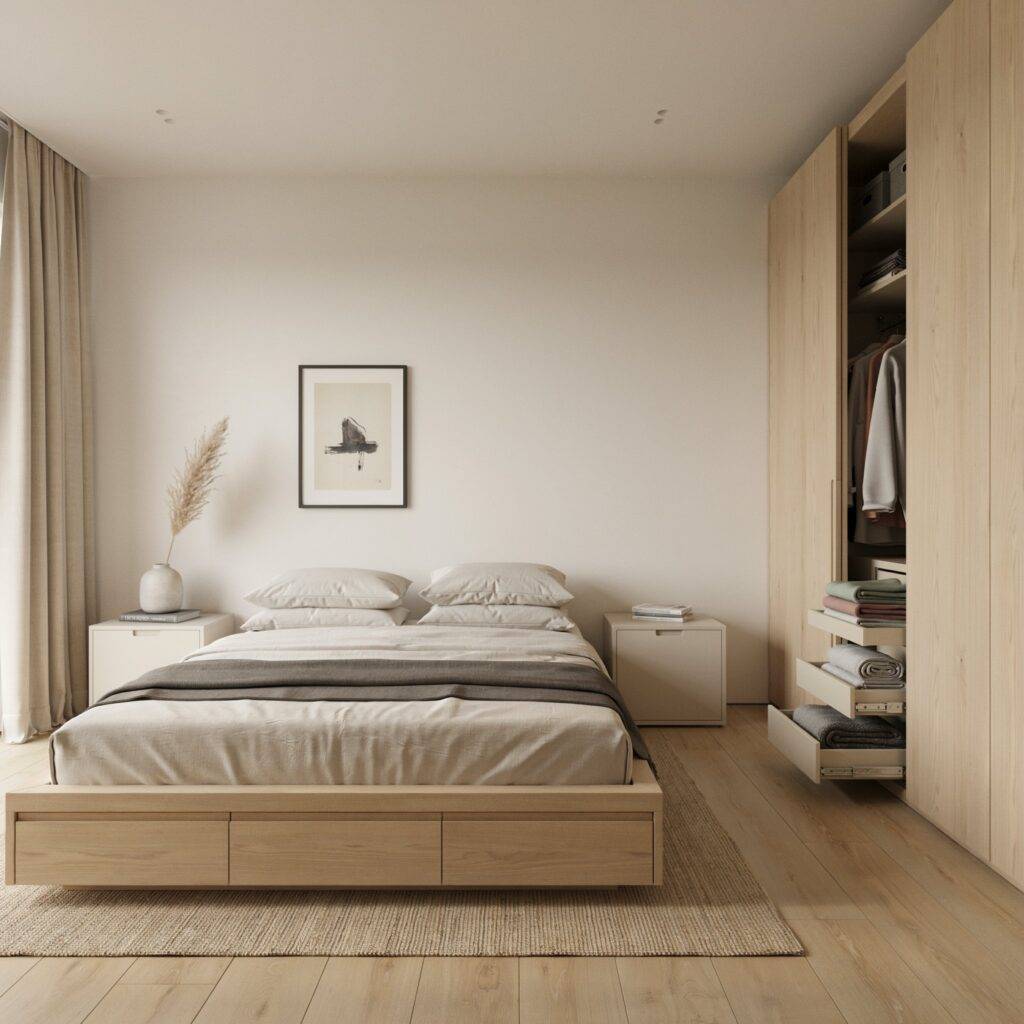
Clutter is noise in a Japandi bedroom. Hidden storage is your best friend. Choose furniture with built-in storage bed frames with drawers underneath, nightstands with closed compartments, wardrobes with pull-out trays.
The goal is to keep surfaces clear and the room looking tidy without constant effort. When everything has a place, maintaining the calm becomes easy. Customized storage solutions that fit your space work best. Think about what you actually use and store only that. The rest can go.
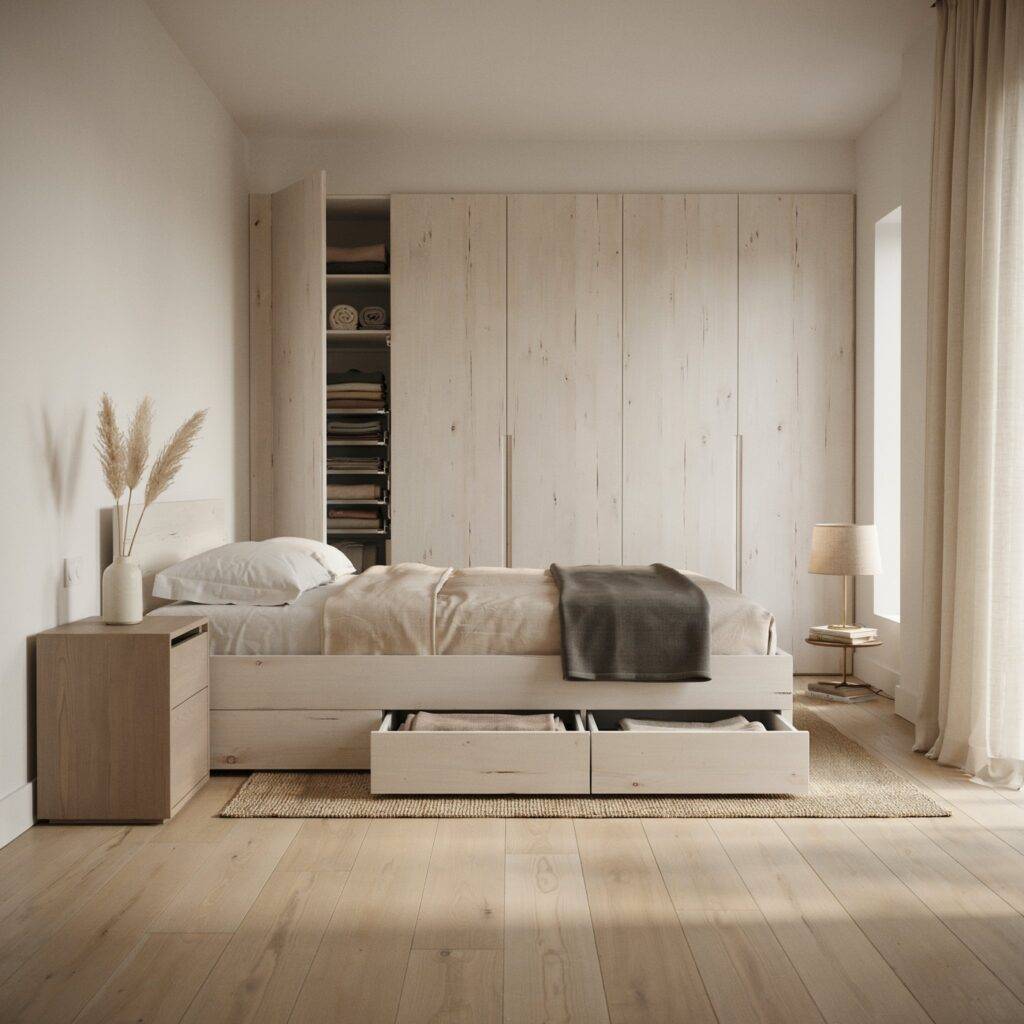
15. Leave Breathing Room Between Furniture
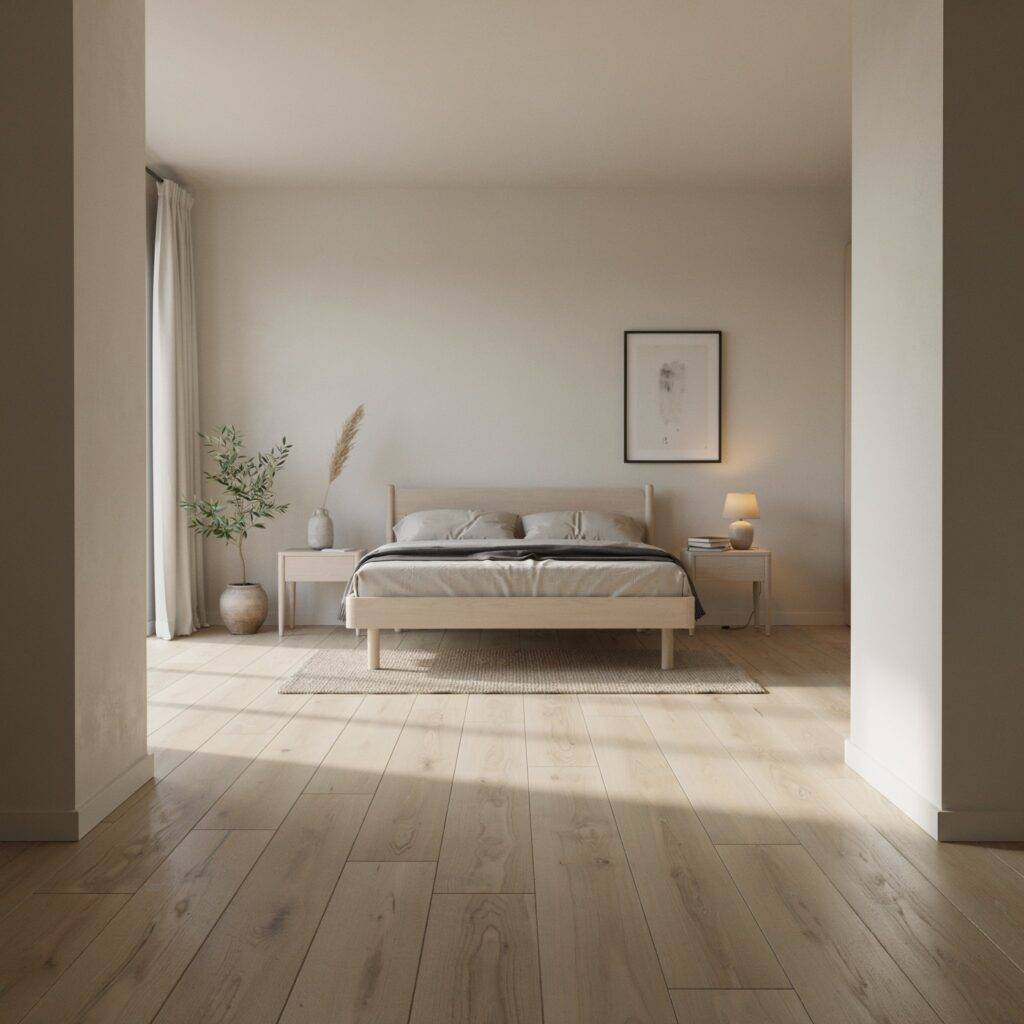
Don’t cram furniture together. Leave space between pieces. This allows natural light to travel through the room and creates a better sense of flow. A crowded room feels chaotic.
A room with space feels calm. This doesn’t mean you need a huge room it means you need to be intentional about what you include and where you place it.
If a piece of furniture doesn’t serve a clear purpose or makes the room feel tight, consider removing it. Sometimes less really is more.
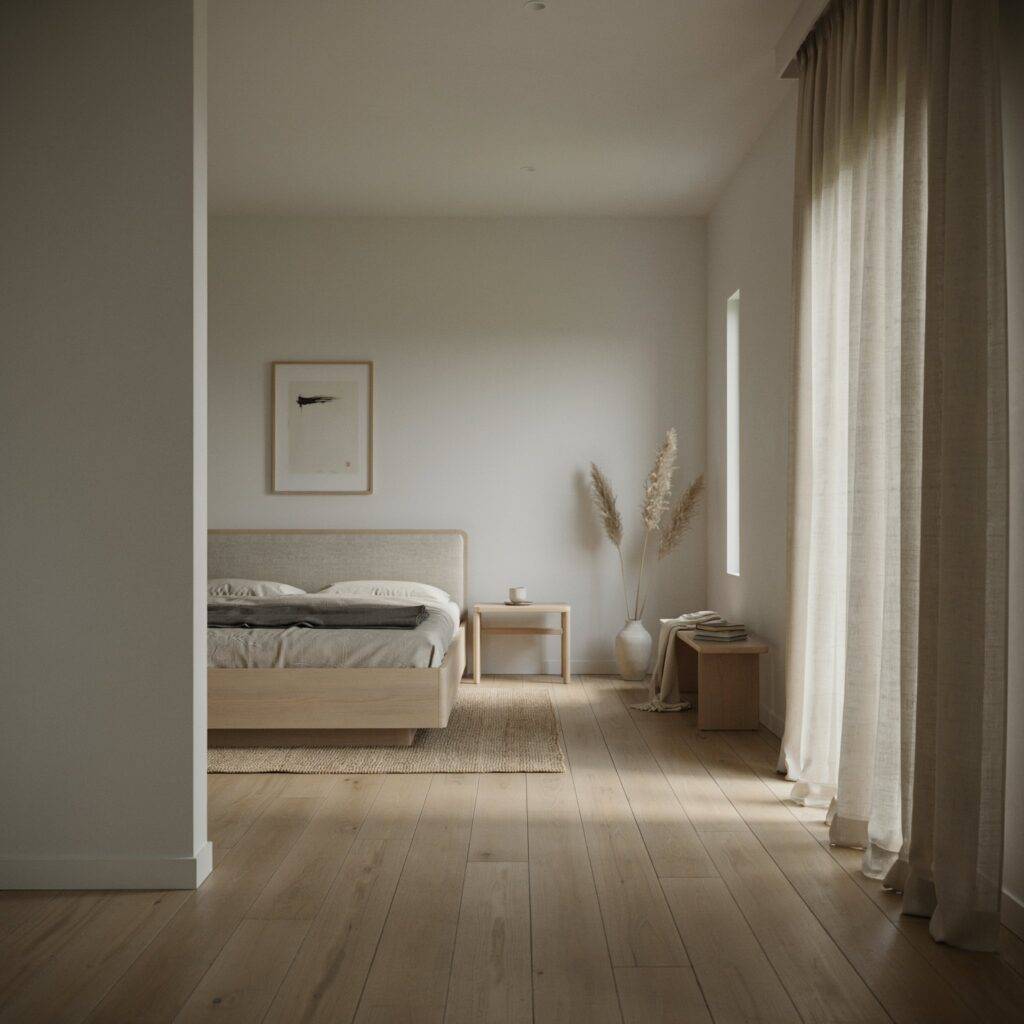
16. Use Shoji Screens or Sliding Doors
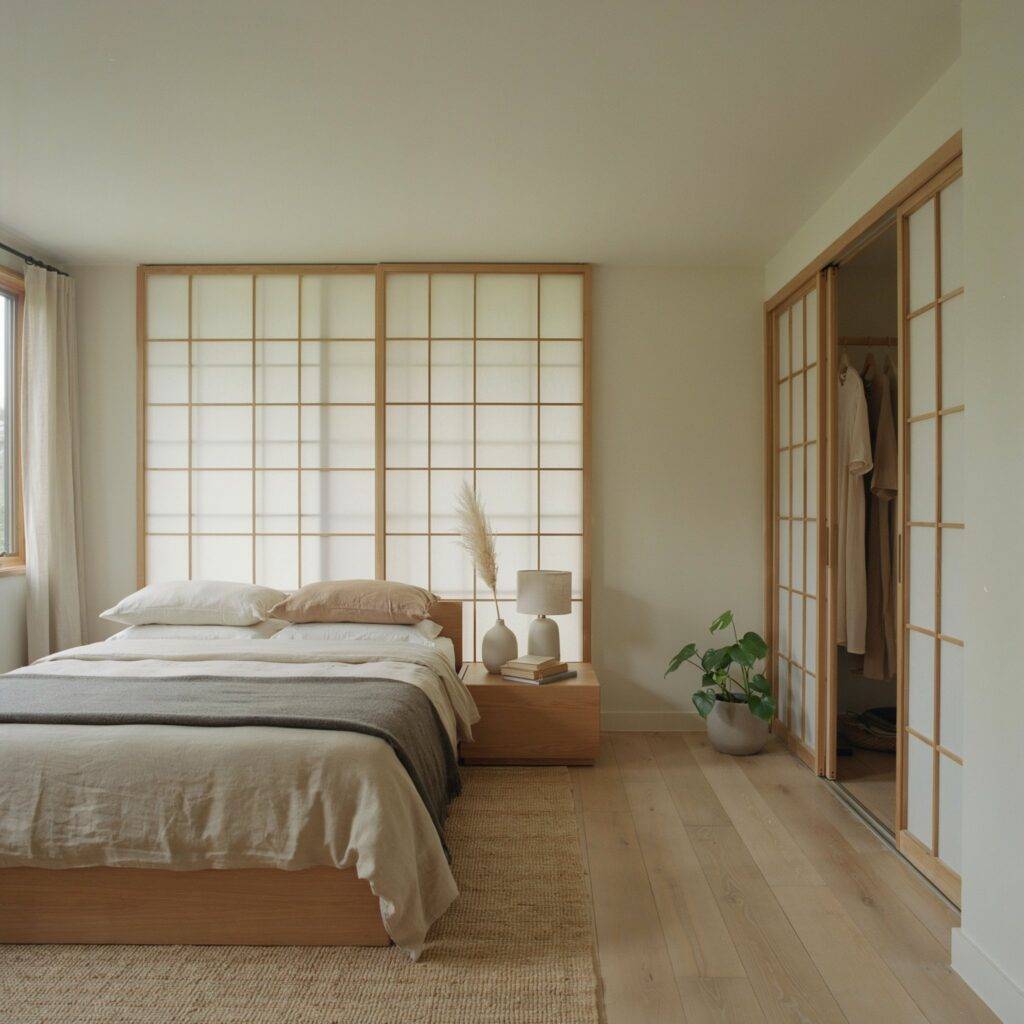
Shoji screens are a classic Japanese element that fit perfectly into a Japandi bedroom. They diffuse natural light beautifully, creating that soft, gentle glow that makes the room feel peaceful. You don’t need a traditional tatami room to use them.
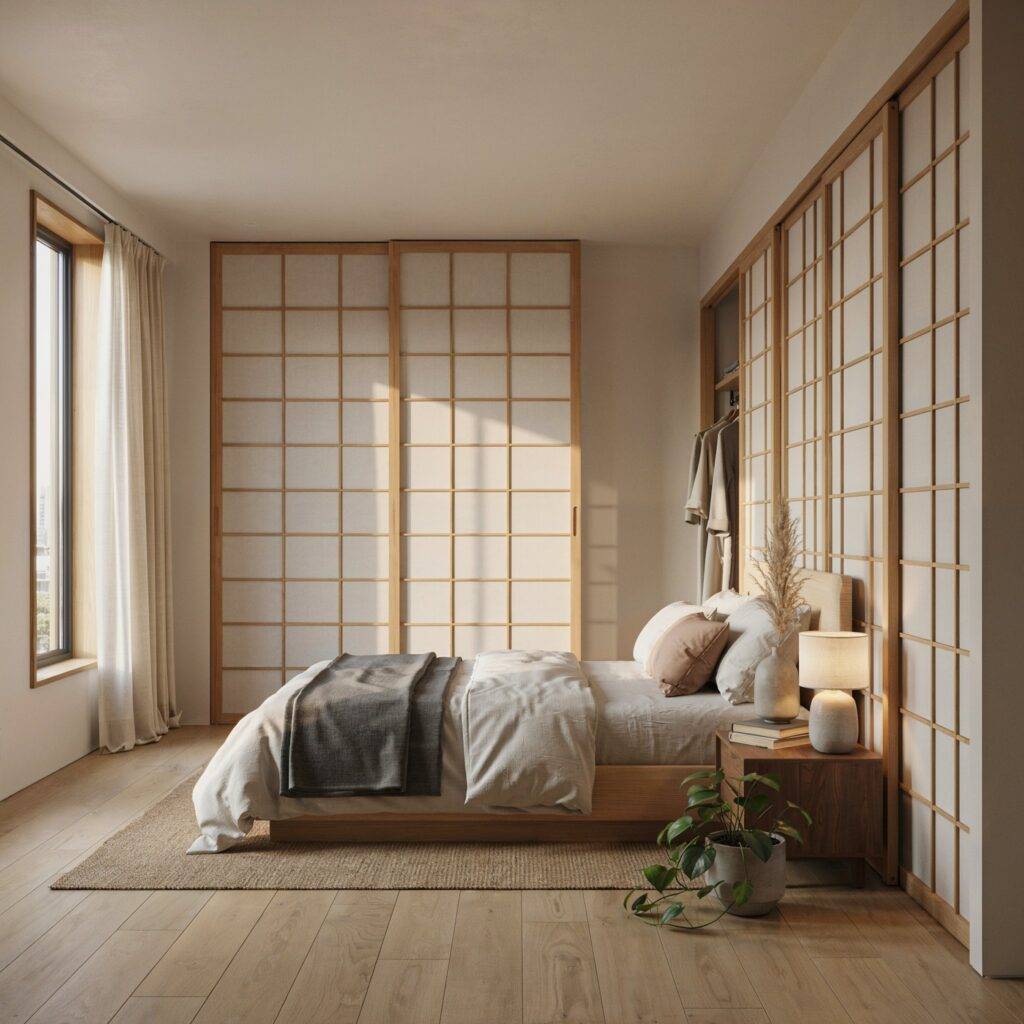
A freestanding shoji screen can act as a room divider to separate a sleeping area from a dressing corner, or even as a decorative headboard backdrop. If you’re up for a small renovation, consider sliding shoji doors for your wardrobe instead of traditional hinged doors.
The translucent paper softens the look of the storage area and adds an authentic texture to the space. Just keep the frame in a light, natural wood to match the rest of your furniture. This simple addition bridges the two cultures beautifully.
17. Add a Minimalist Upholstered Headboard or Wall Paneling
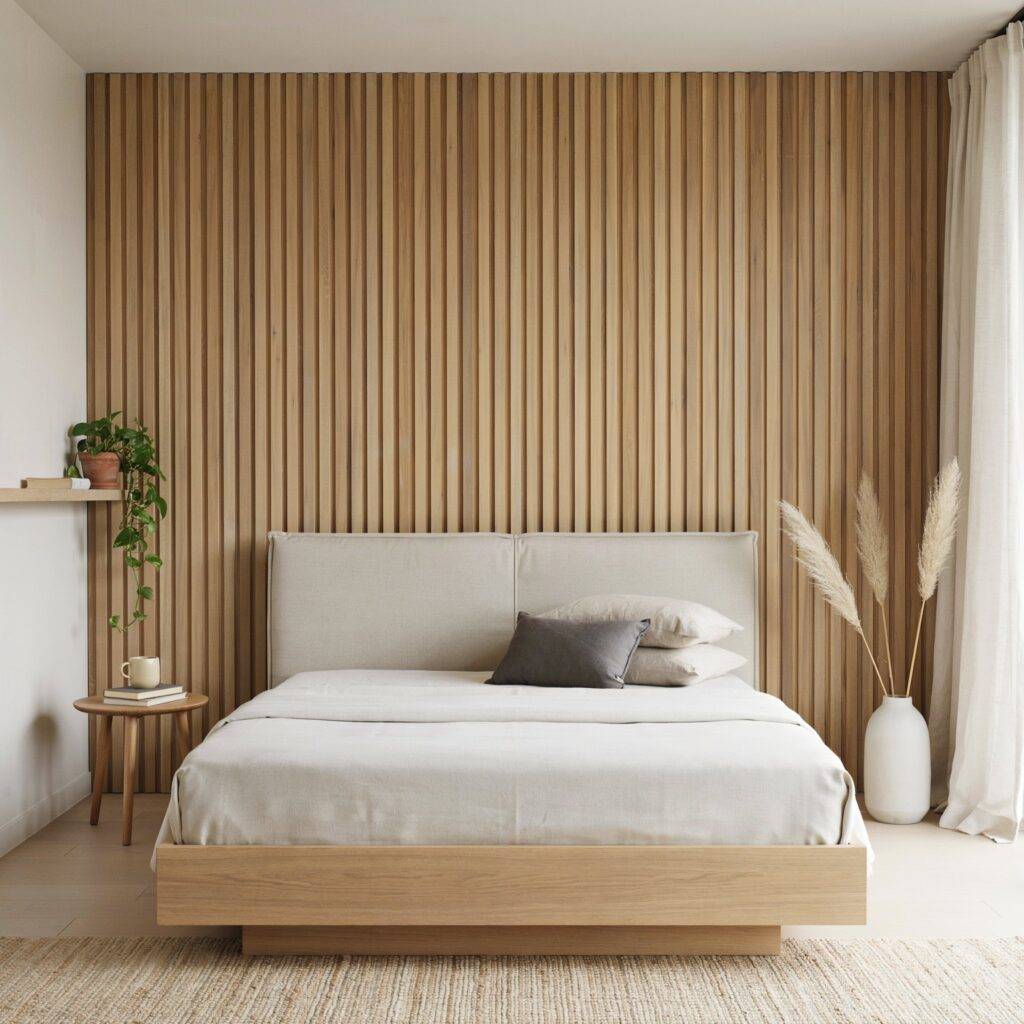
While wood is the star of Japandi, adding a soft upholstered headboard in a neutral linen or wool fabric introduces a welcome element of comfort.
It’s a practical choice too it makes sitting up in bed to read much more comfortable. Keep the shape simple: a square or gently curved rectangle with no tufting or ornate details. The fabric should be matte and natural, never shiny or synthetic.
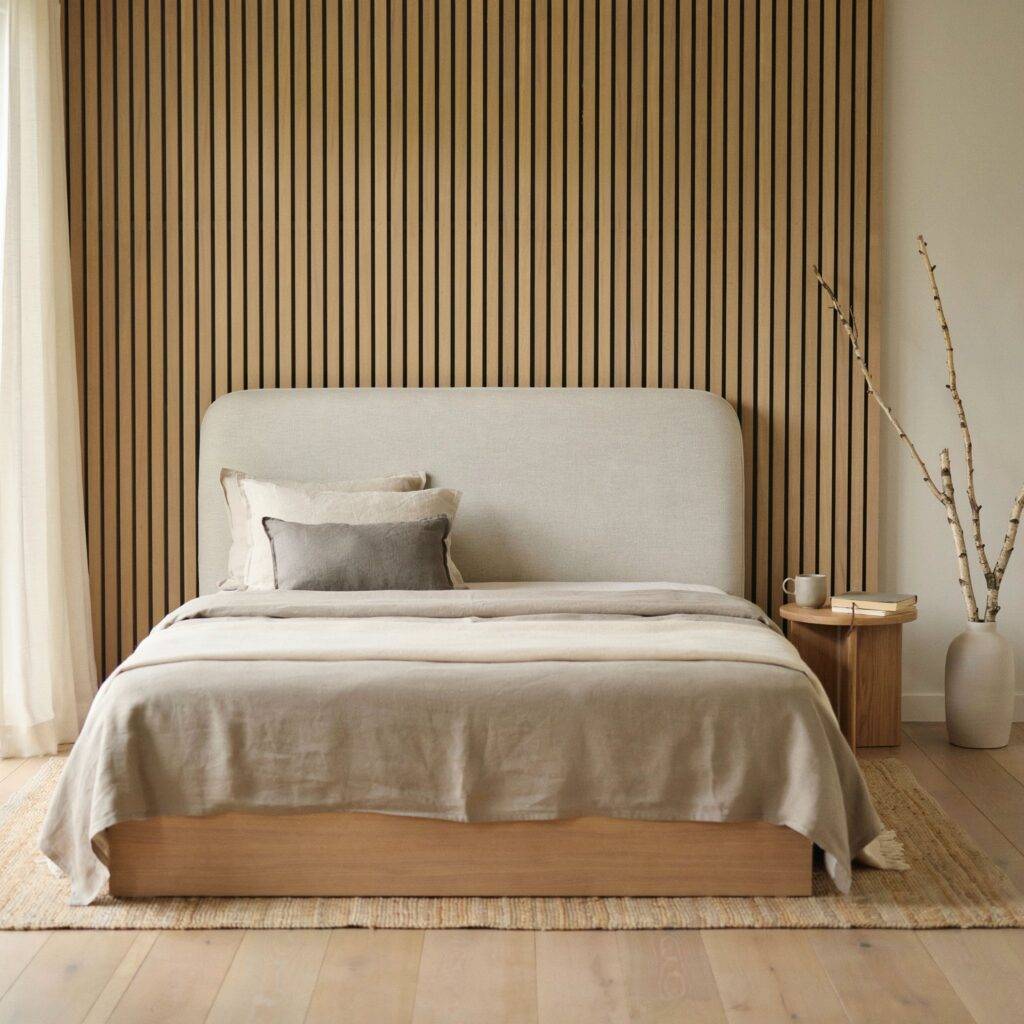
For a more permanent solution, consider adding vertical wood slats or a simple paneled wall behind the bed. This architectural detail adds depth and warmth without taking up any floor space. It frames the bed and instantly elevates the whole room, giving it a custom, thoughtful feel.
18. Include Subtle Sensory Elements (Scent and Sound)
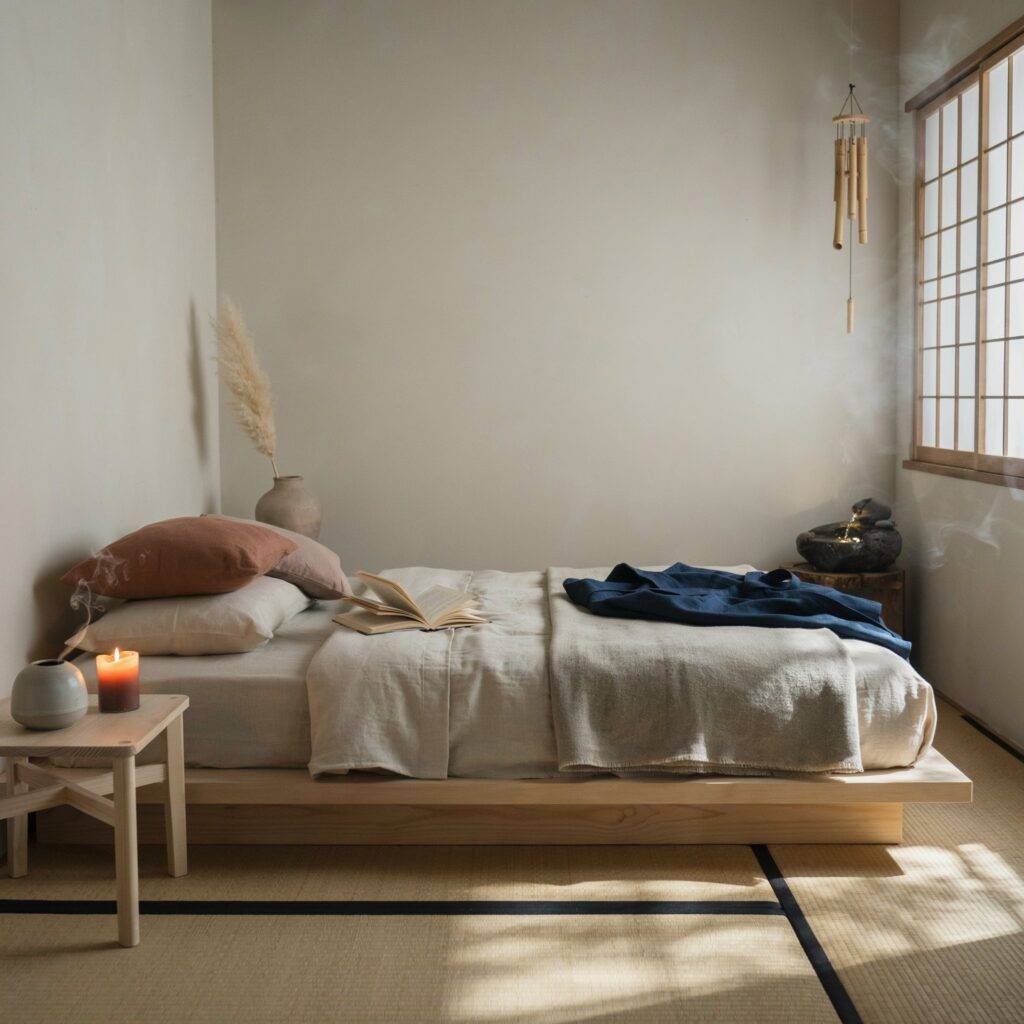
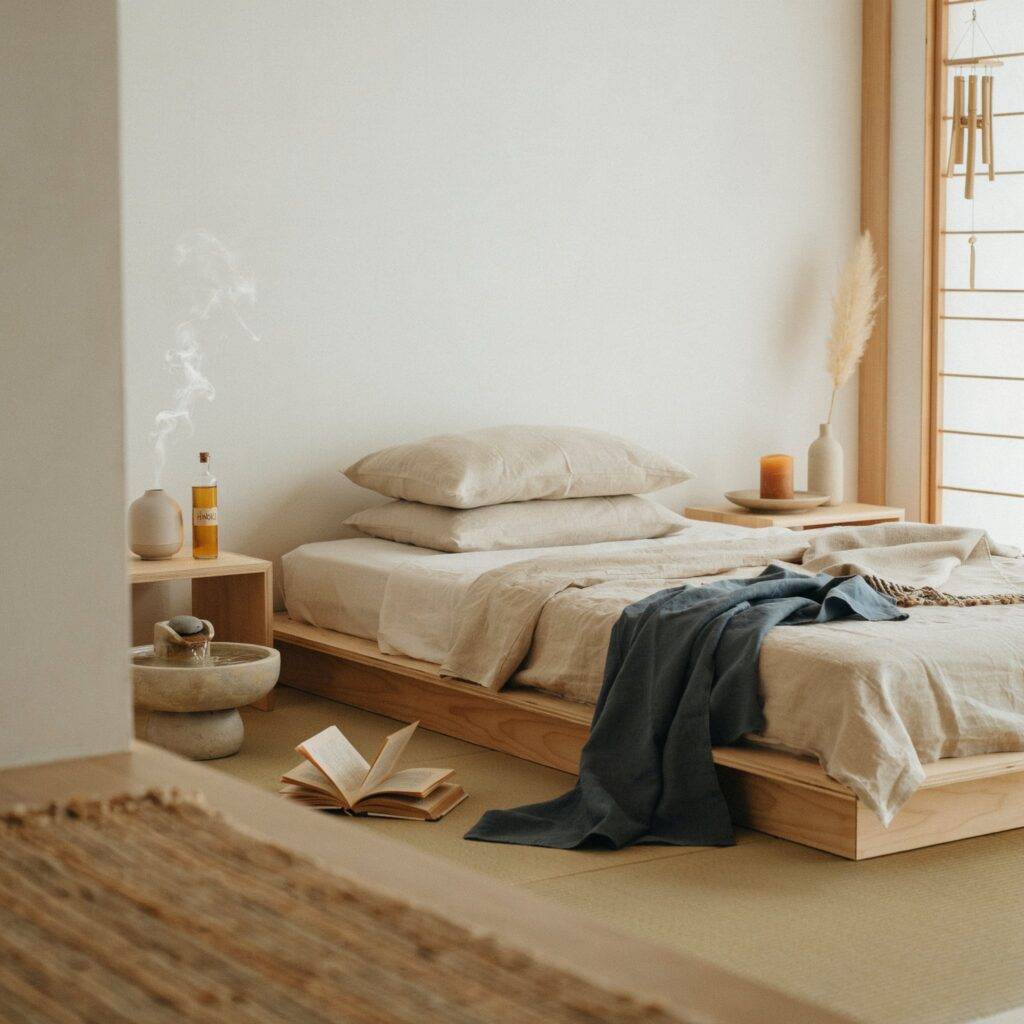
A true sanctuary appeals to all the senses. In a Japandi bedroom, scent plays a big role in setting the mood. Think about adding a small ceramic diffuser with essential oils like cedarwood, hinoki (Japanese cypress), or lavender.
A simple, unscented beeswax candle also works beautifully for evening relaxation. Avoid artificial plug-ins or strong perfumes they’re the opposite of calm. You can also add a small tabletop water fountain or a bamboo wind chime outside the window for soft, natural sounds.
These small sensory touches help shift your mind from the busyness of the day to a state of rest. It’s about creating a ritual around your bedroom, not just decorating it.
1. DG Casa Boucle Ashland Queen Size Bed Frame
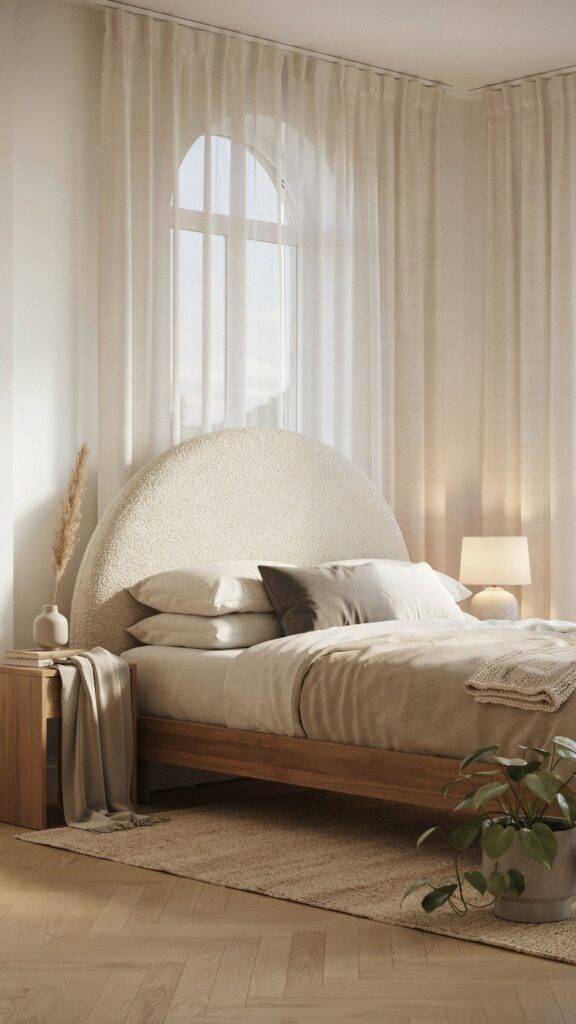
This bed frame is the anchor piece for any Japandi bedroom. It features a unique dipped arch headboard wrapped in soft cream boucle fabric, which adds that cozy texture we talked about in the design ideas.
The frame is built from solid wood with a rich walnut finish exactly the kind of natural material that defines the style. It sits low to the ground, which keeps the room feeling grounded and calm. No box spring is needed; the wooden slats provide all the support you need.
Assembly is straightforward, so your readers won’t be stuck with a complicated project. With a 4.7-star rating from 29 reviews, this is a reliable choice that delivers on both looks and quality. If you want to recommend one product that ties the whole room together, this is it.
2. SSC SATISUNCASA Modern Boucle Accent Square Sofa Chair
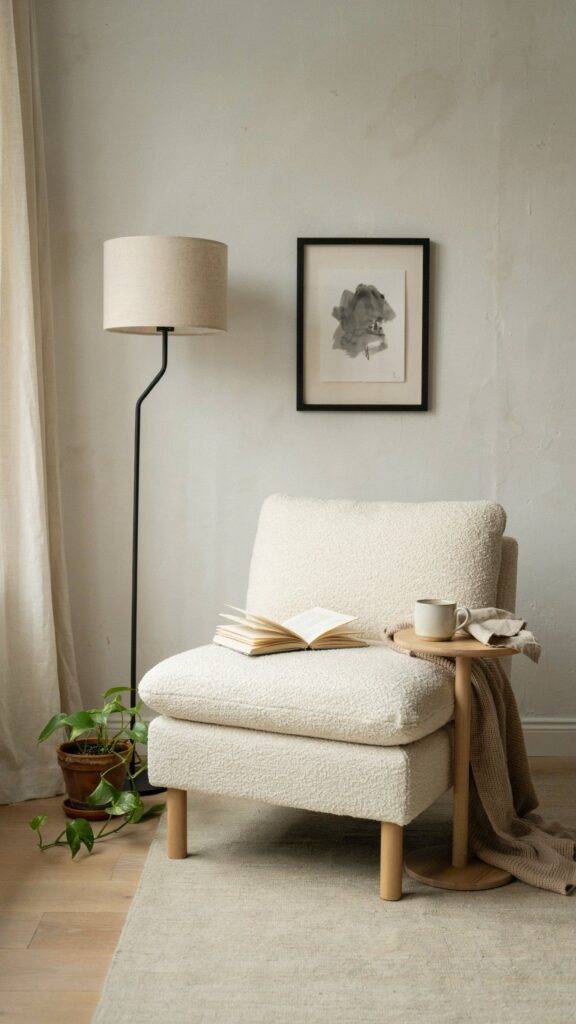
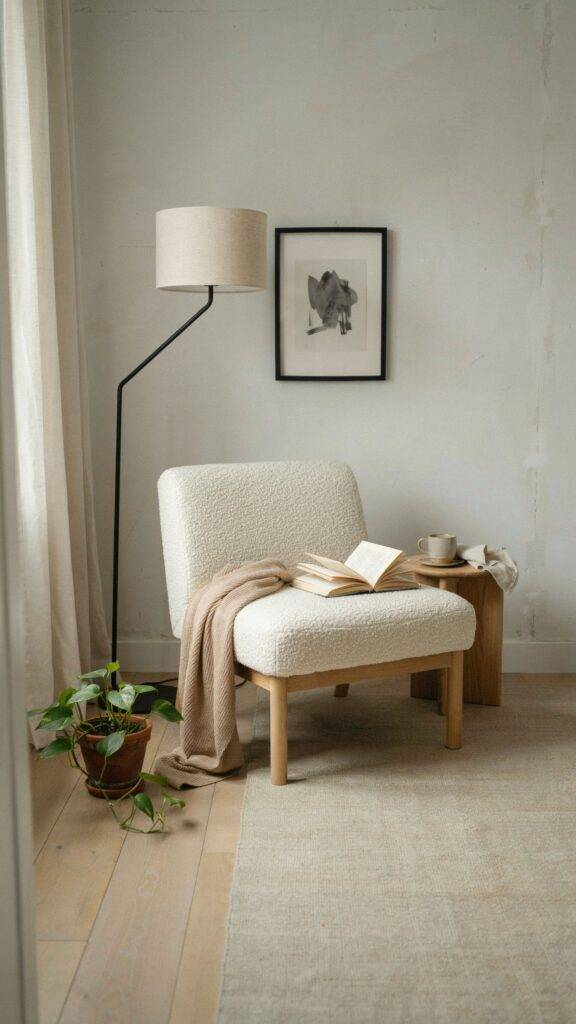
Every Japandi bedroom benefits from a quiet corner for reading or relaxing, and this chair delivers exactly that.
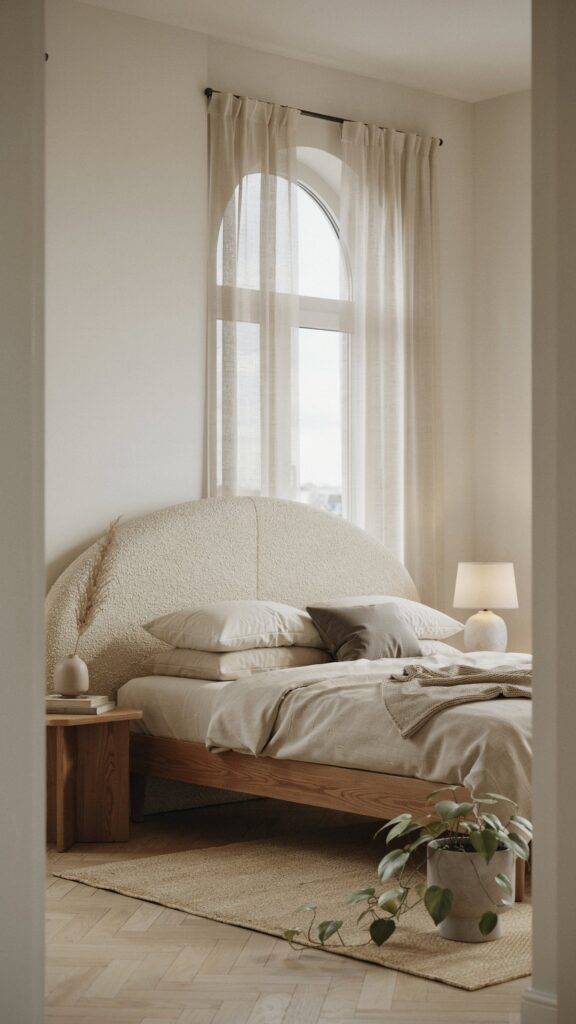
It features clean lines and a low, grounded silhouette that blends Japanese calm with Scandinavian softness. The oversized seat is wrapped in plush boucle fabric with thick foam cushioning, making it genuinely comfortable for lounging.
The frame is solid eucalyptus wood, so it’s built to last. At 39 inches wide, it offers generous space without overwhelming the room. Assembly is quick just attach the legs and you’re done.
This chair works beautifully in a bedroom corner with a small side table and a floor lamp, creating exactly the kind of retreat we described in the design ideas.
3. Pocetry Solid Wood Irregular Asymmetrical Wall Mirror
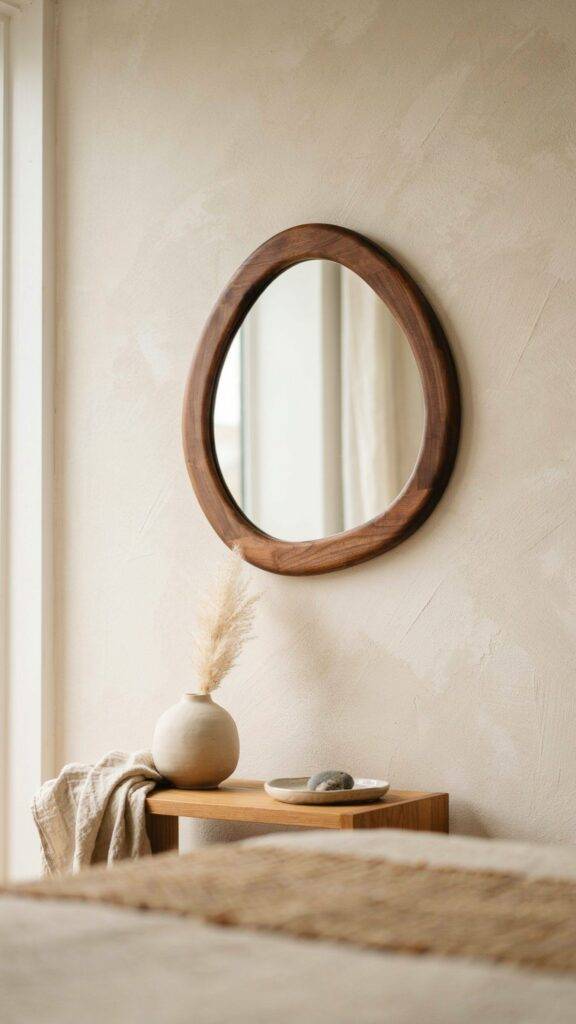
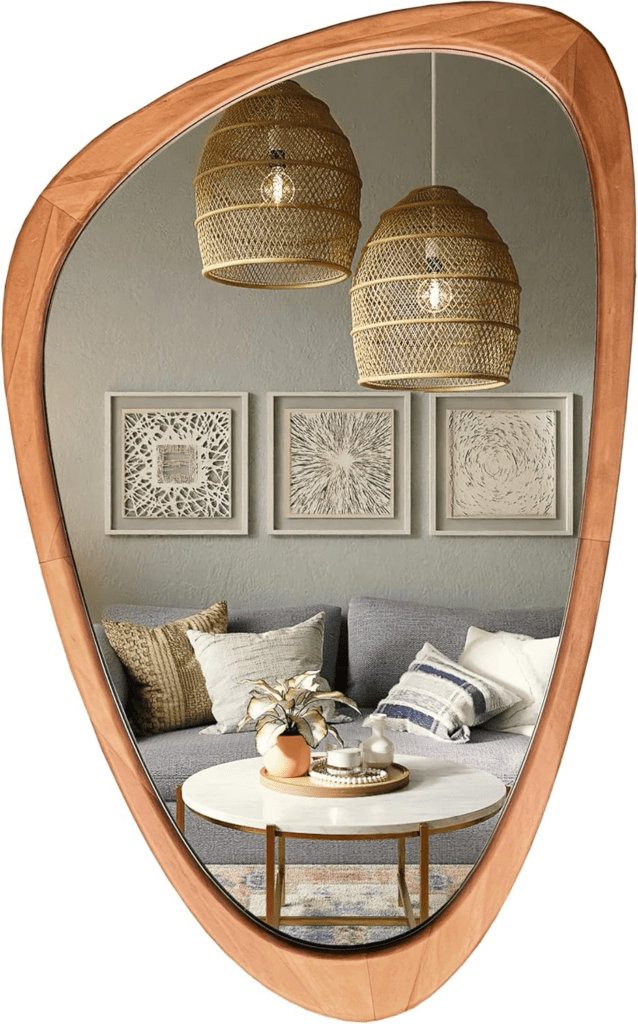
Mirrors are essential in Japandi design for reflecting natural light and making the room feel more open. This one stands out because of its organic, pebble-like shape it’s not your standard rectangle.
The frame is made from 100% solid wood with a rich dark walnut finish, giving it that natural, handcrafted feel that wabi-sabi celebrates. It’s compact at 30 by 20 inches, so it works well in smaller bedrooms or narrow spaces.
The HD glass provides a clear, distortion-free reflection, and it’s moisture-resistant, so it holds up even in humid conditions. This mirror adds character and warmth to any wall without taking up floor space. It’s a simple way to elevate the room and make it feel more intentional.
4. Nogy Wabi-Sabi Ceramic Table Lamp
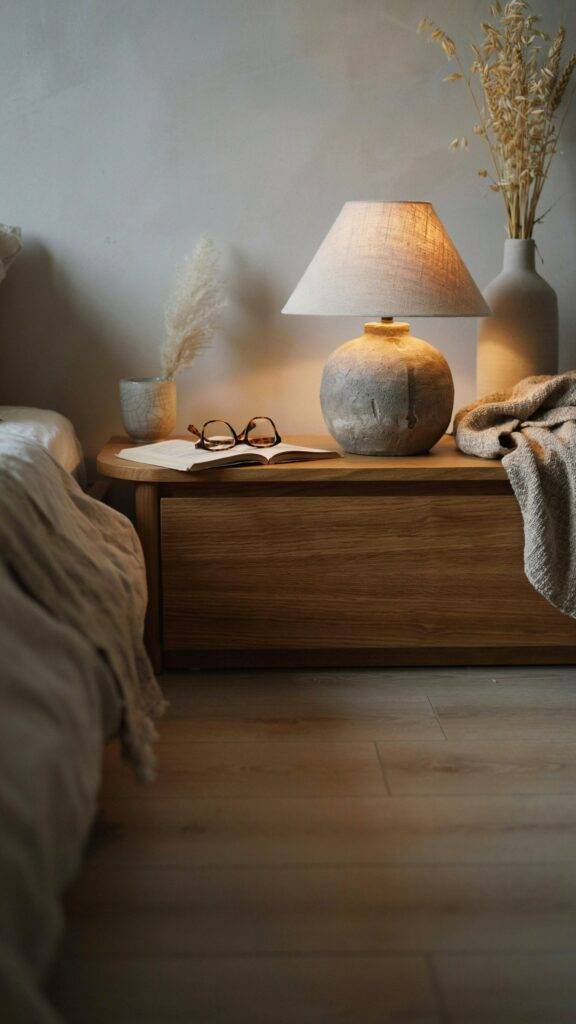
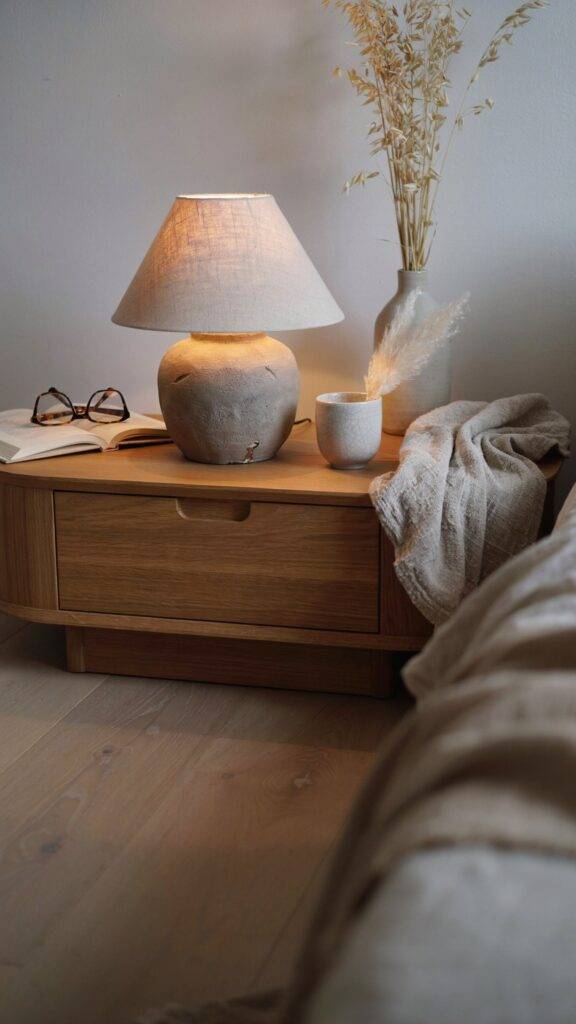
Lighting can make or break a Japandi bedroom, and this ceramic table lamp is a solid choice. It features a rustic stone texture and comes with a warm linen cone shade that casts a soft, inviting glow.
The ceramic base has that slightly imperfect, handcrafted look that embodies the wabi-sabi philosophy. It stands at a good height for a nightstand or side table, and the warm light it produces is perfect for winding down at the end of the day.
This lamp isn’t flashy it’s understated and grounded, exactly what you want in a Japandi space. It pairs well with the neutral color palette and natural textures we discussed. Simple, functional, and beautiful.
5. Bamboo Roman Shades or Woven Wood Blinds
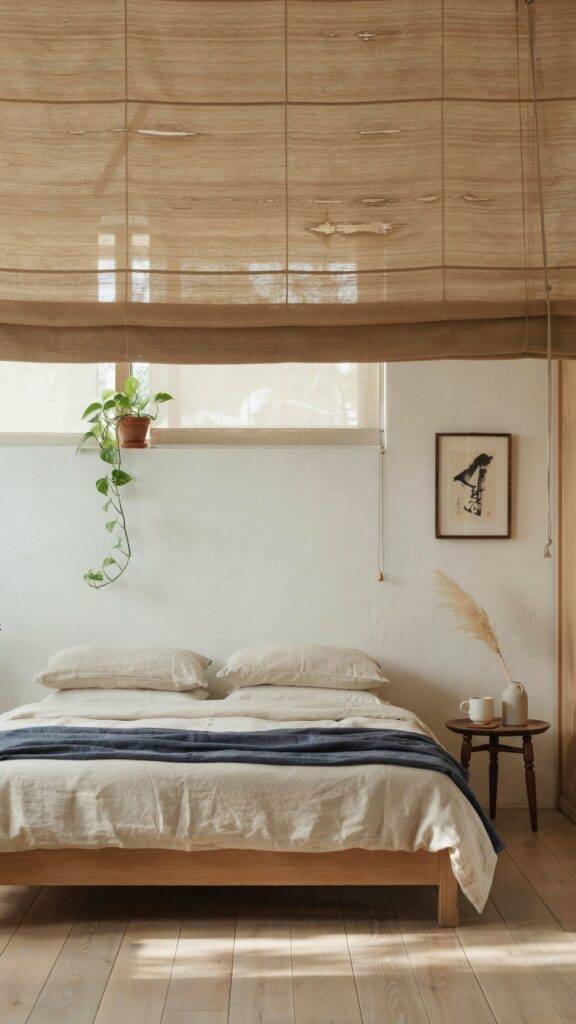
Window treatments are often overlooked, but they play a huge role in achieving the Japandi look. Bamboo shades and woven wood blinds bring organic texture and warmth to any window.
They filter natural light beautifully, creating that soft, gentle glow that makes a bedroom feel peaceful. Each shade has natural variations in the material, which fits perfectly with the wabi-sabi appreciation for imperfection.
These shades also provide privacy while still letting light through, so the room stays bright and airy. They’re made from renewable resources, which aligns with the style’s emphasis on natural, sustainable materials. This is an easy upgrade that makes a noticeable difference in the overall feel of the room.
6. Stone & Beam Organic Cotton Linen Blend Bedding Set
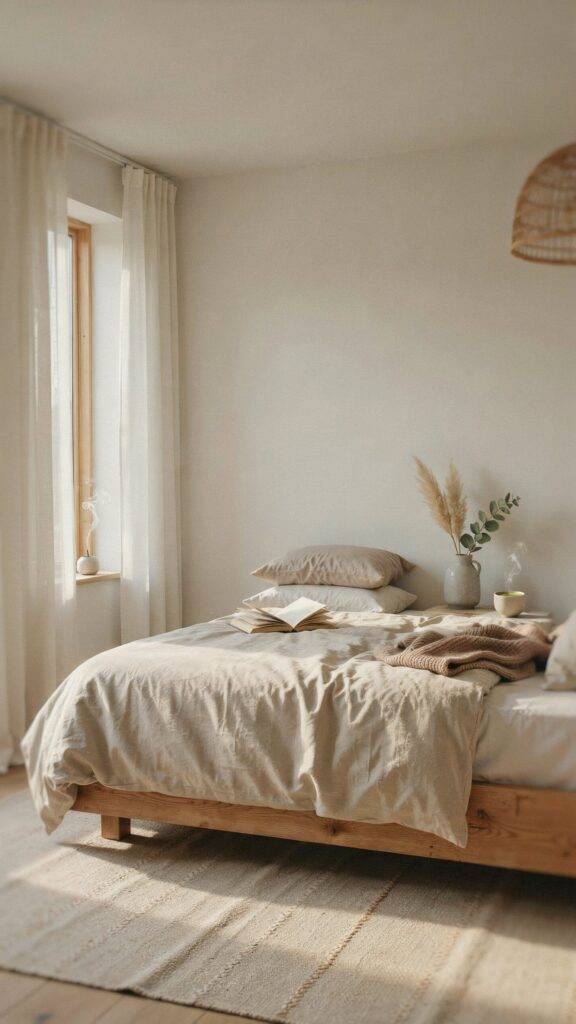
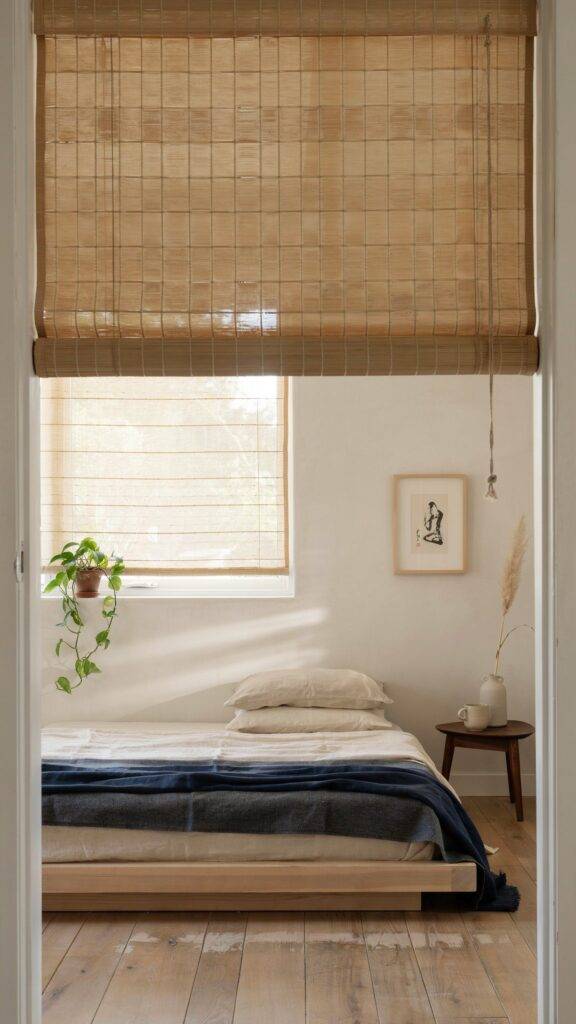
Bedding is one of the most important elements in a Japandi bedroom because it’s where texture and comfort come together.
This set uses a linen-cotton blend that gives you that relaxed, slightly rumpled look that feels lived-in and welcoming. The fabric is breathable and gets softer with each wash exactly what you want for a good night’s sleep.
The neutral, earthy tones (think oatmeal, warm white, or soft taupe) work perfectly with the Japandi color palette we covered. No loud patterns or bright colors here just natural, understated elegance.
It’s also durable and easy to care for, so it’s practical for real life. This is the kind of bedding that makes you want to stay in bed just a little longer.
Pros and Cons of Japandi Bedroom Design
| Pros | Cons |
| Creates a genuinely calm, restful environment | Requires discipline to maintain clutter-free |
| Works in any size room small spaces included | Can feel cold if you don’t layer enough texture |
| Timeless style that doesn’t date quickly | May not suit people who love bright colors or patterns |
| Focus on quality over quantity saves money long-term | Initial investment in quality pieces can be higher |
| Easy to maintain once set up | Takes time to curate the right pieces |
Tips for Creating Your Japandi Bedroom
- Start with the bed. It’s the anchor of the room. Choose a low-profile frame in natural wood.
- Edit ruthlessly. Walk through your room and remove anything that doesn’t serve a clear purpose or bring you joy.
- Layer textures. Without patterns, texture is your main source of visual interest.
- Prioritize natural materials. Wood, linen, cotton, wool, bamboo, ceramics these are non-negotiable.
- Invest in good lighting. Soft, warm light makes all the difference.
- Add one living thing. A plant brings life and softness to any space.
- Be patient. Curating a Japandi room takes time. Don’t rush to fill every space.
Mistakes to Avoid
Choosing the wrong colors. Japandi is not all beige, but it’s also not bright and bold. Stick to muted, earthy tones. If you want color, use it sparingly in accents.
Forgetting texture. A room with flat surfaces and no texture will feel cold and sterile. Layer different materials to add warmth.
Overcrowding the space. Japandi is about intentionality. If you fill every corner, you lose the calm. Leave empty space.
Using synthetic materials. Plastics and shiny synthetics don’t belong in a Japandi room. Stick to natural materials.
Ignoring lighting. Harsh overhead lights ruin the mood. Use soft, warm, layered lighting instead.
Buying too much at once. A Japandi room is curated over time. Don’t rush to fill it with things you don’t love.
FAQs
What exactly is Japandi style?
Japandi is a blend of Japanese minimalism and Scandinavian functionality. It combines the clean lines and intentional simplicity of Japanese design with the warmth and comfort of Nordic hygge. The result is a calm, functional, and inviting space.
Is Japandi the same as minimalism?
Not quite. Minimalism can feel cold or sterile. Japandi adds warmth through natural materials, soft textures, and a connection to nature. It’s minimalism with a cozy heart.
Can I do Japandi in a small bedroom?
Yes. In fact, Japandi works especially well in small spaces because it emphasizes clean lines and reducing clutter. Low-profile furniture and hidden storage help maximize space.
What colors work best in a Japandi bedroom?
Stick to neutrals soft whites, warm beiges, muted grays, and taupes. Add depth with earthy accents like warm browns, soft tans, and muted greens.
Do I need expensive furniture to get the look?
No. Focus on clean lines, natural materials, and quality over quantity. You can find affordable pieces that fit the aesthetic. The key is being intentional about what you choose.
What materials are essential?
Natural wood (oak, ash, walnut), linen, cotton, wool, bamboo, rattan, ceramics, and stone. Avoid plastics and synthetics.
✨ Wrapping It Up
A Japandi bedroom isn’t about following strict rules. It’s about creating a space that helps you rest, recharge, and feel at ease. Start with a neutral palette. Choose natural materials. Keep surfaces clear. Add texture and warmth through layers. Be intentional about every piece you bring in.
The beauty of this style is that it works for real life. It doesn’t require perfection it requires thoughtfulness. A slightly imperfect hand-thrown vase, a linen sheet that softens with washing, a wooden bed frame that shows its grain these aren’t flaws. They’re what make the space feel human.
Take it one step at a time. Start with the bed. Then the lighting. Then the textures. Before you know it, you’ll have a bedroom that feels less like a room and more like a retreat.
Your bedroom should work for you, not against you. Japandi design helps make that happen.
Related Post: