

Old jeans do not have to end up in the trash when they still have plenty of useful fabric left. Denim is strong, easy to work with, and comes in different shades that can make a simple chair look interesting. With a few pairs of worn jeans, fabric scraps, basic sewing supplies, and an old chair, you can create something useful for your home.
These DIY denim chair ideas are a good way to reuse fabric while giving an old piece of furniture a fresh look. You can keep the design simple with one shade of denim or mix different colors, pockets, seams, and scraps for a patchwork finish. The key is to prepare the fabric carefully and make sure the finished chair is strong enough for everyday use.

1. Patchwork Denim Chair Seat
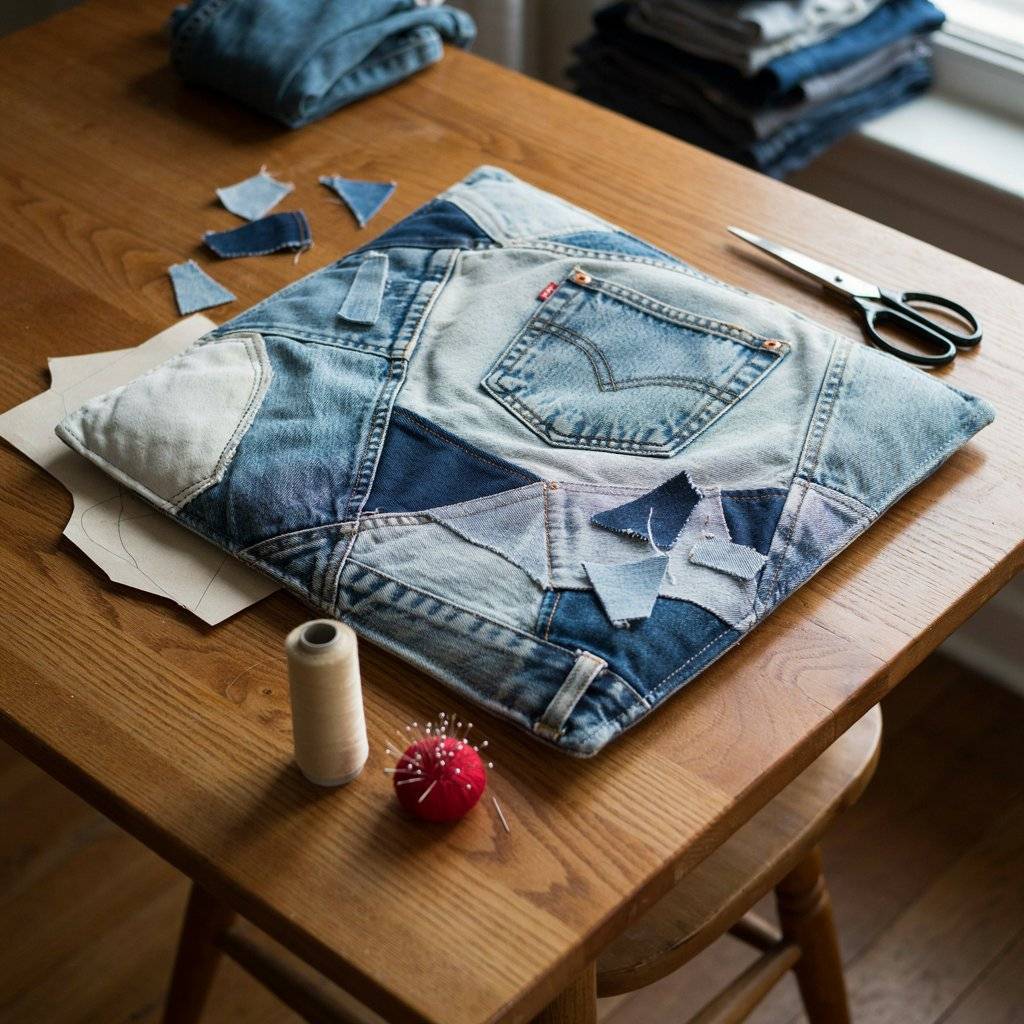
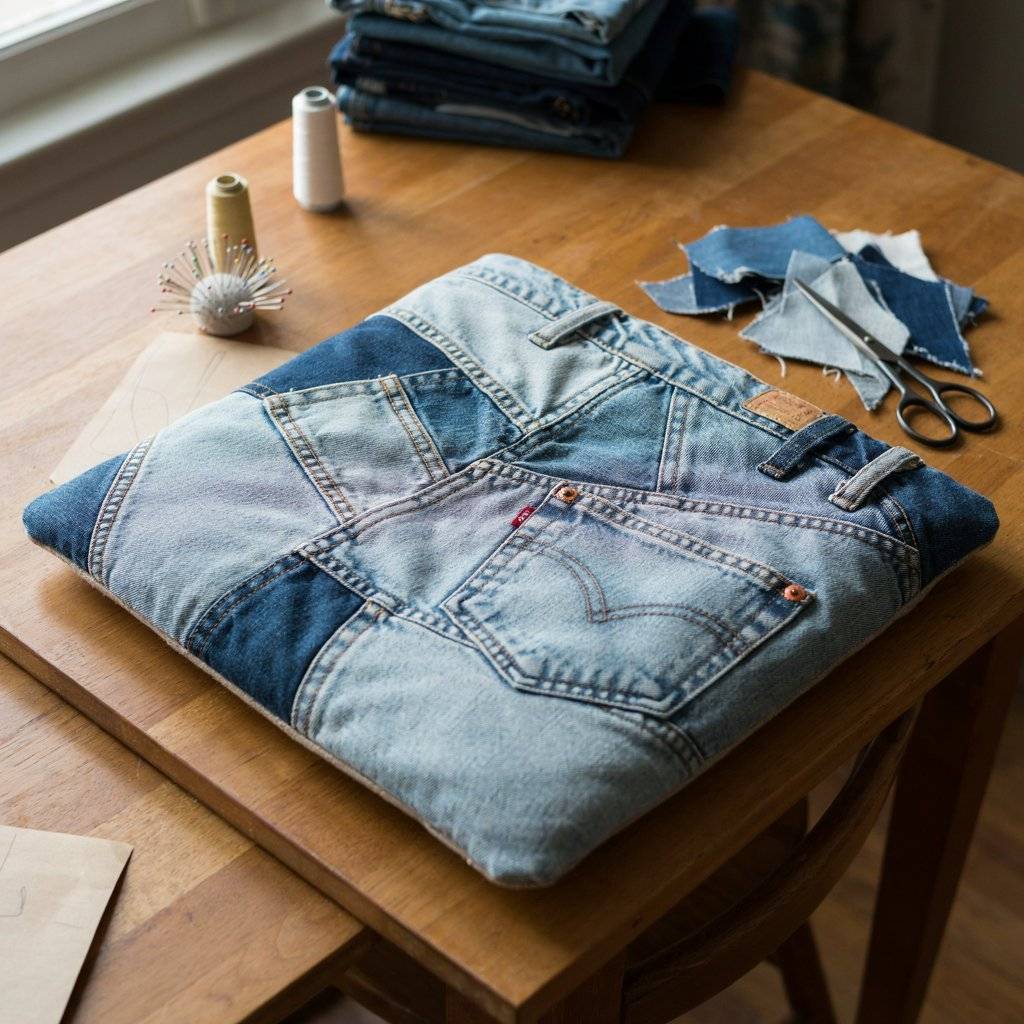
A patchwork denim chair seat is one of the easiest ways to start using recycled jeans. Cut usable sections from old jeans, remove damaged areas, and arrange the pieces before sewing them together.
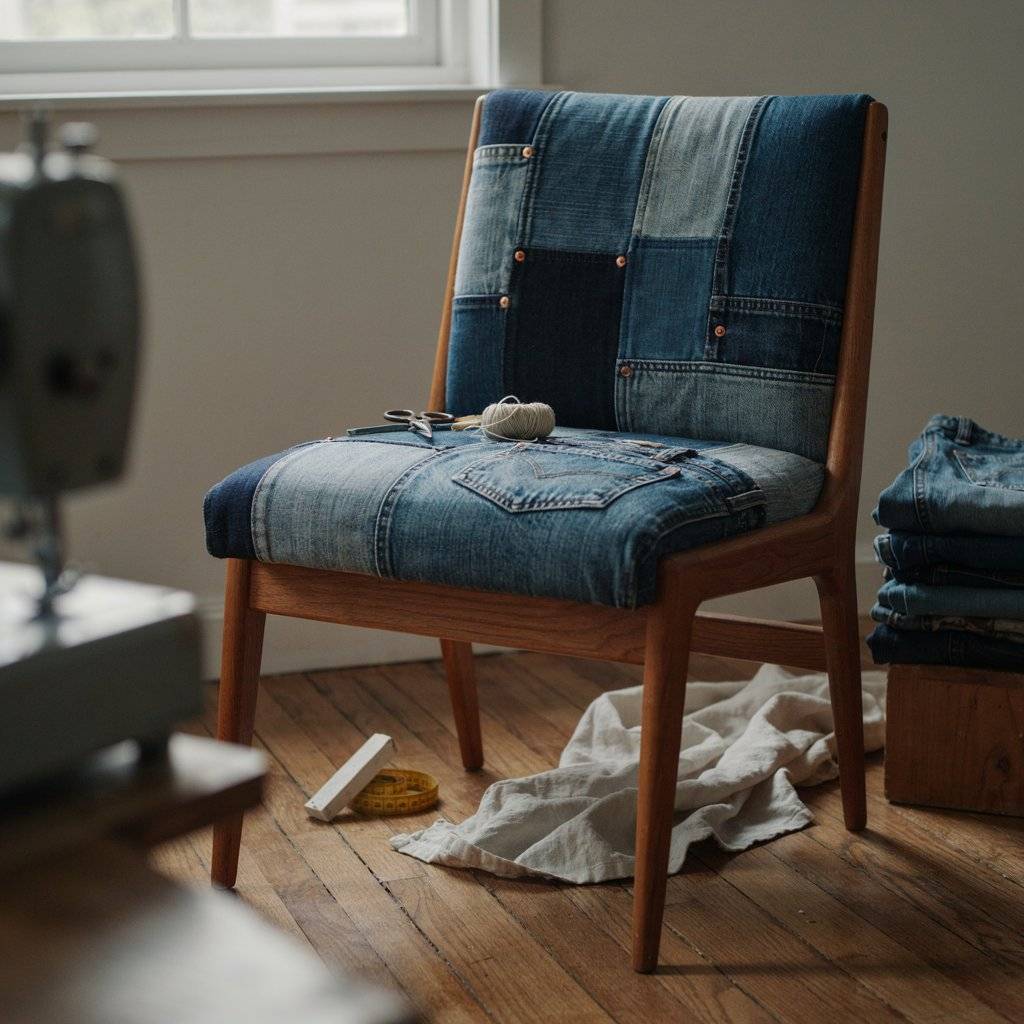
Mixing light, medium, and dark denim gives the seat more character without needing complicated patterns. You can also keep some original seams or pockets as design details. Once the patchwork panel is finished, place it over the existing seat cushion and secure it underneath.
For a cleaner result, use a paper pattern made from the original seat cover before cutting your denim. This helps reduce wasted fabric and makes fitting much easier.
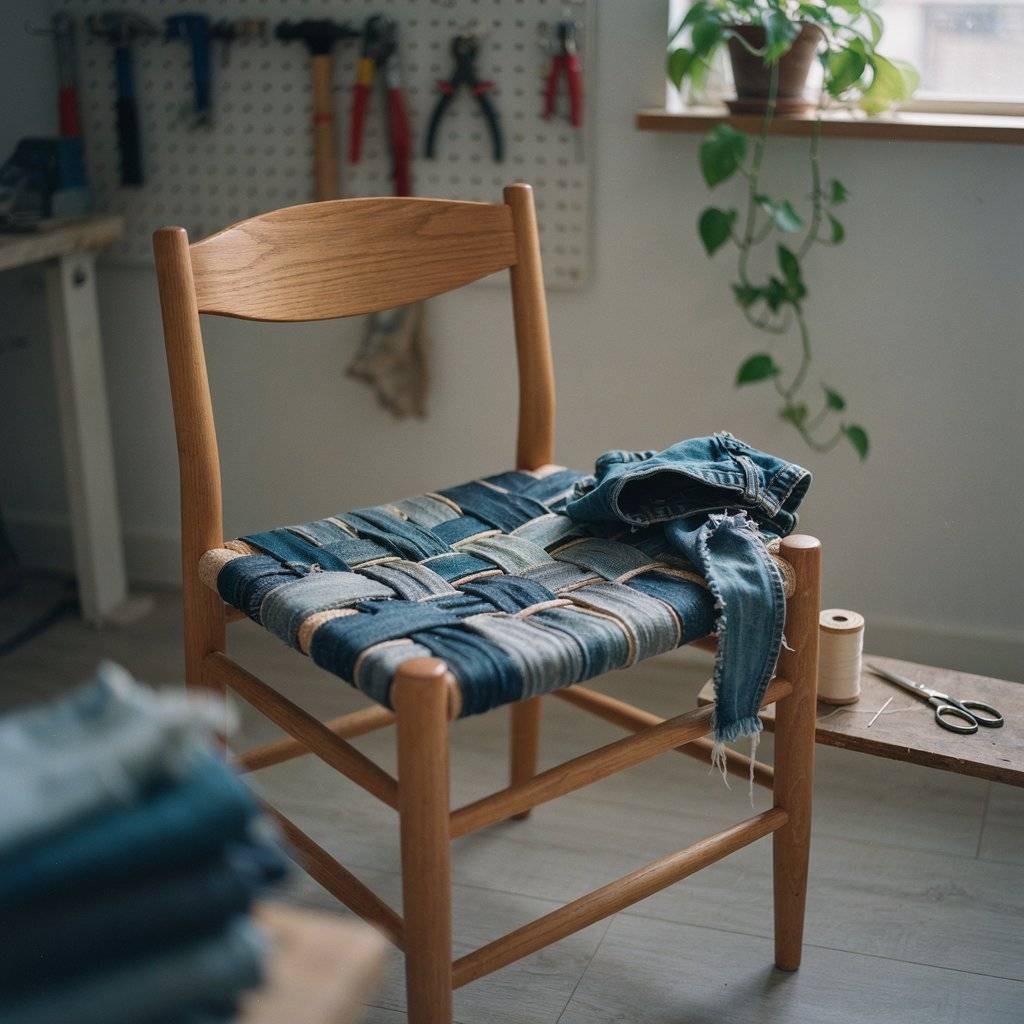
2. Recycled Jeans Woven Chair Seat
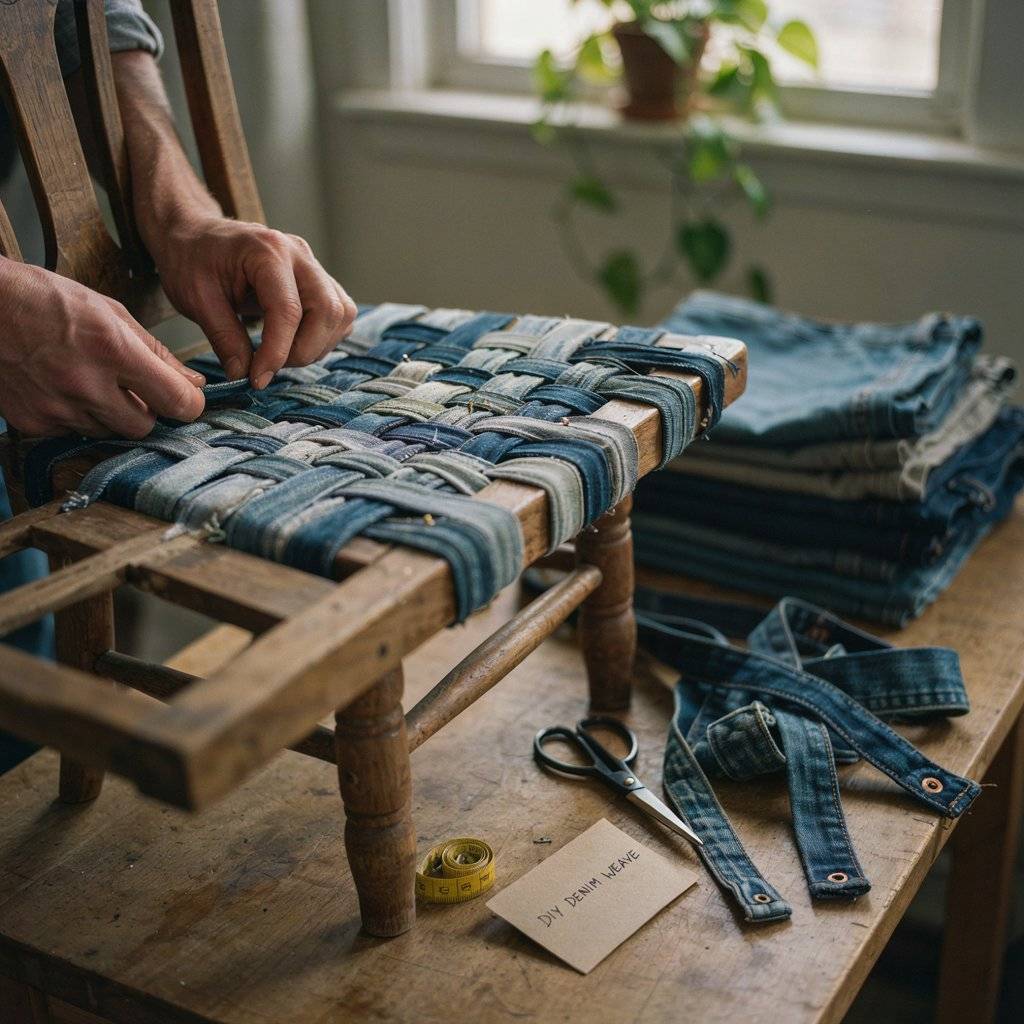
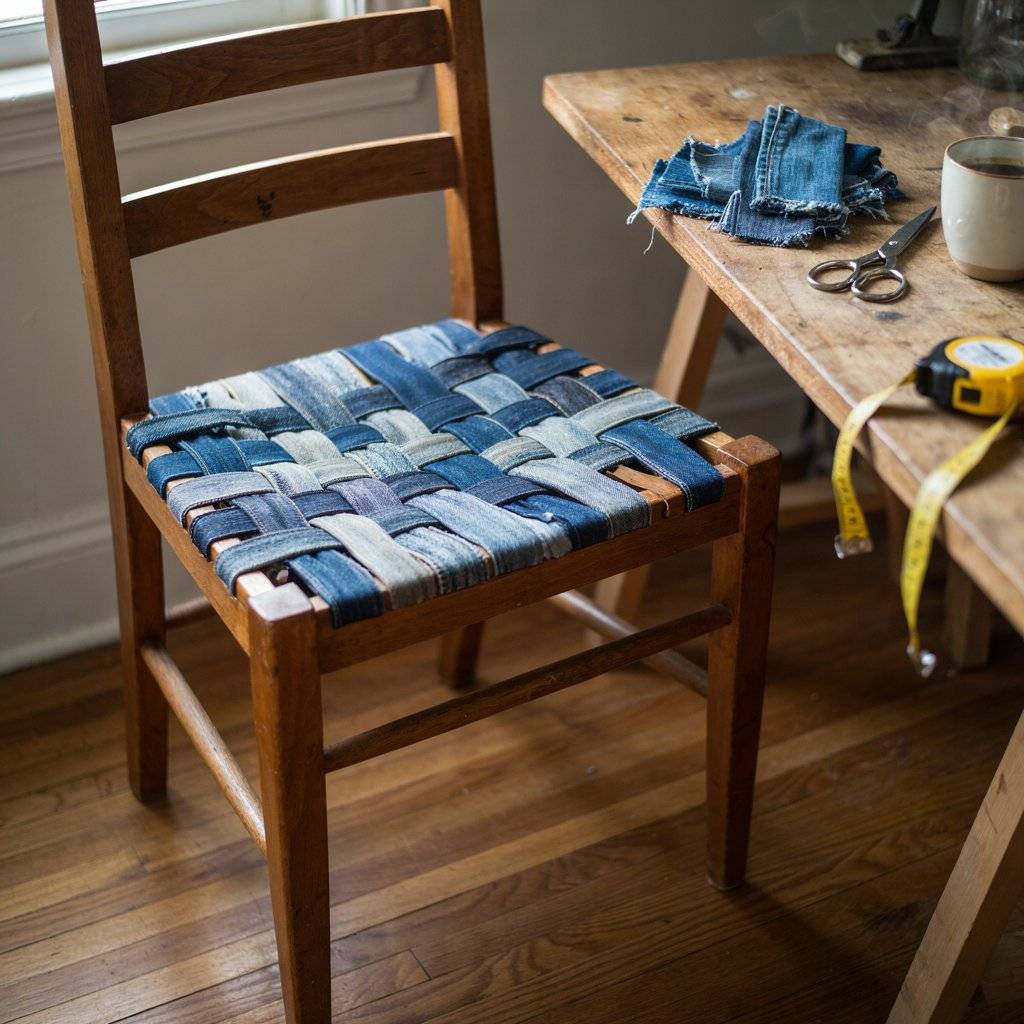
Instead of sewing denim into one large piece, turn old jeans into long strips and weave them into a chair seat. This idea works especially well on wooden chairs with an open seat frame.
Cut strong strips from the jeans, join them where needed, and weave them across the seat while keeping the tension even. Denim works well for this type of project because it is stronger and less stretchy than many lightweight fabrics.
Avoid jeans with a lot of stretch if you want the finished seat to stay firm. Measure the chair carefully before cutting so you have enough material to complete the weave without running short
3. Denim Chair With Original Jean Pockets

Give an old chair some useful character by keeping the pockets from your recycled jeans. When taking the jeans apart, carefully remove several pockets instead of cutting them away.
Use denim pieces to cover the chair seat or back, then sew or attach the pockets where they can remain useful. A pocket on the side or back of a chair can hold a small notebook, remote control, glasses, or other lightweight items.
You can mix different shades of denim around the pockets to create a relaxed patchwork appearance. This approach is especially suitable for a bedroom, reading corner, craft room, or casual home office where practical storage is helpful.

4. Mixed-Shade Denim Patchwork Chair
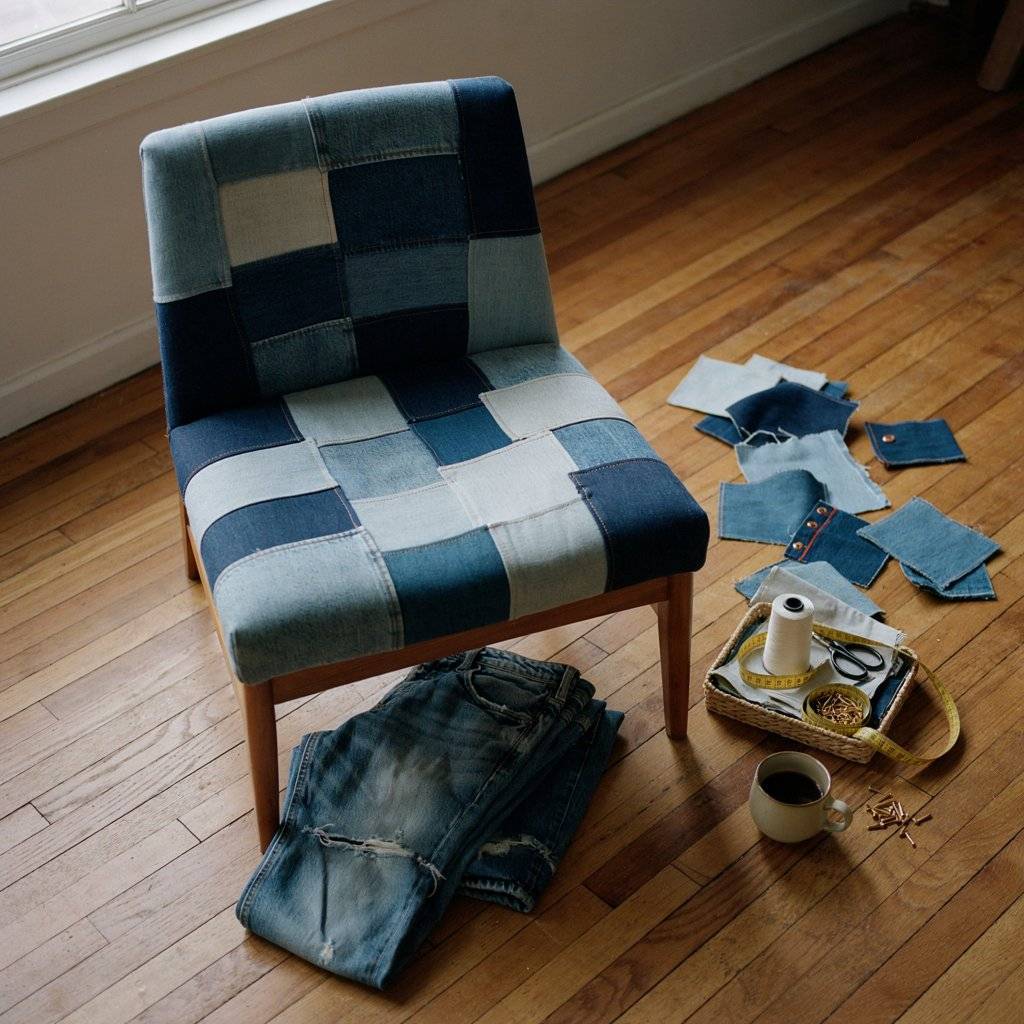
You do not need to use jeans that are all the same color. In fact, combining several shades can give an old chair a much more interesting finish.
Collect light blue, medium blue, dark indigo, and slightly faded denim, then cut the pieces into simple squares, rectangles, or strips. Lay everything out on the floor before sewing so you can balance the different shades across the chair.
You can use the darker pieces around the edges and lighter pieces in the center, or mix them randomly for a casual look. Reclaimed denim has already been used successfully for complete chair upholstery, making this a practical way to reuse several pairs of jeans.
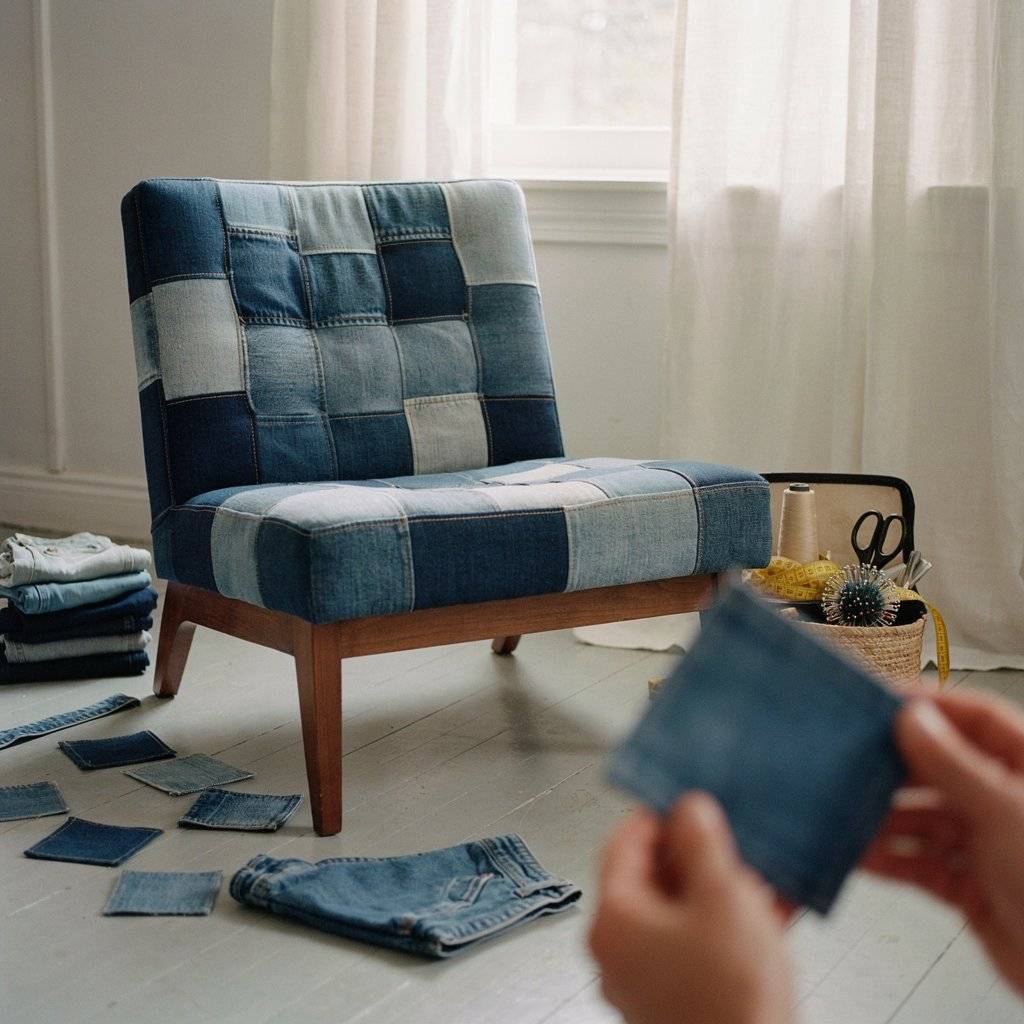
5. Simple Denim Slipcover for an Old Chair
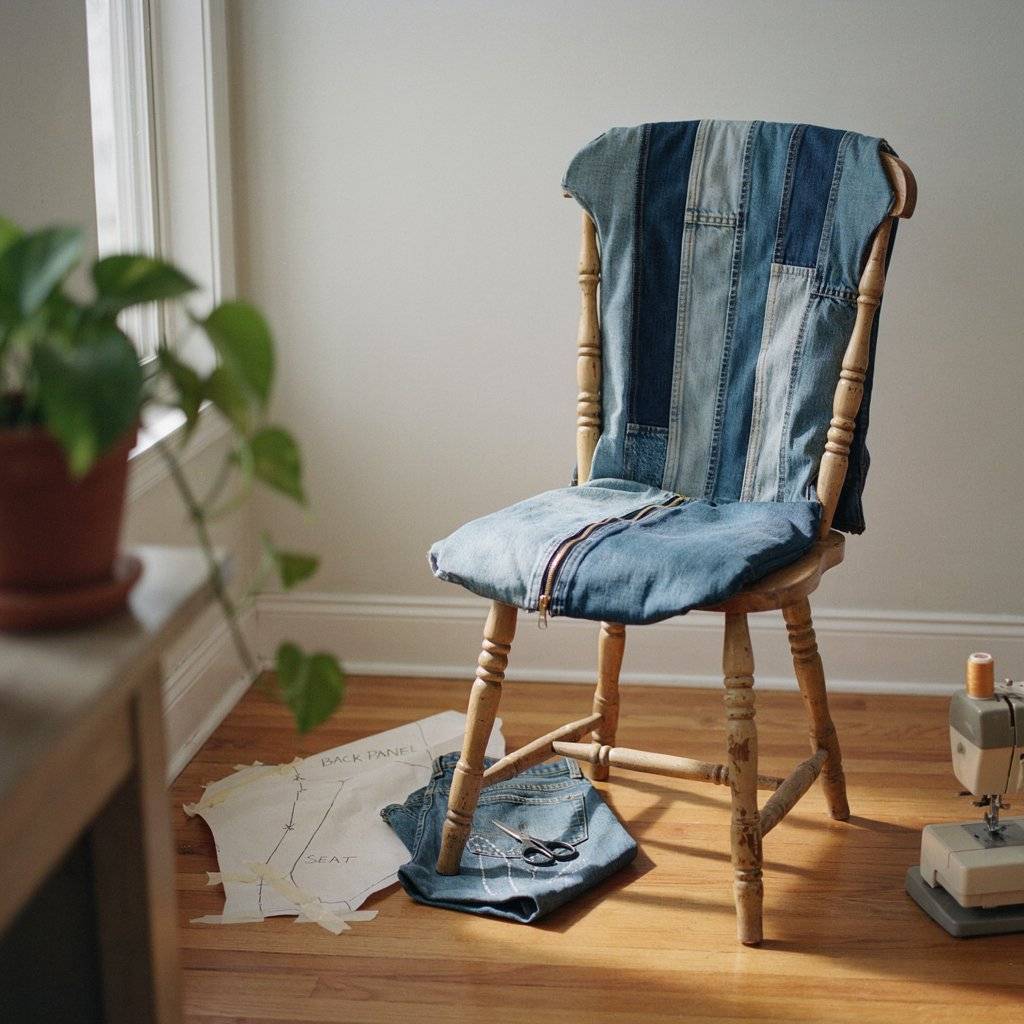
A removable denim slipcover is a useful option when you want to change the chair without permanently attaching the fabric. Start by making a paper pattern from the seat and back, then cut your recycled denim according to those sections.
Sew the pieces together and leave suitable openings where the cover needs to fit around the chair. For a chair cushion, you can also make a removable cover with a zipper so it can be taken off for washing.
This works particularly well for kitchen, patio, or casual seating where the cover may need regular cleaning. Using old jeans also gives the cover a naturally varied texture that plain new fabric may not have. (Make it in denim)

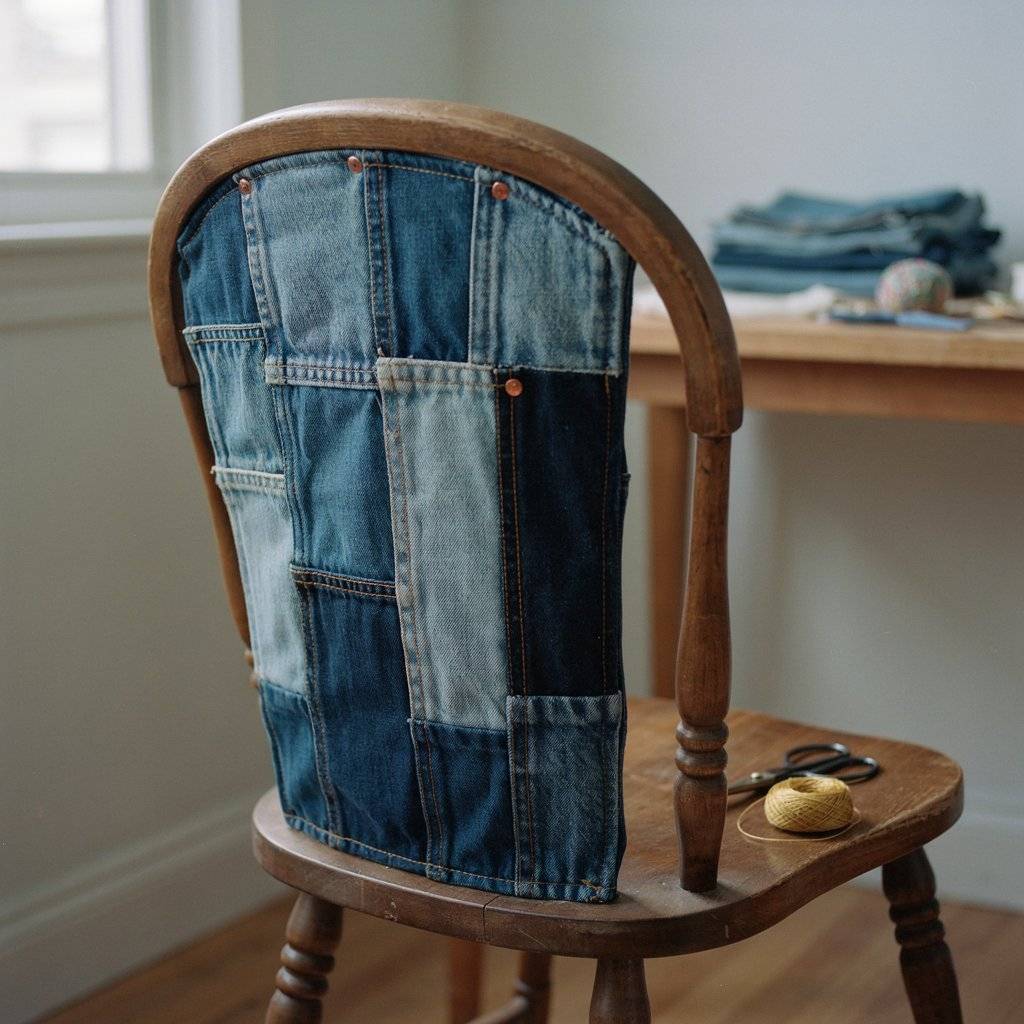
6. Denim Chair Back With Decorative Seams
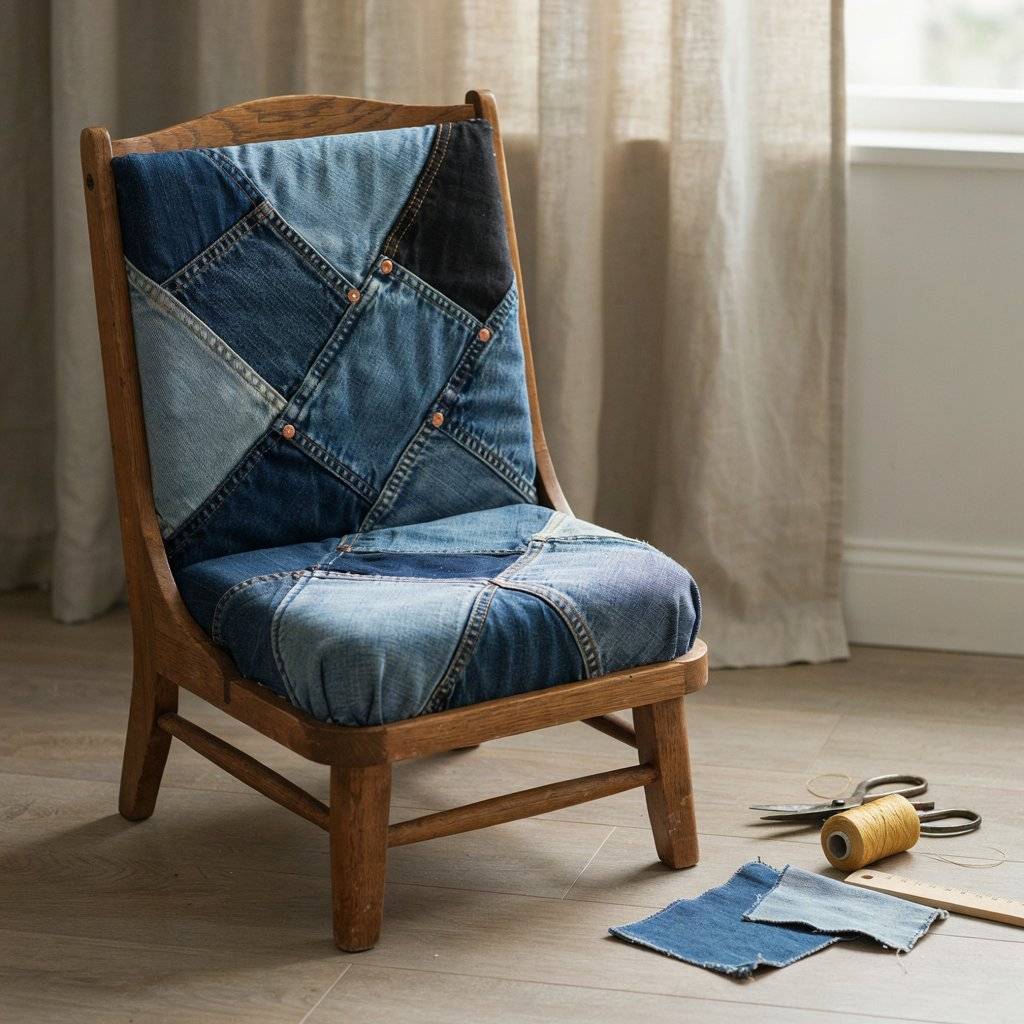
The back of an old wooden chair can become the main feature when you use denim scraps with their original seams. Instead of cutting every piece into identical shapes, keep some thick jean seams and arrange them in straight or crossed lines.
Sew smaller denim pieces between the seams until you have a panel large enough for the chair back. You can attach the finished panel directly to a padded back or create a simple removable cover. The different textures make the chair look handmade without requiring an advanced sewing pattern.
Use sturdy thread and reinforce the corners because chair backs receive regular pulling and handling when people sit down or move the chair.
7. Denim and Fabric Scrap Chair Cushion
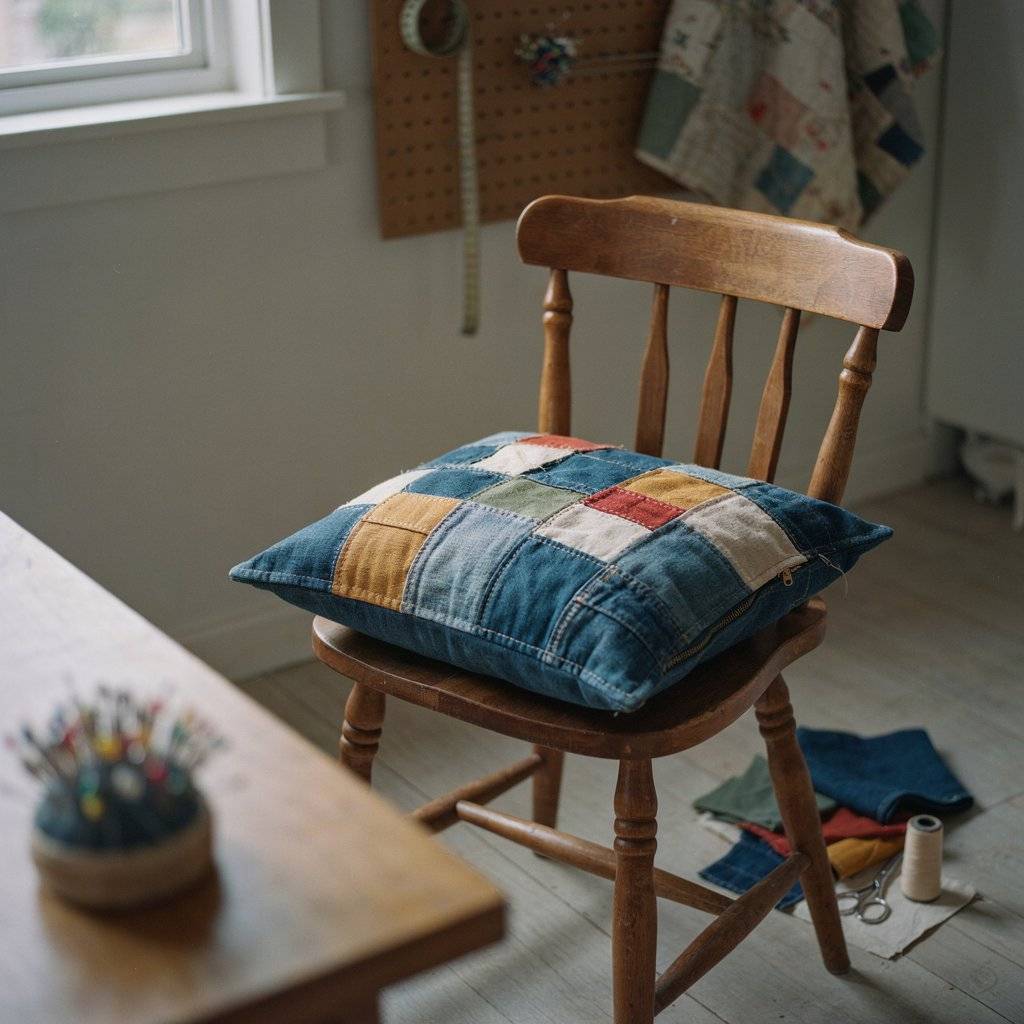
Combine recycled denim with colorful fabric scraps to make a chair cushion with more personality. Denim can form the main part of the cushion while smaller cotton or canvas scraps provide contrast.
Cut your materials into simple rectangles or squares and sew them into one panel before adding the cushion filling. If you already have an old chair cushion, use its cover as a guide for the measurements. Keep the stronger denim pieces around areas that receive more handling, while lighter fabric can be used as decorative sections.
A zipper or envelope-style opening makes the cover easier to remove for cleaning. This project is also a useful way to use small scraps that are too short for larger upholstery projects.

8. Denim Chair Seat With a Border
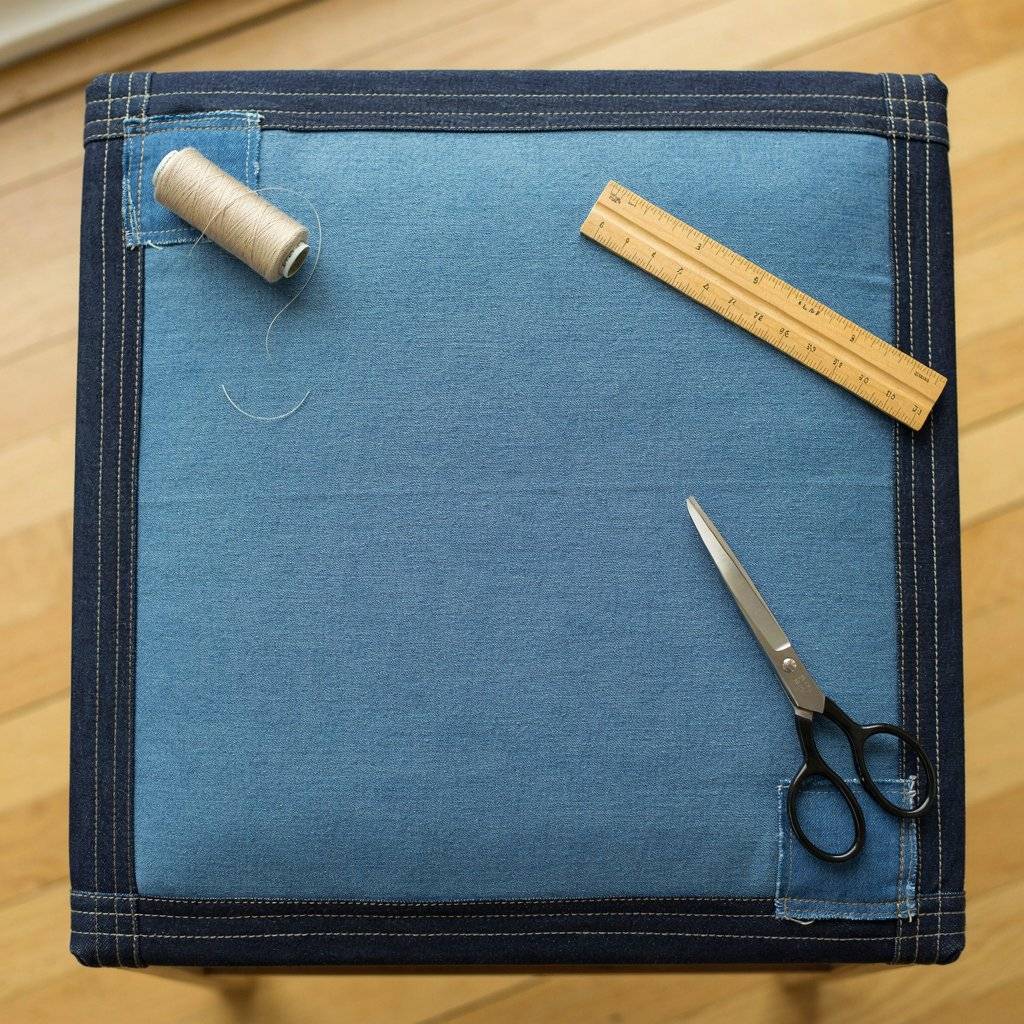
Give a basic chair seat a neat finished appearance by creating a denim border around the main fabric panel. Use recycled jeans for the center and cut longer denim strips for the sides.
A dark denim border around lighter denim creates a simple frame, while similar shades give the chair a softer look. First measure the seat and add enough fabric for wrapping underneath. Sew the border pieces to the center panel before placing the fabric over the cushion.
Pull the material evenly as you secure it underneath, but avoid stretching the denim too tightly. This method works particularly well when you have several small scraps that are too narrow to cover the entire seat.
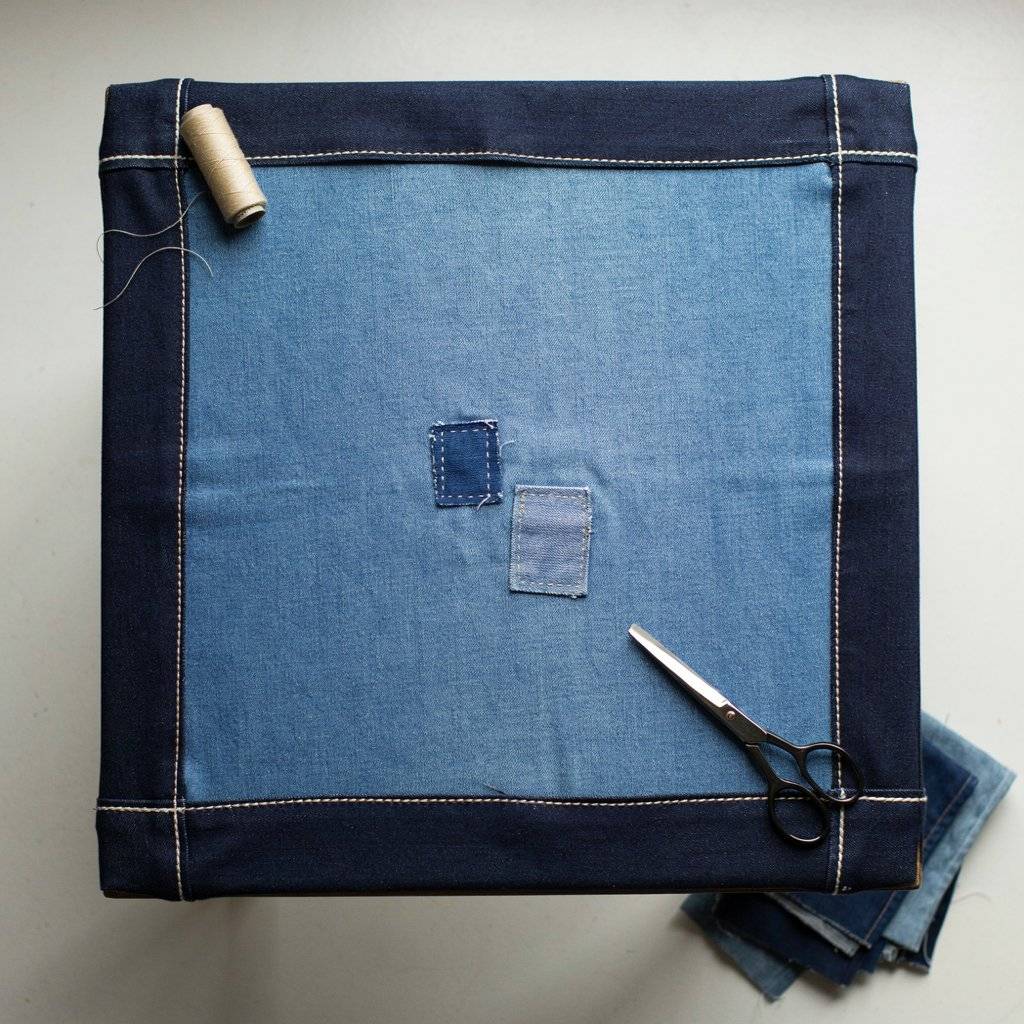
9. Denim Chair With a Braided Fabric Detail
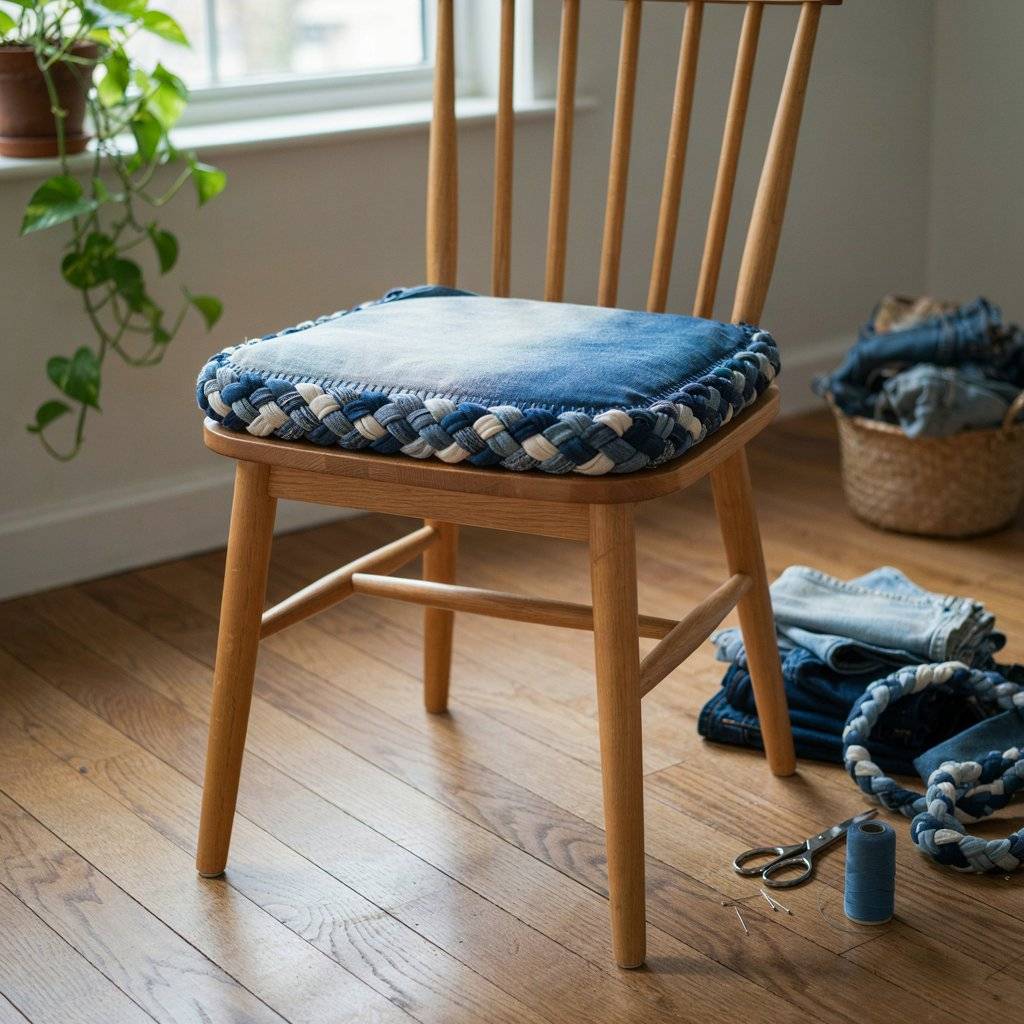
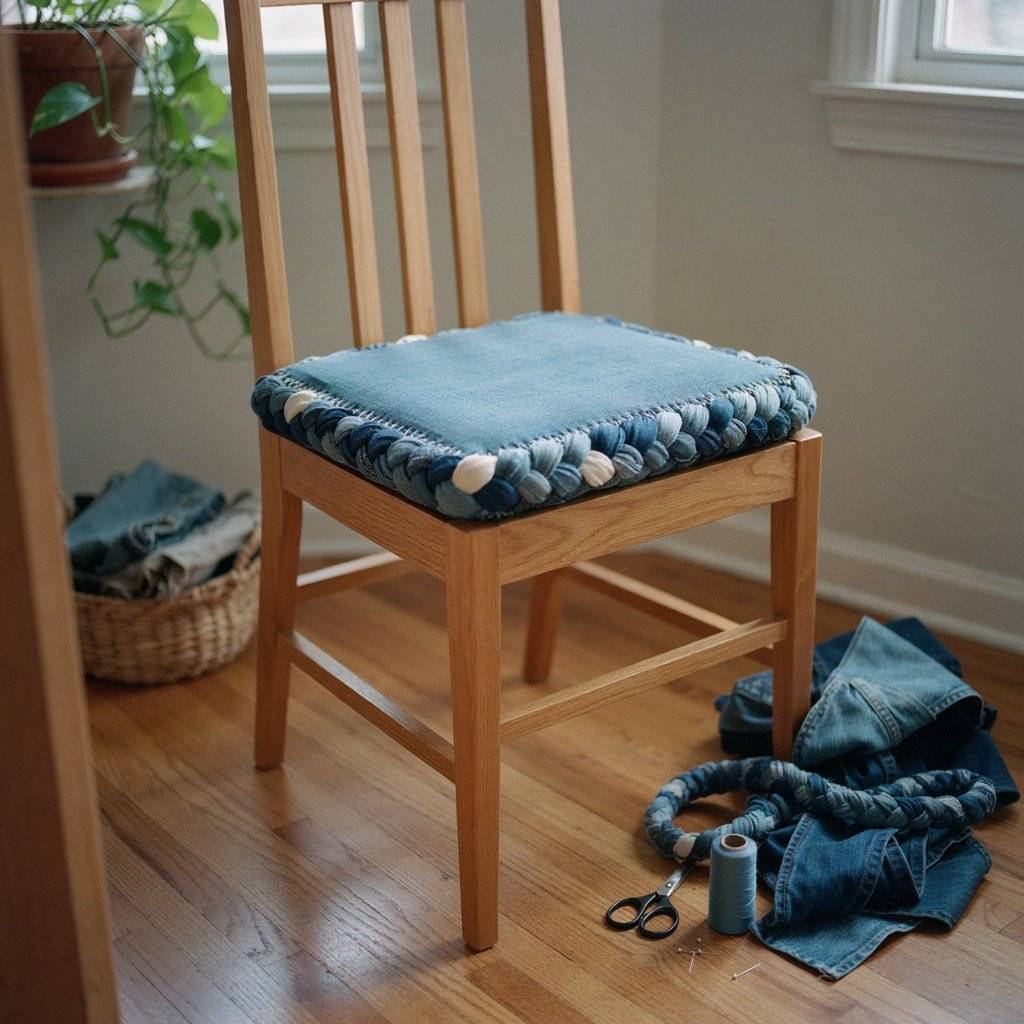
A braided denim detail can add texture without covering the entire chair in denim. Cut long strips from old jeans, preferably from areas without heavy damage, and join shorter pieces when necessary.
Braid three strips together and use the finished braid around the edge of a chair cushion, across the top of a chair back, or along the front of a seat. You can combine denim with a small amount of sturdy cotton fabric for a different texture.
Secure the braid firmly with stitching rather than relying only on glue, especially on a chair that will be used often. This project is a good choice when you have limited denim but still want recycled jeans to become part of the chair design.
10. Denim Scrap Chair With a Geometric Pattern
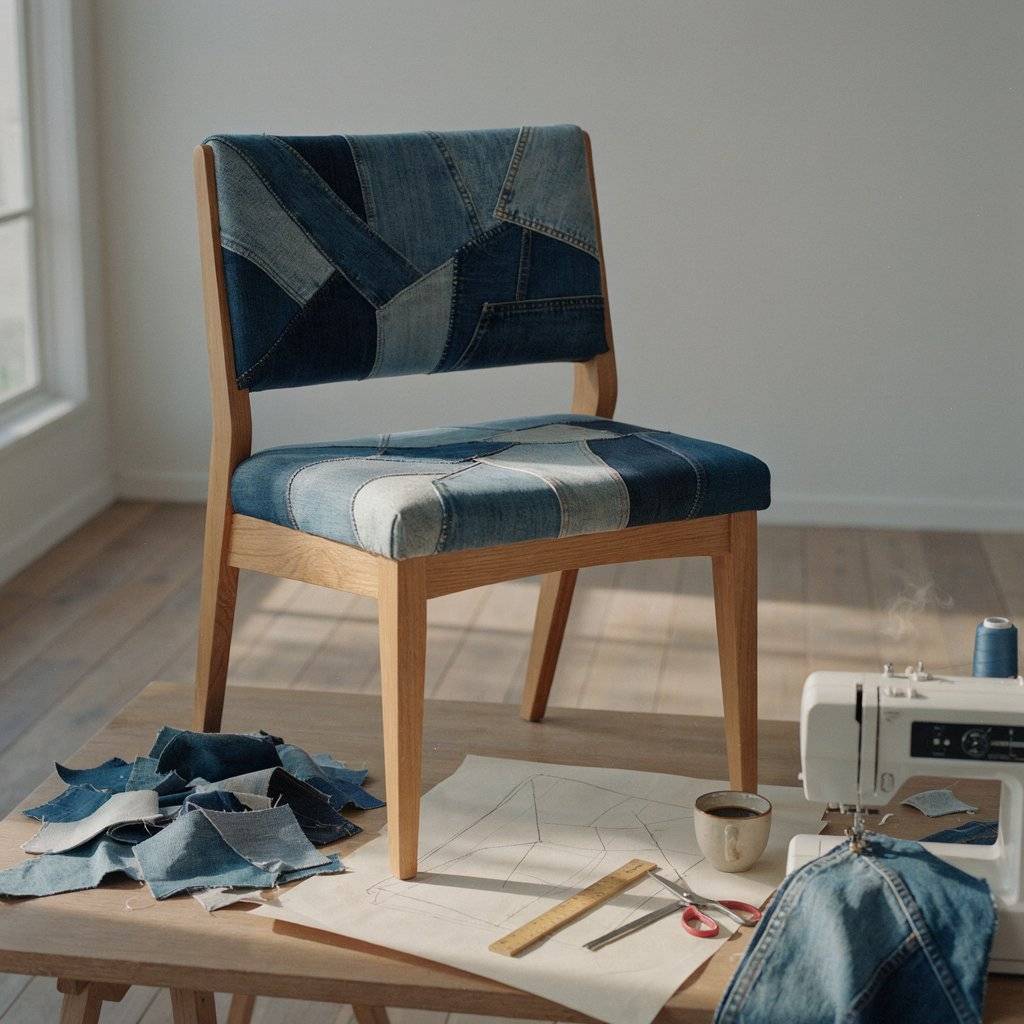
Create a modern-looking chair by arranging denim scraps into a simple geometric pattern. Squares, triangles, rectangles, and narrow strips can be combined to make a design before anything is permanently attached.
Start by measuring the chair seat or back and sketching the pattern on paper. Then place your denim pieces on the pattern and move them around until the different shades look balanced. Sew the sections together in smaller groups before joining the larger pieces.
Keep the edges straight so the finished panel fits the chair properly. This approach works well with leftover jeans because even small pieces can become useful parts of the pattern. It is also an easy way to give an old chair a completely different appearance without buying new upholstery fabric.
17. Denim Chair With Frayed-Edge Panels

If you like a relaxed, handmade appearance, try using denim panels with carefully finished frayed edges. Cut pieces from old jeans and arrange them across the chair seat or back. Leave a narrow edge exposed and gently loosen a few threads to create the frayed effect.
For a cleaner result, sew a straight line just inside the edge so the fabric does not continue unraveling too far. Different shades of denim can be placed side by side to create subtle contrast.
This idea works best on casual indoor chairs where the slightly rough texture fits the room. Avoid excessive fraying on areas that receive heavy wear because loose threads can become messy over time.
18. Denim Chair With Crossed Jean Strips
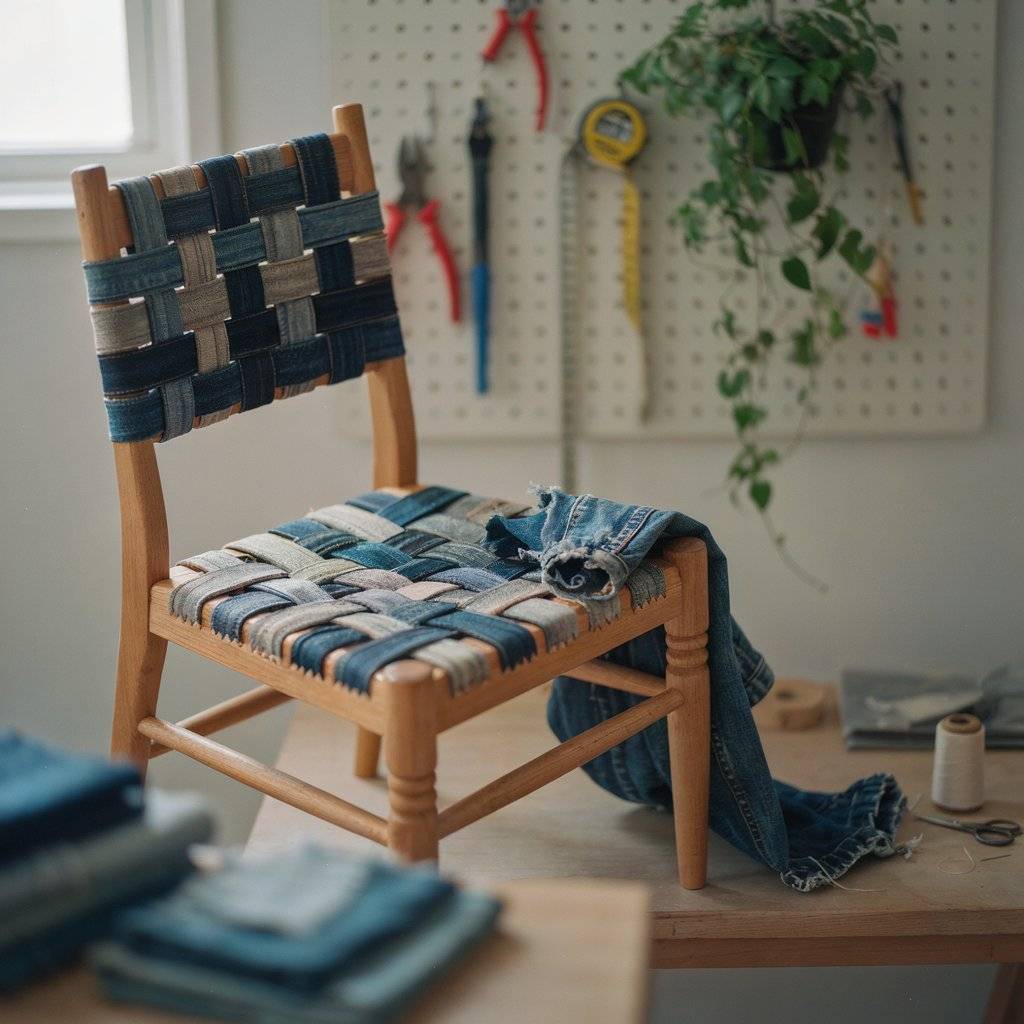
Long strips cut from old jeans can create an attractive crossed pattern across a chair seat or back. Cut several strips to similar widths and arrange them horizontally and vertically, leaving small spaces between some sections if you want the original chair surface to show through.
Stitch the strips securely where they cross and attach the ends underneath the seat frame. You can use light and dark denim together to make the pattern easier to see.
This project does not require enough denim to cover the whole chair, making it useful when you only have a few pairs of old jeans available. Check the tension as you work so the finished strips remain firm without becoming uncomfortable.
19. Denim Chair With Fabric Scrap Pockets
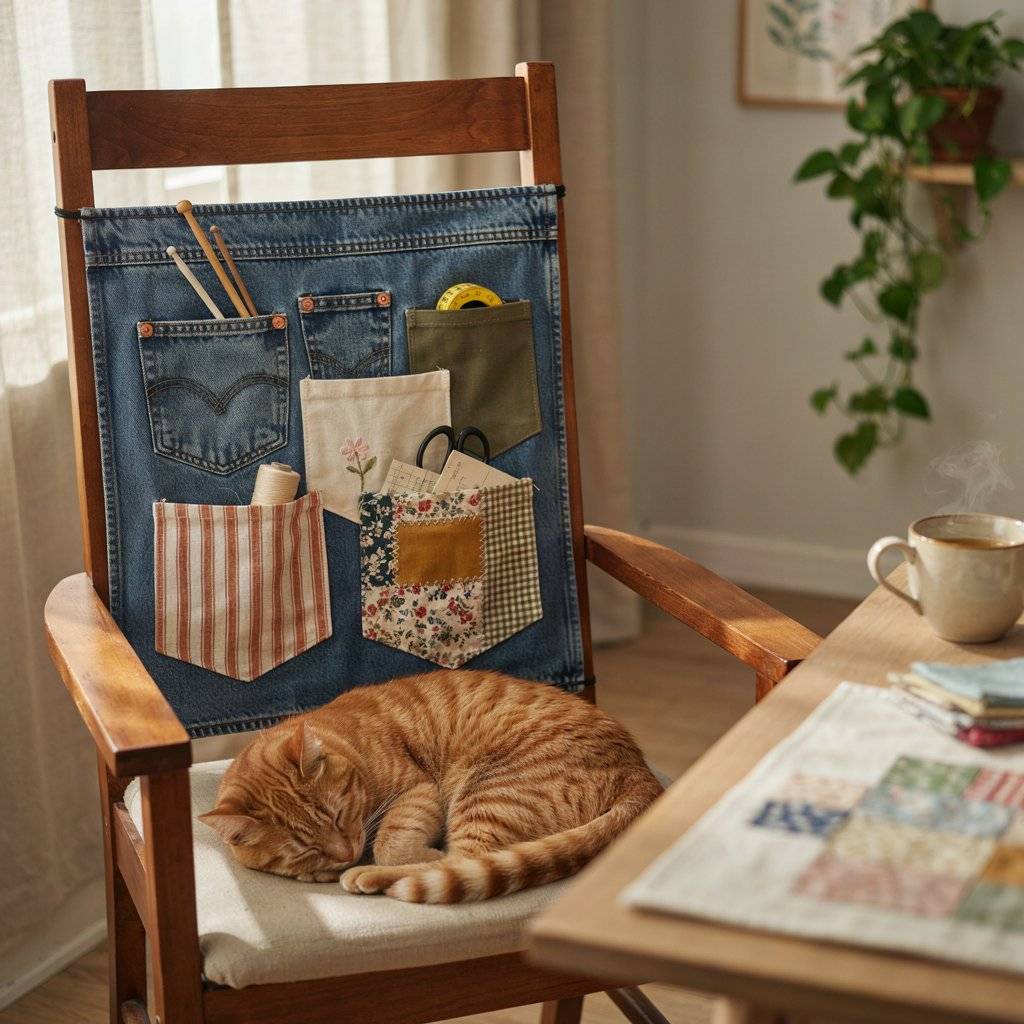
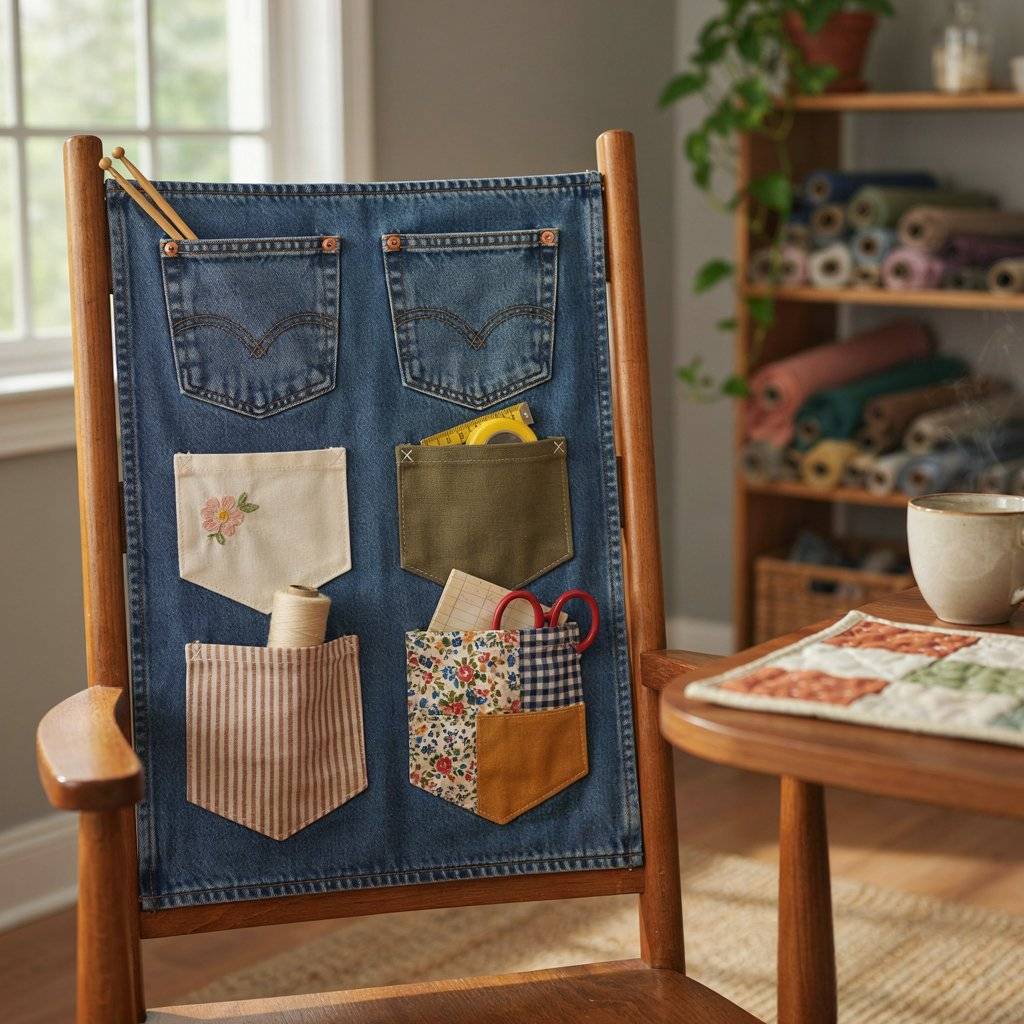
Combine denim and leftover fabric scraps to create a chair that also provides small amounts of storage. Use a strong denim panel as the base and sew several fabric pockets onto it.
Old jean pockets can be mixed with cotton, canvas, or other sturdy scraps to create different textures. Attach the organizer to the side or back of a chair where the pockets are easy to reach. This can be useful beside a craft table, reading chair, or home office.
Keep the pockets fairly shallow and use them for lightweight objects rather than heavy items. Reinforce the top edge and corners with extra stitching so the pockets stay attached when things are taken in and out.
20. Denim Chair Made From a Mix of Jean Panels
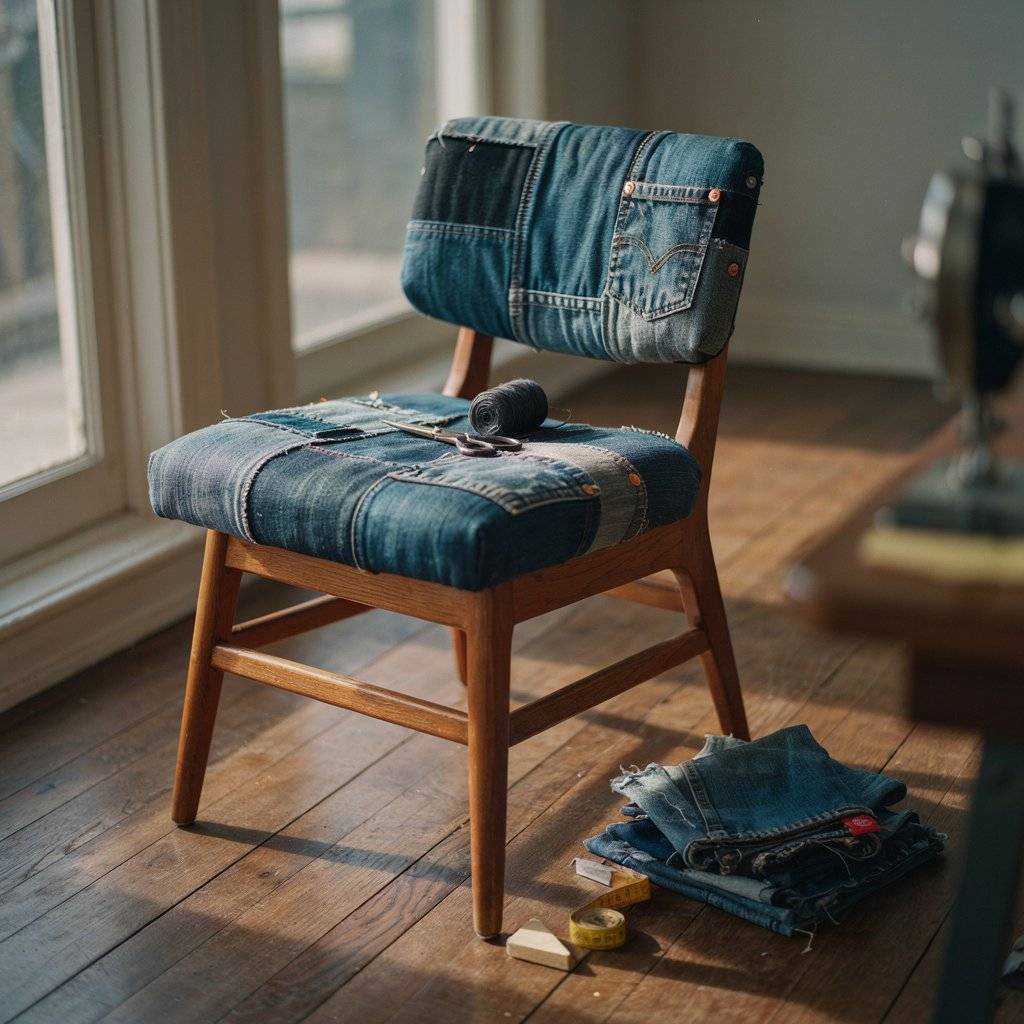
For a larger project, combine several useful sections of old jeans into one complete chair covering. Keep interesting details such as pockets, belt loops, seams, and different shades instead of cutting everything into small pieces.
Arrange the panels on the chair first and mark where each section needs to be joined. Use the original seams as visual lines where possible, then sew the pieces together into separate seat and back panels. Before attaching the covering, replace worn foam or padding if necessary.
Pull the denim evenly and secure it underneath the chair frame. This approach gives an old chair a new purpose while making the most of jeans that are no longer suitable to wear.
Practical Tips for Making a DIY Denim Chair
Working with recycled jeans is different from working with lightweight cotton because denim can be thick, especially around seams and pockets. A little preparation can make the project much easier.
Choose the Right Parts of the Jeans
Do not automatically use every section of an old pair of jeans. Check the fabric first for thin areas, stains, holes, or serious wear. The strongest sections are usually better for the main seat and back. Smaller scraps can still be useful for decorative pieces, pockets, or appliqué.
FAQs
Can I use any old jeans for a DIY denim chair?
You can use most old jeans, but check the fabric carefully before starting. Avoid sections that are very thin, badly damaged, or stretched out.
Strong denim from the legs is usually useful for chair seats, backs, and larger panels. Smaller pieces can be saved for pockets, appliqué, borders, and decorative details. If the jeans have a little stretch, they may still work, but they can be harder to keep evenly fitted.
Wash and dry the jeans before cutting so you are working with clean fabric. Also remember that thick seams and waistbands may require a heavier sewing needle.
How many pairs of jeans do I need to cover a chair?
The amount depends on the size and design of the chair. A small dining chair may need only a few pairs, while a larger armchair can require considerably more fabric.
Patchwork designs can also use less continuous fabric because you can join smaller pieces together. Before cutting your jeans, measure the seat, back, and any other sections you plan to cover. Add extra fabric for seams and for wrapping material underneath the seat.
It is better to collect more jeans than you think you need, especially if you want to match shades or keep useful details such as pockets and original seams.
Do I need a sewing machine to make a denim chair?
A sewing machine can make the job faster, but it is not always necessary. Smaller projects, such as attaching a few denim pockets or making simple decorative pieces, can be completed by hand with a strong needle and durable thread.
Larger chair covers are more demanding because several layers of denim can become difficult to sew by hand. If you use a sewing machine, choose a needle suitable for heavier fabric and sew slowly through thick areas. You can also simplify the project by using denim mainly for decorative sections rather than trying to cover the entire chair.
How can I make recycled denim chair covers easier to clean?
A removable cover is one of the simplest solutions. Instead of permanently attaching the denim to the chair, make a cover that can be removed with a zipper, ties, or an envelope-style opening. Wash the recycled jeans before making the cover and follow the care instructions suitable for the fabric.
If the chair will be used frequently, choose sturdy denim and reinforce areas that receive the most wear. Avoid complicated decorations that could make washing difficult.
For outdoor chairs, remember that ordinary recycled denim is not automatically weatherproof, so keep the furniture protected from prolonged rain and strong sunlight.
Conclusion
DIY denim chair projects are a practical way to give old furniture a new purpose while using jeans and fabric scraps that might otherwise be thrown away. You do not need to make the project complicated. A simple patchwork seat, a few recycled pockets, woven denim strips, or a removable cover can completely change the look of an ordinary chair.
Before starting, inspect your old jeans, wash them, measure the chair, and decide which sections of fabric are strong enough for everyday use. Save smaller pieces for decorative details rather than throwing them away. Most importantly, make sure the finished chair is securely attached and comfortable to use.
With a little planning and some basic sewing skills, recycled denim can become a durable and useful part of your home furniture instead of household waste.
Related Post: