
Let’s be real: cleaning the house can feel like a full-time job. Between work, family, and just trying to relax, who has hours to scrub baseboards or fight with a greasy stovetop?
The good news is, you don’t have to. The pros have a few tricks up their sleeves that make the whole process faster, easier, and a lot less toxic.
We’ve gathered the best tips from professional cleaners and experts to help you get that spotless look without losing your weekend.
1. The Pro System: Work Smarter, Not Harder

Professional cleaners don’t just scrub harder; they follow a specific order. If you want to save time, start by dusting from the top of the room and work your way down.
If you dust the coffee table first and then the ceiling fan, all that dust is just going to fall right back onto the table you just cleaned. Start with ceiling fans, light fixtures, and high shelves, then move to furniture, and finally, do the floors last.
Another huge time-saver is the “one tool” method. Instead of running from room to room switching tools, pick one tool (like a microfiber cloth or a vacuum) and use it everywhere it’s needed in the whole house before moving to the next tool.
It feels weird to leave a room “half-done,” but it actually cuts your cleaning time in half because you aren’t constantly switching gears.

2. Non-Toxic Heroes: Vinegar, Baking Soda, and Lemons
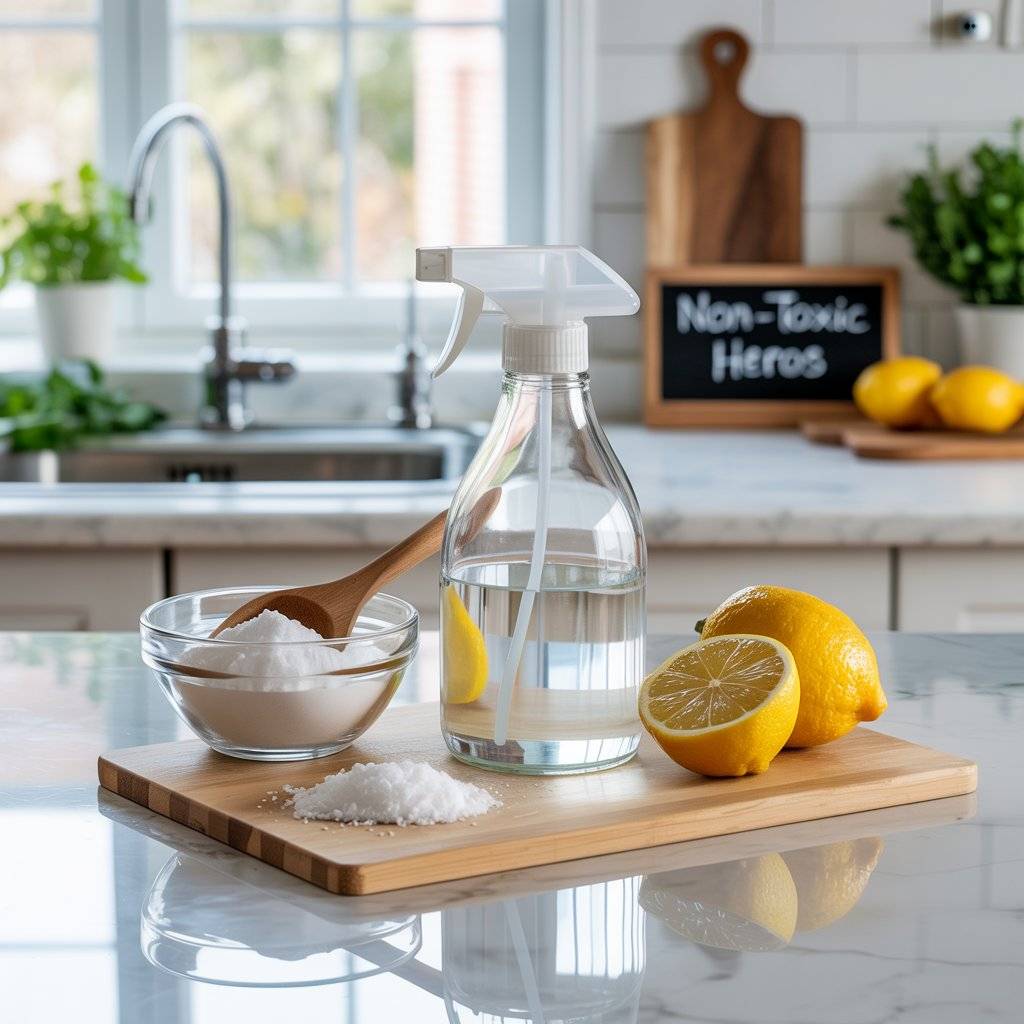
You don’t need a cabinet full of harsh chemicals to get a deep clean. In fact, some of the best cleaners are probably already in your kitchen.
White vinegar is a superstar for cutting through grease and removing mineral deposits. Mix equal parts vinegar and water in a spray bottle, and you’ve got an all-purpose cleaner that works on countertops, windows, and mirrors.
For scrubbing power, baking soda is your best friend. Sprinkle it on a sponge to polish a stainless steel sink, or mix it with a little water to make a paste that tackles baked-on food in the oven.
If you want to give your cutting boards a fresh scent and a deep clean, cut a lemon in half, sprinkle salt on the board, and use the lemon to scrub. The acidity cuts grease while the salt acts as a gentle abrasive.

3. Kitchen Hacks That Actually Work
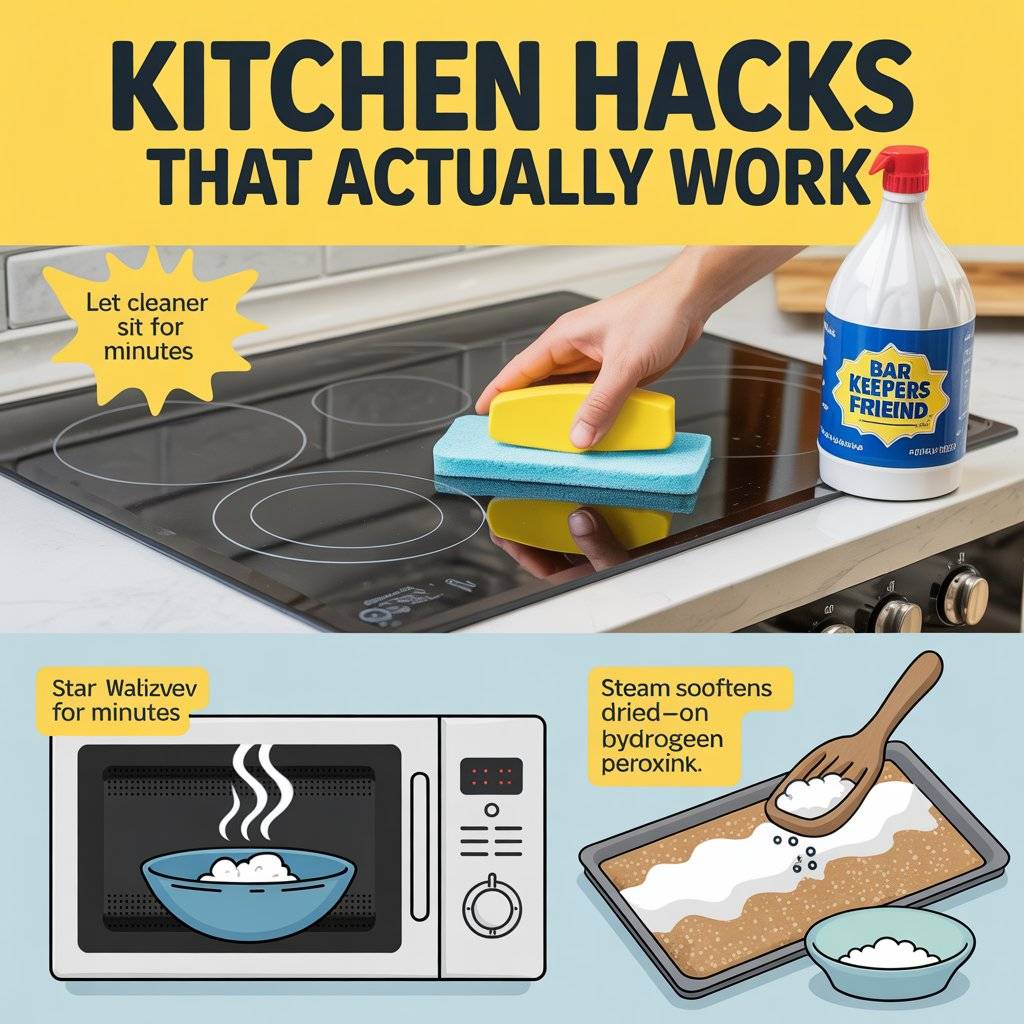
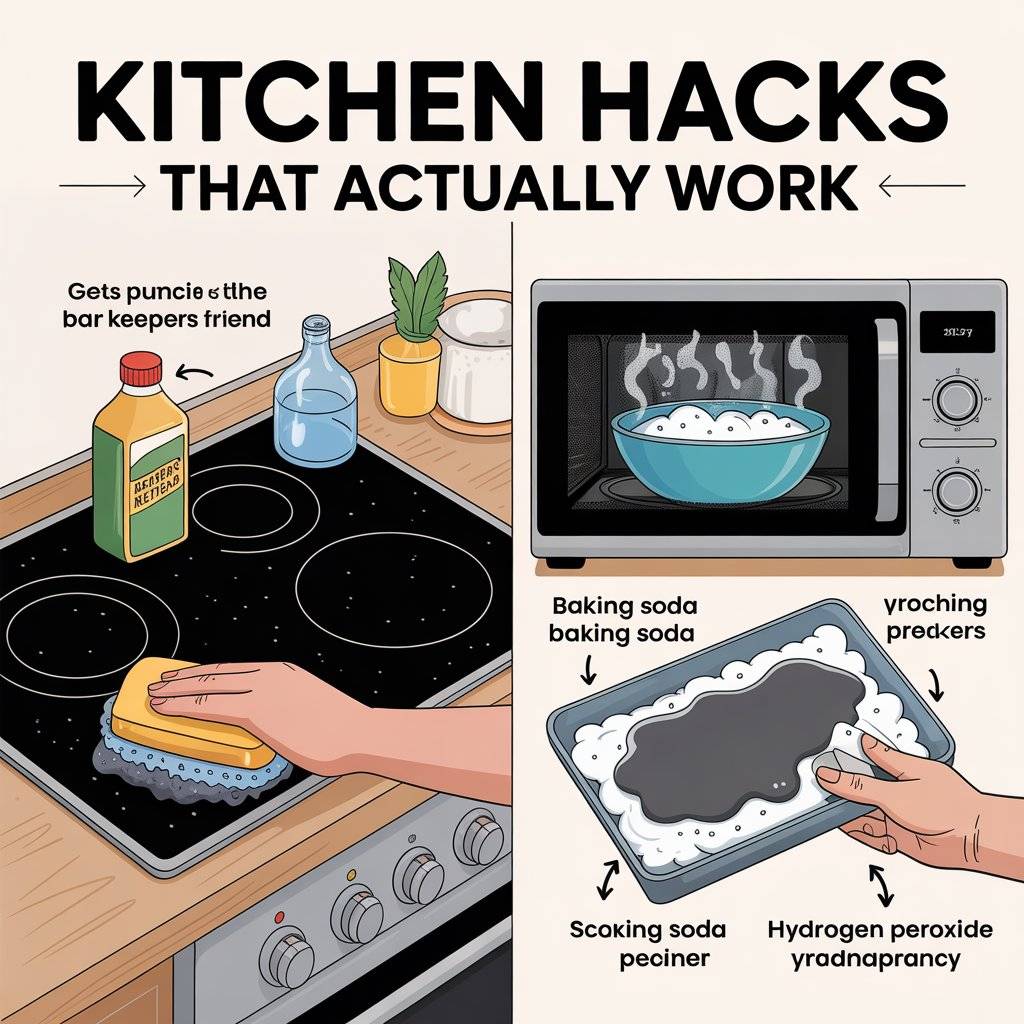
The kitchen gets the messiest, but these hacks make cleanup a breeze. If you have a glass stovetop or stainless steel appliances that look cloudy, grab a pumice stone (wet it first!) for tough hard water rings on sinks, or use Bar Keepers Friend with a Scrub Mommy sponge. Let the cleaner sit for a few minutes to break down the mineral deposits before wiping it away.
If your microwave looks like a science experiment after reheating spaghetti, don’t scrub until your arms hurt. Fill a microwave-safe bowl with water and a spoonful of baking soda, and then heat it until it boils.
The steam will soften that entire dried-on gunk, and you’ll be able to wipe it away with zero effort. For scorched baking sheets, sprinkle baking soda over the pan, pour on a little hydrogen peroxide, add another layer of baking soda, and let it sit for a couple of hours. The stains will lift right off.
4. Bathroom Secrets for a Sparkling Space

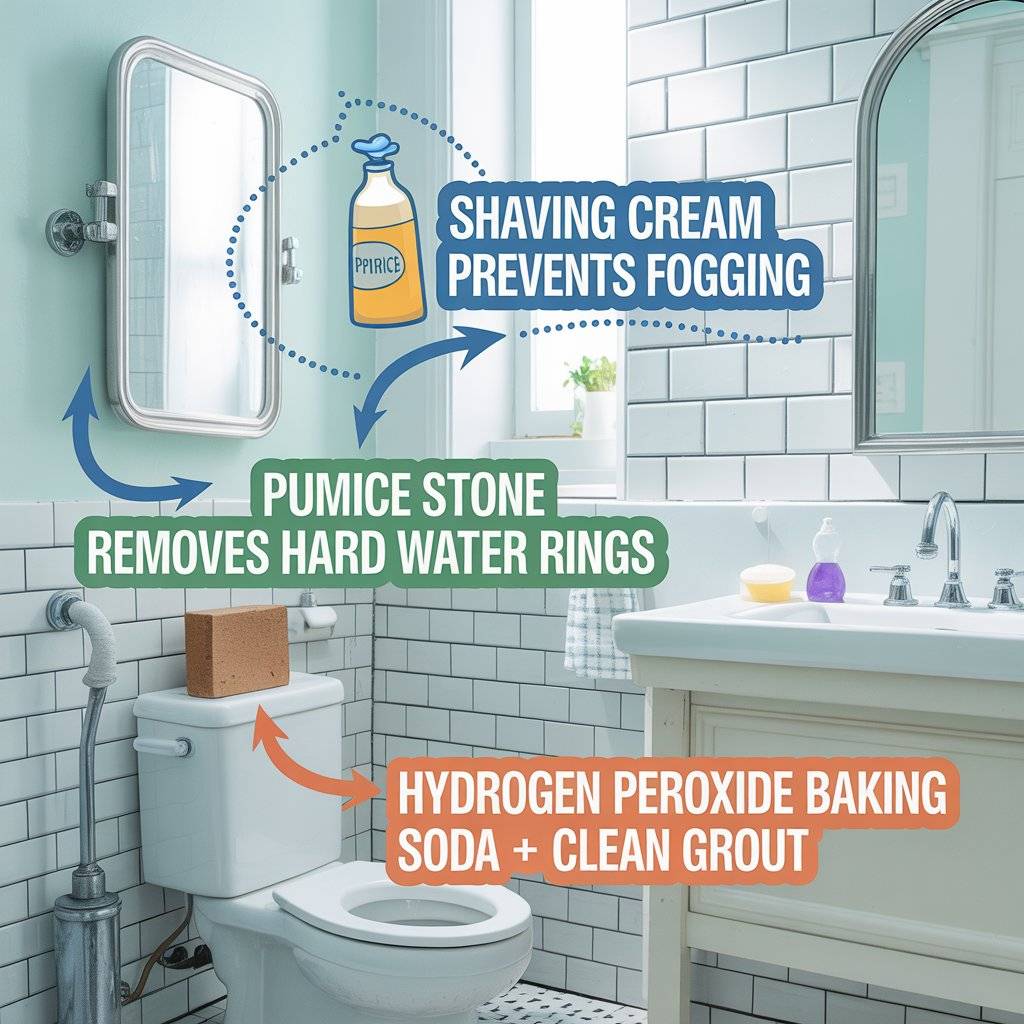
Bathrooms can be a pain, but a few pro tricks can save you from scrubbing endlessly. If your mirror fogs up every time you shower, apply a thin layer of shaving cream, let it sit for a minute, and then buff it dry. It creates a film that prevents fogging for days.
For stubborn hard water rings in the toilet, a wet pumice stone is magic. It scrubs away the mineral buildup without scratching the porcelain. To tackle grout that has turned from white to gray, mix equal parts hydrogen peroxide and baking soda to form a paste.
Spread it on the grout lines, let it sit for 10 minutes, and scrub with an old toothbrush. You’ll be shocked at how clean it gets.
5. Smart Tools and Simple Fixes
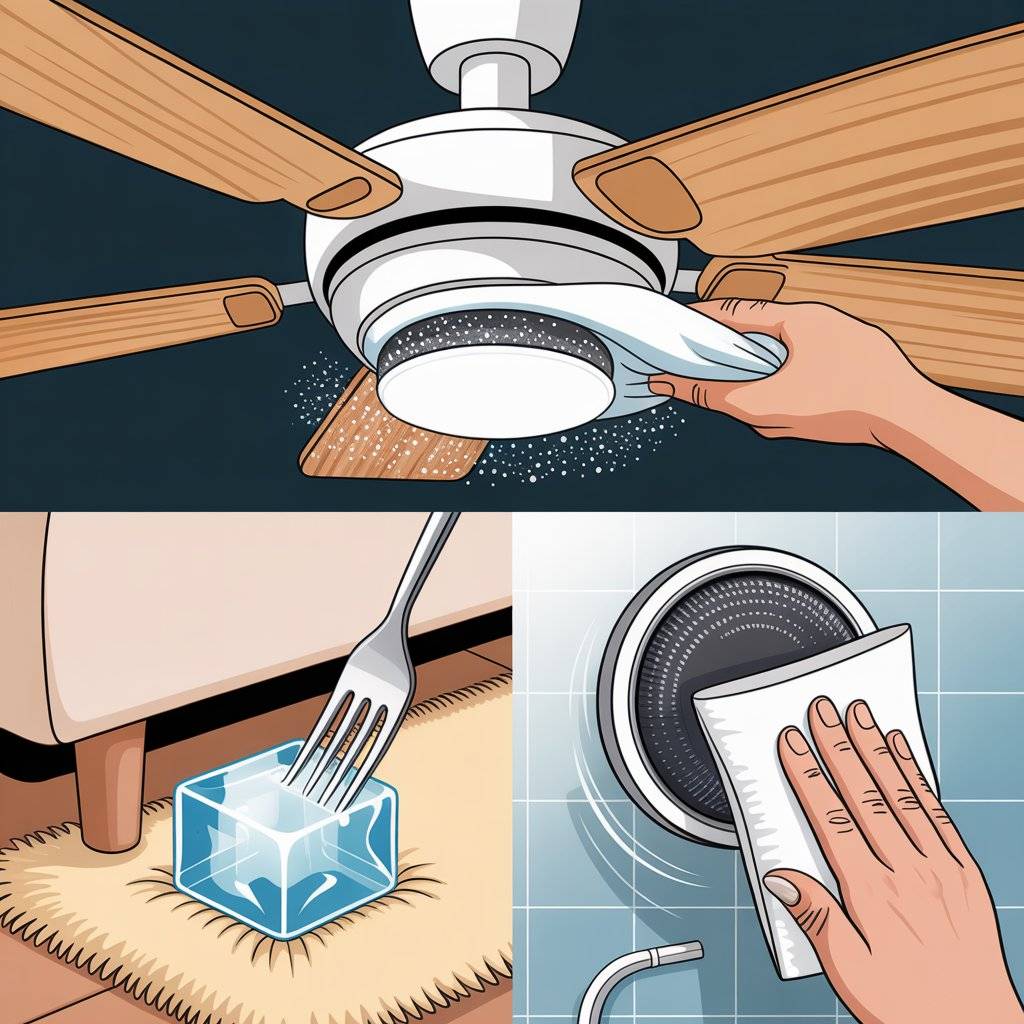
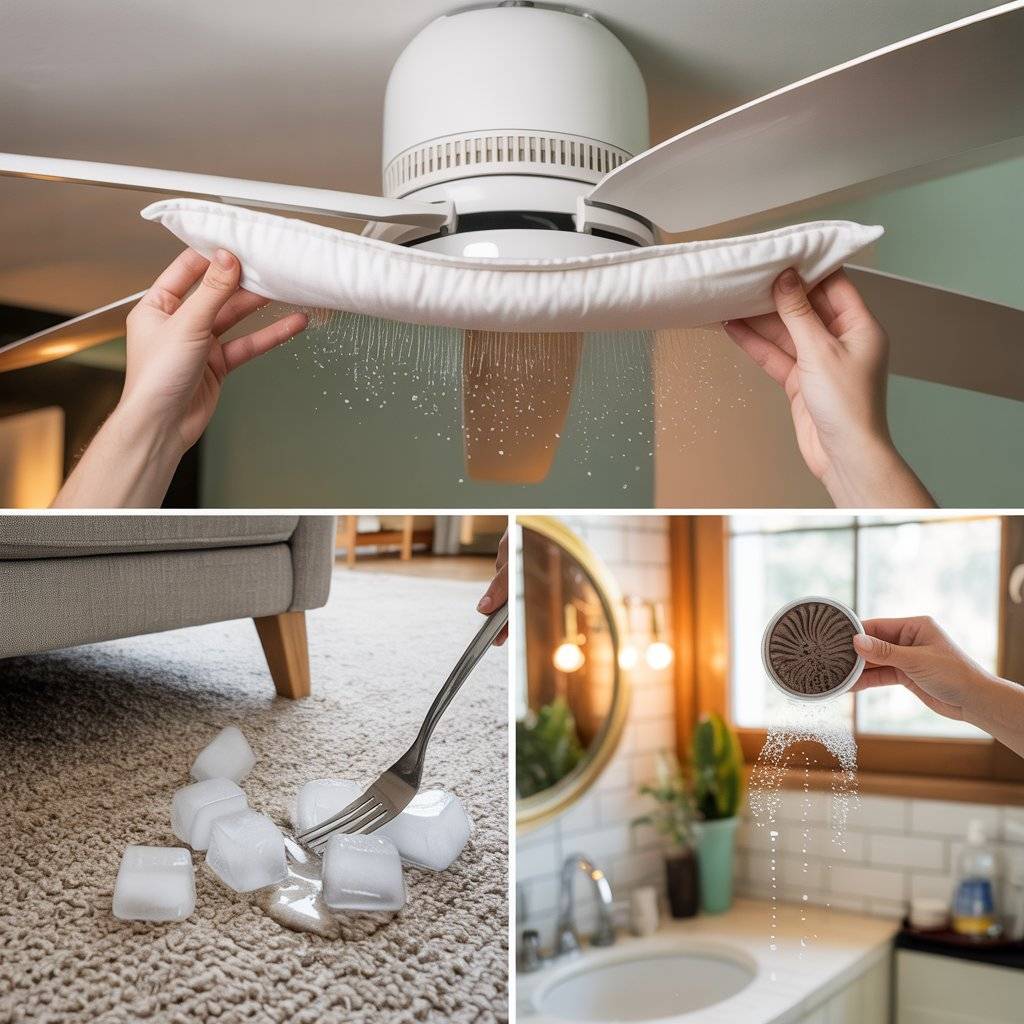
Sometimes the best hack isn’t a chemical; it’s a tool you already own. Cleaning ceiling fans usually results in dust flying everywhere. Stop the mess by sliding an old pillowcase over each fan blade. Pull the case back, and all the dust gets trapped inside the fabric instead of floating down onto your bed.
If you have carpet dents from heavy furniture, place an ice cube in the dent and let it melt. As the water soaks in, use a fork to gently fluff the fibers back up . For a streak-free shine on glass and mirrors, ditch the paper towels. Coffee filters don’t leave lint behind, so your mirrors will stay crystal clear.
6. Little-Known Tricks for Stubborn Messes
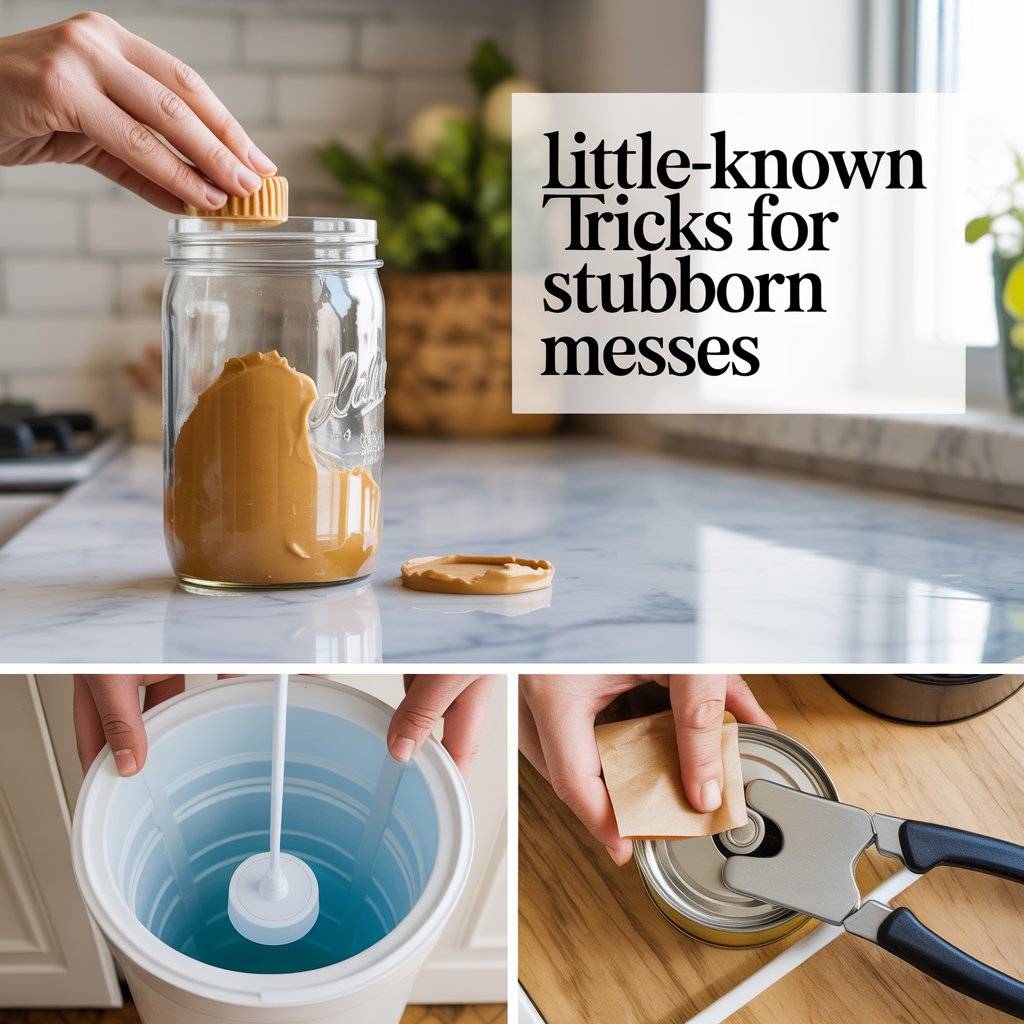
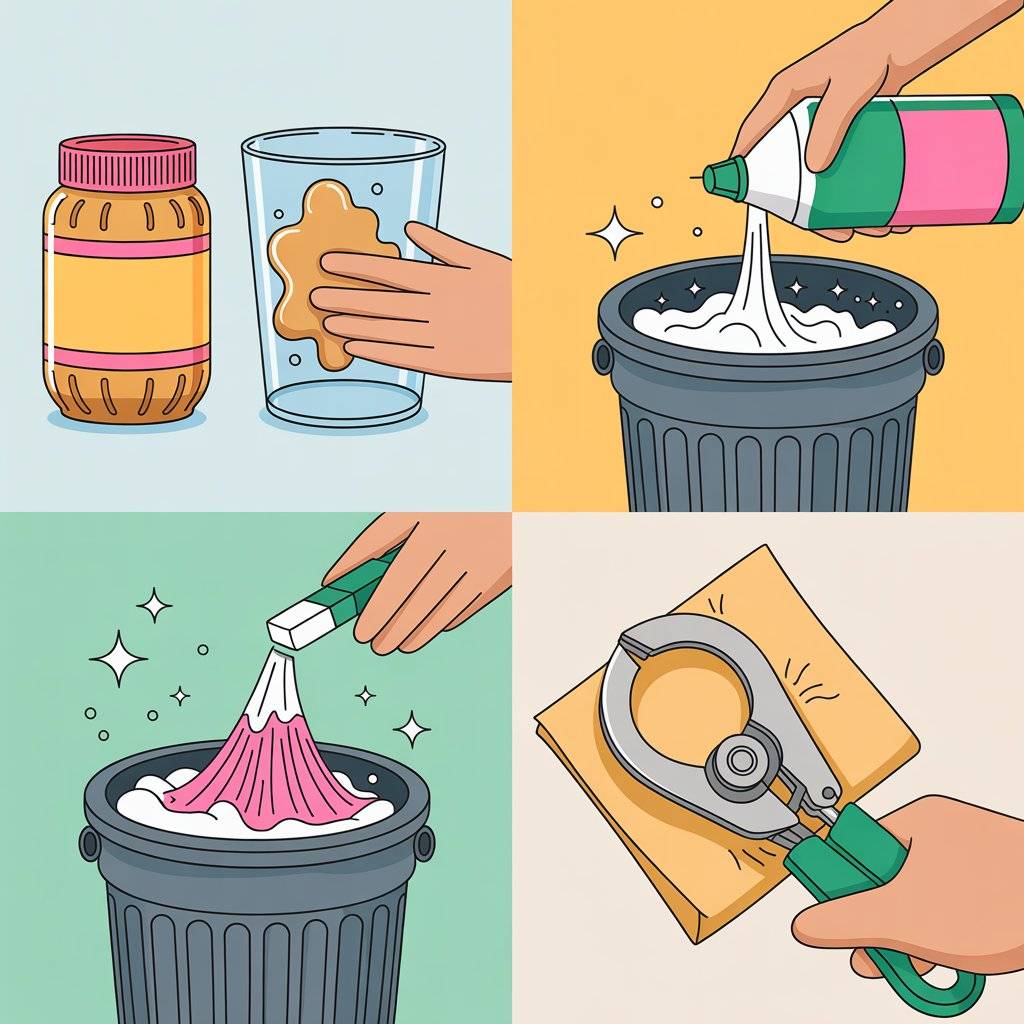
Got a sticky residue on a glass from a price tag? Reach for the peanut butter. Rub a little smooth peanut butter or toothpaste over the sticky spot, let it sit for a minute, and wipe it off with a damp cloth. The oils dissolve the glue.
If your trash can is starting to smell funky, squirt some liquid toilet bowl cleaner inside. Let it cling to the sides for a few minutes, scrub, and rinse. It cuts through the grime and leaves the can smelling fresh.
For a can opener that’s looking grimy, clamp a piece of waxed paper in the gears and turn the handle. It pulls out the gunk and leaves a light wax coating so it spins easier.
7. Maintaining a Clean Home Easily
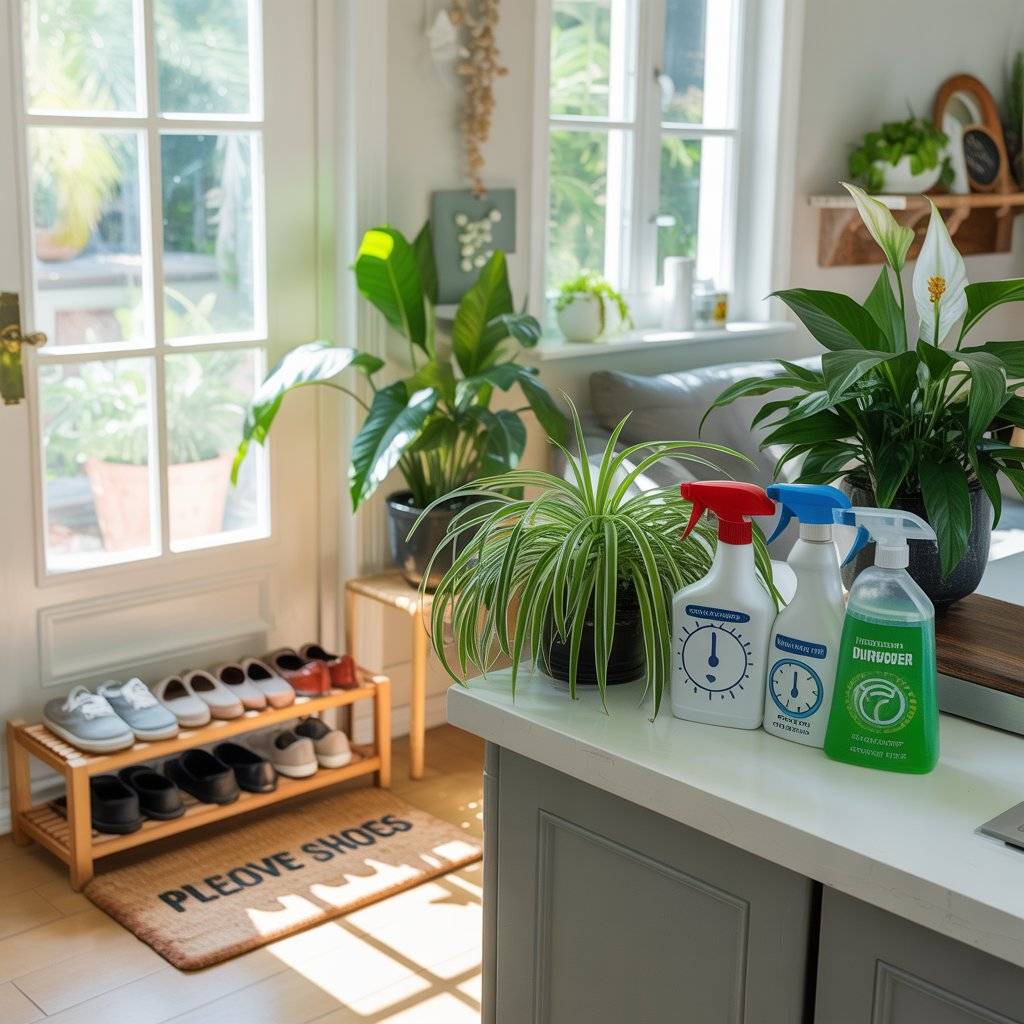
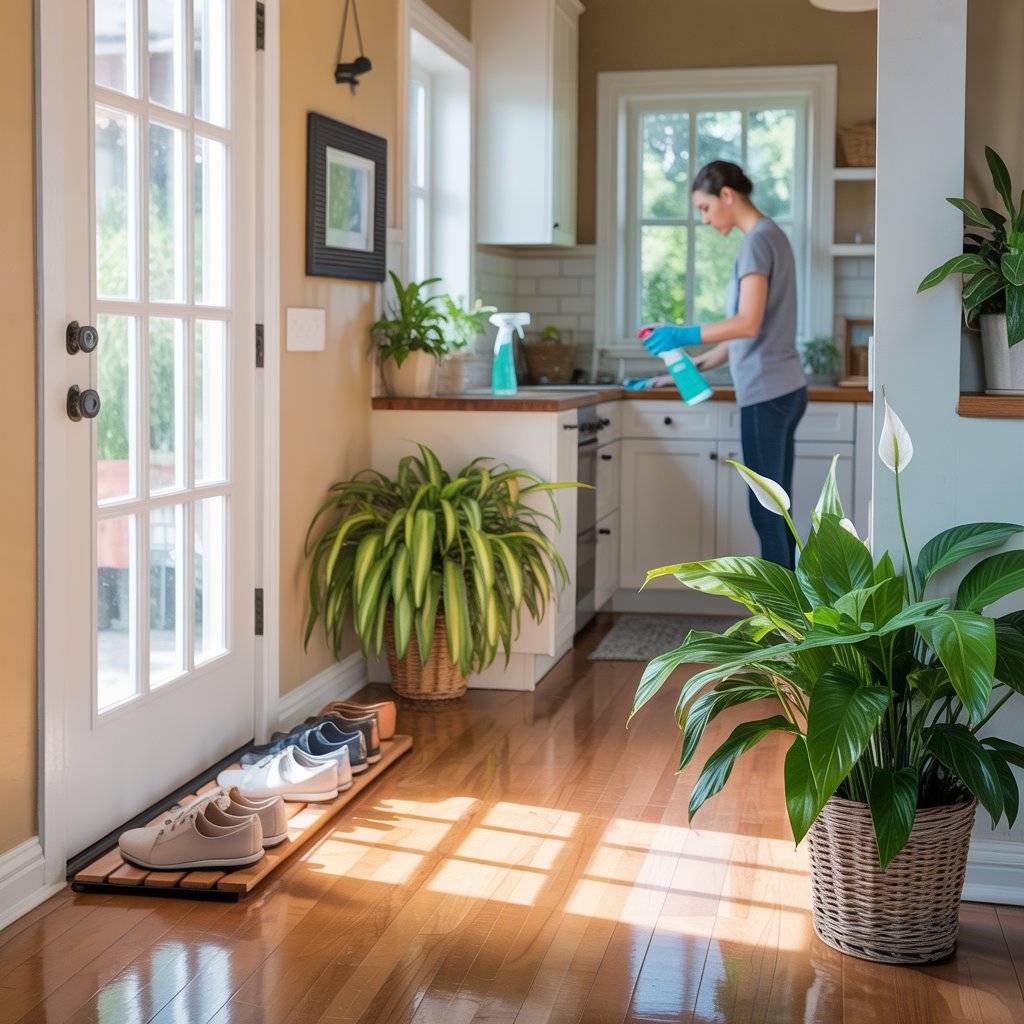
The best way to make cleaning easier is to stop bringing dirt in. Leave your shoes at the door to avoid tracking in pesticides, germs, and mud from outside. Also, consider adding a few houseplants like spider plants or peace lilies.
They naturally help filter the air, so your home stays feeling fresher. Finally, remember to let your cleaning products sit for a few minutes before wiping. Disinfectants and degreasers need time to break down the dirt; if you wipe immediately, you’re just wasting the product.
8. Surprising Uses for Everyday Items
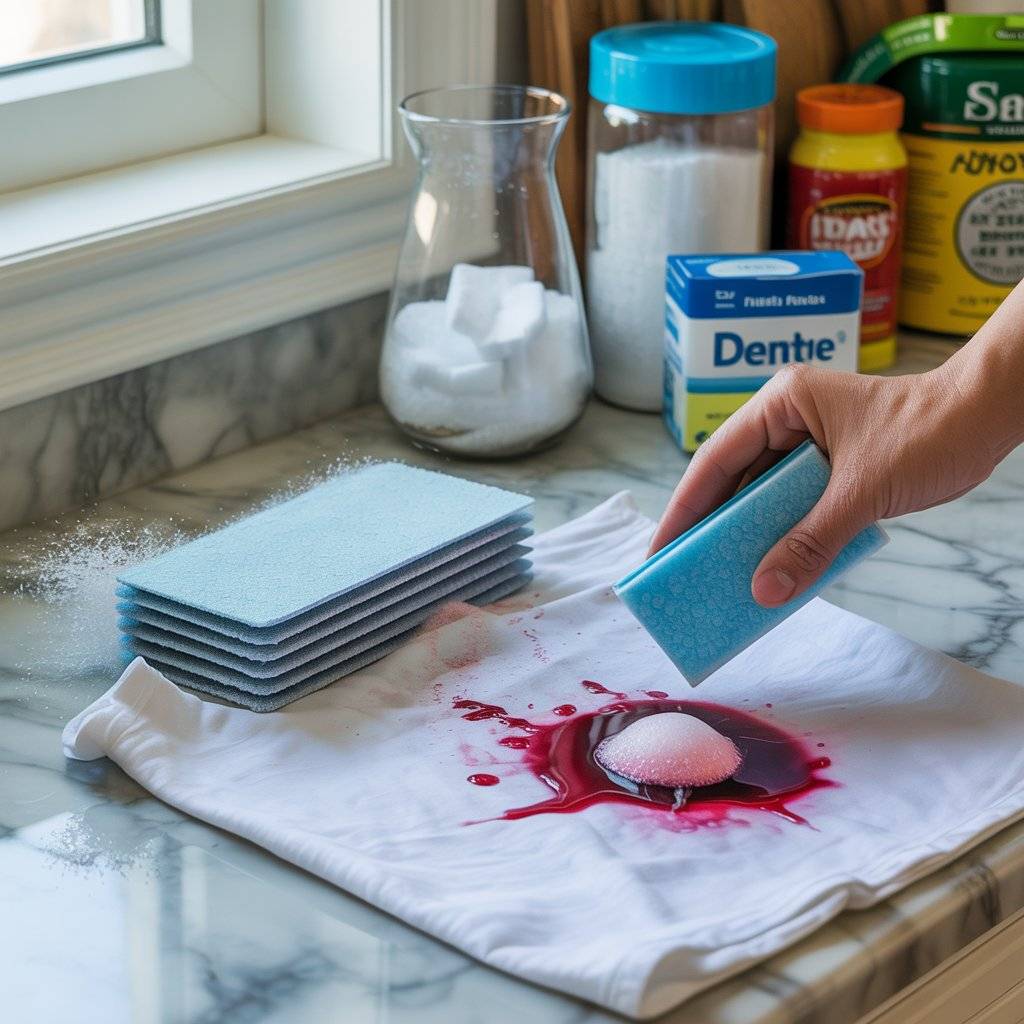
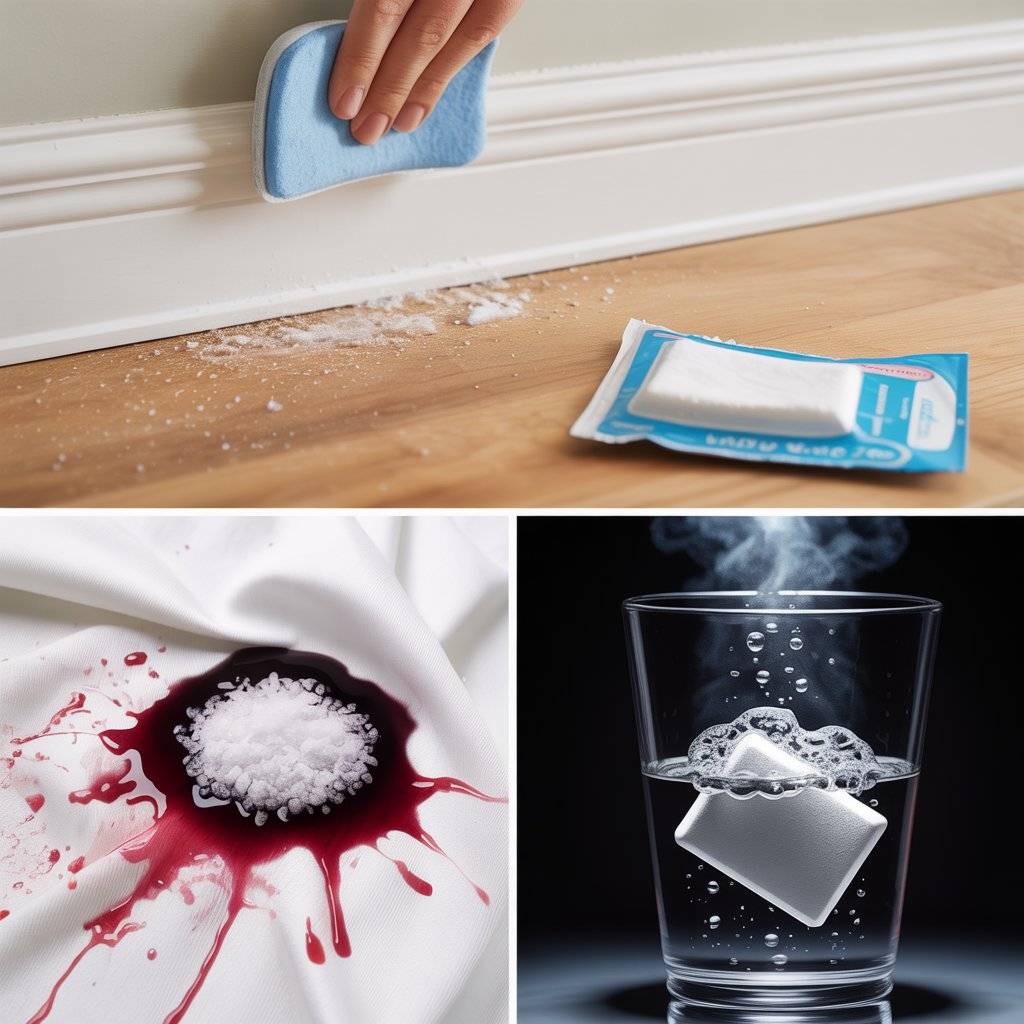
You don’t always need a specialty cleaner. Sometimes the things hiding in your pantry or laundry room do the job better. Take dryer sheets, for example. They’re not just for laundry. Grab a used one and rub it over your baseboards, ceiling fan blades, or even the front of your appliances. The antistatic coating helps repel dust, so those surfaces stay cleaner longer.
Another multi-tasker is salt. If you spill red wine on a carpet or tablecloth, blot up as much as you can, then pour a thick layer of salt over the stain. Let it sit for ten minutes. The salt pulls the wine out of the fibers. Vacuum it up, and you’ll likely see the stain gone .
And for cleaning out a smelly vase or water bottle, drop in a denture tablet, fill with water, and let it fizz overnight. It’ll remove residue and odors without any scrubbing.
9. High-Touch Spots You Might Be Forgetting
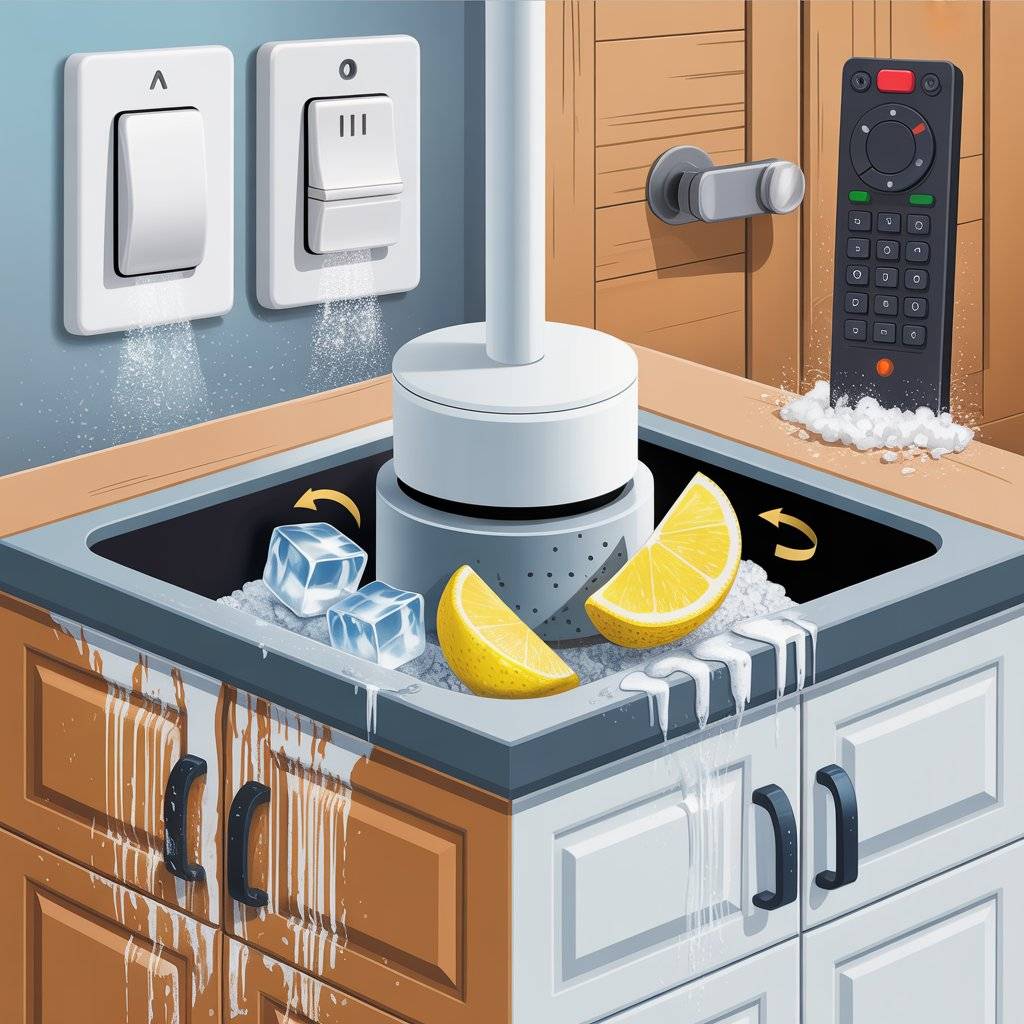
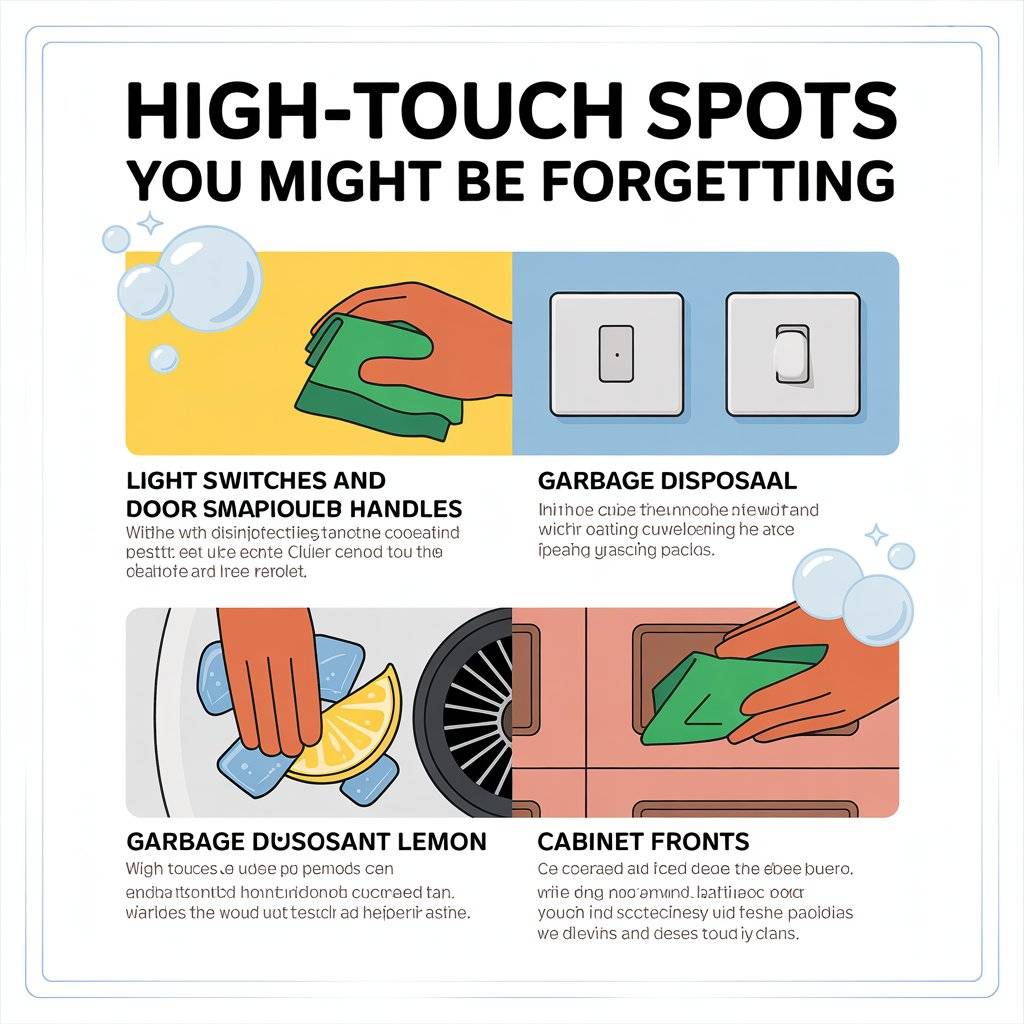
We all clean the counters and the toilets, but there are a few spots that get touched constantly and rarely get a proper cleaning. Light switches, door handles, and remote controls are germ magnets. A quick swipe with a disinfecting wipe or a cloth sprayed with rubbing alcohol keeps them sanitary.
Don’t forget your garbage disposal. It can start to smell funky even if it looks clean. Drop in a few ice cubes with some rock salt and a handful of lemon peels. Run the disposal with cold water for about thirty seconds. The ice sharpens the blades, the salt scrubs away grime, and the lemon leaves a fresh scent.
Also, take a moment to wipe down the fronts of your cabinets, especially around the handles. Grease and grime build up there slowly, and a simple all-purpose spray will make your whole kitchen look brighter.
10. Speeding Up Laundry Day
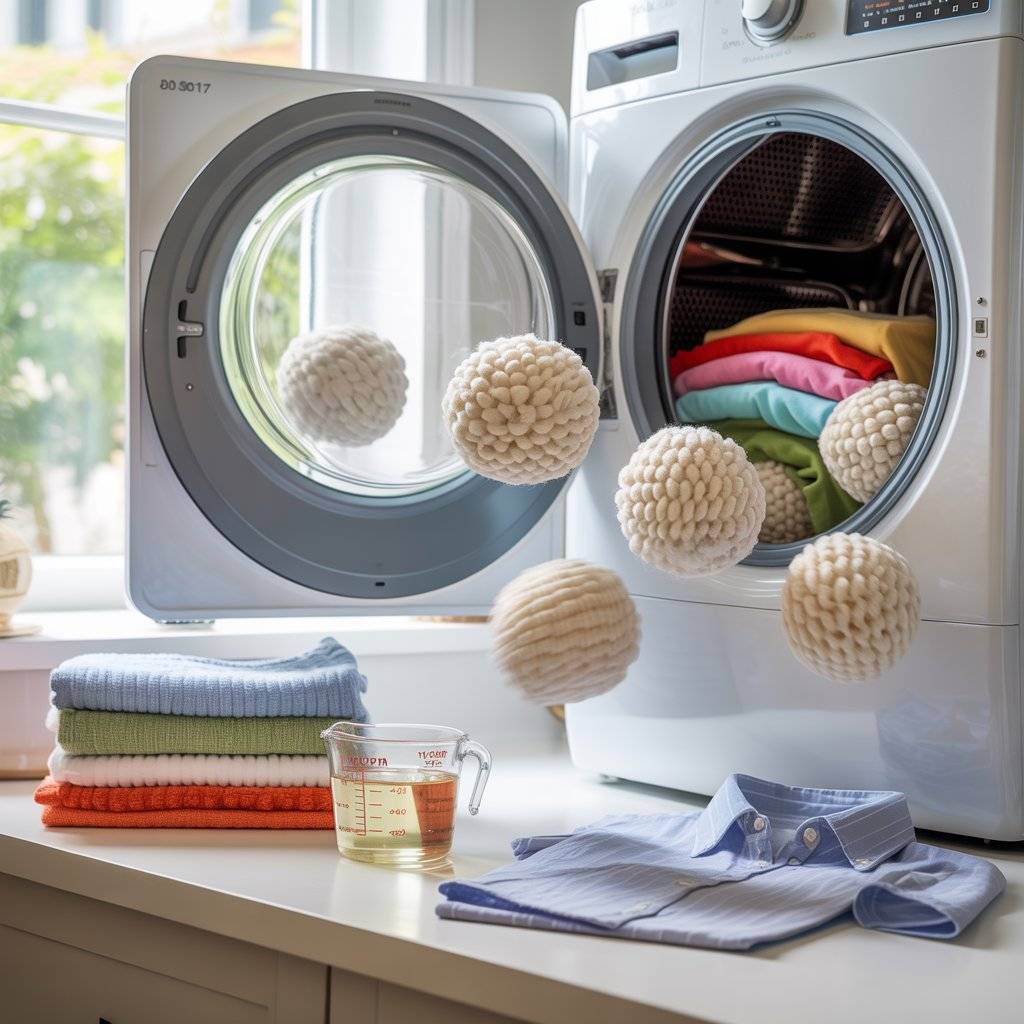
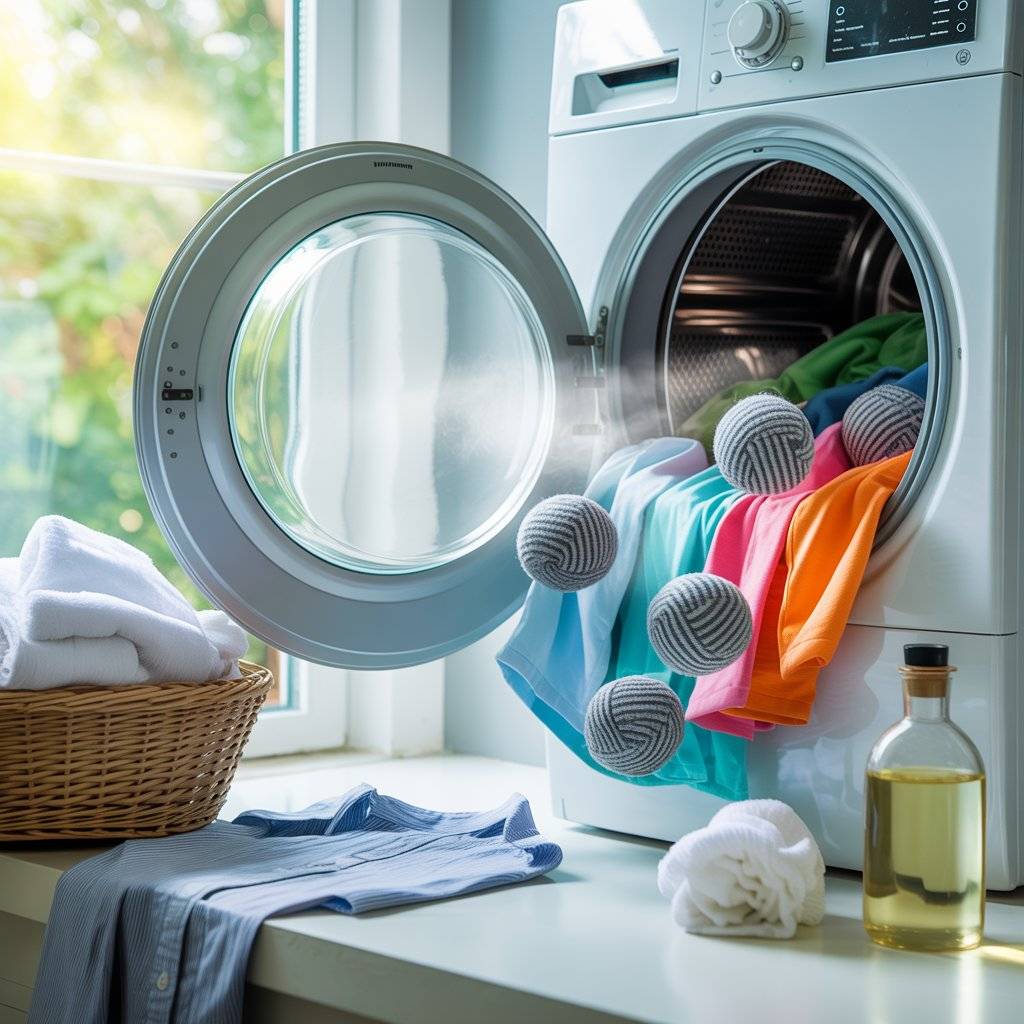
Laundry counts as cleaning, and a few simple tweaks can save you serious time. If you use dryer sheets, stop. They leave a waxy coating on your towels that make them less absorbent over time.
Instead, toss a couple of wool dryer balls in the dryer. They bounce around, separating the clothes so hot air circulates better. This cuts drying time by up to twenty-five percent, and they’re reusable for years.
For clothes that come out of storage smelling musty, add a half cup of white vinegar to the rinse cycle. It kills the mildew smell without leaving any vinegar scent behind.
And if you hate ironing, throw the wrinkled shirt in the dryer with a damp washcloth for five minutes. The steam relaxes the fabric, and you’ll be able to smooth it out by hand.
11. Keeping Your Floors Spotless Without the Struggle
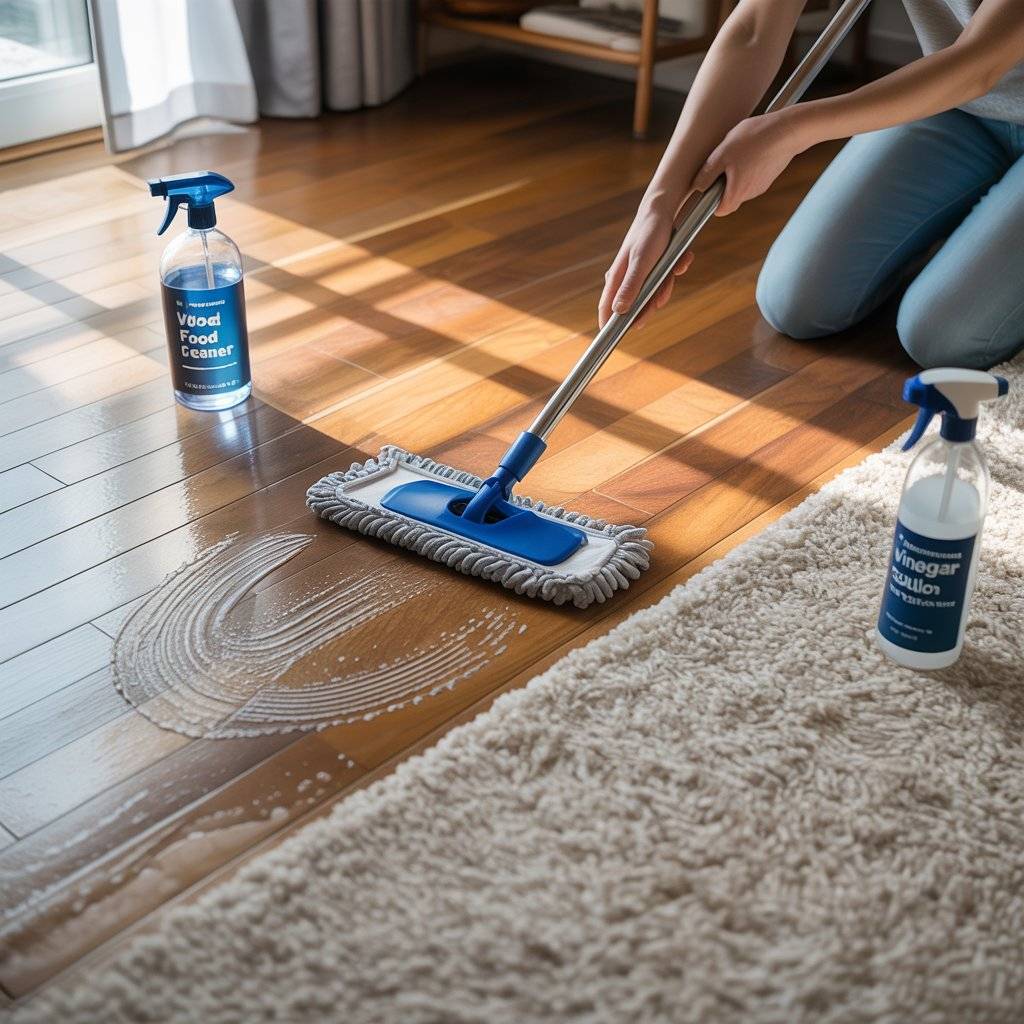
Floor cleaning can feel like a never-ending chore, but a few pro habits keep them looking great with less effort. If you have hardwood floors, use a microfiber mop and a spray cleaner made specifically for wood.
Avoid soaking the floor; too much water can damage the finish. Spray the cleaner directly onto the mop head, not the floor, so you control the moisture.
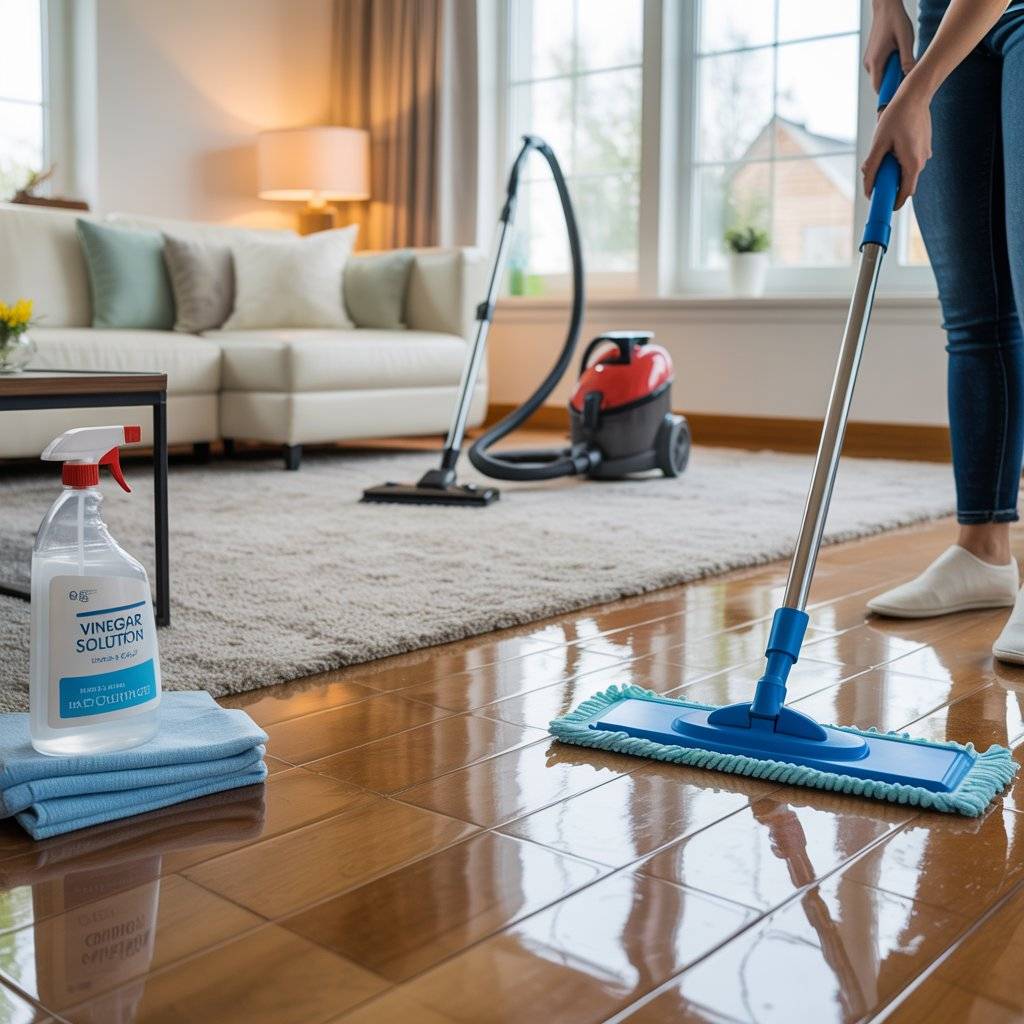
For carpets, vacuuming slowly makes a huge difference. Most people zip across the room too fast. Vacuum cleaners need time to agitate the fibers and suck up the deep-down dirt. Go over high-traffic areas twice, and vacuum in different directions to lift the pile.
For spot cleaning, keep a mixture of one part white vinegar to two parts water in a spray bottle. Blot stains immediately never rub, because rubbing pushes the stain deeper.
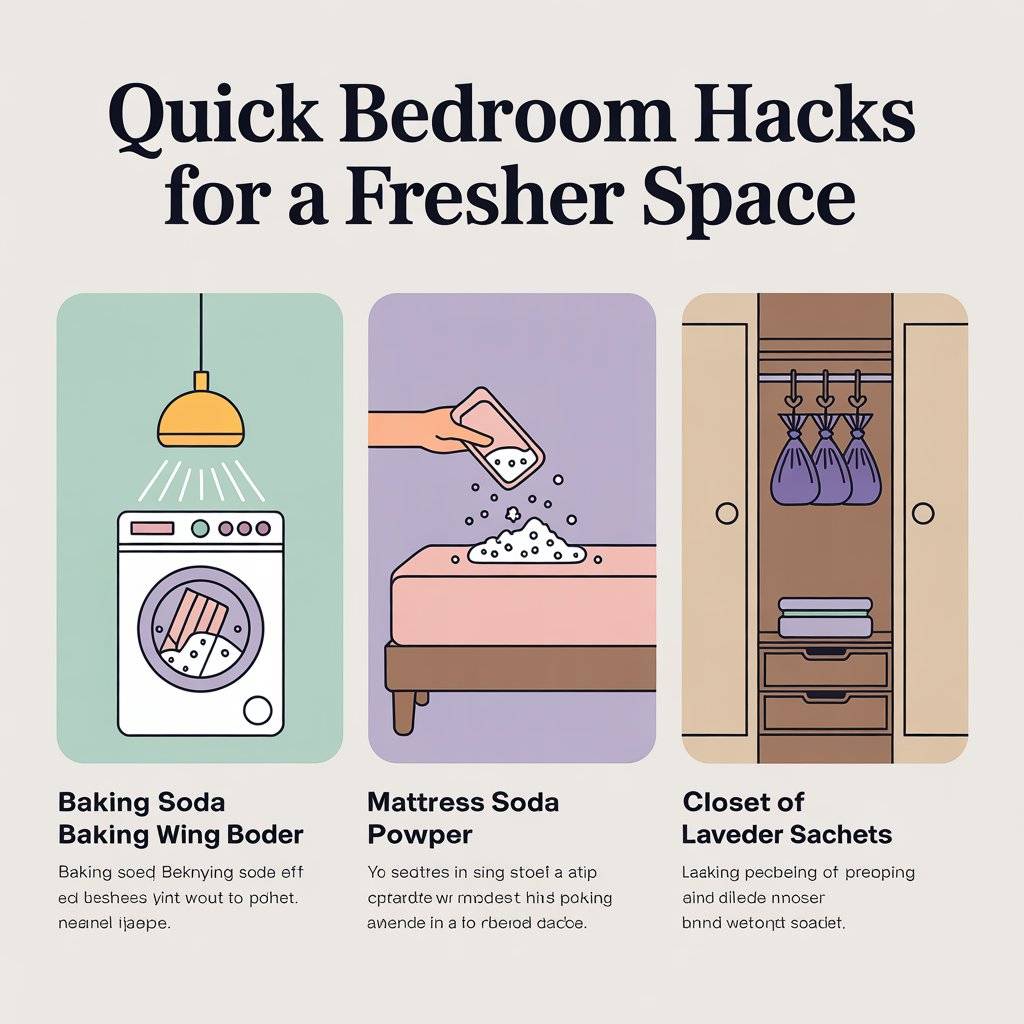
12. Quick Bedroom Hacks for a Fresher Space

Your bedroom should feel like a retreat, but dust and clutter can ruin the vibe. A simple trick to keep sheets smelling fresh longer is to add a half cup of baking soda to the wash cycle along with your regular detergent. It neutralizes body oils and odors that regular soap sometimes leaves behind.
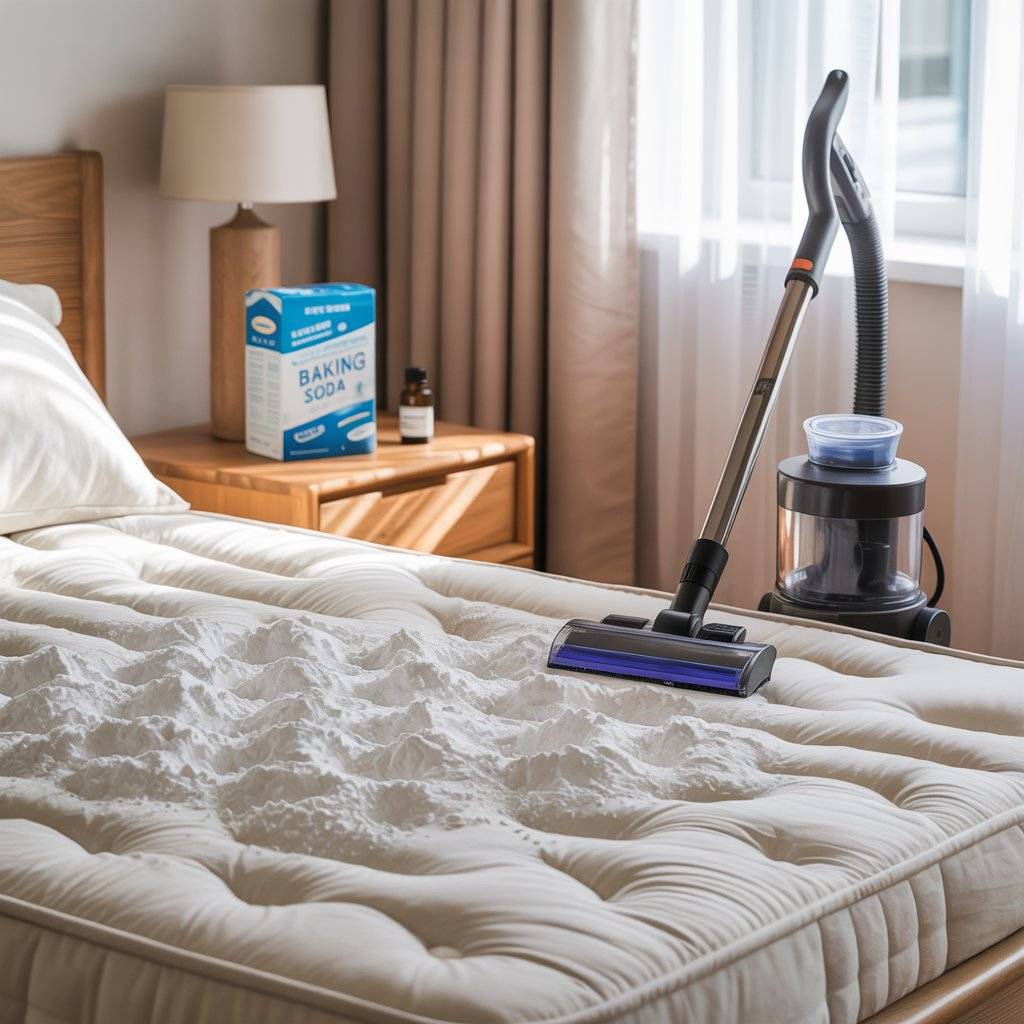
If your mattress has a yellow stain or a musty smell, sprinkle a generous layer of baking soda over the entire surface. Let it sit for at least an hour longer if you can then vacuum it up with the upholstery attachment.
The baking soda absorbs moisture and odors, leaving your mattress cleaner without harsh chemicals. And for your closet, hang a mesh bag filled with dried lavender or a bar of scented soap. It keeps the air smelling fresh and deters moths naturally.
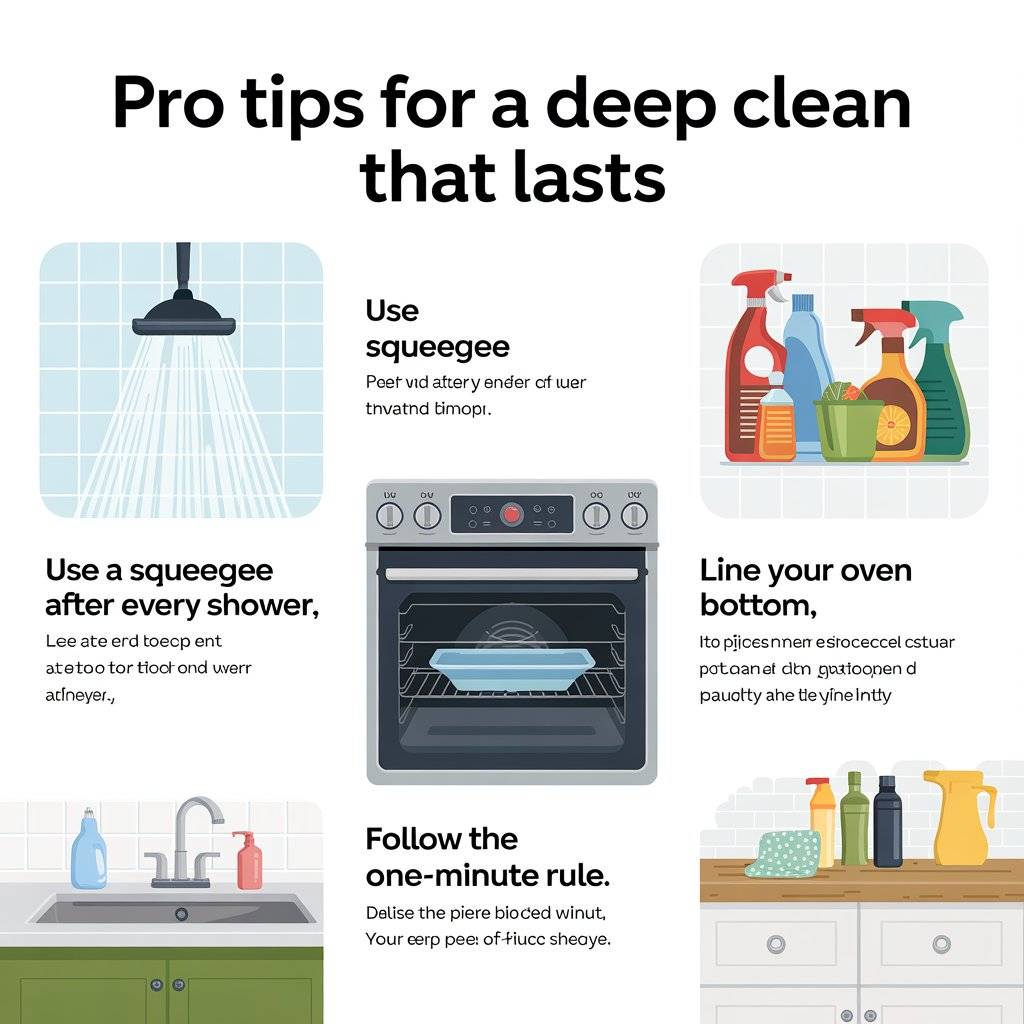
13. Pro Tips for a Deep Clean That Lasts
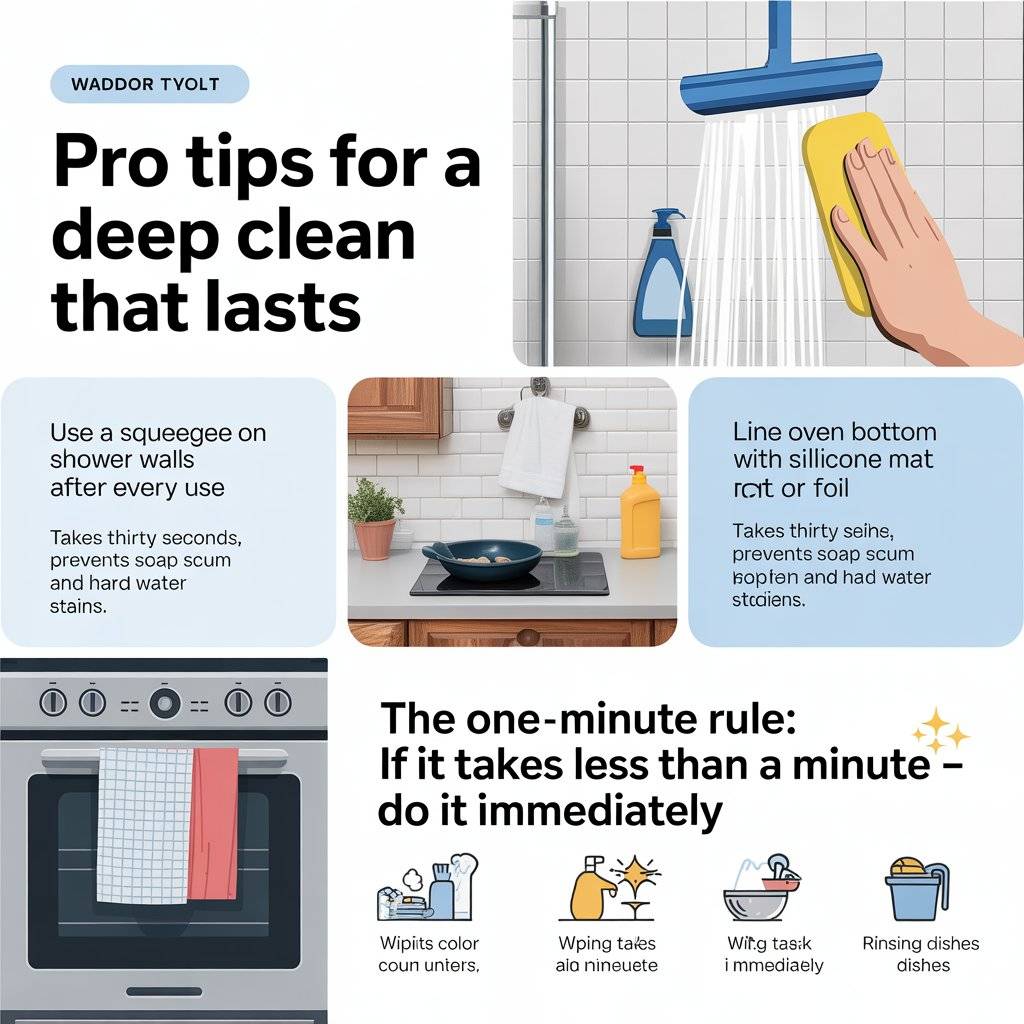
If you want your hard work to last longer, focus on prevention. One of the best things you can do is use a squeegee on your shower walls after every use. It takes thirty seconds and prevents soap scum and hard water stains from ever forming, so you don’t have to scrub them off later.
In the kitchen, line the bottom of your oven with a silicone baking mat or a piece of heavy-duty foil (check your oven manual first). If something spills, you can simply wipe the mat or swap the foil instead of running a self-clean cycle.
Finally, adopt the “one-minute rule.” If a task takes less than a minute like wiping a counter, hanging up a coat, or rinsing a dish do it immediately. It stops small messes from turning into big cleaning projects.
14. Refresh Your Mattress Without Scrubbing
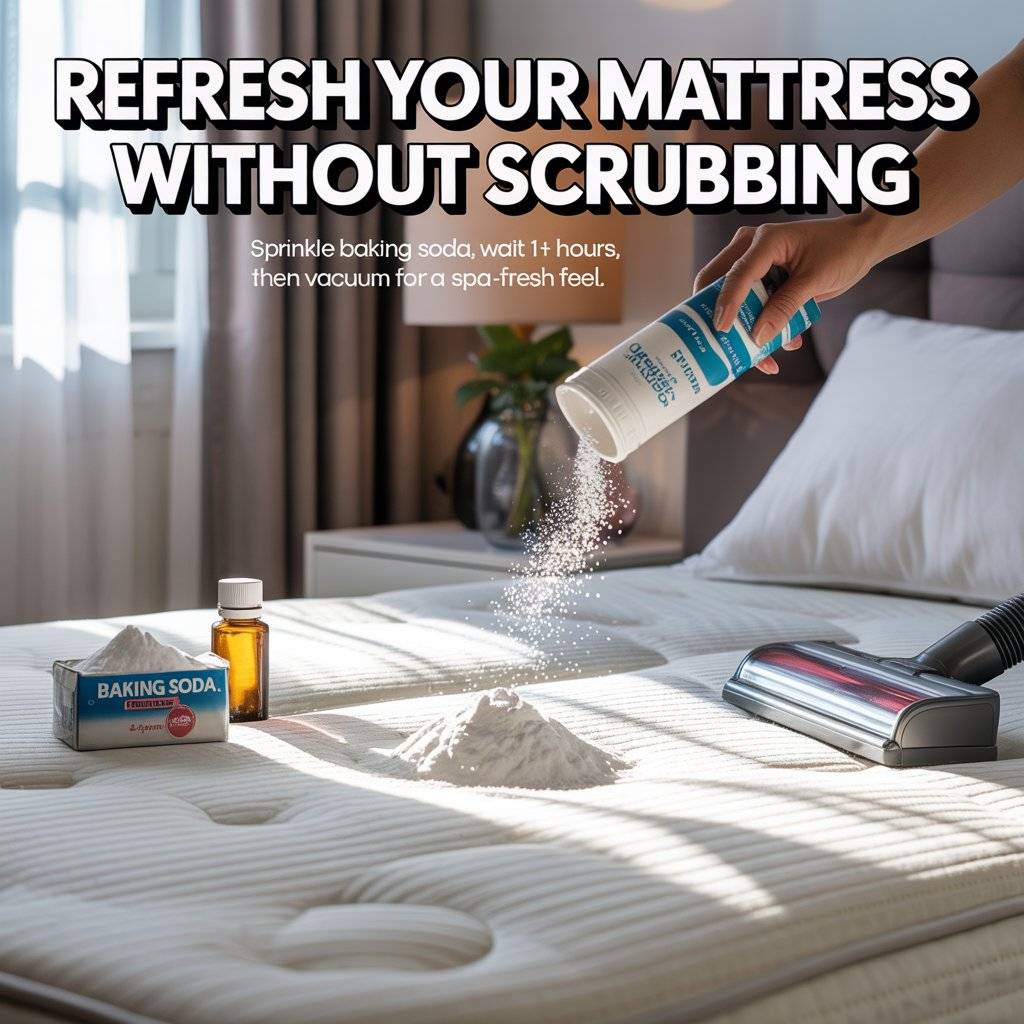
Your mattress works hard while you sleep, and it can trap sweat, dust mites, and odors over time. Instead of renting a steam cleaner, try this simple refresh. Strip the bed and sprinkle a generous layer of baking soda over the entire surface.
Let it sit for at least an hour if you can leave it for a few hours or even overnight, even better. The baking soda draws out moisture and neutralizes smells. After it’s had time to work, vacuum it up with the upholstery attachment.
For an extra fresh scent, add a few drops of your favorite essential oil to the baking soda before you sprinkle it. This trick is non‑toxic, costs pennies, and leaves your mattress feeling like it just came back from a spa day.
15. The Easiest Way to Clean Blinds
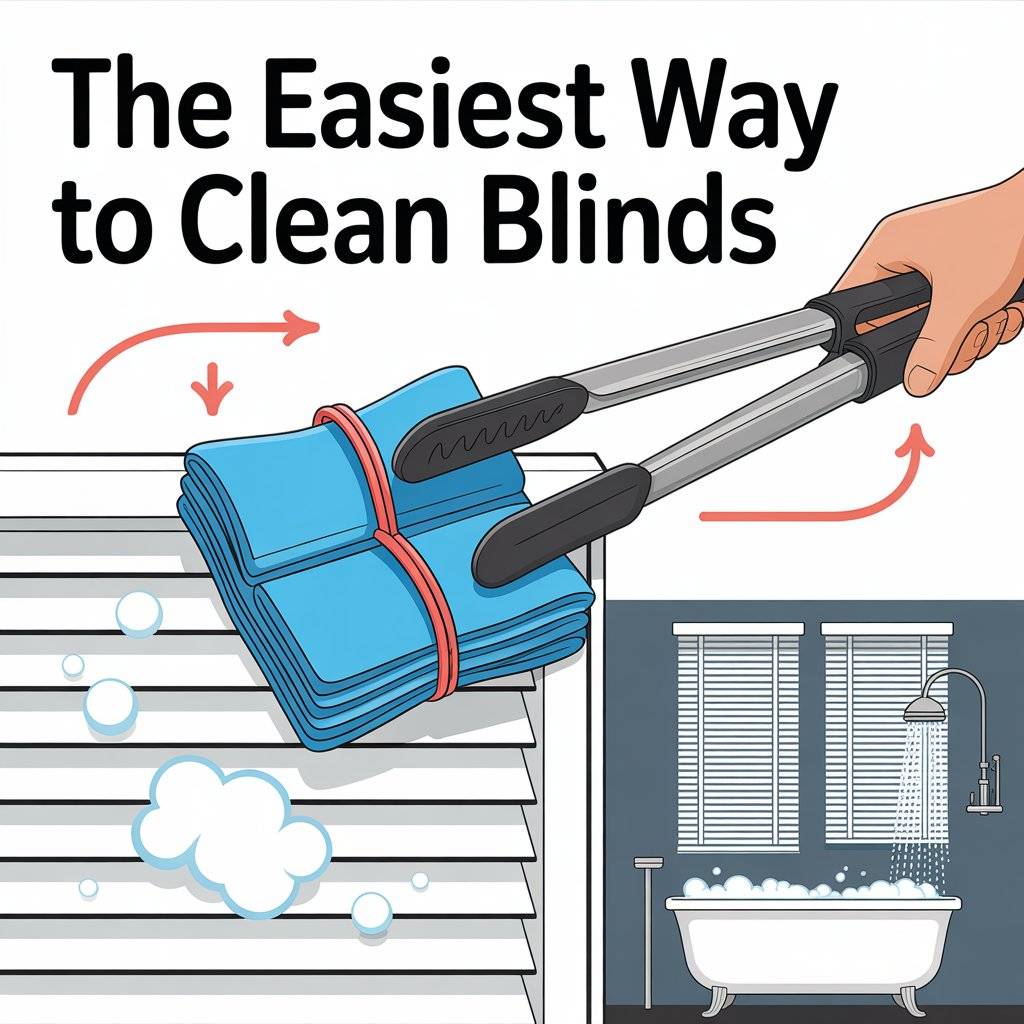
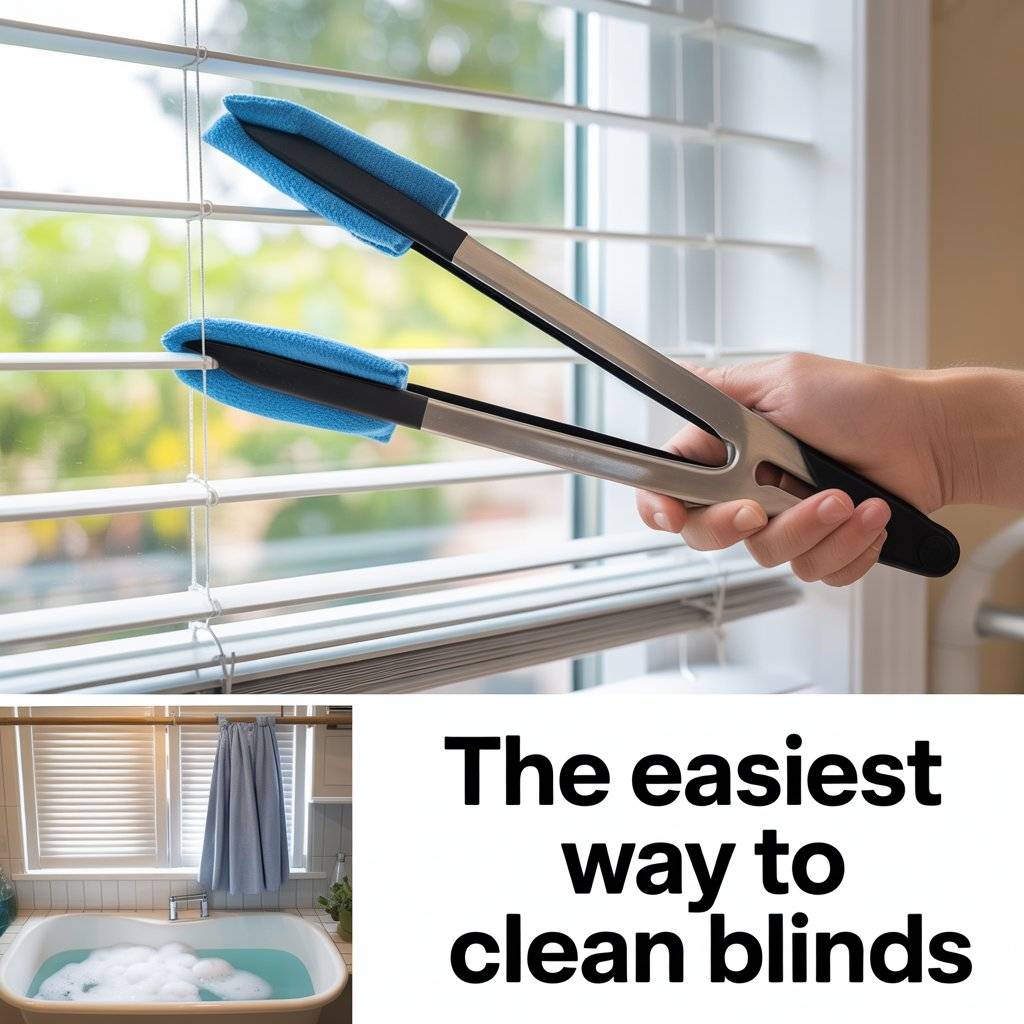
Dusty blinds are one of those chores everyone puts off because it seems tedious. Here’s a hack that changes everything. Grab a pair of tongs and wrap a microfiber cloth around each end, securing it with rubber bands.
Close the tongs and run them along each slat. The cloth cleans both sides at once, cutting the job in half. For fabric blinds or vertical blinds that are really dirty, fill your bathtub with warm water and a little mild detergent, remove the slats if possible, and let them soak.
Swish them around, rinse with the shower head, and hang them to dry. They’ll look brand new without the hassle of wiping each slat individually.
16. Non‑Toxic Oven Cleaning That Actually Works
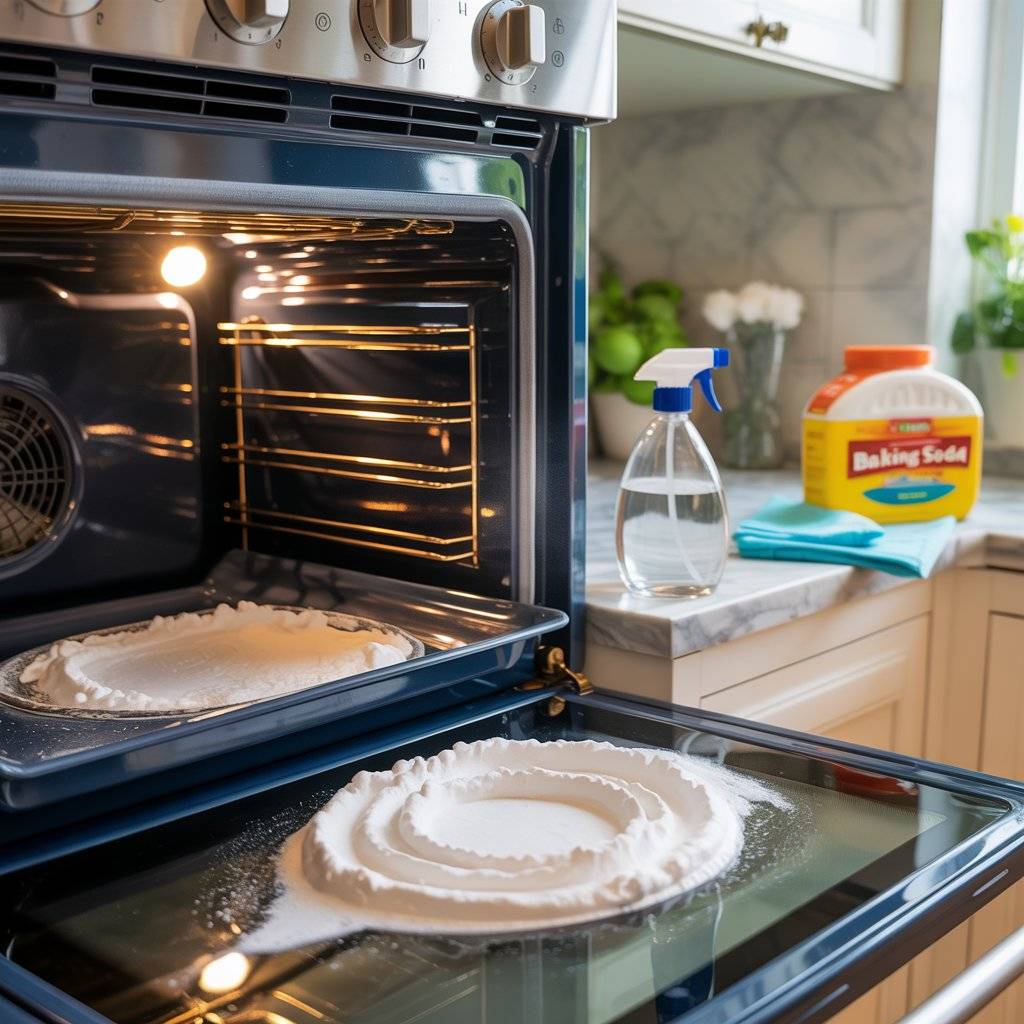
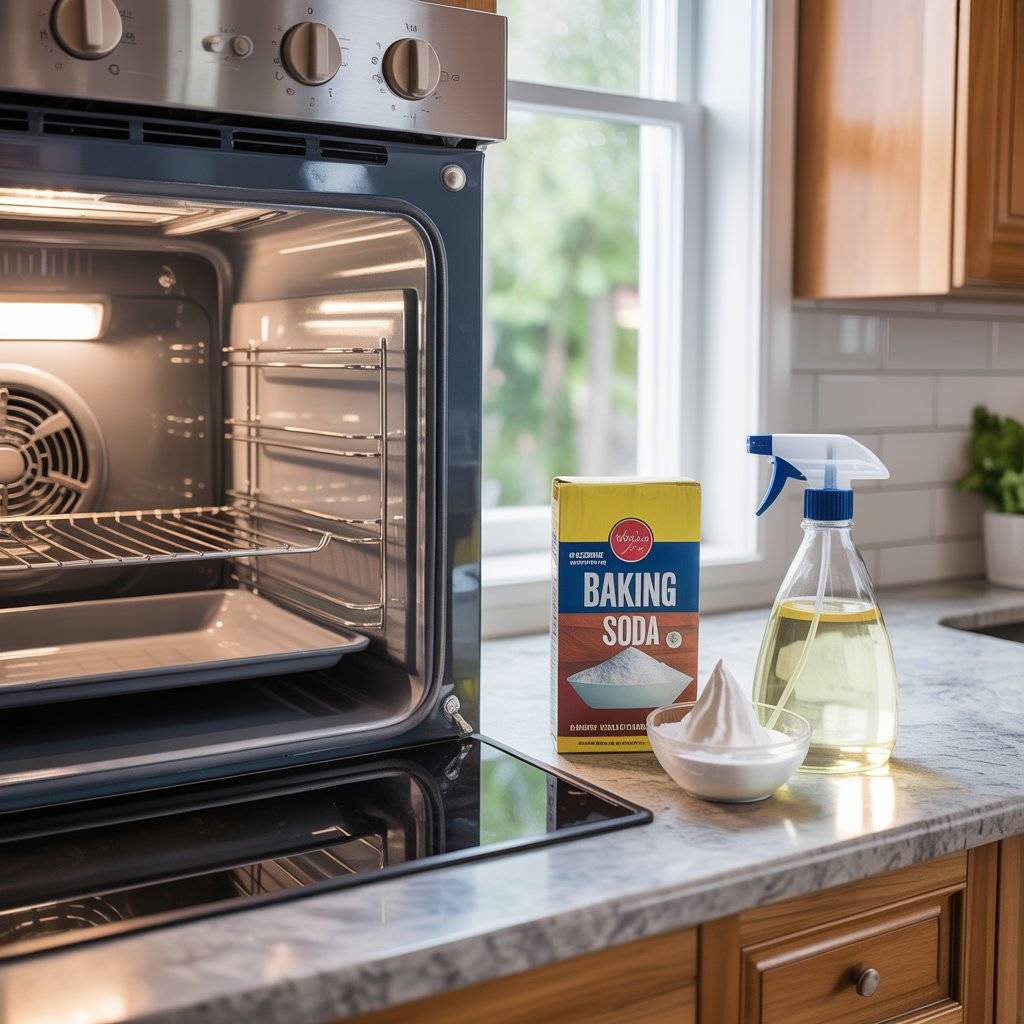
Oven cleaners are harsh, and the fumes can be overwhelming. A safer method uses ingredients you already have. Make a paste with baking soda and water, spread it all over the inside of the oven (avoid the heating element), and let it sit overnight.
The next morning, spray white vinegar over the paste it will fizz and help lift the grime. Wipe everything down with a damp cloth. For stubborn, baked‑on spots, use a pumice stone (wet it first) or a scraper made for glass stovetops if your oven has a smooth surface.
This method takes a little patience, but it works without any chemical smell. Plus, you can leave the paste to do its thing while you sleep.
17. Keep Your Stainless Steel Fingerprint‑Free
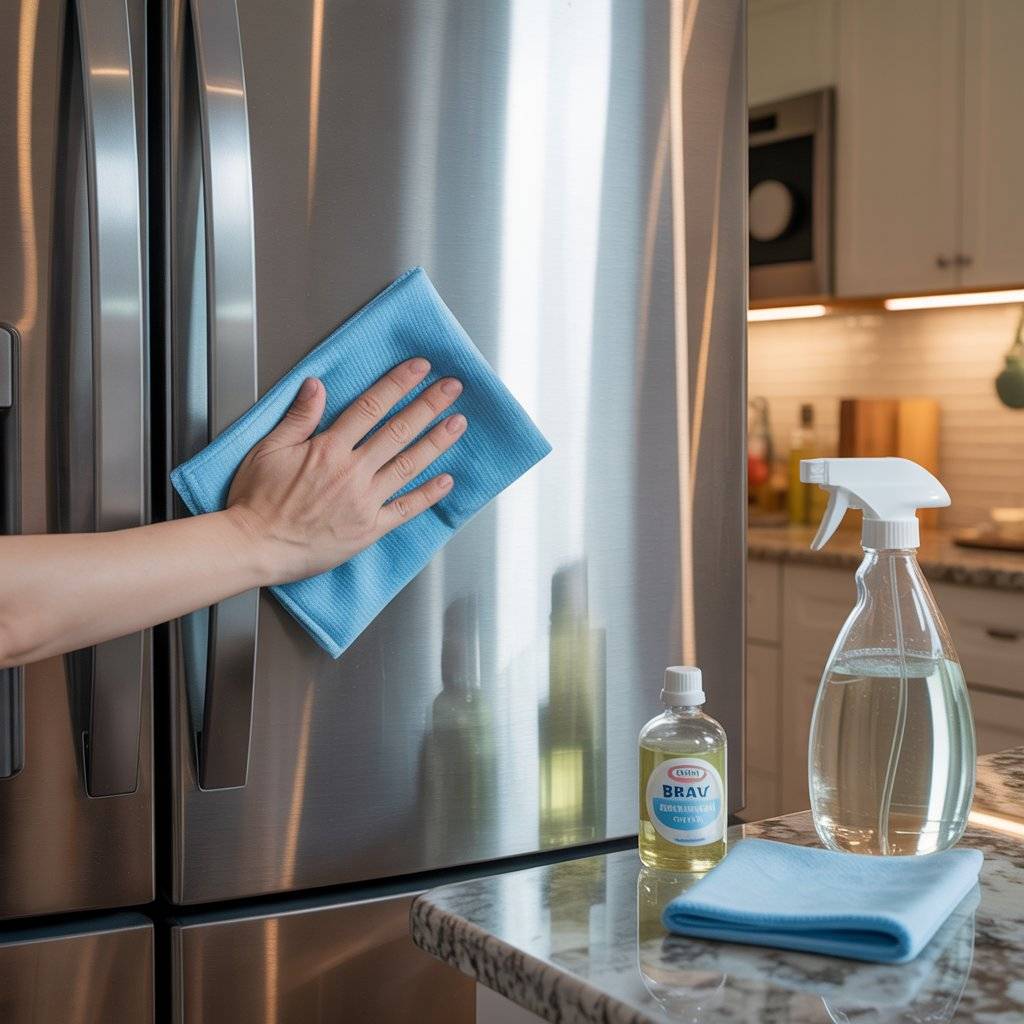
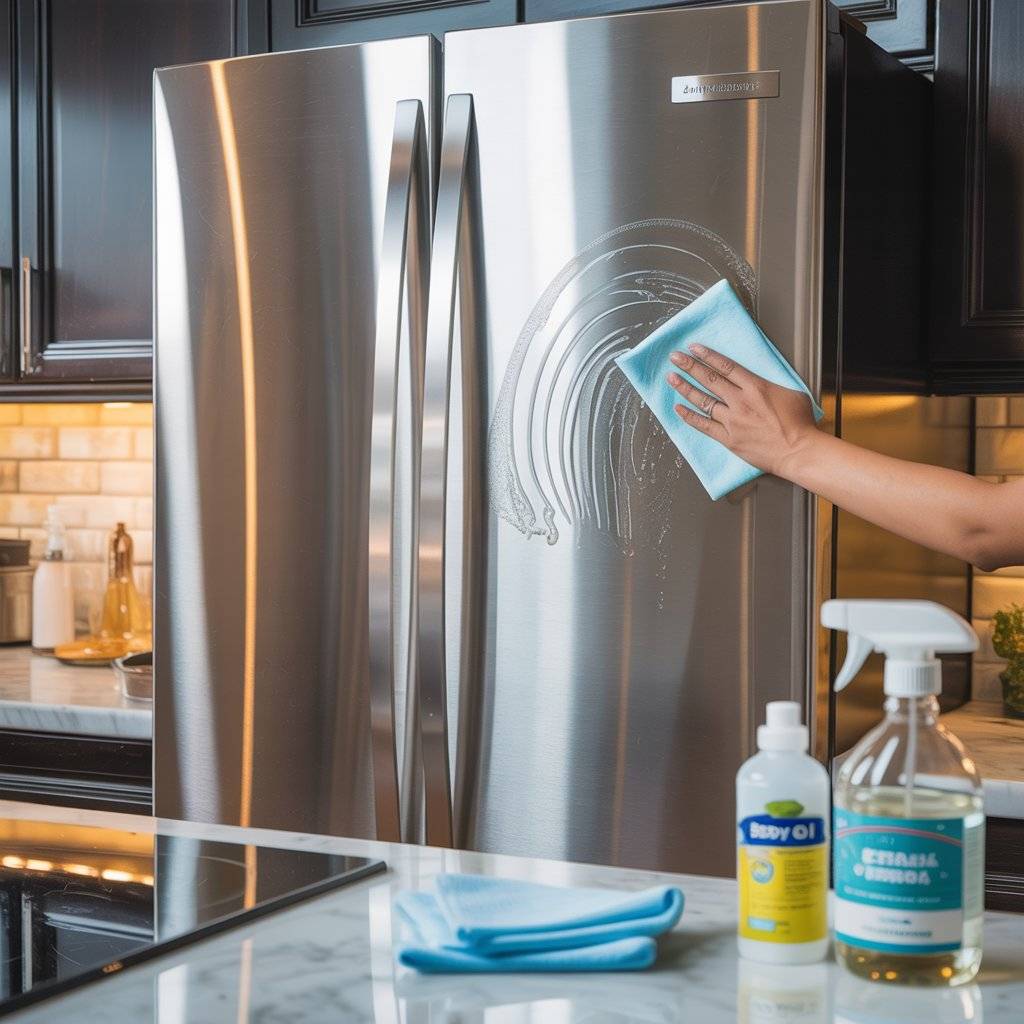
Stainless steel appliances look amazing when they’re clean, but fingerprints and smudges show up immediately. The secret is using the right product and technique. A tiny amount of baby oil or mineral oil on a microfiber cloth goes a long way.
Wipe in the direction of the grain not in circles and then buff with a dry part of the cloth. The oil creates a thin barrier that repels fingerprints for days. If you prefer a spray, mix equal parts vinegar and water with a drop of dish soap, but follow up with the oil trick for that pro‑level shine.
Avoid using paper towels because they can leave scratches. Stick with microfiber, and your fridge will look like it just came out of the showroom.
18. Make Your Garbage Disposal Smell Fresh
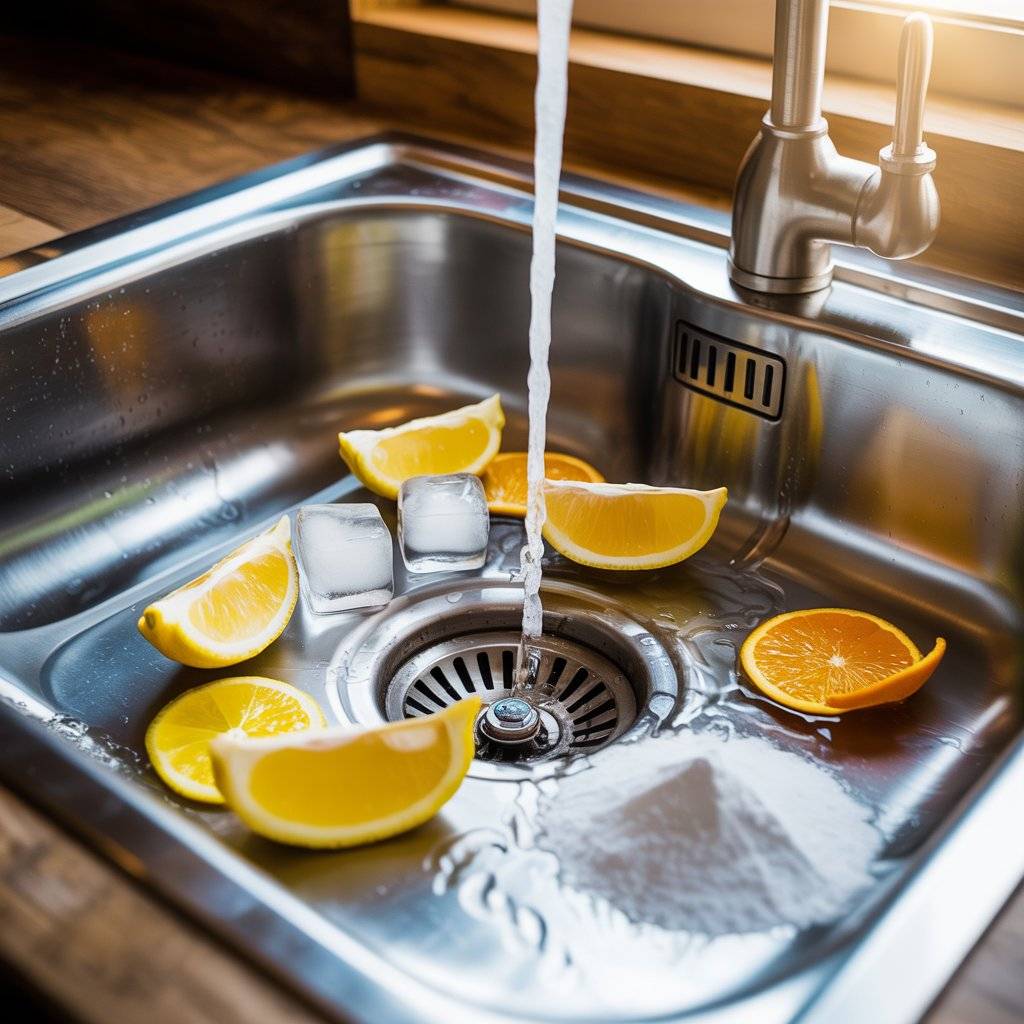
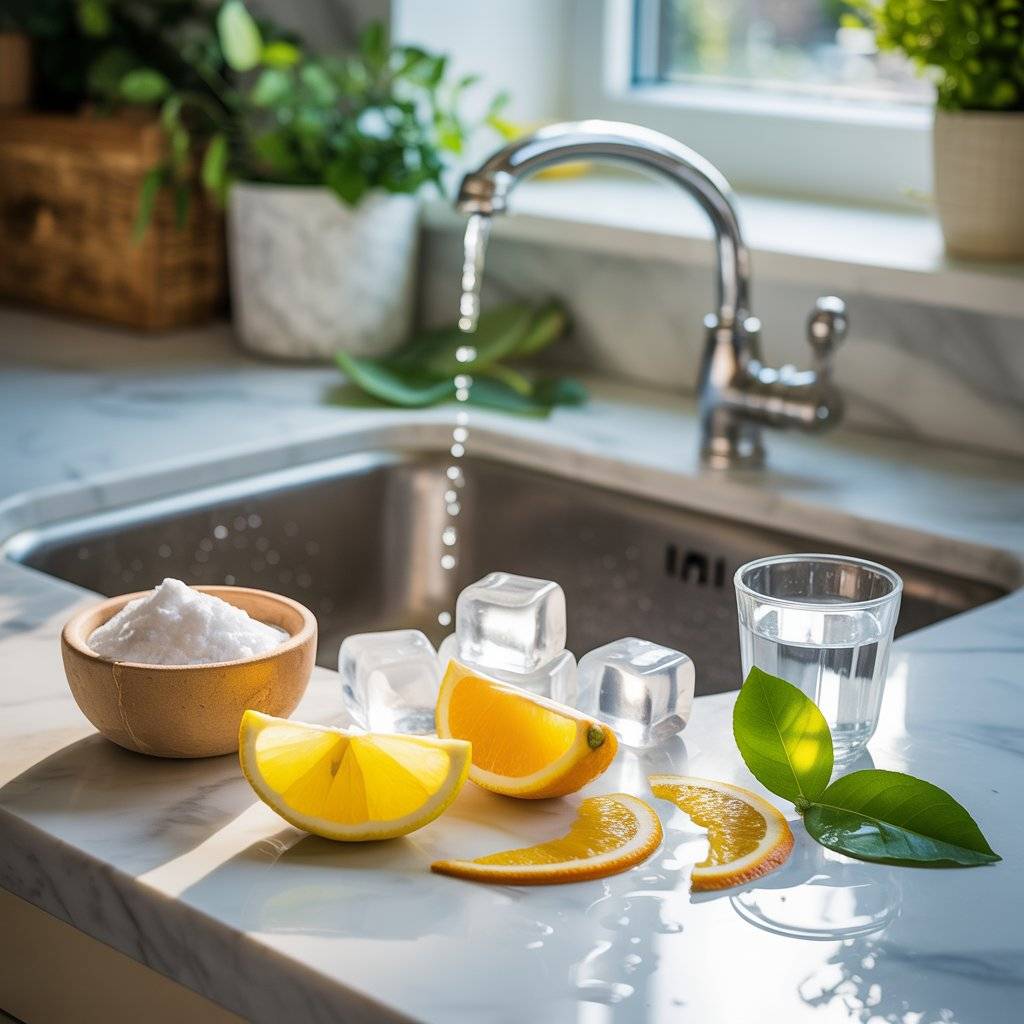
A funky smell from the sink usually traces back to the garbage disposal. The good news is you can clean it in under a minute without buying expensive tablets. Drop a handful of ice cubes into the disposal, add a few lemon wedges or orange peels, and sprinkle in a tablespoon of baking soda.
Run cold water and turn the disposal on. The ice sharpens the blades, the citrus oils freshen the smell, and the baking soda deodorizes.
If you want an extra kick, follow up with a cup of white vinegar and let it sit for a few minutes before rinsing. Do this once a week, and your kitchen will stay smelling clean without harsh chemical drain cleaners.
19. Clean Grout Without Elbow Grease
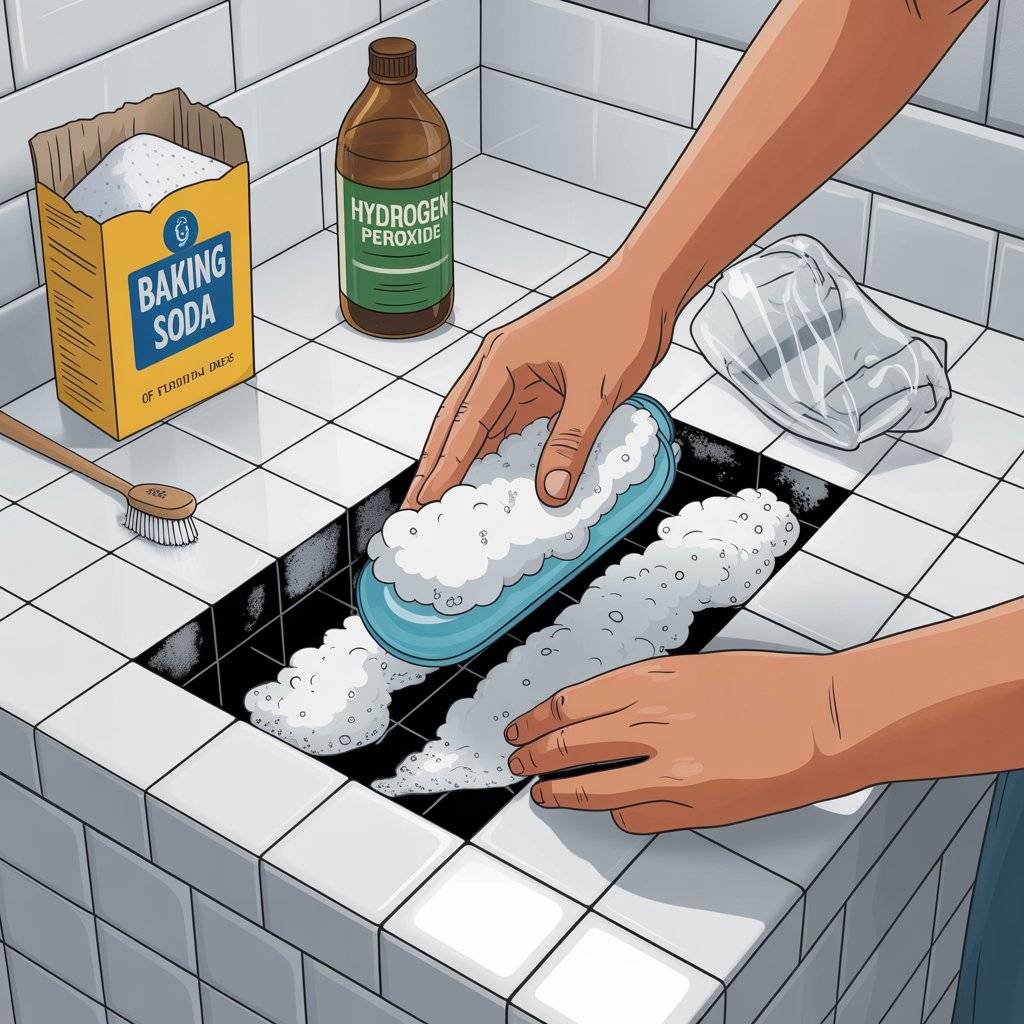
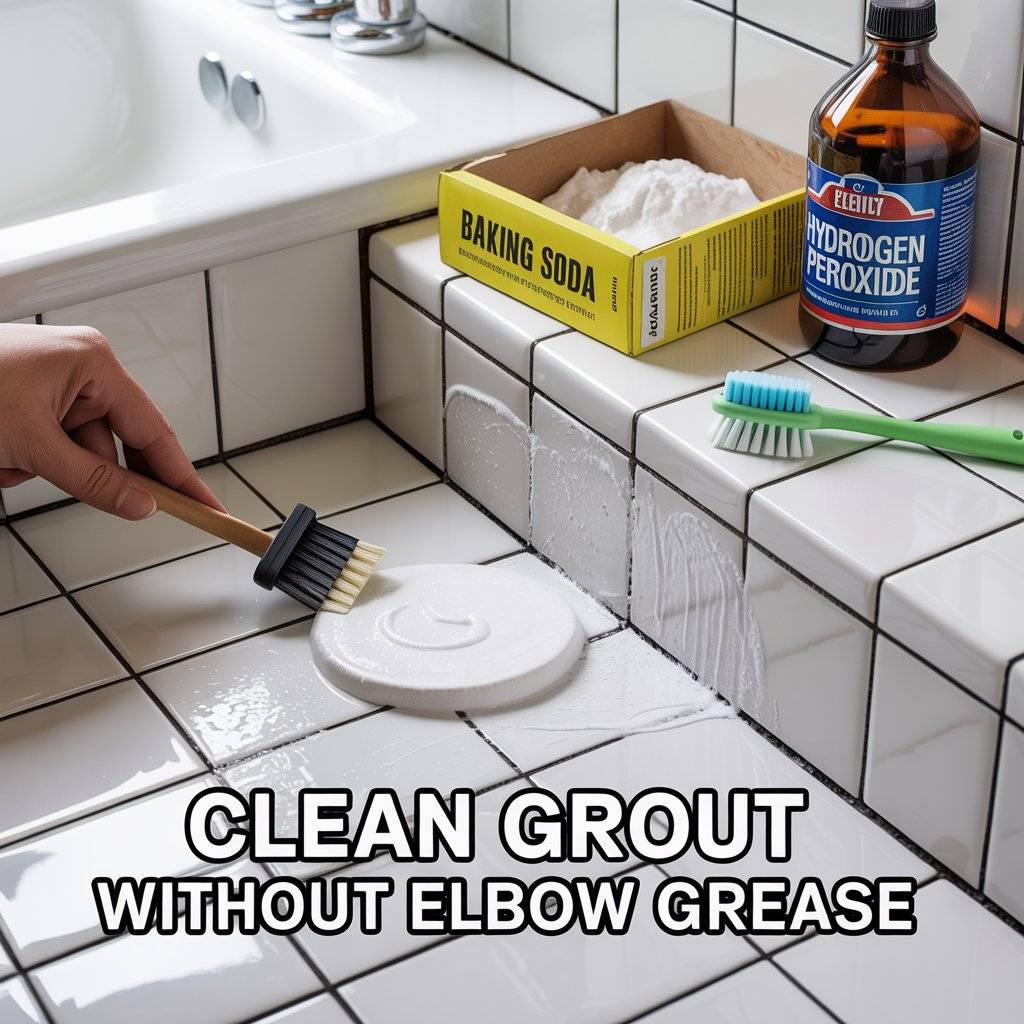
Grout can be the hardest part of bathroom cleaning. Instead of scrubbing for an hour with a tiny brush, try this method. Mix baking soda and hydrogen peroxide until you have a thick paste.
Spread it over the grout lines and let it sit for ten to fifteen minutes. The combination bubbles and lifts the dirt out. Then, scrub with a stiff brush an old electric toothbrush works great here and rinse with water. For really stubborn stains, cover the paste with plastic wrap and let it sit longer.
This approach uses natural ingredients, and it’s far more effective than most store‑bought grout cleaners. Your tiles will look noticeably brighter with a fraction of the effort.
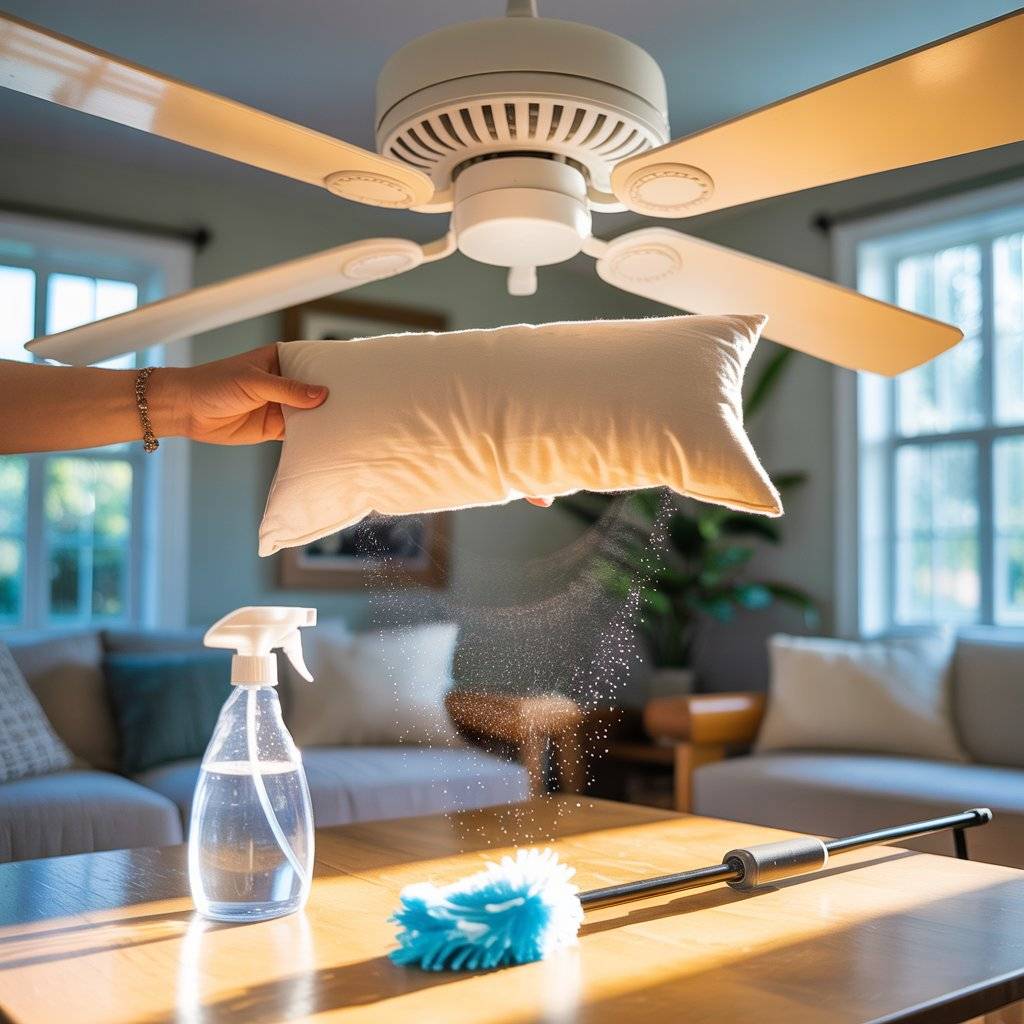
20. The Pillowcase Ceiling Fan Trick (Upgraded)
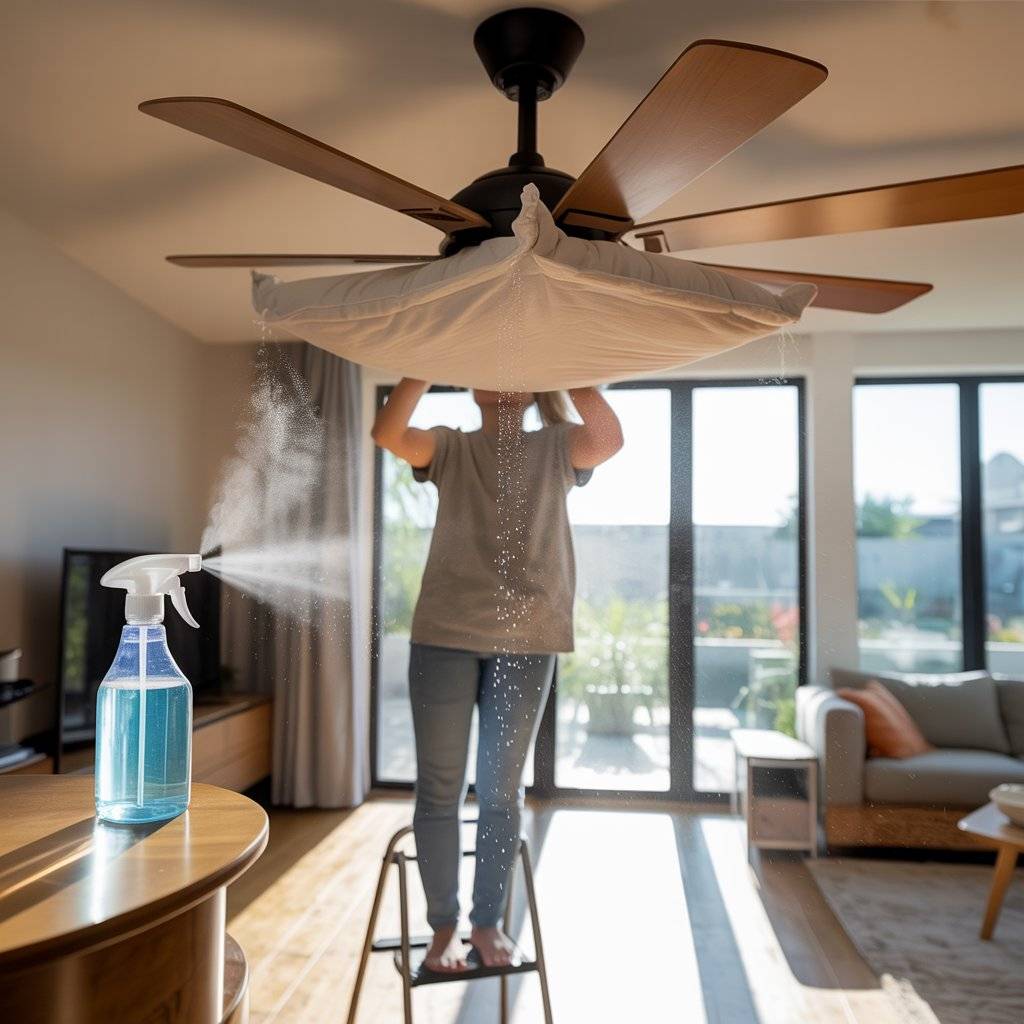
Cleaning ceiling fans with a pillowcase is a classic hack, but here’s how to make it even better. Slip the pillowcase over one blade at a time, and as you pull it back, pinch the top of the case to trap the dust inside.
To avoid dust clouds, lightly mist the inside of the pillowcase with a mixture of water and a little fabric softener before you start. The moisture weighs down the dust so it doesn’t float away, and the fabric softener leaves a thin film that repels dust for weeks.
For extra tall ceilings, attach the pillowcase to an extendable duster with a rubber band. This method keeps the dust off your furniture and your lungs.
21. Speed‑Clean Your Shower Doors
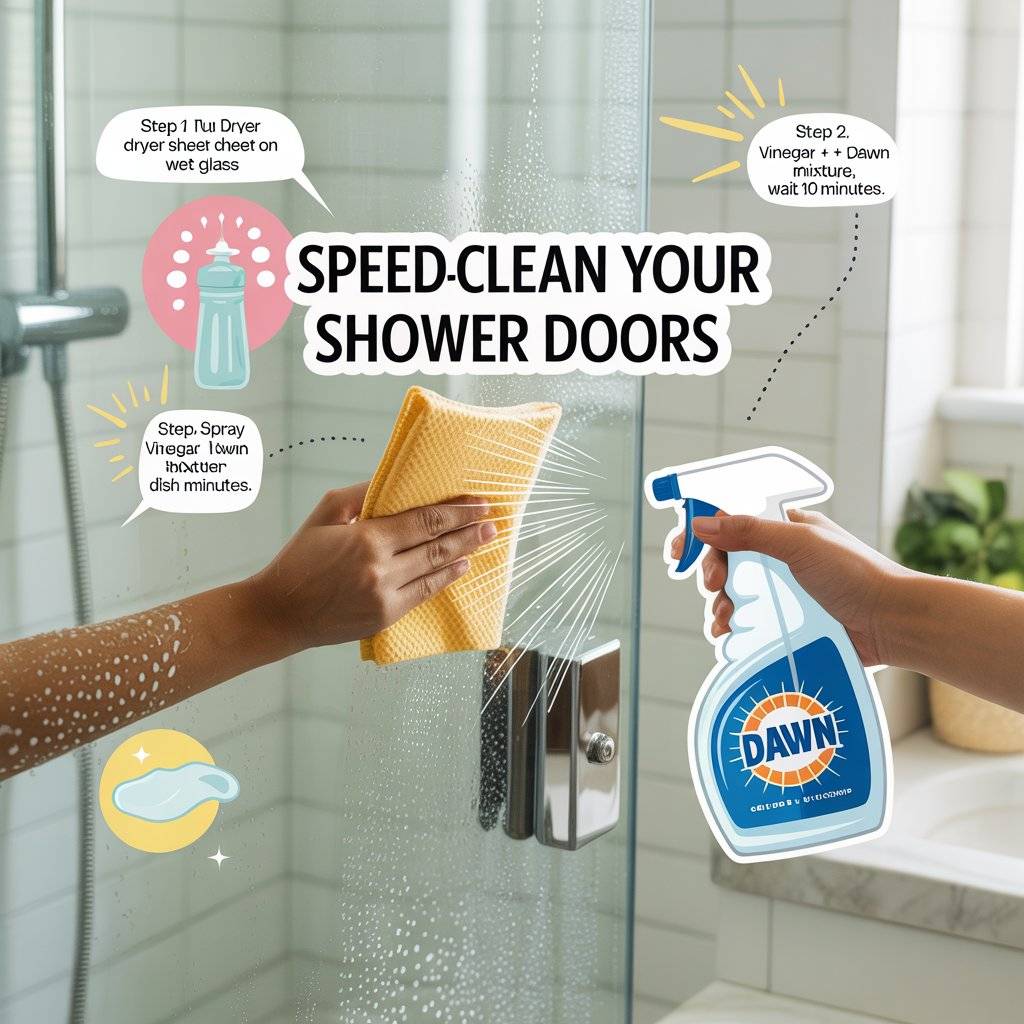
Soap scum and hard water spots on glass shower doors can make your whole bathroom look dingy. Here’s a two‑step process that works fast. First, wet the door and rub a dryer sheet over the glass. The antistatic properties help loosen the scum.
Then, spray with equal parts white vinegar and blue dawn dish soap in a spray bottle. Let it sit for ten minutes, then scrub with a non‑scratch sponge and rinse. The combination cuts through the soap buildup almost instantly.
To keep them clean longer, keep a squeegee in the shower and use it after every bath. That thirty‑second habit prevents the buildup from forming in the first place.

22. Revive Burnt Pots and Pans
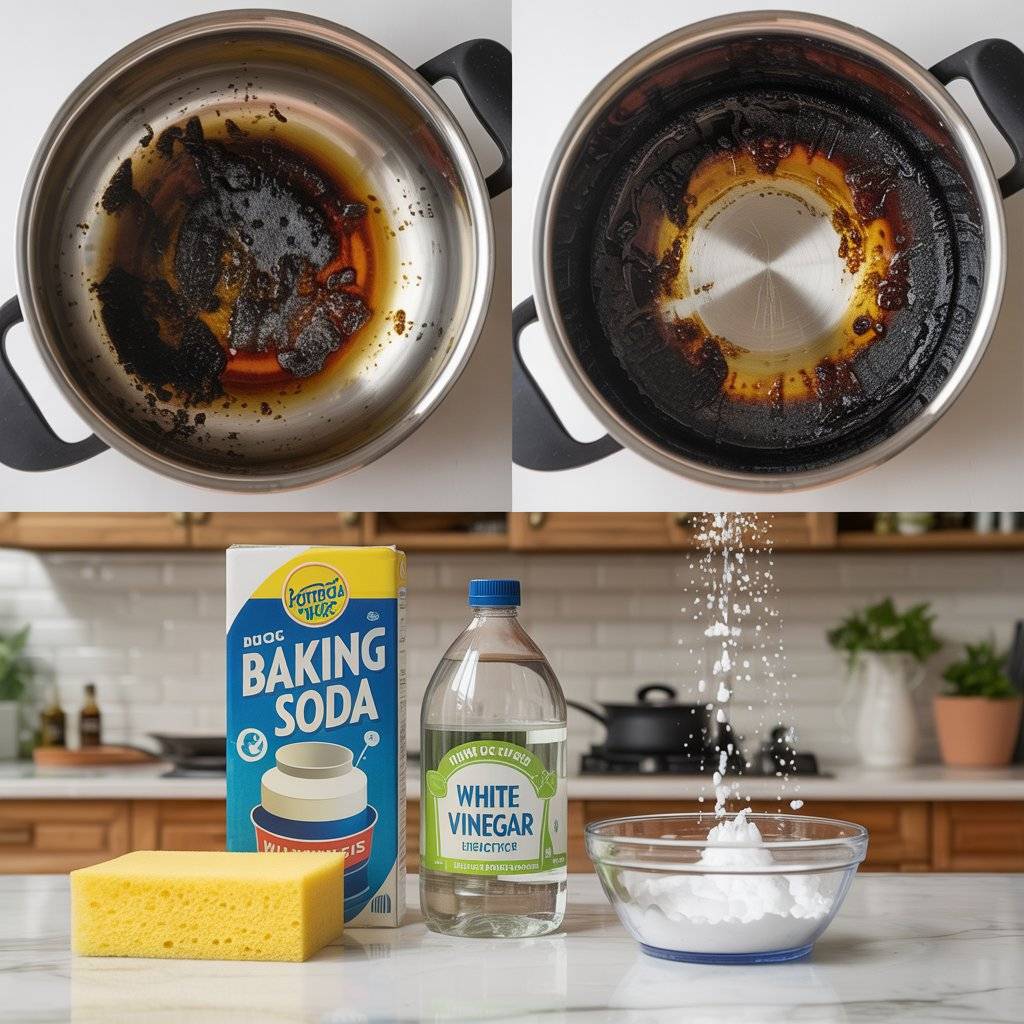
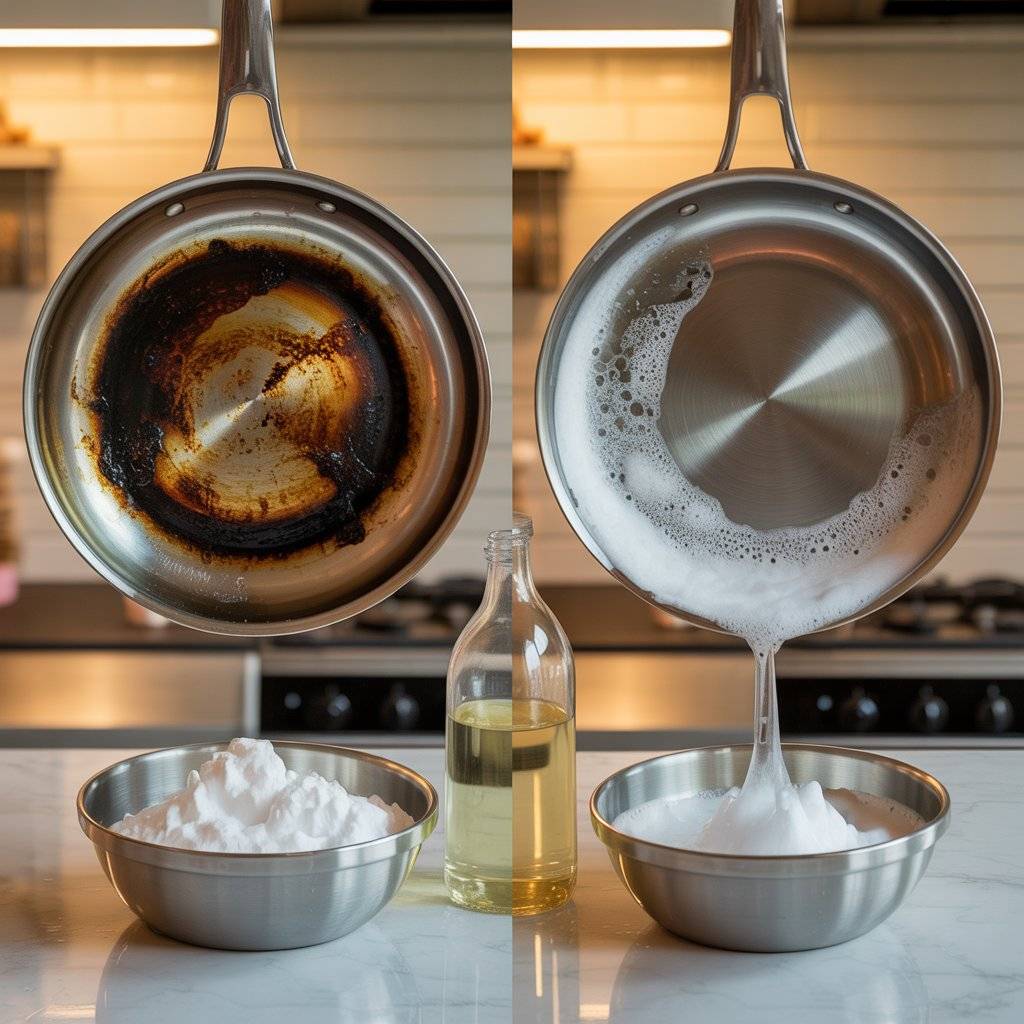
We’ve all had that moment where a pot gets left on the stove too long and the bottom is black with burnt food. Before you toss it, try this. Sprinkle a thick layer of baking soda over the burnt area. Add just enough water to make a paste, then let it sit for an hour.
After that, pour in enough white vinegar to cover the bottom it will fizz and bubble. Let it sit for another ten minutes, then scrub with a sponge or a plastic scraper.
For stainless steel pans, boiling a little water with a dryer sheet in the pan can also lift stubborn burnt bits. The combination of baking soda and vinegar works on most cookware without damaging the surface.
23. Naturally Freshen Carpets Between Deep Cleans
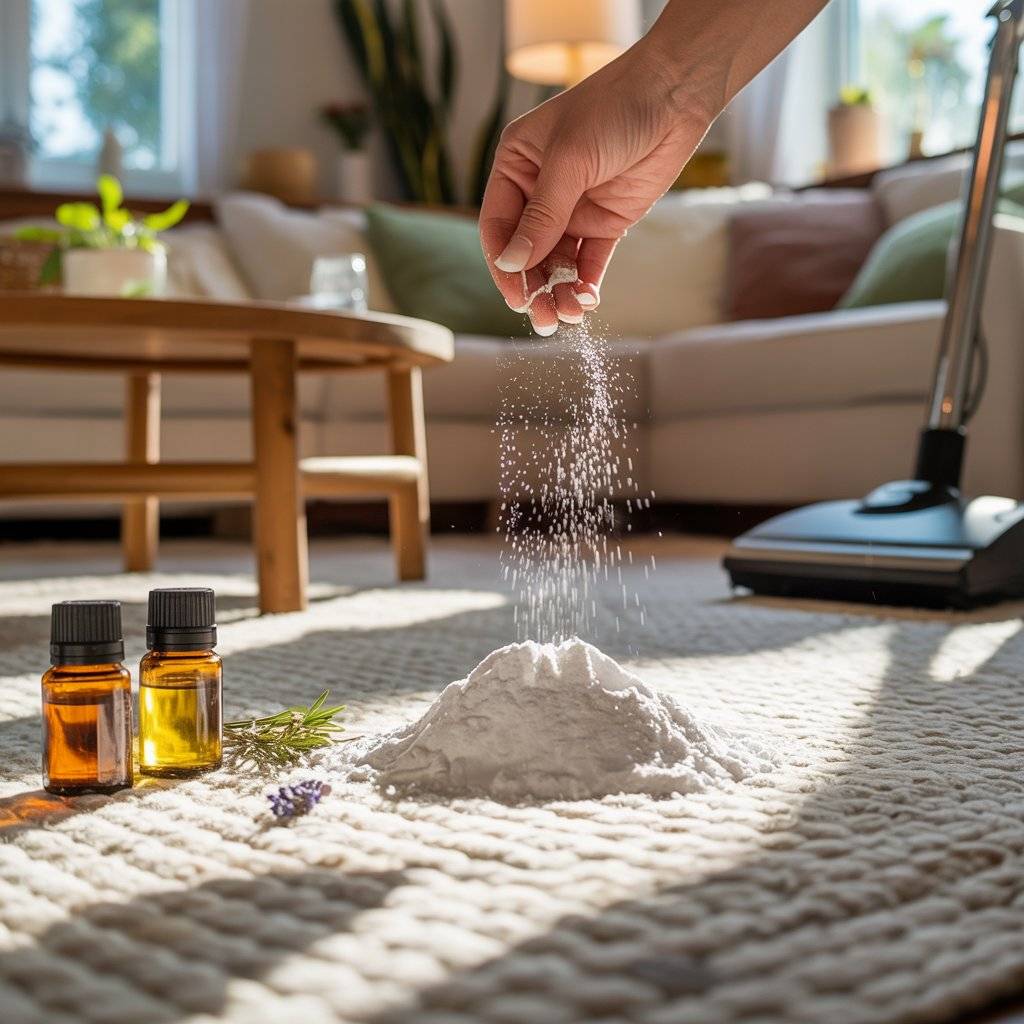
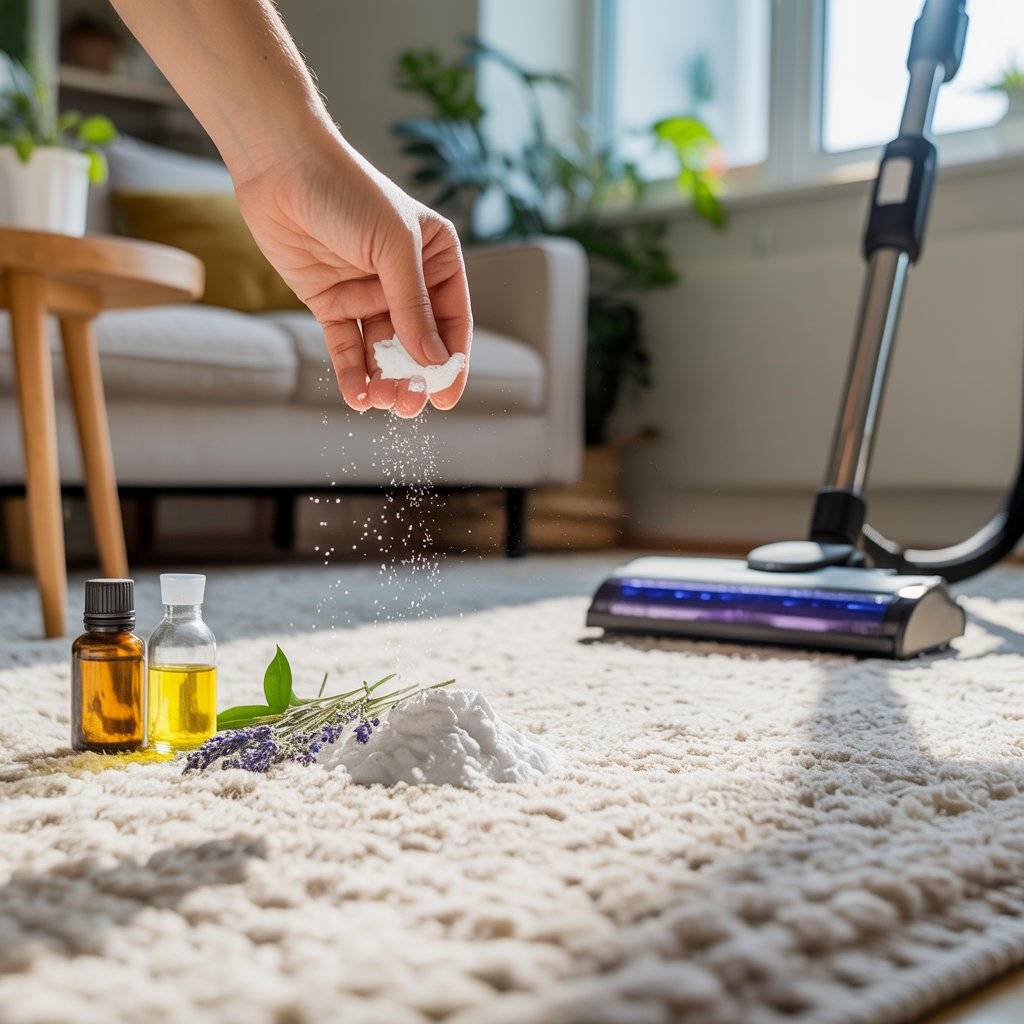
You don’t need a carpet shampooer every time your rug starts to smell. A simple deodorizing trick takes minutes. Mix baking soda with about twenty drops of your favorite essential oil (lavender, lemon, or eucalyptus work well).
Sprinkle the mixture evenly over your carpet and let it sit for at least thirty minutes longer if you have pets. Vacuum it up slowly, and the baking soda will absorb odors while the oil leaves a fresh scent.
This is also a great way to freshen up car interiors and upholstery. For high‑traffic areas, do this once a month, and your carpets will stay smelling clean without the residue of commercial carpet powders.
24. Unclog a Slow Drain Naturally
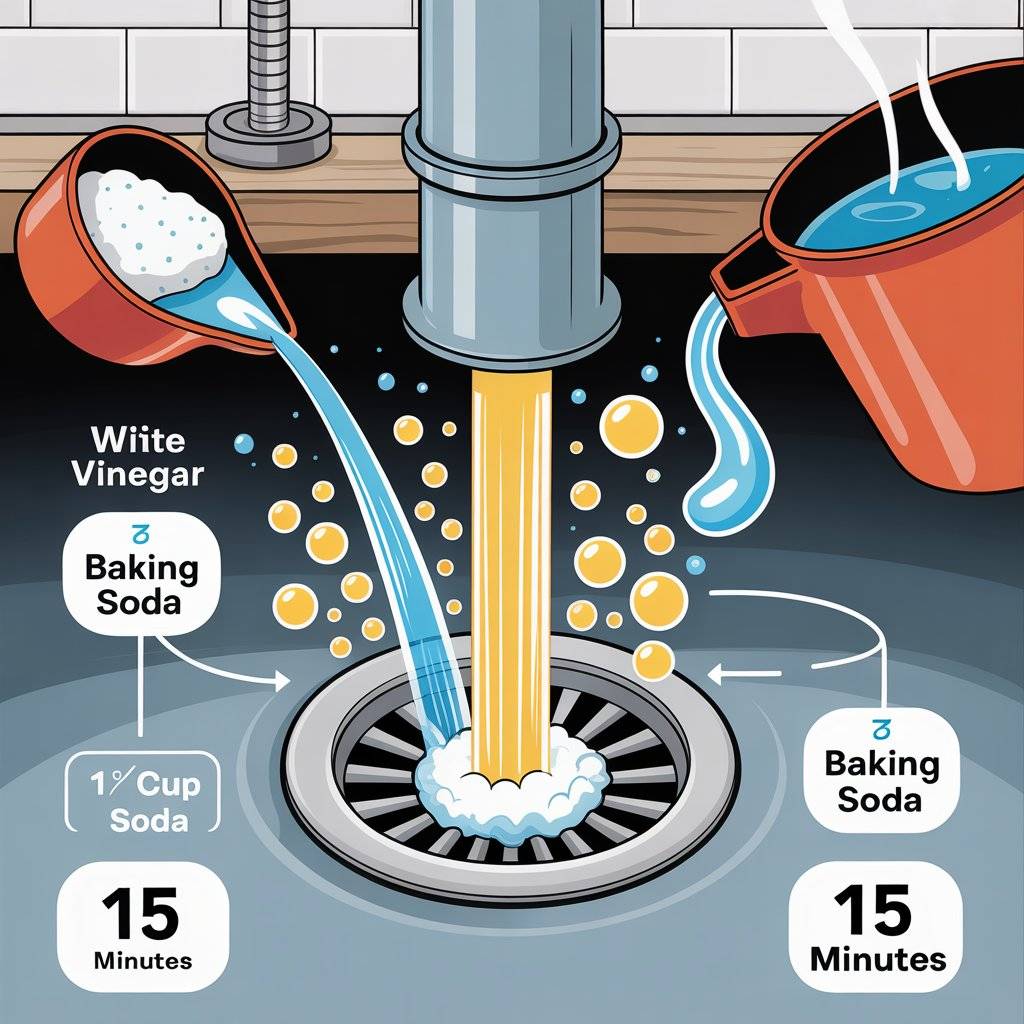
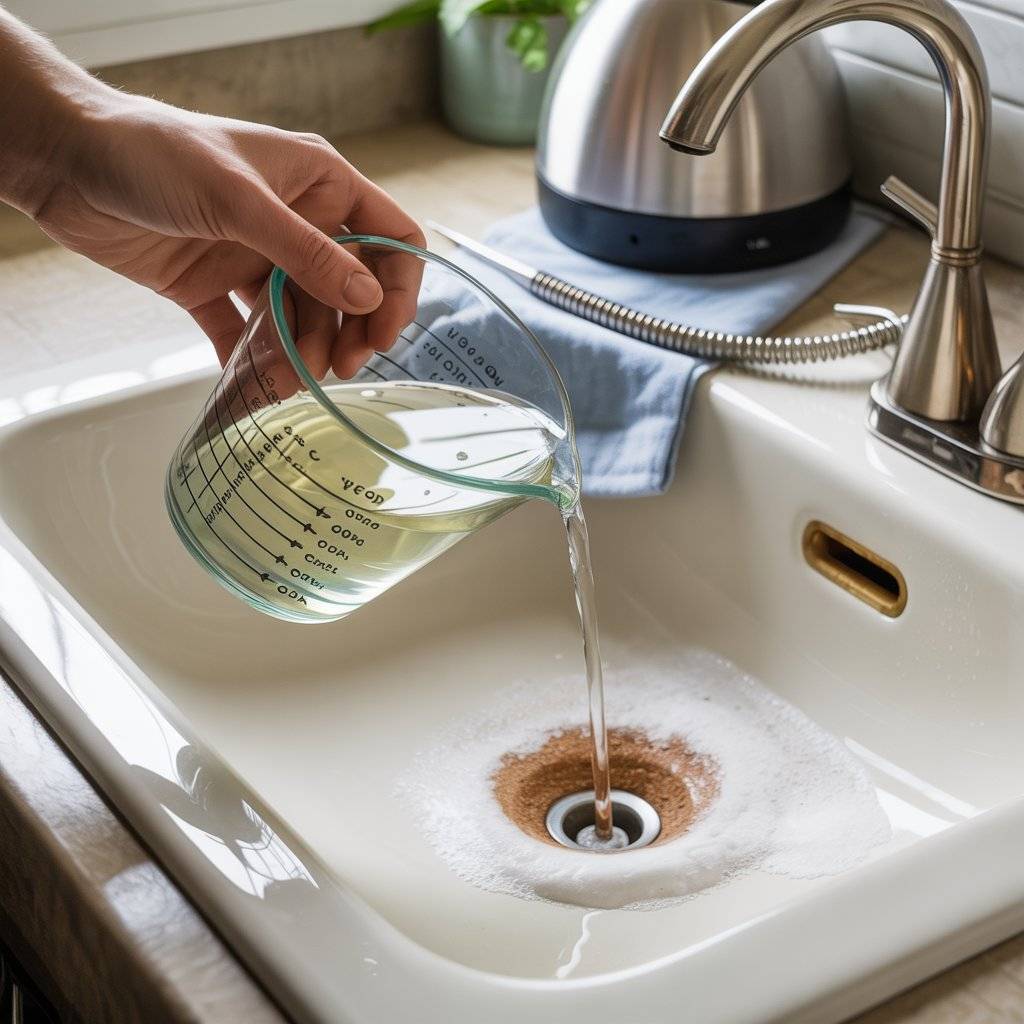
Slow drains are annoying, and chemical drain cleaners can damage your pipes over time. Start with a natural solution. Pour half a cup of baking soda down the drain, followed by half a cup of white vinegar.
Cover the drain with a wet cloth to keep the reaction inside the pipe. Let it fizz for fifteen minutes, then flush with a pot of boiling water. This works best for drains slowed by grease, soap scum, or hair buildup.
For stubborn clogs, use a drain snake or a zip‑it tool before trying the baking soda method. Regular maintenance like this keeps your pipes flowing smoothly and saves you the cost of a plumber.
25. Clean Your Washing Machine (Yes, It Needs It)
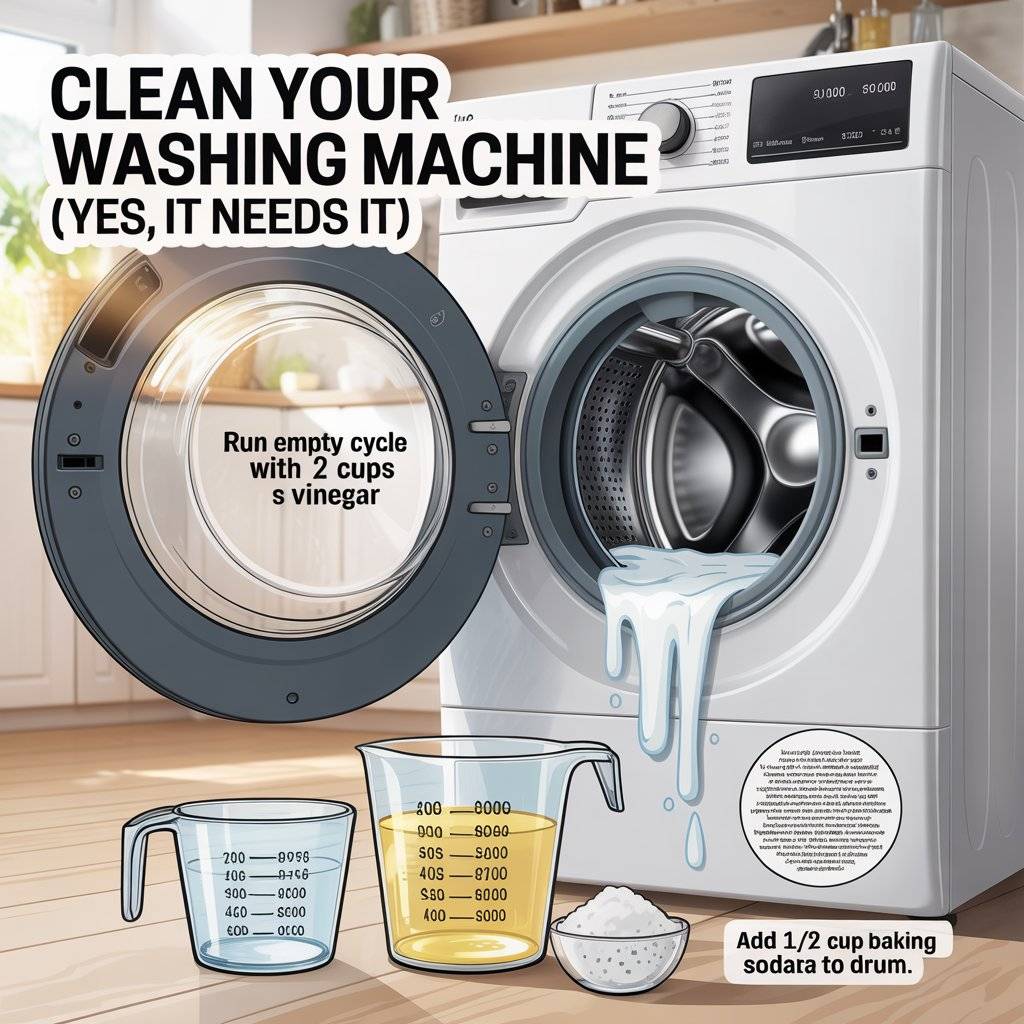
Your washing machine cleans your clothes, but it also gets dirty. Front‑loaders especially can develop mold and mildew around the gasket.
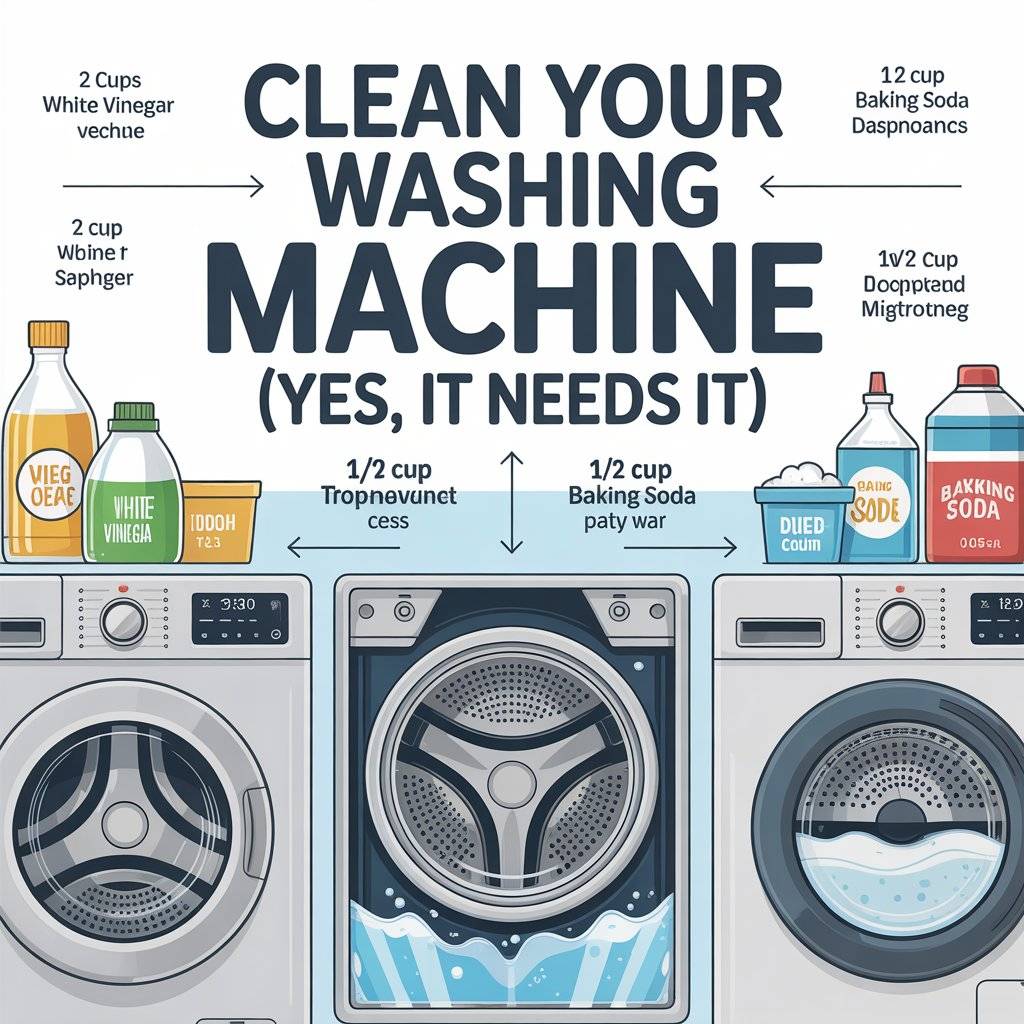
Once a month, run an empty cycle with two cups of white vinegar in the detergent dispenser and half a cup of baking soda in the drum. Use the hottest water setting and an extra rinse cycle. After the cycle finishes, wipe down the rubber seal and leave the door open to let it air dry.
For top‑loaders, the same vinegar and baking soda trick works. This removes soap scum buildup and keeps your machine from developing that musty smell. It also helps your clothes come out fresher and cleaner.
26. The Final Touch: Quick Daily Reset

All the deep cleaning in the world won’t matter if your home feels cluttered. The best hack is a five‑minute daily reset. Every evening, set a timer and do a quick sweep: put stray items back in their places, wipe down the kitchen counters, fluff the couch cushions, and take out any trash.
This small habit prevents messes from piling up. On weekends, you’ll spend less time cleaning and more time relaxing. Combine this with the pro tip of working from top to bottom and using the right tools, and you’ll have a home that looks spotless with way less effort. It’s not about being perfect it’s about making cleaning work for your life.

Products I Recommend
1. Scrub Mommy Sponge The Dual‑Texture Workhorse
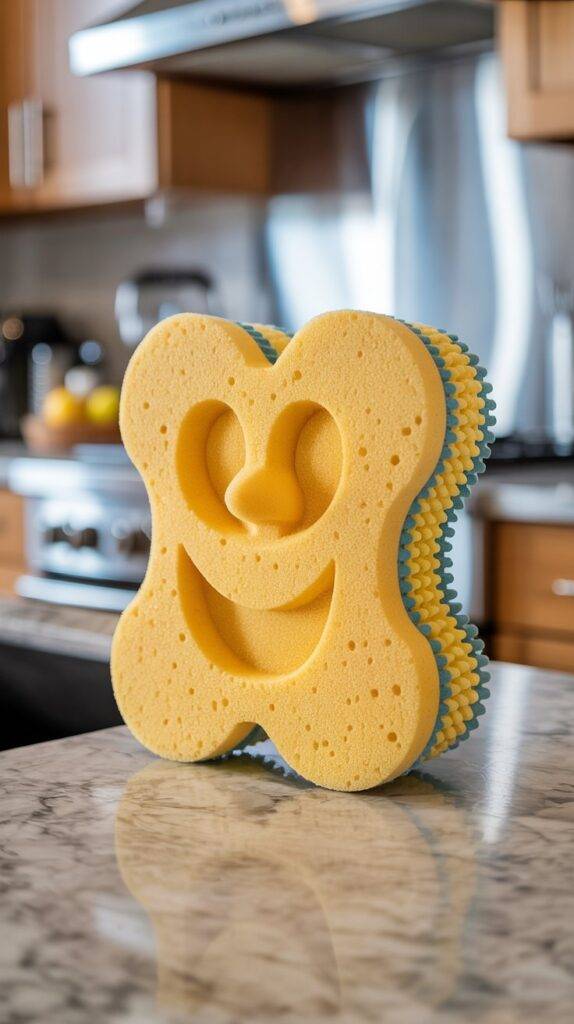
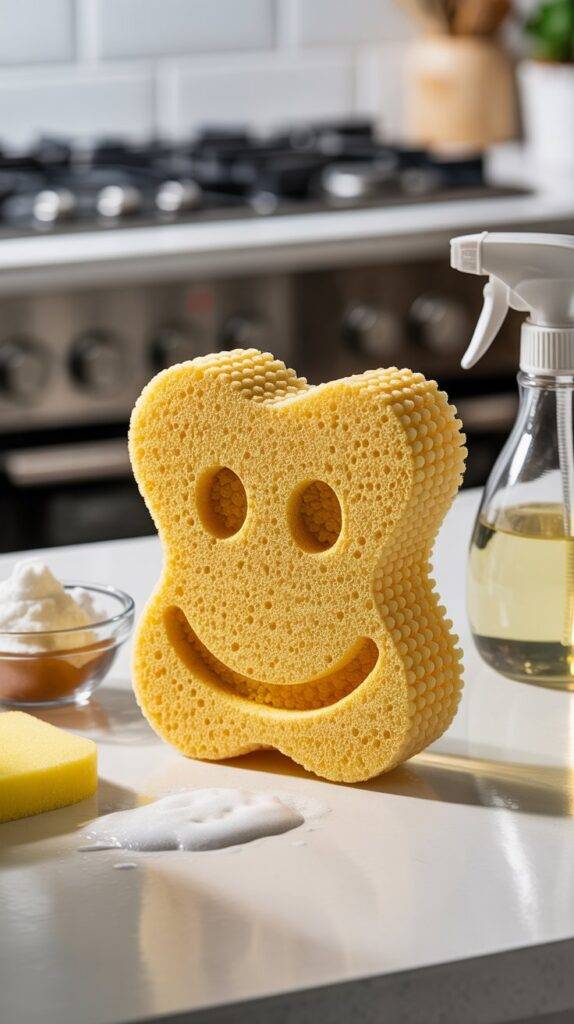
You’ll see this sponge in almost every pro cleaner’s kitchen. It has two sides: a flexible, scratch‑free foam that works great with gentle cleaners, and a textured side with Flexi‑Beads that grips stubborn messes without scratching non‑stick pans, glass stovetops, or stainless steel.
Unlike regular sponges, it resists odors and rinses clean easily. It’s the perfect partner for the baking soda paste we used on burnt pots and the vinegar spray for greasy counters.
➡️ Check price on Amazon.com Scrub Mommy Sponge The Dual‑Texture Workhorse
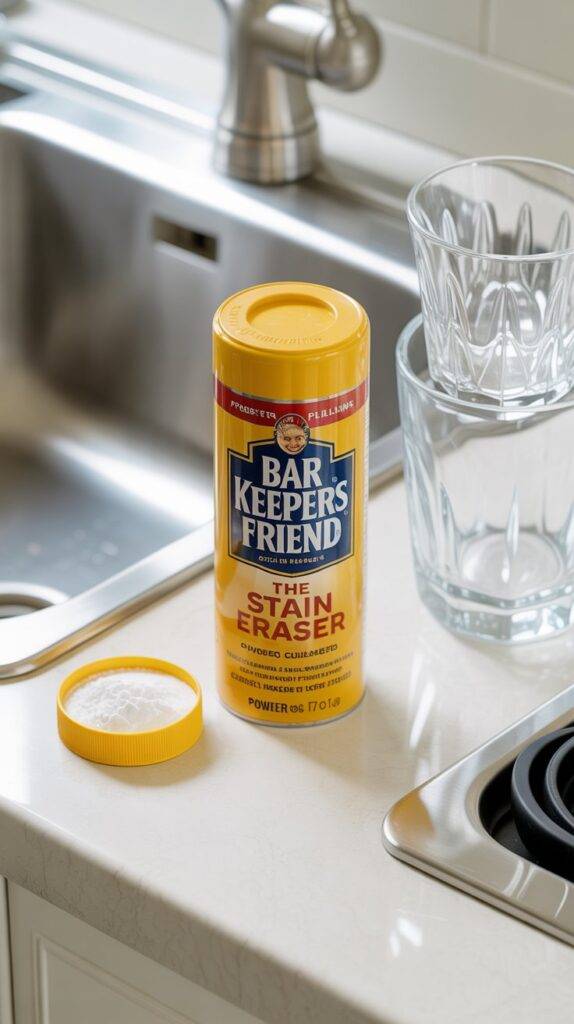
2. Bar Keepers Friend Powder Cleanser – The Stain Eraser
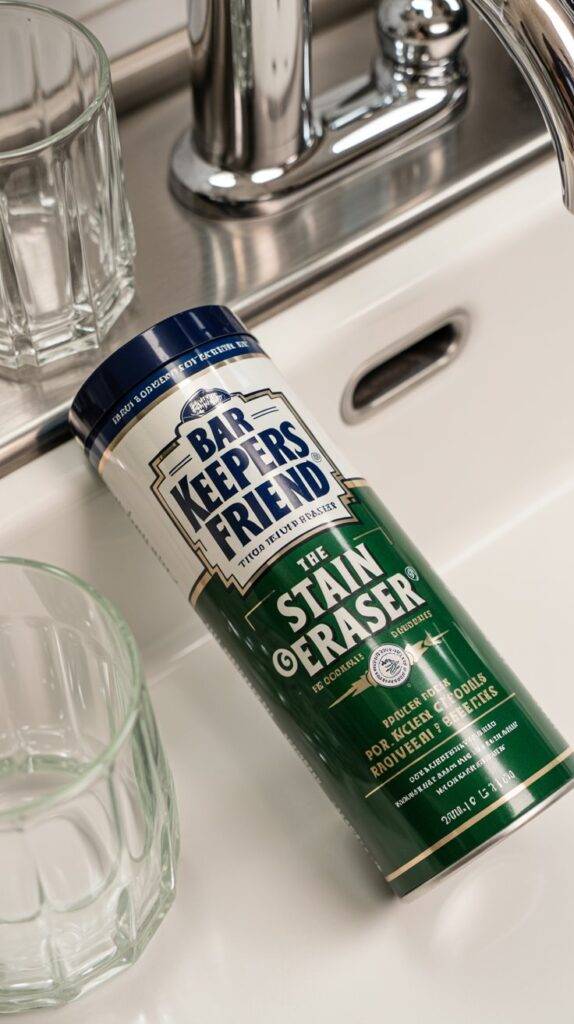
If you’ve ever struggled with hard water rings on a sink, scorched stainless steel, or cloudy glass cookware, this is the product pros reach for. It’s a mild abrasive that uses oxalic acid to dissolve mineral deposits and rust stains without harsh fumes.
Use it on the kitchen sink after the lemon‑and‑salt scrub, or on the shower doors before the vinegar‑and‑Dawn treatment. A little goes a long way, and it’s been a trusted name in professional cleaning for over a century.
➡️ Check price on Amazon.com Bar Keepers Friend Powder Cleanser
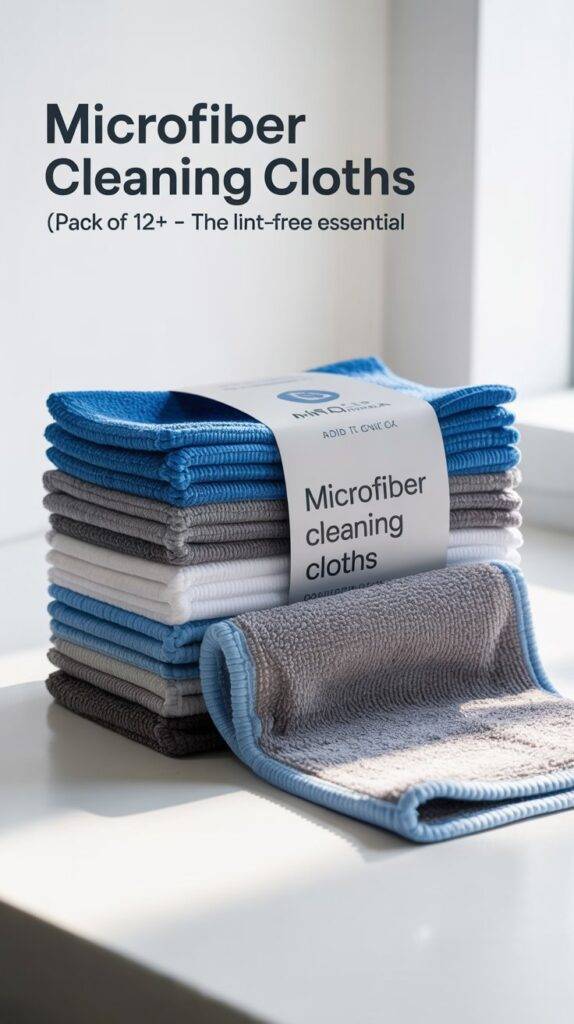
3. Microfiber Cleaning Cloths (Pack of 12+) – The Lint‑Free Essential
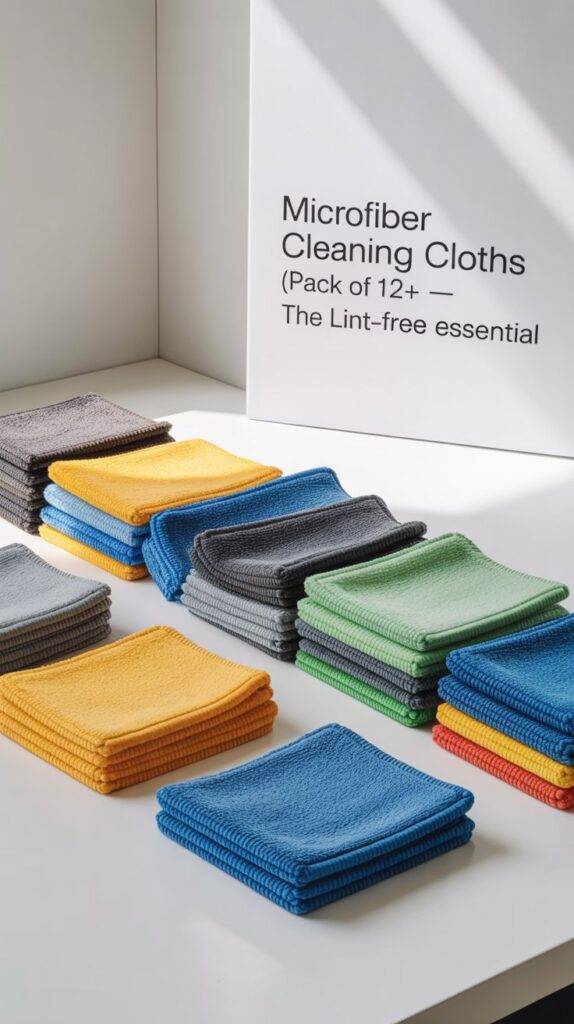
Paper towels leave lint, create waste, and cost more in the long run. Professional cleaners rely on high‑quality microfiber cloths because they trap dust and dirt instead of pushing it around.
Use them with the vinegar‑and‑water spray for streak‑free mirrors, with baby oil for fingerprint‑proof stainless steel, or dry to capture dust from ceiling fans and blinds. They’re machine washable and last for years, making them one of the simplest upgrades to your cleaning routine.
➡️ Check price on Amazon.com Microfiber Cleaning Cloths
Conclusion
There you have it over two dozen cleaning hacks that actually work, without the harsh chemicals or hours of scrubbing. The truth is, a spotless home doesn’t come from working harder; it comes from working smarter. Whether you’re using a pillowcase to dust a ceiling fan, letting baking soda sit overnight in your oven, or grabbing a Scrub Mommy to tackle a greasy stovetop, every small change adds up.
You don’t have to try all these tips at once. Pick one or two that speak to your biggest cleaning headache maybe it’s grout, maybe it’s the microwave and give them a shot. Once you see how much time and effort you save, you’ll probably want to try another.
And if you’re looking to upgrade your cleaning caddy with the tools the pros trust, the three products we mentioned Scrub Mommy sponges, Bar Keepers Friend, and a good set of microfiber cloths are a great place to start. They’re affordable, easy to find, and they’ll make every hack in this guide even easier.
Related Post: